Views From The Silurian Sea

IMG_1911

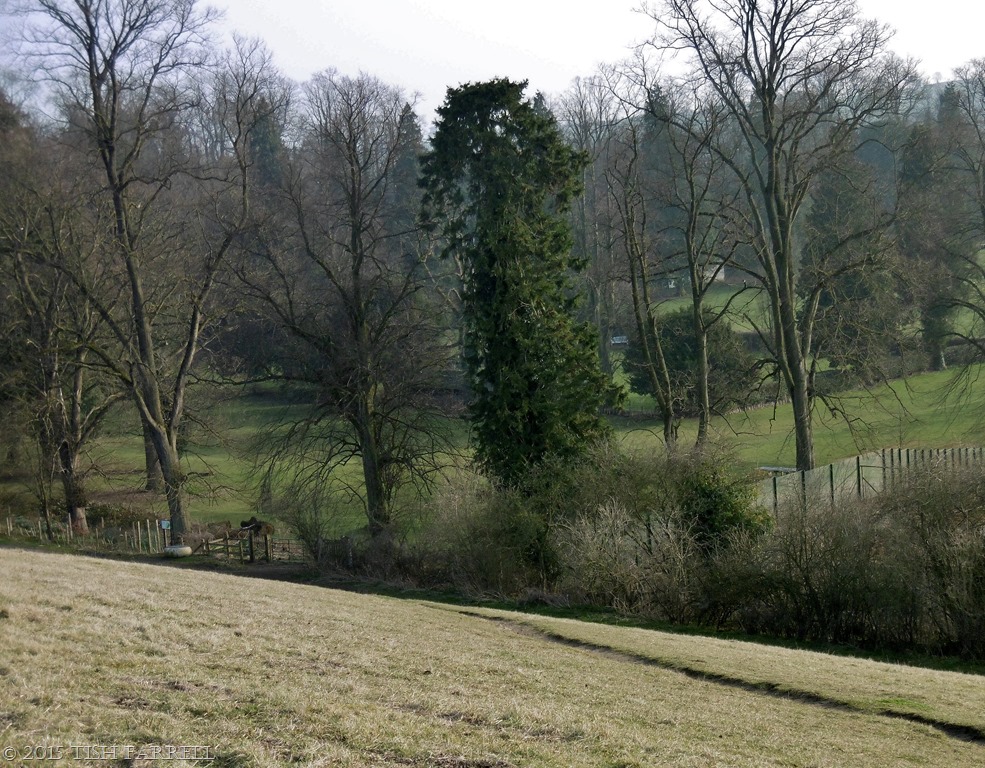
I dare say the farm fields were neither so large nor so orderly when Africa explorer, ‘Livingstone-I-presume’, Henry Morton Stanley  looked out on this Shropshire landscape. For looked at it he would have when he came as a guest to The Abbey home of the Milnes-Gaskells of Much Wenlock. Stanley’s hosts were enthusiastic tour guides and brought all their visitors to Wenlock Edge to admire the view.

Those of you who come here often will know that Wenlock Edge is an 18-mile  limestone ridge that runs across southern Shropshire. It is very much a local landmark, and its geology is of international scientific interest. The Edge as we know it now was formed by the uptilt of fossilized strata that were once the bed of the Silurian Sea.

Some 400 million years ago, this shallow tropical sea, that pre-dated even the advent of fish, and long before terrestrial life had evolved, once lay off East Africa near today’s Comoros Islands. You can find out more about it in an earlier post: Old Stones of Wenlock: Repurposing the Silurian Sea

On Sunday I posted an African landscape. Today is my ‘Out of Africa’ landscape, both of itself (because this chunk of Britain once lay in African waters), and on account of the photographer (that would be me) who has yet to get over leaving that continent.

But it goes to show how landscape intimately affects who we are, both physically and spiritually. It feeds our imagination, and shapes the lives we lead in a multitude of ways. Its resources  may provide the basis for our livelihoods, and will have shaped communities and culture over countless generations before us. If we fail to value it, we will ultimately lose the best of ourselves, our true heritage. In Shropshire we owe great thanks to the National Trust and Shropshire Hills Area Of Outstanding Beauty, organizations that strive to creatively engage and reconnect people with the earth beneath their feet, and the natural beauty around them. More power to their purpose.

copyright 2016 Tish Farrell

*

Day 7 of my Nature Photo Challenge shots. Thanks once more to Anna at Una Vista di San Fermo who started me off on this jaunt.

And view 2 in the Daily Post weekly photo challenge: Landscape
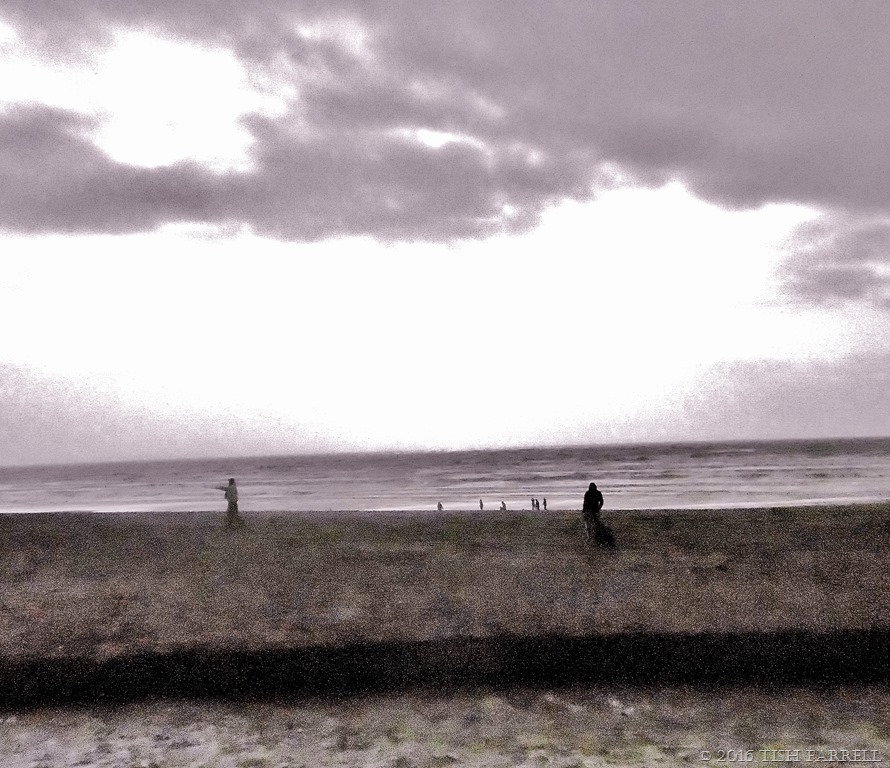
Seaton Seascape

P1020706 - Copy - Copy (2)

All I can say is my Lumix point and shoot was on a very strange setting when I took this photo. I blame the gale that was blowing along Seaton Beach, though you’d hardly know it by the ‘frozen-in-time’ look of this shot.

Cee’s Black & White Photo Challenge

This week Cee says the subject can be anything beginning with the letter ‘S’. Please follow the link to see her work and other bloggers’ renditions.

Bouquet of Barbed Wire

100_6175

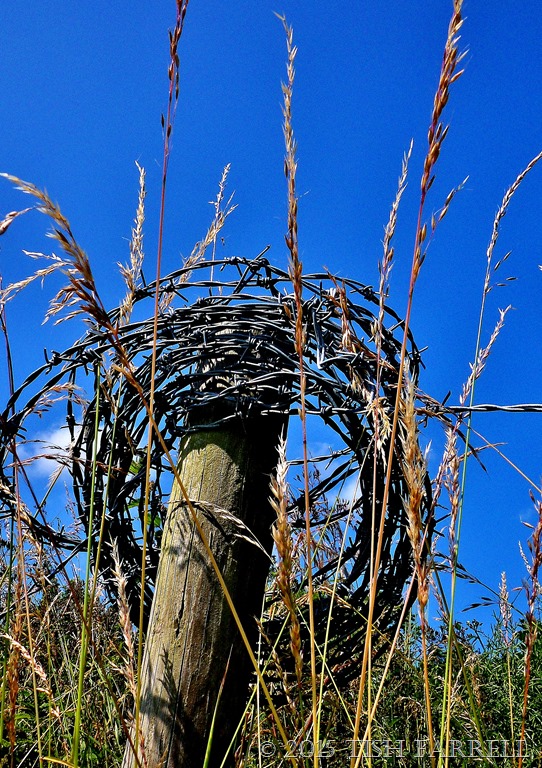
I keep going back to photograph this  well crowned fence post. It is on the boundary between the allotments and the bean field. I first caught sight of it back in the spring when I was out using my Lumix on ‘dramatic  monochrome’ setting. Then it was surrounded by drifts of Queen Ann’s Lace. Now the dying grasses have a nostalgic end-of-season look, and all before summer has hit its stride. But either way, spring or summer, colour or black and white, I find myself captivated by the image. I cannot say why.

copyright 2015 Tish Farrell


This post was inspired by Jithin at PhoTrablogger and his challenge: Mundane Monday #16 in which he urges to go out and find beauty in the ordinary things around us.

The River Runs Through It: Afon Mawddach Between Land And Sea

IMG_1649

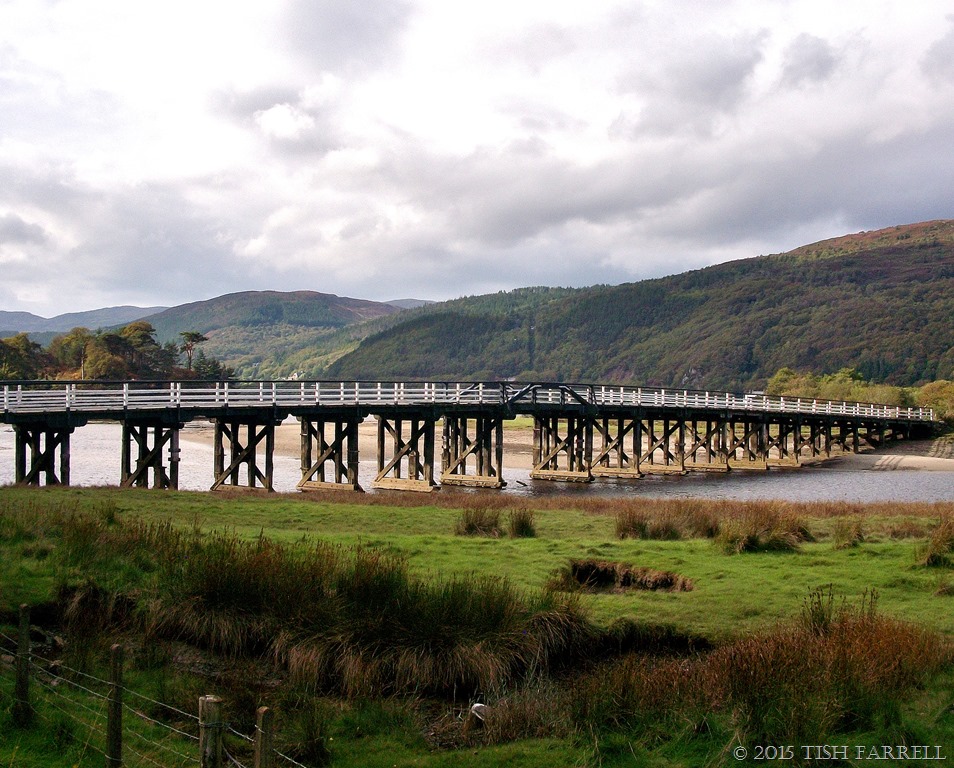
I’m on the last lap of Ailsa’s current challenge with this post. These photos were taken last September when we were staying near Dolgellau in Gwynedd, mid Wales. The Mawddach (roughly pronounced Mouthack) Estuary is a glorious place -for mountains, birds and all round peacefulness. You can walk or cycle beside much of it, too, following the Mawddach Trail that was once the railway line from Dolgellau to the holiday town of Barmouth.

100_6563

The old toll bridge at Penmaenpool

*

We followed the route to the most southerly point where the Mawddach meets the sea, at the bleak little town of Fairbourne. You could call this place a failed resort. In the late 1800s, and after the arrival of the railway, baking flour magnate, Sir Arthur McDougall developed it into a holiday destination for English East Midlands workers. These days, though, it has a desolate air, although it does have a magnificent beach. We bought an ice cream at the dingy seaside caf,  but when we broached the sea wall to see the sea, it was so windy it blew our ice creams away and all over us. That’s not supposed to happen when you go to the seaside. Nor did we have Mummy to wipe us down. What a pickle.100_6564

Fairbourne Beach looking towards Barmouth

*


Related:

Now that summer’s done, we take the Dol Idris path

Thursday’s Special: Manscape to Landscape


Where’s My Backpack: Where Land Meets Water

Return to Windmill Hill: Of Grasshopper Stalking, Lady’s Bedstraw And Other Random Discoveries

100_6008

Today I thought it was time to check on the floral happenings in our remnant of limestone meadow up on Windmill Hill. It’s a few weeks since I was last up there, and the spring flowers are giving way to summer species. Perhaps one of  the most pleasing finds were these drifts of Lady’s Bedstraw,  seen here below the windmill.

It is also called Lady’s Tresses, and  it smells of honeyed summer pasture. Once it would be gathered and dried and included with the straw that was used to fill mattresses. It was often chosen for the beds of pregnant women, so surrounding those in their confinement with soothing wafts of sweet hay scents.

I think this is a practice we could revive, not that we are allowed to harvest wild flowers. I’m envisaging now a pillow filled  with golden stems. Surely it would be just the thing to send us sleep-fractured souls back to dreamland. And even if it didn’t, it would make being wakeful a pleasure.

100_5898

The spotted orchids  I first found last month for Meg are nearly over (by the way, you should see Meg’s sundews found in Australia’s  Stanthorpe granite country over at Snippetsandsnaps). But following on from the common spotted are the pyramidal orchids, which range in colour from lipstick pink to purple. I also discover from plantlife.org.uk that these, like many orchids, require the presence of a particular fungus in the soil in order to flower.

100_5892

I also discover from Richard Mabey’s treasure of a book, Flora Britannica,  that when the Victorian art critic, John Ruskin, learned that the name orchid derived from the Greek word orkhis  meaning testicle, he urged that the flower’s name be changed to wreathewort. Personally, I don’t think this any sort of improvement. The man was a prude. Besides, the reason that orchids are named after testicles is because their roots’ appearance do a pretty good impersonation of same. Doubtless this was why they were long considered a useful remedy for a lapsed libido – a herbal fancy and fallacy I imagine, so do  not try this at home.

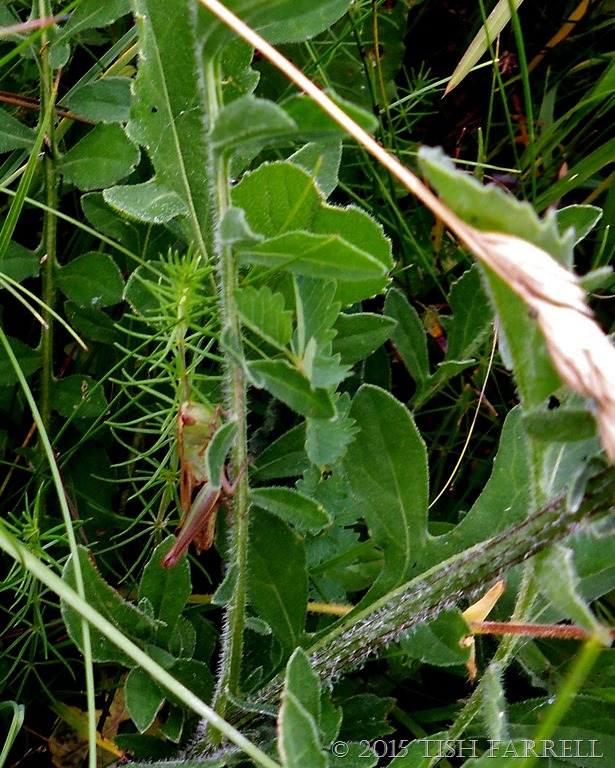
While I was scrabbling around on my knees in the grass, thinking what strange things I have started doing since joining WordPress, I became distracted by a grasshopper. This is not the greatest shot. He is lurking on the leaves of greater knapweed, Centaurea scabiosa. Very well camouflaged I thought.

100_5972

100_5968

While I was down there, because believe me, once you get down on your knees you need to make the most of it, I also discovered some Lady’s Bedstraw caught inside a web. It looks like a shroud. You can just see the tiny spider due south of the flower:

100_5993

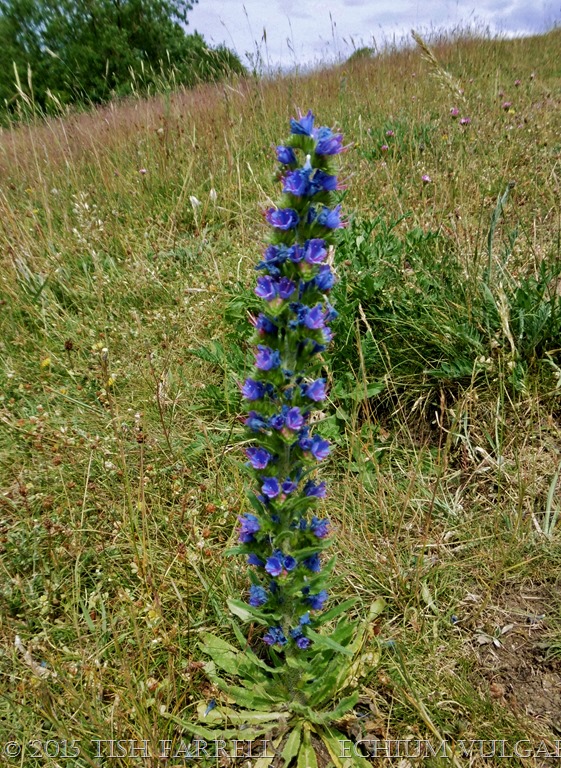
And now here is one of Windmill Hill’s  more sinister-looking plant specimens, – the very upright prickly spires of Viper’s bugloss. Apparently the flower’s fruits resemble adders’ heads, and other names include adderwort and snake flower. As well as colonising limestone areas, you will also find it growing on chalky and industrially contaminated soils. Like other members of the Echium family, which includes borage and comfrey, it is attractive to bees.

P1010611

And here’s another bee favourite – Wild Thyme:

100_5950

Thyme is of course a must in the kitchen. It is also a common medicinal herb. All forms of the plant contain the volatile oil thymol, a powerful antiseptic, which is often included in cough mixtures. I use thyme (fresh or dried) steeped in hot water with honey and fresh lemon juice when I have a cold or cough.

And talking of thyme, it’s time to head for home. So I’ll leave you with one last view of the windmill and some more flowers named after testicles. Not that it’s in any way connected, but I had to lie down in the grass to take this shot – a fine way for the minuting secretary of Much Wenlock Civic Society to conduct herself. It was just as well there were none of the usual walkers and their dogs around for me to frighten:

100_5981

This excursion, but naturally not the bit about the orchid’s etymology, was inspired by Jo’s Monday Walk. Please join her there for some fascinating rambles.

copyright 2105 Tish Farrell

Last Night From My Garden: A Fire Rainbow ~ Or Is It?

100_5851

There’s clearly something in the air over Wenlock Edge. Last night as we were sitting on the garden bench watching the sun go down – with our glass of wine and pot of olives – there it was. A rainbow. And it had absolutely nothing to do with rain. Most of the day had been hot and fine.

Fire rainbows are rare and technically called circumhorizontal arcs, and thus they are HORIZONTAL. i.e. More like this one, faintly seen, a little later and slightly north of the first iridescent cloud.

100_5859

But if this isn’t a ‘fire rainbow’, but part of an ordinary rainbow, then the colours are the back to front, more as if this is part of a double rainbow, but with only the reflection visible. Curiouser and curiouser, but a wonder to see over one’s garden fence. Perhaps it is a Wenlock Edge phenomenon, the angle of the setting sun in relation to the cloud above it.  Anyway, this is what was going on in the rest of the sky over the bean field. Someone has clearly been sky painting.

Happy Monday everyone.

100_5858

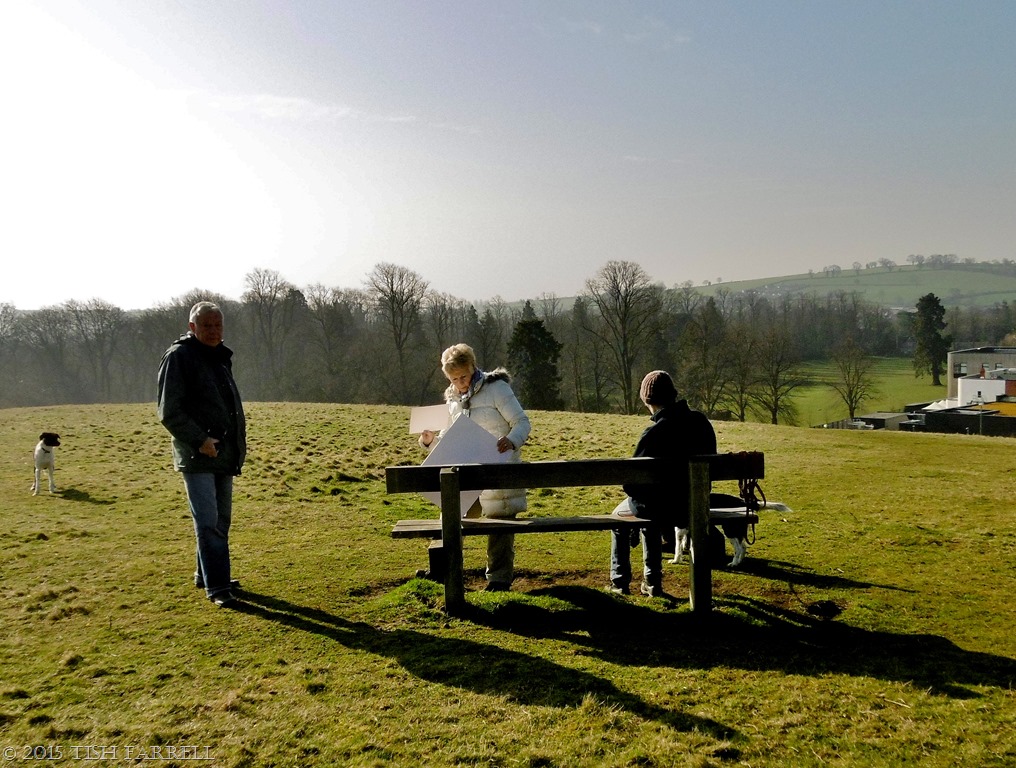
A bench with many views and a windmill

P1000684

P1000674

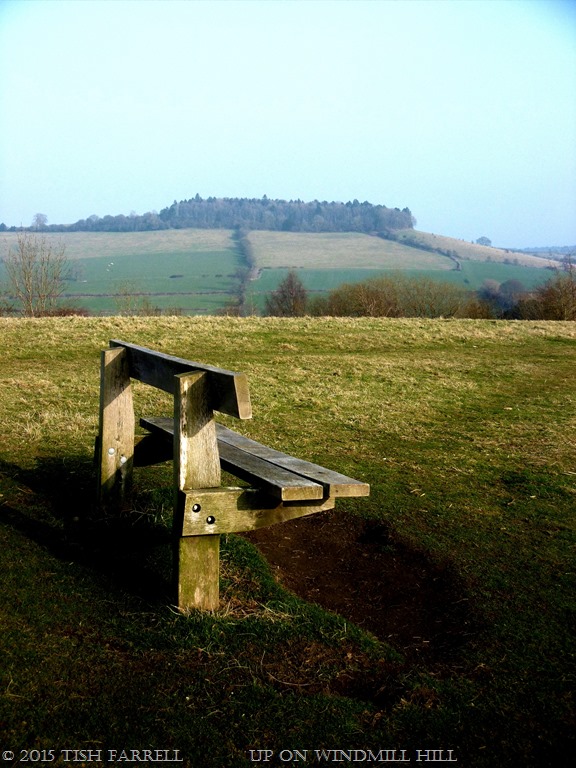
This bench is only a short walk from our house, although a bit of a steep haul up Windmill Hill. The windmill itself is quite a landmark in Much Wenlock, although much about its history, and how it looked when in use, remain to be discovered by the stalwart Windmill Trust whose members take care of it.

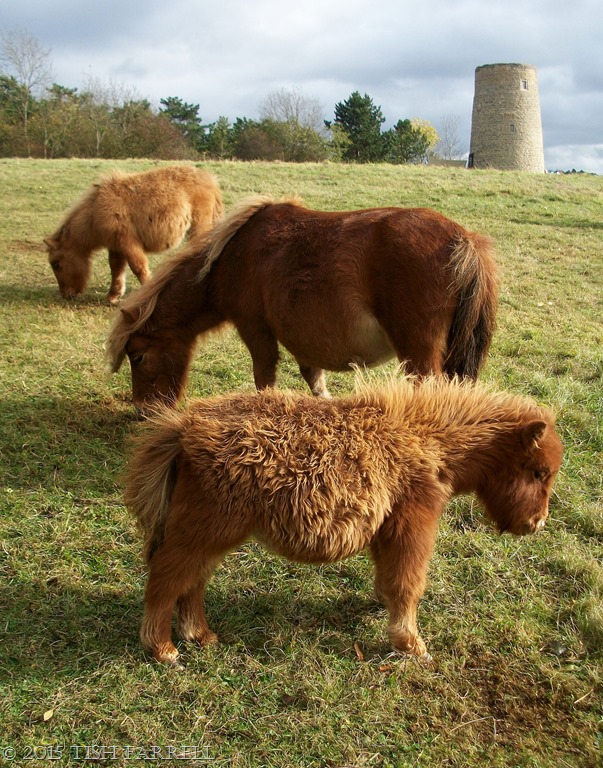
There is always something to see from this bench, quite apart from the views across Shropshire. Even the vegetation is interesting. It is a rare remnant of limestone meadow, and in late spring there will be cowslips and orchids here, wild thyme and primroses. Later there will be agrimony, giant  knapweed, St John’s Wort, yellow bedstraw and hare bells. Sometimes the miniature ponies graze here, all part and parcel of preserving the meadow.

100_6660

*

Recently some of us combined dog walking and watching the eclipse from here. And while we were doing that…

P1000748

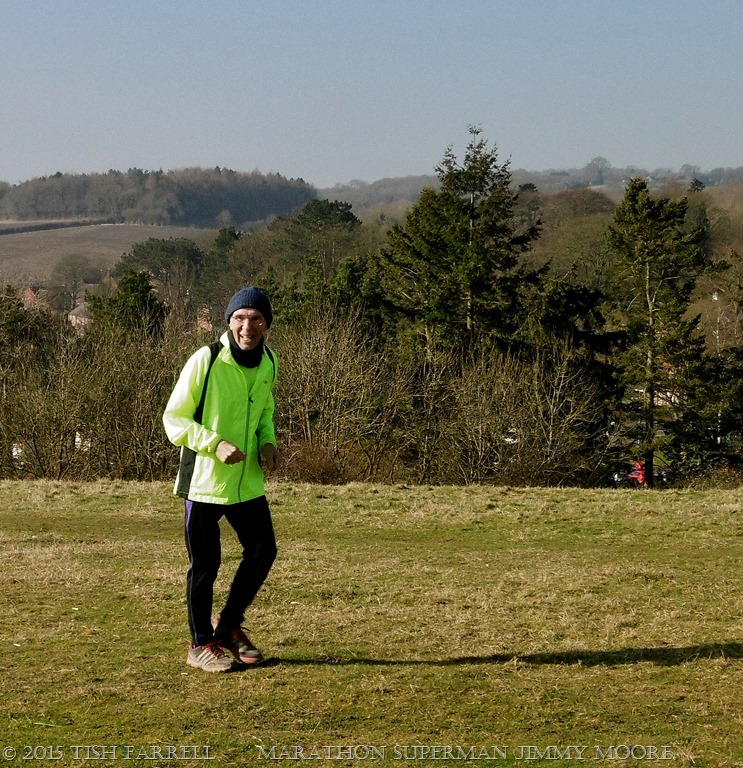
… we also caught a glimpse of local marathon hero Jimmy Moore, apparently eighty years old this year, and still out training.

P1000750

He, more than most, has done so much to uphold the values of the town’s erstwhile physician, William Penny Brookes (1809-1895). Brookes reinvented the Olympic Games in Much Wenlock in the 1850s, and provided the inspiration for the modern Olympic Games.  The Wenlock Olympian Games are still held every July on the field below and at the nearby William Brookes School. The three-week series of contests attracts athletes from around the world. Jimmy has also coached many youngsters  participating in the Wenlock Games.

P1000685

P1000736

And finally, I thought I’d pass on some Olympian glow on this Monday morning. You can just see the windmill in the background, the William Penny Brookes Academy on the left, and the community’s own Linden (Olympian) Field in the centre ground. Besides, it is not good to linger about, sitting on benches, splendid though their views may be. Latest medical opinion informs us to keep standing up.  Or to quote Tom Petty and the Heartbreakers  “if you don’t run, you rust.”  Walking, however, is probably best for most of us.

Copyright 2015 Tish Farrell

At Travel Words during April, Jude is looking for benches with a view

Day’s End at the Rookery

P1000439

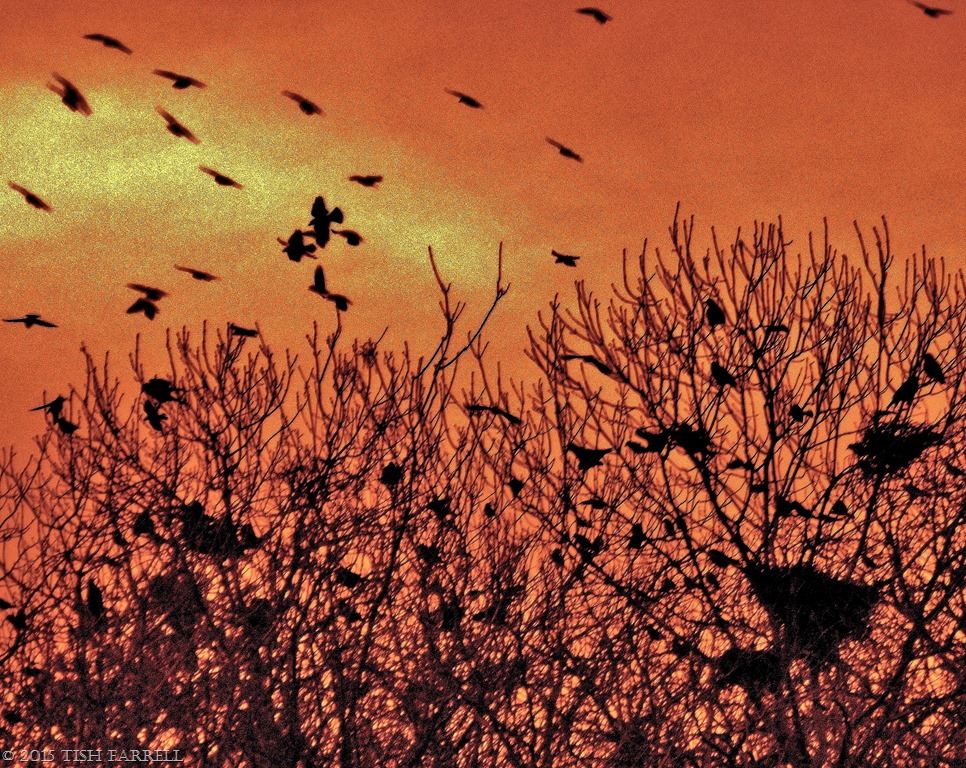
With sunset there is a general homecoming behind our house: hundreds of rooks and accompanying jackdaws return to the rookery in Limekiln Wood. The corvid air fleets head in from all points, returning from the day’s foraging grounds around the town. There are the strident greeting calls – a caw-cophony if you like – of passwords given and passwords received, as the early-bird returnees acknowledge the arrival of others. Sometimes, it seems, an incoming squadron ends up in the wrong tree, and then there is an avian explosion, black silhouettes shot into the sky. Much rook-shouting and abuse ensues.

They sort themselves out, and the wood soon echoes to sounds of companionable muttering.

As the year progresses we will be treated to elaborate twilight fly-pasts and synchronised acrobatics that resemble the murmuration of starlings. And, as the weather warms and we sleep with open windows, so the night will be sound-tracked by the chuntering of rooks. I know from the sleepless small hours that they talk all night. ALL NIGHT. Sometimes I want to tell them to settle down in their nests, and SHUT UP.

The collective term for rooks, of course, is ‘a parliament’, and anyone who has listened to the proceedings of Britain’s House of Lords or Commons on the BBC will have a rough idea of how a rookery sounds. Some might say the corvids are the more intelligent. I could not possibly say.

The rookery wood thus gives us much pleasure, but there are strains of melancholy too in the resonant kaah-kaahing, and the tchaka-tchak counterpoint of jackdaws. It evokes the kind of nostalgia that is so very English, the longing for a lost and perfect England that never existed; a feeling that A E Housman conjures so well in stanza XL of  A Shropshire Lad:

Into my heart an air that kills

From yon far country blows:

What are those blue remembered hills,

What spires, what farms are those?

That is the land of lost content,

I see it shining plain,

The happy highways where I went

And cannot come again.

*

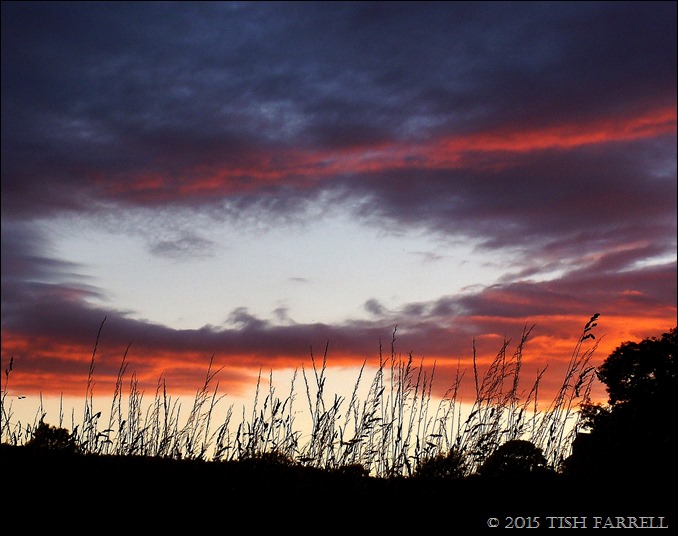
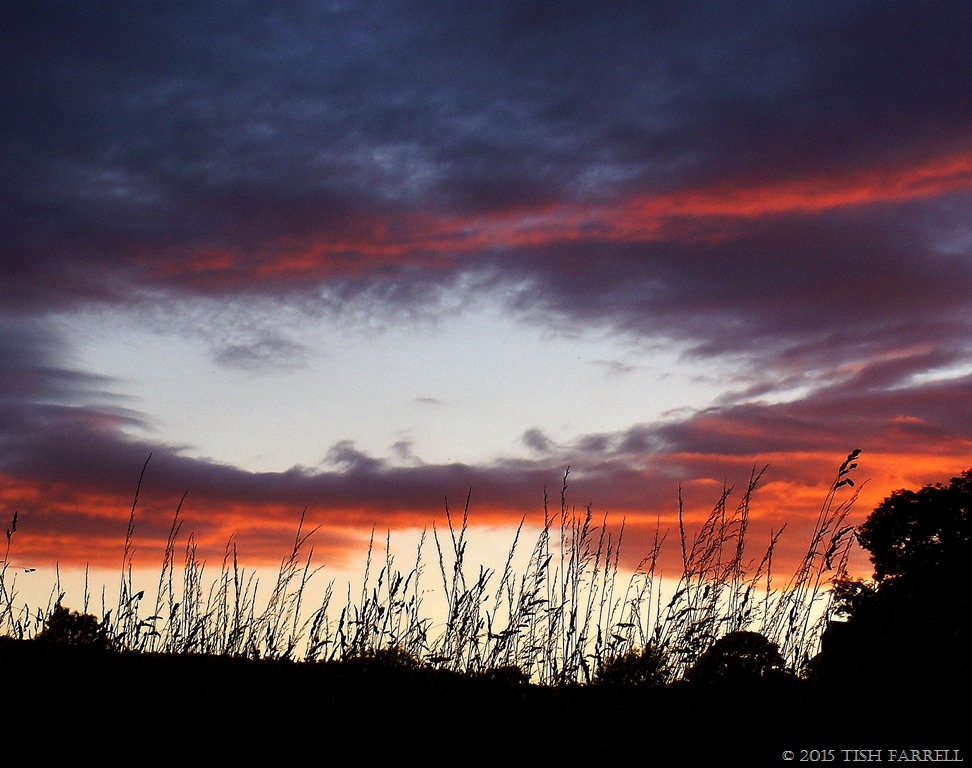
Post inspired by Jennifer Nichole Wells’ One Word Photo Challenge: Bittersweet, a colour that is roughly the colour of the sky in the photo.

copyright 2015 Tish Farrell

A Shropshire Lad by A E Housman – you can read the full work HERE courtesy of Gutenberg Press

To see/hear rook acrobatics click on the link below to my brief video …OF ROOK DANCING