Seeking Perspective At Chatsworth House

perspective 2

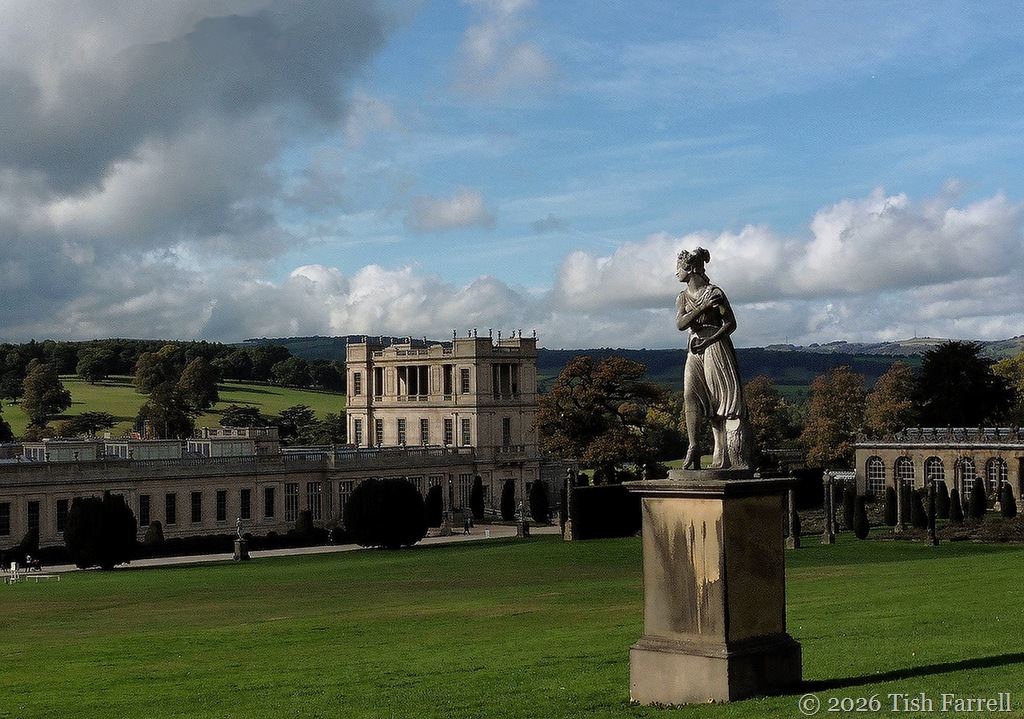
The grand mansion was ever built to impress and raise social standing, its setting in the landscape deploying all manner of visual knacks and contrivances to enhance imposing looks. See, it says, this is the domain of the rich and powerful, beings who inhabit a realm far removed from that of ordinary mortals.

And to prove this point, it was not unknown for mansion owners to dispatch from their purview, and place elsewhere, the unsightly villages of their peasant tenants. It was common, too, to incorporate tunnels and hidden thoroughfares in the surrounding grounds so as not to suffer the indignity of looking out from the drawing room windows and seeing a passing labourer.

Sometimes one does wonder why we British never had a revolution.

Perspective 11

Here at Chatsworth in Derbyshire, seat of the Dukes of Devonshire, generations of the Cavendish family have spared no expense when it comes to home and garden improvements. (It is still the family’s home, albeit now the Chatsworth House Trust).

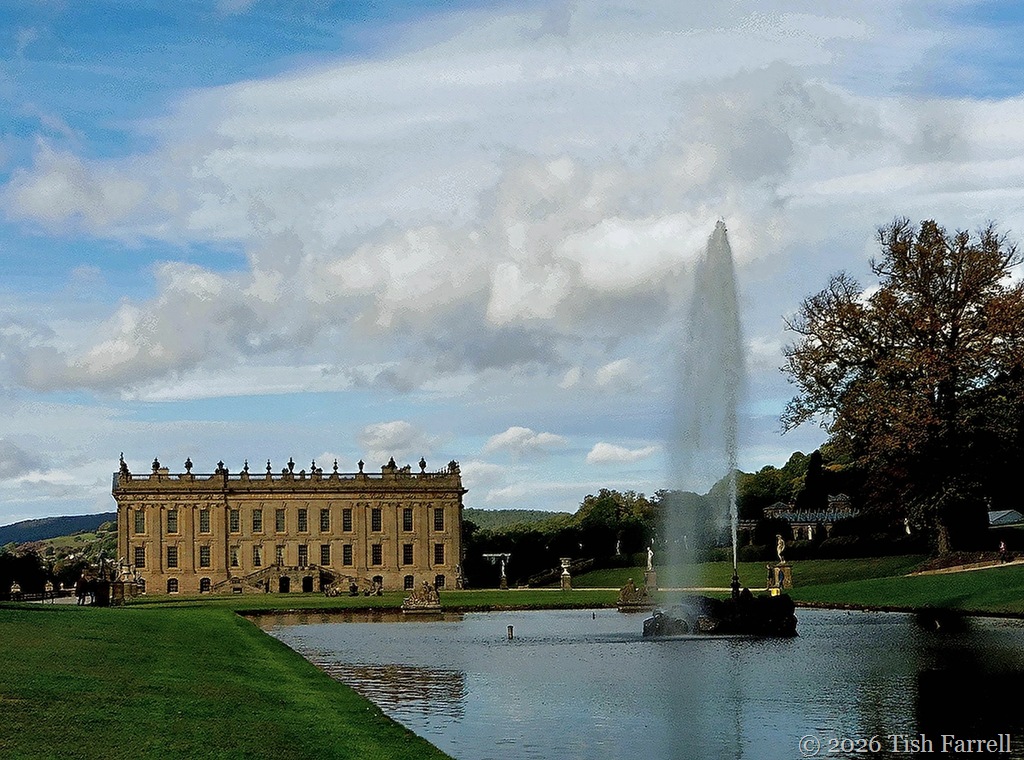
The first house here was built in the 1550s by Elizabeth Talbot (widow of Sir William Cavendish who amassed great wealth during the Dissolution of the monasteries), otherwise known as Bess of Hardwick, Countess of Shrewsbury. She built a large Tudor mansion on the banks of the River Derwent, which in later times acquired the Classical finish we see today, complete with elaborate gold leaf embellishments (recently restored across the entire exterior by the Chatsworth House Trust).

Yes, all those windows in the header photo, and more besides, have gilded frames since real gold is said to provide the best weather protection.

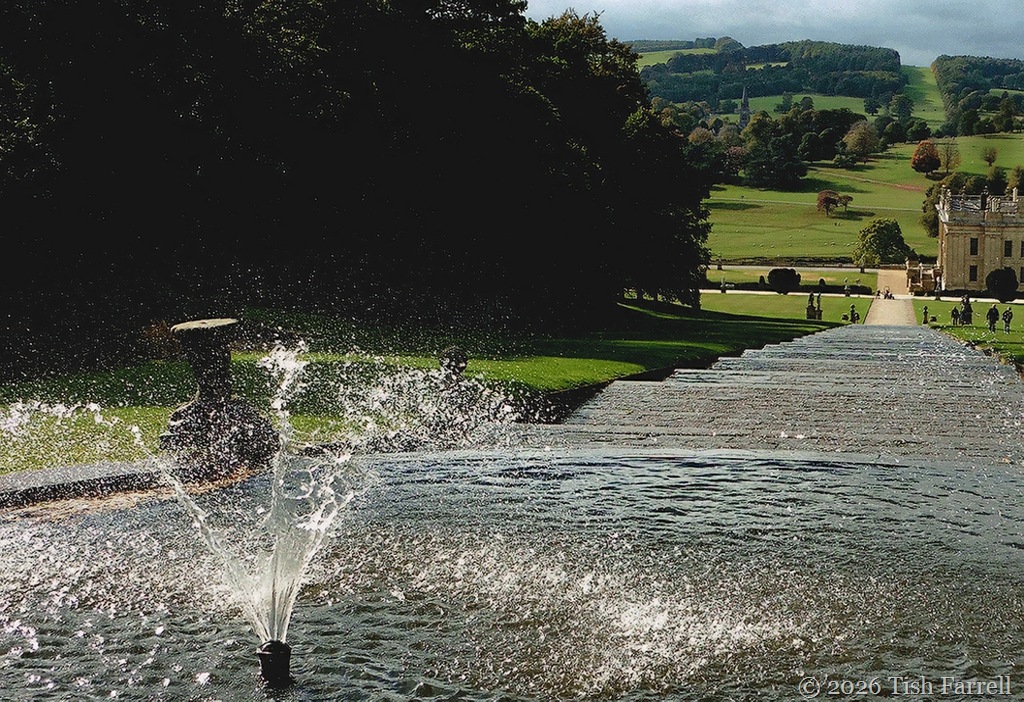
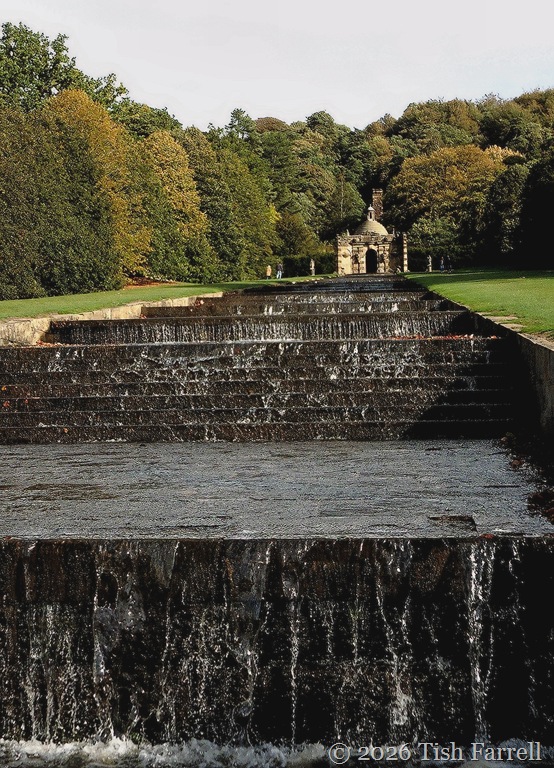
On the stately homes tourist trail, Chatsworth is among Britain’s most popular visitor attractions, this despite the £33 adult entry ticket. The gardens and park are perhaps what return visitors love most, the Emperor Fountain (header) and the Cascade (coming next) being among the more spectacular favourites. (Note too the ride cut through the trees on the far hill, to mirror the Cascade and add to the expansiveness of the parkland setting).

cascade

Perspective 13

The first version of the Cascade was built in the 1690s by French hydraulics engineer, one Monsieur Grillet, who had worked for Louis XIV. In succeeding years it was doubled in length, widened, made steeper and repositioned to align with the southern frontage of the house. The contrived waterfall is fed from water draining from the high moors into a series of lakes above Chatsworth, and then descends through some 60 metres, just under 200 feet.

These days it is out of commission, waiting for 7-million-pounds’ worth of repairs. Over half of this sum has already been awarded by the National Heritage Lottery Fund, but members of the public are also being urged to sponsor one of the hundred stones that make up the 23 steps, the suggested donations ranging from £100-£500.

perspective 4

Meanwhile, the grandeur of the interior might also render one speechless. This is the Painted Hall, created in 1694 by Louis Laguerre.  Actually, when we visited a few years ago, it simply made me very cross. Much of the wealth of the Dukes of Devonshire (and before them the Earls of Shrewsbury) derived from tithes and rents from their farm and lead miner tenants  who inhabited communities on their land holdings across Derbyshire’s High Peak District. Among them were generations of my maternal Fox and Bennett ancestors. So it makes me think, looking at such unbridled opulence; family tales have it that, as a girl, my great grandmother, Mary Ann Fox, used to ride over to Chatsworth from Callow Farm, at Highlow, to deliver the family’s tithe in eggs.**

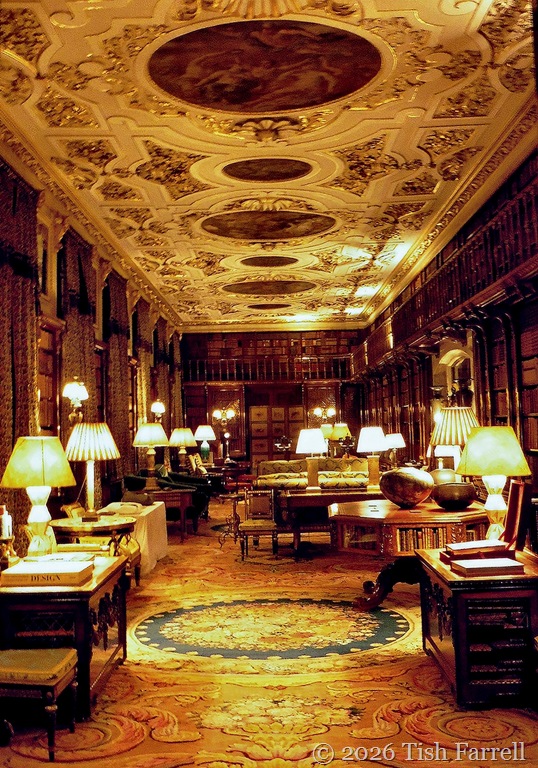
library

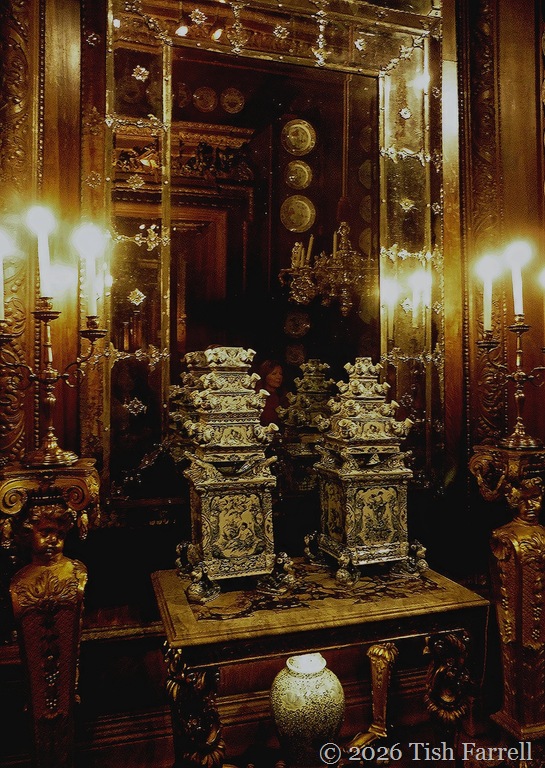
The photo above shows the library. We were only allowed to look through the open doors. And this is but one of very many extravagantly furnished rooms and apartments . (See the State Apartments HERE) So how does one gain perspective on the scale of wealth disposed for the single purpose of showing off? What did successive dukes and duchesses see if they caught  sight of themselves in one of their many grand mirrors?

room

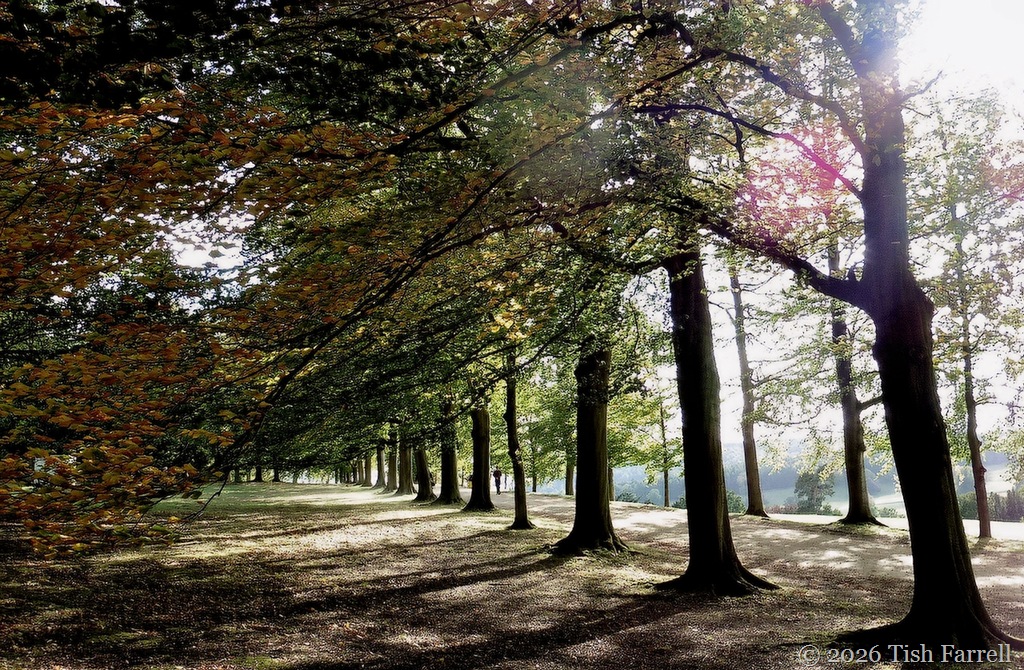
Enough. I’ll finish with a much more pleasing view out in the garden. A soothing avenue of young beech trees, moderately uncontrived, in late summer light:

Perspective 12

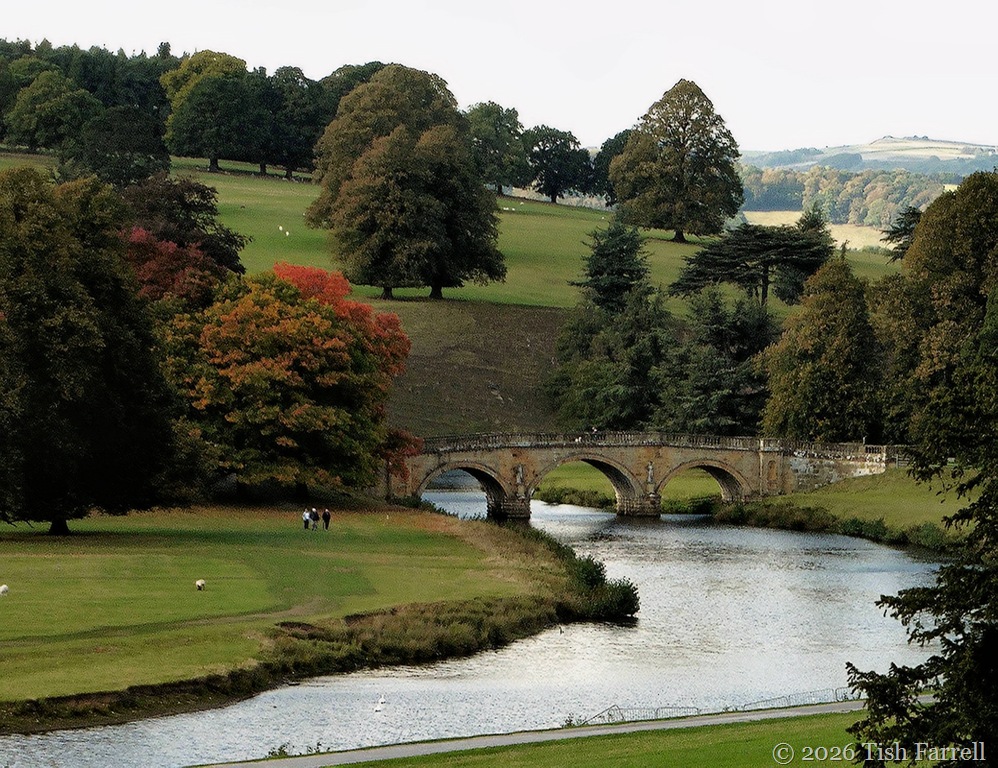
And a view of the River Derwent that flows below Chatsworth. Upstream it passes through fields once farmed by the Fox family at Callow Farm. They had to sell up in 1892. The rents were by then too high to make a living.

Perspective 9


**To Chatsworth and how Mary Ann went to the ball


Copyright 2026 Tish Farrell

Lens-Artists: Perspective, Depth, Scale  This week John shows us different tools in photo composition. Go see!


In The Solstice Garden

IMG_0817

Out early in the garden of the longest day, and already it is warming up. I can see the plants around me switching gear: late spring to summer. Some change feels instant, and I’m sorry to see the small cascades of Cornelia and Penelope roses fading fast, their petals suddenly  dull and papery. They have flowered since late May, their scent filling our small back garden, competing even with the serial winds.  Likewise, I note that several of the hardy geraniums have swiftly departed – yesterday mounds of glorious blue, busy with bees, today a tangle of spent green stems. Time to wield the secateurs.

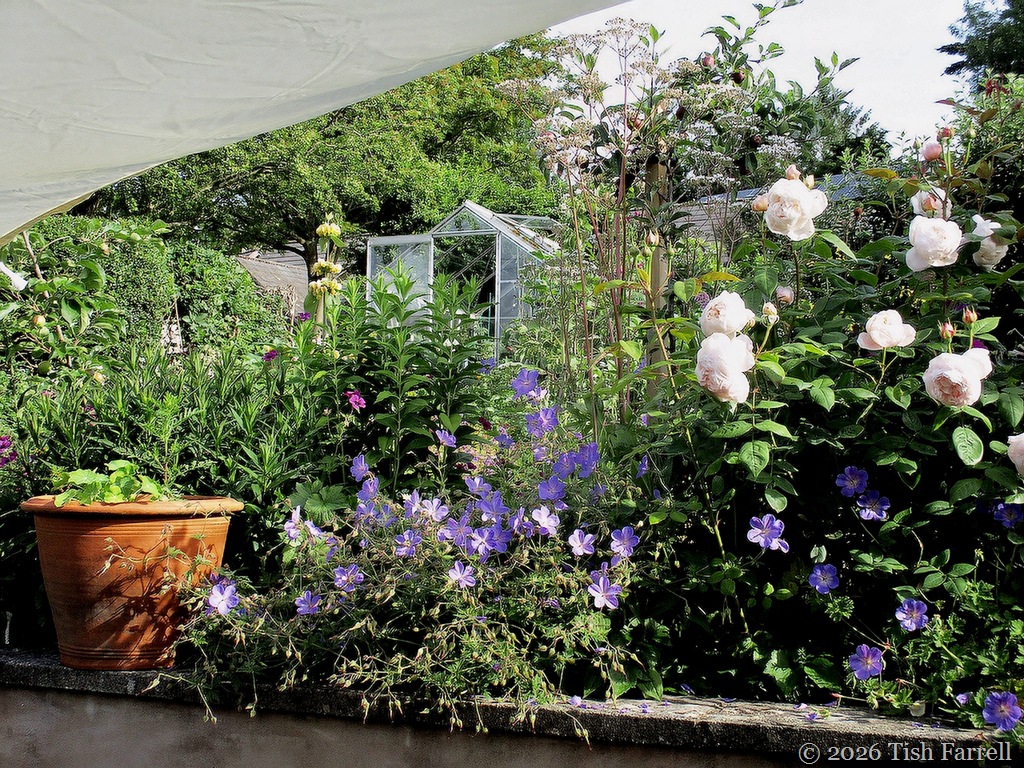
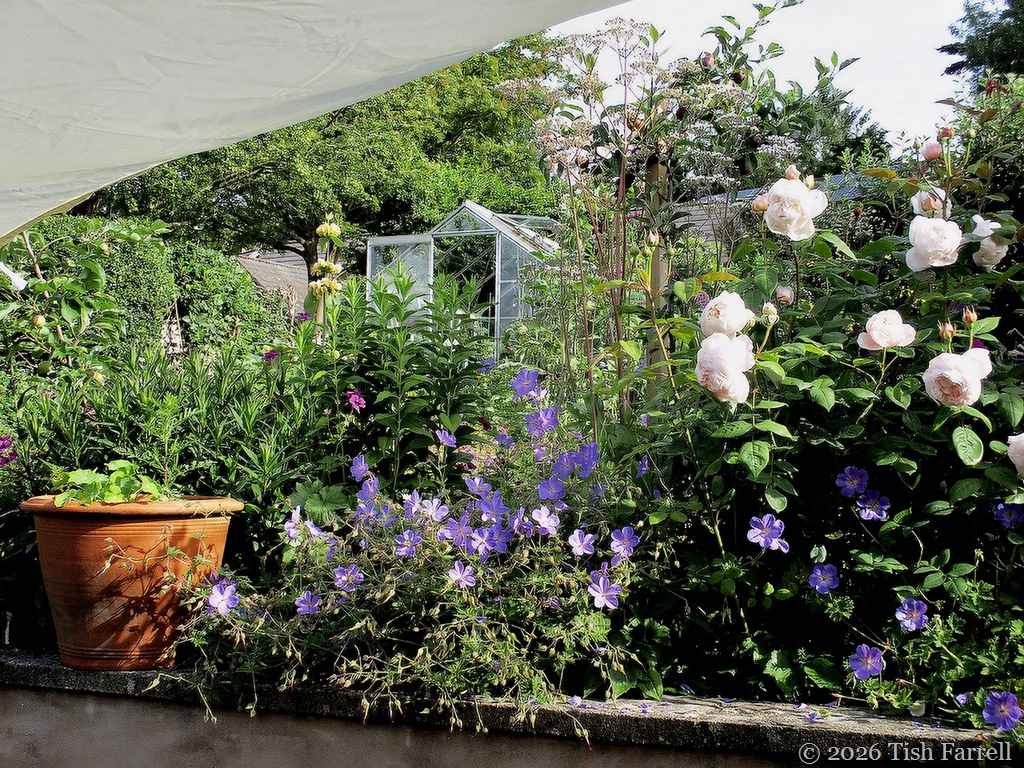
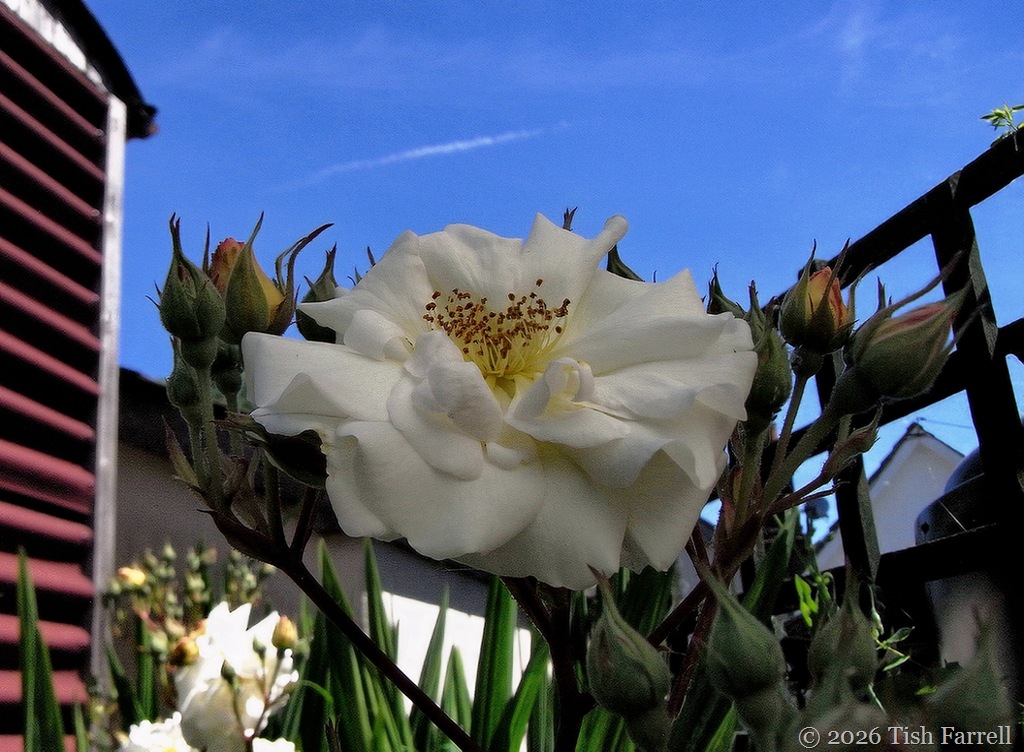
Meanwhile, the rose in the photo above is just starting out. St. Cecilia, she with the pale and floppy blooms. When we moved into The Gables nearly three years ago, I found her as a couple of weedy stems, much overgrown.  I’ve fed her up since, although I have mixed feelings about shrub roses in the midst of herbaceous borders. Vicious to weed around for one thing.

Directly under her is blue geranium Rozanne, a new arrival last year, who struggled to settle in during the drought, and then was disrupted by an ants’ nest in the top of the wall. Usually this is a plant you can’t stop. Once she gets going, she should flower all summer and into the autumn. In fact I often used to curse her in our Wenlock garden as, year by year, one plant sprawled into an invasion many feet wide and long. Now I find I’ll put up with sprawl to have the long summer blue.

IMG_0804

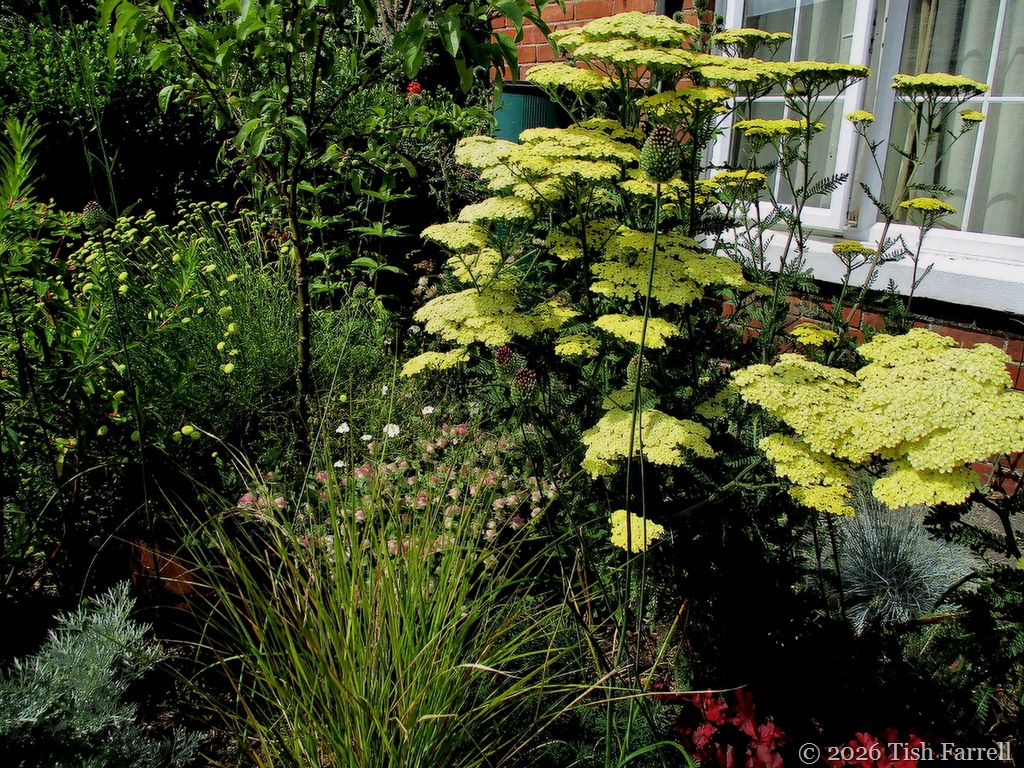
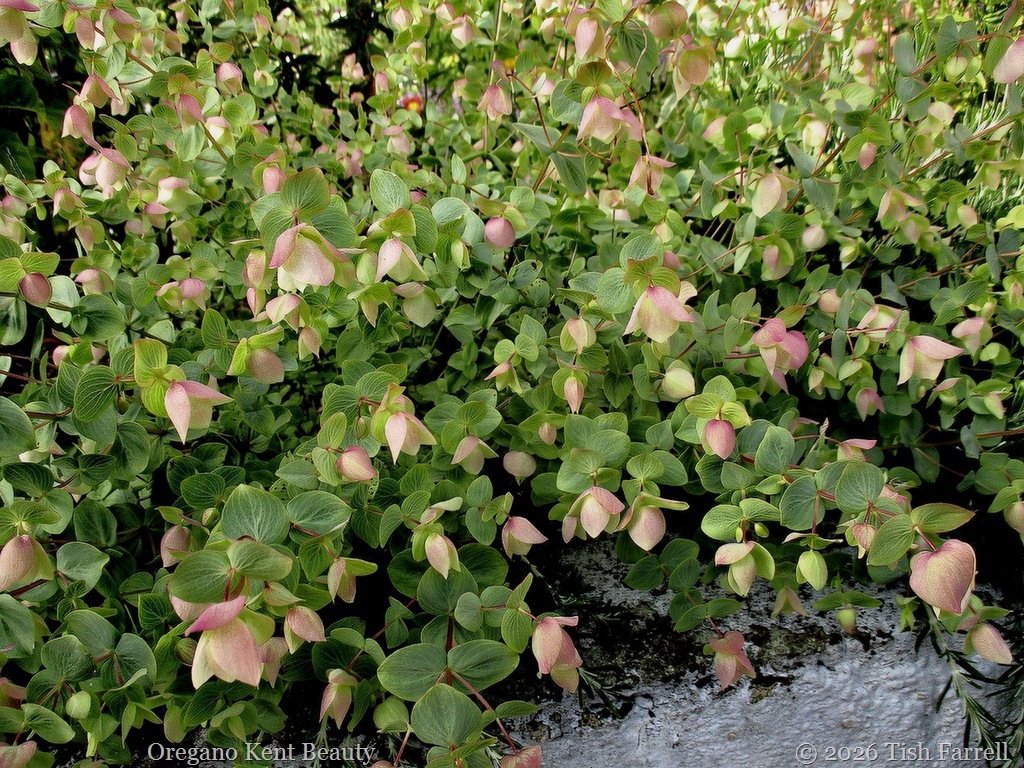
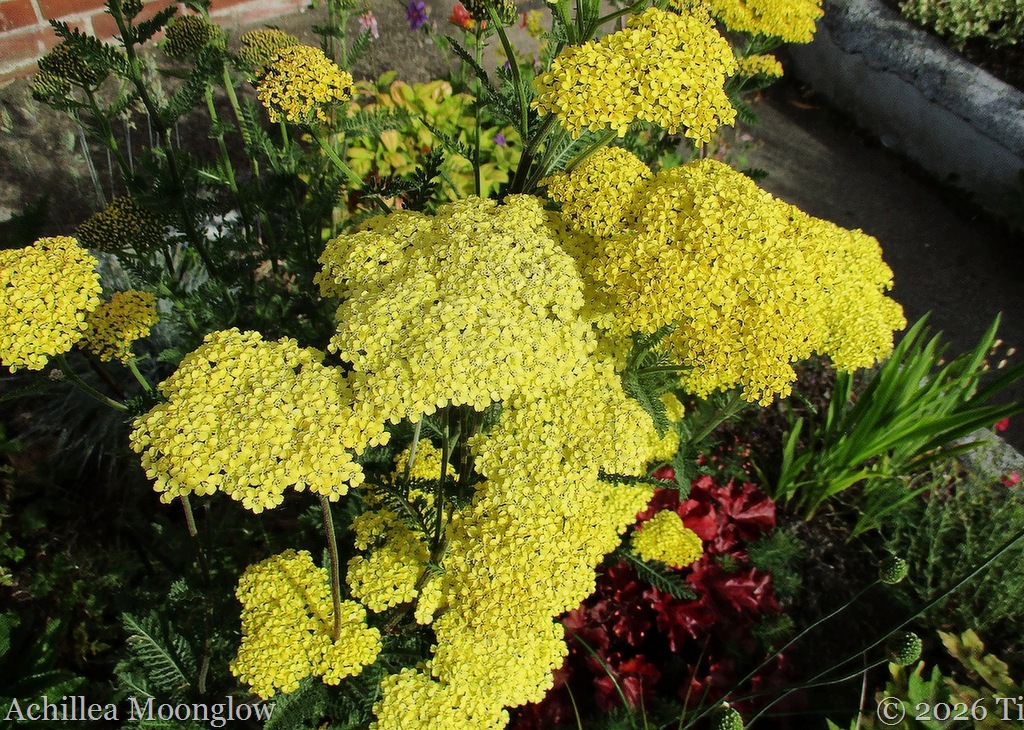
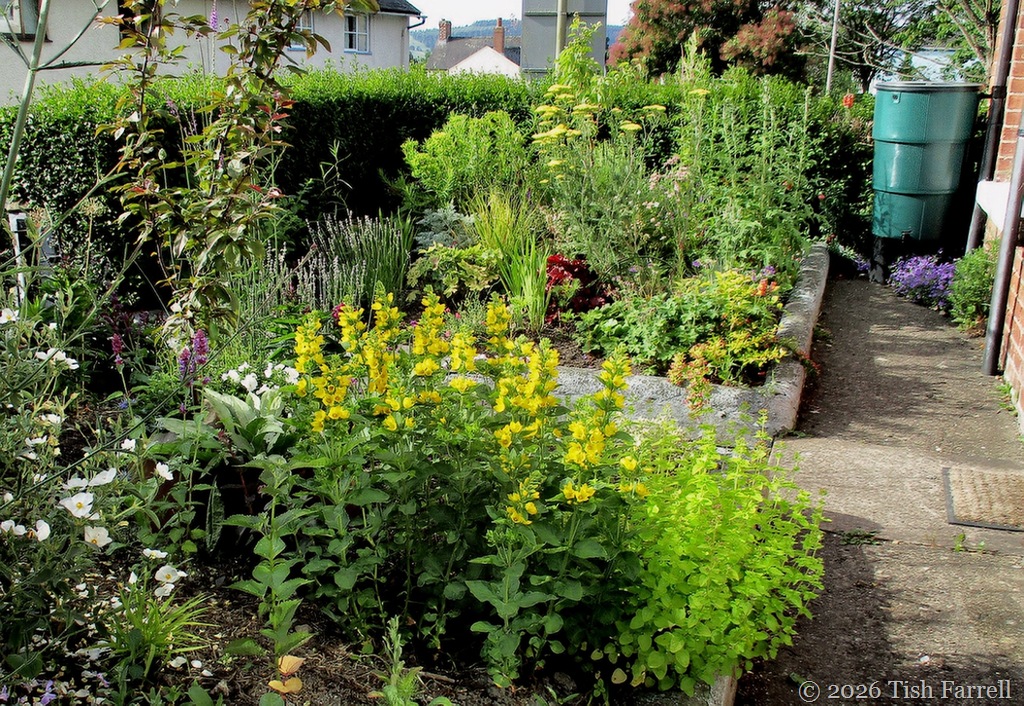
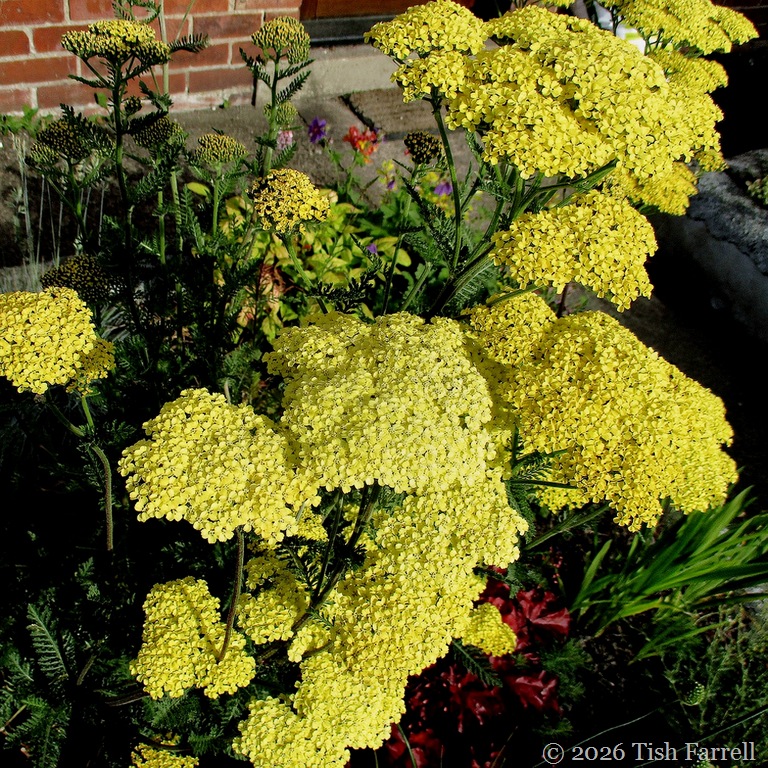
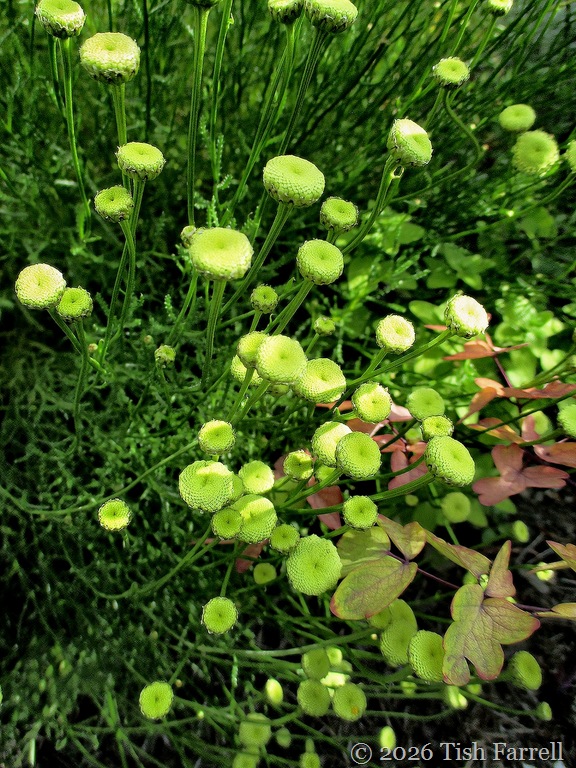
In the front garden borders, the earlier mauve shades have given way to the vibrant gold of Moonshine achillea and yellow loosestrife, and to the leafy greens of euphorbia and golden marjoram. There’s also a very vigorous cotton lavender tumbling from the crab apple’s raised bed, presently a mass of yellow buttons on brilliant green stems..

IMG_0781

IMG_0794

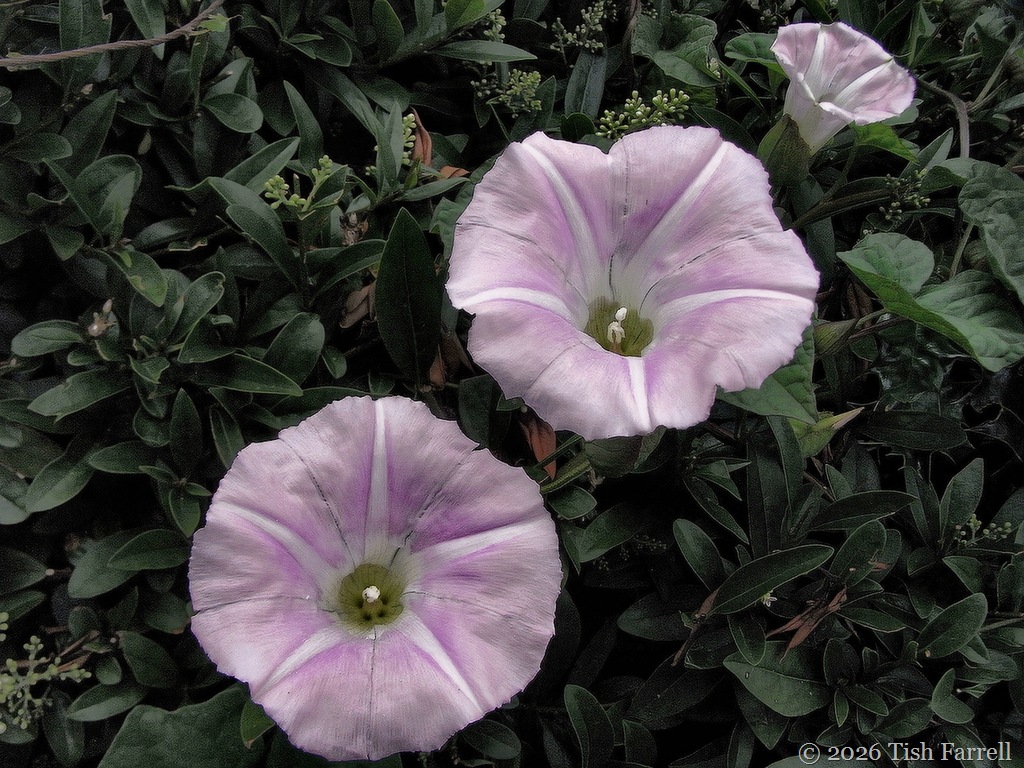
In the back garden, now is the time of bindweed – both wild and cultivated. In the hedge we have the locally feral, pink and white flowered version. It even survived last Friday’s big cut.

IMG_0818

RIMG0301 bindweed

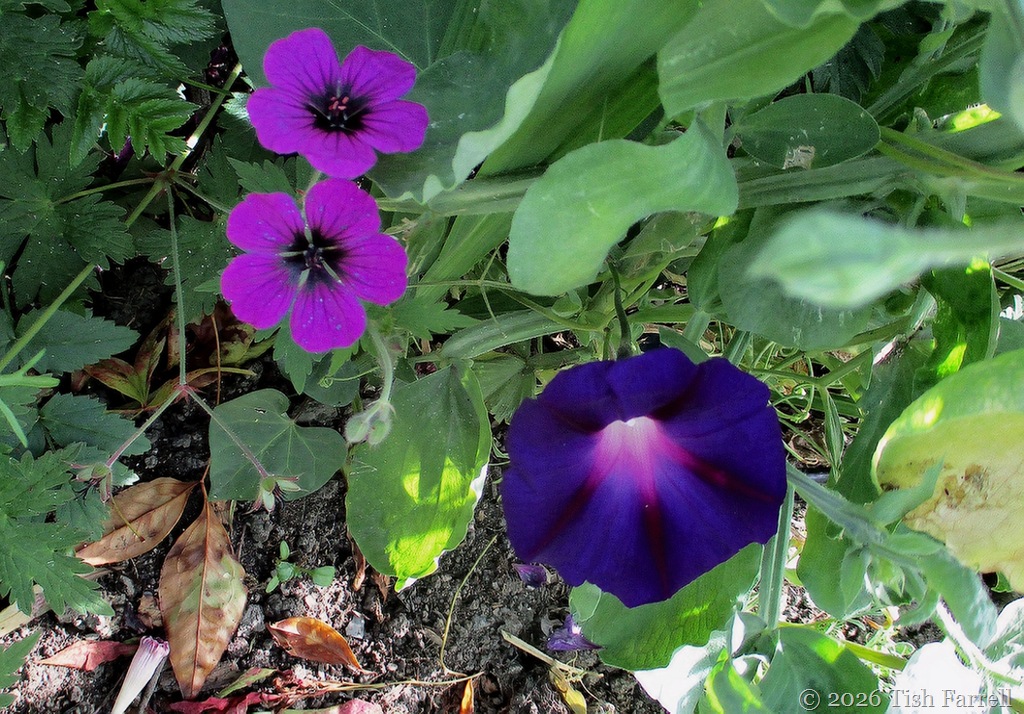
And then among the nearby sweet peas, where I planted the seedling some weeks ago, I found the first Morning Glory flower – Black Knight is its name; here keeping company with hardy geranium, Ann Thompson. They both like a good ramble. It will be interesting to see where they end up.

IMG_0826

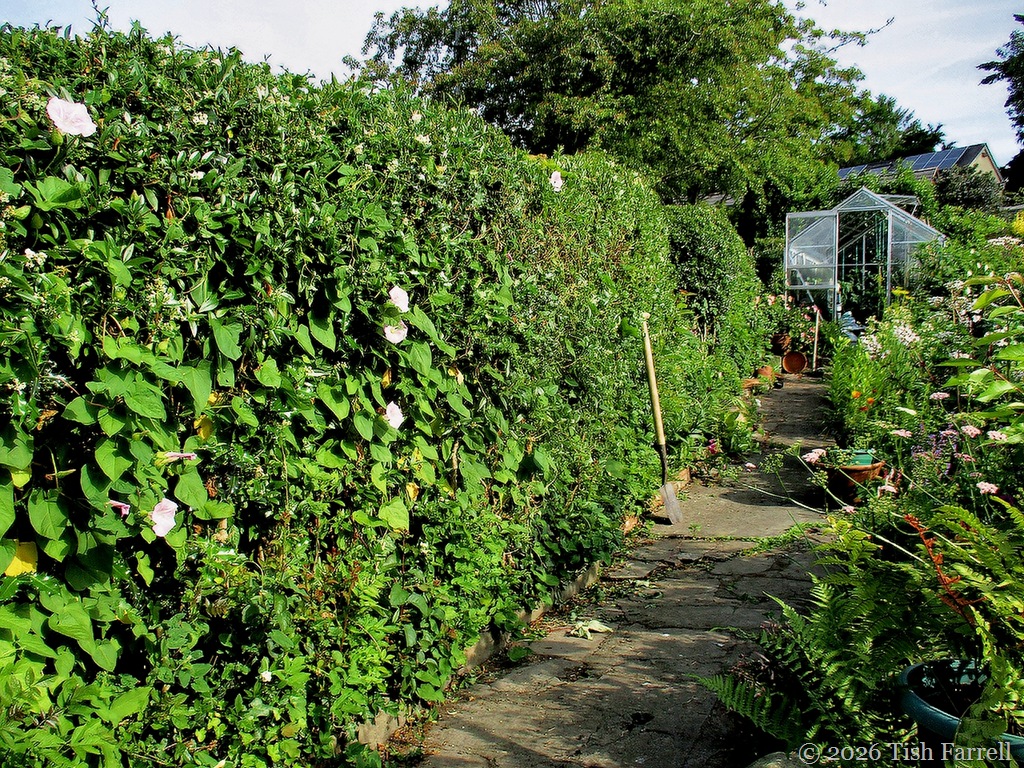
The hedge, as may be seen, is a challenge. It wants to be a forest and is filled with sapling ash and sycamore trees. This has happened because the whole length was once hemmed in with chicken wire and so impossible to keep a check on invaders. And then, egged on by ivy, everything has leaned on everything else so that the holly is horribly meshed with hawthorn, privet, field maple, forsythia, elder, and cherry. There are also some rather strange gaps, which I’m attempting to fill with cherry and field maple and briar rose (these presently at sapling stage). The bindweed does briefly improve the overall look.

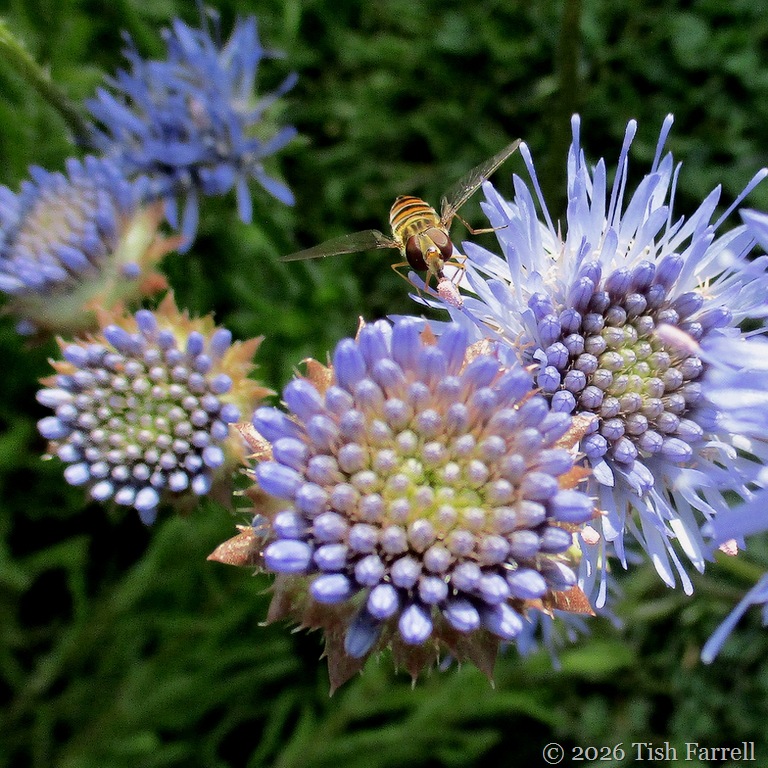
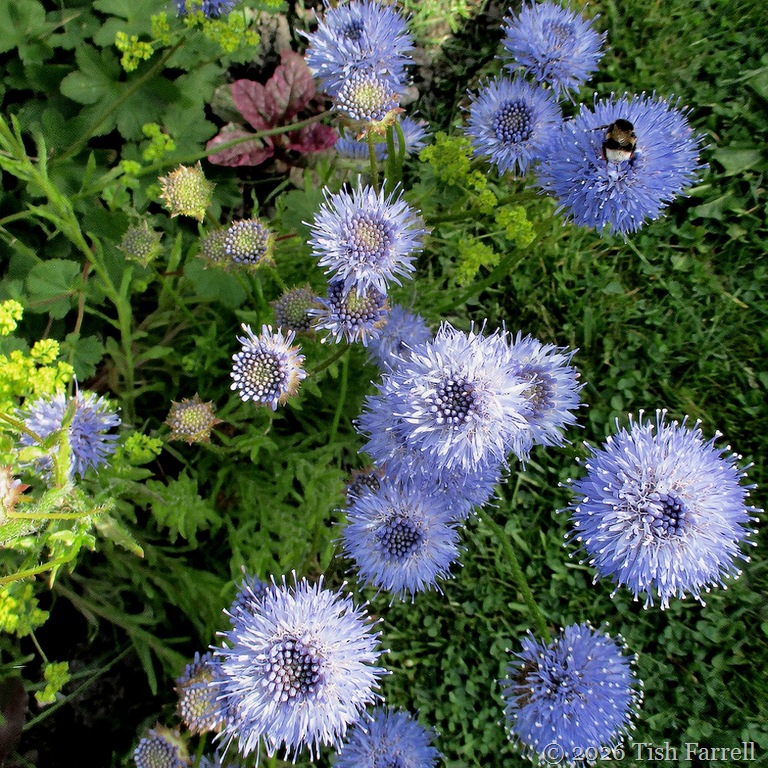
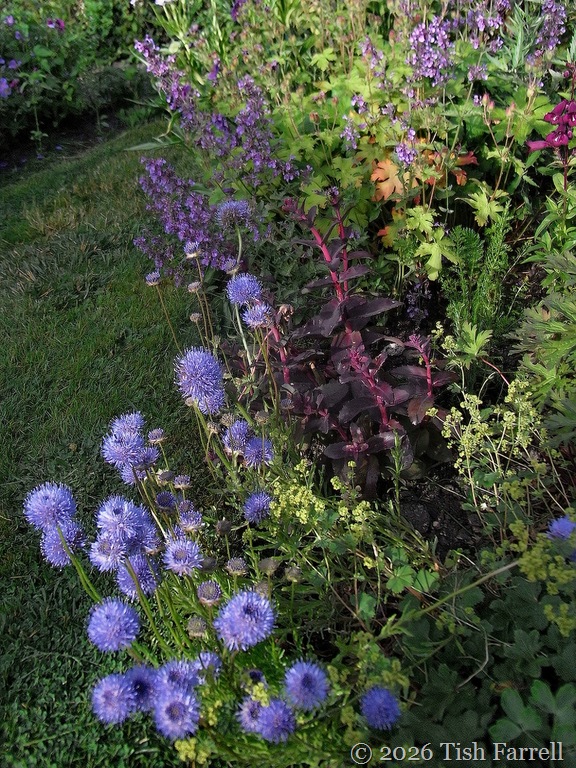
In the back garden bed,  with geraniums over, the sheep’s bit scabious are the current stars…almost literally, a floral constellation and a magnet for hoverflies and bees:

IMG_0847

IMG_0837

RIMG0408

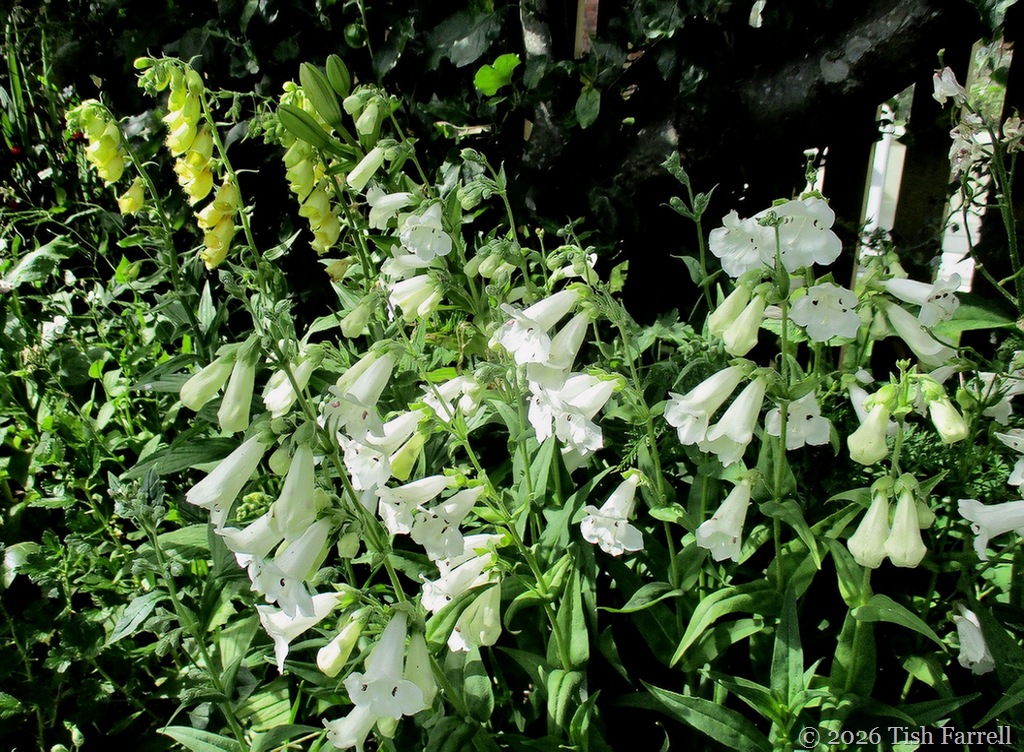
The feral foxglove season is over now. All through May and early June we had majestic self-grown spires – purple ones, white ones – in every quarter. Some of the plants were enormous, making the most of the overwintering mulch I’d spread on the borders. I’ve pulled most of them up. There are already enough seedlings about the place. In their stead, in the shady periphery under the old apple trees, come the perennial foxgloves. They are altogether more delicate in looks and structure – ivory white and buttery yellow. Very cooling to look at.

foxgloves

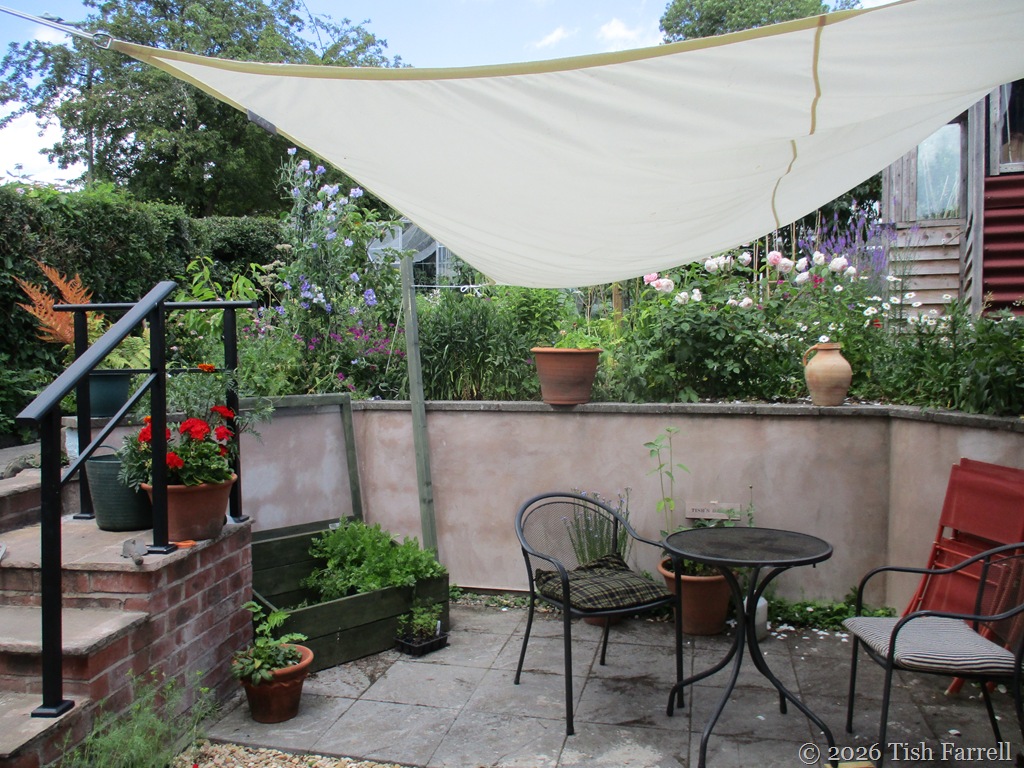
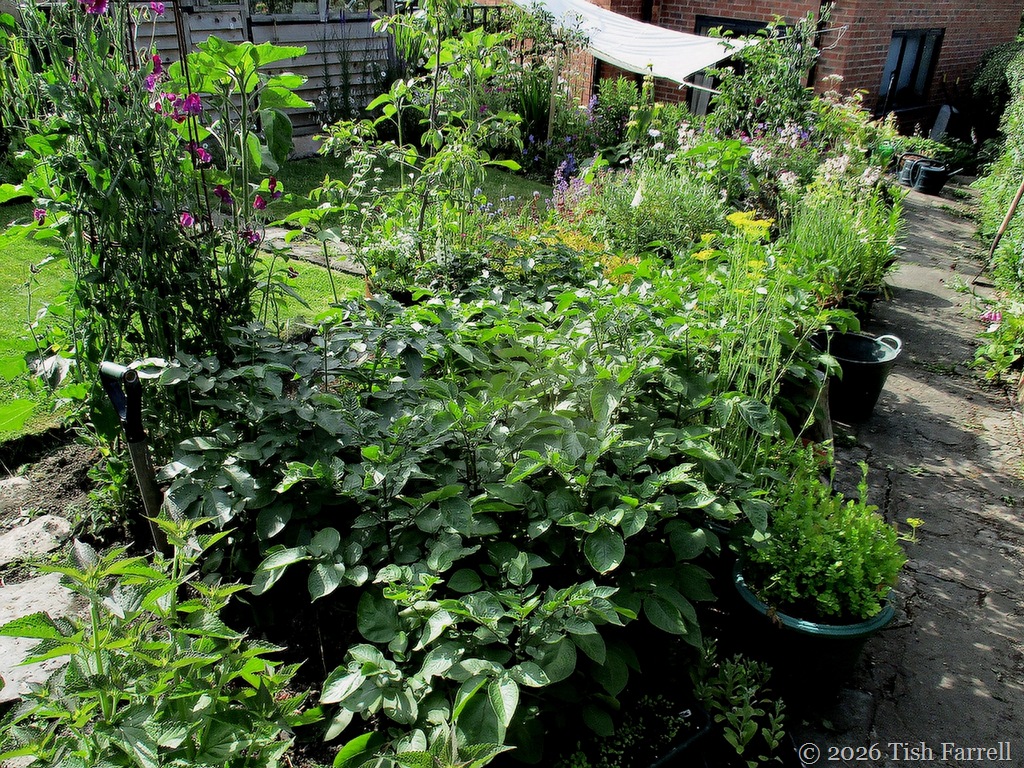
In front of them is a path and then a row of raised beds for vegetables.

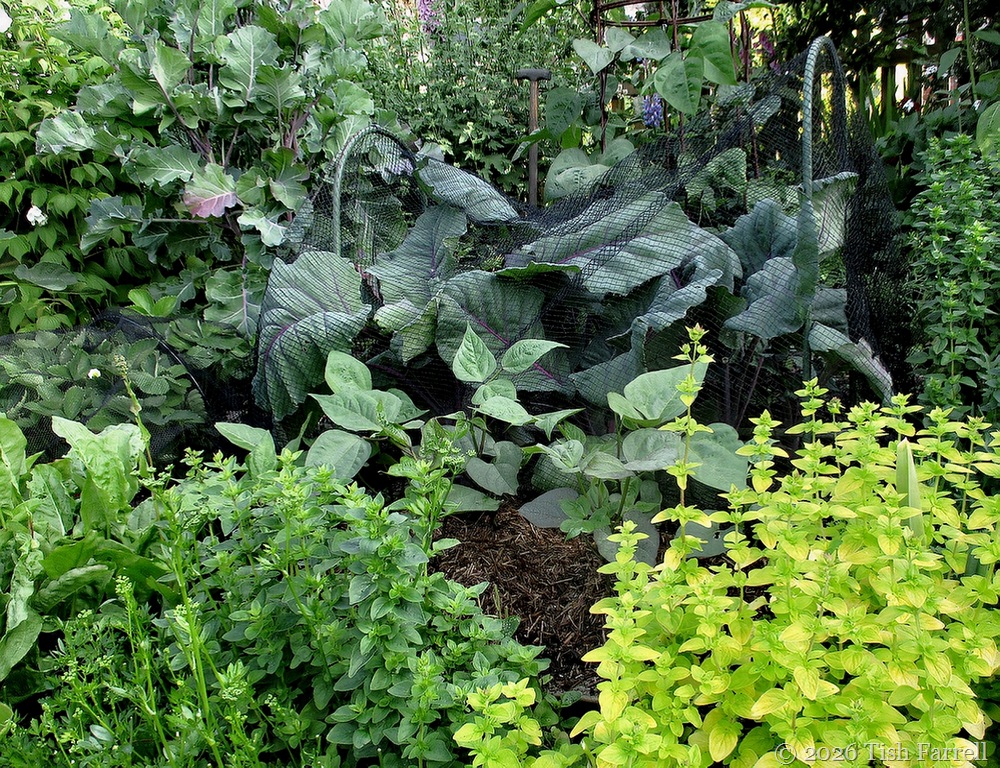
Here the French beans, cabbages and herbs have all put on a sudden growth spurt – almost overnight. I also appear to have grown something that I can only describe as a brassica bush (top left corner). It is nearly as tall as me and is a mass of branching stems of tender kale leaves, but also among them now, some sprigs that look like purple sprouting. It’s been in the garden since last summer and only now decided to perform, having missed the March-April ‘hungry gap’ when I was expecting it. Ah, well. Am happy to crop it whenever it comes.

herbs, beans and cabbages

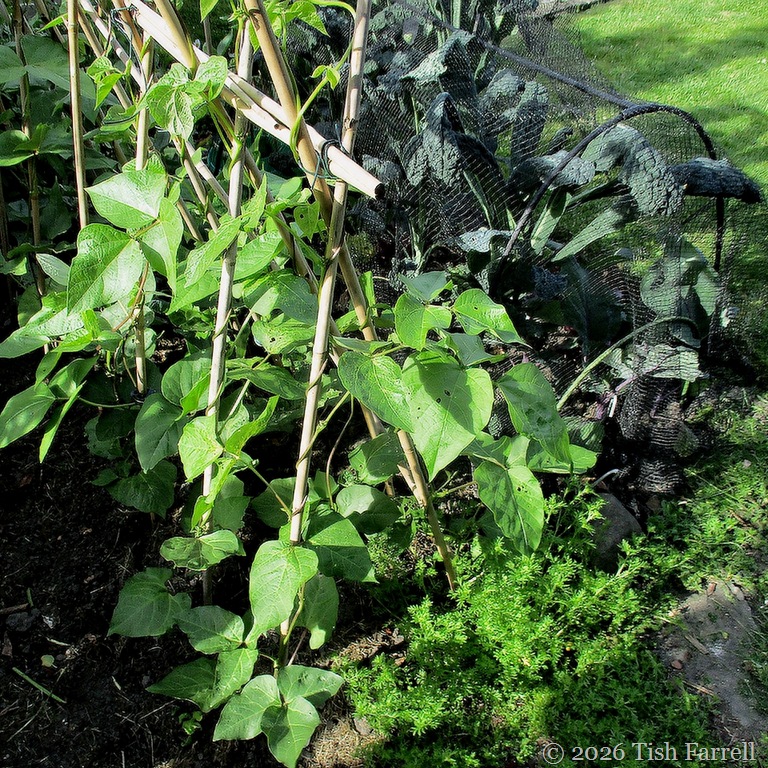
The two rows of potatoes are looking promising. The runner beans, too, are growing well, finally each plant up its own stick, now that I’ve untangled the knitting nonsense created by the June winds.

IMG_0863

IMG_0853

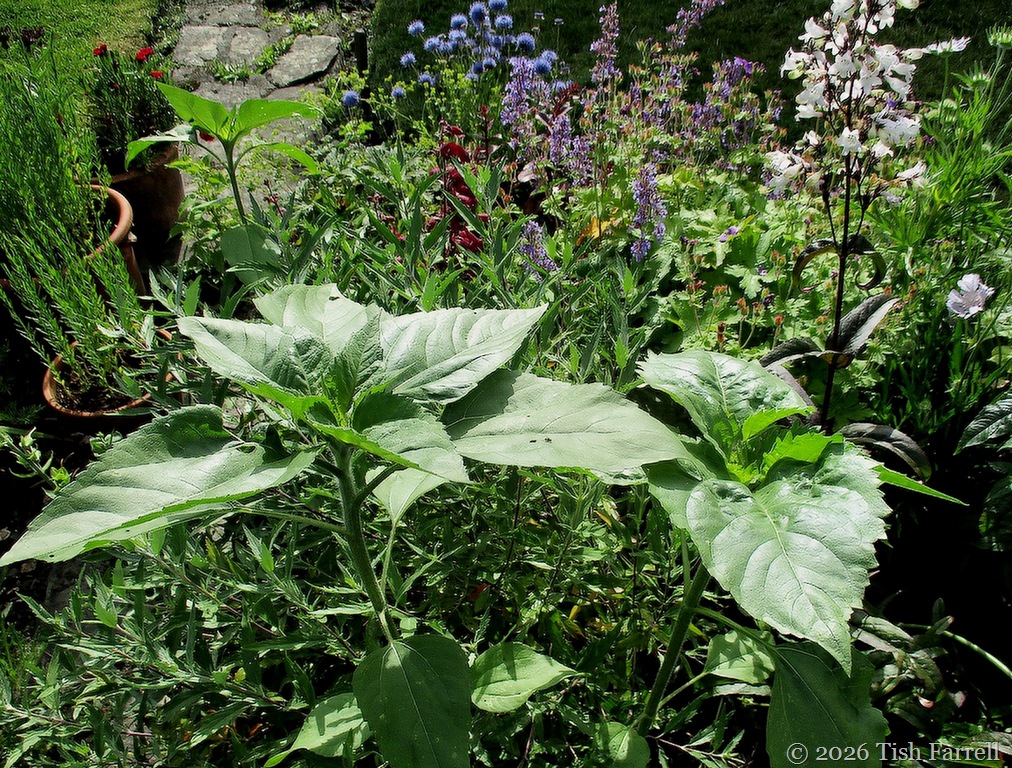
The next big blooming event will involve the sunflowers. They have sowed themselves all over the garden. One is already so tall it clearly has magic beanstalk ambitions. So as they say: watch this space.

IMG_0866

Copyright 2026 Tish Farrell


Looking Back Through The Old Africa Album

Scan-140809-0001 - Copy ed 6 26

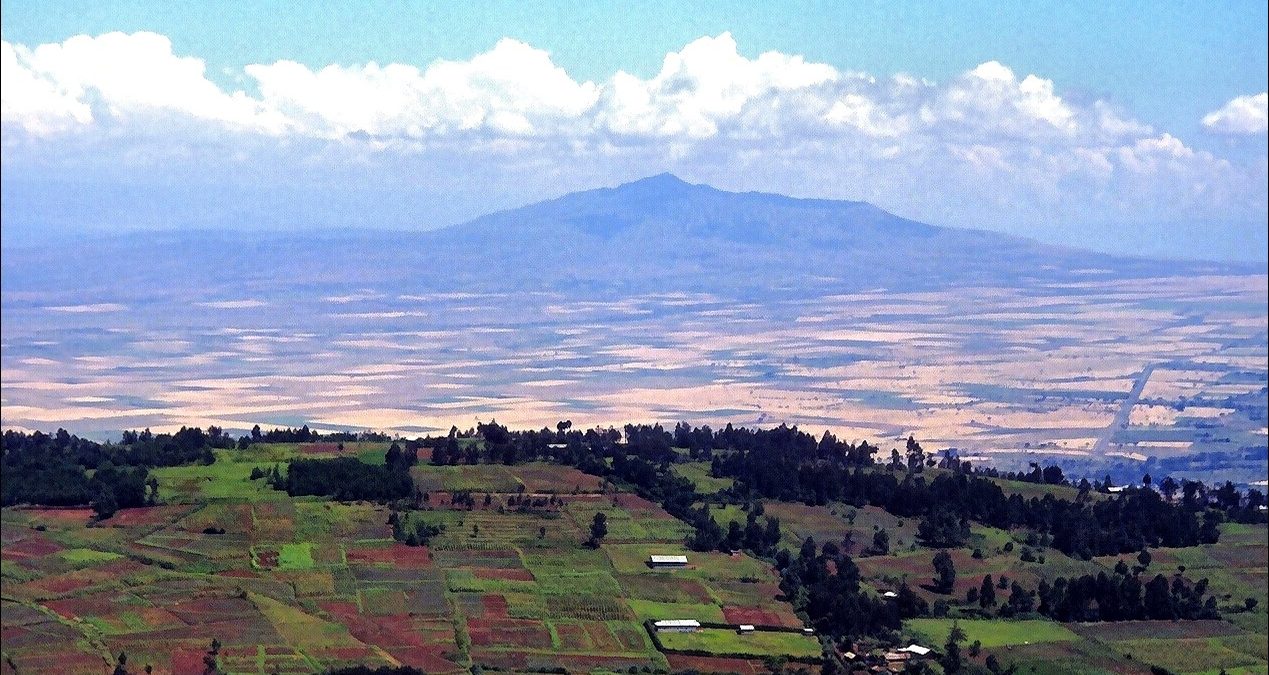
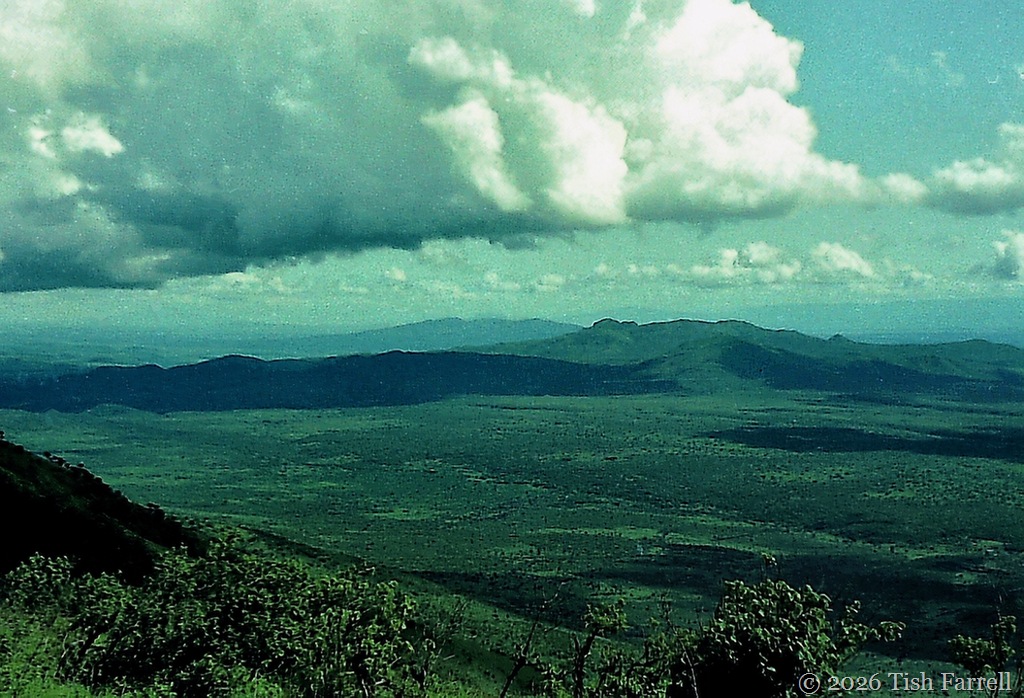
The Great Rift Valley surely is a world wonder, the four-thousand-mile system of volcanic fractures and fissures that stretches from the plains of northern Syria, across Arabia and the Red Sea, then cuts down through Ethiopia, on through Uganda and Kenya (with a westerly Albertine branch around Lake Victoria), pressing on through Tanzania, Malawi, Zambia and finally finishing in Mozambique. I read somewhere it is the only geological phenomenon that can clearly be seen from space.

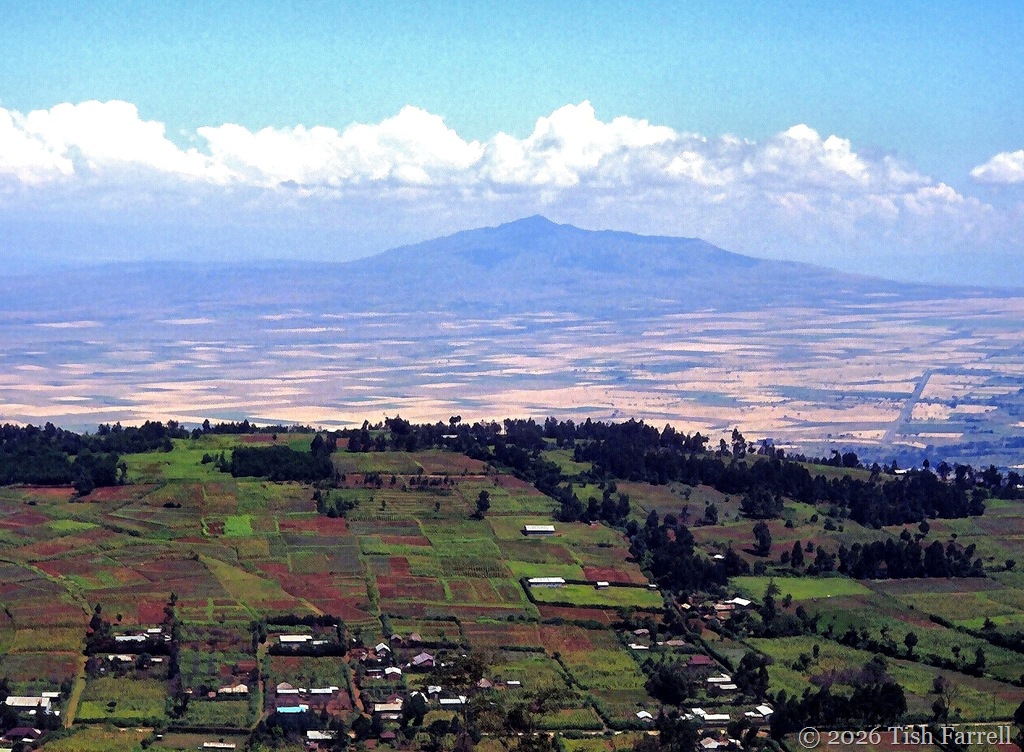
The aging photos in this post, then, show scarcely a glimpse of Kenya’s Great Rift. Most were taken at different seasons from the 9,000 foot viewpoint on the highway north of Nairobi. The road itself, the country’s major route to Kisumu on Lake Victoria and Uganda beyond, climbs from the city, up and along one of the East Rift’s faulted terraces before descending to the valley floor at Nakuru.

The volcano you can see is Longonot, quiescent now and containing a lost wildlife world within its massive crater. You can walk around the rim, and it’s one of my regrets that we never did. But then in the ‘90s when we lived in Nairobi, security everywhere always seemed an issue.

The foreground farms lying in shadow are on a lower Rift terrace. This is Escarpment village where Graham did a lot of his fieldwork on Napier grass smut for his PhD thesis. I went along to hold the clipboard and one end of the tape measure. For that story see Past Lives – Beneath A Tropic Sun.

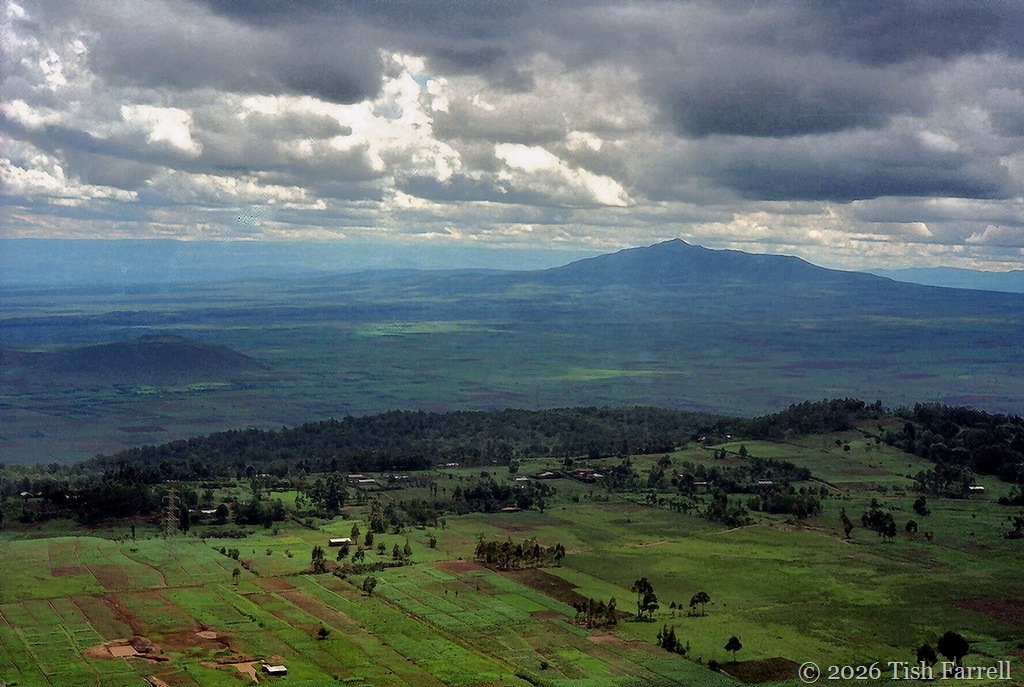
Next comes a rainy season view. This was probably taken during the very wet 1997/98 El Nino event:

Scan-130429-0014 ed 2 26

But then…

IMG_0005 ed 6 26

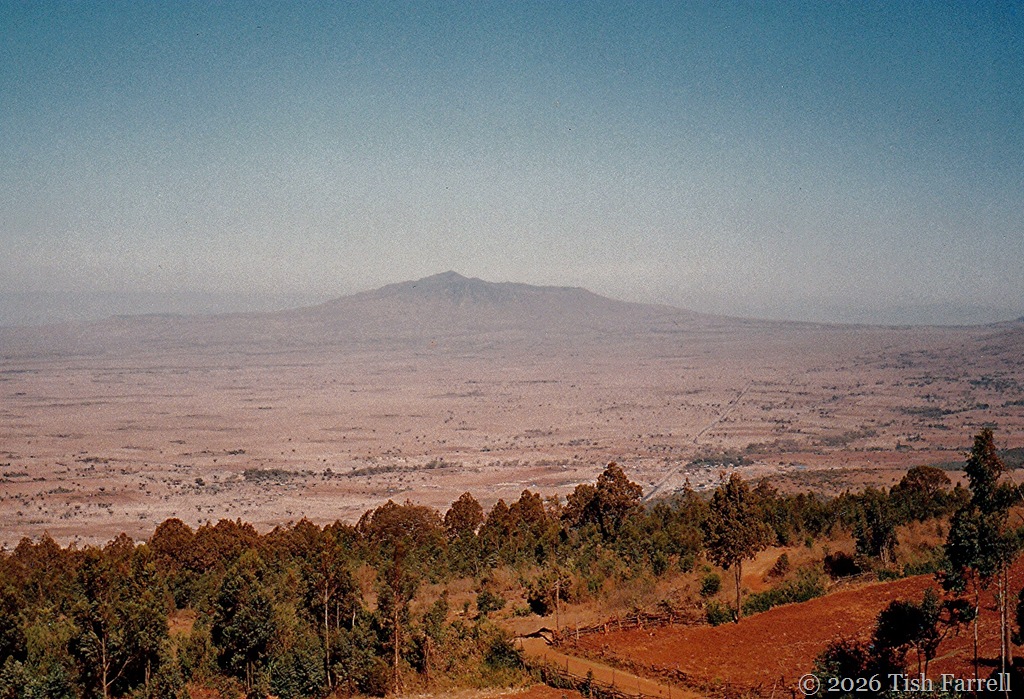
…the dry season, both above (July) and below (August) on the valley floor:

Scan-140727-0003 ed 6 26

And finally…

Best view from Ngong hills ed 6 26

…here’s a late afternoon view, further south from the Ngong Hills near Nairobi.

Looking back on these photos, the biggest wonder is that I was ever there at all. Even at the time, much of what we saw was too astonishing to grasp.

Lens-Artists: Looking back at #1 Wonder This week Sofia reminds us to be amazed by life’s wonders. Please visit her beautiful photo galleries.

Six On Saturday: After The Wind And Rain

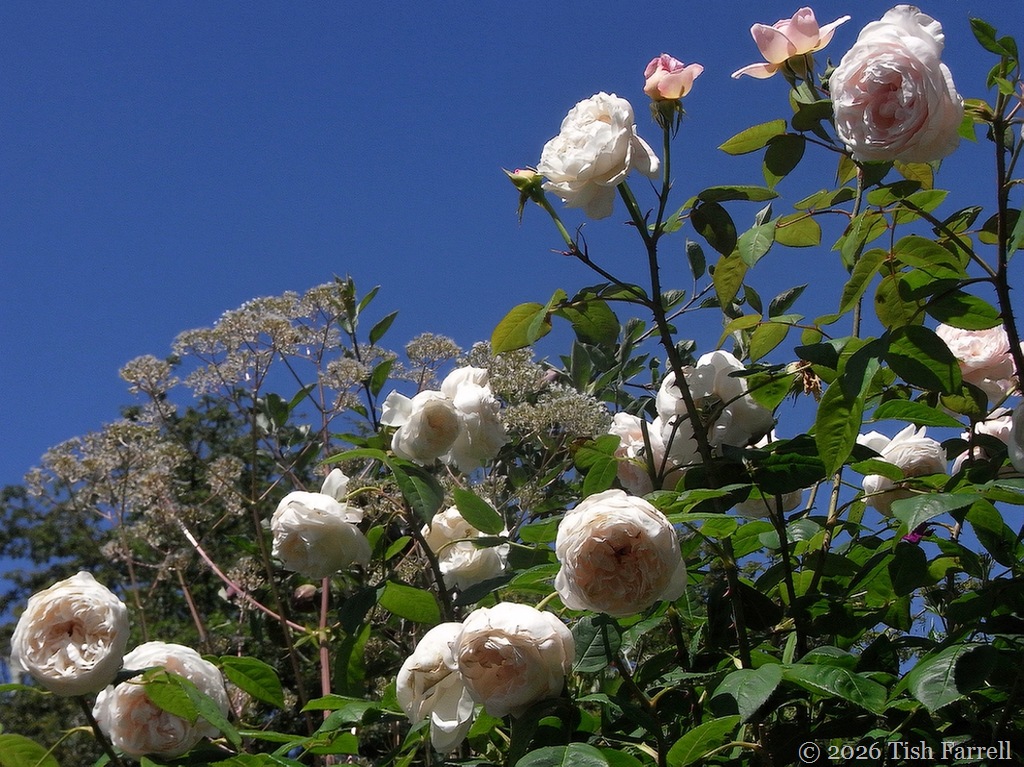
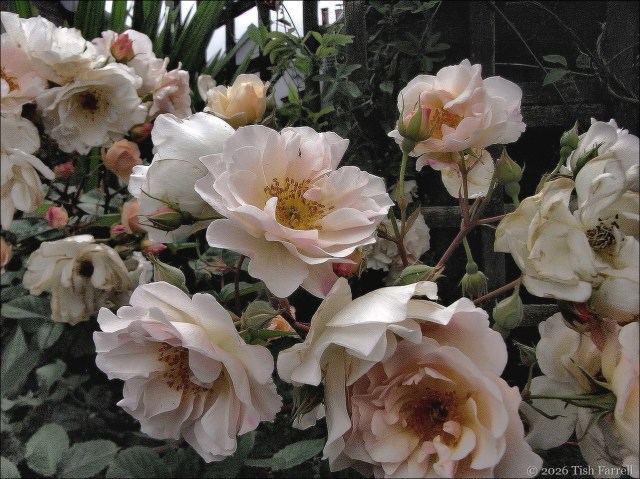
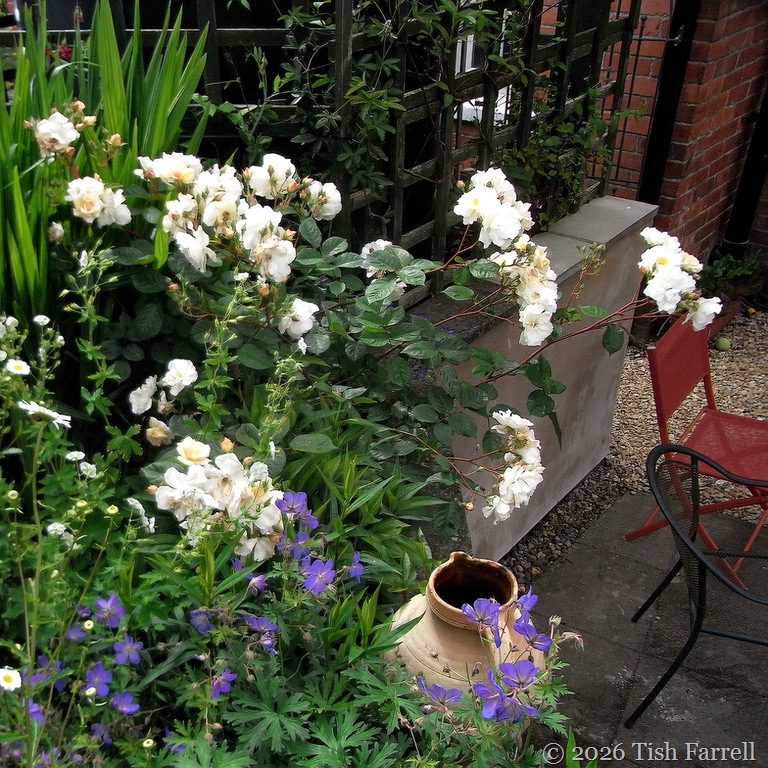
Come gusts and squalls, the roses have been holding their own. And then, in late afternoon, if we have some sunshine, they tumble luminously over the terrace wall and look glorious come supper time. 

The constant wind, though, is tedious. When did England become so never-endingly blustery? I’ve tried searching on line for an answer, but the sites that deal with weather don’t appear to think it remarkable. As someone who has gardened for over half a century, I know we did not have perpetual wind mashing up herbaceous plants and blowing the new runner bean plants off their sticks.

Perhaps it’s to do with ‘the cold blob’ also bizarrely known as North Atlantic Warming Hole, a region of ocean to the south of Greenland that has been cooling over the past century while the surfaces of the earth’s other oceans have been warming up. Scientists have argued over the possible causes, some citing a weakened Atlantic Meridional Overturning Circulation (AMOC), the system that plays a significant role in the earth’s global climate.

Perhaps the AMOC stole our much vaunted heat wave. If it did, many thanks.

And of course there is much to be pleased about.

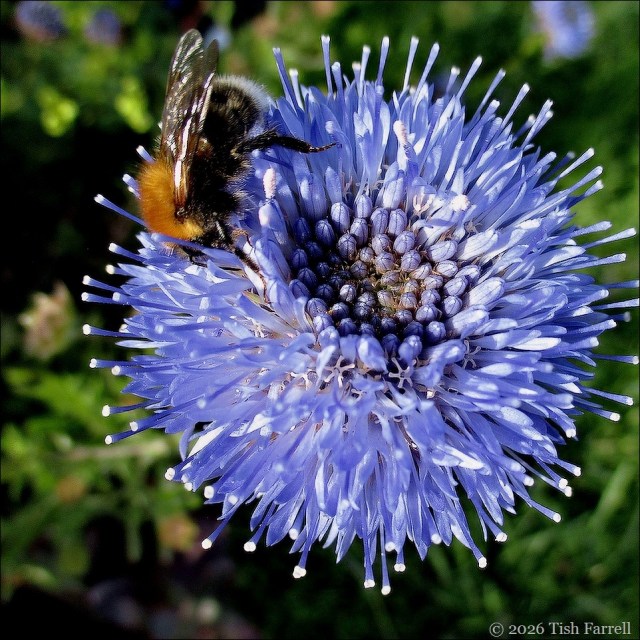
For one thing there are so many bees in the garden, this after a long quiet spring insect-wise. They definitely approve of the sheep’s bit scabious, harvesting the flowers for ages, which makes them easy to photograph.

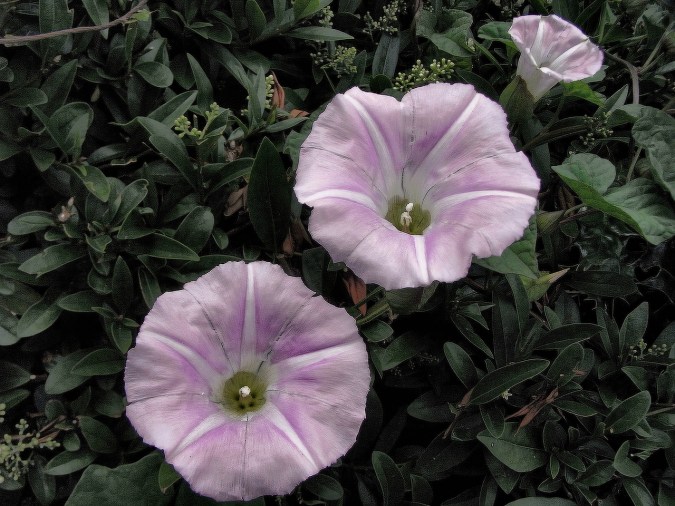
It’s usually a weed that provokes gardener’s fury, but the large flowered pink and white striped convolvulus that has just re-appeared in our otherwise horrid hedge is a welcome sight.  For a bindweed, it is most circumspect in its habits, and only spreads here and there.
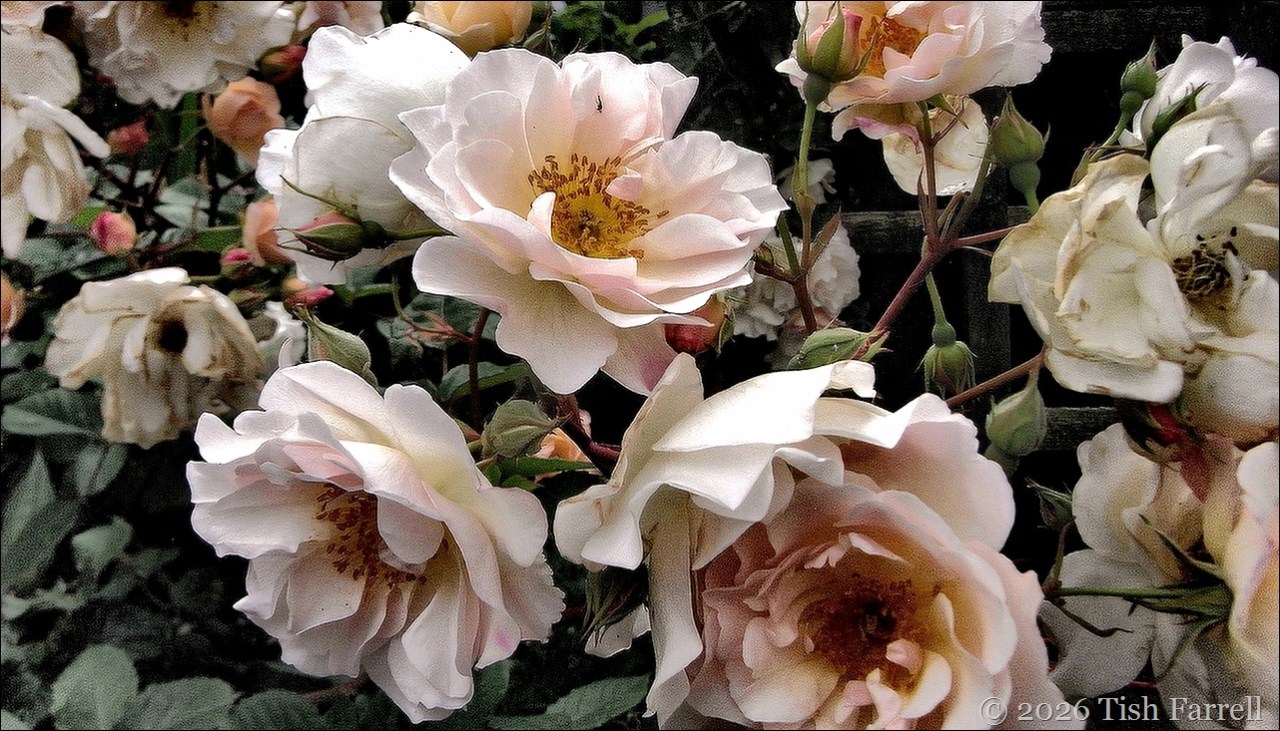
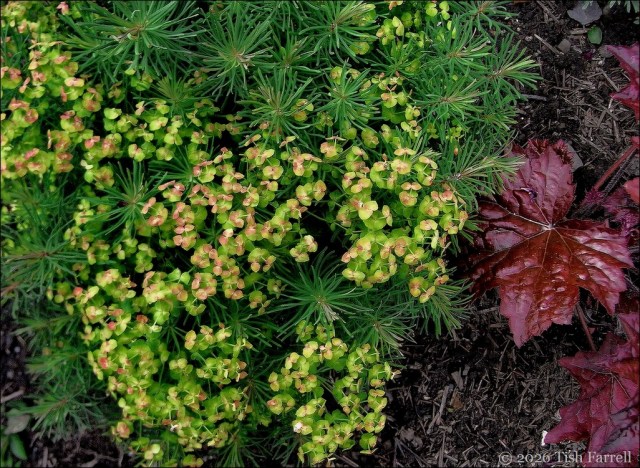
Another spreader, presently flowering is the pretty, low-growing spurge, Euphorbia cyparissias Fens Ruby. Its stems look like miniature conifers, and the tiny flowers several colours of green and russet. It likes to nudge up picturesquely with other border plants and, in that sense, it is a very weedy entity, but then any excess is easily removed. Here it is with a coppery coloured heuchera.


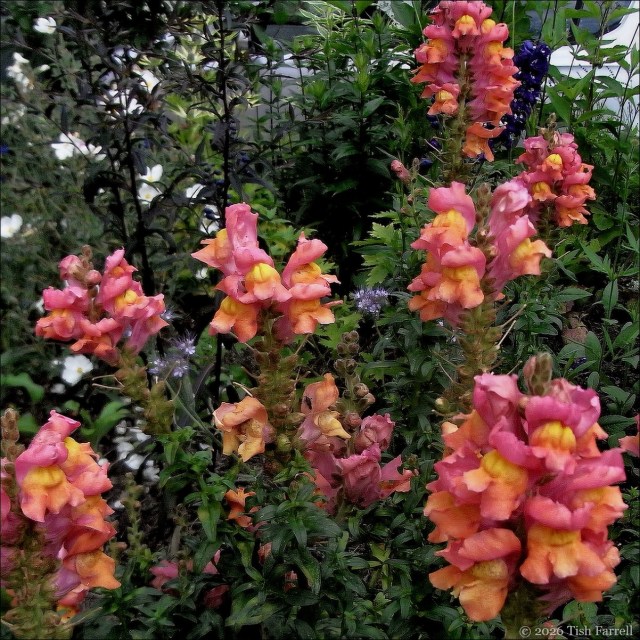
Then there are the self-gardening  regulars that seem to return each year, and with ever more flourish. I love these snapdragons. I don’t mind how much they seed themselves. The plants themselves are shrubby and don’t seem to mind the wind and rain. But most of all, their sun-rise shades brighten the dullest day.

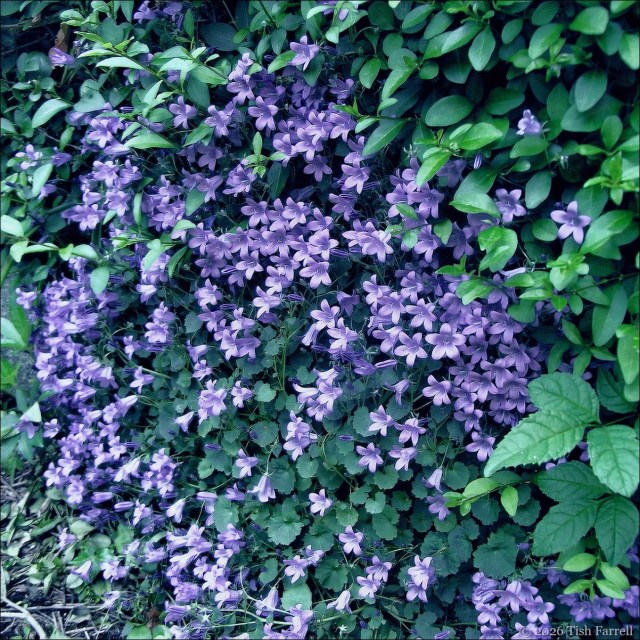
Likewise, the campanula. Over the past few years it has colonised many dull and unpromising quarters of the front garden – growing up the hedge, out of concrete walls, and along the path. It flowers its purple-blue socks off.

Here it is improving the looks of the privet hedge that surrounds the front garden borders. It’s another plant that copes brilliantly with weird weather, wet or dry.

Copyright 2026 Tish Farrell

Six on Saturday 13 June 2026 Please call in on our host, Jim. As ever, he has some wonderful plants to show us this week.

Apricot Afternoon

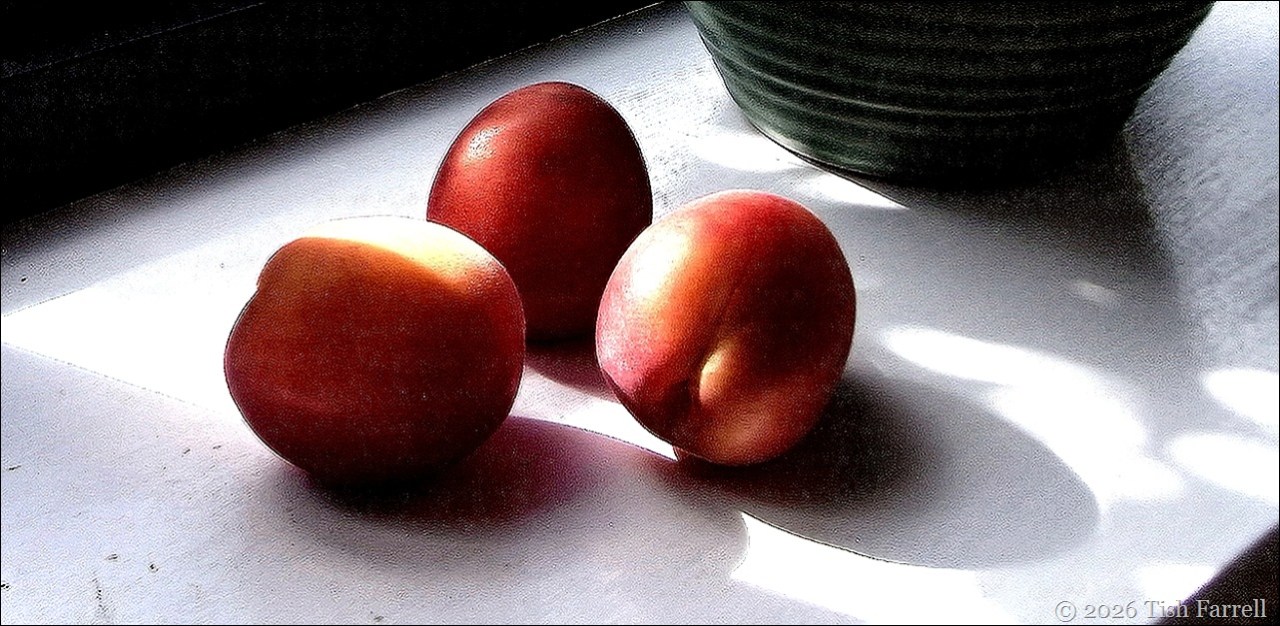
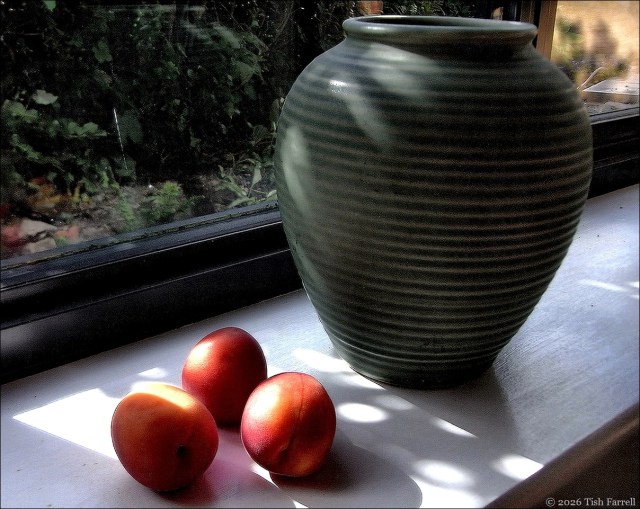
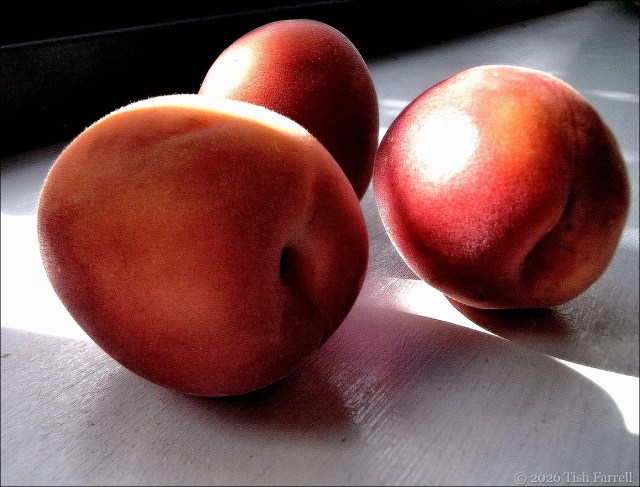
Late afternoon. Wind gusts in the hedge outside the kitchen window, sending light darts along the sill. Earlier I’d put some apricots there to ripen, but now it is their flesh that fascinates – the contre-jour deep shadow, the sun-blazed cheeks.

Lens-Artists: focused Please visit Patti who sets this week’s challenge. She has lots of tips for different ways to stay focused.
Raindrops On Roses ~ Six On Saturday

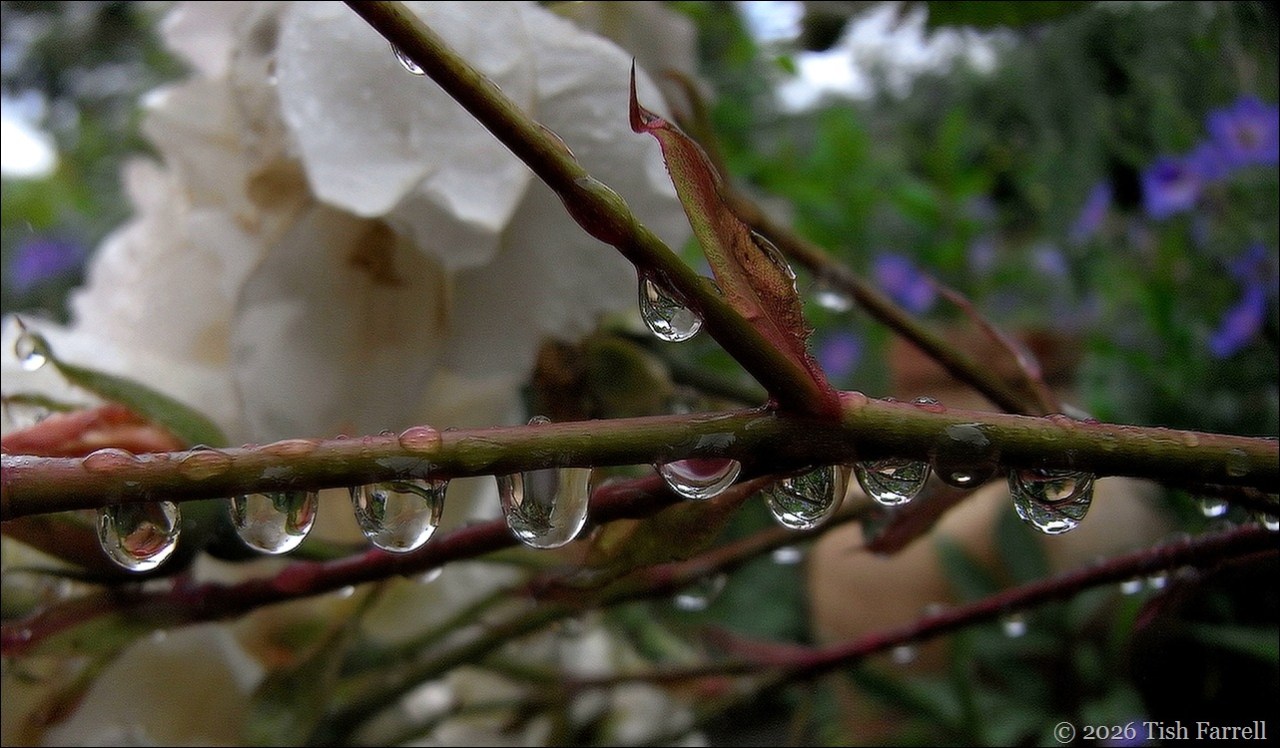
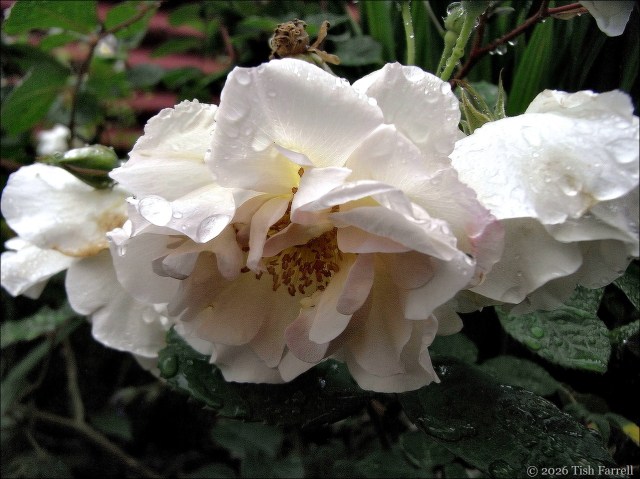
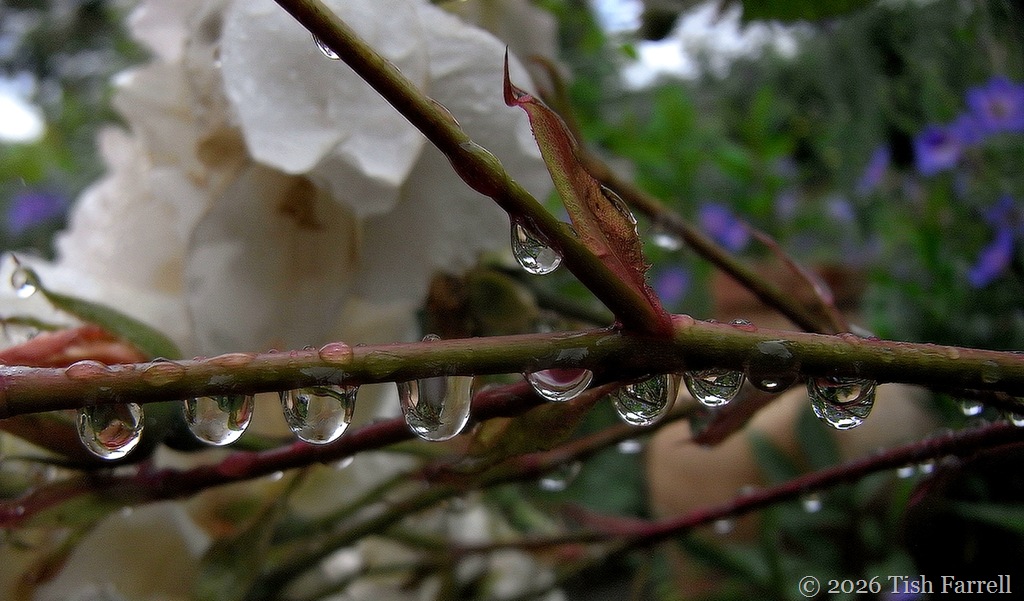
Today it’s more like October than June. We’re back to grey skies, gusty wind and rain between showers. But the Peneloperoses are bearing up, even if their frocks are soaked and their flounces crumpled.

Here’s a photo from earlier in the week during a sudden sunny spell. The plant itself is a tending-tall, rather floppy shrub rose that can be trained as a short climber if you only have a short wall. I’m hoping that in time she will simply arc gracefully down the terrace wall without much in-put from me. She’s already doing her best.

RIMG0180 Penelope rose

RIMG0215 rose back garden

***

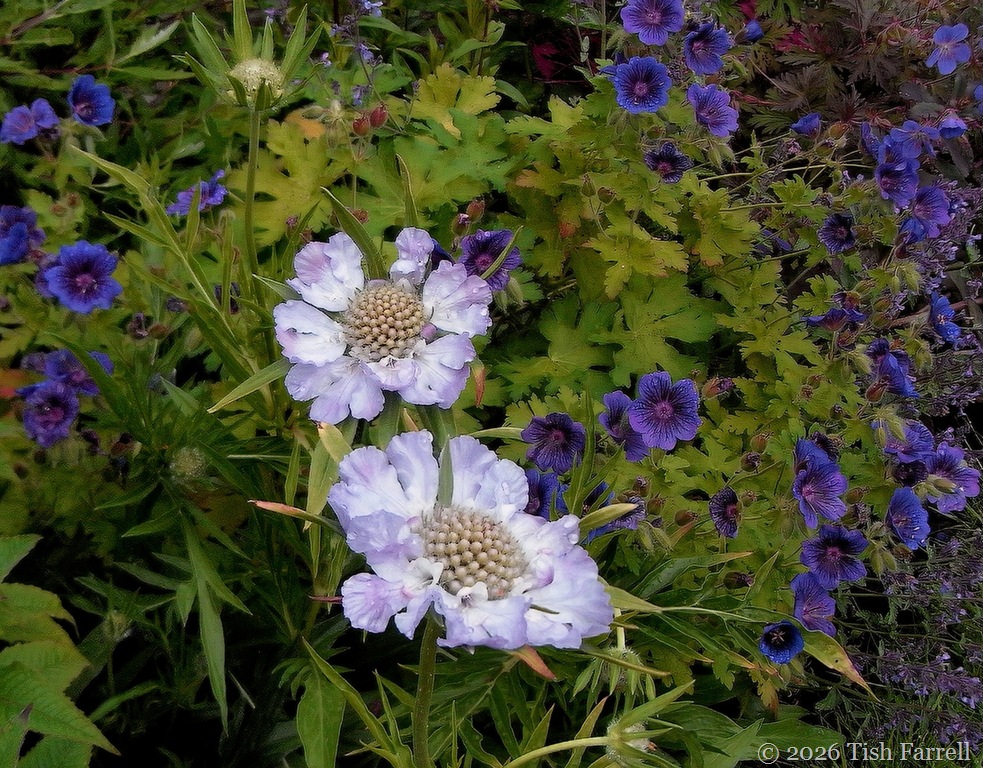
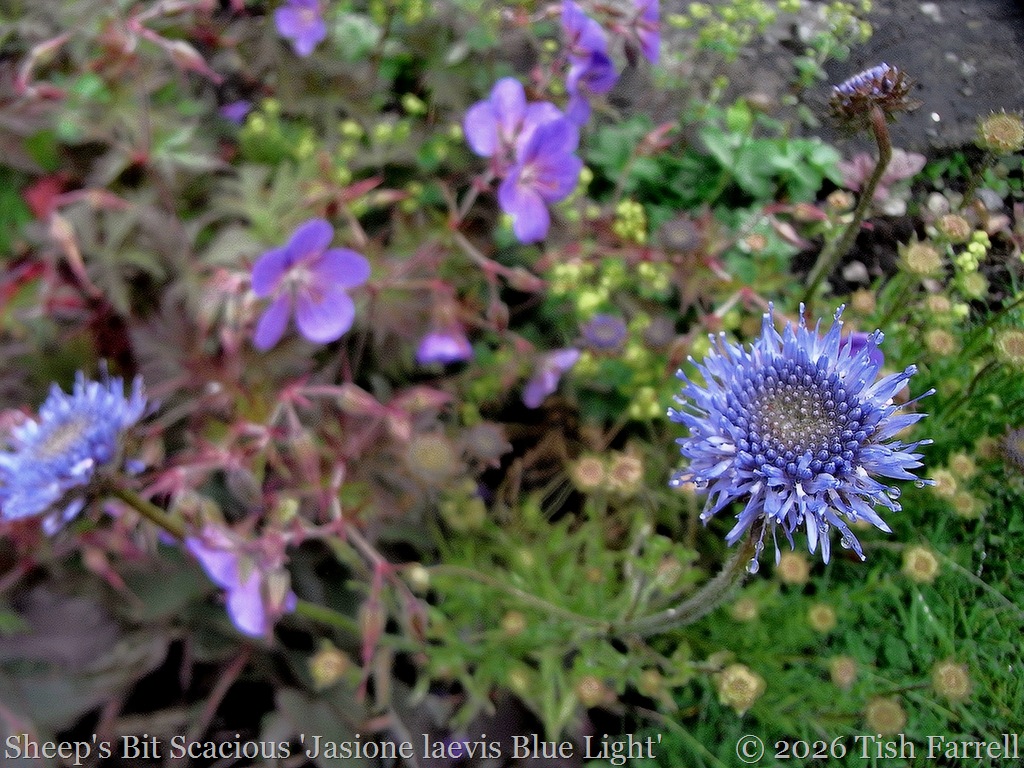
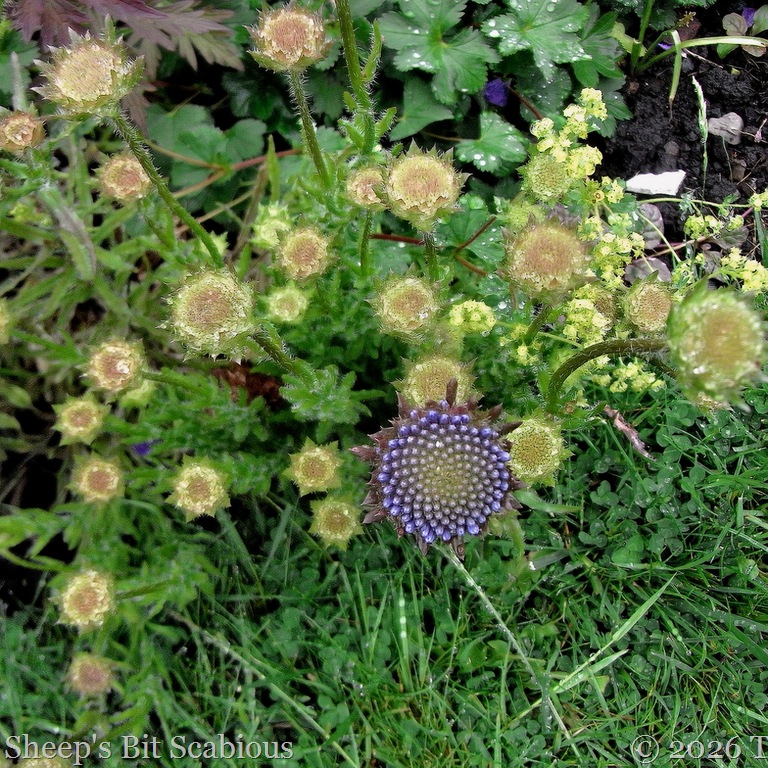
In the back garden the scabious are just beginning to flower – both the usual herbaceous border version which I bought as large plugs three years ago, but are only now performing, and a Sheep’s Bit variety called Jasione laevis Blue Light, which went in as a young plant last September. Both are presently keeping company with various hardy geraniums, but the Blue Light is already making a pleasing low clump on the border edge near the path.

RIMG0264 scabious

RIMG0260 Sheep's Bit scabious

RIMG0261 Sheep's Bit

***

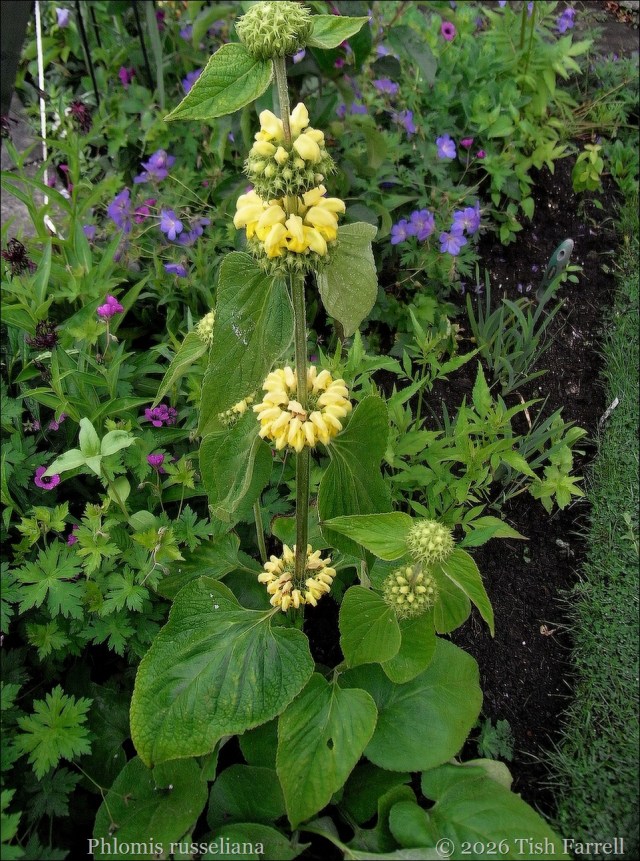
Another first-time performer in the garden is the yellow Phlomis russeliana. I bought it because it’s drought tolerant, bee friendly, will bloom all summer and the dead flower heads still look good in winter. Last year, however, it sat out the long drought, and only made big leaves. It’s making up for it this year. I’m thinking that in due course it will need to move to the side wall bed, where it can keep the yellow rudbeckia and helianthus company.

***

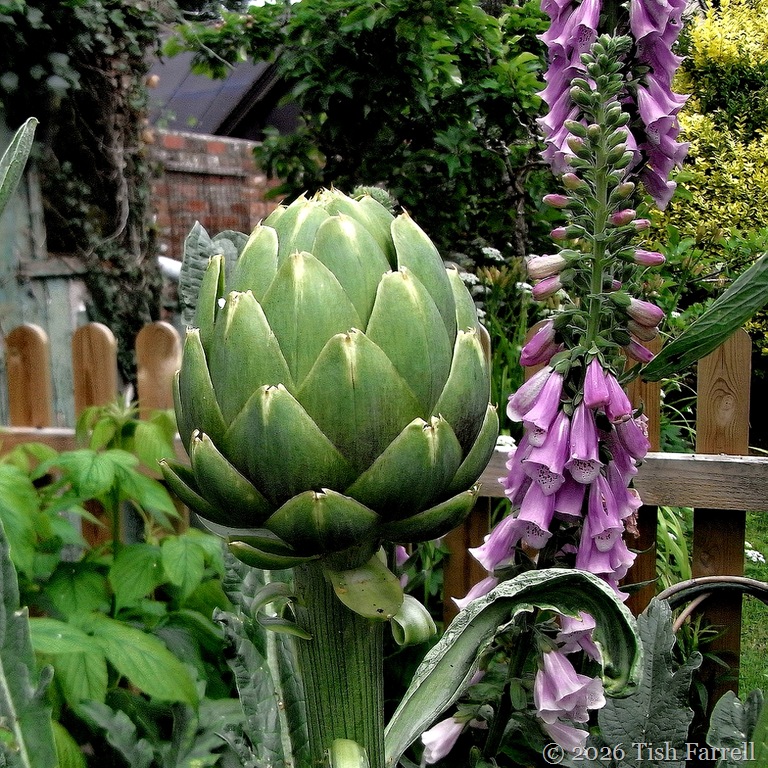
On the edible front, the globe artichokes are making their presence felt. One of the plants has grown up hugely in a most annoying spot, squashed in between the Polka raspberries and the Jelly King crab apple tree. I know I did grow it from seed but somehow it escaped me during the planting phase and dug itself in. Anyway, the rain has brought it on, and it’s about to be eaten. I usually cut artichokes in half to remove the choke, and then steam them. Halves obviously don’t need so much cooking time as wholes, and it’s easier to see if they’re done. Garlicky butter to serve.

RIMG0201 globe artichoke

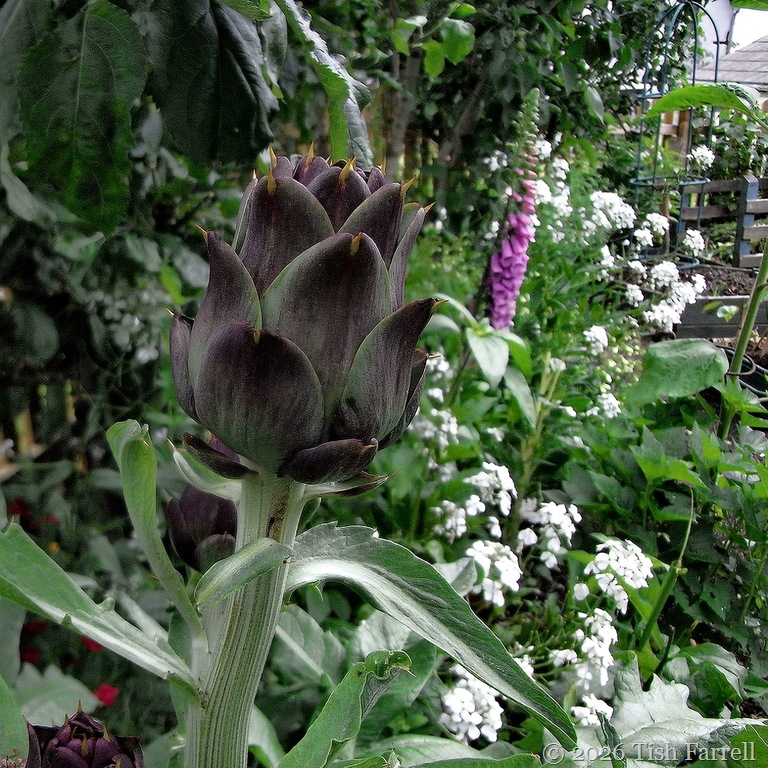
Also in the bottom border is a a purple headed variety. It’s strikingly ornamental growing alongside the sweet white rocket and foxgloves.

RIMG0205 artichoke

***

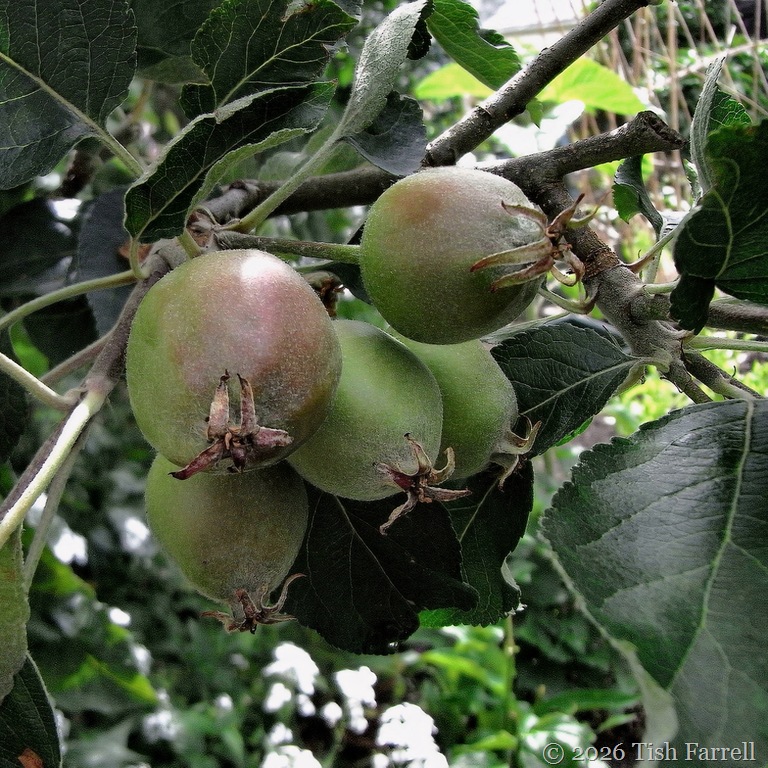
While I was inspecting this end of the garden, which takes some doing, what with the mammoth size of the artichoke leaves, I was pleased to see that the neighbouring old cooking apple tree looks to be bearing far more apples than we were expecting. The blossom came and went so fast in cold and windy weather, it seemed unlikely that much of it would be fertilised. But not so! We don’t know the variety, but the fruits are big and rose blushed and need no sugar when cooked.

RIMG0207 apples

***

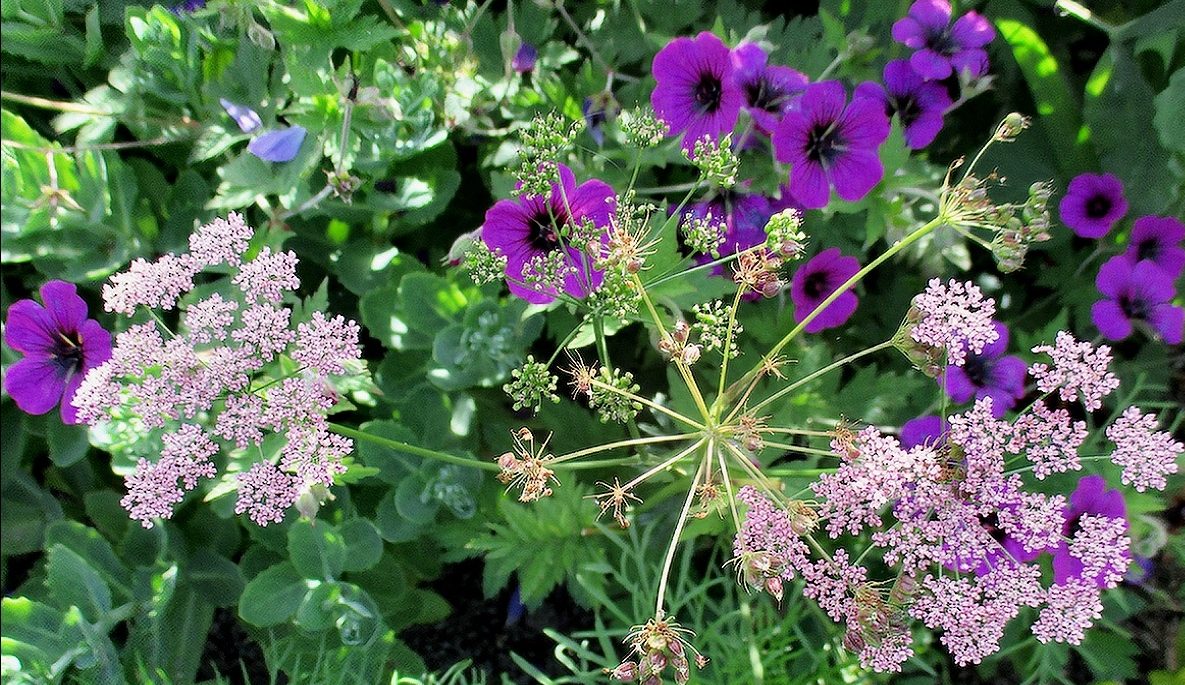
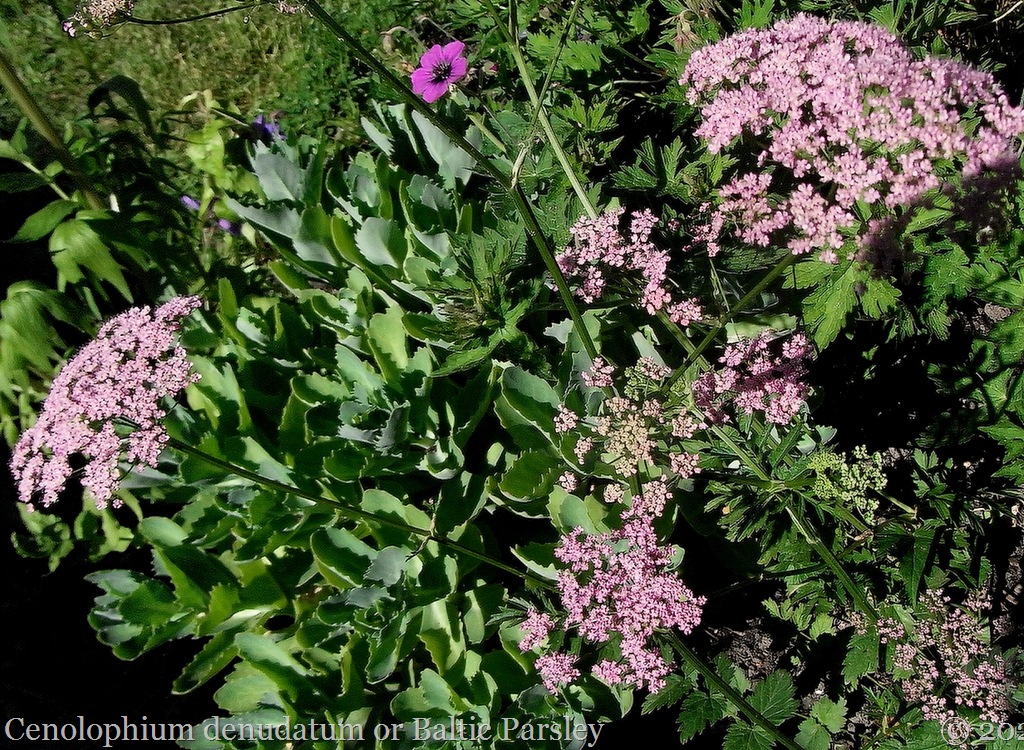
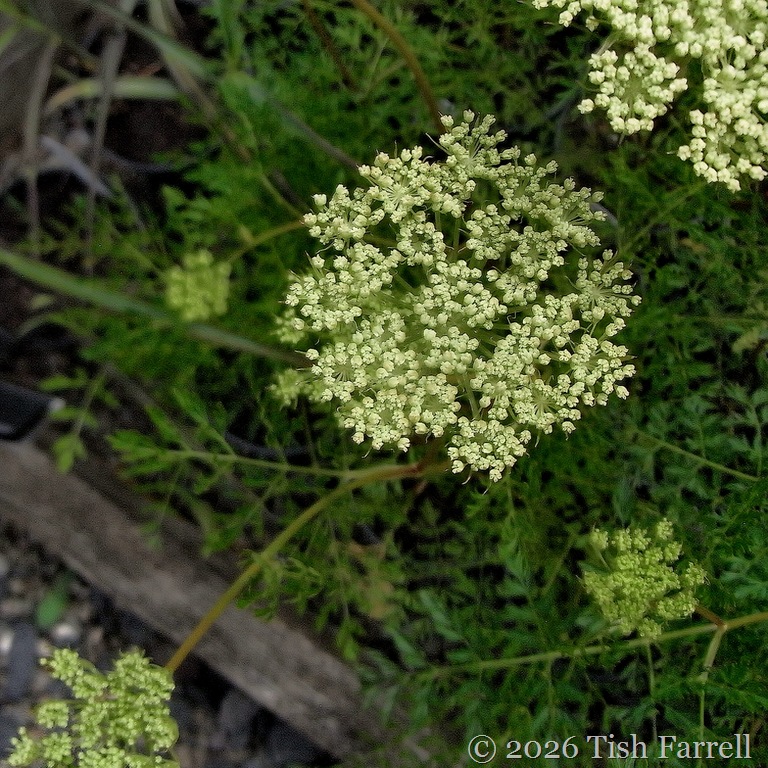
And now back to my new favourite, as mentioned in two recent posts – Cenolophium denudatum, aka Baltic Parsley. Coming up is the version I have already settled in the bed along the top of the terrace wall. It grows rather like Cow Parsley/Queen Anne’s Lace, and indeed it was supposed to be white, according to the Great Dixter Nursery catalogue. Mine, however, turned out to be pink. I don’t mind. It looks good with the valerian whose massed umbels are hint-of-pink white.

RIMG0162 SoS

***

But then yesterday we were having a splendid day out in the walled garden at Wildegoose Nursery in the Corve Valley. And there I found a pale lemony version. It had to come home with me.

RIMG0243 Cenolophium

***

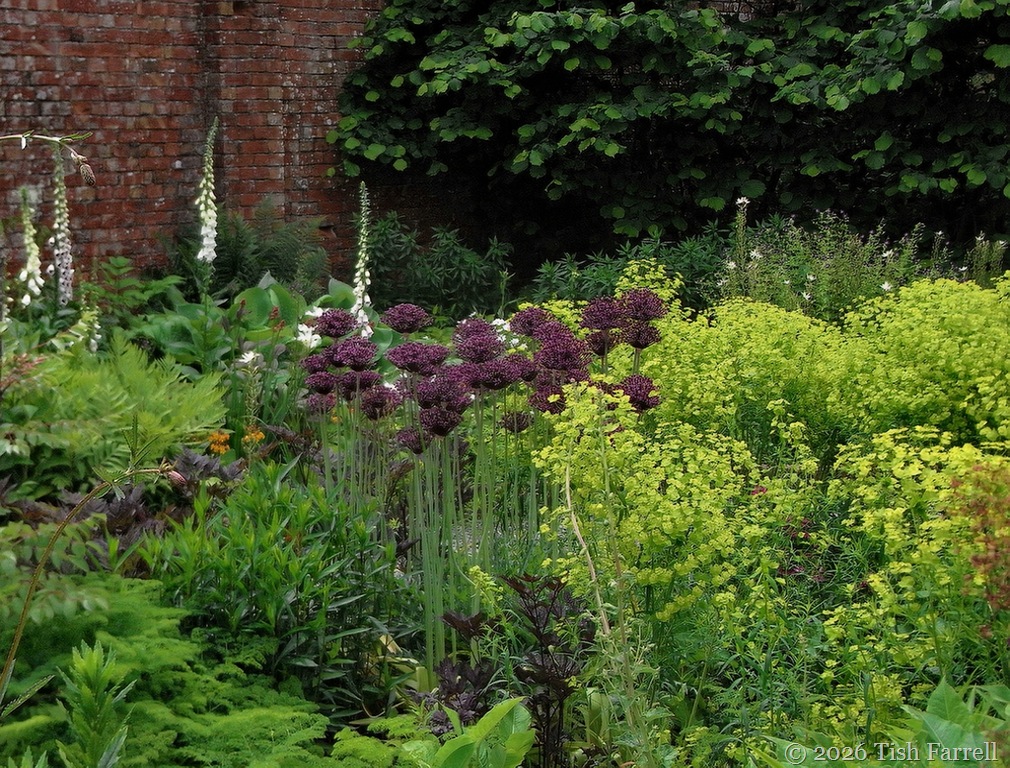
And to finish a shot of Wildegoose walled garden where I discovered it (along with a dozen or three other plants that roused acute spasms of gardener’s greed).

RIMG0247 alliums and euphorbia

Wildegoose Nursery Walled Garden

Copyright 2026 Tish Farrell

Six on Saturday 6 June 2026 Please call in on Jim as he prepares for his garden opening.

RIMG0273 header