Six on Saturday: HOT!

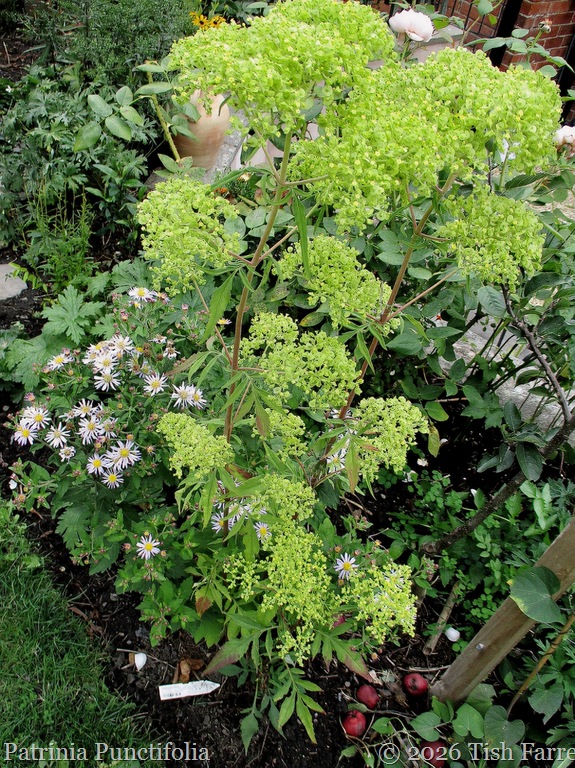
Adessa a sea holly Neptune's Gold

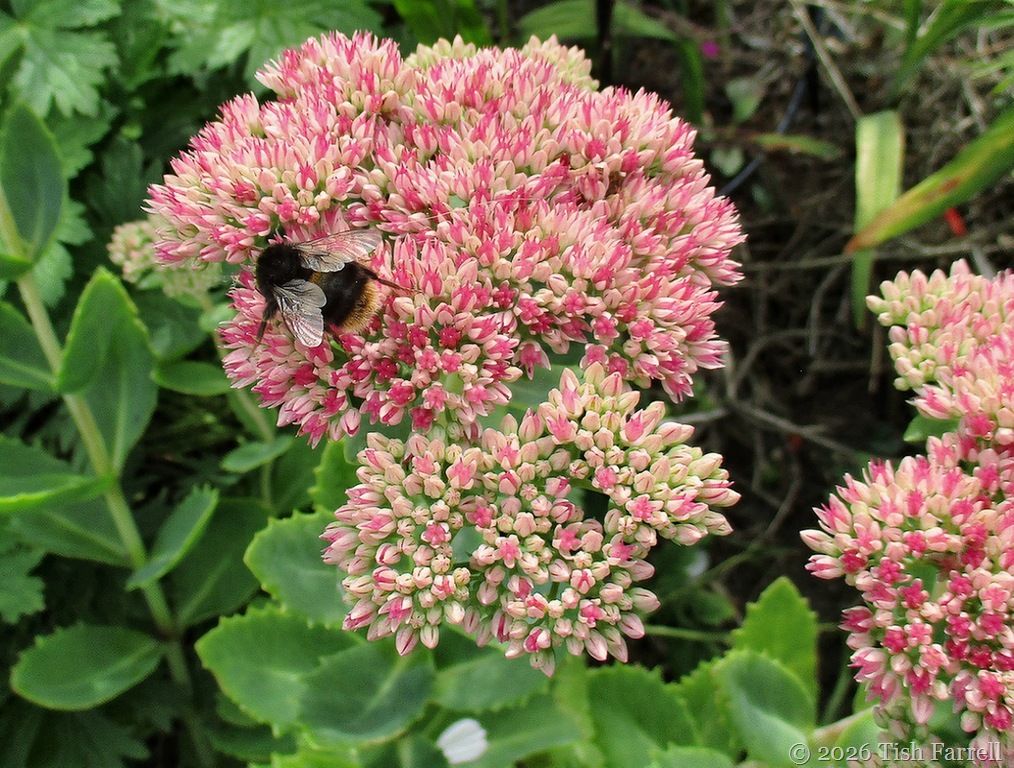
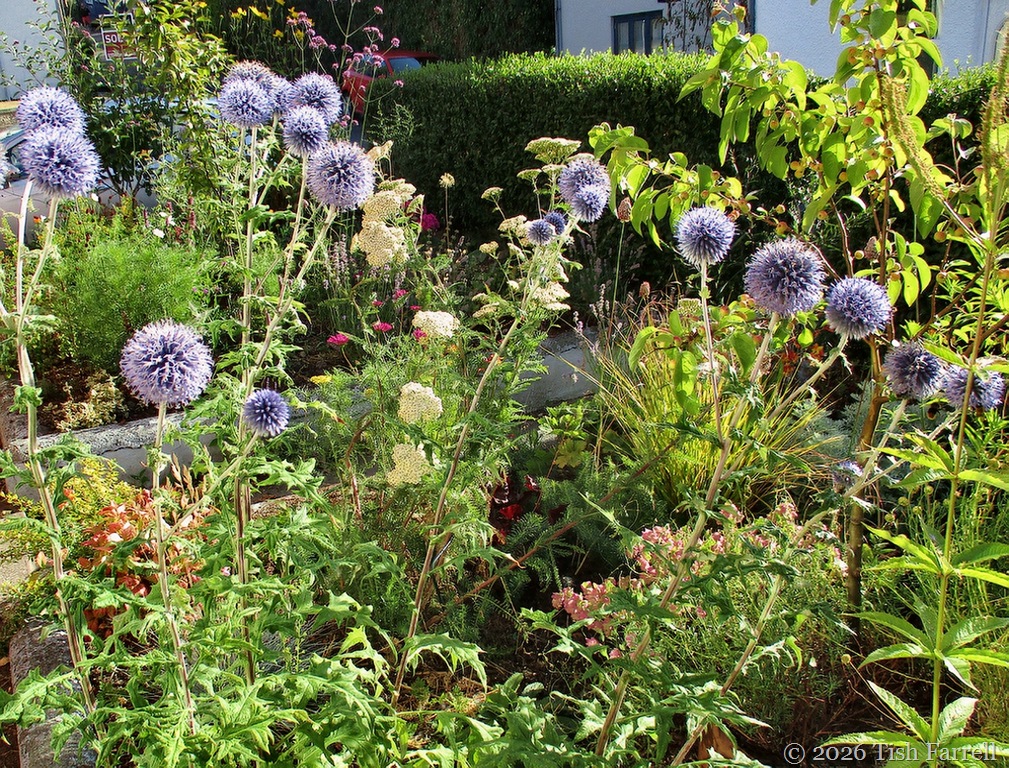
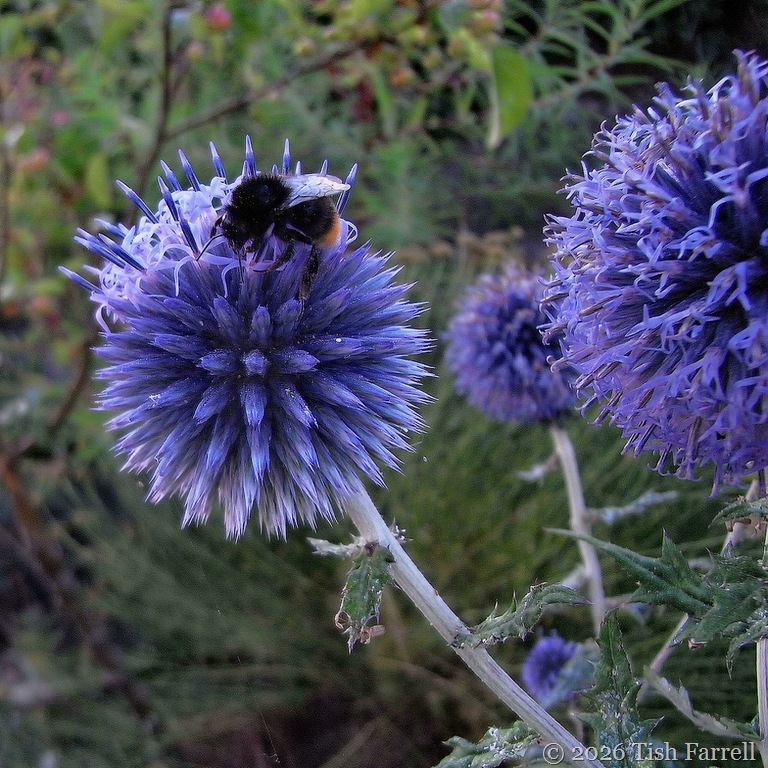
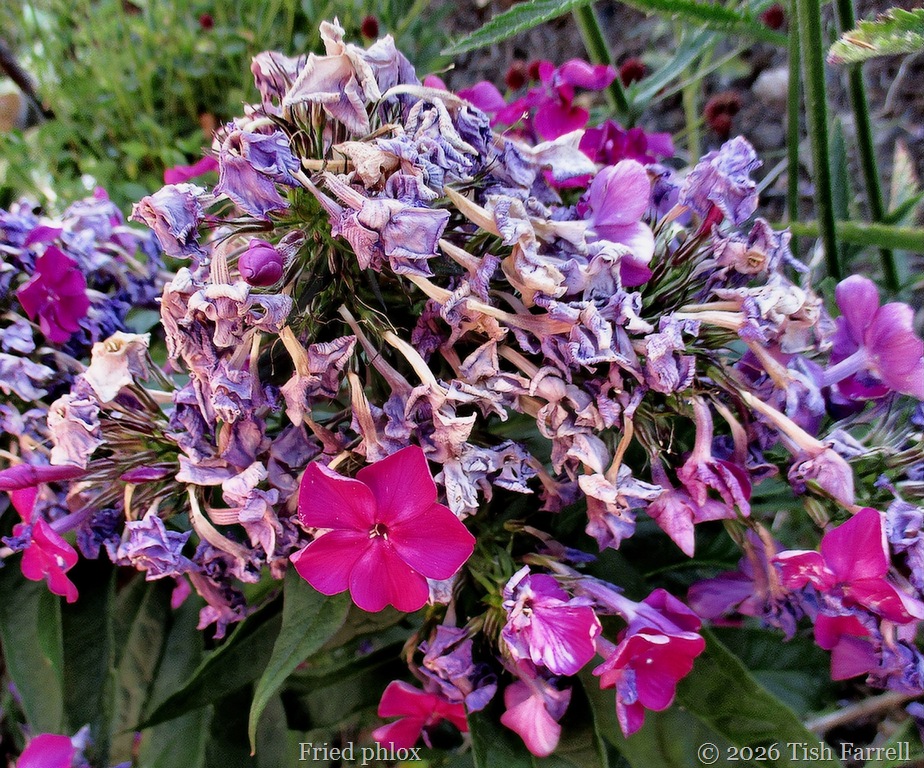
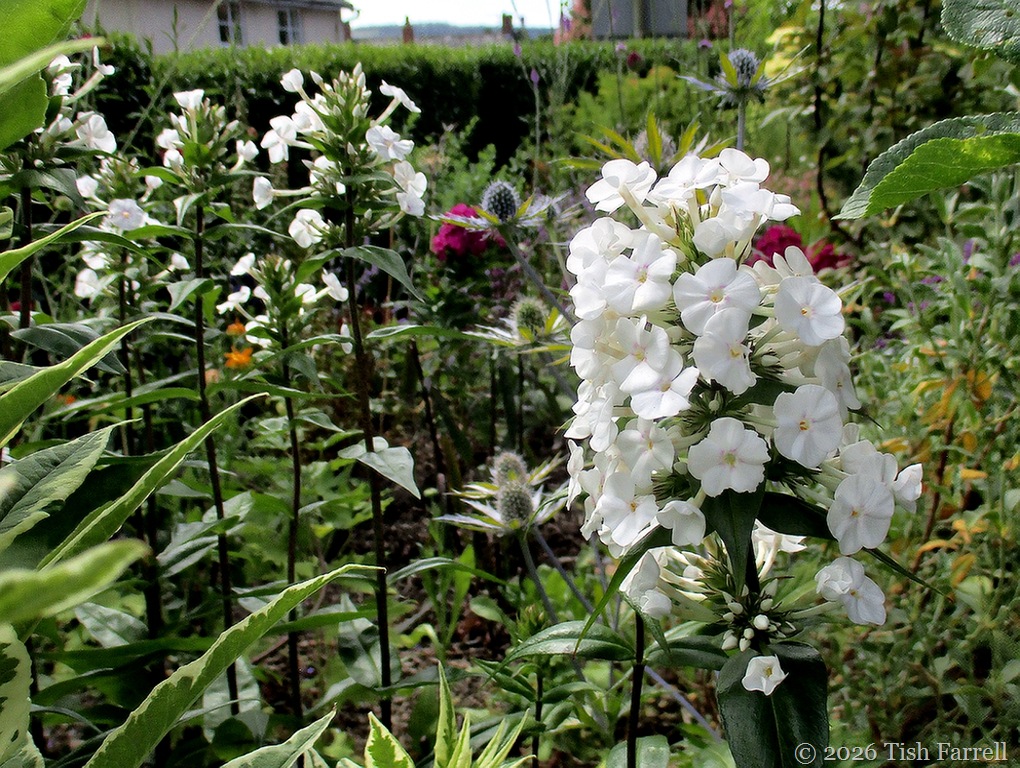
Still hot today, but there are promises of a degree or two cooler than yesterday. And please, please, please can we have the breeze back. For now, the phlox paniculata are gently roasting, especially the large petalled magenta/purple varieties. Only Adessa ‘Pink Star’ is keeping her cool, here seen alongside the starry Neptune’s Gold Sea Holly which doesn’t appear to mind the heat.

*

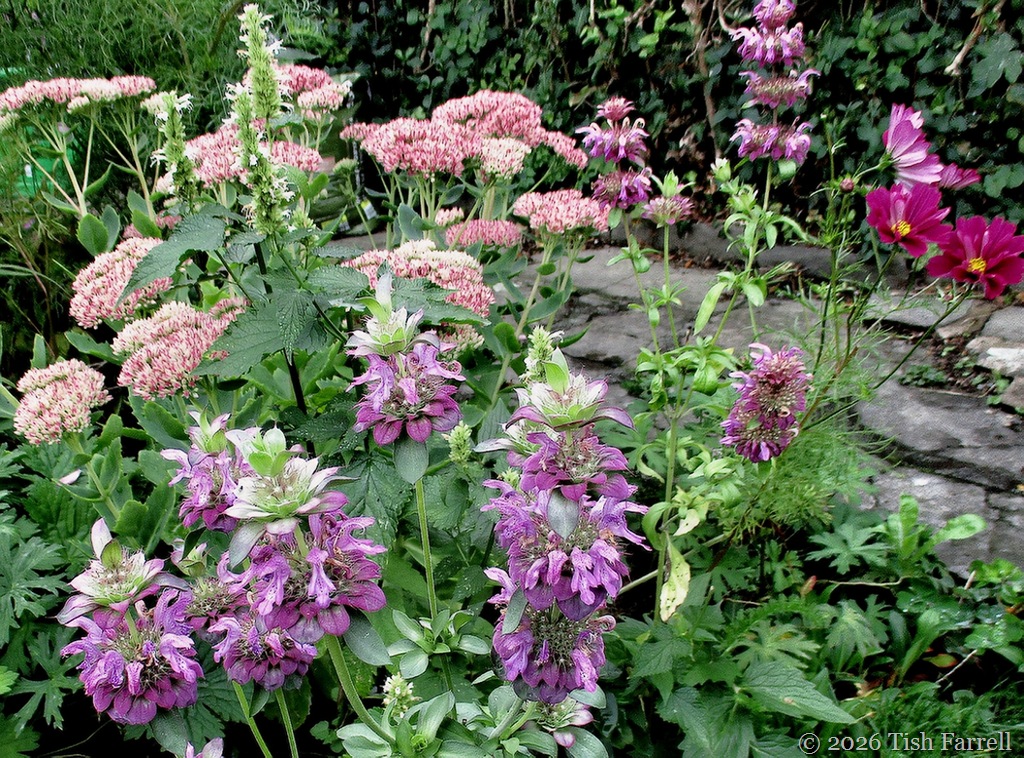
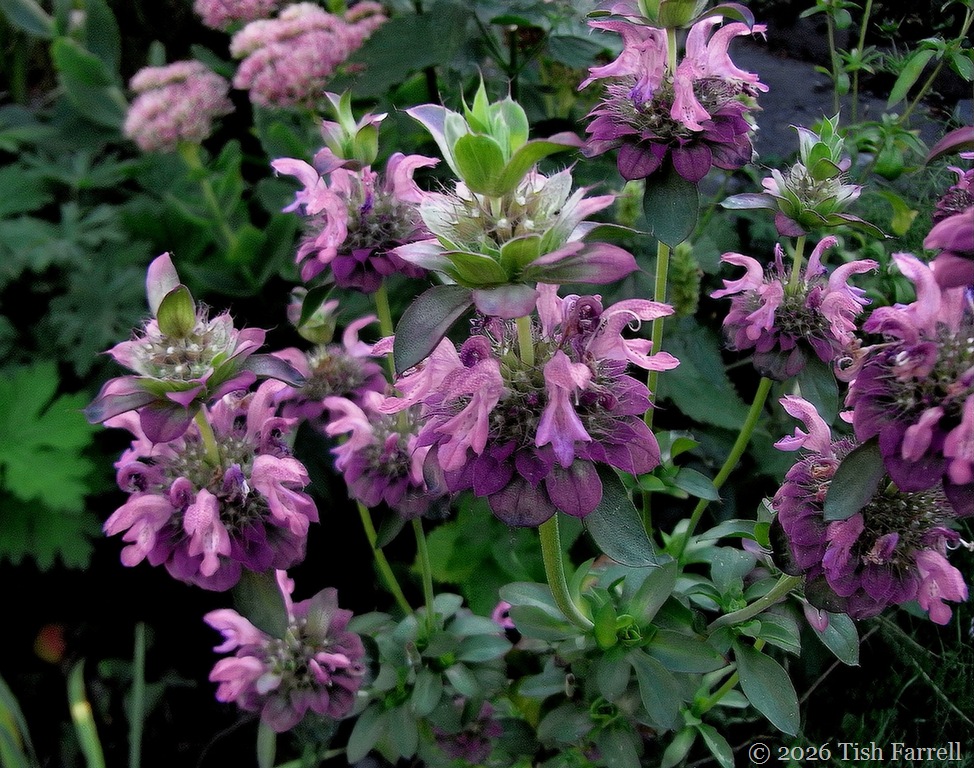
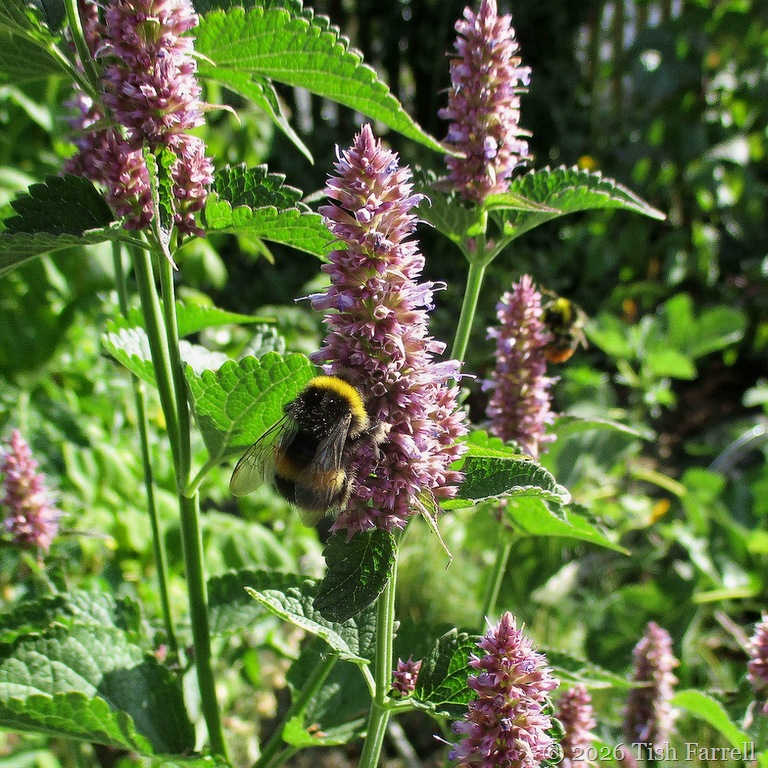
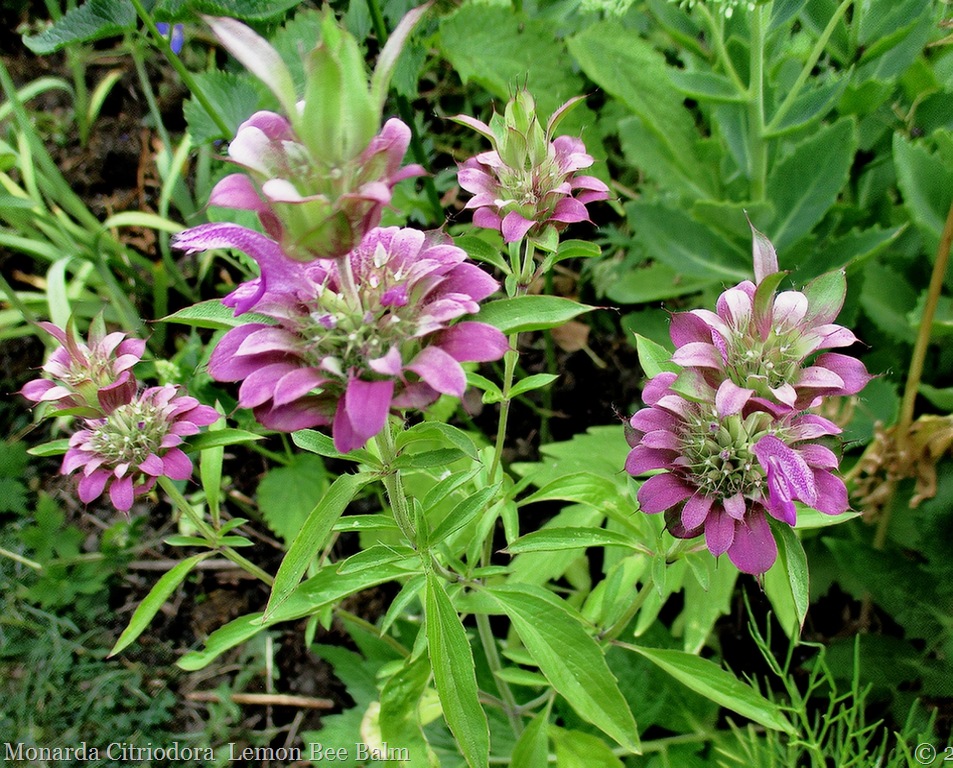
In the back garden, most of the border plants are fading fast, apart from the bergamot/bee balm/monarda. Over the last few days, it has burst into life and bees, although I’m sorry to see the individual flower parts are soon turning crispy round the edges. (But then aren’t we all!)

bergamot

Bergamot and scabious

*

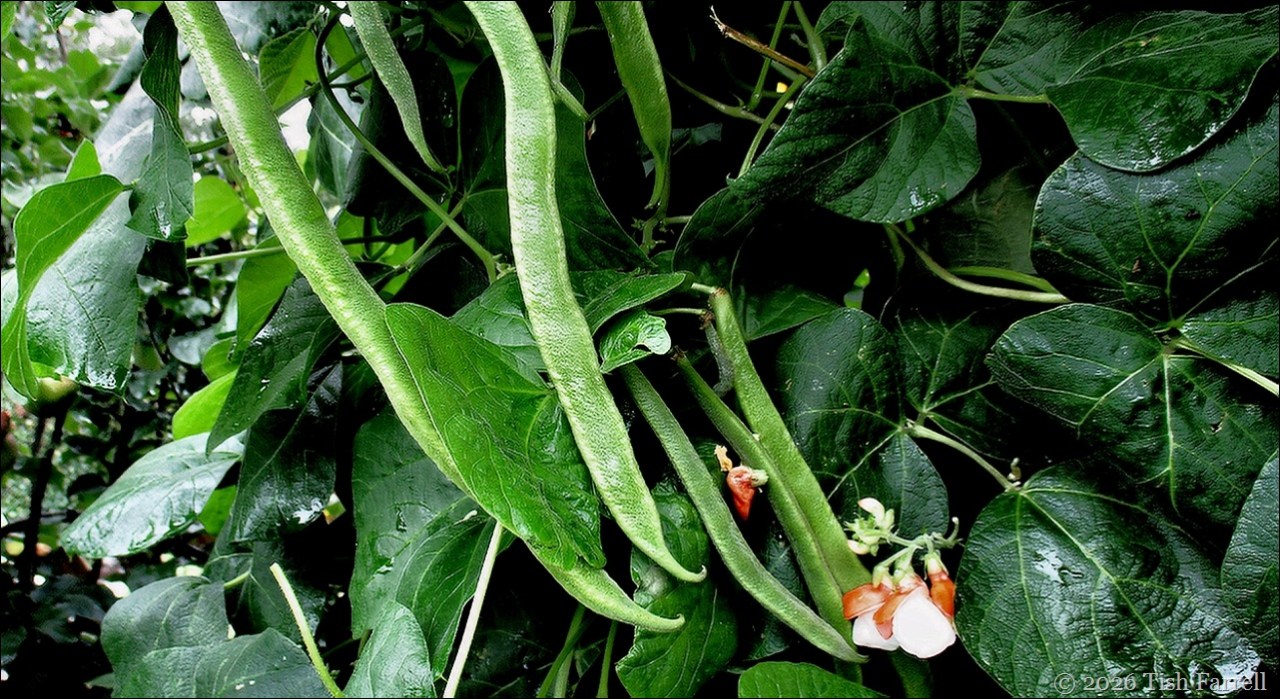
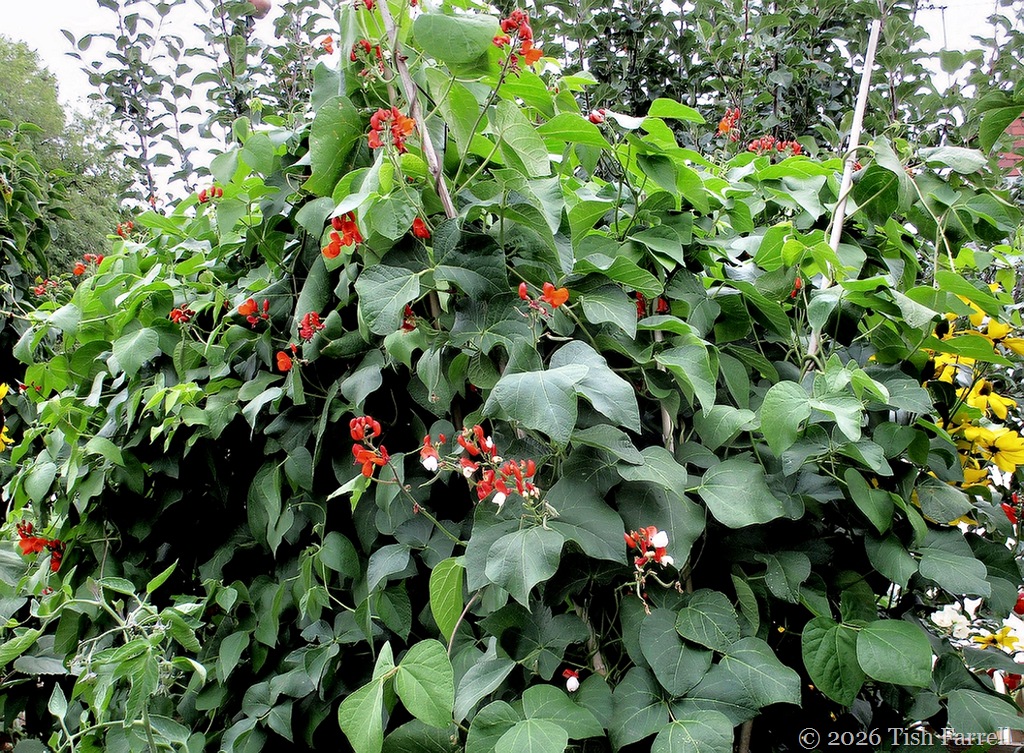
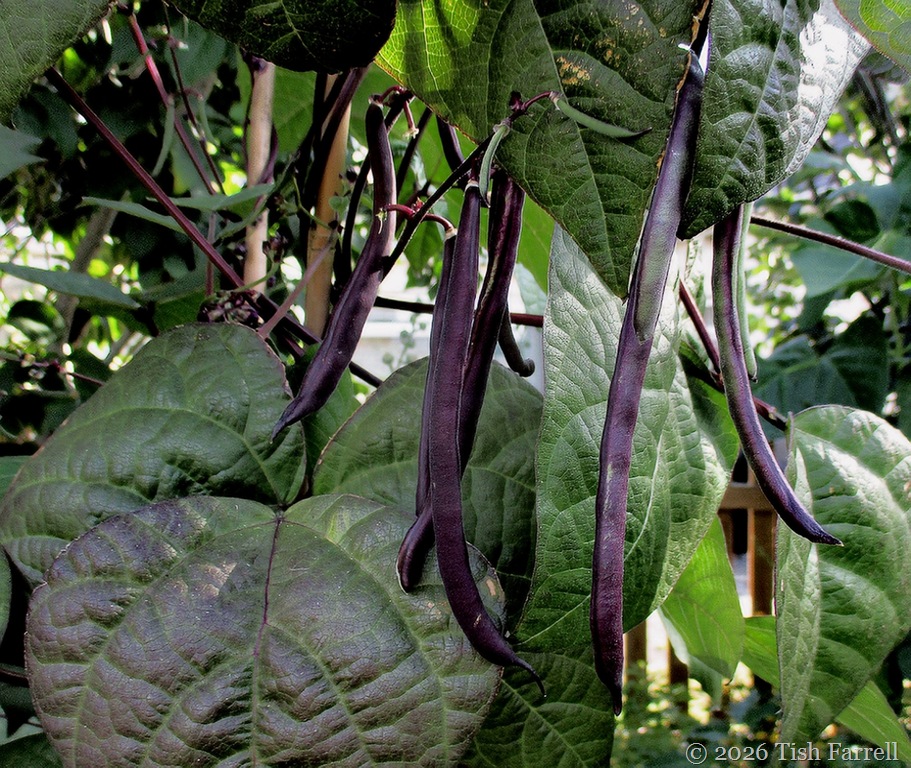
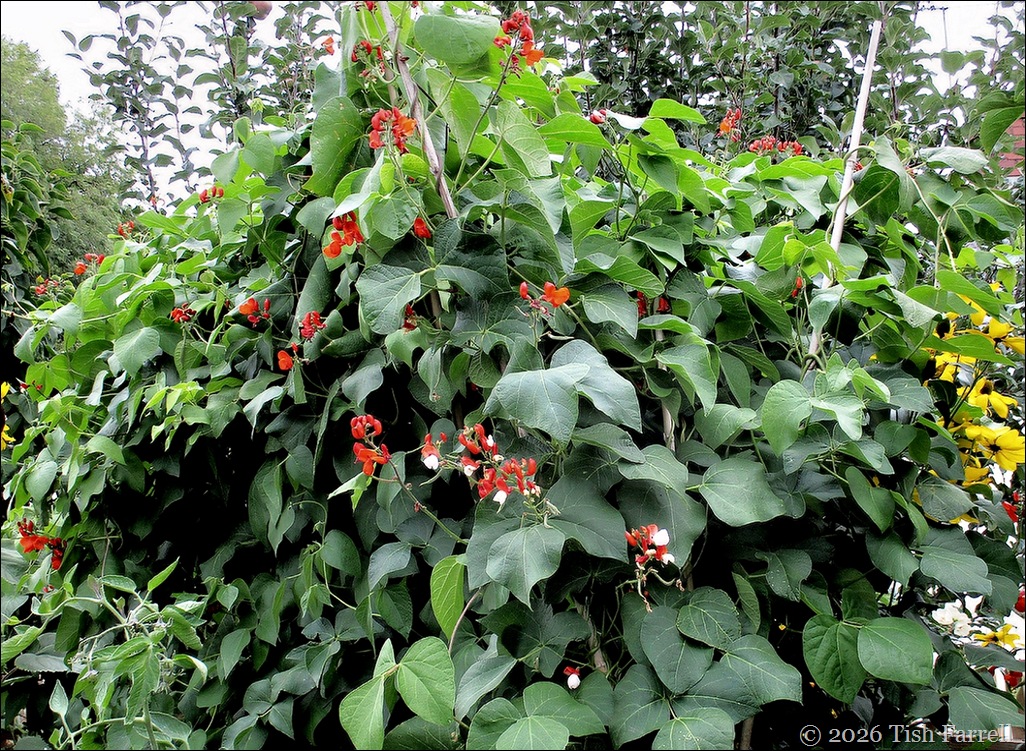
The peripheries of the garden don’t suffer full-on sun until after mid-day, and this is where I have the beans – French climbing Violette, and a few Borlotti and Butter Beans, growing up canes and obelisks. The runner beans are growing alongside the compost bin, mostly Enorma but also a few St. George. They are now providing a pleasing seasonal screen along this short section of garden which overlooks the road.

 bean flowers

Actually, I love bean flowers (almost as much as the beans):

bean flowers Enorma

bean flowers St. George

*

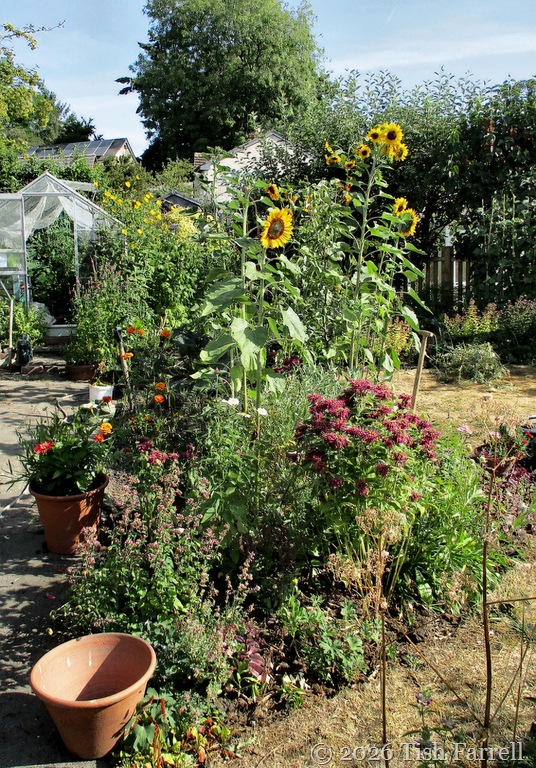
Behind the runners, in the old apple tree corner, is a raised bed with the butter bean obelisk, a courgette plant and a self-grown sunflower. Today, the courgette plant has a quartet of blooms, plus one courgette ready for picking.

courgettes

corner bed

*

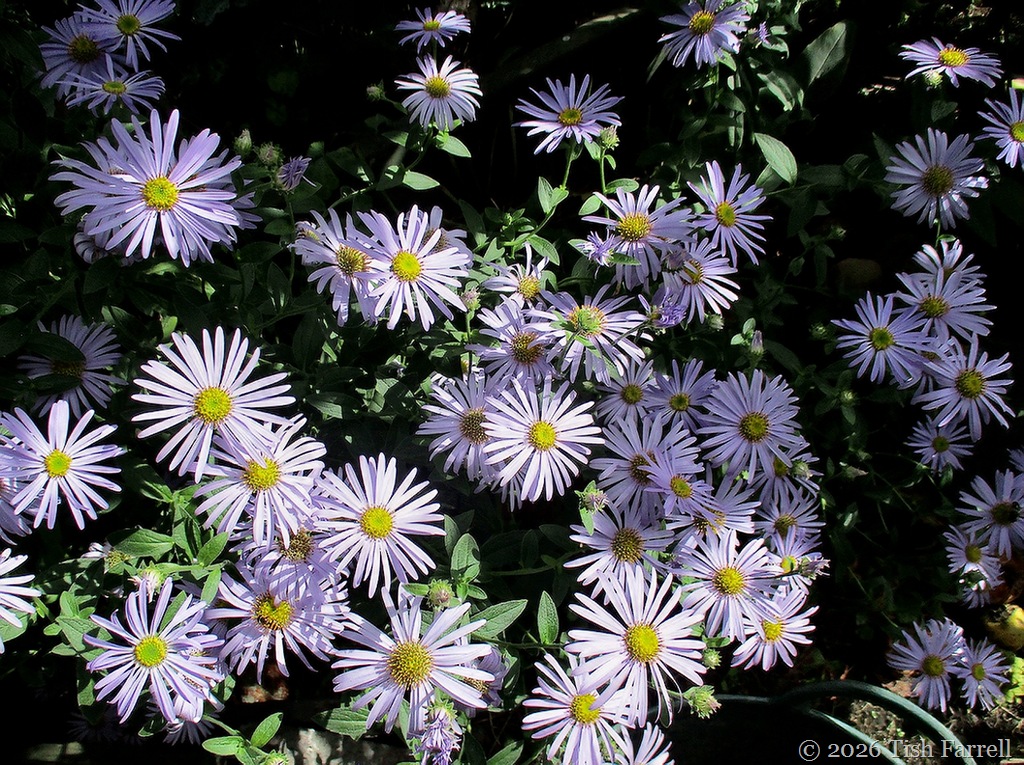
You can see this week’s number six in the photo above, on the right, beyond the courgette leaves. It just happens to feature in today’s newsletter from Beth Chatto’s Plants and Gardens. So here we have Aster x Frickatii Monch as it starts its season, and rather sooner than expected.

Aster x Frikartii Monch

In the newsletter, granddaughter, Julia Boulton, who now runs Beth Chatto’s says of it:

“Absolutely the best Michaelmas daisy, for long display and sheer beauty: does not need staking, and is not affected by mildew. Deserves the best soil and position in the garden.” Its further statistics are: height and spread: 1m x 45cm; conditions: full sun, rich and fertile soil; flowering: Aug | Sep | Oct.

I’m not sure why I planted it in front of the apple tree. That spot does get dappled sun and then full-on glare at the end of the day, but there are much sunnier spots in the garden where it could show itself off to better effect. (Added to the re-do file).

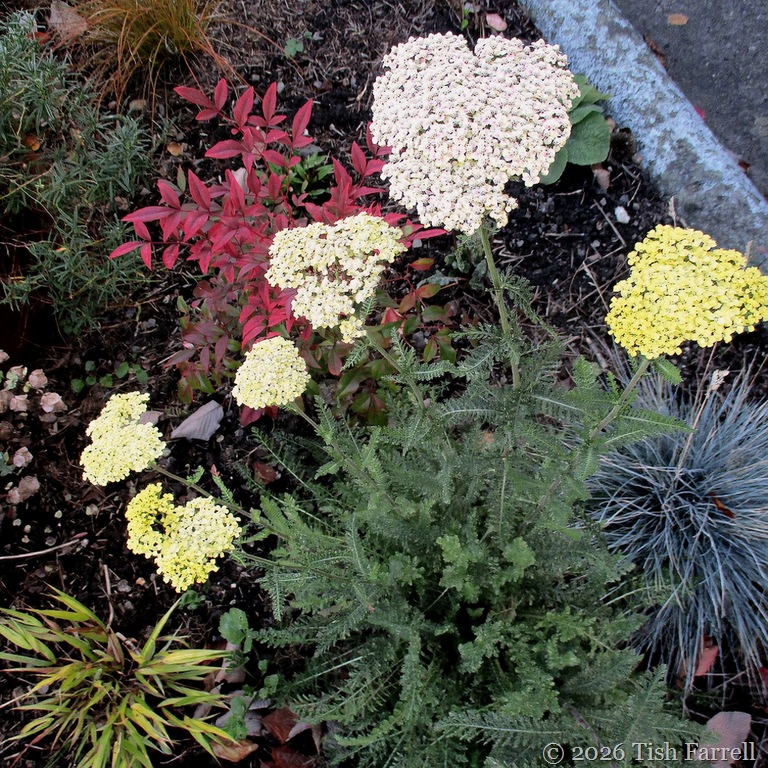
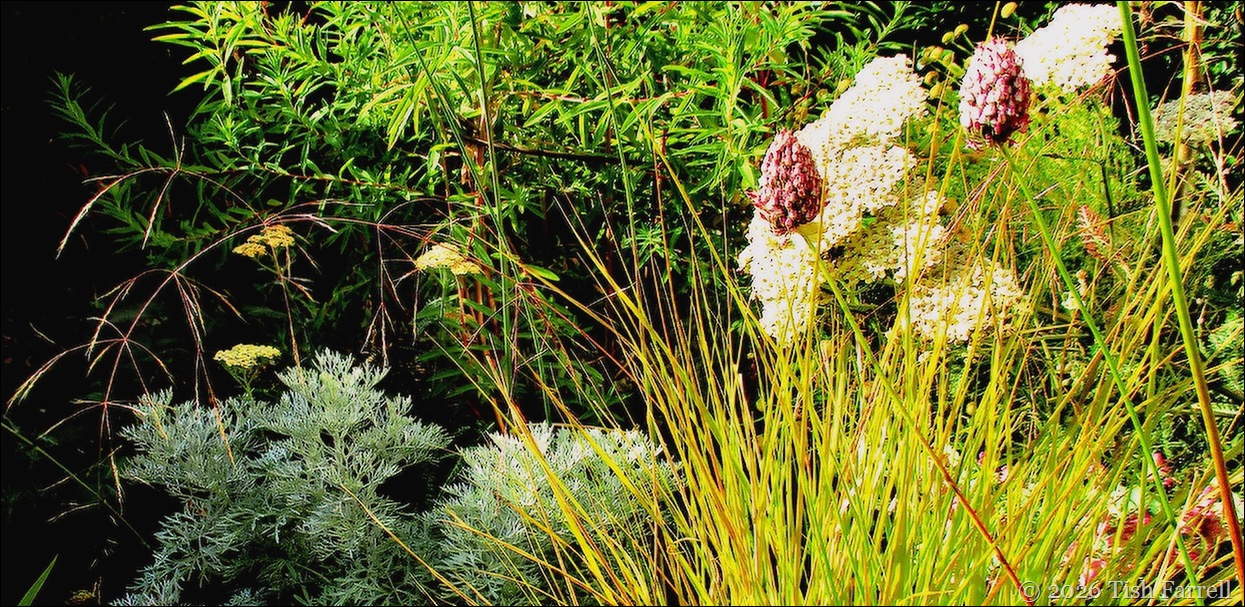
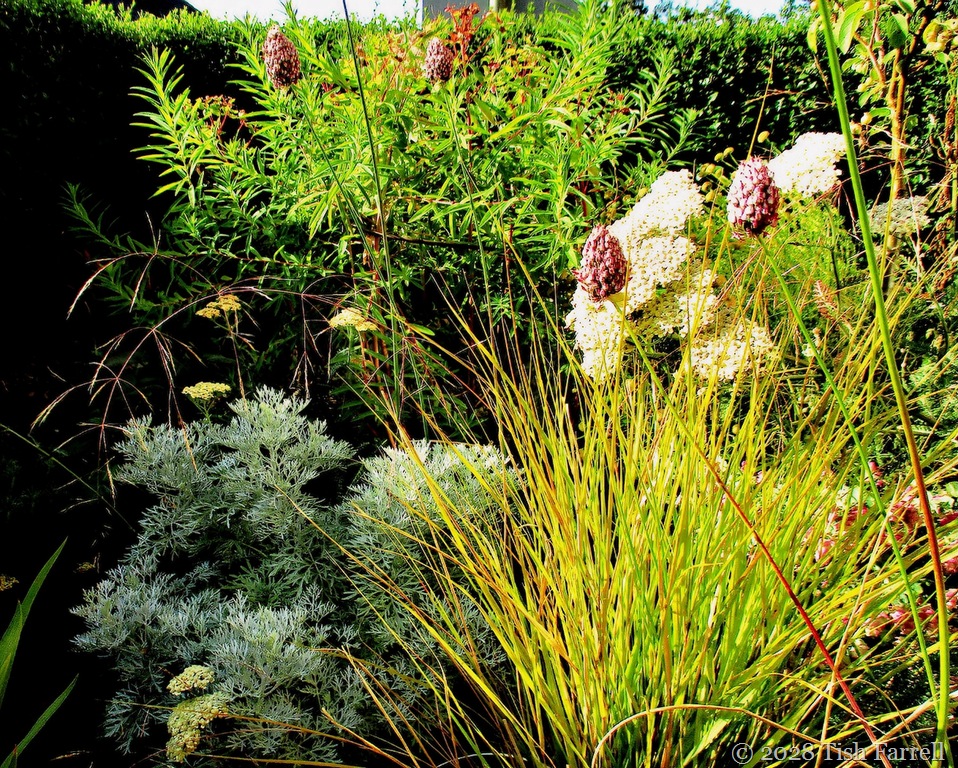
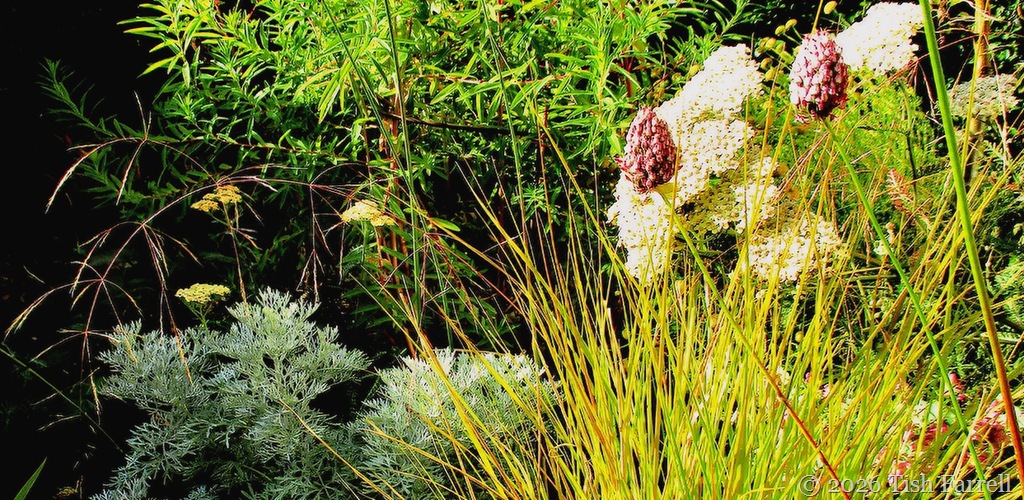
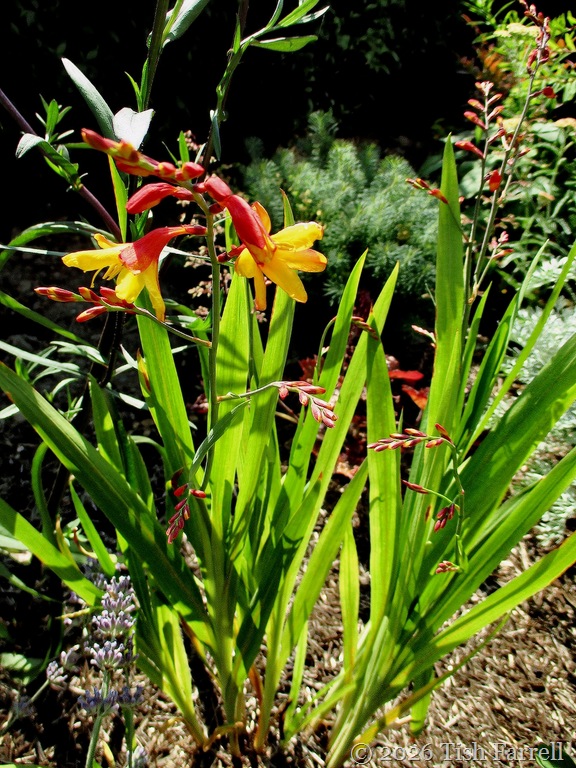
Finally, a view of the a front garden bed, just to show it’s coping with 33 degree C plus days – the achillea ‘Moonshine’ drying on the stem, the allium drumsticks still doing their stuff, Artemisia Powys Castle, very much containing herself alongside a rather weedy apricot coloured Achillea, (Lachsshonheit) which I thought I’d lost, and a young Crocosmia Harlequin (bottom left) about to flower. Background support from Euphorbias, Santolina rosmarinifolia, Pheasant’s Tail grass, and crimson leaved heucheras :

front border 11 Jul

Copyright 2026 Tish Farrell

Six on Saturday: For more views of Jim’s fabulous and mindfully curated plant collection.


Six On Saturday ~ Summer’s Here!

mallow

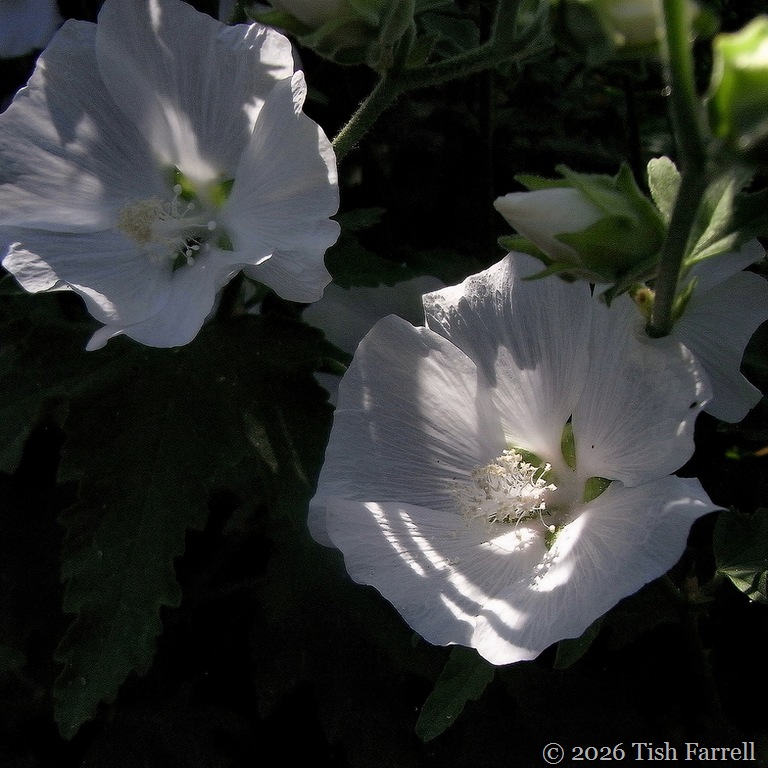
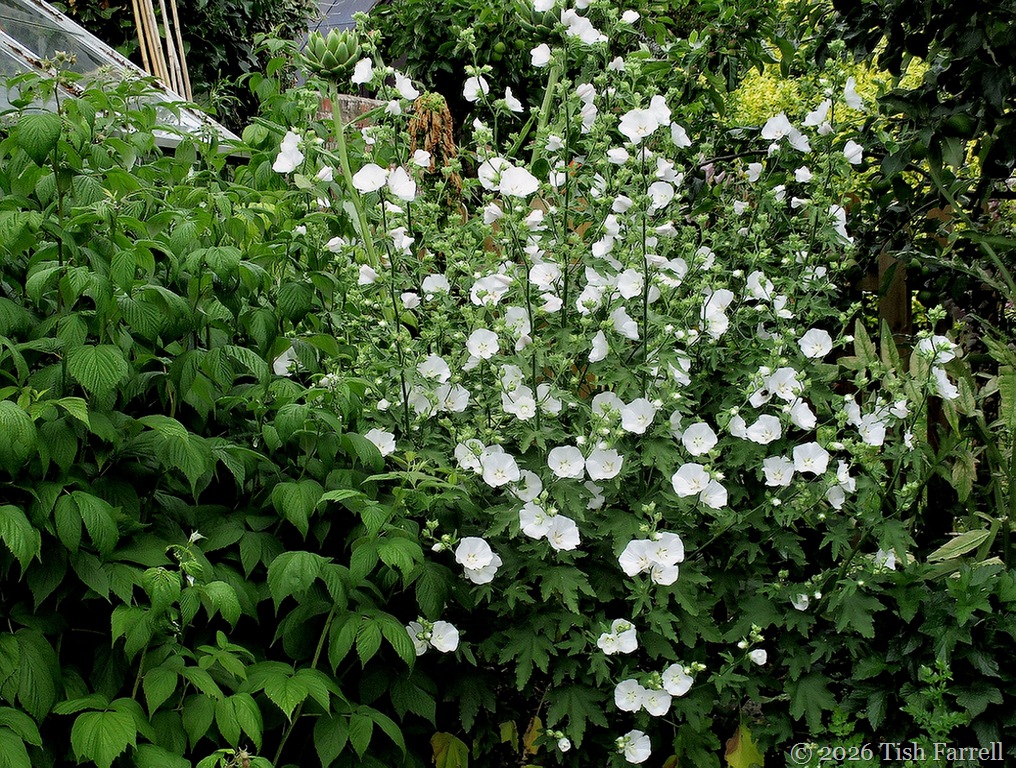
Come July and, in the bottom corner of the garden, the mallow Ice White has burst into flower. It’s supposedly a compact variety, and I’m hoping it has reached its limit. At the moment it is contesting space with the Polka raspberries, both parties clearly making good use of the farmyard manure deposited on the raspberry bed back in early spring. The individual mallow flowers are very beautiful. I forgive the plant for being pushy.

mallow 2

***

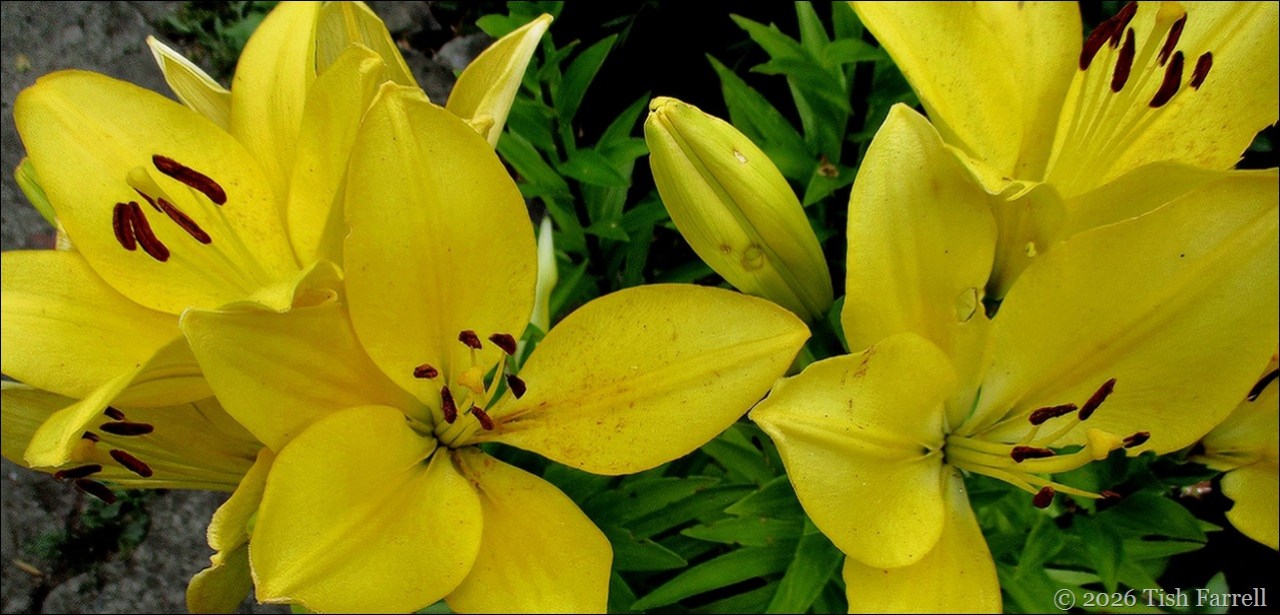
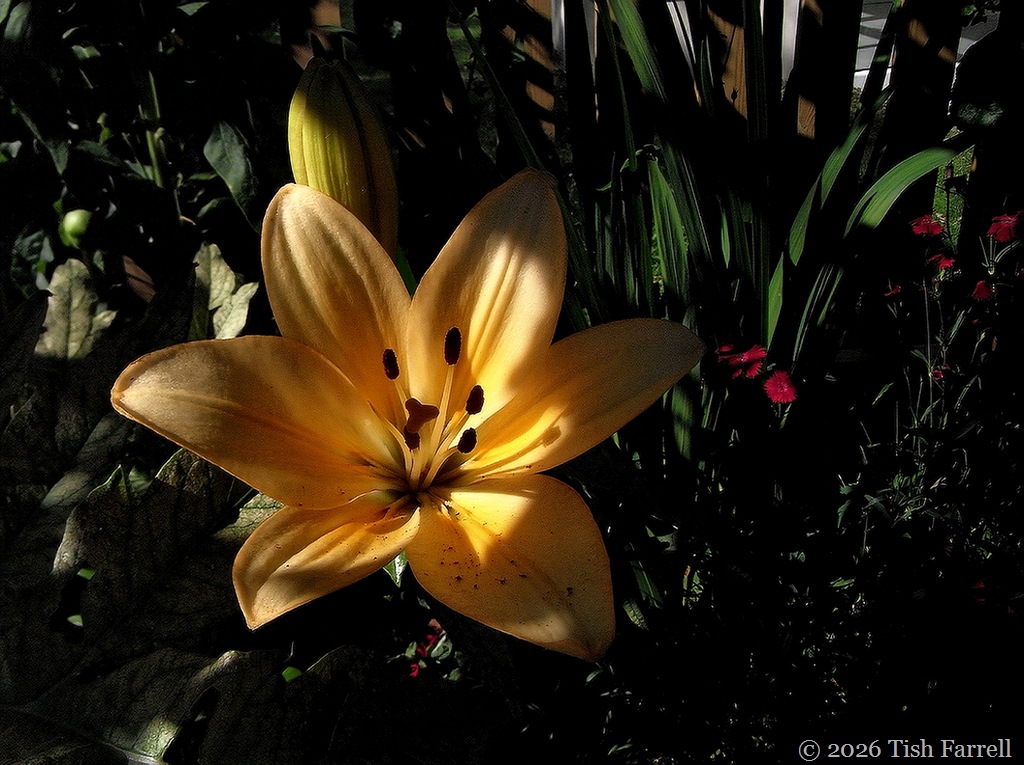
Another bright bloomer in the bottom of the garden is this orange Asiatic lily.

lily 1

Last summer I received the bulbs by mistake (as mentioned last week). The chap who had mixed up the on-line order told me to plant them, rather than return them. Not to look gift horses in mouths, but at the time, this was easier said than done. I couldn’t think where to put them, or if I really wanted them enough to solve the location problem. In the end I planted the ones I most liked the sound of in a big pot, and popped the remainder under the apple tree, not expecting them to do much in a dry and overshadowed spot.

In fact I’d forgotten I’d done this. Anyway, now it’s flowering, I’m warming to it somewhat. It does look lovely in the late afternoon sunshine.

***

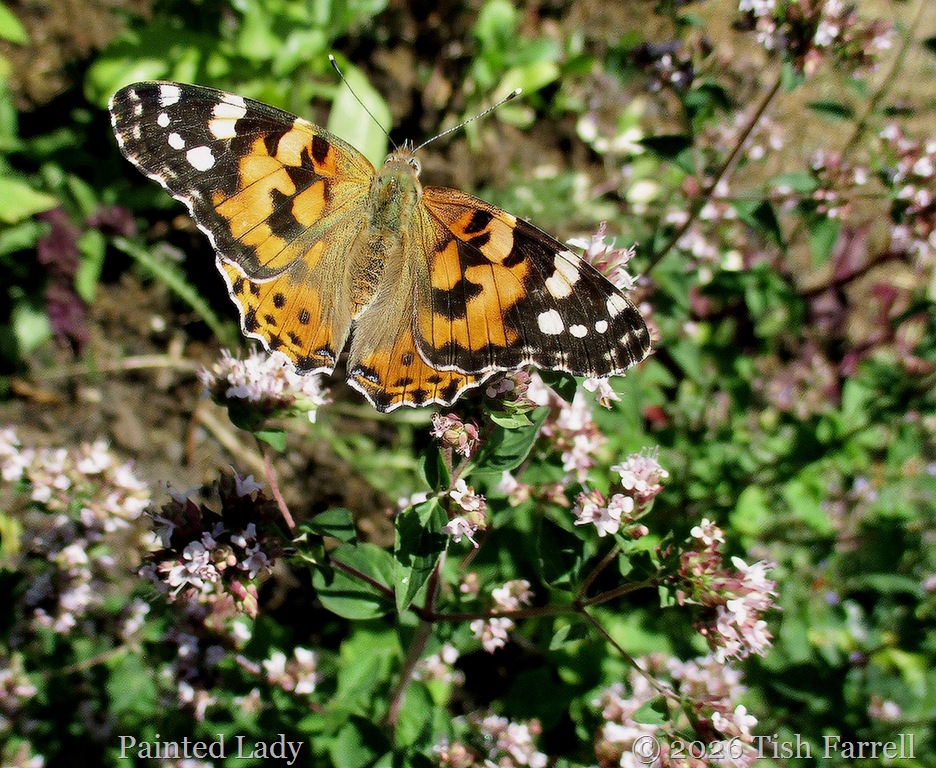
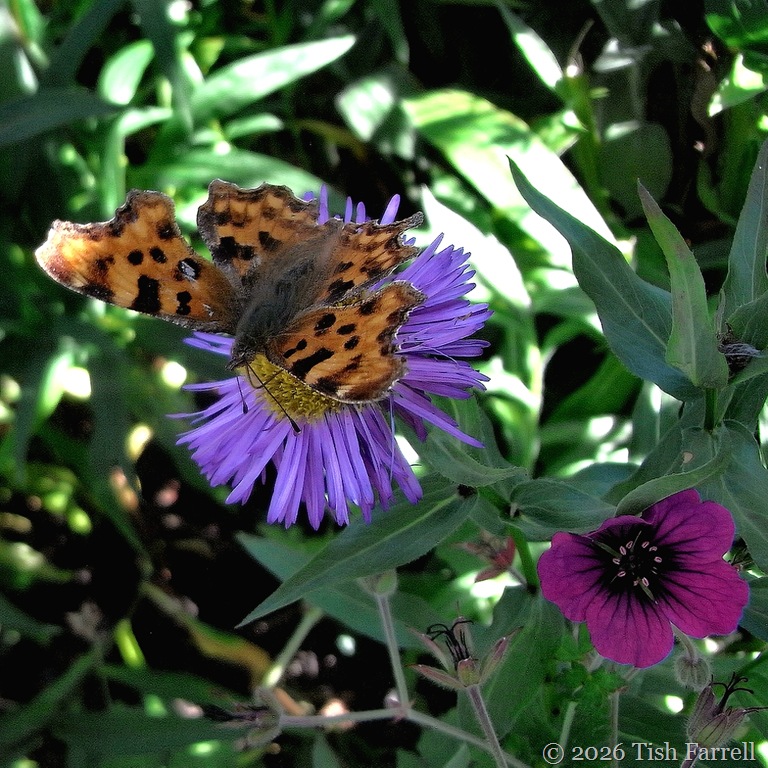
These days we’re seeing more butterflies in the garden– not only the annoying cabbage whites (hopefully the greens are sufficiently well netted) but also Painted Ladies, some returning Holly Blues and yesterday this lovely Comma butterfly.

butterfly 3

It was zipping around the back garden at high speed, impossible to photograph, but then was finally captivated with the Erigeron Azure Fairy , staying  just long enough to have its portrait taken. (Ann Thomson geranium looking on).

***

Since the late June hot spell, the weather has been comfortably tepid. The downside though is that we’ve hardly had a spit of rain. Now I’m panicking over the news of next week’s repeat frying. The recent return of blustery wind doesn’t help either. The surface soil is dry as dust and much of the earlier mulch seems to have disappeared.

I’ve been spot-watering plants that look stressed. Now, though, I’m in the middle of mining my compost bin. The grass cutting deposits from our neighbours’ very mossy lawn have kindly rotted down to produce some loamy stuff that looks suitable for another mulch campaign. The digging out and the spreading of same is giving the blackbirds much joy. They scuttle around after me, peeping happily, as they rake up worms and grubs.

***

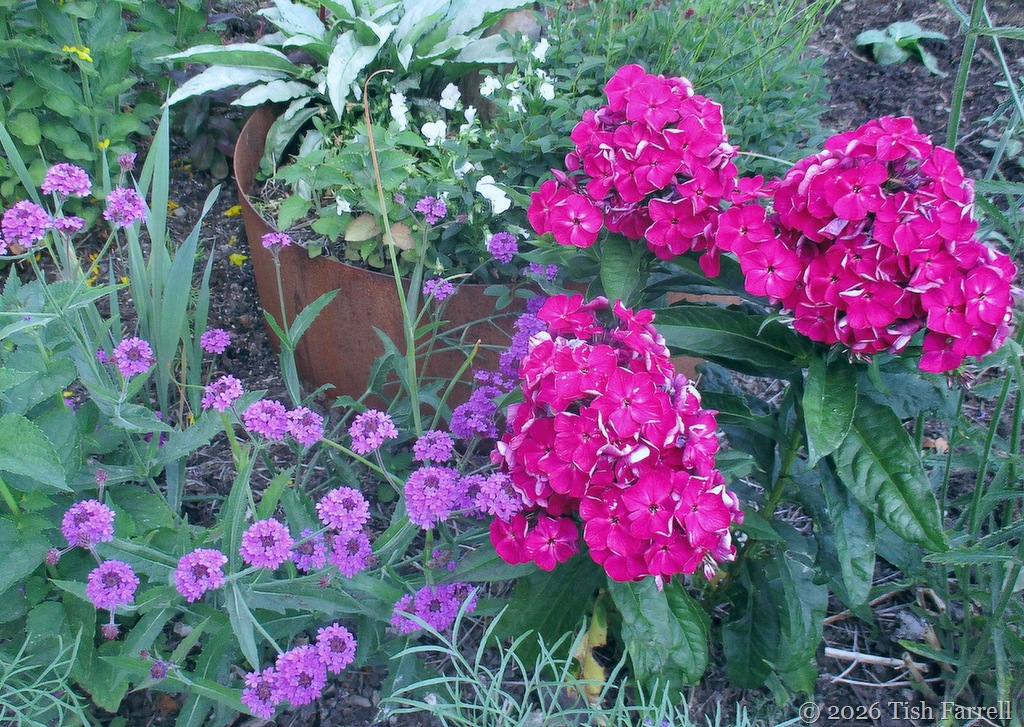
July is also phlox paniculata time, probably my favourite summer flowers (if forced to choose). At the moment I seem to have purple-pink ones all over the place. I’m not sure how this happened. I suspect I’d put in a number of large plugs not long after we moved into The Gables. They certainly didn’t do much over the last couple years, succumbing to slugs and mildew,  but now they have begun to bulk up well, looking good alongside Verbena. Their colour in the photo doesn’t really do them justice. They actually have richer, more wine coloured tones.

verbana and phlox

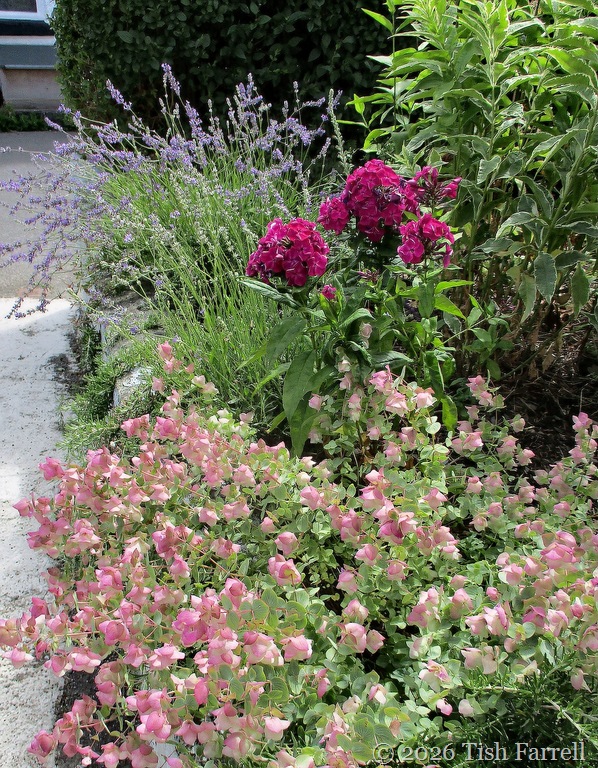
Also here on the front drive border between Oregano Kent Beauty and Lavender. Behind the deep red phlox is a clump of the  taller variegated phlox, Nora Leigh, yet to flower.

front drive border

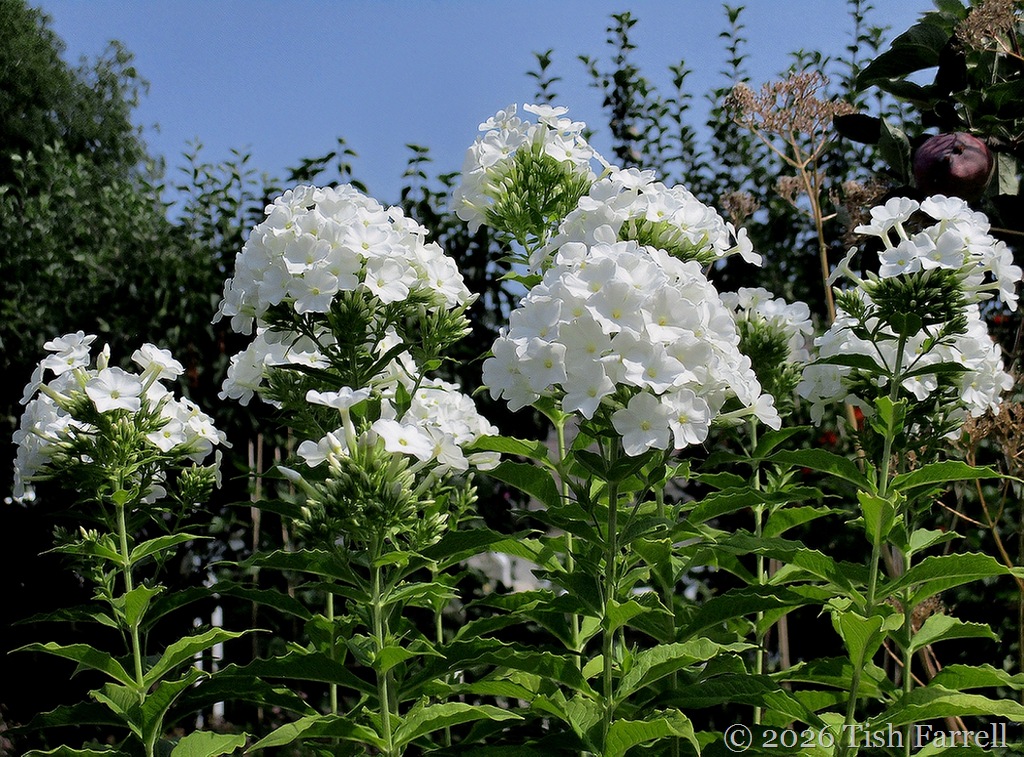
And behind Nora Leigh, is Phlox Adessa, a delicate smallish-flowered white with a tiny pink eye, just starting out:

Phlox Adessa

***

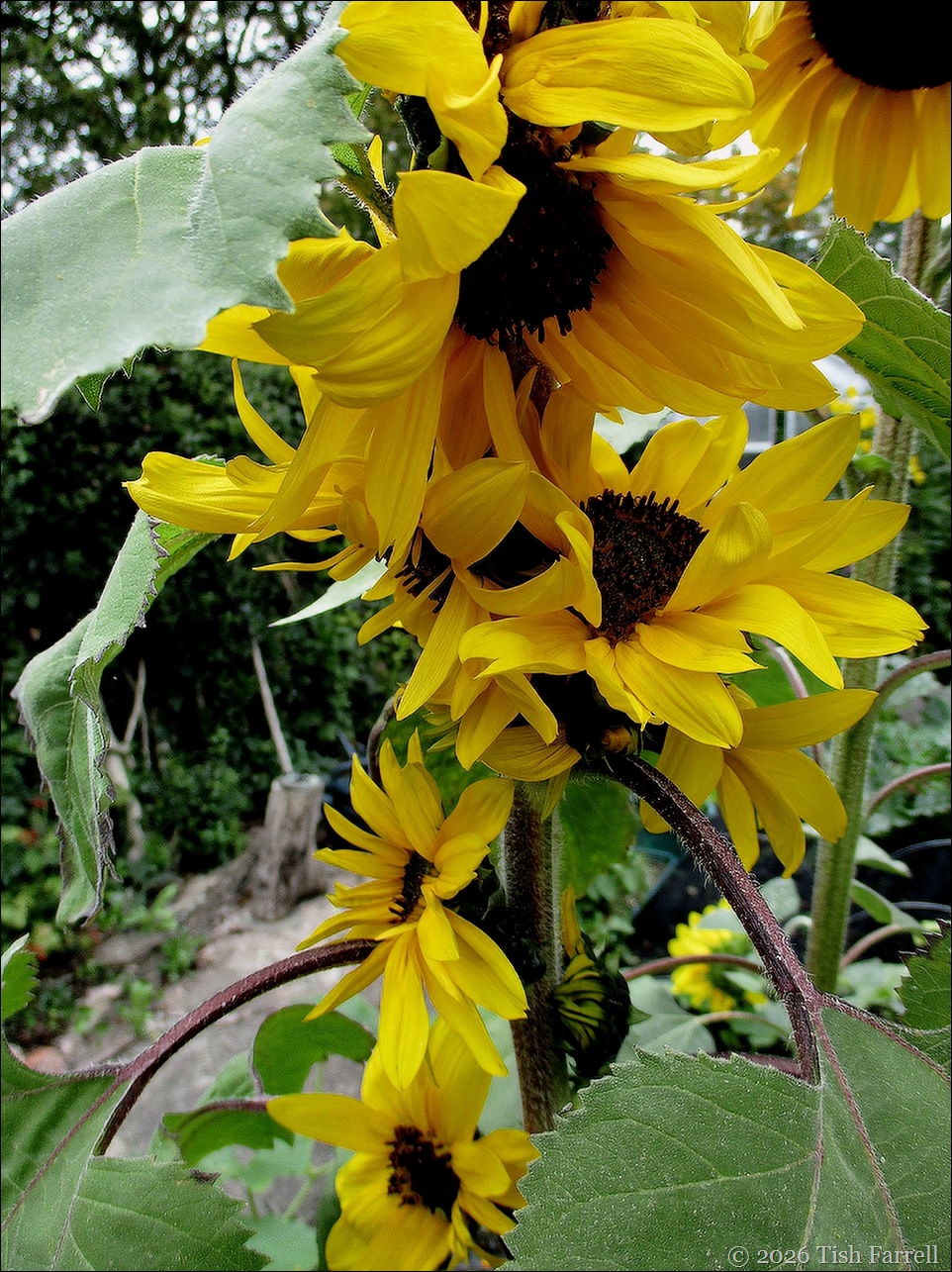
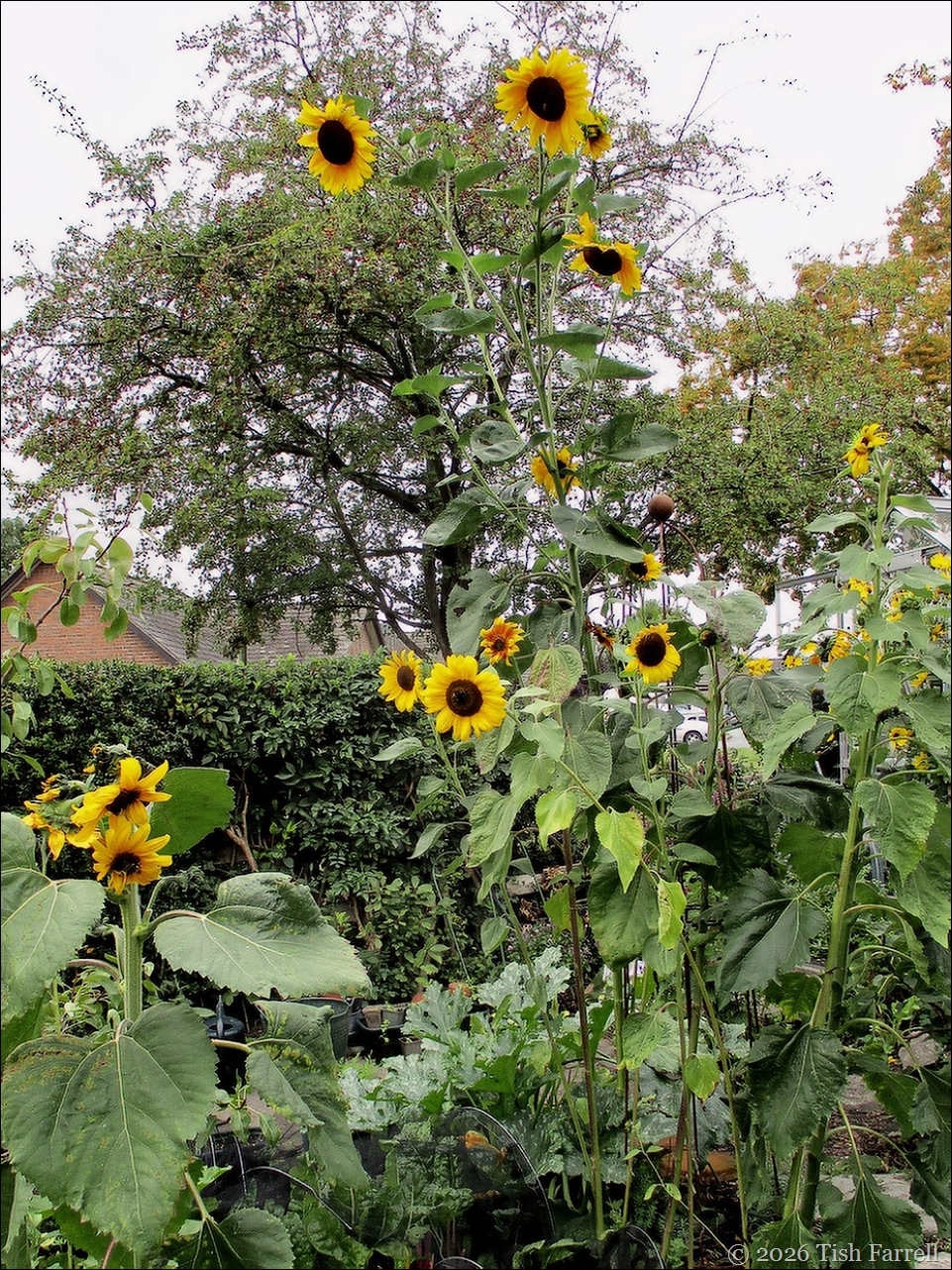
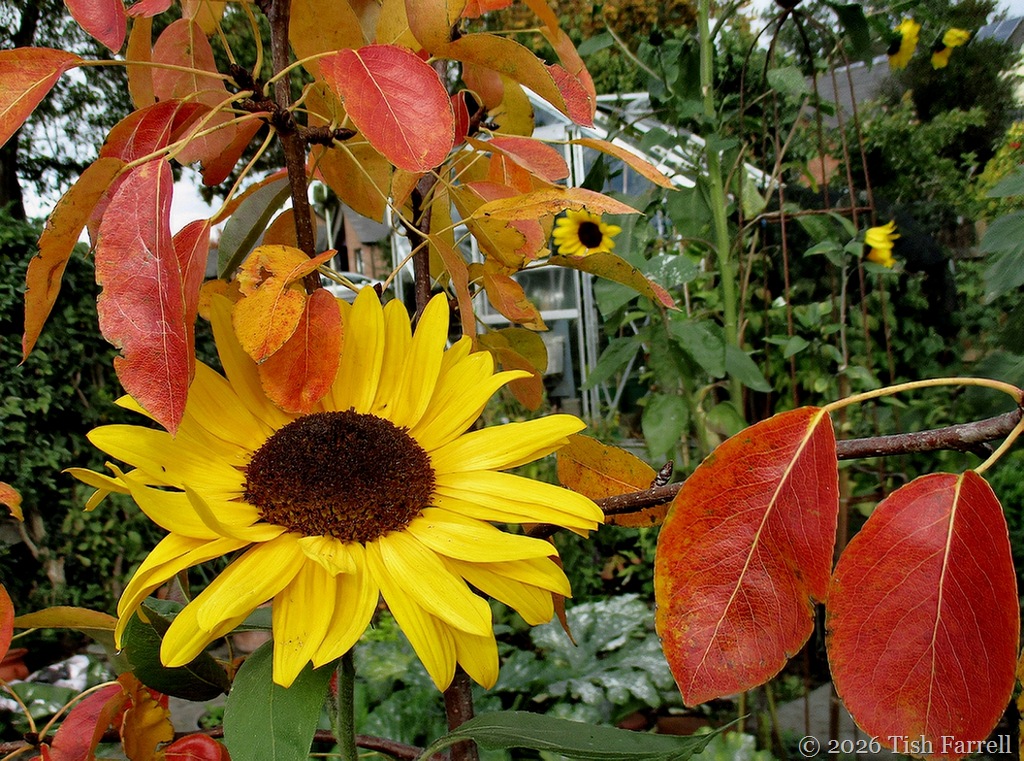
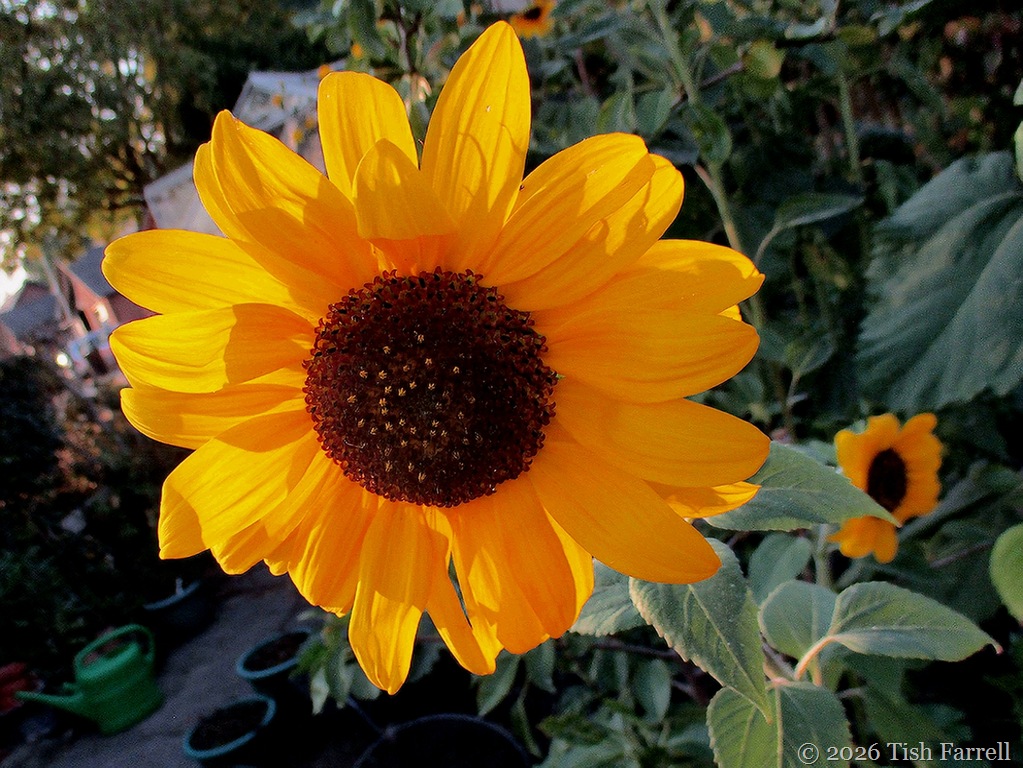
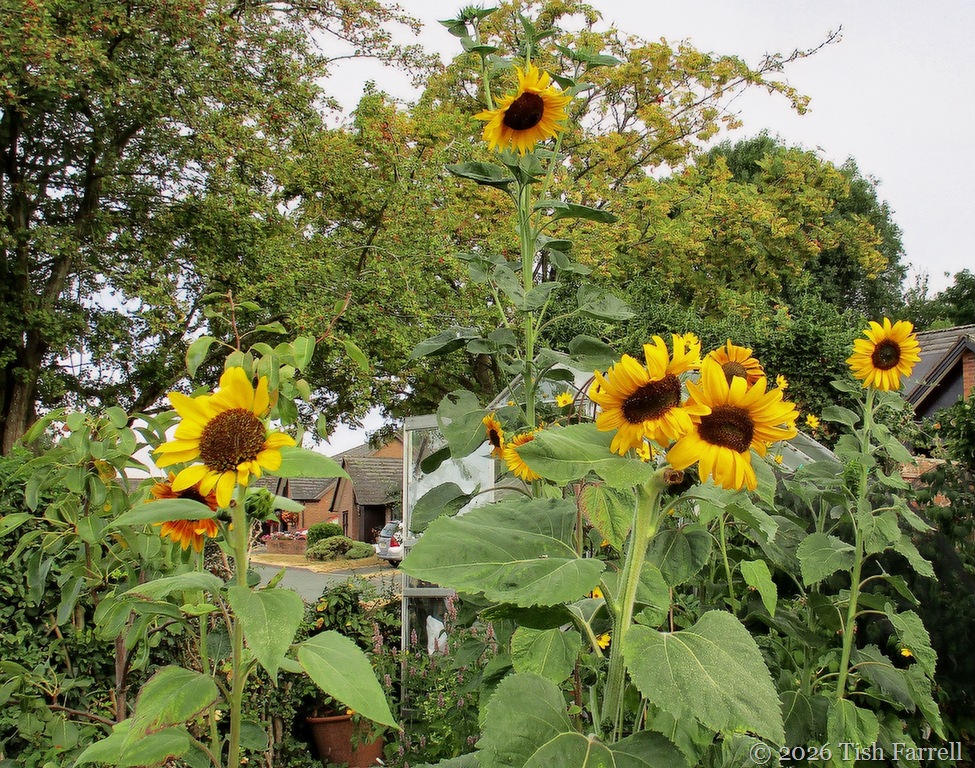
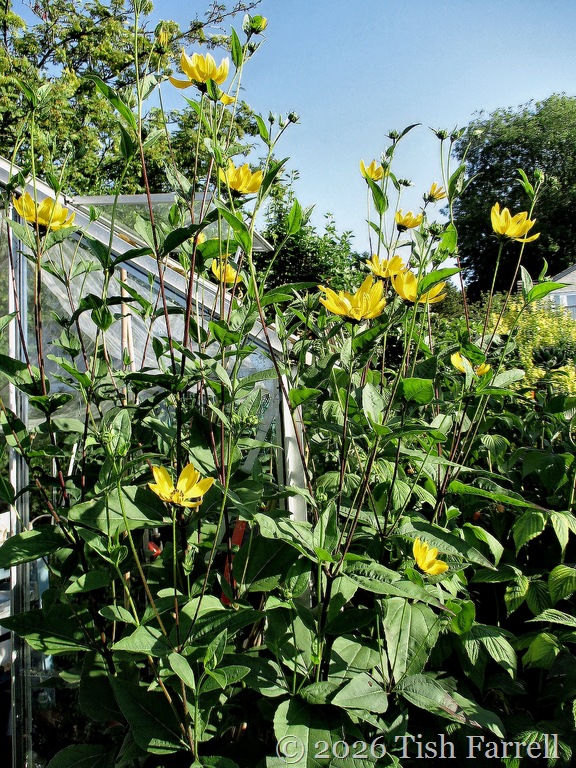
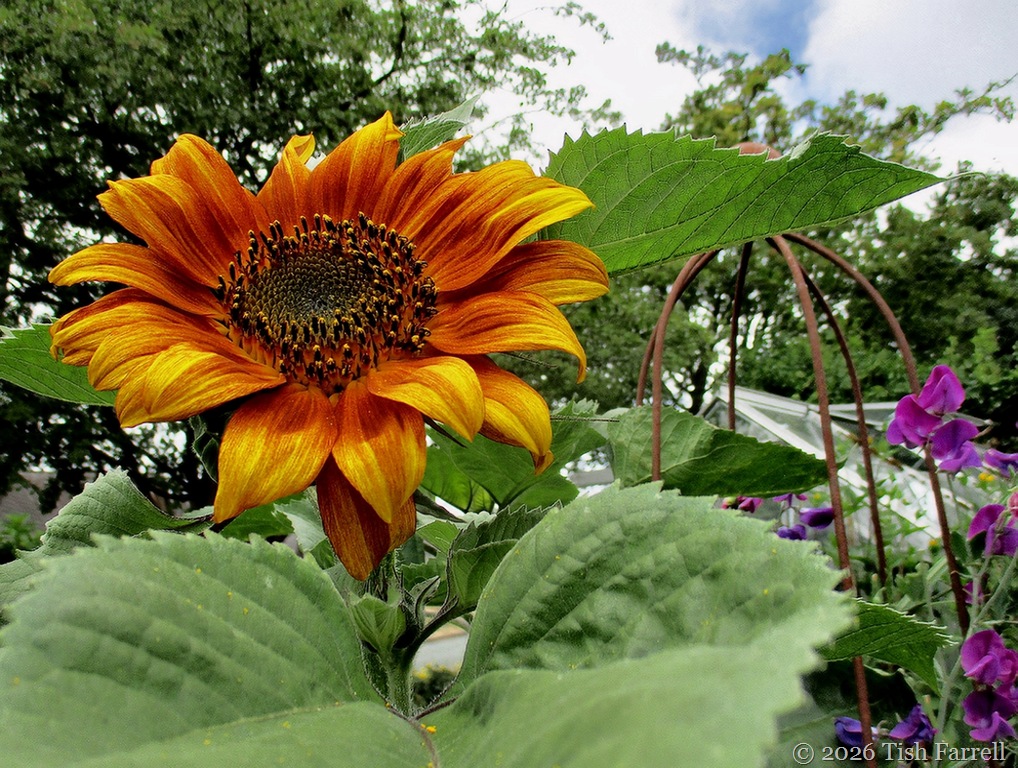
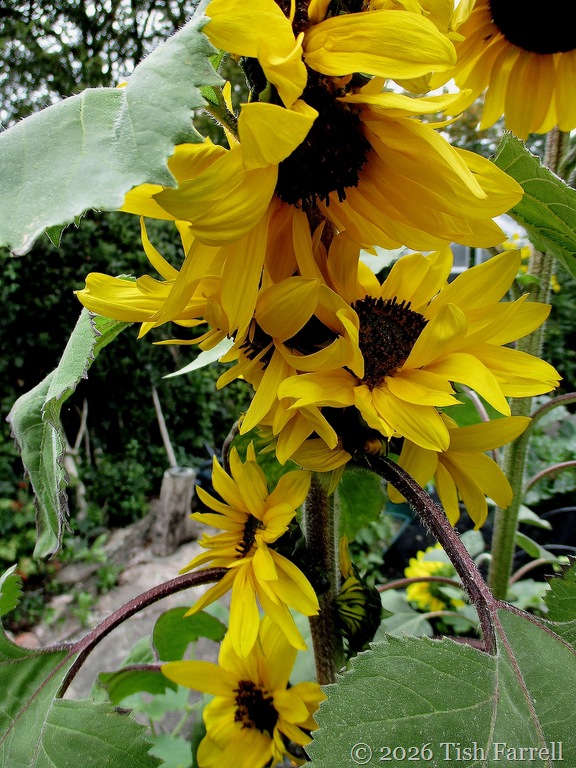
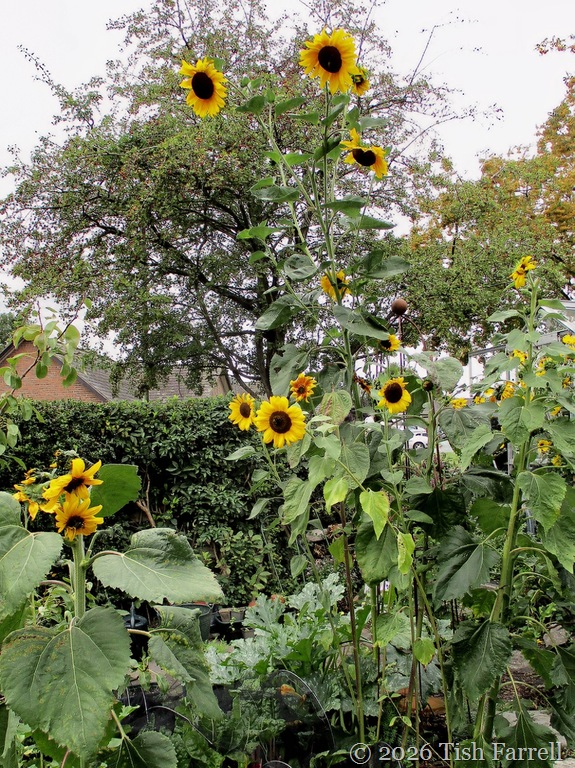
I also mentioned in earlier posts that last year’s several varieties of sunflowers had seeded themselves all over the garden. The tallest one by the old apple tree is at least 8 feet and still going. Then by the sweet pea obelisk there are at least six more sturdy plants (not so tall). I meant to transplant them, but they grew too large before I remembered to attempt it. And then I thought, they’ll be great to follow on from the sweet peas, and I can tether them to the obelisk if need be. Hopefully, they will keep going into the autumn.

This is the first one to flower. (Parentage uncertain).

sunflower

copyright 2026 Tish Farrell


Six on Saturday 4th July Among other wonderful things, Jim has some stunning tiger lilies on show this week.


Six On Saturday ~ Some Like It Hot

sos sweetpeas 4

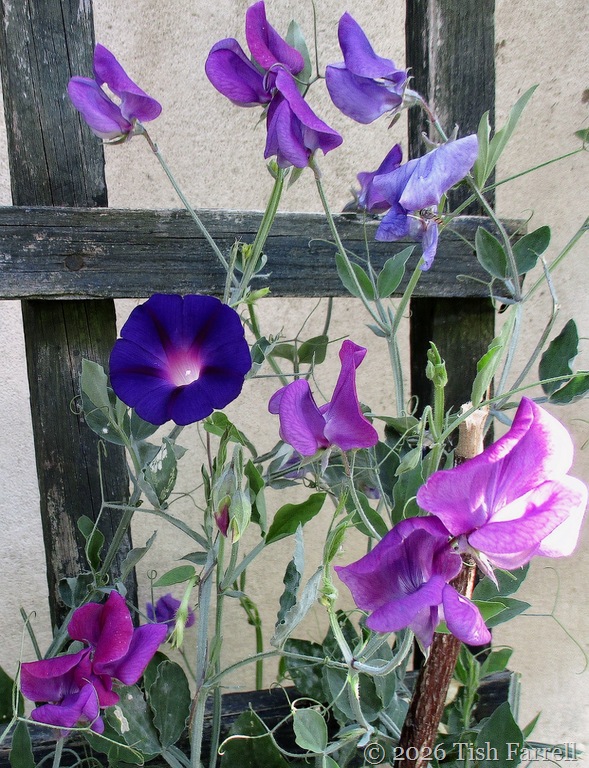
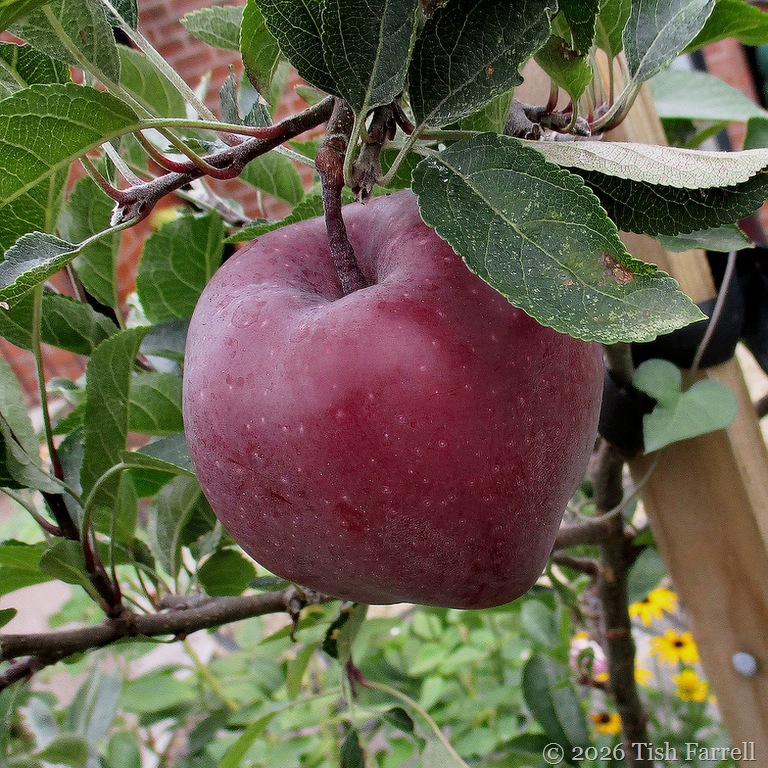
The stars in this week’s sun-baked garden have surely been the sweet peas. This when you might expect the heat to quickly wilt their delicate petals. No so. Over the past week I’ve cut one and two bunches a day. The house smells delicious. And yet back in the spring I’d been complaining about pigeons chomping all the main stems. The rotters were using the obelisk struts as convenient take-away perches. But it hasn’t mattered, and I haven’t even bothered to water them. But I did plant them out quite early in March, and I can only conclude they made some very strong, deep roots.
*

Sos roses

IMG_0817

IMG_0932

The latest rose to bloom is St. Cecilia, a repeat flowering David Austin small shrub creation with hints of myrrh fragrance. She’s growing on top of the back garden wall, where we have a wing canopy tethered, (between the wall and the kitchen double doors). We’ve been enjoying the soothing rose scent while eating outside.

The heat certainly didn’t suit some flowers. The blue geraniums began fading fast and the starry petalled astrantia soon turned crispy. This called for some general tidying. And while I was deadheading around verbascum  Lavender Lass I found this…Sos mullein moth caterpillar

…a mullein moth caterpillar. I’ve known them wreak havoc in verbascum chaixii Wedding Candles, and also in the tall wild flower mullein, so I was pleased to see it hadn’t eaten too much of Lavender Lass. She should flower again later this year. The caterpillar, though, is the most spectacular beastie, especially when I find it turns into something resembling a piece of crumpled bark.

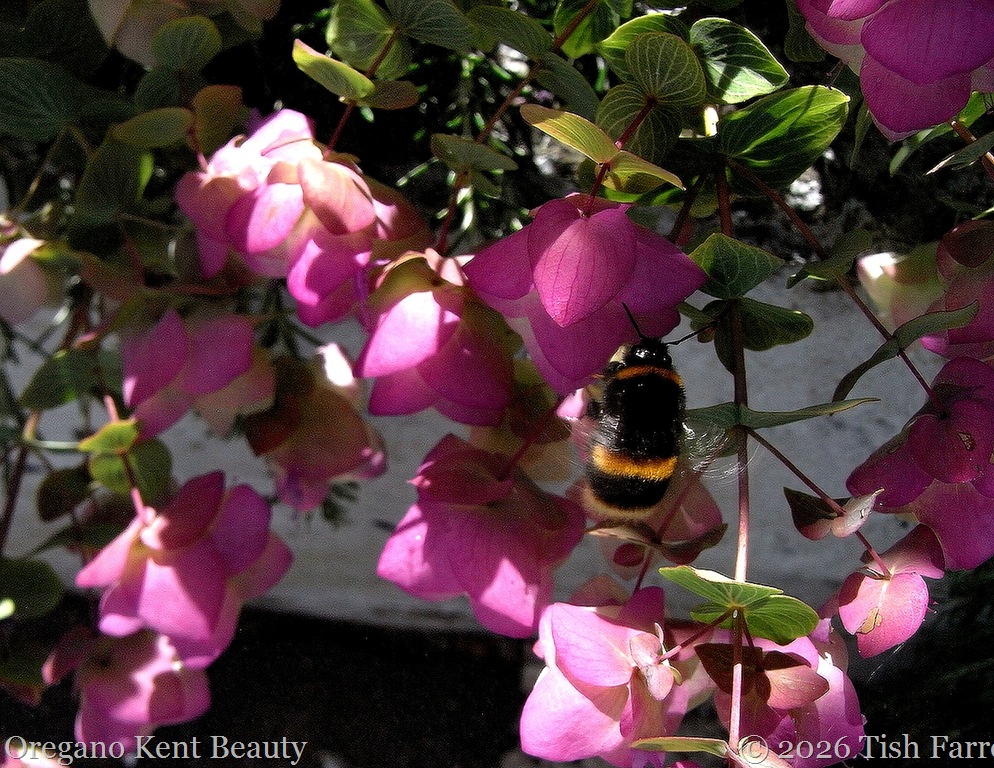
The front garden has been surviving hours of full-on sun for over a week now, so I’ve been very glad of all the Strulch mulching that I did last autumn. I’ve only had to water a few newly planted out annuals and also the two small raised beds with the dwarf crab apple trees in them. Two plants that have otherwise been coming into their own with no attention from me are: Achillea Moonglow and Oregano Kent Beauty.

sos moonglow 3

The oregano is trailing from the raised bed to the left of the Achillea (above). I also have some cascading over the ugly front wall where it keeps company with the recumbent rosemary. It’s thanks to Jude at Cornwall in Colours that I learned of its existence, and then to discover that there are other lovely ornamental oreganos. It will keep flowering now into autumn, the colours growing more vivid through the season. And of course, it’s also appealing to insects.

sos kent beauty 4

Sos Moonglow

*

And finally, ‘hot from the press’ and opening just this morning, a very striking lily. I can’t remember what she’s called. She was anyway an on-line purchasing mistake late last summer, the plant seller getting their orders confused. When this was pointed out, he told me to keep the bulbs and plant them. I have to say, I wasn’t altogether thrilled. I’m not very keen on lilies. And I’m certainly not keen on the lily beetles that too often come with them. So I put them in pot and forgot them.

Sos lilies

Which just goes to show. I shouldn’t have been so mean-spirited about an unexpected gift, even if I did find a nasty red beetle on it yesterday.

Happy gardening, folks, however it comes!

*

Copyright 2026 Tish Farrell


Six on Saturday Please hop over to Jim’s garden and see what’s happening there.


Six On Saturday: Wind & Sun & Hail

heart's delight tulip

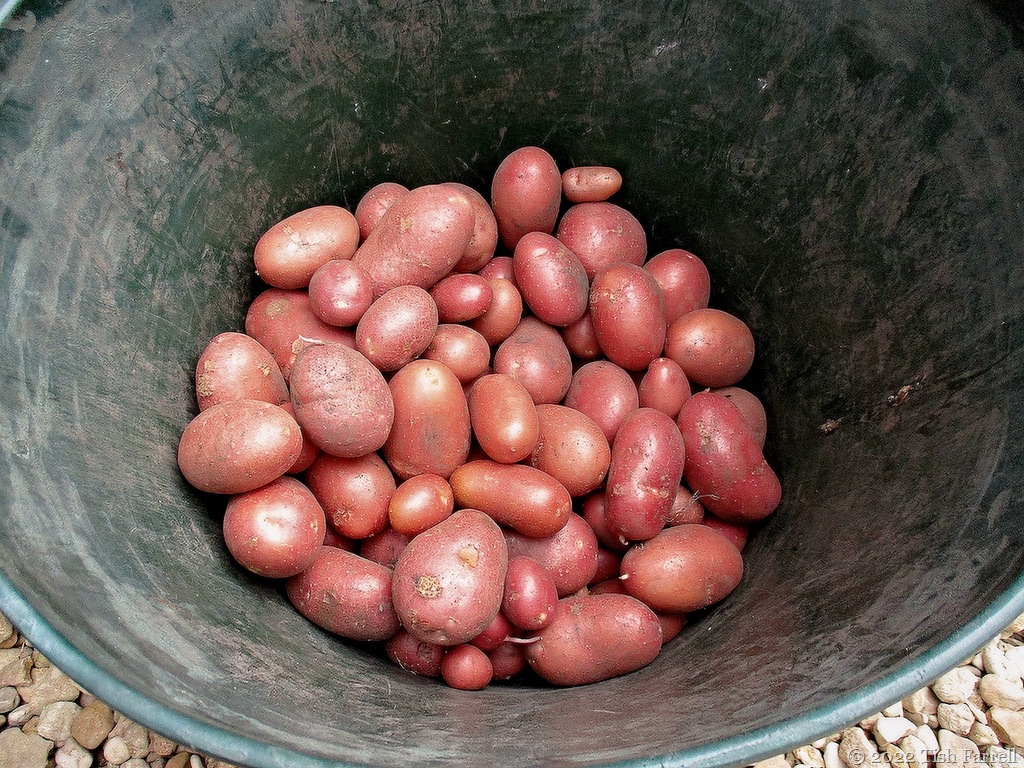
It’s been a week of many weathers, including a sudden heat wave on Wednesday with days of piercing winds and low temperatures either side.  One day we’re in the 20s C, and the next it’s down to 9 degrees. All very confusing, although I did manage to remember to think it was time to plant the seed potatoes – Red Rooster and Charlotte. They had grown some very chunky shoots while lingering in egg boxes in the downstairs cloakroom.

Also we could have done without the gale last Saturday. More of which in a moment. But first, the garden stars of the past two weeks have been these lovely little front garden tulips, Heart’s Delight (1). They have stood up to being roasted and thrashed, but I fear they won’t last today. As I write this, we’re having a hail storm and fierce sleety gusts. Most of their petals have already blown off.

IMG_0111ed

*

And so to last Saturday’s gale, and good bye cherry plum tree (2).  It wasn’t our tree, but it gracefully filled our kitchen window view and we liked to watch it through the seasons. It also made up for the ‘horrid holly hedge’ which we acquired along with the house. On Easter Sunday we woke to this:

cherry plum 2

cherry plum 7

cherry plum 1

*

The tree people came this week and cut the whole thing down. They said the remaining trunk showed signs of decay and had to go. There’s no denying it: it’s left a big gap.  I doubt that the housing association owners will replace it, planting space being rather limited. Here it is back in March.

cherry plum in March

cherry plum gap

We can now see the retirement home’s almond blossom tree across the road, but the immediate holly hedge view seems rather bleak and gloomy. I’m wondering about having a Japanese Maple in a big pot at the top of the old steps opposite the side window. It’s a semi-shaded, sheltered spot. It might work?

*

Of miniature trees (3). On a happier note, the garden’s tiny trees seem to be faring well. We don’t have a great deal of space, and although I realise shrubs generally form the ‘spine’ of a garden, I couldn’t get to grips with what to choose or where to put them. Instead, I thought of dwarf trees. The conference pear is the prettiest of them just now. It’s in a raised bed beside the potato patch.

back garden April

pear 3

pear 2

*

We also have 2 dwarf eating apple trees and a little Stella cherry on the top of the terrace wall, and in the front garden, two small crab apples (Evereste and upright Laura both about to flower), and a Merrybelle Plum, which is just over.

My thinking with the little trees is that we and the pollinators have the pleasure of the spring blossom (and maybe also some fruit come autumn), but they leave lots of room for the late spring and summer show of herbaceous perennials.  And if we lose sight of them for a while among the phlox, rdbeckia and Michaelmas daisies it doesn’t really matter.

Merrybelle 3

Merrybelle plum

terrace bed

About to flower – a dwarf Christmas Pearmain just visible to the left of the tulip pot.

*

The weather may be changeable and bitterly cold (even by English standards) but there have been plenty of sightings of butterflies: orange tips, tortoiseshells, Common Blues. I’ve also noticed bumble bees, especially in the Pulmonaria (lung wort) flowers. Diana Clare (4) with her striking silvery leaves, is a new plant bought last year, so I’m pleased to see she’s settling down, and especially after the pigeons snaffled her first leaves.

RIMG0065ed

*

Also looking its best with lots of flowers for the insects is the creeping rosemary (5), planted a couple of years ago along the front garden wall.

rosemary

*

And last, but not least, it’s all thanks to he who builds sheds and car ports that aren’t for cars, AKA Graham. This week he finished making me a cold frame (6). Brilliant! He’s also mended my ancestral (grandfather’s) spade  whose handle broke while I was trying to excavate the whirly washing line spike that needed to go somewhere else.

All we need now is to get growing with some warmer, less windy weather. Roll on spring!

cold frame

*

Six On Saturday April 11 2026


Reasons To Be Cheerful: Six On Saturday

snowdrops 9

January came with heavy snow and gale force gusts that brought down snow-laden trees. Then there were days of frost and biting winds, then heavy rains that flooded fields and roads. There were also many low cloud days, the hills around the Castle shrouded in murk the colour of mud; not much sight of the sun. But through it all the snowdrops have been emerging in ever bigger clumps. They are everywhere around the town, in pots and borders, on patches of abandoned garden, under walls and hedges. And they’re still going strong.

Our own snowdrops are too newly planted to make a clump or a photo worth taking, though we’re still pleased to see them. So these are the neighbours’ snowdrops.

*

The garden has been looking pretty dreary, but there are signs of spring  – when I put on my specs and do some low-level peering.  The Tete a Tete daffodils for one are looking promising:

daffodils

*

We’re also approaching the main season for hellebores. The December flowering Christmas Carols have kept going through snow and frost, but the rain has muddied and bruised their faces.

IMG_9727

*

This purplish-pink one, just opening outside the kitchen window, is faring better:

IMG_9808sq

And still in purplish mode the Ajuga reptans  looks to have put on a growth spurt along the back garden path. I think it may be Atropurpurea. It’s certainly looking very purple here in the afternoon light:

Ajuga

*

And since we’re in the back garden, it’s worth looking in on the winter greens. At one stage they were buried in six inches of snow, but now I see the Swiss Chard and perennial beet have begun to regrow, and the purple sprouting and cauliflowers planted out in the cleared runner bean bed in September are bulking up. The land cress, meanwhile, has been sprouting edible, peppery salad stems all winter.

Swiss chard 3

RIMG0020

IMG_9816

*

And finally there are the slivers of tiny mauve crocuses that have popped up all over the front garden. On dull days they are almost invisible, their petals in tightly wrapped small spikes that remind me more of fungi than flowers.

crocus ed 3

But earlier this week we actually had a blue-sky-full-on-sun day, and the tiny souls opened wide, though barely an inch across at full petal: their own small force of nature.

*

Six on Saturday Our host Jim, as ever, has plenty to show us in his garden; always something new to see or learn about there.

Six On Saturday: In The December Garden

IMG_9640sos

Now as the year ends, the garden is wet, wet, wet. Wet as in waterlogged, sodden, soggy and all round slithery. But yesterday we had sun. It seemed like a heavenly blessing after days of gloom and serial downpours. And suddenly, instead of finding the garden depressing, I started to notice the plants that were not only doing their best, but in their own way, putting on a show.

1) Top of the list is Nandina domestica, otherwise known as Heavenly Bamboo. It’s not a bamboo and so does not have bamboo’s bad infesting habit. The variety here is Fire Power. It’s compact, dome-like in habit, evergreen, and will grow around 18 inches tall with a two feet spread. It likes full sun, but otherwise is undemanding. It also seems unfazed by hard frost (we had several weeks of freezing weather last year). But what colours! It turns more red with the cold weather.

IMG_9629sos

*

Number 2) is a plant that has made a good recovery after a very unpromising start. It’s a Japanese Shield Fern I bought on-line back in the spring. After ten days being lost and tossed about by the delivery company, it arrived in very sorry state, much mangled and desiccated. Now it seems very happy in its pot, making new fronds even..

IMG_9628sos

*

3) The prize for steadfast out-of-season flowering goes to the Phlox paniculata Adessa in the front garden. This is a young plant, bought in the summer. I was not expecting it to flower until next year, but come November, spires of small white flowers appeared, and they’re still going, subtly scented too.

IMG_9641sos

*

4)  Also in the front garden is a tiny self-grown viola. It’s seeded from the pot of violas my sister gave me over a year ago. Such stalwart, exquisite little plants.

IMG_9639sos

*

5) Another surprise is the number of foxglove plants in the garden, all self-sown. They have been growing huge during the recent wet and mostly mild weather, having recovered from a spell of heavy frosting in November. Happy thoughts of summer then.

IMG_9634sos

*

6) Finally, and spot on for a December debut is hellebore Christmas Carol. It was a gift last year, since divided and planted out both in a pot and in the new back steps bed. It’s been so cheering on dull days, though, annoyingly, some beastie is biting holes in its petals. Last year it flowered from months and months.

IMG_9651sos

IMG_9649sos

*

Happy gardening everyone –

whether planning or planting, depending on your hemisphere

Six on Saturday  And thanks and Happy Christmas to host Jim. He has shown us so many fascinating plants, to say nothing of guiding us around his stunning planting schemes.

IMG_9640 sos header

After The Storm ~ Six On Saturday

Cornelia rose

This time last week, the wind was racketing around the garden, threatening to uproot and mash the herbaceous plants. But in the end, damage was minimal. In fact some plants have been thriving since.

And especially

1) Cornelia rose

She’d been in a big pot by the greenhouse all summer. And as she was new, I’d been concerned about keeping her suitably watered during the long summer drought. She did flower a little back then, but not for long. But since the storm, and removal into a bigger, bottomless pot, she has sent out elegant arching stems laden with buds and blooms. She’s a hybrid musk, and the flowers, though small like wild roses, smell delicious. I’m hoping she will eventually fill the gap between the hedge and the greenhouse.

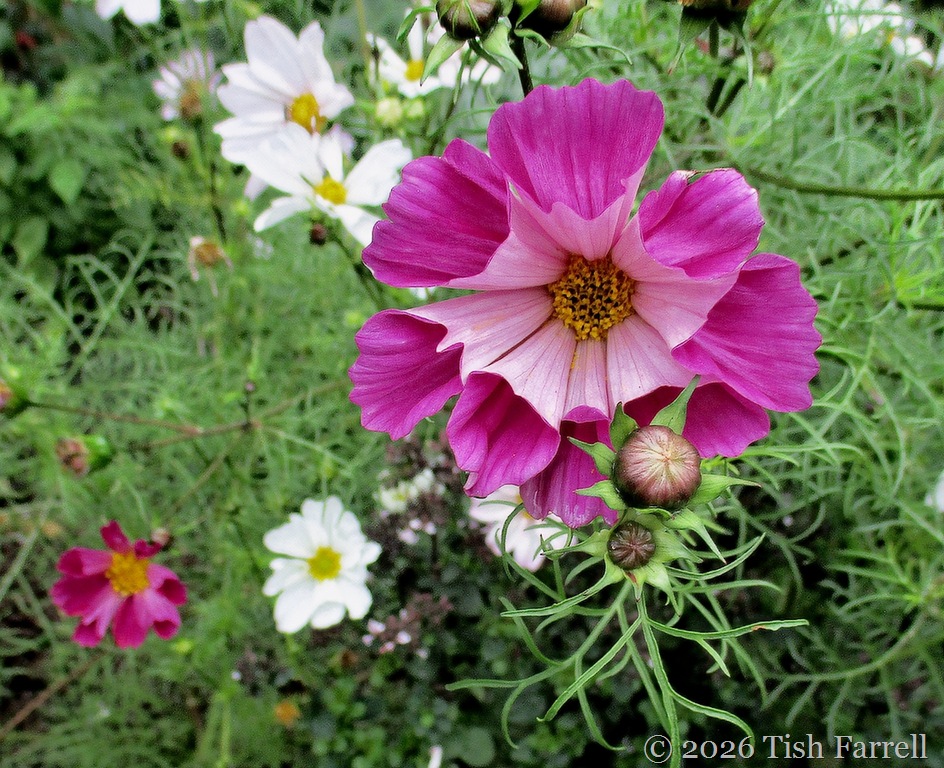
2) Cosmos bigger and better

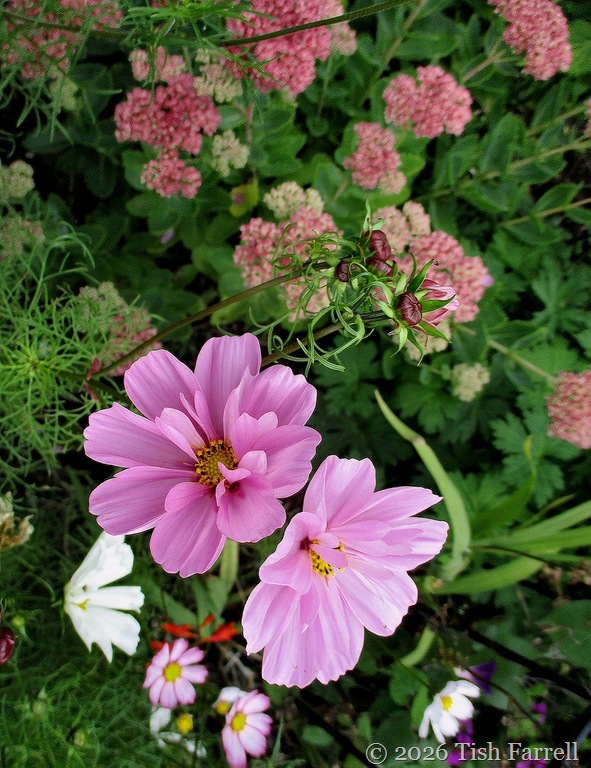
The gale might have blown their frocks off, not to mention nearly scooting them out of the ground, but the Cosmos plants on the terrace wall have come back bigger and better, and are covered in new buds. I’ve been filling vases with them.

cosmos

Cosmos 2

*

3) Tree tomatoes?

Nor did the big wind deter tomato production in the cooking apple tree.  Daft, I know.

sungold

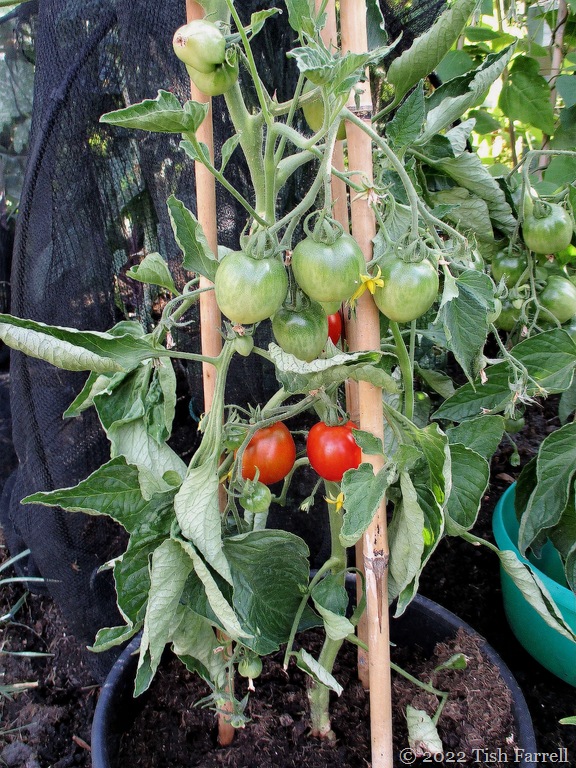
This plant was one of my rejects, a pot-bound Sungold seedling that had hung around on the garden path long after I’d potted up the main plants in early June. Eventually, I stuck it the ground , and generally forgot about it, though I did provide it with a supporting stick. Some time later I discovered that it had climbed way up into the apple tree, and so chopped off its top growth. And again ignored it. Then it began fruiting and has been doing so for many weeks – just a few tomatoes at a time. They’re delicious too.

Here it is – you can just see a strand of green fruit hanging down to the right of Jelly King crab apples, green obelisk behind.

apple tree

*

4) The Kabuki calabrese gets the prize this week for making me smile a lot. I always find it exciting when my brassicas start to sprout. And this particular plant has survived remarkably unscathed after the summer attack of flea beetles which make holes in everything of the brassica family. The flower head isn’t exactly big enough for two. Well, not yet. Watching brief activated.

Kabuki broccoli

*

5) Grumble of the week

Well, there always has to be something. Now I’m wondering what on earth is making holes in my Swiss Chard (mature and seedling versions) and also the Perennial Spinach. I thought I’d finally protected all the edible greens from all comers with a covering of fine black netting. All summer I’d managed to fend off butterflies from the caulis and purple sprouting. And kept the pigeons at bay. But now I have holey leaves. He who is a sometime plant pathologist posits caterpillars, but I can see no obvious sign of them. Suggestions, anyone?

spinach pest

Swiss Chard

*

6) Sunbathing

And not to end with a fit of gardening disgruntlement, since the storm we’ve been having some wonderful sunny spells, warm enough to make one put autumn woollies straight back in the cupboard. Even the ladybirds have been sunning themselves. I’ve been finding them all around the garden, including some very tiny ones.

ladybird

And that’s it from our Shropshire garden. Happy gardening, folks.

Please call in on our host Jim at Garden Ruminations.

Six On Saturday

Cornelia rose header

Feeling Blustered: Six On Saturday

IMG_9149

1. Storm-struck

This morning at breakfast time – with a high wind whooshing about the place and rain lashing the kitchen doors, the garden definitely looked a no-go area. I could see three dozen bean canes splayed like pick-up-sticks across the top path by the greenhouse. Drat and double drat. When I dismantled the runner bean rows a week or so ago, I had forgotten to tether them securely to the hedge. I could also see the cosmos at the top of the steps being tossed about. Since late September and the onset of rainy days, it has been flowering magnificently. Now it was having its petals blown off. More curses. And I could see that the Selinum (farthest right at the wall top) which is still flowering as well as seeding, was now rearranged at a 45 degree angle.

Not a happy gardener.

IMG_9160

Cosmos unclothed; Helianthus blown away.

IMG_9180

And then, quite suddenly, towards midday, the rain stopped and the sun came out, although we still have a mighty blow, with now-and-then gusts that lift you off your feet.

I did a quick tour of the garden, but there was not much to be done mid-gale, apart from attempting a bit of support for the Selinum.

2: Apples

apples

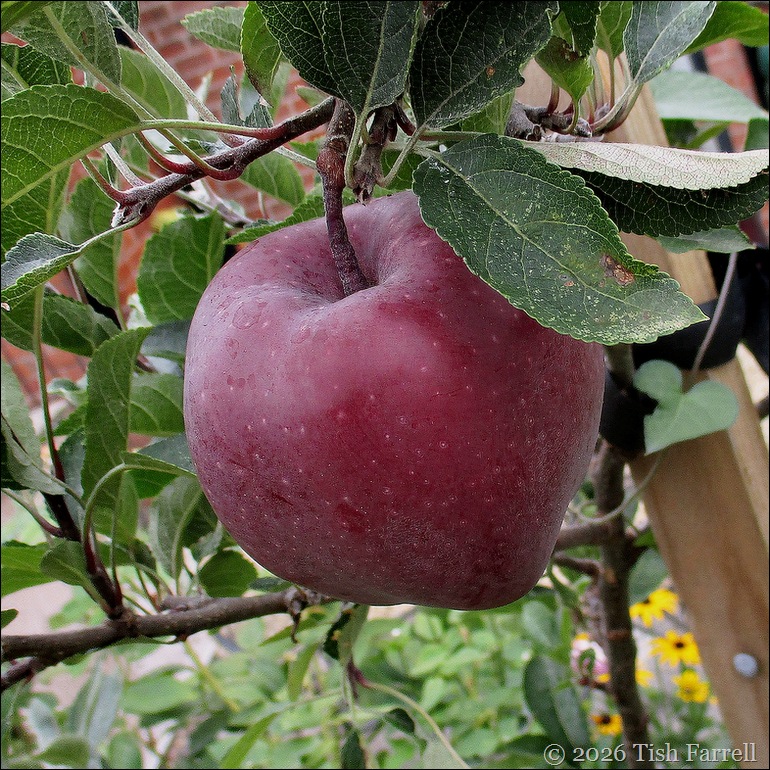
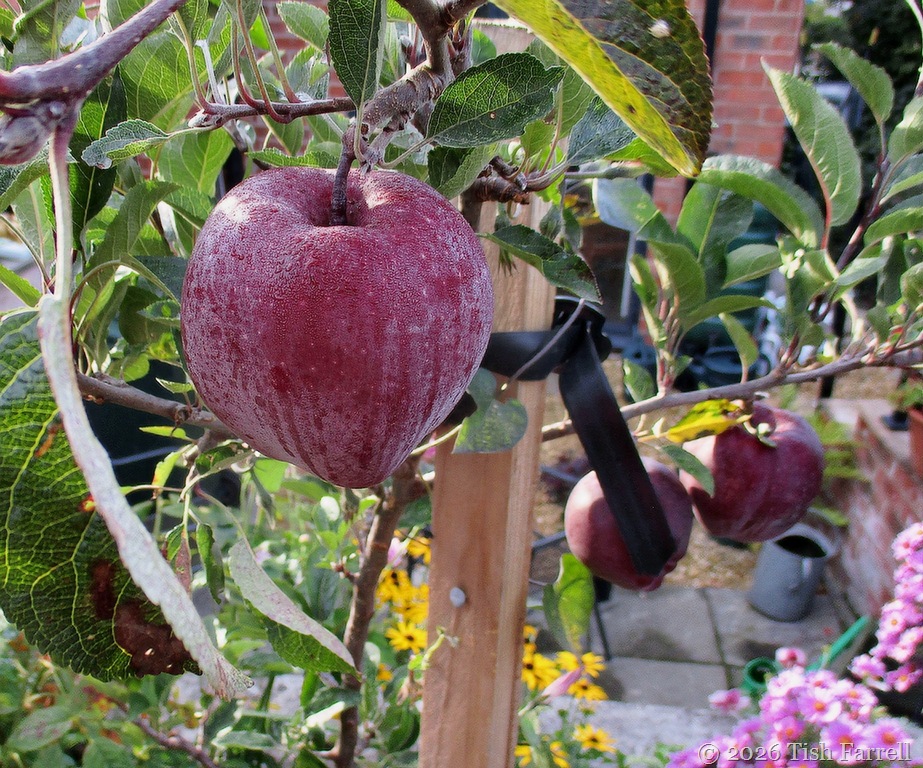
With the wind, I was expecting another heavy crop of windfalls. But when I went out to check the damage, I was pleased to see that most of our remaining apples are still clinging sturdily to their stalks. Which is good news as I already had a stack of windfalls in the kitchen. And there’s only so much apple sauce we can eat, and all the neighbours are overwhelmed with apples too and putting them out at their gates for anyone to take. However, I recently discovered an easy apple chilli chutney recipe, and so, as gardening was out, this was what happened next.

IMG_9192

*

3. In love with Michaelmas daisies

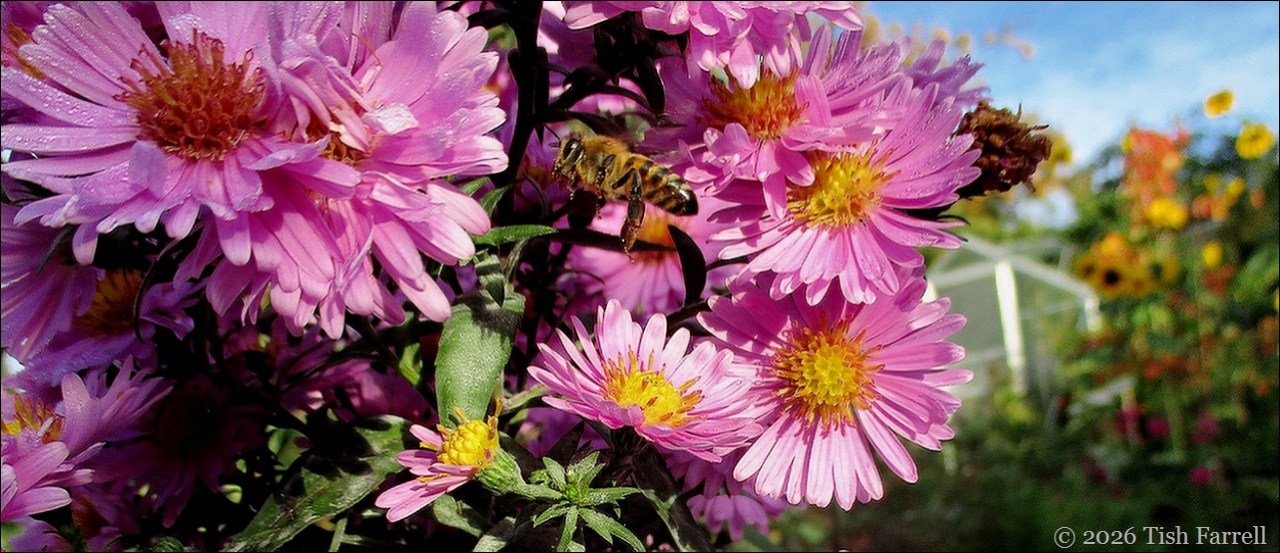
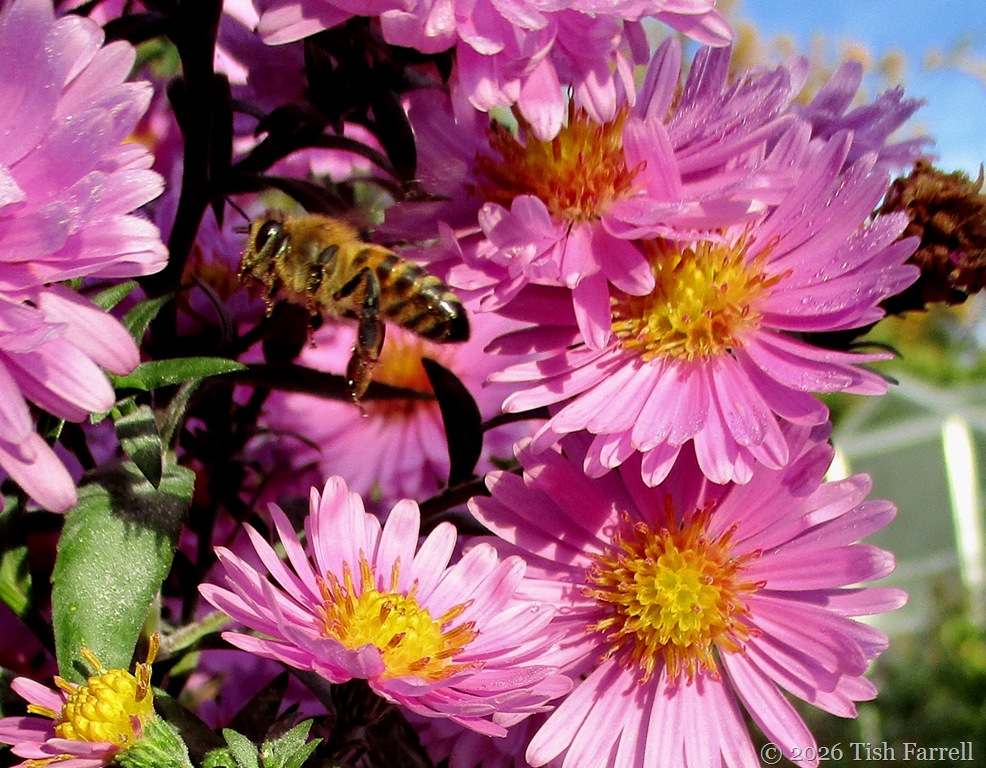
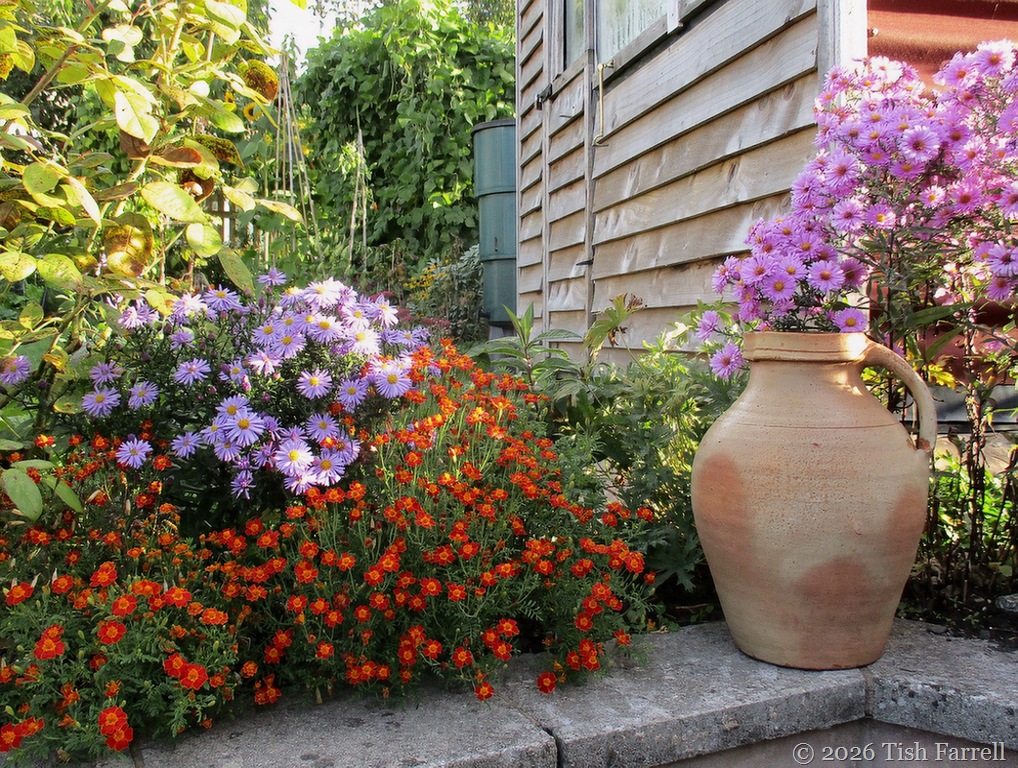
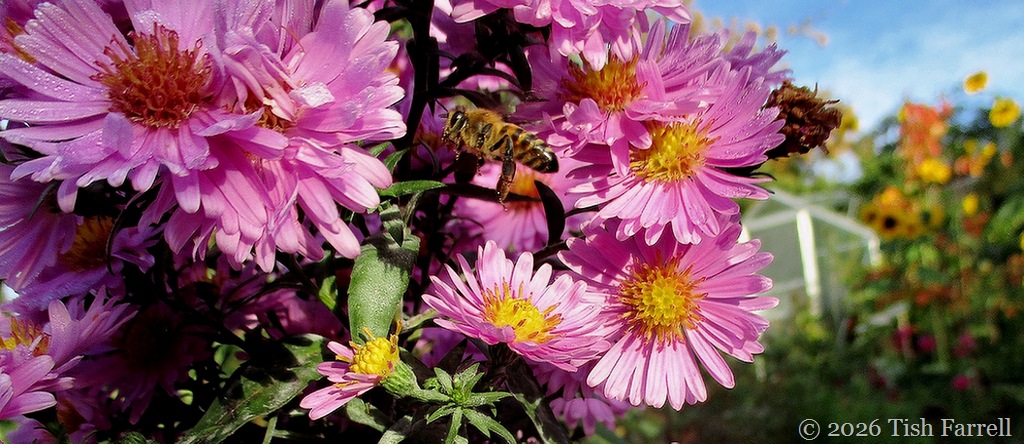
I’m not expecting the late flowering flowers to survive the wind, but that won’t include the Michaelmas daisies (Symphyotrichums/Asters whatever they’re called these days).  I took this photo with the wind still blowing. Only a couple of small side stems damaged.

IMG_9158

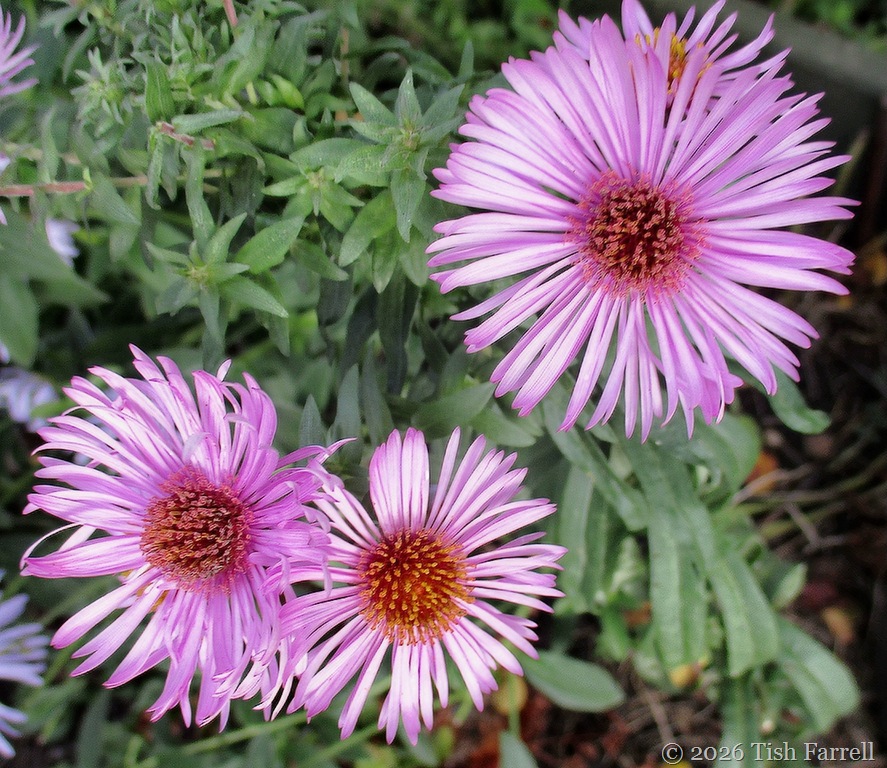
Its neighbour, a compact little variety (I think it could be Purple Dome) has only just decided to flower:

IMG_9167

And at the bottom of the garden this tall white bushy version, White Ladies maybe, and…

IMG_9176

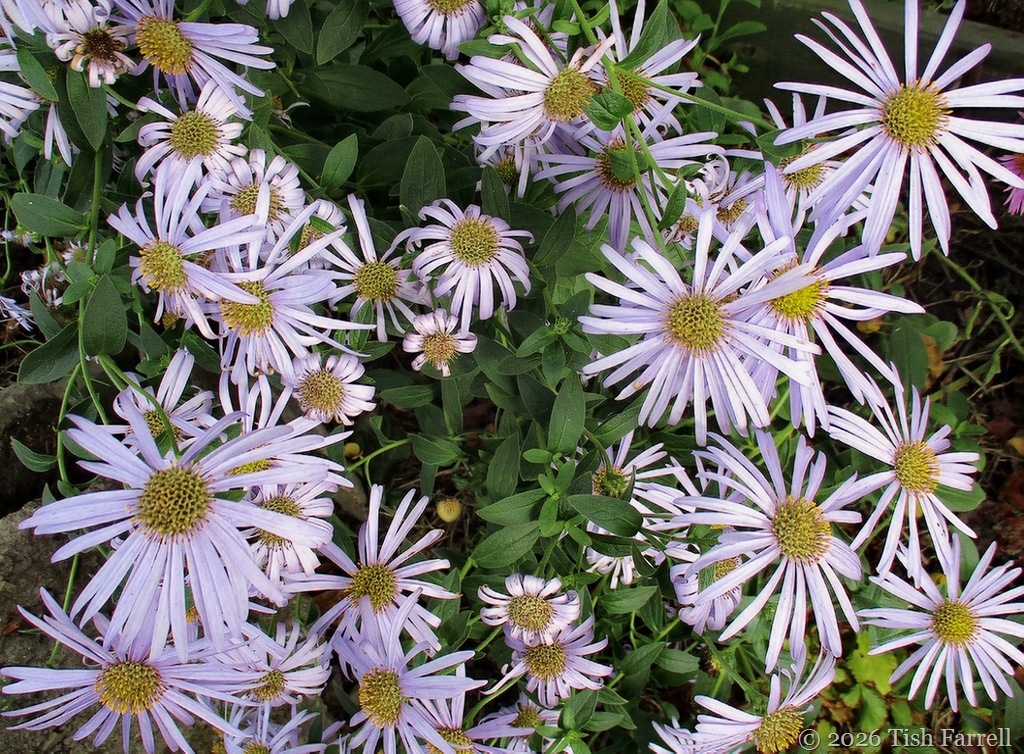
…Aster x frikatii Monch have been flowering since the hot days of summer:

Aster × frikartii Mönch

*

4. Great Dixter Nursery

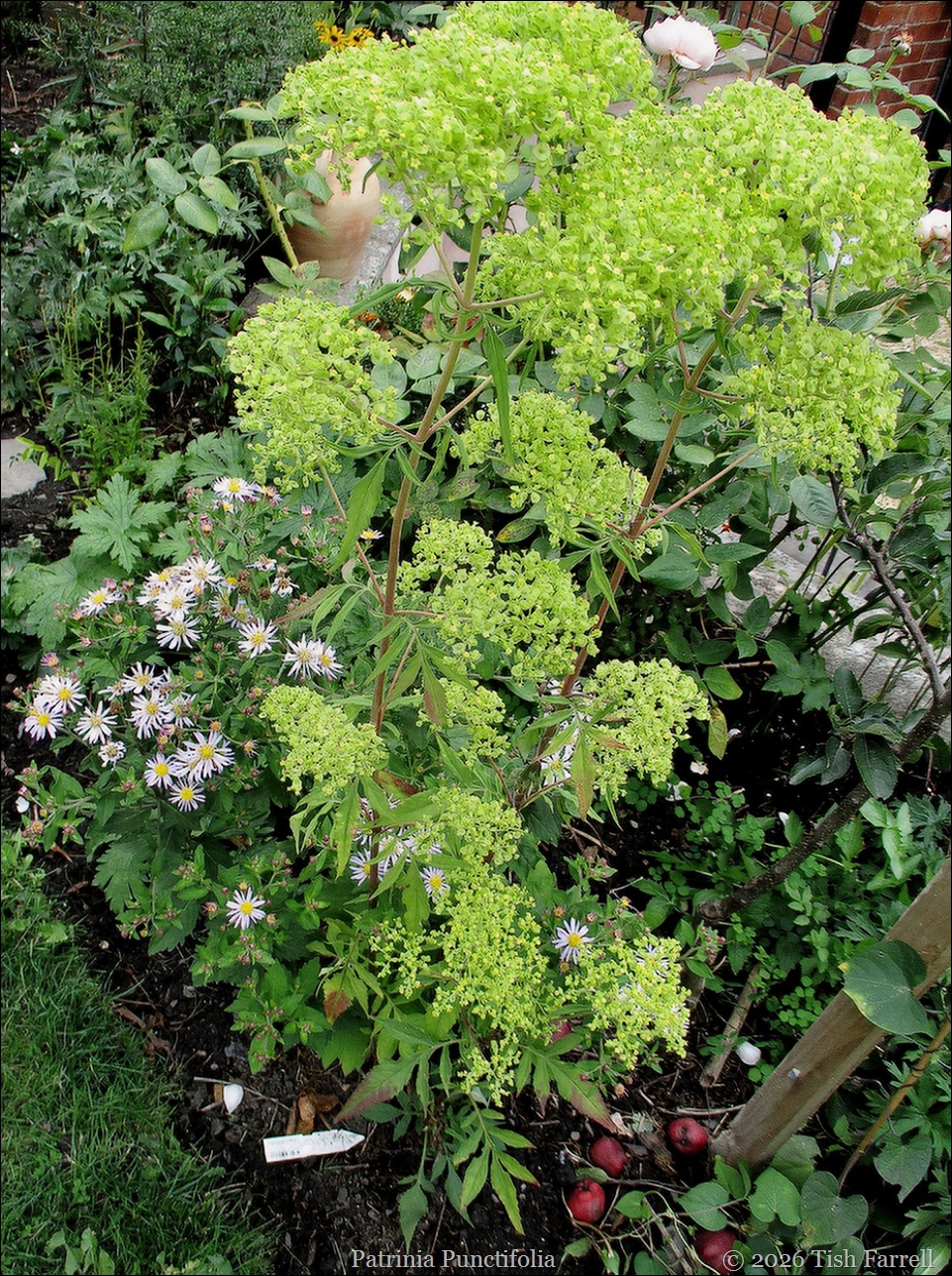
And so like Jim, I’ve been doing some plant buying. I have recently discovered that Great Dixter House and Gardens has an online plant shop. They sell some very lovely plants (1 and 2 litre sizes) at very reasonable prices. That’s where I found Patrinia as featured in an earlier SoS. And it’s where I also found ‘Symphyotrichum Les Moutiers’ which is now planted in my front garden. We’ll have to wait nearly a year before we see it in action though. Do give the link a quick look.

5. Ongoing edibles

The salad stuff hasn’t been troubled by the unruly weather. The radicchio and endive, rocket, land cress, and Moroccan Cress lettuce are presently thriving, though everything has to be netted against pigeons.

IMG_9185

We also have some Swiss chard, beetroot, parsnips and leeks, and a new bed of winter greens (planted out on the runner and borlotti bean bed) is looking quite good. And there are still a few climbing borlotti beans to pick in the side-garden wall bed.

IMG_9187

*

6. A happy face

IMG_9164

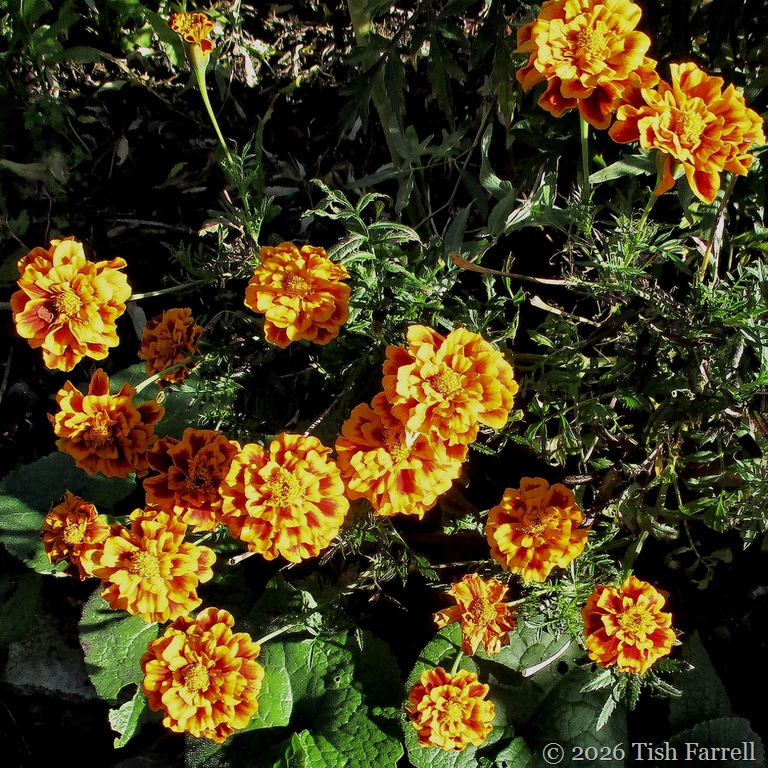
Now as I’m writing this, the rain is back and the wind is still blowing. So I’m finishing off with another garden stalwart. I was so pleased to find this marigold looking so fresh-faced as I went round the garden late-morning. Of course, we eat these too. Perhaps I shouldn’t mention that though.

Happy gardening folks – whatever your weather. Even on distinctly unpromising days, there’s usually something in the garden to be glad about.

copyright 2025 Tish Farrell

Six On Saturday  Please catch up with Jim at Garden Ruminations.

header

Season Of Mist and All Round Wetness ~ Six on Saturday

viola magnifico 2

Here in Bishop’s Castle the rainy weather continues as we head towards the autumn equinox. Just now it’s pouring steadily, threatening to dampen spirits for today’s Michaelmas Fair. This is always a hugely jolly affair of stalls, parades, Chinese dragons, steam engines, vintage vehicles and street performances – assorted bands, Morris dancers, a jester from Chester, the singing farmer, to name but a few of the events. And then the whole thing is rounded off mid-evening with a magical lantern procession through the town (the lanterns made by children). All very much dependent of weatherly cooperation. But then I’m sure, this being the Castle, everyone will make the best of it, brollies and waterproofs at the ready.

Definitely not a day for gardening though. Also as the season winds down, it’s hard not a feel a touch dispirited by the ongoing sogginess. The few roses on their second flowering don’t like it much either. But come hell or high water, to say nothing of last winter’s three solid weeks of snow and frost, the little pansies, viola magnifico [1] above still soldier on. This plant has been flowering continuously for twelve months.

And talking of pansies, what is it that nibbles the yellow ones? And is it the same thing that bites off the buds from my only lupin whenever it tries to flower?

*

yellow viola

*

The Cosmos [2]doesn’t mind the weather either. In fact it seems to be having a new lease of life, and I’m enjoying the drifty looks of it, its stems hanging in raindrops.

Cosmos

*

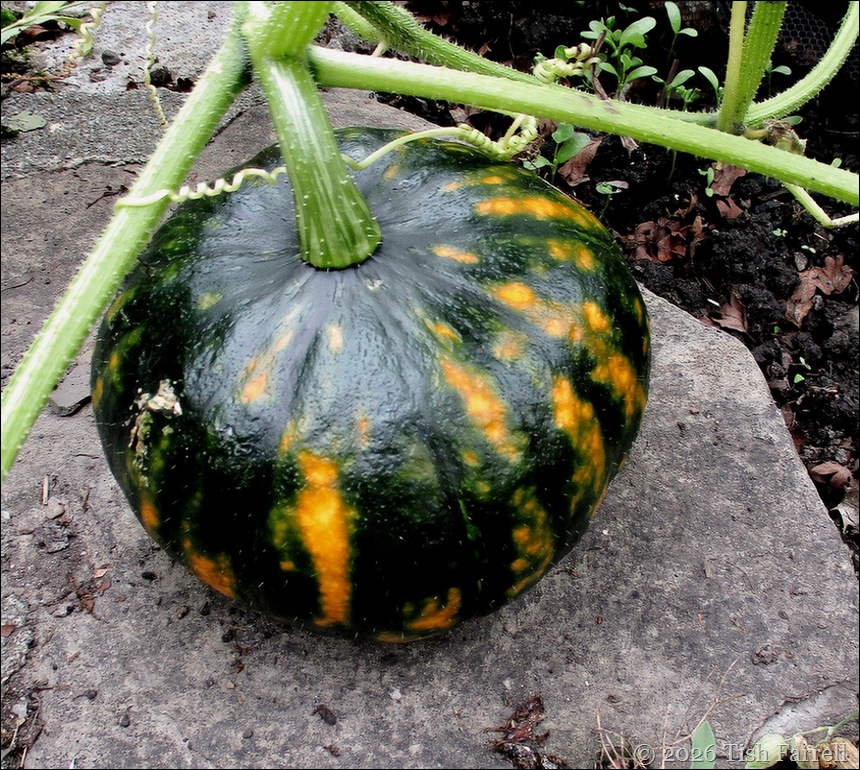
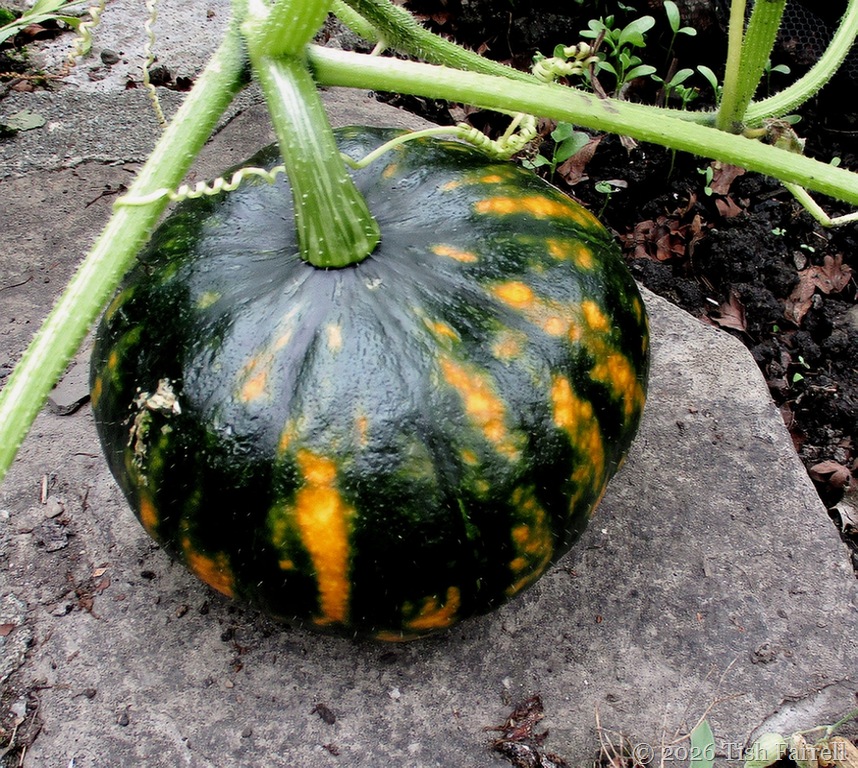
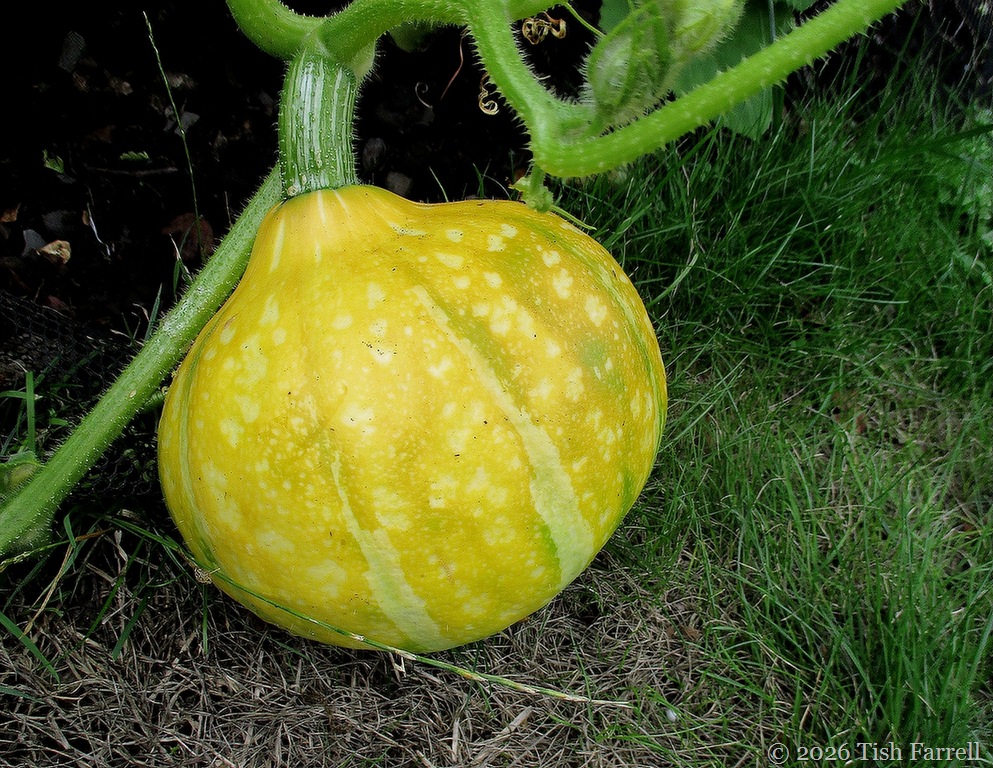
The Japanese ‘Uchiki Kuri’ squash [3] plants  weren’t as productive as I’d expected, and I had high hopes of some later planted plants. They’ve produced a couple of tiny ones, and I’ve nipped off extraneous shoots, but I think it’s probably too late for them now.

Japanese Squash 2

Japanese squash 3

japanese squash

*

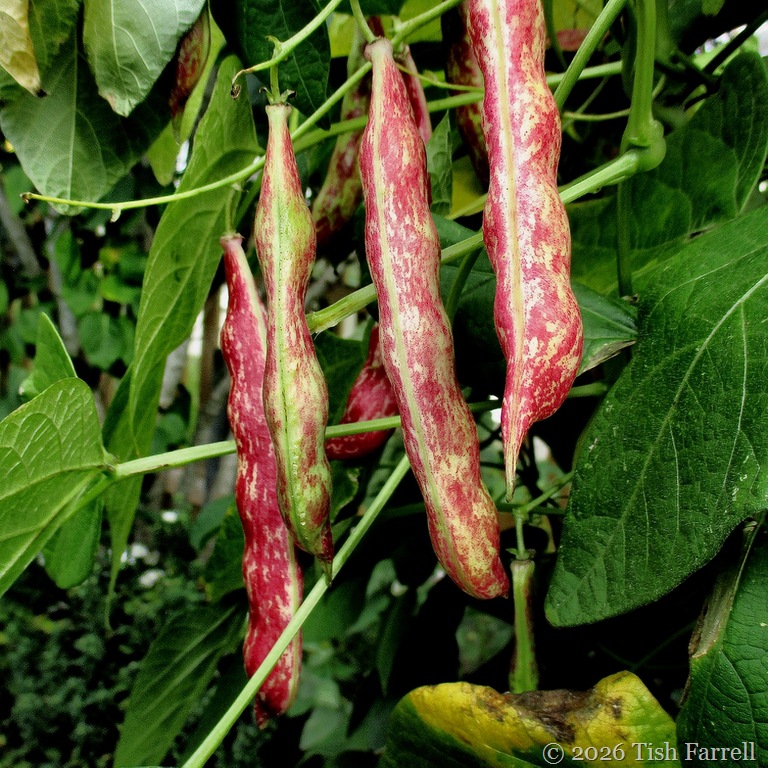
The borlotti bean crop [4] is looking more promising. I picked all the dwarf variety some weeks ago, but the climbing ones are just beginning to dry in their pods. I love them for their looks alone, though they’re pretty good in the pot too.

borlotti

*

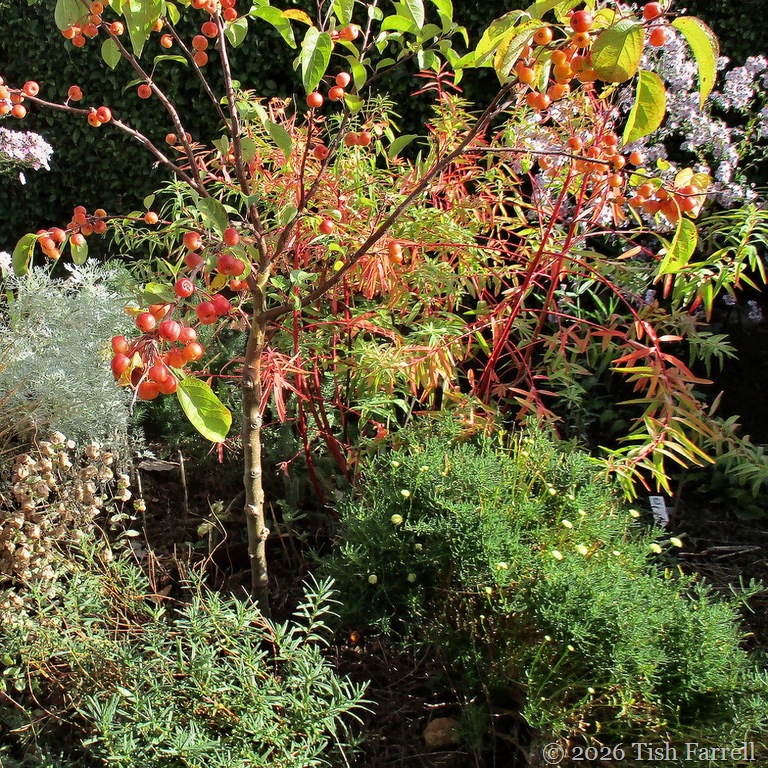
Despite my weather whingeing, the garden is still looking colourful. The rudbeckia and Michaelmas daisies certainly brighten the place up. There are also still some sunflowers at the bottom of the garden, and my two very small crab apples trees [5], Evereste and Jelly King are looking their vibrant best.

 Evereste

This miniature Evereste is in a corten steel raised bed, along with some origano Kent Beauty, and Santolina. Silvery Artemesia Powis Castle behind.

*

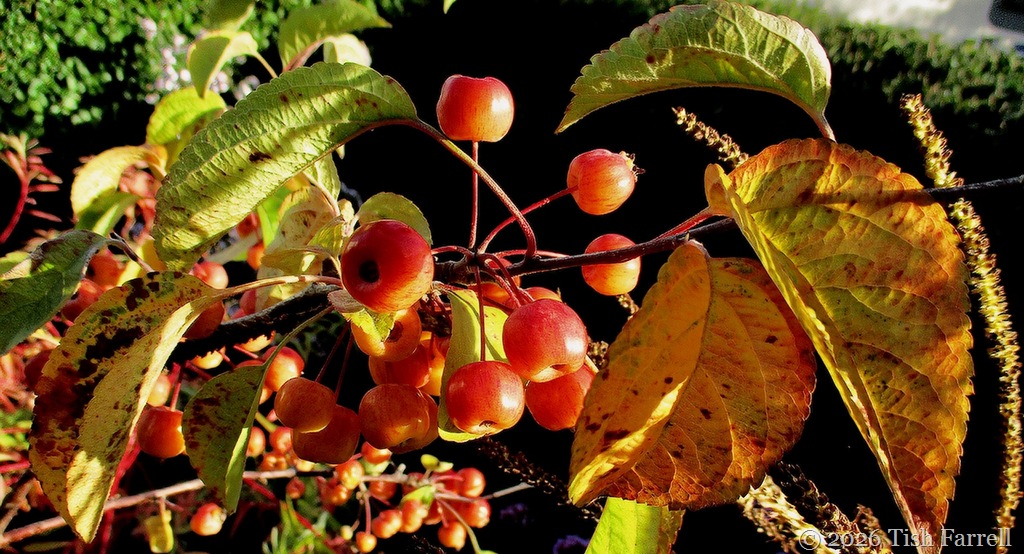
Jelly king

Jelly King is lighting up the furthest corner of the garden. I’m not sure I want to sacrifice the apples to making jelly (perverse I know, considering this is why I chose it). They look so lovely, and in fact, now I have found sources of wild apples (see previous post) I think I will leave them, first for us to look at, and later for the blackbirds.

Finally, here’s one of my newish garden plants that has been so glad of the rain, Persicaria Blackfield [6], red bistort. It really struggled all through the summer, despite my hand watering. But then with the first of the recent showers, it perked up and began to flower. It’s interesting that the drought seemed to have had a miniaturising effect on the whole plant, as if it was making itself small to save itself. I’m hoping it will settle in now and come into its own.

Persicaria Blackfield

*

Six on Saturday Please visit host Jim at Garden Ruminations. He’s been very busy despite the weather.

Late Bloomers: Six On Saturday

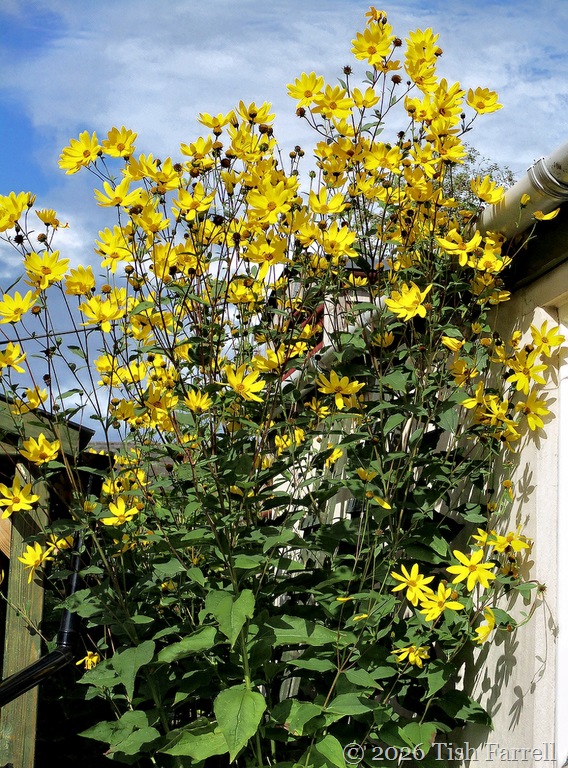
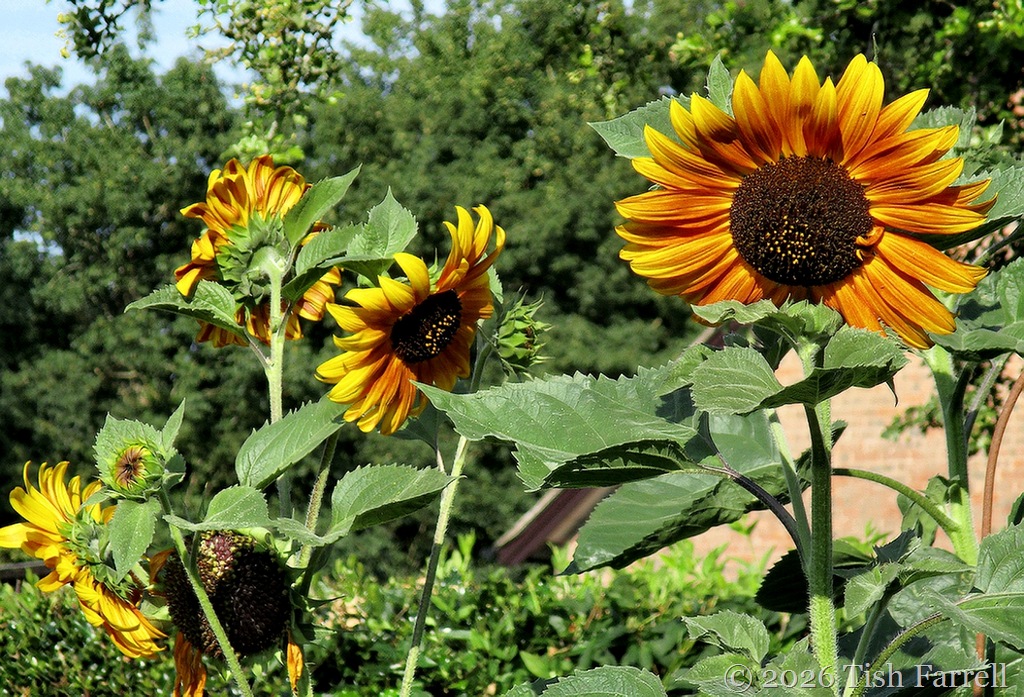
sunflower

The garden looked shell-shocked after this week’s deluge. Rain at last! But rather too much at one go. “It never rains but what it pours…” etc etc. Anyway, the giant sunflowers [1]  held their own and are still putting on a show. Then there were the almost immediate signs of revival by the lawn which had been dusty brown all summer. This reminded me of our Kenya days when our lawn of tough Kikuyu grass was reduced to looking like old sacking during the long dry season. But come the short rains and up would spring masses of green shoots,  an instantaneous green sward.

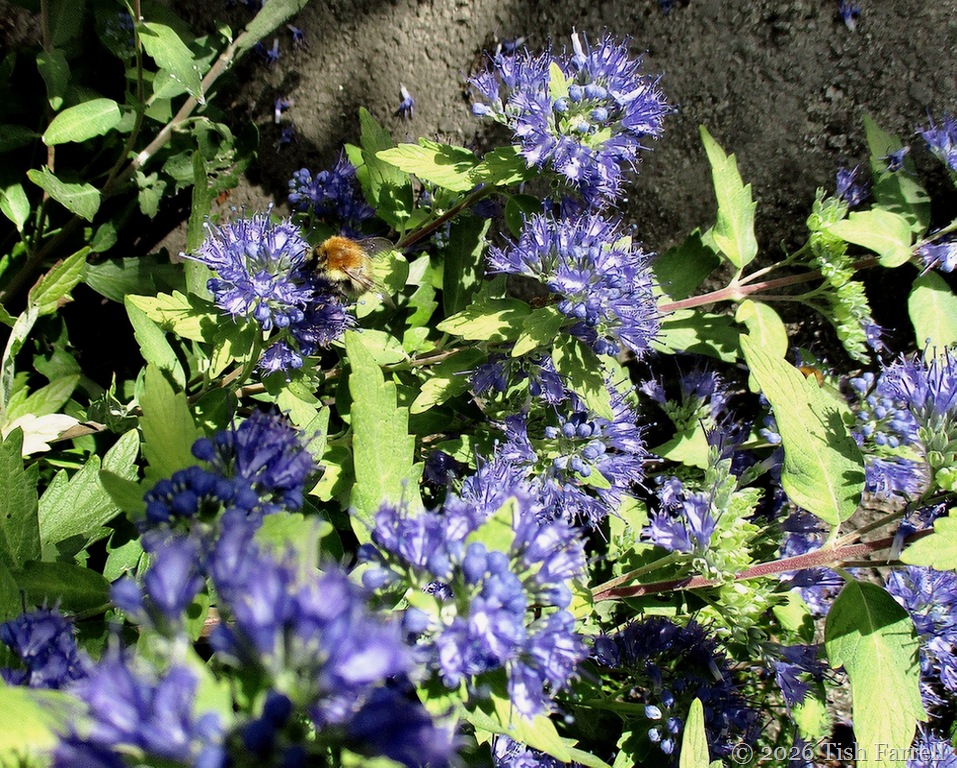
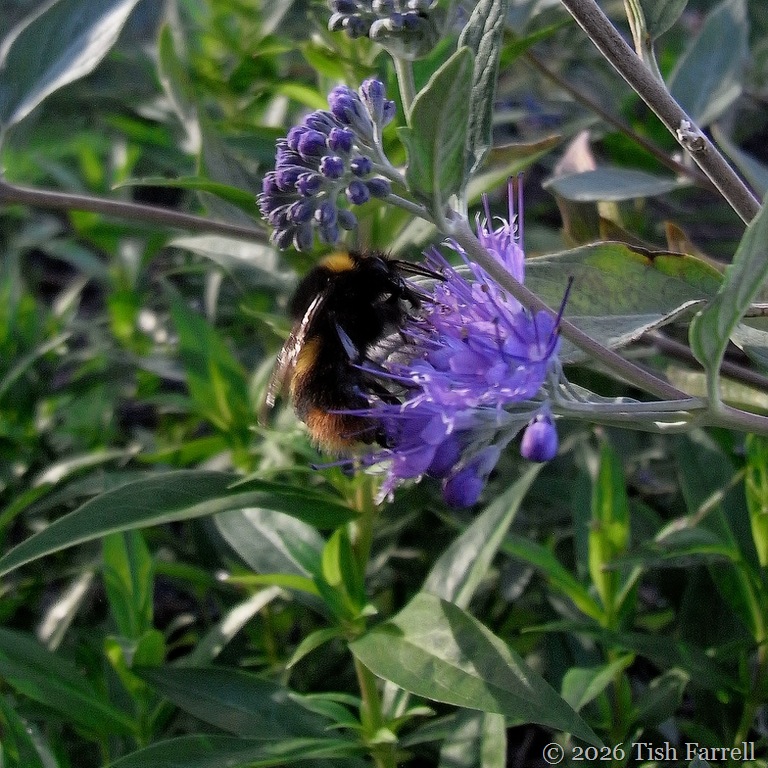
The rain stirred the caryopteris [2] into flowering. It is supposed to be late, but this year seemed particularly so. As a shrub, its structure is rather underwhelming. The small silver-grey leaves and lax stem tendencies make it look rather like some unkempt garden escape on waste ground. Or maybe it was just the way I pruned it. The instructions said give it a good cut back.  Or then again, maybe it is simply the effect of a long, dry summer. This variety is Heavenly Blue. And if the overall look isn’t too exciting, the sapphire sprays are gorgeous, and bee-life loves them.

caryopteris heavenly blue

caryopteris detail

I have some other young caryopteris shrubs by the greenhouse. These have yellowish leaves and are a variety called Gold Crest. At the moment, their shape is rather more appealing. Also the contrast colours of flowers and foliage is pleasing.

caryoptros gold crest

caryopteris details gold crest

*

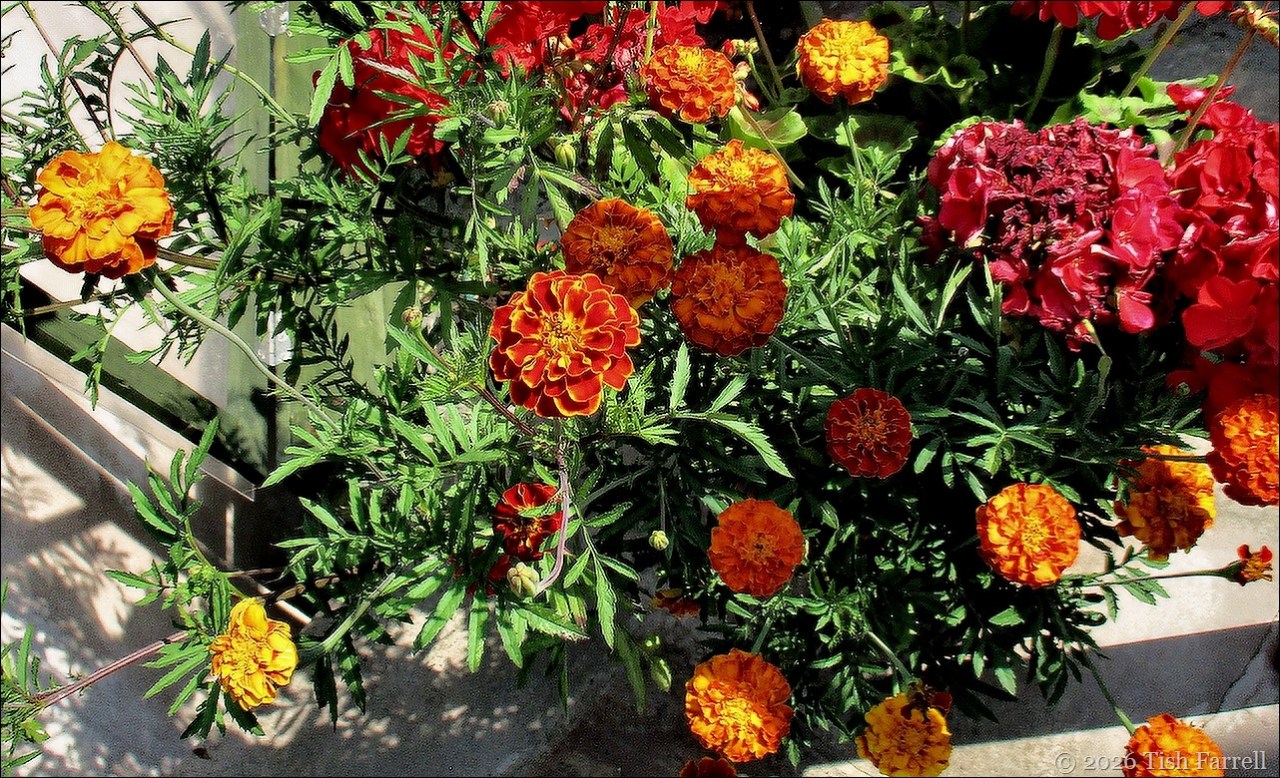
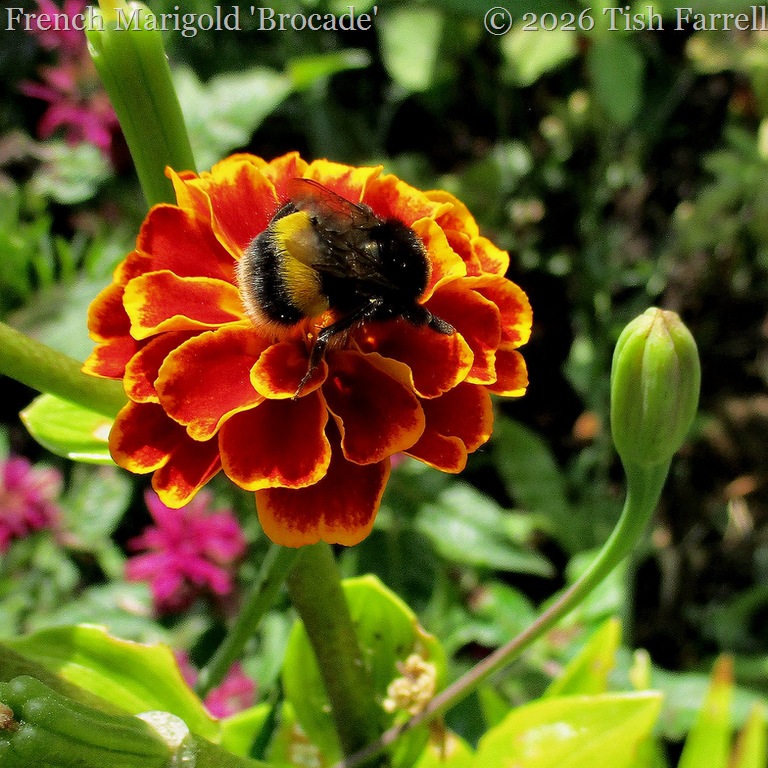
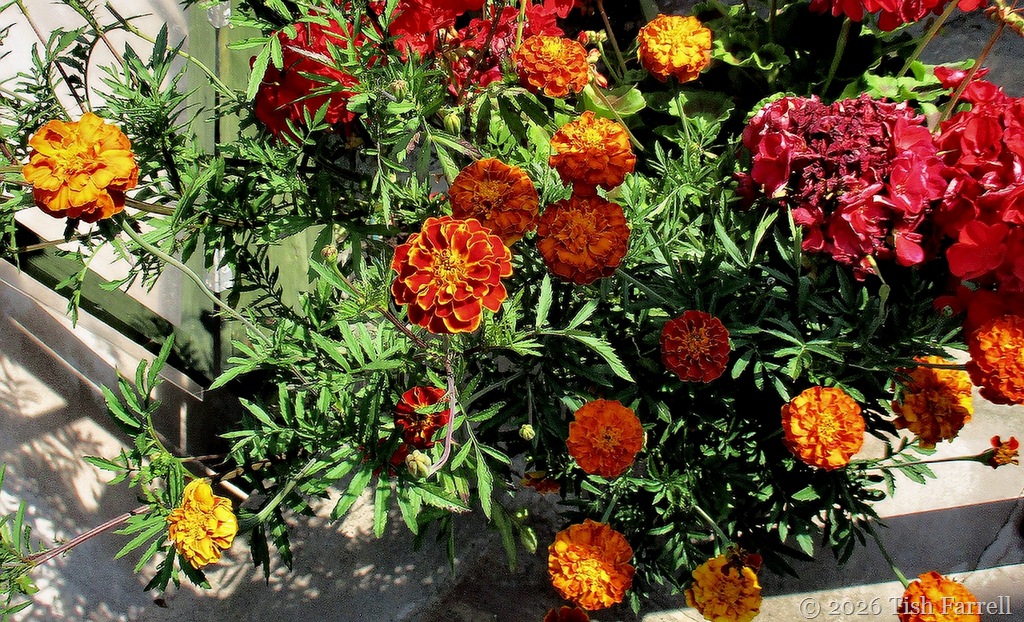
The French Marigolds [3] have also appreciated a good dousing. Grown from seed this spring, Red Gem has been flowering all summer. She’s supposed to deter white fly, so I planted her out in the greenhouse amongst the tomatoes, and also between the raised beds where I have a rather late performing Tumbling Tom cherry tomato. The individual flowers are tiny but it’s still a good show.

IMG_8845

IMG_8844

*

Another plant that’s done well until this week is one of my new favourites: phlox Norah Leigh [4]. I should have featured her when she was in full bloom. But she still has a few flowers, and although I’m generally unkeen about pink, I find the contrast with the variegated foliage very attractive. I’m becoming a bit of a phlox fanatic.

Here she is after the heavy rainstorms:

Norah Leigh

And here she is a week of so ago, before the rain: a stalwart show considering the dry weather, and that I only bought her as smallish specimen back in the early summer :

Norah Leigh 2

*

Some of the seed grown Madonna Lace Didiscus [5] are still going too. Also much loved by insects. When the flowers fade they transform into little silvery sputniks – quite magical on a dewy September morning.

lace flower

*

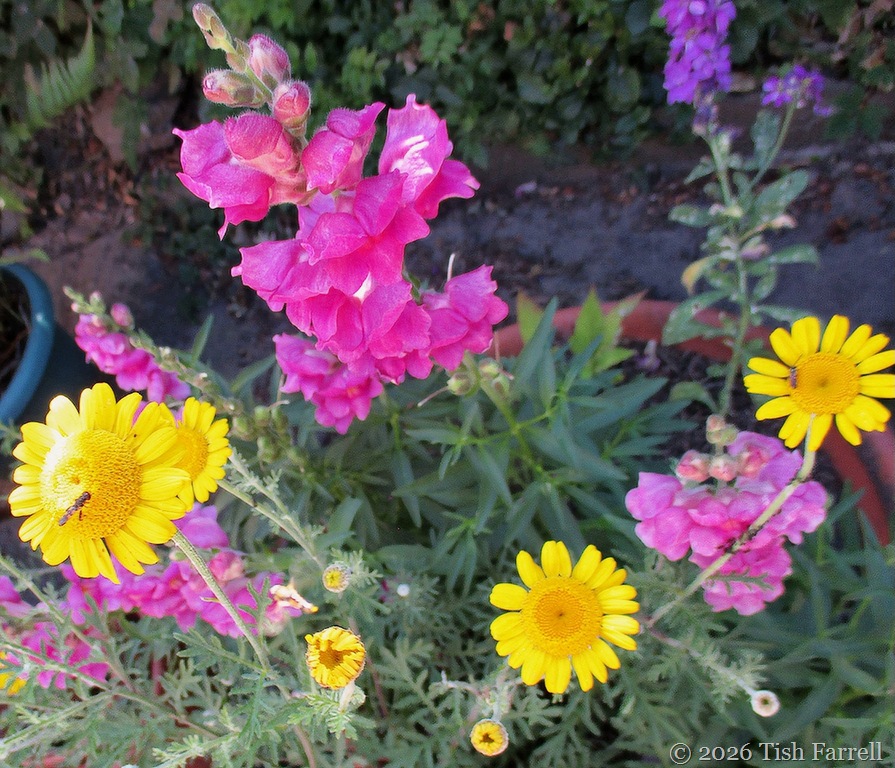
But the prize for the longest flowering flower this year goes to the self-sown and -grown snapdragons [6]. They’re on their third blooming round at least, and the plants are now growing quite shrubby with masses of seed heads among the latest flowers. The original volunteers have made some new plants in the course of the summer and these are also flowering now. And there’s me thinking that our front garden soil, which is full of old paving mortar and mashed roof tiles is somehow problematical. Norah Lea and the snapdragons are clearly loving it.

snapdragon

*

back garden

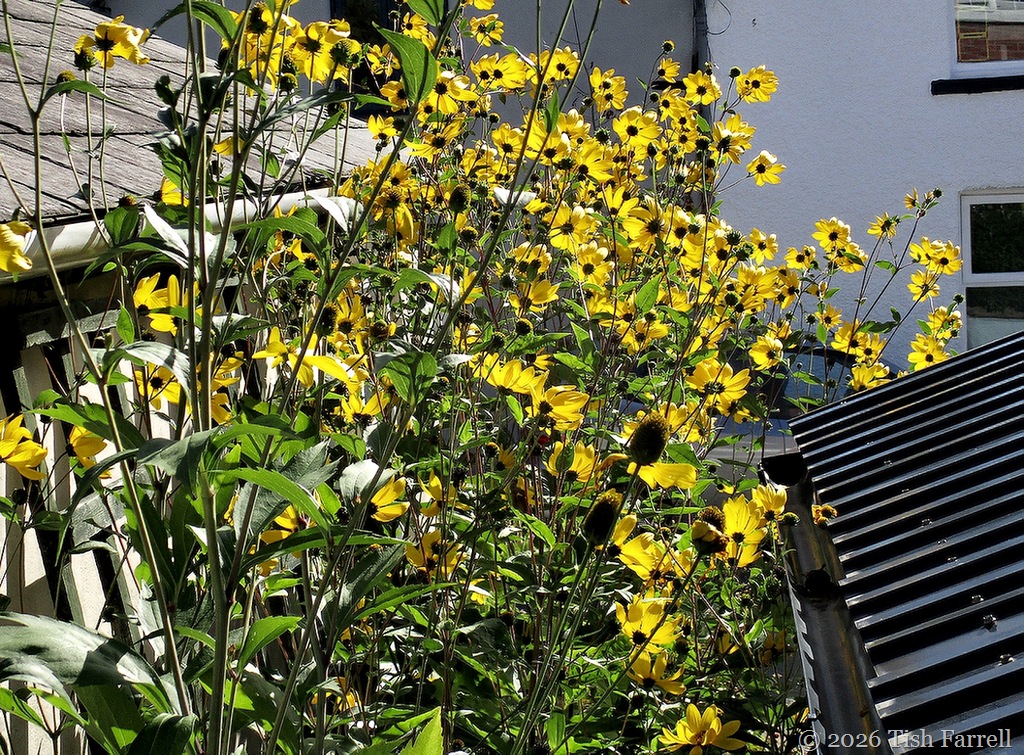
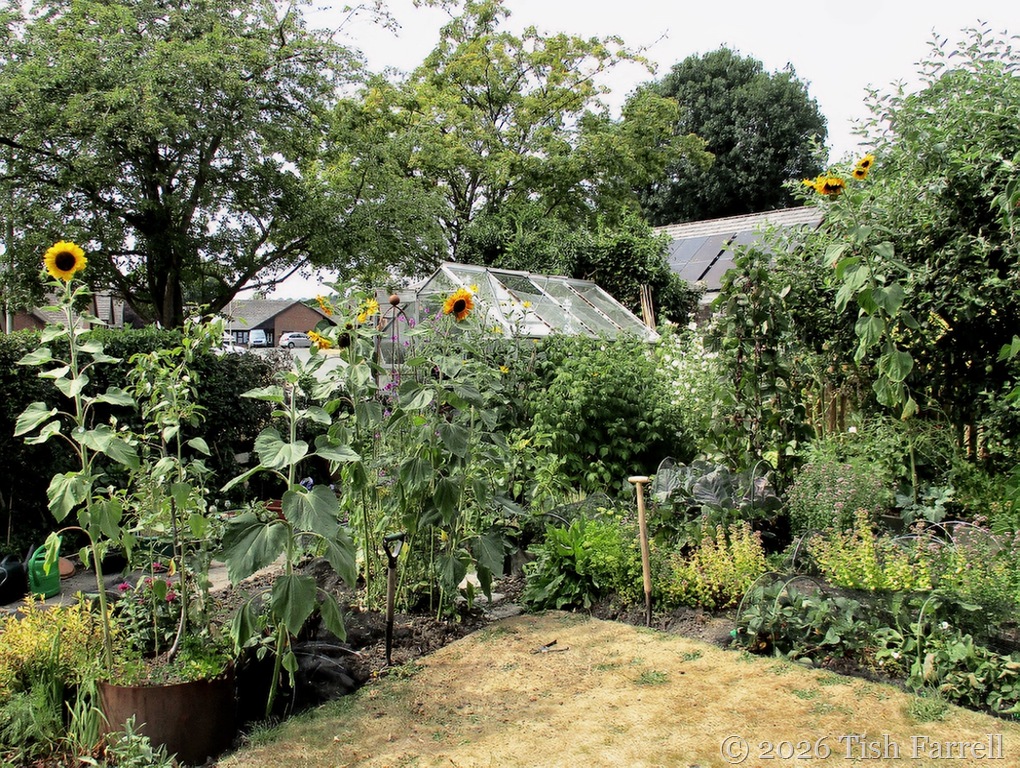
Late summer in the back garden. He who-builds-sheds’ wing shade is obscuring the sunflower view from the kitchen door, though we have been glad of it. Here’s what it’s hiding:

sun in sunflowers

Six on Saturday  Please call in on Jim and see what he’s been up to in the garden and at the allotment.