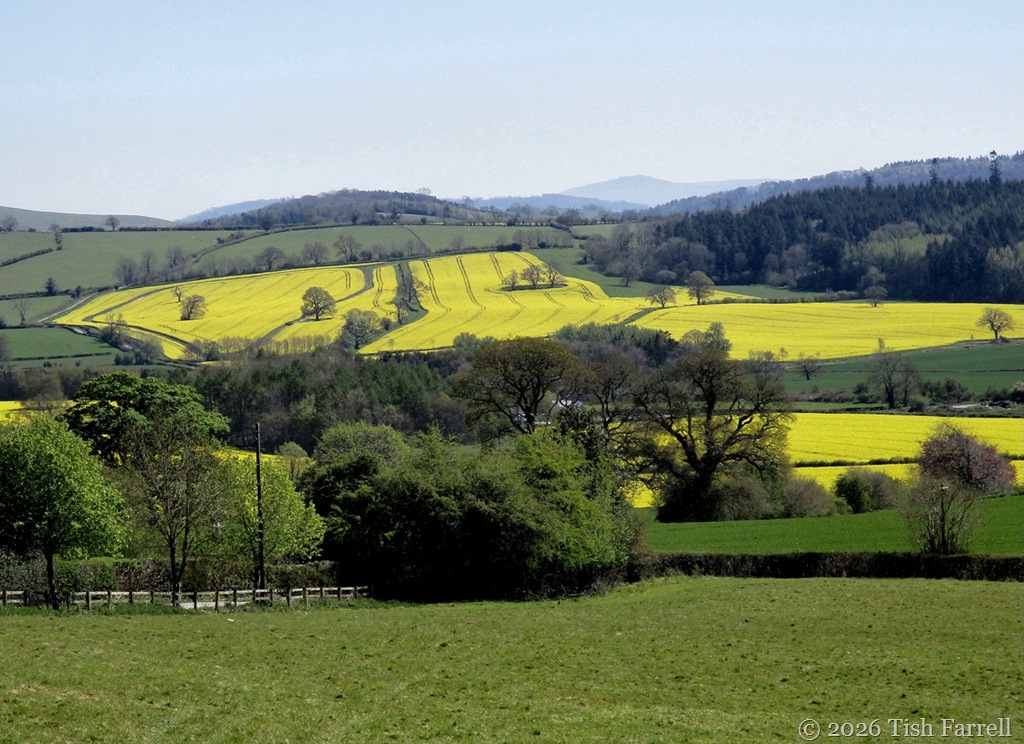
The Changing Seasons: April Days

Wintles Hill View 2

April has been wind-wind-windy, with more days of lowering cloud than sun. Also, at times, it’s been piercingly cold, so definitely no casting of winter  layers.

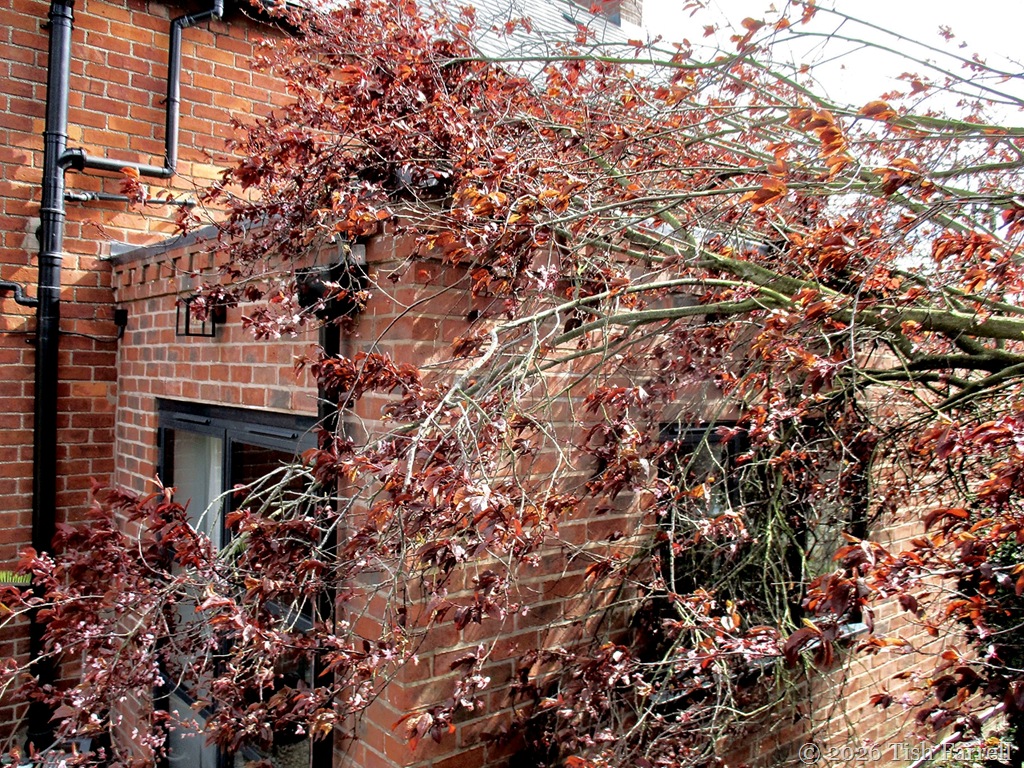
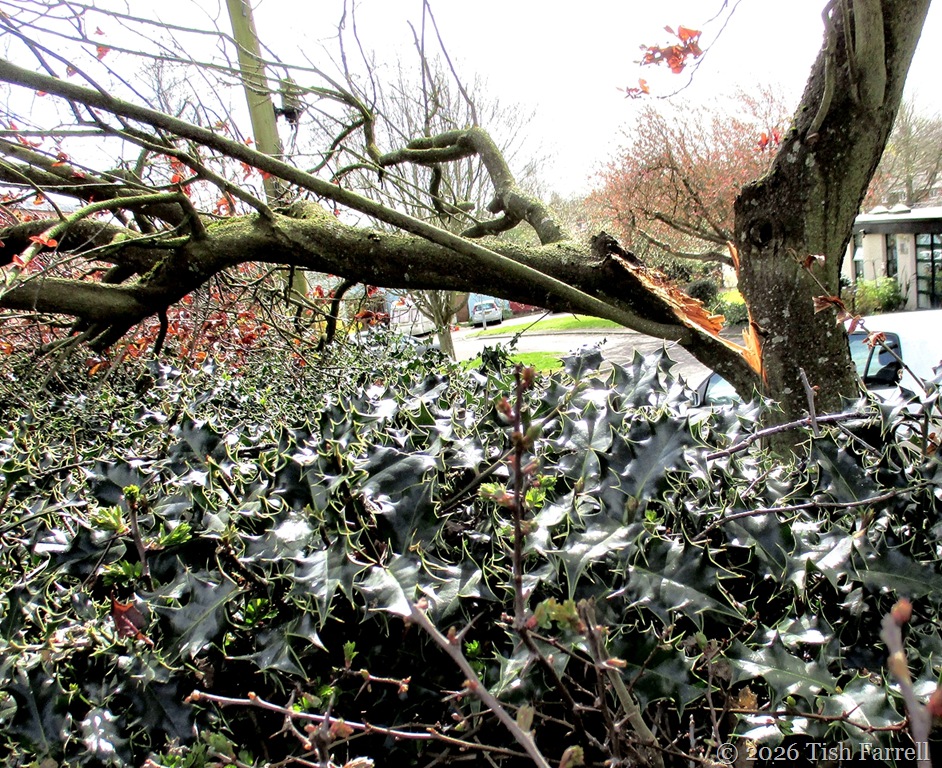
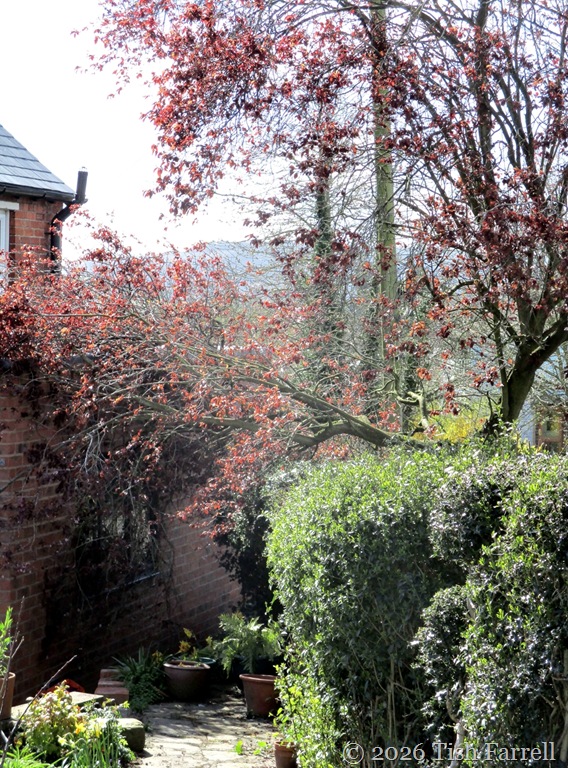
I’ve already said here how an early April gale felled the cherry plum tree that grew just over the hedge by our kitchen window. It wasn’t our tree, but part of our ‘borrowed landscape’ and somehow gave us a sense of woodedness with its gracious rustling canopy. It was a shock to find it lying across our kitchen roof.
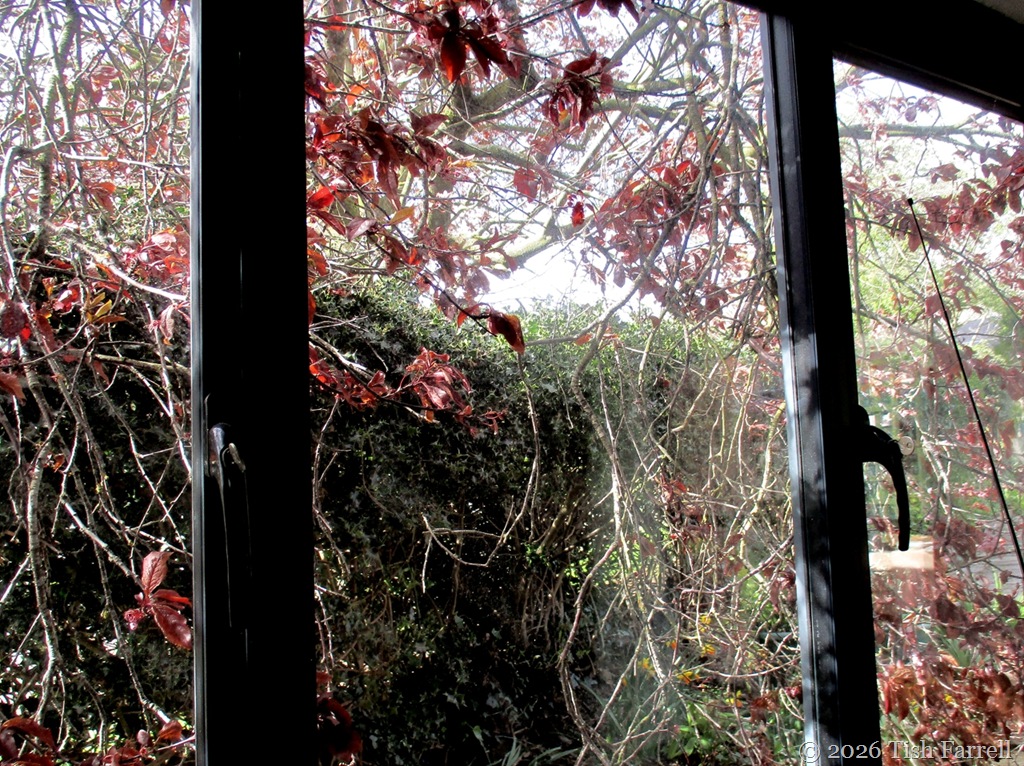
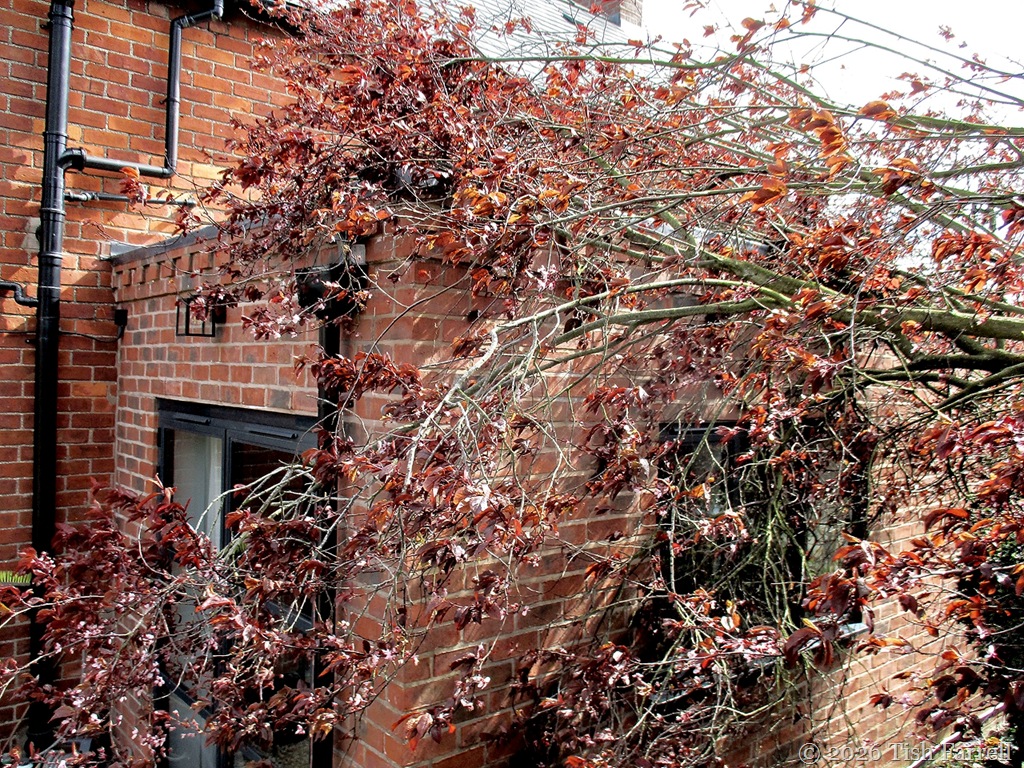
cherry plum

cherry plum 6

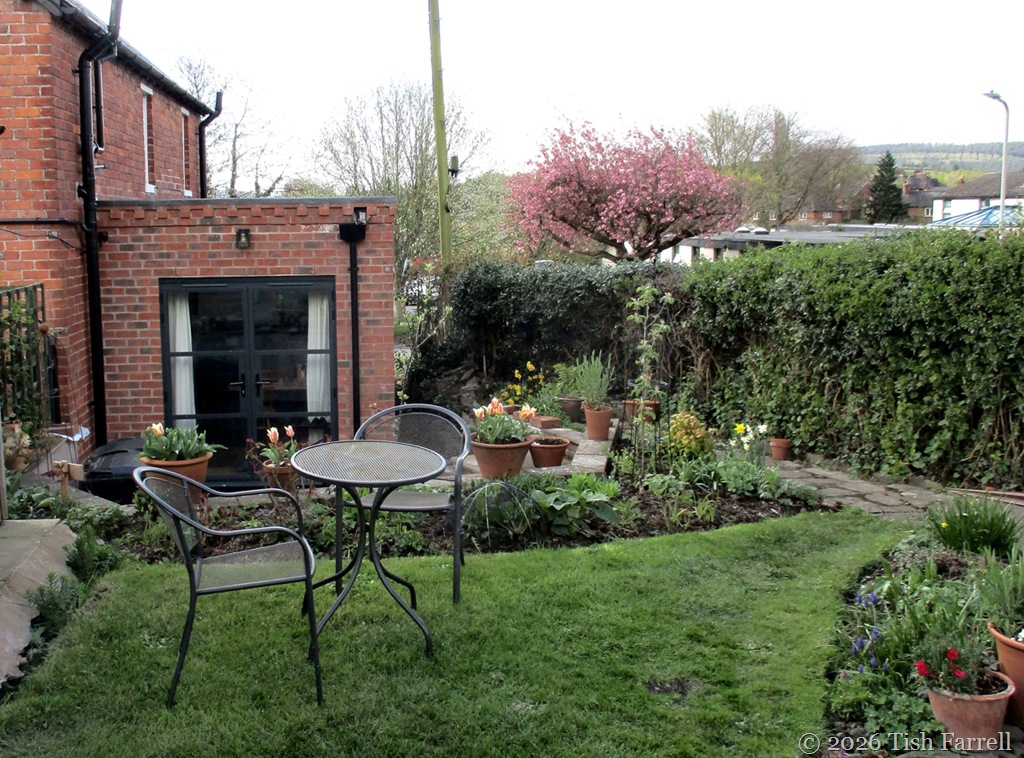
But now it is gone, we have more light and, come supper-time, even a sunset glow atop the holly hedge. And so, as is the way with gardening, something lost is the chance for some new growing. Still to be decided.

But talking of the holly hedge (which is absolutely not my favourite part of the garden), these last two weeks it’s been alive with tiny blue butterflies. An entomologist chum told me they are Holly Blues, and not the Common Blues I’d taken them for. They travel at speed, flit and flutter, looking like flecks of fallen sky. Not easy to snap then. All of which is to say, I’m feeling more kindly towards the hedge if its the reason for the tiny blue butterfly show.
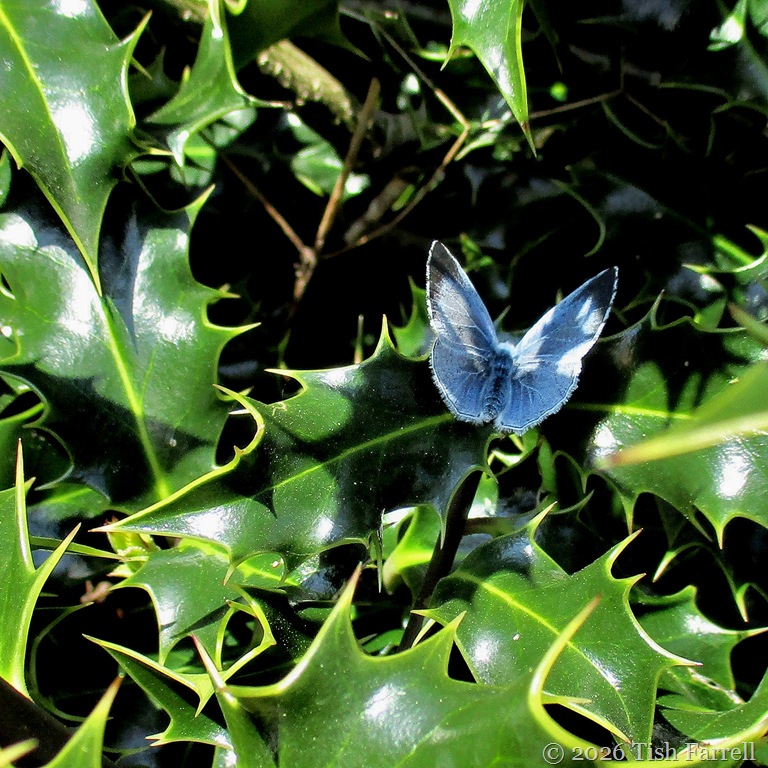
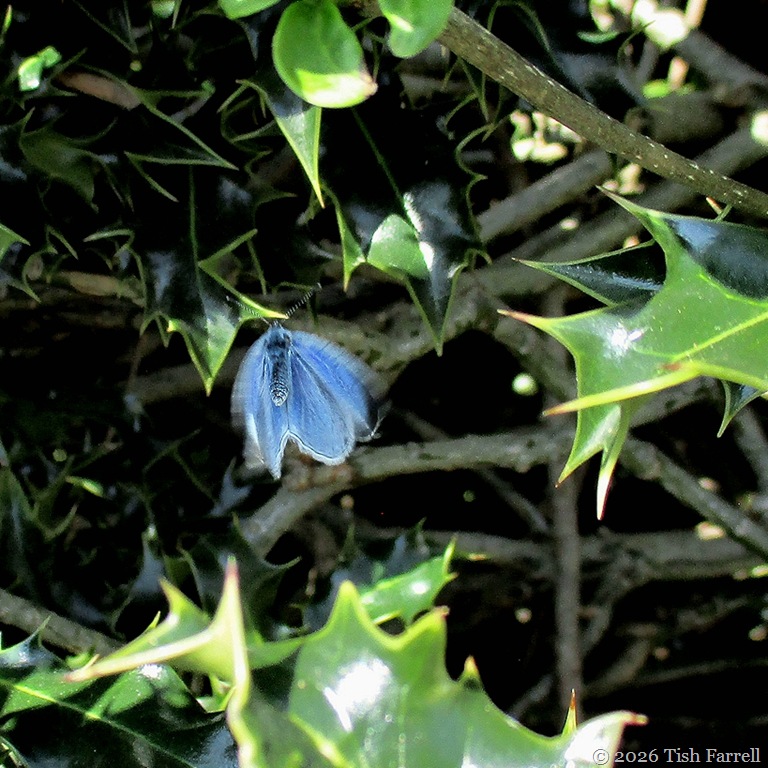
Holly Blue best

Holly Blue

*

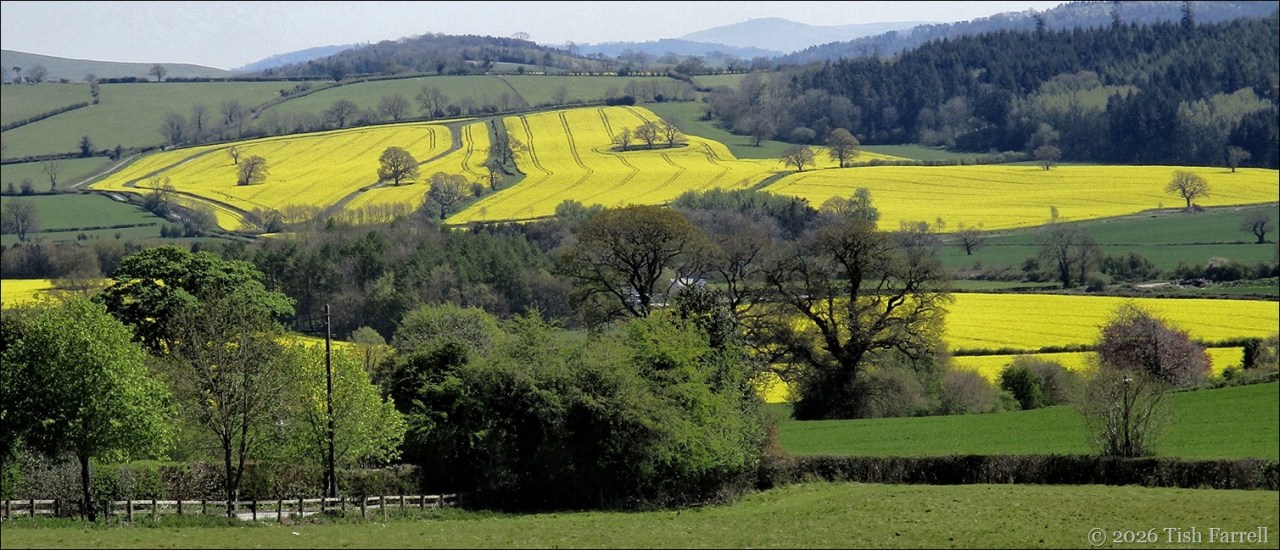
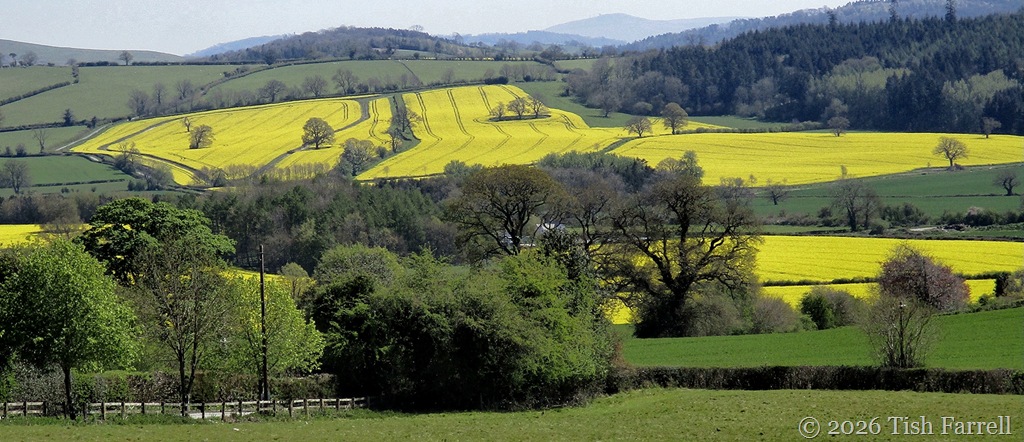
The cold and windy weather hasn’t stopped spring happening. In fact all the winter rain is paying off around the town – the countryside fat with lush pasture and burgeoning wheat fields; hedgerows alight with blackthorn blossom, hawthorn, hazel, bright white stars of stitchwort, bluebells, dandelions. The big trees, too, are starting to green (the oaks and ashes are ever late on parade). And of course it is also the season of bright yellow spreads of oil seed rape, plus the inevitable flocks of tiny flea beetles that go with it, and then come to my garden later to devour my rocket plants or anything else related to a cabbage.
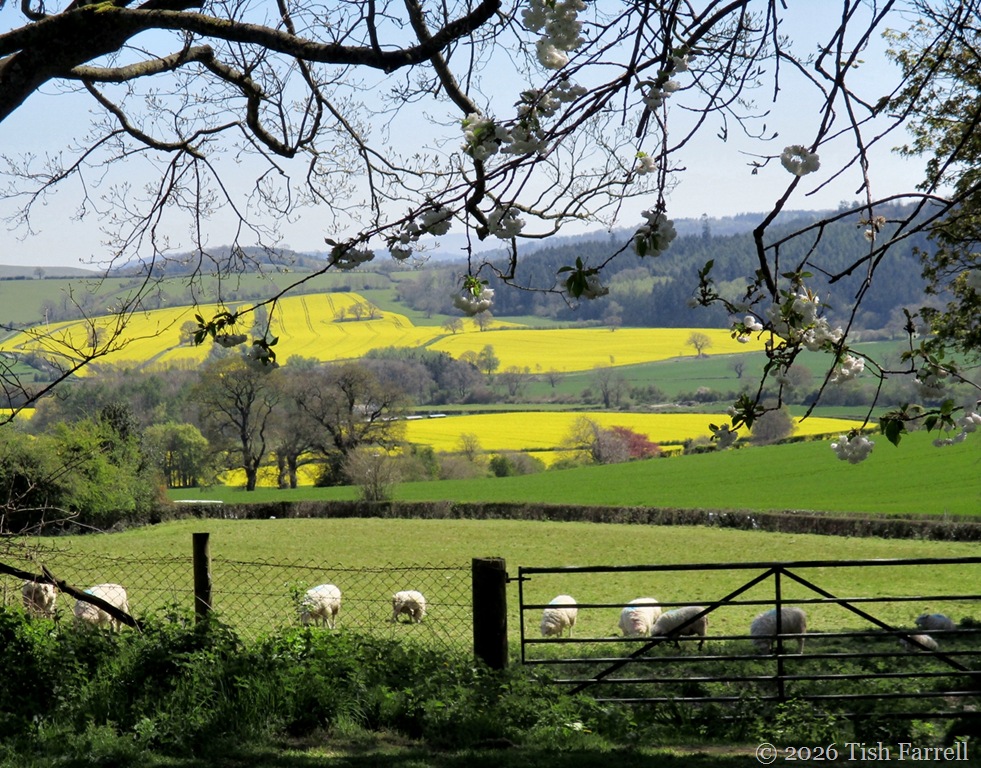
Wintles Hill view 4

*

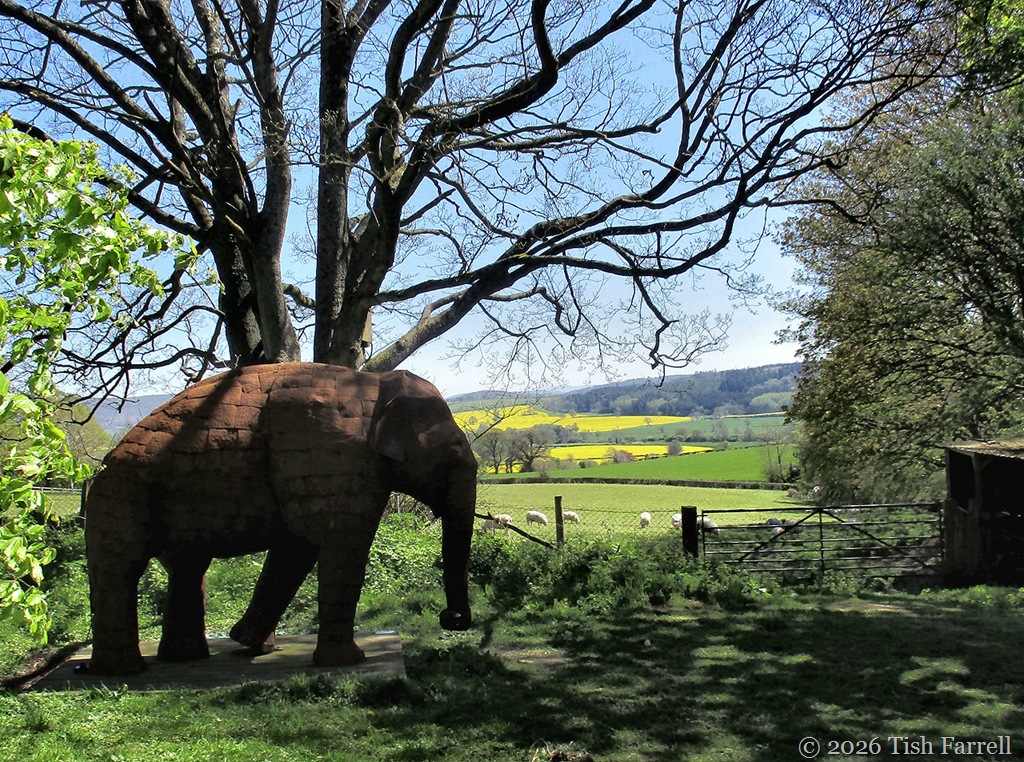
elephant

*

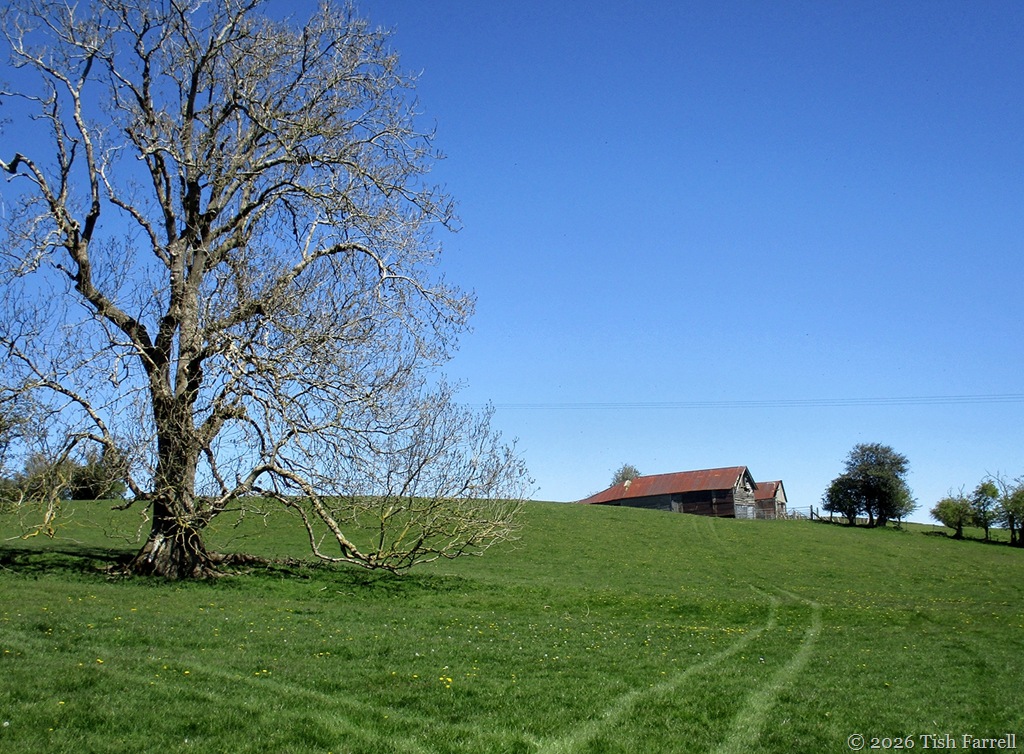
Last week, on a bright, but still windy day, we walked up Wintles Hill behind the town to see the views and visit the elephant sculpture. The green lane ascent lived up to its name, but with masses of white stitchwort too.
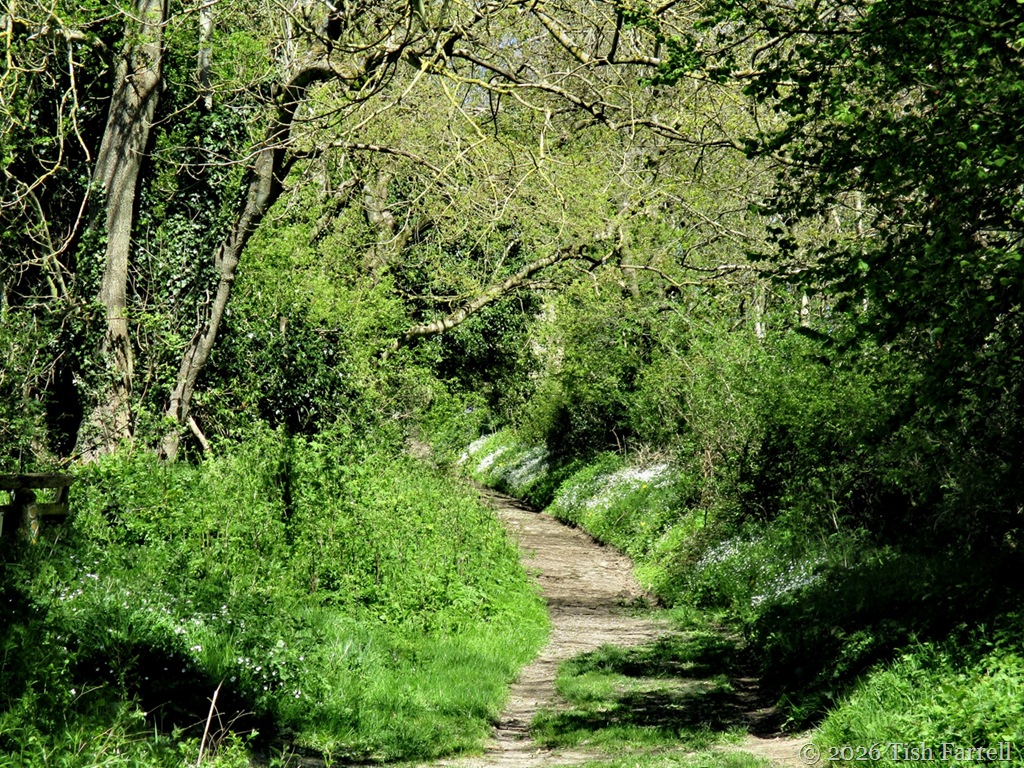
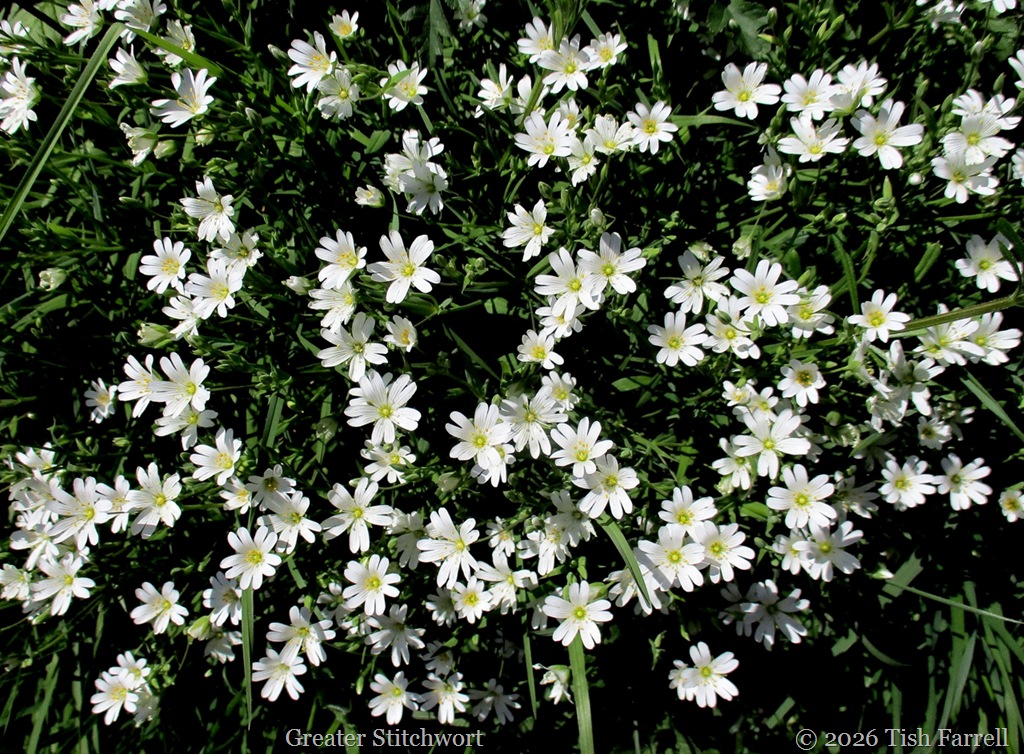
IMG_0303Stitchwort

*

On the brow of the hill, the old barns, as usual, demanded to have their picture taken:
barns

*

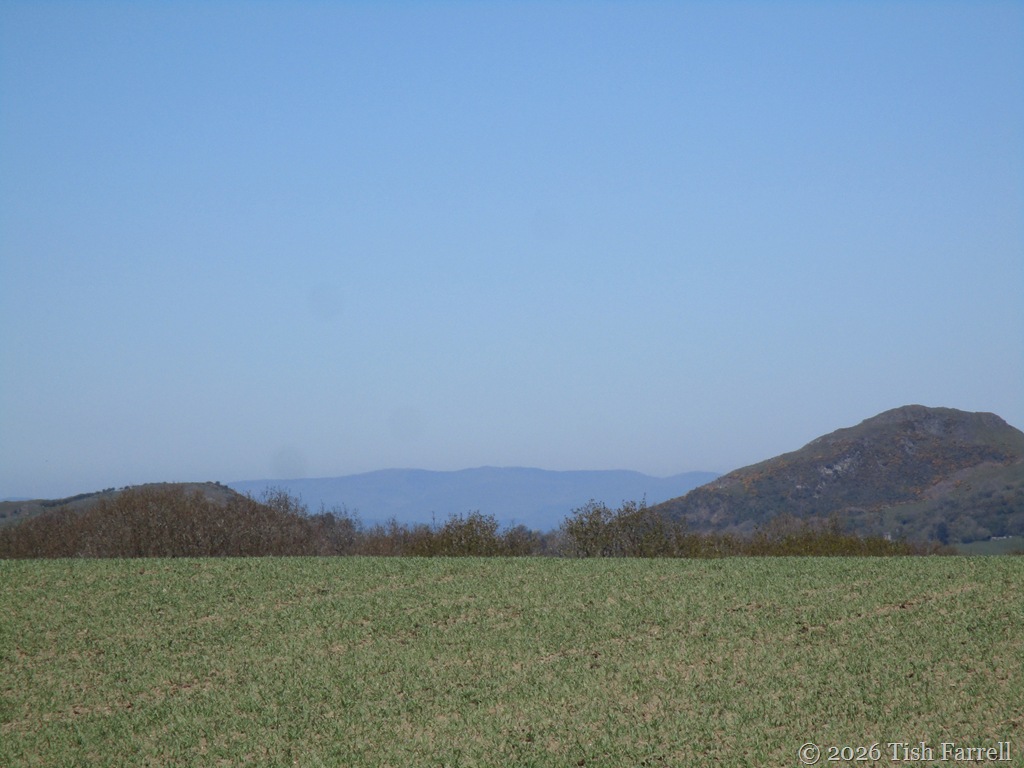
On Wintles hilltop, which is always a high spot and in all senses, the wheat was just emerging, but not so vigorously as in the more sheltered, well watered valley fields. We stopped to look beyond our local hills, over the border into Wales:
IMG_0317

*

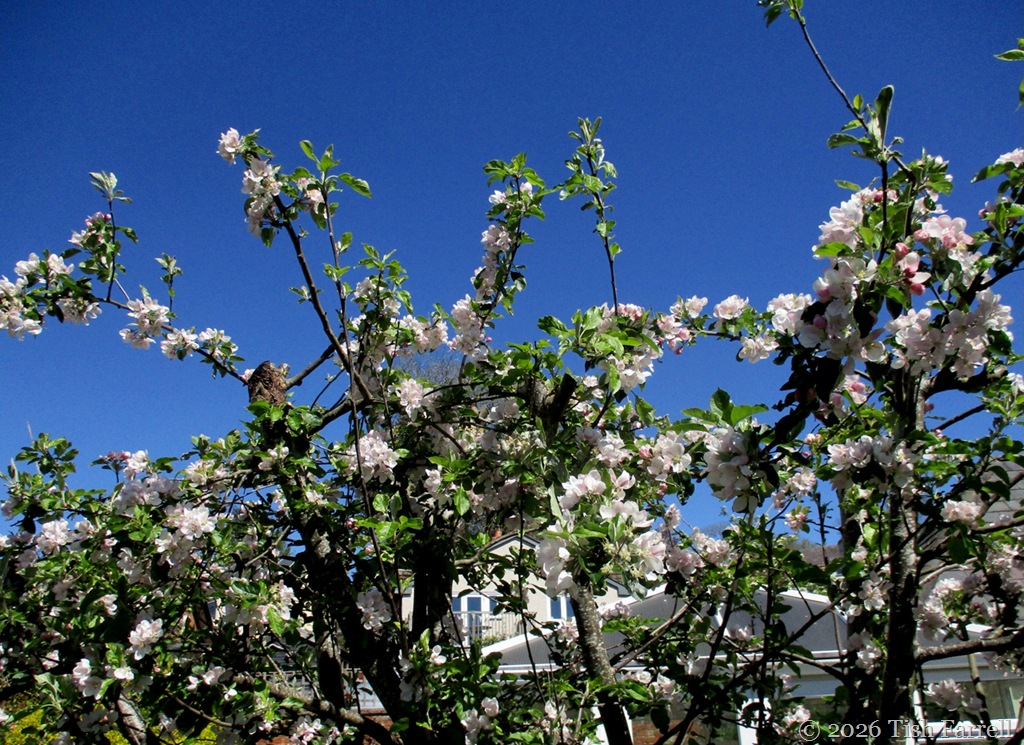
Meanwhile, back in the home garden, it is apple blossom time. The miniature eating apple trees and the three crab apples have been flowering well. Even the big old tree at the bottom of the garden is now looking lovely after a good winter prune:
apple tree

*

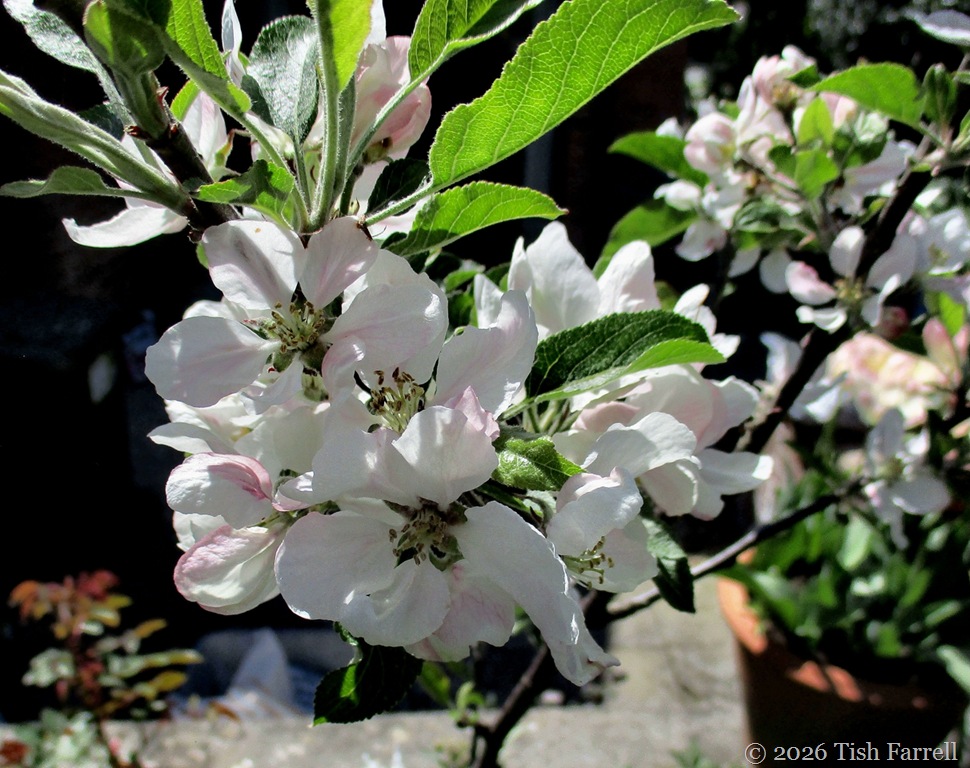
Closer to the house, the Red Devil miniature tree is looking anything but devilish. This is its first year flowering in our garden. In time, it’s supposed to produce bright red apples, which rather puts one in mind of Wicked Queens and Snow White:
apple Red Devil

*

As for the rest of the garden, the daffodils and narcissi are over, the tulips on the wane, but the early summer plants are surging up: foxgloves, aquilegias, and valerian all about to flower; Welsh poppies, and Centaurea cornflowers already opening.

Today, on the last day of April, we have a cloudless blue sky and brilliant sunshine. And it’s still blowing a gale, but at least it’s a warmish one. There are times, too, when it drops, it almost feels like summer, but only for a moment.
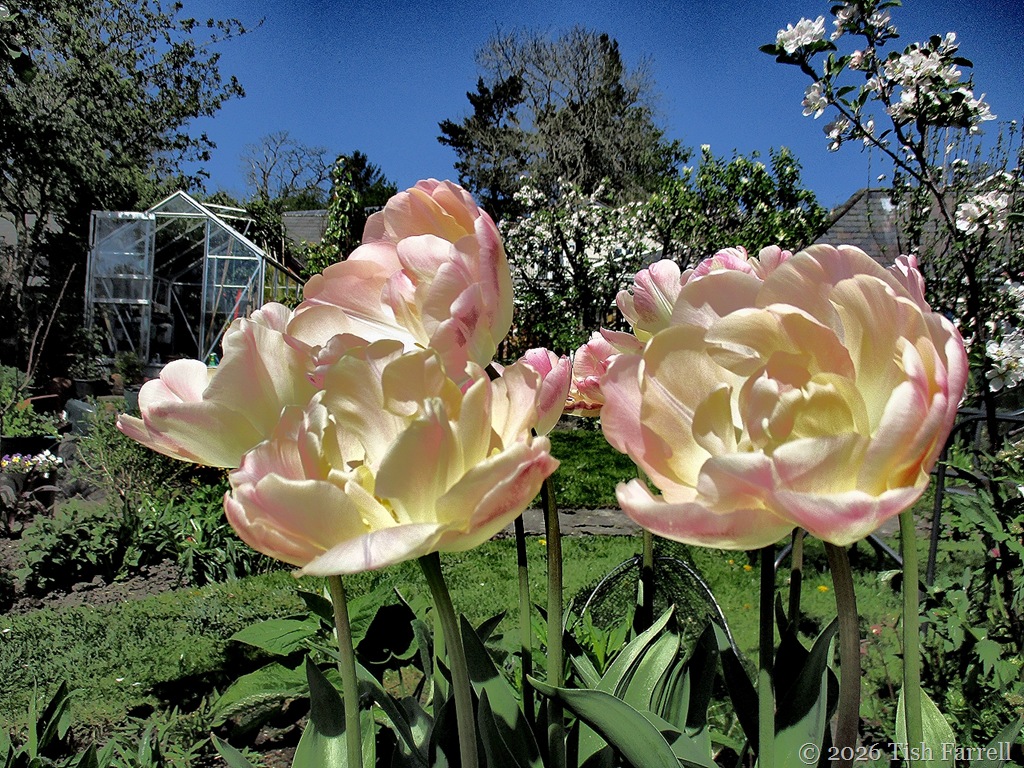
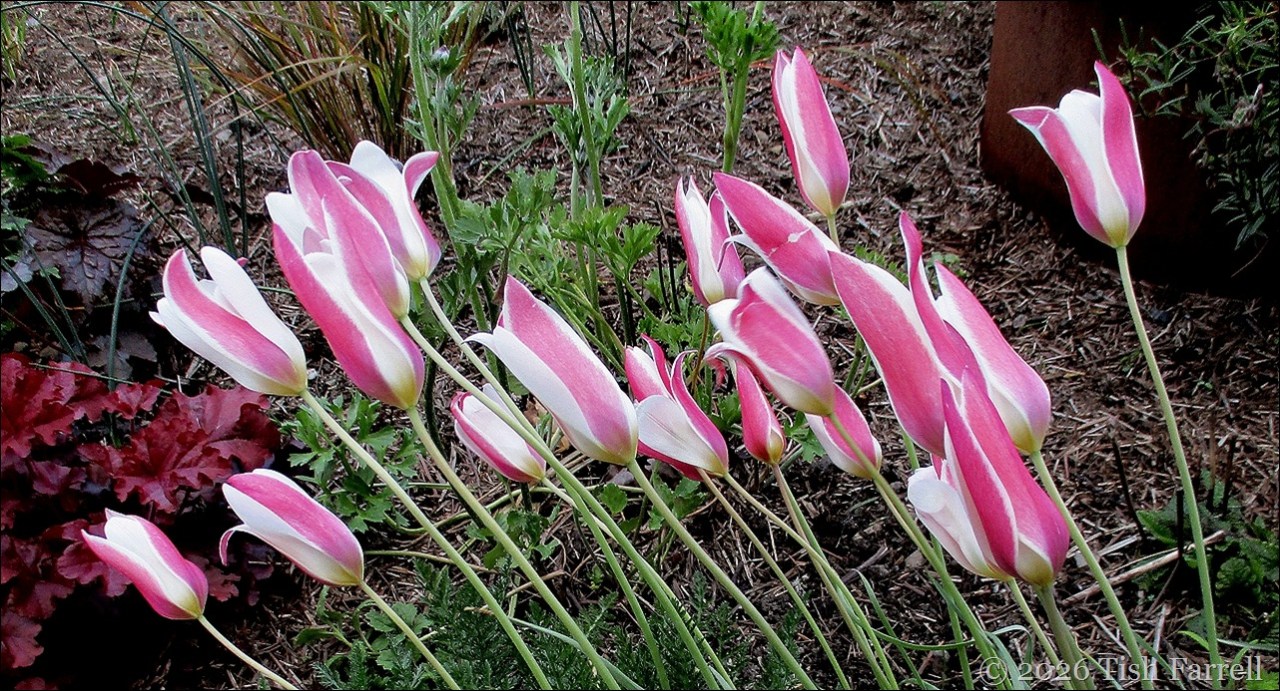
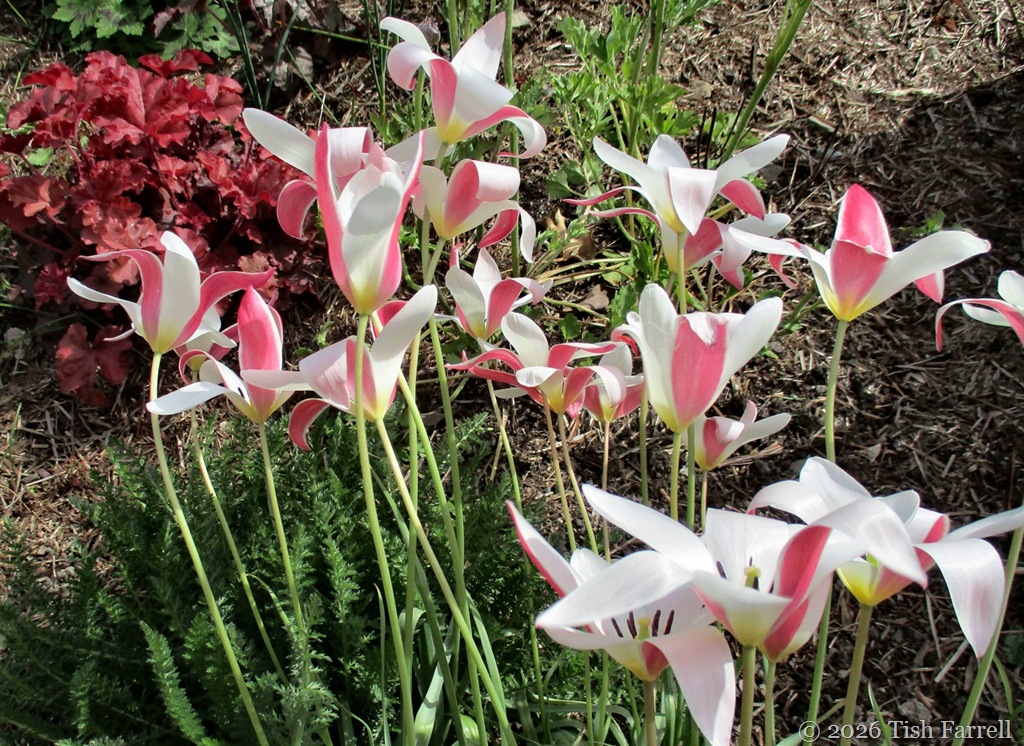
last of the tulips

Copyright 2026 Tish Farrell

*

The Changing Seasons: April 2026  Brian at bushboys world  and Ju-Lyn at Touring My Backyard are our hosts. Please pop and see what they’ve been up to this month. For one thing, Brian has a stunning gallery of birds and wallabies, and as ever, Ju-Lyn has been cooking up a storm in her kitchen – so many mouth-watering creations.
Wintles Hill View 2 Header

Once, On A Winter’s Day At Great Zimbabwe

best cleaned up

This week at Lens-Artists, John’s theme is ‘History through the lens’. In my last post I was rummaging through our ‘old Africa album’, pondering on a long ago visit to Zimbabwe. And since half my mind is still lingering there, I thought I’d revisit Great Zimbabwe – those tantalising Shona ruins, whose 350-year history we’ll never fully fathom.

Now as I look through my photos, I see they too are becoming relics, documenting a July afternoon far away and long ago. The winter light was mesmerizing, the air thick and drowsy. Insects thrummed in the grass; all bathed in an amber glow. I recall pressing my palms to the stone wall of the Great Enclosure, absorbing the sun’s warmth, wishing for a portal back in time; to know the true story of this place.

Of course archaeological excavations have yielded some general context. The valley’s stone-built ruins extend over some 1800 acres, an area bigger than medieval London. The earliest date from c1100 CE with successive phases over the following three hundred years. There is also evidence of large houses built of daga or daub, and of an extensive system of water harvesting in so-called dhaka pits.

And as for the people who lived here, the reckoned population of 10,000 souls – the discovered remains suggest they were cattle herders, farmers, gold miners, merchants, iron and coppersmiths, potters, soapstone carvers, soldiers and courtiers, all living under the rule of some powerful organising authority.  

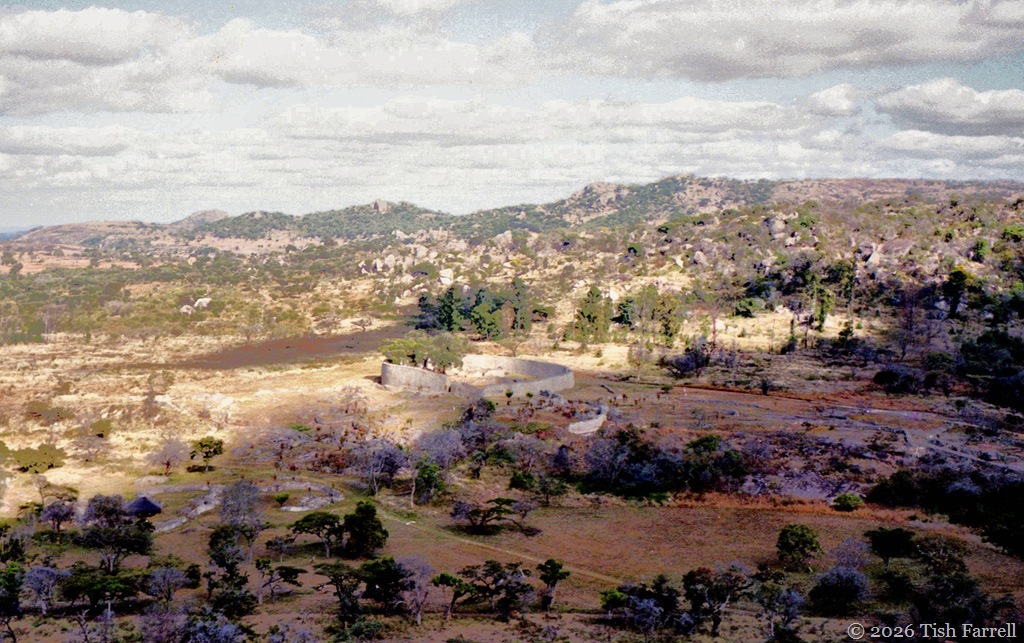
citadel view

Looking down the Great Enclosure (centre)

*

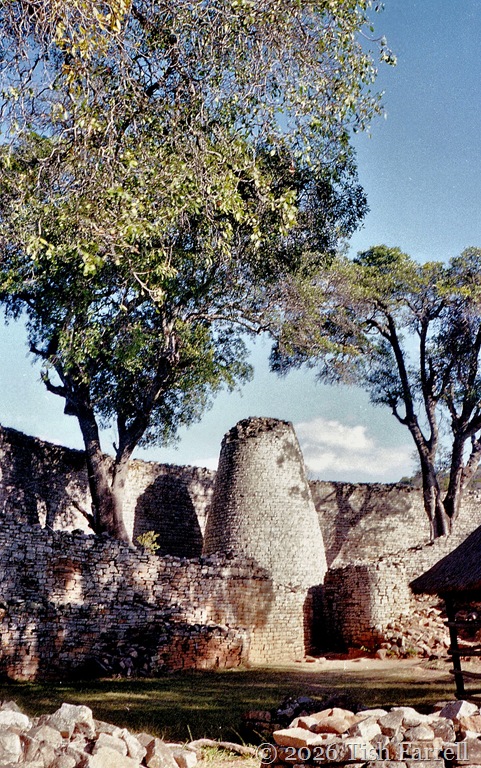
great enclosure

Inside the Great Enclosure with its conical tower of unknown purposes

*

img20240925_17490832 cropped

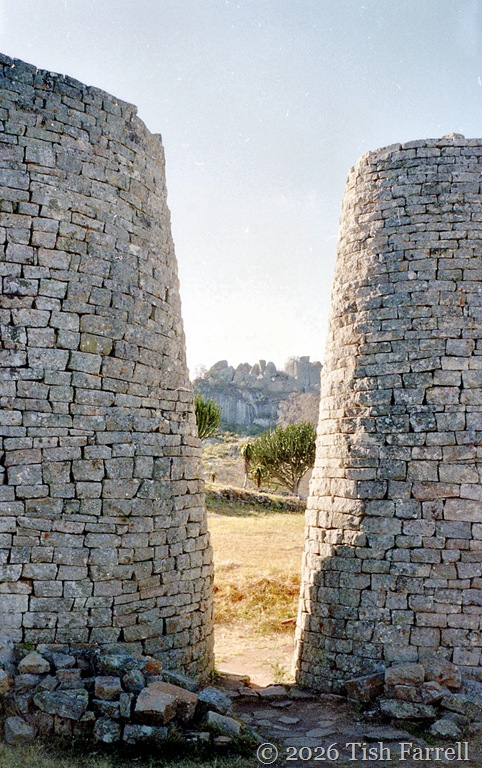
Looking out from the Great Enclosure. No mortar was used in the wall construction. No sign either that this gateway was ever in any way defensive.

*

Among the finds were many luxury goods that indicated a long-standing trade with the Swahili city states of the East African coast (see map below). They included Arabian coins, glass beads, Chinese celadon ware, Persian ceramics, all doubtless exchanged for the city’s gold and copper. And yet their discovery only adds to the puzzle. Why did this seeming thriving city fall into decline from the mid-1400s?

INDIAN-OCEAN-TRADE-ROUTES-14-TO-15-CENT

*

Shona oral accounts say the city ran out of salt, and this prompted a shift to new territory. Salt would have been essential for both people and their herds. Other theories suggest an outbreak of disease, a prolonged drought, or the effects of deforestation. There’s no way of knowing. No burial remains have been discovered that might shed light on this.

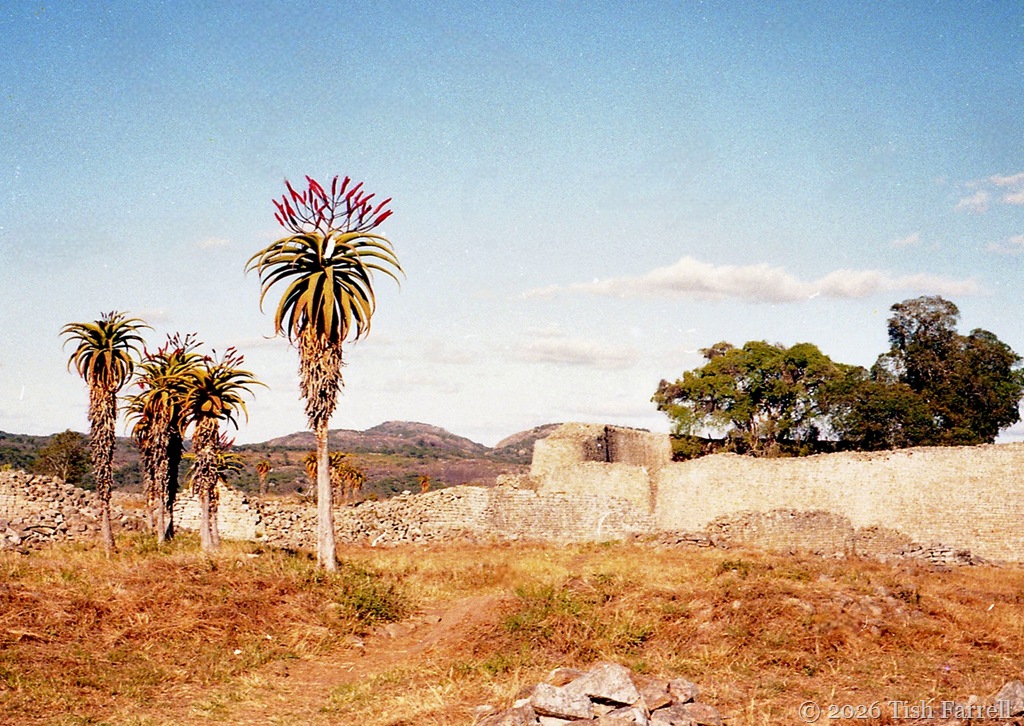
Great Zimbabwe general view ed better

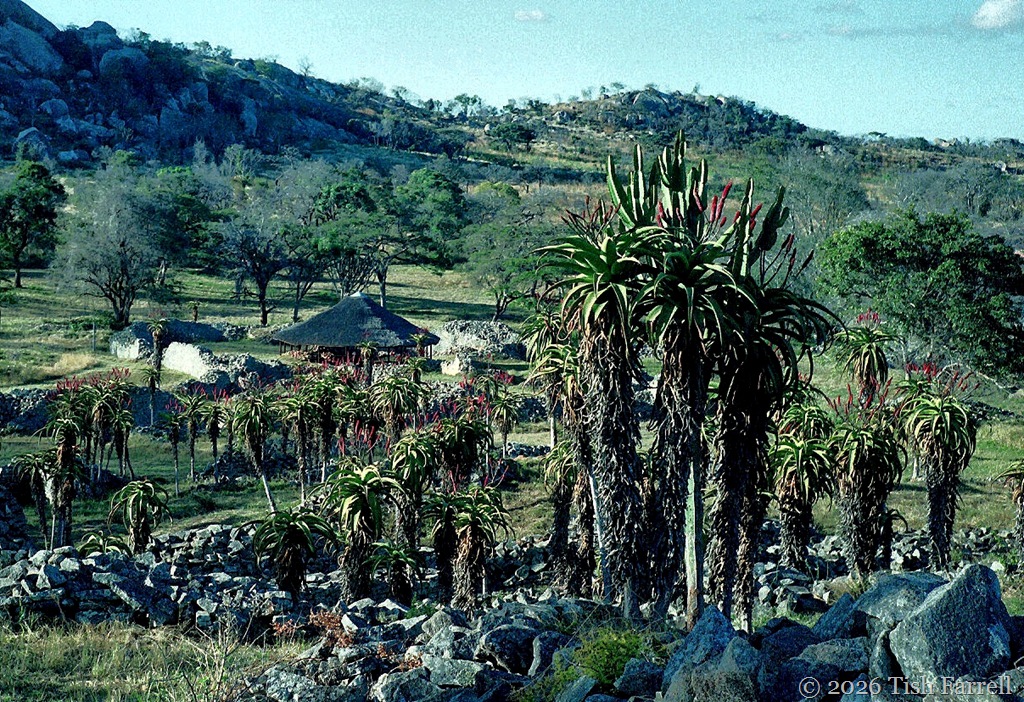
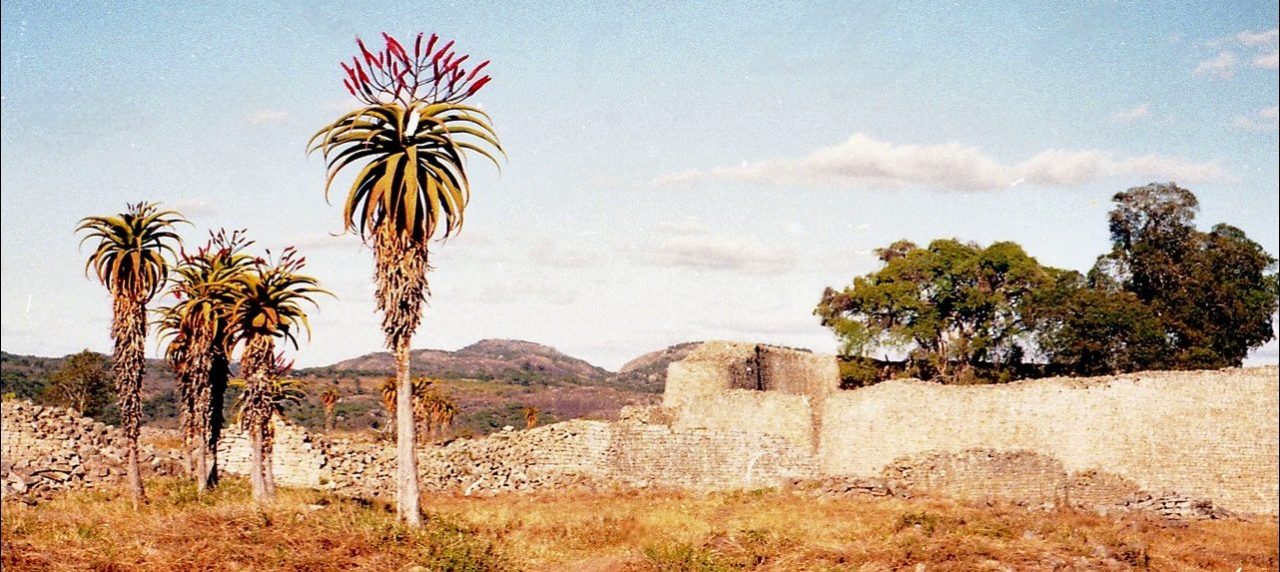
In amongst the giant aloes, the tumbled remains of an African city that once extended over 1800 acres. It is not known why it declined after 1450 CE 

*

But we do know that this was not the end of Shona rule. From the late fifteenth century it seems their centres of operations shifted north, leading to the rise of the Mutapa Empire. Soon afterwards, too, the name ‘Zimbabwe’ enters the historical record. The word itself derives from the Shona phrase meaning houses of stone, and from the early 16th century, it appears in various renditions in the written accounts of Portuguese conquistadores. They were busy scouring the East African hinterland in search of the mines that were yielding the gold they had seen in the Swahili city states along the Indian Ocean coast.

In 1531, Vicente Pegado, Captain of the Portuguese Garrison at Sofala has this to say:

Among the gold mines of the inland plains between the Limpopo and Zambezi rivers there is a fortress built of stones of marvelous size, and there appears to be no mortar joining them … This edifice is almost surrounded by hills, upon which are others resembling it in the fashioning of stone and the absence of mortar, and one of them is a tower more than 12 fathoms [22 m] high. The natives of the country call these edifices Symbaoe, which according to their language signifies court.

In an earlier 1505 letter to the King of Portugal, one Diogo de Alcacova describes a city  “called Zimbany…which is big and where the king always lives.”  He says the houses are “of stone and clay and very large and on one level” and that there are many very large towns and villages within the kingdom.

Another Portuguese account describes the King of Mutapa’s great retinue which included the governor of the client kingdoms, the commander-general of the army, the court steward, the magician, the apothecary, and the head musician “who had many under him and who was a great lord”. It tells also of the vast territories over which the king ruled, the revenues and subject kingdoms of the king’s several queens.

These references to many large towns and villages and extensive territories ruled over, can be further backed up by archaeological remains. Great Zimbabwe might be the largest surviving ruin, but over a hundred similar sites of varying sizes have been discovered on the High Plateau between the Zambezi and Limpopo rivers. The Empire of Mutapa did once exist. It was only in 1888 that it finally fell to the Portuguese.

Nor was it the only city state. There is another impressive ruin at Khami, near Bulawayo to the west of Great Zimbabwe. It came to prominence at the time of Great Zimbabwe’s decline, and for two centuries the ruling dynasty there oversaw a thriving trading centre, importing luxury goods that included 15th and 17th century Spanish porcelain, Rhineland stoneware and Chinese Ming porcelain.

*

The later European occupiers of African lands would ever assert that local people could not be the builders of these cities. Phoenicians, Arabs, Ancient Egyptians and even the Queen of Sheba were the claimed originators. For a brief account of some of controversies attached to the interpretation of Great Zimbabwe, there’s a fascinating BBC Witness History clip with Zimbabwean historian, Dr. Ken Mufuka.

But in the here and now, looking back on that afternoon at Great Zimbabwe, it seems more dream than reality. But then, courtesy of the Olympus-trip, we do have historical proof we were actually there.

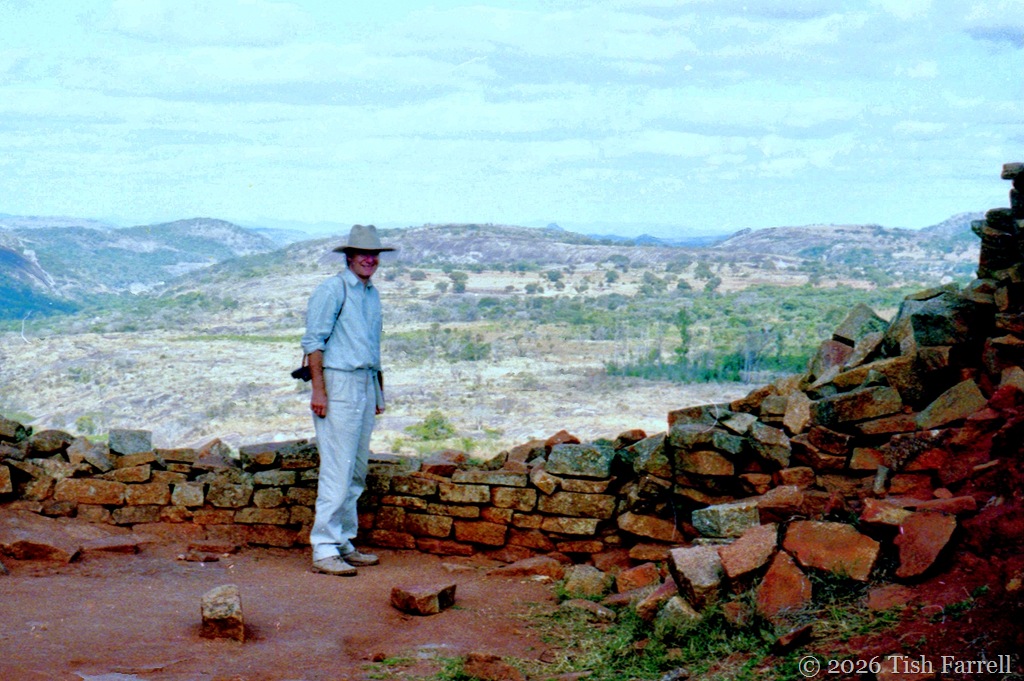
Graham on the hill complex, valley complex below

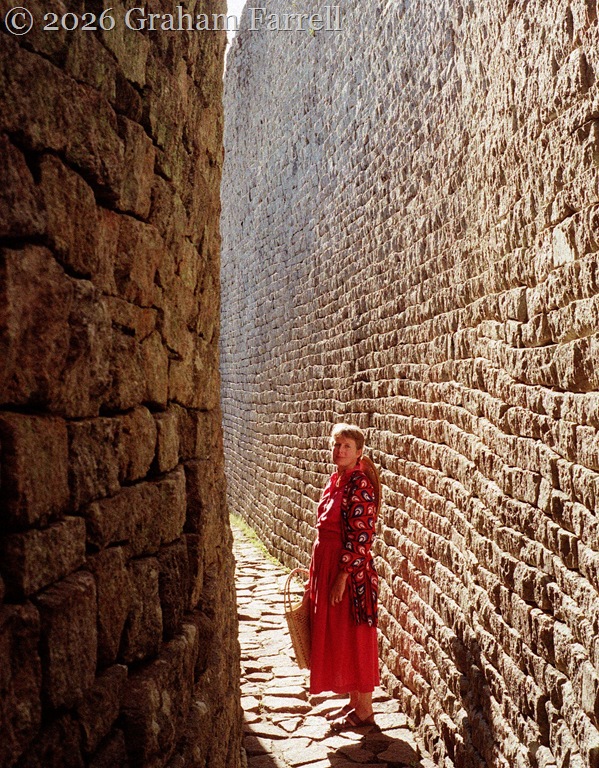
Inside the Great Enclosure

*

P.S. If you want a brilliant, if brief, virtual visit to Great Zimbabwe, go to the Metropolitan Museum of Art page here. The film, posted last year, is only seven minutes long and shows Zimbabwean stone masons at work, repairing and conserving the dry stone walls. It gives an inkling of the extraordinary endeavours of their ancestors.

*

Copyright 2026 Tish Farrell

Lens-Artists: History through the lens  Please see John’s post for some fascinating slices of American history.

Lens-Artists: Lucky Shot

elephants with lunch

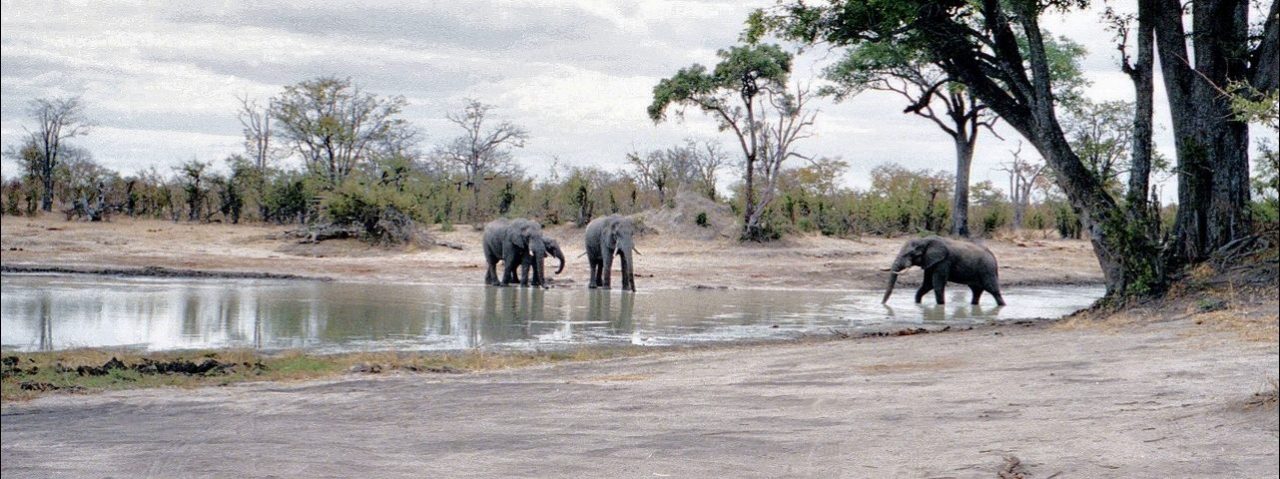
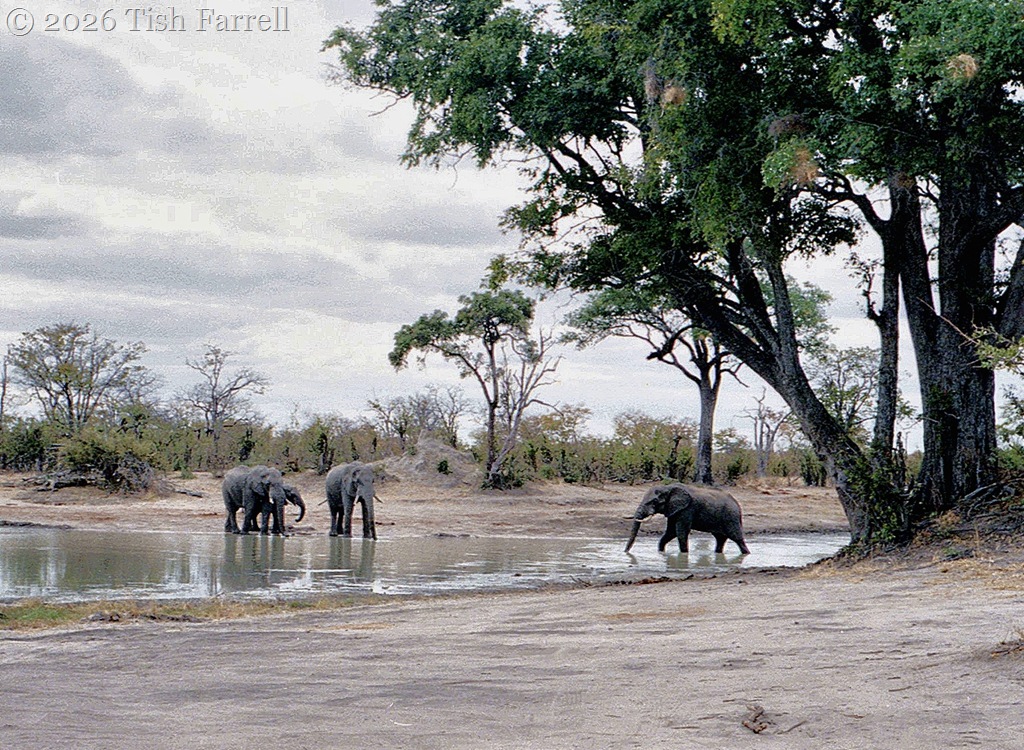
For most of the several years we lived in Africa I only had a small film camera – an Olympus-trip. It had a good lens and was great for general landscapes, but of course it had no zoom facility. Obviously, this was a big handicap when driving through bush country in search of wildlife to photograph. Also I did not have the aptitude to make the best of varying light conditions. E.g. The header photo was taken in Zimbabwe in July, winter in the southern hemisphere, with a midday view in Hwange National Park as gloomy as an English November.  In other words, that this photo worked at all was sheer good luck. In fact I could probably say the same for most of the photos in the old Africa album. There’s another problem too: old film does not keep well.
And yet I love this shot. It has the look of a painting; an air of timelessness. And besides which, the scene did seem to materialise by chance.

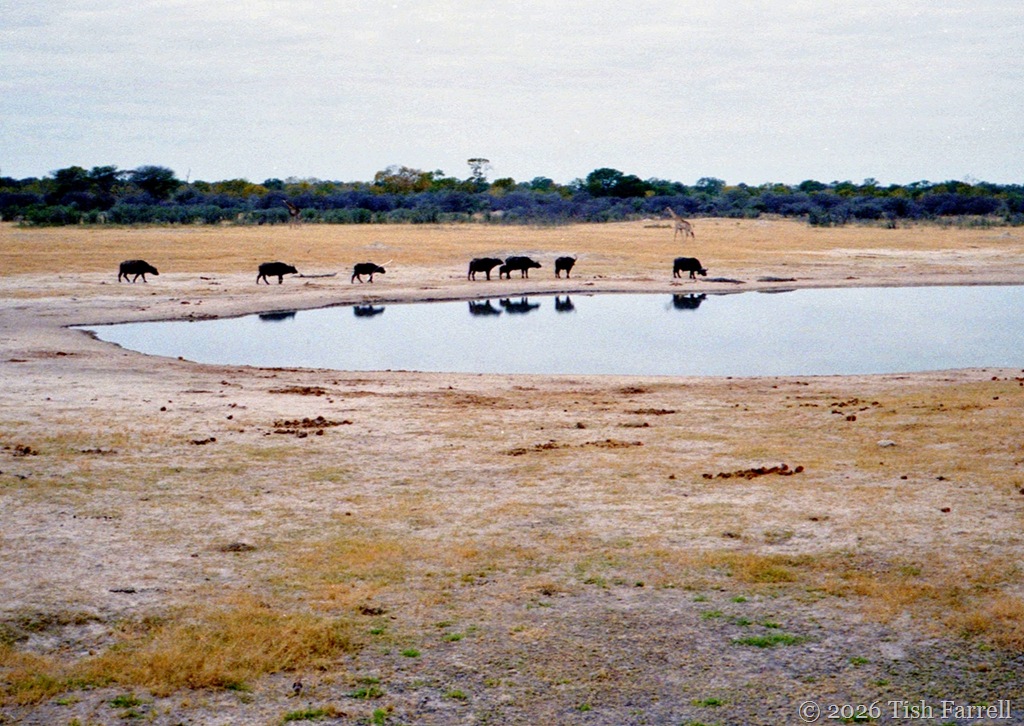
At the time we were living in Lusaka, Zambia, and had driven down to Zimbabwe to meet up with New Zealand friends and take them on a short tour through Zimbabwe back to Lusaka. We spent two days driving around Hwange under lowering skies. The bush was parched, so many shades of brown, and anyway the likelihood of spotting anything much from a Subaru estate car seemed slim. We thus spent our first morning on a high-rise game viewing platform, gazing at a very distant waterhole with some faraway buffalo and one giraffe. It was very mesmerizing, surreal even, but in the end one forgot to feel grateful for witnessing such a scene, and began to feel frustrated by the limited photo opportunities.

buffalo and giraffe Hwange

*

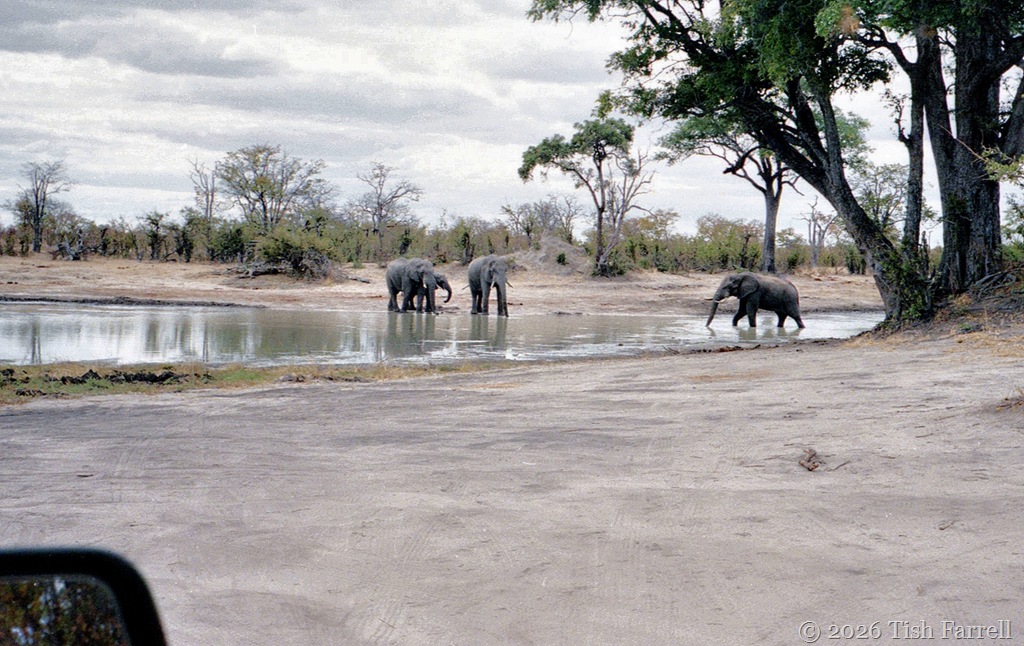
We left the hide and returned to Hwange’s paved access road, trundling between wide grass verges, that truth to tell, had a rather managed, suburban look about them. Finally we found a dirt trail that led to another waterhole, and parked up under a rain tree. There was no sign of wildlife when we arrived, but it seemed a good spot to eat our picnic lunch. It was only as we were driving away that we saw the elephants had arrived. One of those moments you don’t forget.

elephants for lunch and car mirror

Lens-Artists: Lucky Shot This week Sofia sets the theme. Great fun!

Six On Saturday: Wind & Sun & Hail

heart's delight tulip

It’s been a week of many weathers, including a sudden heat wave on Wednesday with days of piercing winds and low temperatures either side.  One day we’re in the 20s C, and the next it’s down to 9 degrees. All very confusing, although I did manage to remember to think it was time to plant the seed potatoes – Red Rooster and Charlotte. They had grown some very chunky shoots while lingering in egg boxes in the downstairs cloakroom.

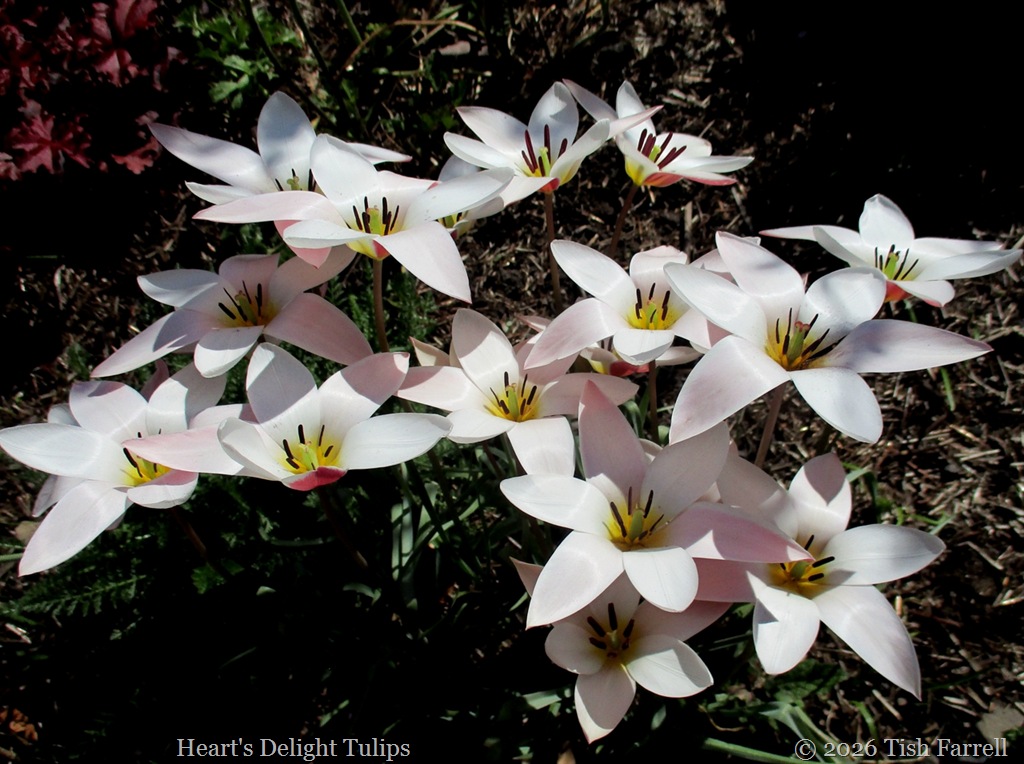
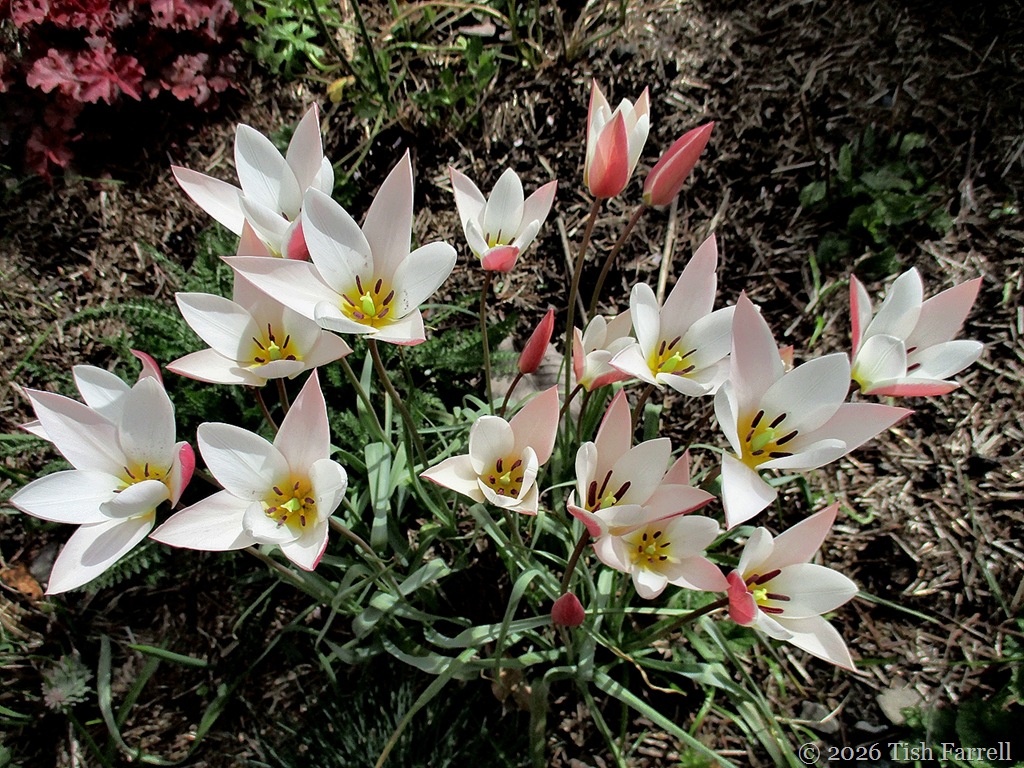
Also we could have done without the gale last Saturday. More of which in a moment. But first, the garden stars of the past two weeks have been these lovely little front garden tulips, Heart’s Delight (1). They have stood up to being roasted and thrashed, but I fear they won’t last today. As I write this, we’re having a hail storm and fierce sleety gusts. Most of their petals have already blown off.

IMG_0111ed

*

And so to last Saturday’s gale, and good bye cherry plum tree (2).  It wasn’t our tree, but it gracefully filled our kitchen window view and we liked to watch it through the seasons. It also made up for the ‘horrid holly hedge’ which we acquired along with the house. On Easter Sunday we woke to this:

cherry plum 2

cherry plum 7

cherry plum 1

*

The tree people came this week and cut the whole thing down. They said the remaining trunk showed signs of decay and had to go. There’s no denying it: it’s left a big gap.  I doubt that the housing association owners will replace it, planting space being rather limited. Here it is back in March.

cherry plum in March

cherry plum gap

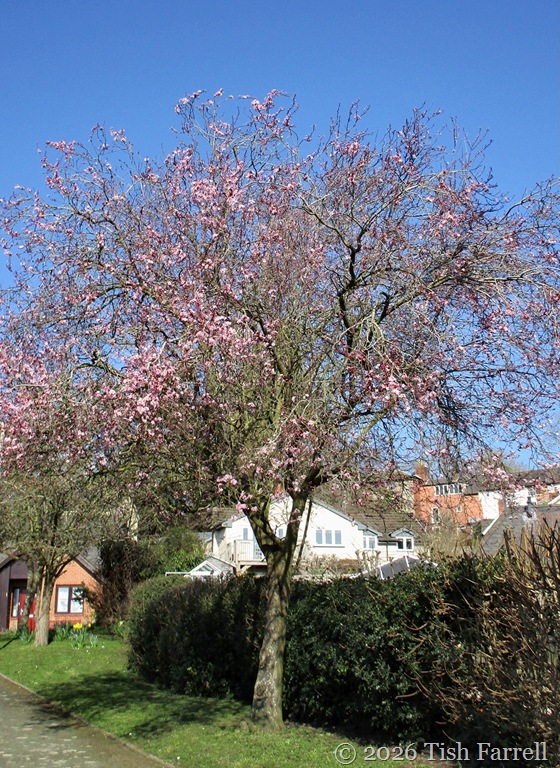
We can now see the retirement home’s almond blossom tree across the road, but the immediate holly hedge view seems rather bleak and gloomy. I’m wondering about having a Japanese Maple in a big pot at the top of the old steps opposite the side window. It’s a semi-shaded, sheltered spot. It might work?

*

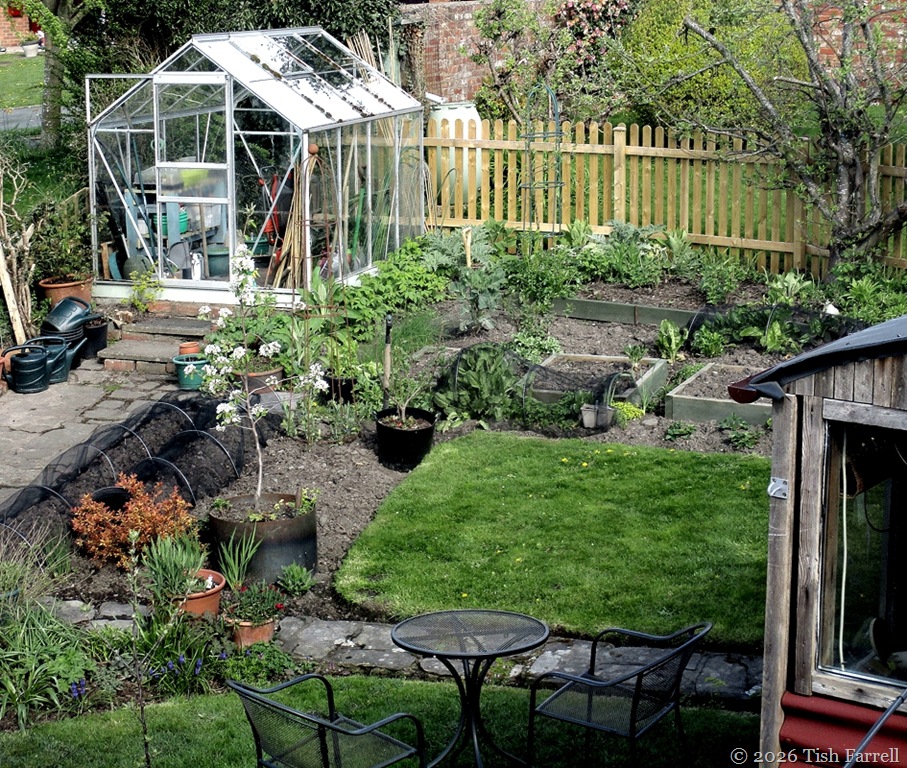
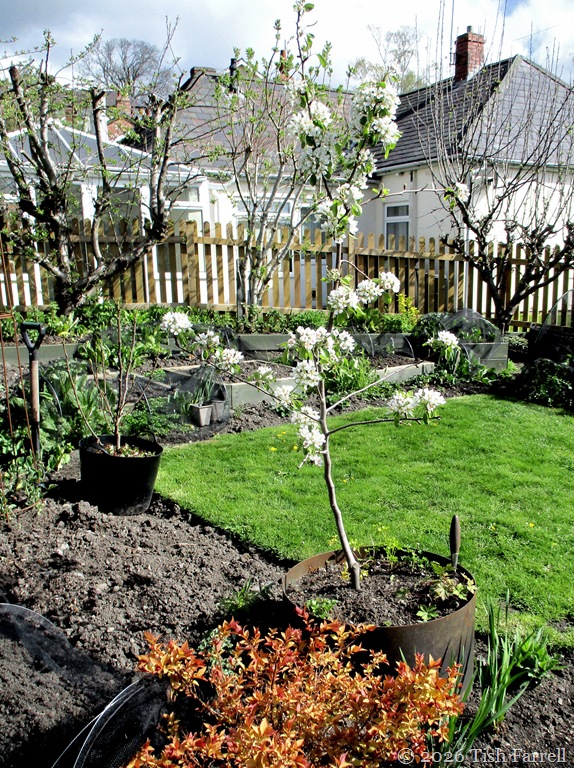
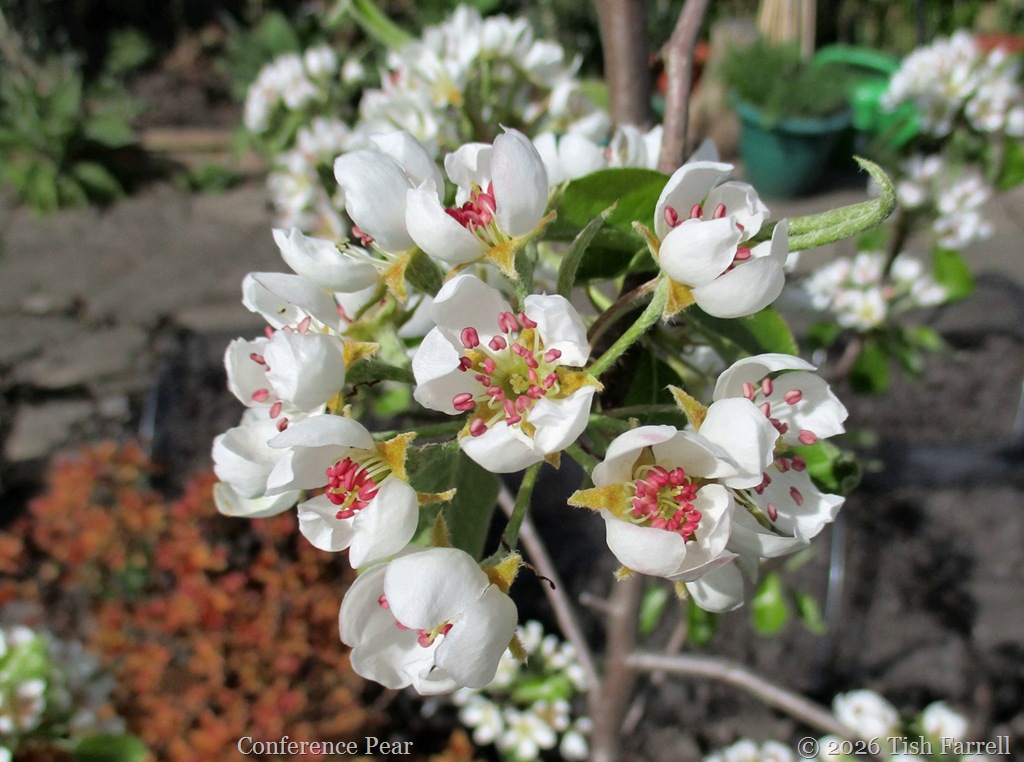
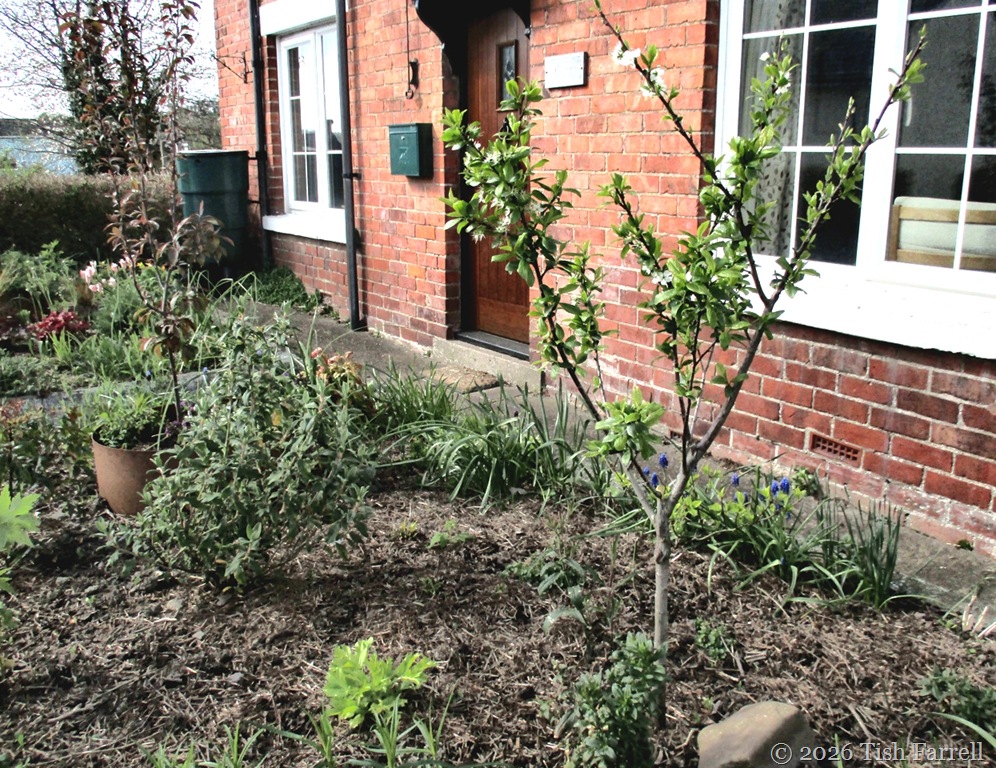
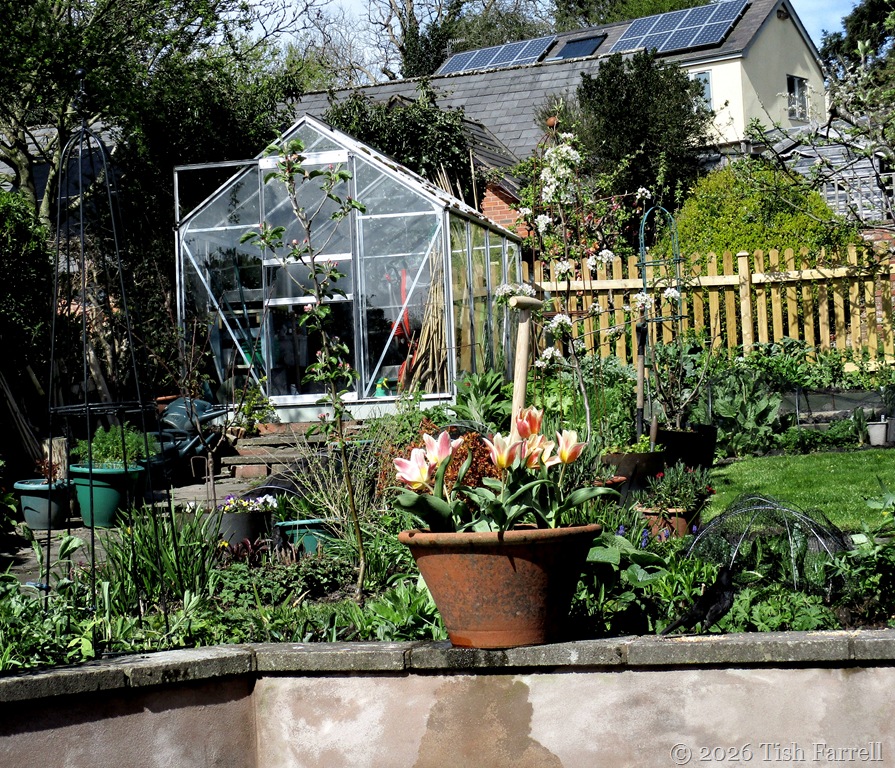
Of miniature trees (3). On a happier note, the garden’s tiny trees seem to be faring well. We don’t have a great deal of space, and although I realise shrubs generally form the ‘spine’ of a garden, I couldn’t get to grips with what to choose or where to put them. Instead, I thought of dwarf trees. The conference pear is the prettiest of them just now. It’s in a raised bed beside the potato patch.

back garden April

pear 3

pear 2

*

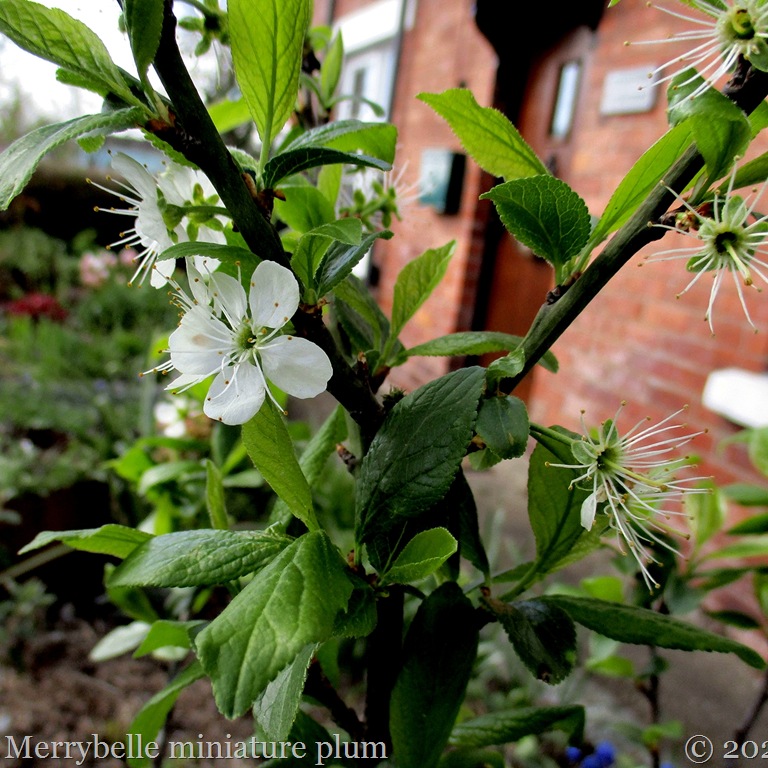
We also have 2 dwarf eating apple trees and a little Stella cherry on the top of the terrace wall, and in the front garden, two small crab apples (Evereste and upright Laura both about to flower), and a Merrybelle Plum, which is just over.

My thinking with the little trees is that we and the pollinators have the pleasure of the spring blossom (and maybe also some fruit come autumn), but they leave lots of room for the late spring and summer show of herbaceous perennials.  And if we lose sight of them for a while among the phlox, rdbeckia and Michaelmas daisies it doesn’t really matter.

Merrybelle 3

Merrybelle plum

terrace bed

About to flower – a dwarf Christmas Pearmain just visible to the left of the tulip pot.

*

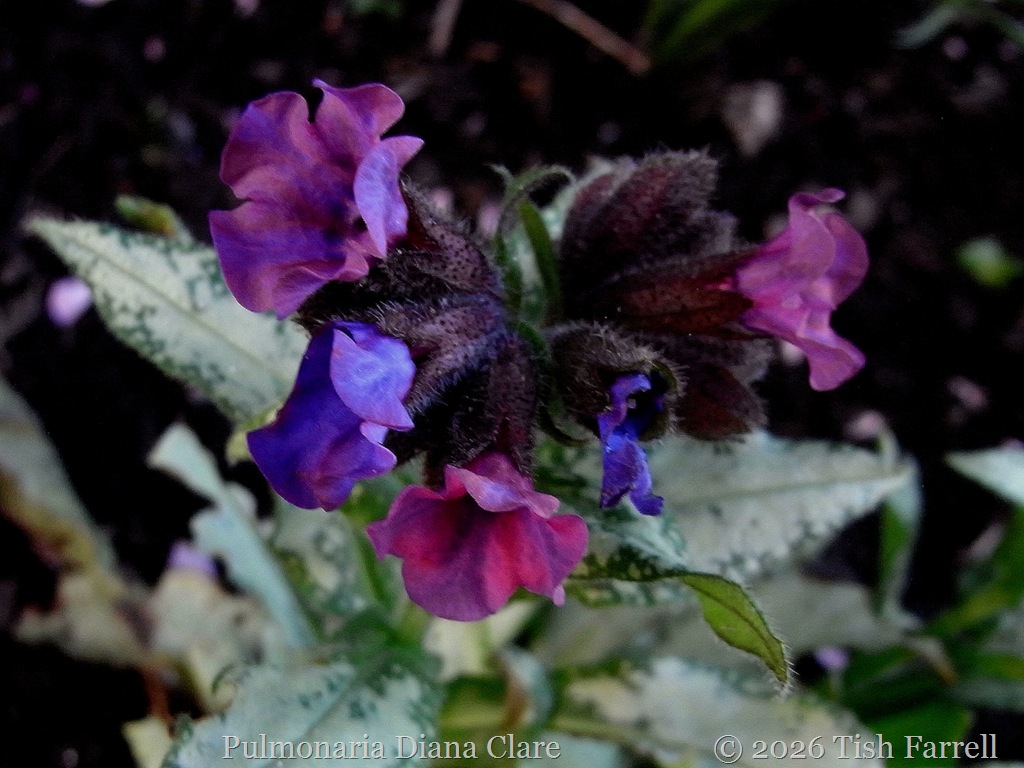
The weather may be changeable and bitterly cold (even by English standards) but there have been plenty of sightings of butterflies: orange tips, tortoiseshells, Common Blues. I’ve also noticed bumble bees, especially in the Pulmonaria (lung wort) flowers. Diana Clare (4) with her striking silvery leaves, is a new plant bought last year, so I’m pleased to see she’s settling down, and especially after the pigeons snaffled her first leaves.

RIMG0065ed

*

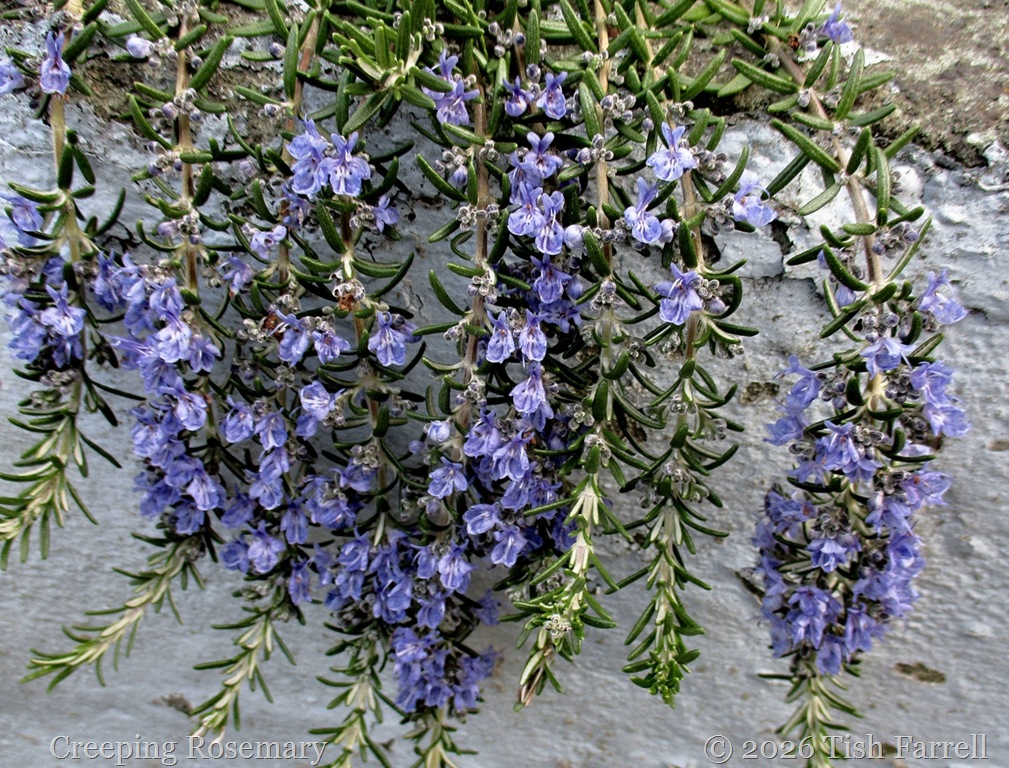
Also looking its best with lots of flowers for the insects is the creeping rosemary (5), planted a couple of years ago along the front garden wall.

rosemary

*

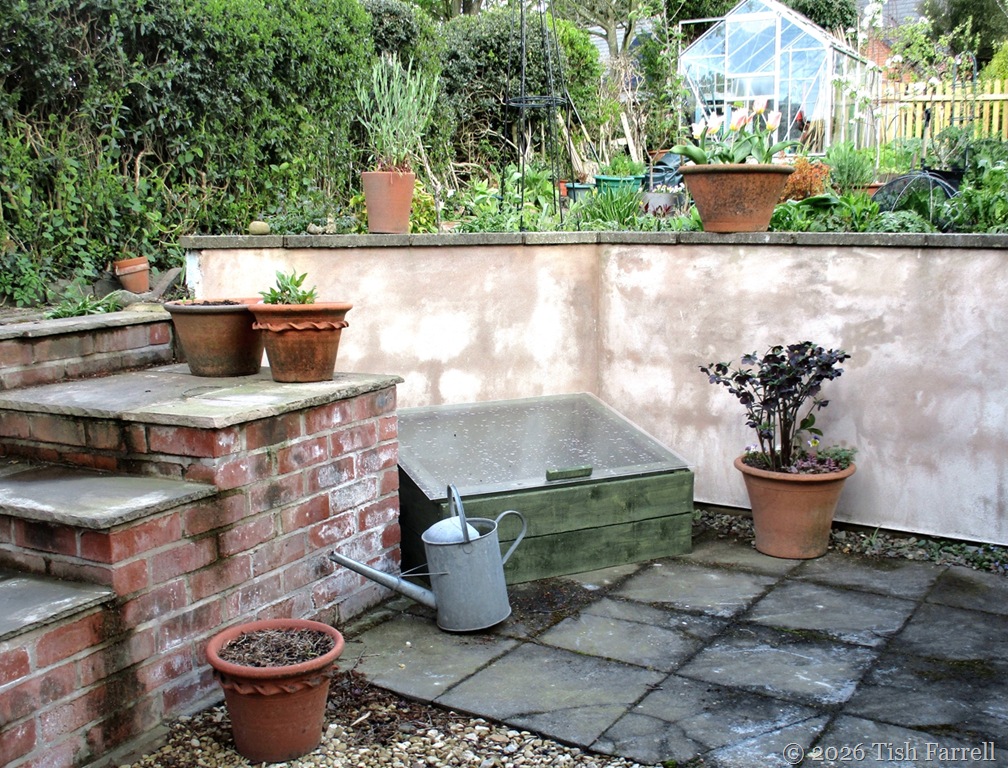
And last, but not least, it’s all thanks to he who builds sheds and car ports that aren’t for cars, AKA Graham. This week he finished making me a cold frame (6). Brilliant! He’s also mended my ancestral (grandfather’s) spade  whose handle broke while I was trying to excavate the whirly washing line spike that needed to go somewhere else.

All we need now is to get growing with some warmer, less windy weather. Roll on spring!

cold frame

*

Six On Saturday April 11 2026


Knowing My Ground: Spring On The River Avon

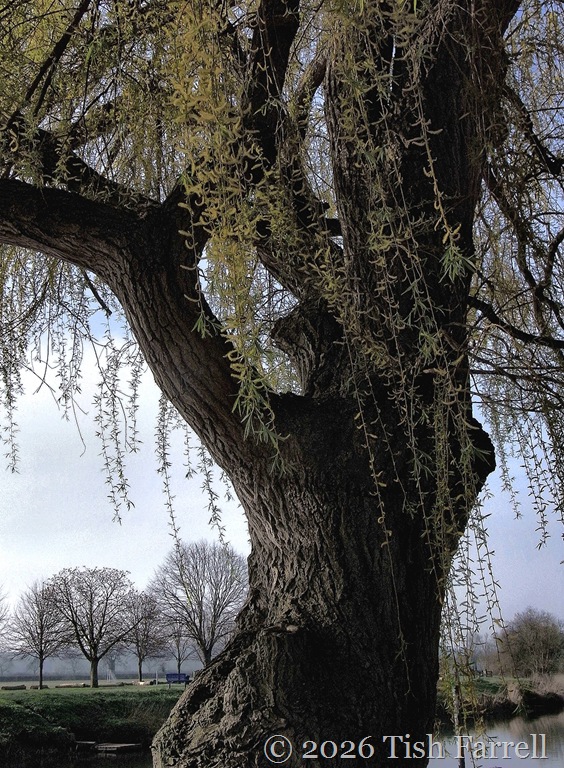
willow evening

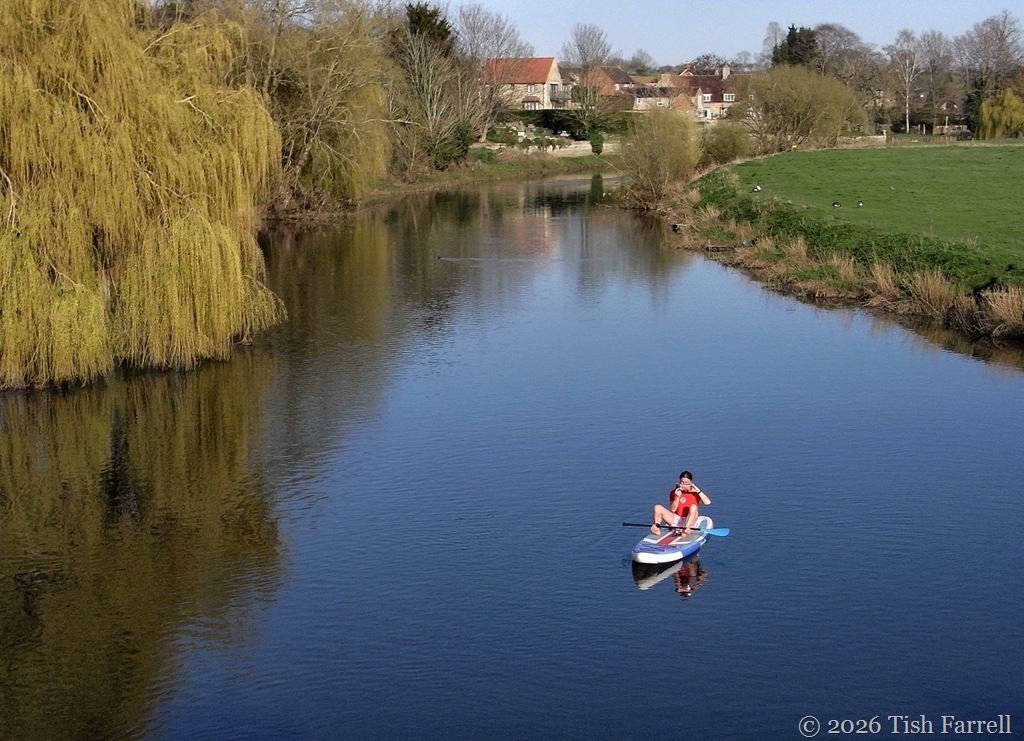
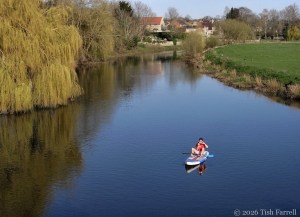
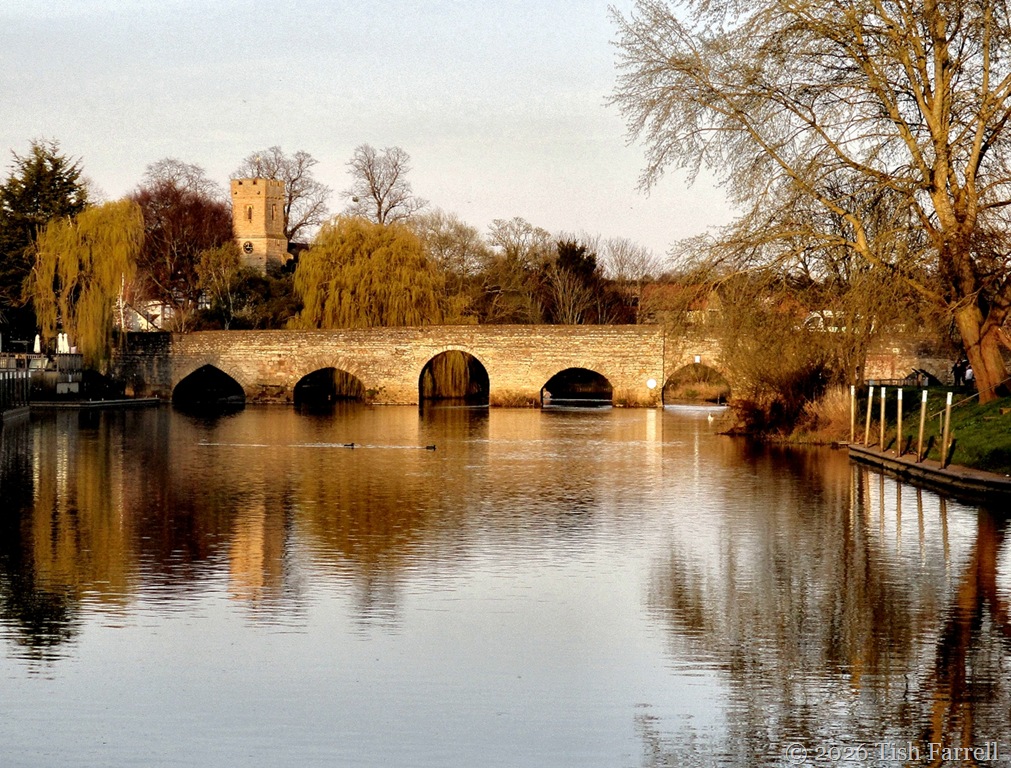
This week Patti at Lens-Artists asks us to consider fore- middle- and background when framing our photos.  And it just so happens I took a few (I think) suitable photos back in March when we were staying beside the river at Bidford-on-Avon in Warwickshire.

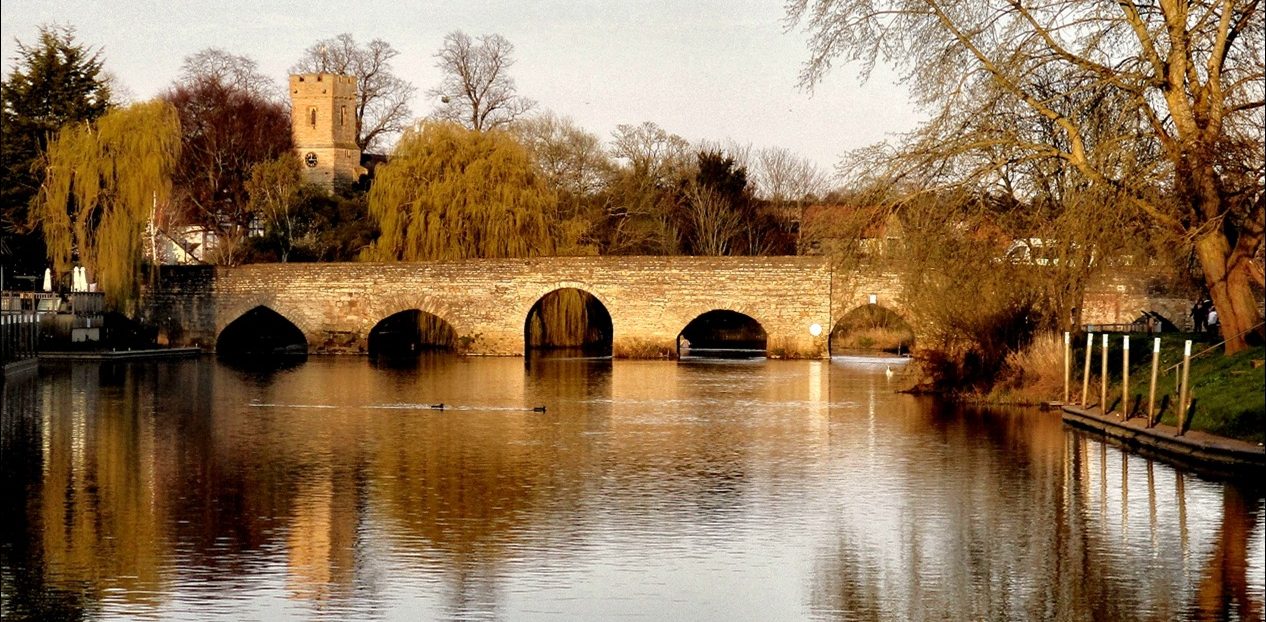
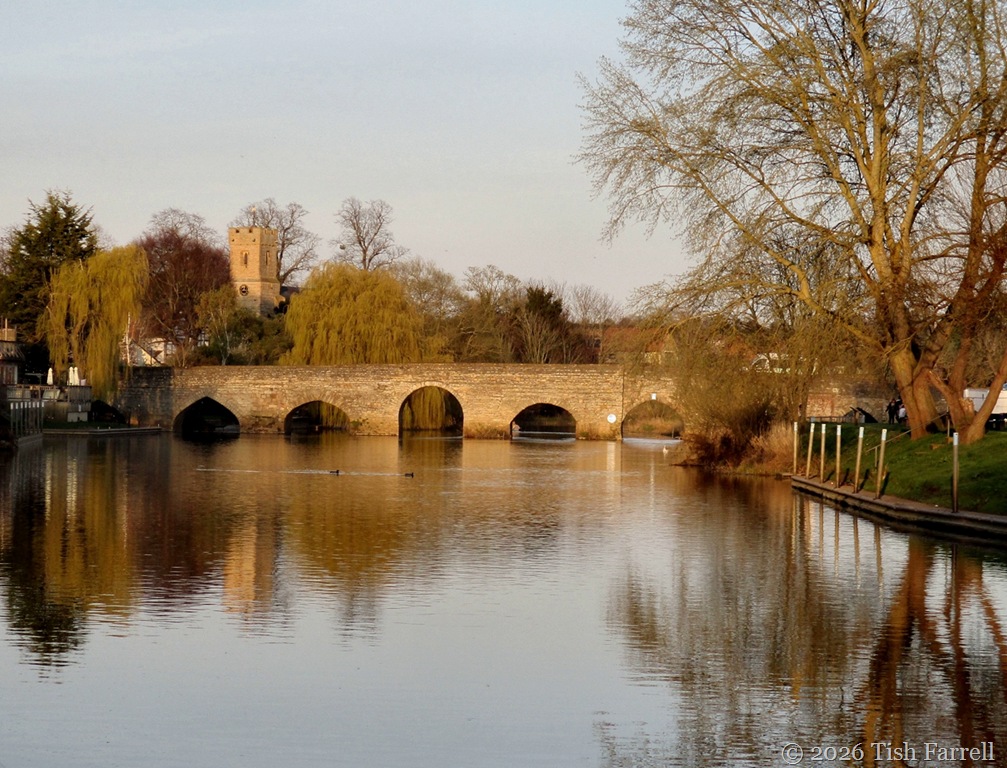
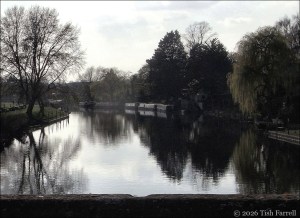
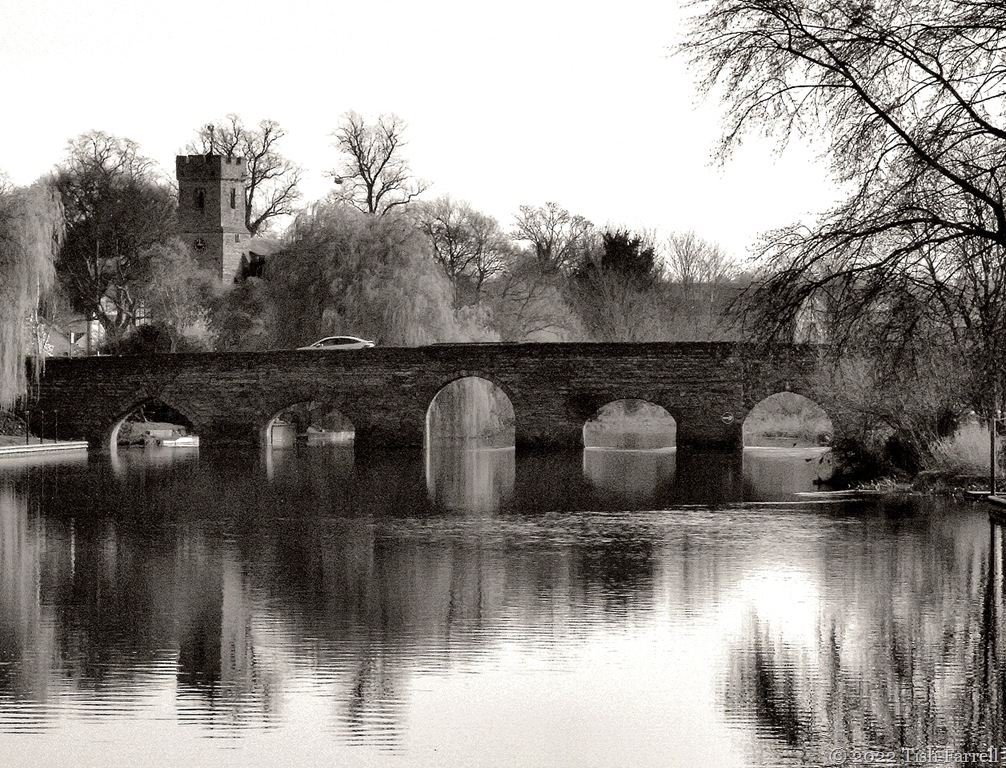
The house had a fine view of the town’s fifteenth century bridge. On the afternoon we arrived there was brilliant sunshine. I’m glad I caught it! I liked the shimmery reflections of trees and church tower in the river, but also that you can glimpse the upstream banks  through the arches. Can you see the swan?

Bridge sunset

RIMG0095 Bidford Bridge sepia

*

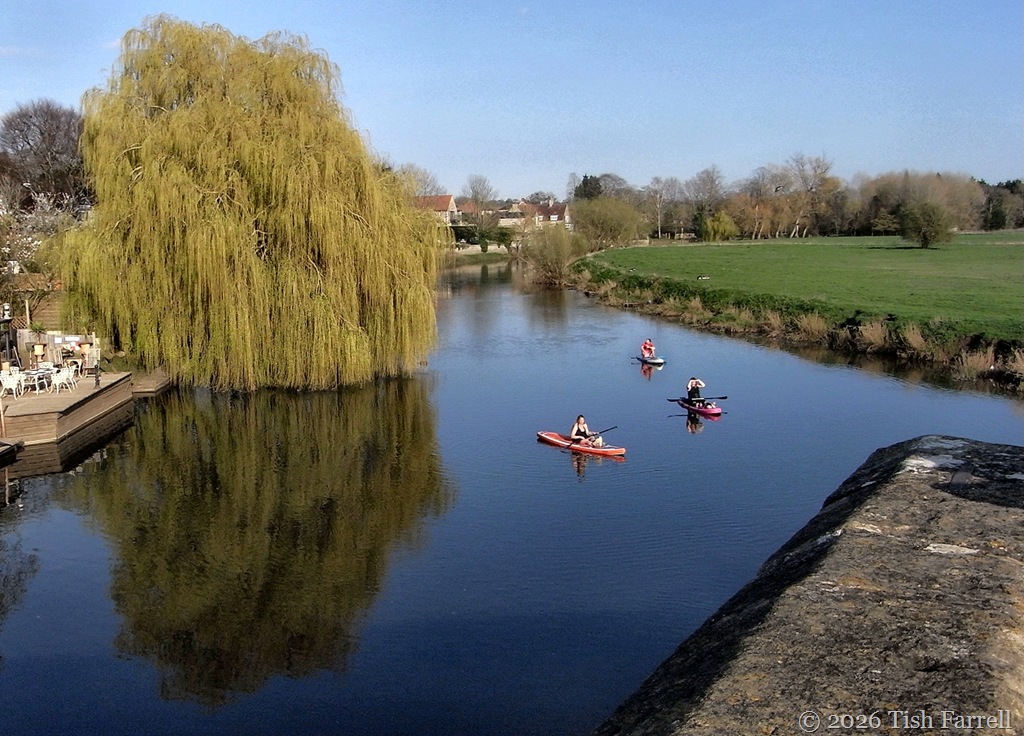
Bidford Bridge upstream view

A view from the bridge

*

And lastly a couple of photos from our visit to nearby Hidcote Manor Gardens:

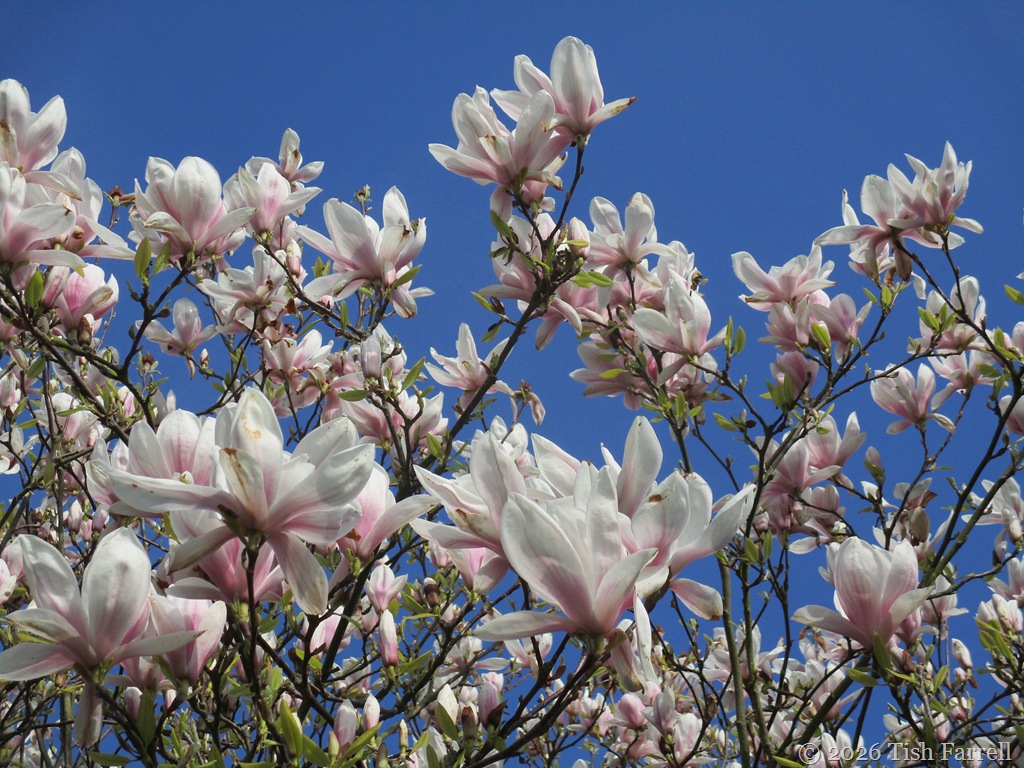
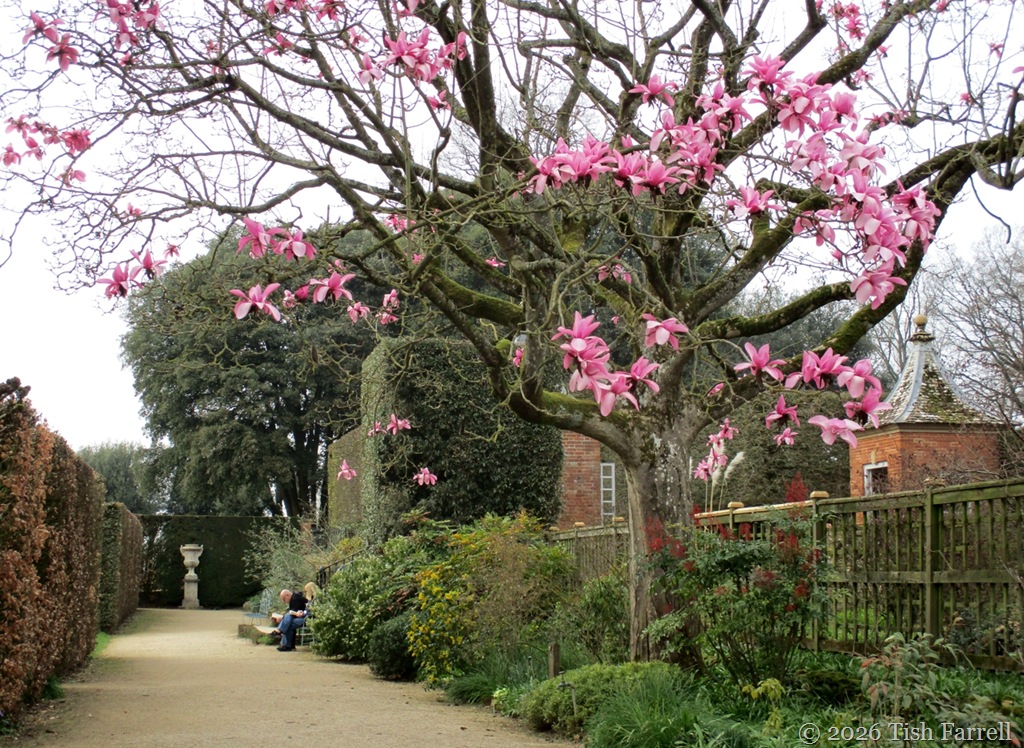
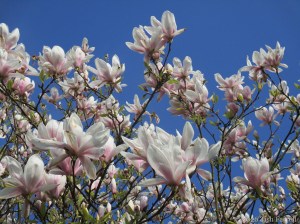
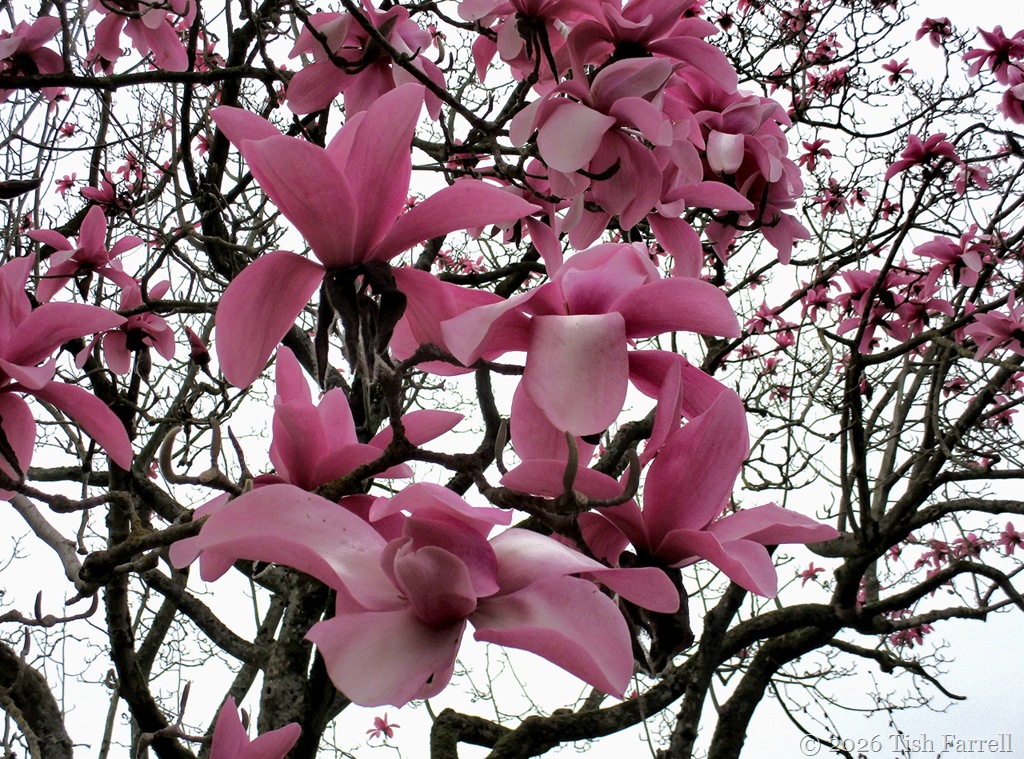
Hidcote magnolias

I liked the layered look of the magnolia blossoms near and far against the flat grey sky.

*

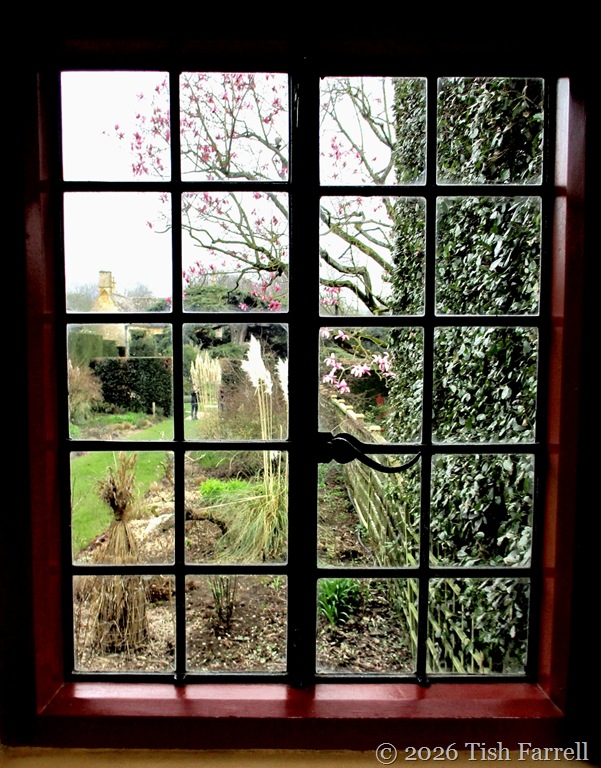
Hidcote tearoom window

What’s not to like about this red-framed window in the Hidcote tearoom, and such a rich red too. Then there’s the garden border beyond, still slumbering for the most part, and in the distance the manor house roof.

Choose a pane, any pane…

copyright 2026 Tish Farrell

*

Lens-Artists: Framing your shot – fore-, middle, and background

This week Patti sets the theme, and gives us some excellent examples and guidance. Go and see!

The Changing Seasons: This Was March 2026

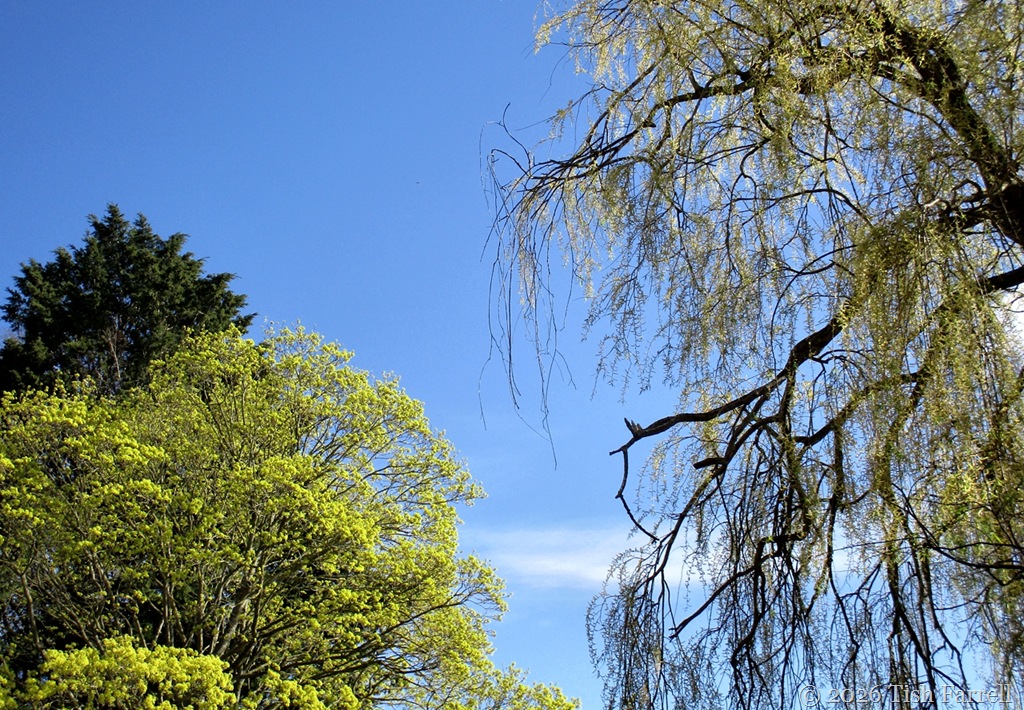
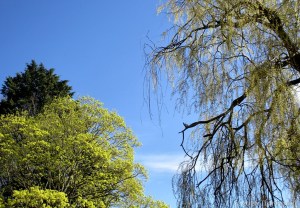
spring trees

It’s been a tricksy month weatherwise. The leafing trees and blooming bulbs have been saying spring. Likewise the few days of blue sky and warmth that lured us, wantonly, to cast off clouts and dream of summer days. But then next, to put us right, came winds, icy, perishing blasts under leaden skies, and it was back to triple woollies.

Towards the end of the month came another false spring. As we drove out of Shropshire and down to Warwickshire its arrival seemed so certain. More blue skies. Banks of daffodils and primroses on every roadside. The blackthorn and wild cherry blossom running riot in dazzling white arcades; hawthorn hedges bursting in greens too green to imagine.

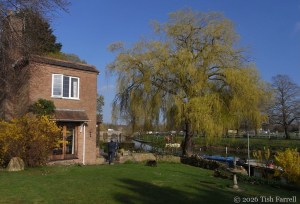
We were off for a few days beside the river at Bidford-on-Avon, on the fringes of ‘Shakespeare Country’. (It’s said that Will took part in a riotous drinking contest at the Falcon Inn in Bidford). It is also known for its ancient bridge, built in the fifteenth century, downstream of an an even more ancient Roman ford on the Icknield Way.

We arrived on a perfect afternoon. And so the spell held – for another day.

IMG_9953 Bidford Bridge re

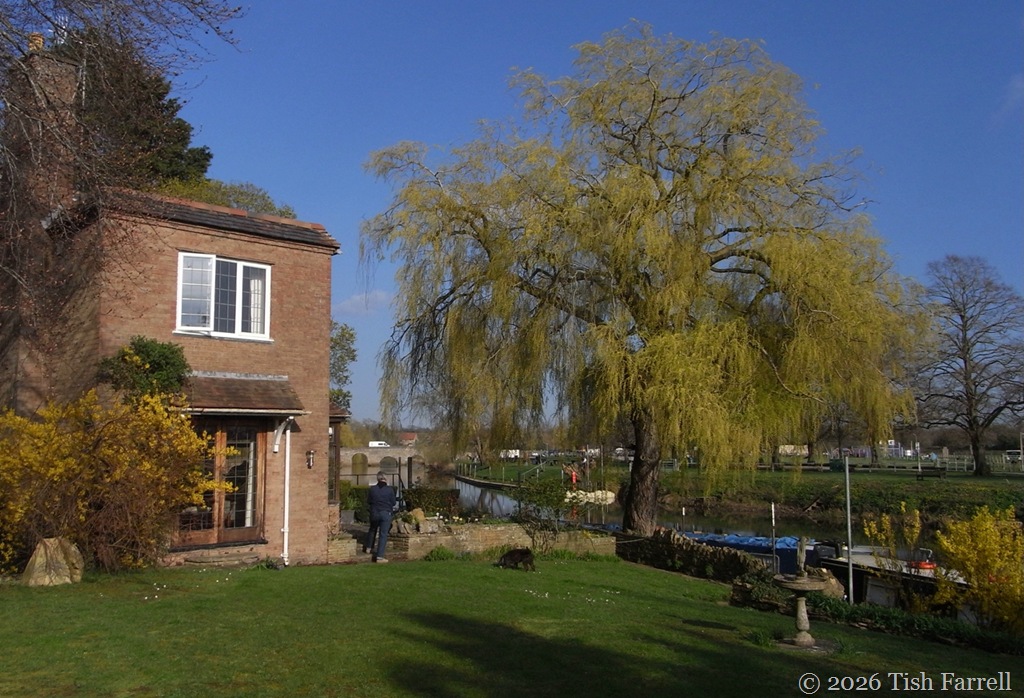
Riverside House

Our spot on the river with narrow boats moored alongside

*

RIMG0140Avon

IMG_9957

*

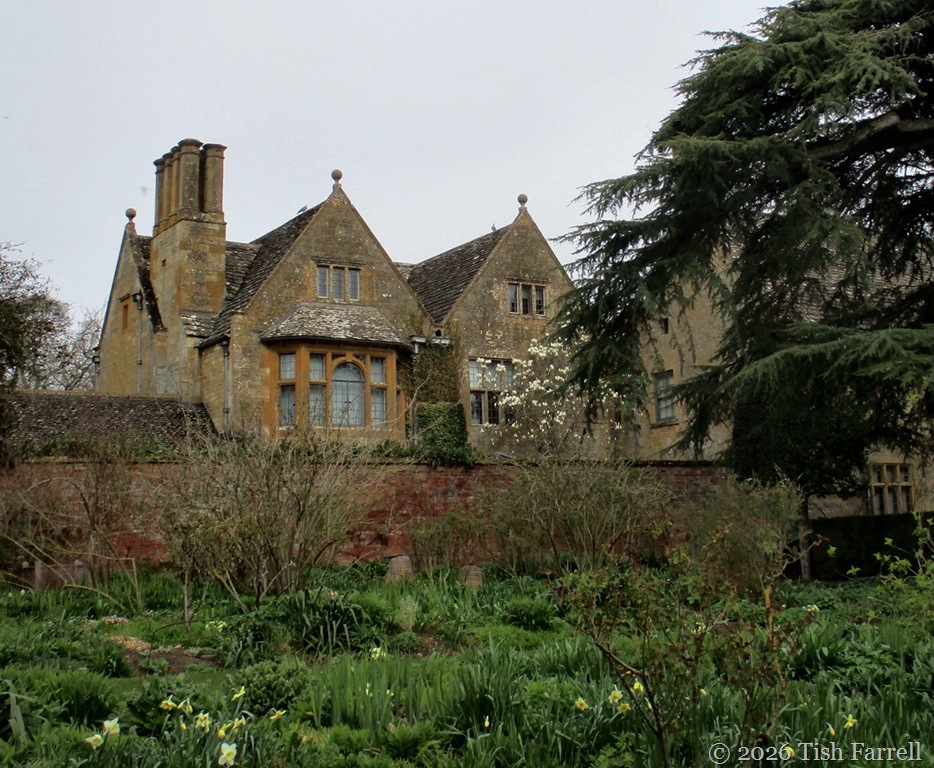
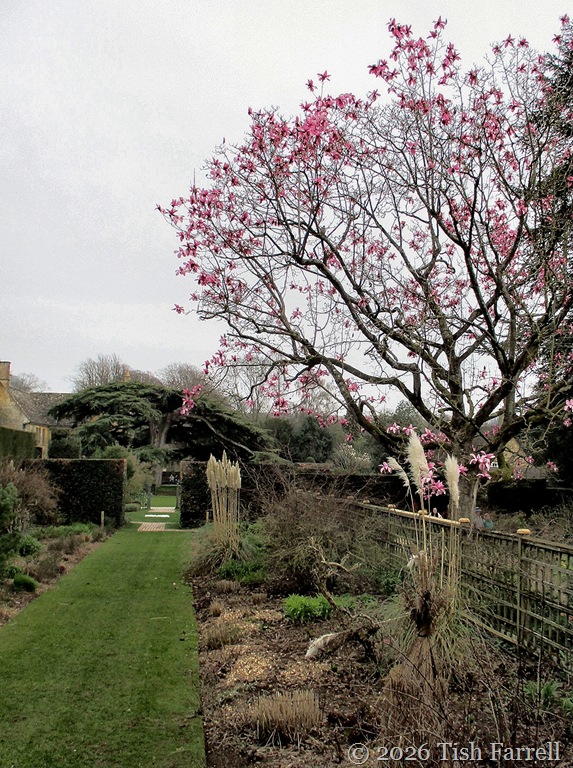
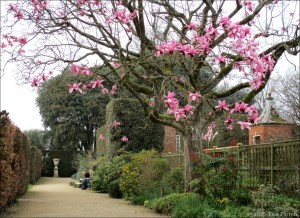
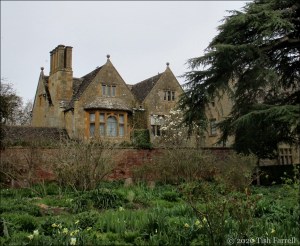
And then it was back to grey skies and sharp winds. But we still enjoyed a ramble round the mostly slumbering ‘garden rooms’ at Hidcote Manor, the must-see creation for passionate gardeners and plant lovers, and one of the Cotswolds’ biggest visitor attractions. But as you can see, signs of spring, apart from the magnolias, were few and far between. This is definitely a summer garden:
Hidcote Manor

Hidcote borders

Hidcote magnolia border

*

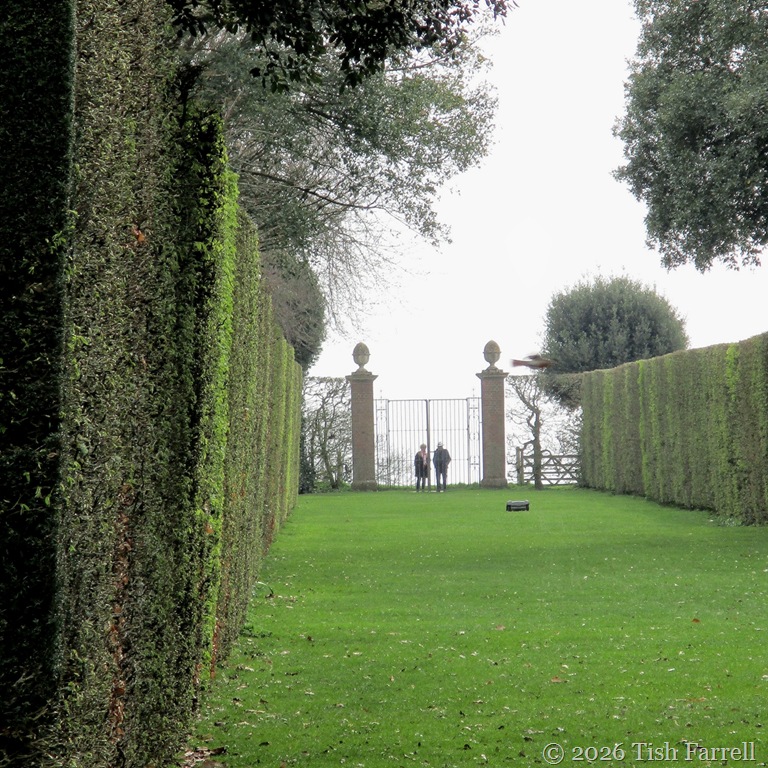
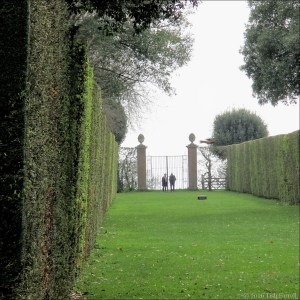
There was an amusing sighting though. I stopped to take a photo of the couple at the gates, and then realised they were watching a little robot lawnmower trundling back and forth between the hedges. It seemed to have its work cut out:

Hidcote robot mower

*

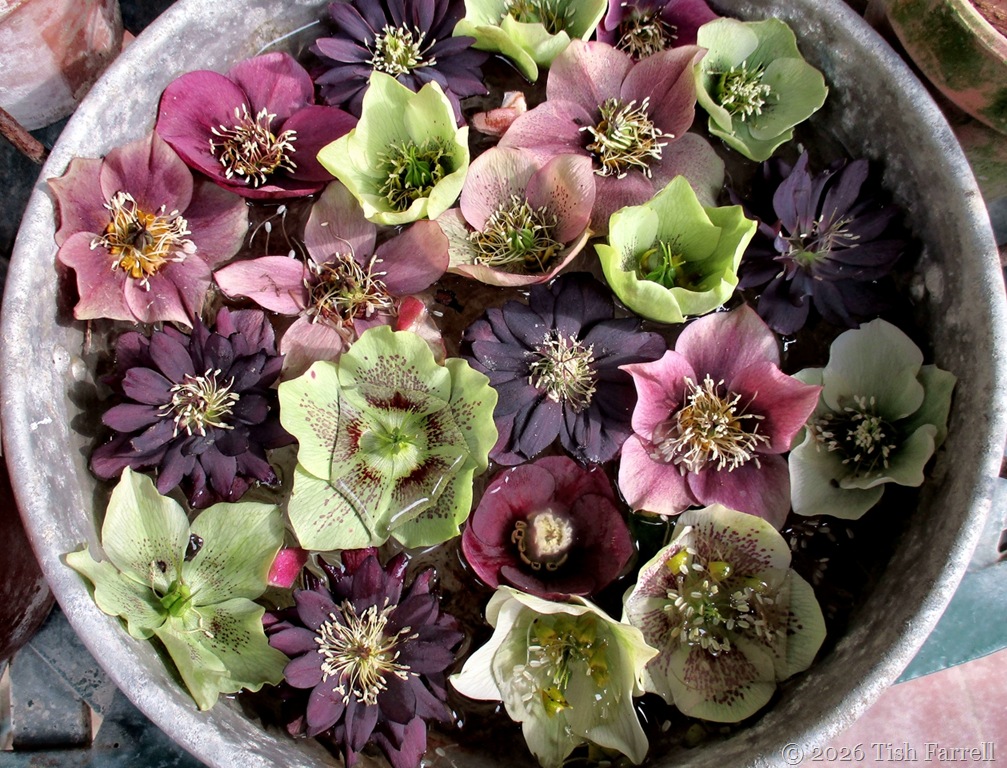
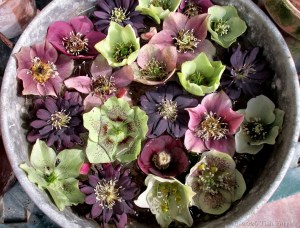
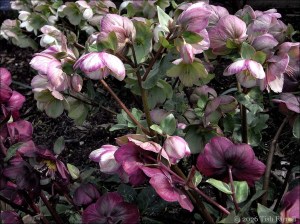
We also came upon a novel way to display (actually get to see) hellebore flowers, which do so hide their faces when growing out in the garden – a shallow dish filled with water:

hellebore display

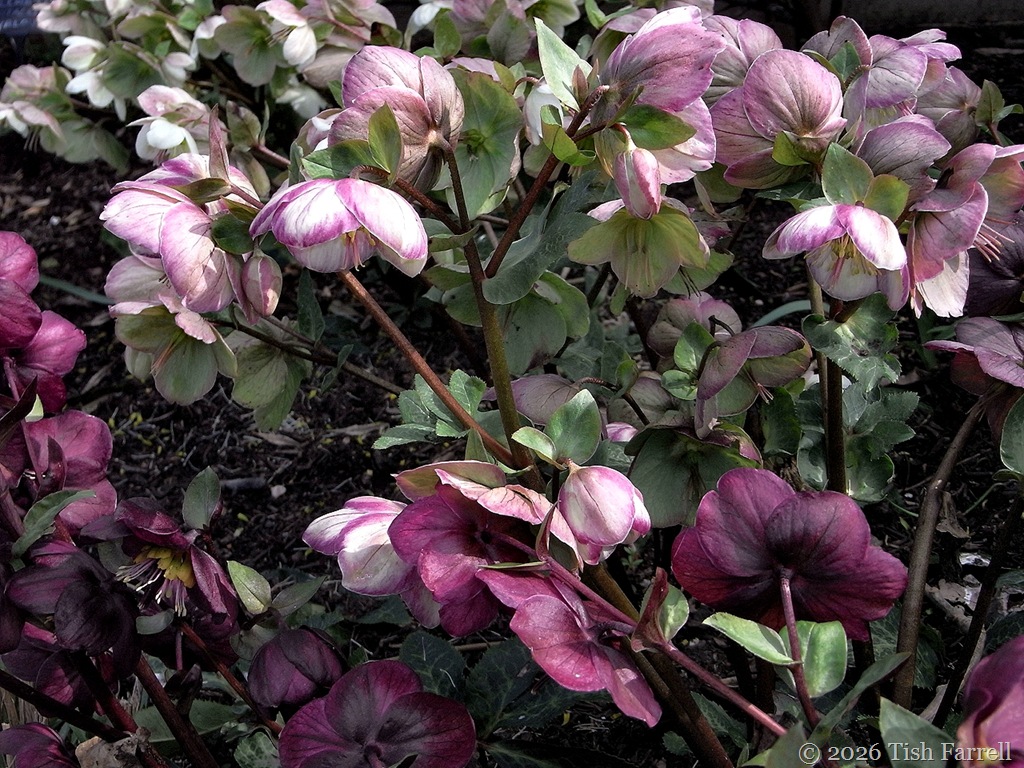
hellebores

It’s actually been a fine season for hellebores – even if it is hard to see the flowers. These were spotted at Hillers’ garden centre near Bidford.

*

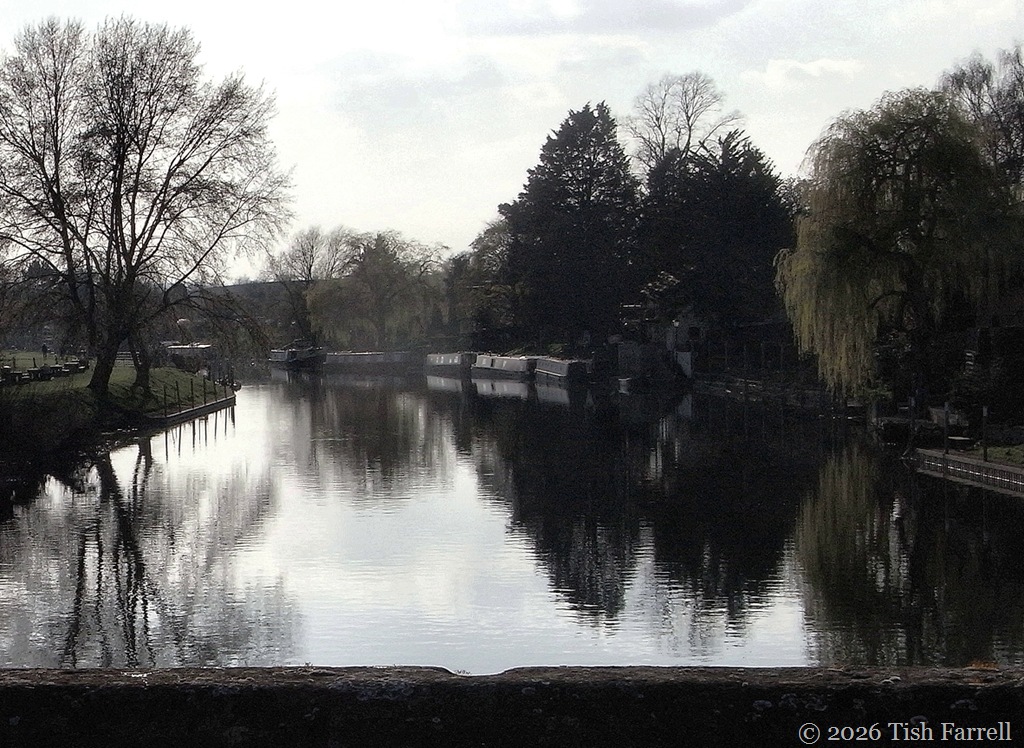
Avon downstream

*

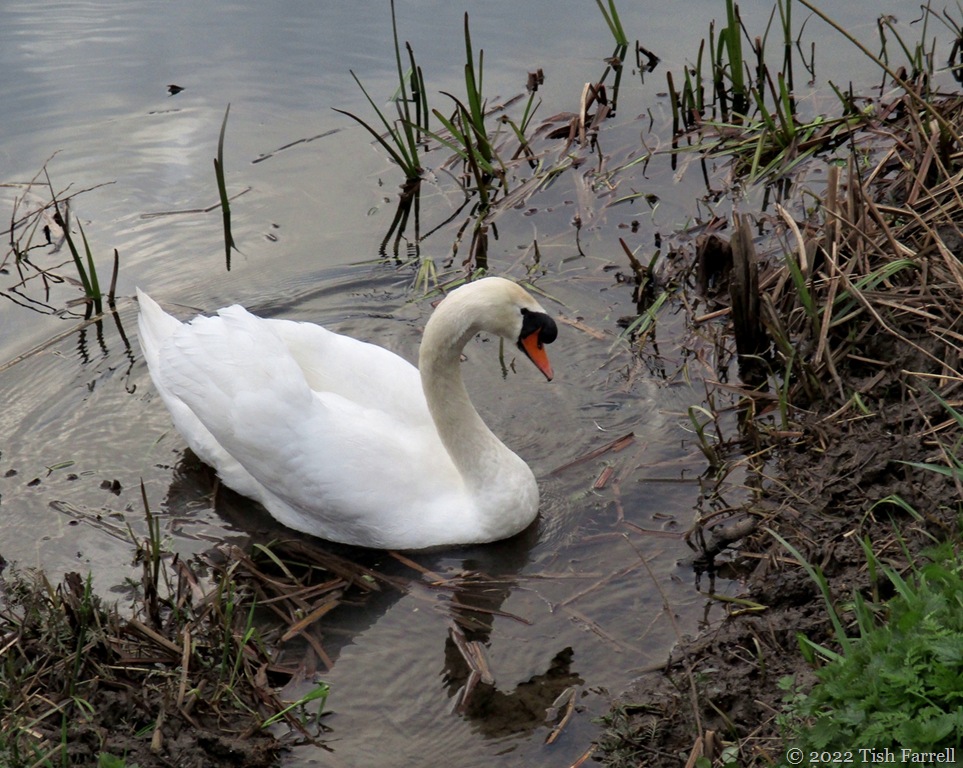
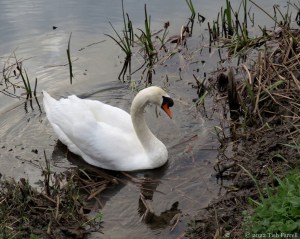
On our final evening we walked along the riverbank accompanied now and then by swans. I think they were hoping for a hand-out:
swan

*

Now home again, the little tulips in the front garden make a bright show. At least they do when the sun comes out. At the moment as I write this they are closed up tight under gloomy cloud. Also waiting for spring…
tulips

*

The Changing Seasons: March 2026 This month Brian from Bushboys World is the host. Please go and see his marvellous gallery of March sightings.