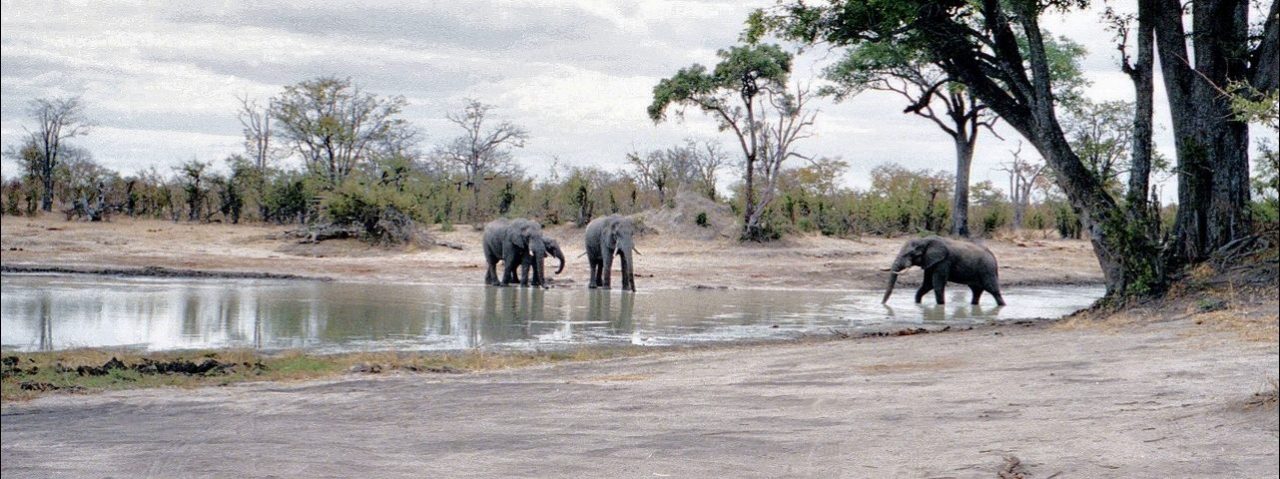
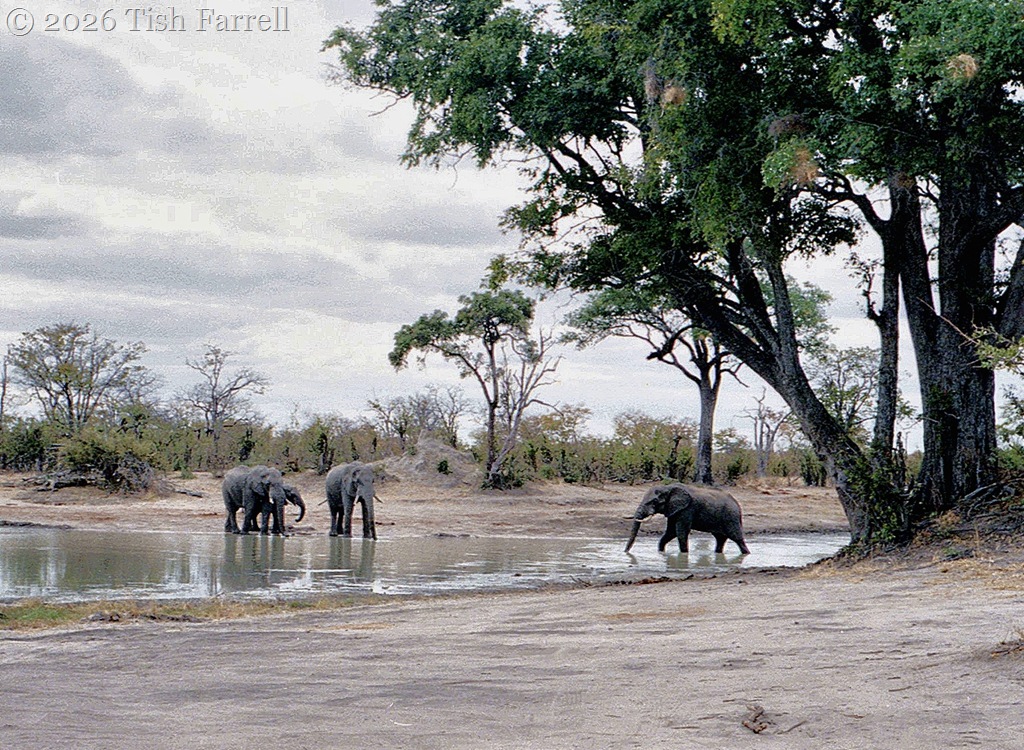
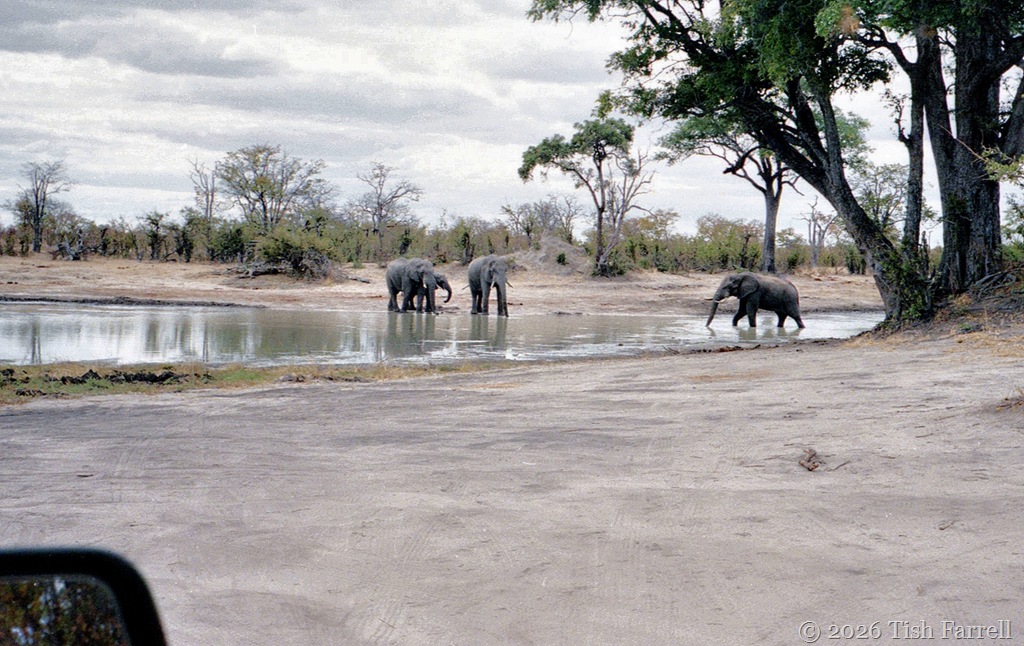
For most of the several years we lived in Africa I only had a small film camera – an Olympus-trip. It had a good lens and was great for general landscapes, but of course it had no zoom facility. Obviously, this was a big handicap when driving through bush country in search of wildlife to photograph. Also I did not have the aptitude to make the best of varying light conditions. E.g. The header photo was taken in Zimbabwe in July, winter in the southern hemisphere, with a midday view in Hwange National Park as gloomy as an English November. In other words, that this photo worked at all was sheer good luck. In fact I could probably say the same for most of the photos in the old Africa album. There’s another problem too: old film does not keep well.
And yet I love this shot. It has the look of a painting; an air of timelessness. And besides which, the scene did seem to materialise by chance.
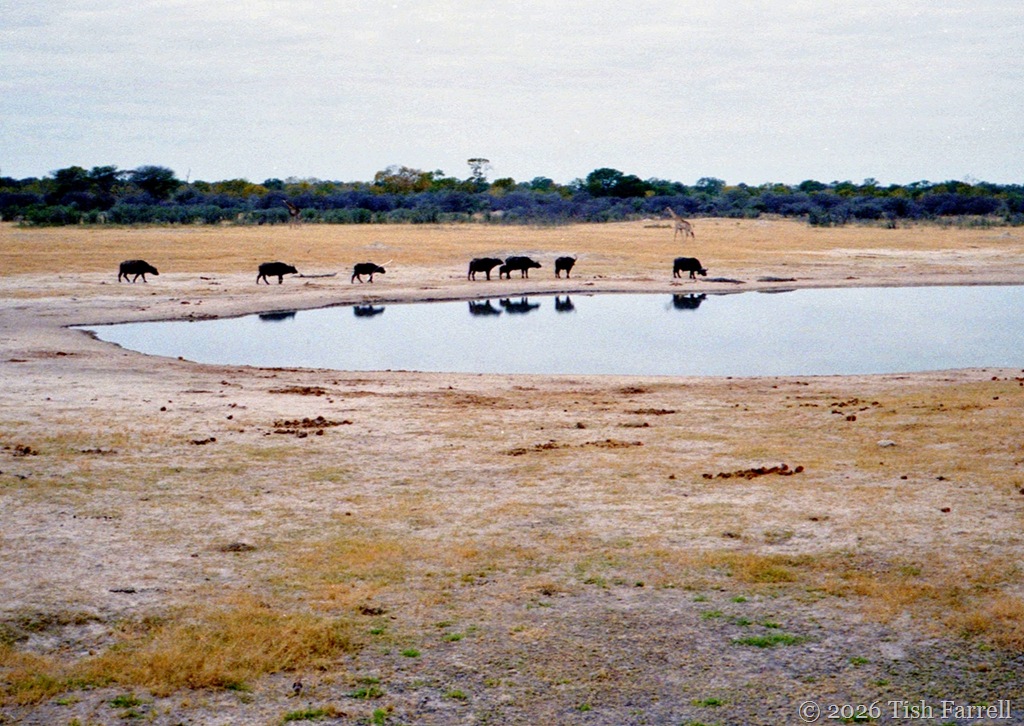
At the time we were living in Lusaka, Zambia, and had driven down to Zimbabwe to meet up with New Zealand friends and take them on a short tour through Zimbabwe back to Lusaka. We spent two days driving around Hwange under lowering skies. The bush was parched, so many shades of brown, and anyway the likelihood of spotting anything much from a Subaru estate car seemed slim. We thus spent our first morning on a high-rise game viewing platform, gazing at a very distant waterhole with some faraway buffalo and one giraffe. It was very mesmerizing, surreal even, but in the end one forgot to feel grateful for witnessing such a scene, and began to feel frustrated by the limited photo opportunities.
*
We left the hide and returned to Hwange’s paved access road, trundling between wide grass verges, that truth to tell, had a rather managed, suburban look about them. Finally we found a dirt trail that led to another waterhole, and parked up under a rain tree. There was no sign of wildlife when we arrived, but it seemed a good spot to eat our picnic lunch. It was only as we were driving away that we saw the elephants had arrived. One of those moments you don’t forget.
Lens-Artists: Lucky Shot This week Sofia sets the theme. Great fun!