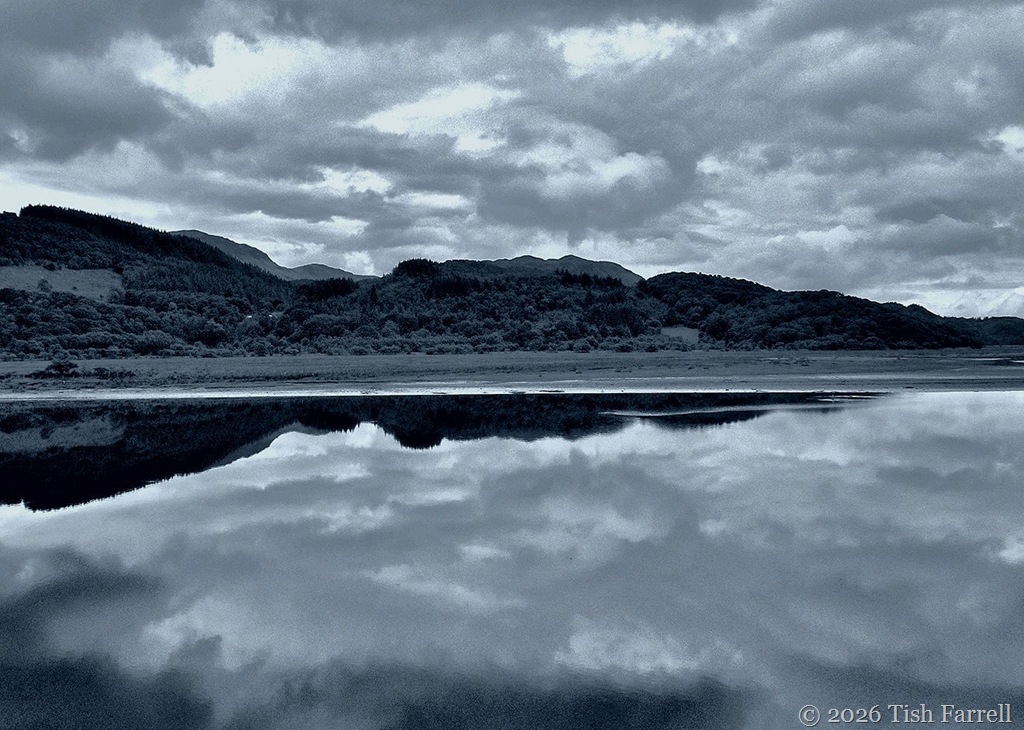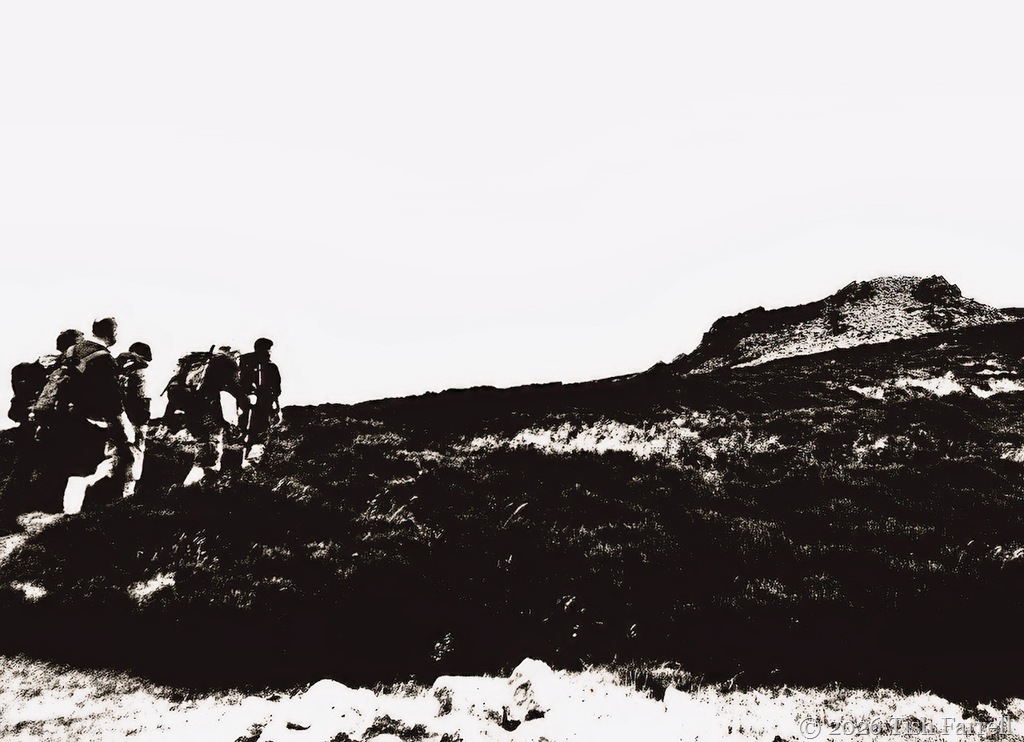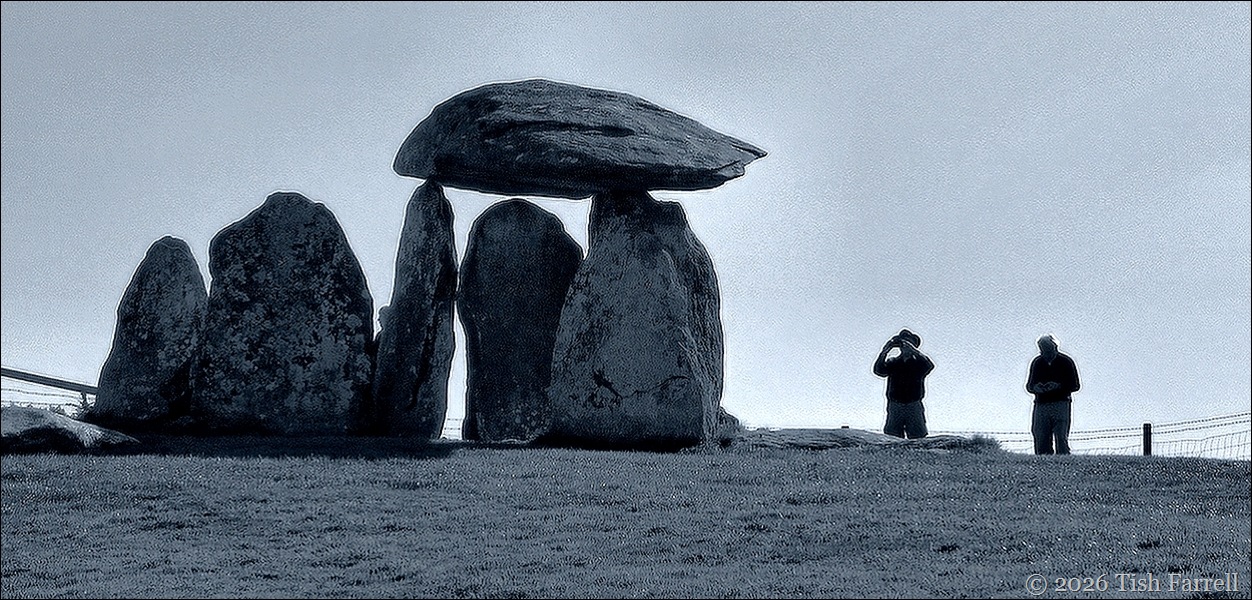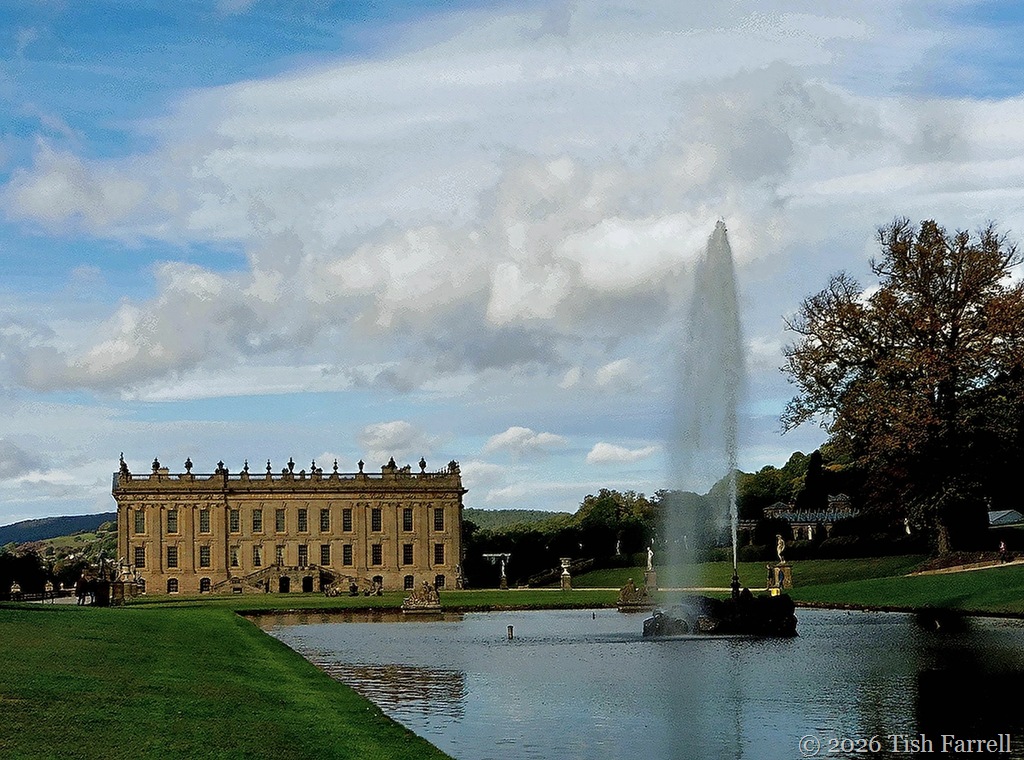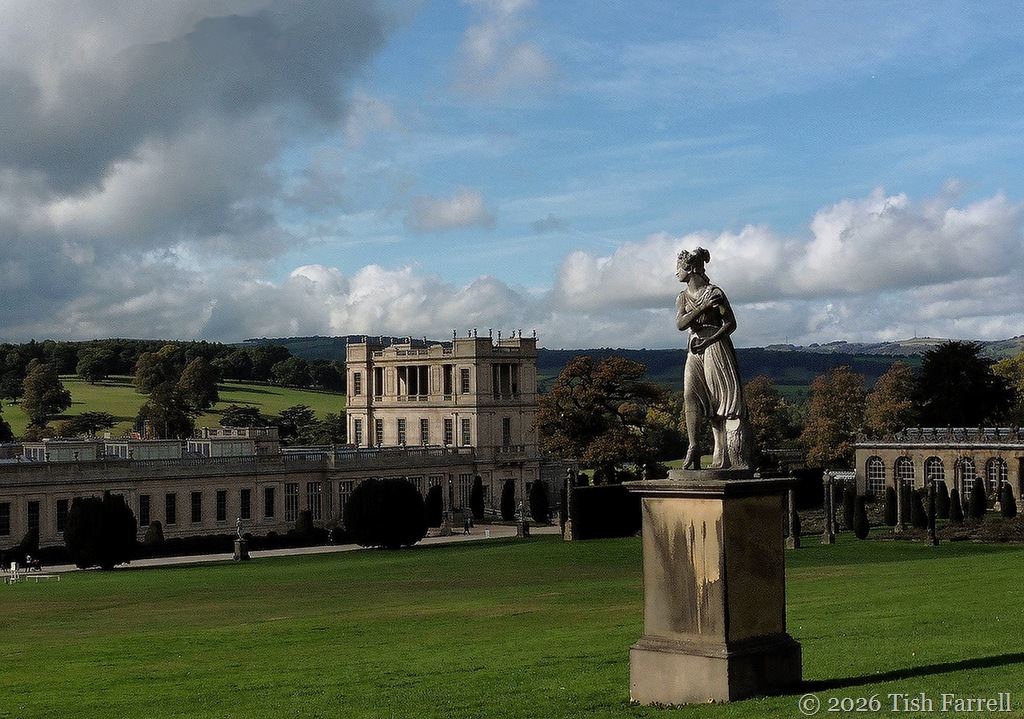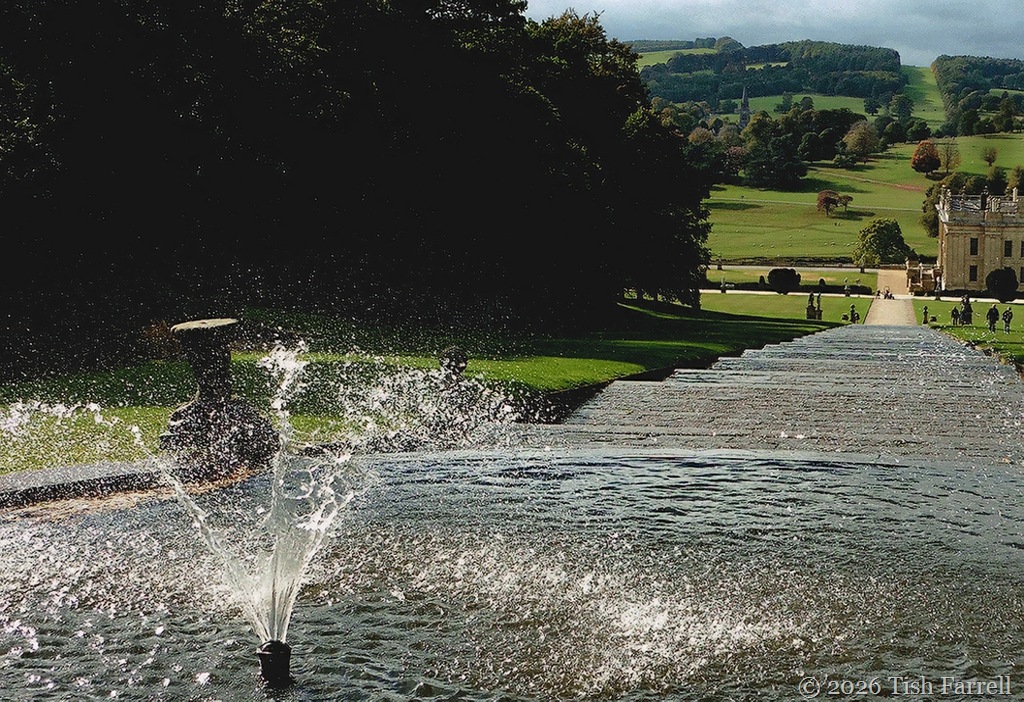
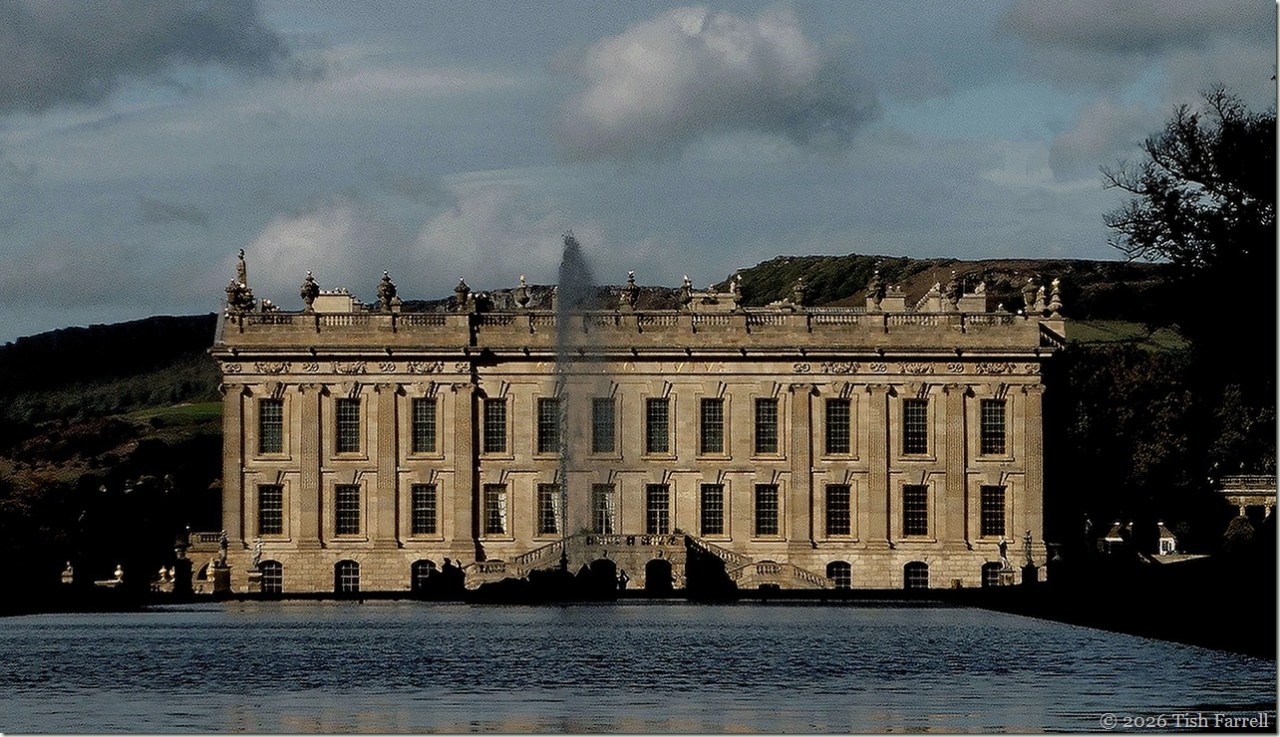
Seeking Perspective At Chatsworth House

perspective 2

The grand mansion was ever built to impress and raise social standing, its setting in the landscape deploying all manner of visual knacks and contrivances to enhance imposing looks. See, it says, this is the domain of the rich and powerful, beings who inhabit a realm far removed from that of ordinary mortals.

And to prove this point, it was not unknown for mansion owners to dispatch from their purview, and place elsewhere, the unsightly villages of their peasant tenants. It was common, too, to incorporate tunnels and hidden thoroughfares in the surrounding grounds so as not to suffer the indignity of looking out from the drawing room windows and seeing a passing labourer.

Sometimes one does wonder why we British never had a revolution.

Perspective 11

Here at Chatsworth in Derbyshire, seat of the Dukes of Devonshire, generations of the Cavendish family have spared no expense when it comes to home and garden improvements. (It is still the family’s home, albeit now the Chatsworth House Trust).

The first house here was built in the 1550s by Elizabeth Talbot (widow of Sir William Cavendish who amassed great wealth during the Dissolution of the monasteries), otherwise known as Bess of Hardwick, Countess of Shrewsbury. She built a large Tudor mansion on the banks of the River Derwent, which in later times acquired the Classical finish we see today, complete with elaborate gold leaf embellishments (recently restored across the entire exterior by the Chatsworth House Trust).

Yes, all those windows in the header photo, and more besides, have gilded frames since real gold is said to provide the best weather protection.

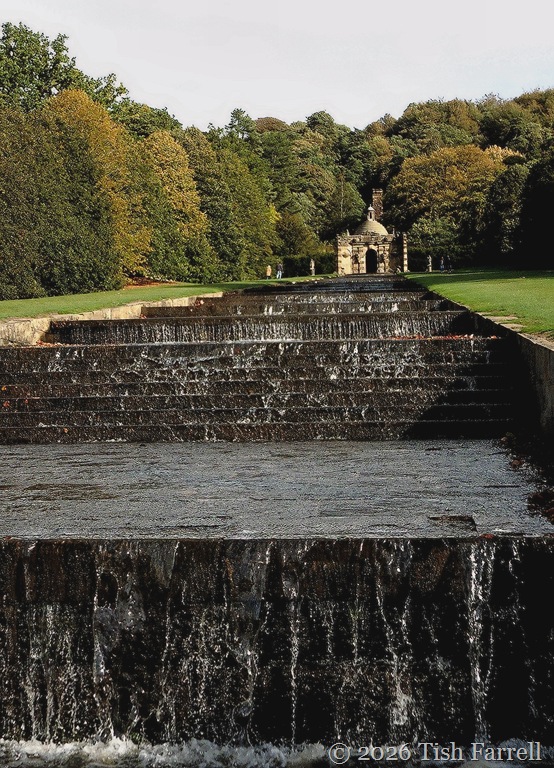
On the stately homes tourist trail, Chatsworth is among Britain’s most popular visitor attractions, this despite the £33 adult entry ticket. The gardens and park are perhaps what return visitors love most, the Emperor Fountain (header) and the Cascade (coming next) being among the more spectacular favourites. (Note too the ride cut through the trees on the far hill, to mirror the Cascade and add to the expansiveness of the parkland setting).

cascade

Perspective 13

The first version of the Cascade was built in the 1690s by French hydraulics engineer, one Monsieur Grillet, who had worked for Louis XIV. In succeeding years it was doubled in length, widened, made steeper and repositioned to align with the southern frontage of the house. The contrived waterfall is fed from water draining from the high moors into a series of lakes above Chatsworth, and then descends through some 60 metres, just under 200 feet.

These days it is out of commission, waiting for 7-million-pounds’ worth of repairs. Over half of this sum has already been awarded by the National Heritage Lottery Fund, but members of the public are also being urged to sponsor one of the hundred stones that make up the 23 steps, the suggested donations ranging from £100-£500.

perspective 4

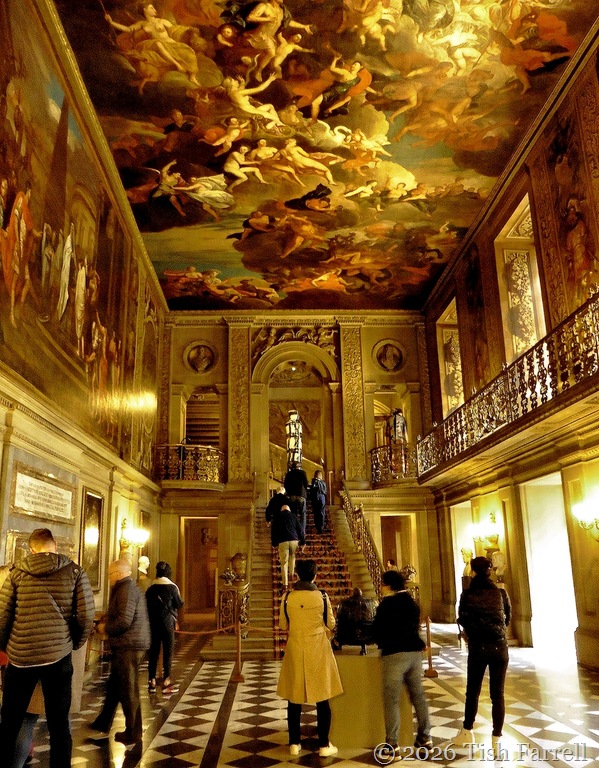
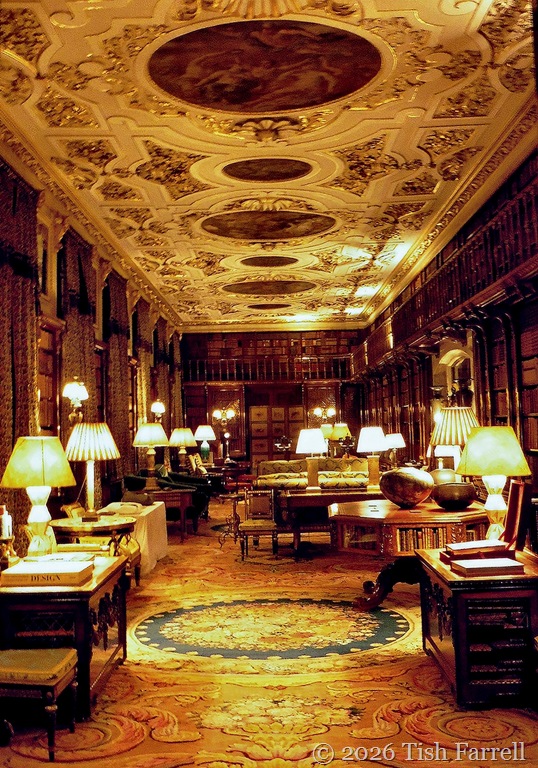
Meanwhile, the grandeur of the interior might also render one speechless. This is the Painted Hall, created in 1694 by Louis Laguerre.  Actually, when we visited a few years ago, it simply made me very cross. Much of the wealth of the Dukes of Devonshire (and before them the Earls of Shrewsbury) derived from tithes and rents from their farm and lead miner tenants  who inhabited communities on their land holdings across Derbyshire’s High Peak District. Among them were generations of my maternal Fox and Bennett ancestors. So it makes me think, looking at such unbridled opulence; family tales have it that, as a girl, my great grandmother, Mary Ann Fox, used to ride over to Chatsworth from Callow Farm, at Highlow, to deliver the family’s tithe in eggs.**

library

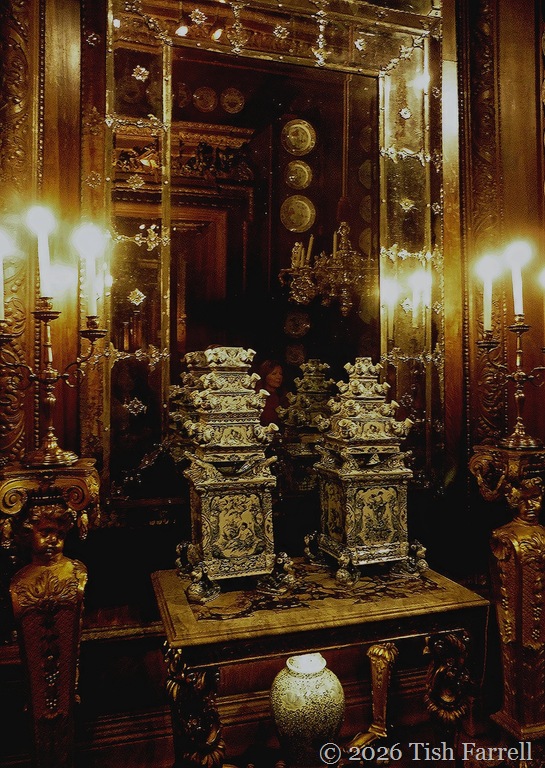
The photo above shows the library. We were only allowed to look through the open doors. And this is but one of very many extravagantly furnished rooms and apartments . (See the State Apartments HERE) So how does one gain perspective on the scale of wealth disposed for the single purpose of showing off? What did successive dukes and duchesses see if they caught  sight of themselves in one of their many grand mirrors?

room

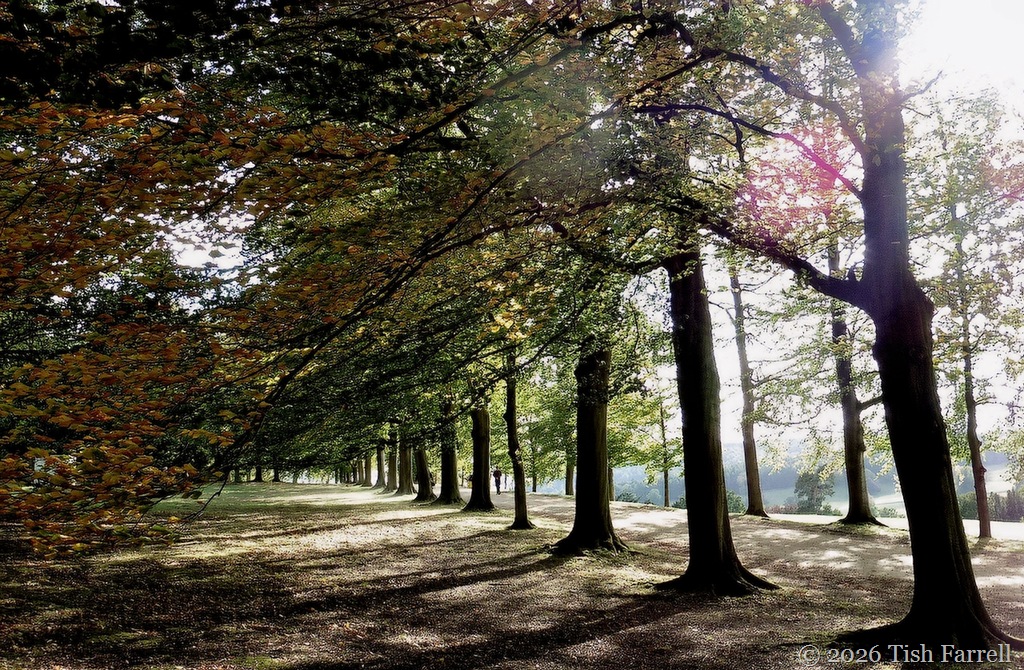
Enough. I’ll finish with a much more pleasing view out in the garden. A soothing avenue of young beech trees, moderately uncontrived, in late summer light:

Perspective 12

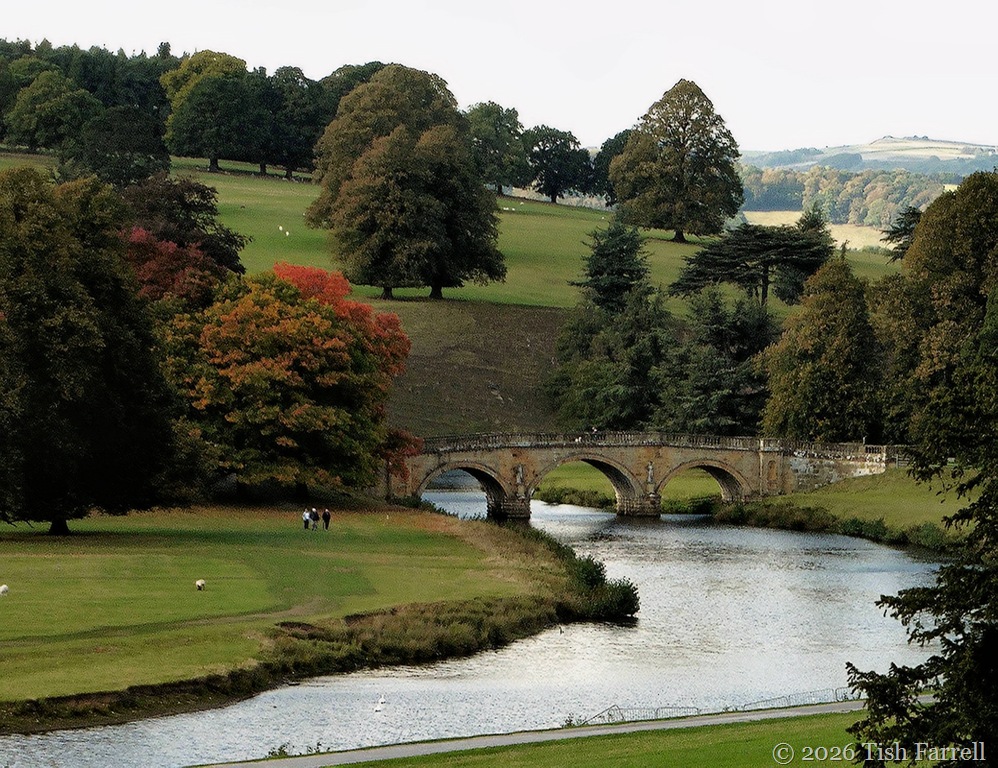
And a view of the River Derwent that flows below Chatsworth. Upstream it passes through fields once farmed by the Fox family at Callow Farm. They had to sell up in 1892. The rents were by then too high to make a living.

Perspective 9


**To Chatsworth and how Mary Ann went to the ball


Copyright 2026 Tish Farrell

Lens-Artists: Perspective, Depth, Scale  This week John shows us different tools in photo composition. Go see!


In The Solstice Garden

IMG_0817

Out early in the garden of the longest day, and already it is warming up. I can see the plants around me switching gear: late spring to summer. Some change feels instant, and I’m sorry to see the small cascades of Cornelia and Penelope roses fading fast, their petals suddenly  dull and papery. They have flowered since late May, their scent filling our small back garden, competing even with the serial winds.  Likewise, I note that several of the hardy geraniums have swiftly departed – yesterday mounds of glorious blue, busy with bees, today a tangle of spent green stems. Time to wield the secateurs.

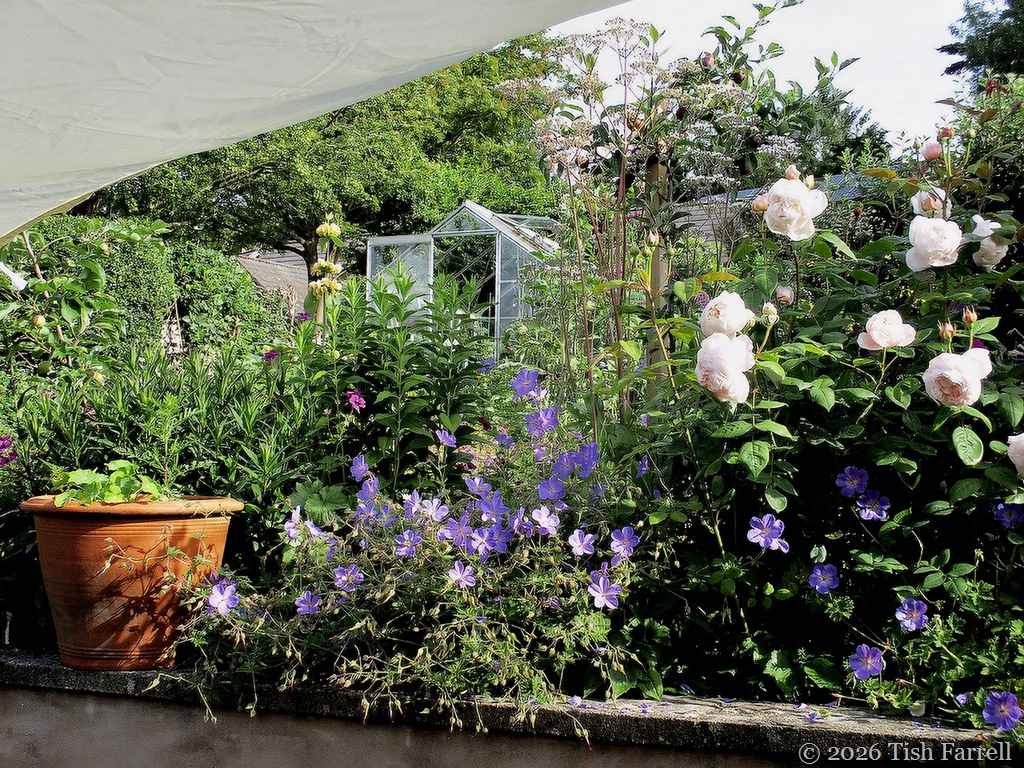
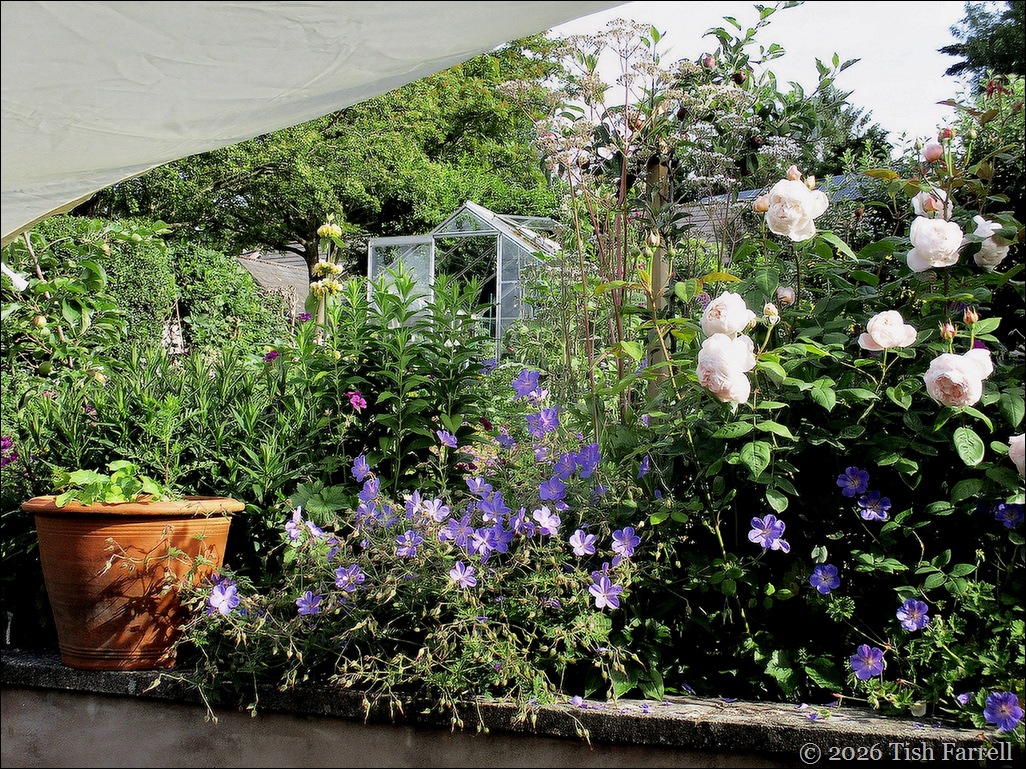
Meanwhile, the rose in the photo above is just starting out. St. Cecilia, she with the pale and floppy blooms. When we moved into The Gables nearly three years ago, I found her as a couple of weedy stems, much overgrown.  I’ve fed her up since, although I have mixed feelings about shrub roses in the midst of herbaceous borders. Vicious to weed around for one thing.

Directly under her is blue geranium Rozanne, a new arrival last year, who struggled to settle in during the drought, and then was disrupted by an ants’ nest in the top of the wall. Usually this is a plant you can’t stop. Once she gets going, she should flower all summer and into the autumn. In fact I often used to curse her in our Wenlock garden as, year by year, one plant sprawled into an invasion many feet wide and long. Now I find I’ll put up with sprawl to have the long summer blue.
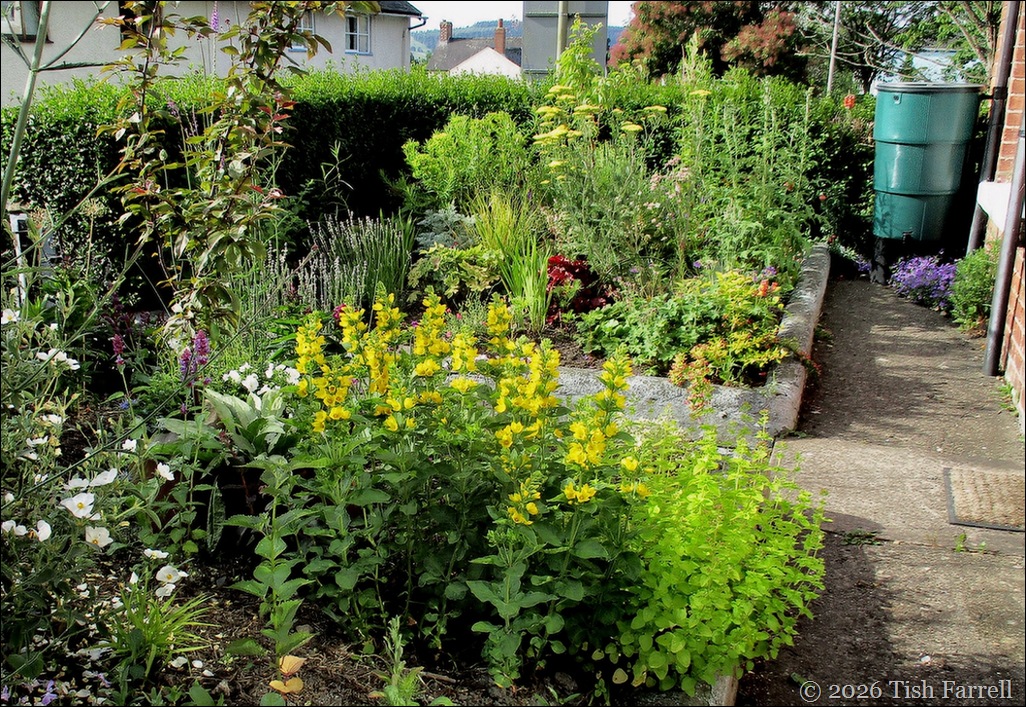
IMG_0804

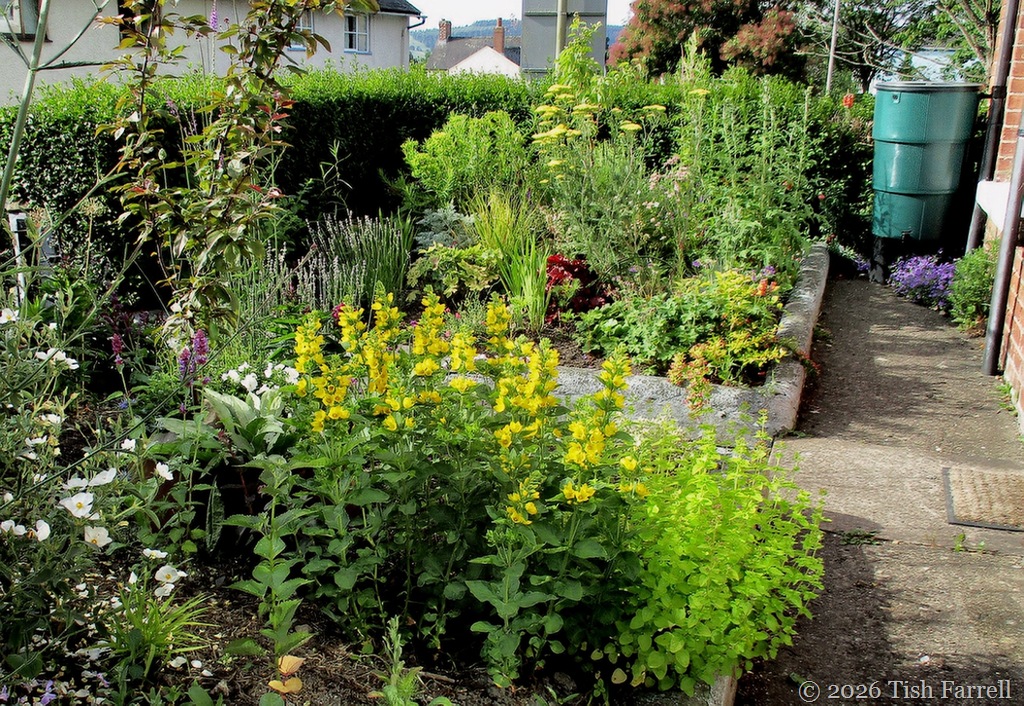
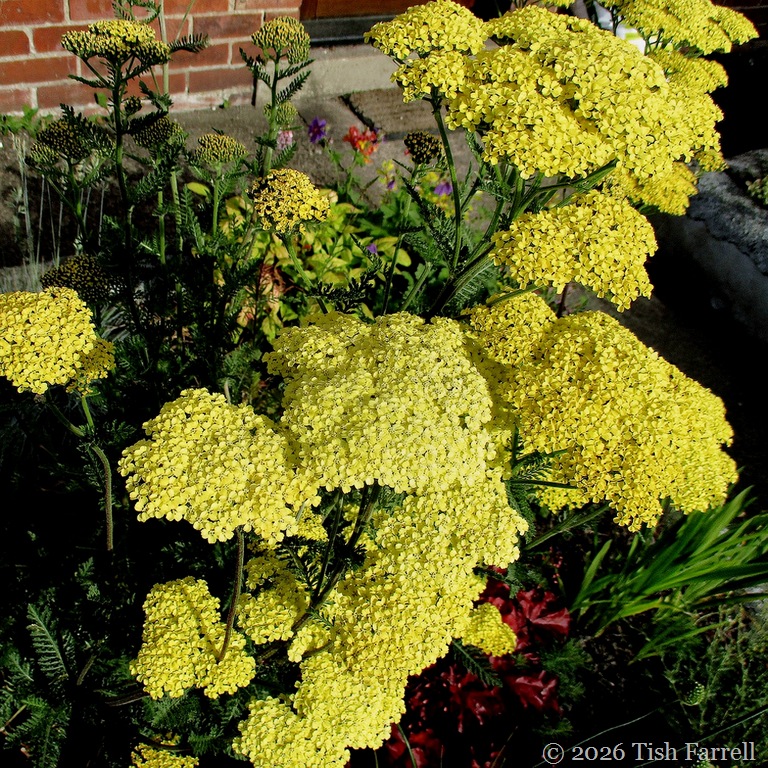
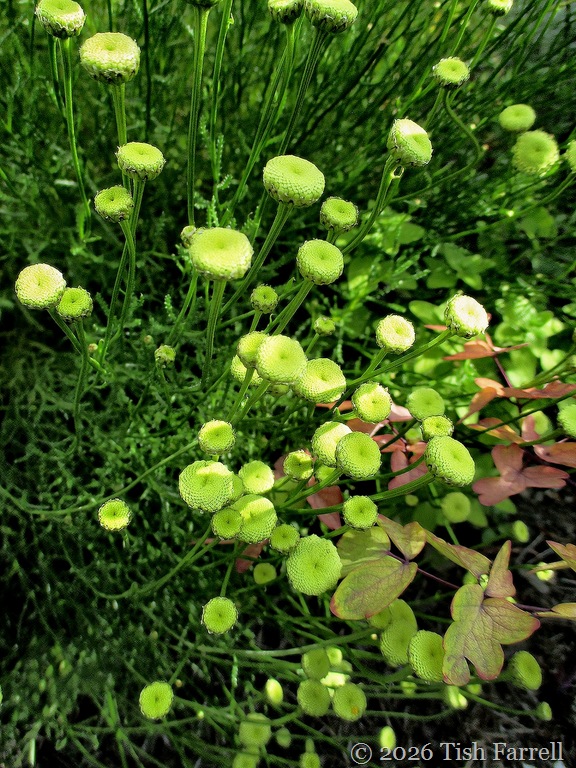
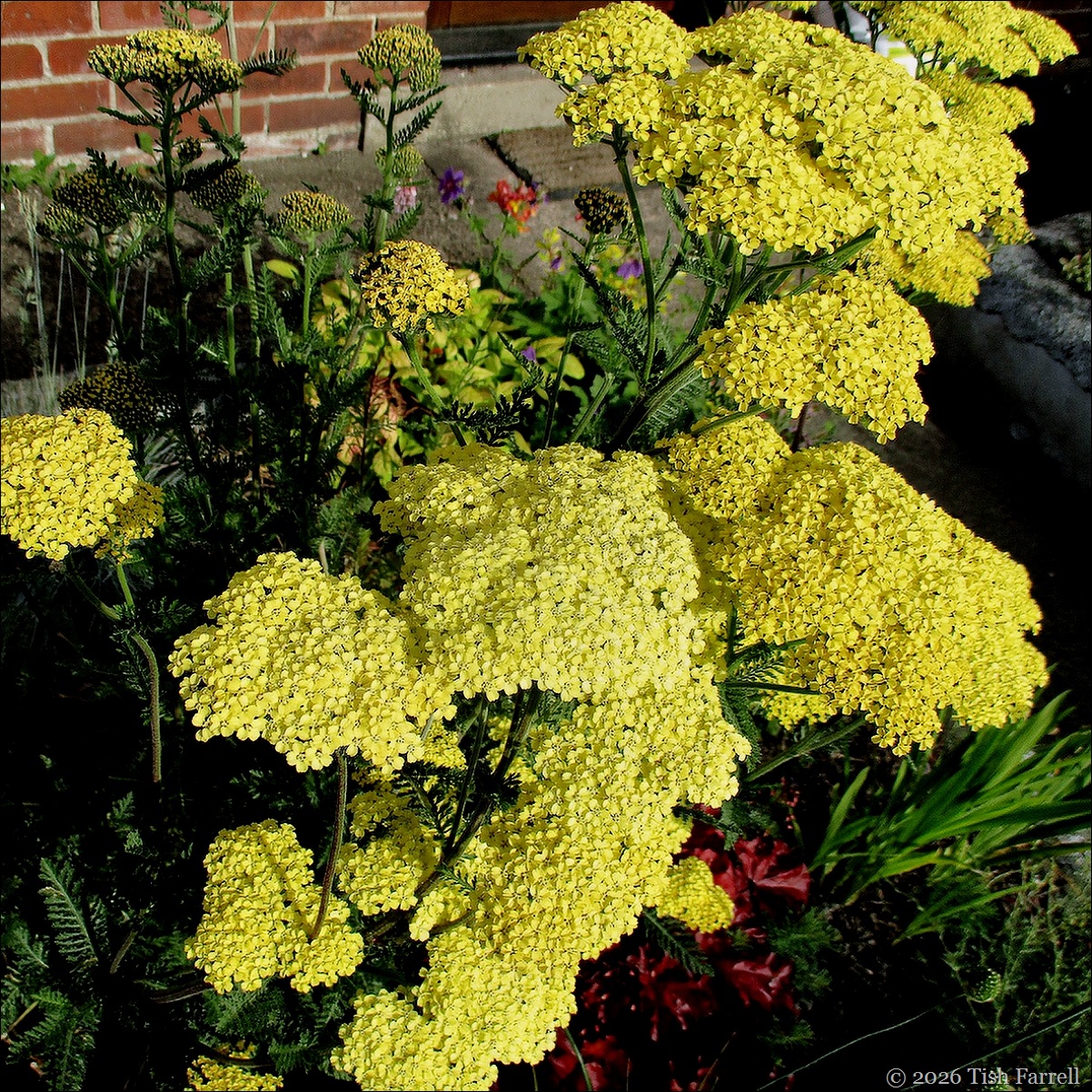
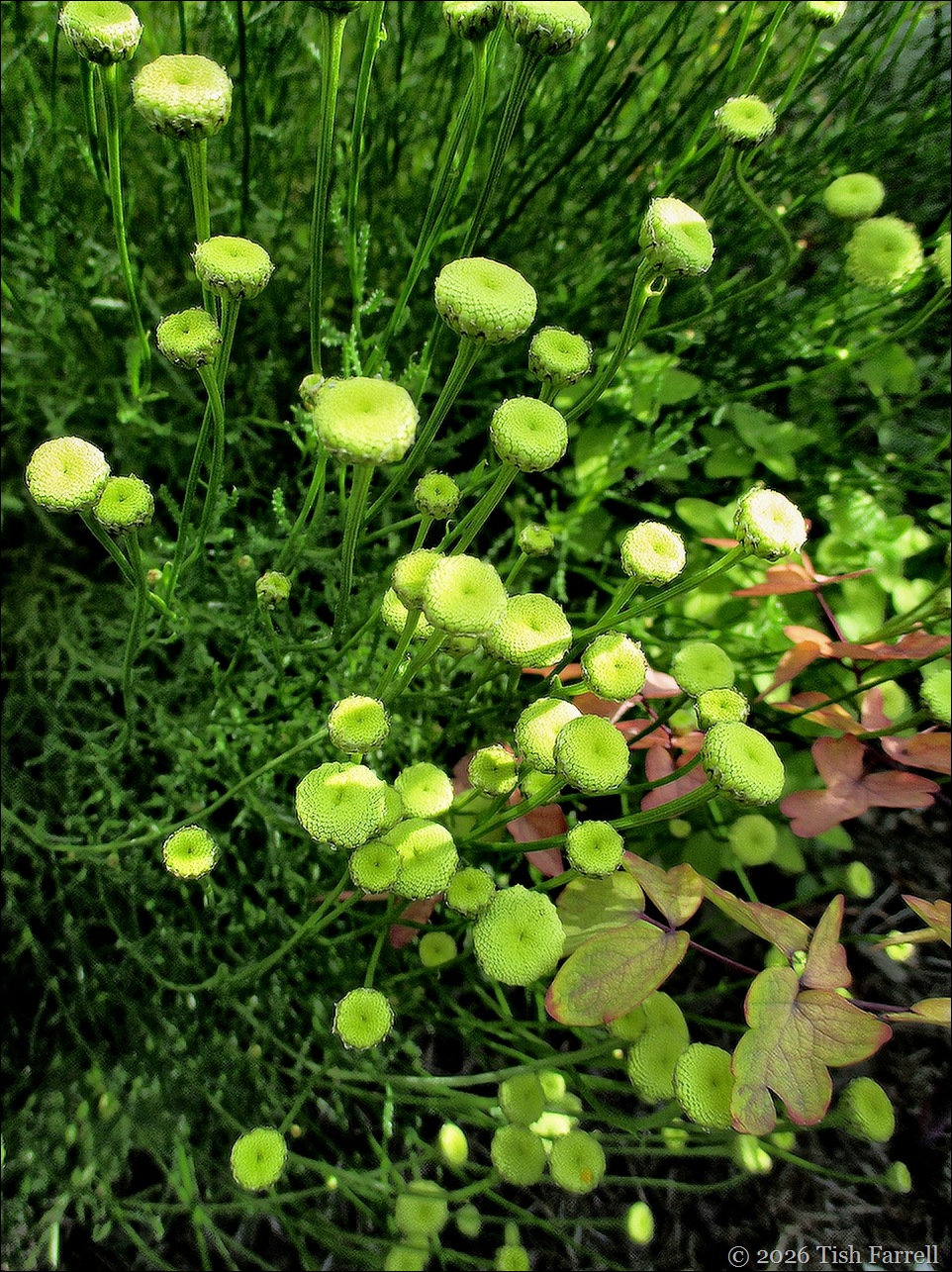
In the front garden borders, the earlier mauve shades have given way to the vibrant gold of Moonshine achillea and yellow loosestrife, and to the leafy greens of euphorbia and golden marjoram. There’s also a very vigorous cotton lavender tumbling from the crab apple’s raised bed, presently a mass of yellow buttons on brilliant green stems..
IMG_0781

IMG_0794

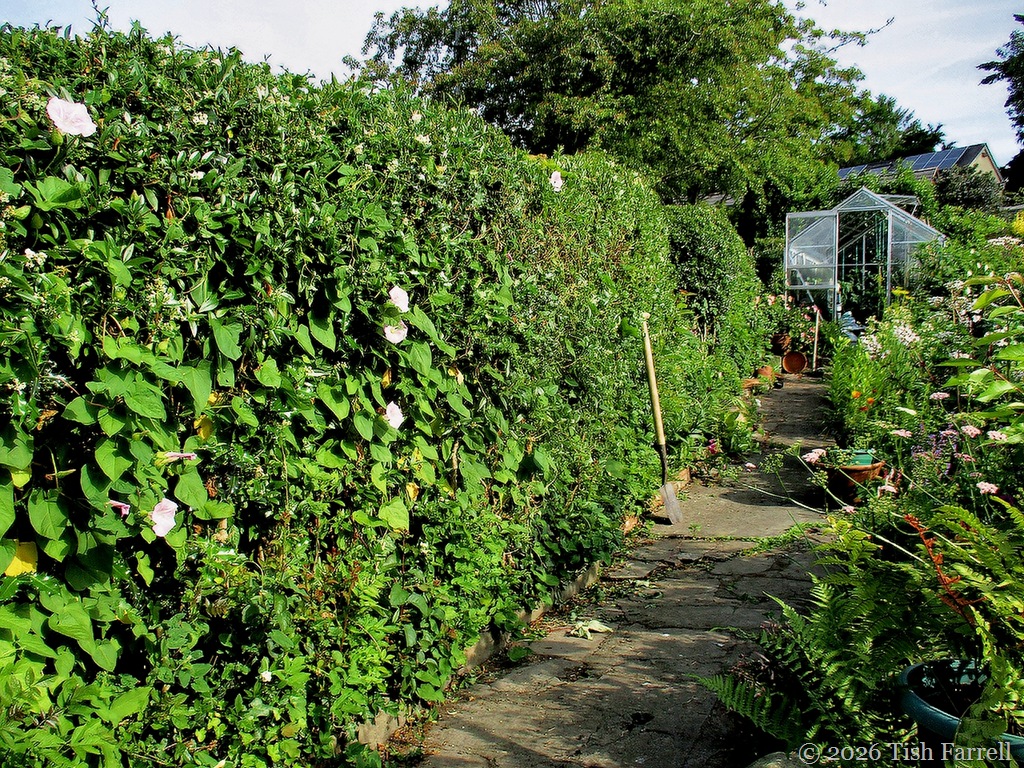
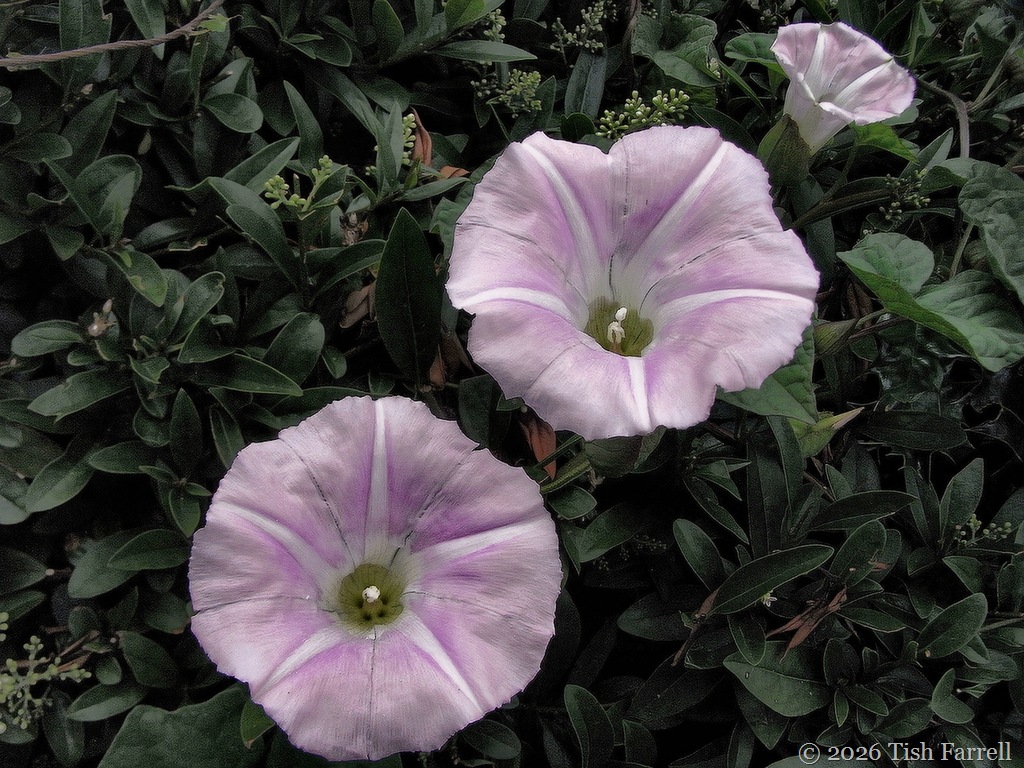
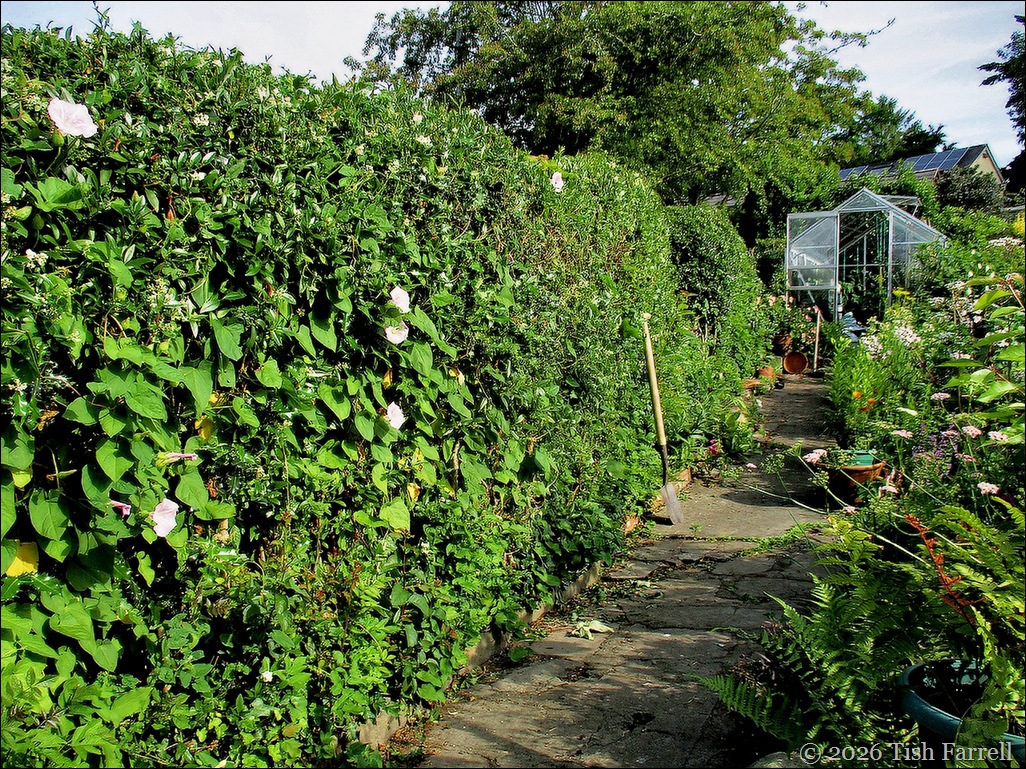
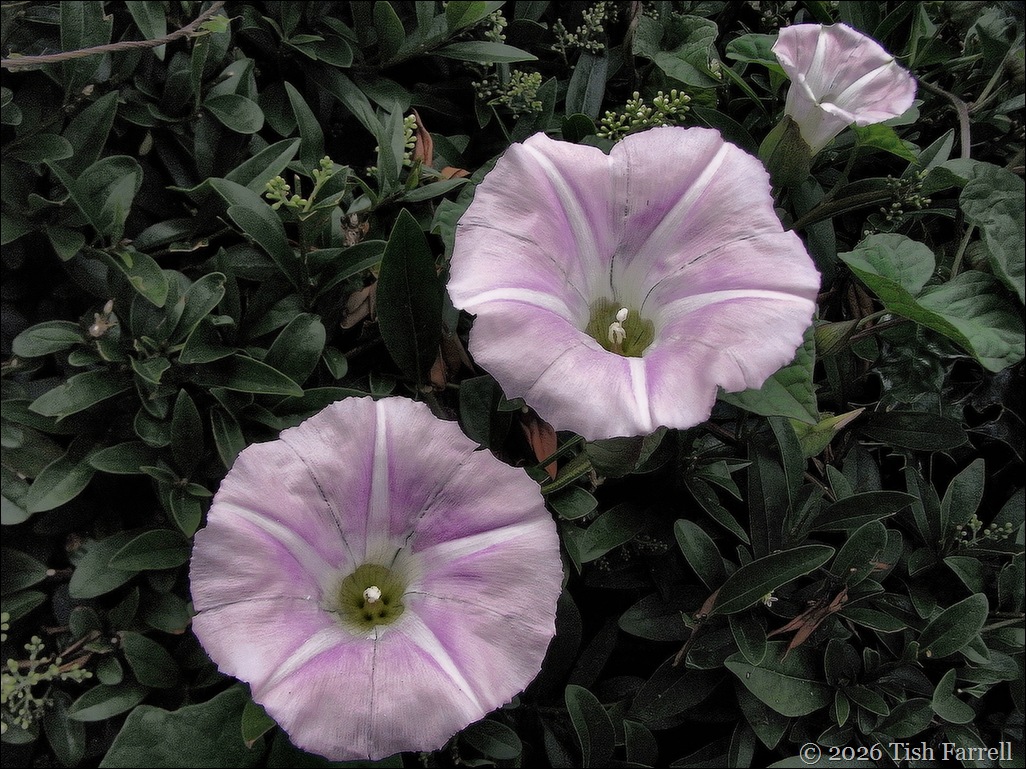
In the back garden, now is the time of bindweed – both wild and cultivated. In the hedge we have the locally feral, pink and white flowered version. It even survived last Friday’s big cut.
IMG_0818

RIMG0301 bindweed

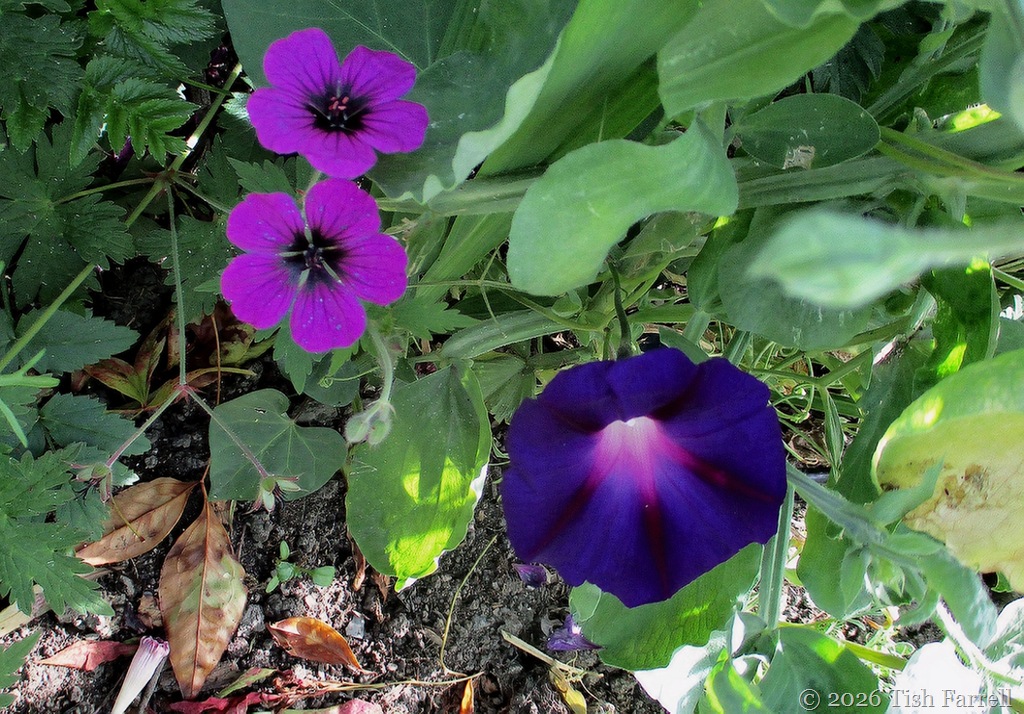
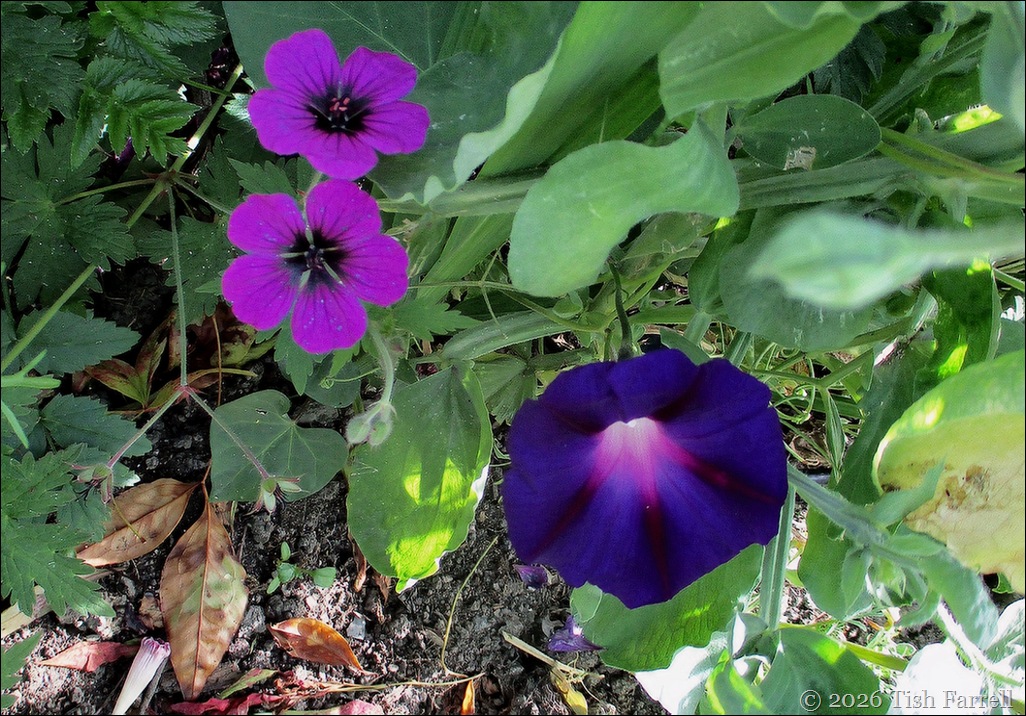
And then among the nearby sweet peas, where I planted the seedling some weeks ago, I found the first Morning Glory flower – Black Knight is its name; here keeping company with hardy geranium, Ann Thompson. They both like a good ramble. It will be interesting to see where they end up.
IMG_0826

The hedge, as may be seen, is a challenge. It wants to be a forest and is filled with sapling ash and sycamore trees. This has happened because the whole length was once hemmed in with chicken wire and so impossible to keep a check on invaders. And then, egged on by ivy, everything has leaned on everything else so that the holly is horribly meshed with hawthorn, privet, field maple, forsythia, elder, and cherry. There are also some rather strange gaps, which I’m attempting to fill with cherry and field maple and briar rose (these presently at sapling stage). The bindweed does briefly improve the overall look.

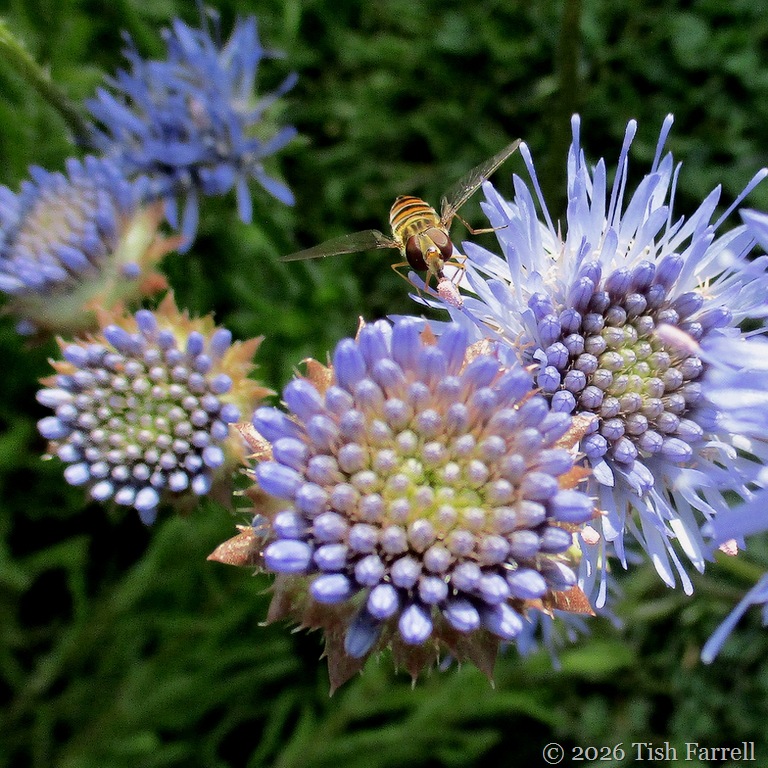
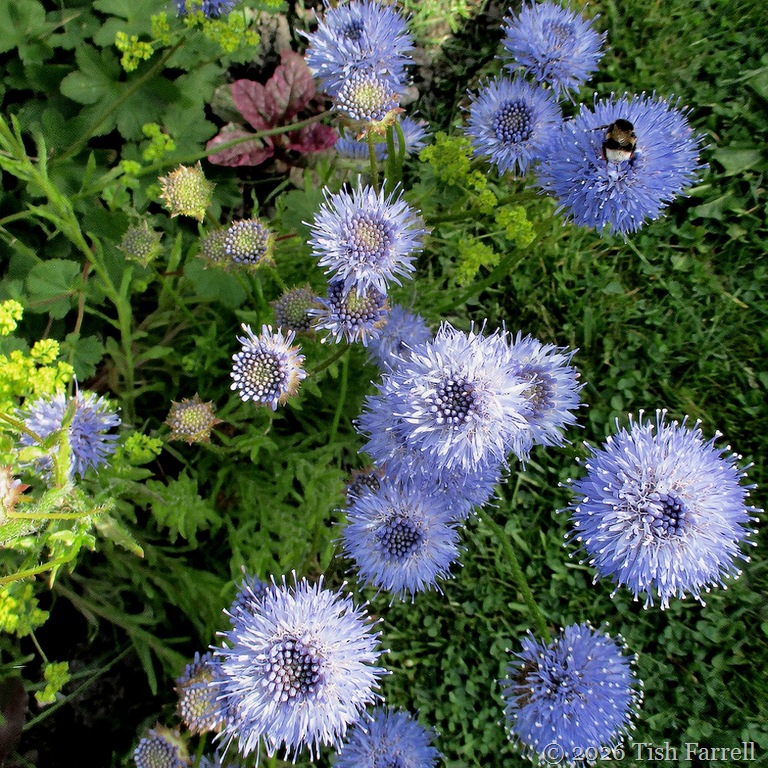
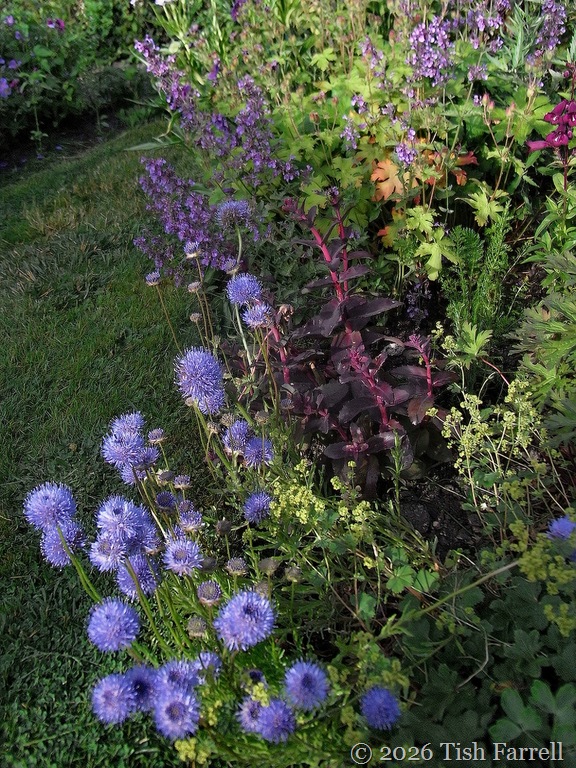
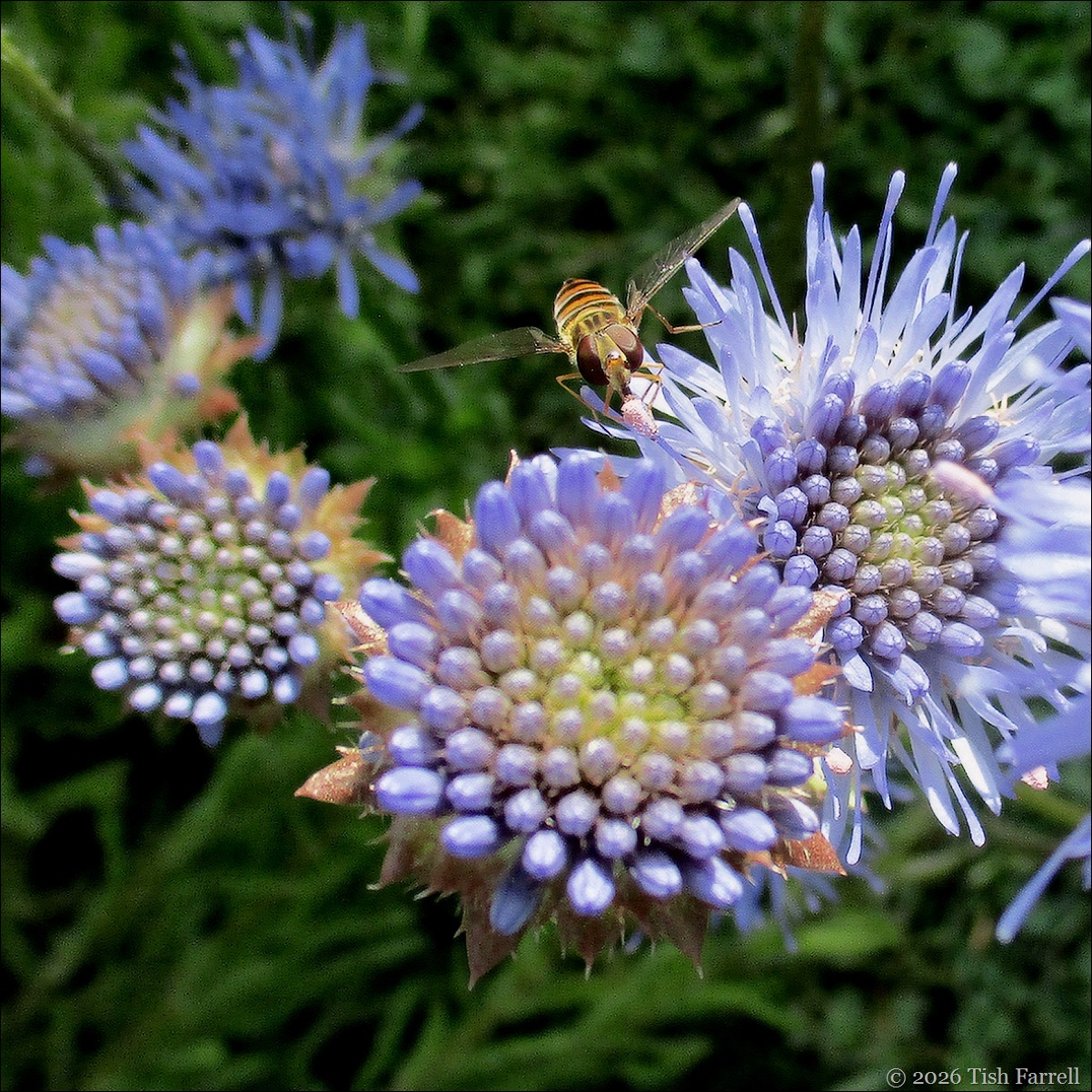
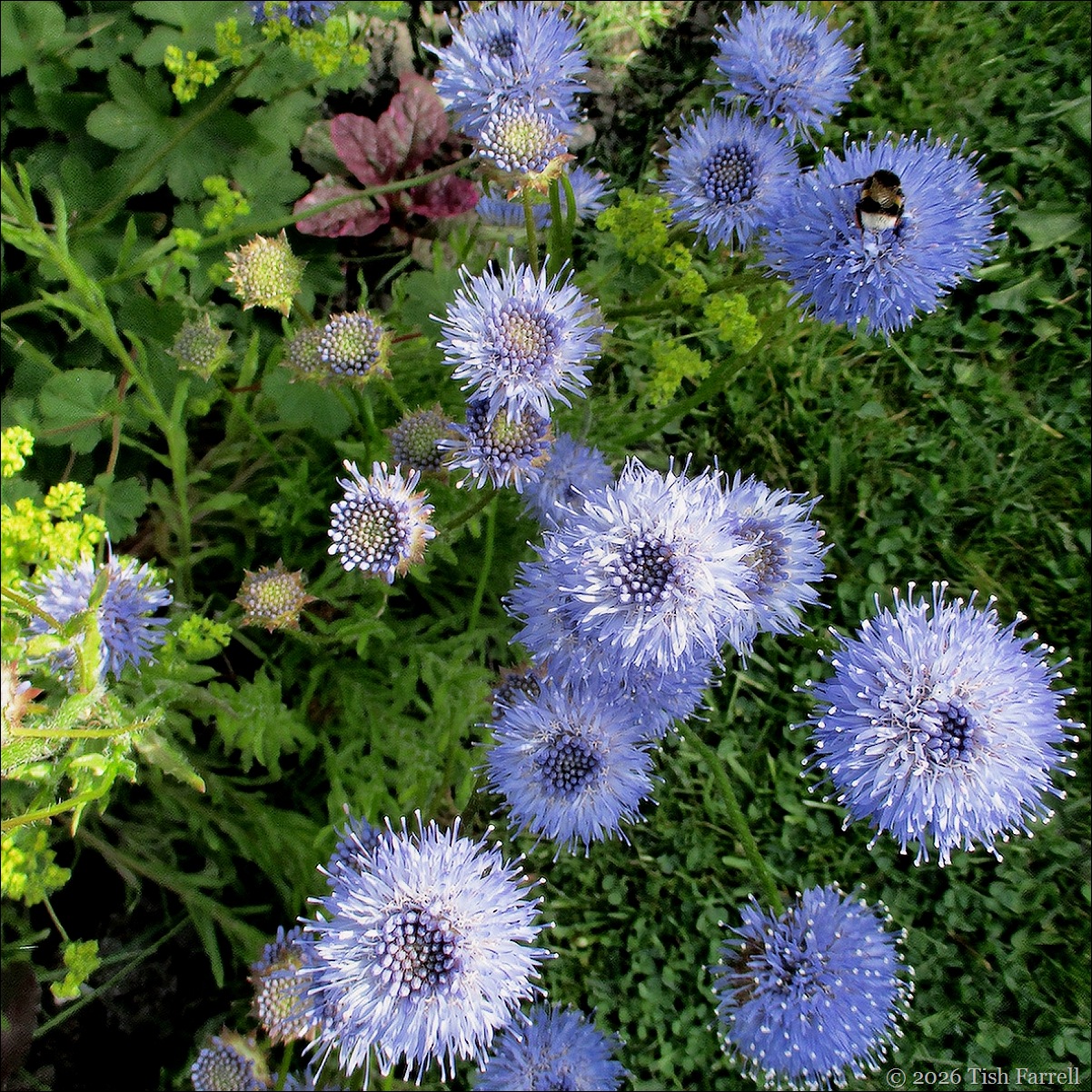
In the back garden bed,  with geraniums over, the sheep’s bit scabious are the current stars…almost literally, a floral constellation and a magnet for hoverflies and bees:
IMG_0847

IMG_0837

RIMG0408

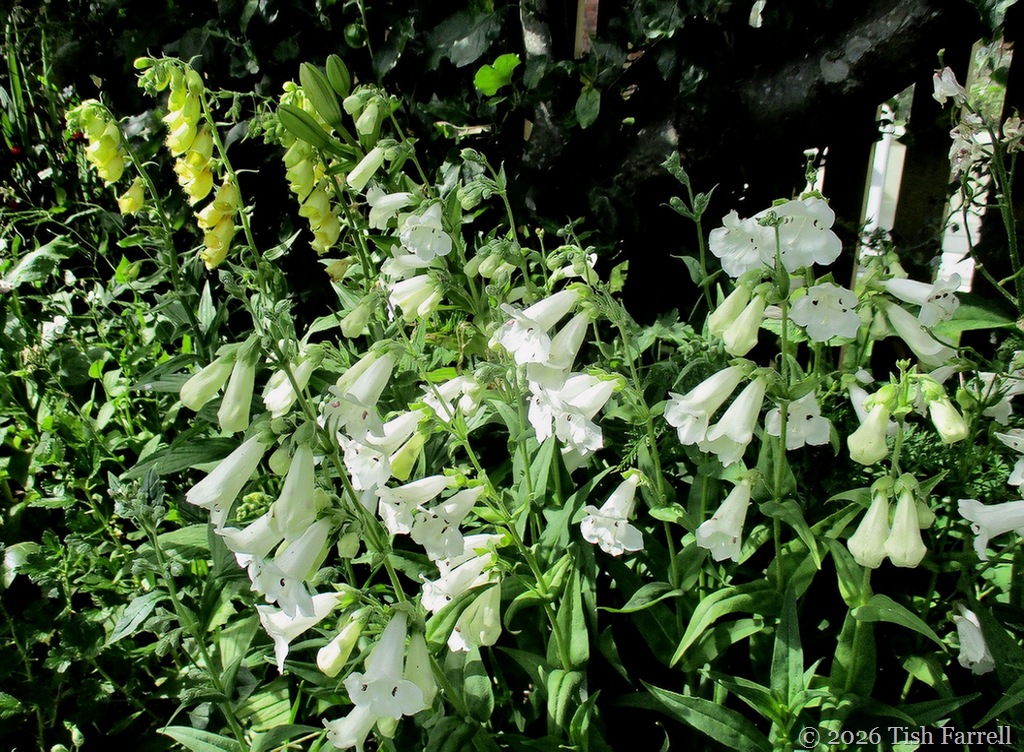
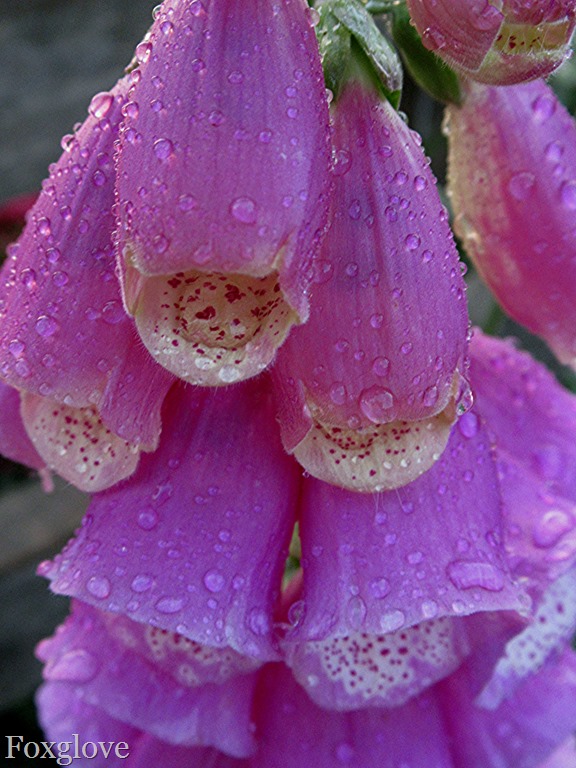
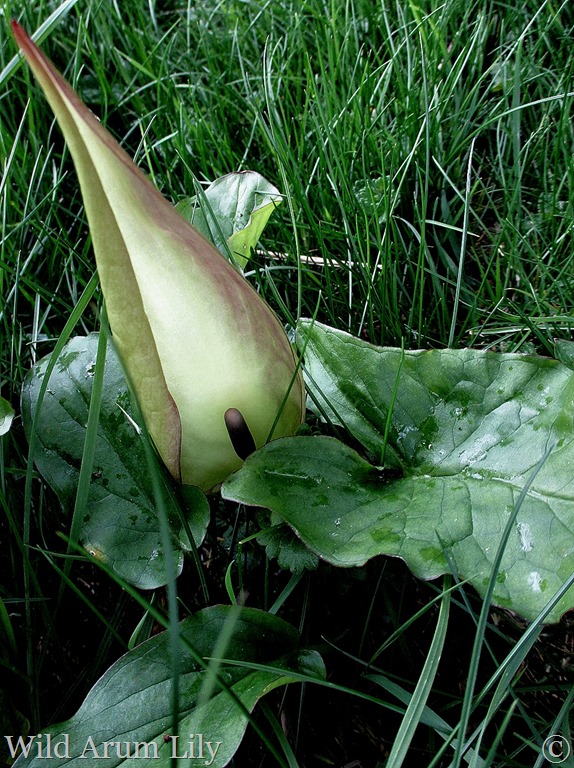
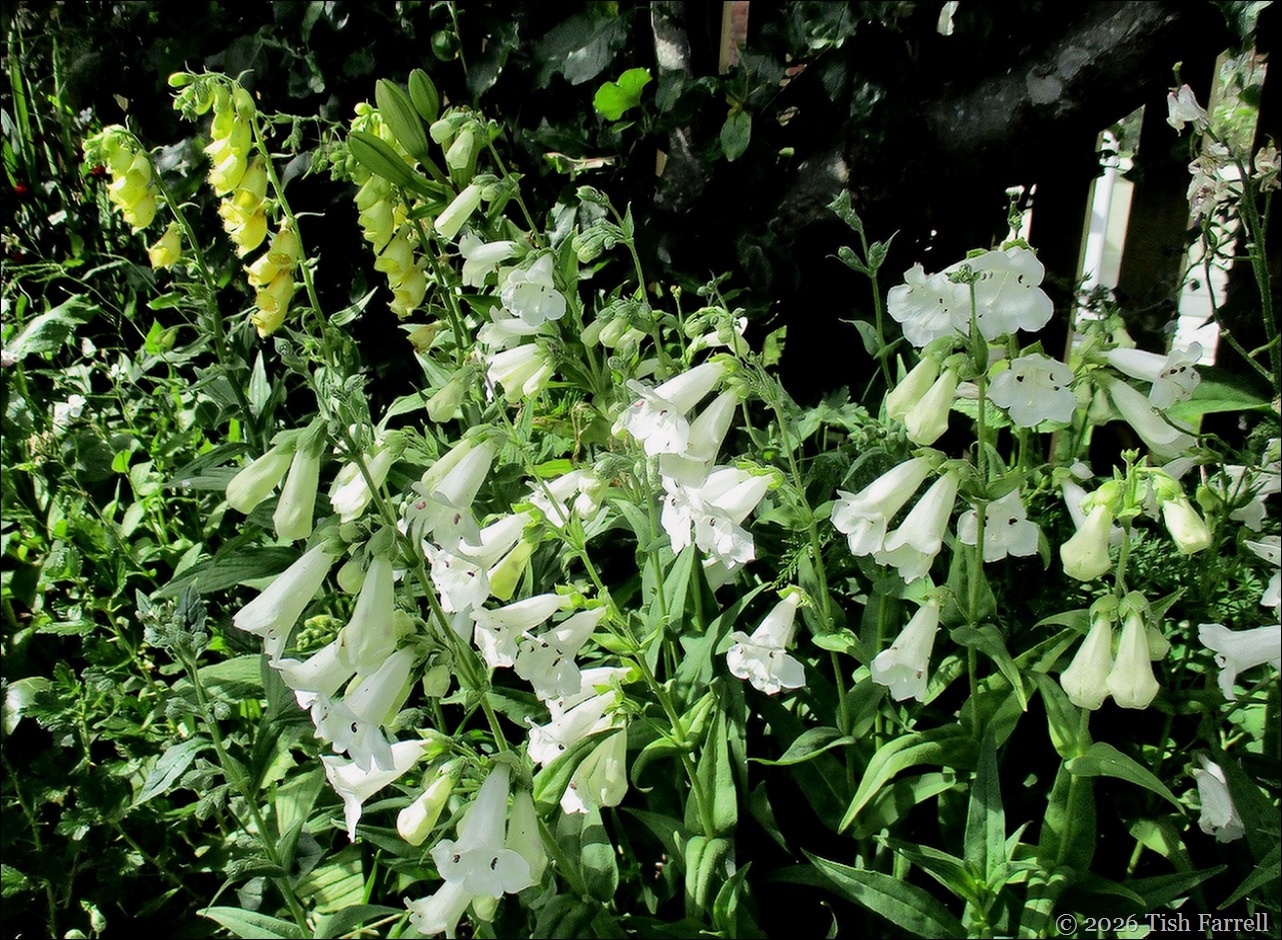
The feral foxglove season is over now. All through May and early June we had majestic self-grown spires – purple ones, white ones – in every quarter. Some of the plants were enormous, making the most of the overwintering mulch I’d spread on the borders. I’ve pulled most of them up. There are already enough seedlings about the place. In their stead, in the shady periphery under the old apple trees, come the perennial foxgloves. They are altogether more delicate in looks and structure – ivory white and buttery yellow. Very cooling to look at.
foxgloves

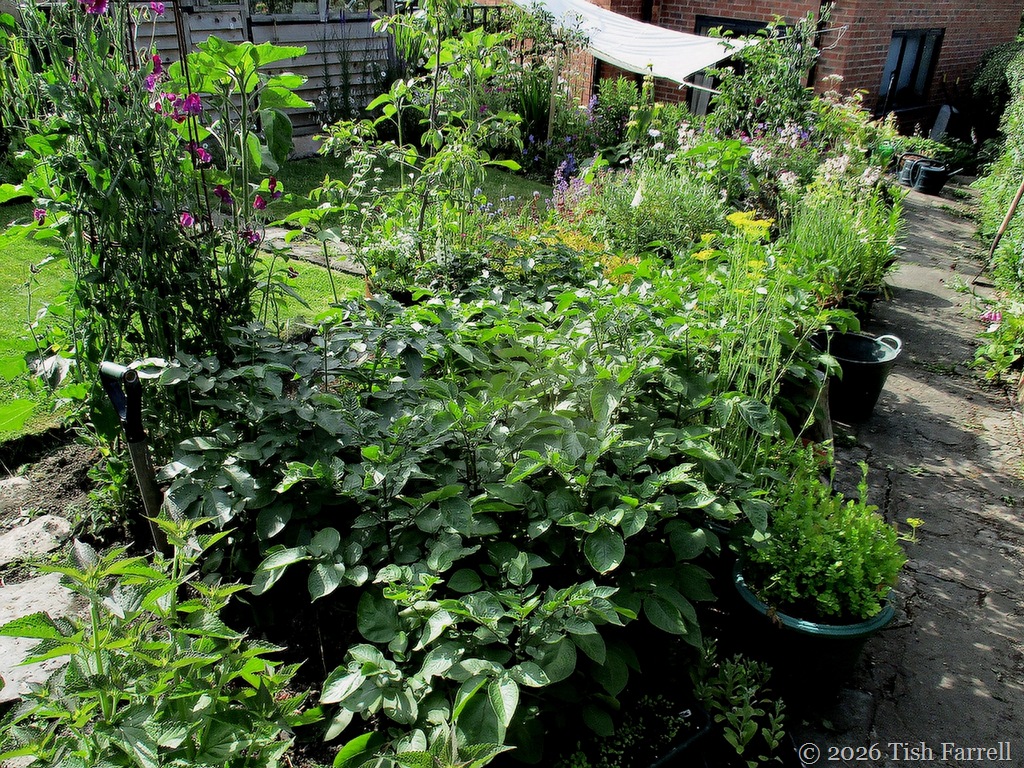
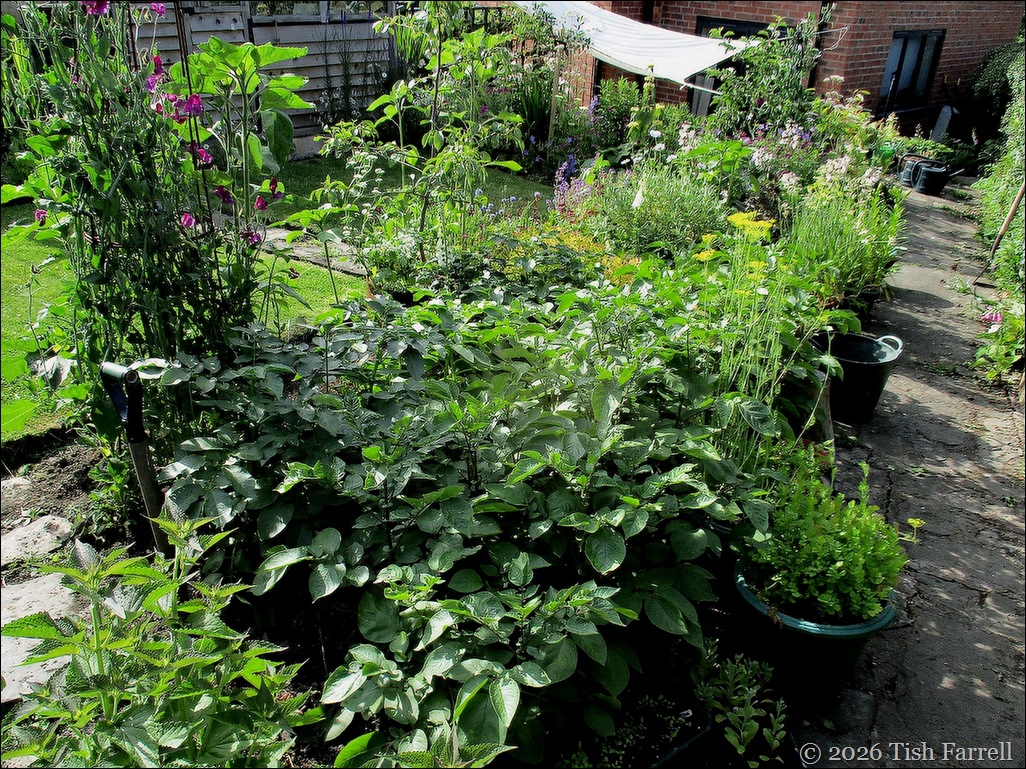
In front of them is a path and then a row of raised beds for vegetables.

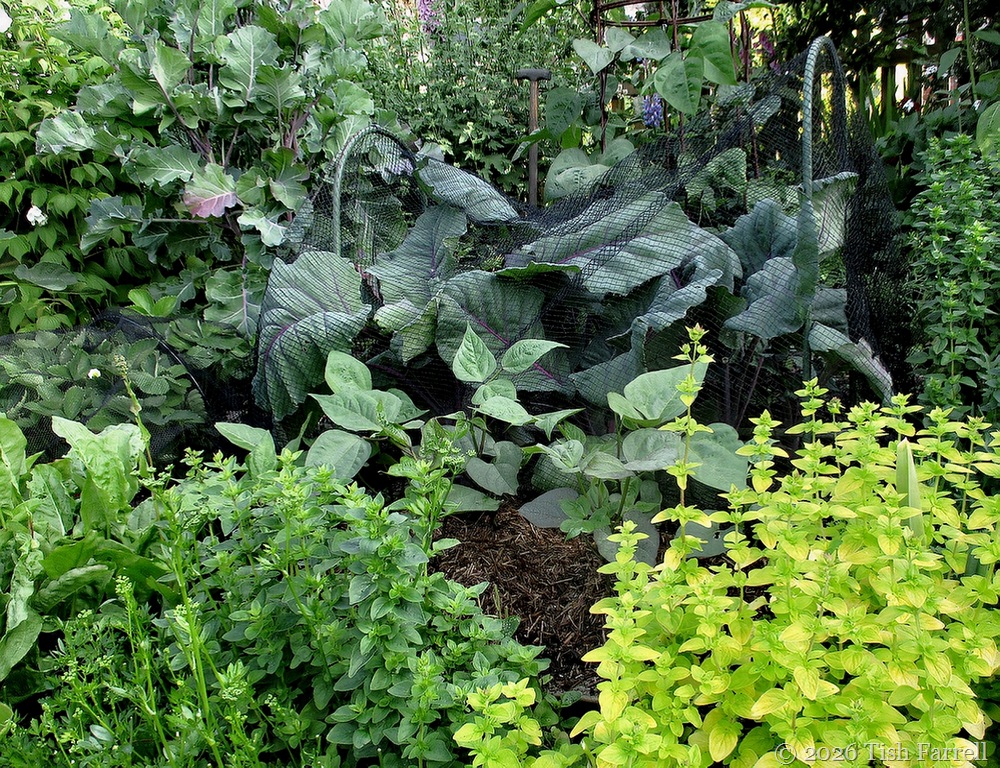
Here the French beans, cabbages and herbs have all put on a sudden growth spurt – almost overnight. I also appear to have grown something that I can only describe as a brassica bush (top left corner). It is nearly as tall as me and is a mass of branching stems of tender kale leaves, but also among them now, some sprigs that look like purple sprouting. It’s been in the garden since last summer and only now decided to perform, having missed the March-April ‘hungry gap’ when I was expecting it. Ah, well. Am happy to crop it whenever it comes.
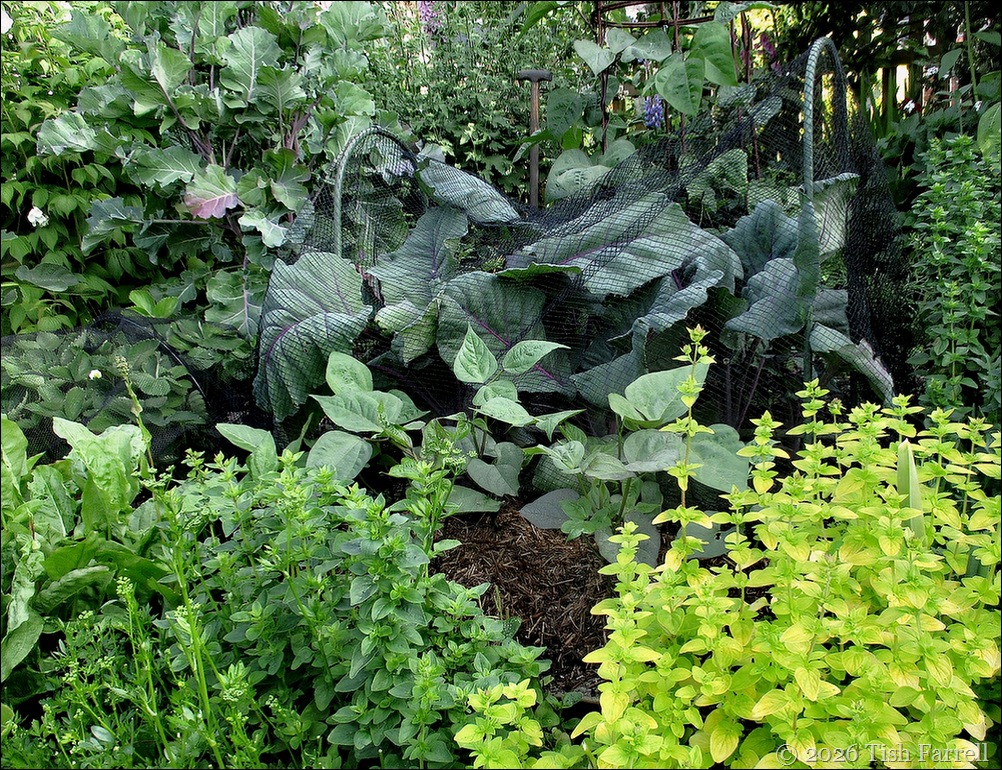
herbs, beans and cabbages

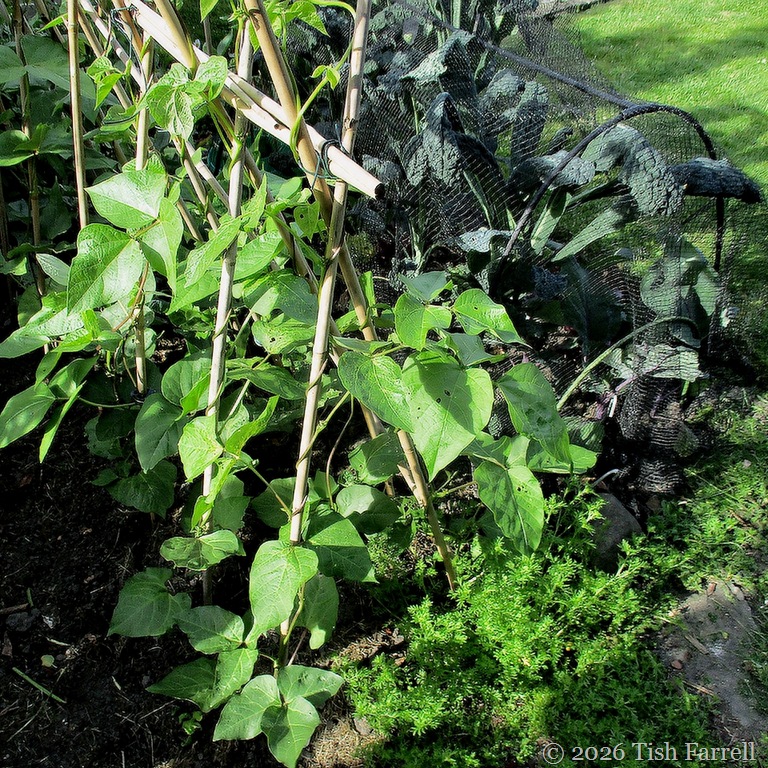
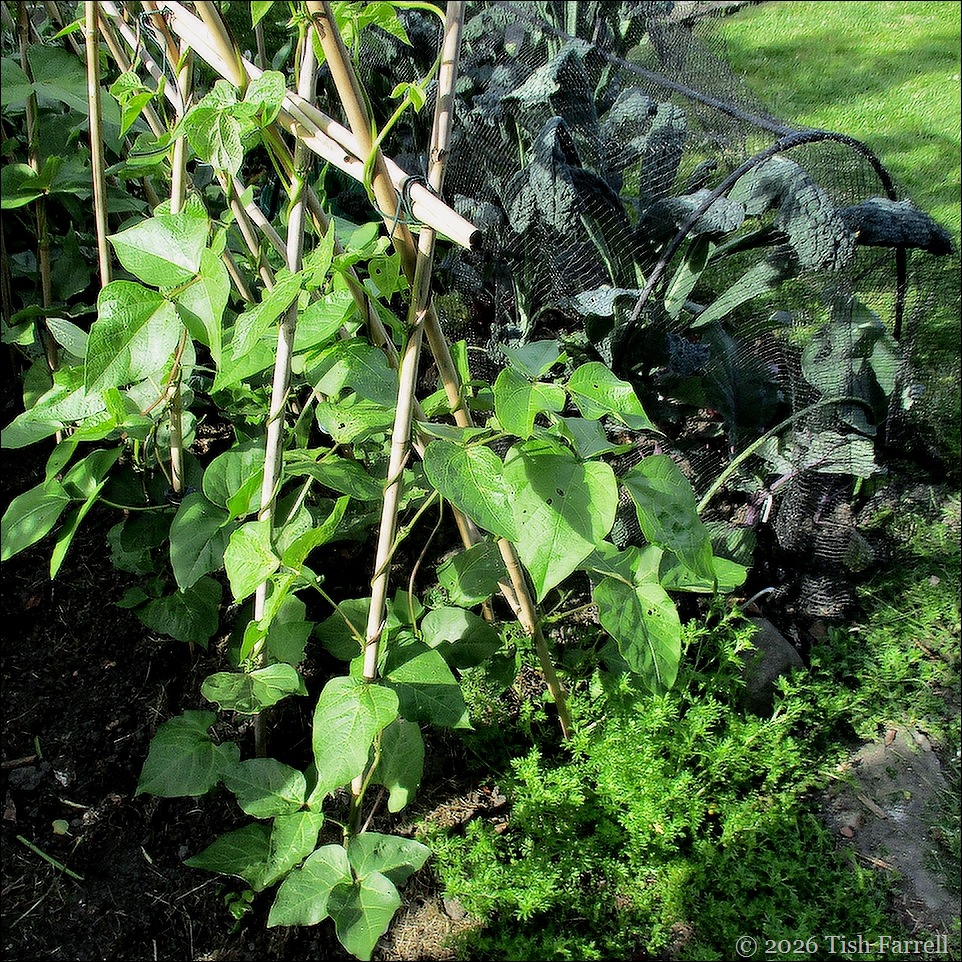
The two rows of potatoes are looking promising. The runner beans, too, are growing well, finally each plant up its own stick, now that I’ve untangled the knitting nonsense created by the June winds.
IMG_0863

IMG_0853

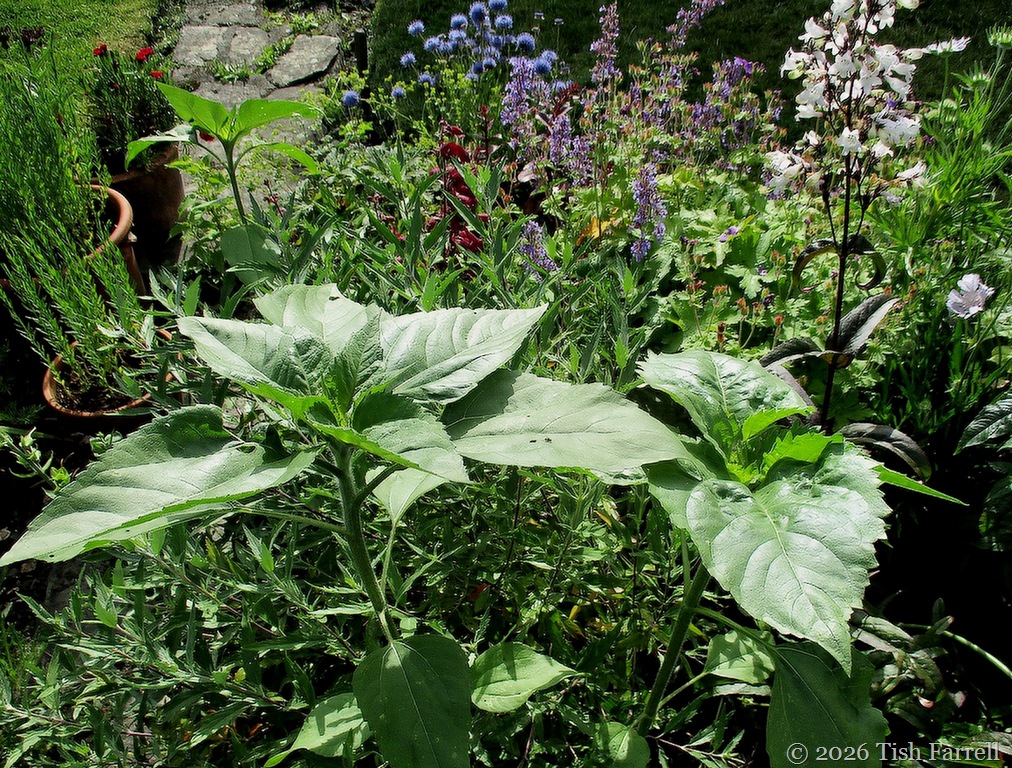
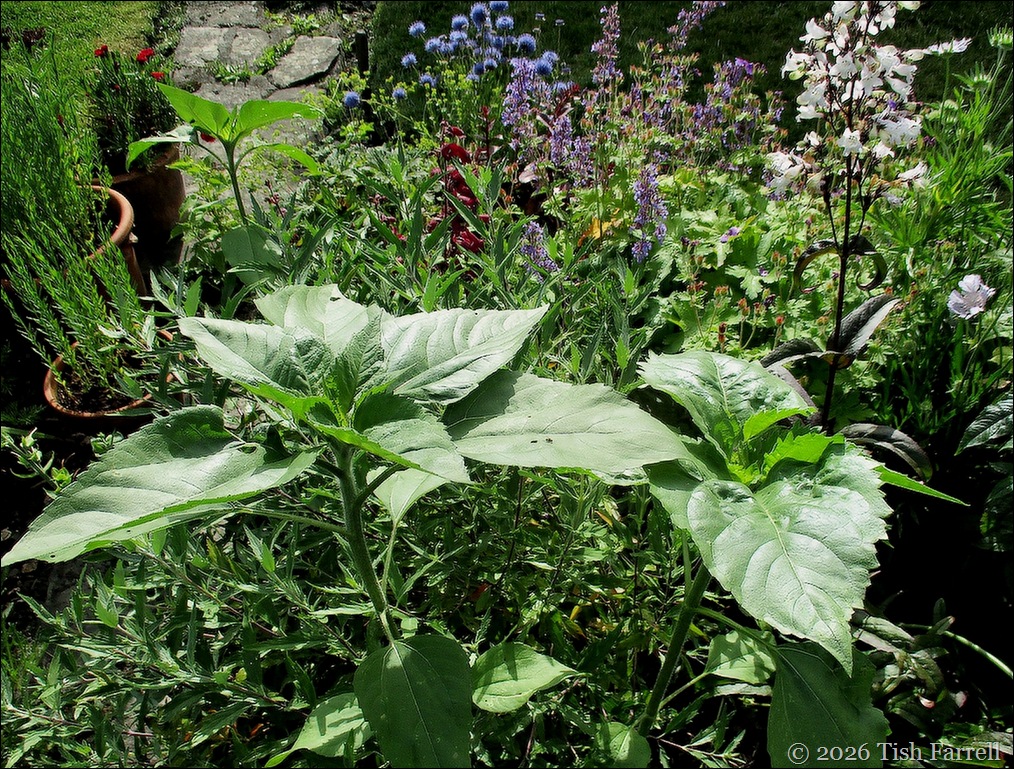
The next big blooming event will involve the sunflowers. They have sowed themselves all over the garden. One is already so tall it clearly has magic beanstalk ambitions. So as they say: watch this space.
IMG_0866

Copyright 2026 Tish Farrell


Winging It ~ Chance Encounters With Aerial Kind

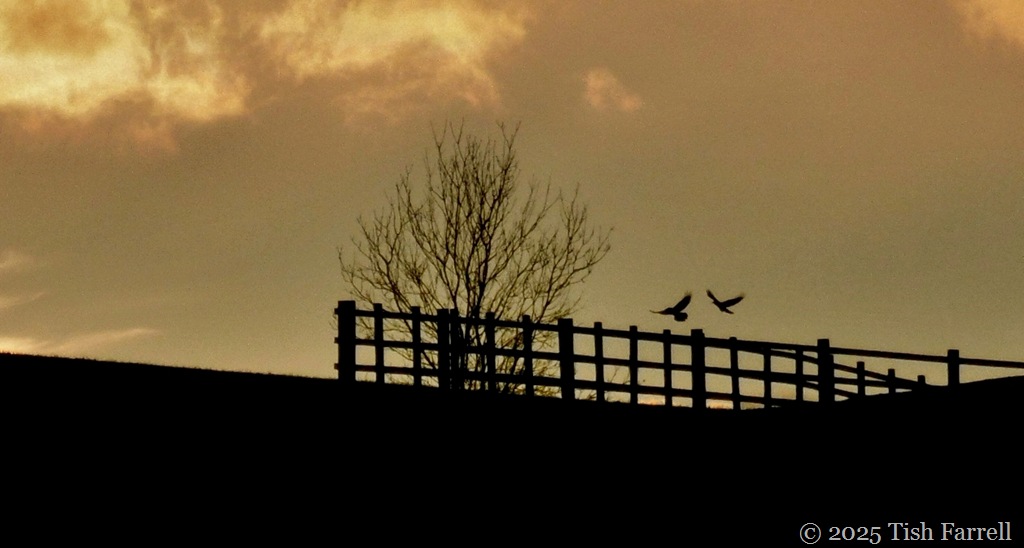
townsend meadow resized

In the old tales birds are often messengers, bearers of foreknowledge – for good or ill. They overhear things that humans don’t, come unbidden to help the hero in their quest, although their warnings are not always understood or welcomed.

In Kenya (and other parts of Africa) the Red-Chested Cuckoo is the bearer of good news. Its three note call says the rains are coming – ‘time to dig’, ‘time to dig’. On the other hand, in some interpretive versions, much depends on the geo-location of the call. If you are setting out on a journey and the call comes on the right of the path, then it signifies that all will be well. But if it comes from the left, then there’s danger ahead; better go home and wait for a more propitious day.

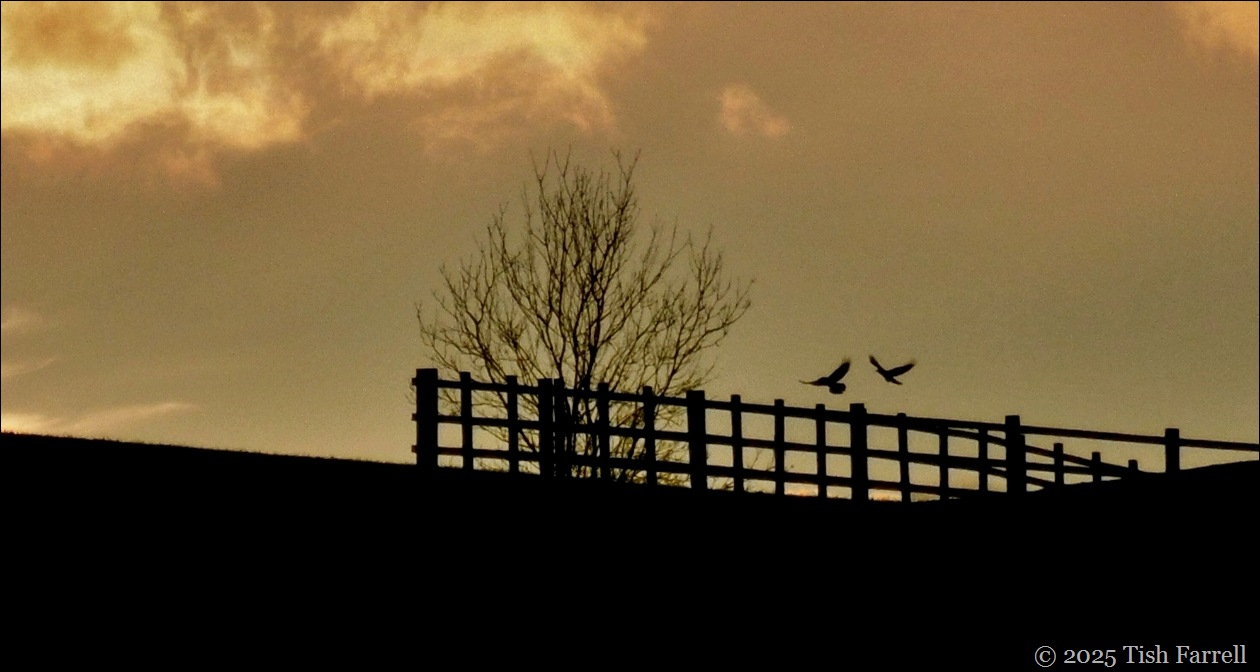
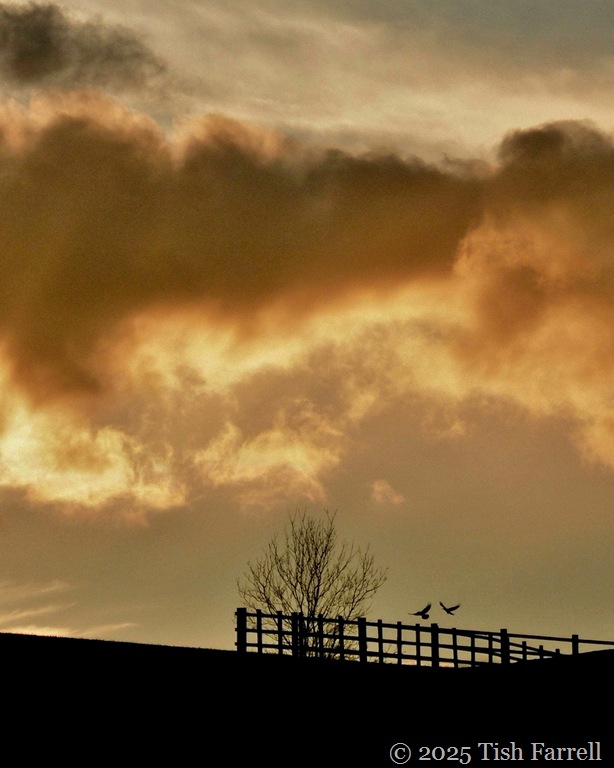
I think the two birds in the first photo are rooks. All members of the corvid family (rooks, crows, ravens, choughs, magpies, jays) tend to have a poor reputation on the bad omen front, but since I have a twosome here, I’m choosing to see them as beneficent. I’m also reminded of the magpie sighting rhyme: one for sorrow, two for joy.

***

common blue

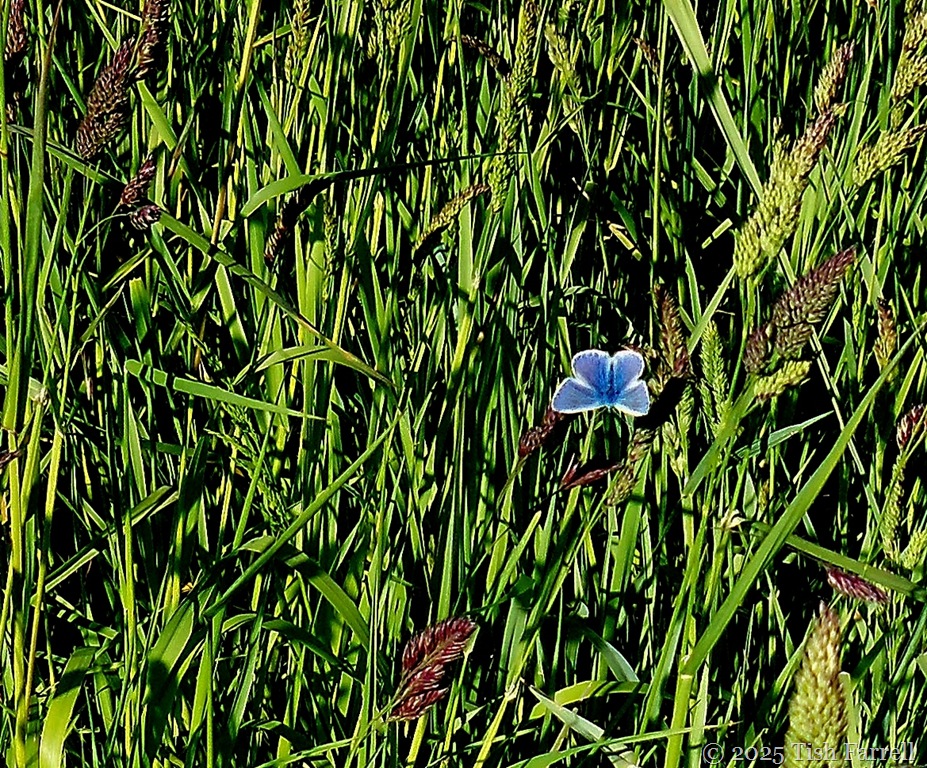
Butterflies also have spirit world connotations. In cultures across the globe they represent transformation and rebirth, joy and happiness. A butterfly may also be seen as the embodiment of a human soul, although a crowd of them might be thought an evil portent. I’m happy, then, to come upon this single tiny Common Blue butterfly, sipping at grasses on a summer’s evening.

***

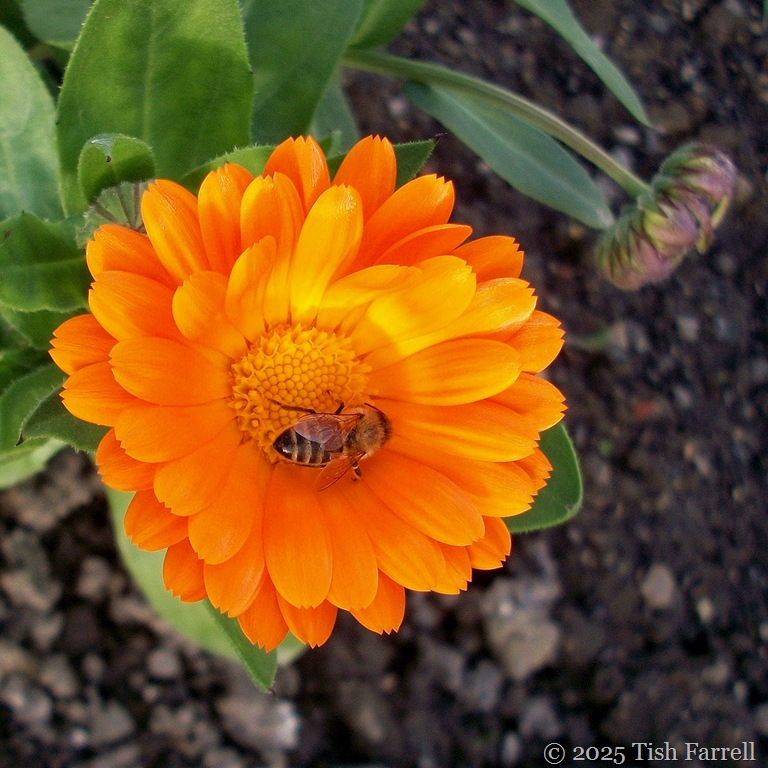
bee and marigold

And as for the bees, most of us know that, as pollinators alone, they are absolutely indispensable. The value of their produce too is inestimable. They are admired for their busyness and sound work ethic; the therapeutic hum in spring orchards.

It’s not surprising, then, that in many ancient cultures they were revered. They conferred blessings even on the gods. For instance, Apollo’s gift of prophecy was bestowed on him by three bee maidens, or in older pre-Hellenic versions of the tale by a trio of bee goddesses. Other texts see the bee’s origin as dramatically supernatural. One Ancient Egyptian version has it that they arose from Sun God Ra’s tears as they fell on desert sand. What an image. I think I believe it.
***

Lens-Artists: Wings  This week Beth at Wandering Dawgs gives us a fabulous theme to work with.

header

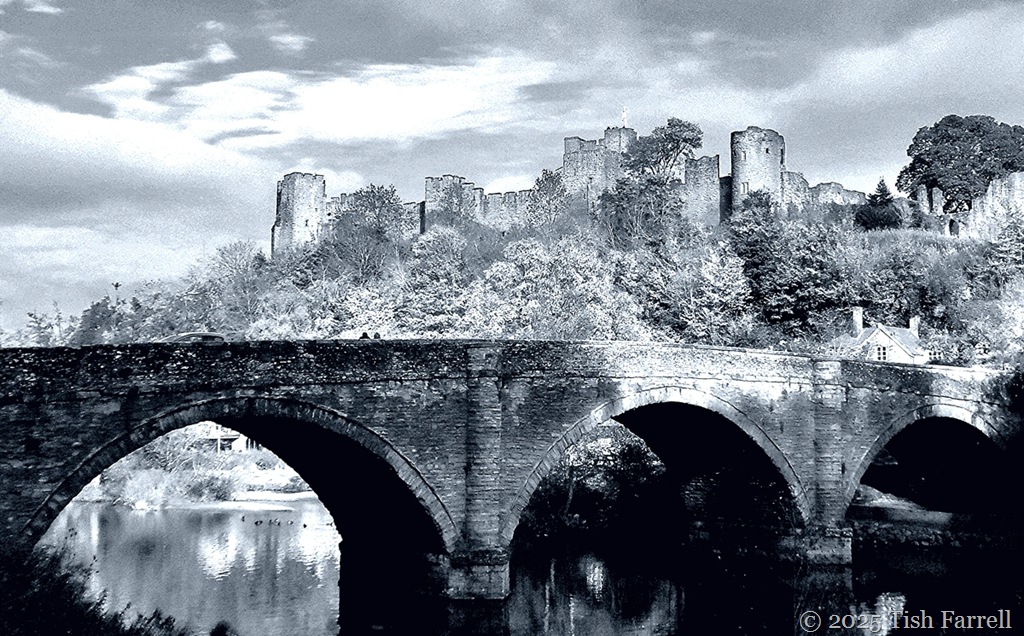
Antique Shadows at Dinham Bridge

bridge 2

A bridge for Cee who loved bridges and featured them in some fabulous monochrome shots. Like so many others, I loved taking part in her regular Black & White photo challenge.

*

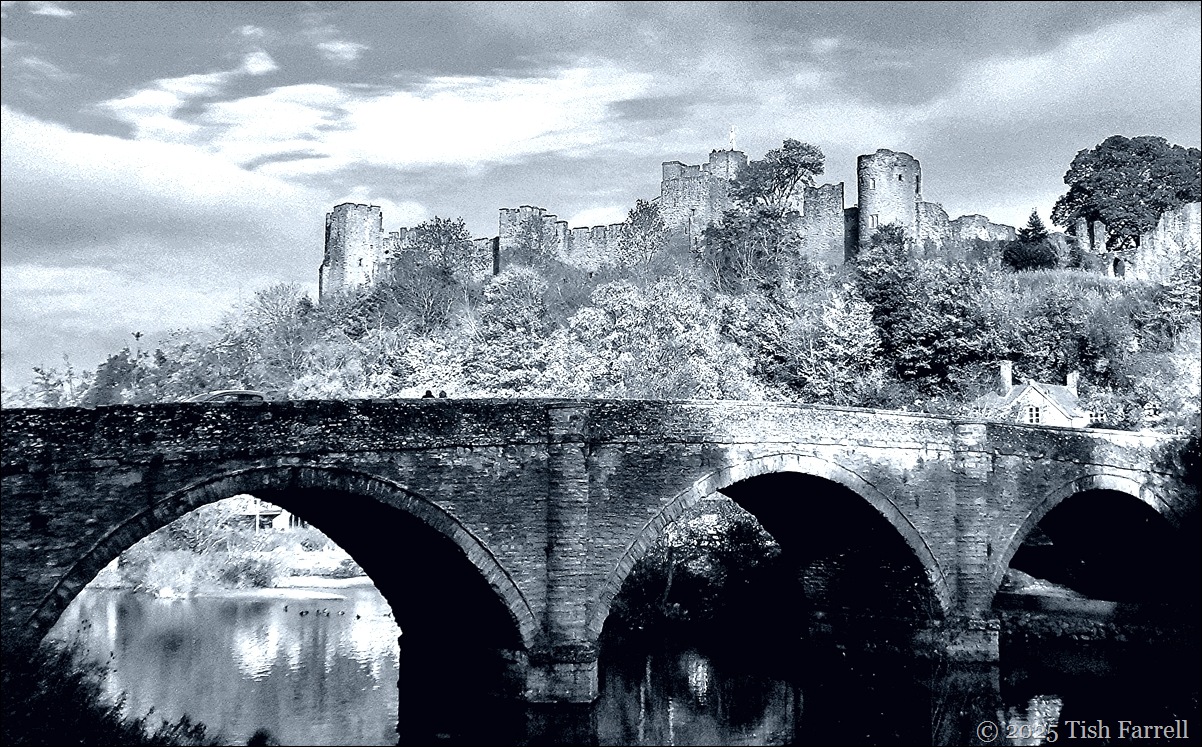
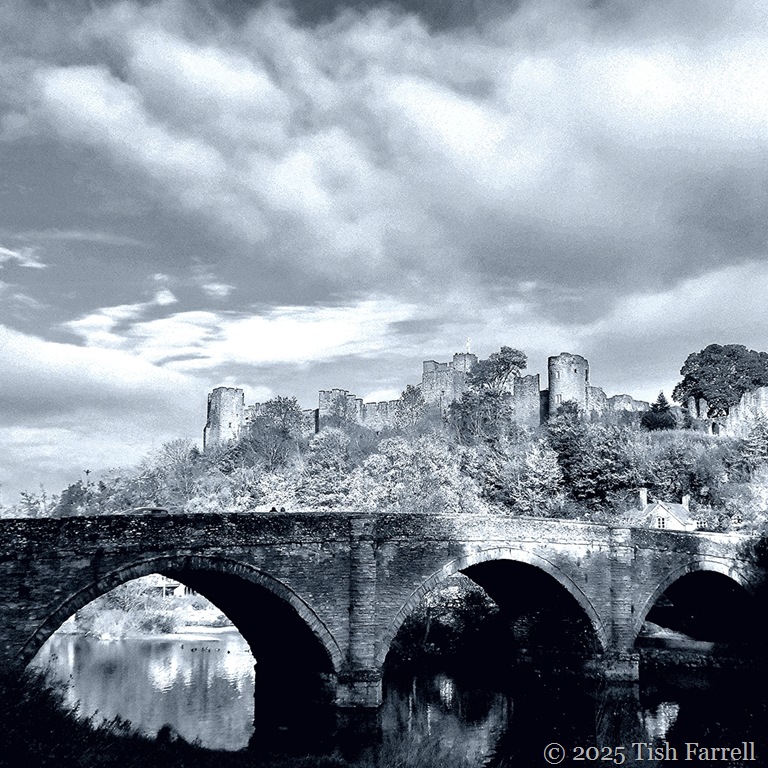
Dinham Bridge over the River Teme in the Shropshire market town of Ludlow was built in the early 1800s. The castle above it had its origins nearly 800 years earlier, soon after the Norman invasion of 1066. It was one of the first stone-built castles under the new regime, sited there to keep the Welsh at bay. Over succeeding centuries it was expanded to the fortress scale whose remains we see today. As with all castles, there were doubtless many shadowy doings, conspiracies and counter-conspiracies within its walls; but its towers caught here in autumn sunshine almost have fairytale looks; so many stories those stones could tell.
*

November Shadows #7 Today Becky pays tribute to Cee who meant so much to so many. There are further blogger tributes at links below.

Remembering Cee 7th November  Marsha Ingrao at Always Write and Dan Antion at No Facilities are hosting a day to remember Cee; Cee who inspired us with her weekly photo challenges, and was so generous with her knowledge. She embraced so many of us and is sorely missed in the blogging community she so steadfastly embraced and encouraged.

bridge 2 header

Monochrome Madness: On The Beach

P1050036cr

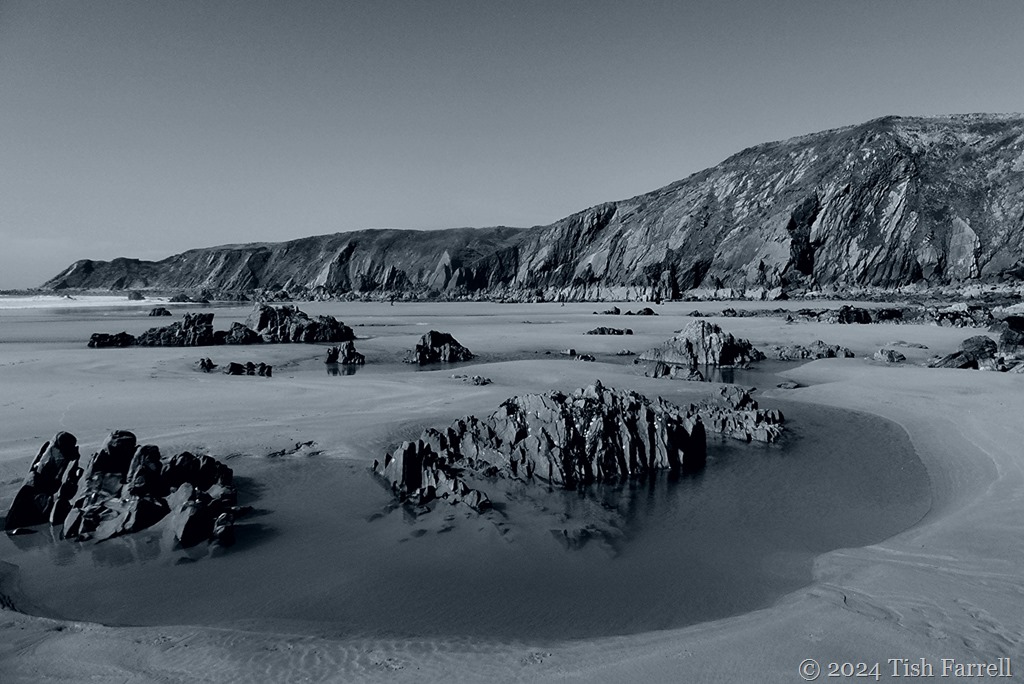
Marloes Sands, Pembrokeshire, South Wales

*

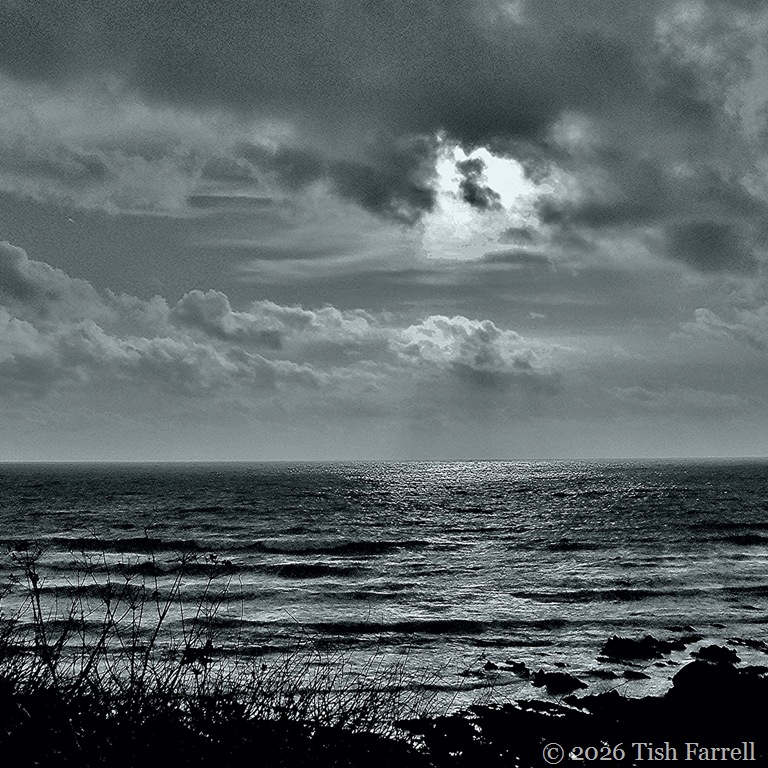
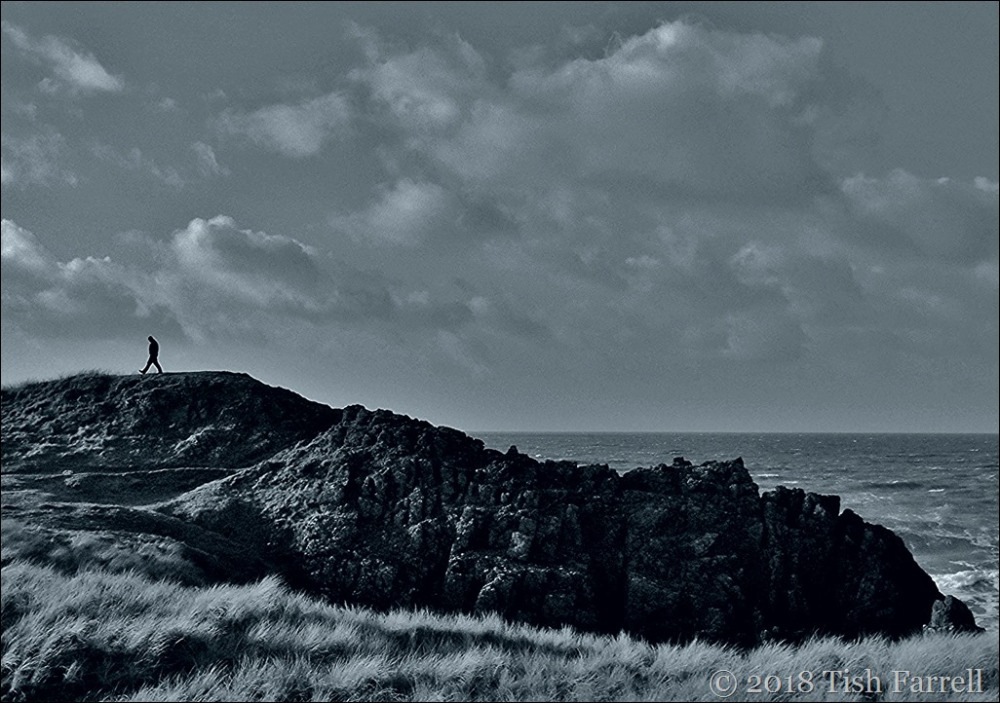
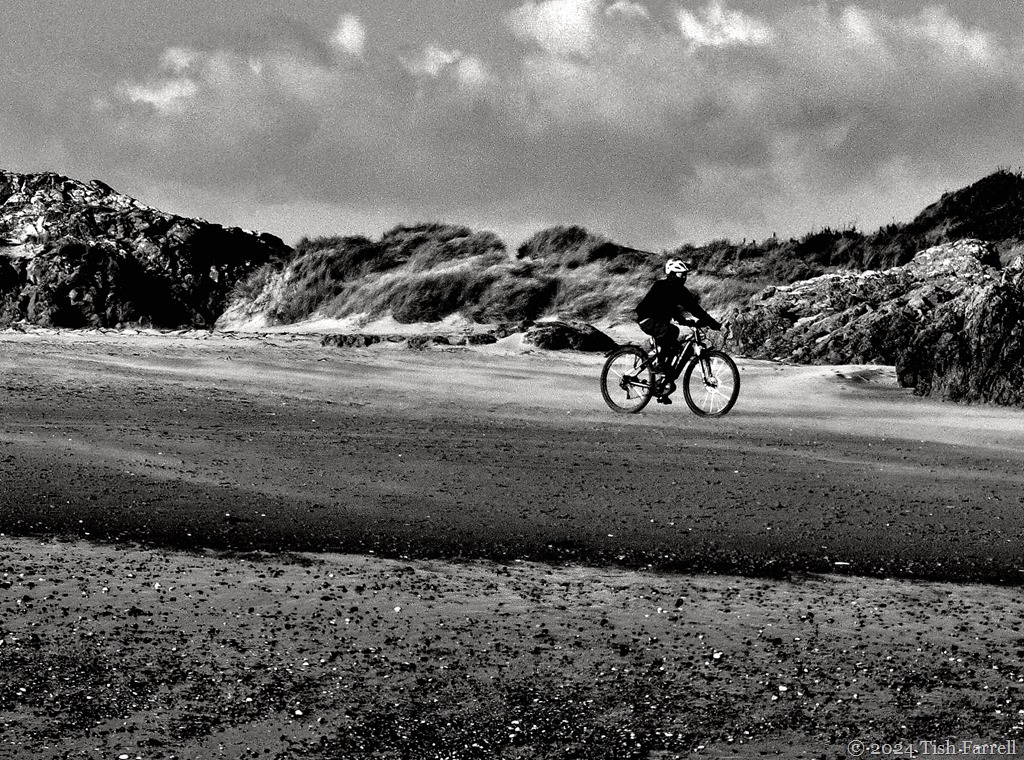
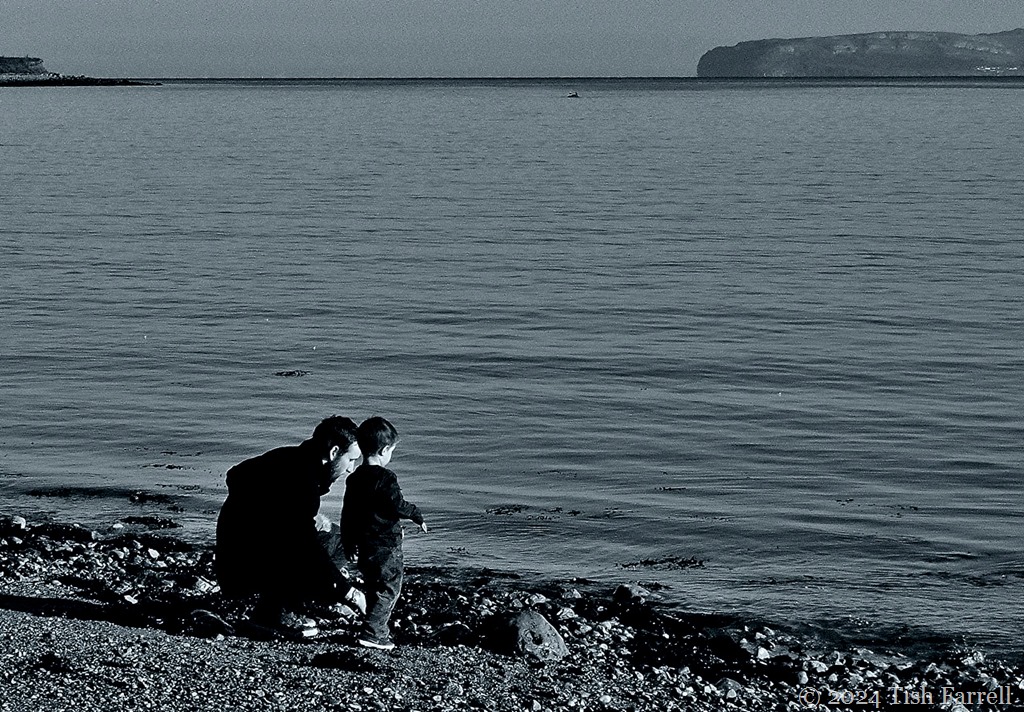
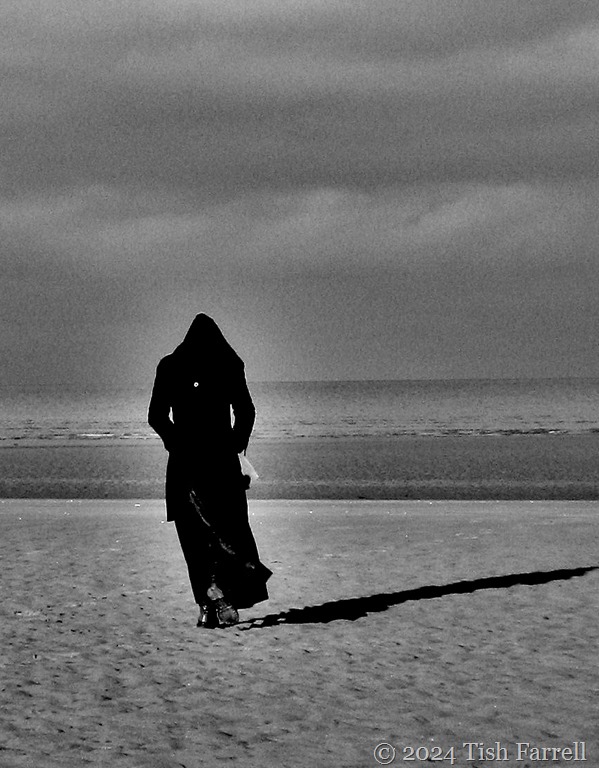
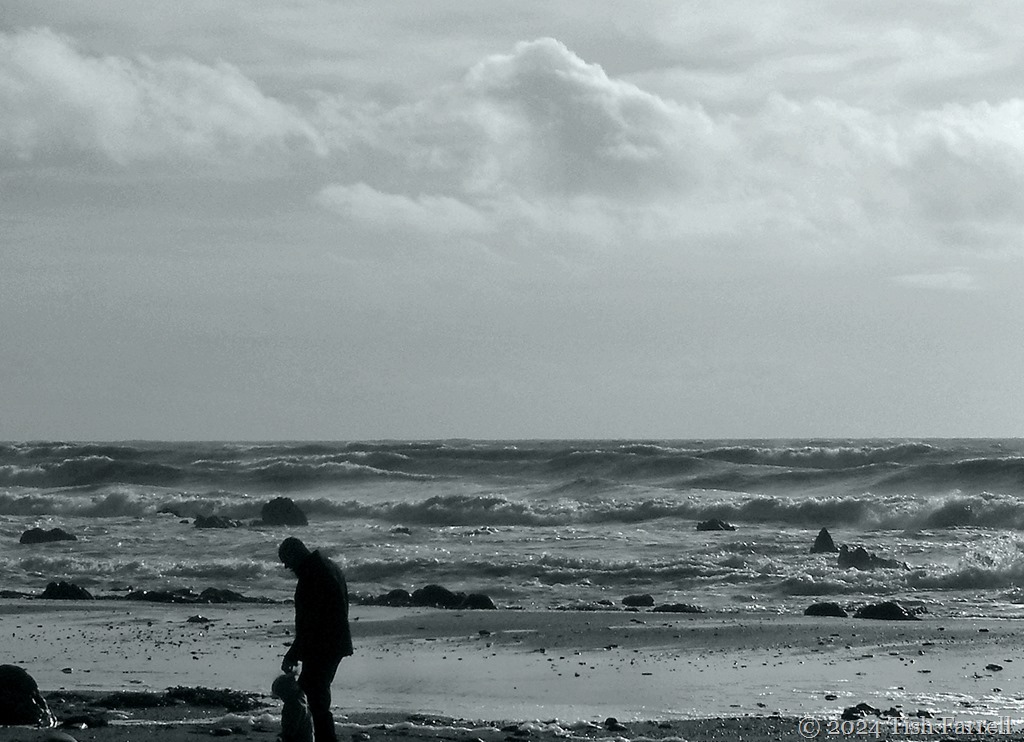
I love winter beaches. You never know how it will be there – the wildness of wind and waves, the shafts of sudden sunlight, sands strewn with sea debris, or storm-scoured, the off-season pursuits of humankind…
Newborough biker

Christmas morning, Newborough Beach, Anglesey, North Wales

*

P1060449bw

Menai Strait, Anglesey

*

IMG_0801

This could just be the French Lieutenant’s Woman displaced from Lyme Regis to Red Wharf Bay, Anglesey. I do know her name is Sarah.

*

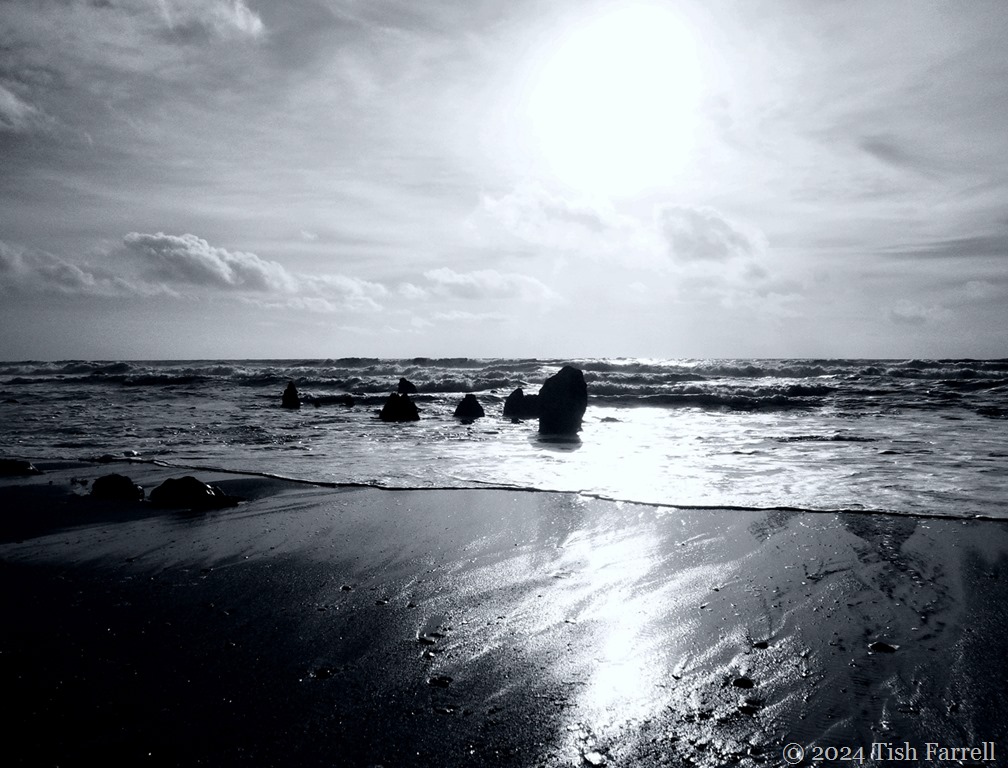
These next views are of Portwrinkle beach, Cornwall, also taken around Christmas time:

Cornwall

Portwrinkle

My prehistorian’s eye perceived those rocks as some flooded megalithic structure, the remains of a Bronze Age circle or chambered tomb perhaps. Certainly, in other parts of the Britain, the remains of Neolithic wood henges have been discovered on beaches below the tideline.

*

Monochrome Madness: on the beach.  This week Brian at Bushboy is acting host at Leanne Cole’s Monochrome Madness

Light And Shadow Over The Garden Fence

100_7393re

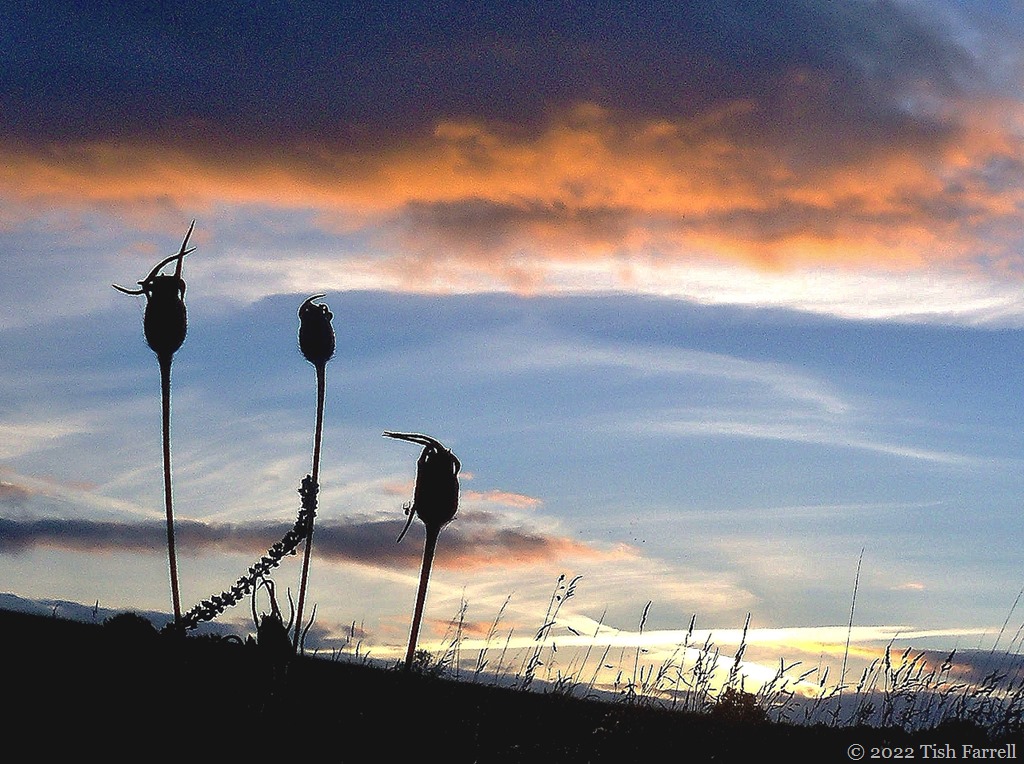
Late summer and corn cockle seed heads against a Wenlock Edge sunset.

*

P1070087 re

Townsend Meadow behind the house; the fence surrounding the attenuation pond that protects the town from flash floods. And also our local carrion crow couple being nicely scenic.

*

P1100419

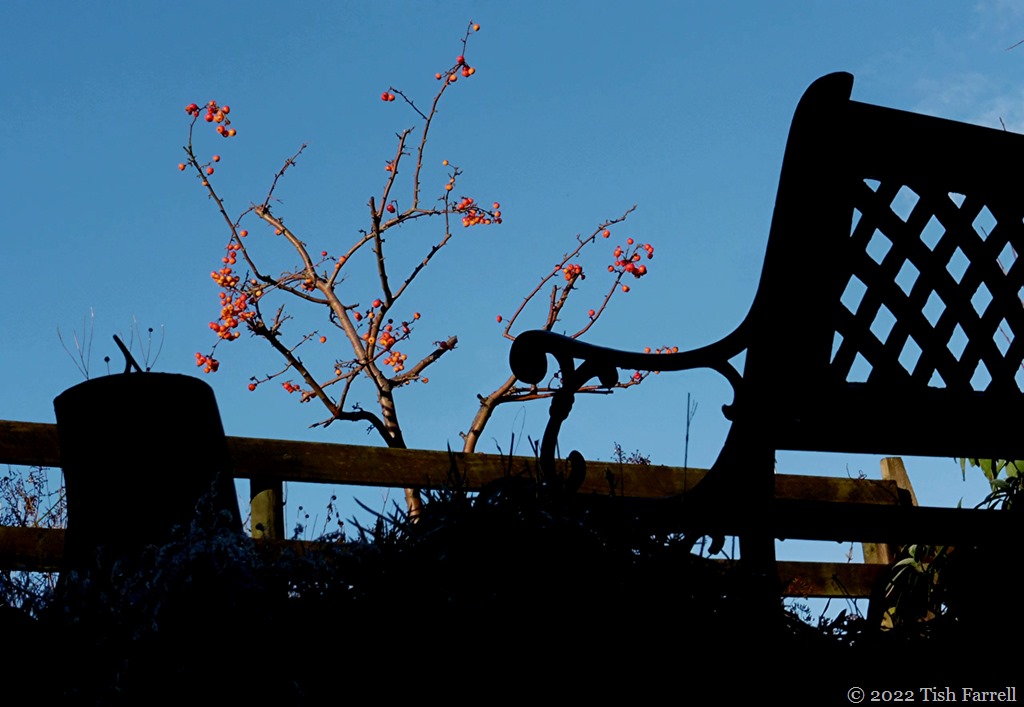
The upstairs garden seat in winter; the ash log sun dial, and the last of the crab apples.

*

p1020253p

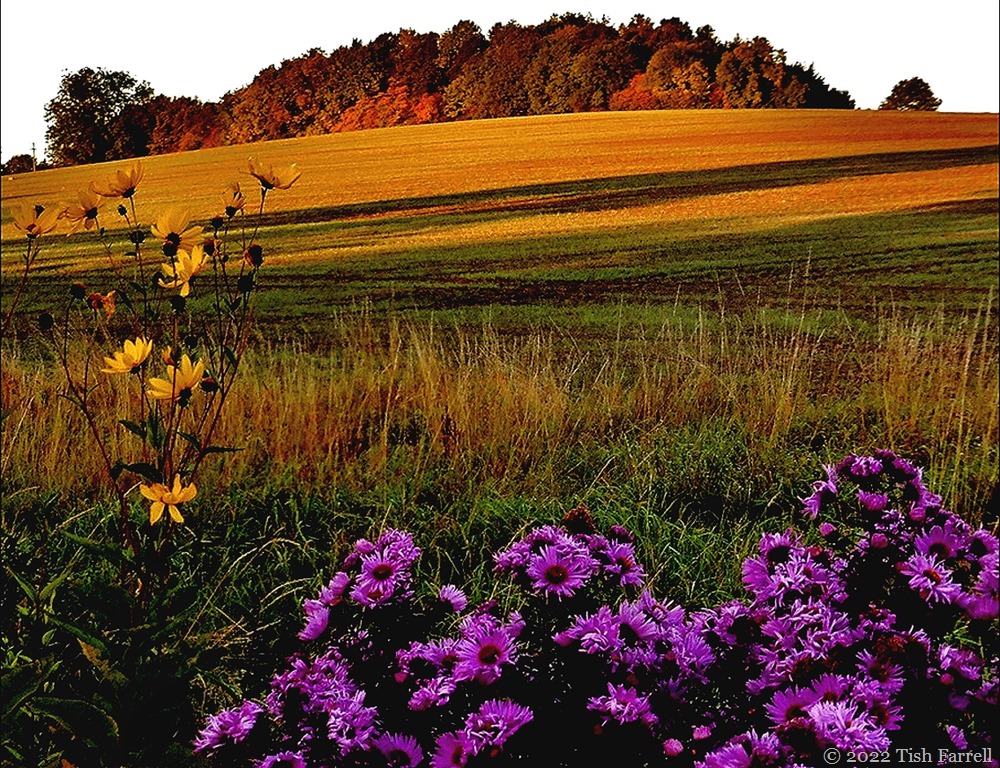
Autumn dawn, the guerrilla garden in shadow: Michaelmas daisies and helianthus. Townsend Meadow after the barley harvest, but still golden in the early morning sunshine.

*

P1080211re

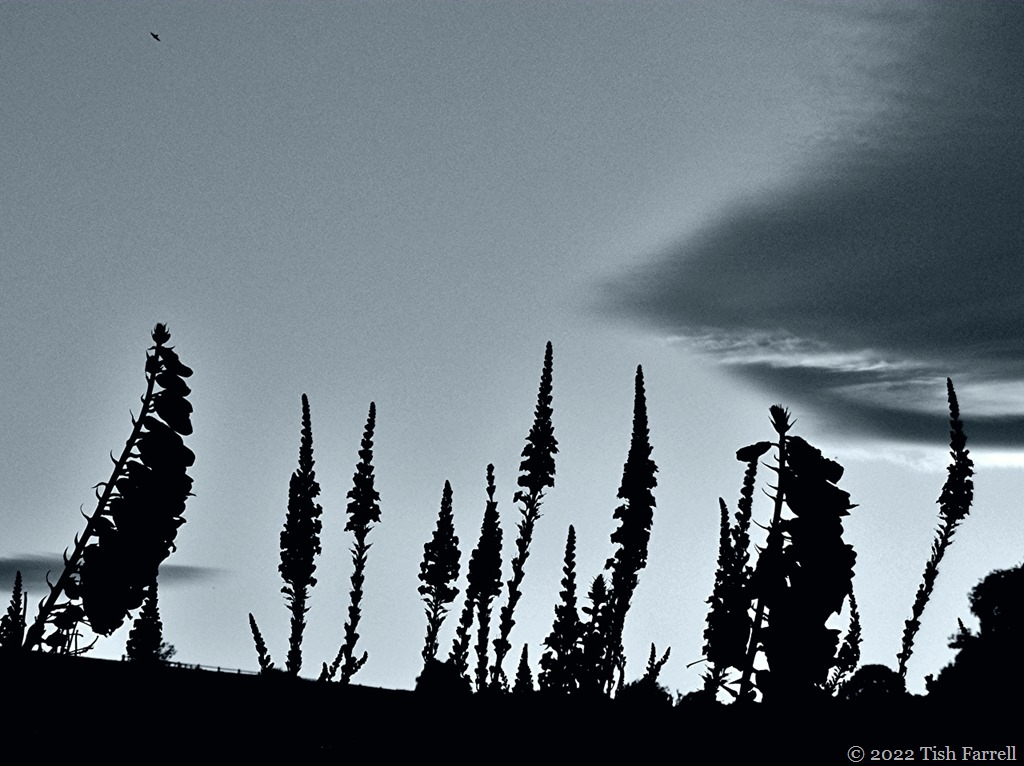
An early summer monochrome foxgloves and purple toadflax in the guerrilla garden.

*

P1090190

And an almost-monochrome. Shadow play on a dust sheet hug out to dry on the washing line.

*

Lens-Artists: Light & Shadow  Patti has set the theme this week. Please pay her a visit. She has some stunning photos to show us.

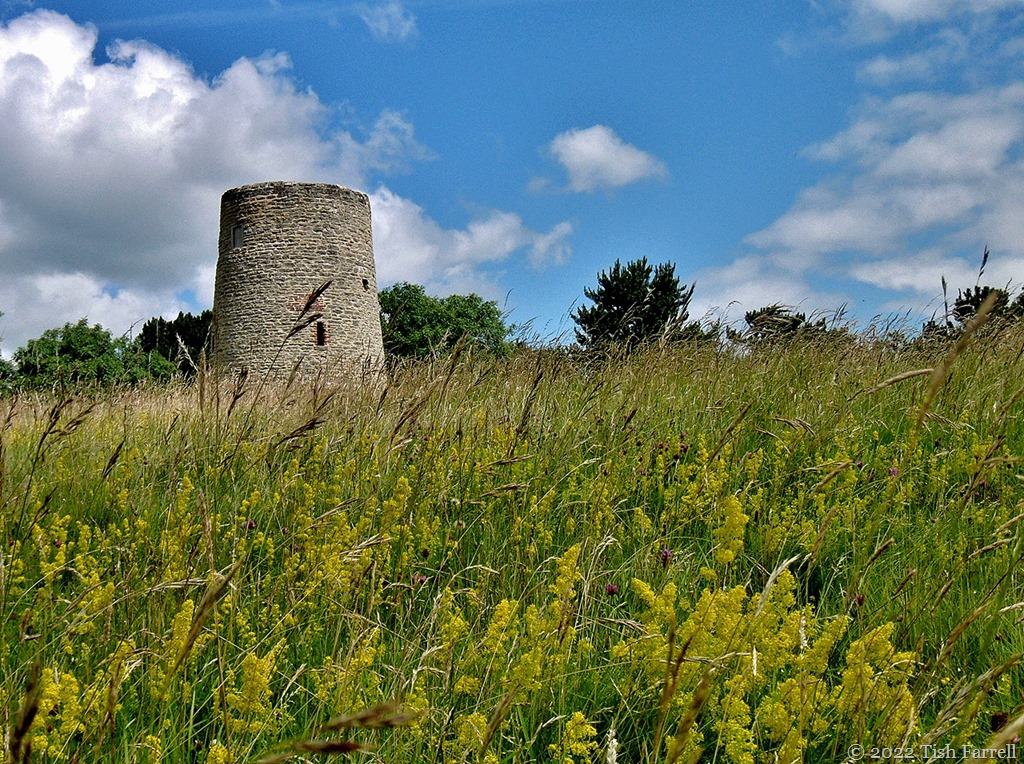
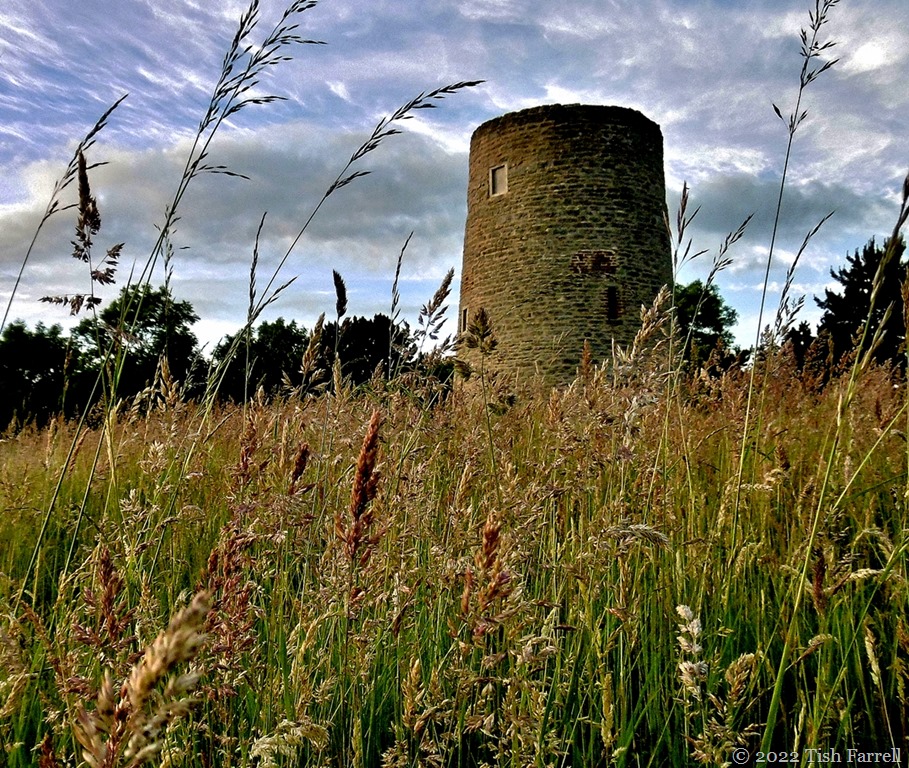
Framed In All Seasons On Windmill Hill

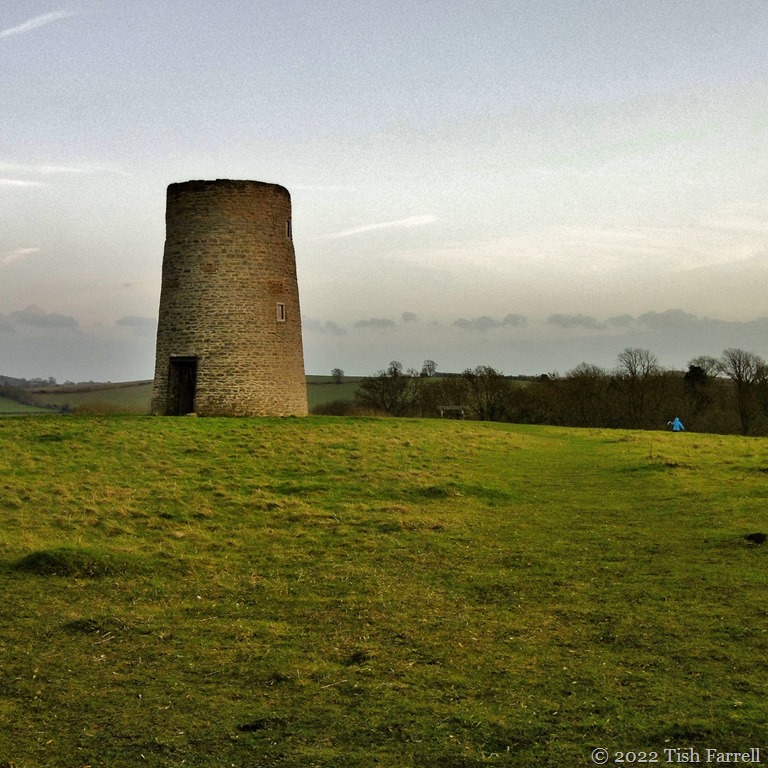
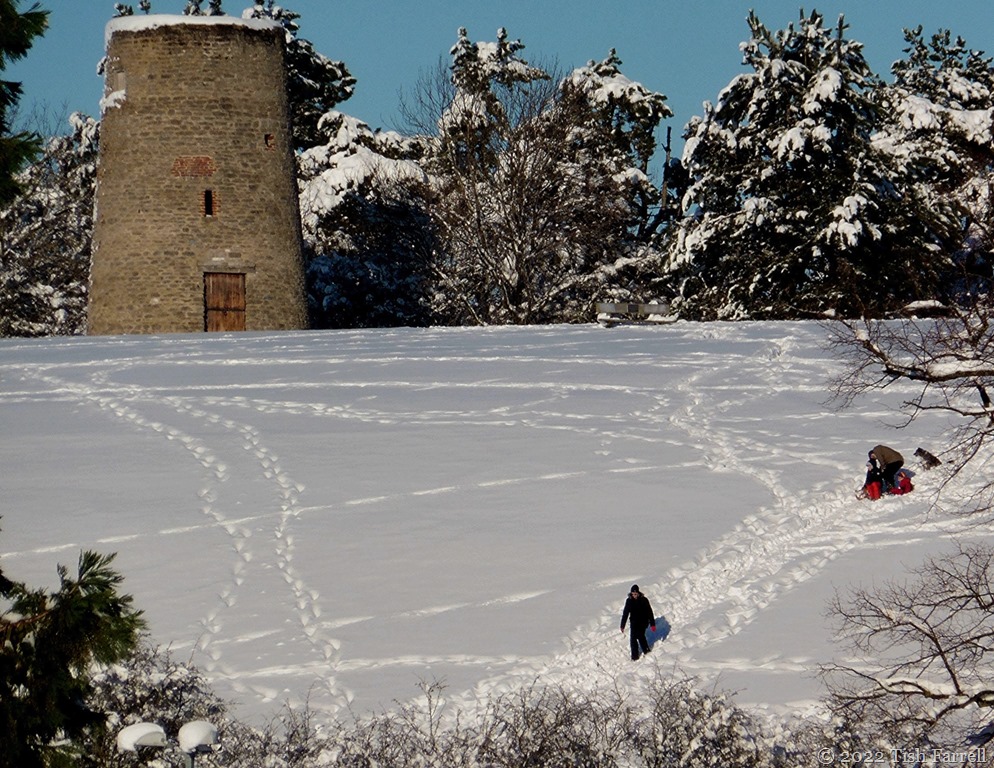
windmill at dusk resized

A Don’t Look Now moment? Who is that small, retreating turquoise person?

*

This week’s Lens-Artists’ challenge is from Tina. She asks us to think about ‘the rule of thirds’ in our photo compositions. Please go and see her very striking photo gallery (link at the end). As for me, I thought I’d feature some of my too many Windmill Hill photos. It’s the place where I go to play with my camera.

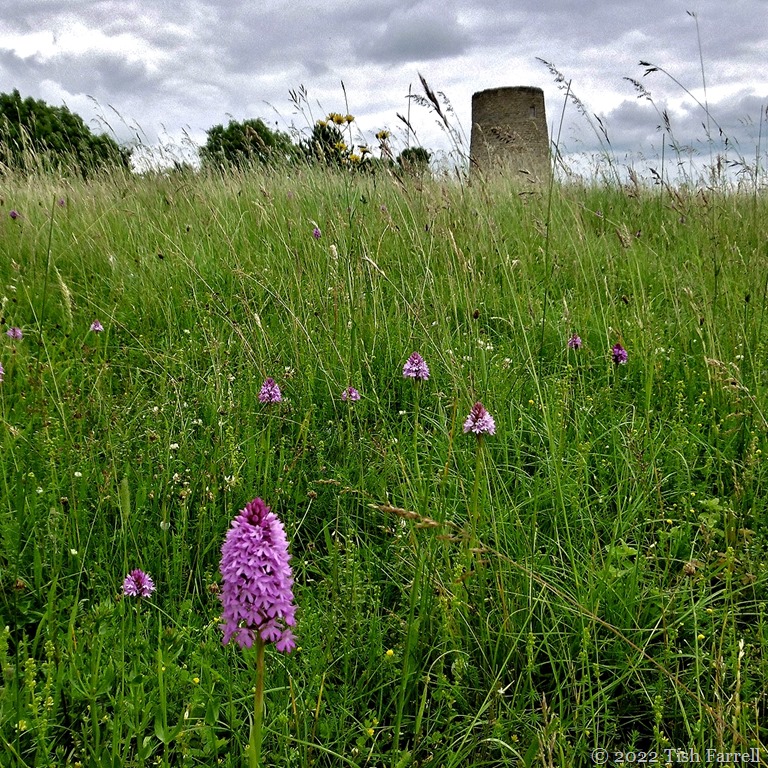
orchhid time re

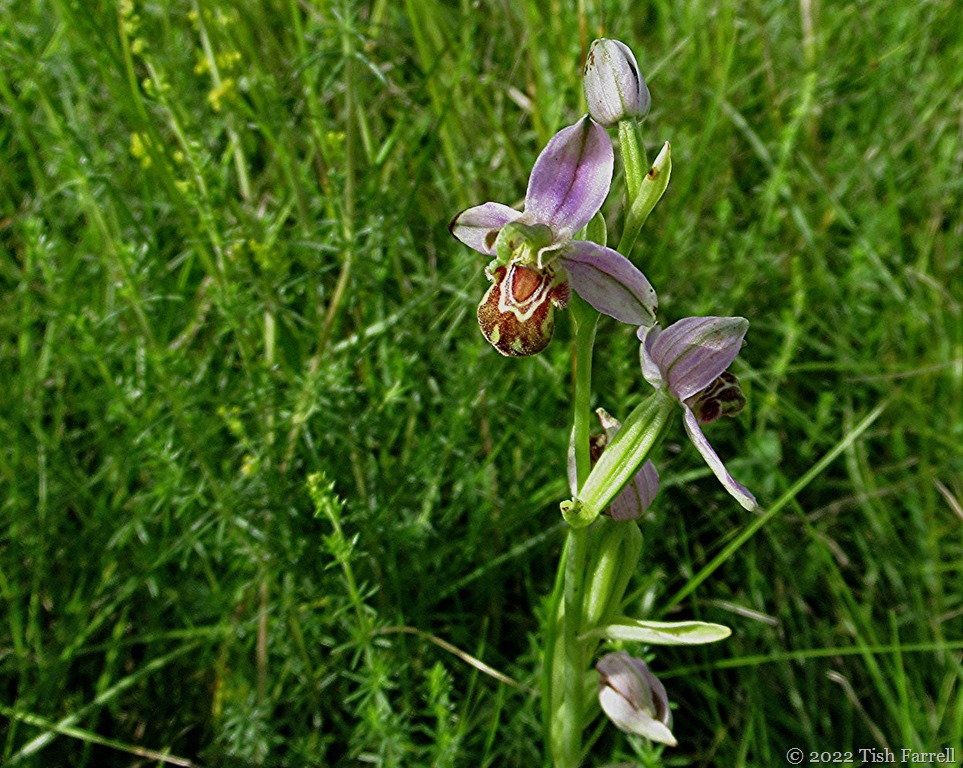
June is orchid time, mostly pyramidal (above) and spotted, and  a small population of tiny bee orchids which are very hard to find (below)

IMG_2618re

*

IMG_2155

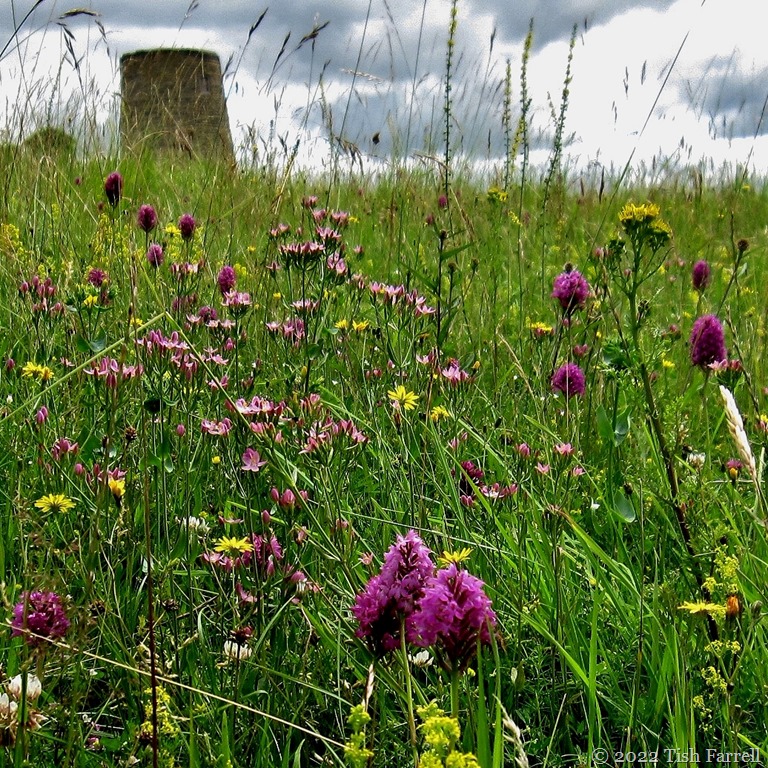
The grassland on the Windmill Hill is a rare survival – a traditional limestone meadow: clover red and white, bedstraw, orchids, agrimony, ragwort to name a few of its summer floral inhabitants.

*

P1050182re

A profusion of Lady’s Bedstraw. Its subtle fragrance is delicious.

*

P1050007re1

After the flowers, a host of grass species

*

P1000684re2

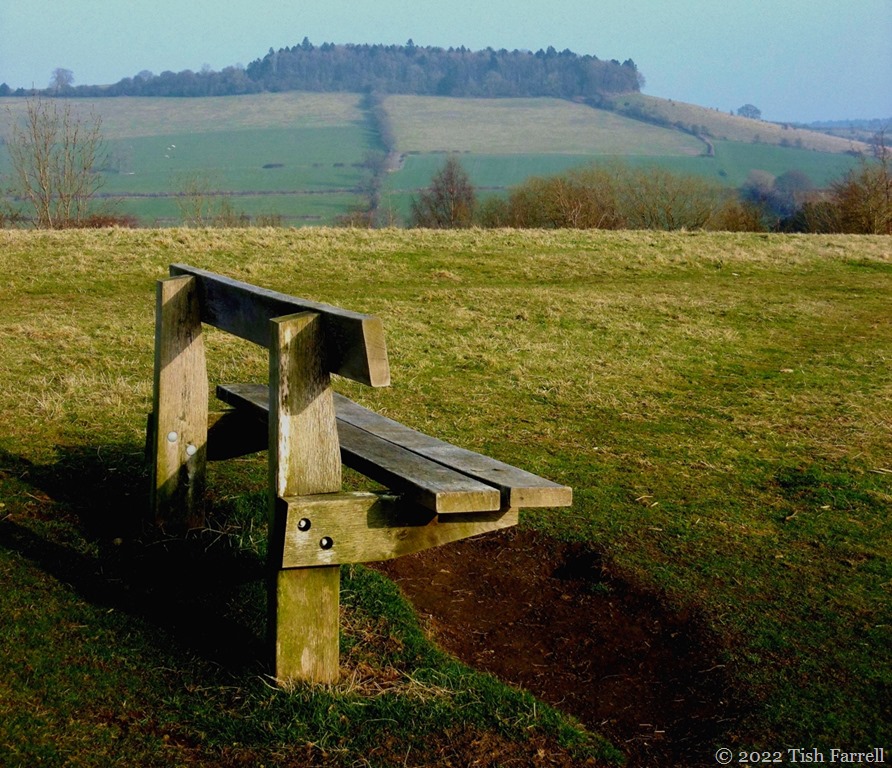
A seat in winter

*

P1020259sq

Girls just wanting to miss netball practice

*

100_6660re

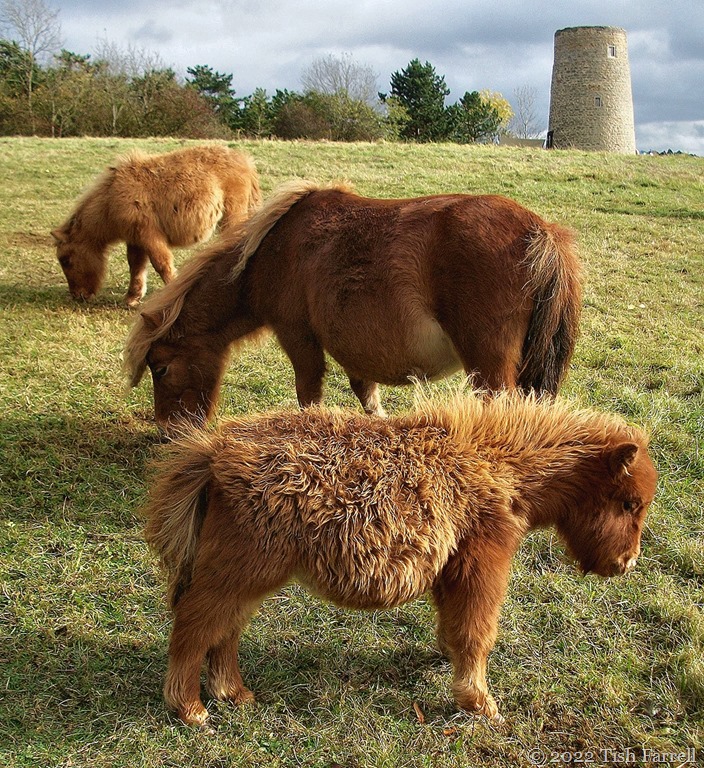
Little ponies once used to graze the hill in autumn

*

IMG_0323re

Early spring Cuckoo Pint

*

P1030665

Blizzard!

P1040013re

Lens-Artists: rule of thirds

Chasing The Light Over Townsend Meadow

P1060987

Those who come here often know that our Shropshire cottage overlooks a field that once marked Much Wenlock’s northerly boundary. It’s all in the name of course – Townsend Meadow. In times past it was pasture for dairy cows. The farm, long gone, was in the corner of the field, and the dairy, where the milk was collected, was a few doors down from our house on Sheinton Street. But in the years since we’ve lived here the field has been used solely for growing arable crops; wheat mostly, but now-and-then oil seed rape, oats, field beans and barley.

Our further view, beyond the field, is of the woods along the summit of Wenlock Edge. You can just make them out in the middle distance of the first photo. This vista and this field and the sky above, are the places where I endlessly discover events and effects. In this sense you could call it a source of rich sustenance; the everyday world that is never commonplace.

When it comes to photography, I belong to the ranks of happy snappers. I have zero technical skills, though somewhat perversely I’m particularly drawn to taking photos in challenging light conditions – to see what will happen, I suppose. The first photo is a good example. It was taken by opening the rooflight window in my office to the horizontal position (which also involved standing on the spare bed) resting my Lumix point-and-shoot camera on the back of said window – that is, on the outside frame nearest me – engaging some zoom, and hoping things are as focused as can be. And there we are.  It is a strange photo. A bit quantum physics-ish. Lost realms and parallel universe kind of stuff.

Here are some rather more obvious low-light Townsend Meadow moments.

P1070611

P1100710

IMG_0222

IMG_4214

P1080191

p1000553

IMG_2927ch

townsend meadow 5

Lens-Artists: Follow Your Bliss Lindy has set the challenge this week.