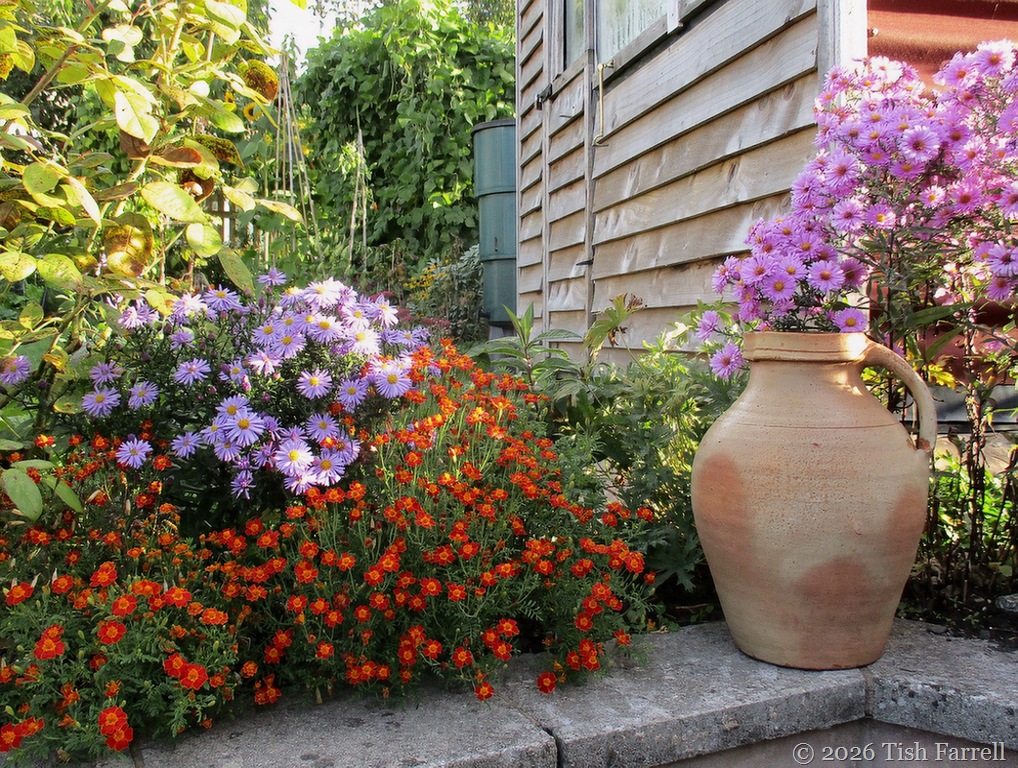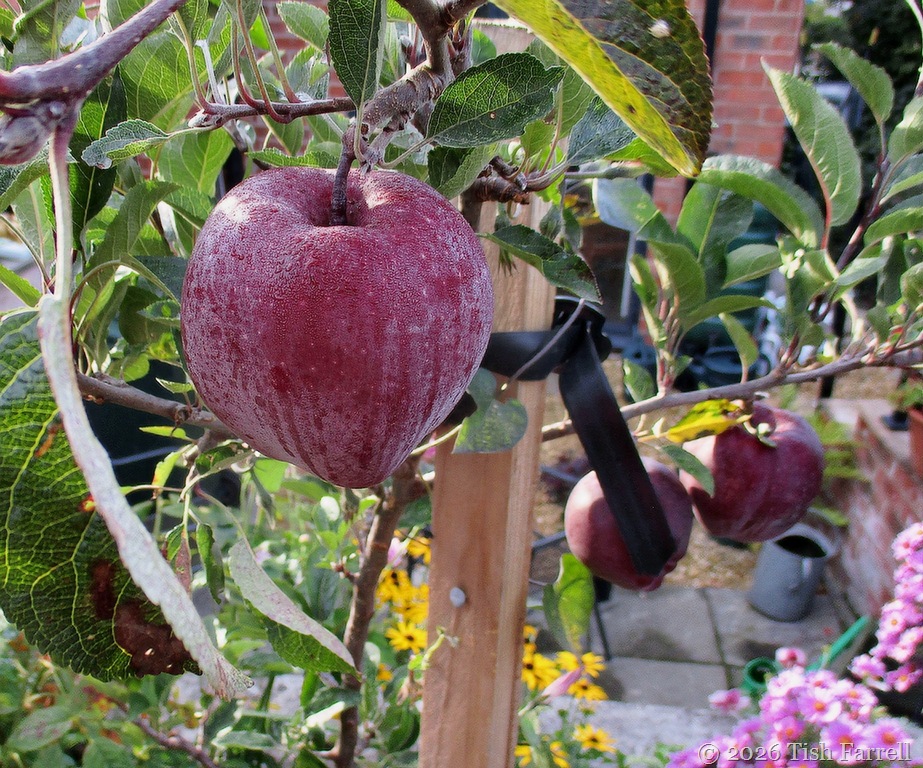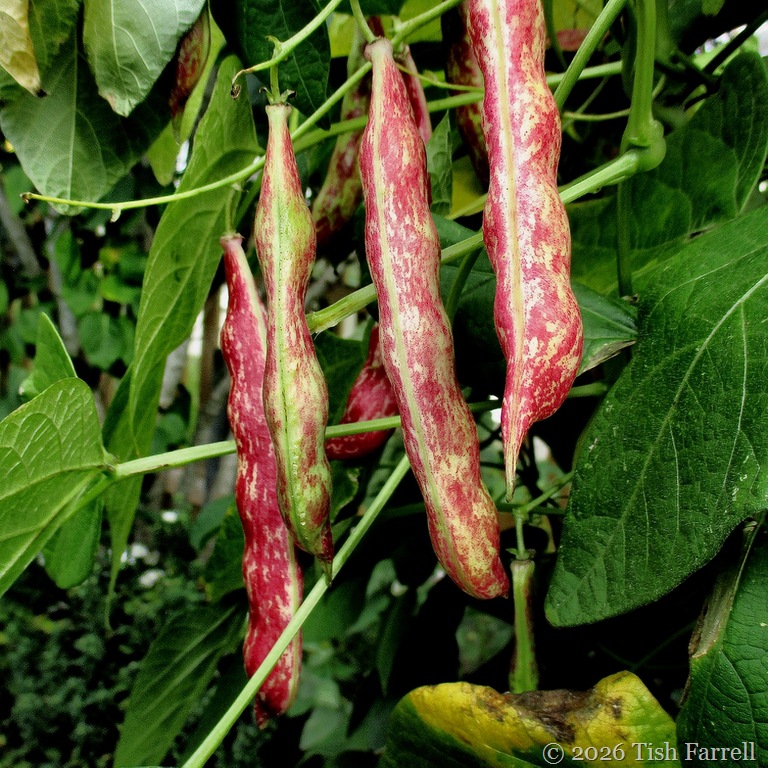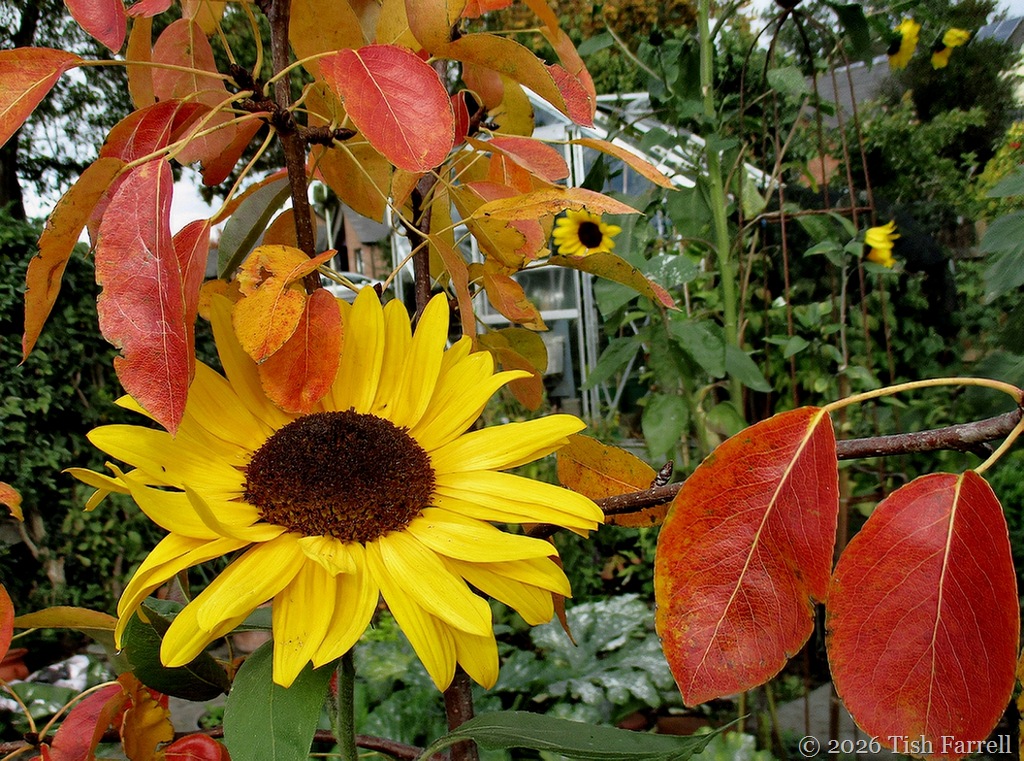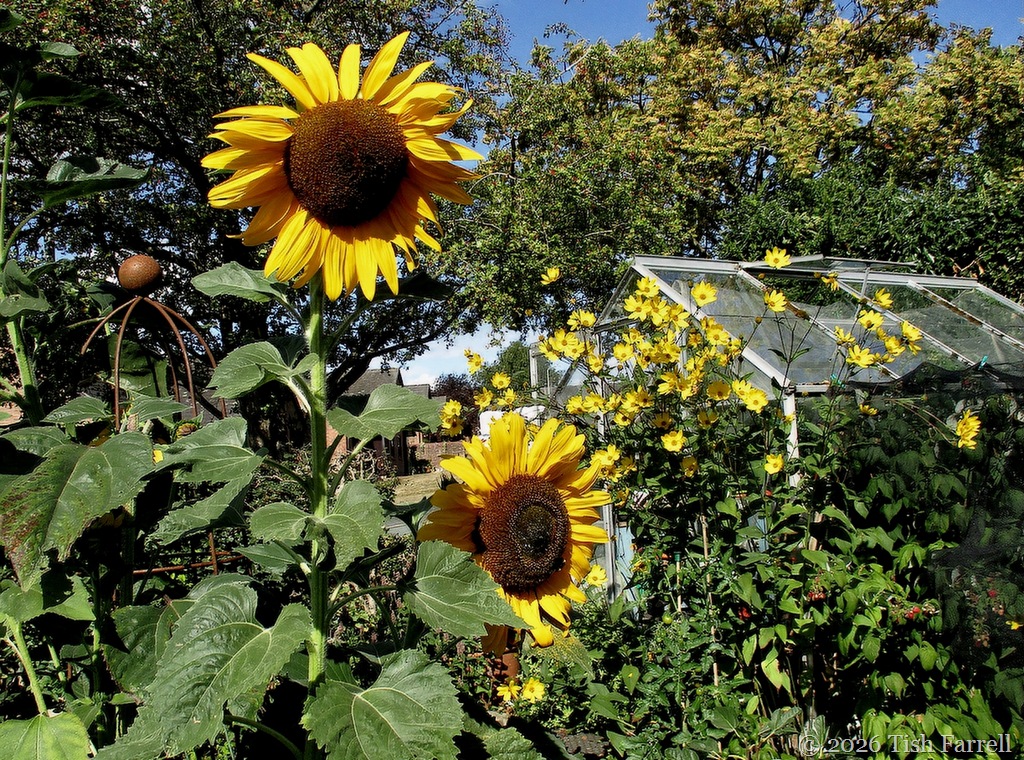
Six On Saturday: After The Heat-Wave

RIMG0107 SoS

***

It’s been pretty darn hot this week in Shropshire, but nearly 9 degrees cooler now. On the whole, the garden, the gardener, and the gardener’s other half have weathered the sudden roasting, but the water butts are empty, one or two plants are looking frazzled, and the hot days have finished off the lovely ranunculus which, until last Saturday, had been blooming wonderfully, making the most of the long, cool spring. Also, some flowering plants like the Perry’s Blue iris, came and went very swiftly, while over the hedge,  hawthorn tree’s blossom fried. We now have siftings of crisp brown petals everywhere.

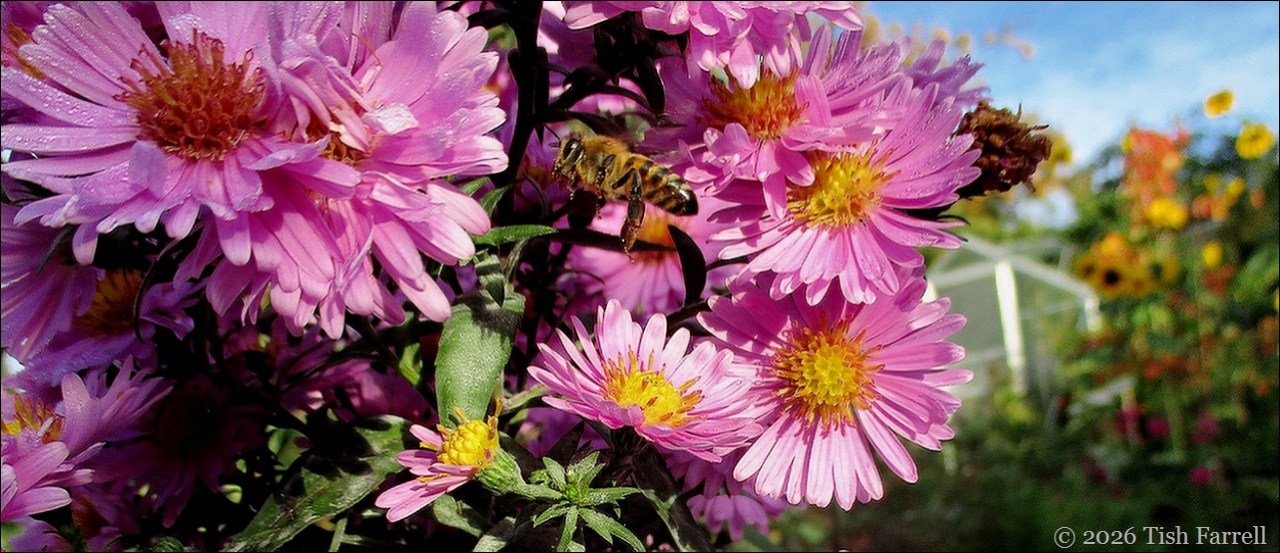
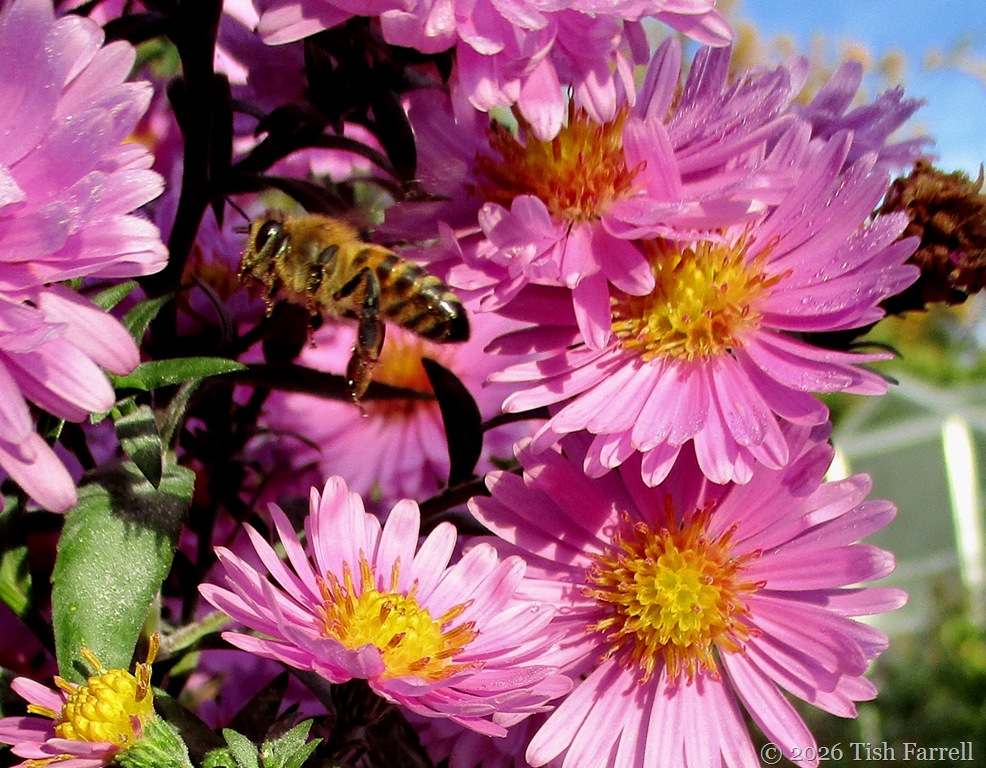
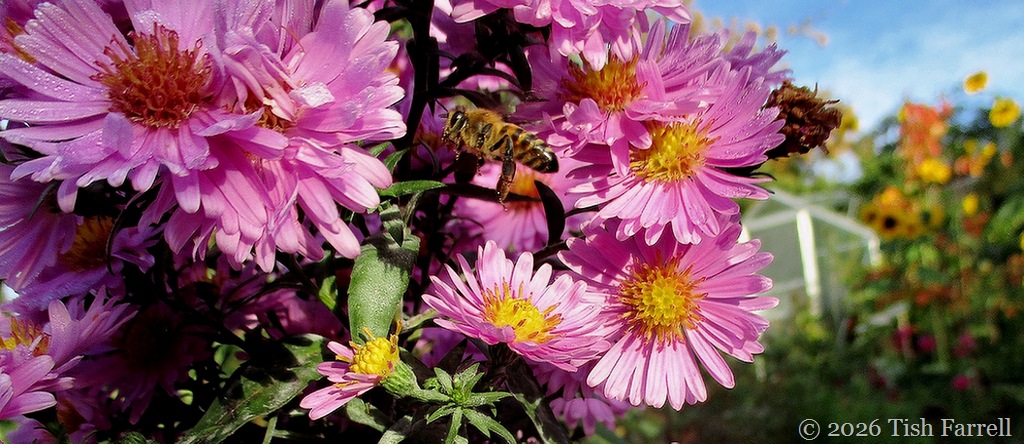
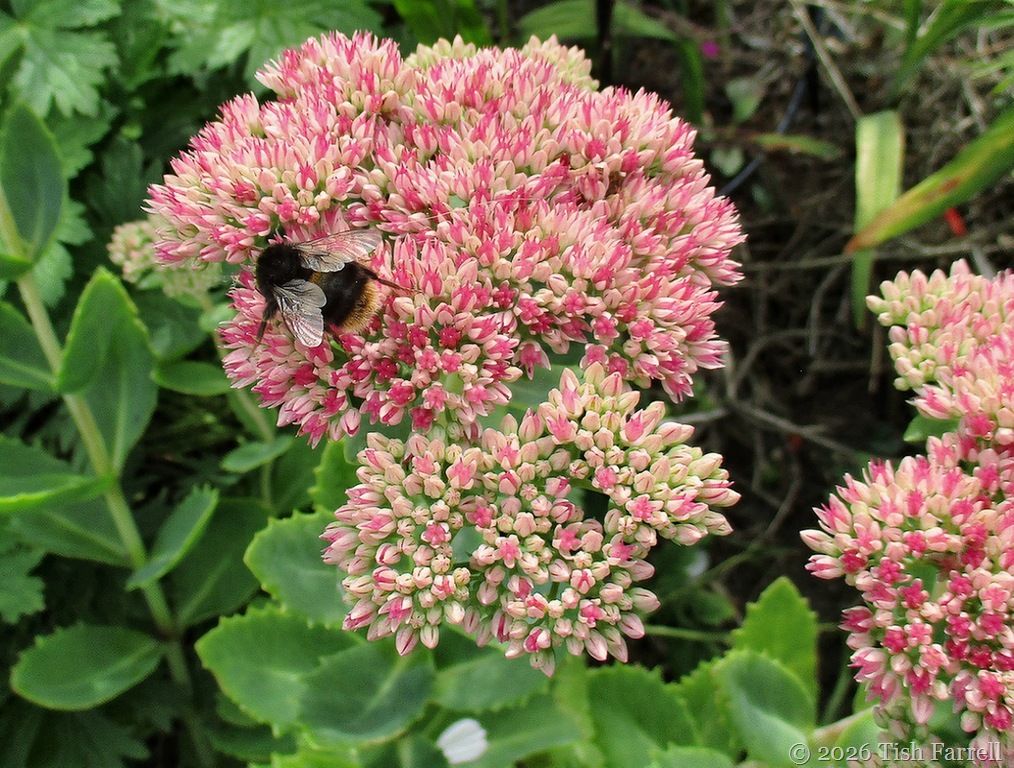
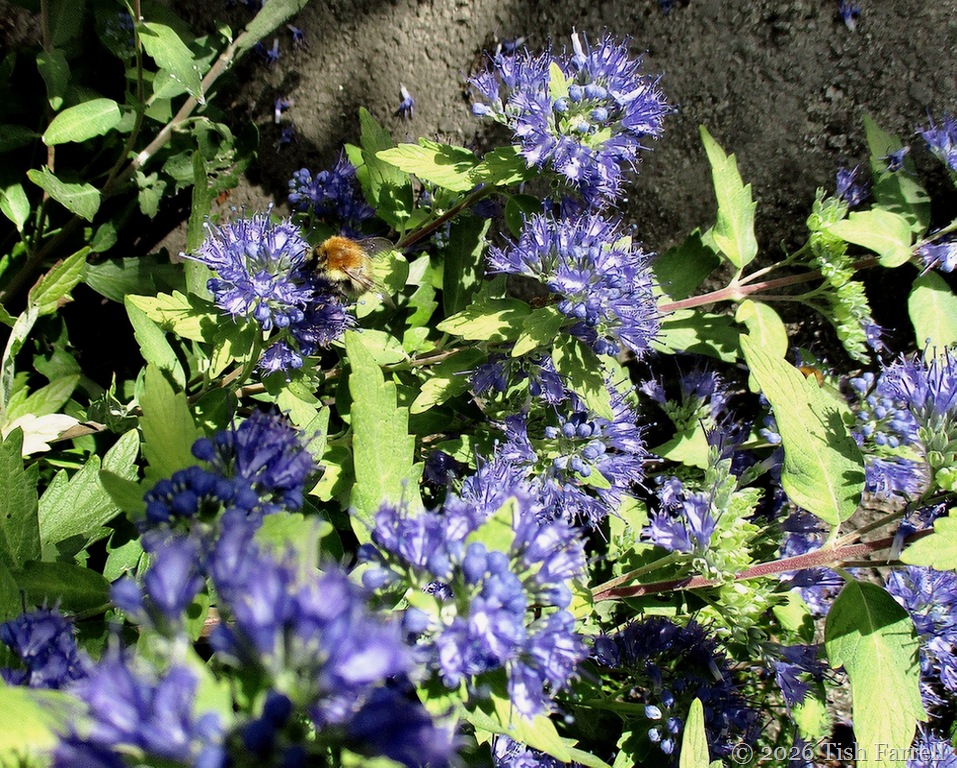
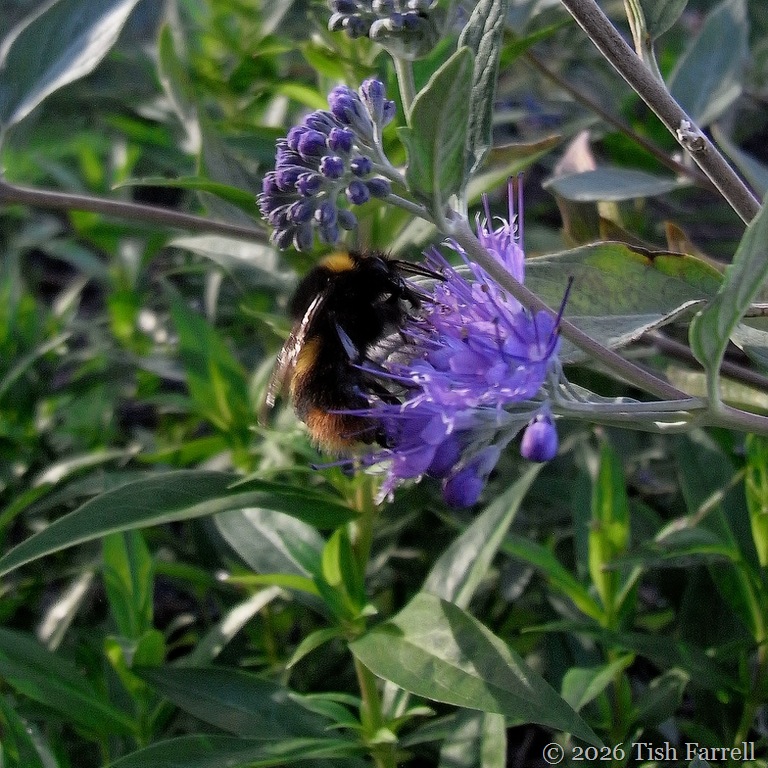
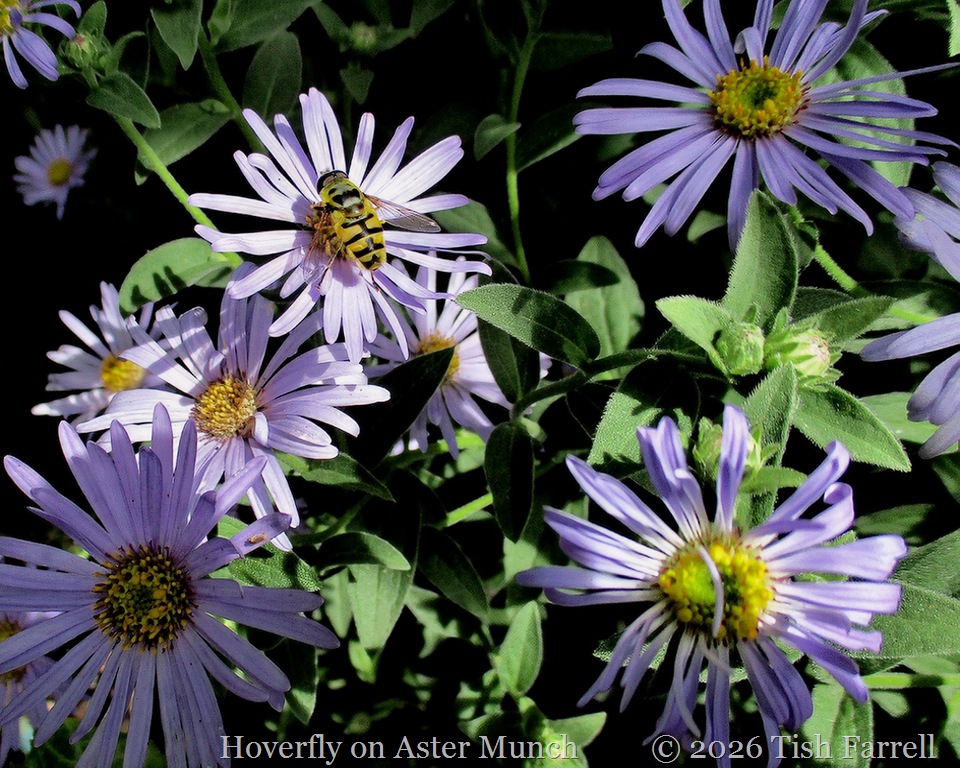
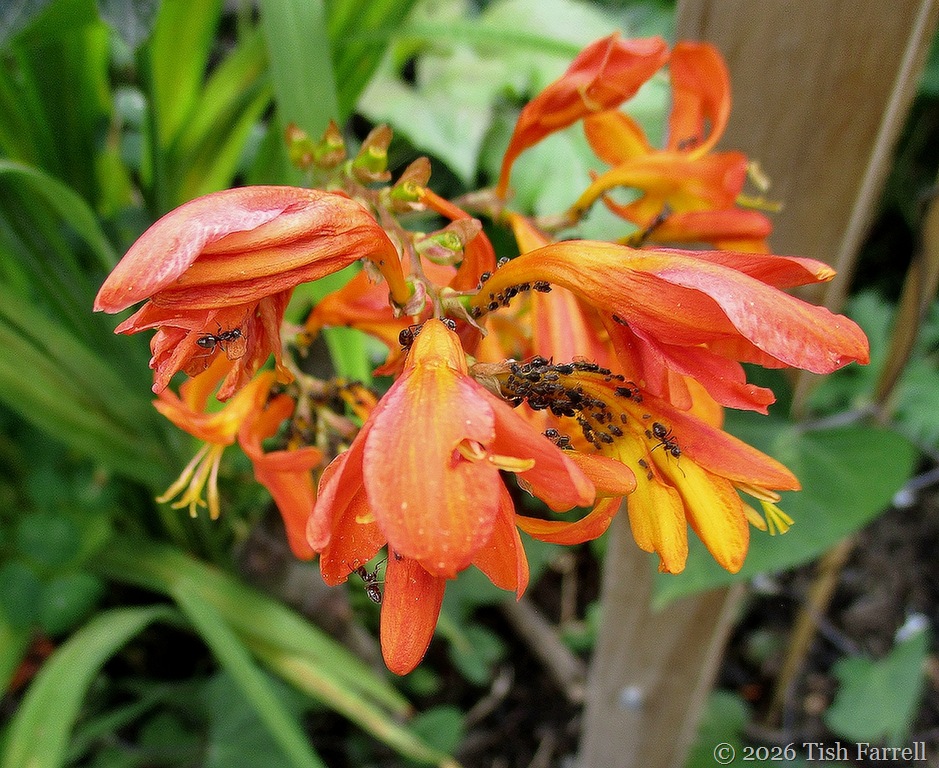
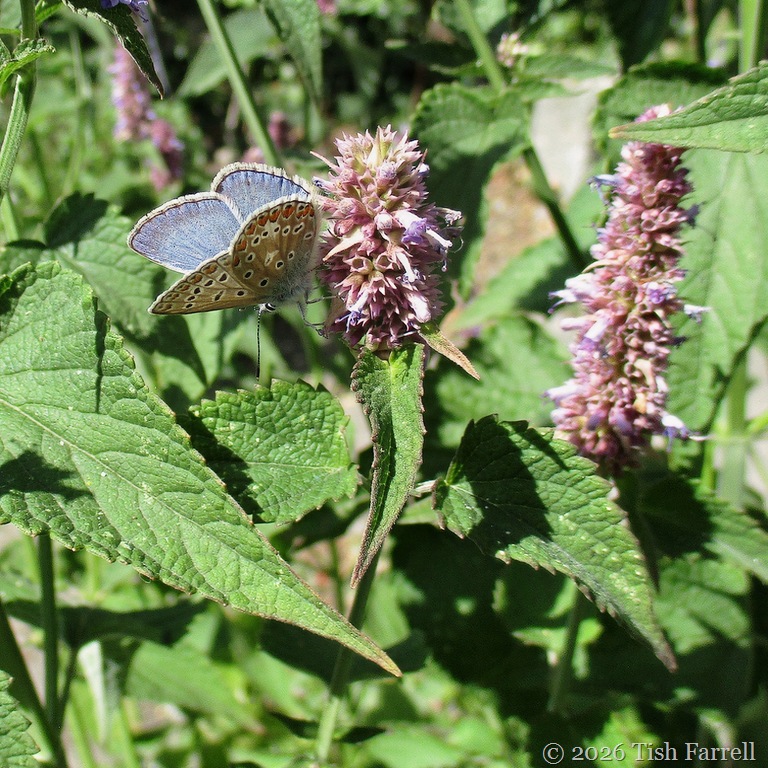
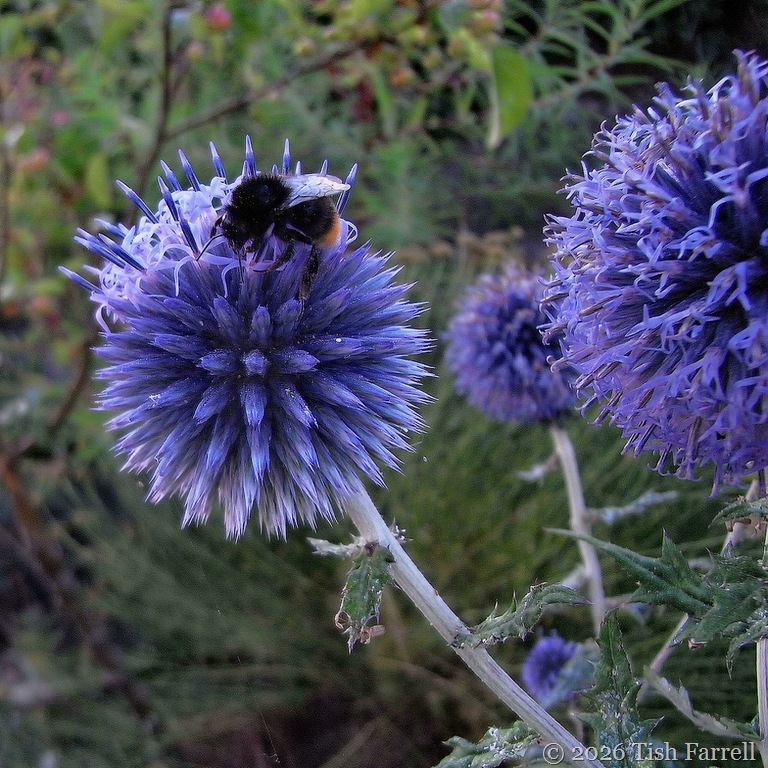
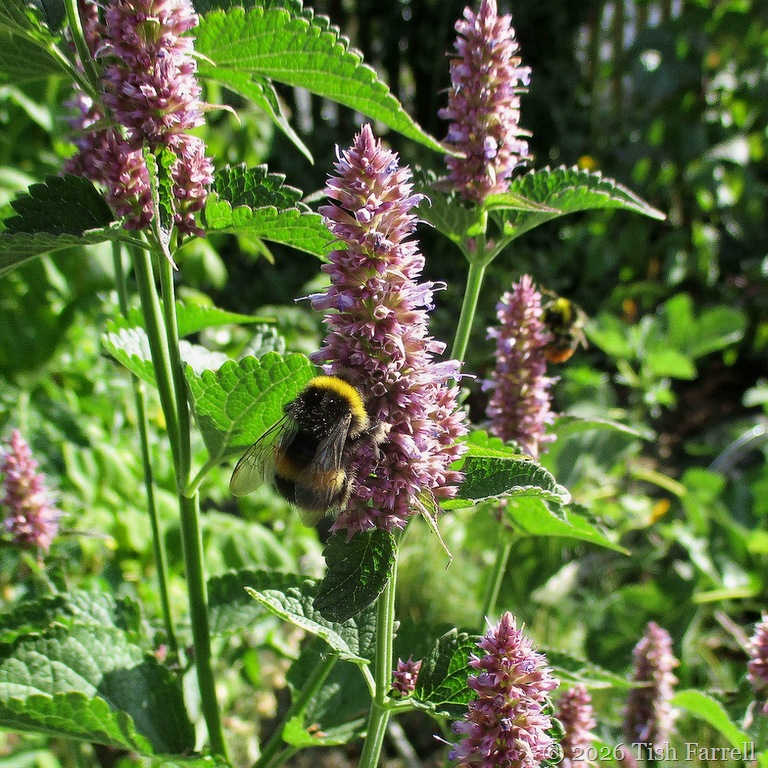
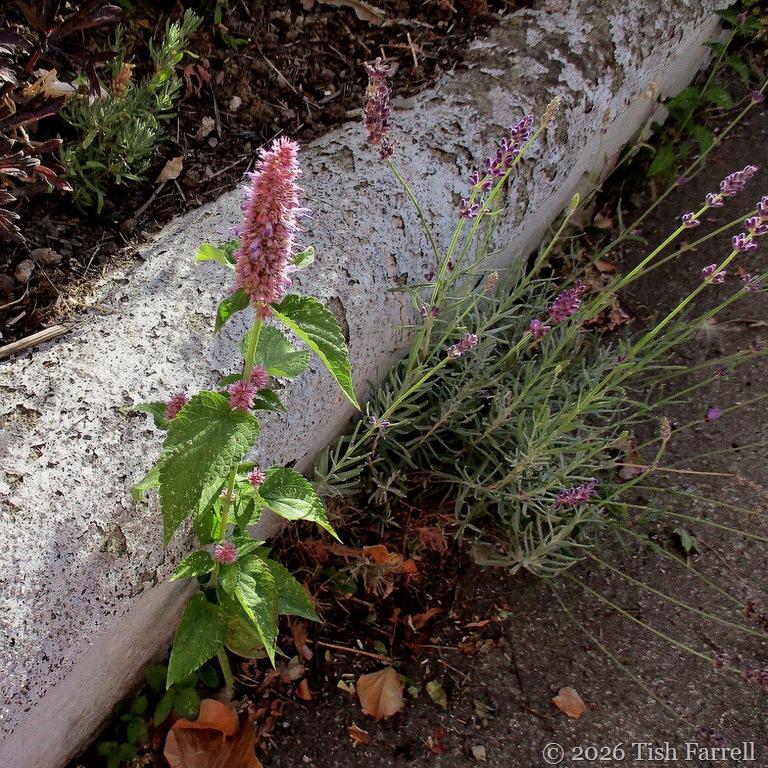
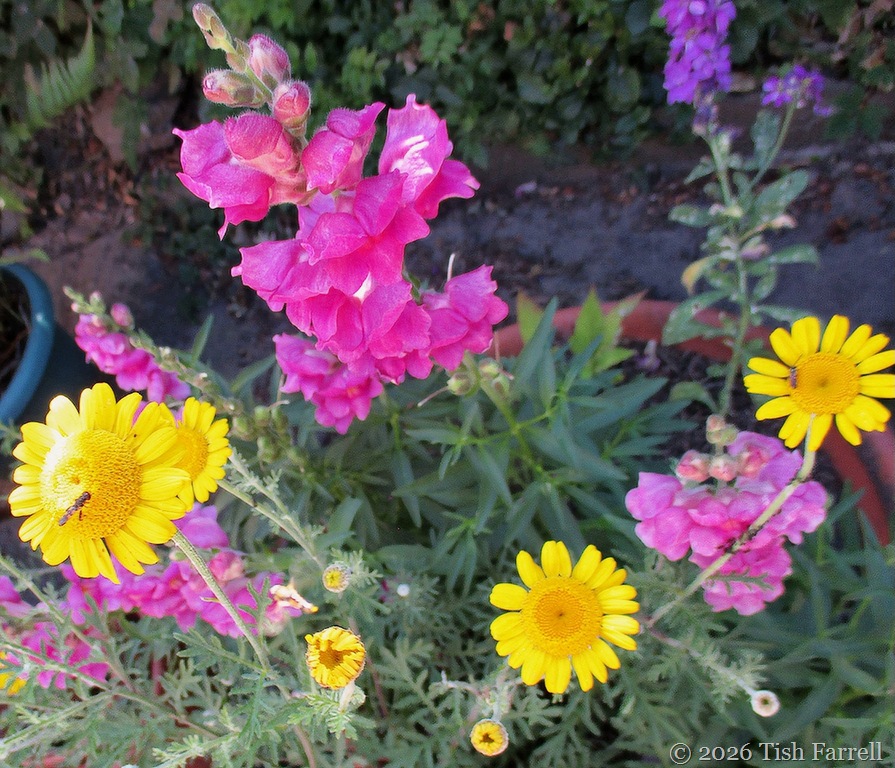
One real hot-weather bonus is that the bees (1), worryingly absent earlier in the month, are now back in the garden, feeding voraciously on the hardy geraniums, Welsh poppies and foxgloves. They seem to be making up for lost time.
RIMG0130 SoS

IMG_0687 SoS

***

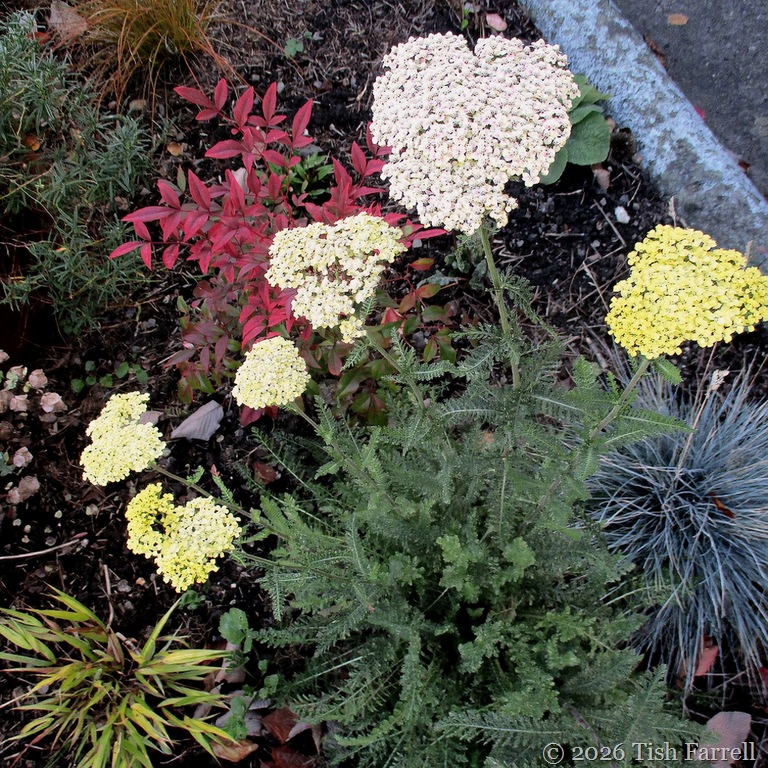
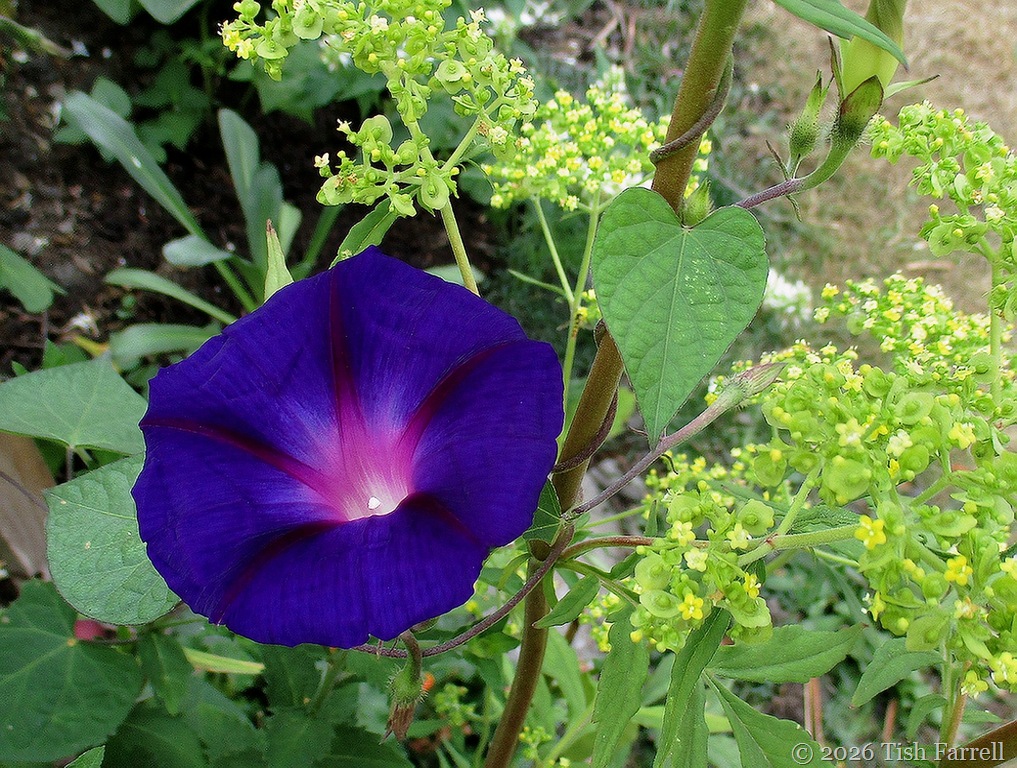
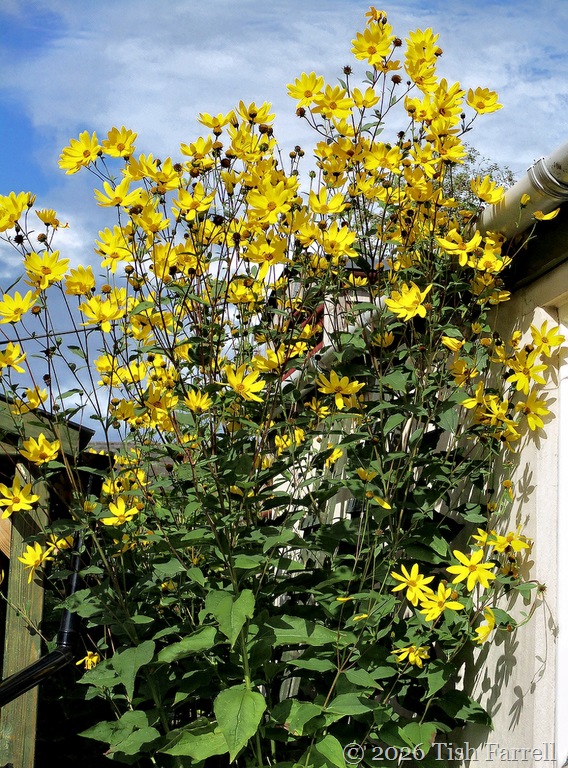
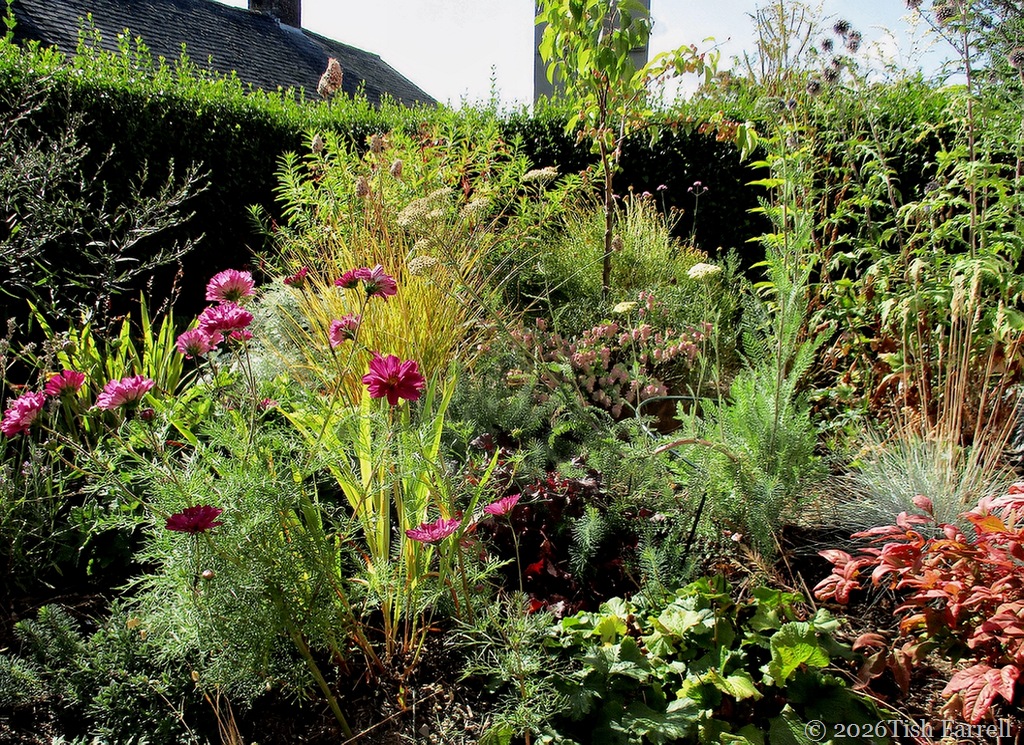
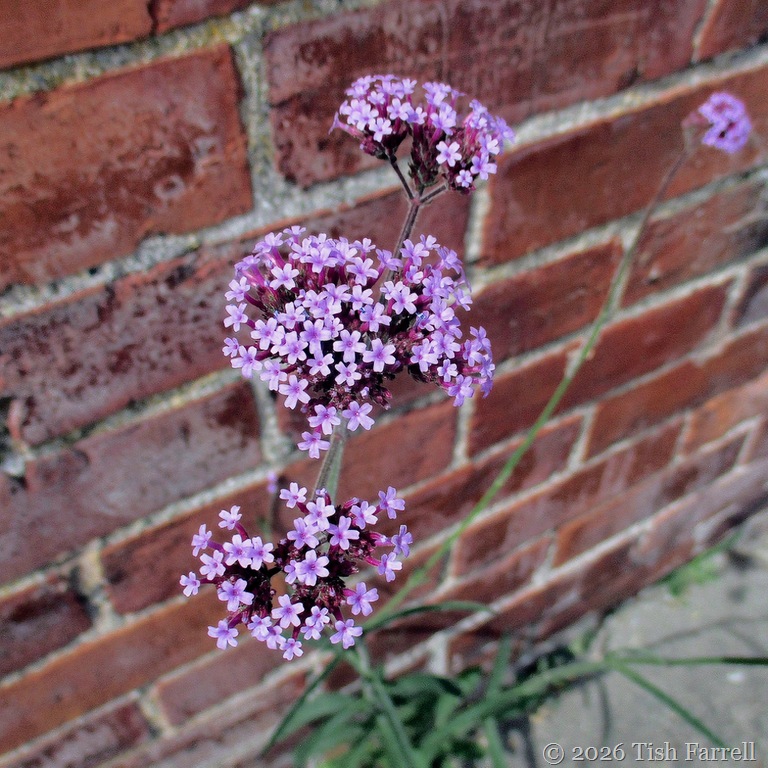
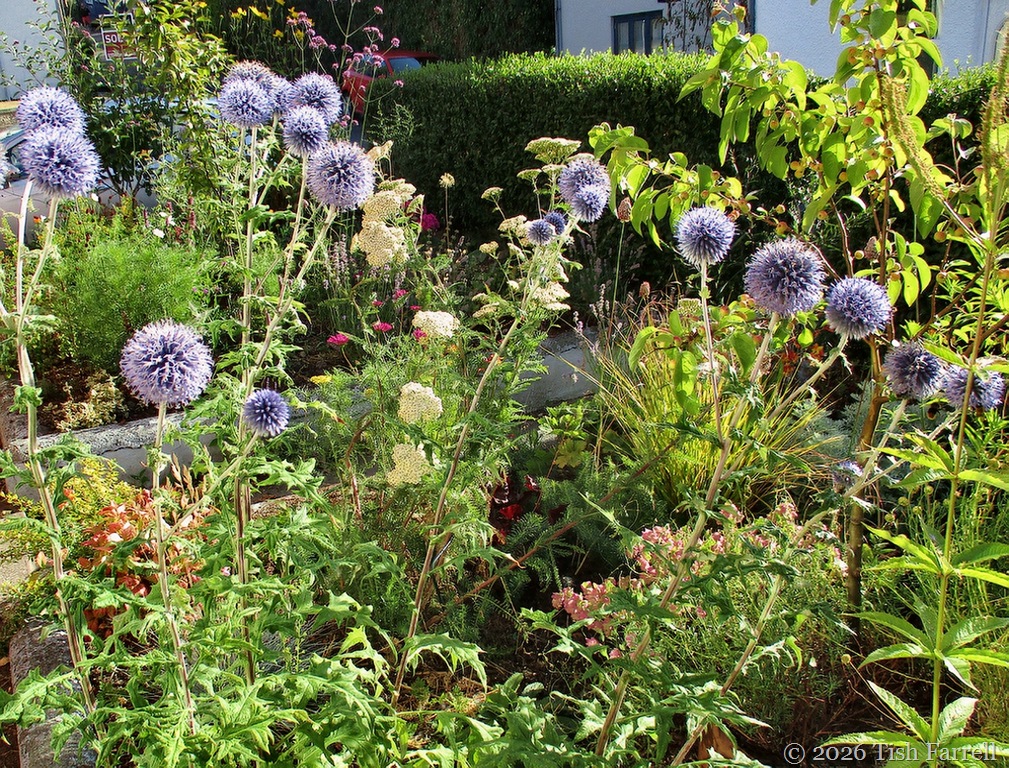
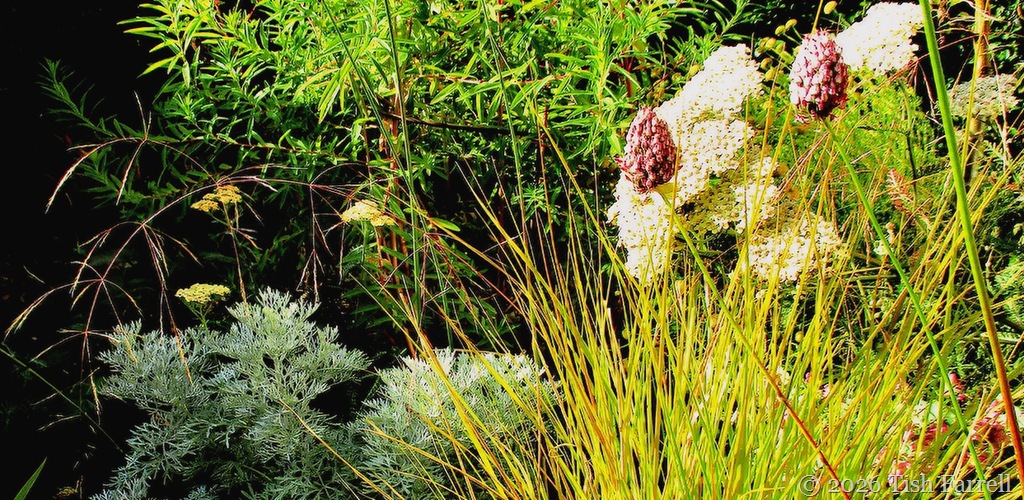
In the back garden border the umbels (2) are the rising attraction. I’m always pleased when the valerian starts flowering, but this year it has a companion, one very like it, if more pink and more sweetly scented. Its common name, Baltic Parsley, sounds most unpromising for such an airy, delicate plant, but then this is hugely preferable to its tongue-twister botanical title of Cenolophium denudatum . I bought two young plants on-line last autumn from Great Dixter Nurseries, whose curated collections are altogether too tempting for the ever greedy gardener.

RIMG0073 starship

RIMG0164 SoS

***

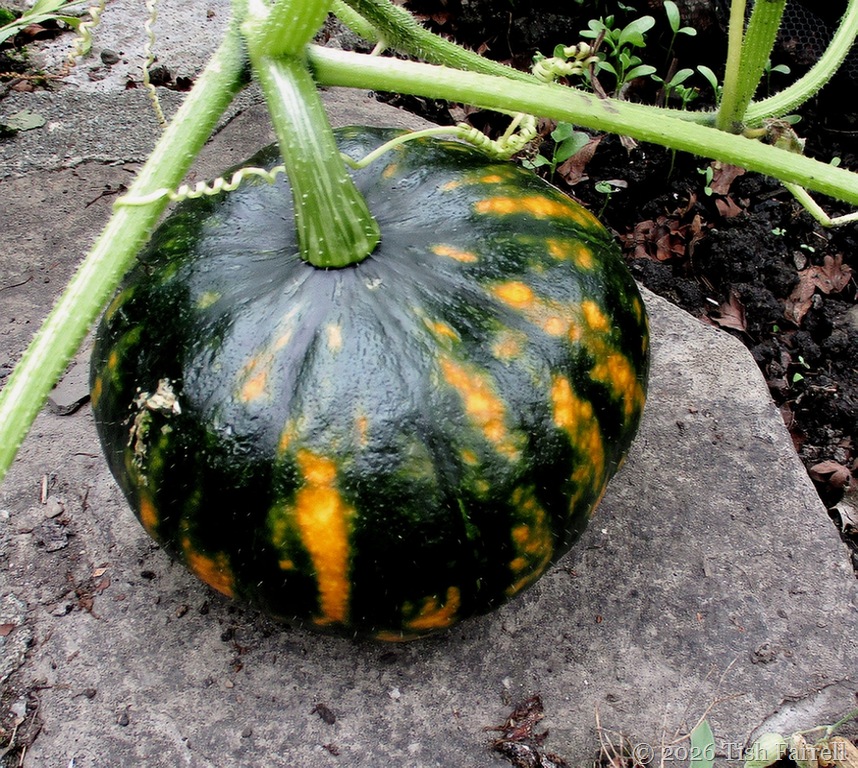
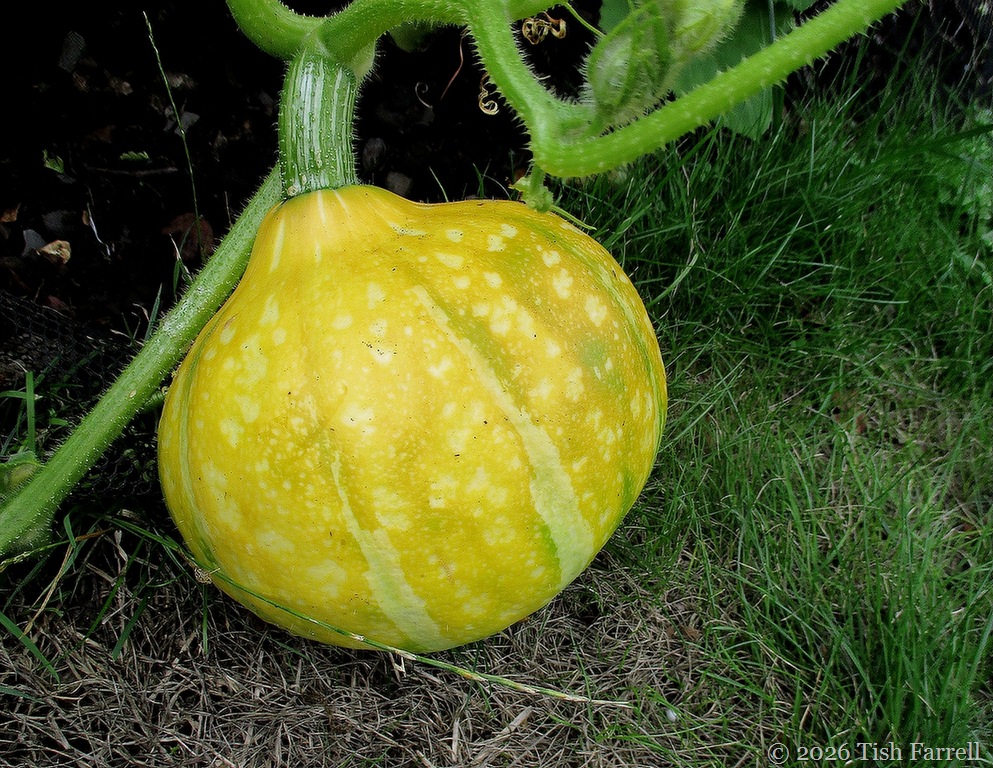
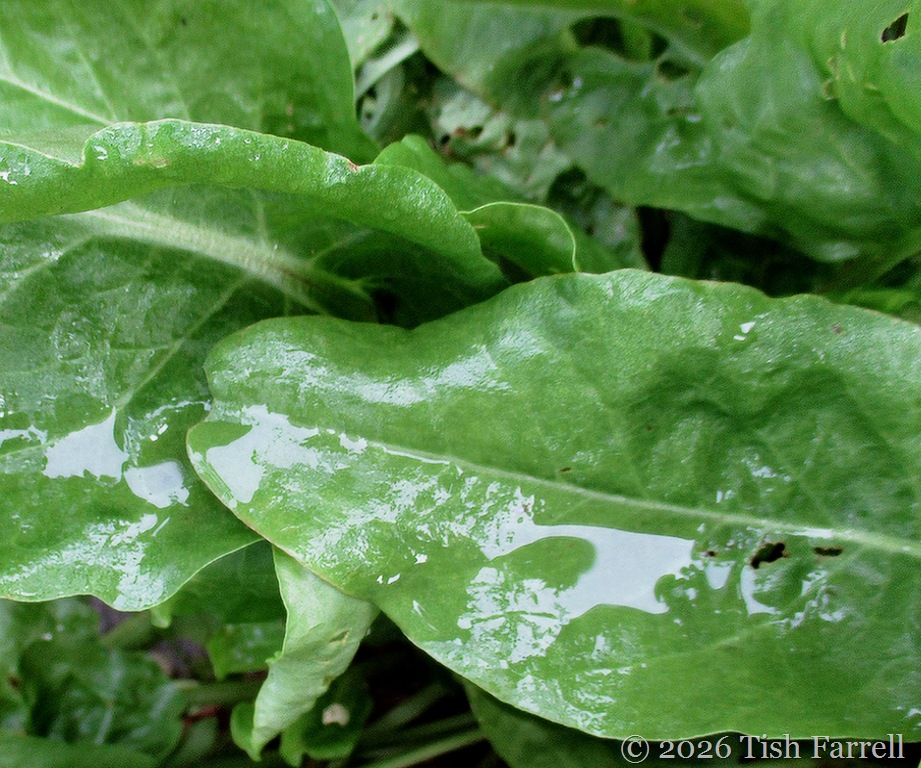
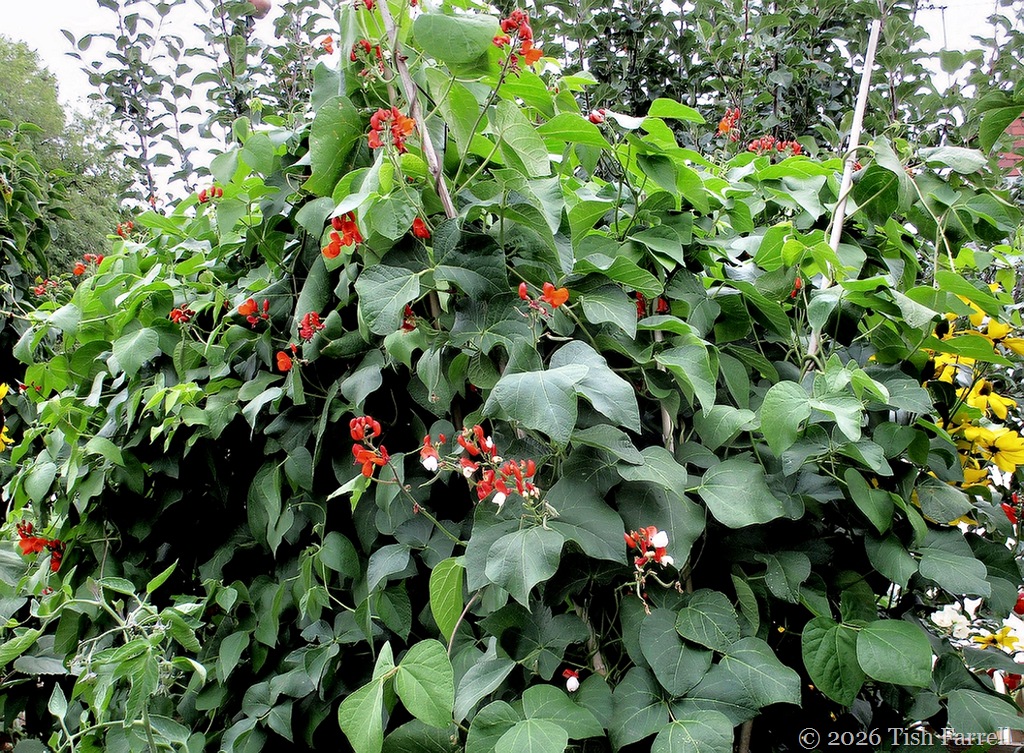
This year I’ve decided to rein in the vegetable growing (3). Limited space is one factor, but the main reason is not liking all the ugly netting defences needed to keep the pigeons and  sparrows from eating everything. I’m still growing herbs, salad stuff, carrots in containers, a couple of rows of potatoes, some strawberries and raspberries, tomatoes in the greenhouse and also beans – all of which don’t need too much if any protection.

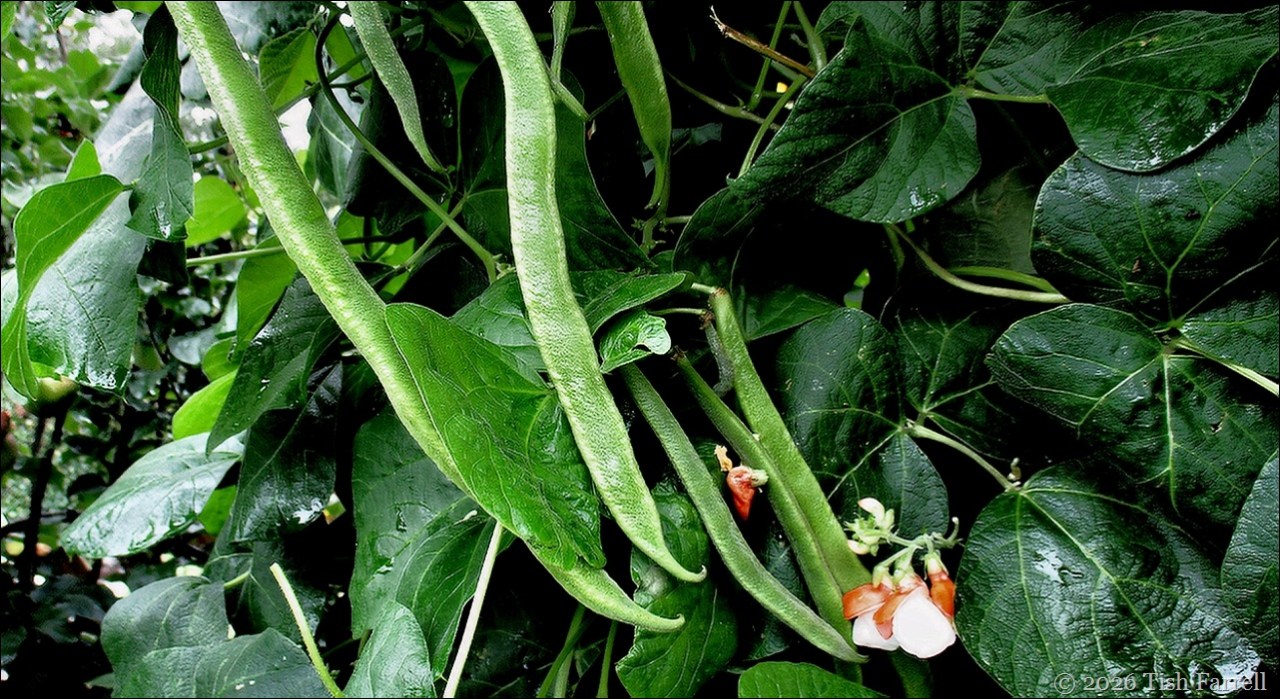
For several of the hot days I dithered about whether or not to plant out the large runner bean seedlings. In the end I decided it was better for them in the ground than drying out in their pots. I surrounded them with an emergency mulch of grass cuttings. Our neighbour had kindly just deposited a load over the fence and into our compost bin. I don’t usually use them for mulching, not wanting either crusts or a smelly, squidgy pan, but they soon dried out and the blackbirds have since been turning them over.

RIMG0149 SoS

Meanwhile on the other side of the garden, the potatoes are looking pretty good. The Charlotte row is thinking of flowering.

RIMG0150 SoS

***

And talking of mulch, my number (4) this week is a shout-out for the benefits of applying Strulch. This is very much for the small-garden gardener who doesn’t have access to masses of home-made compost. It’s a mineralised fine straw that comes in easy-to-move 9 litre bags. Last autumn I bought 2 bags and spread them over the two front garden beds, spots that are both exposed from the north in windy weather, but also sun-traps during heat-waves. There was still enough strulch left over to scatter less generously around some shrubs in the back garden. The stuff is not cheap, but you can find good deals on-line.
Apart from anything else, I’ve hardly had any weeds, and the herbaceous plants are emerging nicely to do their early summer stuff. I covered the entire soil surface, about an inch/2 cms deep.
RIMG0050 late May

RIMG0051 verbascum astrantia rock rose

***

From left to right: Helianthemum Wisley White, Astrantia Sparkling Stars middle, Verbascum Lavender Lass  front. And a closer look at the Astrantia. Isn’t she lovely?

RIMG0154 SoS

***

Not everything is going so well. Unseen pests (5) have been busy, most notably in the sweet peas, amongst which something, probably pigeons, have been gnawing off whole chunks of stems. For once, I’d grown some pretty chunky plants, and put them out early to grow up obelisks. But once they started growing, large parts began to go missing. I still have some flowers, but it’s not the display envisaged. I’ve never had this problem before, and can’t think how to protect them – i.e. that won’t end up in a big tangle of netting. (Note to self. The obelisks are probably the problem. Ideal perches for pigeons).

The other casualty, one that’s ongoing despite moving the plant to different locations, is the lovely blue-mauve lupin. Something keeps stripping the flowers. One minute they’re there, and the next time I look…

RIMG0141 SoS

***

But to end on a high note, and a deliciously fragrant one too – Cornelia Rose (6). She burst into flower this week. More power to her little pink petals. She’s growing by my greenhouse so I see a lot of her.

RIMG0132 SoS

Copyright 2026 Tish Farrell

Six on Saturday  Despite the heat-wave down in Cornwall, host Jim has some spectacular things on show in his garden, to say nothing of the magnificent Poplar moth in the greenhouse.

RIMG0107 SoS header

Lens-Artists: In The Early Morning Garden

RIMG0072 blackberry flower

*

In this last week of May, the weather has switched from weeks of blustery cold to days of enervating heatwave. How did this happen?

Things began to warm up last Friday. By sunrise on Sunday, there was no doubt about it: summer had well and truly come to Bishop’s Castle. Towards 7 a.m., the sun just topping the town rooftops, I went out in the garden. There had been a heavy dew and all was glistening. I kicked off my shoes and walked on the wet grass. It was very cold – champagne for the soles!

It’s odd, though, how you can go into a familiar place at an unfamiliar hour and feel an intruder. The garden was not expecting me. It was immersed in its own business. There was a sense of immanence. A discernible  energy. Still cool, but also voluptuous as if you might wallow in it. Also in the early light, the flowers had other-worldly looks; their intimate, intricate structures very strange at close quarters. Again, a sense of intrusion.
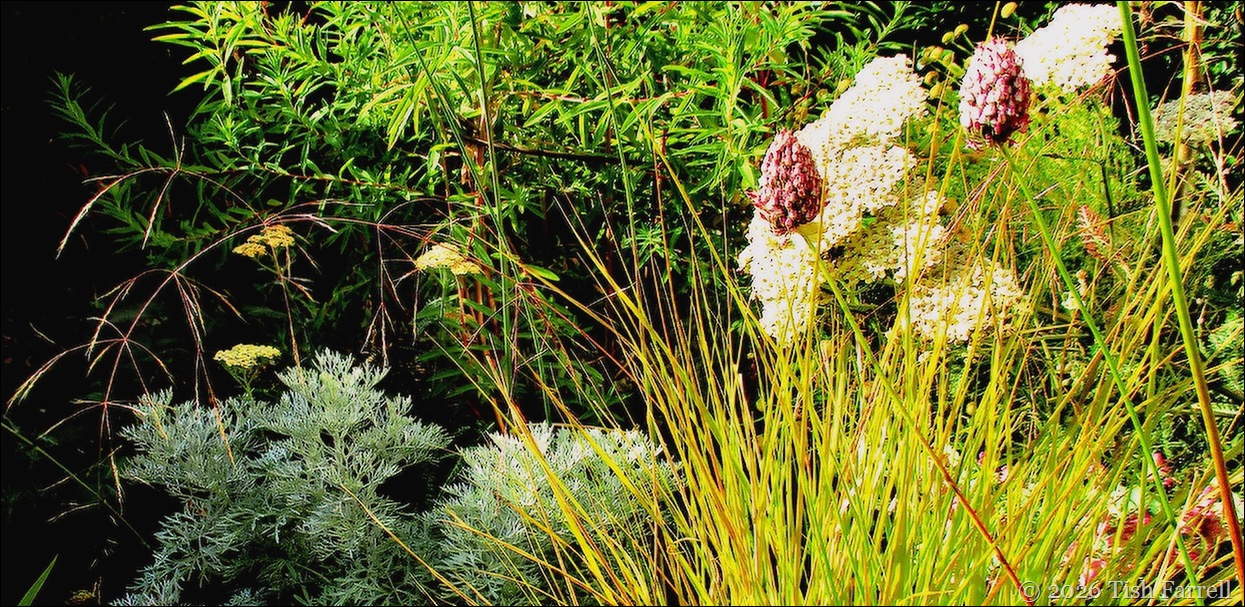
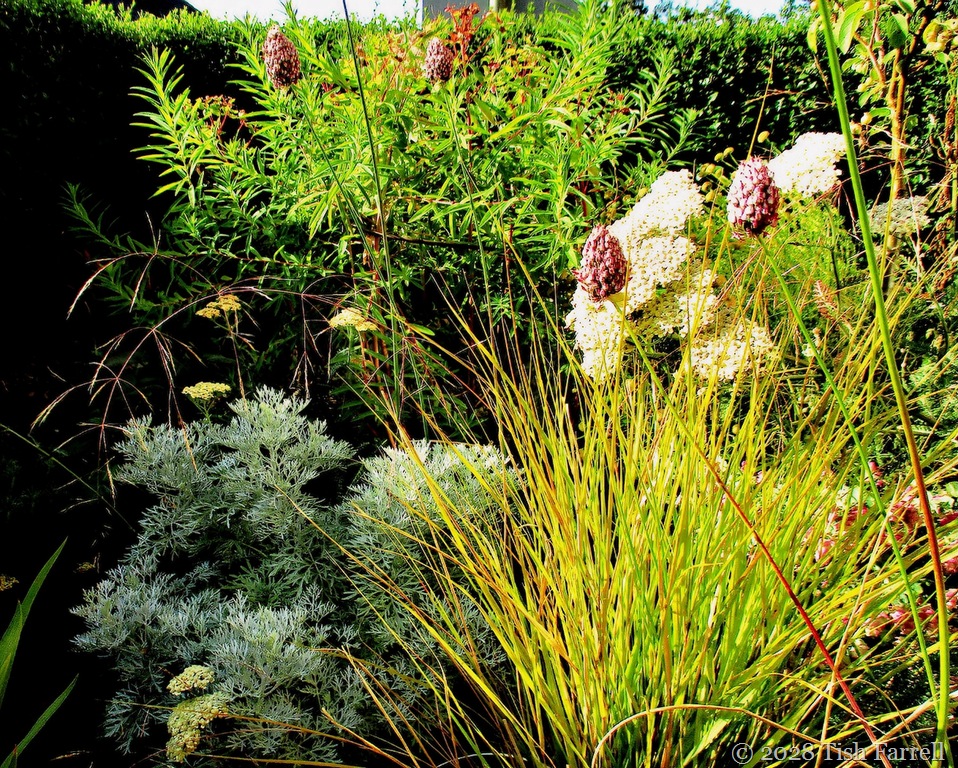
But then that made it just the moment to ponder on Egidio’s this-week’s theme at Lens-Artists. He’s put us on the spot, and literally too, proposing that we restrict ourselves  to a well-defined small space and photograph what strikes us there. It seems a perfect exercise for exploring the familiar, the taken-for-granted, with fresh eyes.

And so the header photo – a result of peering more closely. Quite eye-opening actually – to notice the astonishing number of miniscule components needed to make a blackberry. Here it is again:

RIMG0072 blackberry flower

*

These next photos conjured thoughts of  alien spacecraft…

RIMG0073 starship
RIMG0092 aquilegia

*

And then there’s the extraordinary pollinator guidance system of foxgloves – not only the captivating flight path of spots and dots, but also a landing pad covered in tiny filaments – and for what? Massage services for bees as well as the pollen fix?

*

And finally some simple things that pleased this gardener’s eye…noticing a corner by the shed that is entirely the garden’s own work – assorted volunteer columbines and another foxglove.

RIMG0047 self-grown garden*

…and then the  lantern-like looks of alliums and snapdragons, caught with surprising vividness in early morning shadow…

RIMG0058 alliums and snapdragpns

*

Lens-Artists: Stuck in place  This week Egidio asks us to focus on a particular space, no more than 10-15 paces in any direction, and consider its parts with fresh eyes. How will you capture them?

*

Copyright 2026 Tish Farrell

Six On Saturday: Frigid May

IMG_0629

We might have lost the cherry plum over the hedge, but we still have the hawthorn tree (1).  Just now it’s a tumble of creamy curds – may blossom in May. It’s a shame there are so few insects about to enjoy it. Even the stalwart bumble bees are scarce, which is worrying. I’m hoping they’ve tucked themselves up somewhere cosy until the Arctic winds have blown themselves out. So far, then, it’s been a very chilly May in Shropshire, and dry too, until these last few days. My water butts were empty, so even as I whinge at the cold wind, I’m pleased that rainwater supplies have resumed.

And spring is still happening in the garden despite the low temperatures. The apple blossom has been and gone, though signs of pollination looking sparse to absent on some of the trees. Now, then, is the time of columbines (2). As ever, they have grown themselves everywhere, including in the horrible hedge where one plant, trying to outdo the holly and privet, has used them for support and grown over four feet tall. It greatly improves the look of the hedge. Size-wise, they are more restrained at the bottom of the garden, but this year have arrived in many colours  from white to darkest claret, and shades in between.

columbine

*

I’m also pleased to see some lemon coloured Welsh poppies (3). Last autumn I pocketed seed from a neighbour, and scattered it under the old apple trees. We already had the self-sowing orange ones in the bed above the back terrace. For some reason I’m not too keen on the brassy version. This year, though, they’ve popped up among the Ranunculus.  I’m thinking they look rather good together.

Welsh poppies

Ranunculus poppies and geum

*

The blue flowered hardy geraniums are beginning to open, but the cranesbill Geranium phaeum Album (4) is well ahead. It does sprawl about, but its flowers are so delicate. It is supposed to be shade-loving, but I also have one that seems quite happy in full sun.

Album

*

And then there’s the rocket (arugula) (5). I’d never thought of it as a flowering plant till this year. All through the winter we were cropping a short row of it. Then, come March, it began to go to seed and I pulled most of it up. And then for some reason I left a clump. Now it’s a tall plant covered in a mass of flowers that seem to go on and on. They have curious, wonky propeller looks about them. I also thought the insects might like them if there were any about. Meanwhile, the bits of greenery down the stems are still perfectly edible, surprisingly mild in flavour. And it’s providing a bit of floral interest in front of my presently empty raised beds.

rocket flowers

IMG_0527

*

And to finish, here’s one of my newest plants bought in March. Iris Sibirica ‘Perry’s Blue’ (6) has just begun to flower. I’m rather taken with the startling contrast of the pale lavender with the russet-gold tones ofSpiraea Japonica Firelight. At a distance, as the wind blows, the flowers look like big butterflies.

Iris Sibirica Perry's Blue

*

Copyright 2026 Tish Farrell

*

Six on Saturday 16 May 2026: Please call in on our host Jim. There’s always something new to see in his garden. This week, among other lovely things, he has a gorgeous fern and some self-replenishing corydalis.

hawthorn header

Of Bossy Birds And Icy Blasts

blackbird

I can well understand why small beings like blackbirds need to keep stoking up with fresh food supplies. Not only are there chicks to feed, but our spring days persist on the frosted side of chilly.  He who is currently casting his own coping stones for the terrace wall tells me that the high pressure over the Atlantic and  low pressure to the north and east is causing Arctic air to be sucked down upon us, thus creating the UK’s coldest May in five years.

And the upshot: the winds that the weather people have been telling us are ‘fresh’ have been, and continue to be bone piercingly frigid. Nor does it help that our street is aligned due north, thus greatly facilitating the funnelling of icy blasts to our doorstep.

In consequence we’re still in winter woollies. Also, we’ve continued to keep the hedge bird feeder well stocked with fat balls, this on the grounds that the sparrows et al still need energy for gathering food for their young. They’ve certainly been getting through them.

Out in the garden the blackbirds have other strategies. This male blackbird starts chivvying me the moment he spots me. If  I don’t respond at once, he moves in very close, finding a perch whence he can fix me with those beady eyes. And if this still doesn’t receive the desired response, he starts shouting.

And I must say, I do feel a touch affronted – to let myself be bullied by a small bird.

But needs must. The other day when I started earthing up the potatoes, both mister and missus swooped in, combing through the disturbed soil, chuntering in tones of unalloyed blackbird ecstasy. I have yet to spot exactly how they manage to hoover up quite so many small worms in one beak full. It all happens so fast.

[Spoiler alert: not for the squeamish.]

blackbird 3

blackbird and worms

*

This morning I spotted the male in the apple tree, not far from my left ear. As ever he gave me the eye. The rain had moved in and I was late on parade. But today it seemed he’d managed to gather his worms without my intervention. More surprising though, he also managed to give me song without opening his beak. No worm was lost.

Songs for worms, I thought. Fair exchange.

IMG_0552ed

*

Copyright 2026 Tish Farrell


Six On Saturday: Here Comes May

sparrow blackbird

Birds (1) are very much on our minds at present. This morning Graham emptied the seed dregs from the bird feeder onto the terrace wall. This invited a flurry of takers: several sparrows, a female blackbird and a wood pigeon. The advice of the Royal Society for the Protection of Birds is to stop feeding garden birds from May to the end of October, this to prevent the likely warm season spread of parasitic disease that’s affecting certain species, especially green finches.

All winter we have put out seeds and fat balls in feeders hidden in the hedge outside the kitchen window. This strategy has kept the jackdaws and pigeons away from the actual feeders, but not deterred the pigeons from scavenging for spilled seed in the hedge bottom. But we’ve otherwise enjoyed watching the regular sparrow visitors, and the not so frequent blackbirds, robins and bluetits.

The other RSPB reason for the feeding halt is to encourage birds to return to natural seasonal eating habits now there is plenty of wild-grown stuff about. We can see their point.

Anyway, now is also the time of year when the birds go in for some irritating garden habits, such as dust bathing around the roots of emerging herbaceous plants, thus compacting the soil and exposing roots (sparrows), or removing the mulch from the borders and tossing it around the paths (blackbirds). I’ve also discovered it’s the sparrows who have been nibbling the Swiss chard and spinach, even through the supposedly protective mesh. So, yes, maybe it is time they frequented fresh dining venues.

*

Lately I’ve been thinking that the tulips (2) are on the wane, but the unknown variety growing in the terrace wall pot keeps on flowering. Never mind the days and weeks of ferocious wind blowing them horizontal and drying out the pot. On dull days the petals  are very upright, but come a spot of sunshine, it’s full-fling abandonment…

tulips 3

*

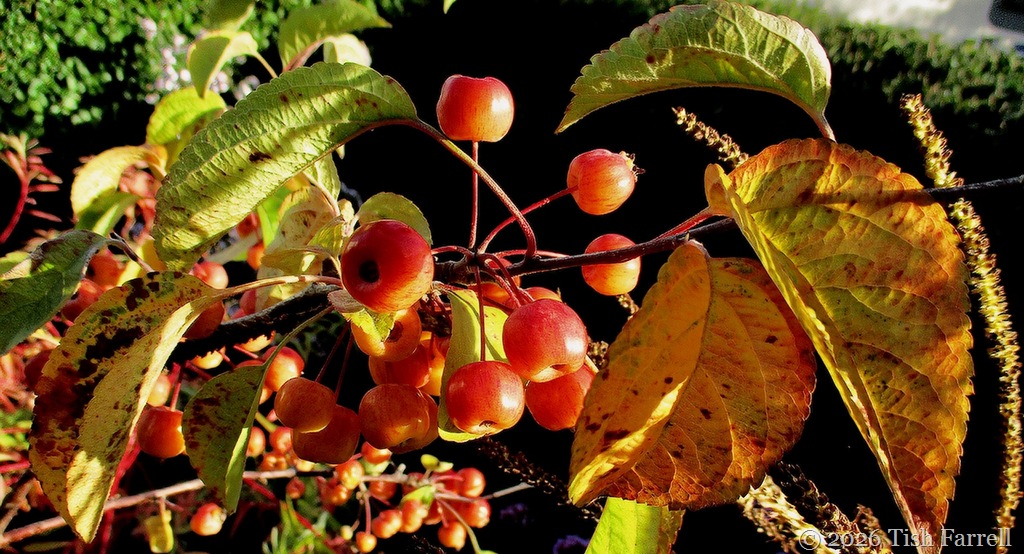
Around the garden, the apple trees – eaters and crabs (3) are at various stages of flowering and finishing. In the front garden, the dwarf version of Laura, (a compact and columnar crab apple even when full-sized), has flowered with us for the first time. The crimson blossom is gorgeous against the claret-tinged foliage.

Laura crab apple

*

Also in the front garden the Ranunculus bulbs (4) are among the most striking of the  bright and early bloomers. They, too, have proved remarkably resilient to being blown off their roots. I planted them last summer at the wrong time, and was surprised when they flowered sporadically during our rainless weeks, and then produced quite a lot of foliage during the winter. Their red-hot shades are looking astonishing between the citrus green of the Euphorbia palustris ‘Walenburg’s Glorie’ and the deep russet heucheras. (That’s a dwarf Evereste crab apple in the middle).

front garden 2

front garden May

*

Another early flowering favourite is Phlox divaricata ‘Clouds of Perfume (5). It’s a low-growing, spreading variety, and more than living up to its name beside the front path. Makes me think of parma violet sweets we sometimes had as children, but smells much nicer.

phlox divaricata clouds of perfume

*

I’m very fond of hardy geraniums and have a number of young plants of several varieties in all the flower beds. The first to flower this year is Geranium phaeum ‘Samobor’ (6). The dusky wine coloured flowers are small, downward facing and all round unspectacular unless you get in close (also very difficult to photograph), but it is the foliage that is the more notable. I’m not sure that I have it in the right spot. It seems to have more woodland inclinations than herbaceous border frontage, but I like the leaves, which look rather good beside the two heucheras whose varieties I’ve forgotten.

samobor 4

samobor 3

*

Happy gardening, folks, whatever your hemisphere.

copyright 2026 Tish Farrell

*


Six On Saturday Please visit our host, Jim, in his Cornish garden.


birds header 2

The Changing Seasons: April Days

Wintles Hill View 2

April has been wind-wind-windy, with more days of lowering cloud than sun. Also, at times, it’s been piercingly cold, so definitely no casting of winter  layers.

I’ve already said here how an early April gale felled the cherry plum tree that grew just over the hedge by our kitchen window. It wasn’t our tree, but part of our ‘borrowed landscape’ and somehow gave us a sense of woodedness with its gracious rustling canopy. It was a shock to find it lying across our kitchen roof.

cherry plum

cherry plum 6

But now it is gone, we have more light and, come supper-time, even a sunset glow atop the holly hedge. And so, as is the way with gardening, something lost is the chance for some new growing. Still to be decided.

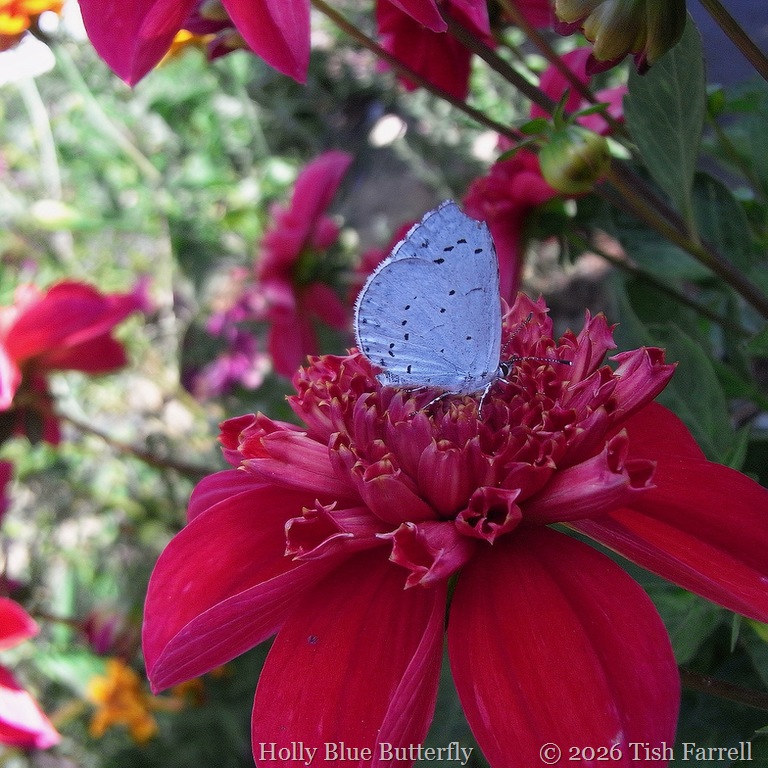
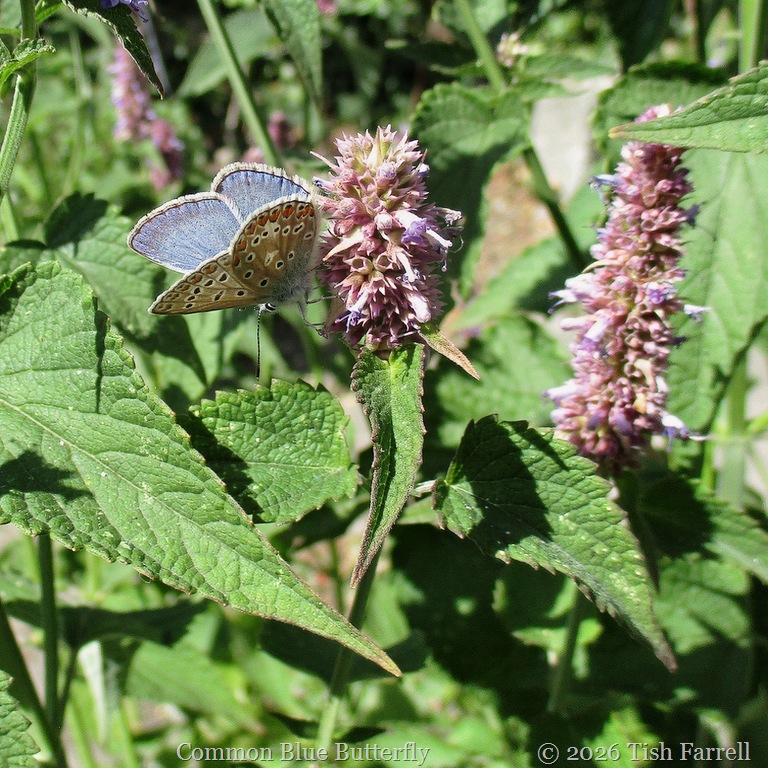
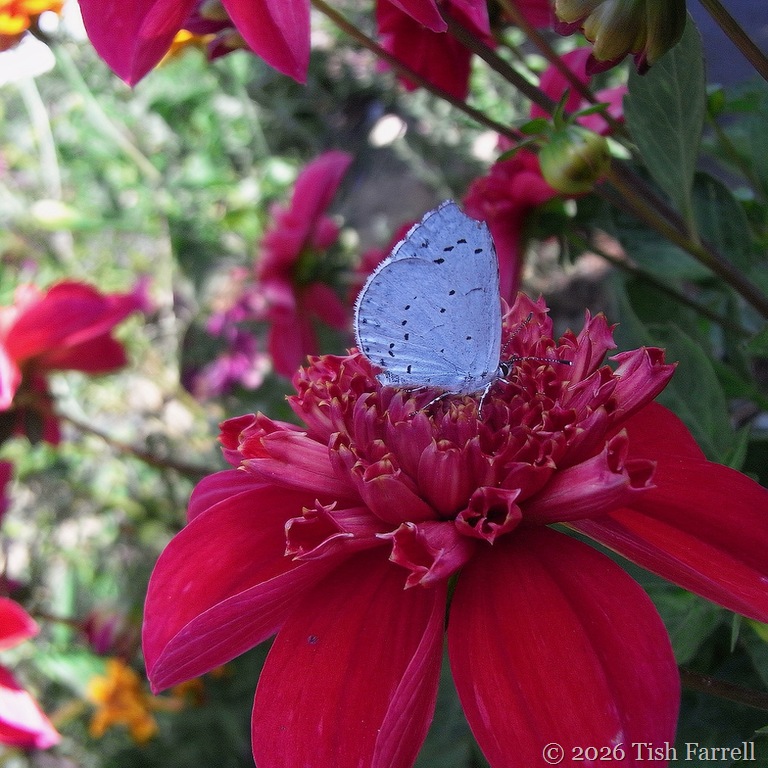
But talking of the holly hedge (which is absolutely not my favourite part of the garden), these last two weeks it’s been alive with tiny blue butterflies. An entomologist chum told me they are Holly Blues, and not the Common Blues I’d taken them for. They travel at speed, flit and flutter, looking like flecks of fallen sky. Not easy to snap then. All of which is to say, I’m feeling more kindly towards the hedge if its the reason for the tiny blue butterfly show.

Holly Blue best

Holly Blue

*

The cold and windy weather hasn’t stopped spring happening. In fact all the winter rain is paying off around the town – the countryside fat with lush pasture and burgeoning wheat fields; hedgerows alight with blackthorn blossom, hawthorn, hazel, bright white stars of stitchwort, bluebells, dandelions. The big trees, too, are starting to green (the oaks and ashes are ever late on parade). And of course it is also the season of bright yellow spreads of oil seed rape, plus the inevitable flocks of tiny flea beetles that go with it, and then come to my garden later to devour my rocket plants or anything else related to a cabbage.

Wintles Hill view 4

*

elephant

*

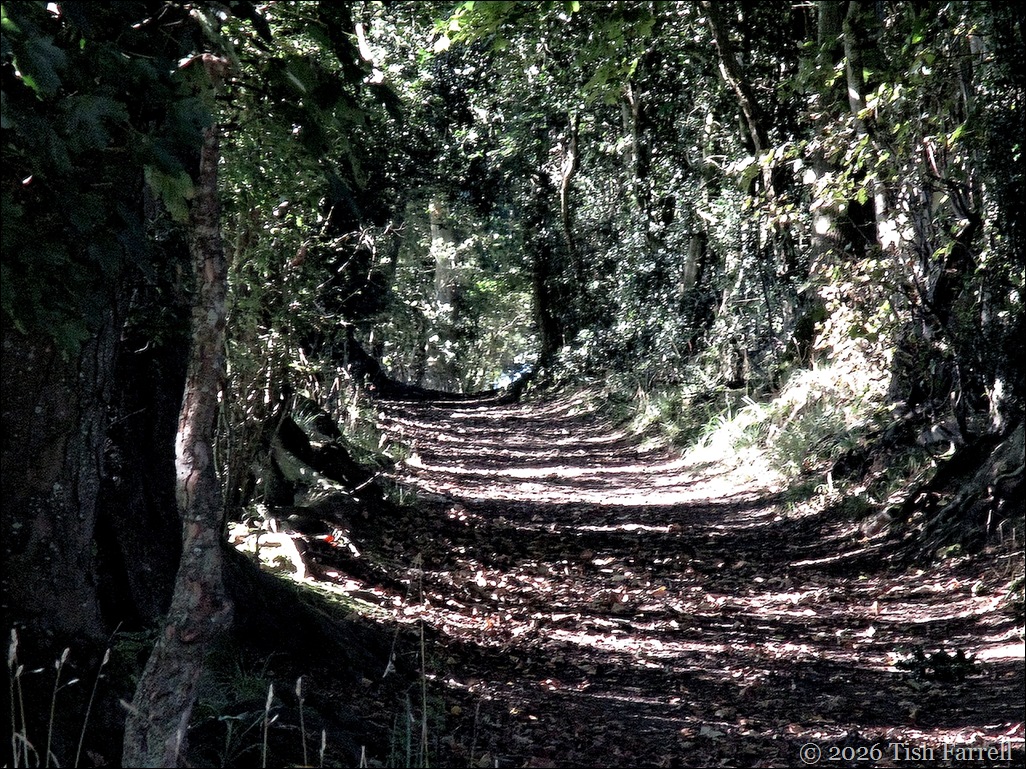
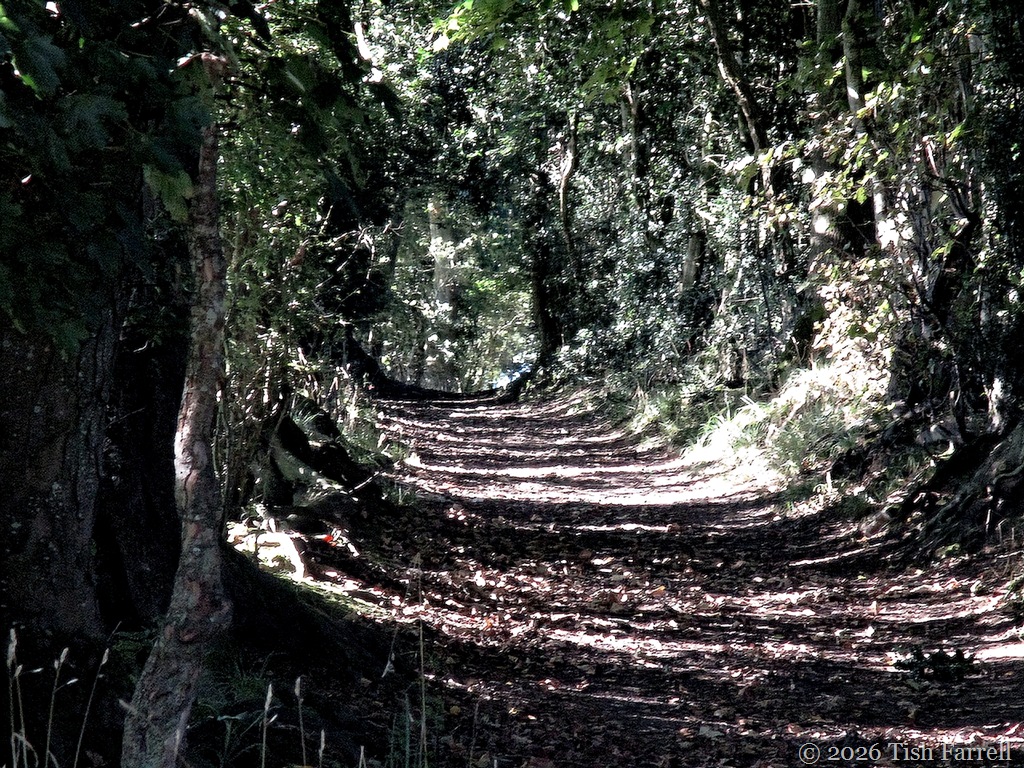
Last week, on a bright, but still windy day, we walked up Wintles Hill behind the town to see the views and visit the elephant sculpture. The green lane ascent lived up to its name, but with masses of white stitchwort too.

IMG_0303Stitchwort

*

On the brow of the hill, the old barns, as usual, demanded to have their picture taken:

barns

*

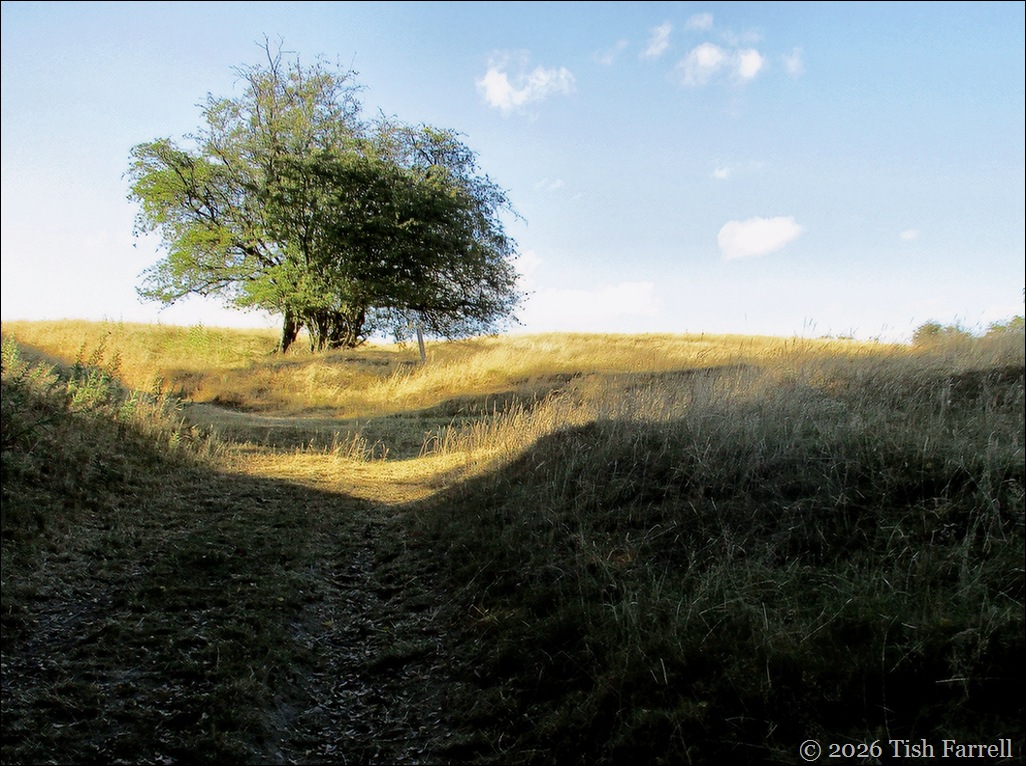
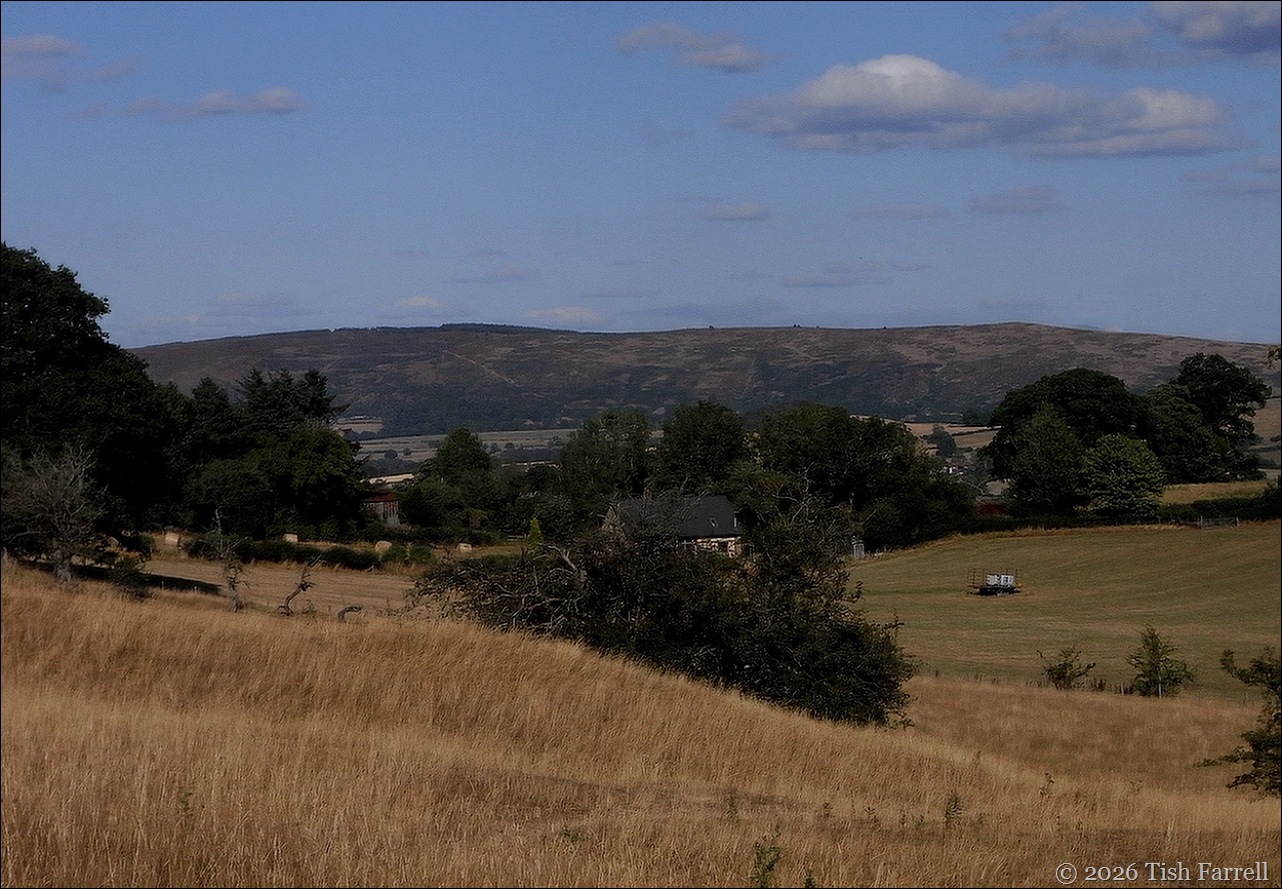
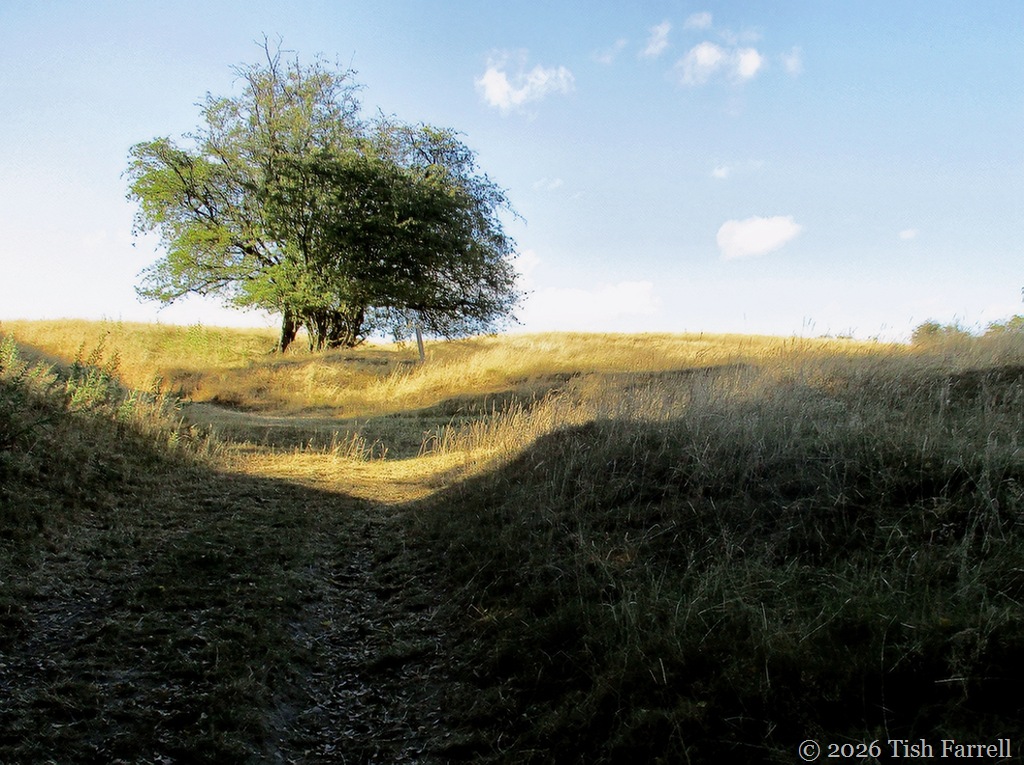
On Wintles hilltop, which is always a high spot and in all senses, the wheat was just emerging, but not so vigorously as in the more sheltered, well watered valley fields. We stopped to look beyond our local hills, over the border into Wales:

IMG_0317

*

Meanwhile, back in the home garden, it is apple blossom time. The miniature eating apple trees and the three crab apples have been flowering well. Even the big old tree at the bottom of the garden is now looking lovely after a good winter prune:

apple tree

*

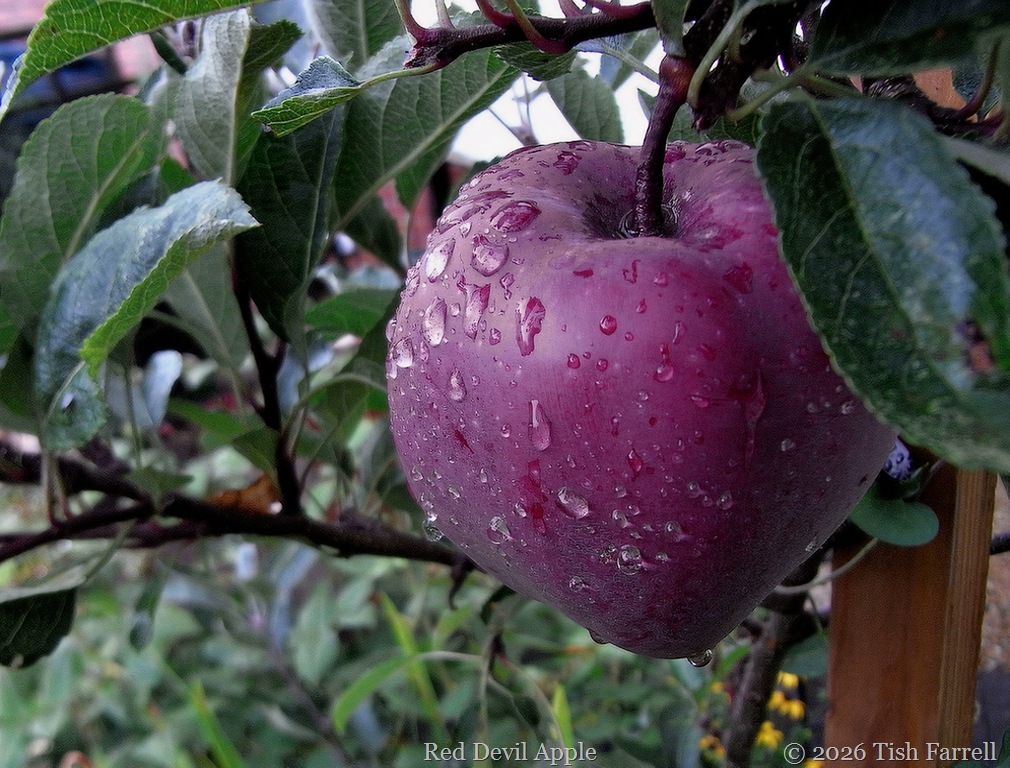
Closer to the house, the Red Devil miniature tree is looking anything but devilish. This is its first year flowering in our garden. In time, it’s supposed to produce bright red apples, which rather puts one in mind of Wicked Queens and Snow White:

apple Red Devil

*

As for the rest of the garden, the daffodils and narcissi are over, the tulips on the wane, but the early summer plants are surging up: foxgloves, aquilegias, and valerian all about to flower; Welsh poppies, and Centaurea cornflowers already opening.

Today, on the last day of April, we have a cloudless blue sky and brilliant sunshine. And it’s still blowing a gale, but at least it’s a warmish one. There are times, too, when it drops, it almost feels like summer, but only for a moment.

last of the tulips

Copyright 2026 Tish Farrell

*

The Changing Seasons: April 2026  Brian at bushboys world  and Ju-Lyn at Touring My Backyard are our hosts. Please pop and see what they’ve been up to this month. For one thing, Brian has a stunning gallery of birds and wallabies, and as ever, Ju-Lyn has been cooking up a storm in her kitchen – so many mouth-watering creations.

Wintles Hill View 2 Header

Six On Saturday: Wind & Sun & Hail

heart's delight tulip

It’s been a week of many weathers, including a sudden heat wave on Wednesday with days of piercing winds and low temperatures either side.  One day we’re in the 20s C, and the next it’s down to 9 degrees. All very confusing, although I did manage to remember to think it was time to plant the seed potatoes – Red Rooster and Charlotte. They had grown some very chunky shoots while lingering in egg boxes in the downstairs cloakroom.

Also we could have done without the gale last Saturday. More of which in a moment. But first, the garden stars of the past two weeks have been these lovely little front garden tulips, Heart’s Delight (1). They have stood up to being roasted and thrashed, but I fear they won’t last today. As I write this, we’re having a hail storm and fierce sleety gusts. Most of their petals have already blown off.

IMG_0111ed

*

And so to last Saturday’s gale, and good bye cherry plum tree (2).  It wasn’t our tree, but it gracefully filled our kitchen window view and we liked to watch it through the seasons. It also made up for the ‘horrid holly hedge’ which we acquired along with the house. On Easter Sunday we woke to this:

cherry plum 2

cherry plum 7

cherry plum 1

*

The tree people came this week and cut the whole thing down. They said the remaining trunk showed signs of decay and had to go. There’s no denying it: it’s left a big gap.  I doubt that the housing association owners will replace it, planting space being rather limited. Here it is back in March.

cherry plum in March

cherry plum gap

We can now see the retirement home’s almond blossom tree across the road, but the immediate holly hedge view seems rather bleak and gloomy. I’m wondering about having a Japanese Maple in a big pot at the top of the old steps opposite the side window. It’s a semi-shaded, sheltered spot. It might work?

*

Of miniature trees (3). On a happier note, the garden’s tiny trees seem to be faring well. We don’t have a great deal of space, and although I realise shrubs generally form the ‘spine’ of a garden, I couldn’t get to grips with what to choose or where to put them. Instead, I thought of dwarf trees. The conference pear is the prettiest of them just now. It’s in a raised bed beside the potato patch.

back garden April

pear 3

pear 2

*

We also have 2 dwarf eating apple trees and a little Stella cherry on the top of the terrace wall, and in the front garden, two small crab apples (Evereste and upright Laura both about to flower), and a Merrybelle Plum, which is just over.

My thinking with the little trees is that we and the pollinators have the pleasure of the spring blossom (and maybe also some fruit come autumn), but they leave lots of room for the late spring and summer show of herbaceous perennials.  And if we lose sight of them for a while among the phlox, rdbeckia and Michaelmas daisies it doesn’t really matter.

Merrybelle 3

Merrybelle plum

terrace bed

About to flower – a dwarf Christmas Pearmain just visible to the left of the tulip pot.

*

The weather may be changeable and bitterly cold (even by English standards) but there have been plenty of sightings of butterflies: orange tips, tortoiseshells, Common Blues. I’ve also noticed bumble bees, especially in the Pulmonaria (lung wort) flowers. Diana Clare (4) with her striking silvery leaves, is a new plant bought last year, so I’m pleased to see she’s settling down, and especially after the pigeons snaffled her first leaves.

RIMG0065ed

*

Also looking its best with lots of flowers for the insects is the creeping rosemary (5), planted a couple of years ago along the front garden wall.

rosemary

*

And last, but not least, it’s all thanks to he who builds sheds and car ports that aren’t for cars, AKA Graham. This week he finished making me a cold frame (6). Brilliant! He’s also mended my ancestral (grandfather’s) spade  whose handle broke while I was trying to excavate the whirly washing line spike that needed to go somewhere else.

All we need now is to get growing with some warmer, less windy weather. Roll on spring!

cold frame

*

Six On Saturday April 11 2026


Blue Sky Morning

RIMG0060ed

Breakfast on the lawn. A jug of coffee and fresh cut orange and apple with toasted nuts. And at last the sun on our skin. A sense of bliss after the dark, wet months.

Overhead, in the big blue, jackdaws drift from their roost to all points and back again. No reason necessary. Far off, too, above the town, white glints catch my eye. They shimmer like foil reflecting the sun, and soon, drawing near, take form: a pair of buzzards in their best feathers. It’s the white underwing that catches the light. They glide by. A pair. Aerial synchrony. It looks like a slow pas de deux.

And next comes the red kite, Shropshire’s largest raptor. Sipping our coffee we lean back to watch. It’s far up, the tell-tale V of the tail feathers, the wide wingspan. We almost take such sights for granted now. The sparrows, though, dash for cover in the holly hedge. And that’s when, gaze lowered, I notice the brimstone butterfly. Wings of pale apple green, it’s flitting about the garden at high speed. Then up and away over the fence, across the street and into the Thorntons’ garden. It’s the second I’ve spotted this week. I don’t recall ever seeing brimstones before.

Along the garden path there’s a continuous sprinkling of cherry plum blossoms. The ice pink petals fall like slow snow flakes. On days like this the tree looks its festive best against the sky. It’s not our tree but grows near our hedge, casting the new spring garden of daffodils and hellebores in dappled light.

RIMG0063ed

And so with the sun and the blue sky all seems hopeful, bountiful, beneficent, and I breathe a long slow breath. Muscles soften. Winter tensions dissolve. Here, in our small garden world, spring is happening.

copyright 2026 Tish Farrell


Lens-Artists: Time to relax  This week Anne at Slow Shutter Speed wants to know what helps us relax.

Changing Seasons, February 2026: The highlights

crocus feb 1

Here in England, it’s too easy to harp on about our months of wet and dismal weather. But February has not been all wall to wall gloom. Last week, when we had two sunshine days, everyone was out and about, spurred on by fits of exuberance. How we’d missed the sun. It felt a battery recharge.

I made the most of it, too. Not only did I mow the lawns, but I also dug out my compost bin and spread the contents all over the back garden beds: instant refurbishment to rain beaten soil, and no digging required – at least not beyond the confines of the compost bin. No-dig pioneer gardener, Charles Dowding, would surely give me a thumbs up for effort. The blackbirds are certainly pleased with me, although I’m not so pleased with them. They seem to think the garden path is a better spot for my compost.

And so the highlights – the crocus certainly. They’ve stood up magnificently to rain and wind:

crocus feb 4

crocus feb 3

*

And in sheltered corners the daffodils are just now following on:

Daffodils Castle St feb

*

And about the town, the hedgerows are hanging in hazel catkins that catch the light:

hazel catkins 2

*

While hedge bottoms glow with bursts of freshly opened celandines, some of our earliest wild flowers:

Celandines feb

*

Meanwhile the cherry plum tree over the garden hedge, is treating to us to a sherbet pink confection of early blossom:

cherry plum feb

*

And then one afternoon last week at sunset…

sunset feb

*

…a blackbird perched in the top of our big apple tree and sang a call and answer duet with a compatriot somewhere across the town:

Blackbird serenade

*

And I stood transfixed, listening, breathing in the sappy scents on the air, thinking of spring…

With apologies for the visual shudder


The Changing Seasons: February 2026  Host Brian has a wonderful February gallery featuring his local wildlife. And as ever at Touring My Backyard, Ju-Lyn has both fine views and she’s been creating more fabulous treats in her kitchen.

sunset feb header

In The Beginning There Was A Castle…

High St, Bishop's Castle ed

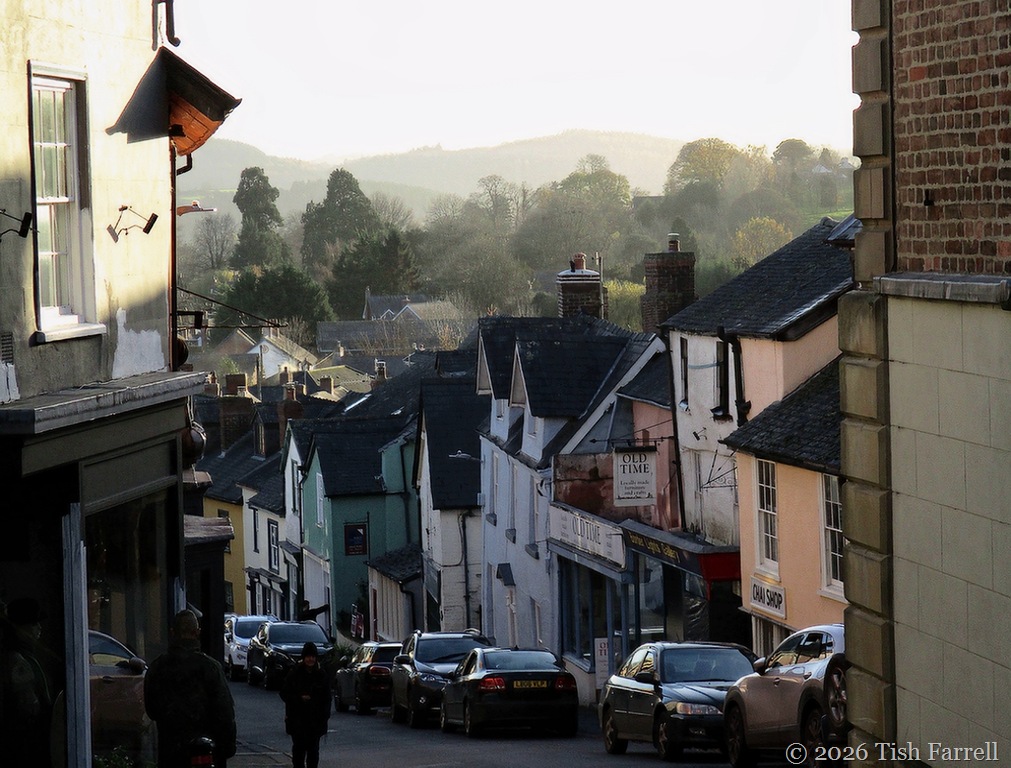
Some three years ago we began our shift from one ancient Shropshire town and into another: out of Much Wenlock and into Bishop’s Castle. The first was a settlement that grew up outside the walls of Wenlock Priory, its inhabitants subject to rule by Prior until the Dissolution in 1542. The second evolved, or rather descended from a hillside motte and bailey castle, built around the 1080s by the Bishops of Hereford, owners of the surrounding manor lands of Lydbury North.

Bishops Castle Motte and bailey Old Castle Land Trust

Notional reconstruction of the earth and timber motte and bailey of 1080s CE

*

The castle was deemed essential for the defence of the manor, given its location close to the Welsh border and potential raiding parties. It also served as an administrative centre for running the estate, gathering taxes and holding courts to maintain law and order. The Bishops had pastoral duties too, but for the ordinary souls who lived and worked on their lands, their worldly purpose was to produce good crops and profits for their landlords, who in turn had their own obligations to the Crown. It was big business then; a feudal corporation.

town hall

*

It is not clear how the bishops of a town nearly 40 miles away came to own Lydbury North, a highly profitable farming domain. But, as often happened in medieval times, there was a handy legend to lend  authority to claims of possession. (In Much Wenlock it was the apparent 11th century discovery of St. Milburga’s shining seventh century bones that helped turn the town into a busy pilgrim centre).

In similar vein, the Bishop’s Castle legend has it that around the 790s CE, the original Lydbury North owner, Saxon lord, Egwin Shakehead, was so grateful to have his tremors cured at St. Ethelbert’s tomb in Hereford Cathedral, he gave the 18,000 acre estate to the bishops in perpetuity. It is a compelling blend of antique ‘authority’ and saintly miracle, probably politically expedient in the immediate post-Conquest era of the Norman regime change.

The Bishops’ motte and bailey was thus built in line with the prevailing Norman subjugation plan to establish fortifications across England and Wales. The earth and timber mottes were fairly quick to construct. Later they would be rebuilt in stone, depending on strategic need. But in any event, they were highly visible structures to remind the Saxons and Celtic Welsh of who was in charge.

It was also Norman policy to develop civilian settlements next to their castles, this to secure the site and to ensure neighbouring land was cultivated. And so began the ‘planted’ town of Bishop’s Castle with the provision of dwellings for rent. These were established either side the castle’s main access road, running down from the outer bailey walls and towards the church.

townhall view

Now you need to look at the High Street with fresh eyes: strip away all those slate roofs and hugger-mugger back-lot buildings. See, not the tall eighteenth and nineteenth century facades, but low, timber-framed, thatched dwellings fronting the road. Behind each cottage would be a long narrow garden or burgage plot for the tenant’s use. At the foot of these, on both sides and running parallel to the main street, were ‘back lanes’. And beyond the lanes, to the east and west, were the town fields.

You can get the gist from this rather blurry photo from one of the town’s information boards.

town plan

*

By 1167 there were 47 burgages, and the town was on the up. At that time, too, the castle was rebuilt in stone, and grand enough to host both bishops’ and royal visitations.

This following reconstruction is again notional, but it suggests there was both an outer bailey with service buildings such as stables, stores, brewery and bakehouse, and a defended inner bailey surrounding the main castle keep.

Bishop's Castle Old Land Trust reconstuction

*

Over the following centuries the ‘new town’ prospered. Weekly markets and annual fairs were well supported, and local trades, servicing both castle and general populace, likewise flourished. The bishops continued to reap the benefit of course, and it wasn’t until 1559 that they lost control. Queen Elizabeth 1 forced the then Bishop Scory to surrender his four richest manors to the Crown in return for less wealthy ones. (The Bishop had been implicated in a domestic financial scandal). The exchange included Bishop’s Castle.

At this time, too, there was a Crown survey of the castle. It recorded the presence of thirteen habitable rooms, the roofs leaded. There was a tower containing stables on the east wall, a prison tower, dovecote and other buildings. The castle had its own garden, forest and park.*

*

There are few signs of the castle today, apart from the Castle Green (cared for by Old Castle Land Trust), a small grassy segment of the original bailey.

Castle Green

*

The castle played no role in the Civil War of the mid 1600s. In fact by then it was reported derelict, with its roofs stripped of lead, and its stone and timbers used in developing the town’s housing. The recycling of materials probably became a matter of course. One beneficiary was The Castle Hotel, built in 1719 within the outer bailey.

Castle Hotel

*

Around this time, too, the site of the castle keep, which was further up the steep hill behind the hotel, was levelled to make a fine octagonal bowling green. Both the green and the restored octagonal pavilion are still in use today.

bowling green pavilion

The Bowling Green Pavilion

*

So here we are at the bowling green at the top of the town. But for the best view we need to drop down a level to the garden above The Castle Hotel (its rooftops in the foreground).

Castle Eye view of the town

I’m guessing I was standing near or within the site of the inner bailey when I took this photo. And am I sorry there’s no castle rampart left to clamber up and take more dramatic photos? No, not really. Castles can be exciting structures, but I’m thinking our response to them often has more to do with romance than reality.

I’ve anyway learned that the born-and-bred locals call their castle-less town ‘the Castle’, its utterance conveying a strong sense of community and long rootedness, yet with fellow-feeling enough to absorb generations of blow-ins; people like us. And so it seems that although the castle fabric may be long gone, what remains feels a better kind of stronghold.

*

Sources:

*The Story of Bishop’s Castle 2018 eds David Preshous, George Baugh, John Leonard, Gavin Watson, Andrew Wigley; Logaston Press

Bishop’s Castle: A Timeline of Governance Bishop’s Castle Heritage Resource Centre

Copyright 2026 Tish Farrell

High St, Bishop's Castle, Dec 25 header