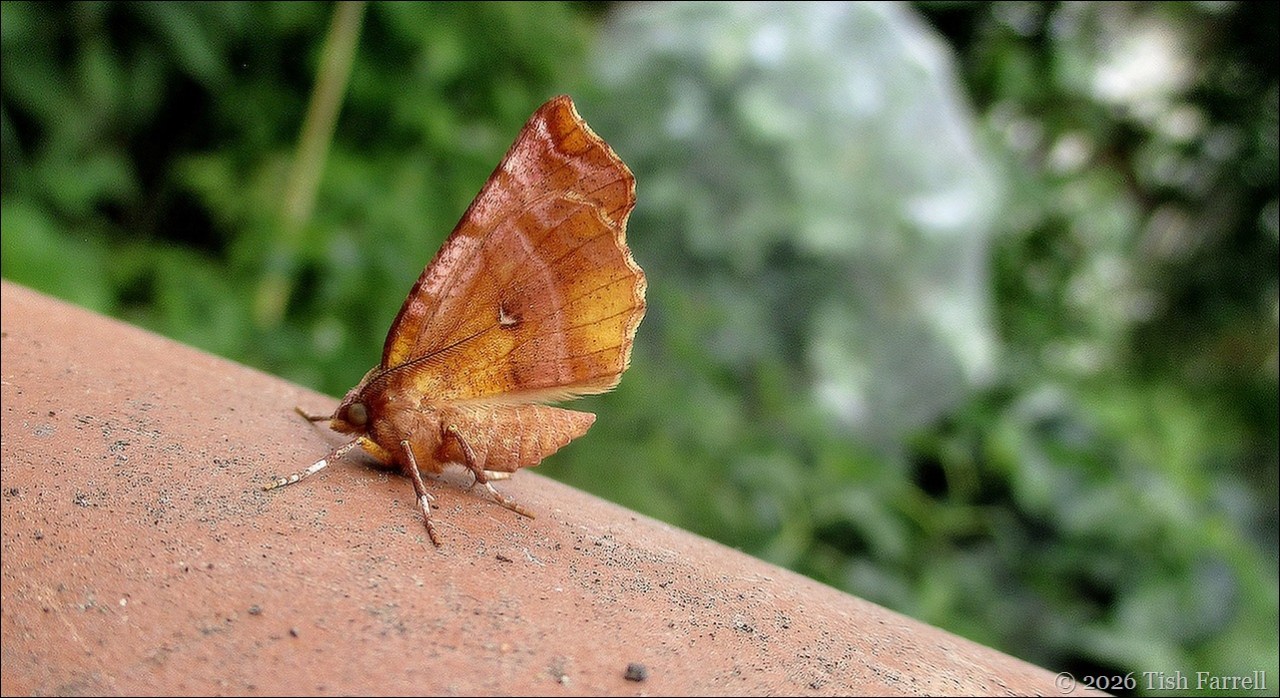
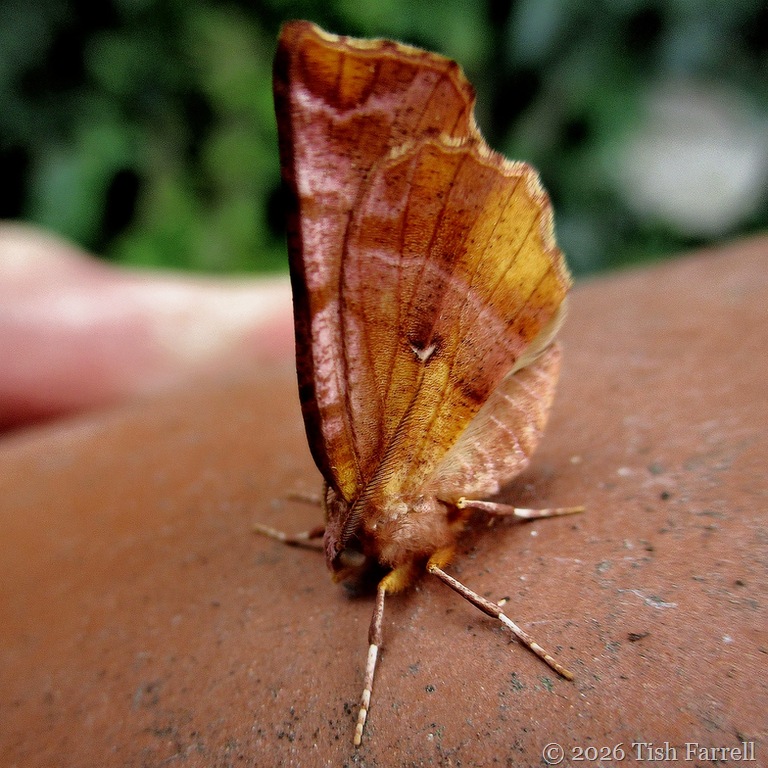
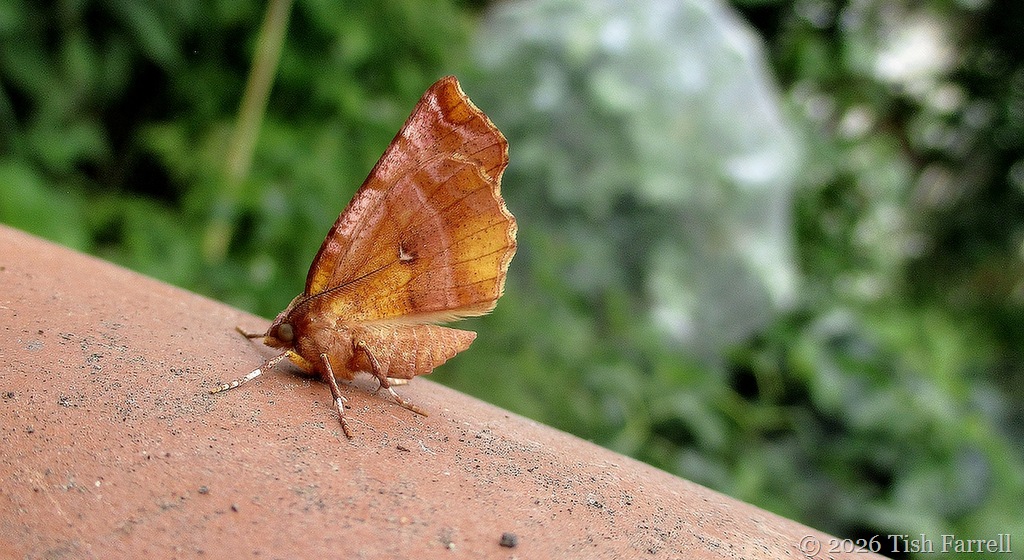
Look what I found among the pots by the greenhouse. It was in broad daylight too, and with wings in the butterfly position – but it’s not a butterfly.
It took some identifying too, this moth that likes to look like a butterfly.
Moths are unknown territory to me, apart from the stunning Elephant Hawk Moth that I once found in our Much Wenlock garden. There are over 2,500 recorded species in the British Isles, so where to start? I began with charts of the commonest species, thinking that wing colour might be the key. That didn’t work. It was only when I thought to search for moths that rested with wings in the vertical that I made progress. The habit, I discovered, was known among some members of the Geometridae family. Finally, I narrowed the search down to Thorns, and then to an Early Thorn Selenia Dentaria.
You can see some other kinds of Thorn moths here. They rest with wings at the horizontal.
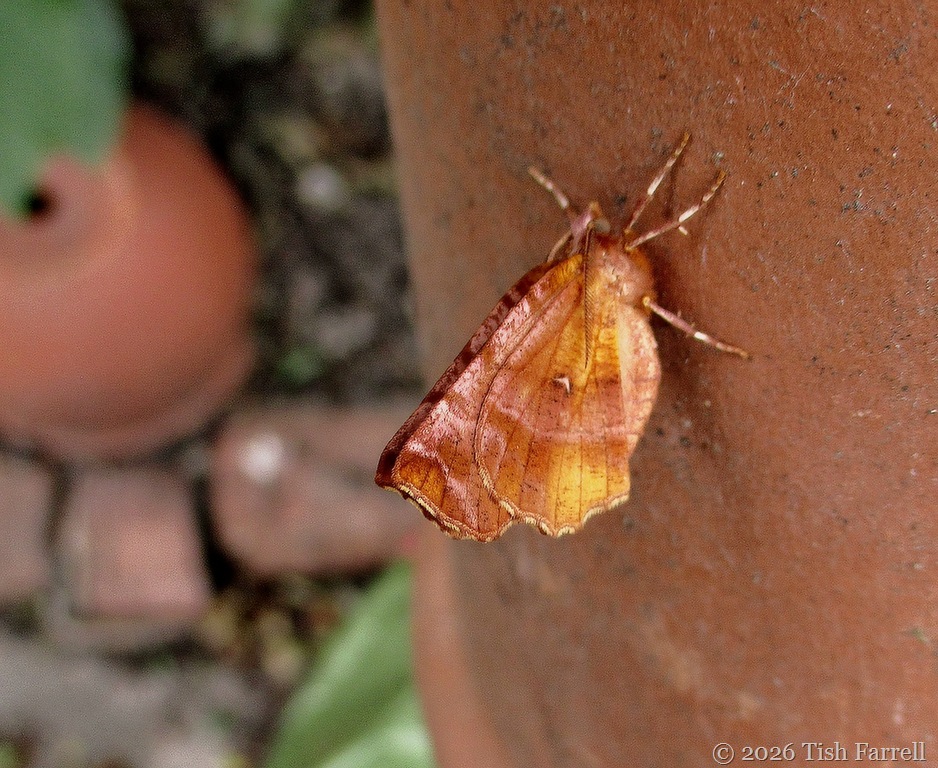
The Early Thorn is a medium sized moth, the wings, as seen above, about an inch (28mm) across. It flies from dusk onwards, so I’m not sure why it was so exposed to daylight, unless it had recently emerged. The caterpillars feed on the leaves of deciduous trees, including hawthorn, and I found the moth directly below the hawthorn tree that overhangs our hedge. The timing was right too. There are two flight seasons: mid-February to May and then July to September.
I resisted the temptation to disturb it – i.e. in hopes of seeing its open wings.
Copyright 2026 Tish Farrell