
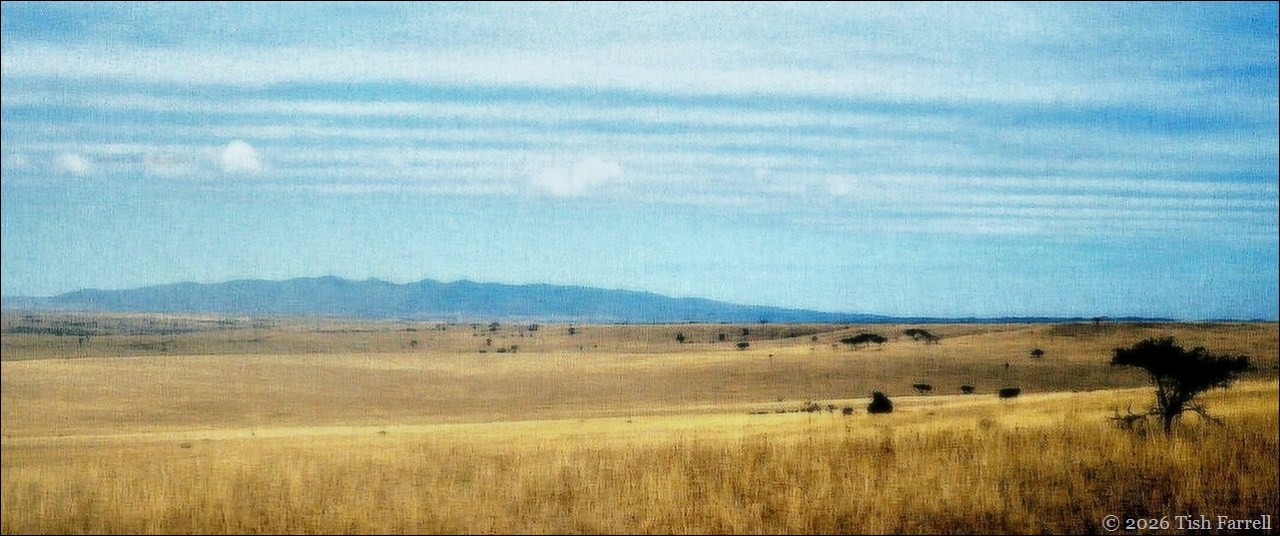
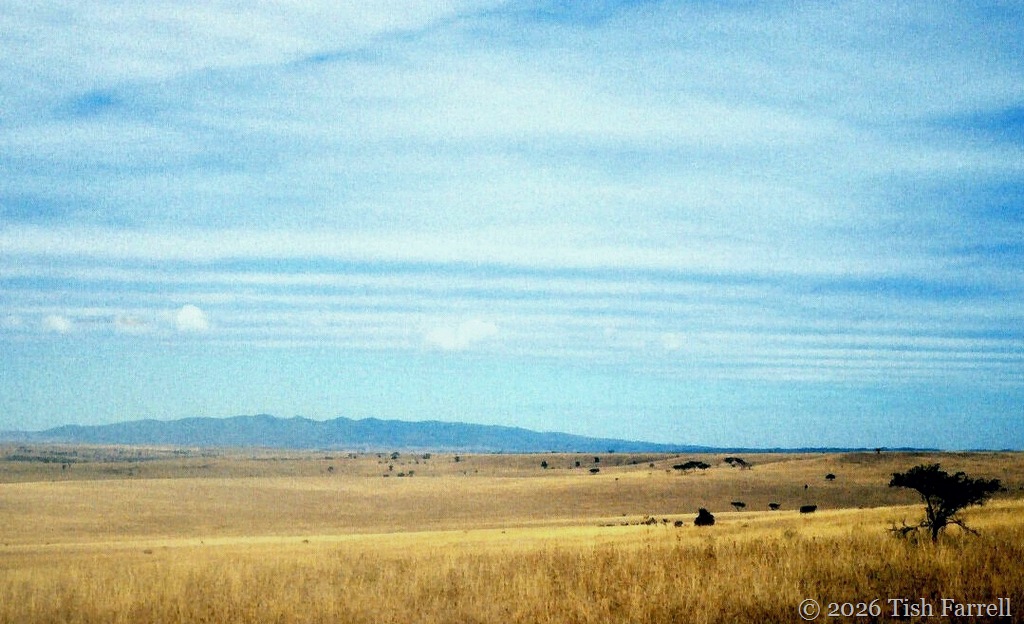
“I had a farm in Africa at the foot of the Ngong Hills. The Equator runs across these highlands, a hundred miles to the north, and the farm lay at an altitude of over six thousand feet. In the day-time you felt that you had got high up; near to the sun, but the early mornings and evenings were limpid and restful, and the nights were cold.”
Karen Blixen 1932 ‘Out of Africa’
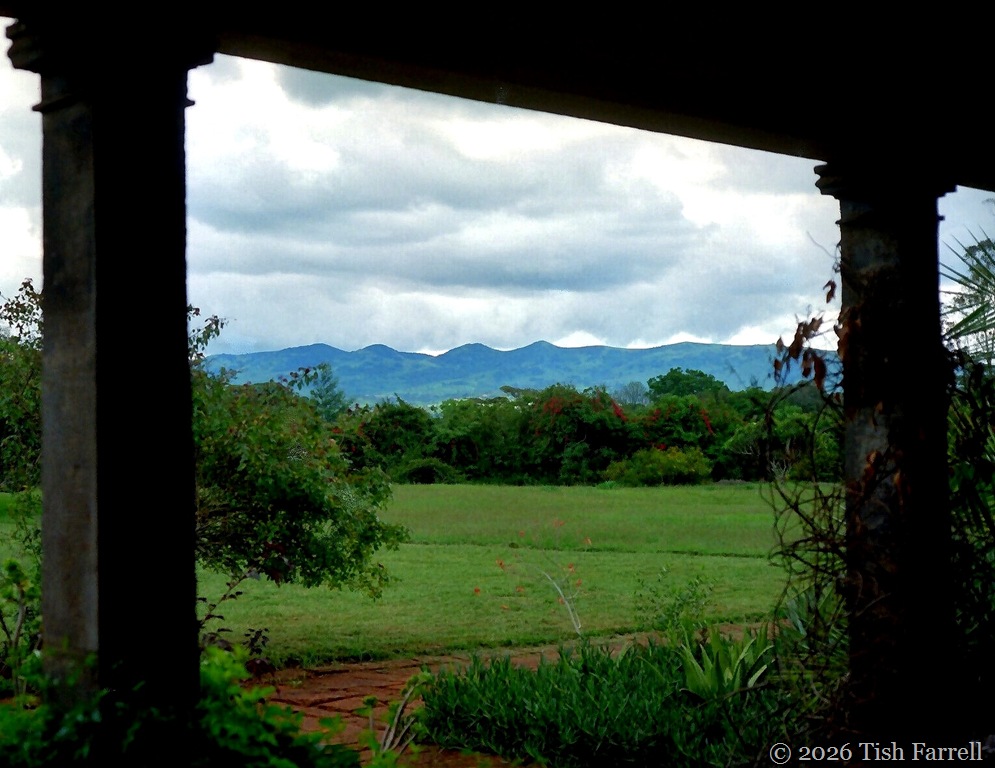
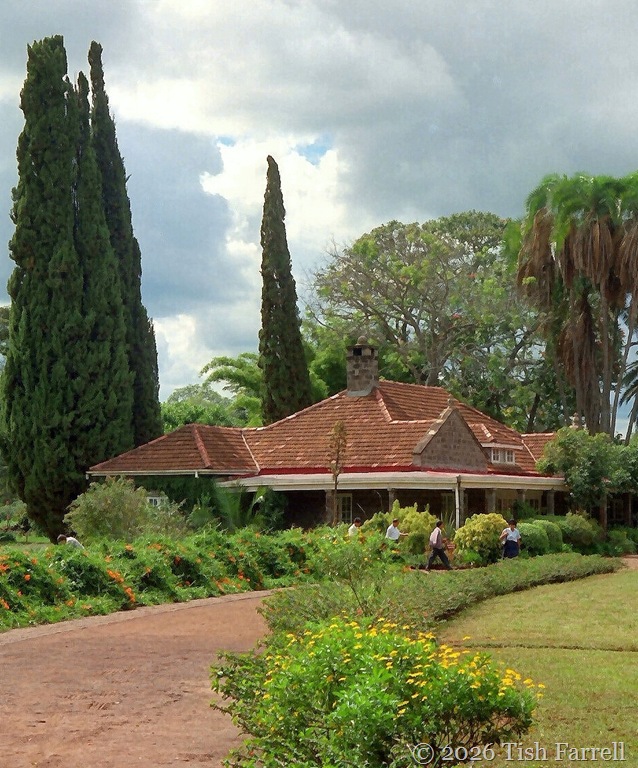
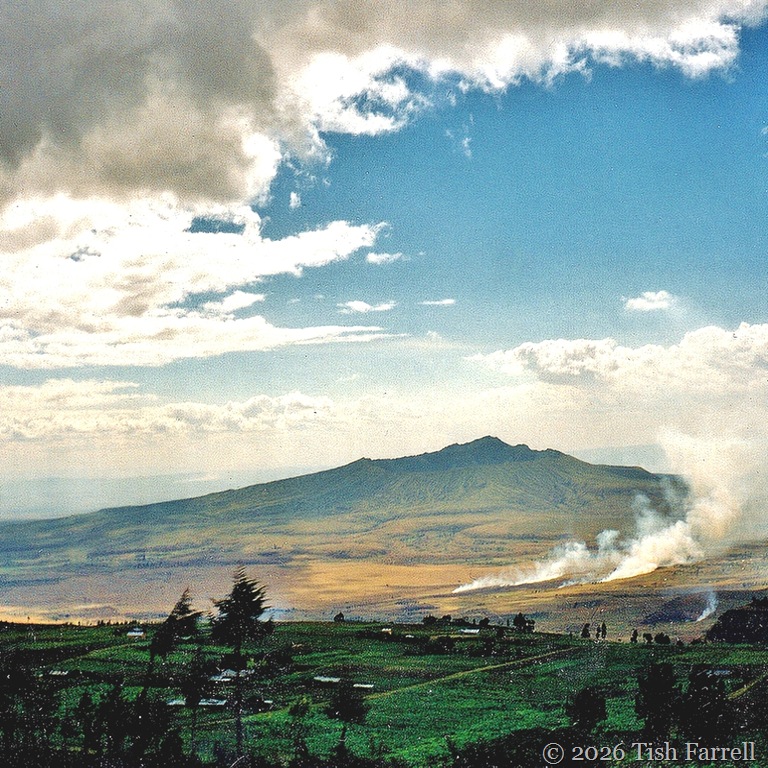
A view of the Ngong Hills from Karen Blixen’s veranda (above). The house (below), now belongs to the National Museums of Kenya. It was built in 1912 by a Swedish settler and engineer, Ake Sjogren, who owned the Swedo-African Coffee Company, and in 1914 sold the house and land to Bror Blixen who hoped to make his fortune from coffee growing. Six hundred of the 6,000 acres bought were planted with coffee bushes, but the enterprise foundered from the start. The site was wrong (too high for coffee). It also took several years for the bushes to bear, during which time, the rains often failed.
*
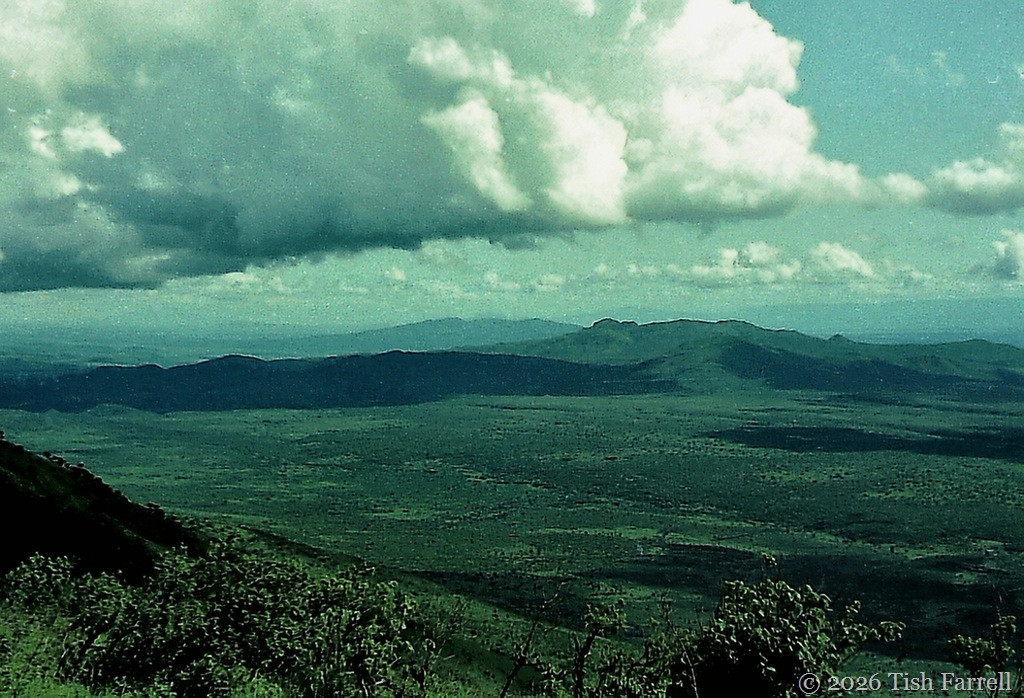
“The Mountain of Ngong stretches in a long ridge from north to south and is crowned with four noble peaks like immovable darker blue waves against the sky. It rises eight thousand feet above the sea, and to the east is two thousand feet above the surrounding country, but to the west the drop is deeper and more precipitous – the hills fall vertically down towards the Great Rift Valley.”
Karen Blixen 1932 ‘Out of Africa’
*
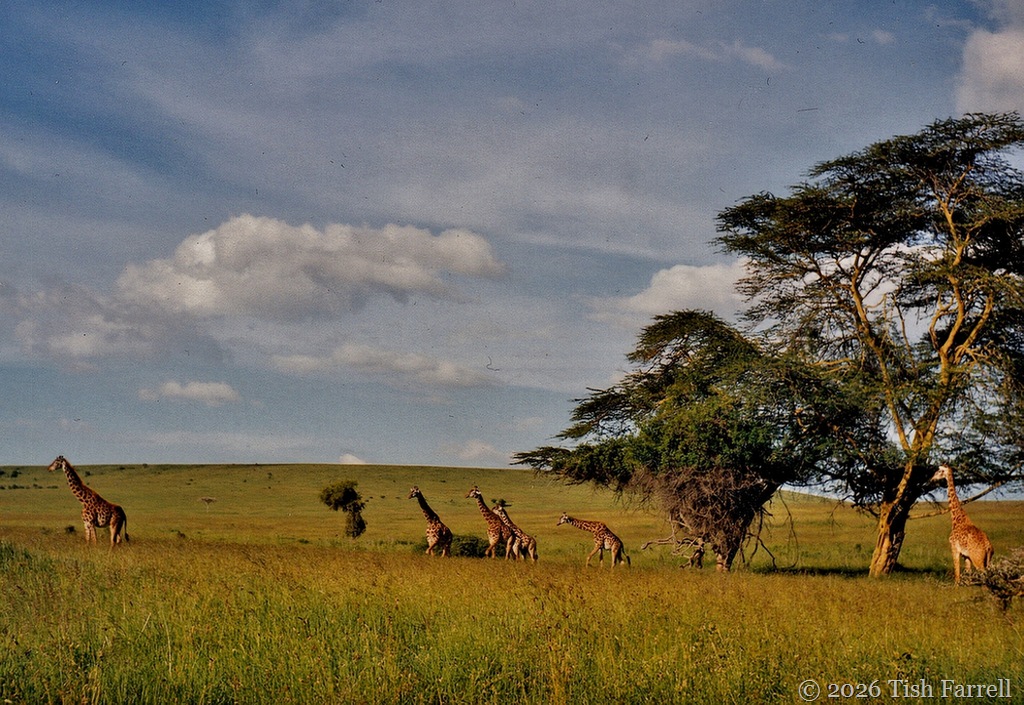
“I had time after time watched the progression across the plain of the giraffe, in their queer, inimitable, vegetative gracefulness as if it were not a herd of animals but a family of rare, long stemmed spackled gigantic flowers slowly advancing. It was, in giant size, the border of a very old, infinitely precious Persian carpet in the dyes of green, yellow and black-brown.”
Karen Blixen 1932 ‘Out of Africa’
*
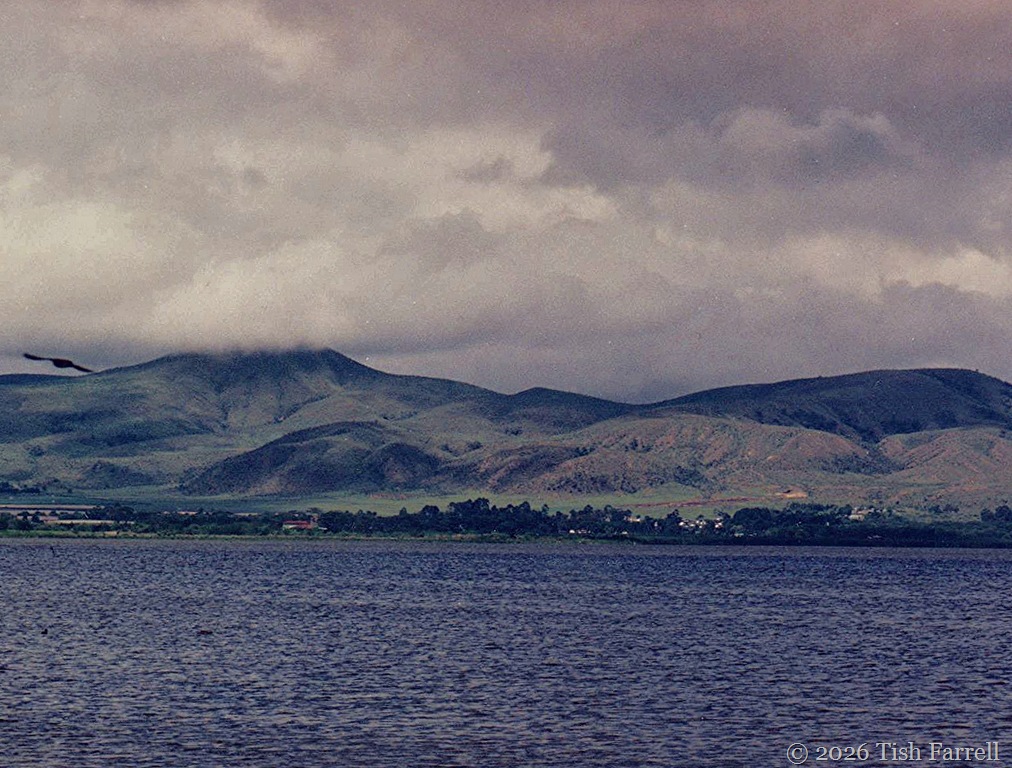
“Bror and I came up here for a weekend…It is delightful here – I think Naivasha is a paradise on earth, very like Scotland, with the water and the mountains around the lake, and the air so lovely here”
Karen Blixen July 1917 ‘Letters from Africa’
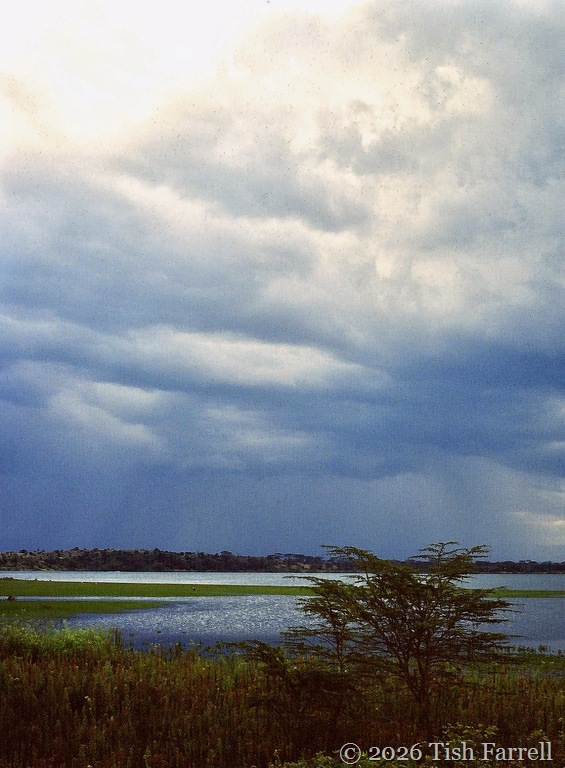
Naivasha is the only large freshwater lake among Kenya’s several soda lakes. The first commercial flights into Kenya on Imperial Airways, and later BOAC flying boats (1930-1940) landed on Lake Naivasha. Travellers then had a sixty mile road trip to Nairobi.
For a time in 1918 the Blixens lived on the lake shore in a shanty hut made of sheet iron, lined with local papyrus, this while Bror supervised a ploughing contract with his ox teams and steam plough at a settler farm at nearby Longonot.
Longonot is one of the landmark old volcanoes on the Rift Valley floor. In the next photo there’s also a foreground view of Kikuyu shambas, the kind of smallholdings we were surveying for Graham’s smutted Napier Grass research in the late 1990s. More of that story HERE.
*
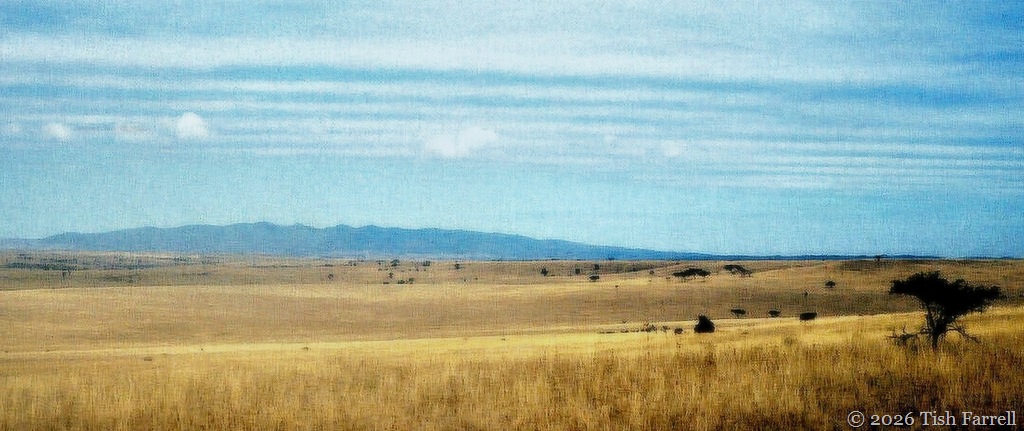
On 14th February 1992 I flew to Nairobi, Kenya, intending only on a three month stay. Graham had a short-term consultancy contract, working on controlling the Larger Grain Borer. This was an introduced storage pest, arrived with food aid from the Americas, and was then infesting farm granaries. I was ‘camp following’. (More of this story HERE.)
After that, who knew where we’d be. On my first day in Africa we went to Karen Blixen’s house. It seemed to fit with our own uncertain futures. Eight years later, in January 2000 we finally left Kenya. Much happened in between, and these are a few ageing glimpses from the ‘old Africa album’.
*
Lens-Artists: Memories This week Tina sets the theme to inspire us. Please see her post.

A period that gave you many wonderful memories. I love the grainy photos.
Yes, lots of memories, Jude. Still processing some of them! The grainy photos thus seem rather apt, given often flaky recollection 😉
I love when you go back to Africa on your posts, Tish. There’s a sense of nostalgia and then there’s the charm of the old photos to go with it. They are special and a joy to see.
That’s so pleasing to hear, Sofia. Thank you.
I love seeing and reading your African memories Tish. They are beautiful and rich in experiences.
Many thanks, Anne. So pleased you like this.
Oh, Tish, this is a beautiful post! “Out of Africa” is one of my favourite memoirs and I’m pea-green with envy that you’ve been there! Thank you so much for sharing this with us – I loved it!
I think it’s many people’s favourite film, Pam. The young Kenyan guides at Karen Blixen’s house were a bit starstruck too: the museum had managed to get some of the clothes Meryl Streep wore in the film, and they were decorously displayed in the bedroom wherein Blixen’s original furniture (having been tracked down in Nairobi) had been installed.
Honestly, I’ve never seen the film, but I’ve read the book countless times. I tuck it in my suitcase almost every time we travel. 🙂
It’s always a pleasure to read.
the part I keep: you went to Karen Blixen’s house on your very first day, before you had a single memory of your own to put in it. eight years later it is your veranda in the photo and the house still belongs to her. two uncertain futures in one house.
Many thanks for that thoughtful response, Jillian.
Thank you, Tish. The part I meant was the modesty of the house: eight years of your own life inside it, and it still belongs to her. That is the line I have been carrying around since.
When we were first in Kenya we lived in hotels and lodges for several months, and at times when I was ill I used to imagine myself in Karen Blixen’s bedroom. Her furniture was painted pale dove grey. All looked so cool and cocoon like.
Dove grey. Everyone photographs the veranda and the view, and you remembered the paint. Being ill in a strange country and putting yourself in her bedroom because it was cool and pale and quiet. You borrowed a room from a woman who wasn’t there. That is the most intimate thing anyone could say about that house.
Tish, I had to play John Barry’s evocative soundtrack to enjoy your post more fully. What a beautiful selection of photos and quotes!
Oh that John Barry soundtrack – even against my will, it gets to me every time I hear it. Many thanks for adding it in here, Egidio 🙂
Beautiful photos!
Many thanks, Pamela.
I’m always excited to see a notification of an Africa post from you! And revisiting Karen Blixen’s house with you is an extra treat as I found it fascinating to see the setting for the book and get a better understanding of how they lived there. Your photos are the perfect accompaniment to this post and the grainy look fits well with the quotes from Out of Africa 🙂
So glad you enjoyed this, Sarah.
Tish, Wow! What special memories you have! I love how you included quotes from the book to go along with your beautiful images.
Thanks, Beth. I got a bit hooked on the notion of my memories alongside Karen Blixen’s memories
I so loved the film but read her book many years before. What a very special place to see Karen Blixen’s farm. Thanks for sharing this remarkable experience.
Many thanks, Flavia. In many ways it seems extraordinary that the Blixen aura still lingers in a tiny enclave outside Nairobi. Of course the film in the late ’80s revived it.
A marvelous trip back in time Tish – I do remember your having posted about it in the past. Having been there I think Africa never leaves us. If I close my eyes I can be back there in a nanosecond. I cannot imaging having lived there as you did. What a treasure of memories you must have!
Yes, the ‘Africa effect’ is quite something. And it’s small or mundane things that can register most deeply. Many thanks, Tina.
Tish, having recently seen the savannas for the first time, your photos brought me back to personal memories of our trip. Your tie-in to Out of Africa is genius. Wonderful post.
Many thanks, John. So pleased to spark your recent Africa trip memories.
your camp following photos bring a lump to the throat of nostalgia and your life together there so nicely illustrated with Blixen quotes
It was an extraordinary time back then. Kenya was in political turmoil – World Bank enforced democracy which inevitably caused fractures – given the hugely varied ethnicities and inherited British Crown land ownership issues. On the way to the Blixen house I remember passing roadside meetings of various opposition parties, waving bright orange and green banners. Strange then to step back into a little colonial oasis, and one furnished with Meryl Streep’s riding boots!
A great post and thanks for the Blixen quotes. Quite a writer who I must look to read as only saw the film. Yes, love you taking us back with you to Africa. Can’t believe the invasive horror in the food aid or perhaps can. So much ignorance of nature’s ways and how to help people.
Many thanks, Georgina. So pleased you enjoyed this. The book Out of Africa (very readable) but more of a memoir of events on the farm. The film narrative is a construct (fairly accurate) from other sources including her letters.
As to imported pests on food aid, I gather the larger grain borer is pretty much endemic in grain stores now across the continent. One main source of transmission has been the railway, the beetle hitching rides in sacks of grain and other produce. It also infests cassava root, a mainstay foodstuff in Central and West Africa.
Sounds quite a destructive beast that has arrived and not of Africa where there are so many insects.
In its South-Central American homeland it has a natural predator beetle. Grahams’ project was involved with trying to safely (lots of screening) introduce it to clean up, but it did not prove very successful. Water Hyacinth is another monster invader from South America. That was introduced in colonial times by white settlers who thought it an attractive addition to their gardens.