Six On Saturday: Autumn Fire

front

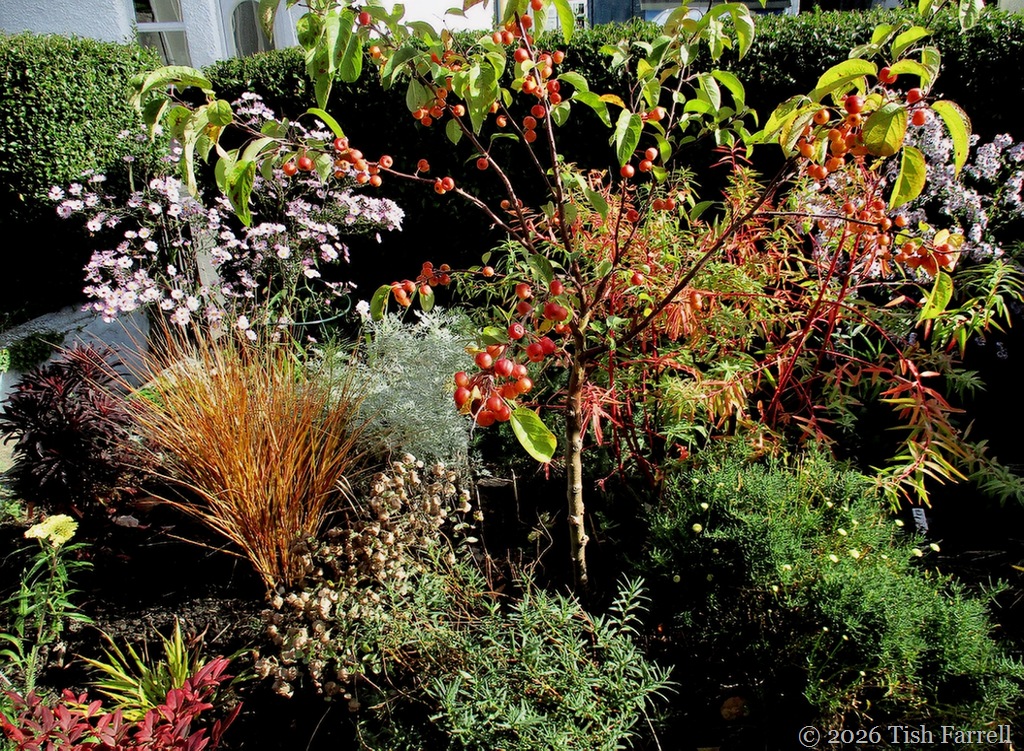
This week the back garden is looking pretty dishevelled after some days of stiff winds, but the front garden is holding its own: lots of reds and golds and russets, plus a touch of pale lavender-pink.

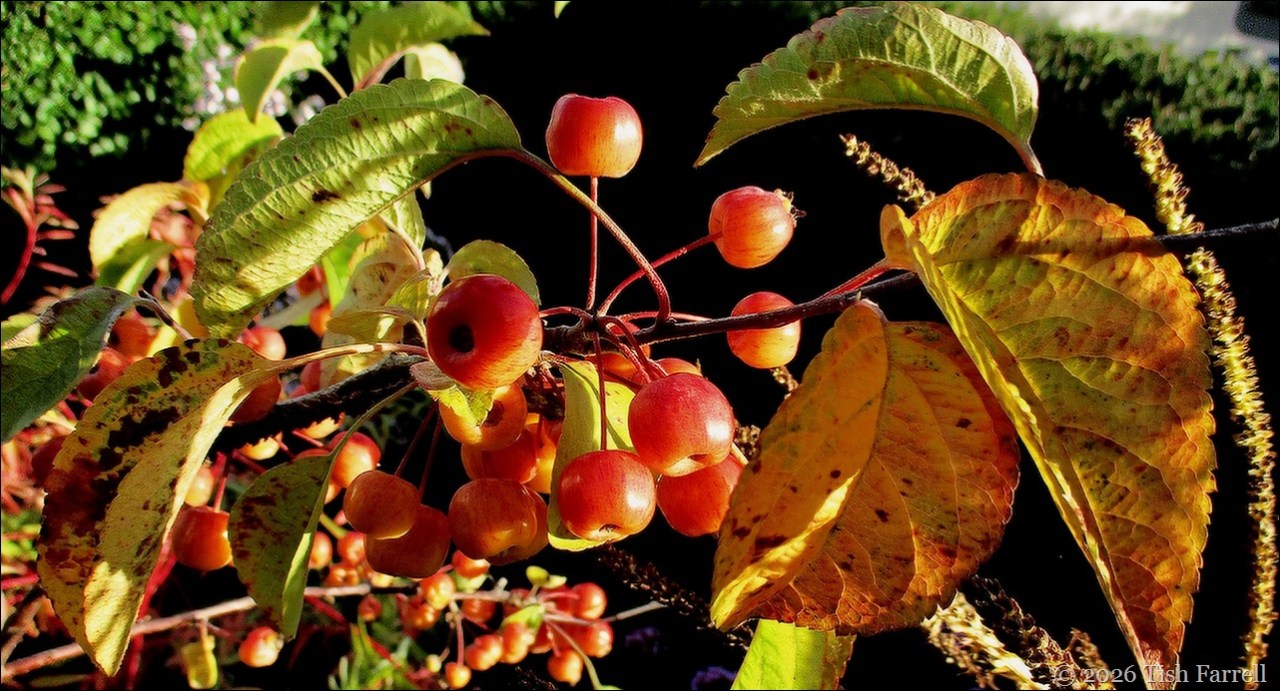
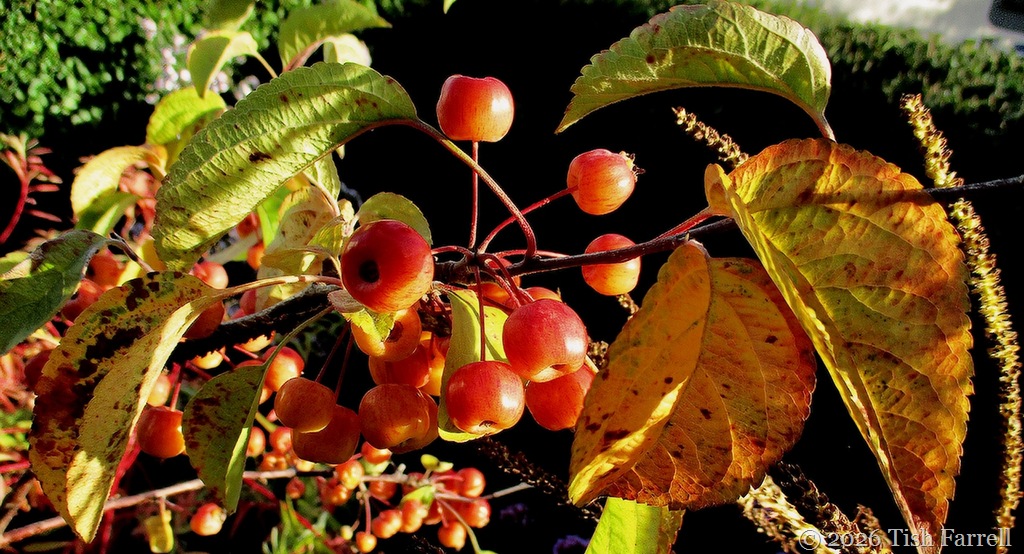
The miniature Evereste crab apple is probably the star. Those tiny apples seem to glow.
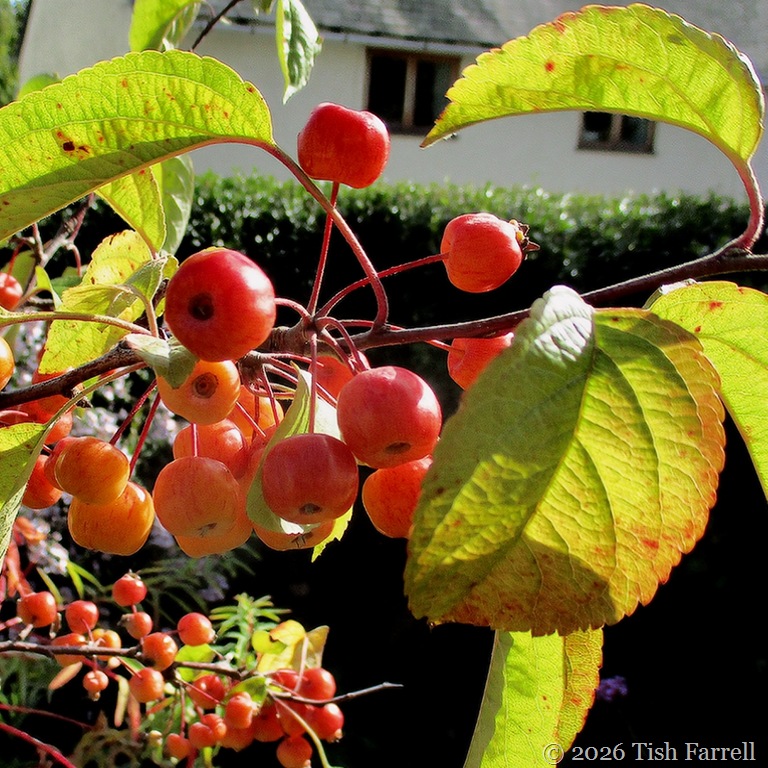
Evereste2

Behind it, and utterly living up to its name (as well as complementing the crab apple’s colours) is Euphorbia griffithii Fireglow. Quite a blaze, isn’t it.
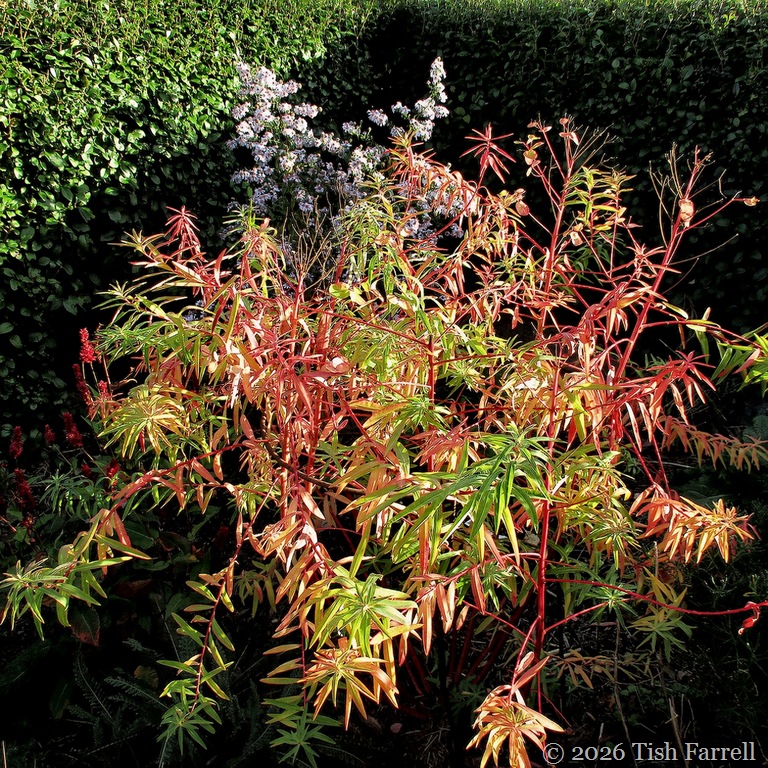
Fireglow

*

Calming things down at the back of the border, in front of the privet hedge, is a pale cloud of Symphyotrichum Les Moutiers. This is its first year of flowering and I love its airy looks. Also that the daisies’ yellow centres turn bright russet red when they have been fertilised.
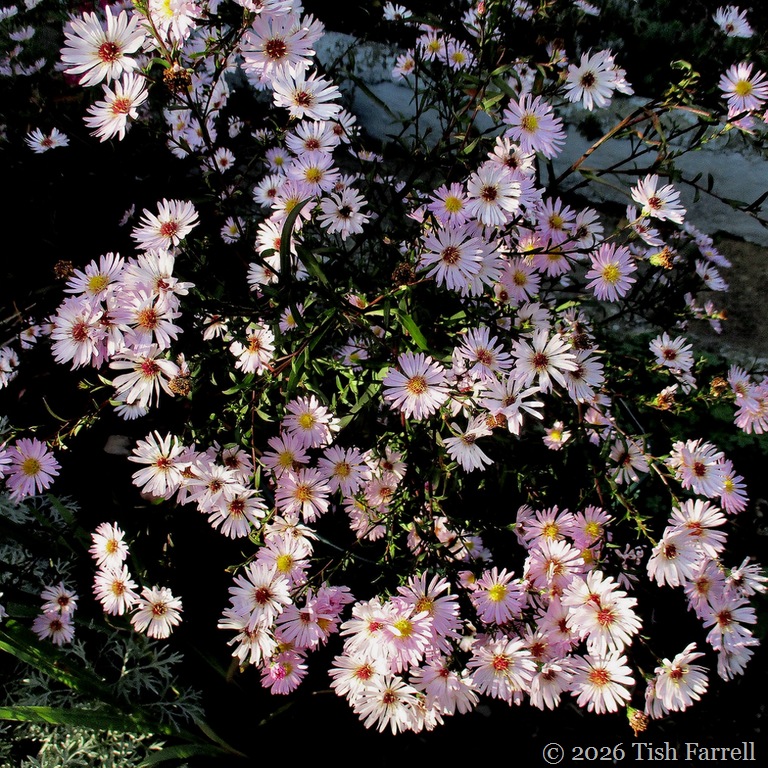
Les Moutiers

I have another Great Dixter Symphyotrichum in the opposite corner (just glimpsed in the main photo. I’ve lost the label, but I think it’s Laterifolium, also pale lavender and flowering for the first time. For now it’s rather put in the shade behind the Fireglow.

Another fiery feature is the Pheasant’s Tail Grass (Anamenthele lessoniana), now around two years old and continuing to do its own rendition of a Roman Candle.
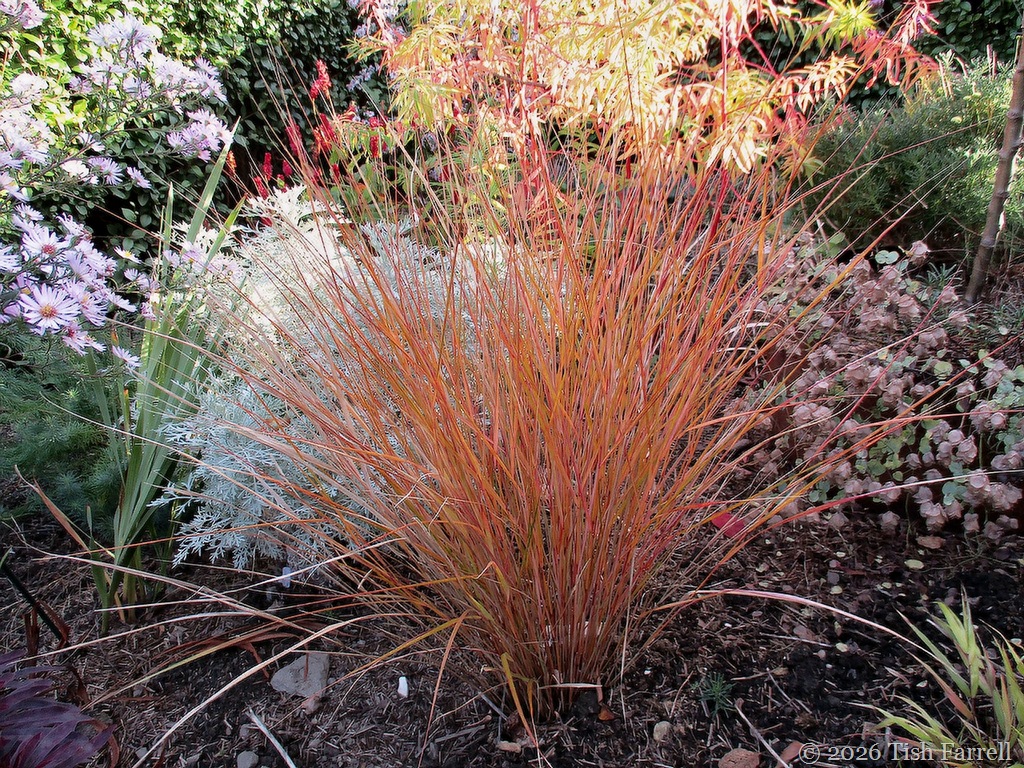
Front Anemanthele lessioniana

*

Several of the summer flowering plants are on the rebound. The evergreen Cotton lavender (Santolina rosmarinifolia) (bottom right) has just produced some new yellow buttons. It’s growing under the crab apple along with a Wisley White Helianthemum (centre) and Kent Beauty origano (far left now very faded):
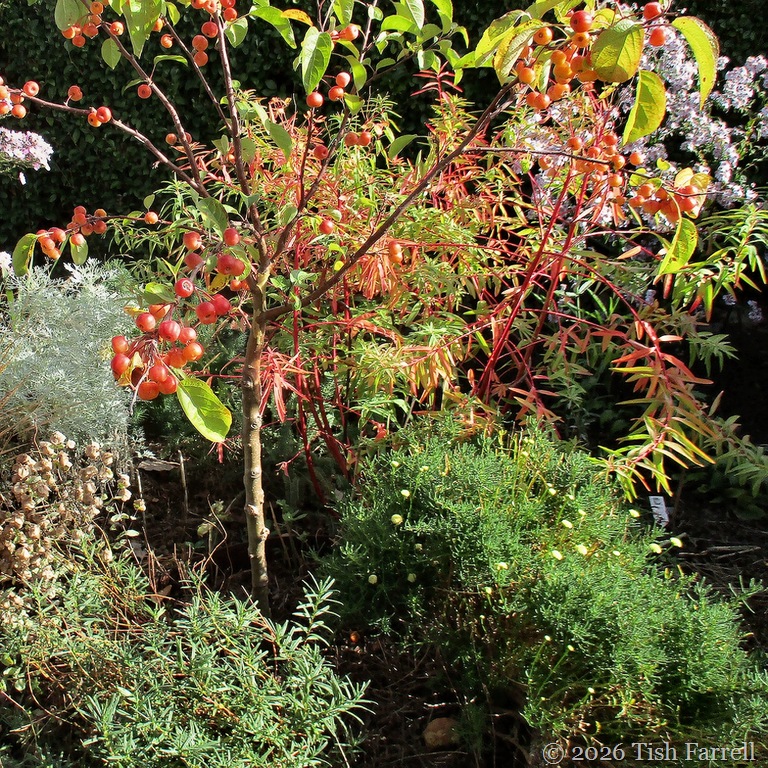
Santolina etc

And finally the Achillea Moonshine is coming out for a third showing (Nandina Obsession with the bright crimson leaves behind)
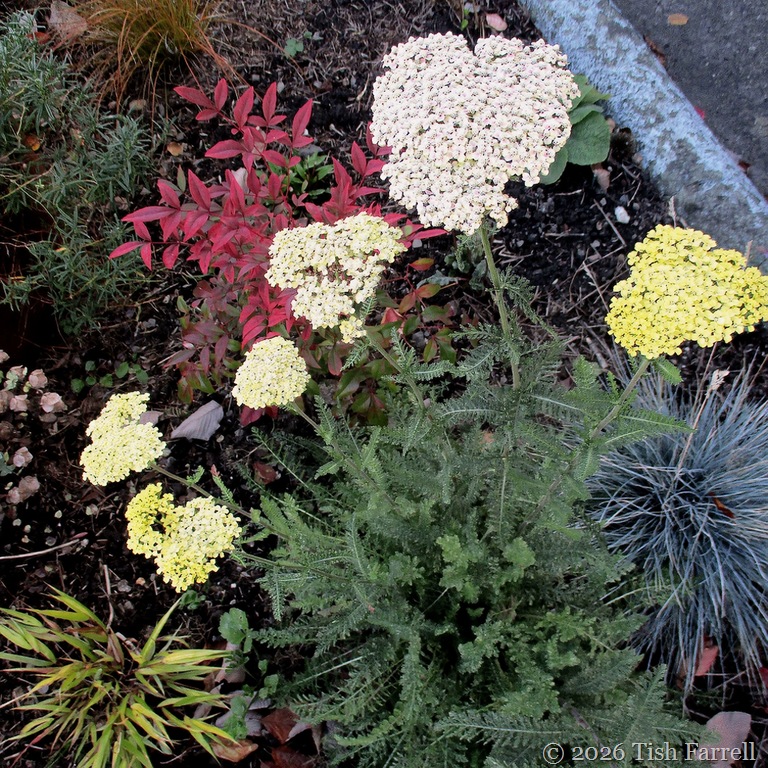
achillea moonshine

And that’s it from our Bishop’s Castle garden. Please call in at Garden Ruminations to see what Jim’s been up to.

Six on Saturday 17 October 2026


Copyright 2026 Tish Farrell
header front

Where Does It Lead?

Wenlock edge and Graham

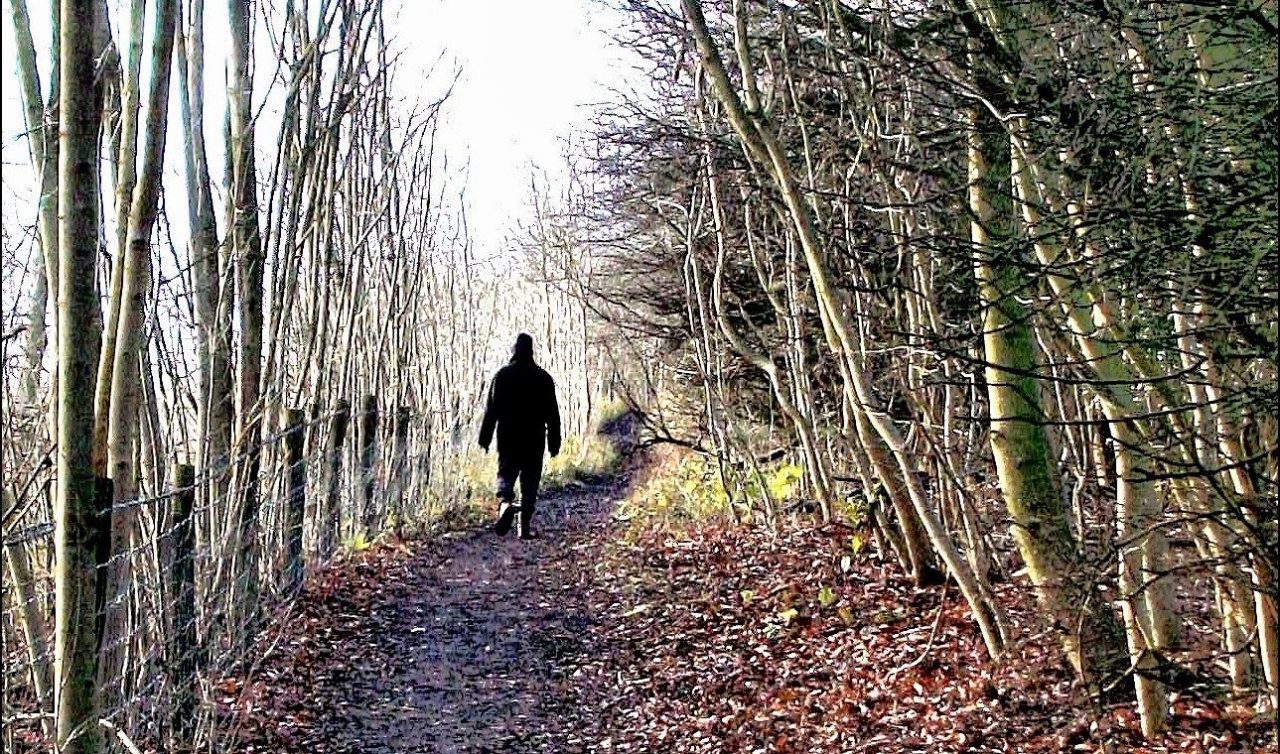
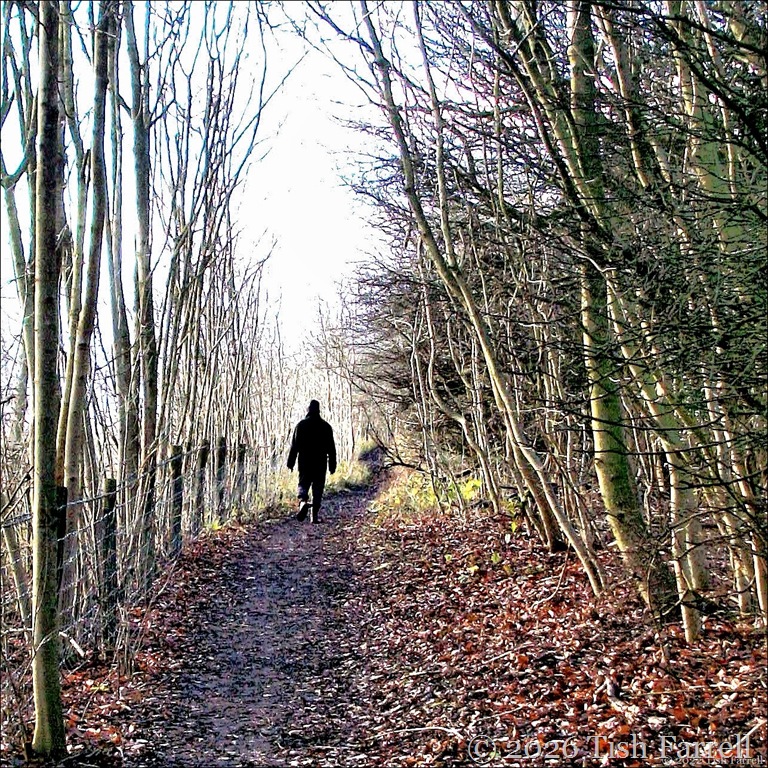
Paths are mysterious things, tracks through time and space, spanning decades, centuries, millennia; the footworn proof of repeat passing.

This first path runs along the top  of Wenlock Edge, a twenty mile limestone ridge that crosses from east into south Shropshire. These days it is a popular resort for recreational walkers, but the route itself is probably thousands of years old, used by prehistoric traders who travelled the county’s less wooded uplands into Wales. The traded goods included finely worked stone axes of the Neolithic era, 5-6,000 years ago. Later, itinerant smiths (and seeming recylcers of damaged metal ware, including fine cast arrow- and spearheads of the Bronze Age) came this way.

*

old railway line Wenlock

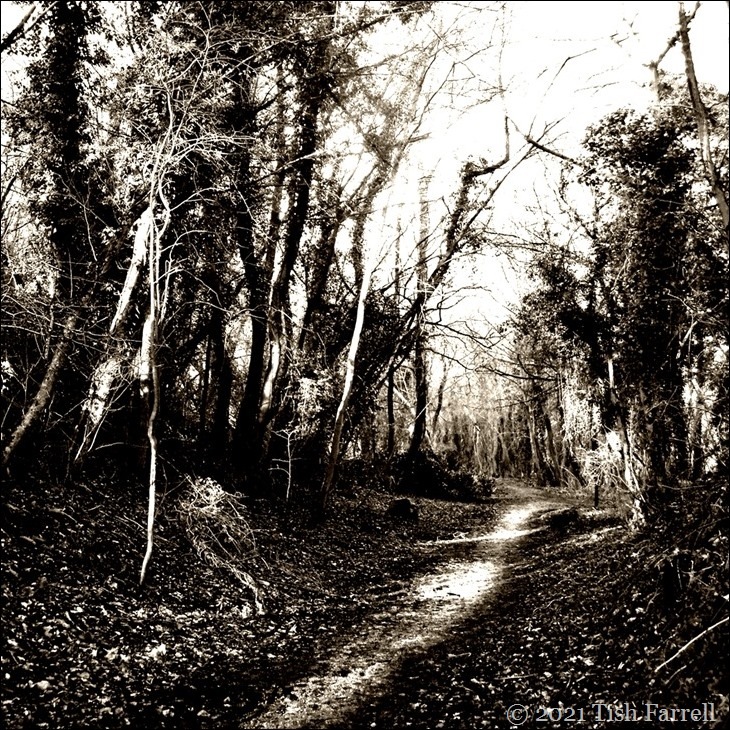
This second path is of more recent origins despite the sepia looks. It marks a segment of the Severn Valley Railway, opened through Much Wenlock in the late 1860s and closed in the 1960s. Now the original track bed is much colonised by ash and hazel and ivy, kept in check by the county footpath wardens. It’s hard to conjure the steam trains that once came roaring through here, bound for the Wenlock Edge quarries to take on truckloads of limestone, the flux needed for South Wales’ steel making.

And then there’s that other ghost train, the festive Great Western special that every July brought thousands of people from far and wide to watch (and take part in) the Much Wenlock Olympian Games. Back then, this still popular annual event) comprised many and varied sporting activities, devised by the town’s doctor, William Penny Brookes to foster good health and wellbeing among ordinary folk.  His activism did not stop at health either. There were livelihoods to improve too, so he also fought for the line extension that brought the railway to Much Wenlock.

Over the years we lived in Wenlock this was a favourite place to wander, and in every season.

*

And so paths like these extend in ever more dimensions: of imagination; of history;  of recollection and memory; of the telling of tales.

Copyright 2026 Tish Farrell
Lens-Artists: Where does it lead? This week Egidio sets the theme with an enticing gallery of photos. Go see!

Six On Saturday ~ Summer into Autumn

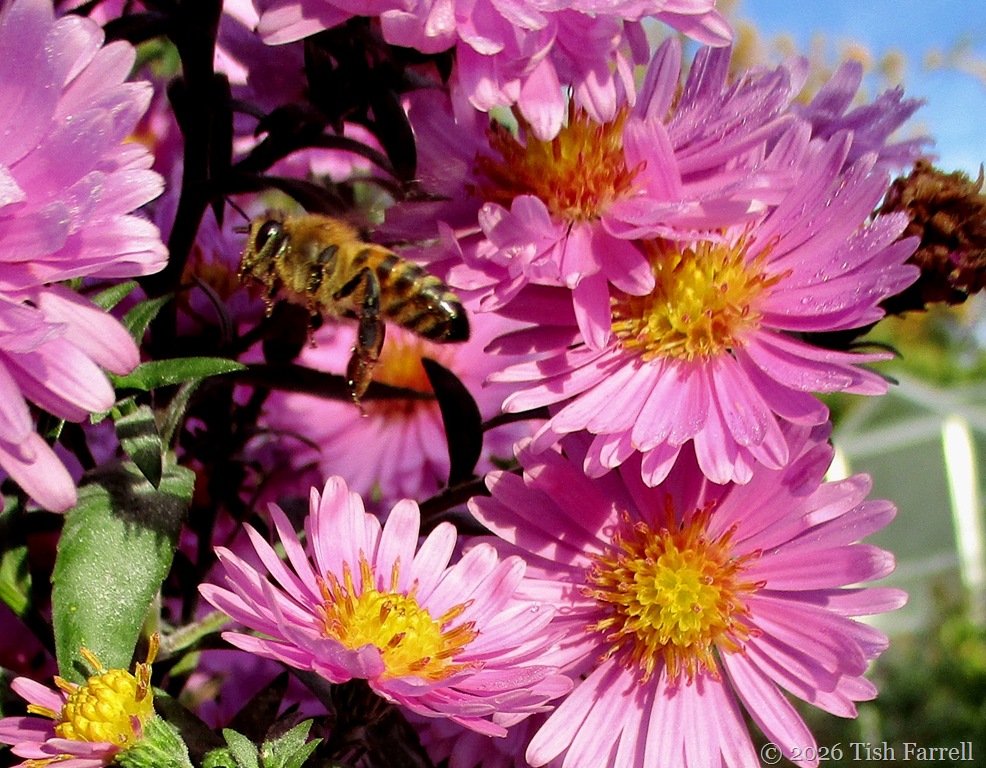
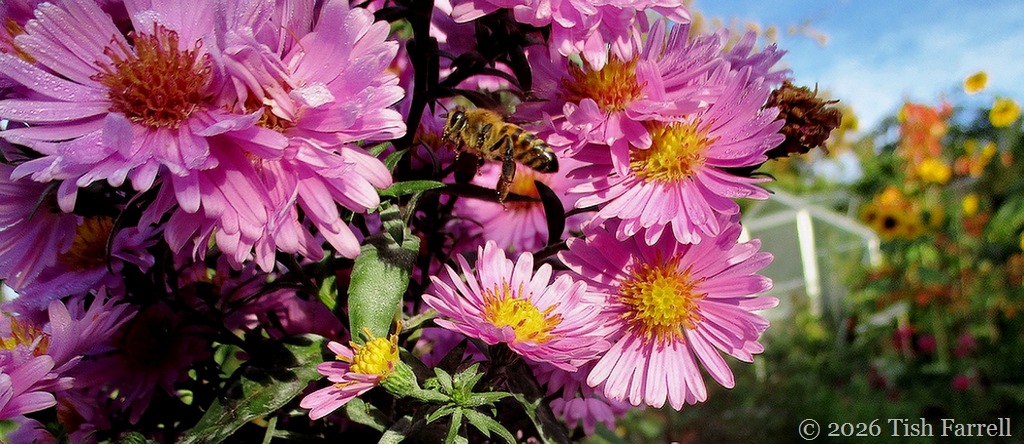
bee food 3

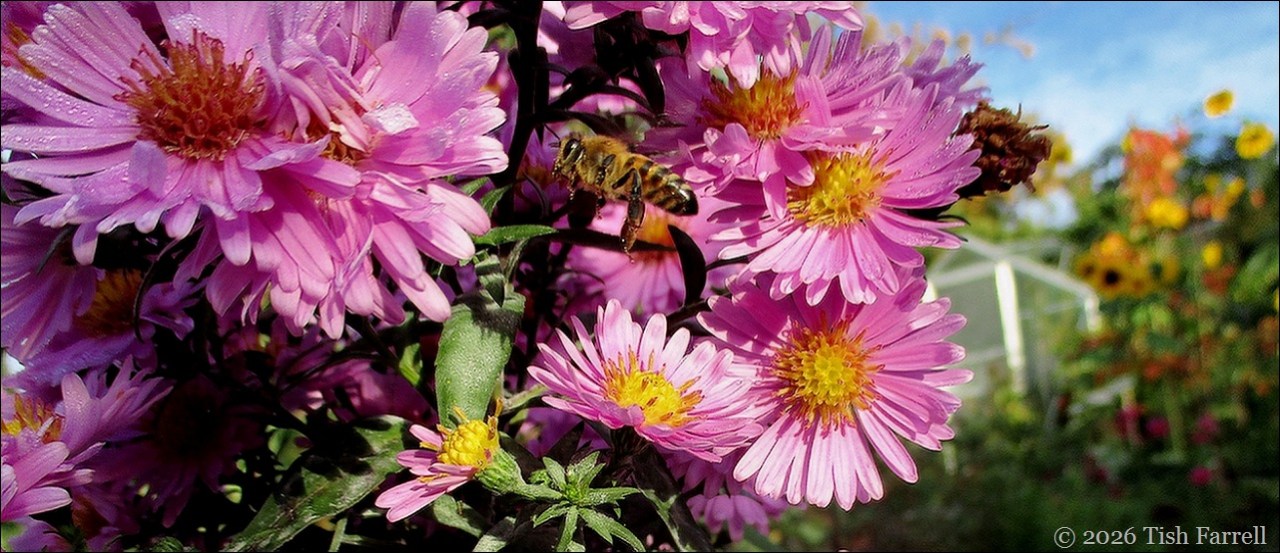
Asters, Symphyotrichums, Michaelmas Daisies, whatever you call them, they’re a cheering sight as summer ends. I even overlook my inkling to dislike the pinkish-purple shades that so many versions come in. I much prefer the mauve range. Anyway, here’s another good reason to grow them: bee food. Now’s the time honey bees are stoking up reserves to get them through winter.

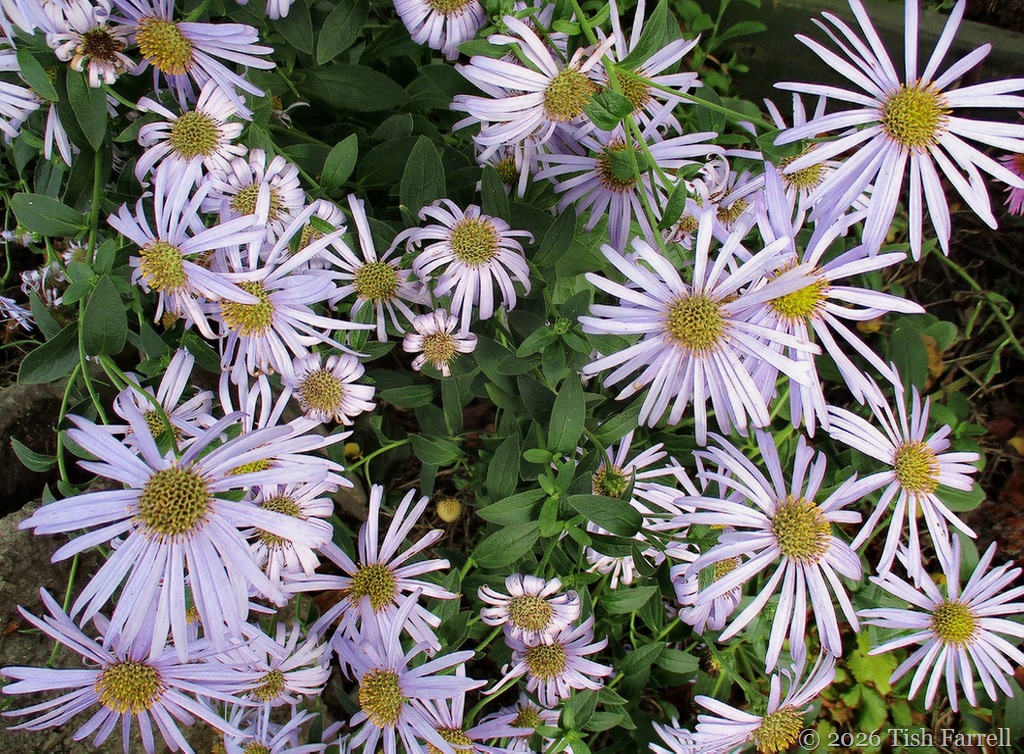
And talking of mauve asters, the Monch in the corner of the garden (which I’ve mentioned before) is still going strong. The flowers may have paled, but they’re still coming – three and half months after the first opening.

aster Monch

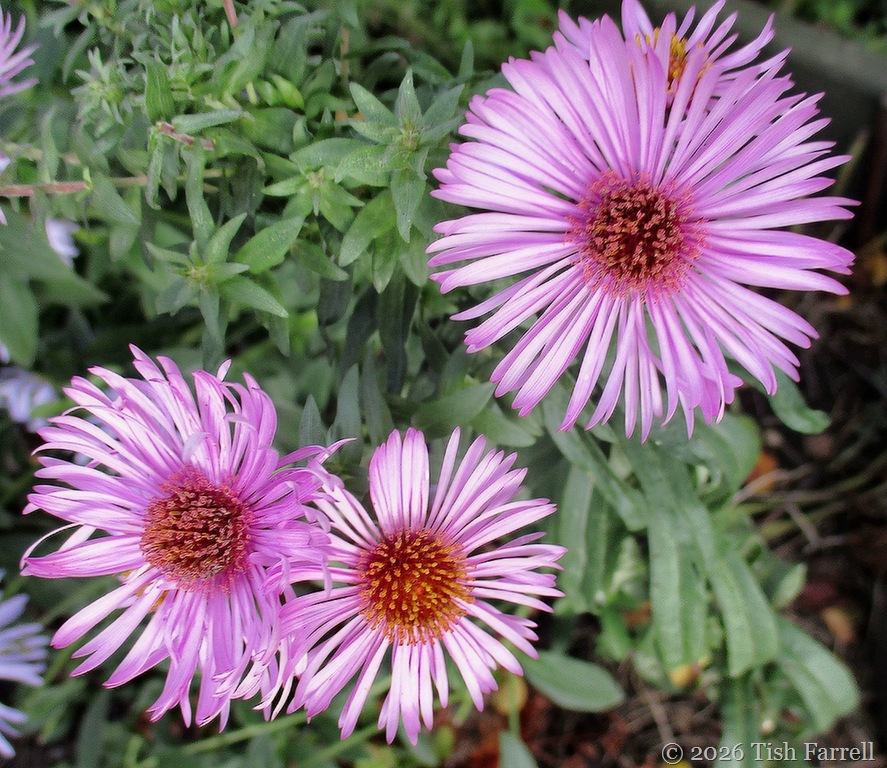
Growing beside Monch is a single stem of an unknown aster. I’d rescued it from somewhere else in the garden, where it was the only surviving sprout of a failed purchase, its label vanished. For once, I’m rather pleased with its pinkness, and the large size of the flowers. Some further nurturing required.

aster unknown

*

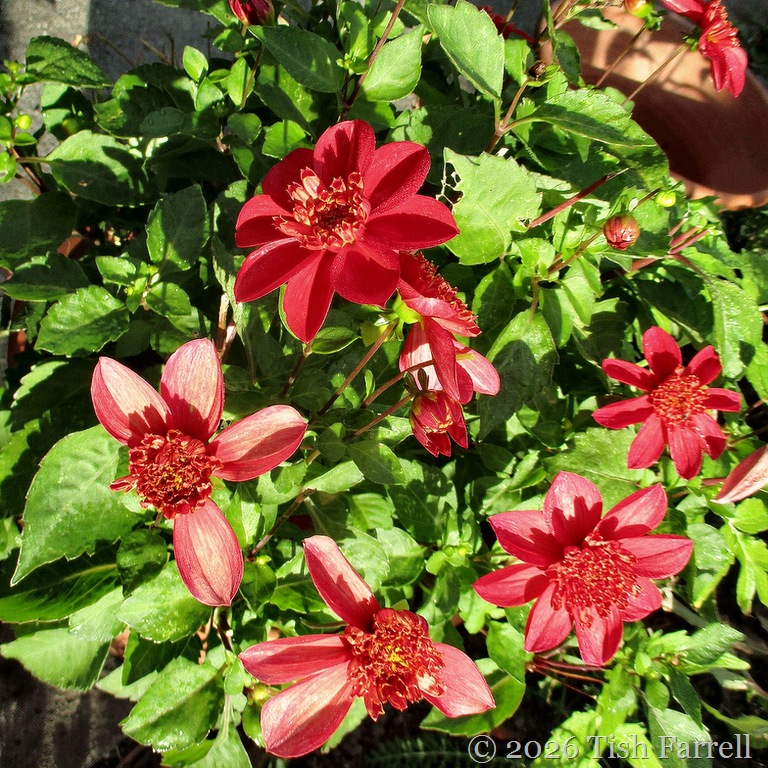
Other bright sparks include Anemone Dahlia Inca which is now on its third flush. It’s definitely putting its neighbour, the  Bishop of Llandaff to shame. That particular Dahlia did not like the summer heat one bit. Its first flowers only started opening this week, sporadic, very small and deeply unimpressive for a bishop.

dahlia Inca

*

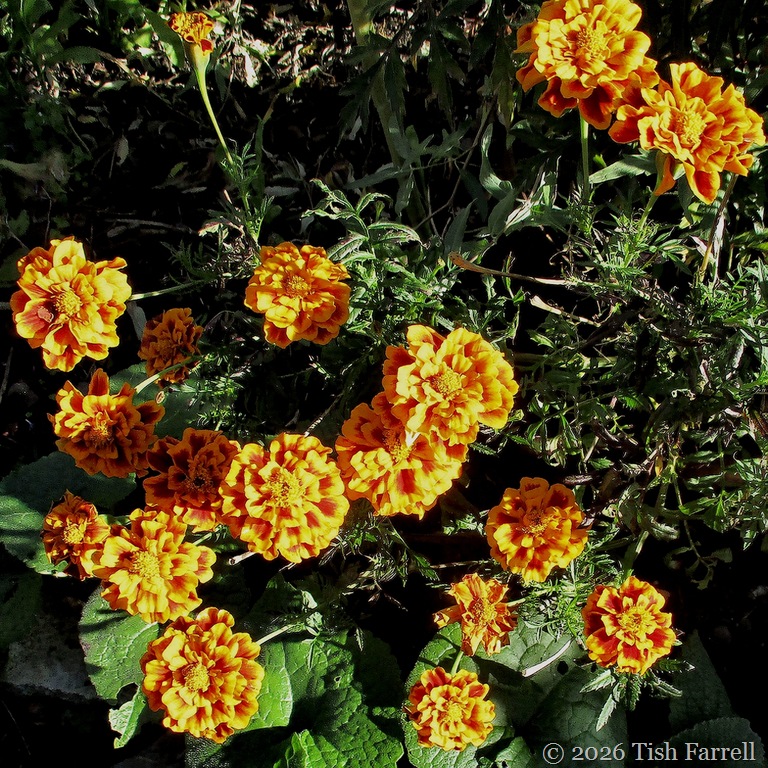
And then there are the Tagetes – French Marigold Brocade which is in the same big tub as the Bishop and more than making up for his deficiencies…

Marigolds Brocade

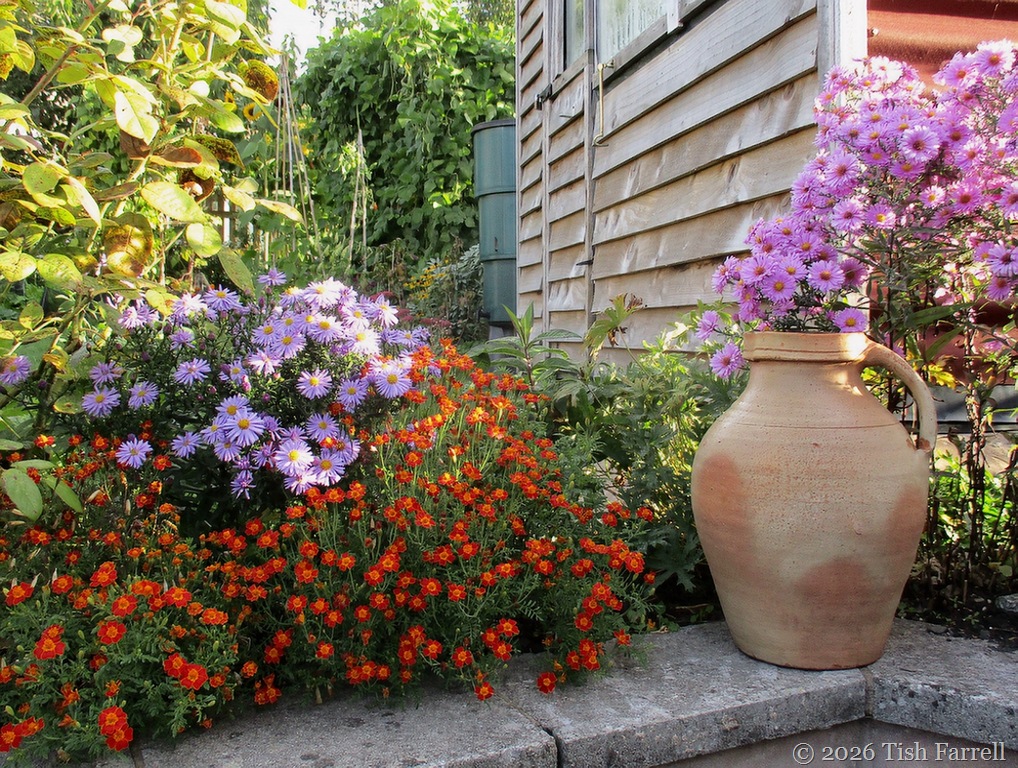
…and a ground cover, tiny flowered Signet Marigold, called Red Gem (Tagetes tenuifolia). I grew both marigolds from seed but the Red Gem struggled during the heat, being shallow rooted. In recent weeks, though, it’s been blazing away in a rather garish setting with a mauve aster. An unintended pairing at the time of planting.

back garden

*

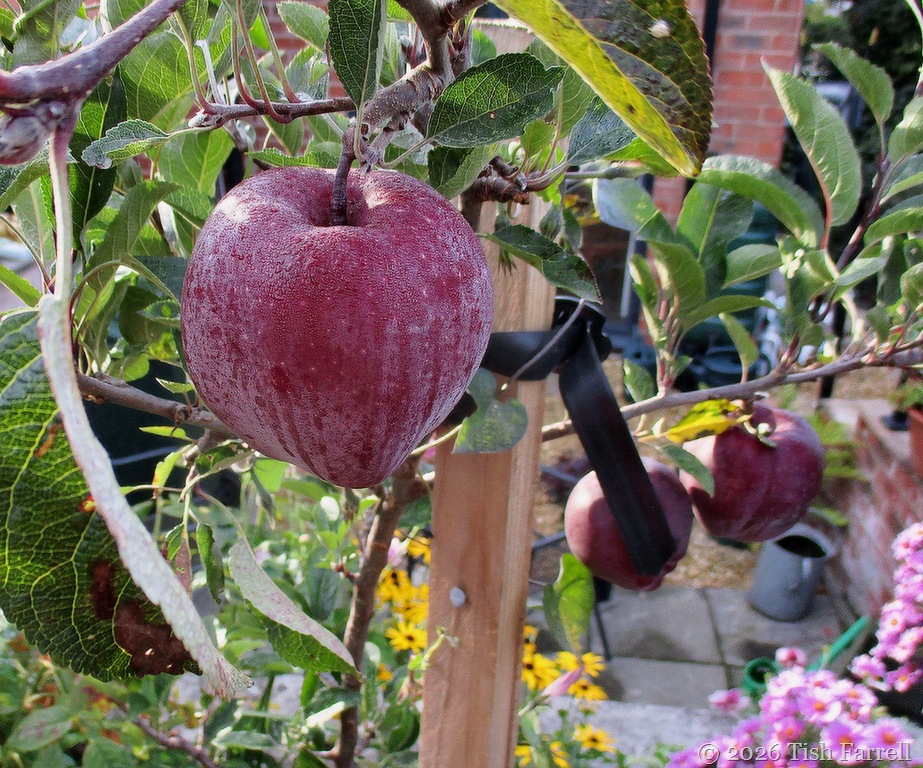
Our dwarf Red Devil apple tree finally managed to produce three apples that don’t look to have been codling mothed. We ate the biggest one this week. It was perfect – deliciously sweet and crunchy. A shame about the infestation.

red devil

*

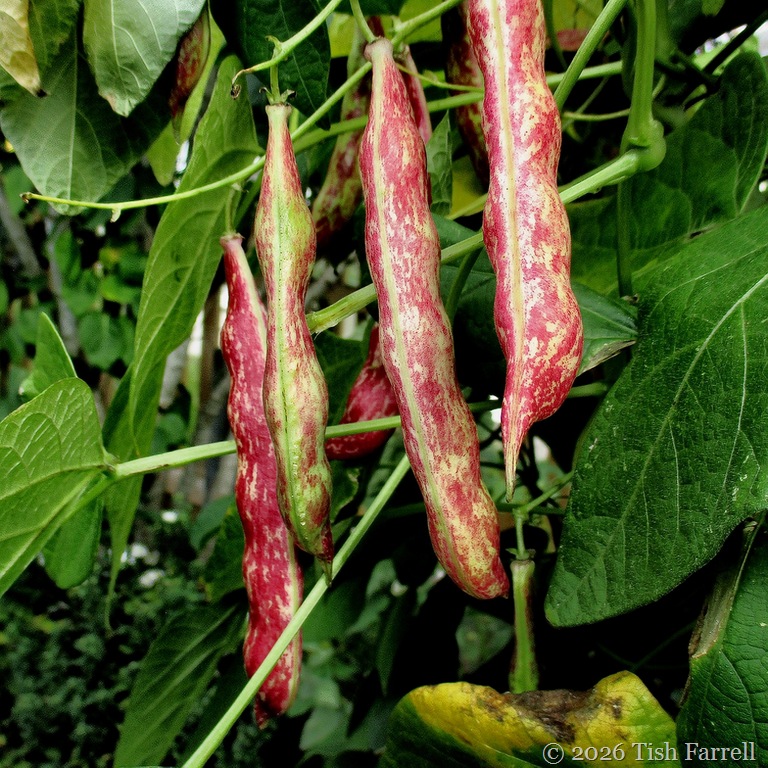
In the vegetable department, the runner beans suddenly revived themselves and produced further modest crops, sufficient to make a few pots of chutney. But now it looks as if they will be overtaken by the Borlotti beans. I hadn’t been holding out much hope for them. The plants did not develop well during the drought, this despite regular watering. And then they went and made a huge amount of foliage so I couldn’t really see what was going on underneath. But now, as the leaves dry and blow away, all is being revealed. I love them for their fiery pods alone.

borlotti

*

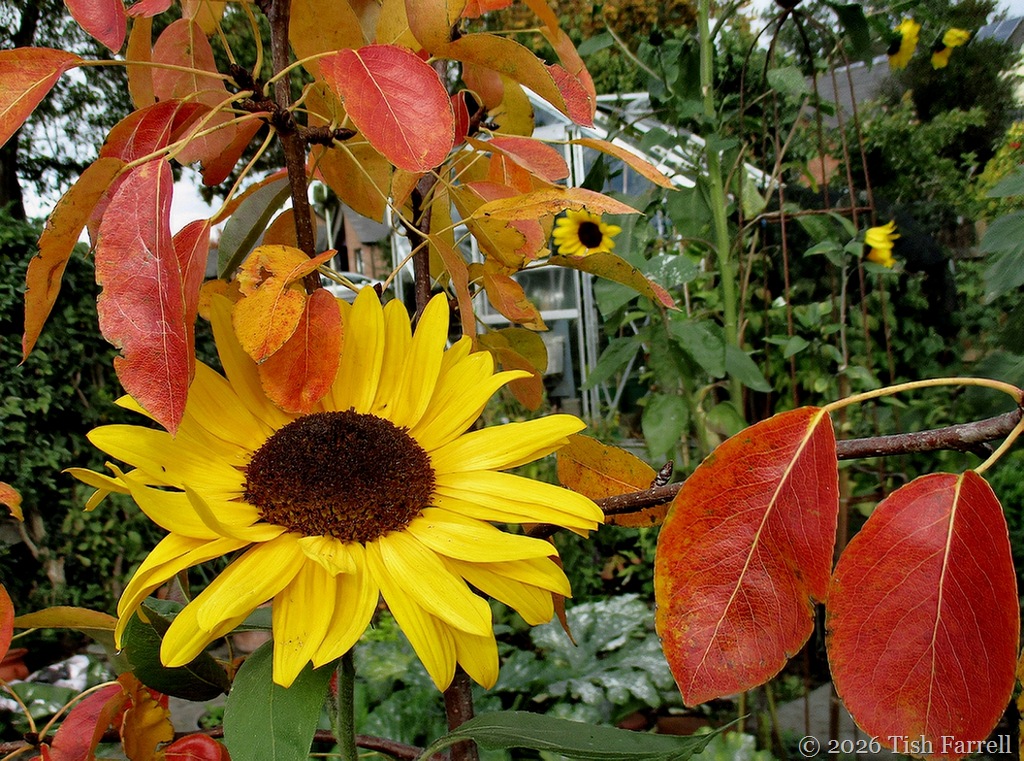
And finally, an image to mark the seasonal change: a sunflower in our dwarf pear tree: summer and autumn together.

sunflower and pear

Copyright 2026 Tish Farrell
*

Six on Saturday 10 October 26: Please call in on Jim to see what’s happening in his lovely Cornish garden this week. For one thing, he has some stunning Nerines.

 bee food header

Sunday’s Sunset Garden

garden sunset 3rd

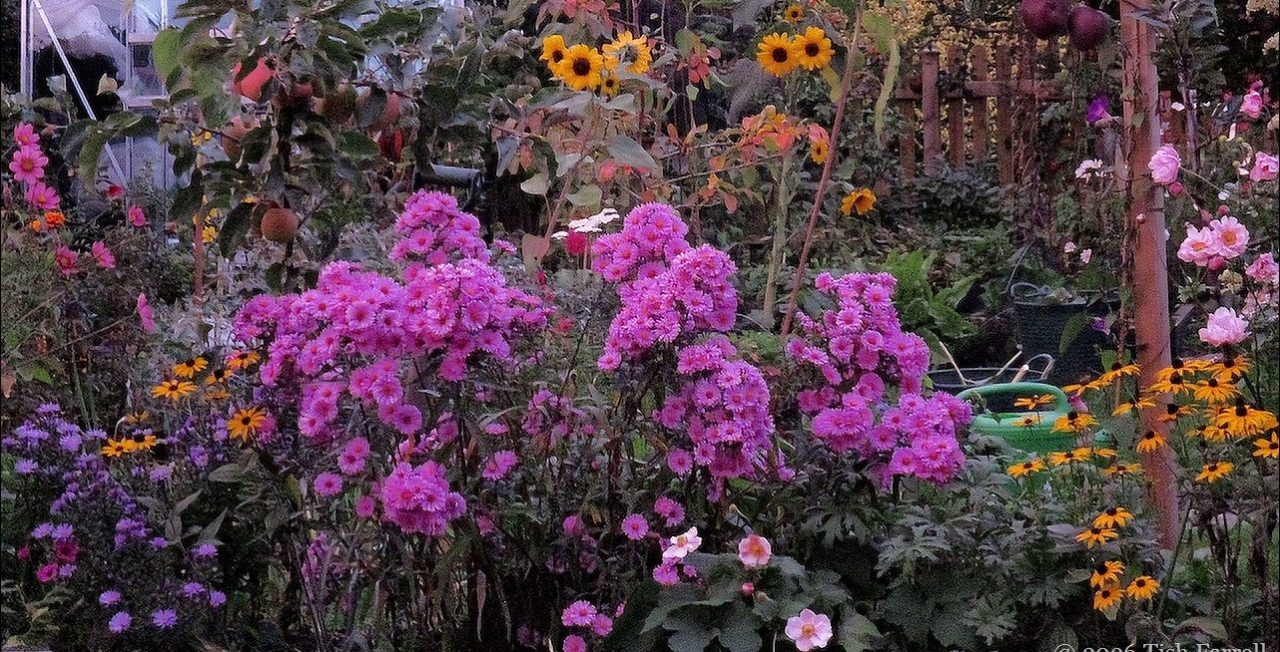
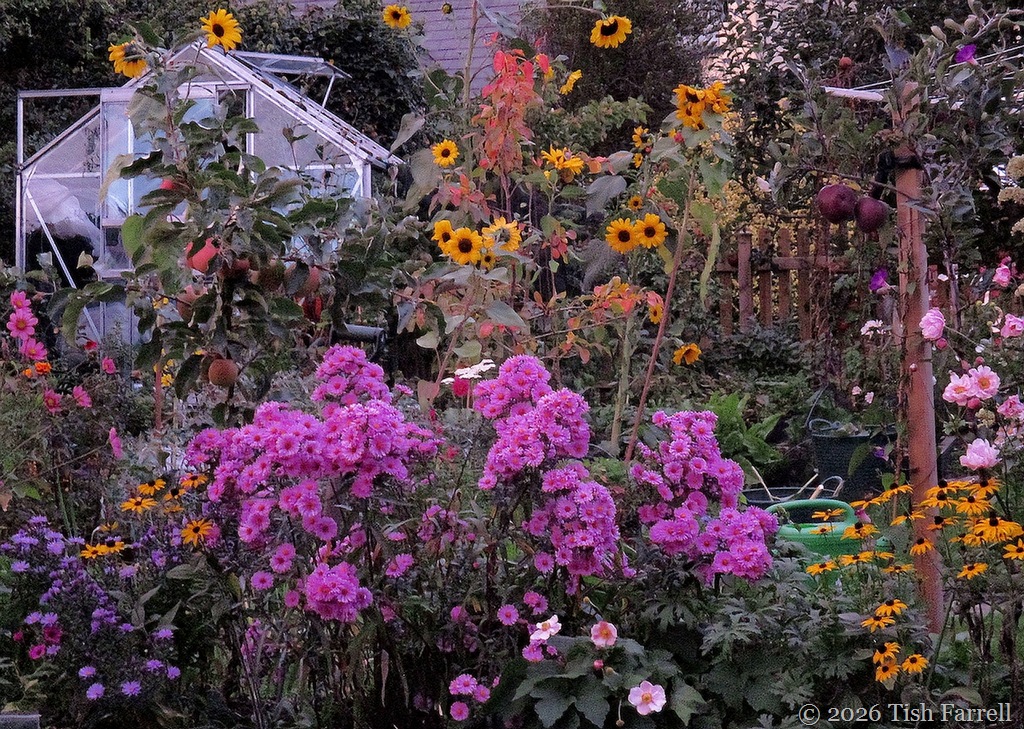
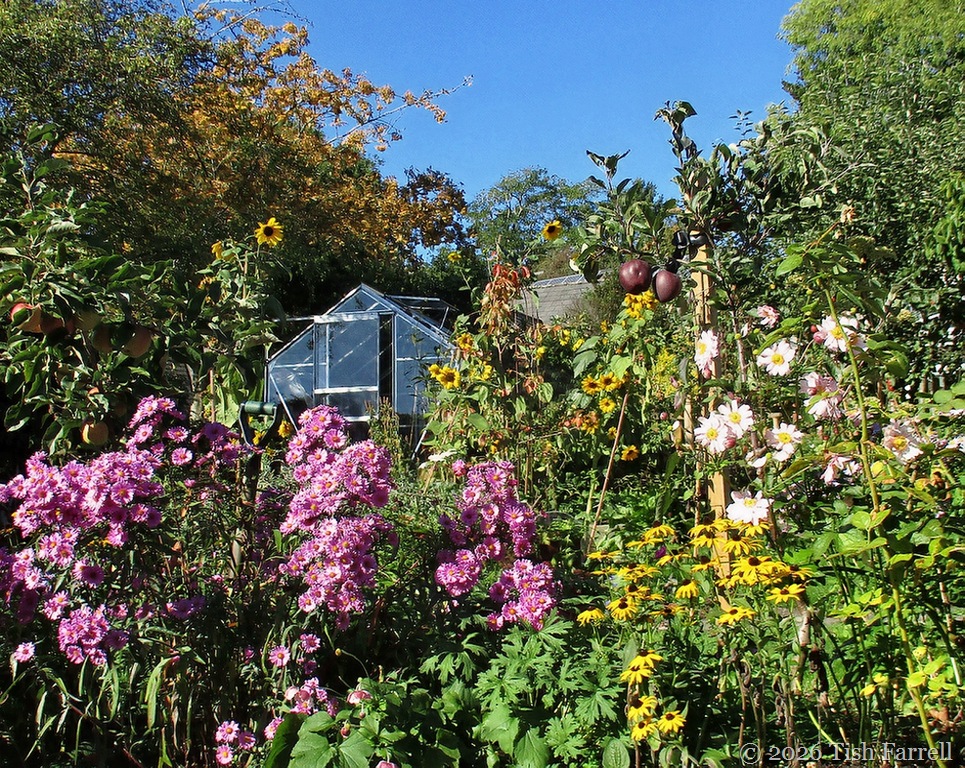
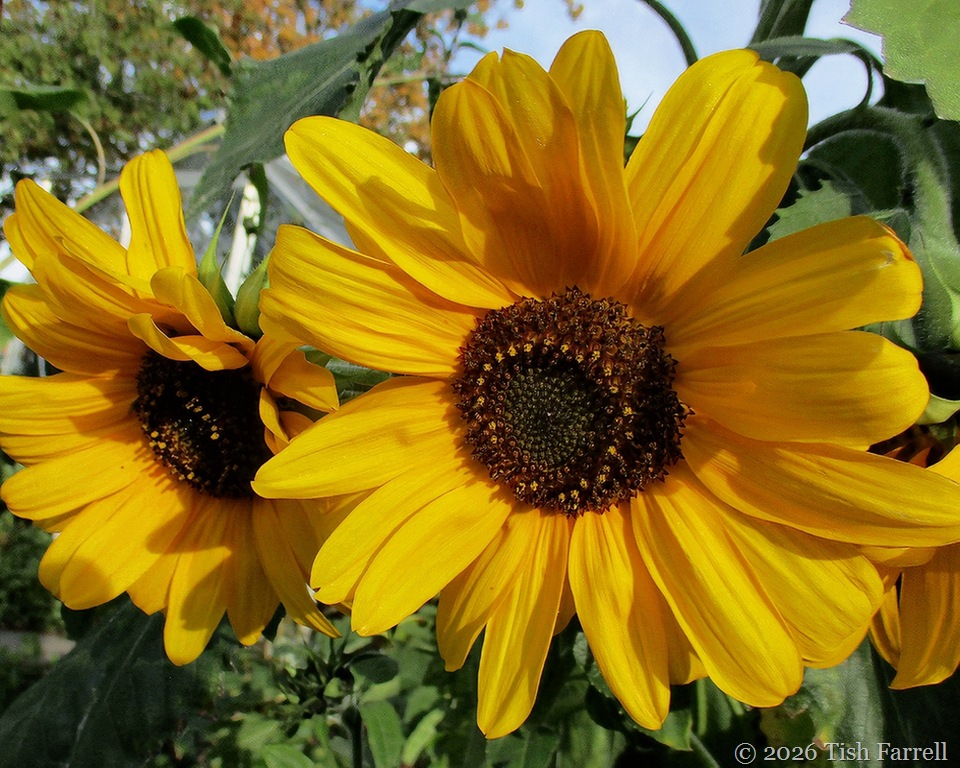
So autumn begins, and yet summer lingers. We’ve just returned from a last minute trip – a week by the sea in Pembrokeshire. It was surprisingly summery and warm there too, despite strong winds, but it must have been warmer still in Bishop’s Castle. We came home to a garden full of flowers: Asters, Cosmos, Rudbeckia, Japanese Anemones, Roses, Morning Glories, Sedums, Bee Balm, and Sunflowers. And a fine welcome it was too, though I must confess to a pang of gardener’s disgruntlement: see what the garden gets up to when left to its own devices, when I’m not here to interfere tend it.

 garden Oct 3 b

sunflowers

Copyright 2026 Tish Farrell