
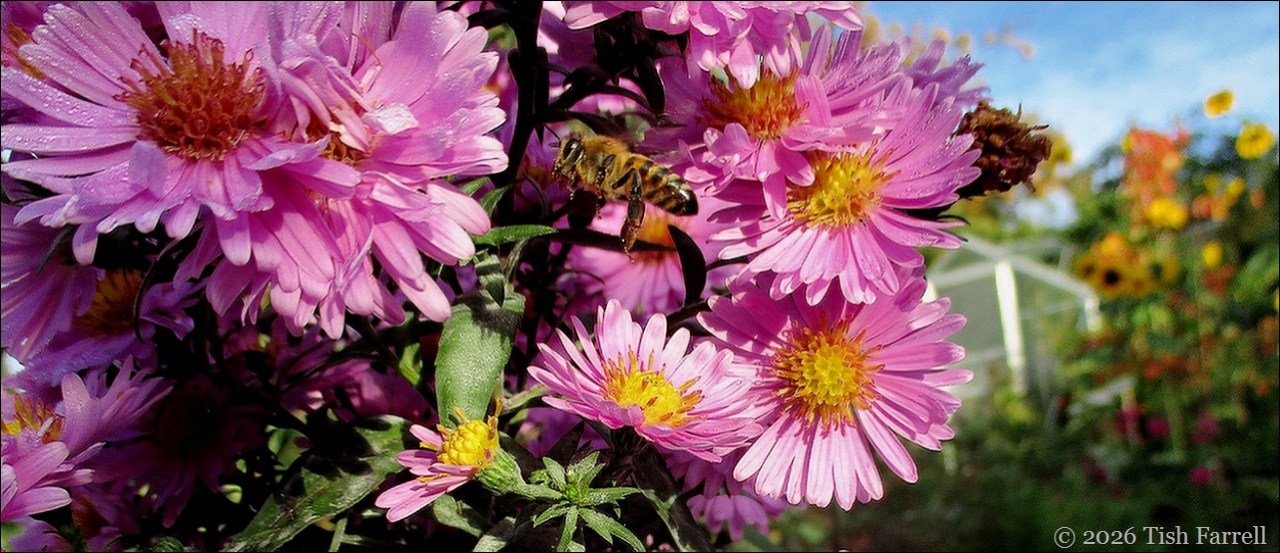
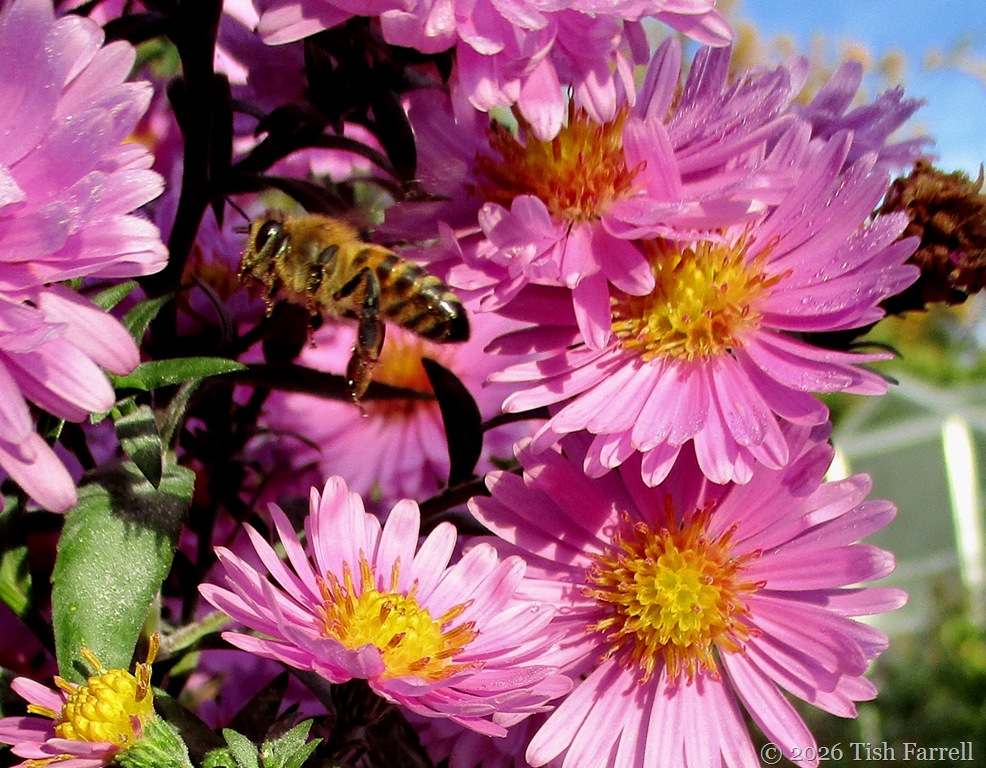
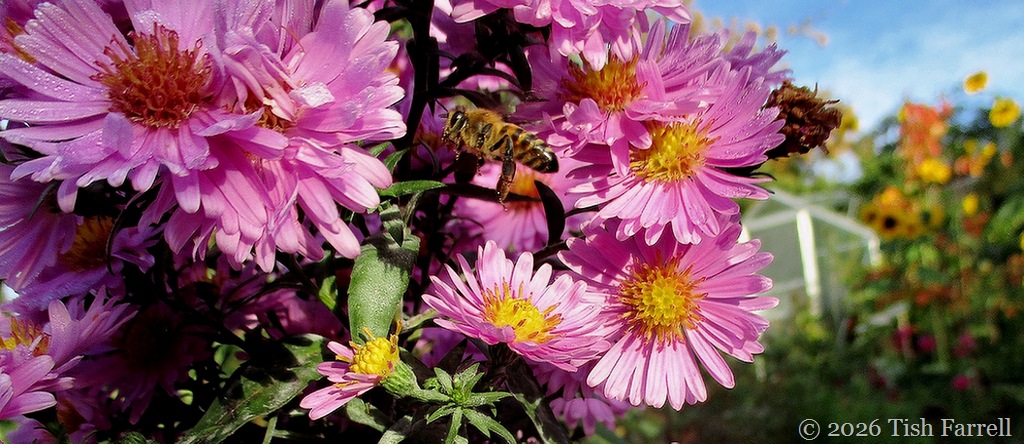
Asters, Symphyotrichums, Michaelmas Daisies, whatever you call them, they’re a cheering sight as summer ends. I even overlook my inkling to dislike the pinkish-purple shades that so many versions come in. I much prefer the mauve range. Anyway, here’s another good reason to grow them: bee food. Now’s the time honey bees are stoking up reserves to get them through winter.
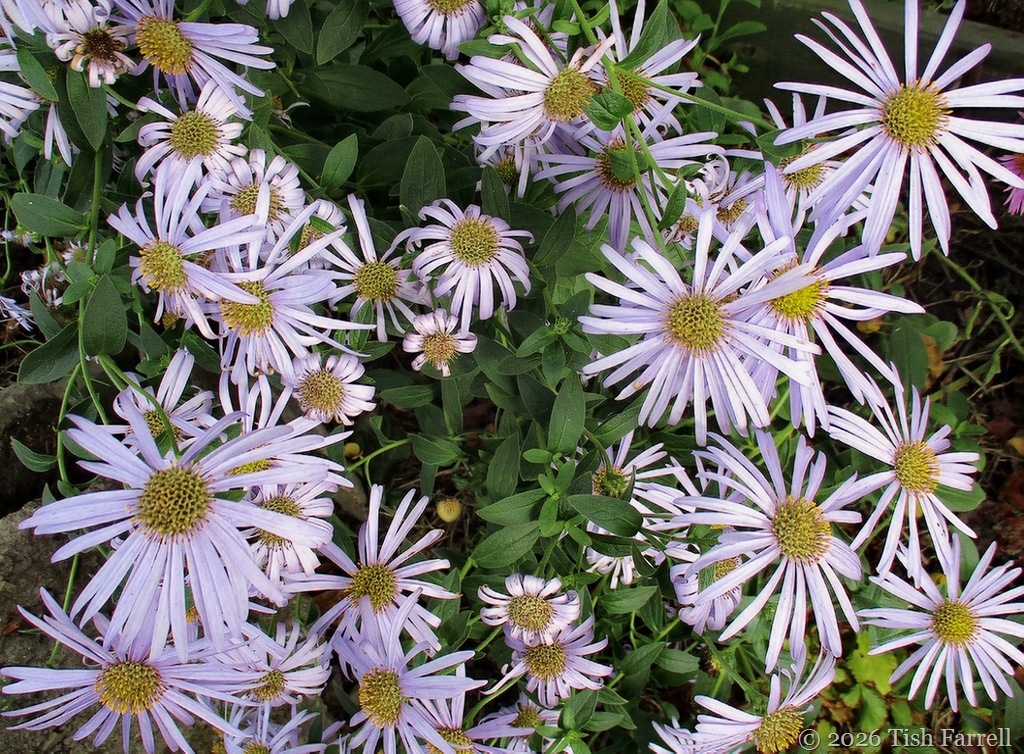
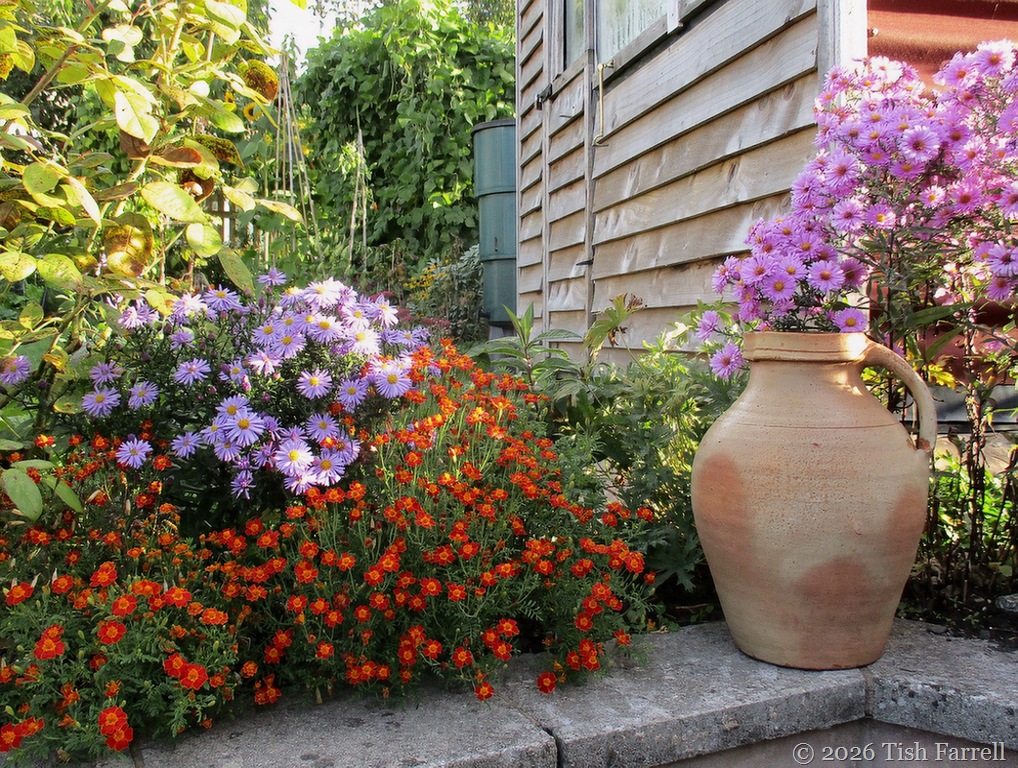
And talking of mauve asters, the Monch in the corner of the garden (which I’ve mentioned before) is still going strong. The flowers may have paled, but they’re still coming – three and half months after the first opening.
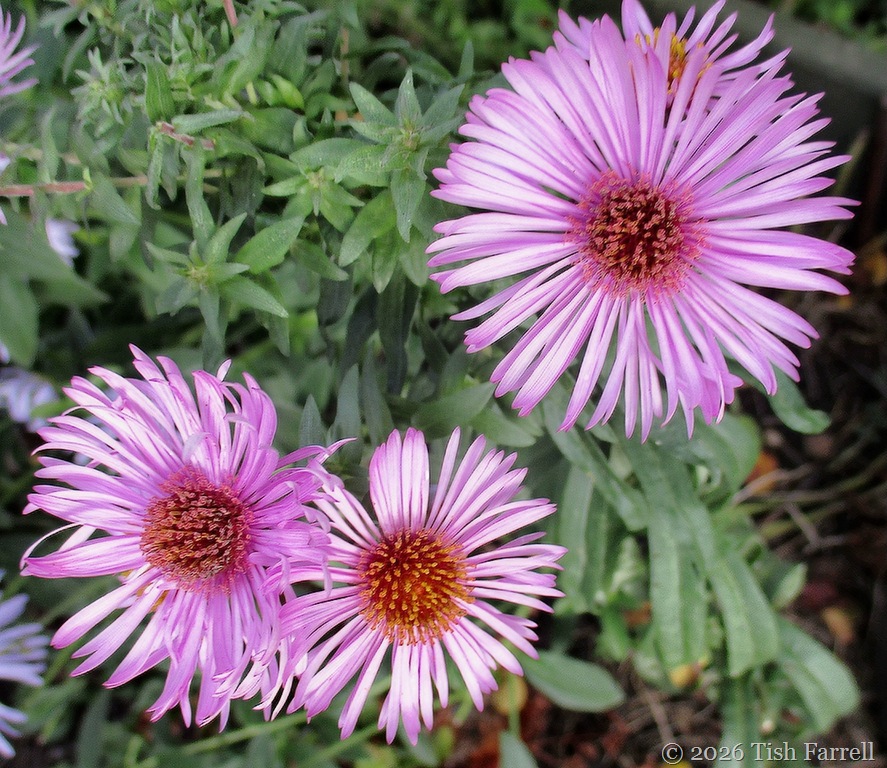
Growing beside Monch is a single stem of an unknown aster. I’d rescued it from somewhere else in the garden, where it was the only surviving sprout of a failed purchase, its label vanished. For once, I’m rather pleased with its pinkness, and the large size of the flowers. Some further nurturing required.
*
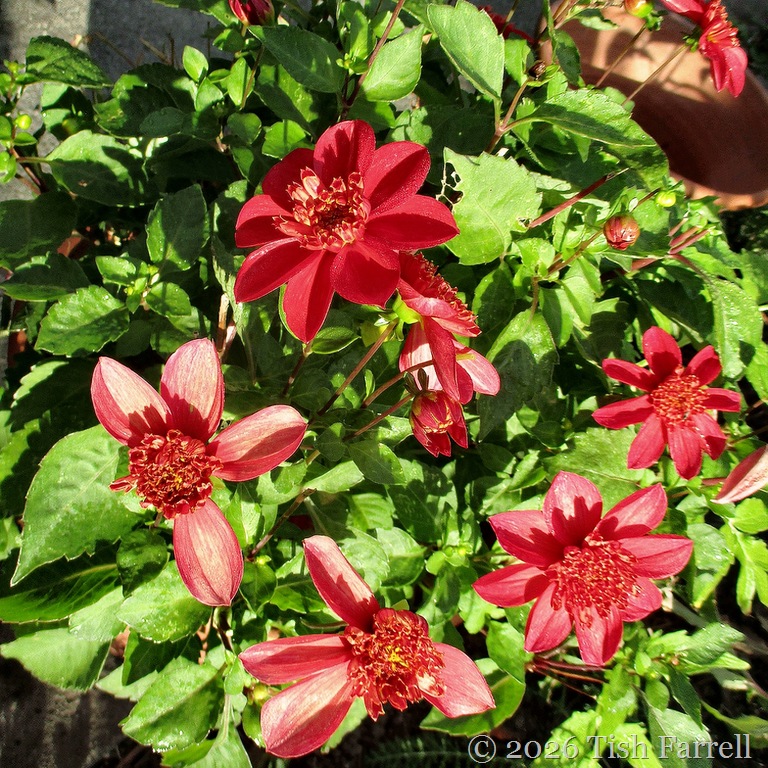
Other bright sparks include Anemone Dahlia Inca which is now on its third flush. It’s definitely putting its neighbour, the Bishop of Llandaff to shame. That particular Dahlia did not like the summer heat one bit. Its first flowers only started opening this week, sporadic, very small and deeply unimpressive for a bishop.
*
And then there are the Tagetes – French Marigold Brocade which is in the same big tub as the Bishop and more than making up for his deficiencies…
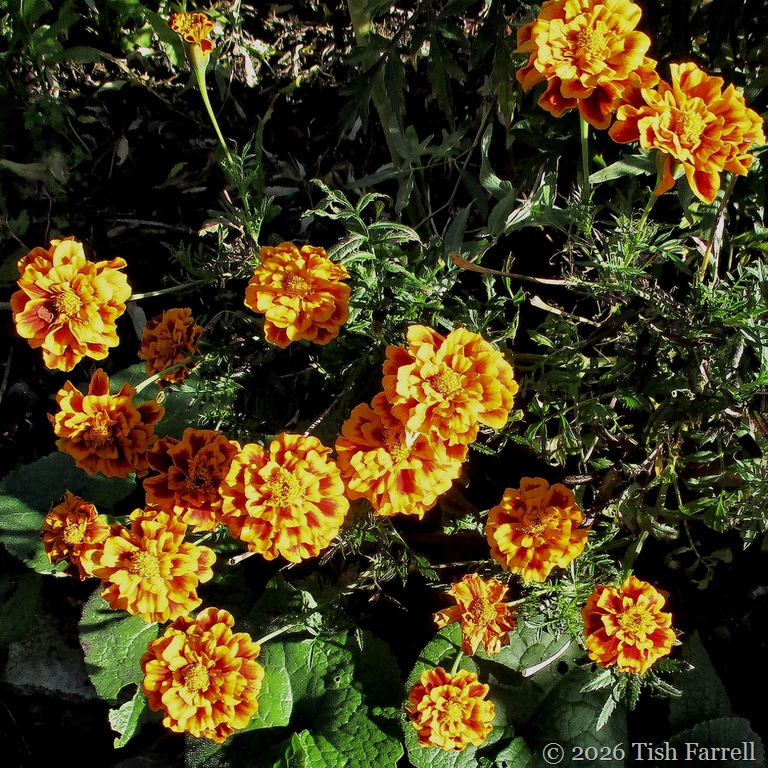
…and a ground cover, tiny flowered Signet Marigold, called Red Gem (Tagetes tenuifolia). I grew both marigolds from seed but the Red Gem struggled during the heat, being shallow rooted. In recent weeks, though, it’s been blazing away in a rather garish setting with a mauve aster. An unintended pairing at the time of planting.
*
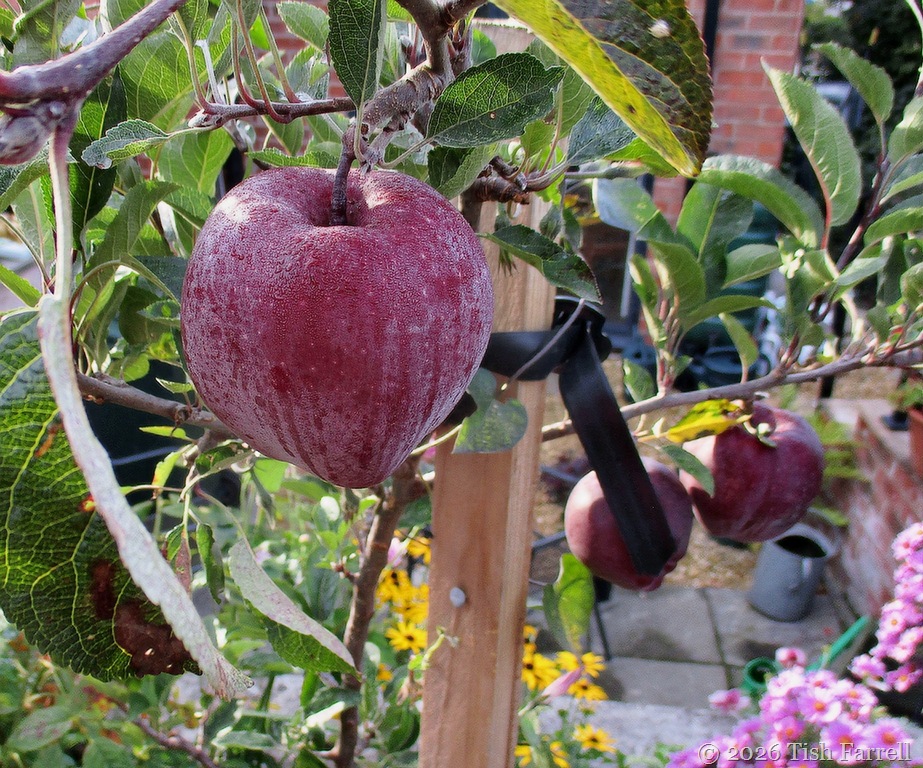
Our dwarf Red Devil apple tree finally managed to produce three apples that don’t look to have been codling mothed. We ate the biggest one this week. It was perfect – deliciously sweet and crunchy. A shame about the infestation.
*
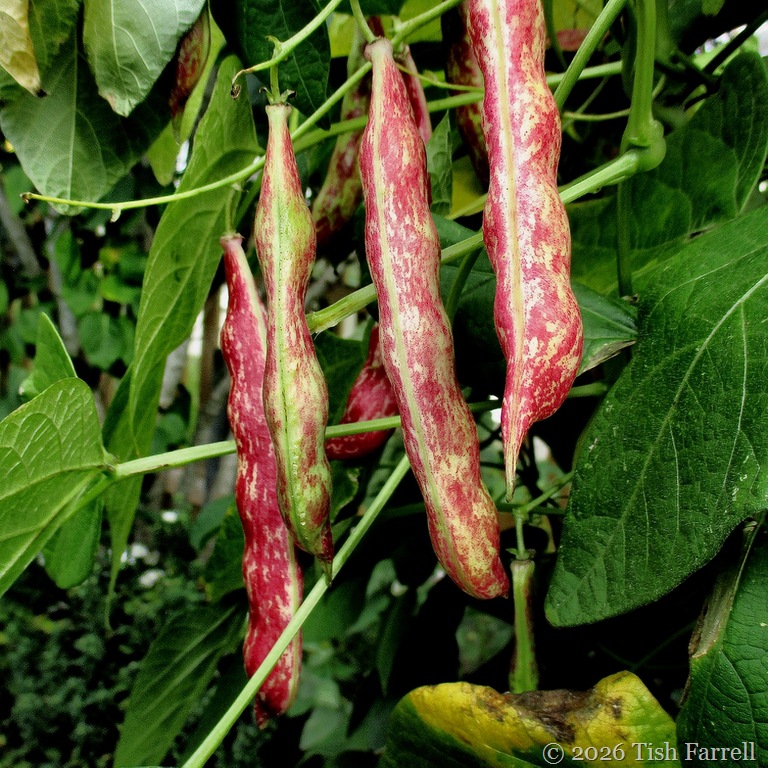
In the vegetable department, the runner beans suddenly revived themselves and produced further modest crops, sufficient to make a few pots of chutney. But now it looks as if they will be overtaken by the Borlotti beans. I hadn’t been holding out much hope for them. The plants did not develop well during the drought, this despite regular watering. And then they went and made a huge amount of foliage so I couldn’t really see what was going on underneath. But now, as the leaves dry and blow away, all is being revealed. I love them for their fiery pods alone.
*
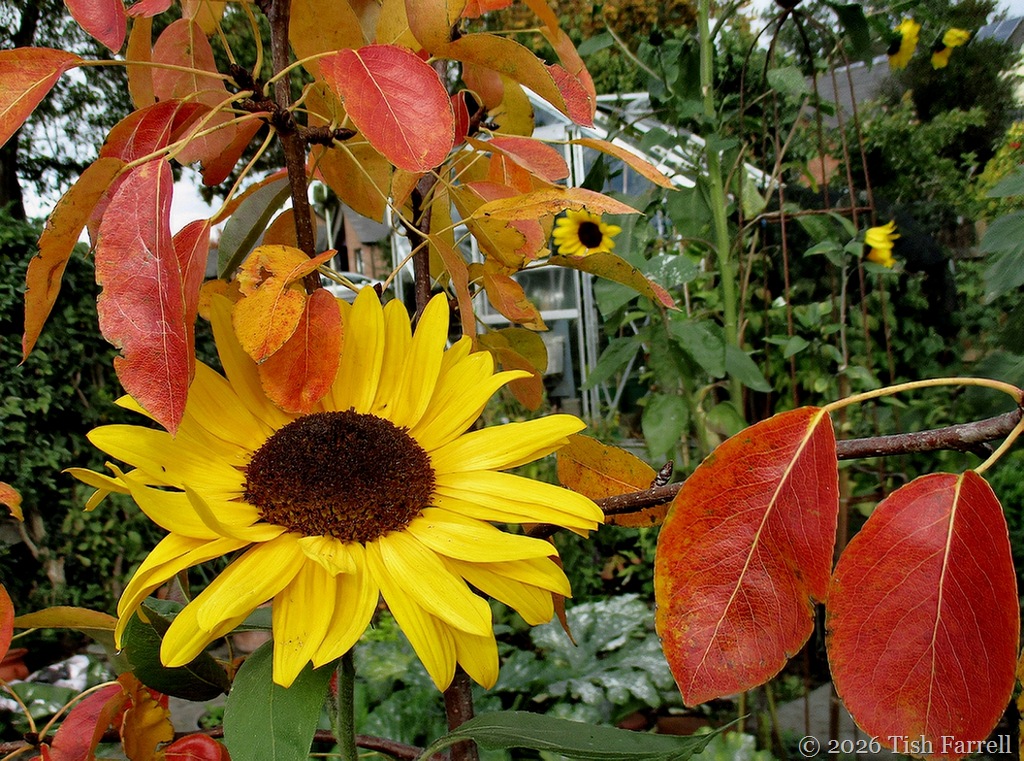
And finally, an image to mark the seasonal change: a sunflower in our dwarf pear tree: summer and autumn together.
Copyright 2026 Tish Farrell
*
Six on Saturday 10 October 26: Please call in on Jim to see what’s happening in his lovely Cornish garden this week. For one thing, he has some stunning Nerines.

Well, your garden certainly retains colours, Tish….I was fascinated by the Borlotti bean pods!
Aren’t they lovely!
I no longer have an allotment, but when I did, I loved my borlotti beans. They had the looks, they had the taste (fresh and dried) they had the productivity. I don’t know why they’re not grown more here. Your garden is a symphony of autumn colour.
So agree about borlotti beans. Even podding them is a thrill, seeing what colour schemes turn up in. I’m not sure why they struggled to get going through the summer as I was thinking they rather liked hotter cons. Anyway, it looks like there will be a few to pick in a week or so. They’re all at different stages too, so not sure if the younger ones will have time to ‘pod out’.
Tish, your colorful flowers made me smile!
That’s lovely to know, Beth.