
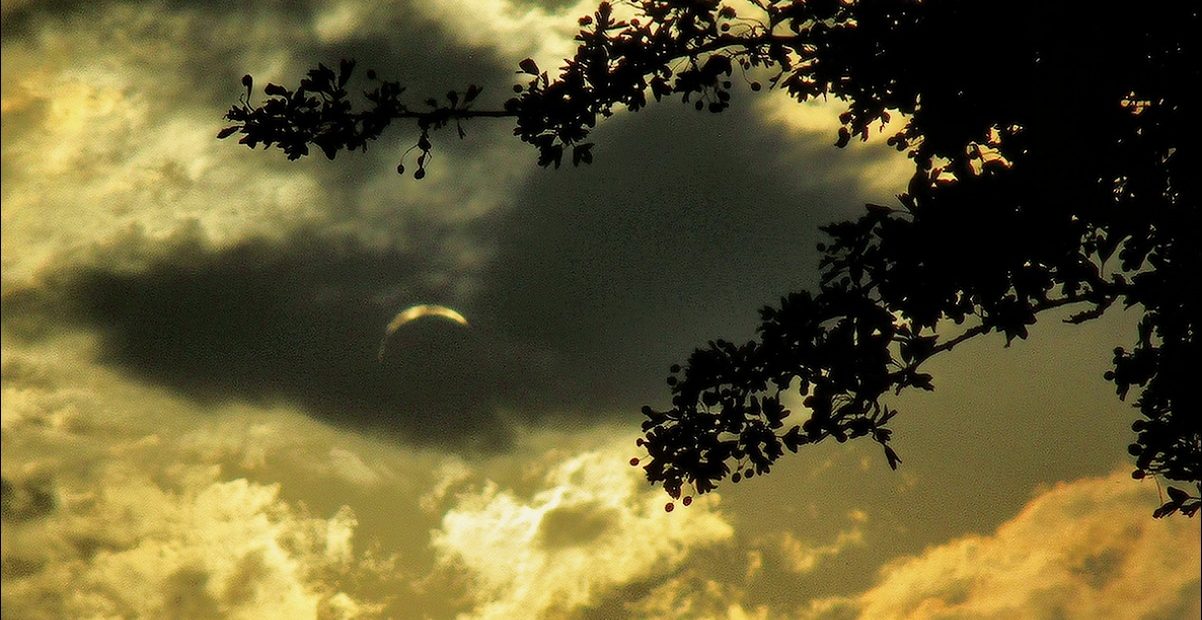
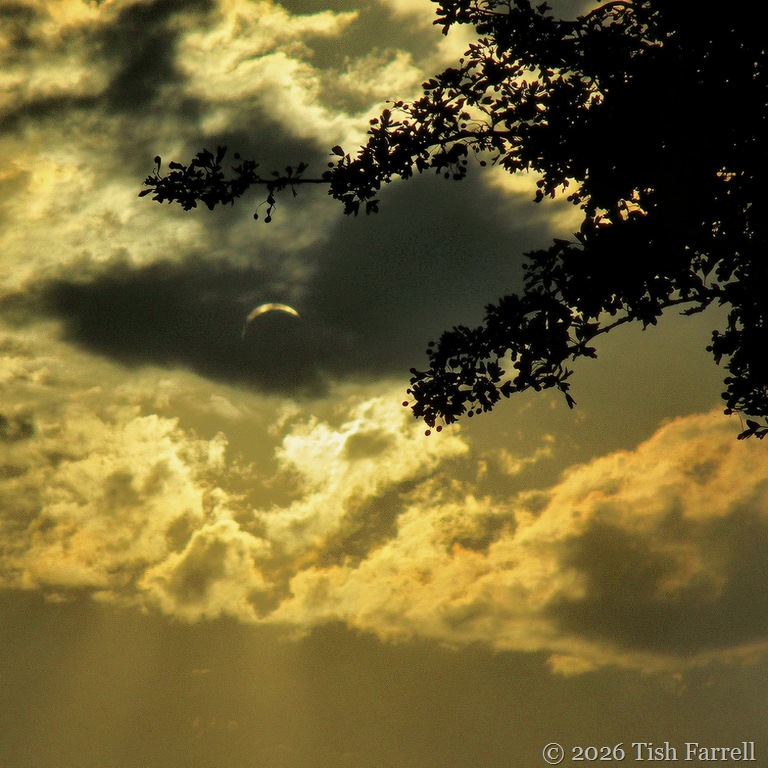
On Thursday evening we sat in the garden and watched, through a big dark cloud, a very partial partial eclipse of the sun. The cloud, though, created quite a light show. While this was going on, I took a photo of one of our sunflowers, basking in the unearthly glow.
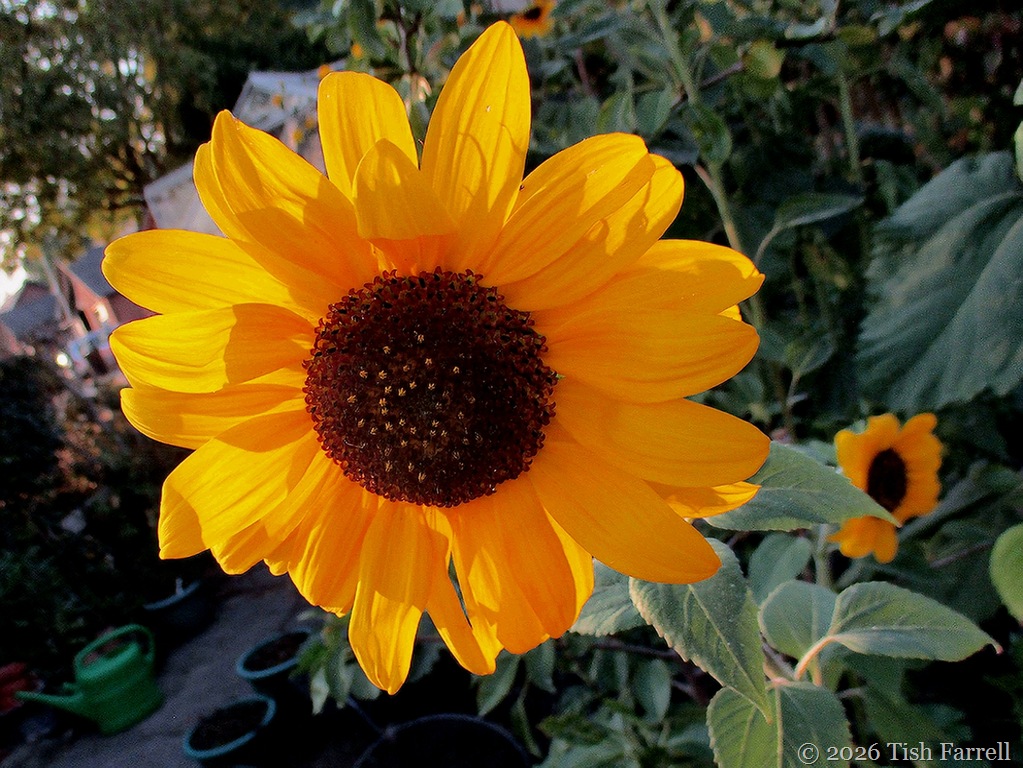
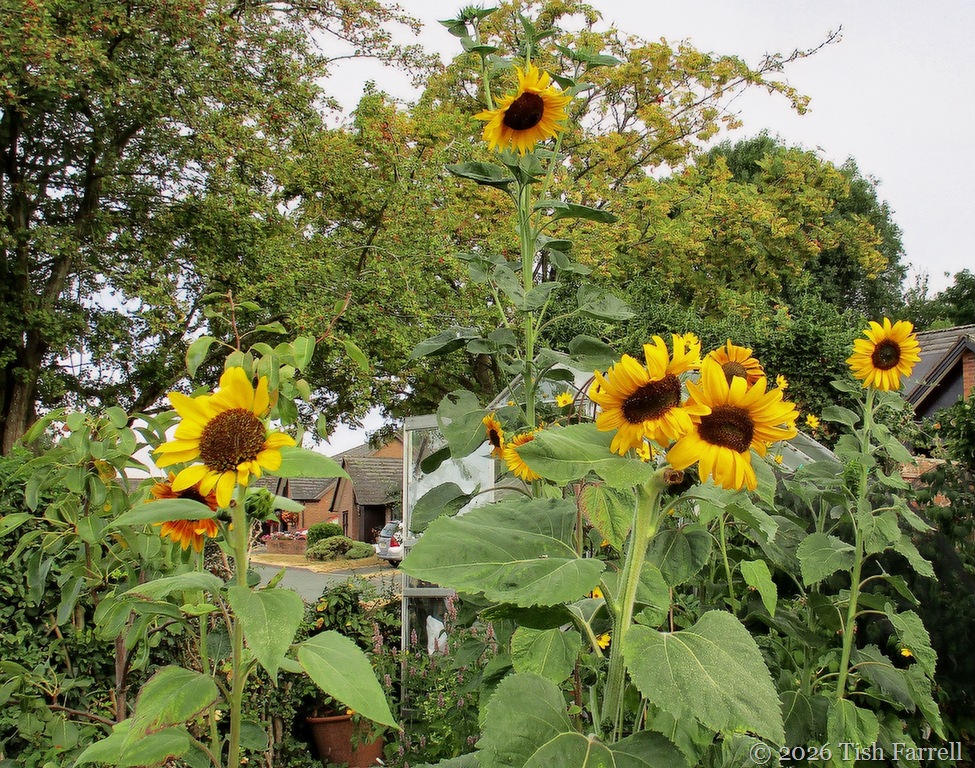
In fact this crop of self-grown, mostly unattended sunflowers has positively thrived during the long heatwave. I have been removing the dead flowers and putting the heads along the edge of the borders, just in case any wildlife wishes to eat the seeds. I must have done this last year with the ones I grew intentionally. Which explains how this year’s lot came to be. So: who knows what will happen next year – a sunflower forest?
*
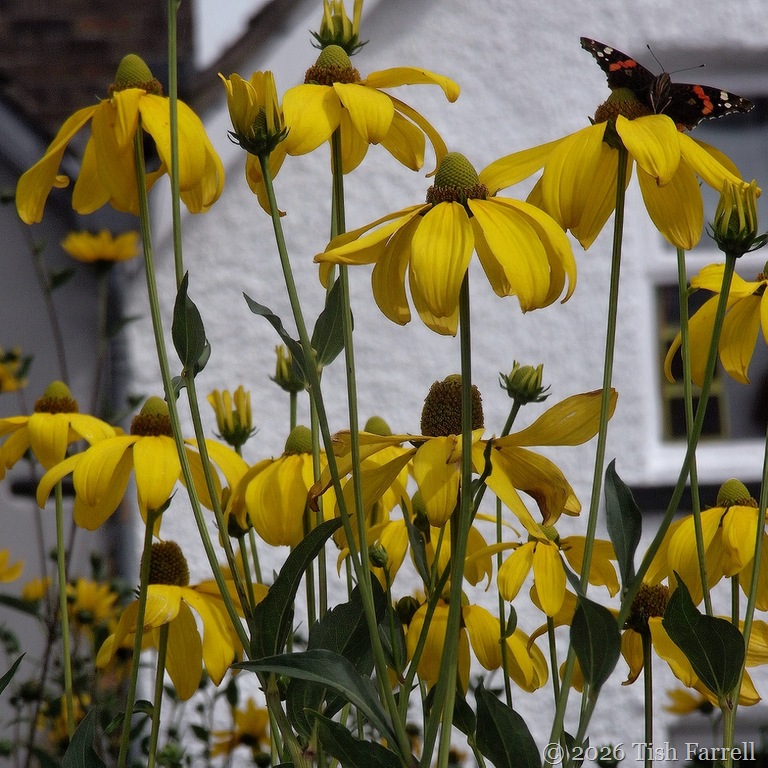
Thriver and SoS no. 2 is the Rudbeckia Herbstsonne. It is growing in the top of a boundary wall beside next door’s garage. The wall is basically a raised bed, and there is probably quite a depth of soil inside it. I never did get to the bottom of it. When we moved into The Gables three years ago it was choked with Hypericum Hidcote that had turned itself into the plant world’s version of chain-link fencing, intermeshed with brambles, and several well grown ash tree saplings. It took a marathon of digging to extract everything.
It is a rather odd spot for gardening. The wall runs from the road to our back garden, aligned east-west. I planted the Rudbeckia at the westerly end, thinking to screen the visibility gap between us and next door. And it works! I’ve not watered it all summer and here it is, complete with Red Admiral butterfly.
*
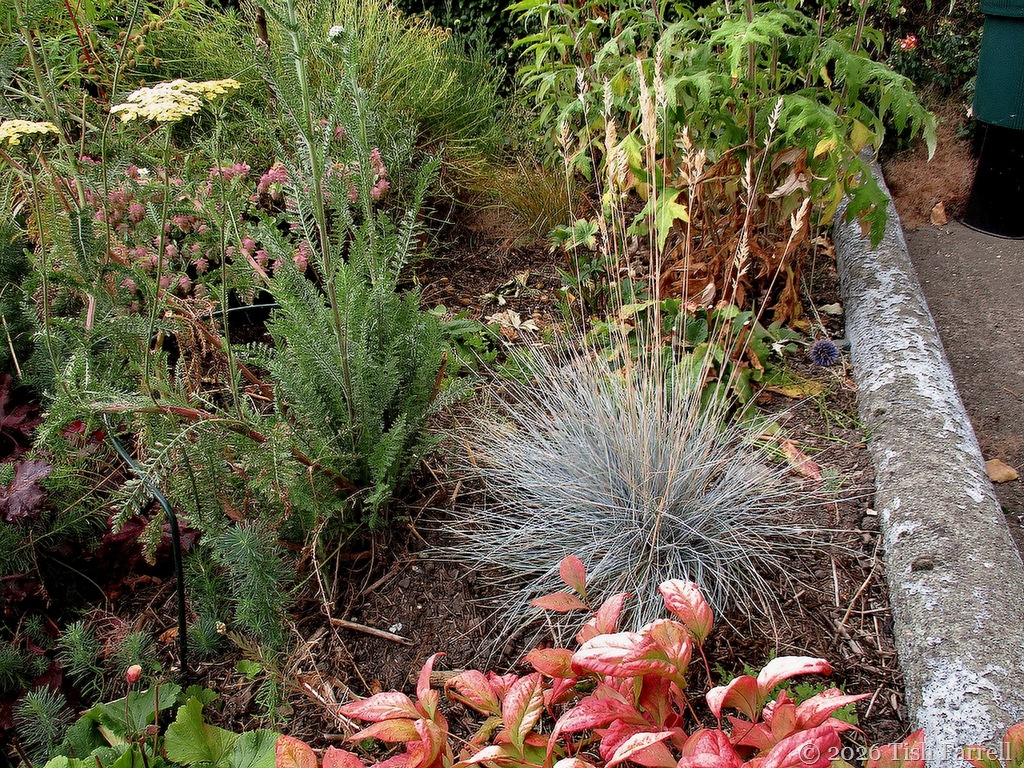
Thriver no, 3 is a neat little grass in the front border – Festuca glauca Intense Blue. This bed has had some water, but not much. I like its fountain looks and the way the grass reflects the light (which makes it hard to photograph.)
*
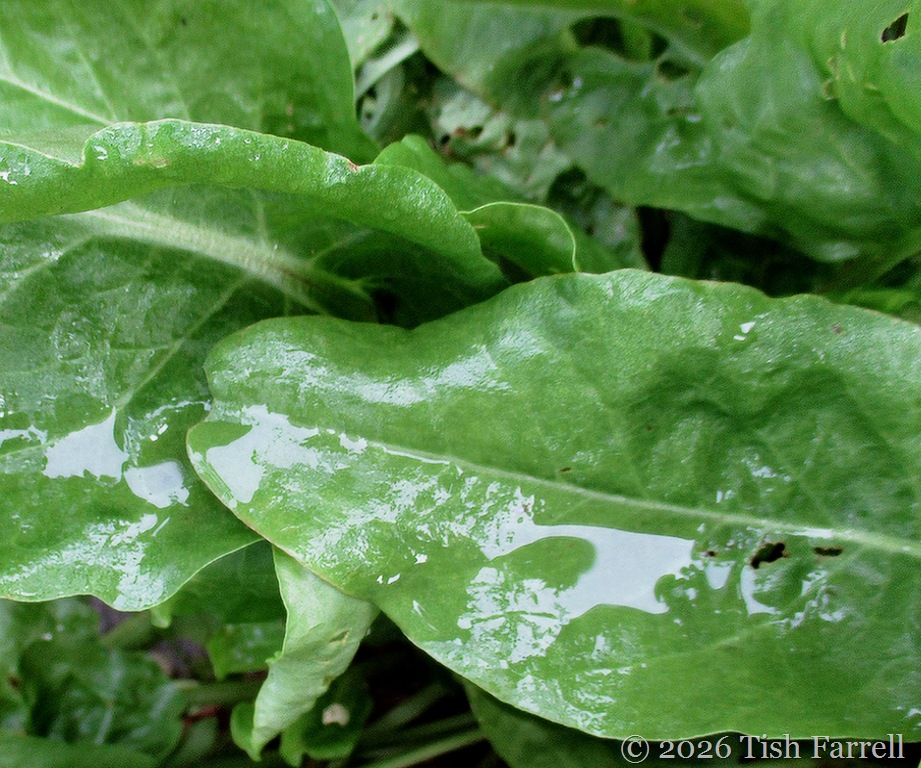
Number 4 is offered as proof of existence – or maybe circumstantial evidence at best. Here we have raindrops on sorrel leaves. At some point between Thursday night and Friday morning we had a spatter of rain. It fell on various surfaces but none apparently on the soil, which then and now remains dry as dust. The promised rainstorm for Friday afternoon did not happen.
*
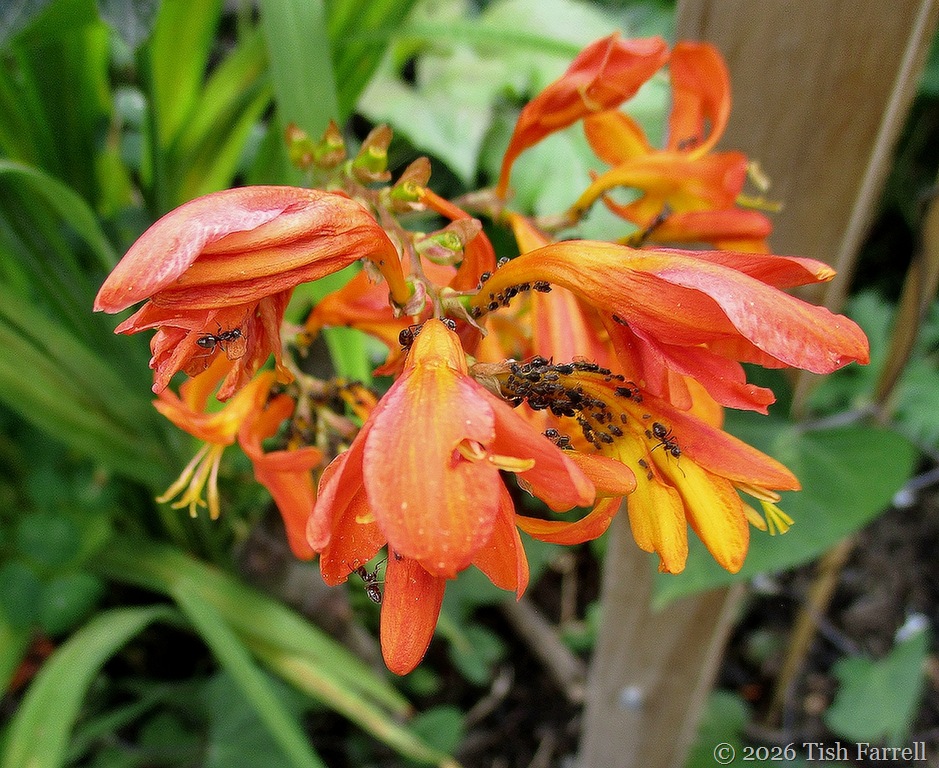
No. 5 is the kind of infestation that comes with stressed plants and stressful conditions. The ants have set up aphid factories all over the garden, but especially in unsightly encrustations along the stems of otherwise lovely claret cosmos. The Dyer’s Chamomile is also a desirable location, as is the Montbretia. I’ve tried spraying with slightly soapy water, and gently wiping off by hand, but one ends up causing more damage to the flowers as well creating blackfly soup. And anyway, the ants only come and set up business again as soon as my back is turned.
*
But back to the good garden moments this week – a new blue butterfly spotted on the Korean Mint (Agastache). It’s a male Common Blue, wingspan about 3 cm. Exquisite.
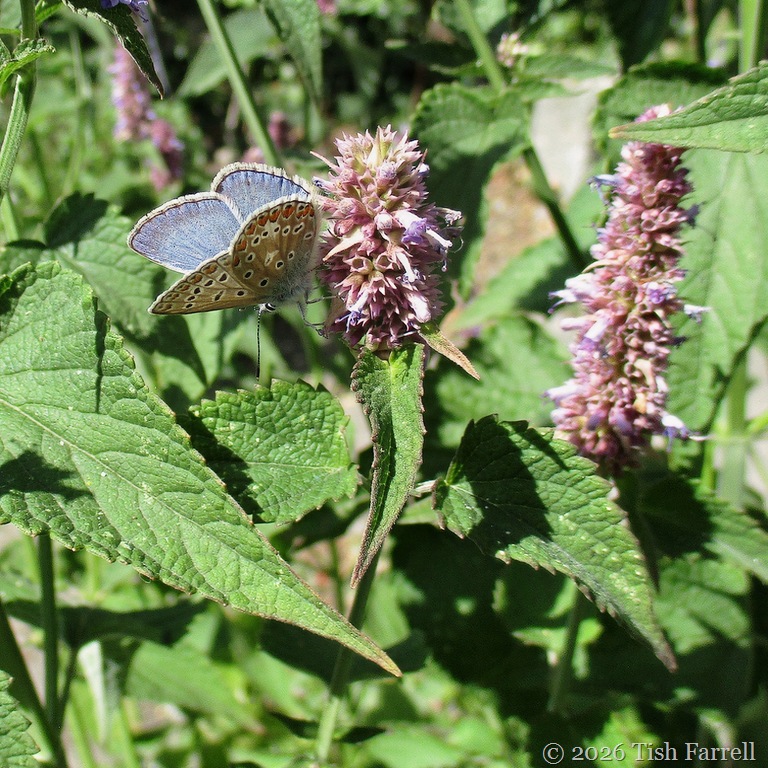
Copyright Tish Farrell 2026
*
Six on Saturday: The hot dry weeks may be taking their toll, but there are still some wonderful plants in Jim’s Cornish garden

We have stopped feeding our dogs kibble (for various reasons) and now prepare food for them, which includes sunflower seeds. Unbeknownst to my crew, I have ‘purloined’ a few from the pack we bought and will be sowing them in a few weeks.
I have earmarked a spot along the front wall and if they grow tall enough it will make a colorful and interesting sight for those who walk or drive by, and a surprise for those at our spot.
Love the butterfly.
😊
Magic, Ark 🙂
Love your eclipse shot, Tish. What a way to start the post! I do love sunflowers. We used to see fields of them in South Dakota on our drive to Wyoming. After moving, we go a completely different way, so no sunflowers, although plenty of beauty of other sorts. Enjoy the weekend.
They do look amazing when grown at field scale.
I like them in smaller groups as well, but the large scale is certainly amazing and, I think, uplifting, as they’re so cheerful looking.
A sunflower forest! Reason to visit Bishop’s Castle, Tish. They normally thrive here but the last ones I saw, in the hotter than hot Alentejo, were shrivelled and sad. Love the rudbeckia too xx
I will obviously keep you posted about the forest, Jo 🙂
well, I never got to see the eclipse, Tish, but I did see one 20 years ago so I’m not too stressed! Love your sunflowers and the common blue butterfly
The sunflowers truly have been stars this summer. So sturdy too.
Indeed they are!
Beautiful eclipse capture and your sunflowers made me smile!
Good to hear, Anne 🙂
😍
Oh, so lovely! Great post!
Thank you!
The deer always get to my volunteer sunflowers before they have a chance. 😖
That’s a shame. But lucky deer.
I planted two Rudbeckia Herbstsonne last autumn, but not a sign this year. They must have rotted in the wet winter. Such a shame because they are very beautiful. Nice to see a blue butterfly.
Sorry about your Herbstsonne. I am surprised mine seem to function without watering. They don’t have particularly deep roots either.
Gosh it’s frustrating when you’re supposed to get a rain but don’t, ha? But glad it sounds like maybe you haven’t stressed yourself too much with watering or perhaps have a drought tolerant garden. I like the wall and those grasses, love checking in with your garden Tish! Hope the eclipse was fun too. Dawn drove a couple hours to one of our mountains/ volcanoes, Mt Rainier, to watch the Perseids peak that night.
The Perseids must have been a brilliant sight. It’s a few years since I last got myself out of bed and into the garden to watch them over Wenlock. As for the garden, the front gets cooked on sunny days, but it’s fairly well mulched so I’ve not done much watering there – a couple of good dousings several weeks apart, and some spot emergency watering for the limp-looking (which could also have been me). A bit cooler here now – more like the usual UK high summer weather.
I love the late summer vibe. However for us gardeners man it gets to be a bore this time of year to keep up with the watering. I go a bit limp myself in that department.
Love the sunflowers! I have a neighbor down the street that grows huge tall sunflowers in the front yard. It looks awesome! They dwarf the house and make me feel like I am looking at a tiny house in a fairy story that is dwarfed by the flowers.
That’s a lovely image of the house looking tiny beside huge sunflowers. They are astonishing plants.
The sunflowers are beautiful! Here’s hoping for your much needed rain.
Many thanks for those rain wishes, Jennie.
😀
And we’ve had some! Quite a lot actually over the past 2 days. The lawn is showing the faintest shimmer of green.
Hooray!
That’s a great view of the eclipse Tish – having the cloud in front must have made it easier to look at too? Your sunflowers are looking great and I can only image how wonderful that spot will look if you do have a forest of them next year! I love that beautiful blue butterfly too 🙂
The sunflowers go on being cheery, especially pleasing when so much in the garden has been looking limp. They seem to grow better under their own steam. I used to start them off in pots and then transplant, but they were never as sturdy or as tall as the self-grown ones. Am pondering about encouraging forest sunflowers in the front garden. I’ve got enough seed heads!
This is a wonderful range of life in your garden. Love your eclipse, the clouds actually make this! And wasn’t the light so moody and strange. Must try rudbeckias. First time in UK my northern hydrangeas have wilted.
Many thanks, Georgina. (Many congrats on the book btw). That cloudy, not quite and eclipse definitely created a strange and moody atmosphere. As to rudbeckias, the Herbstsonne (currently about seven feet tall) do seem to be pretty drought-tolerant, though they are in quite rich soil. Hydrangeas, it seems, lack staying power. My Vanille Fraise flowers came out ready fried.