Six On Saturday: A Change In The Weather?

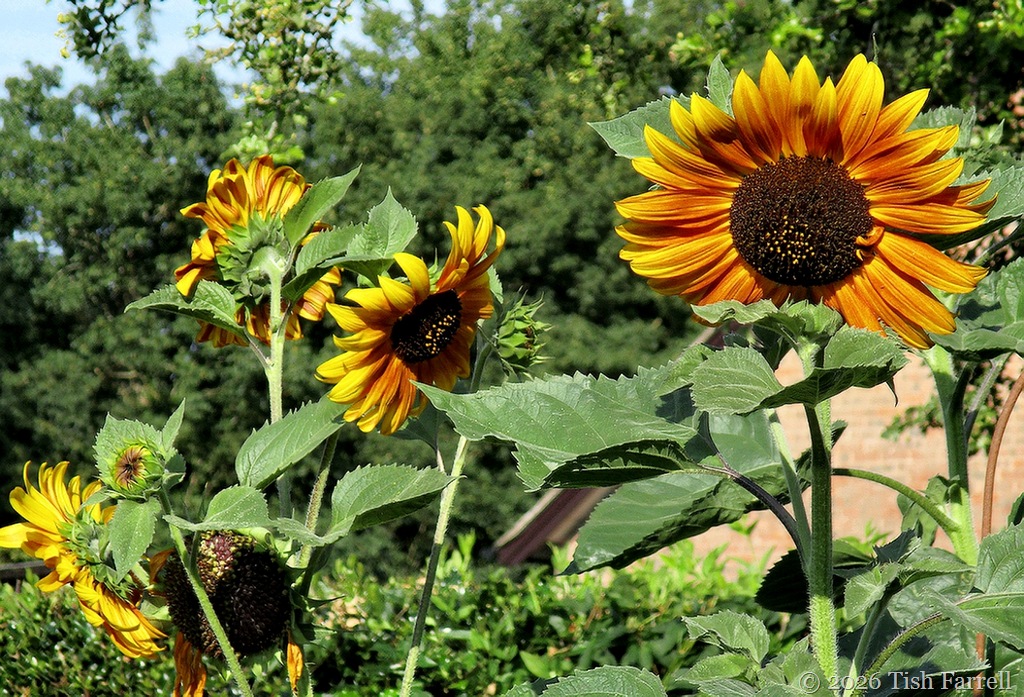
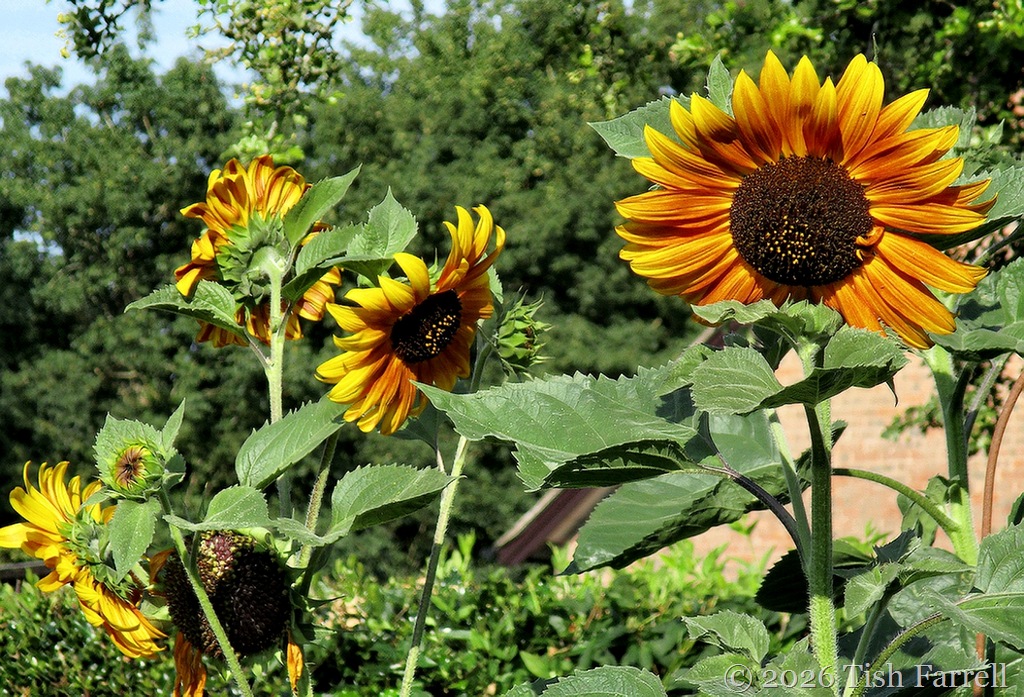
sunflower colony

The full-on-sun, no-rain weather continues, leaving  the back garden borders with derelict looks. Some herbaceous plants have simply had enough. And now that the rambling cranesbills, Anne Thomson and Red Admiral have petered out, there’s a striking loss of colour.

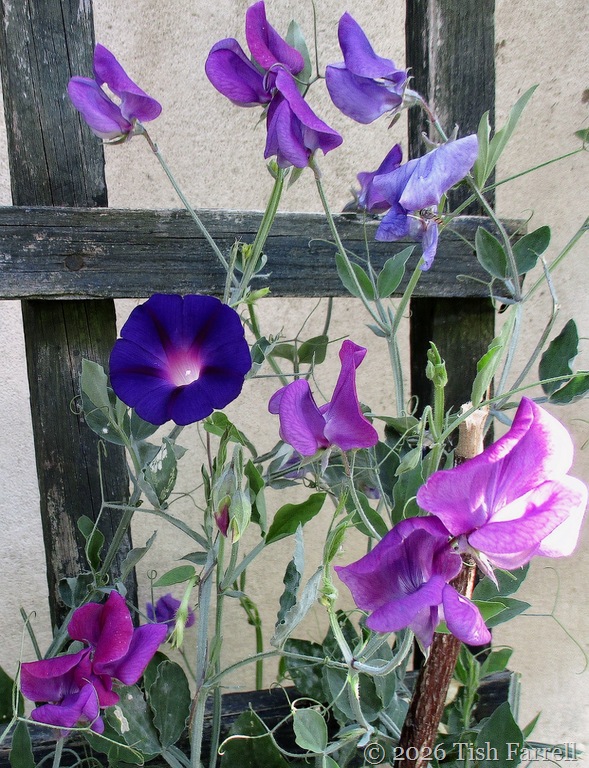
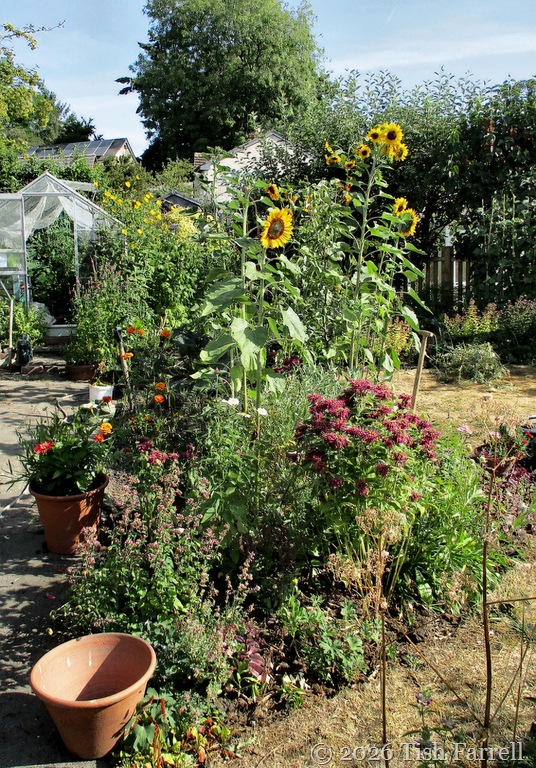
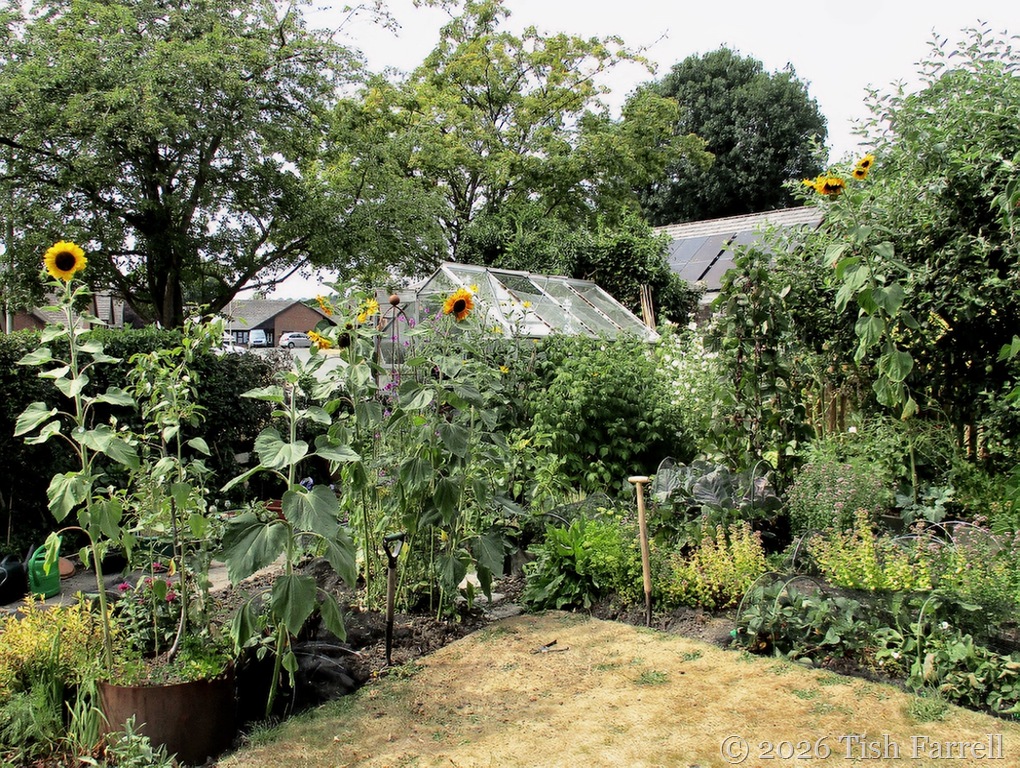
But not everything is fading. This is the season of SUNFLOWERS, both annual and perennial. And given the sudden floral gaps, I’m happy to see this self-sown and grown colony that’s circling the sweet pea obelisk. The sweet peas, anyway, are almost over – more beheading done than picking.

Sunflower colony 2

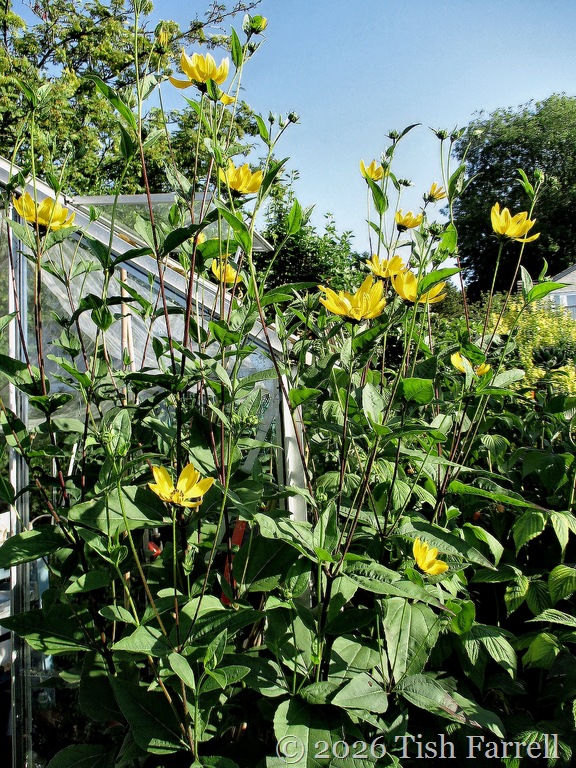
The perennial helianthus have also started to flower. I have them all over the place, although they can have thuggish tendencies. There’s a pleasing clump by the greenhouse, and more around the edges of the garden where nothing else seems quite so keen to grow. I think the original rootstock came via my sister from our Aunt Miriam’s slightly mad Devon garden; family feelings are involved here. With any luck, they should keep going till summer’s end.

helianthus 2

*

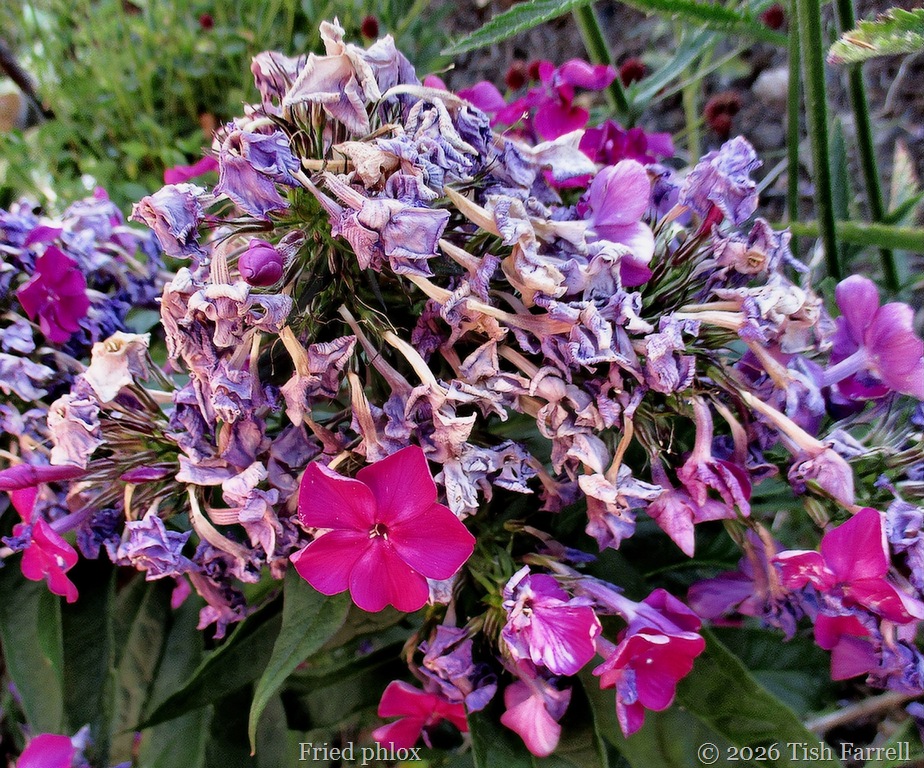
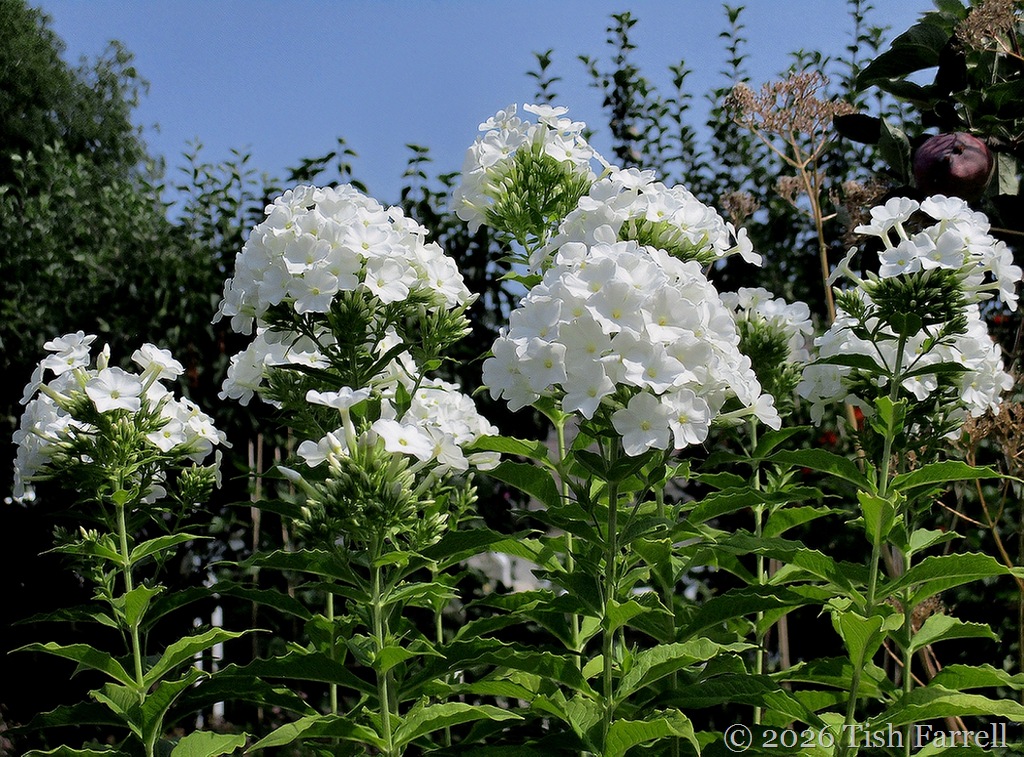
As mentioned in previous SoS’s, the magenta-purple phlox paniculatas have been flowering valiantly, even as their petals scorch. Now that the heat is not so fierce, I’m hoping the freshly opened PHLOX PANICULATA DAVID will have its time unscathed. It is a lovely plant with a delicate scent, here keeping company with stems of gone-to-seed valerian. It looks so cool too.

Phlox best

back garden and phlox David

*

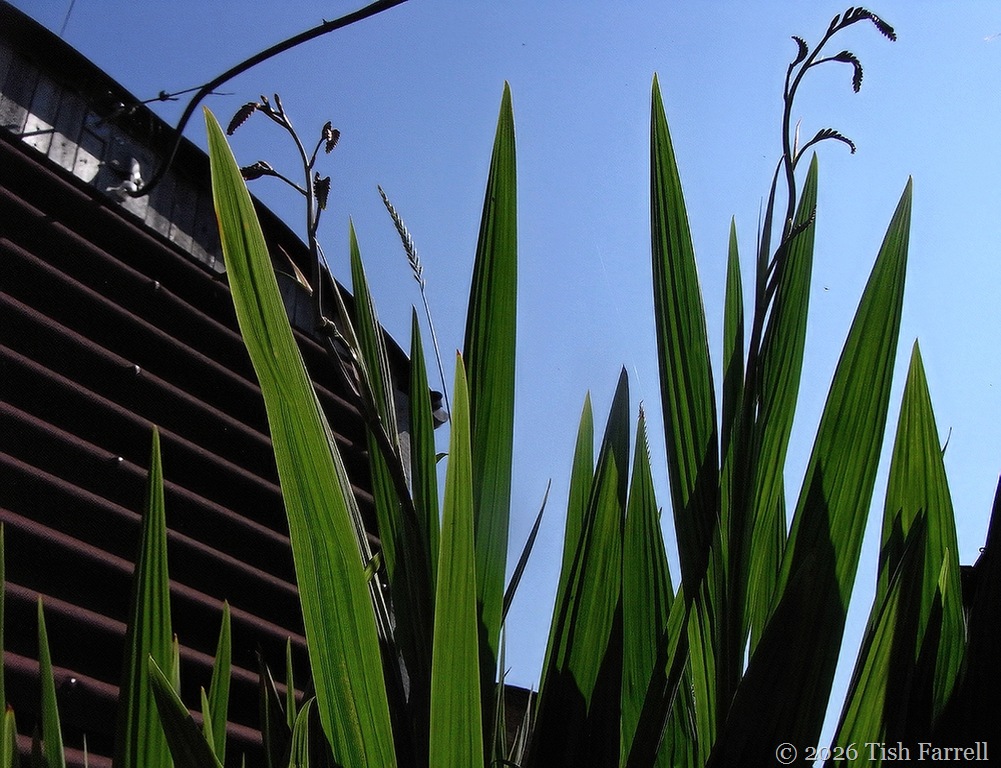
It’s also CROCOSMIA season. We have a big and brutish clump growing in the upstairs garden by the shed. It came with the house. I quite like looking up at it from the back door, seeing the play of light through the sword-like leaves.

crocosmia

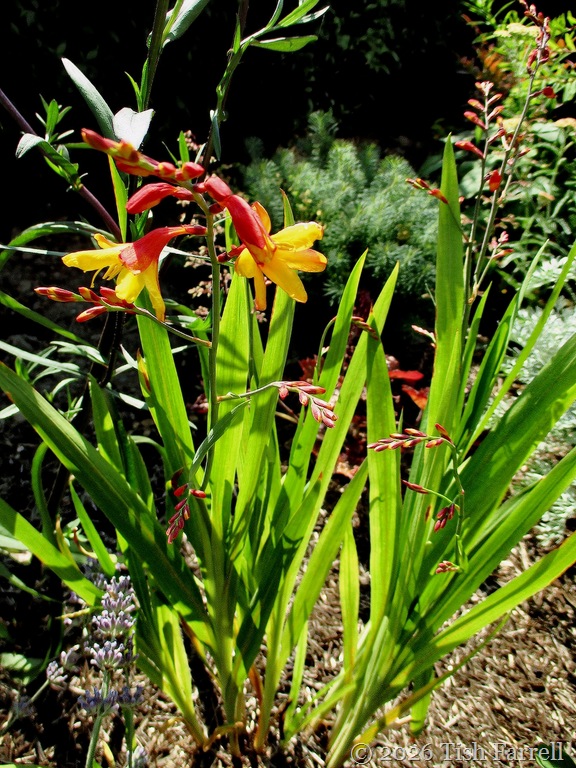
But the flowers are suffering, looking more inclined to die before opening. This is anyway not among my favourite plant varieties; far too rampant. But the same doesn’t go for its more refined cousin, Harlequin. I love everything about this plant – its stance, the more delicate sun-suffused leaves, the airy looks of the flowers, those juicy ice lolly colours…

crocosmia harlequin best

*

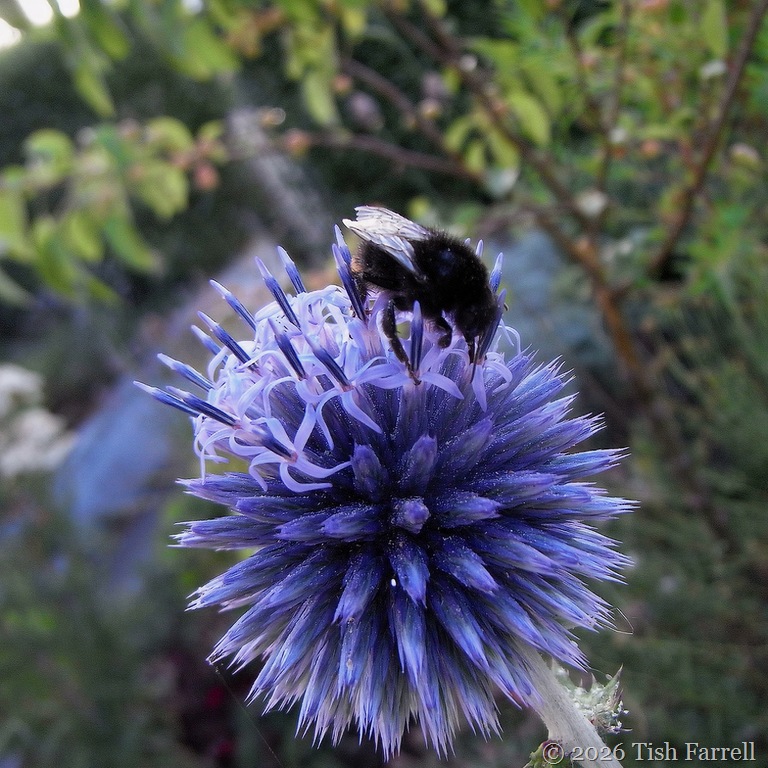
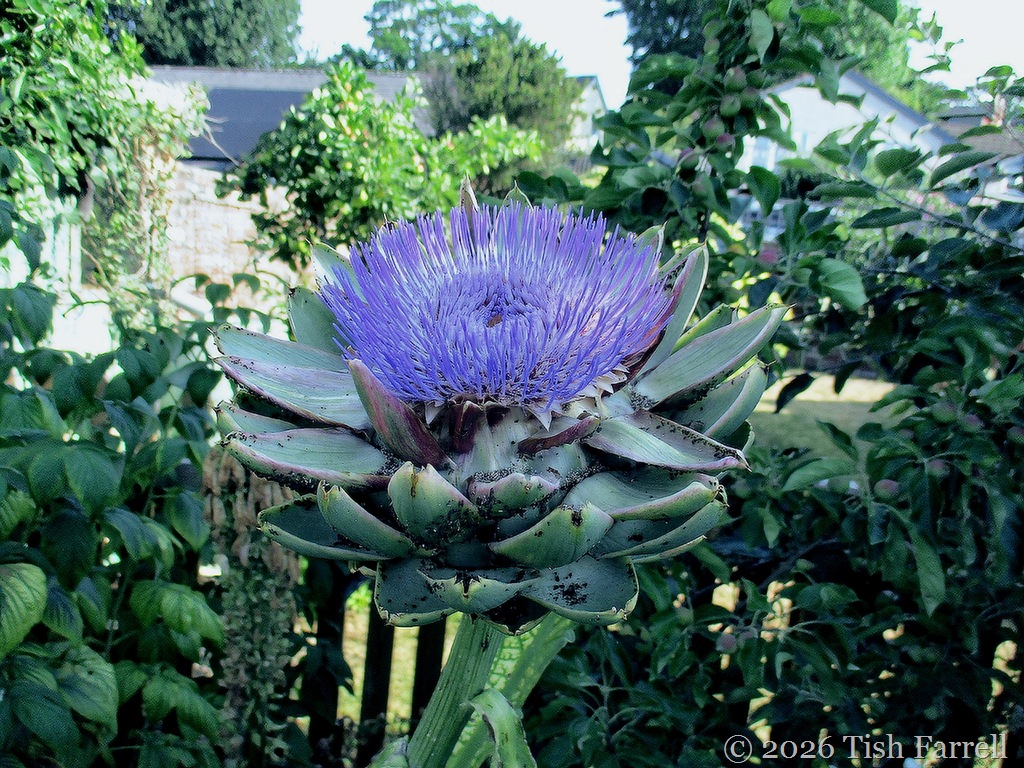
Number four is not exactly a success story, though it depends on your perspective. This is the GLOBE ARTICHOKE we did not eat and for obvious reasons. It is presently a very busy aphid factory under strict ant management. I nearly cut it down, but then this week it began to flower. Even infested, it’s still spectacular. The bees like it too.

globe artichoke

*

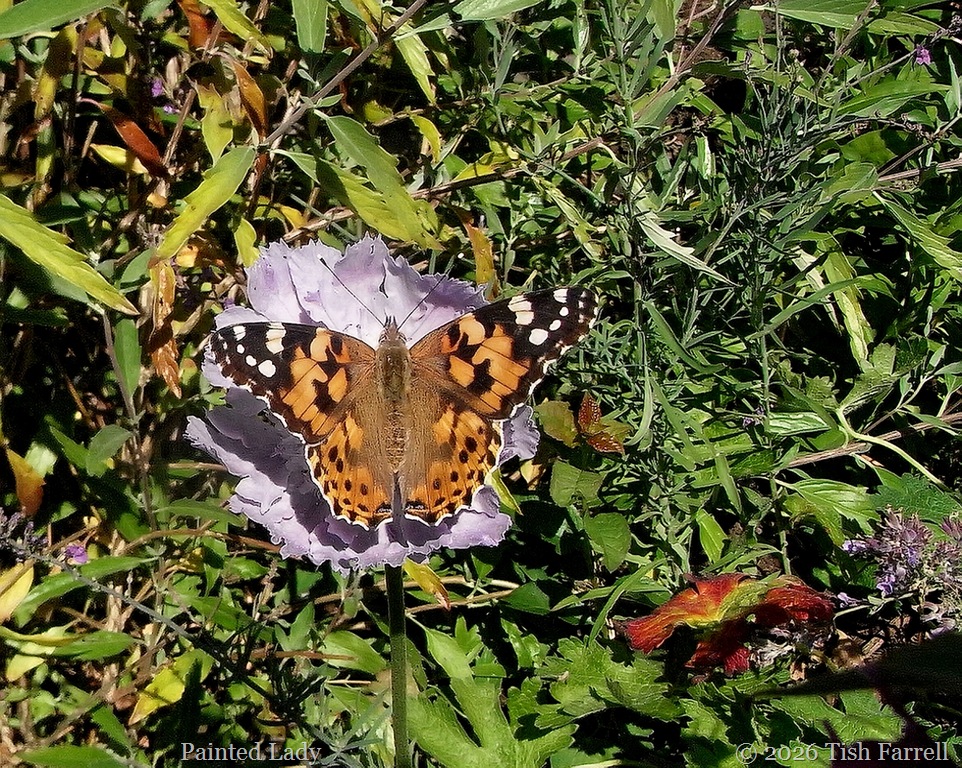
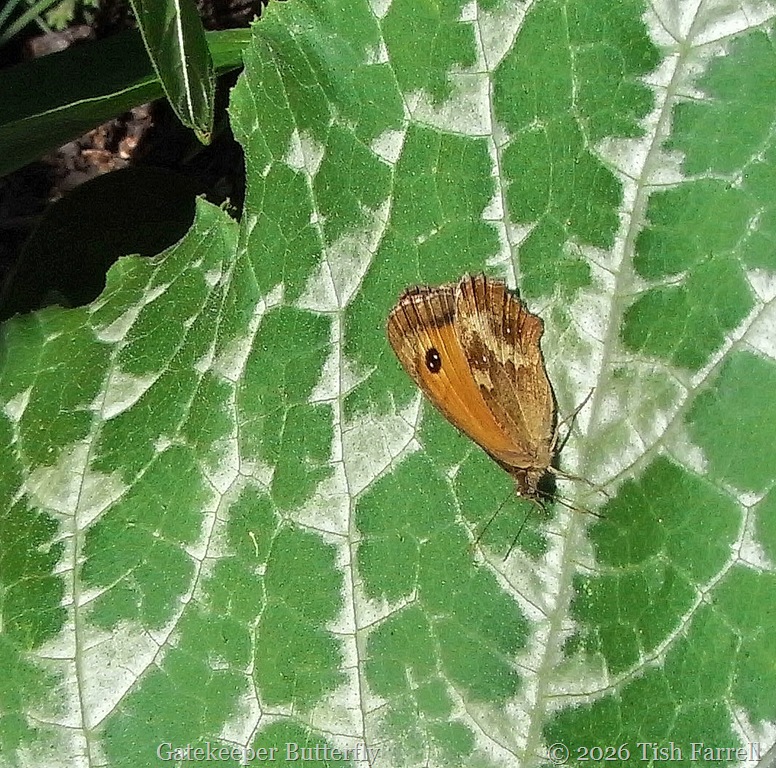
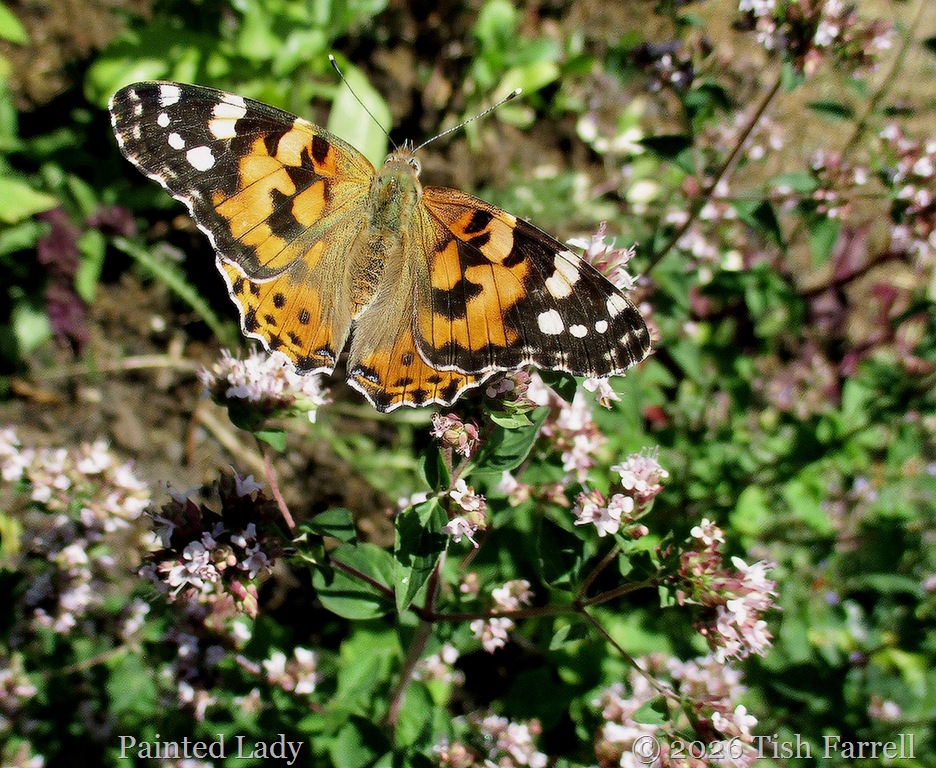
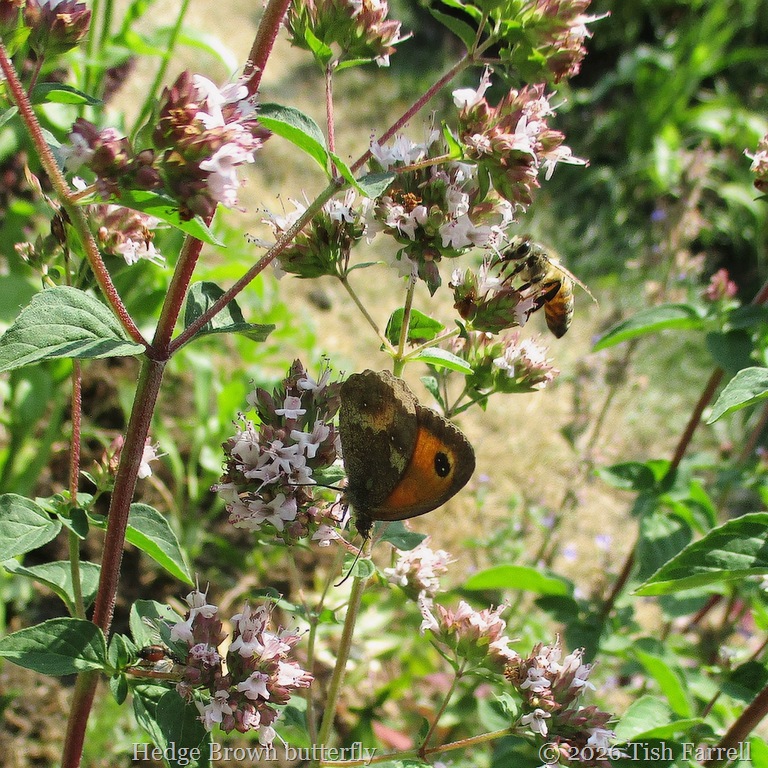
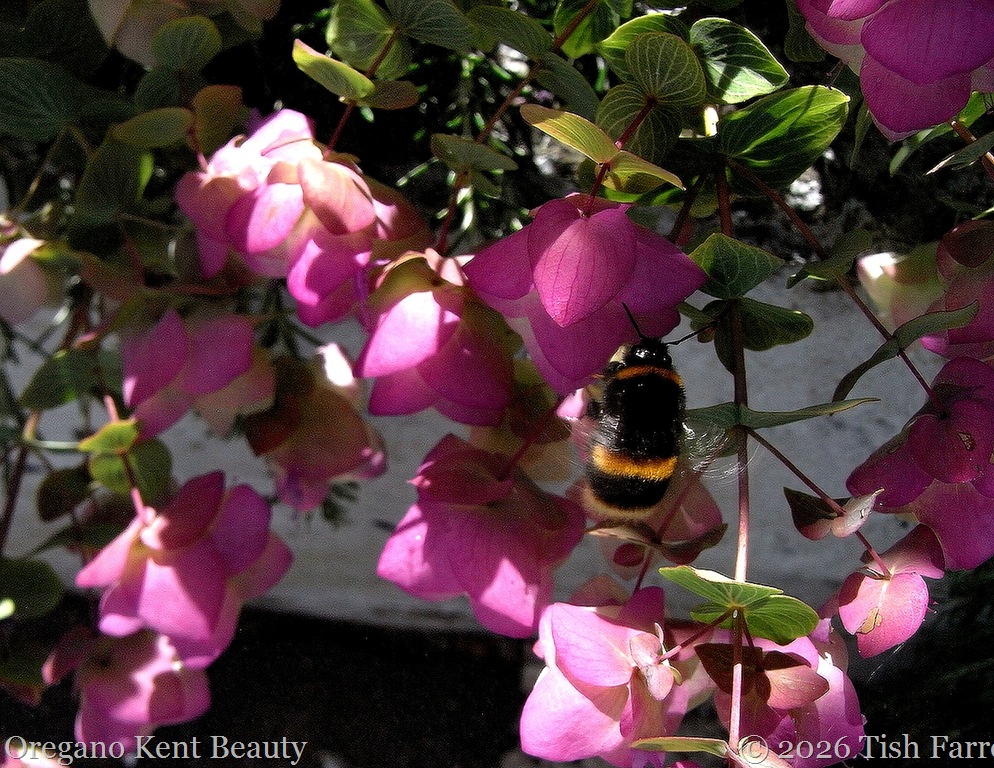
Five is a shout-out for OREGANO, however it comes – culinary  or ornamental.  I’ve already featured the very decorative Kent Beauty here, but at the moment it’s the cooking version that’s the big attraction for bees and butterflies.  Painted Ladies and Hedge Browns have been among this week’s avid visitors. Much like the helianthus, I have oregano clumps all over the garden, between the raised beds and filling gaps in borders while new herbaceous plants grow on.

oregano painted lady

oregano 2

bee and Kent Beauty

*

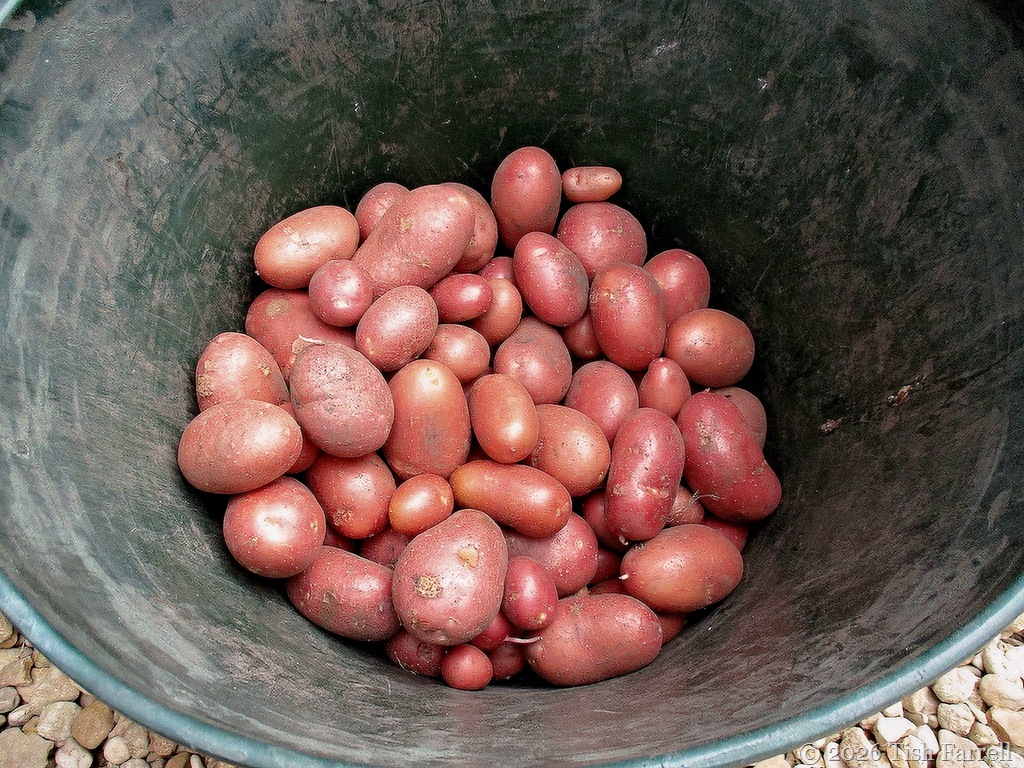
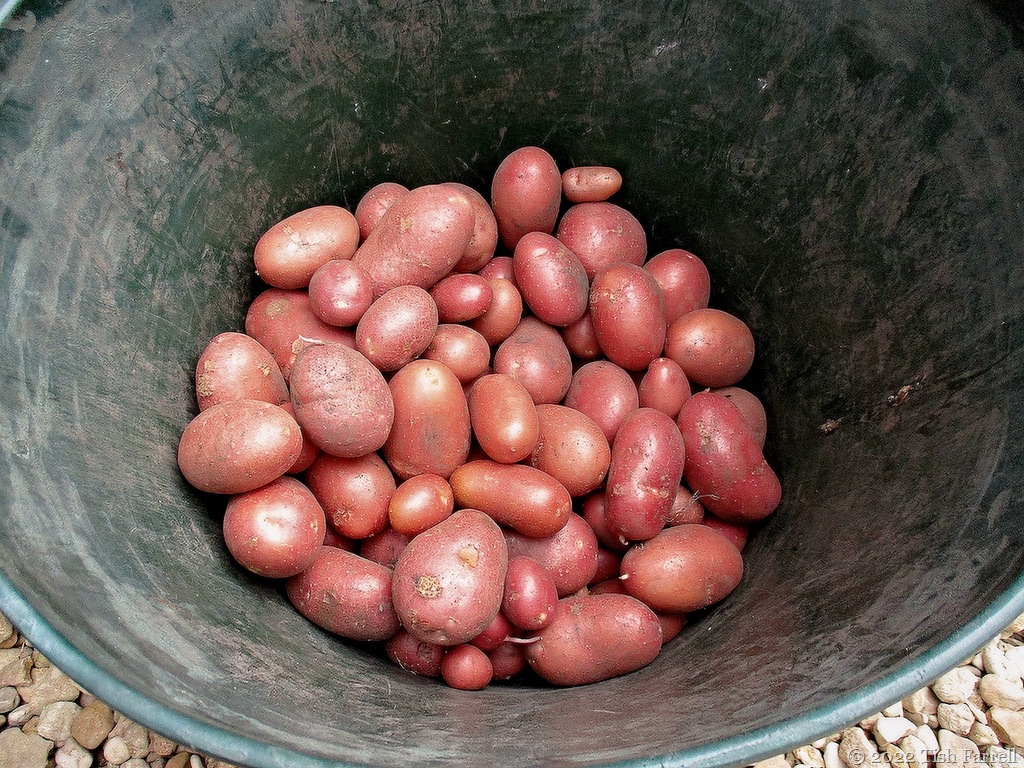
Finally, a food crop success, although not a great haul. And not surprising given the weeks and weeks without rain. Also I only planted 10 seed potatoes. So here we have it – a bucket of ROOSTER spuds. They should keep us going for a while.

Rooster spuds

*

And now fingers crossed for the promised cooler days. There might even be some drizzle this afternoon. (Do I believe this?)


Copyright 2026 Tish Farrell


Six on Saturday: 18 July 2026  This week host Jim has been capturing the garden wildlife.

Monochrome Madness #64 Man And Monument

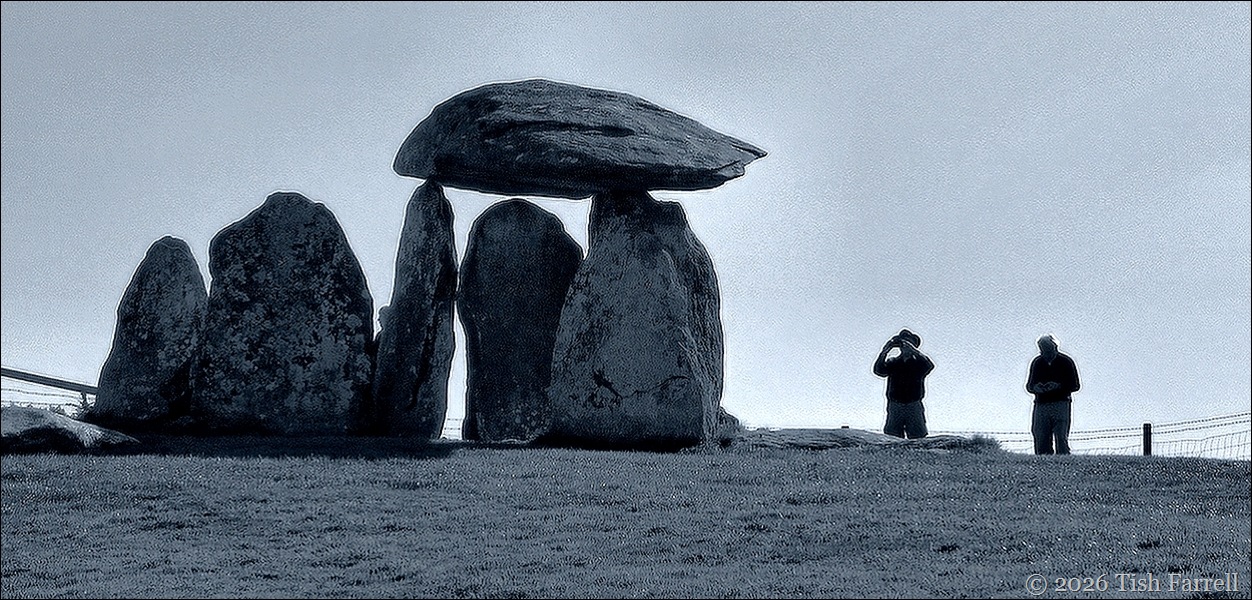
Pentre Ifan man and monument

This week at Leanne’s Monochrome Madness, Sue Judd is hosting the theme: figures in the built environment.  I instantly thought of above photo. It’s one of my favourite happenstance shots, originally taken in monochrome. Also it features the astonishing 5,500 year old prehistoric chambered tomb of Pentre Ifan in Pembrokeshire, which however you look at it, is one piece of epic construction. (For an earlier post with more info and photos go HERE.) Finally, there’s a bit of a yarn about that chap, who so obligingly turned his face to the sun just as I was taking the photo.

I had walked down the field to take shots that showed the extent of the earth mound that once covered the still standing stones. It would have been a huge barrow, an earthwork that would have taken heaven knows how many people-days to construct. That capstone, too, is reckoned to weigh 16 tonnes and doubtless would have taken some serious magic know-how to get it in position.

Pentre Ifan man and monument 2

When I walked back to the tomb, I saw that the man I had just snapped was standing on the wrong side of the site’s perimeter fence. The obliging sideways glance had arisen from his attempts to find a place to climb over it.

Things did not look promising. There were hawthorn bushes as well as  barbed wire. He was wearing cropped pants.  We got talking. And he told me he had left his car further up the lane, having missed the official parking spot. But, he said, he was so excited to see the monument, he had climbed over the nearest farm gate, thus ending up in the adjacent field.

In the end we agreed a tactical retreat followed by a fresh approach on the designated path were the only options.


Copyright 2026 Tish Farrell

Monochrome Madness #64  Figures in the built environment

This week Sue Judd is hosting the theme. She has posted a gallery of several striking examples. Go see!

Pentre Ifan 4 header

Six on Saturday: HOT!

Adessa a sea holly Neptune's Gold

Still hot today, but there are promises of a degree or two cooler than yesterday. And please, please, please can we have the breeze back. For now, the phlox paniculata are gently roasting, especially the large petalled magenta/purple varieties. Only Adessa ‘Pink Star’ is keeping her cool, here seen alongside the starry Neptune’s Gold Sea Holly which doesn’t appear to mind the heat.

*

In the back garden, most of the border plants are fading fast, apart from the bergamot/bee balm/monarda. Over the last few days, it has burst into life and bees, although I’m sorry to see the individual flower parts are soon turning crispy round the edges. (But then aren’t we all!)

bergamot

Bergamot and scabious

*

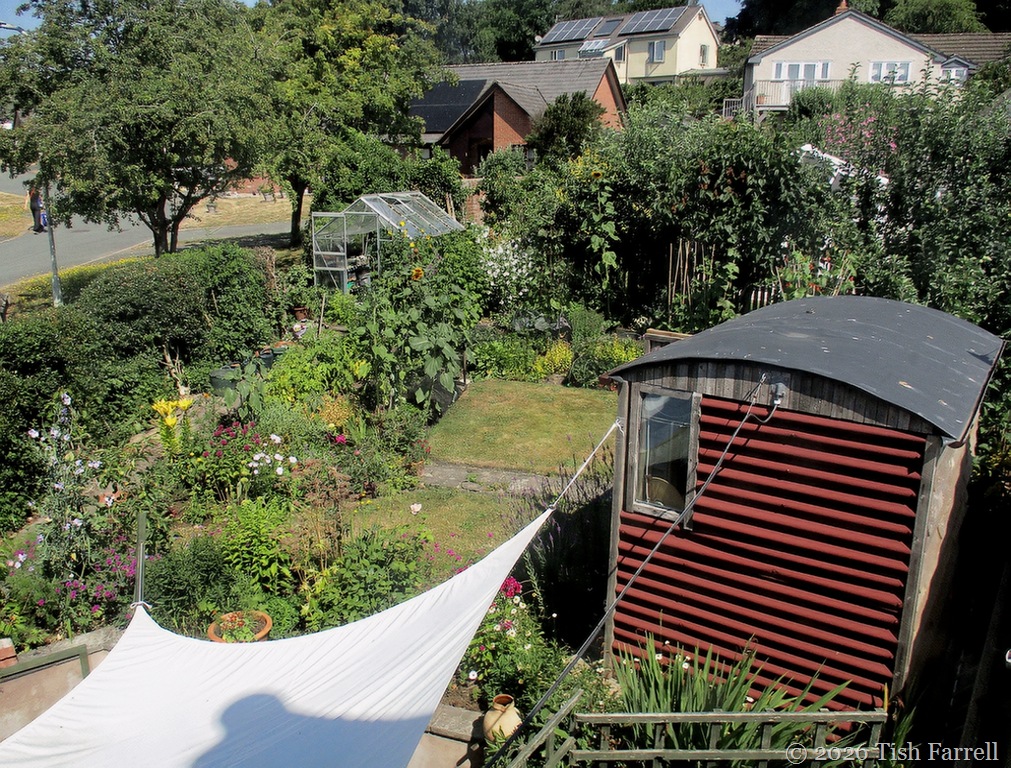
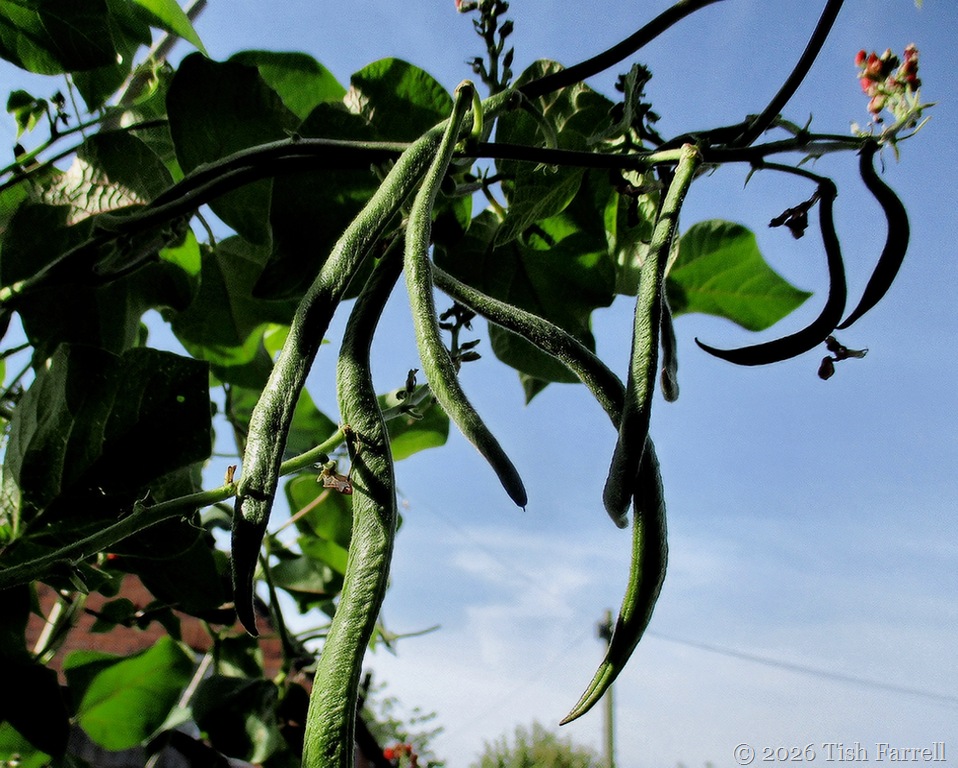
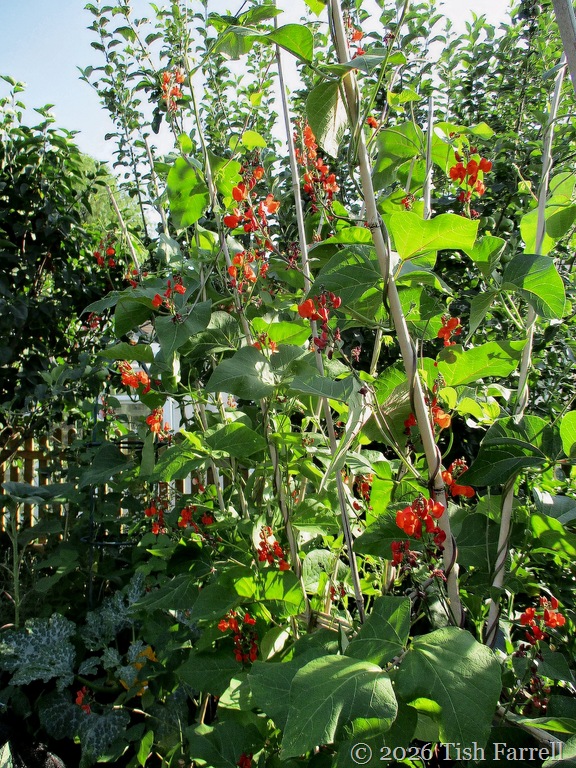
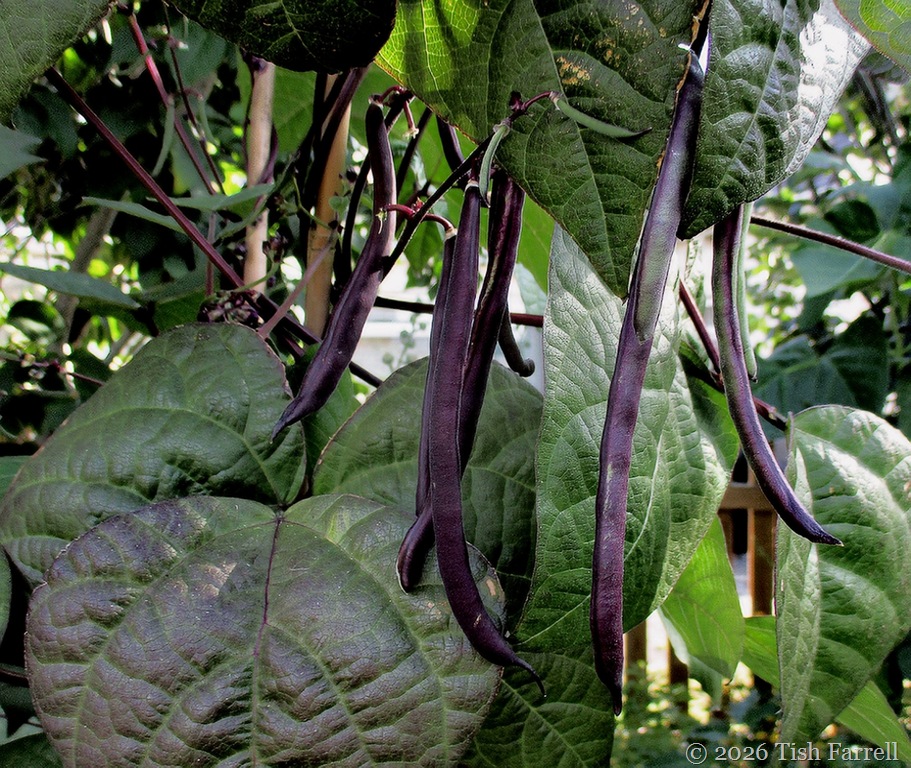
The peripheries of the garden don’t suffer full-on sun until after mid-day, and this is where I have the beans – French climbing Violette, and a few Borlotti and Butter Beans, growing up canes and obelisks. The runner beans are growing alongside the compost bin, mostly Enorma but also a few St. George. They are now providing a pleasing seasonal screen along this short section of garden which overlooks the road.

 bean flowers

Actually, I love bean flowers (almost as much as the beans):

bean flowers Enorma

bean flowers St. George

*

Behind the runners, in the old apple tree corner, is a raised bed with the butter bean obelisk, a courgette plant and a self-grown sunflower. Today, the courgette plant has a quartet of blooms, plus one courgette ready for picking.

courgettes

corner bed

*

You can see this week’s number six in the photo above, on the right, beyond the courgette leaves. It just happens to feature in today’s newsletter from Beth Chatto’s Plants and Gardens. So here we have Aster x Frickatii Monch as it starts its season, and rather sooner than expected.

Aster x Frikartii Monch

In the newsletter, granddaughter, Julia Boulton, who now runs Beth Chatto’s says of it:

“Absolutely the best Michaelmas daisy, for long display and sheer beauty: does not need staking, and is not affected by mildew. Deserves the best soil and position in the garden.” Its further statistics are: height and spread: 1m x 45cm; conditions: full sun, rich and fertile soil; flowering: Aug | Sep | Oct.

I’m not sure why I planted it in front of the apple tree. That spot does get dappled sun and then full-on glare at the end of the day, but there are much sunnier spots in the garden where it could show itself off to better effect. (Added to the re-do file).

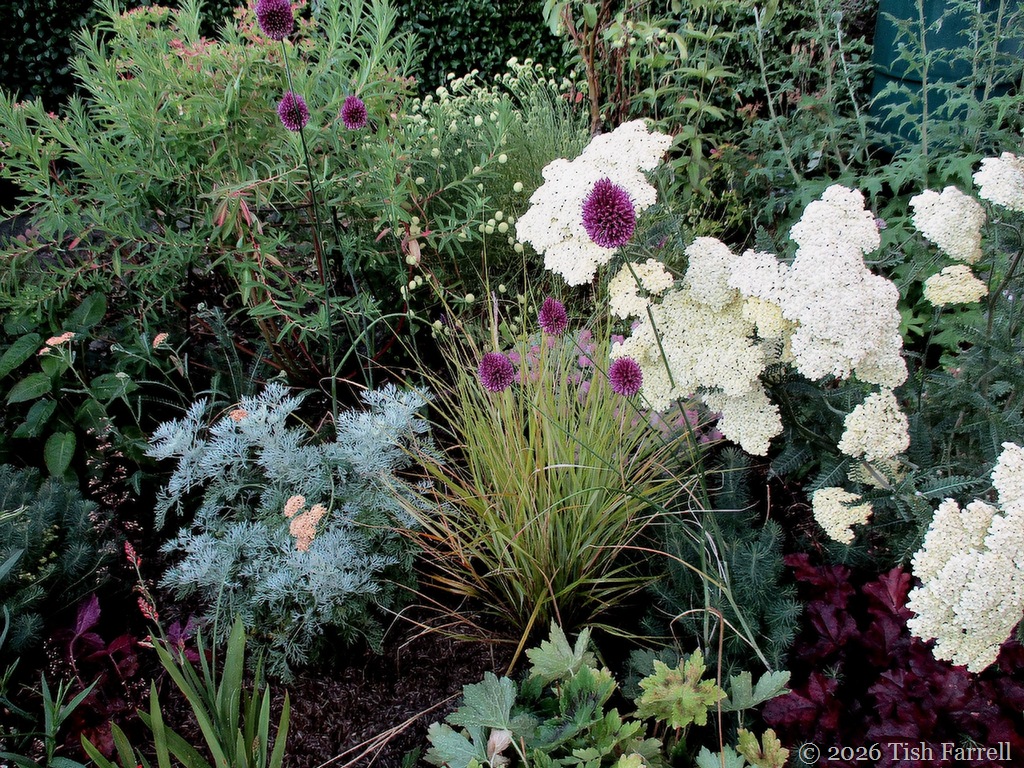
Finally, a view of the a front garden bed, just to show it’s coping with 33 degree C plus days – the achillea ‘Moonshine’ drying on the stem, the allium drumsticks still doing their stuff, Artemisia Powys Castle, very much containing herself alongside a rather weedy apricot coloured Achillea, (Lachsshonheit) which I thought I’d lost, and a young Crocosmia Harlequin (bottom left) about to flower. Background support from Euphorbias, Santolina rosmarinifolia, Pheasant’s Tail grass, and crimson leaved heucheras :

front border 11 Jul

Copyright 2026 Tish Farrell

Six on Saturday: For more views of Jim’s fabulous and mindfully curated plant collection.


A Thorn In The Flesh?

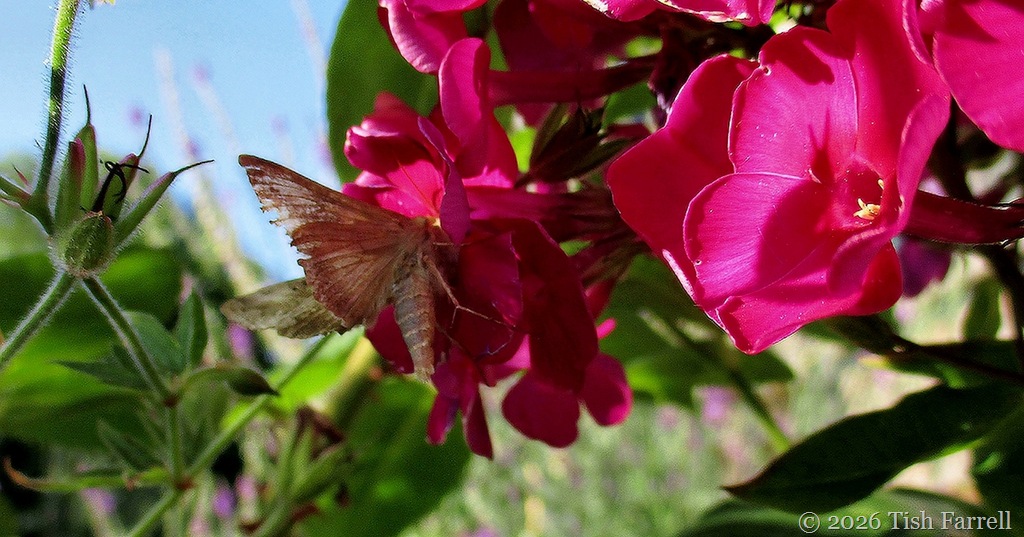
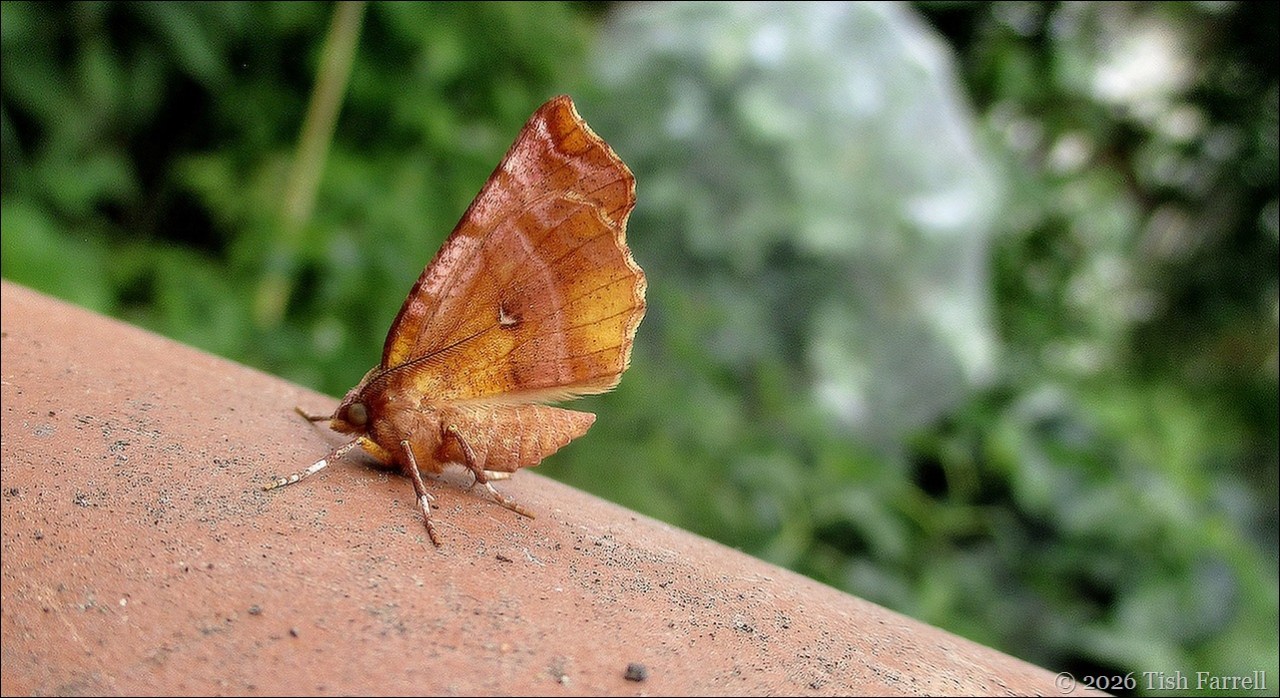
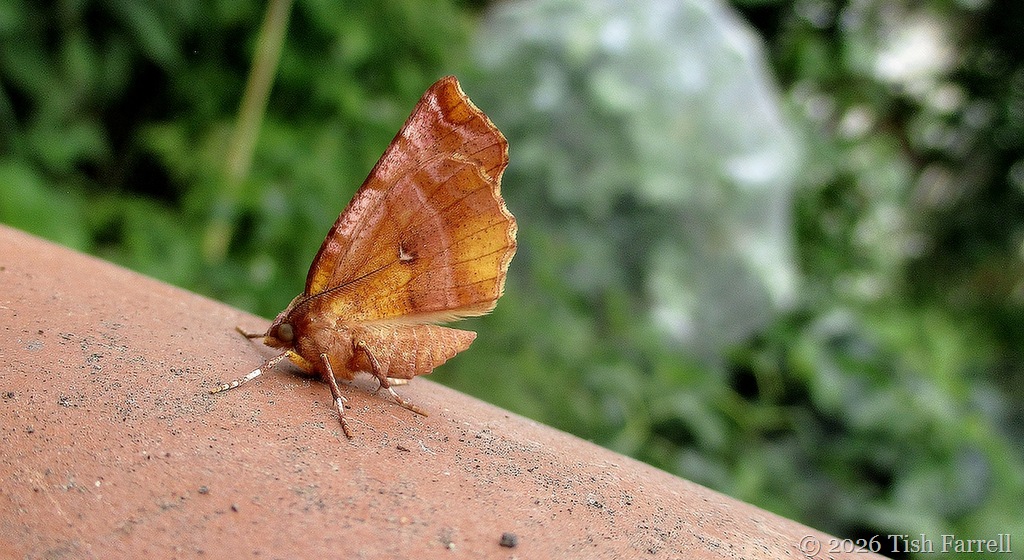
Early Thorn Moth

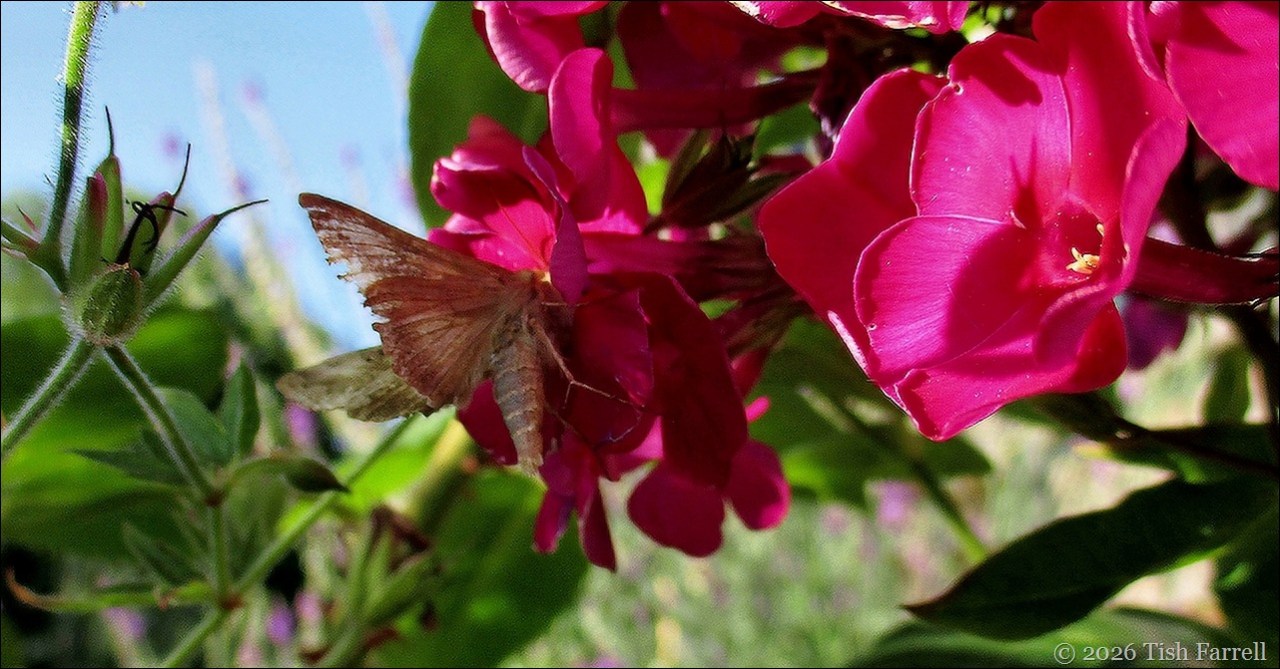
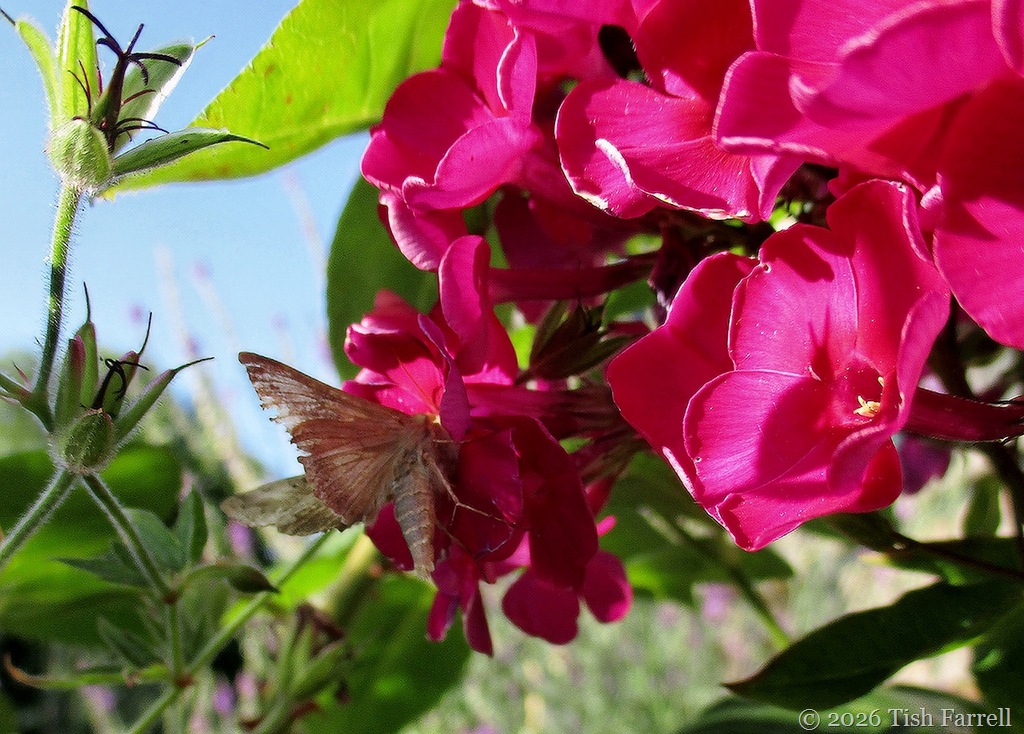
Look what I found among the pots by the greenhouse. It was in broad daylight too, and with wings in the butterfly position – but it’s not a butterfly.

It took some identifying too, this moth that likes to look like a butterfly.

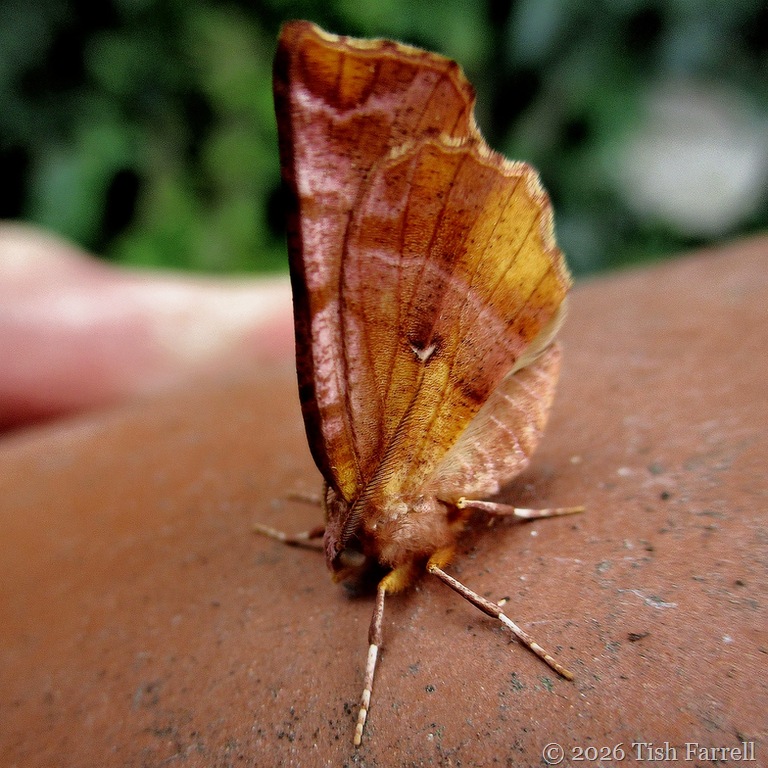
Moths are unknown territory to me, apart from the stunning Elephant Hawk Moth that I once found in our Much Wenlock garden. There are over 2,500 recorded species in the British Isles, so where to start? I began with charts of the commonest species, thinking that wing colour might be the key.  That didn’t work. It was only when I thought to search for moths that rested with wings in the vertical that I made progress. The habit, I discovered, was known among some members of the Geometridae family. Finally, I narrowed the search down to Thorns, and then to an Early Thorn Selenia Dentaria.

You can see some other kinds of Thorn moths here. They rest with wings at the horizontal.

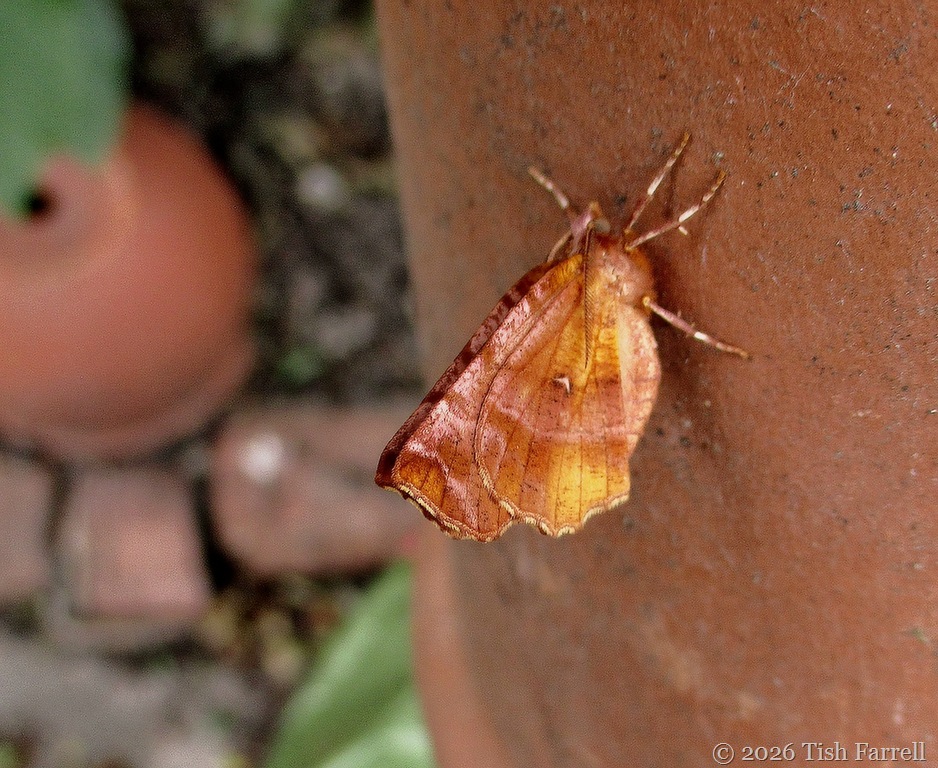
moth early thorn

The Early Thorn is a medium sized moth, the wings, as seen above, about an inch (28mm) across. It flies from dusk onwards, so I’m not sure why it was so exposed to daylight, unless it had recently emerged. The caterpillars feed on the leaves of deciduous trees, including hawthorn, and I found the moth directly below the hawthorn tree that overhangs our hedge. The timing was right too. There are two flight seasons: mid-February to May and then July to September.

I resisted the temptation to disturb it – i.e. in hopes of seeing its open wings.

header early thorn

Copyright 2026 Tish Farrell

In The Garden 8 July

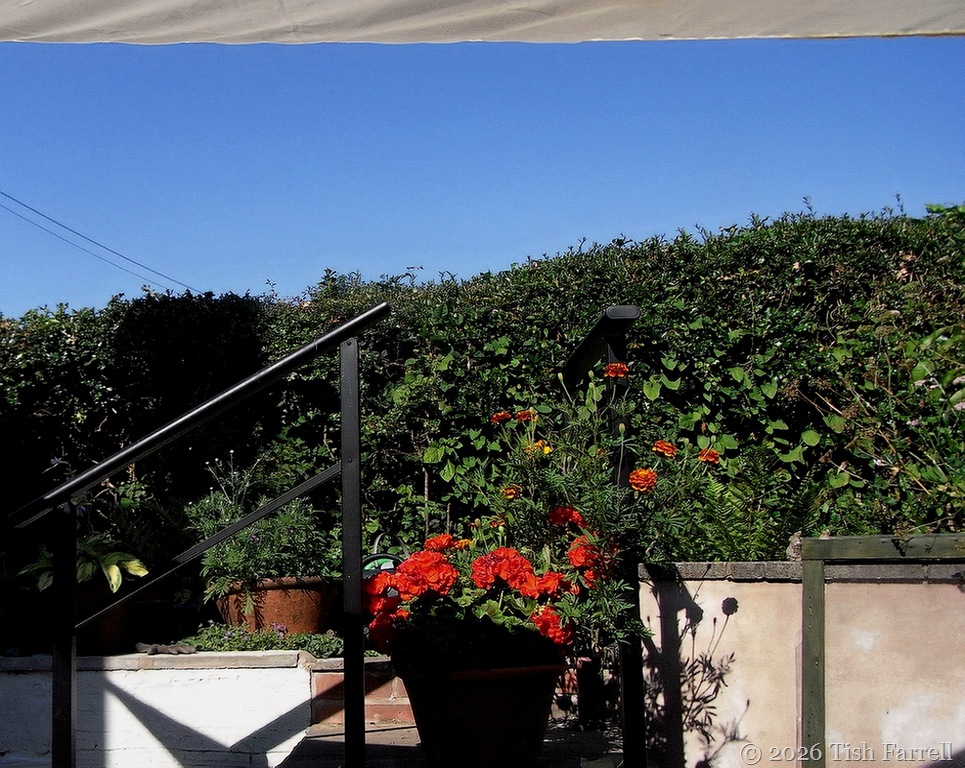
yard

So the promised heat-wave arrives and it is hot. Twenty five degrees Celsius this morning when I took the header photo. Thirty two degrees in the shade this afternoon as I write this.

We inhabit an urban heat island (UHI) of course, living as we do amid brick, concrete, asphalt and repurposed medieval stone, all the sun-storing component parts of old and ancient properties that sprawl, hugger mugger, down a steep, south facing hill. But there is a gentle breeze, which is something. I never thought I’d think fondly of those past weeks and months of blustery winds.

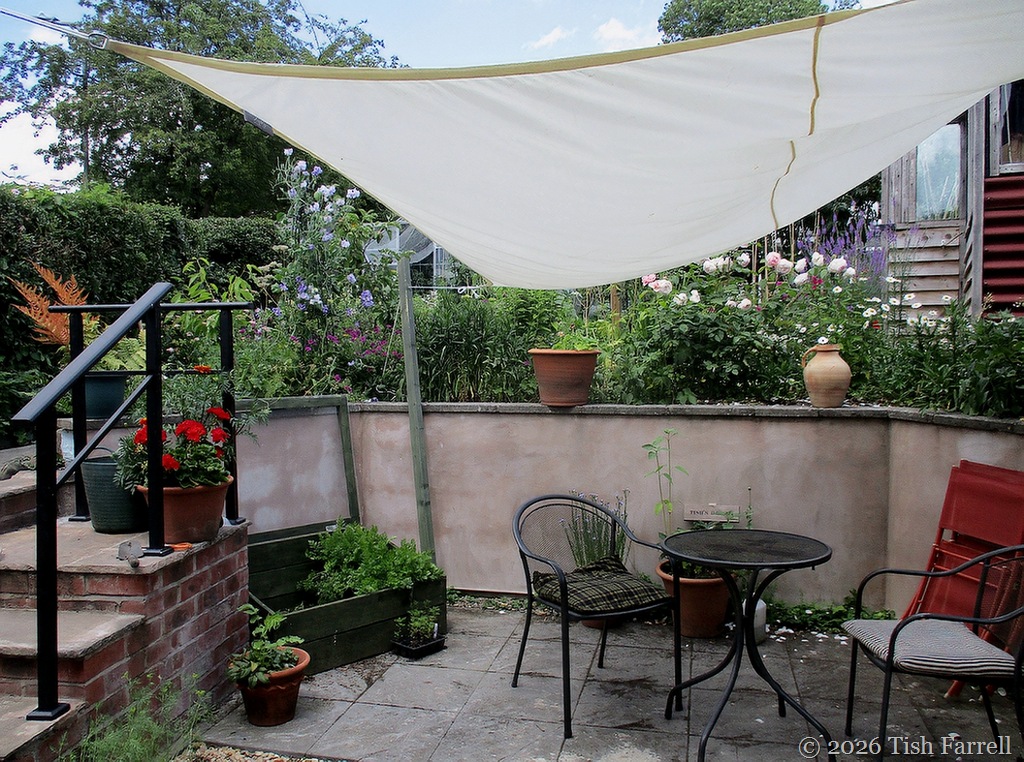
Now the next door cherry plum tree is no more, there’s little to no natural shade in our garden. But we do have a wing, strung outside the kitchen doors. It’s a good spot for dining out.

winging it 2

winging it

*

Above the wing, the red kite glides by, apparently seen off by the local jackdaws who live in the big ash tree further up the hill. The kite doesn’t seem too bothered, very much above such petty annoyances,  but it’s hard to photograph, it moves so swiftly.

red kite

Up in that perfect blue swifts and house martins zip by. No chance of catching a shot of them. The butterflies flit away too, Hedge Browns living up to their name, patrolling the back hedge at speed. In the front garden, which is especially hot (it faces east on a north-south axis) Painted Ladies dash away as soon as they spot me. But then finally, when I stand very still, one stops for a long sip of Moonshine.  Achillea, that is. They are very like tortoiseshells, but paler colouring, although this one is looking darker in the full-on sun.

painted lady_thumb[6]

Moonshine Achillea

*

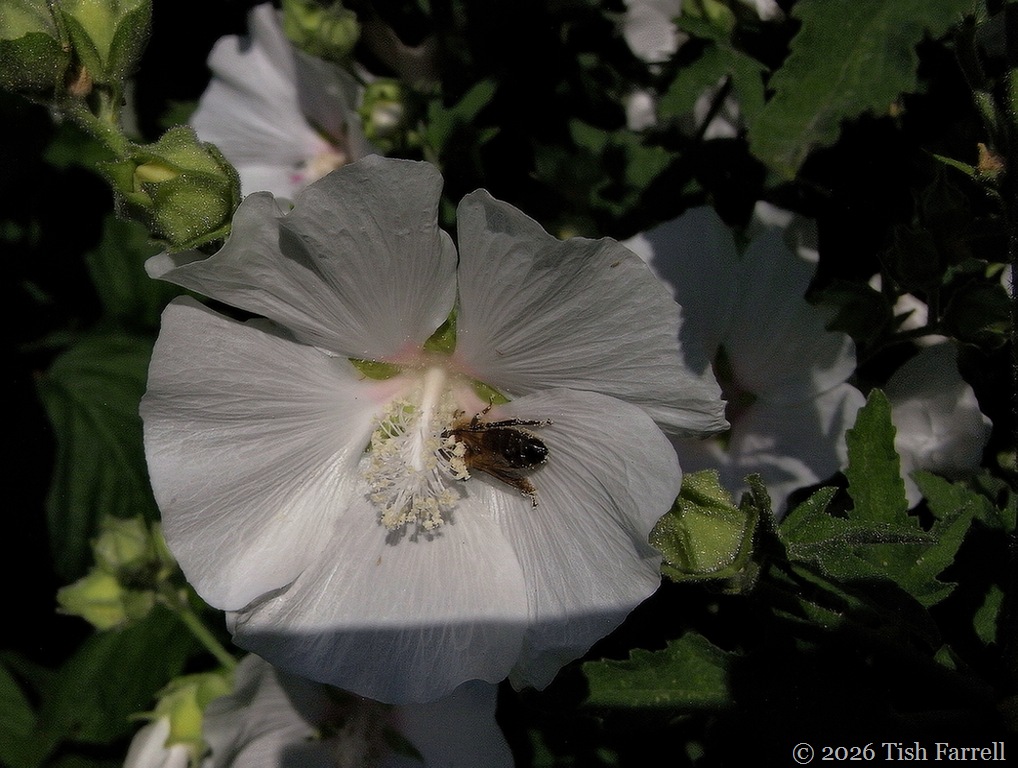
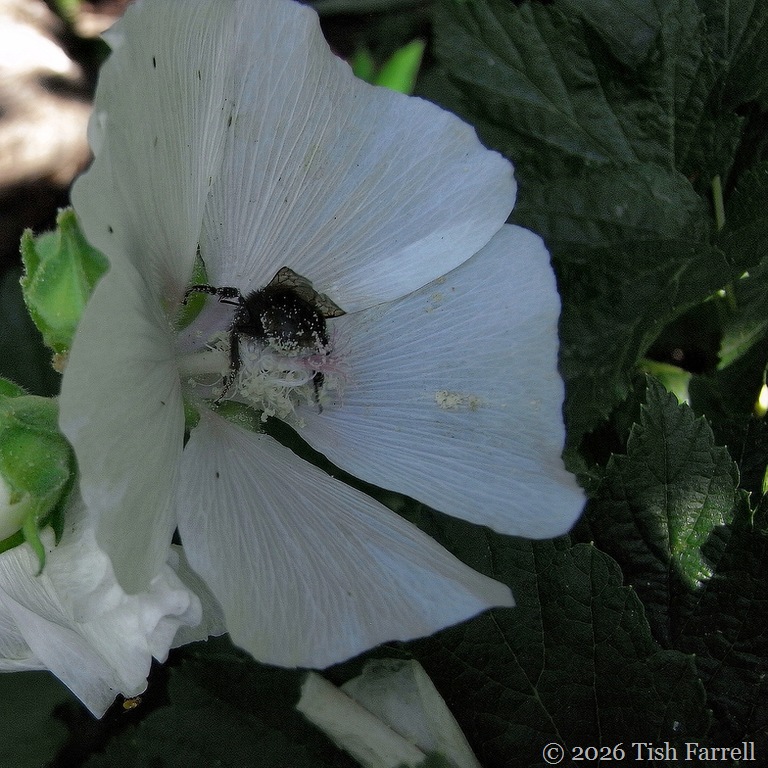
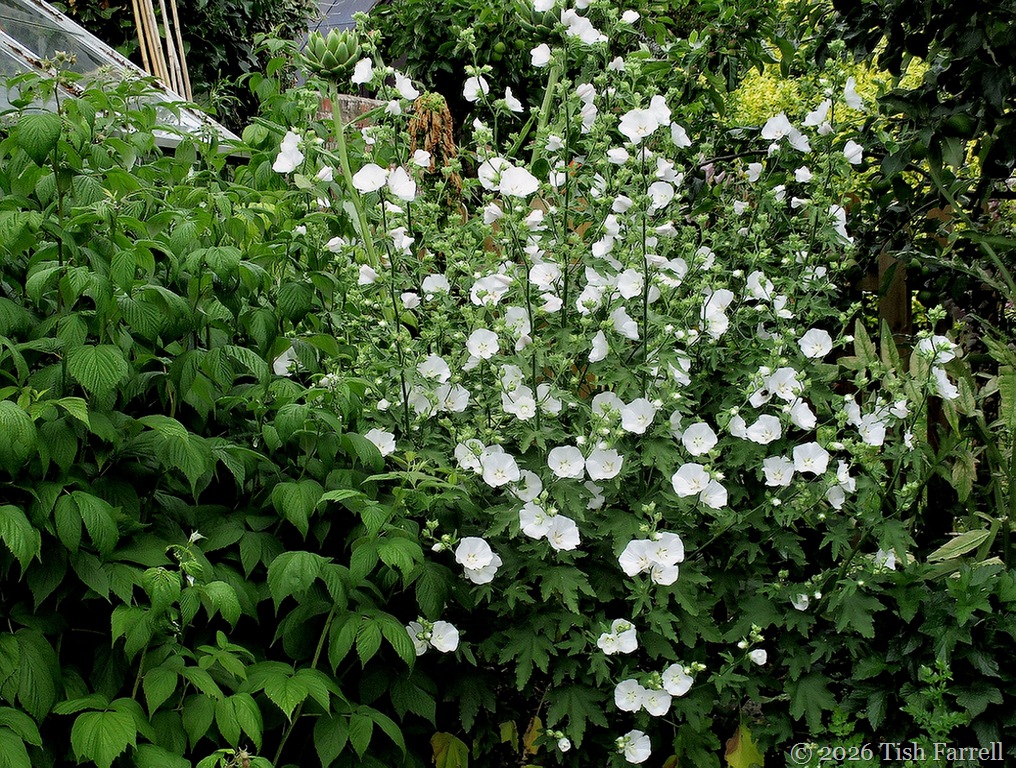
Meanwhile, down beside the greenhouse, where the ice white mallow is blooming, the honey bees and bumbles are bathing themselves in mallow pollen, a full-body experience by the look of things. I have a sense of wanting to join in.

pollen bathing

pollen bathing 2

*

Above them, the self-seeded sunflower heads for the sky, the first flower beginning to open just this morning.

sunflower giant

*

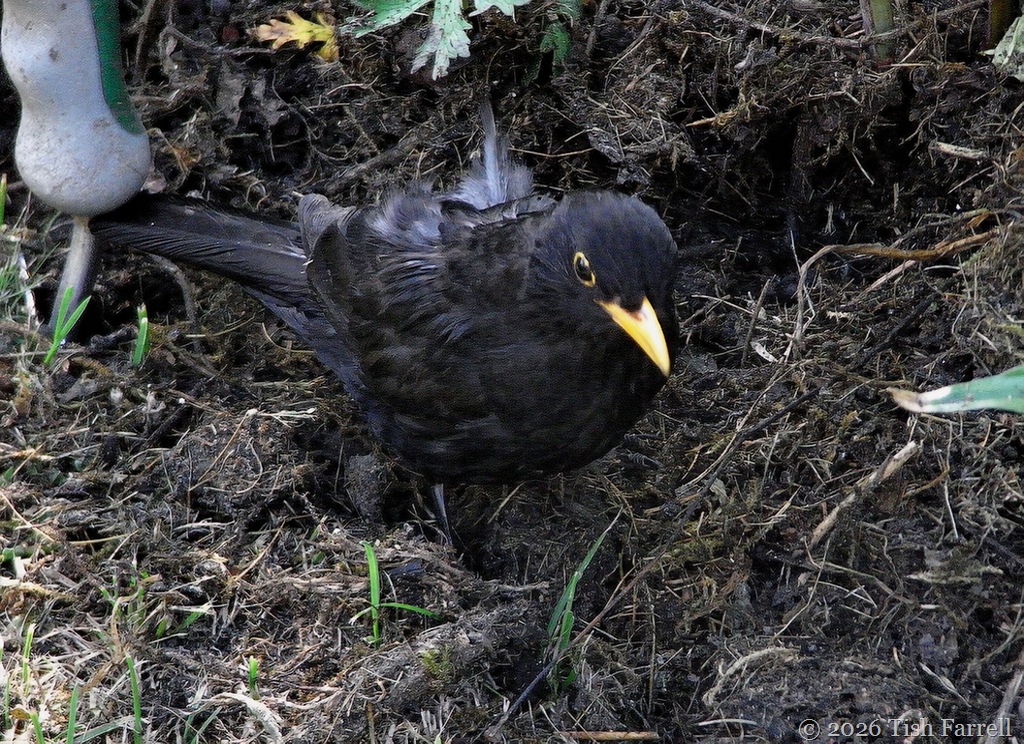
At 9 a.m. I was out emptying the last of the loamy stuff from my compost bin, spreading it around the base of plants that had missed out on earlier mulching attempts. And ‘attempts’ is the key word here. I have a garden assistant who is keen to make improvements on my efforts. It is currently a battle of wills: he moves it one way; I move it back.

It’s too hot for this game, I tell him. But he doesn’t listen. The search for bugs, grubs and worms must go on…

blackbird

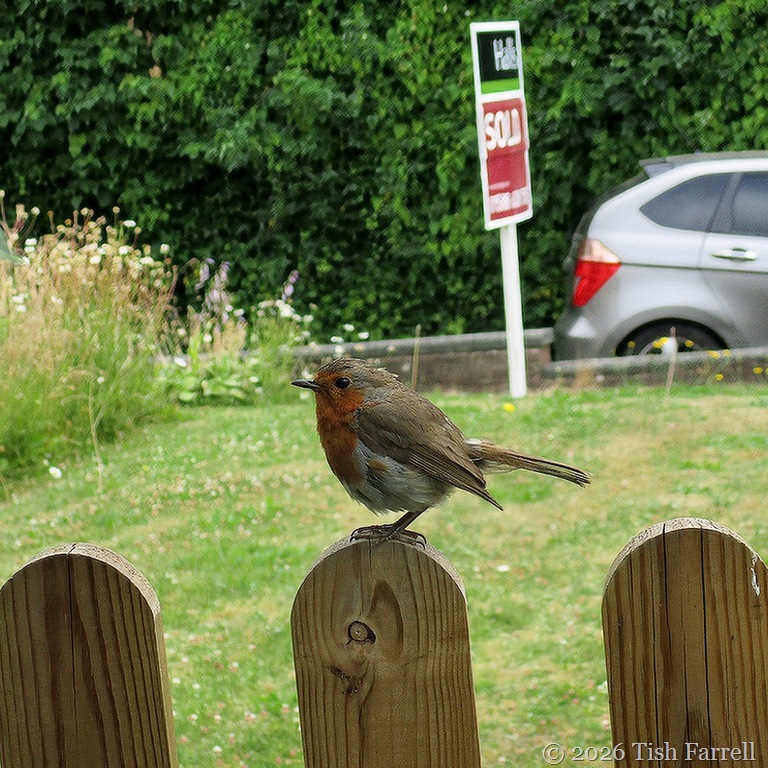
At least these days the robin only gives me the eye, and soon flies off if I’m not doing something actively worm-rendering. Back in spring when there were nestlings to feed, it would arrive at my feet and shout if I wasn’t turning over the soil fast enough. Sometimes I wonder whose garden this is…

robin

Copyright 2026 Tish Farrell

Six On Saturday ~ Summer’s Here!

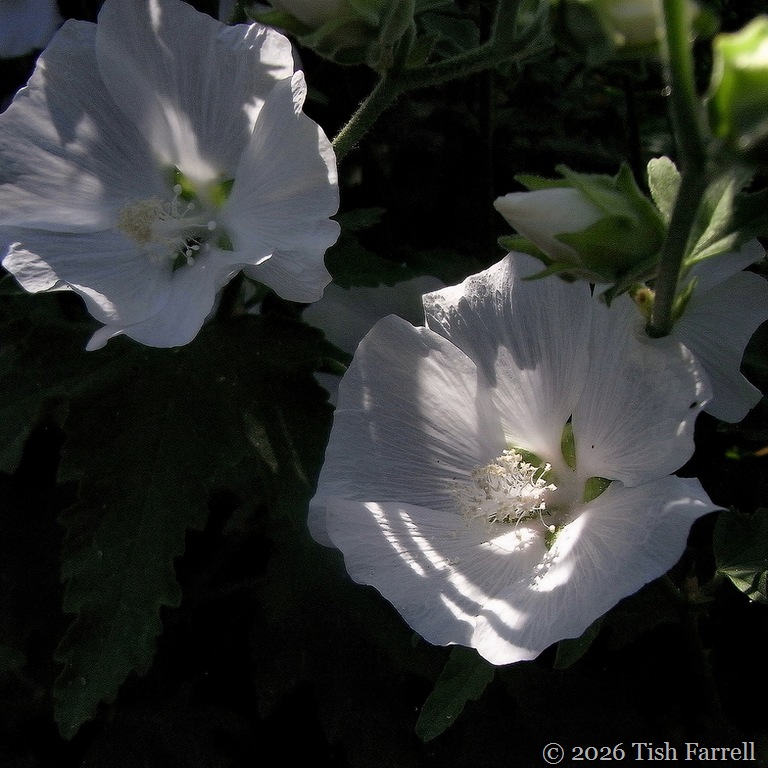
mallow

Come July and, in the bottom corner of the garden, the mallow Ice White has burst into flower. It’s supposedly a compact variety, and I’m hoping it has reached its limit. At the moment it is contesting space with the Polka raspberries, both parties clearly making good use of the farmyard manure deposited on the raspberry bed back in early spring. The individual mallow flowers are very beautiful. I forgive the plant for being pushy.

mallow 2

***

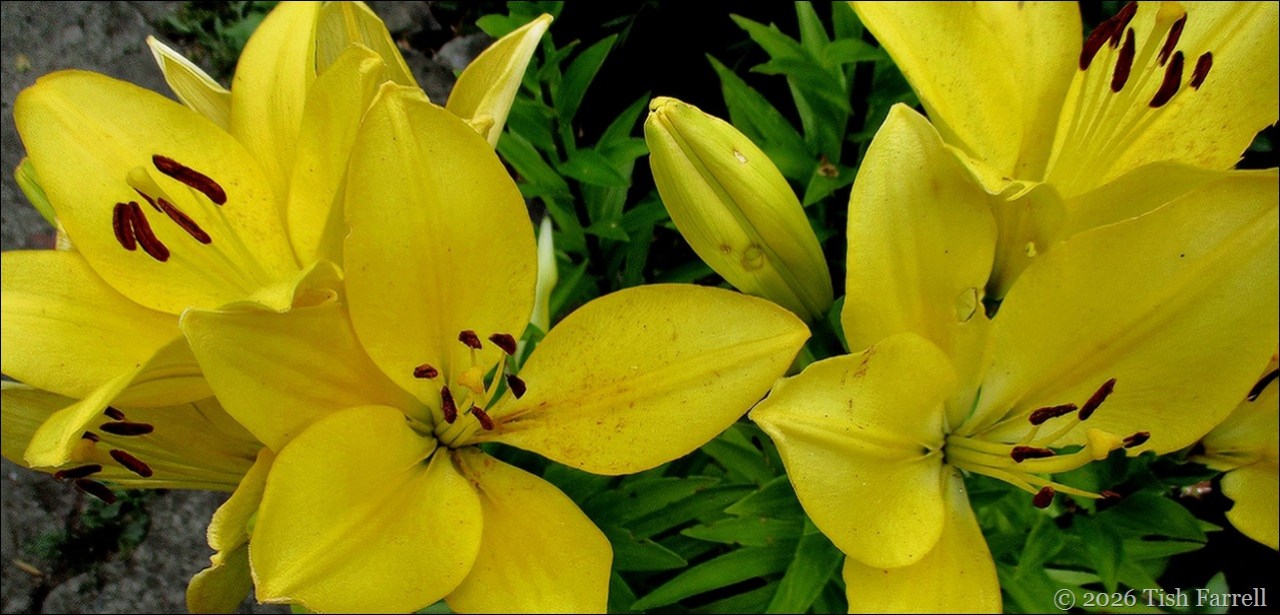
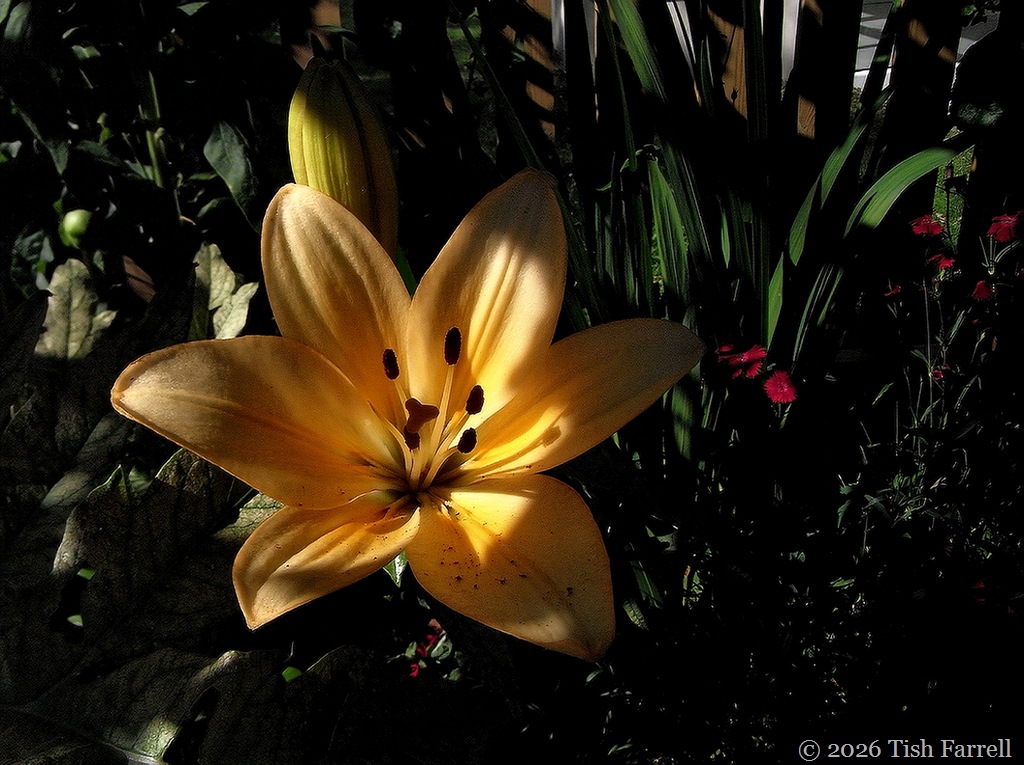
Another bright bloomer in the bottom of the garden is this orange Asiatic lily.

lily 1

Last summer I received the bulbs by mistake (as mentioned last week). The chap who had mixed up the on-line order told me to plant them, rather than return them. Not to look gift horses in mouths, but at the time, this was easier said than done. I couldn’t think where to put them, or if I really wanted them enough to solve the location problem. In the end I planted the ones I most liked the sound of in a big pot, and popped the remainder under the apple tree, not expecting them to do much in a dry and overshadowed spot.

In fact I’d forgotten I’d done this. Anyway, now it’s flowering, I’m warming to it somewhat. It does look lovely in the late afternoon sunshine.

***

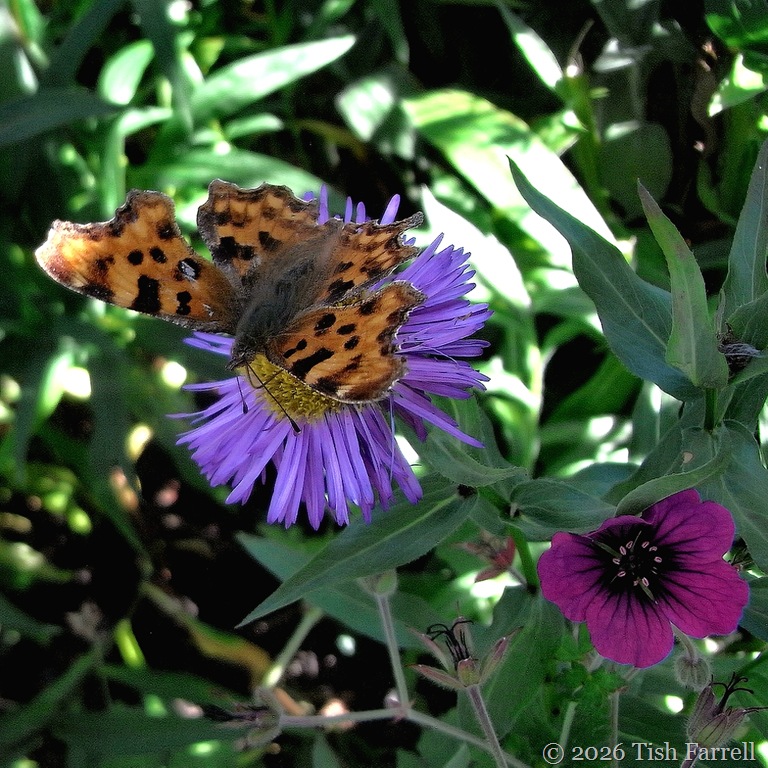
These days we’re seeing more butterflies in the garden– not only the annoying cabbage whites (hopefully the greens are sufficiently well netted) but also Painted Ladies, some returning Holly Blues and yesterday this lovely Comma butterfly.

butterfly 3

It was zipping around the back garden at high speed, impossible to photograph, but then was finally captivated with the Erigeron Azure Fairy , staying  just long enough to have its portrait taken. (Ann Thomson geranium looking on).

***

Since the late June hot spell, the weather has been comfortably tepid. The downside though is that we’ve hardly had a spit of rain. Now I’m panicking over the news of next week’s repeat frying. The recent return of blustery wind doesn’t help either. The surface soil is dry as dust and much of the earlier mulch seems to have disappeared.

I’ve been spot-watering plants that look stressed. Now, though, I’m in the middle of mining my compost bin. The grass cutting deposits from our neighbours’ very mossy lawn have kindly rotted down to produce some loamy stuff that looks suitable for another mulch campaign. The digging out and the spreading of same is giving the blackbirds much joy. They scuttle around after me, peeping happily, as they rake up worms and grubs.

***

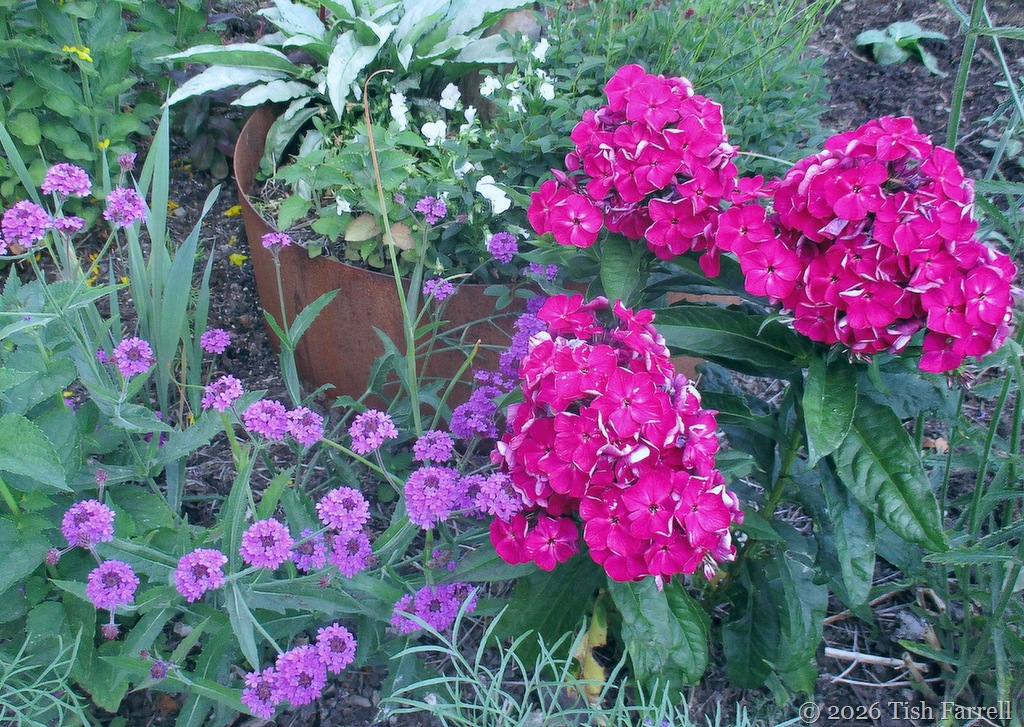
July is also phlox paniculata time, probably my favourite summer flowers (if forced to choose). At the moment I seem to have purple-pink ones all over the place. I’m not sure how this happened. I suspect I’d put in a number of large plugs not long after we moved into The Gables. They certainly didn’t do much over the last couple years, succumbing to slugs and mildew,  but now they have begun to bulk up well, looking good alongside Verbena. Their colour in the photo doesn’t really do them justice. They actually have richer, more wine coloured tones.

verbana and phlox

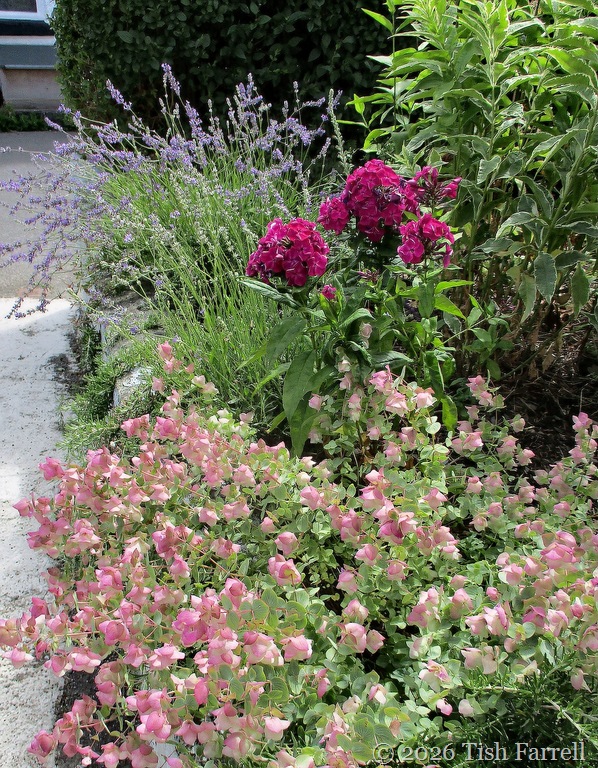
Also here on the front drive border between Oregano Kent Beauty and Lavender. Behind the deep red phlox is a clump of the  taller variegated phlox, Nora Leigh, yet to flower.

front drive border

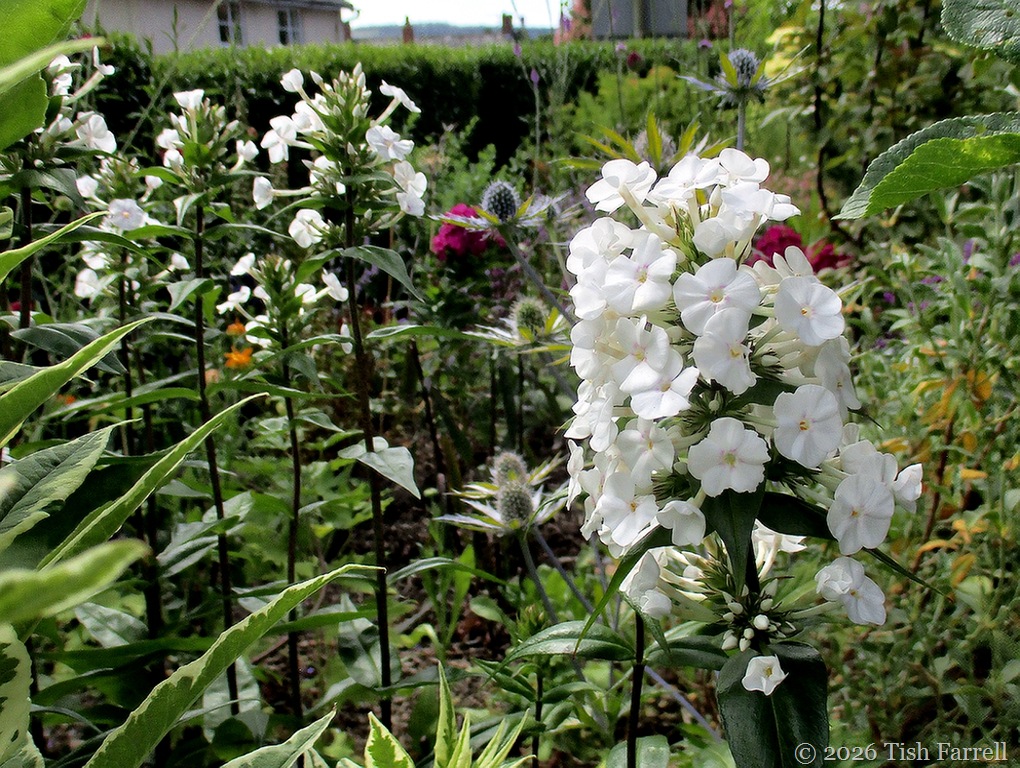
And behind Nora Leigh, is Phlox Adessa, a delicate smallish-flowered white with a tiny pink eye, just starting out:

Phlox Adessa

***

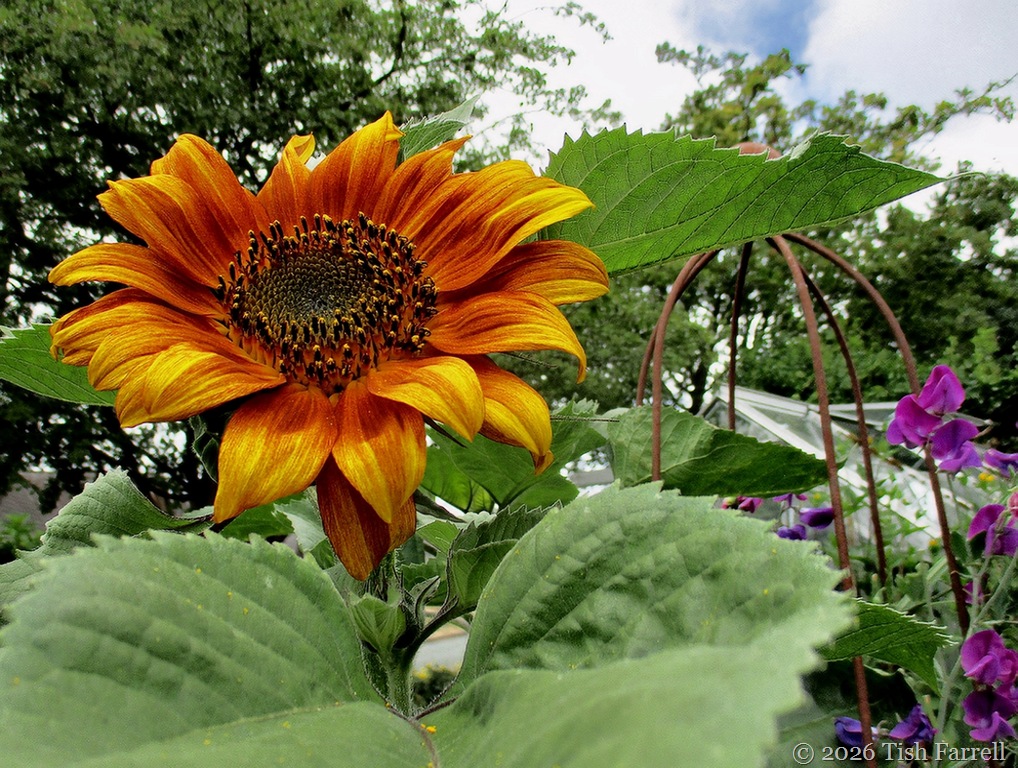
I also mentioned in earlier posts that last year’s several varieties of sunflowers had seeded themselves all over the garden. The tallest one by the old apple tree is at least 8 feet and still going. Then by the sweet pea obelisk there are at least six more sturdy plants (not so tall). I meant to transplant them, but they grew too large before I remembered to attempt it. And then I thought, they’ll be great to follow on from the sweet peas, and I can tether them to the obelisk if need be. Hopefully, they will keep going into the autumn.

This is the first one to flower. (Parentage uncertain).

sunflower

copyright 2026 Tish Farrell


Six on Saturday 4th July Among other wonderful things, Jim has some stunning tiger lilies on show this week.