
Making a connection: people and place. And all without a cell phone…

Copyright 2026 Tish Farrell


Making a connection: people and place. And all without a cell phone…
Copyright 2026 Tish Farrell
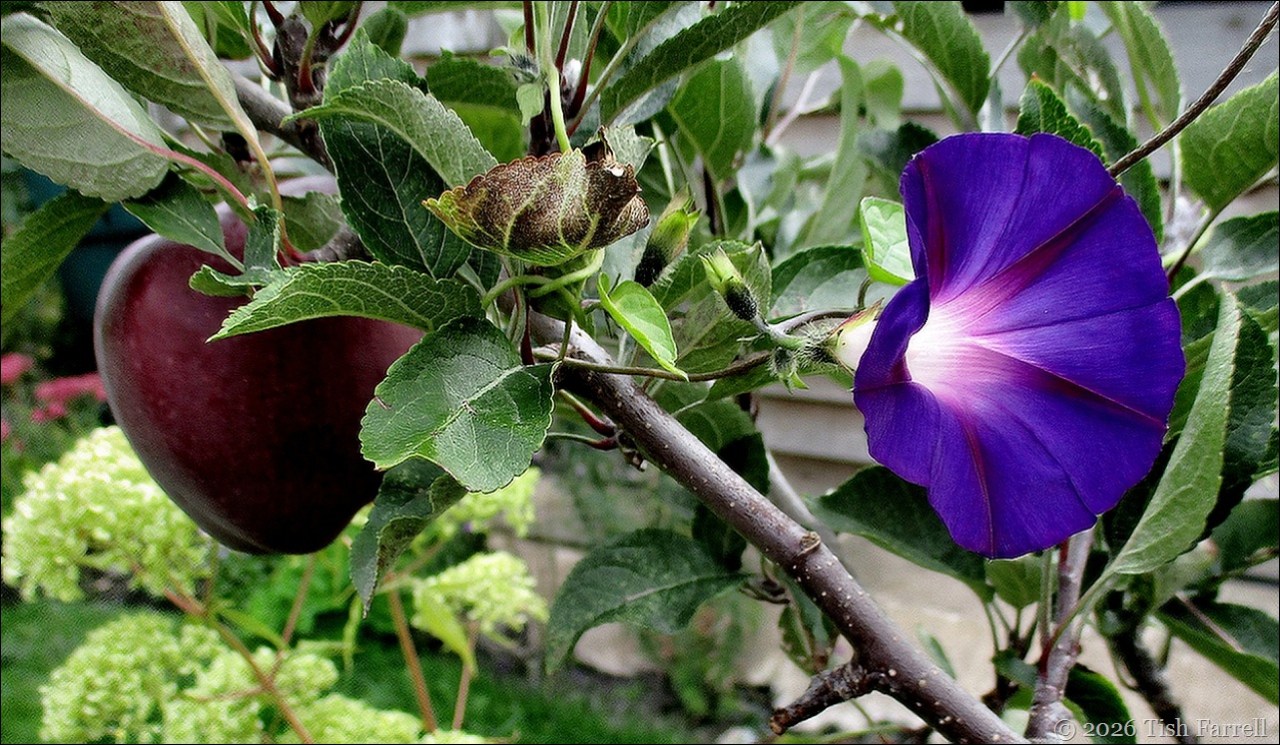
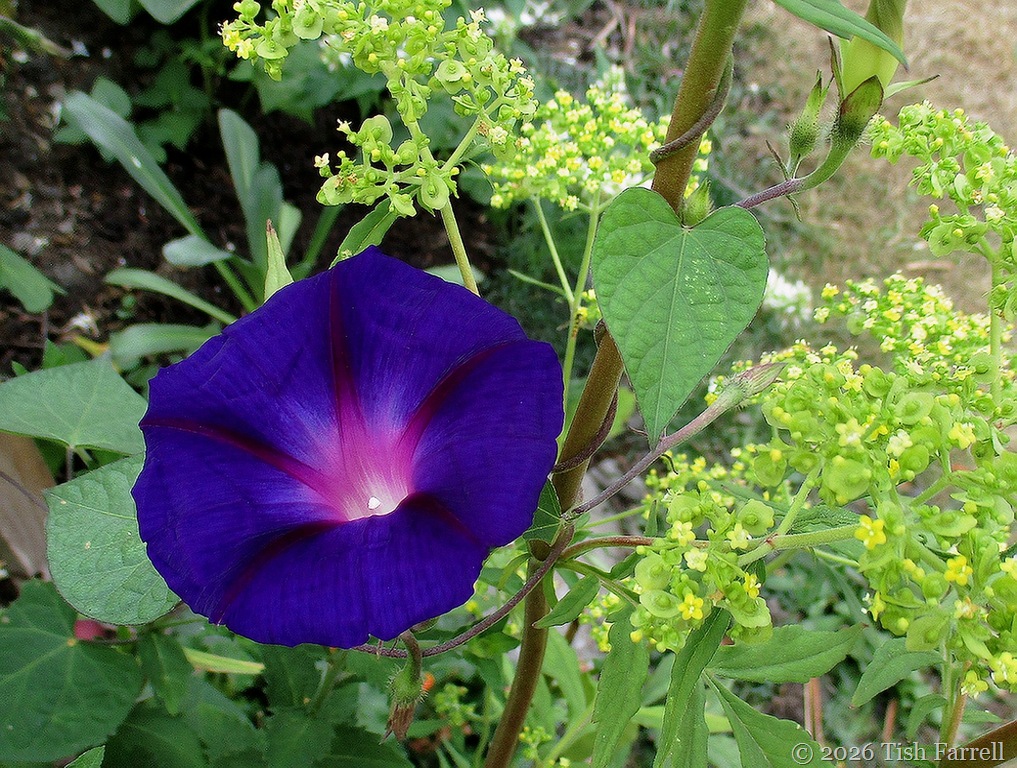
This morning, when I opened the kitchen door, autumn blew in. So much so, we decided on porridge for breakfast. When I stuck my nose out for the second time, I had to admit that it’s not actually cold outside, although the wind can be sharp. Also, the grey sky and drizzle don’t do much to ease that end-of-summer-back-to-school feeling.
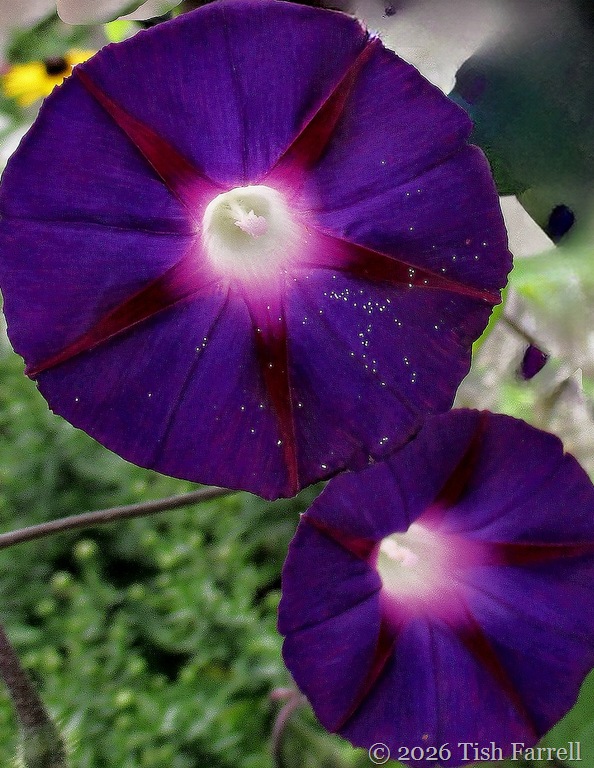
But then I spot the Morning Glories.
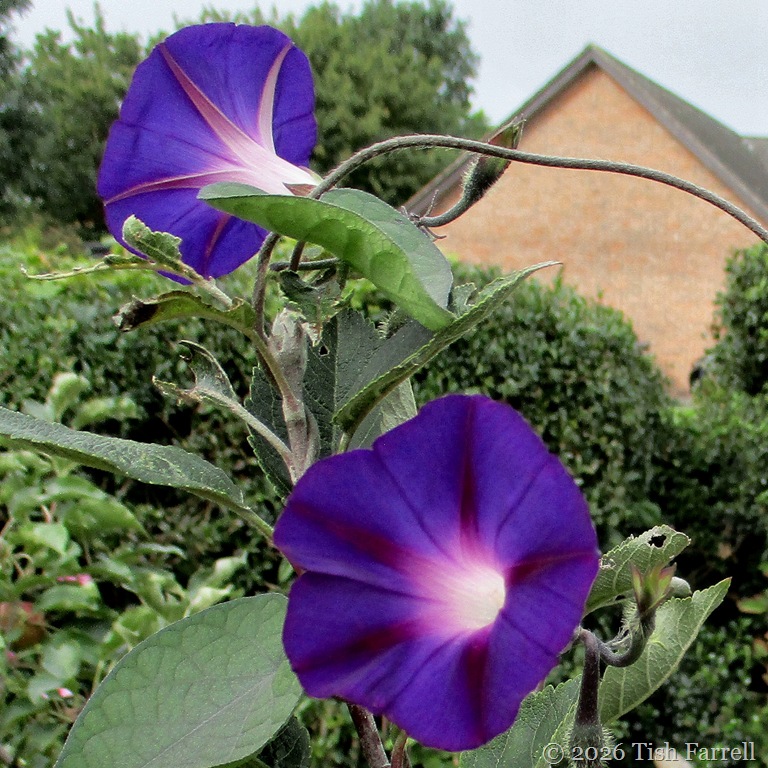
Today, all the seedling plantlets in the upstairs garden had decided to flower. I’d planted them out in June – among the runner beans, with the sweet peas, beside the miniature pear and apple trees, but they didn’t grow during the hot, dry months. They’ve not grown much now, and some are flowering on the ground, but never mind. It’s fun spotting them. They seem so vital and vibrant when most of the showy flowers are done or winding down.
*
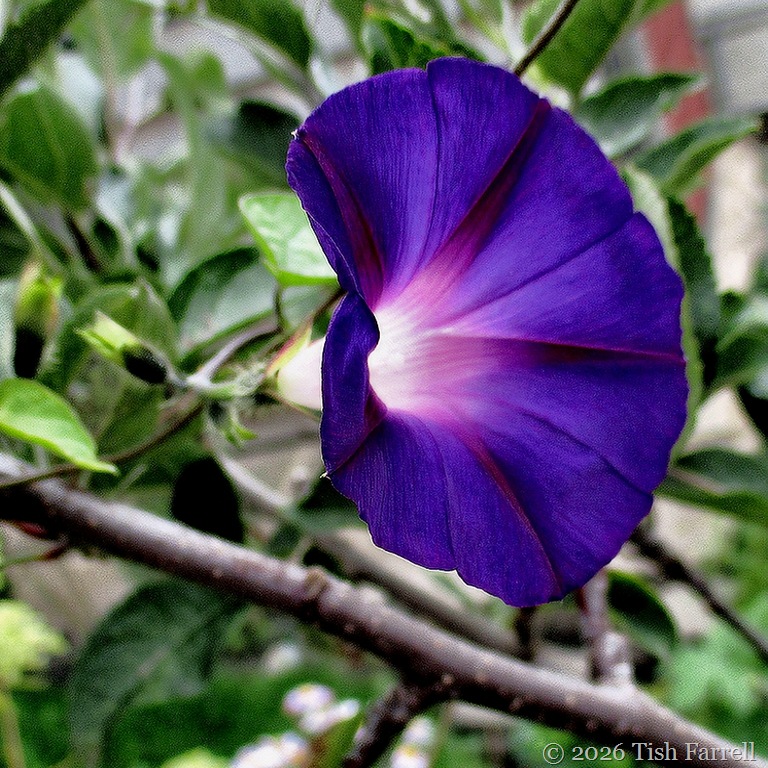
There’s also a small constellation on show – a scatter of bright white pollen grains that seem to be luminous. Even the flower’s inner recesses appear to emit light; no sunshine required.
Copyright 2026 Tish Farrell

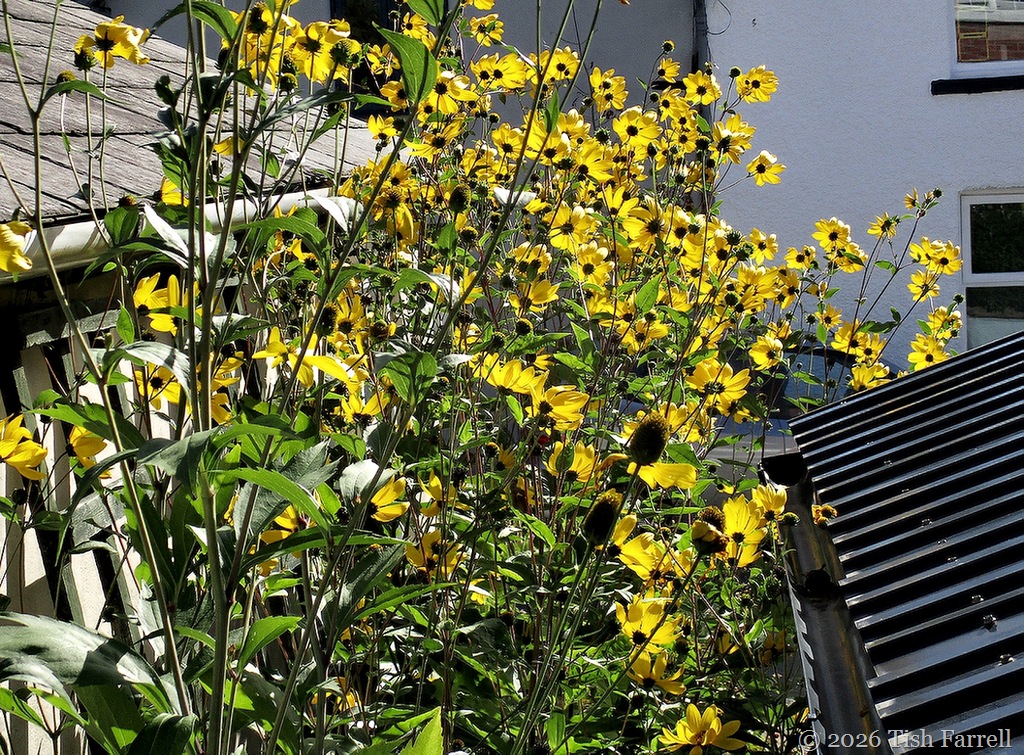
The second week in September and here in South Shropshire there’s much change in the weather. As I’ve been writing this, we’ve had sunshine, racing white clouds across a blue, blue sky, a high, hot wind, sudden overcastness, a downpour, and now cloudy sunshine with less wind. Yes, it feels more like autumn now.
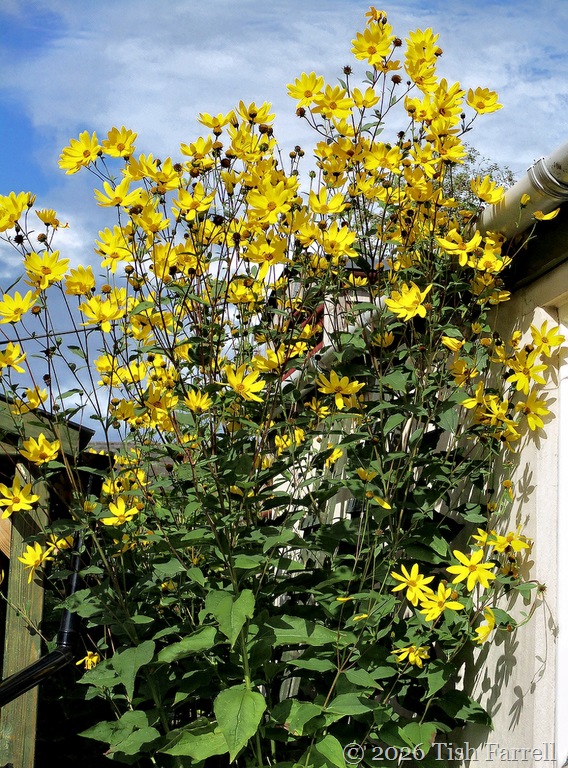
And come what may the Helianthus keeps up the show. This particular clump is growing on a rather dismal block wall between our log store and next door’s garage. I’ve mentioned this space before, because I’m still not sure what is best for it. On the other hand it’s hard to beat this long standing, upstanding display; it’s been happening for weeks now, and everyone walking up the road can enjoy it. Drought, what drought, they say.
*
Meanwhile, out back in the upstairs garden, the Sedum (Hylotelephium probably spectabile) …
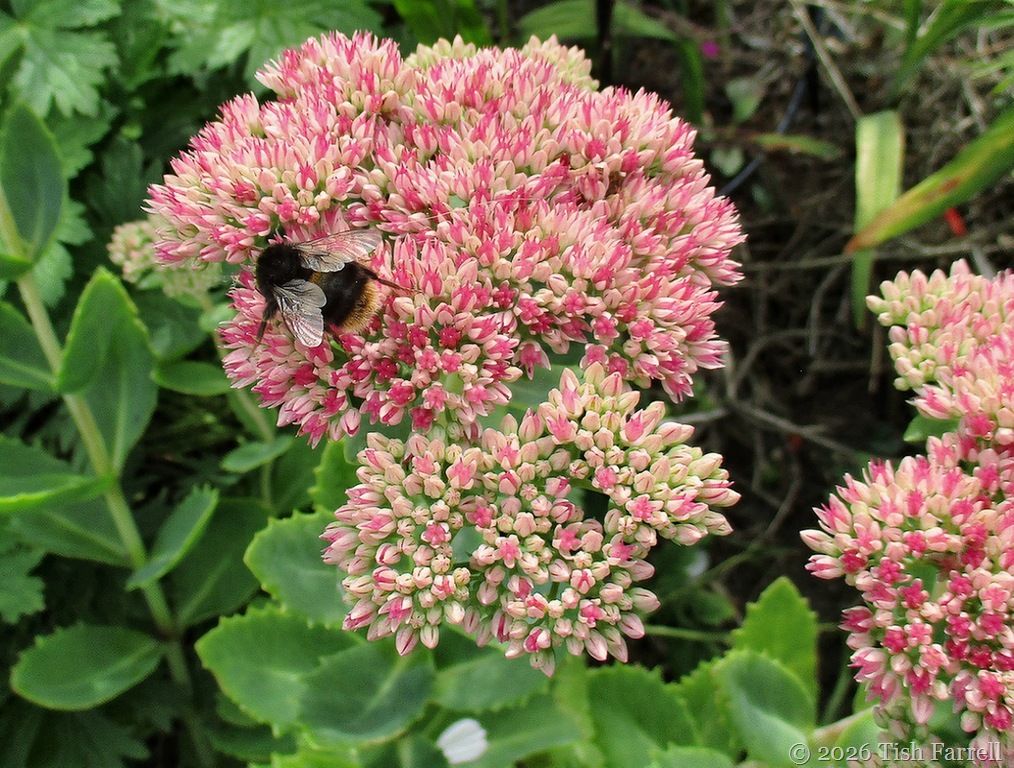
…has abandoned the heat-stricken, hysterical looks it displayed back in July-August and settled into the usual pleasing, and softly scented landing pads for late-season insect feeding. It is a key plant in this regard, the nectar giving bees a good energy boost before hibernation. And then the overwintering dead heads can also provide shelter for insects and seeds for birds. But before all that, the gardener has the pleasure of some late season colour. (Note to self: more Sedums needed).
*
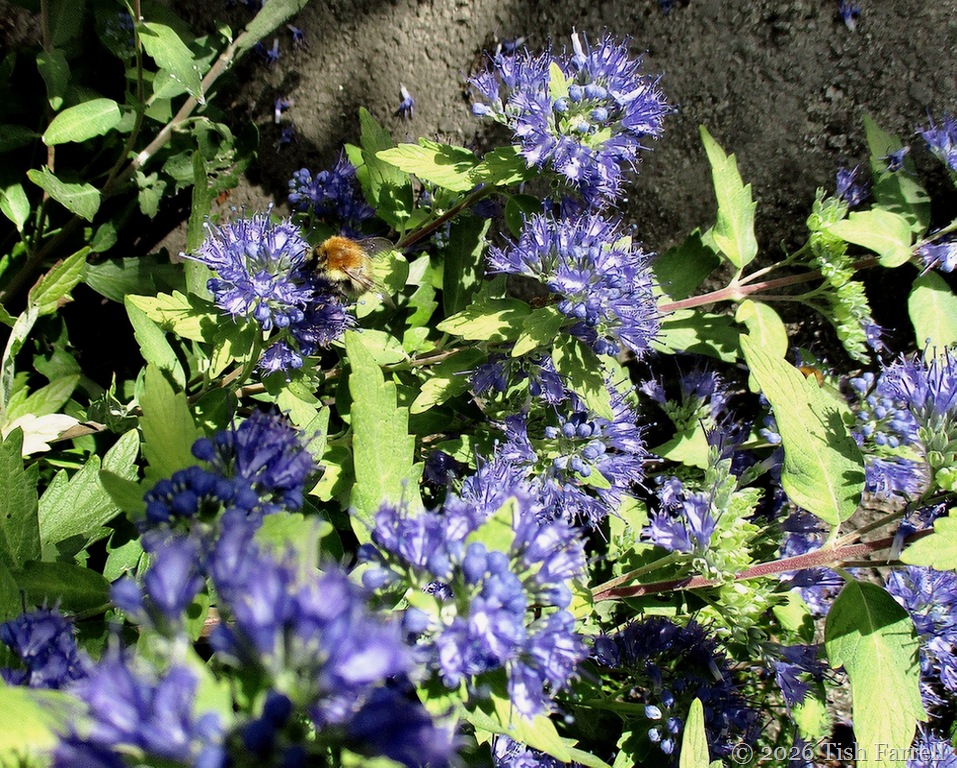
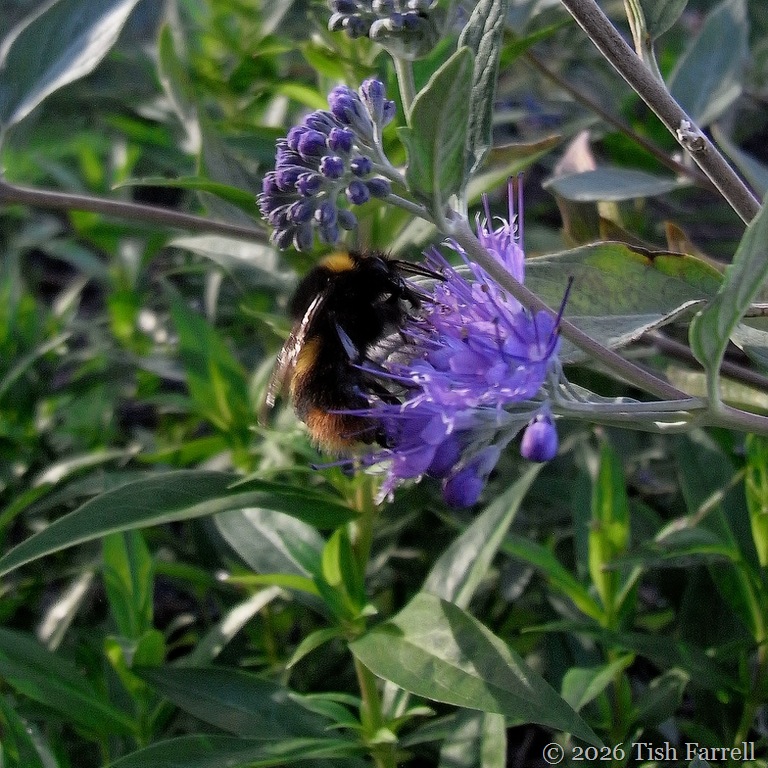
Another late summer star and important food source for pollinators is Caryopteris (Gold Crest above, Heavenly Blue below). It’s just coming into full flower. The blue spires are glorious, but Heavenly Blue, in particular, is scrubby greyish-leaved shrub for much of the year. Through the summer I have to keep reminding myself how lovely it looks in September. The Gold Crest, which is growing in front of the greenhouse (and has gold-green foliage) seems the more attractive option when it comes to keeping its shape. I have followed early spring pruning instructions for the Heavenly Blue, but it still grows into a riot of twiggy branches, and in most unexpected directions. This year it has decided to do most of its flowering in a westerly direction, where we mostly can’t see it unless we walk behind it. Perhaps I need to take cuttings and start again from scratch.
*
Now with the cooler, wetter weather, the Cosmos has also decided to flower with intent. I grew a couple of dozen plants from seed, mostly packet ends. All through the heatwave, a few of them flowered, while others simply grew and grew, creating tall clumps of flowerless greenery so dense I had to pull off many side stems because they were crowding out other plants. I almost pulled them up altogether. Now they are a mass of buds and flowering like mad, though I’m glad I thinned them out.
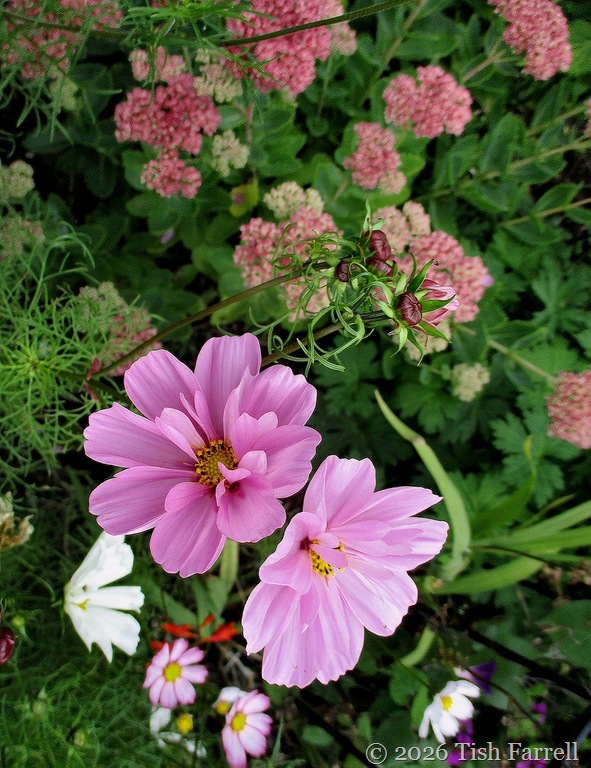
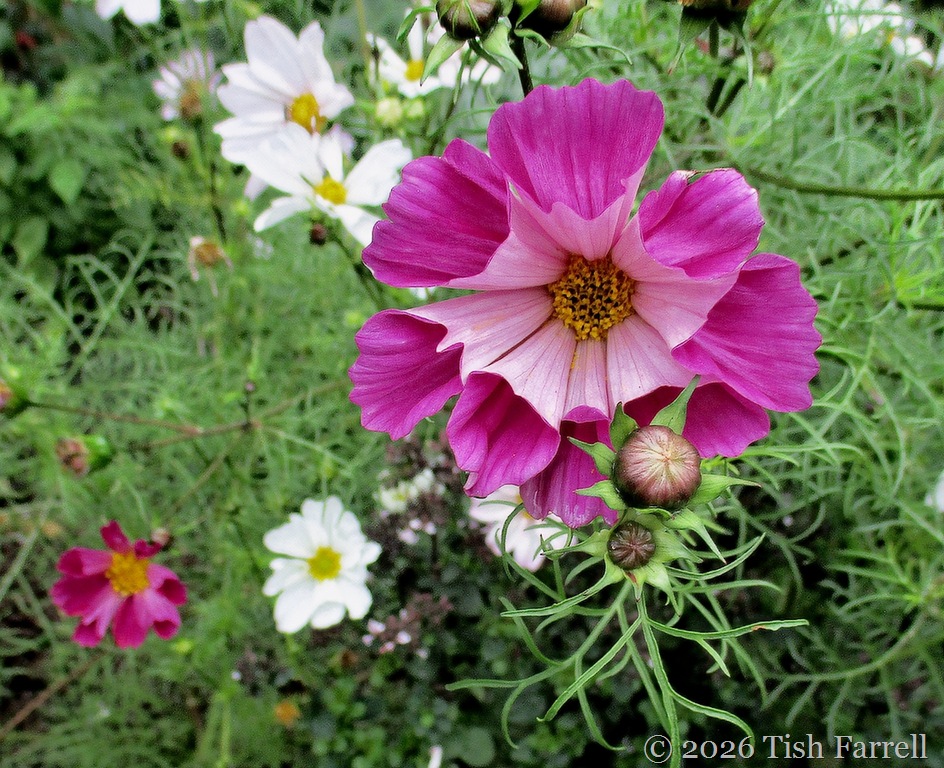
I’m not really a pink person, but I’m quite pleased with the ‘pink corner’ in the top-of-the-back-wall border. This includes the above mentioned Sedum, assorted Cosmos, and the Monarda Citriodera, which I also grew from seed this spring. I featured it back in the heatwave, amazed that seedling plants could stand up to the roasting.
And here they are, still going strong, almost as if they are locked into blooming-mode, like little growing pagodas, one exquisite floral structure giving rise to another.
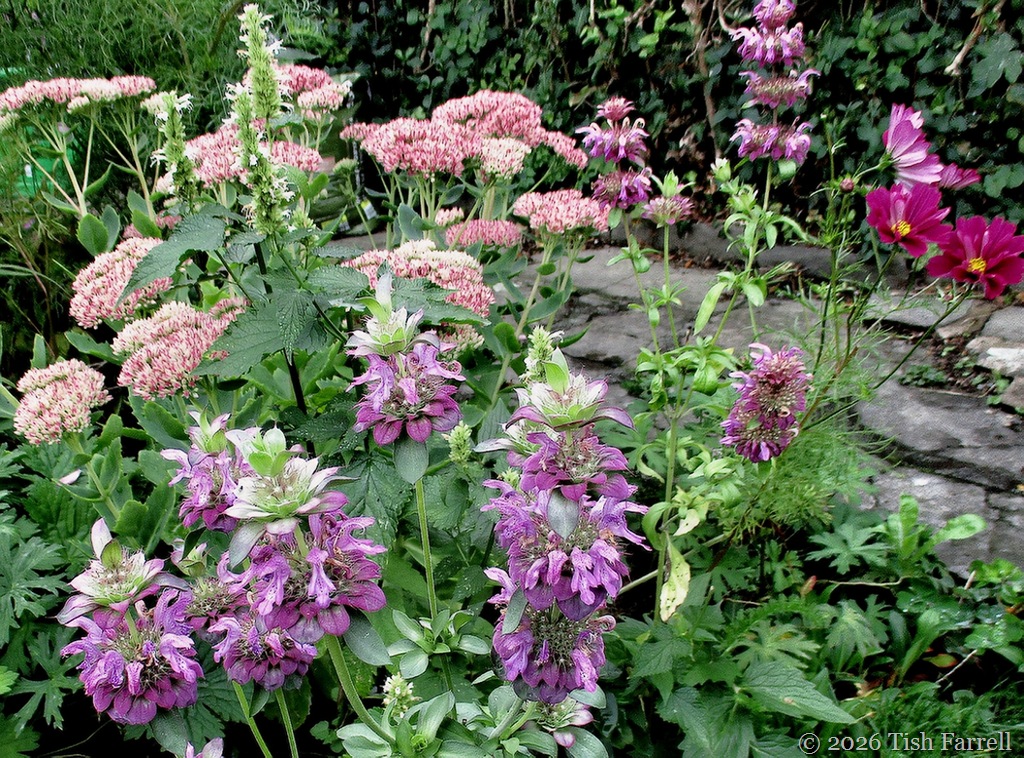
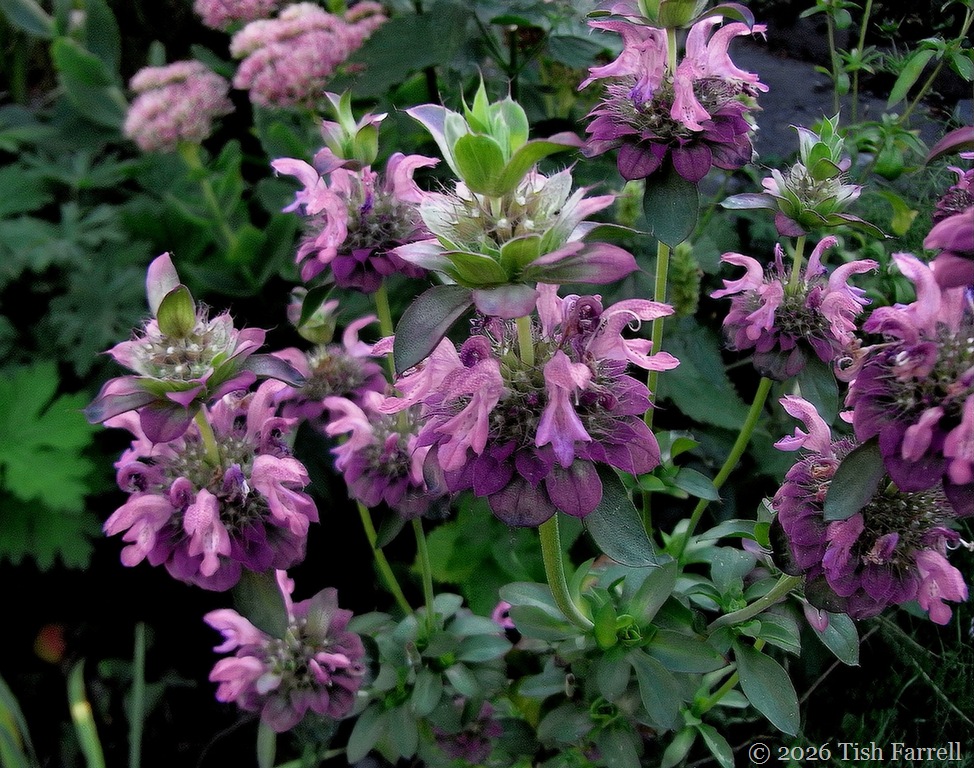
I gather that this wild form of Monarda/Bergamot/Bee Balm is a short-lived perennial, and mostly grown as a biennial or annual. I’m anyway wondering if, after weeks and weeks of flowering, they will prove to have exhausted themselves. We shall see. Anyway, I still have some seed, maybe try sowing some now.
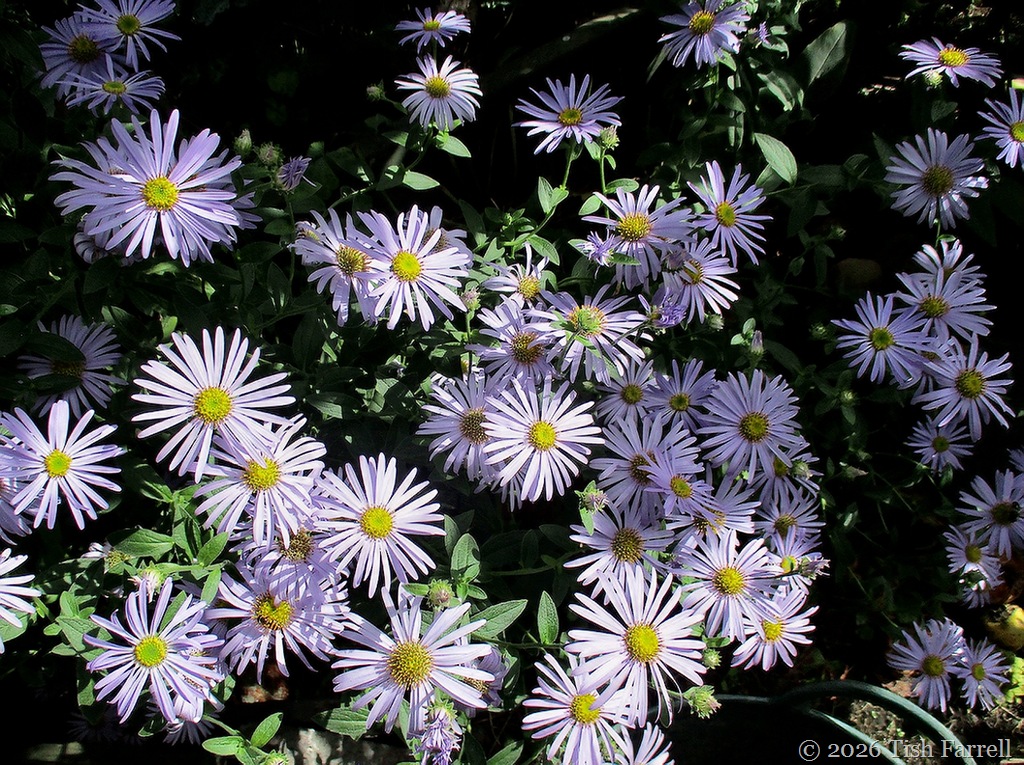
And talking of long bloomers, I have to give another shout-out to Aster x frikartii Monch. It looks wonderful now, and it’s looked wonderful all summer, growing in dappled sun between the butter beans and the runners. This is a totally undemanding plant. It leans but doesn’t particularly need supporting. I’ve seen no sign of mildewed leaves. And what a host of happy faces as seen this morning.
*
Whether it’s your spring or autumn, always lots to do. Happy gardening!
Copyright 2026 Tish Farrell
*
Six On Saturday This week Jim has some very beautiful plants on show. Go see!
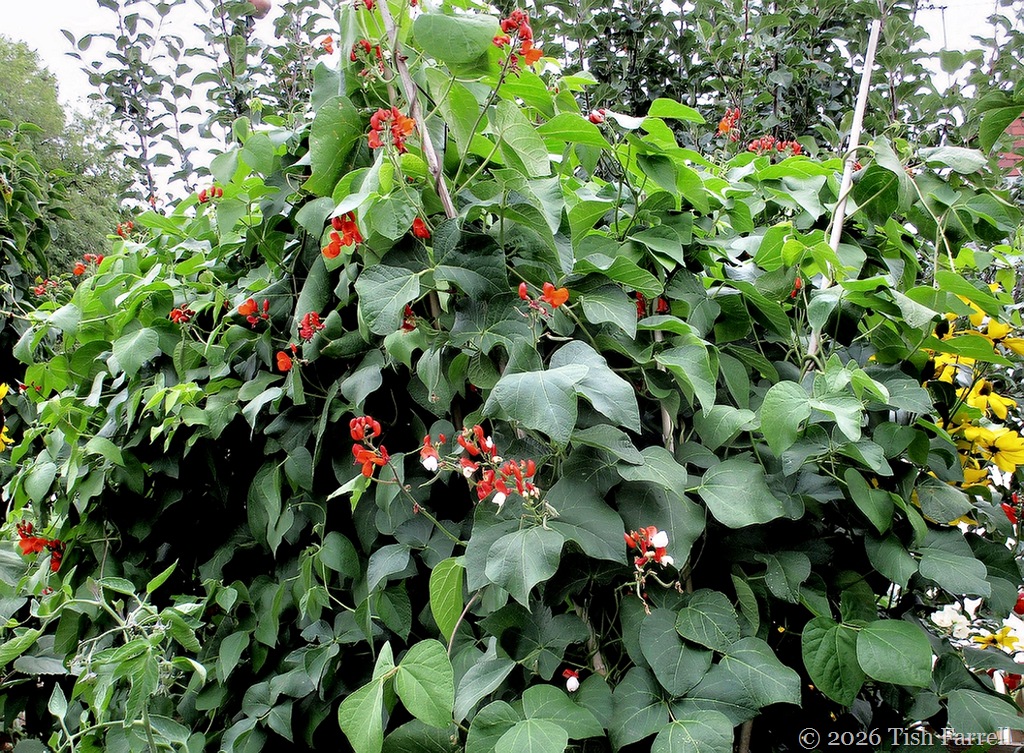
Runner Bean Re-run?
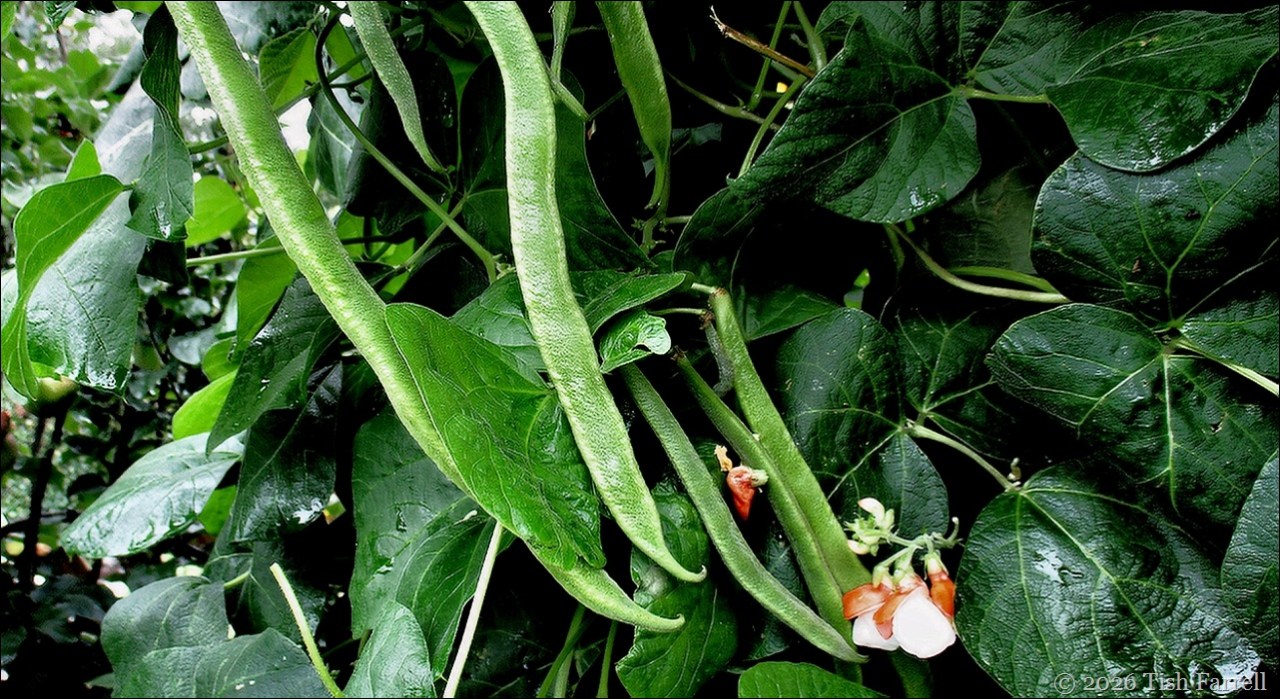
Even though I was keeping the row well watered, and had earlier dosed plants with seaweed feed, the runner beans went on strike for most of August. It didn’t help that the sparrows were using them as an afternoon playground, rampaging through the stems. When I consulted the Royal Society of Horticulture website it told me that sparrows like to peck at the flowers, deforming the structures and making it difficult for pollinating insects to gain access. So much for feeding the little dears all winter.
But now, with the rain and cool temperatures, the runners are a jungle on sticks. We even had a handful of good sized beans this week, and there are signs among the returning flowers of tiny beanlets. But will they have time to develop? Who knows?
Not quite Uchiki Kuri
I kept some seeds from last year’s Uchiki Kuri Japanese squash. I only produced two. The fruits were very bright orange and oval as they should be. Not so their offspring, sown in late spring, one each from two separate plants.
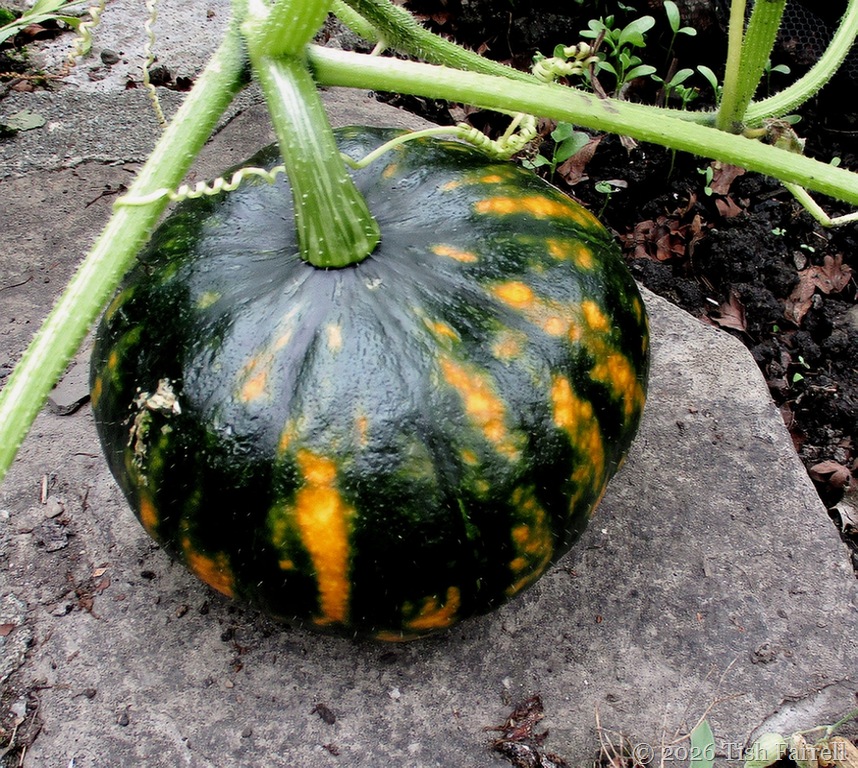
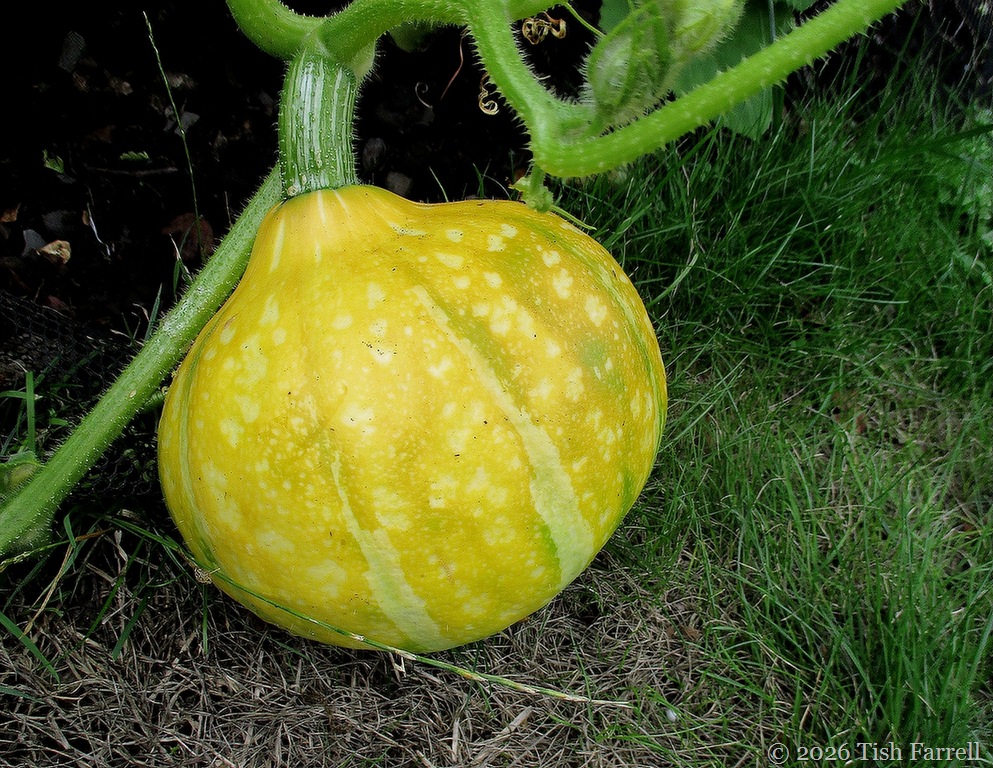
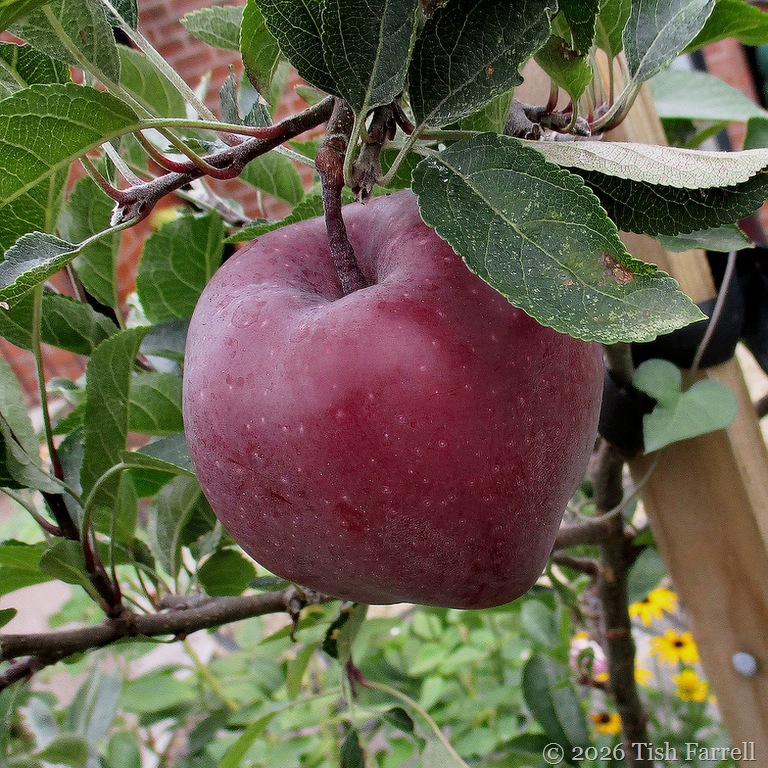
A Perfect Red Devil?
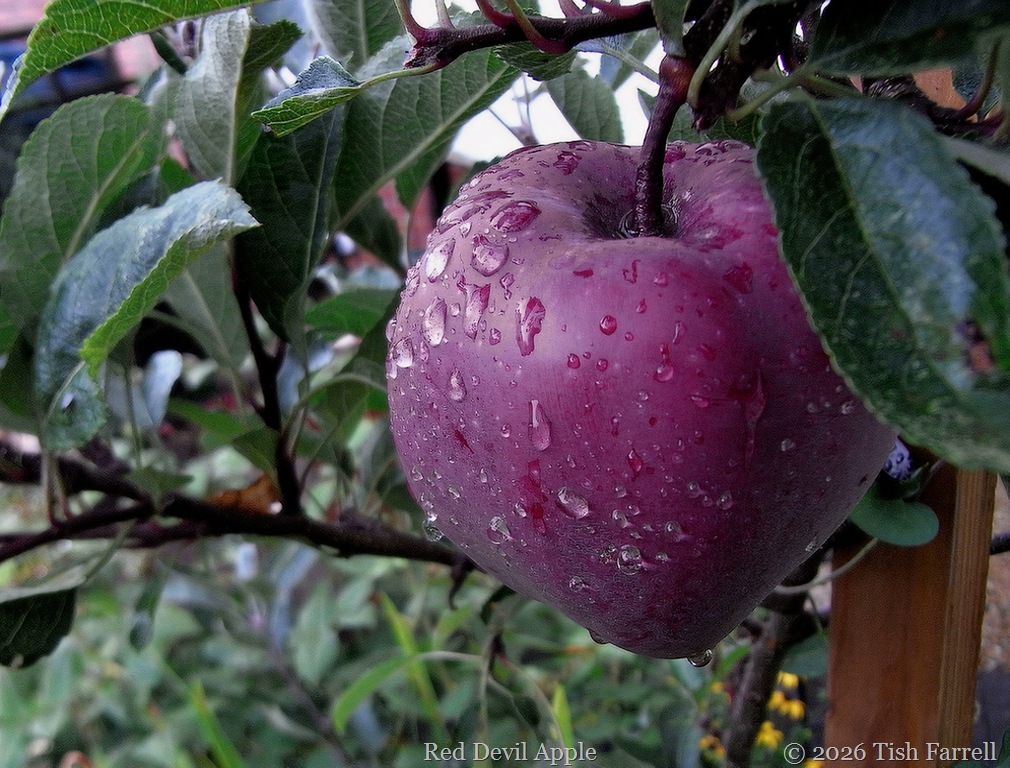
We thought all the apples on our miniature Red Devil tree had been zapped by codling moths. After the July drop there are four left, this one the least scathed and best developed. But would it entice Snow White?
Some strange sunflowers
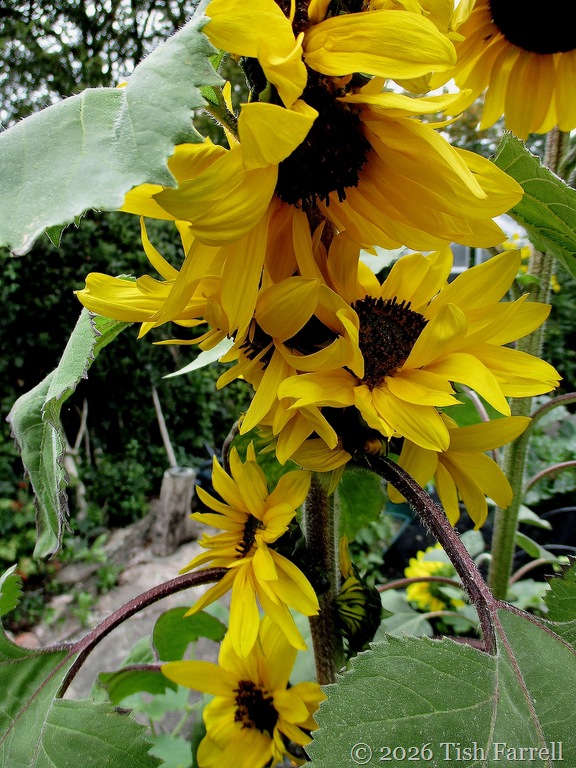
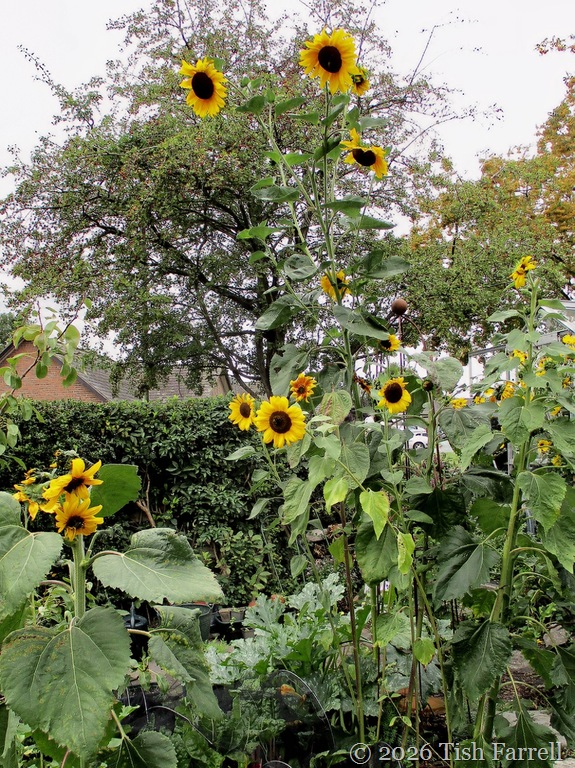
The sunflower flock that arose from last year’s dropped seed is still going strong. It also includes several forms that I don’t recall growing in the first place, and one with multiple flowers growing up the stalk which is distinctly odd. The tallest, we reckon, is about 3 metres. I have it tethered to the obelisk where we had the sweet peas, whence it looms down at us. I’ve already dead-headed it once. That took some doing with a pair of tree loppers.
No, this definitely isn’t a Selinum seedling
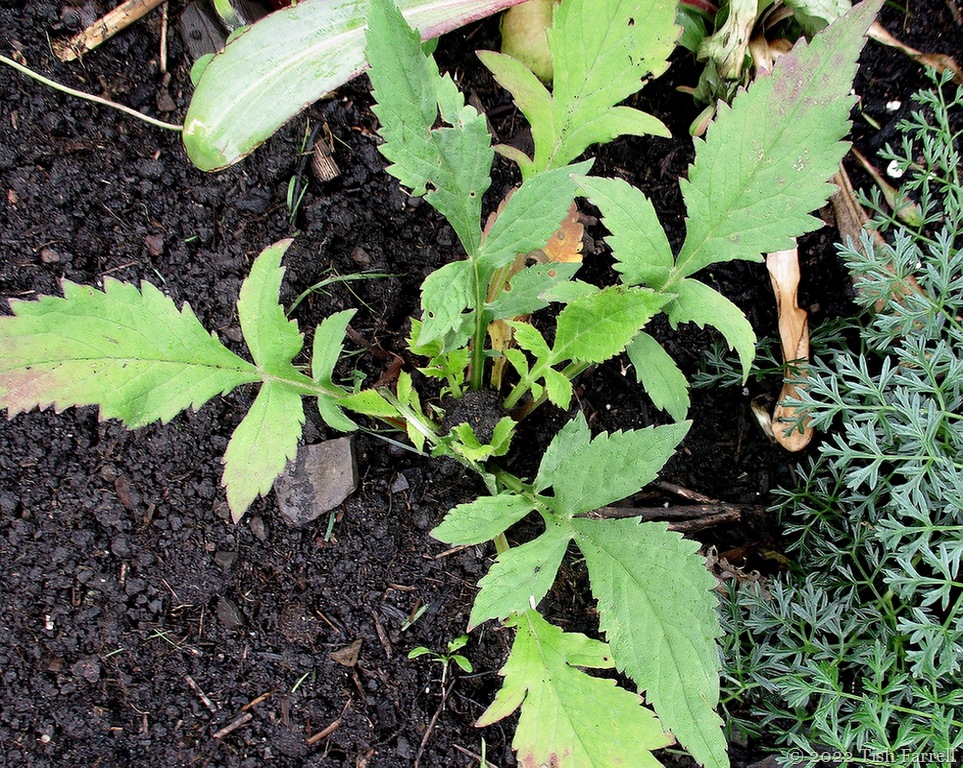
I distinctly remember saving some seed from the Selinum in the upstairs garden. All through the winter there was a pot of seeds on the kitchen shelf. Definitely umbelliferous in looks. Must be the Selinum. In the spring I sowed them in modules in the greenhouse and for a long time nothing happened. And then it did, and I couldn’t think what on earth I had grown. Not the feathery leaflets expected, something altogether more fleshy and pointy. What on earth…?
For a time I wondered if they were Rudbeckia, suddenly making an appearance after what I thought to be a failed sowing back in the autumn. This rather made up for them not being Selinum so I let them grow on, and eventually planted out half a dozen in various spots around the garden. They survived the drought, but didn’t expand much.
Cut to a visit to Wildegoose Walled Garden and Nursery, as featured here in last weeks SoS. I came away with a young Patrinia Monandra plant. (Some may be aware that I have a thing about Patrinia, first met with at Wildegoose during one of their rare winter opening weekends. It is tall, graceful, discreetly clumping and flowers into November when the seedheads then reflect any late autumn sunlight.)
I already have two Patrinia Punctifolia, bought last year from Great Dixter nursery (one of which I nearly killed this summer in my careless feeding of a nearby plant). But the survivor is currently flowering beautifully. And still the penny did not drop.
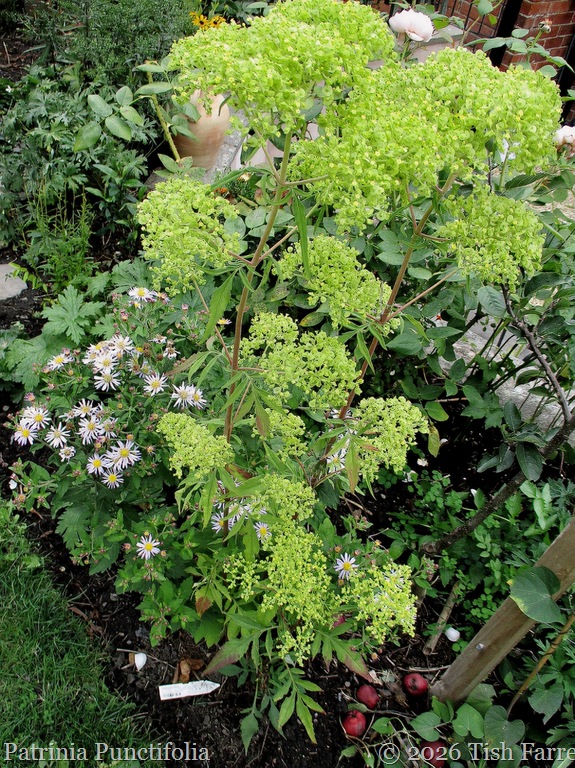
You could say it was a ‘be careful what you wish for’ moment, although in this case I would delighted to have a garden with lots of Patrinia. And so now I do. The seed I’d saved must have come from a handful snaffled from the winter visit to Wildegoose. Suddenly I saw the plants I had grown and the one I’d bought looked – well- identical. Probably the Monandra version then.
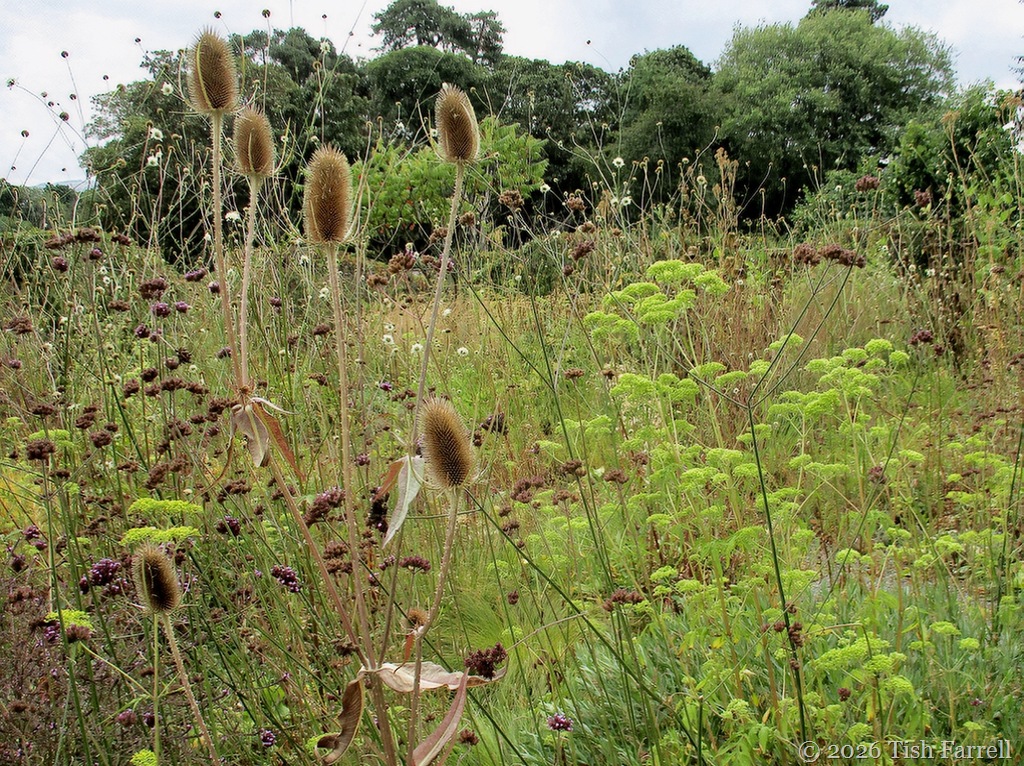
Patrinia as seen at Wildegoose in late August, just beginning to flower.
*
Heaven knows what happened to the Selinum seeds. Try again this year.
*
An unexpectedly pleasing delivery
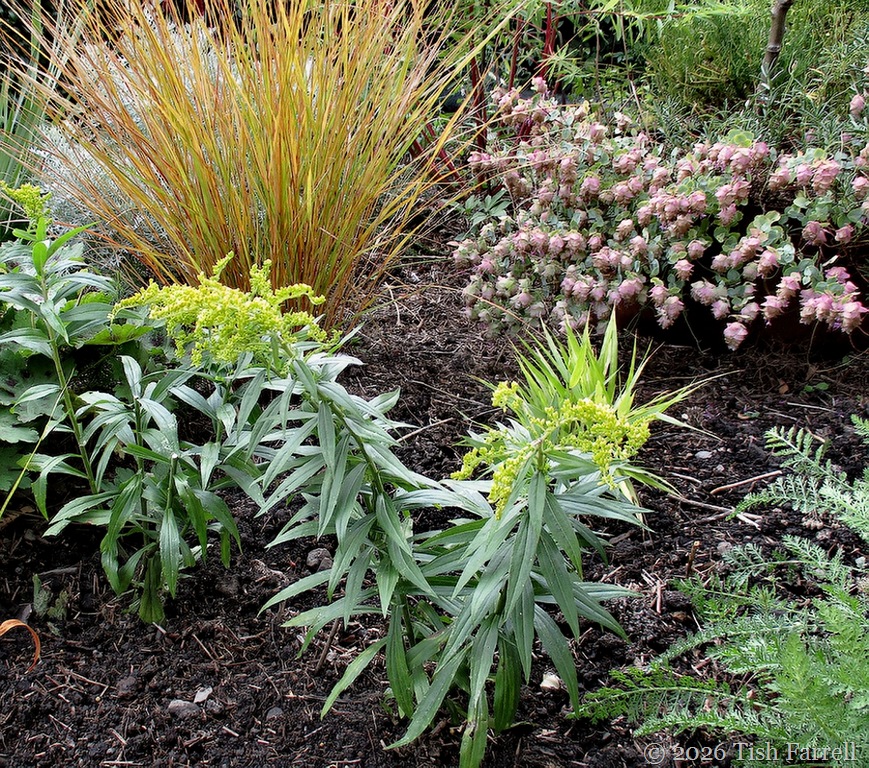
There are some lovely plantspeople selling on-line. And so trawling the net in search of yet another plant seen at Wildegoose, but one which they don’t appear to sell, or haven’t in stock, I discovered Solidago Golden Dwarf at Crossgate Nursery in Cornwall. Here it is just after arrival. The plants had been carefully folded to preserve the stems that are just about to flower. I expect they’ll straighten out. But anyway, here it is in the front garden. There are several ‘dwarf’ varieties I now discover, ones that don’t get out of hand and flop, and also have more lemony coloured flowers.
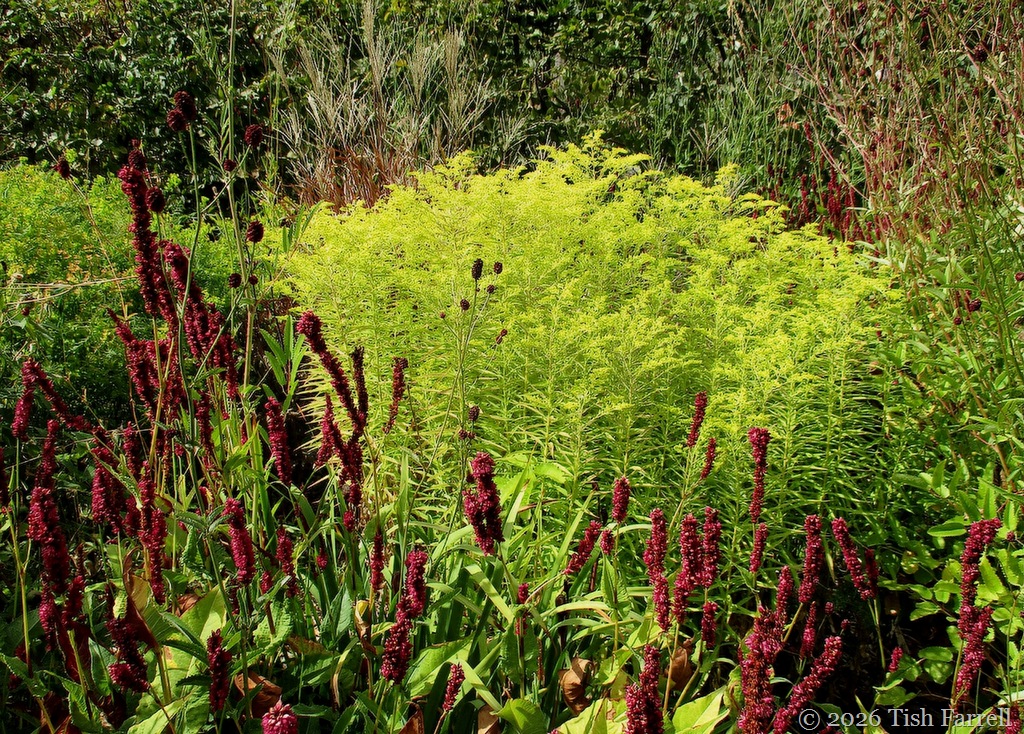
Here’s another repeat photo from the Wildegoose visit where I spotted a spread of lemony, just-out solidago with some Persicaria.
A good week then, all in all. And rain and sun too. Happy gardening, folks.
Copyright 2026 Tish Farrell
*
Six on Saturday It’s a wise gardener who labels their seed envelopes. Please visit Jim for more garden doings and some fabulous coleus.
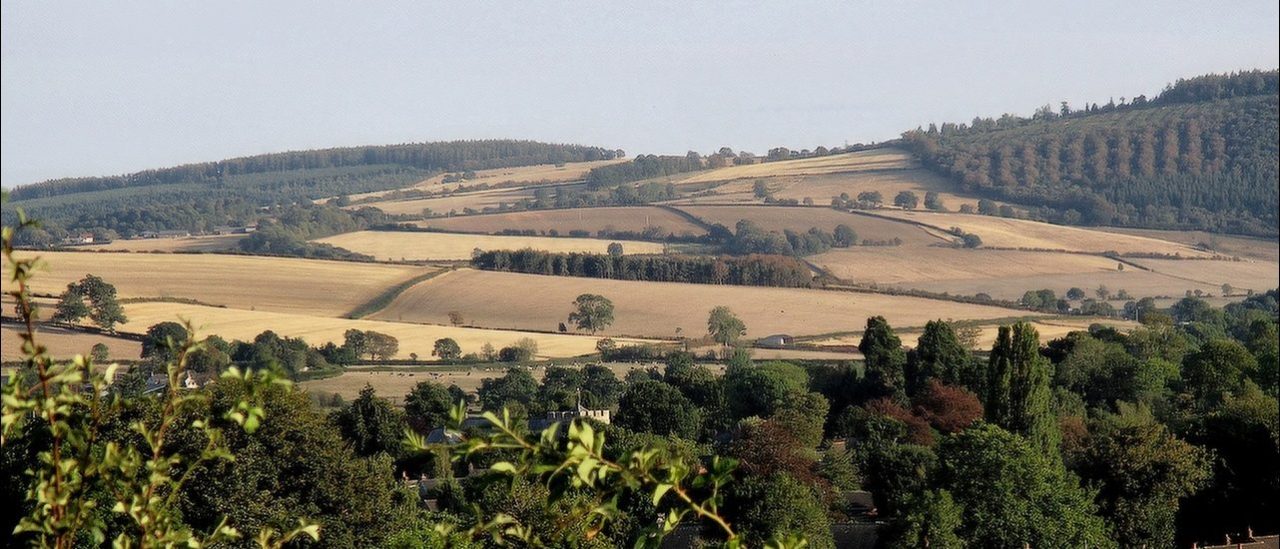
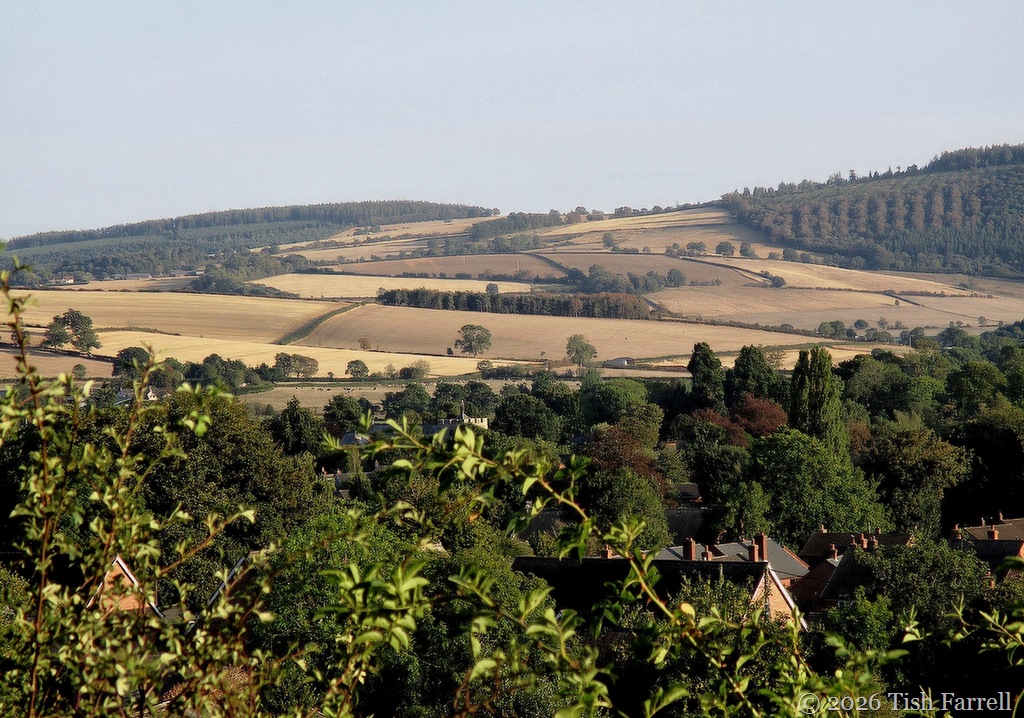
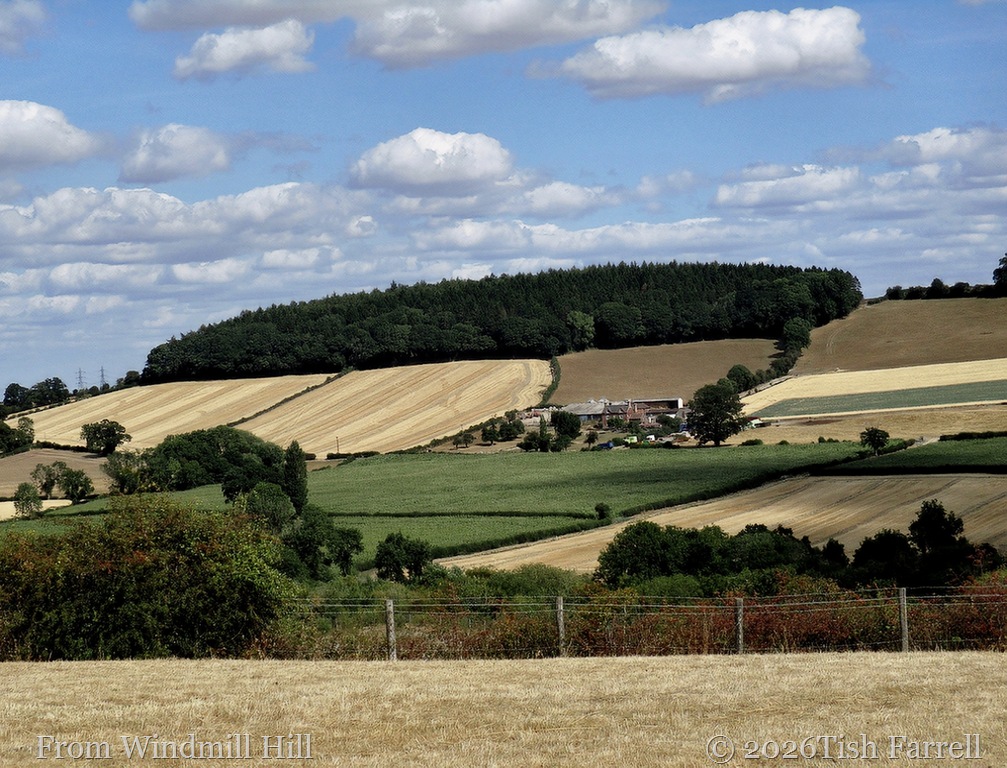
August in Shropshire, and for much of the month the dry and sunny days rolled on. After weeks without rain, the fields around the town looked like this – ochre shades and smoothly crop-shorn.
Meanwhile, in the garden the sunflowers put on the biggest show – volunteers and perennials alike…
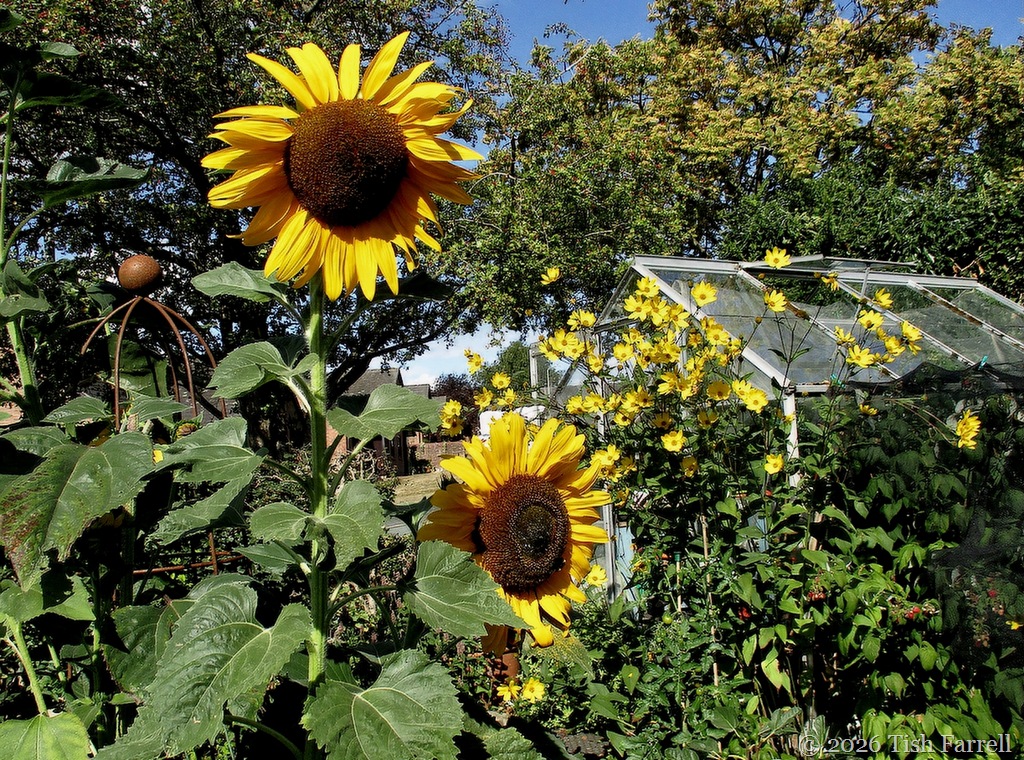
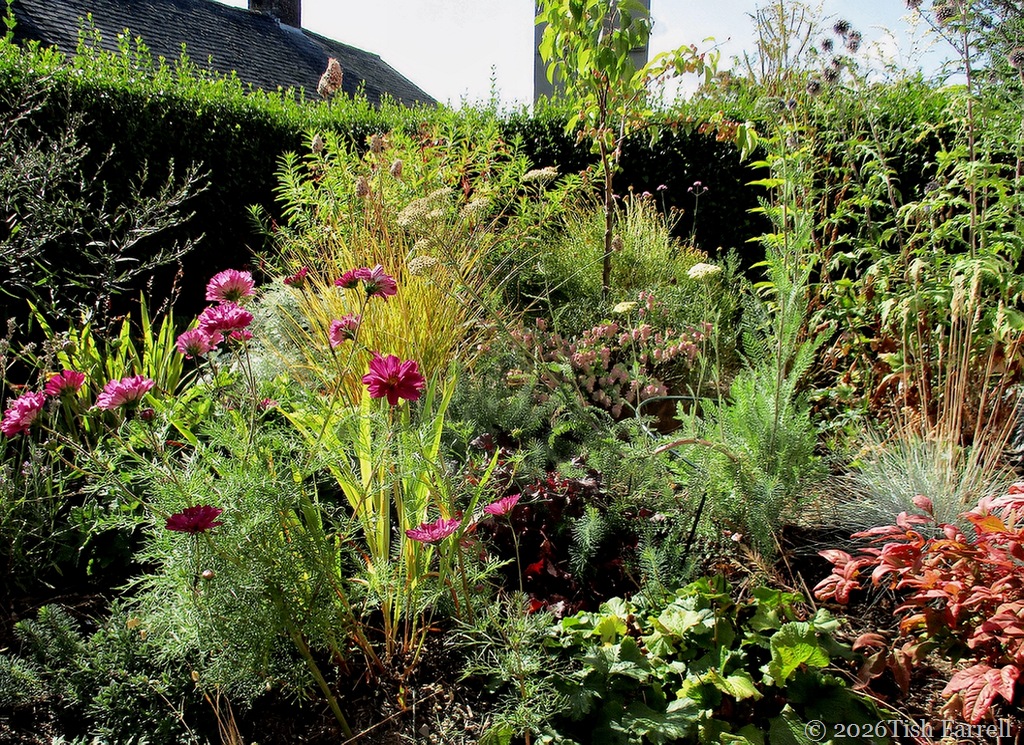
…and the borders did their best, especially the areas that been well mulched…
*
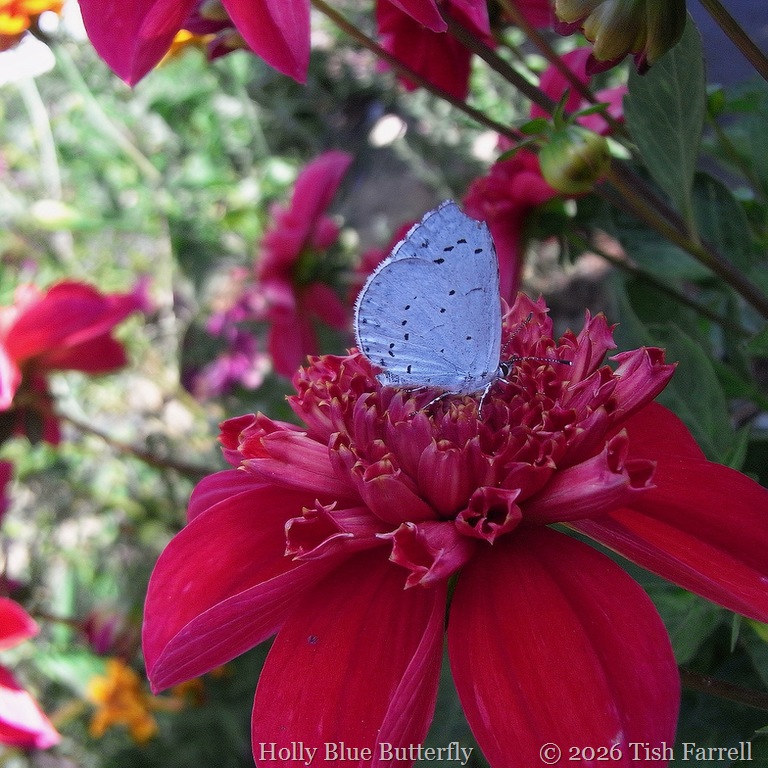
We had some welcome visitors…
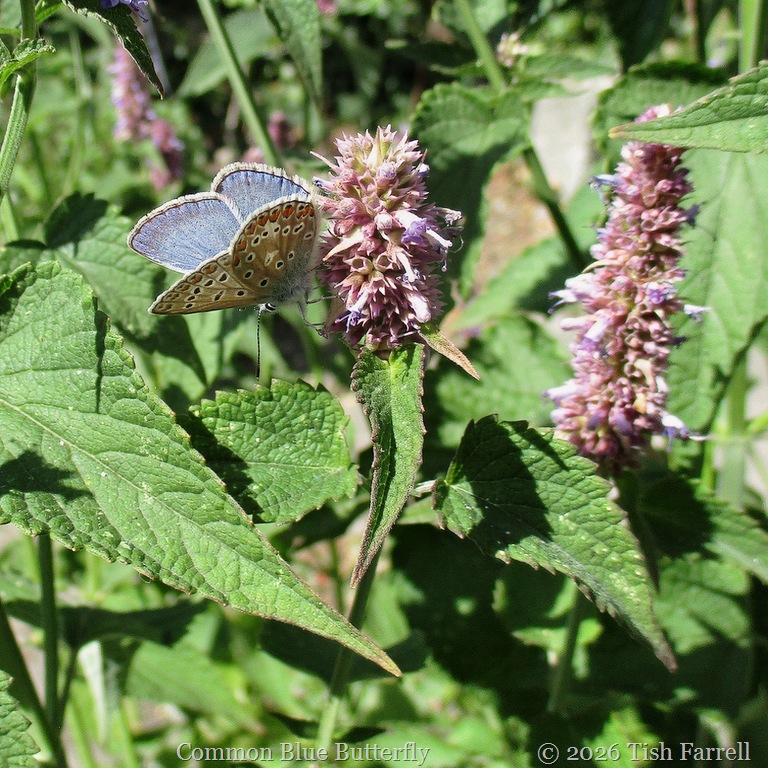
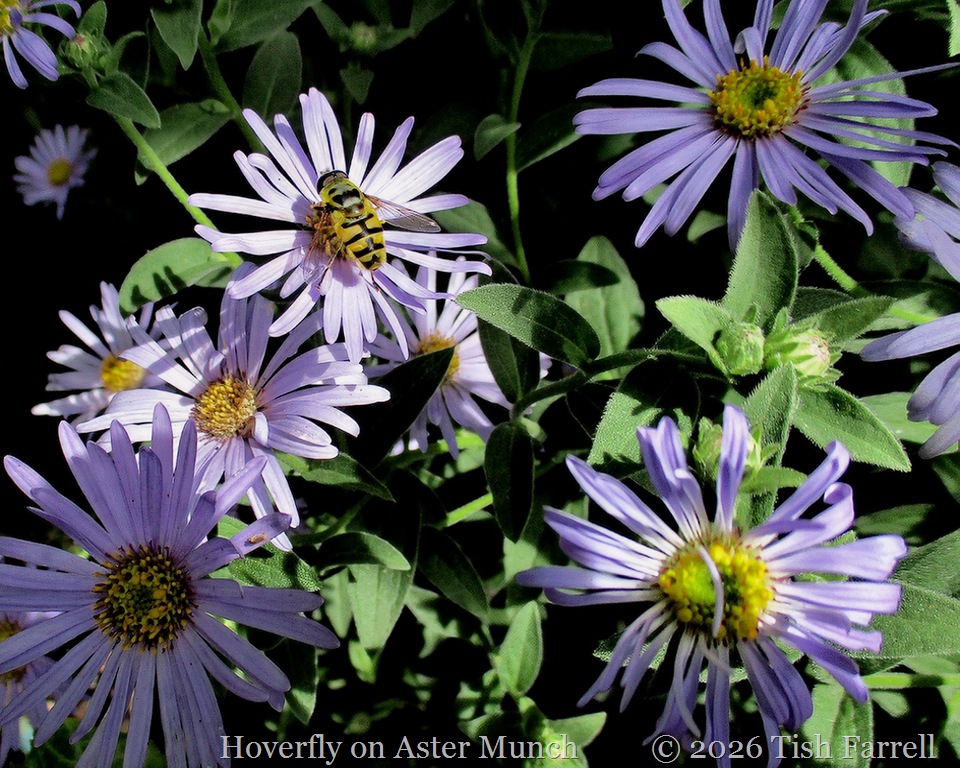
*
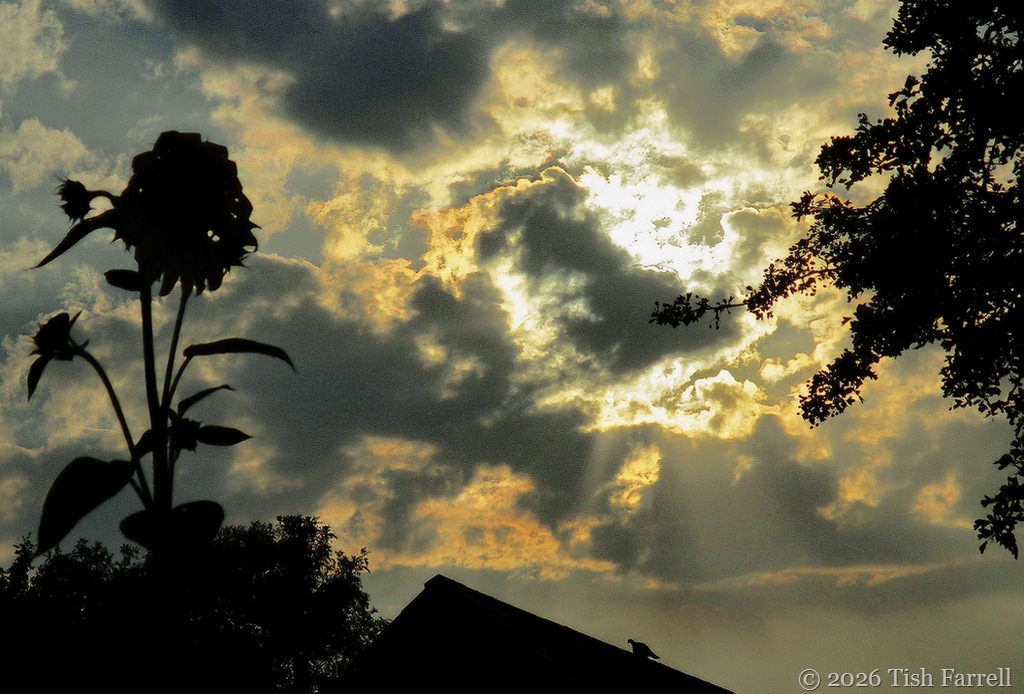
One evening we sat out on the lawn and almost saw the partial eclipse. The sunflowers almost saw it too.
*
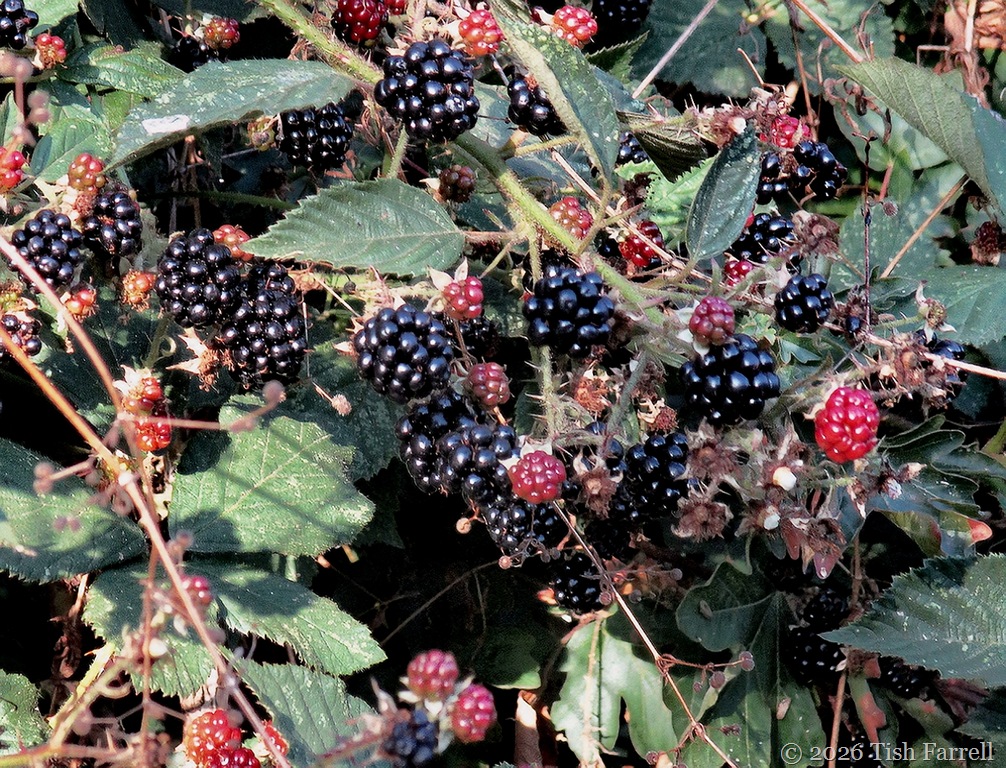
And on another evening we walked up Wintles Hill to look for blackberries…
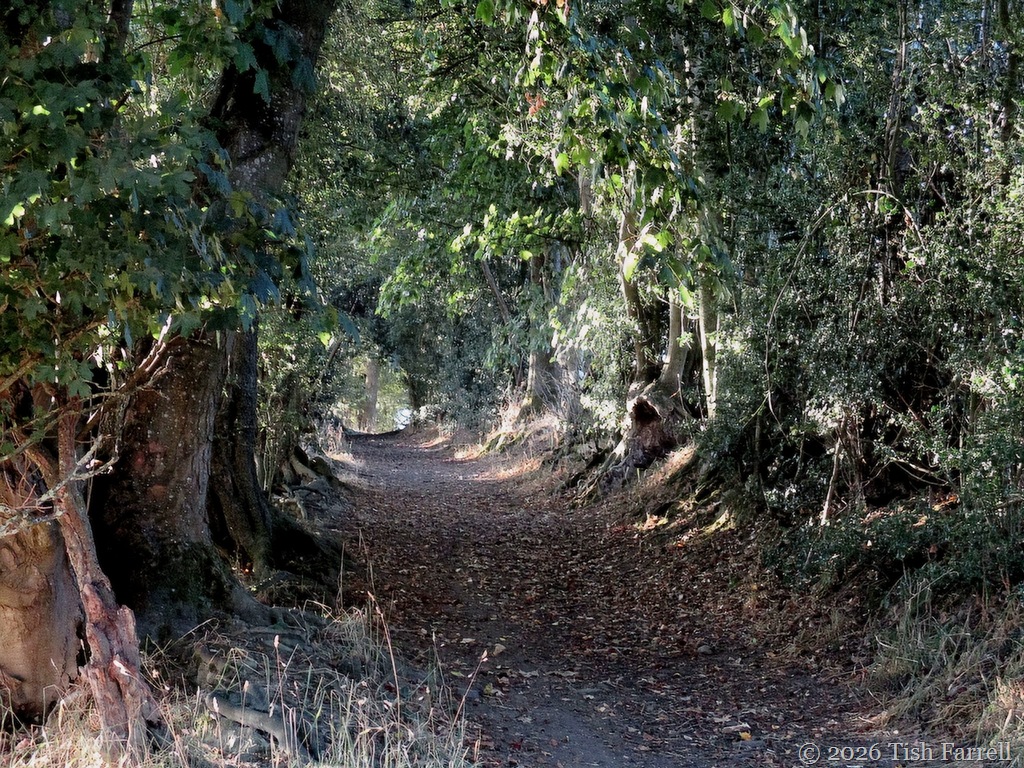
… and found enough to make two jars of bramble jelly. In fact this year the blackberries are being magnificent – sweet and fat and juicy. They haven’t minded the drought. The hedgerows are hanging in fruit. More forays to come, methinks.
*
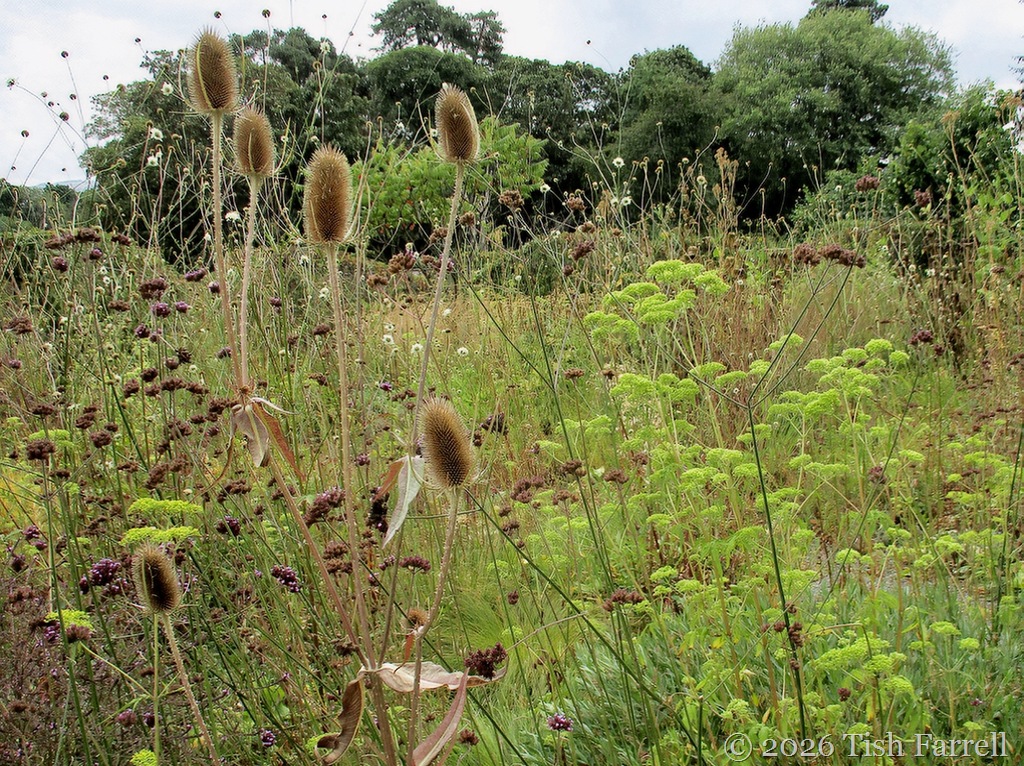
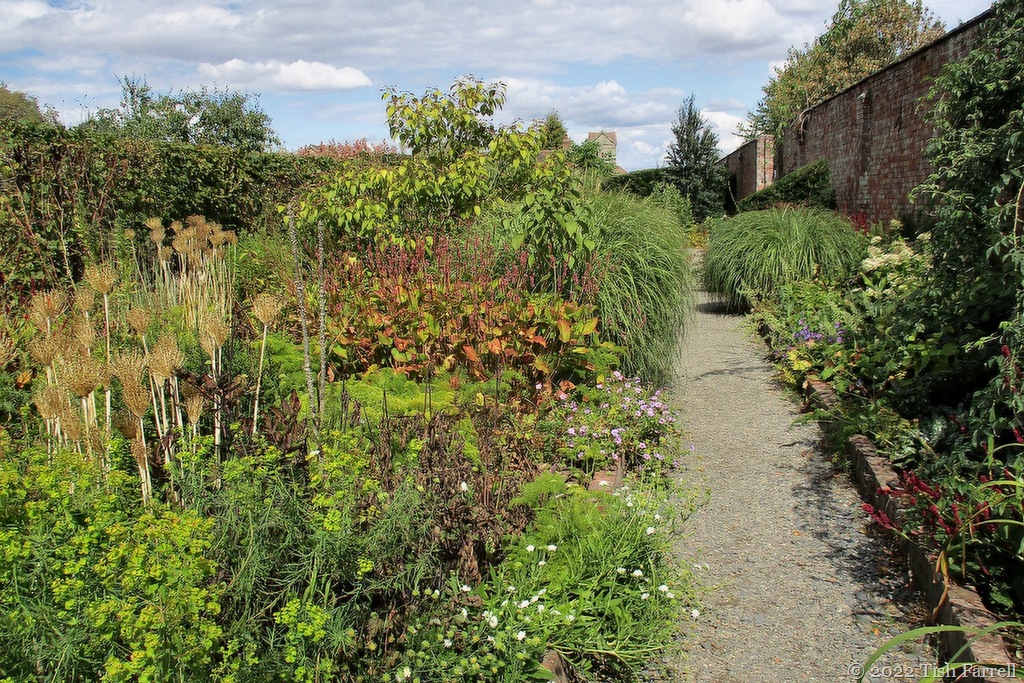
We grew adventurous one day and drove all of 18 miles from Bishop’s Castle to Munslow in Corvedale to have lunch in the walled garden at Wildegoose Nursery. It was a good opportunity to see which of their plants had been surviving the hot and rainless summer. It all looked very lovely…
*
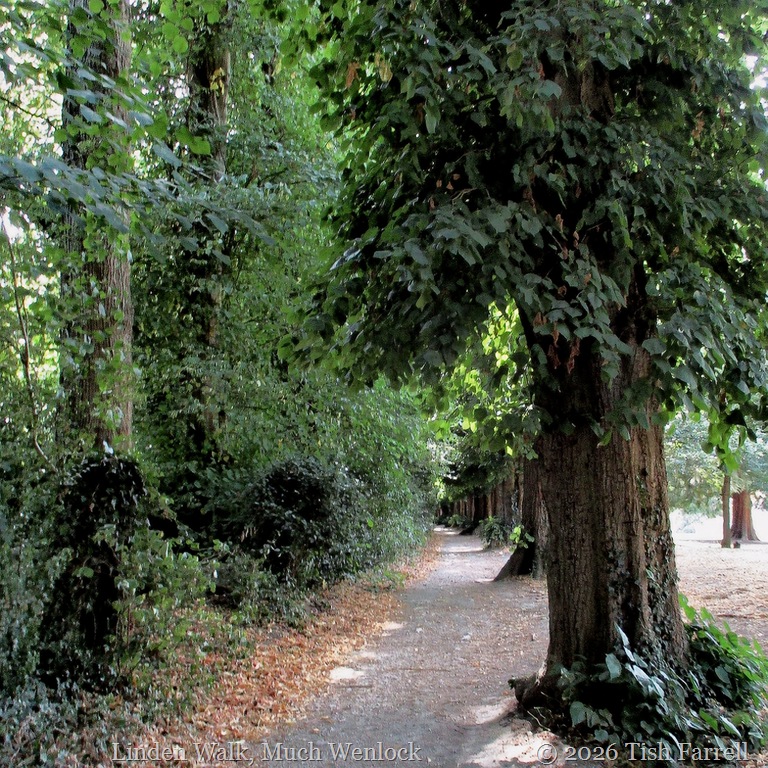
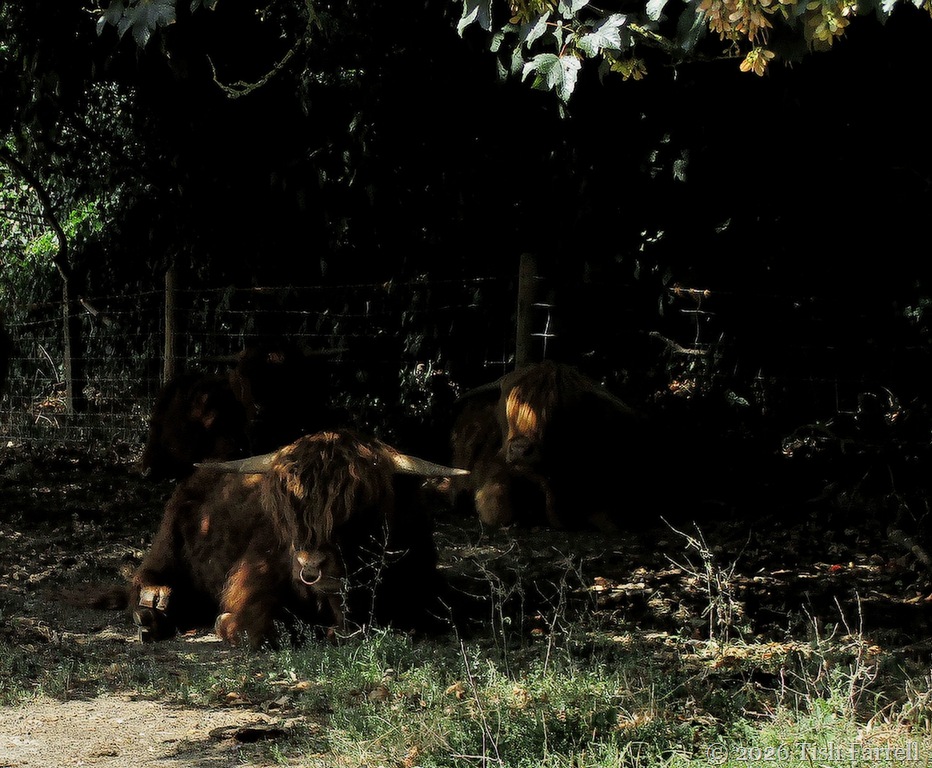
And we also paid our old home town of Much Wenlock a visit. There were mixed feelings revisiting the Linden Walk, and climbing Windmill Hill to look at the once familiar view, and to say hello to the latest generation of Highland cattle in the Cutlins meadow…
*
And then at last IT RAINED…
Copyright Tish Farrell 2026
*
The Changing Seasons: Aug 2026 Please call in on hosts Ju-Lyn at Touring My Backyard and Brian at Bushboys World. As ever, Ju-Lyn has been a whizz in the kitchen and at the keyboard too. And Brian has fabulous bird- and wildlife on show.
