
The second week in September and here in South Shropshire there’s much change in the weather. As I’ve been writing this, we’ve had sunshine, racing white clouds across a blue, blue sky, a high, hot wind, sudden overcastness, a downpour, and now cloudy sunshine with less wind. Yes, it feels more like autumn now.
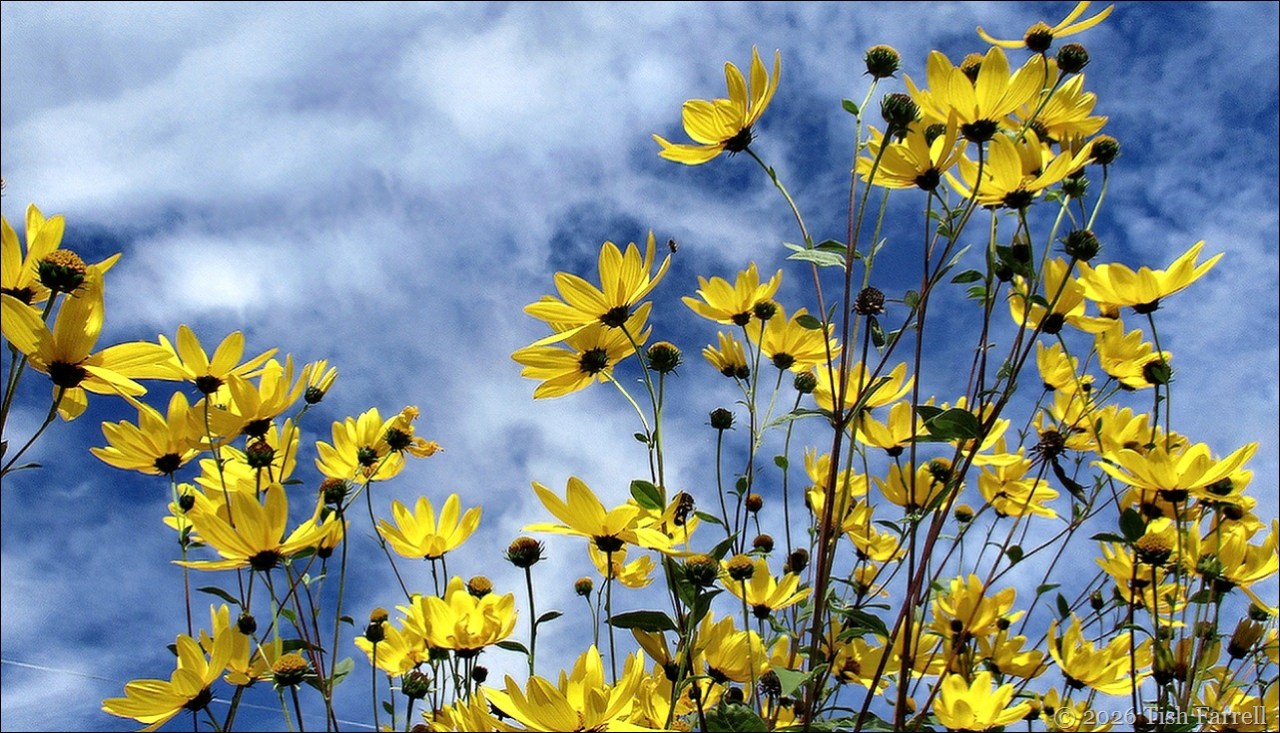
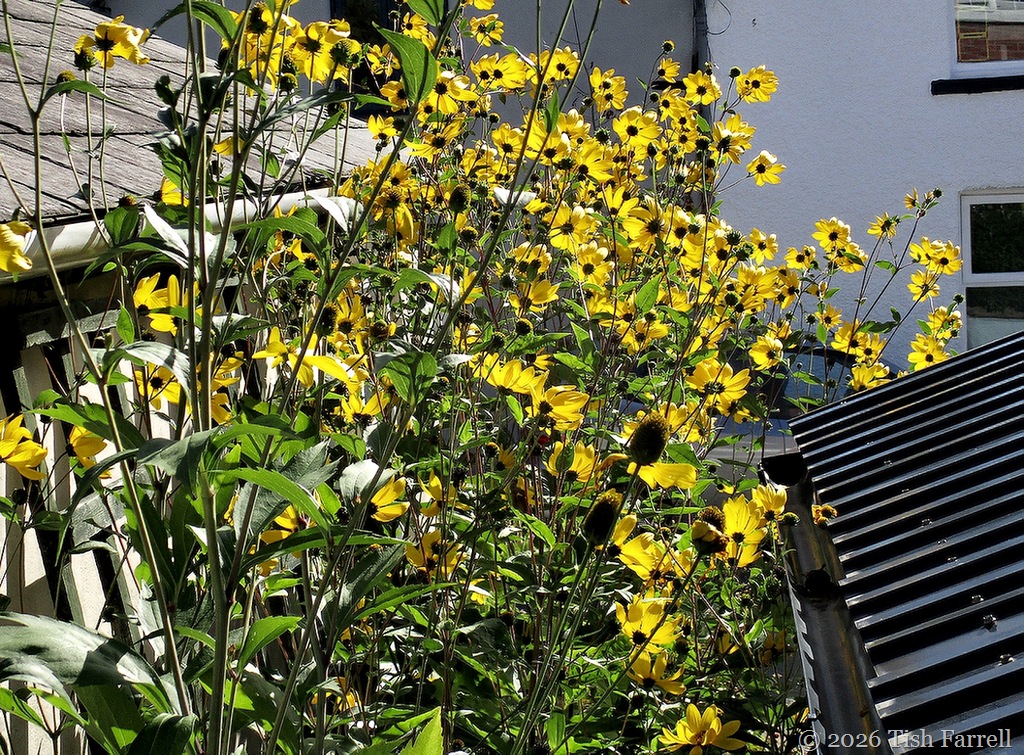
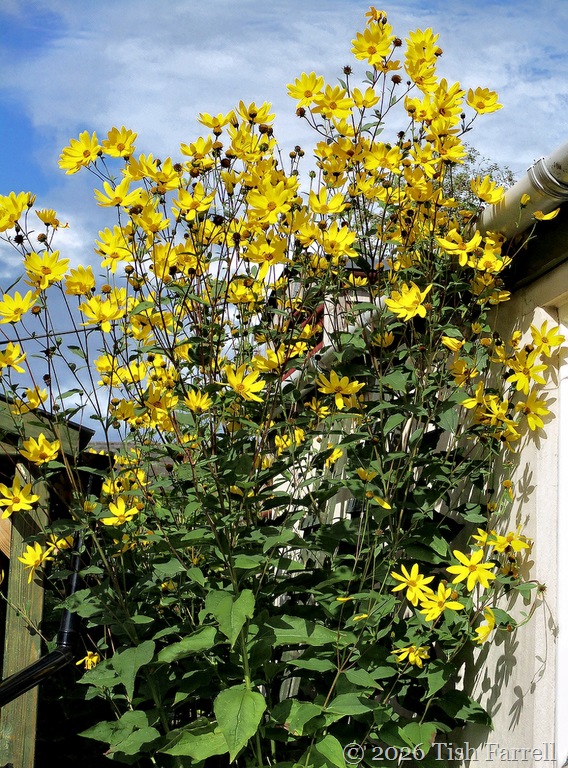
And come what may the Helianthus keeps up the show. This particular clump is growing on a rather dismal block wall between our log store and next door’s garage. I’ve mentioned this space before, because I’m still not sure what is best for it. On the other hand it’s hard to beat this long standing, upstanding display; it’s been happening for weeks now, and everyone walking up the road can enjoy it. Drought, what drought, they say.
*
Meanwhile, out back in the upstairs garden, the Sedum (Hylotelephium probably spectabile) …
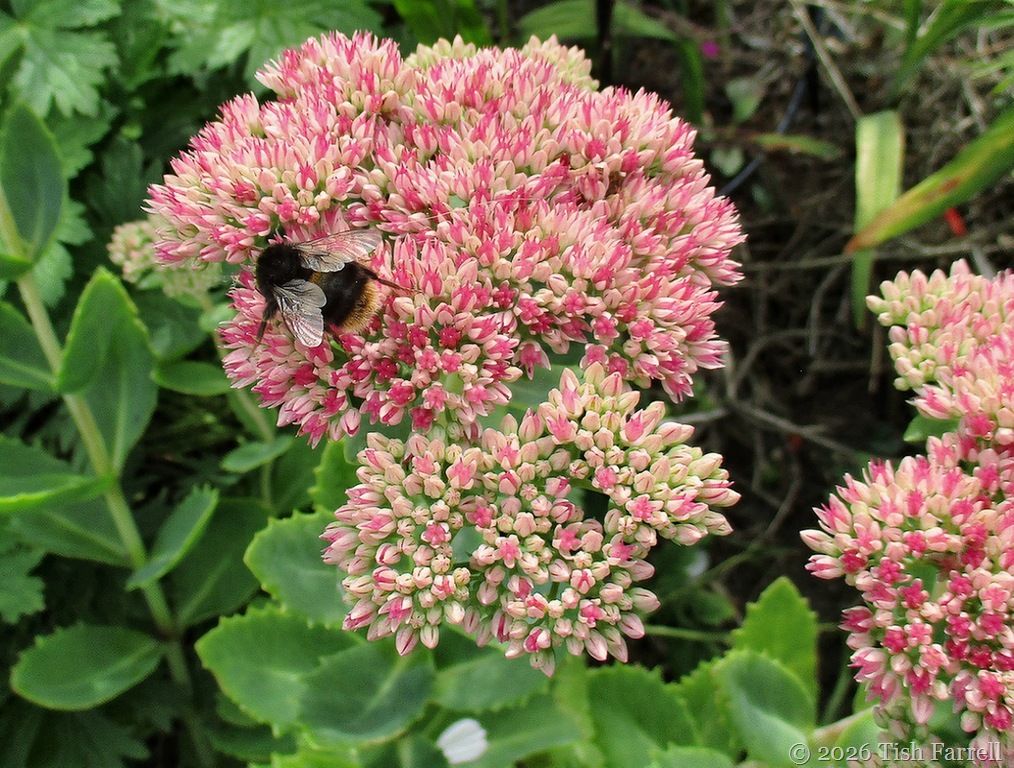
…has abandoned the heat-stricken, hysterical looks it displayed back in July-August and settled into the usual pleasing, and softly scented landing pads for late-season insect feeding. It is a key plant in this regard, the nectar giving bees a good energy boost before hibernation. And then the overwintering dead heads can also provide shelter for insects and seeds for birds. But before all that, the gardener has the pleasure of some late season colour. (Note to self: more Sedums needed).
*
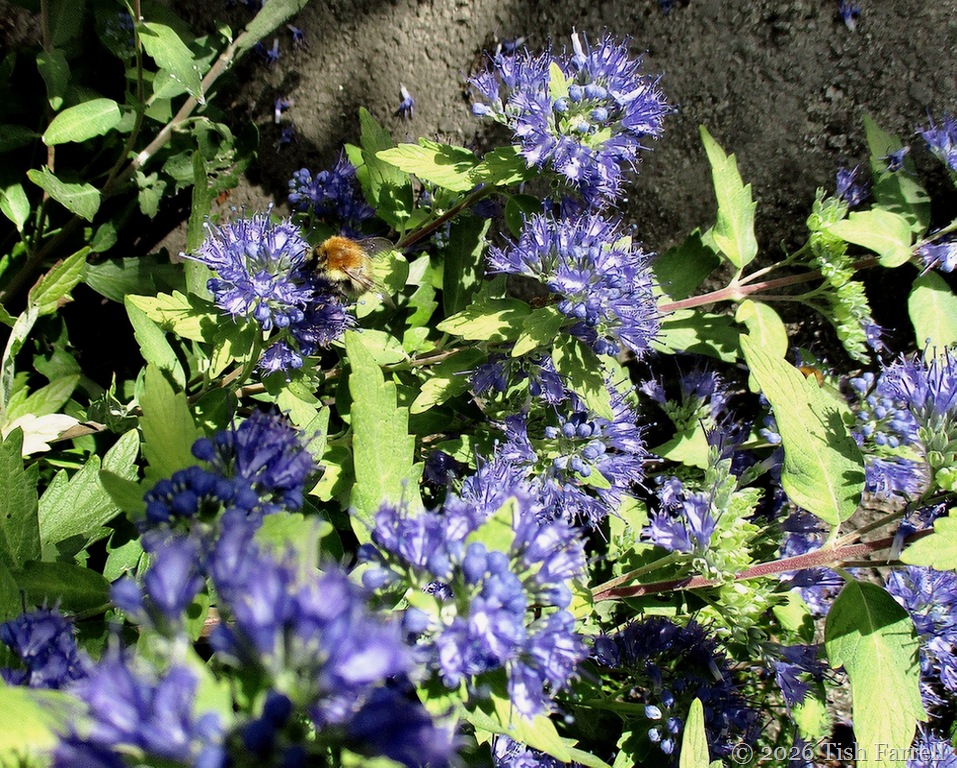
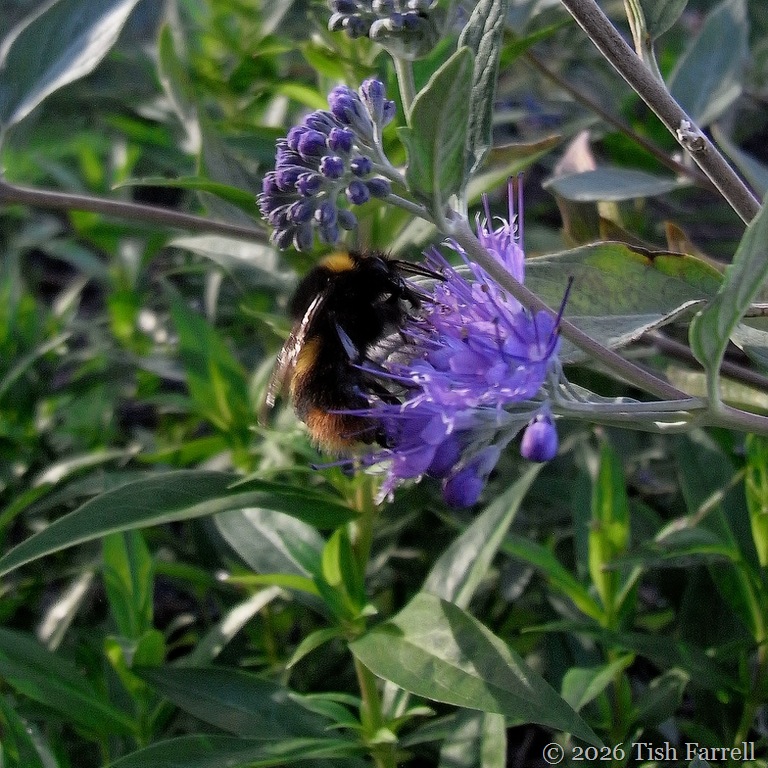
Another late summer star and important food source for pollinators is Caryopteris (Gold Crest above, Heavenly Blue below). It’s just coming into full flower. The blue spires are glorious, but Heavenly Blue, in particular, is scrubby greyish-leaved shrub for much of the year. Through the summer I have to keep reminding myself how lovely it looks in September. The Gold Crest, which is growing in front of the greenhouse (and has gold-green foliage) seems the more attractive option when it comes to keeping its shape. I have followed early spring pruning instructions for the Heavenly Blue, but it still grows into a riot of twiggy branches, and in most unexpected directions. This year it has decided to do most of its flowering in a westerly direction, where we mostly can’t see it unless we walk behind it. Perhaps I need to take cuttings and start again from scratch.
*
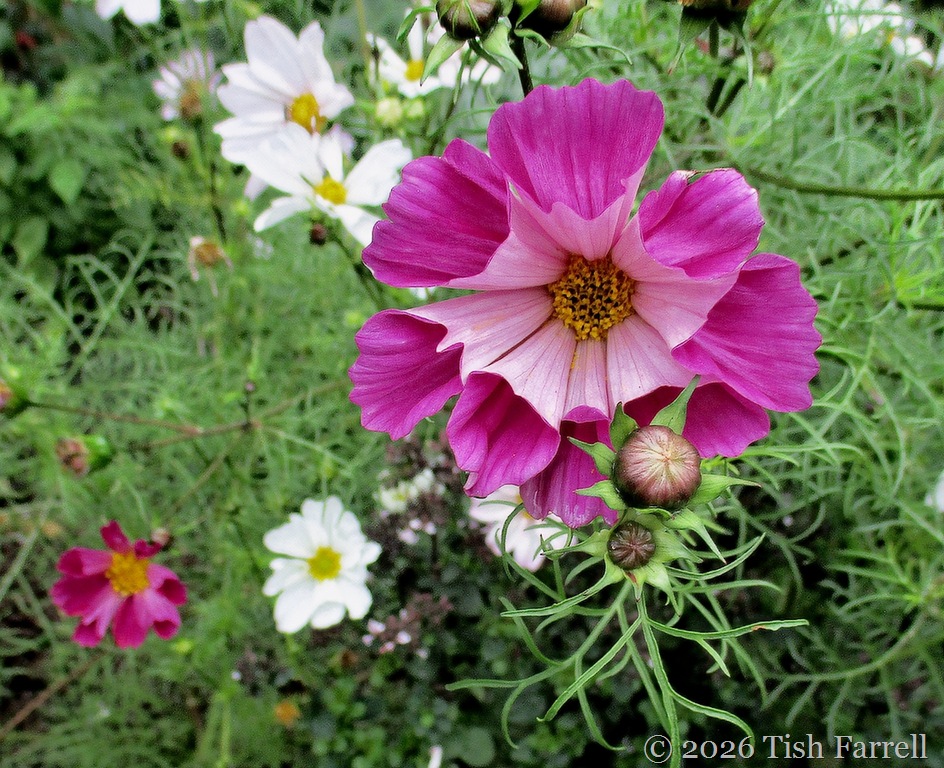
Now with the cooler, wetter weather, the Cosmos has also decided to flower with intent. I grew a couple of dozen plants from seed, mostly packet ends. All through the heatwave, a few of them flowered, while others simply grew and grew, creating tall clumps of flowerless greenery so dense I had to pull off many side stems because they were crowding out other plants. I almost pulled them up altogether. Now they are a mass of buds and flowering like mad, though I’m glad I thinned them out.
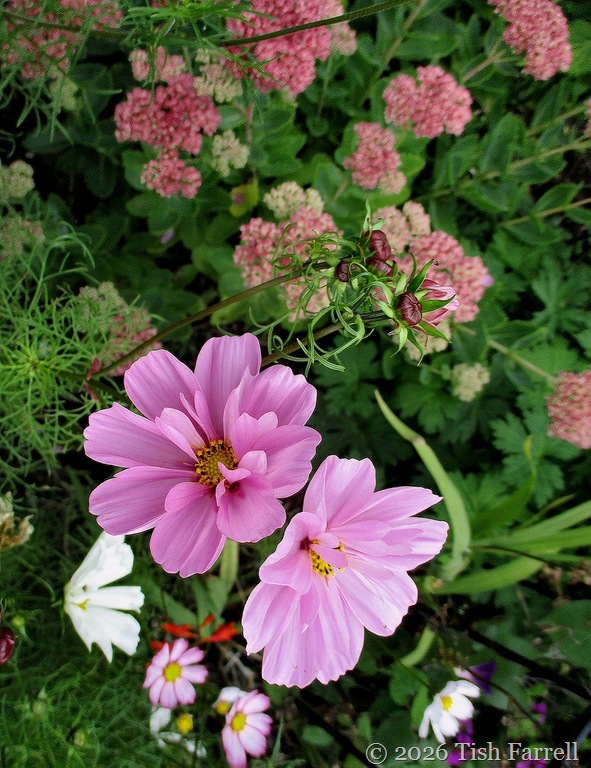
I’m not really a pink person, but I’m quite pleased with the ‘pink corner’ in the top-of-the-back-wall border. This includes the above mentioned Sedum, assorted Cosmos, and the Monarda Citriodera, which I also grew from seed this spring. I featured it back in the heatwave, amazed that seedling plants could stand up to the roasting.
And here they are, still going strong, almost as if they are locked into blooming-mode, like little growing pagodas, one exquisite floral structure giving rise to another.
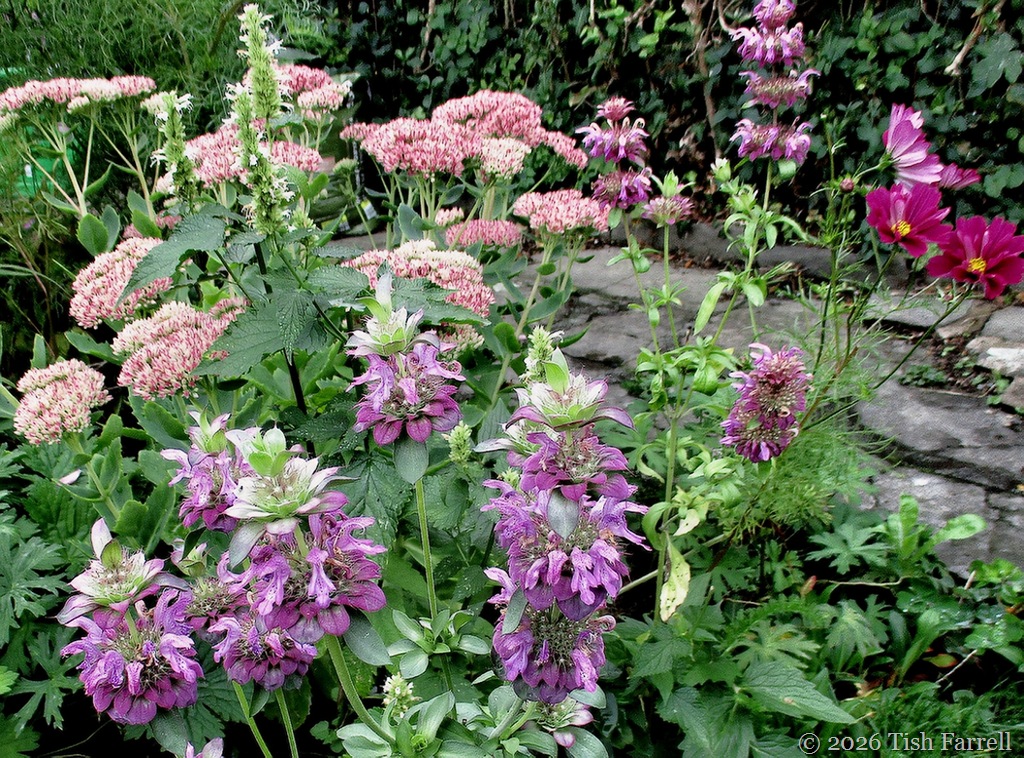
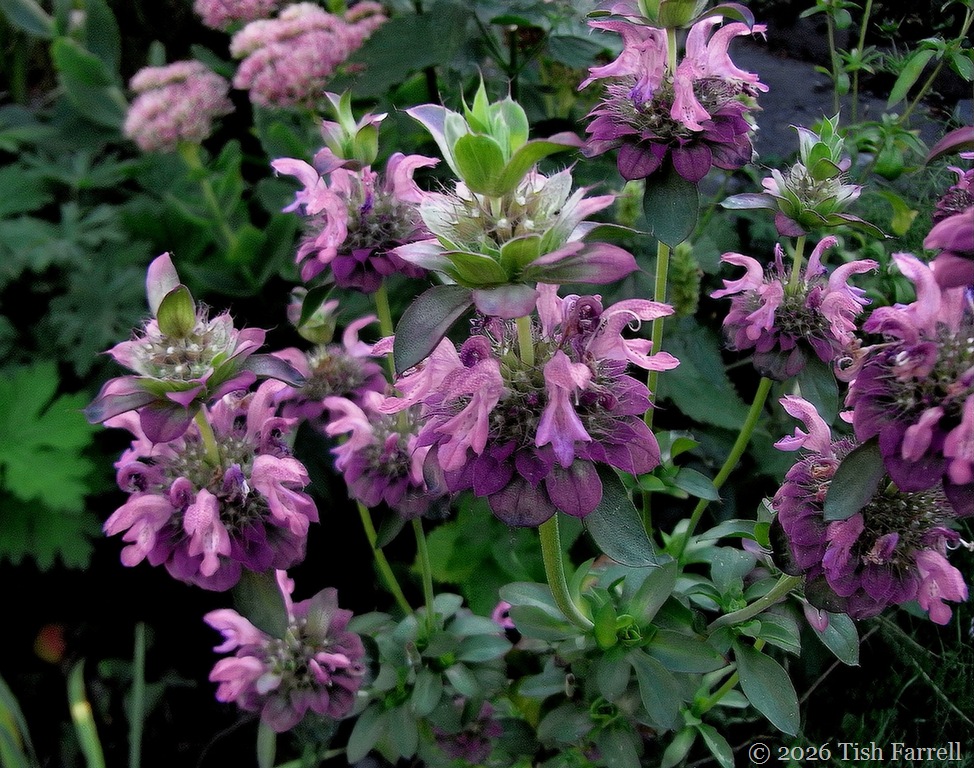
I gather that this wild form of Monarda/Bergamot/Bee Balm is a short-lived perennial, and mostly grown as a biennial or annual. I’m anyway wondering if, after weeks and weeks of flowering, they will prove to have exhausted themselves. We shall see. Anyway, I still have some seed, maybe try sowing some now.
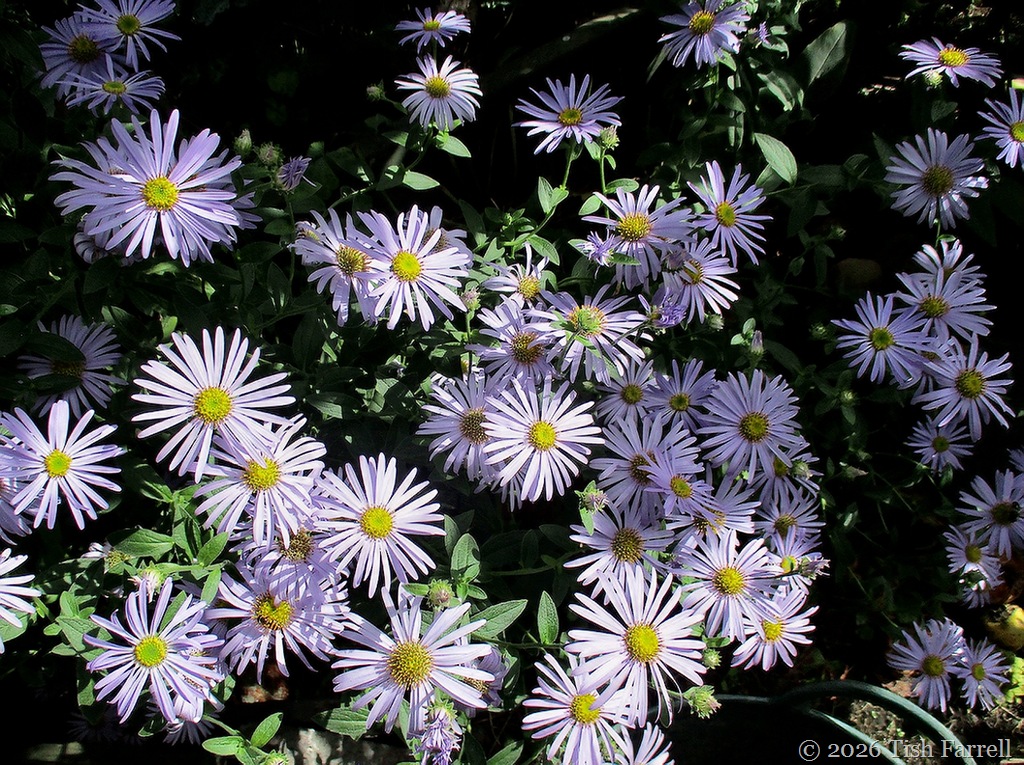
And talking of long bloomers, I have to give another shout-out to Aster x frikartii Monch. It looks wonderful now, and it’s looked wonderful all summer, growing in dappled sun between the butter beans and the runners. This is a totally undemanding plant. It leans but doesn’t particularly need supporting. I’ve seen no sign of mildewed leaves. And what a host of happy faces as seen this morning.
*
Whether it’s your spring or autumn, always lots to do. Happy gardening!
Copyright 2026 Tish Farrell
*
Six On Saturday This week Jim has some very beautiful plants on show. Go see!
