Lens-Artists: In The Early Morning Garden

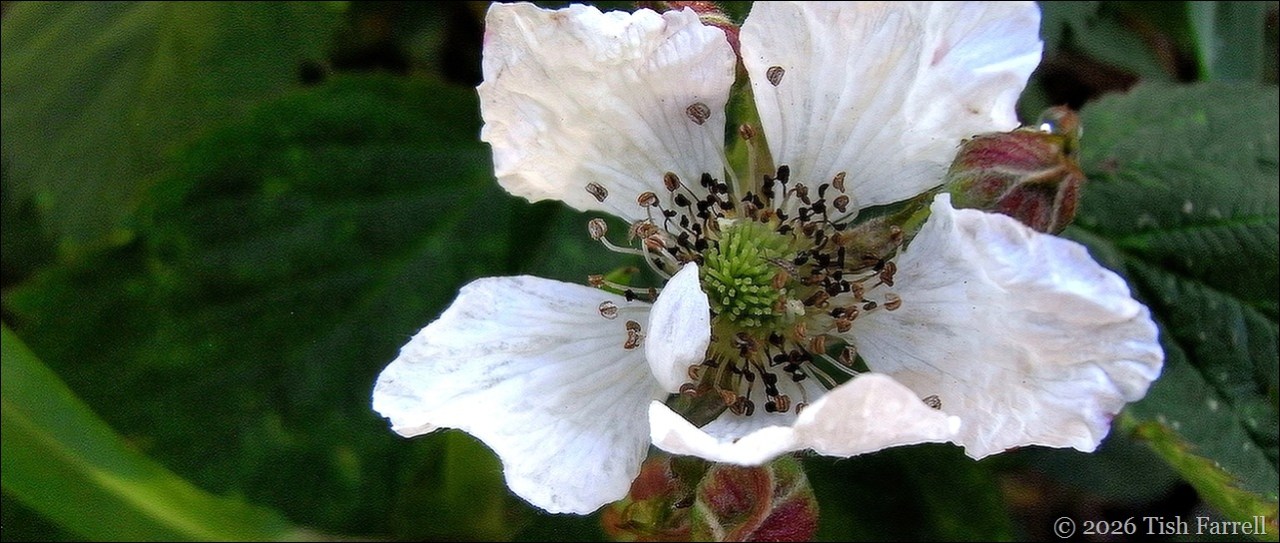
RIMG0072 blackberry flower

*

In this last week of May, the weather has switched from weeks of blustery cold to days of enervating heatwave. How did this happen?
Things began to warm up last Friday. By sunrise on Sunday, there was no doubt about it: summer had well and truly come to Bishop’s Castle. Towards 7 a.m., the sun just topping the town rooftops, I went out in the garden. There had been a heavy dew and all was glistening. I kicked off my shoes and walked on the wet grass. It was very cold – champagne for the soles!
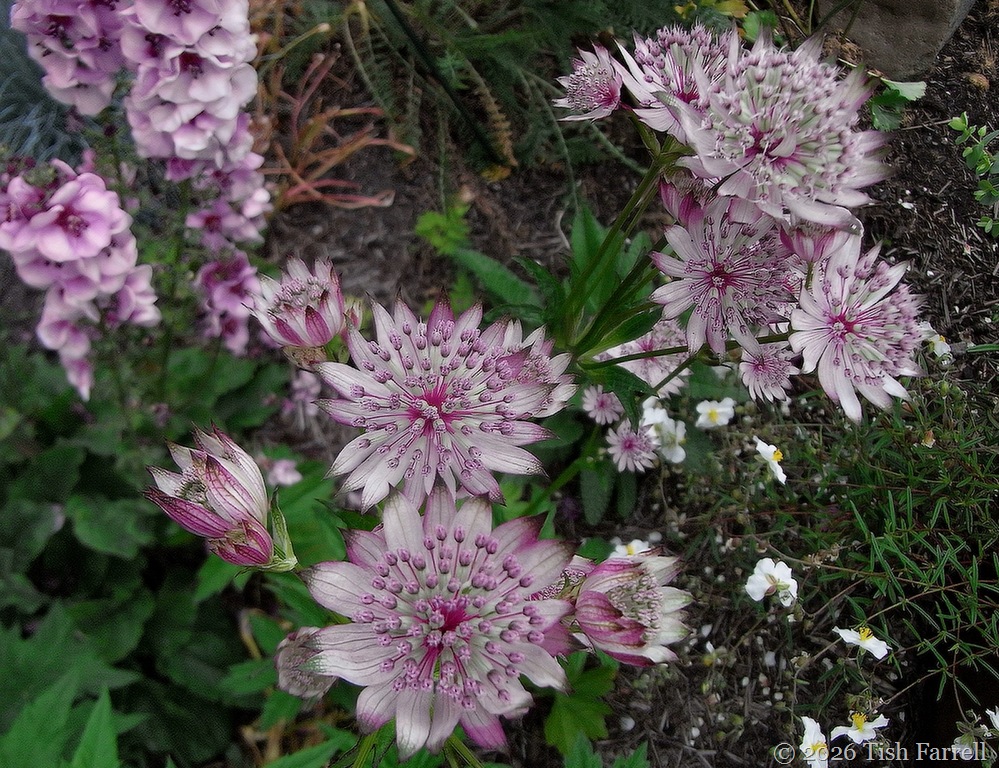
It’s odd, though, how you can go into a familiar place at an unfamiliar hour and feel an intruder. The garden was not expecting me. It was immersed in its own business. There was a sense of immanence. A discernible  energy. Still cool, but also voluptuous as if you might wallow in it. Also in the early light, the flowers had other-worldly looks; their intimate, intricate structures very strange at close quarters. Again, a sense of intrusion.

But then that made it just the moment to ponder on Egidio’s this-week’s theme at Lens-Artists. He’s put us on the spot, and literally too, proposing that we restrict ourselves  to a well-defined small space and photograph what strikes us there. It seems a perfect exercise for exploring the familiar, the taken-for-granted, with fresh eyes.

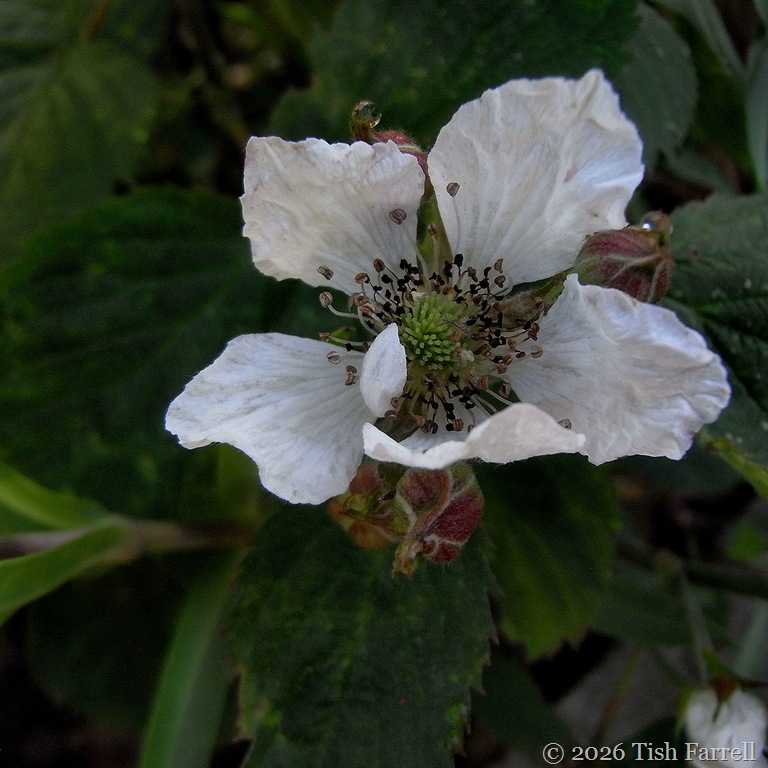
And so the header photo – a result of peering more closely. Quite eye-opening actually – to notice the astonishing number of miniscule components needed to make a blackberry. Here it is again:

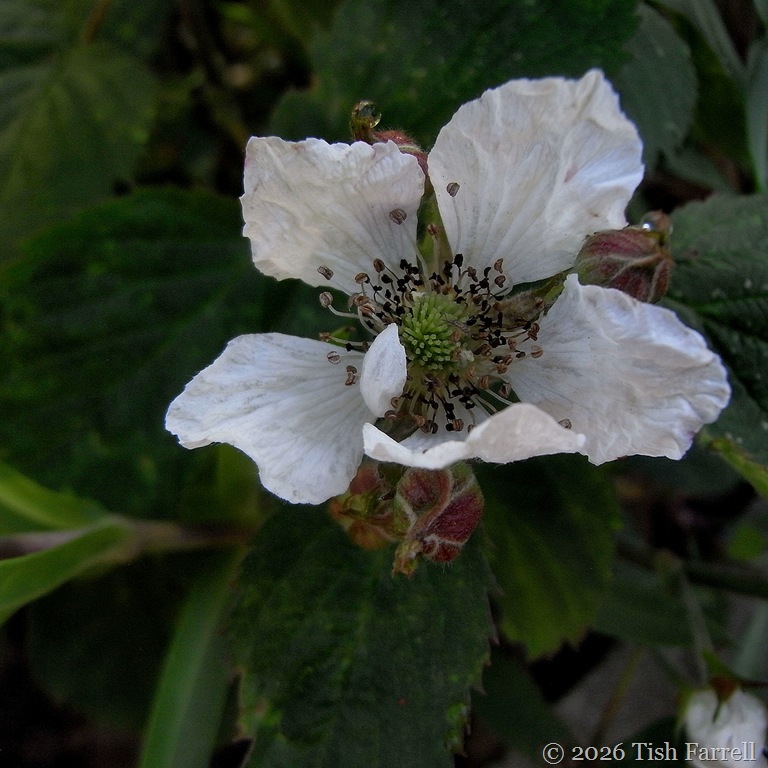
RIMG0072 blackberry flower

*

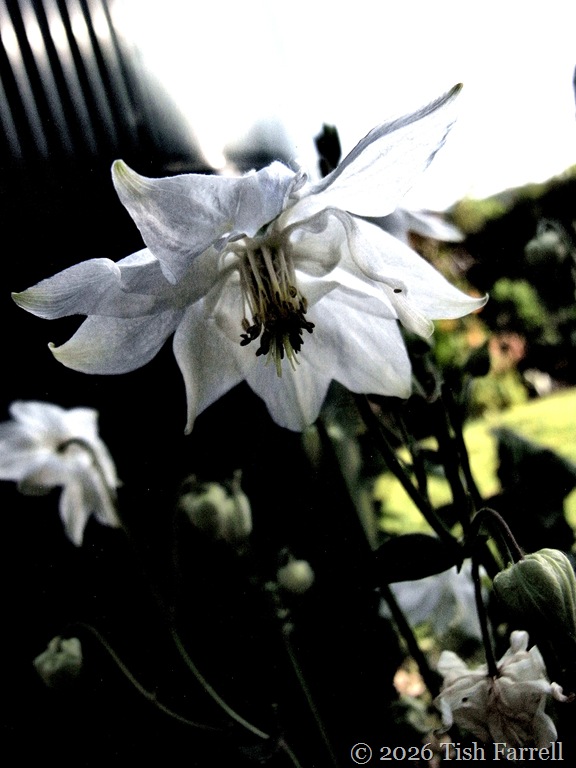
These next photos conjured thoughts of  alien spacecraft…

RIMG0073 starship
RIMG0092 aquilegia

*

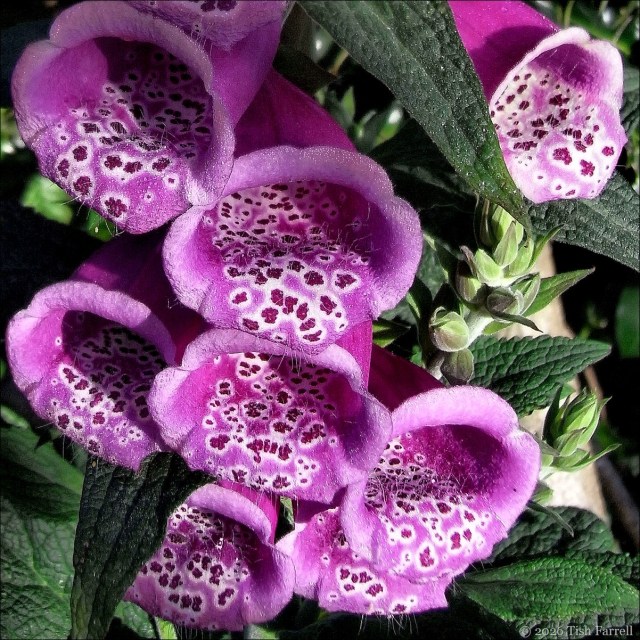
And then there’s the extraordinary pollinator guidance system of foxgloves – not only the captivating flight path of spots and dots, but also a landing pad covered in tiny filaments – and for what? Massage services for bees as well as the pollen fix?

*

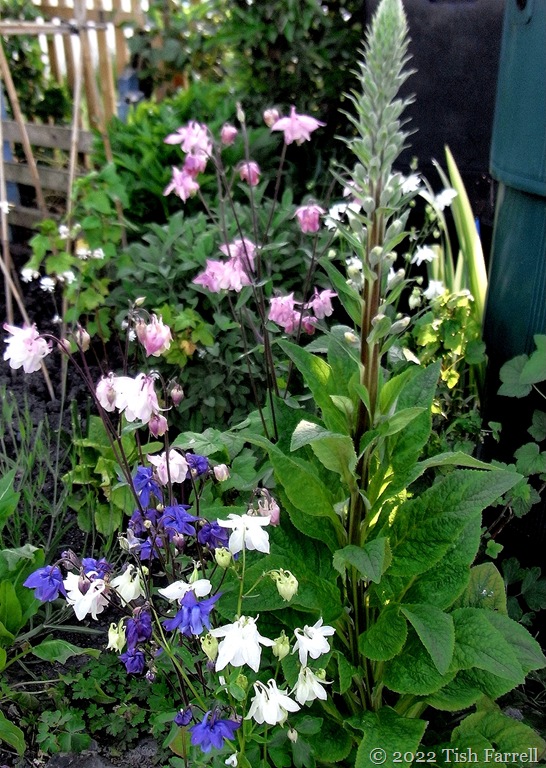
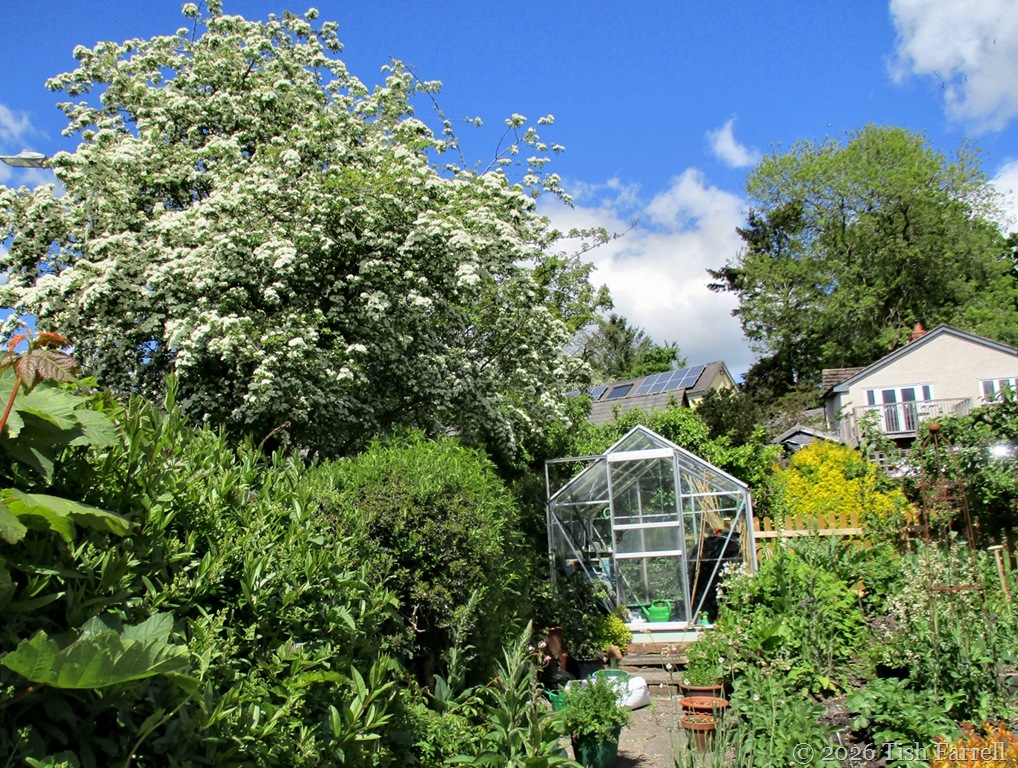
And finally some simple things that pleased this gardener’s eye…noticing a corner by the shed that is entirely the garden’s own work – assorted volunteer columbines and another foxglove.

RIMG0047 self-grown garden*

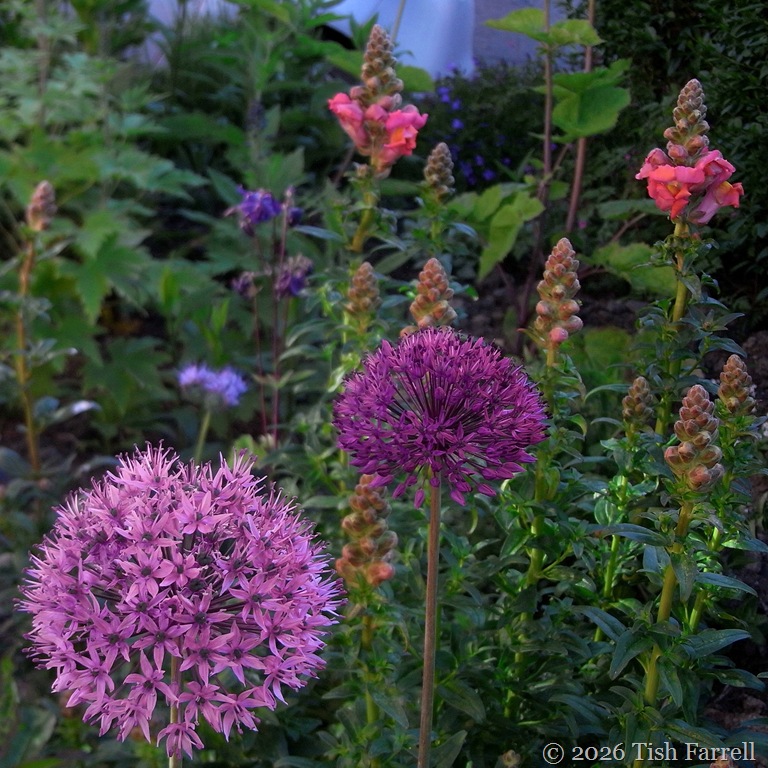
…and then the  lantern-like looks of alliums and snapdragons, caught with surprising vividness in early morning shadow…

RIMG0058 alliums and snapdragpns

*

Lens-Artists: Stuck in place  This week Egidio asks us to focus on a particular space, no more than 10-15 paces in any direction, and consider its parts with fresh eyes. How will you capture them?

*

Copyright 2026 Tish Farrell

Six On Saturday: Frigid May

IMG_0629

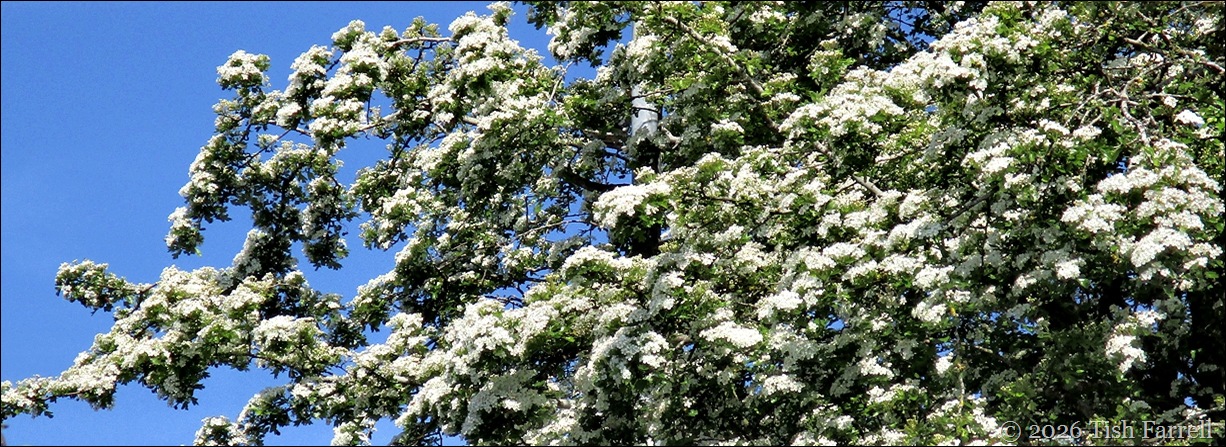
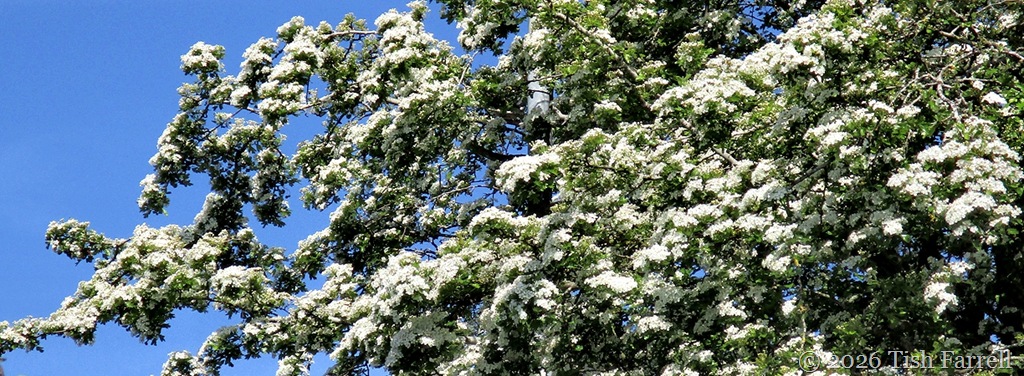
We might have lost the cherry plum over the hedge, but we still have the hawthorn tree (1).  Just now it’s a tumble of creamy curds – may blossom in May. It’s a shame there are so few insects about to enjoy it. Even the stalwart bumble bees are scarce, which is worrying. I’m hoping they’ve tucked themselves up somewhere cosy until the Arctic winds have blown themselves out. So far, then, it’s been a very chilly May in Shropshire, and dry too, until these last few days. My water butts were empty, so even as I whinge at the cold wind, I’m pleased that rainwater supplies have resumed.

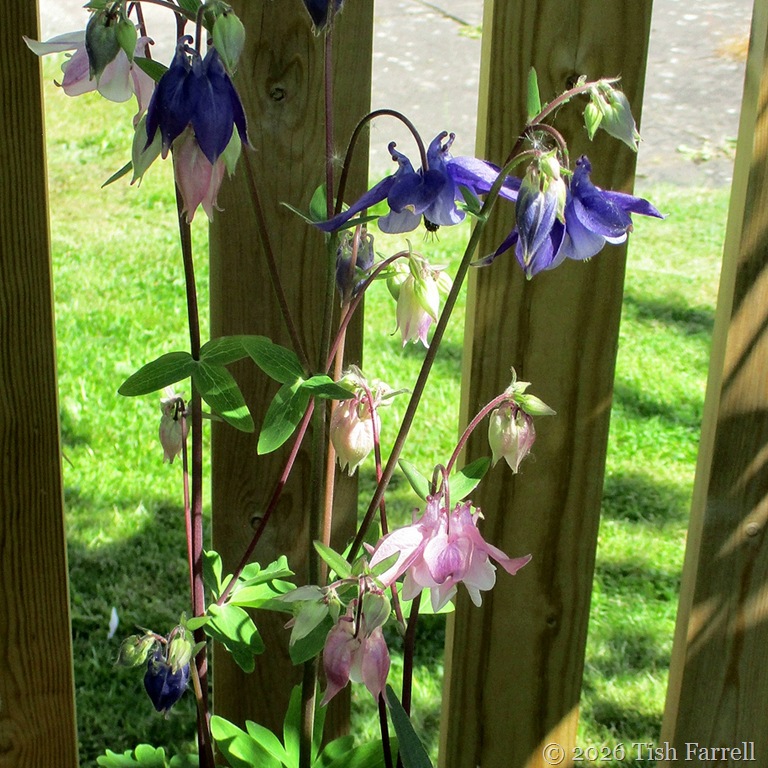
And spring is still happening in the garden despite the low temperatures. The apple blossom has been and gone, though signs of pollination looking sparse to absent on some of the trees. Now, then, is the time of columbines (2). As ever, they have grown themselves everywhere, including in the horrible hedge where one plant, trying to outdo the holly and privet, has used them for support and grown over four feet tall. It greatly improves the look of the hedge. Size-wise, they are more restrained at the bottom of the garden, but this year have arrived in many colours  from white to darkest claret, and shades in between.

columbine

*

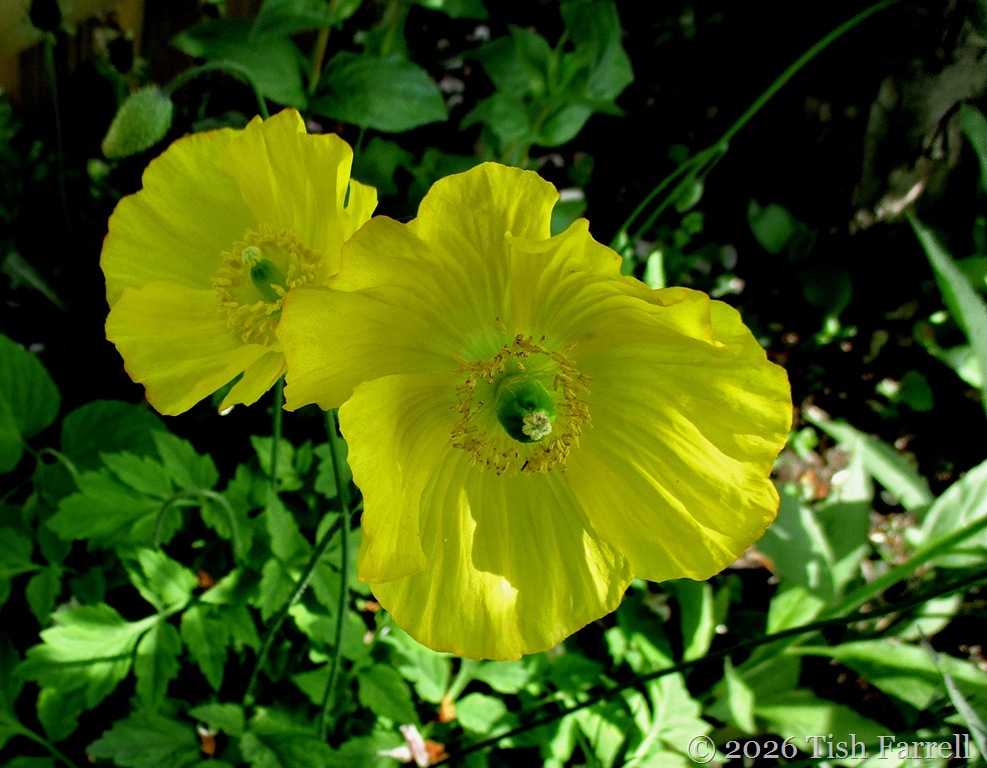
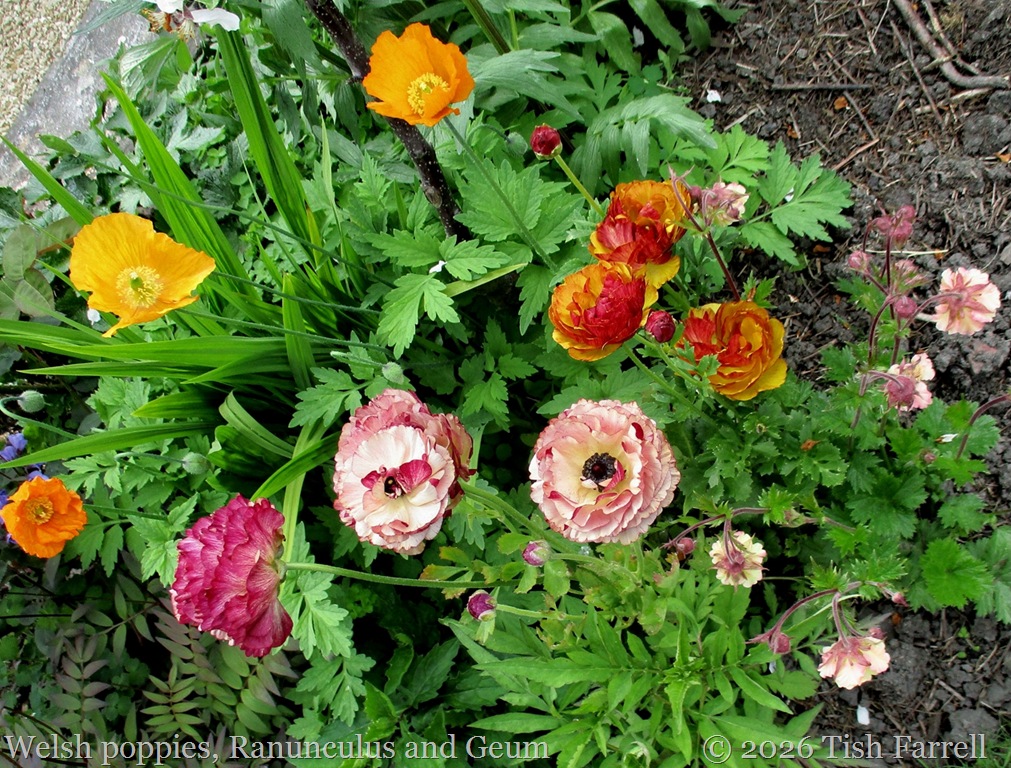
I’m also pleased to see some lemon coloured Welsh poppies (3). Last autumn I pocketed seed from a neighbour, and scattered it under the old apple trees. We already had the self-sowing orange ones in the bed above the back terrace. For some reason I’m not too keen on the brassy version. This year, though, they’ve popped up among the Ranunculus.  I’m thinking they look rather good together.

Welsh poppies

Ranunculus poppies and geum

*

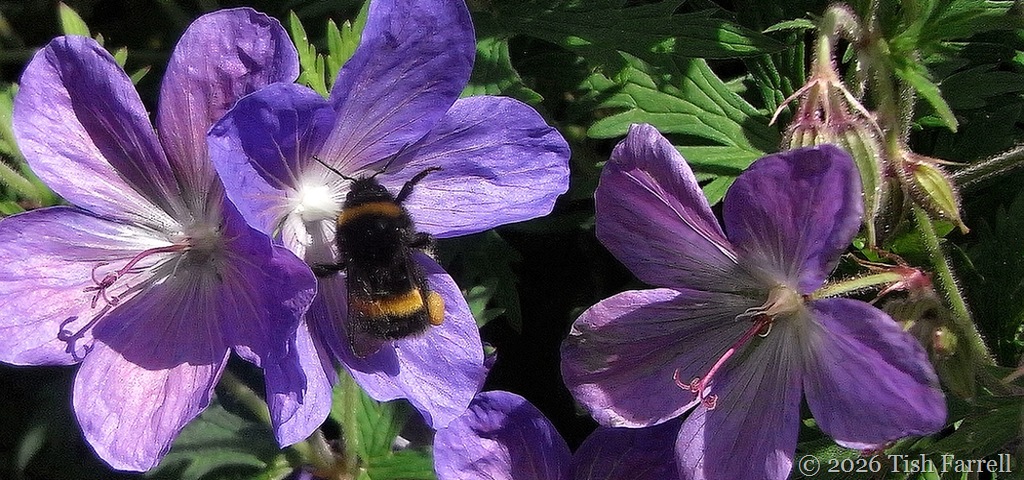
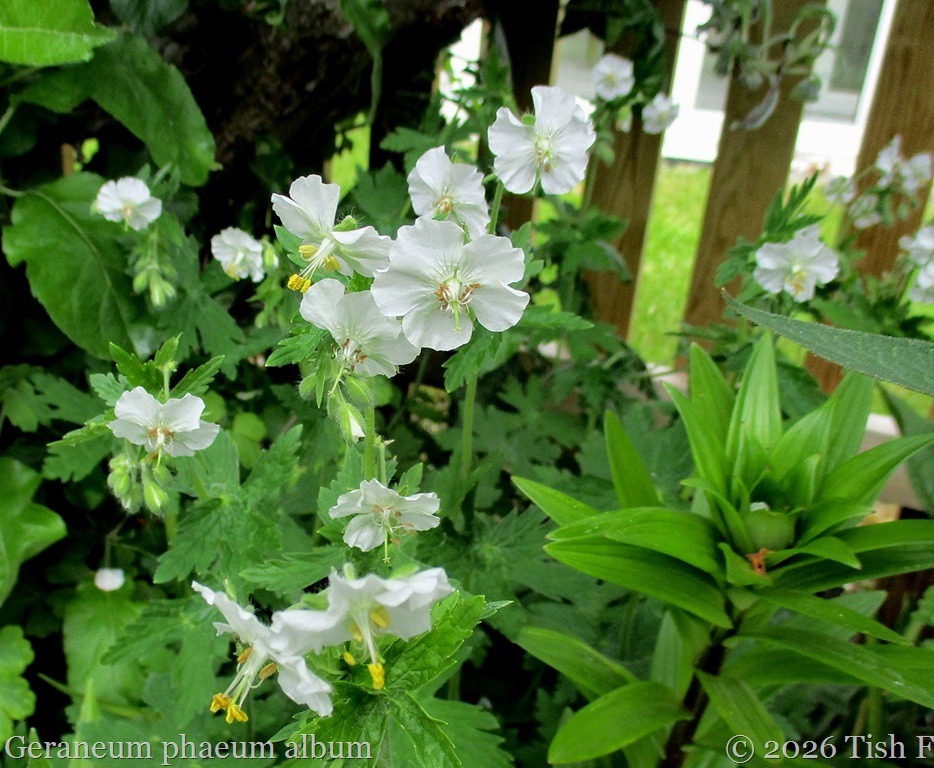
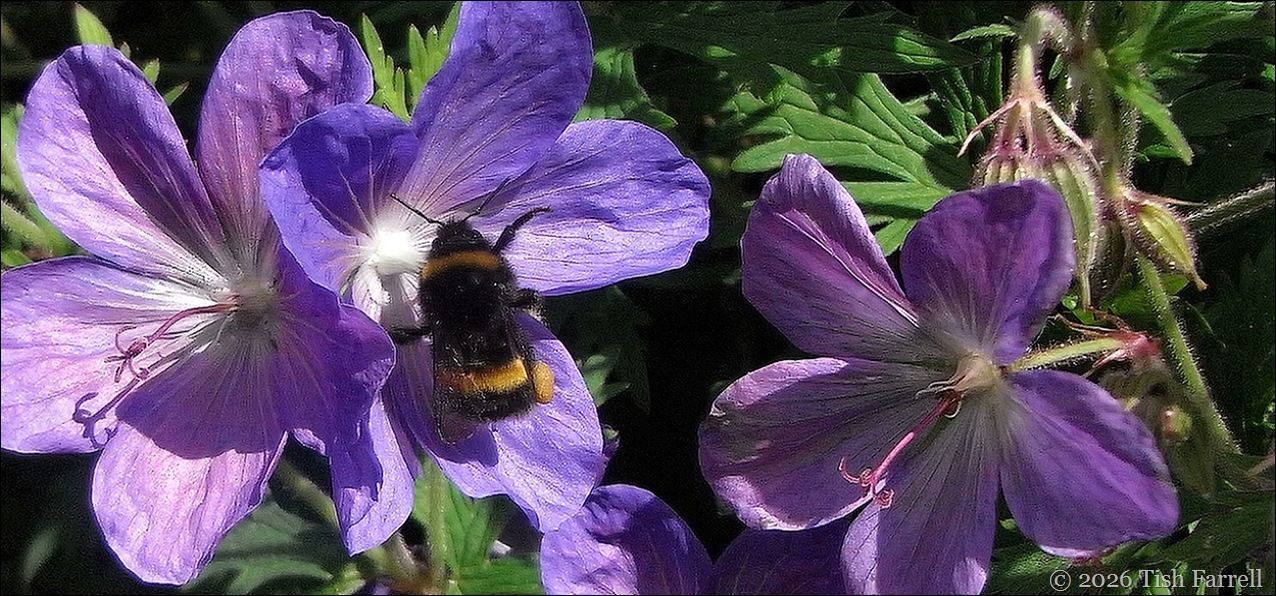
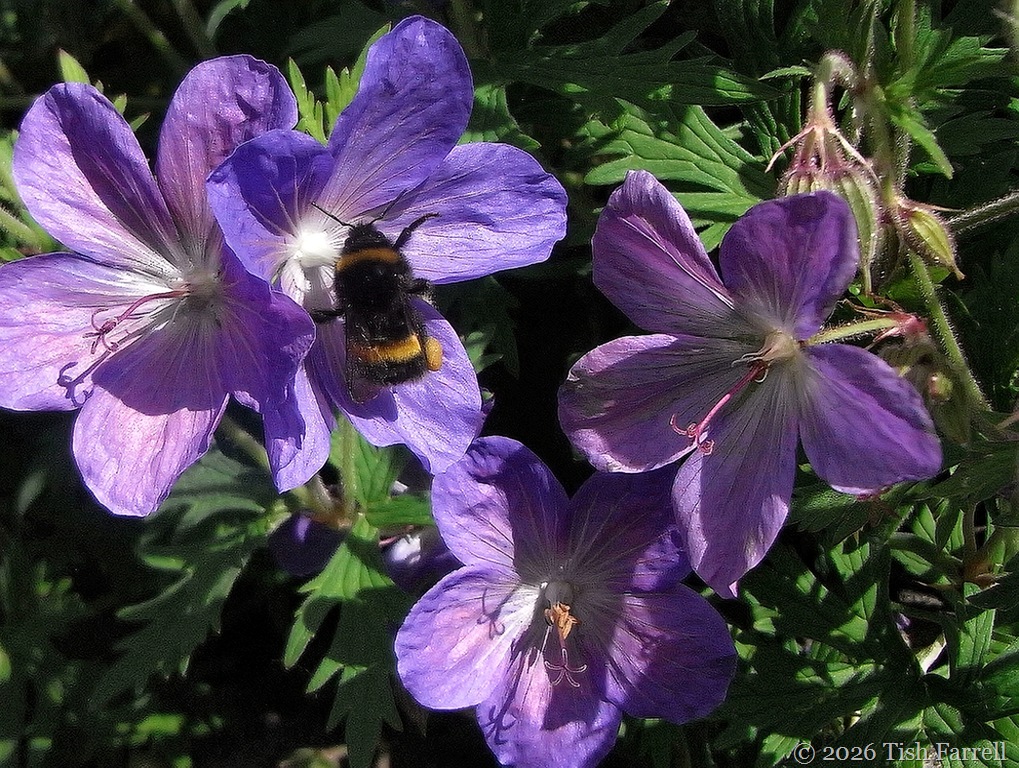
The blue flowered hardy geraniums are beginning to open, but the cranesbill Geranium phaeum Album (4) is well ahead. It does sprawl about, but its flowers are so delicate. It is supposed to be shade-loving, but I also have one that seems quite happy in full sun.

Album

*

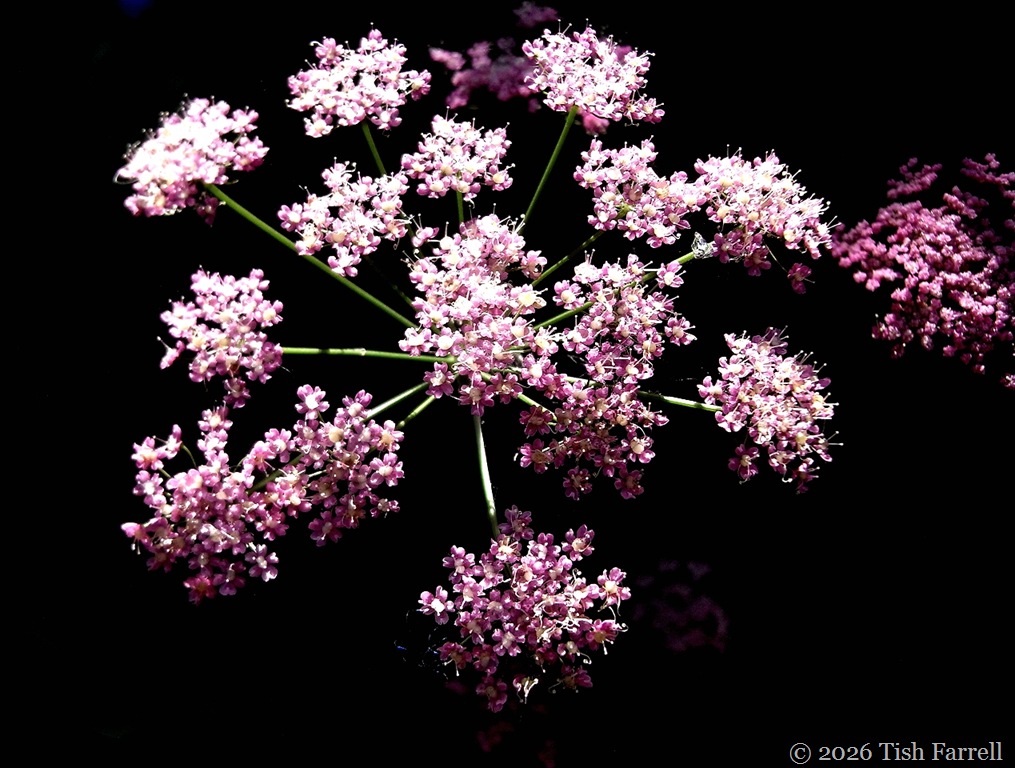
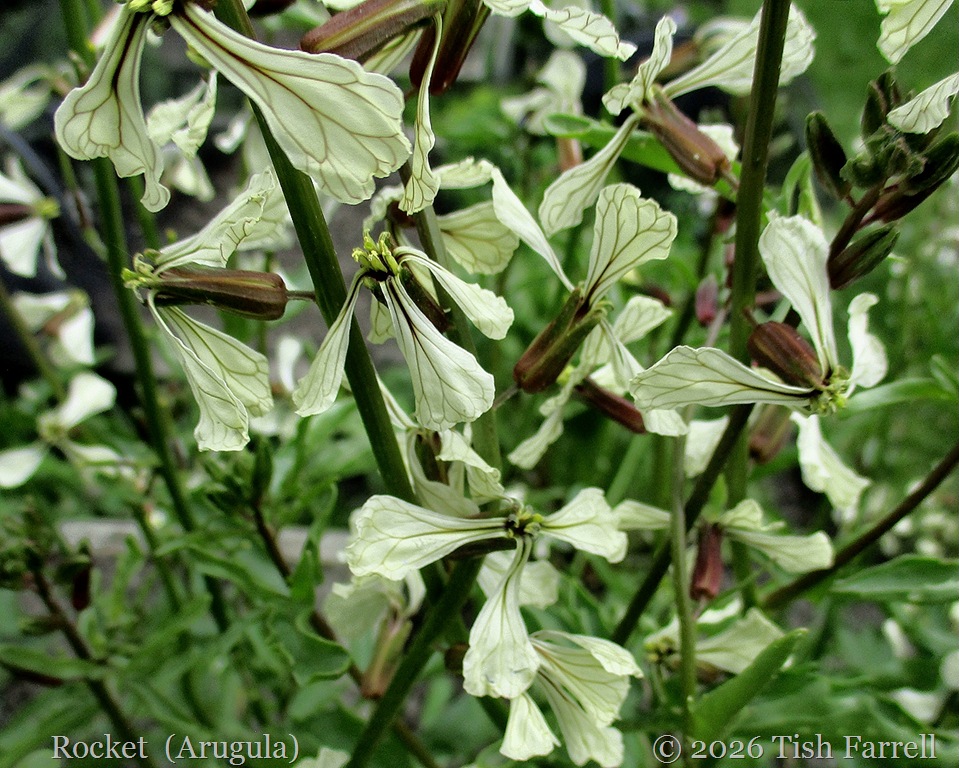
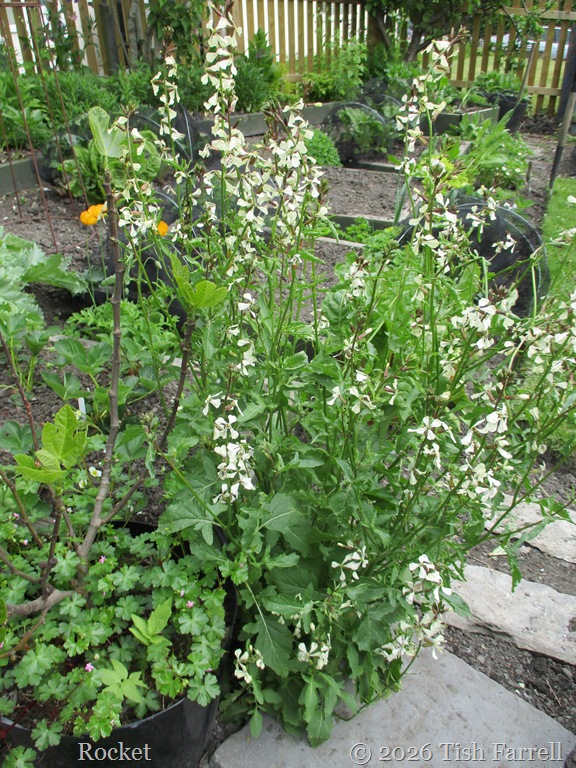
And then there’s the rocket (arugula) (5). I’d never thought of it as a flowering plant till this year. All through the winter we were cropping a short row of it. Then, come March, it began to go to seed and I pulled most of it up. And then for some reason I left a clump. Now it’s a tall plant covered in a mass of flowers that seem to go on and on. They have curious, wonky propeller looks about them. I also thought the insects might like them if there were any about. Meanwhile, the bits of greenery down the stems are still perfectly edible, surprisingly mild in flavour. And it’s providing a bit of floral interest in front of my presently empty raised beds.

rocket flowers

IMG_0527

*

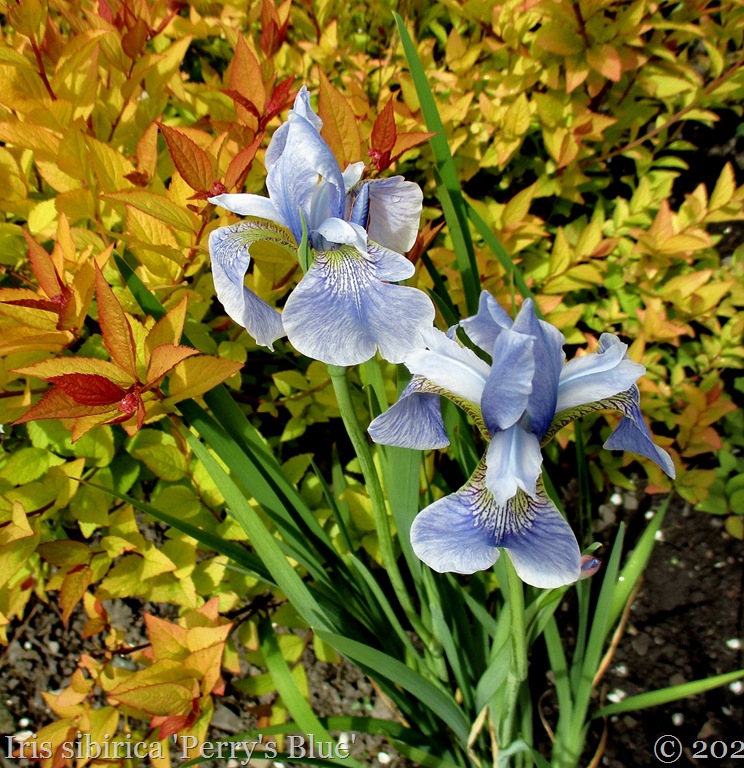
And to finish, here’s one of my newest plants bought in March. Iris Sibirica ‘Perry’s Blue’ (6) has just begun to flower. I’m rather taken with the startling contrast of the pale lavender with the russet-gold tones ofSpiraea Japonica Firelight. At a distance, as the wind blows, the flowers look like big butterflies.

Iris Sibirica Perry's Blue

*

Copyright 2026 Tish Farrell

*

Six on Saturday 16 May 2026: Please call in on our host Jim. There’s always something new to see in his garden. This week, among other lovely things, he has a gorgeous fern and some self-replenishing corydalis.

hawthorn header

Of Bossy Birds And Icy Blasts

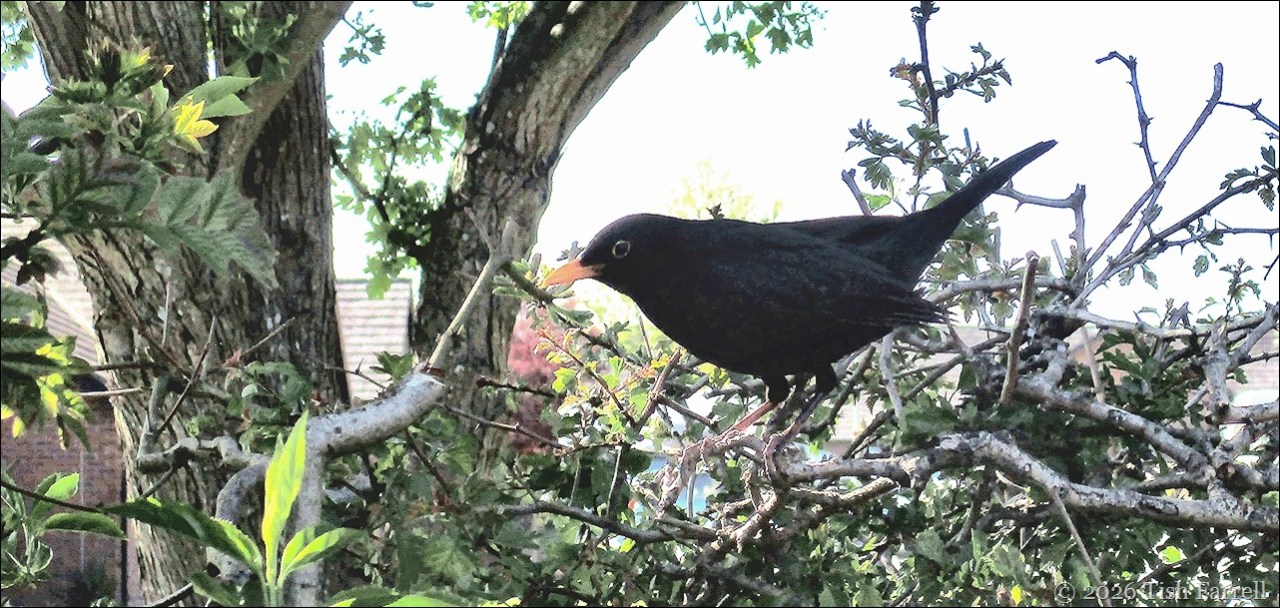
blackbird

I can well understand why small beings like blackbirds need to keep stoking up with fresh food supplies. Not only are there chicks to feed, but our spring days persist on the frosted side of chilly.  He who is currently casting his own coping stones for the terrace wall tells me that the high pressure over the Atlantic and  low pressure to the north and east is causing Arctic air to be sucked down upon us, thus creating the UK’s coldest May in five years.

And the upshot: the winds that the weather people have been telling us are ‘fresh’ have been, and continue to be bone piercingly frigid. Nor does it help that our street is aligned due north, thus greatly facilitating the funnelling of icy blasts to our doorstep.

In consequence we’re still in winter woollies. Also, we’ve continued to keep the hedge bird feeder well stocked with fat balls, this on the grounds that the sparrows et al still need energy for gathering food for their young. They’ve certainly been getting through them.

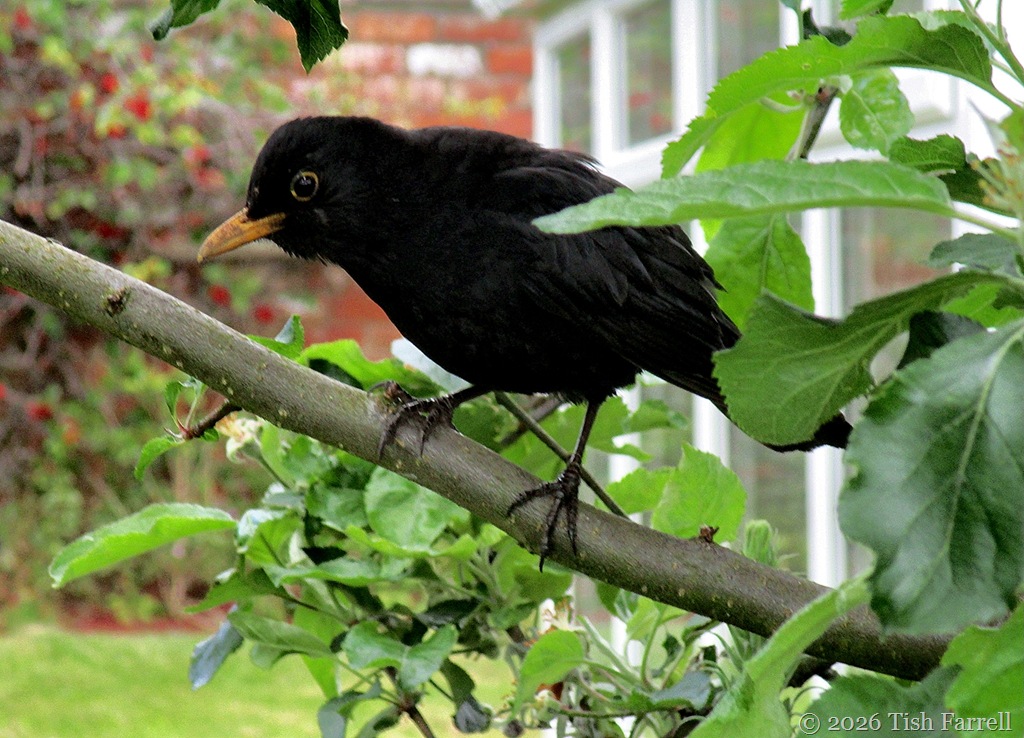
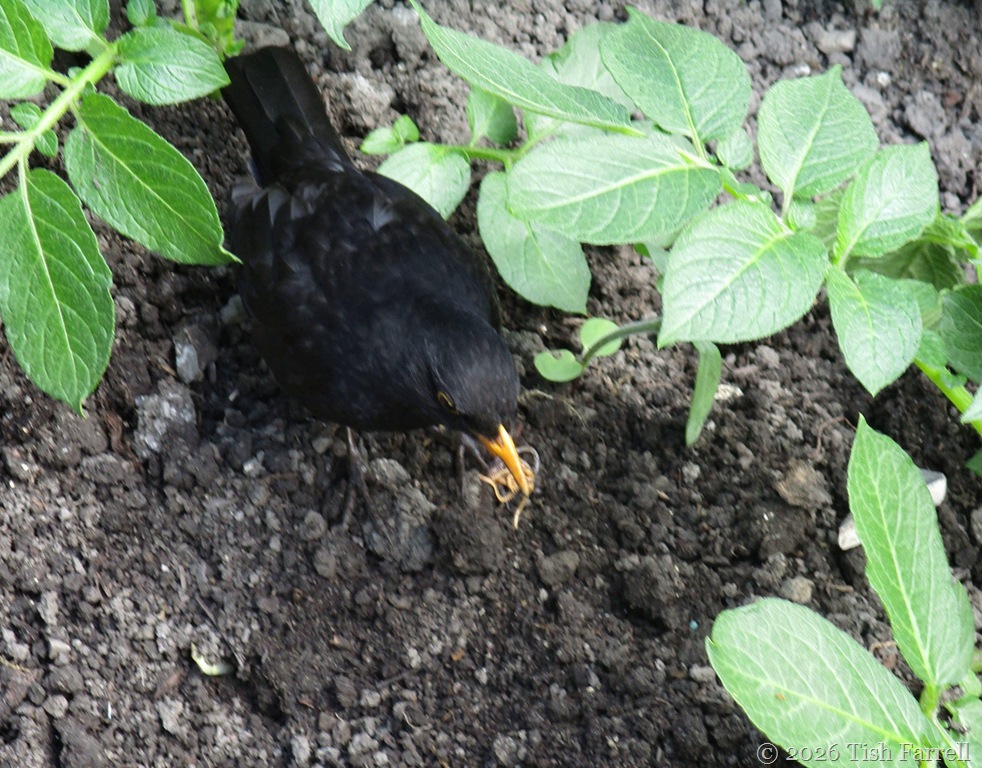
Out in the garden the blackbirds have other strategies. This male blackbird starts chivvying me the moment he spots me. If  I don’t respond at once, he moves in very close, finding a perch whence he can fix me with those beady eyes. And if this still doesn’t receive the desired response, he starts shouting.

And I must say, I do feel a touch affronted – to let myself be bullied by a small bird.

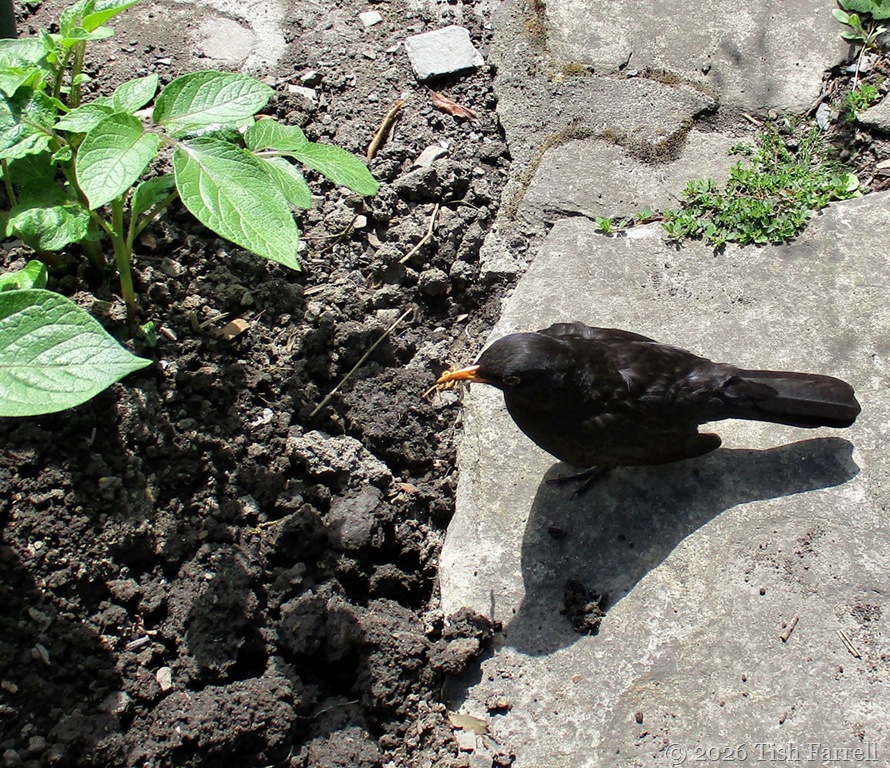
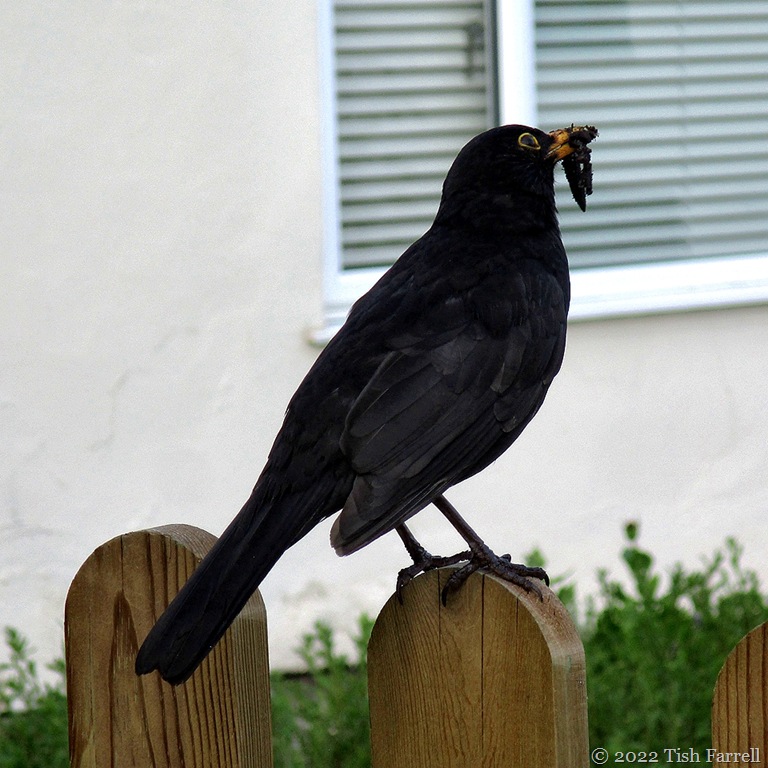
But needs must. The other day when I started earthing up the potatoes, both mister and missus swooped in, combing through the disturbed soil, chuntering in tones of unalloyed blackbird ecstasy. I have yet to spot exactly how they manage to hoover up quite so many small worms in one beak full. It all happens so fast.

[Spoiler alert: not for the squeamish.]

blackbird 3

blackbird and worms

*

This morning I spotted the male in the apple tree, not far from my left ear. As ever he gave me the eye. The rain had moved in and I was late on parade. But today it seemed he’d managed to gather his worms without my intervention. More surprising though, he also managed to give me song without opening his beak. No worm was lost.

Songs for worms, I thought. Fair exchange.

IMG_0552ed

*

Copyright 2026 Tish Farrell


Lens-Artists: Elephants In Words And Pictures

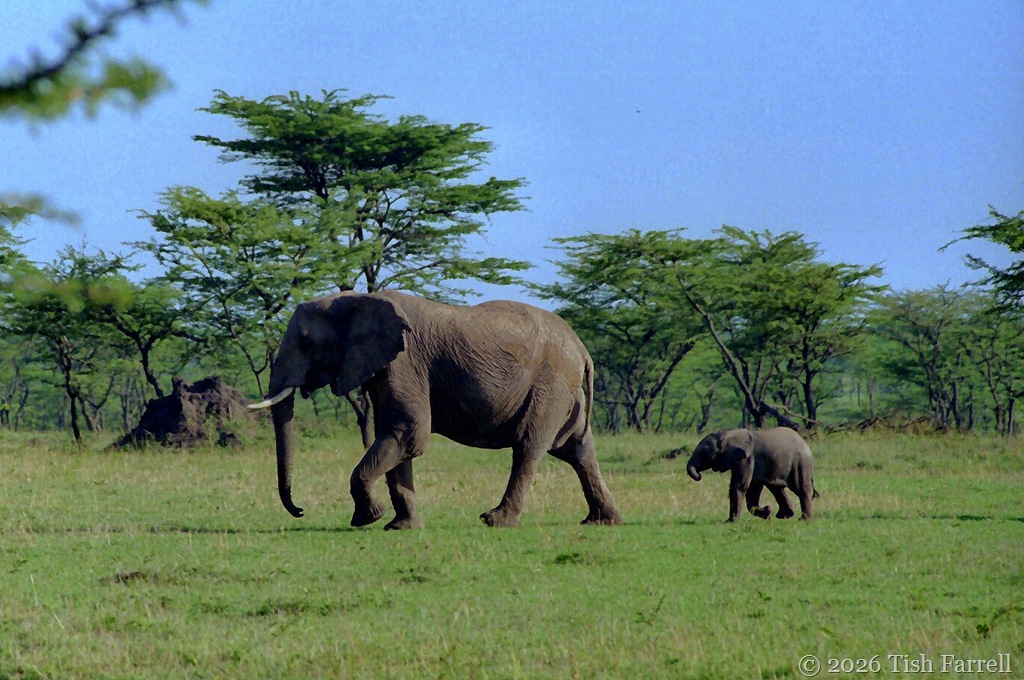
elephant d lr

*

“I have seen a herd of elephant travelling through dense native forest…pacing along as if they had an appointment at the end of the world”    Isaak Dinesen

*

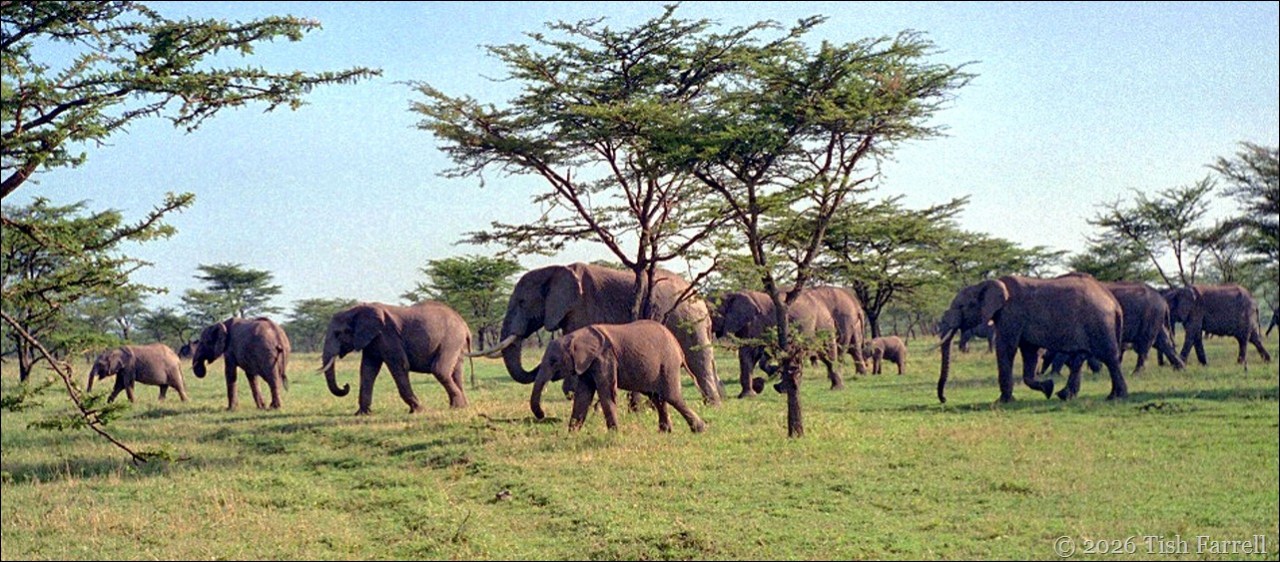
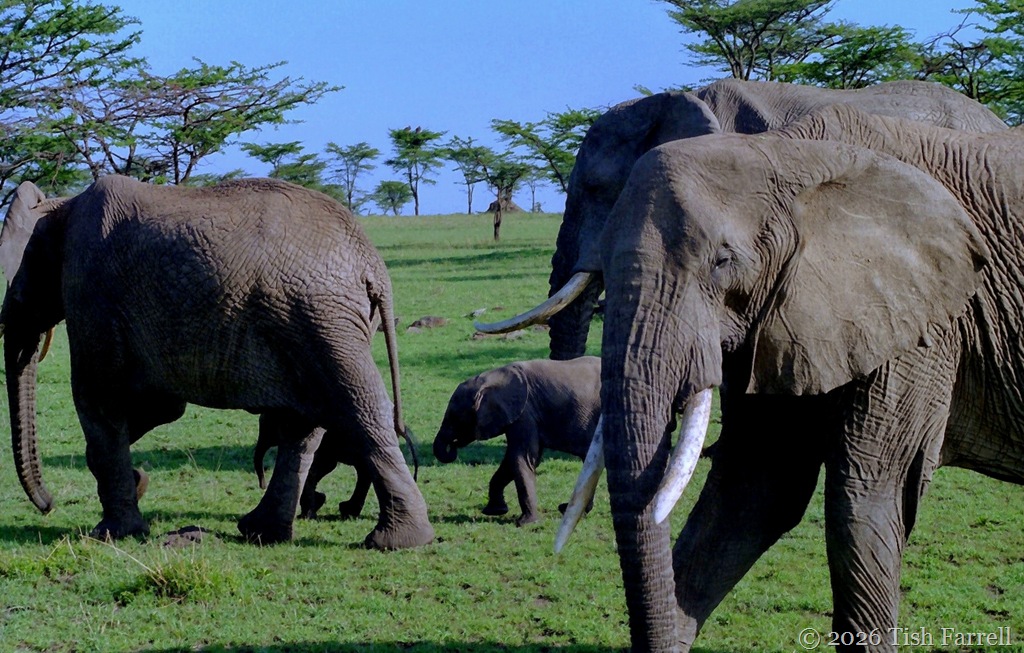
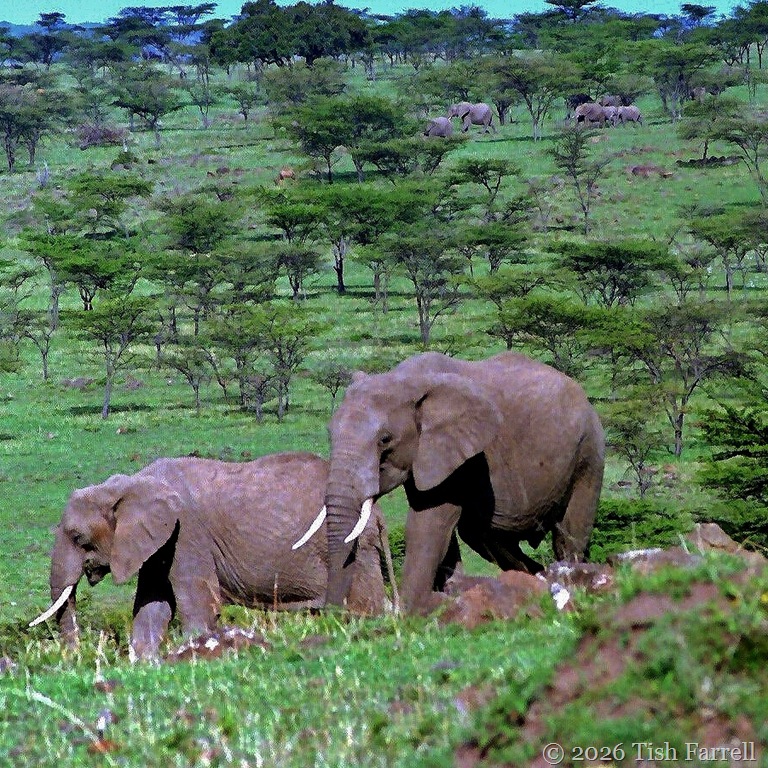
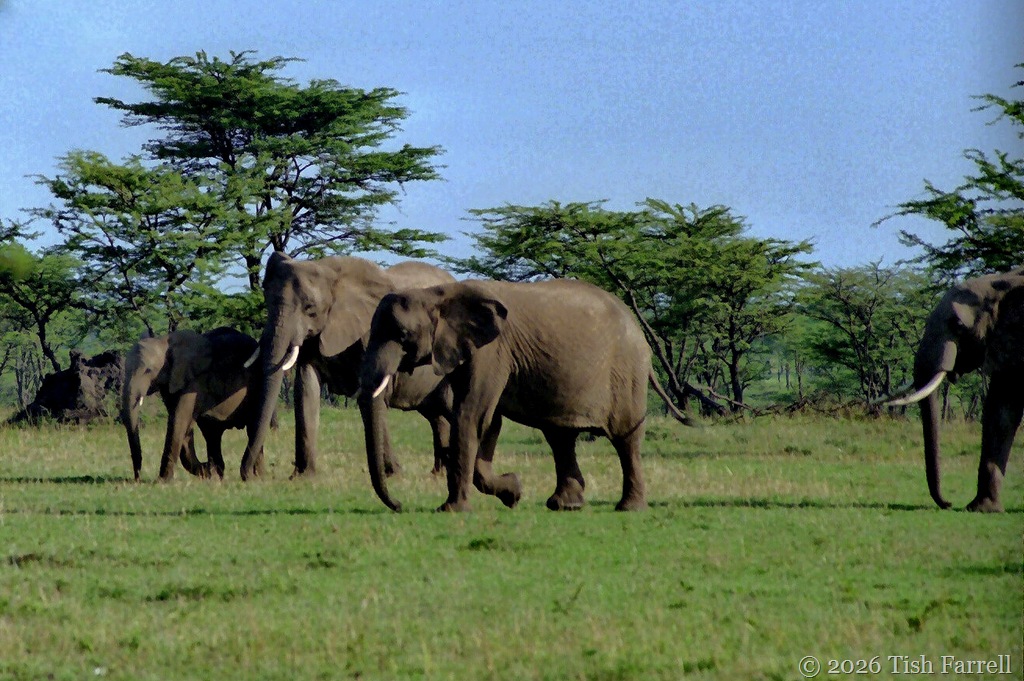
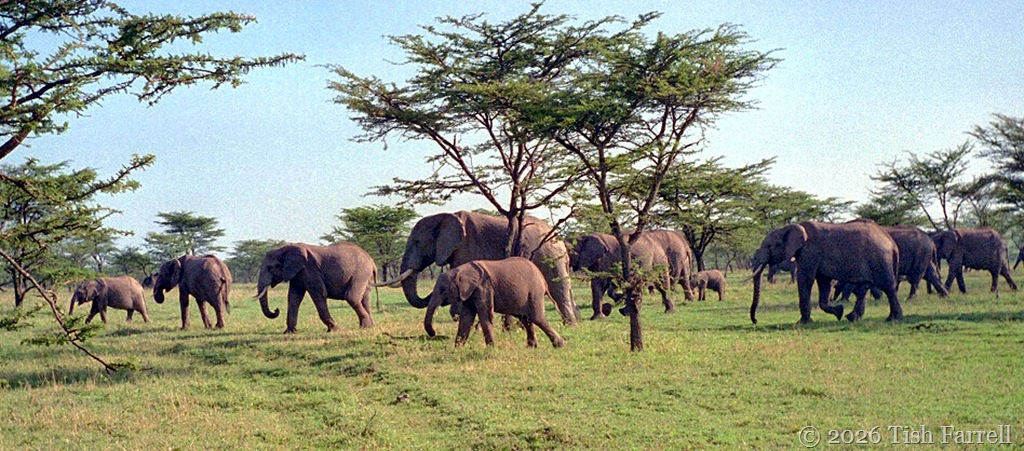
No dense forest here, only a rare scatter of thorn trees on the Maasai Mara plains. And yet early one December morning, when we found ourselves in the path of an elephant herd, the sense of their concerted purpose flowed round us like a slow tide. They did move as one – elders, adolescents, infants. And so softly too. An elephant mirage then.

As they passed on by, not one member of the herd showed any reaction to our presence. And so there was that moment – the urge to follow, to walk with elephants, pace for pace.  How astonishing might that be?  (Or how invasive).

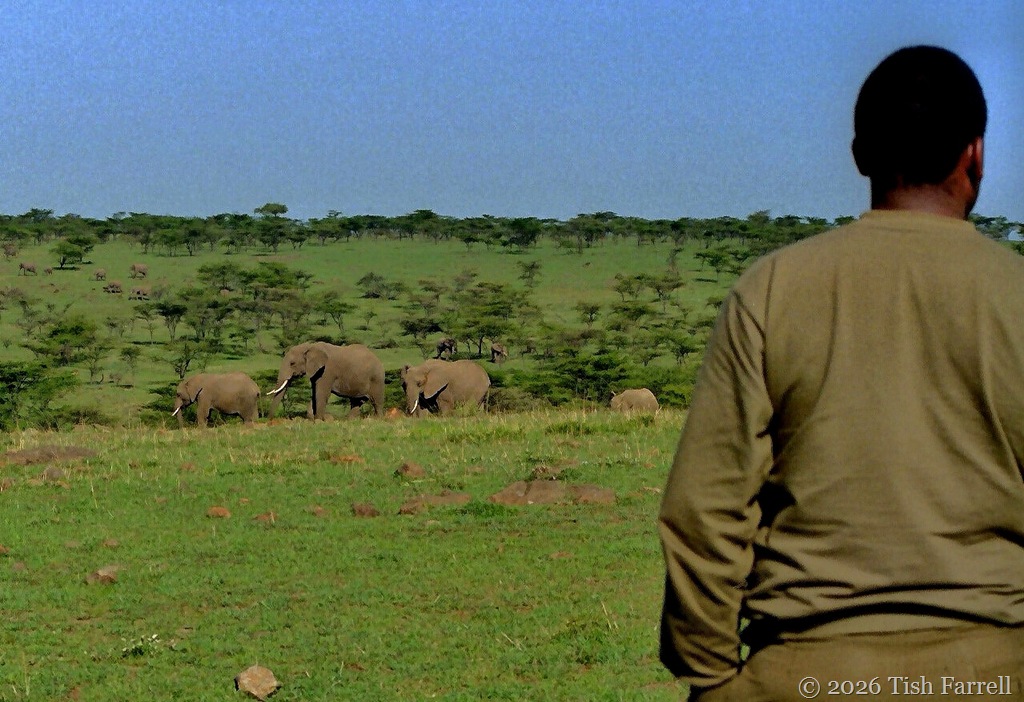
Of course we were not on foot, but in a truck with our driver-guide, Dan. He drove quietly away and parked on a ridge above the thorn trees; even suggested we should get out and eat our picnic breakfast while we watched the herd fan out below us.

Some members climbed over our ridge, but again seemed not to acknowledge our existence.

Elephants wide view sq

Daniel cropped

*

The herd moves as one, yet each elephant knows its place.” African saying.

*

Elephant parade 3 cr

Elephant mother and infant 2 cr

*

At sundown the herd met up with us again, travelling at the same slow, purposeful pace, but now in the opposite direction. We were on our way back to camp. Dan stopped the truck while they moved on and on around us. So close we felt their presence as they passed. The musky smell of them.

copyright 2026 Tish Farrell

*

Lens-Artists: favourite quotes illustrated   This week Ann-Christine asks us to illustrate our favourite quotations (No more than 5 photos). She has some stunning examples. Go see!

elephant header 2 hr

Six On Saturday: Here Comes May

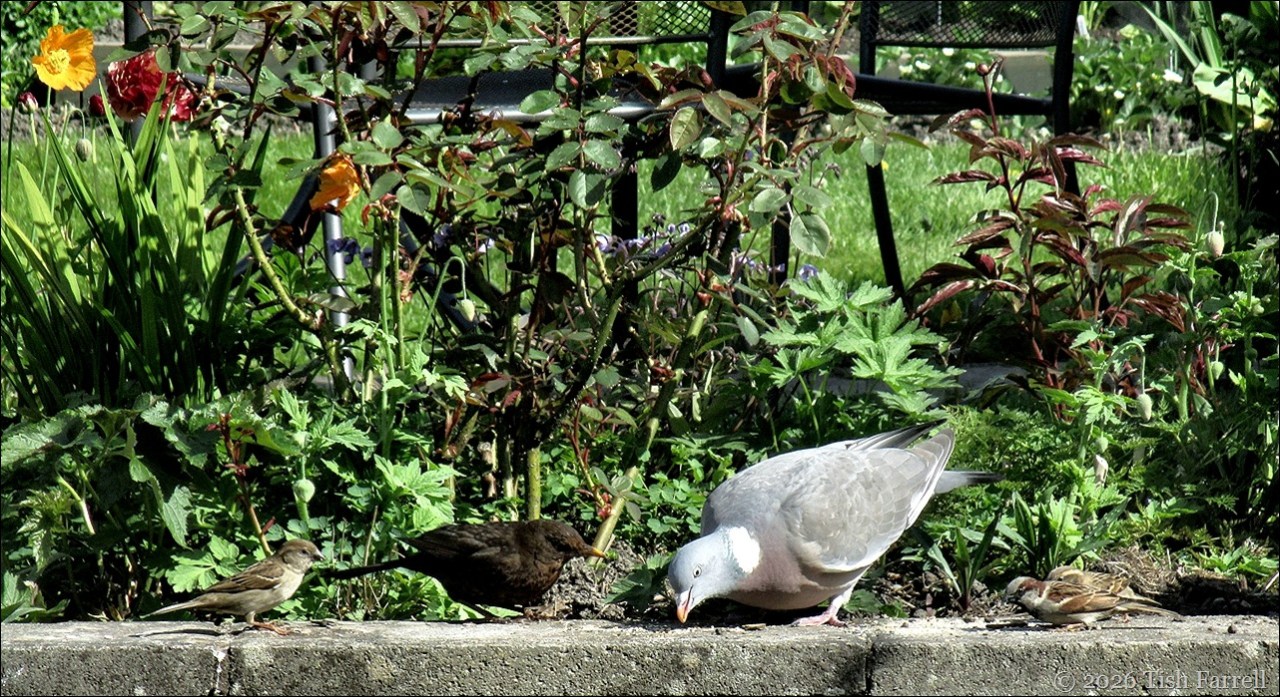
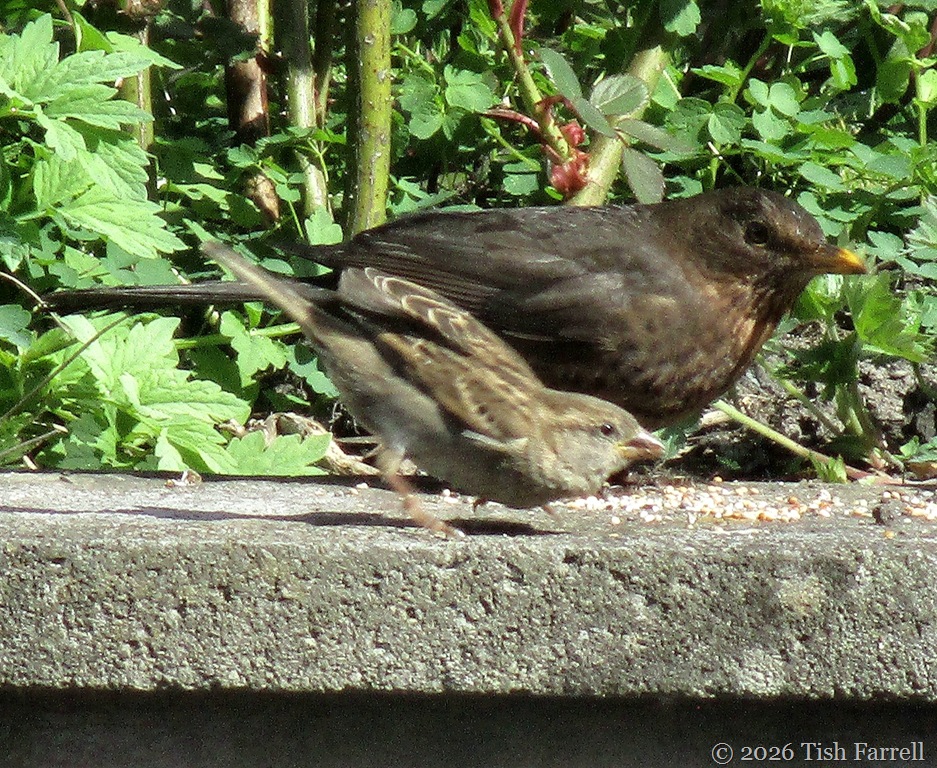
sparrow blackbird

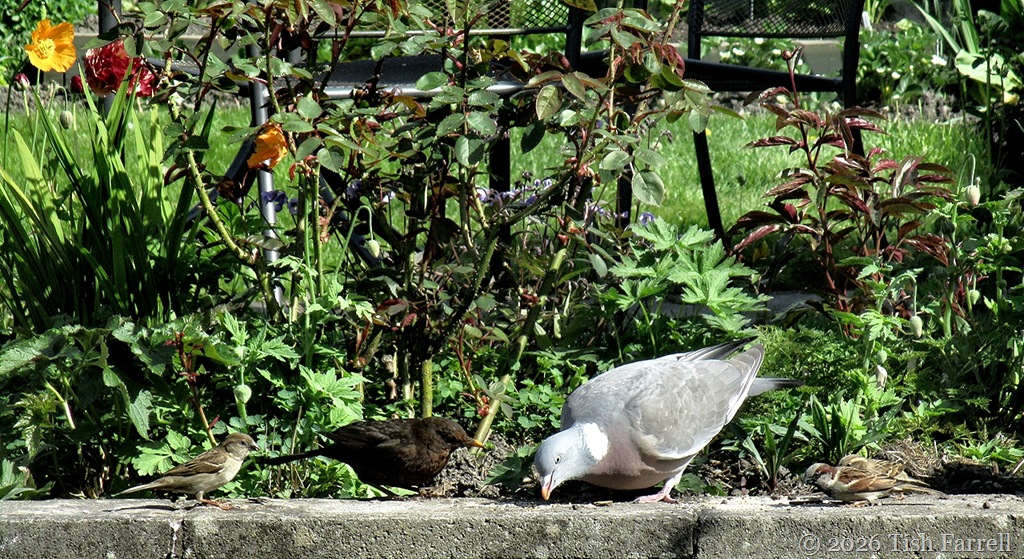
Birds (1) are very much on our minds at present. This morning Graham emptied the seed dregs from the bird feeder onto the terrace wall. This invited a flurry of takers: several sparrows, a female blackbird and a wood pigeon. The advice of the Royal Society for the Protection of Birds is to stop feeding garden birds from May to the end of October, this to prevent the likely warm season spread of parasitic disease that’s affecting certain species, especially green finches.

All winter we have put out seeds and fat balls in feeders hidden in the hedge outside the kitchen window. This strategy has kept the jackdaws and pigeons away from the actual feeders, but not deterred the pigeons from scavenging for spilled seed in the hedge bottom. But we’ve otherwise enjoyed watching the regular sparrow visitors, and the not so frequent blackbirds, robins and bluetits.

The other RSPB reason for the feeding halt is to encourage birds to return to natural seasonal eating habits now there is plenty of wild-grown stuff about. We can see their point.

Anyway, now is also the time of year when the birds go in for some irritating garden habits, such as dust bathing around the roots of emerging herbaceous plants, thus compacting the soil and exposing roots (sparrows), or removing the mulch from the borders and tossing it around the paths (blackbirds). I’ve also discovered it’s the sparrows who have been nibbling the Swiss chard and spinach, even through the supposedly protective mesh. So, yes, maybe it is time they frequented fresh dining venues.

*

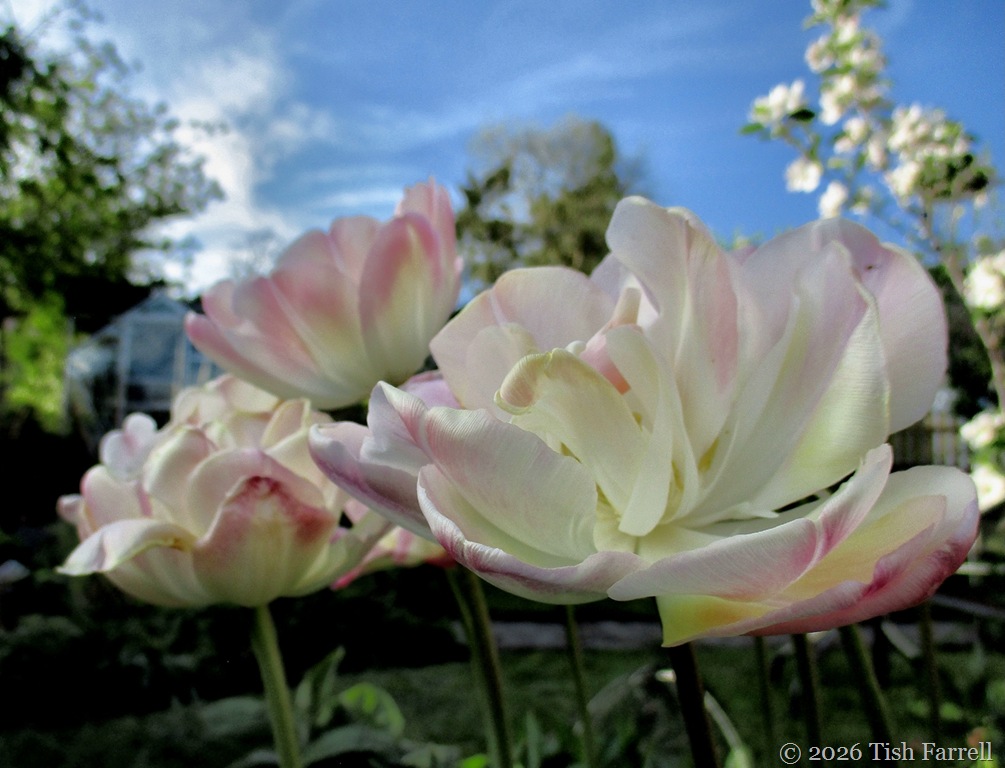
Lately I’ve been thinking that the tulips (2) are on the wane, but the unknown variety growing in the terrace wall pot keeps on flowering. Never mind the days and weeks of ferocious wind blowing them horizontal and drying out the pot. On dull days the petals  are very upright, but come a spot of sunshine, it’s full-fling abandonment…

tulips 3

*

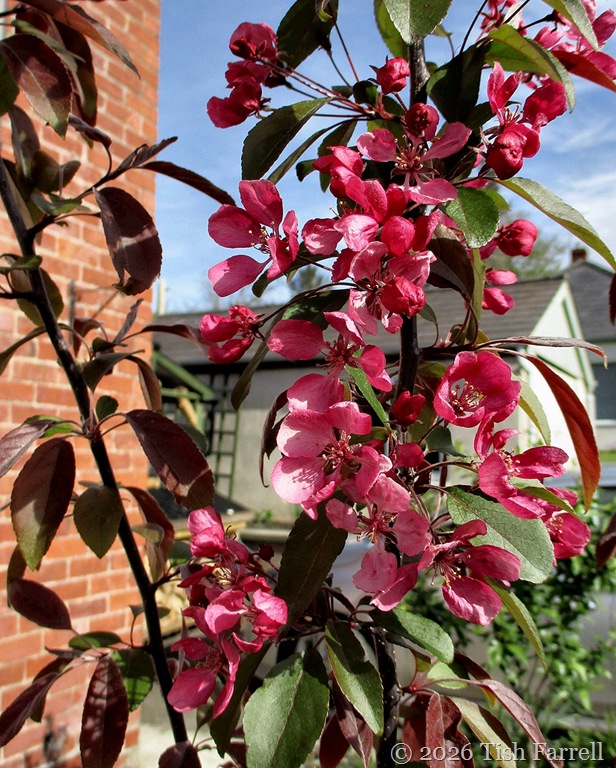
Around the garden, the apple trees – eaters and crabs (3) are at various stages of flowering and finishing. In the front garden, the dwarf version of Laura, (a compact and columnar crab apple even when full-sized), has flowered with us for the first time. The crimson blossom is gorgeous against the claret-tinged foliage.

Laura crab apple

*

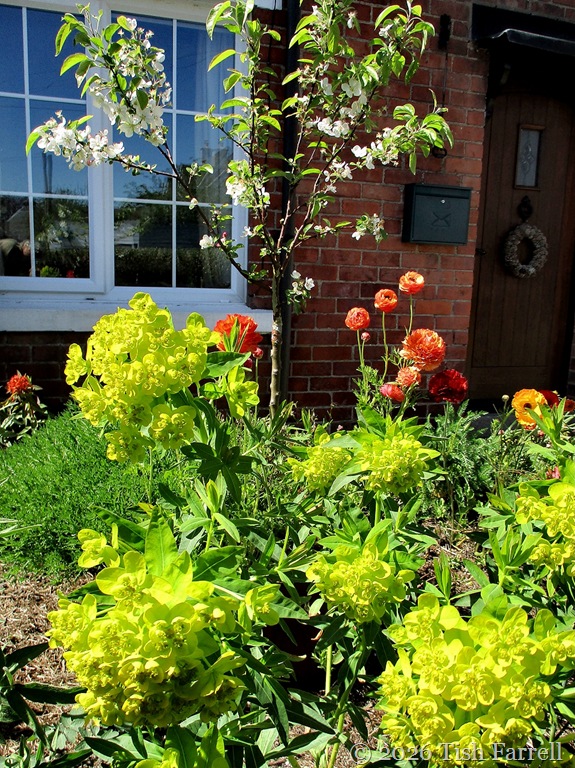
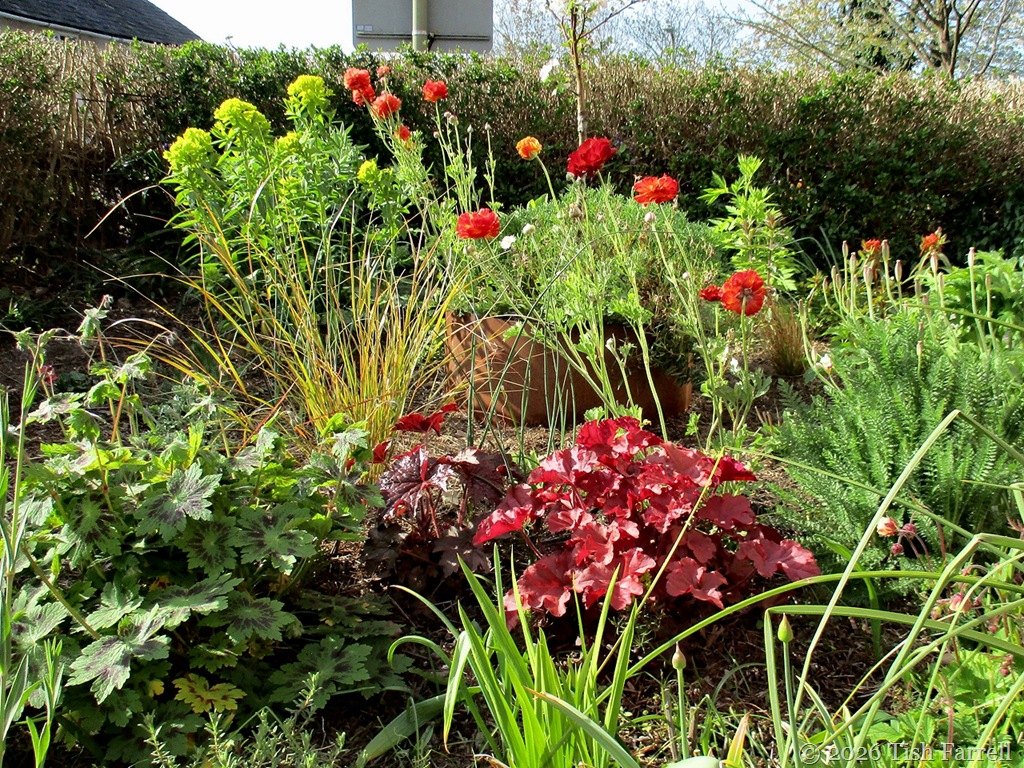
Also in the front garden the Ranunculus bulbs (4) are among the most striking of the  bright and early bloomers. They, too, have proved remarkably resilient to being blown off their roots. I planted them last summer at the wrong time, and was surprised when they flowered sporadically during our rainless weeks, and then produced quite a lot of foliage during the winter. Their red-hot shades are looking astonishing between the citrus green of the Euphorbia palustris ‘Walenburg’s Glorie’ and the deep russet heucheras. (That’s a dwarf Evereste crab apple in the middle).

front garden 2

front garden May

*

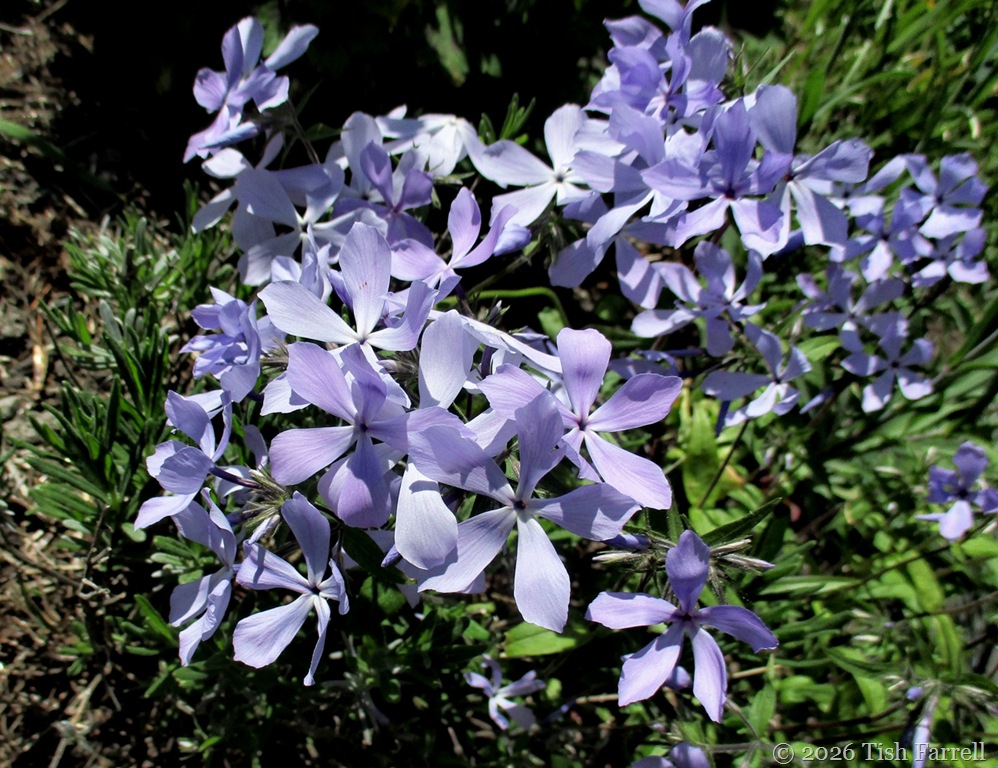
Another early flowering favourite is Phlox divaricata ‘Clouds of Perfume (5). It’s a low-growing, spreading variety, and more than living up to its name beside the front path. Makes me think of parma violet sweets we sometimes had as children, but smells much nicer.

phlox divaricata clouds of perfume

*

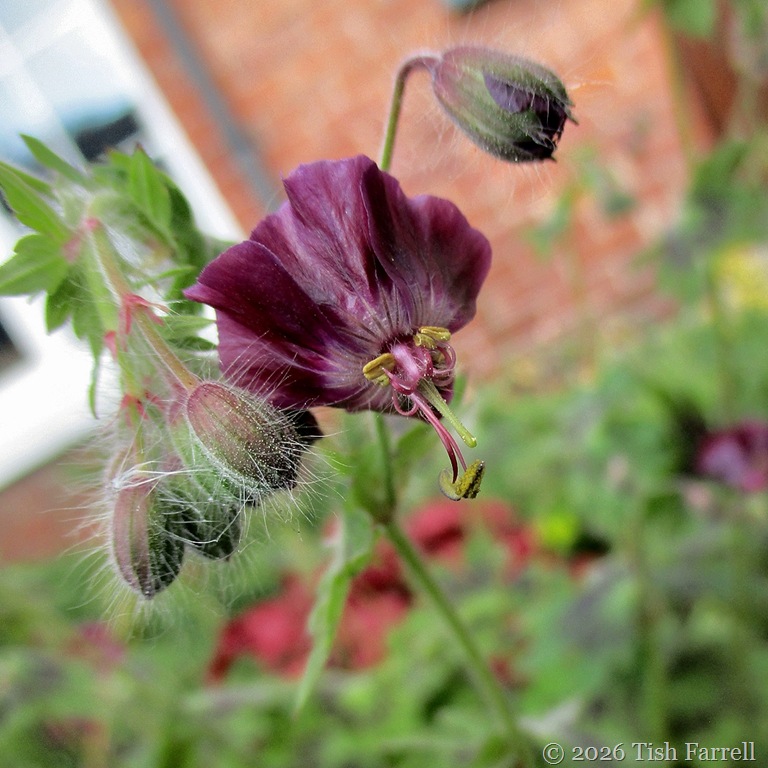
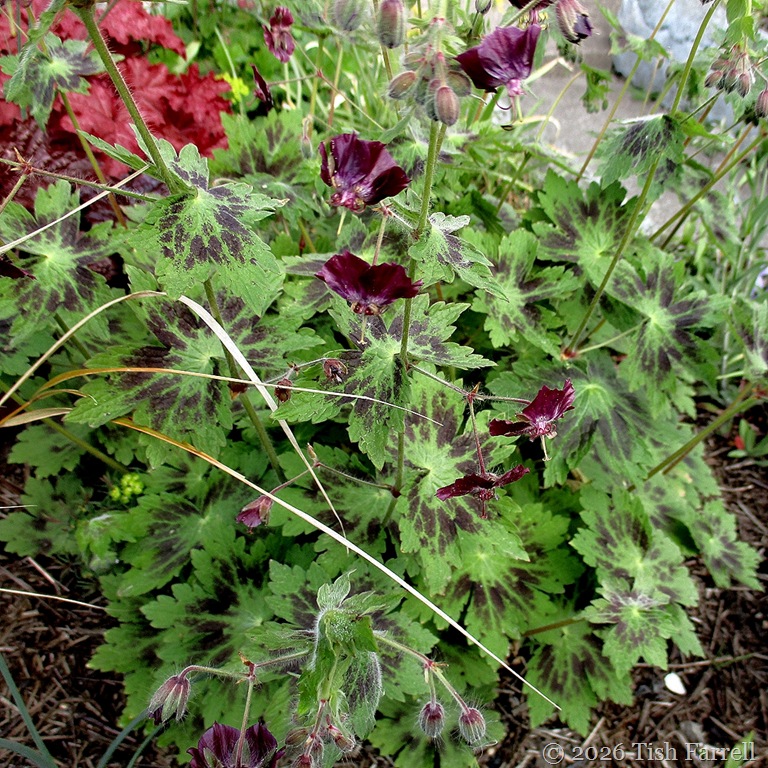
I’m very fond of hardy geraniums and have a number of young plants of several varieties in all the flower beds. The first to flower this year is Geranium phaeum ‘Samobor’ (6). The dusky wine coloured flowers are small, downward facing and all round unspectacular unless you get in close (also very difficult to photograph), but it is the foliage that is the more notable. I’m not sure that I have it in the right spot. It seems to have more woodland inclinations than herbaceous border frontage, but I like the leaves, which look rather good beside the two heucheras whose varieties I’ve forgotten.

samobor 4

samobor 3

*

Happy gardening, folks, whatever your hemisphere.

copyright 2026 Tish Farrell

*


Six On Saturday Please visit our host, Jim, in his Cornish garden.


birds header 2