
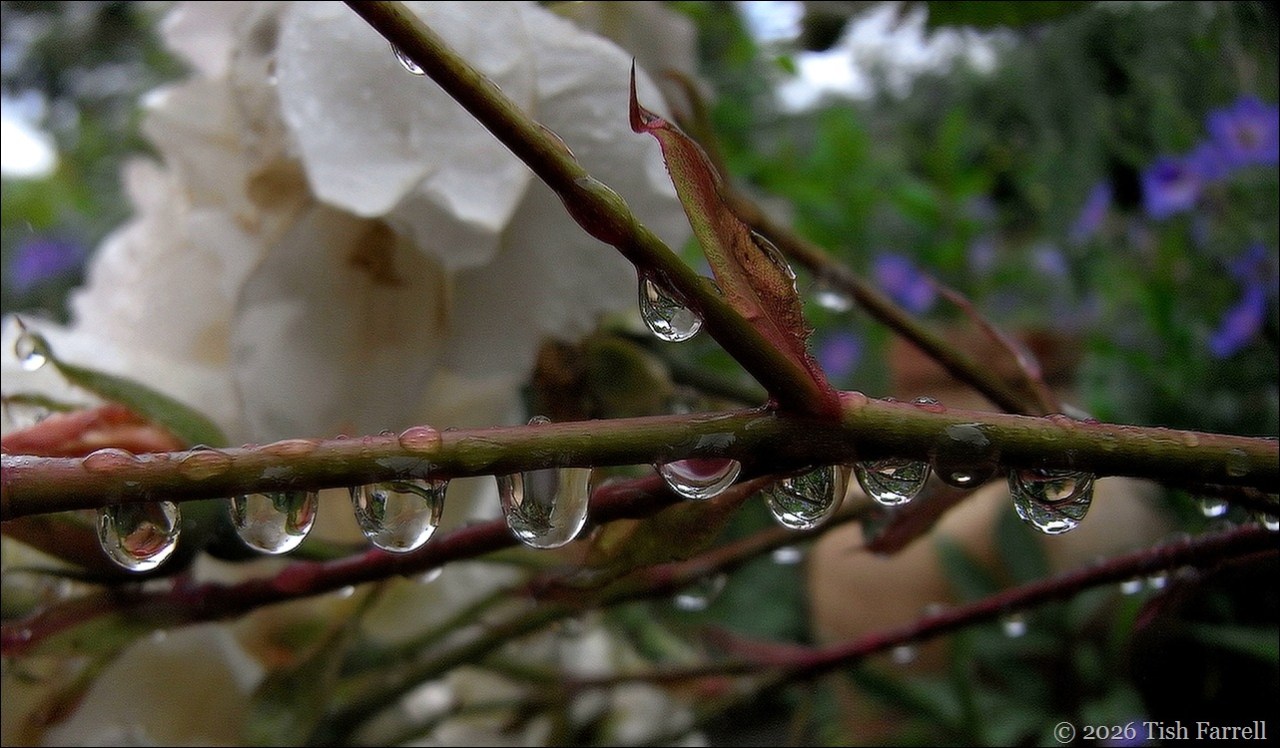
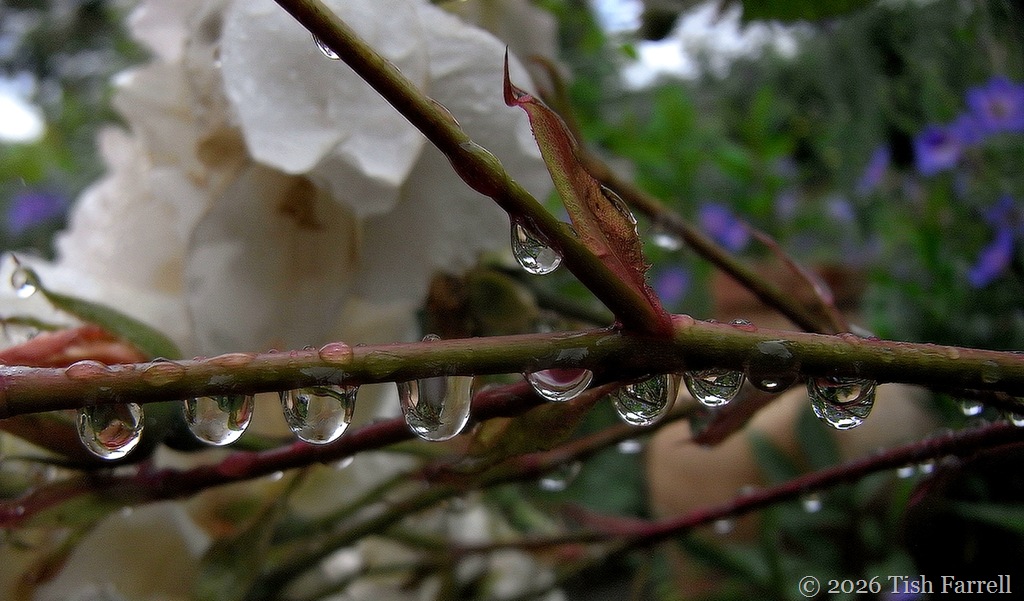
Today it’s more like October than June. We’re back to grey skies, gusty wind and rain between showers. But the Peneloperoses are bearing up, even if their frocks are soaked and their flounces crumpled.
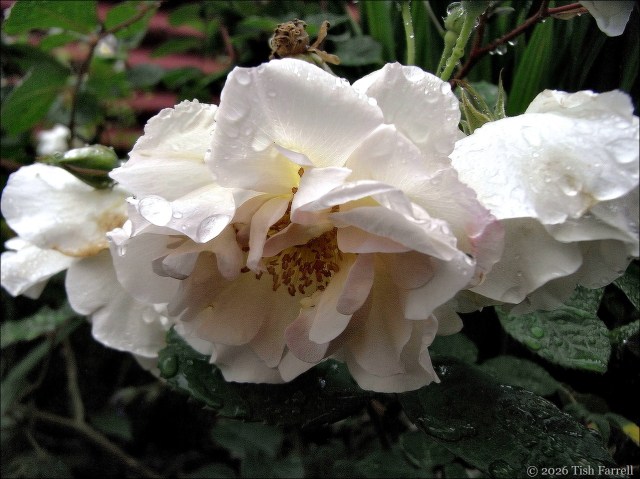
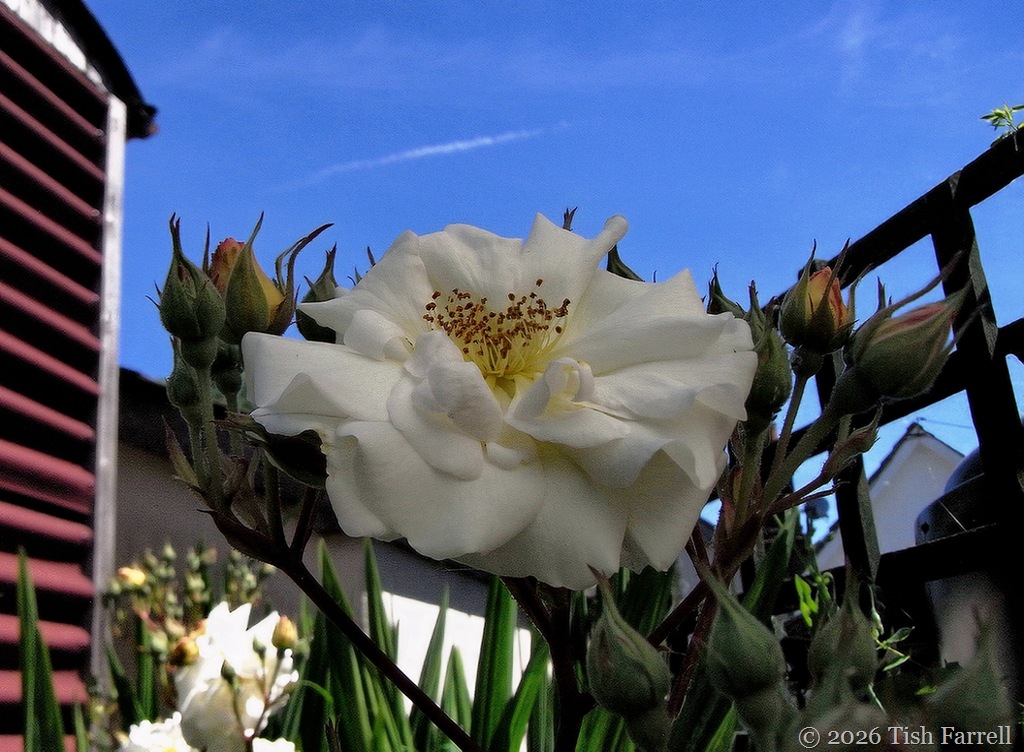
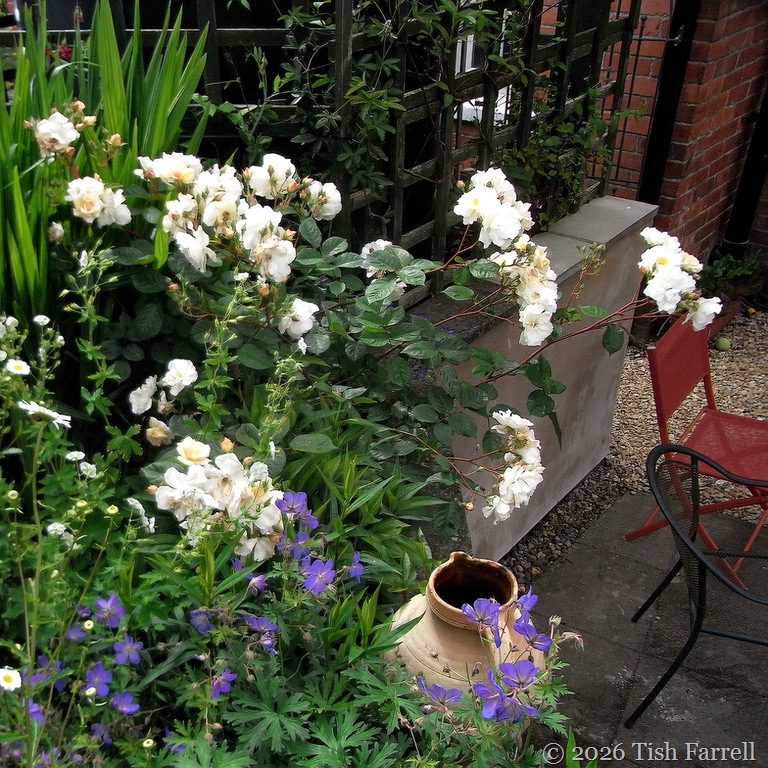
Here’s a photo from earlier in the week during a sudden sunny spell. The plant itself is a tending-tall, rather floppy shrub rose that can be trained as a short climber if you only have a short wall. I’m hoping that in time she will simply arc gracefully down the terrace wall without much in-put from me. She’s already doing her best.
***
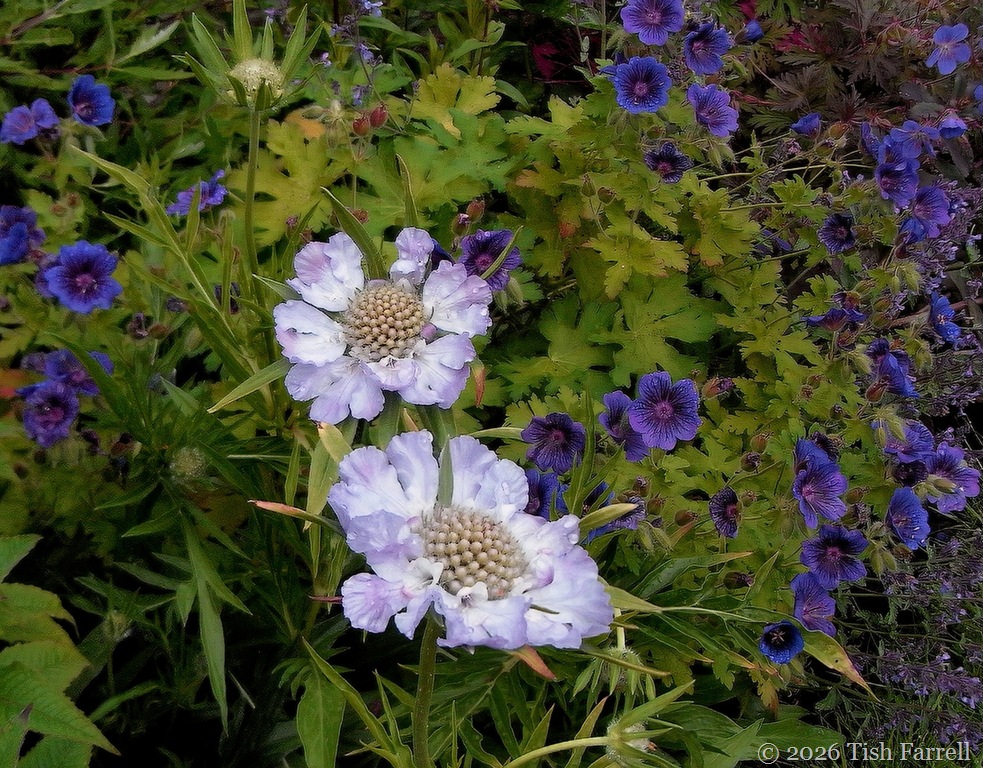
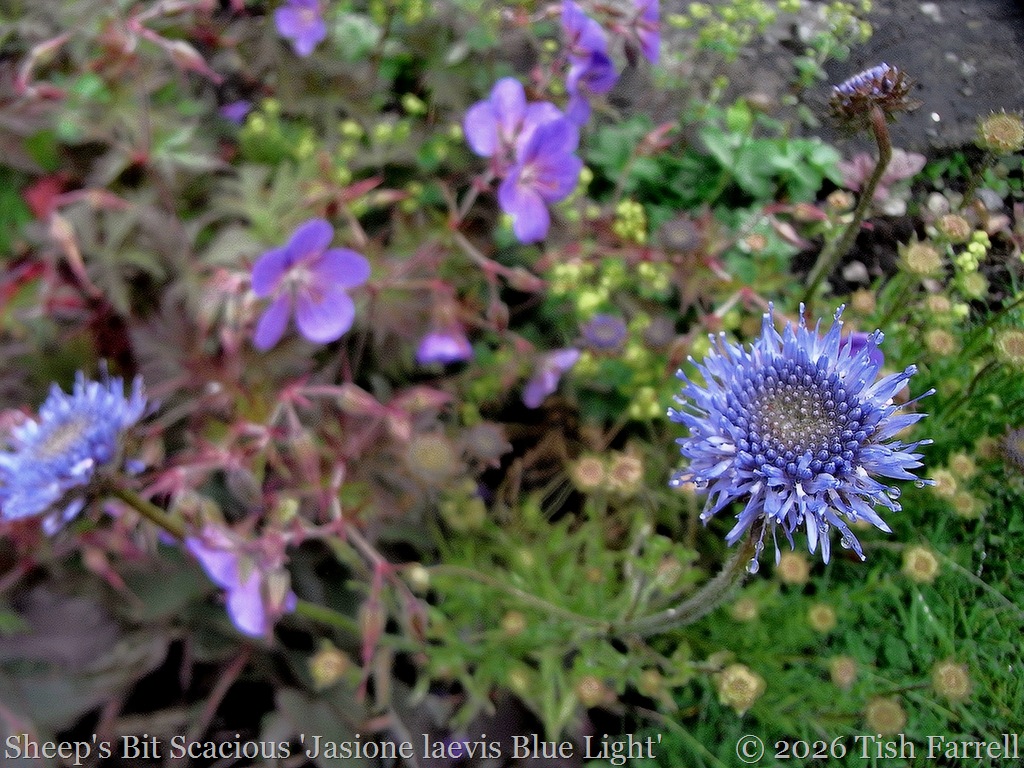
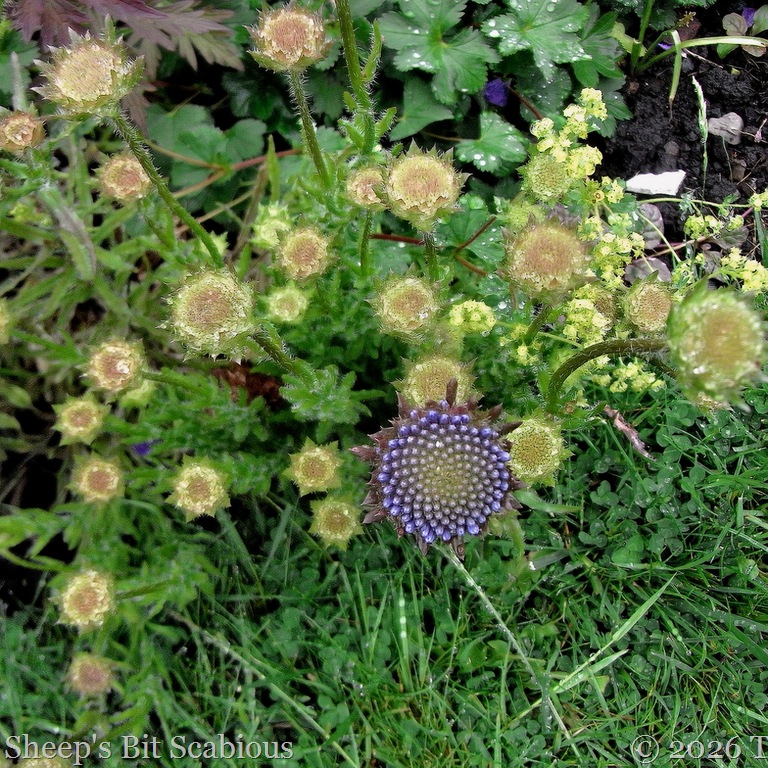
In the back garden the scabious are just beginning to flower – both the usual herbaceous border version which I bought as large plugs three years ago, but are only now performing, and a Sheep’s Bit variety called Jasione laevis Blue Light, which went in as a young plant last September. Both are presently keeping company with various hardy geraniums, but the Blue Light is already making a pleasing low clump on the border edge near the path.
***
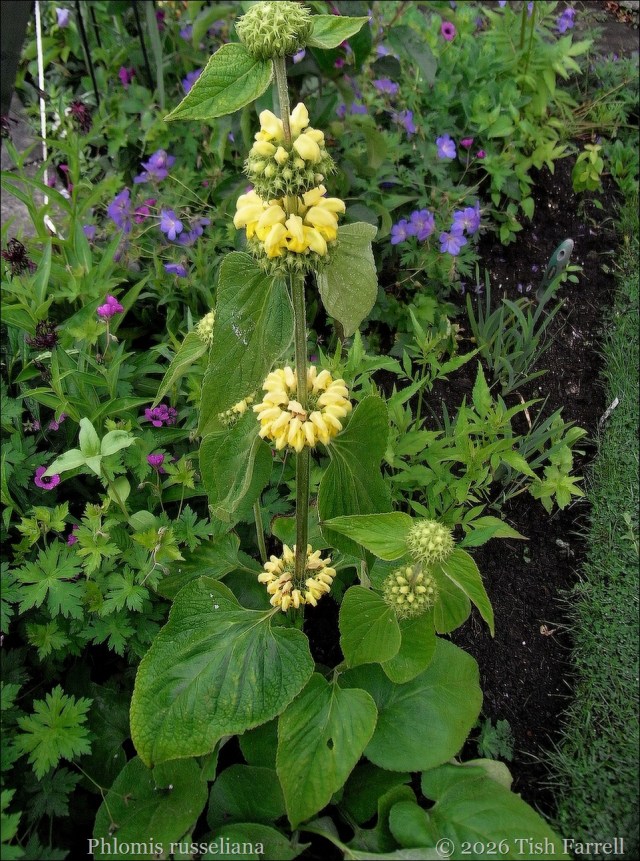
Another first-time performer in the garden is the yellow Phlomis russeliana. I bought it because it’s drought tolerant, bee friendly, will bloom all summer and the dead flower heads still look good in winter. Last year, however, it sat out the long drought, and only made big leaves. It’s making up for it this year. I’m thinking that in due course it will need to move to the side wall bed, where it can keep the yellow rudbeckia and helianthus company.
***
On the edible front, the globe artichokes are making their presence felt. One of the plants has grown up hugely in a most annoying spot, squashed in between the Polka raspberries and the Jelly King crab apple tree. I know I did grow it from seed but somehow it escaped me during the planting phase and dug itself in. Anyway, the rain has brought it on, and it’s about to be eaten. I usually cut artichokes in half to remove the choke, and then steam them. Halves obviously don’t need so much cooking time as wholes, and it’s easier to see if they’re done. Garlicky butter to serve.
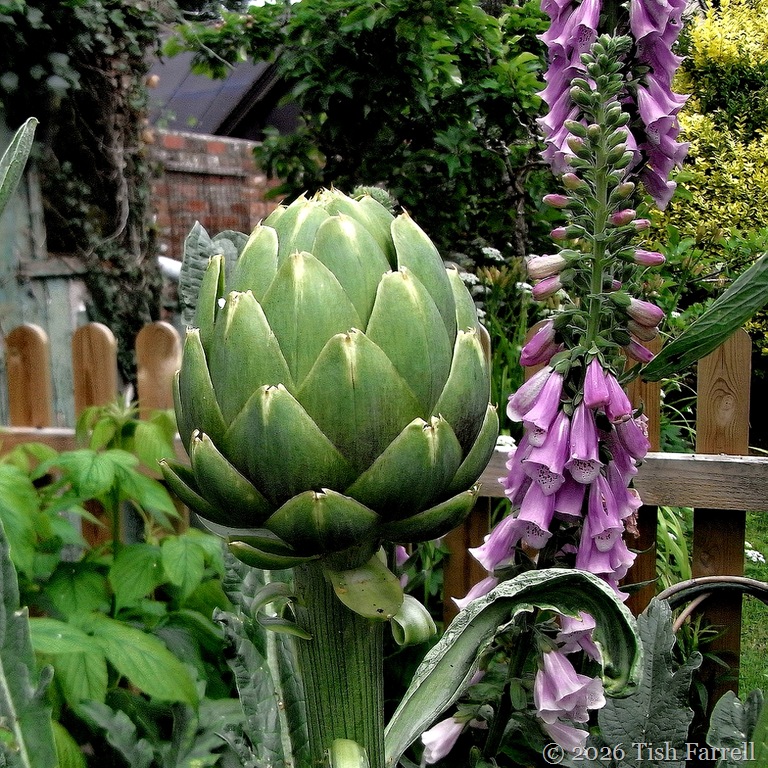
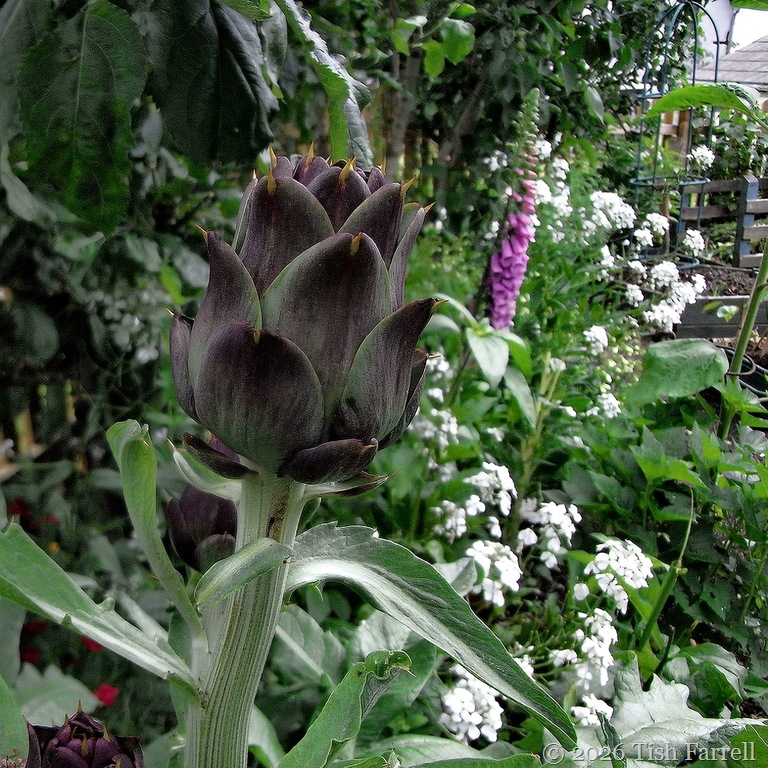
Also in the bottom border is a a purple headed variety. It’s strikingly ornamental growing alongside the sweet white rocket and foxgloves.
***
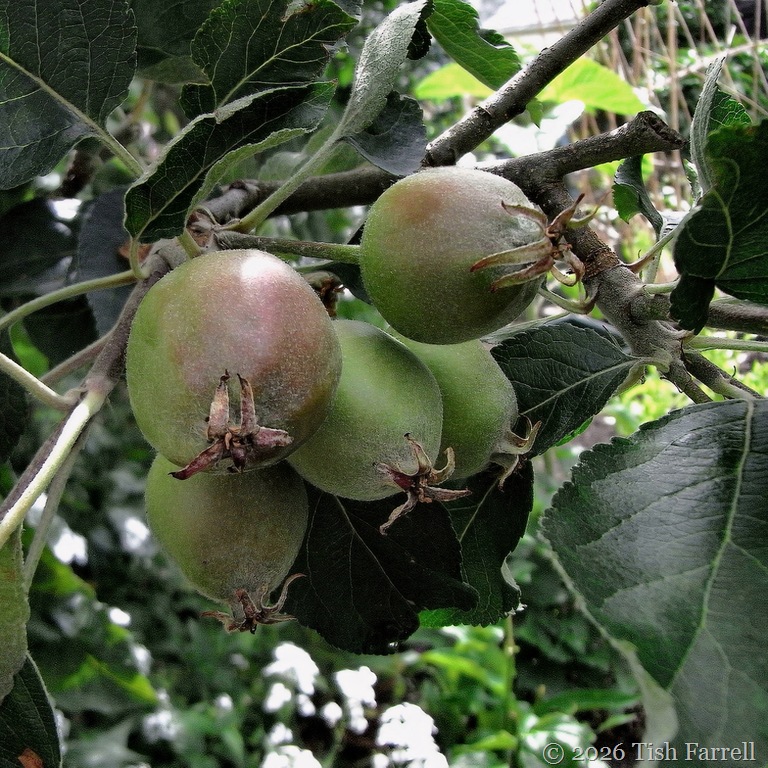
While I was inspecting this end of the garden, which takes some doing, what with the mammoth size of the artichoke leaves, I was pleased to see that the neighbouring old cooking apple tree looks to be bearing far more apples than we were expecting. The blossom came and went so fast in cold and windy weather, it seemed unlikely that much of it would be fertilised. But not so! We don’t know the variety, but the fruits are big and rose blushed and need no sugar when cooked.
***
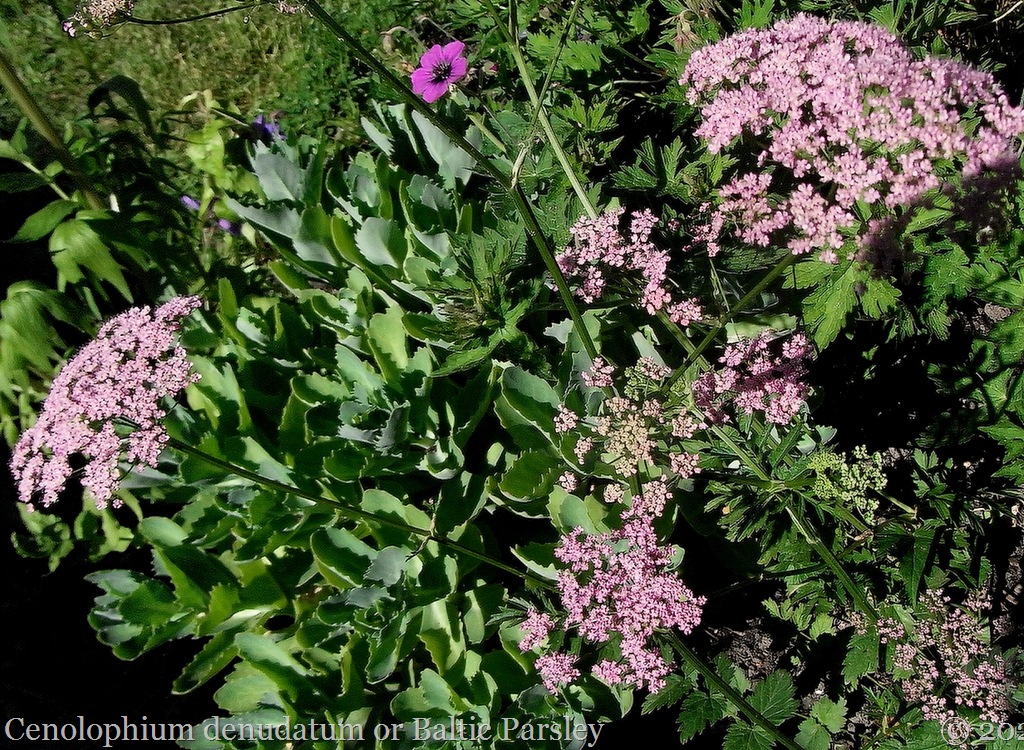
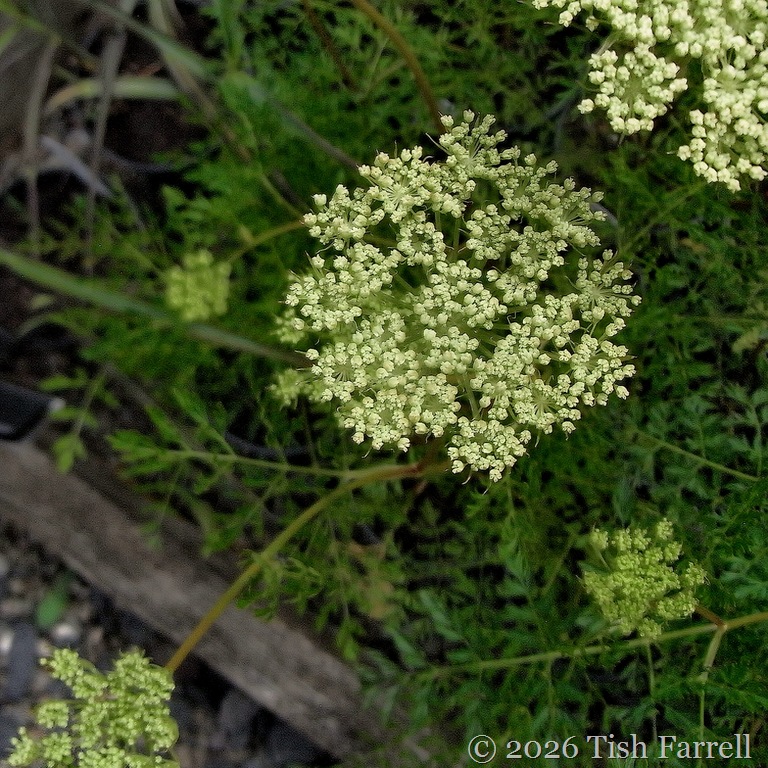
And now back to my new favourite, as mentioned in two recent posts – Cenolophium denudatum, aka Baltic Parsley. Coming up is the version I have already settled in the bed along the top of the terrace wall. It grows rather like Cow Parsley/Queen Anne’s Lace, and indeed it was supposed to be white, according to the Great Dixter Nursery catalogue. Mine, however, turned out to be pink. I don’t mind. It looks good with the valerian whose massed umbels are hint-of-pink white.
***
But then yesterday we were having a splendid day out in the walled garden at Wildegoose Nursery in the Corve Valley. And there I found a pale lemony version. It had to come home with me.
***
And to finish a shot of Wildegoose walled garden where I discovered it (along with a dozen or three other plants that roused acute spasms of gardener’s greed).
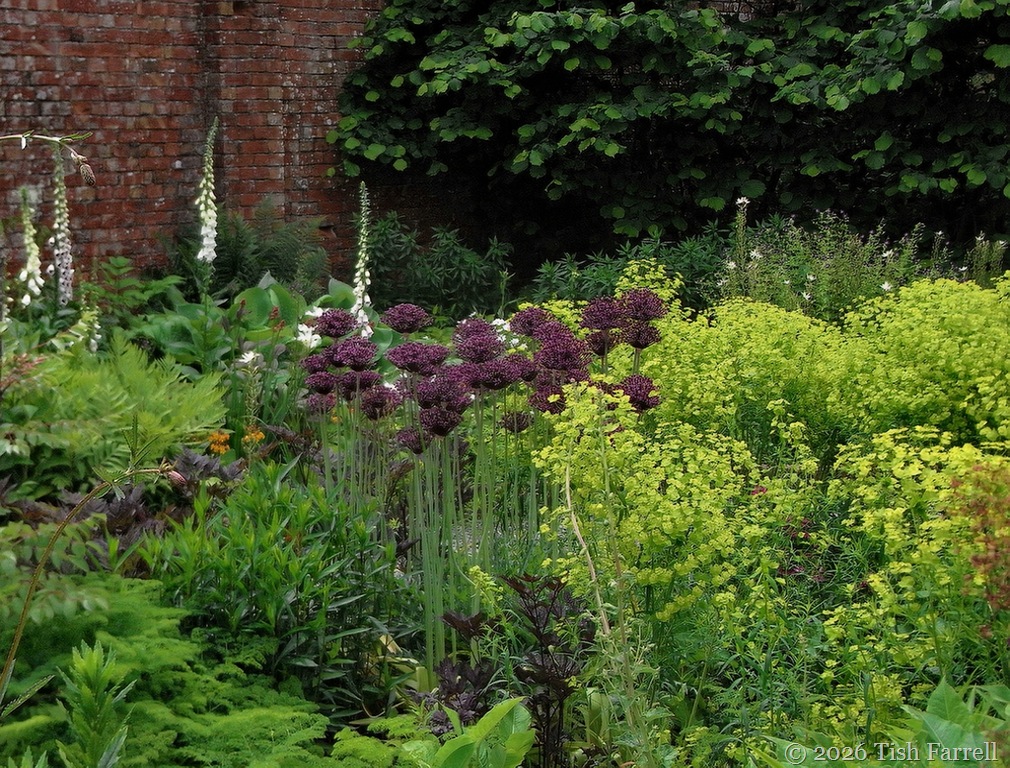
Wildegoose Nursery Walled Garden
Copyright 2026 Tish Farrell
Six on Saturday 6 June 2026 Please call in on Jim as he prepares for his garden opening.

Oh yum. I’ll be round for a globe artichoke! Quite early, aren’t they? Your garden’s looking wonderful, in spite of, or perhaps because of the rain.
I think the garden is much happier than the gardener who tends to faff and fret unnecessarily. And yes the globe artichoke – I think they are early. It’s the warmest part of the garden, and they’ve also made use of the raspberries’ manure dressing.
Very classy dressing
Tish, your garden is beautiful!
Many thanks, Beth.
I like the white roses with the blue geraniums. My poor roses are being blasted by 50mph winds today and not looking happy. In fact everything is being bashed around. But at least the rain stopped around midday.
All this over active weather is getting tiresome, isn’t it. Sorry your roses are being thrashed.
Your garden is absolute beautiful ❤️ ❤️ ❤️
Sent from Outlook for Androidhttps://aka.ms/AAb9ysg
Many thanks, Janet. Lovely to hear from you.
Lovely flowers. Hope the weather improves.
Thank you, Rupali.
Growing your own artichokes is wonderful. And I love the scabious-geranium combination!
Many thanks, Kathrin.
A pink version of your Phlomis grows wild here, Tish. It’s all looking good at your place, and I read that you’ve another heatwave on the way. Who knows? xx
Ah, a pink version. I will look it up, Jo. And yes, next Saturday, the temps look to be returning to something that feels seasonal.
Beautiful flowers Tish, and your words give your garden an almost human quality!
Many thanks, Anne 🙂
You’re right about the October feel to the weather – it really has been crazy lately! But your garden is clearly thriving despite that 🙂 I love the rose with the raindrops and the beautiful blues of the scabious!
Many thanks for popping into the garden, Sarah.
Artichoke triffids!!! 😀
Yes!
Oh, my goodness–your photos are stunning! All of them are lovely, but the branch with the raindrops and the Roses in the background would be fabulous in a frame. Wow.
Many thanks, Beth.
Lavender and yellow – a perfect match! Freshly steamed artichokes are just sublime – wonderful !
Thanks, Flavia. I seem to have many shades of lavender in the garden. So many of the plants are new, put in last autumn. And so are now proving quite a surprise as they start to flower. A very pleasant one, of course.
Lovely surprises around every corner – enjoy the wonderful season, Tish.🌹
These flowers are absolutely beautiful!
They have been putting on such a good show too – never mind the winds and rain.
🙂
What a delightful stroll around your garden and I so love the rose photo with the raindrops!
So pleased you could come for a wander, Cath. I was v. pleased with the raindrops – in the photo if not the heavy downpours 😉
And you know every flower by name…
🙂 🙂 🙂 I’ve had to learn a lot of them since returning to the UK.
Which is nice learning. Much beyond me, but I suspect it broadens your horizons? Or said differently, makes you look at every flower in a more focused way?
Yes, the looking, I suppose, is a bit like meditating. V. soothing 🙂
An interesting view on gardening. Though meditation and soothing might be parallels of sorts?