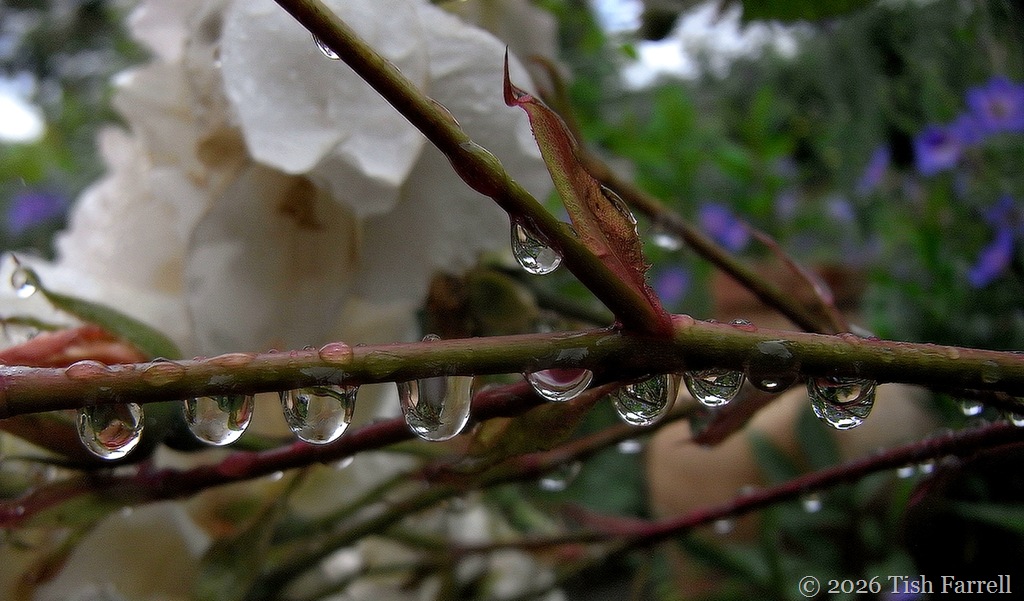
There’s not much happening in the home garden this week, but wonder of wonders, we have some serious rain. After two months standing empty, the water butts are brimming, and every watering can is full. And so comes the dilemma: lots of rain still coming and nowhere to store the excess; nor any need to use it outside the greenhouse. At least for the next week.
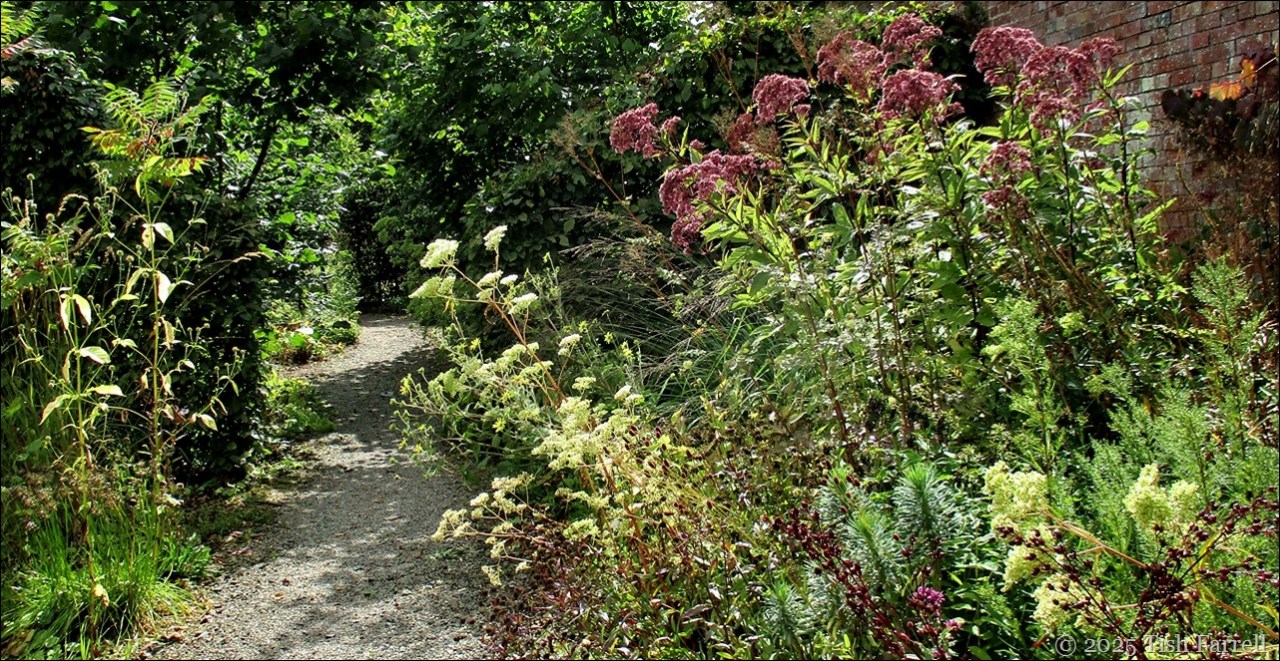
Anyway, this still has me thinking about cultivating a more drought-resilient garden, and so prompted by last week’s return visit to the Wildegoose walled garden (last seen in late June),and see how the nursery’s extensive herbaceous-ornamental grass borders have fared without rain.
I should perhaps explain that Wildegoose (location in Munslow in South Shropshire’s Corve Valley) is both a specialist nursery (for violas in particular) and is also a garden attraction in its own right, complete with a very pleasing cafe that makes use of the kitchen garden’s fruit and vegetables.
This leaves a very large portion of the walled garden which is given over to herbaceous plants and ornamental grasses (especially Calamagrostis and Miscanthus species), with different areas framed by paths, sections of hedging, some statement shrubs and small trees. There is also a fabulously restored Georgian glasshouse.
With such big spaces to cultivate, the schemes have been devised with much emphasis on height and visual structure. Plants are left to go to seed over the winter, with the further objective of tracking particular plant responses to weather extremes.
N.B. These areas are not watered during the growing season.
*
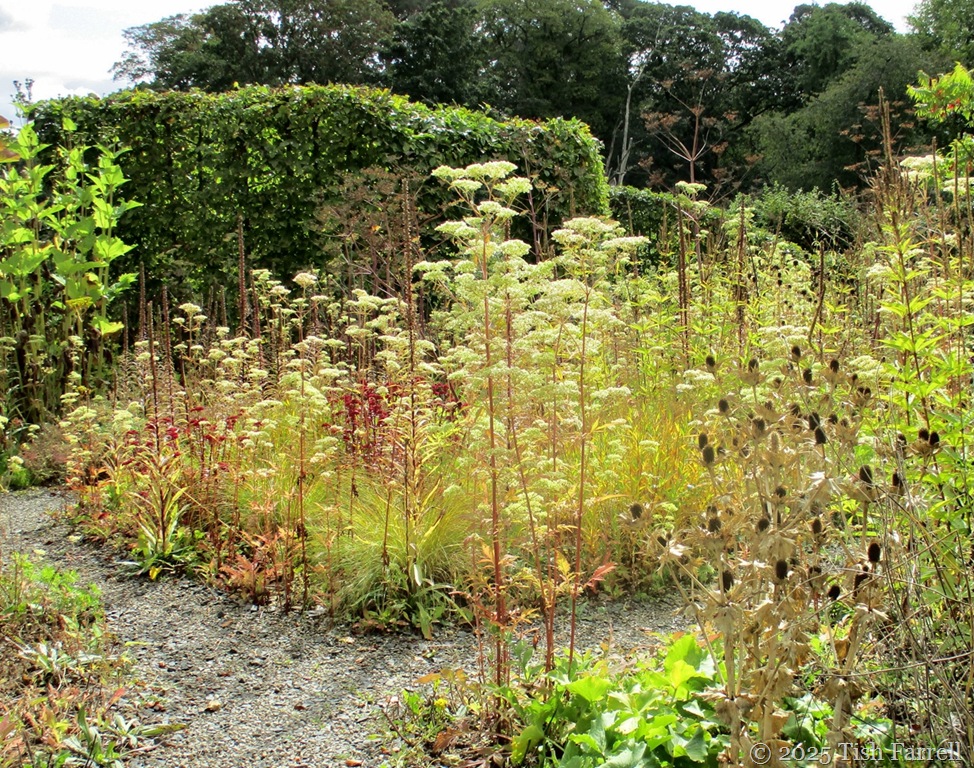
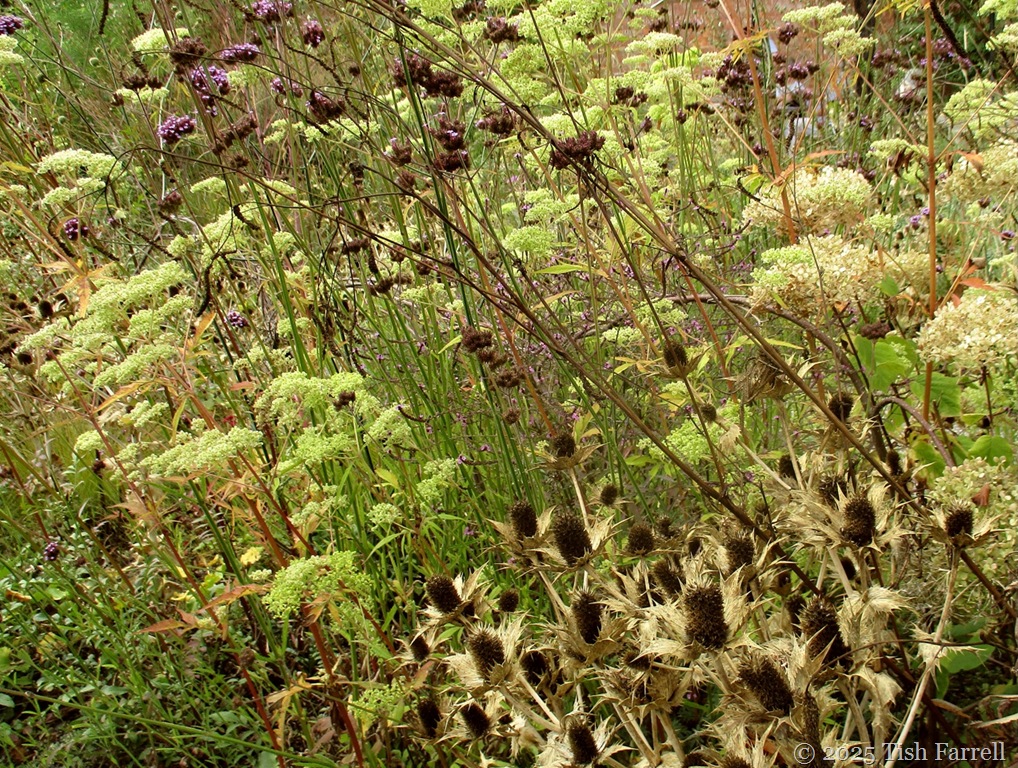
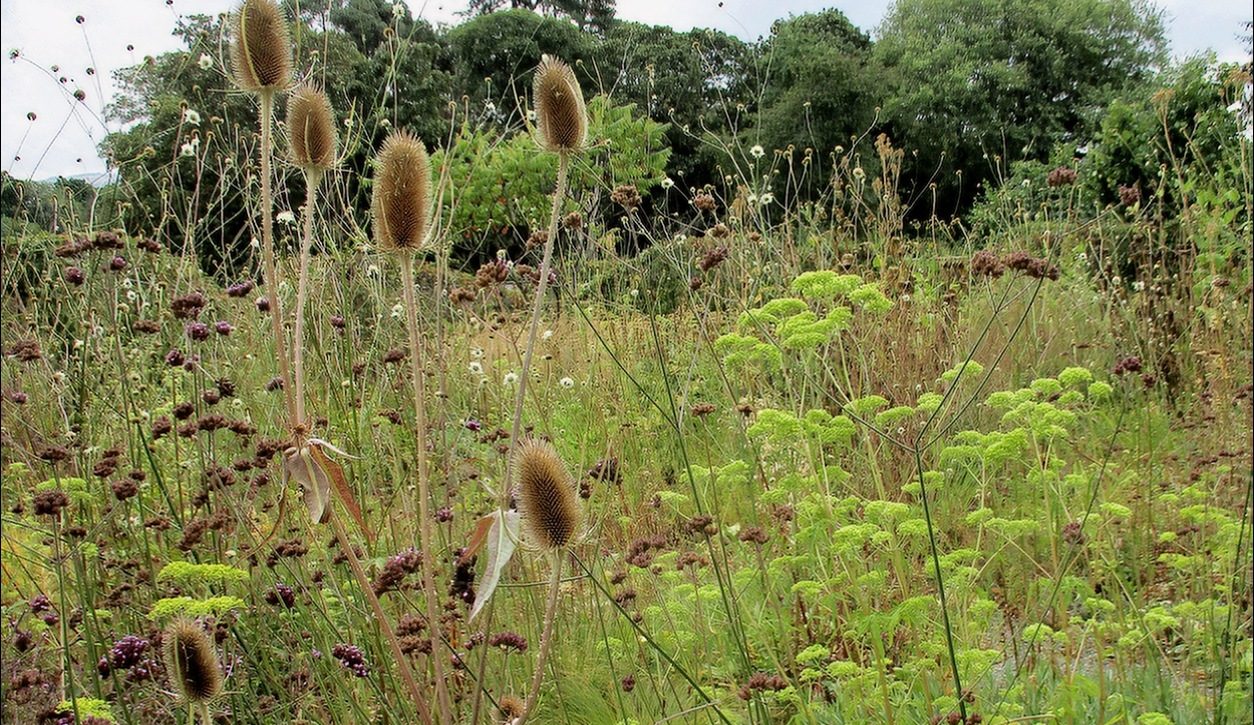
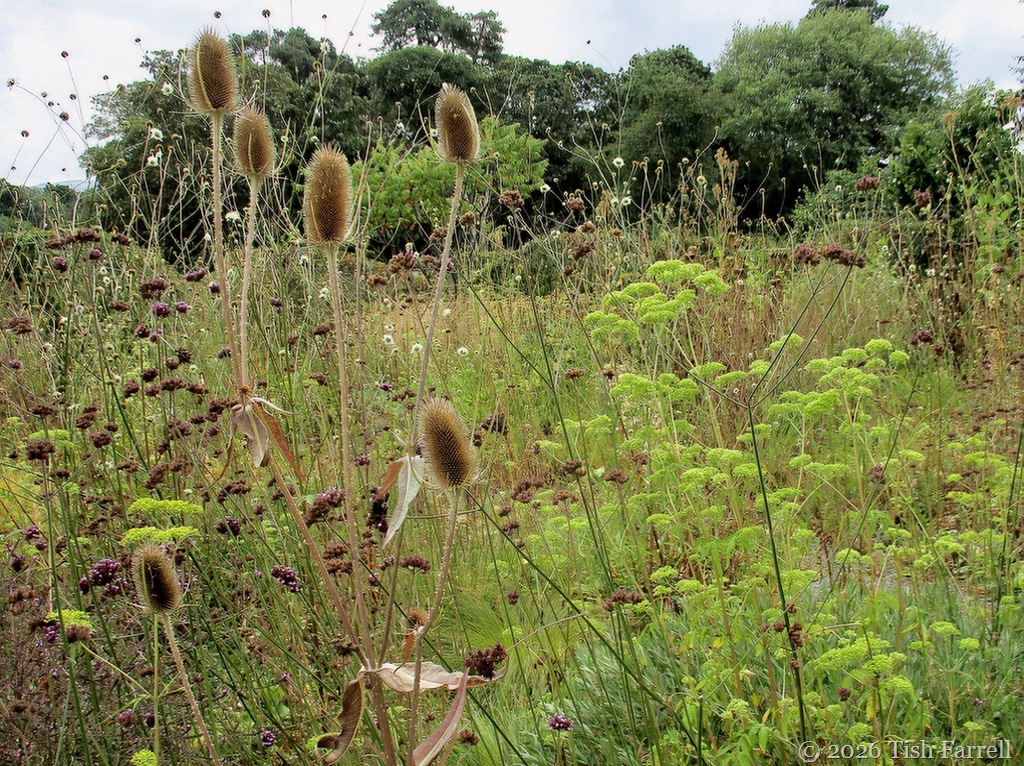
When we arrived a week ago (21 August) it was clear some plants had truly suffered. All the phlox, for instance, had been cut down. But there were also many picturesque, dried-on-the-stem ornamentals like the teasels in the header photo. Gone-over eryngiums of several varieties also added to the general look of scenic desiccation. Likewise the seed heads of many varieties of allium (especially Drumsticks), dark rusty spires of foxgloves and the tall wafting stems of giant yellow scabious Cephalaria dipsacoides. And then there were the many grasses, short and tall. All added to the gentle soundscape of breeze-in-the- leaves.
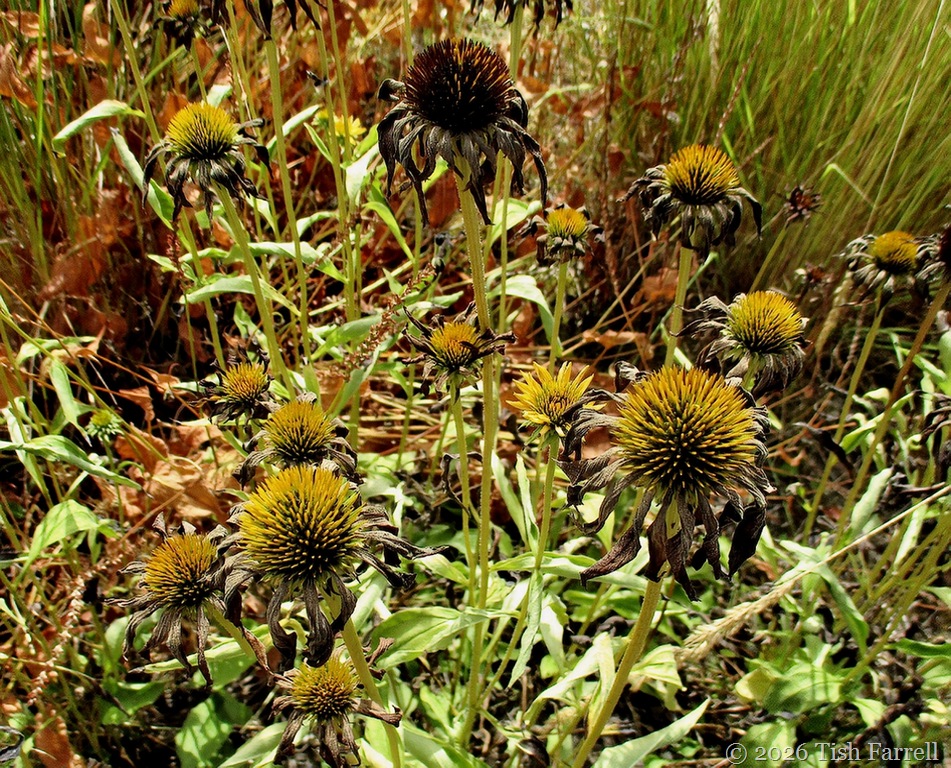
As we wandered up and down the paths, the dead-head coronets of Echinacea Leilani (1) caught my eye. Such smouldering looks in decay.
But it was the surviving and thriving that most interested me. In one quarter of the garden several Gaura were looking especially wonderful, outspread graceful stems of airy blossom, with nearby clumps of evening primroses and tall euphorbias that had clearly been putting on a good show, some flowers still remaining. Then there were the Verbenas, especially, bonariensis and hastata, and the Rudbeckias maxima and fulgida still going strong.
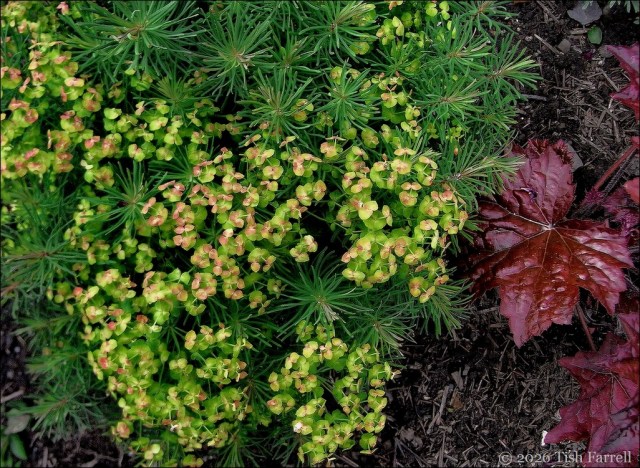
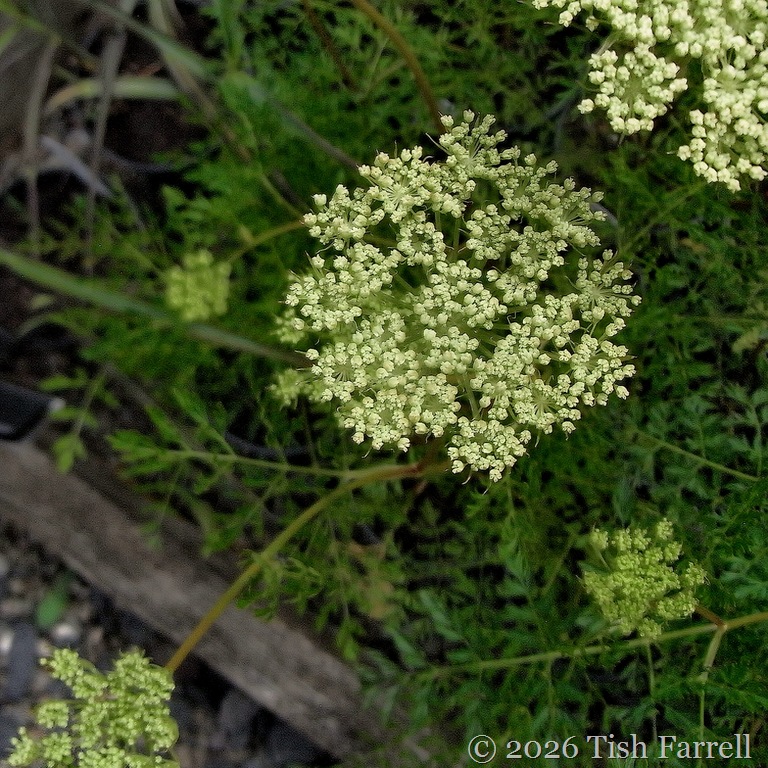
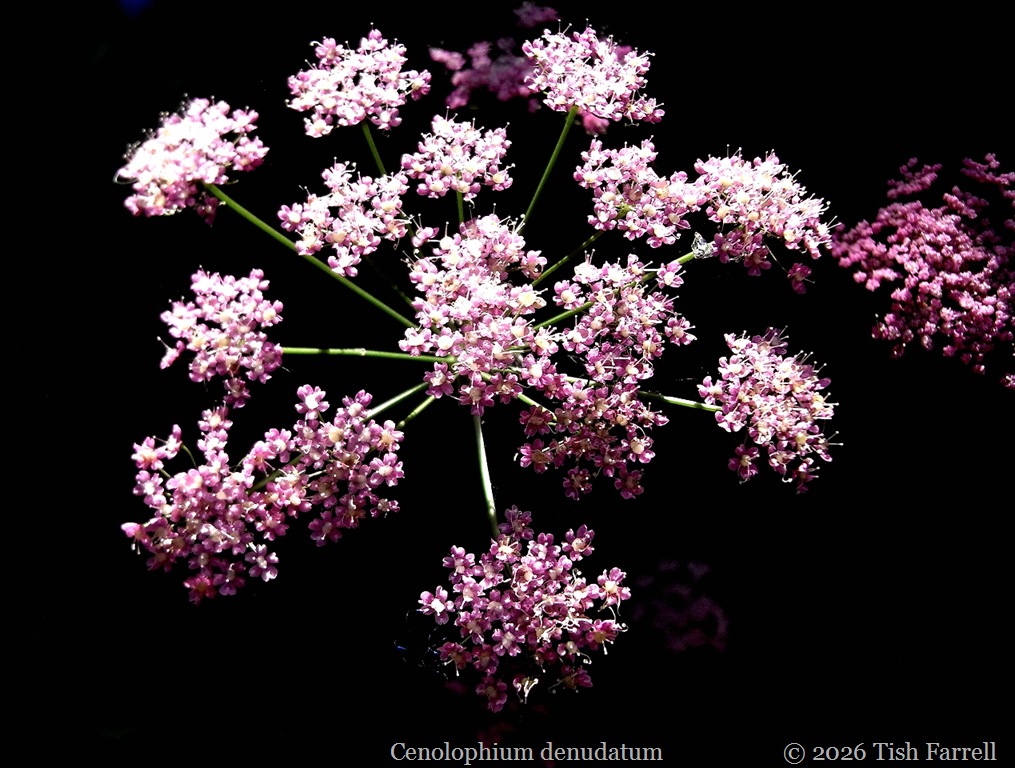
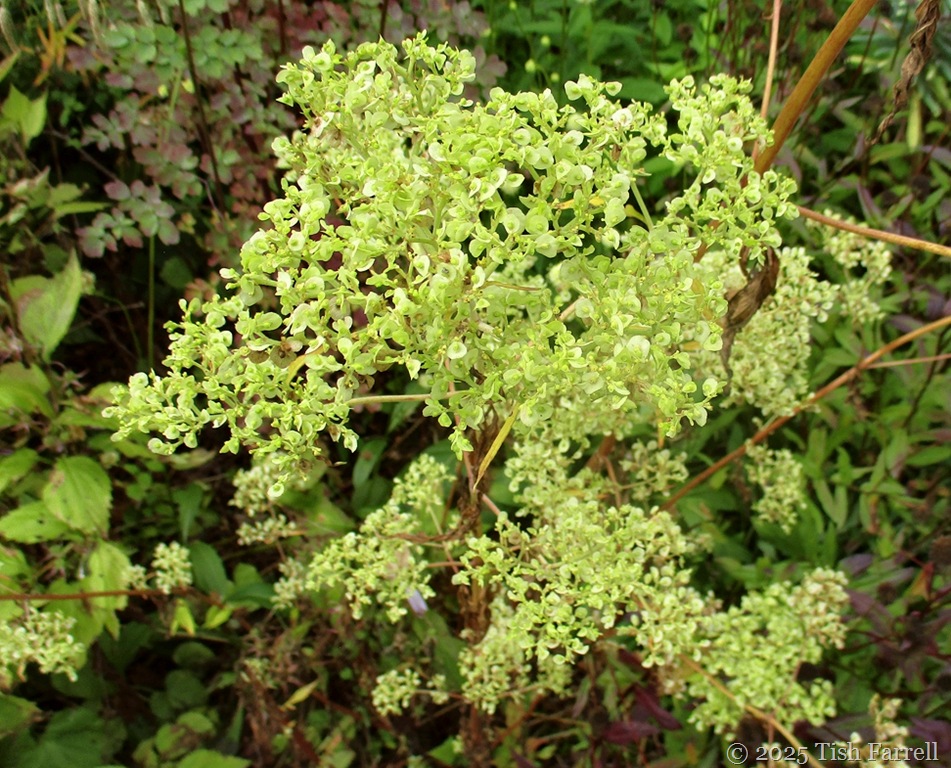
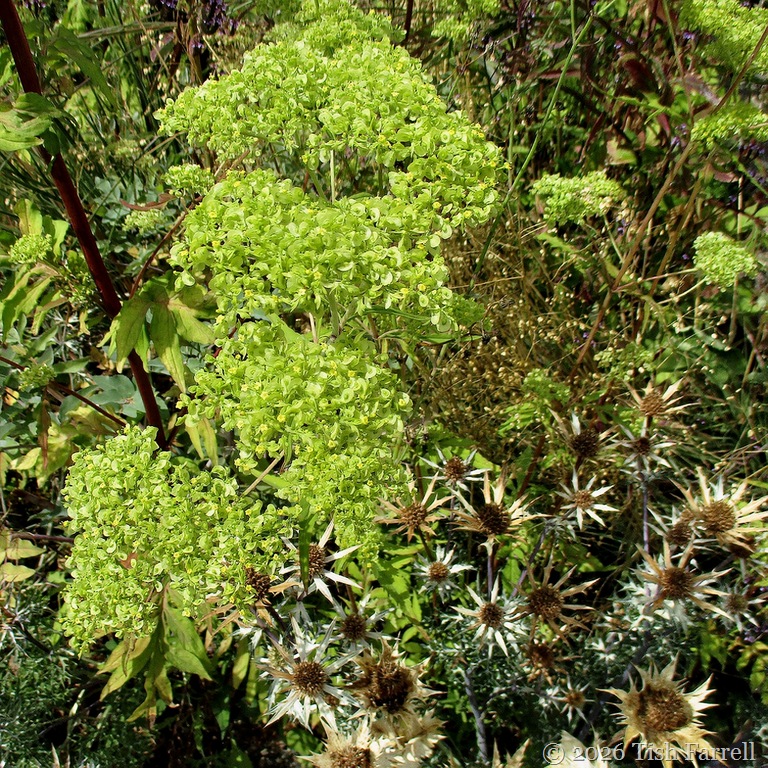
Unsurprisingly, many thrivers had Mediterranean origins. One, in particular, the umbelliferous Patrinia (2), particularly stood out and up among the grasses. It has been allowed to self-seed throughout the garden, the stems stately and self-supporting, some flowerheads a sprightly apple green (also see header photo), others going over in a haze of pale gold.
Here it is keeping company with some very crispy sea holly:
*
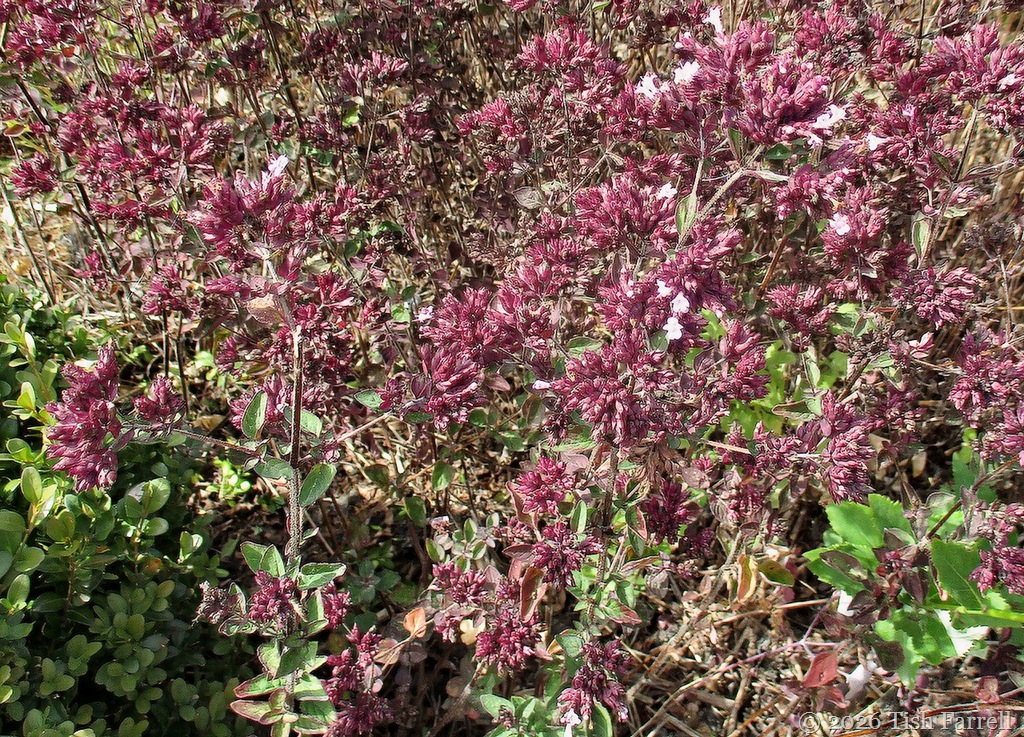
Other happy plants included various members of the origanum family. I succumbed to a pot of Oreganum Gentle Breeze (3) on the basis that you can’t have too different varieties, and they work well in a small garden.
Gentle Breeze appears to be a later flowering variety and was still a mass of dark purple buds.
*
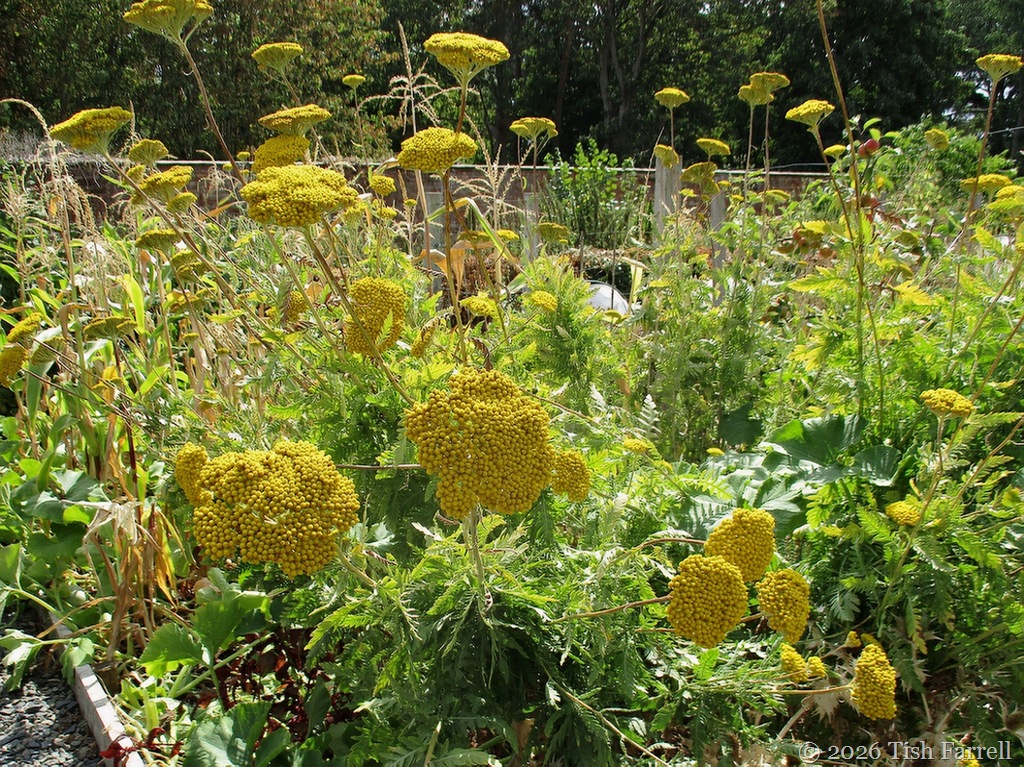
And then there were the Achilleas (4) – Filipendula Cloth of Gold drying nicely beside the vegetable garden…
…and then the very creamy faced, in her prime, Hella Glashoff…
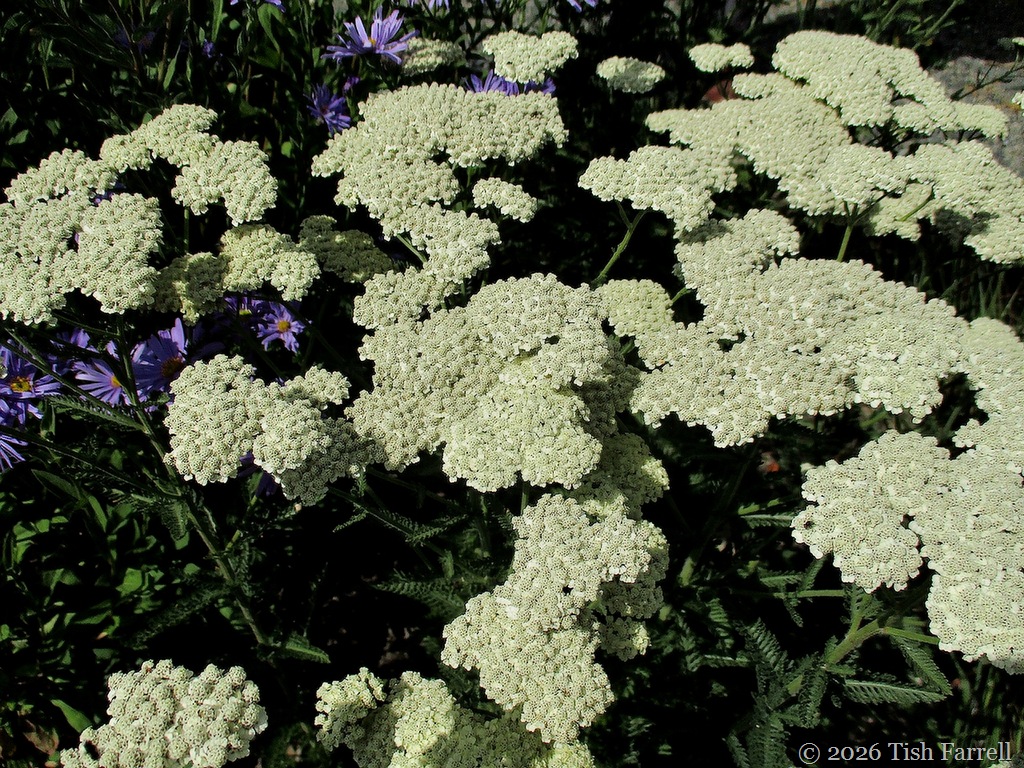
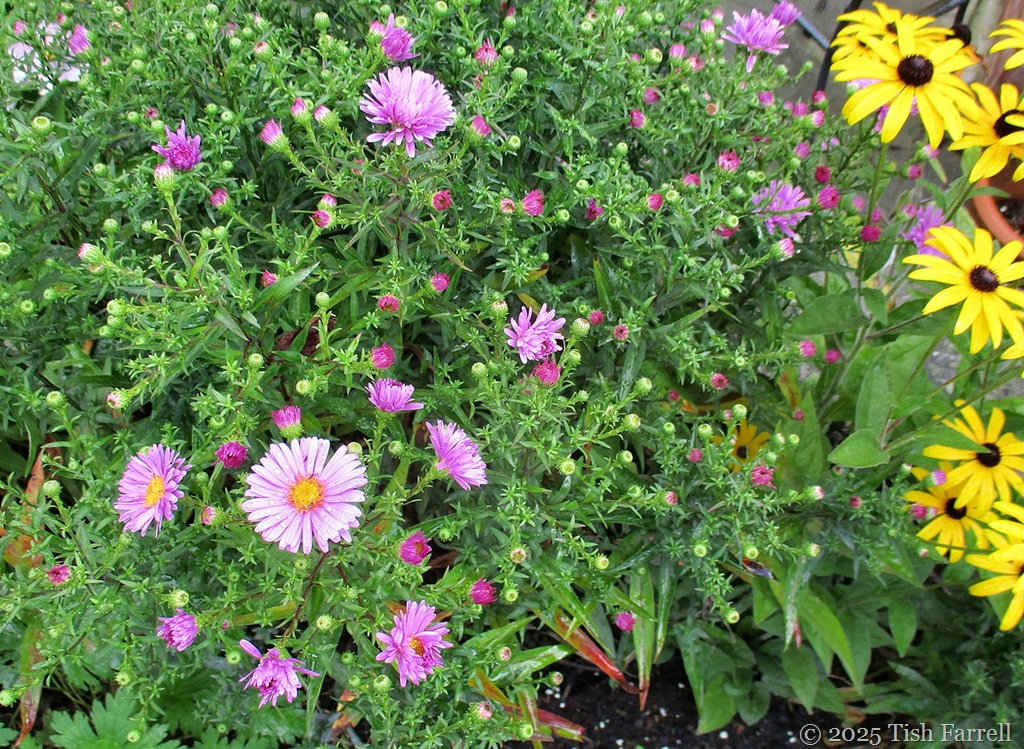
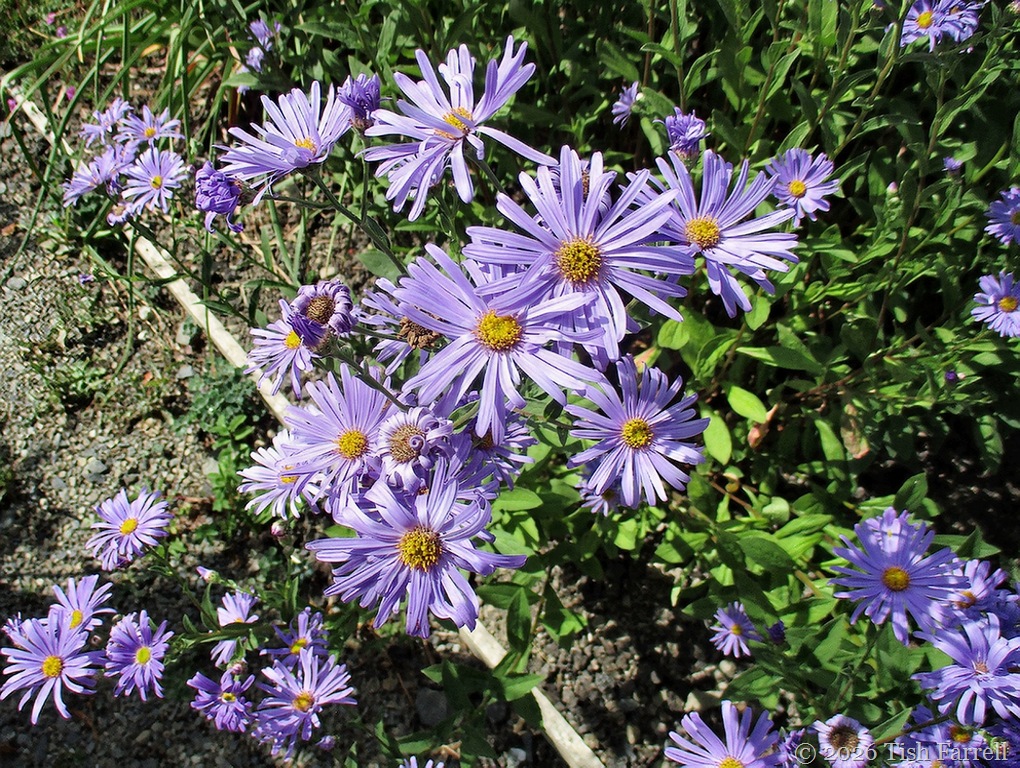
…seen growing alongside some flourishing Asters, probably thomsonii or x. frikartii Monch (5):
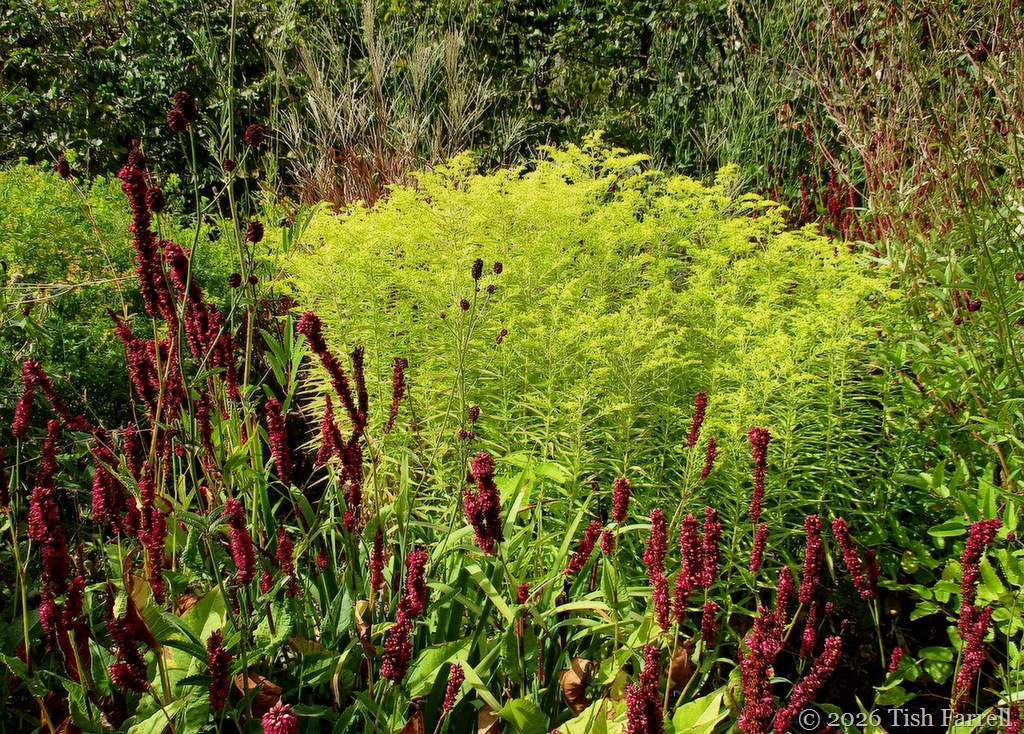
But the over-all winner for its vibrant colour and seeming late summer staying power has to be the Persicaria/Bistorta amplexicaulis (6). There were at least two varieties, the most striking probably the Amethyst. I think this is it in the next photo, shown to great advantage with a backdrop of just-opening golden rod (probably Little Lemon). What a glorious late summer combination.
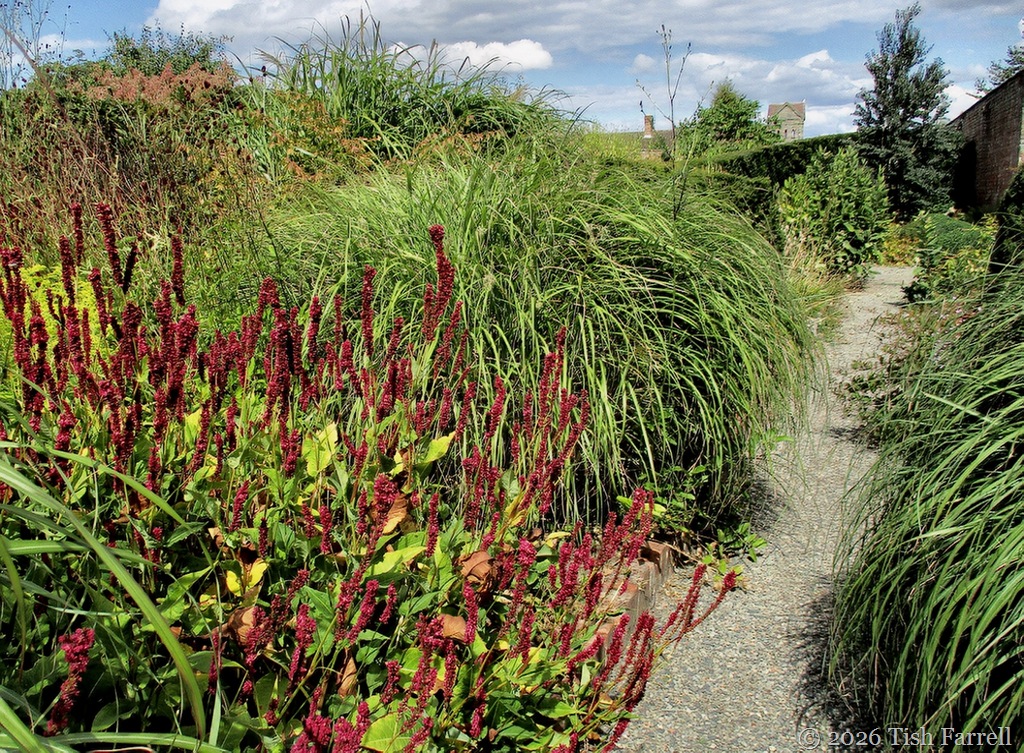
And to finish, another longer view. These particular borders are very well mulched:
Copyright 2026 Tish Farrell
*
Six on Saturday Over at Garden Ruminations Jim is assessing the good and bad of Cornwall’s rainless summer. But the best news is: he has hedgehogs!