Six On Saturday: After The Wind And Rain

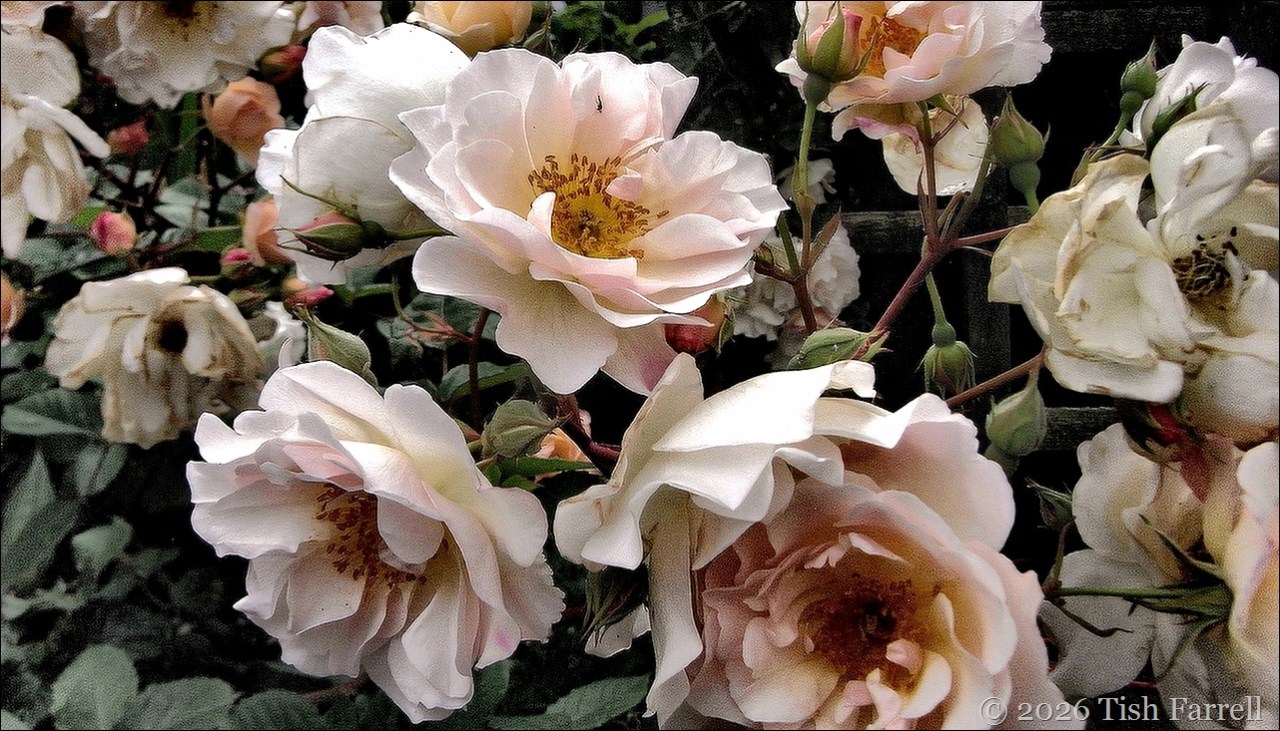
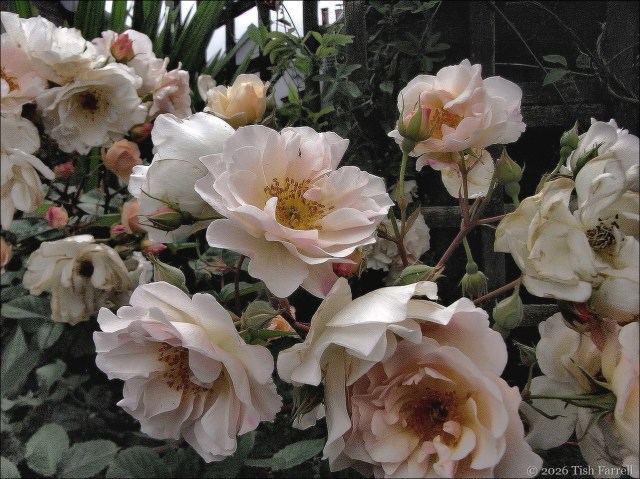
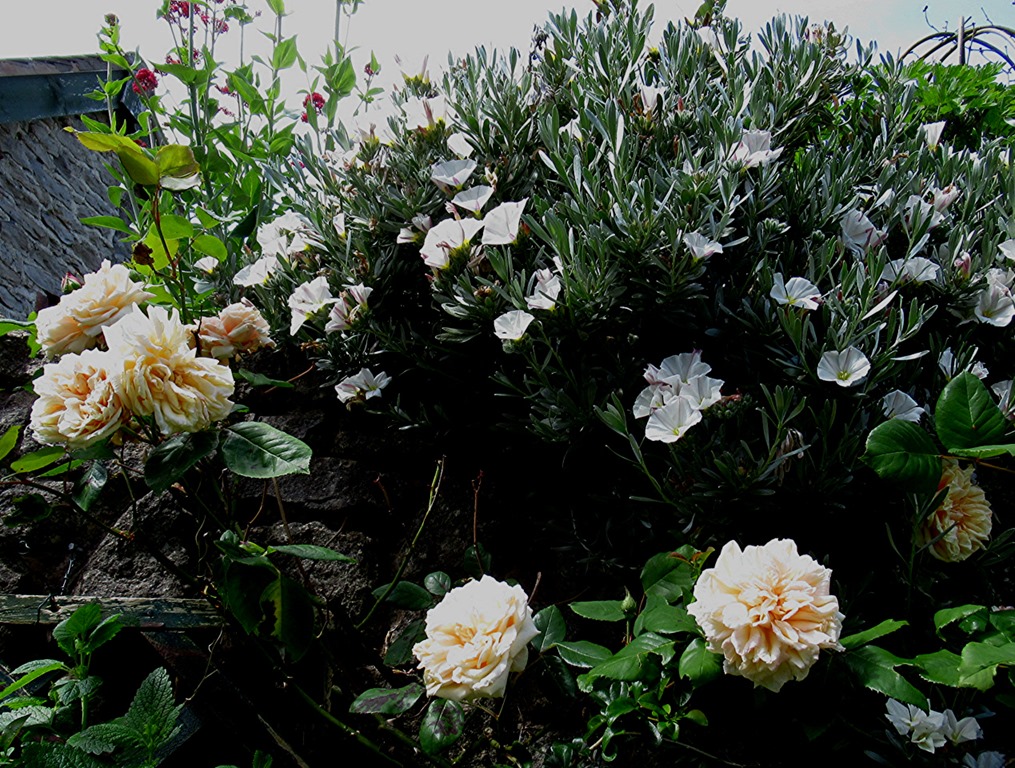
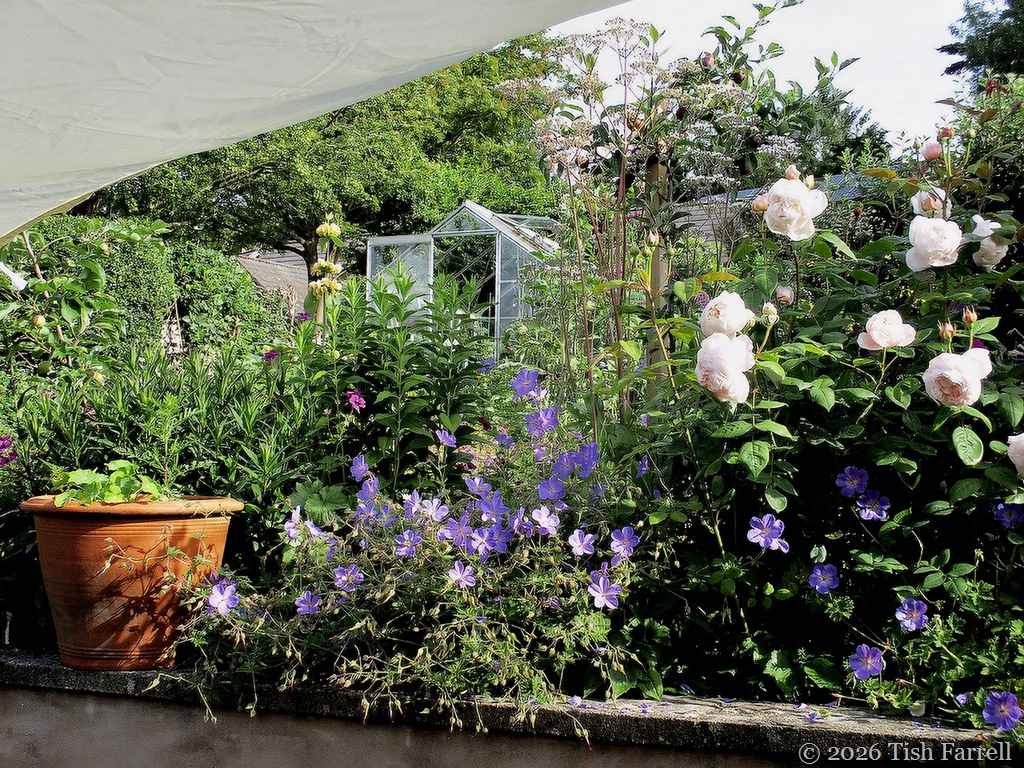
Come gusts and squalls, the roses have been holding their own. And then, in late afternoon, if we have some sunshine, they tumble luminously over the terrace wall and look glorious come supper time. 

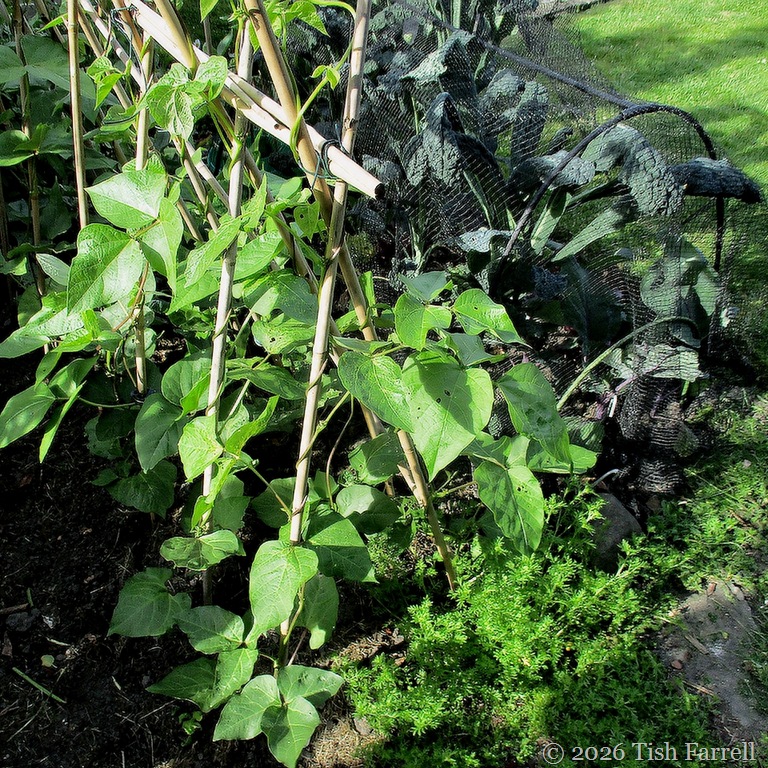
The constant wind, though, is tedious. When did England become so never-endingly blustery? I’ve tried searching on line for an answer, but the sites that deal with weather don’t appear to think it remarkable. As someone who has gardened for over half a century, I know we did not have perpetual wind mashing up herbaceous plants and blowing the new runner bean plants off their sticks.

Perhaps it’s to do with ‘the cold blob’ also bizarrely known as North Atlantic Warming Hole, a region of ocean to the south of Greenland that has been cooling over the past century while the surfaces of the earth’s other oceans have been warming up. Scientists have argued over the possible causes, some citing a weakened Atlantic Meridional Overturning Circulation (AMOC), the system that plays a significant role in the earth’s global climate.

Perhaps the AMOC stole our much vaunted heat wave. If it did, many thanks.

And of course there is much to be pleased about.

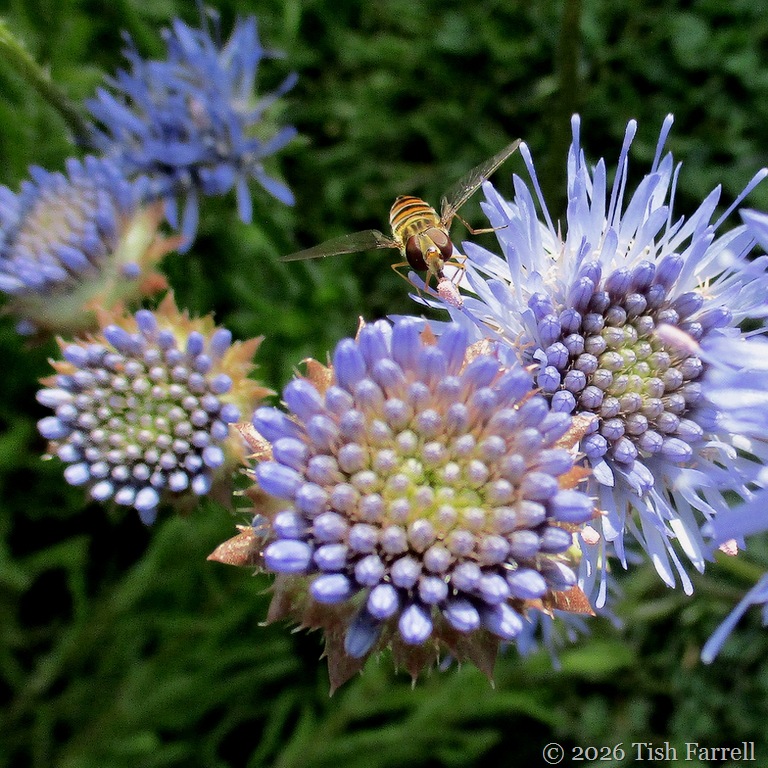
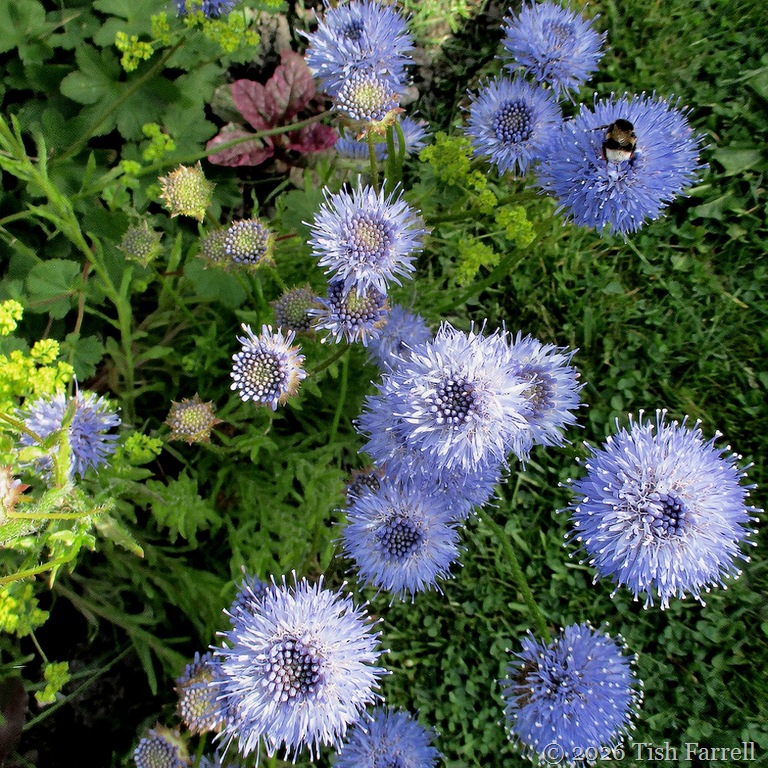
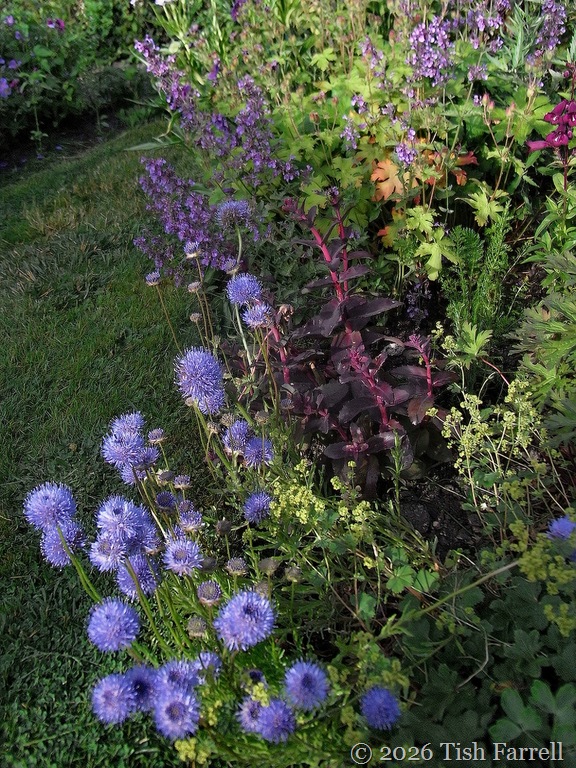
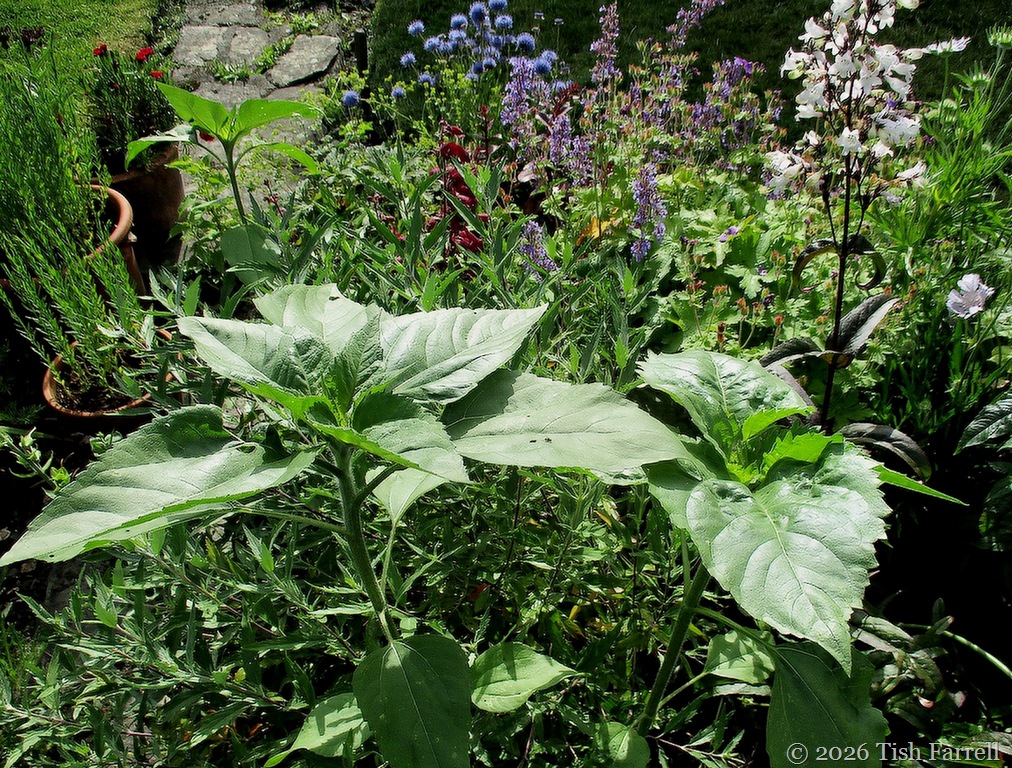
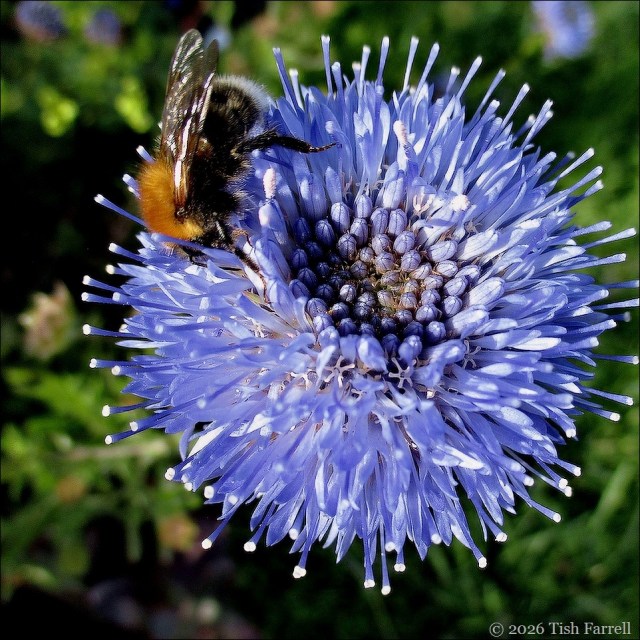
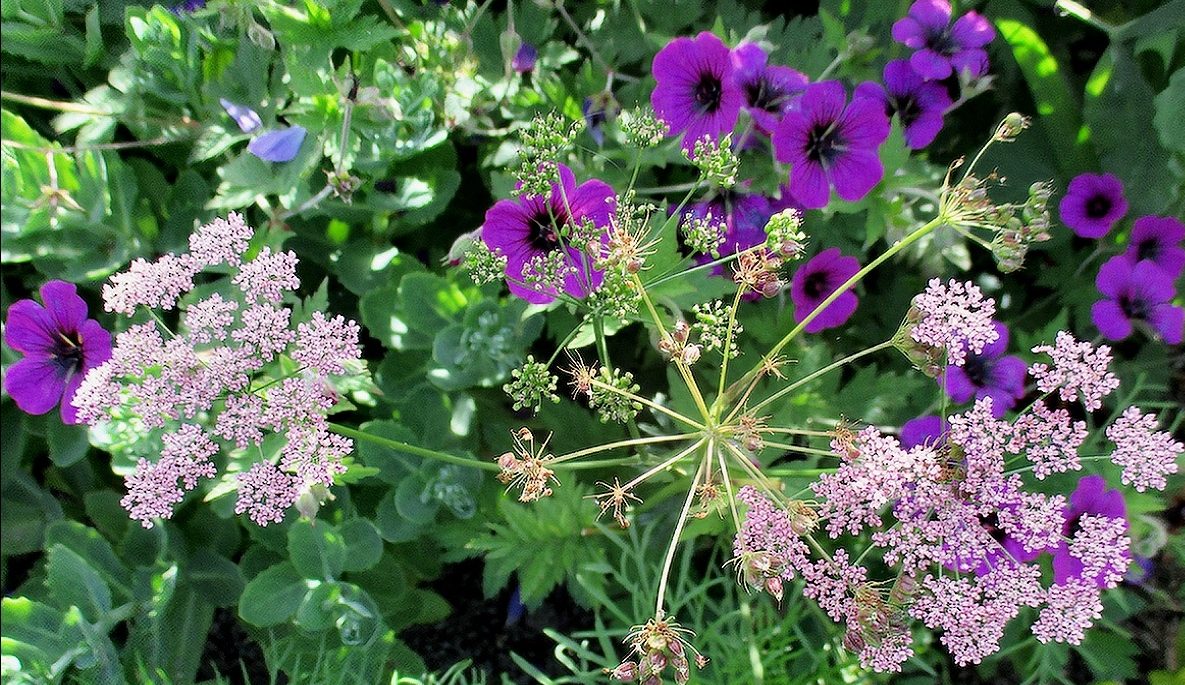
For one thing there are so many bees in the garden, this after a long quiet spring insect-wise. They definitely approve of the sheep’s bit scabious, harvesting the flowers for ages, which makes them easy to photograph.

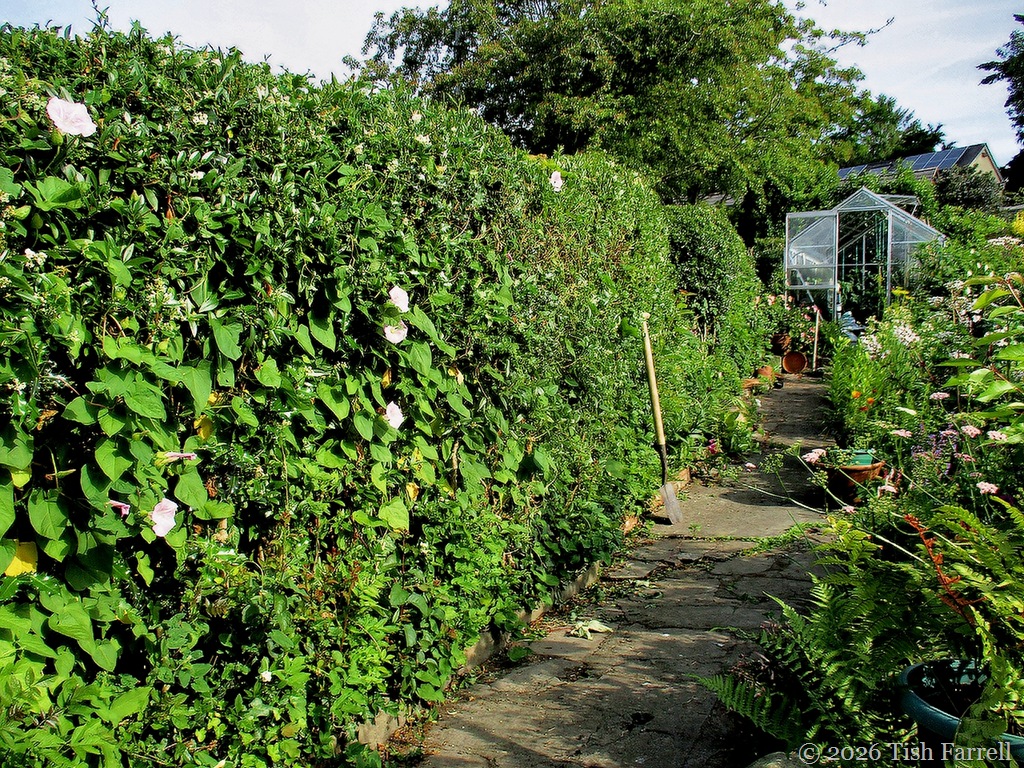
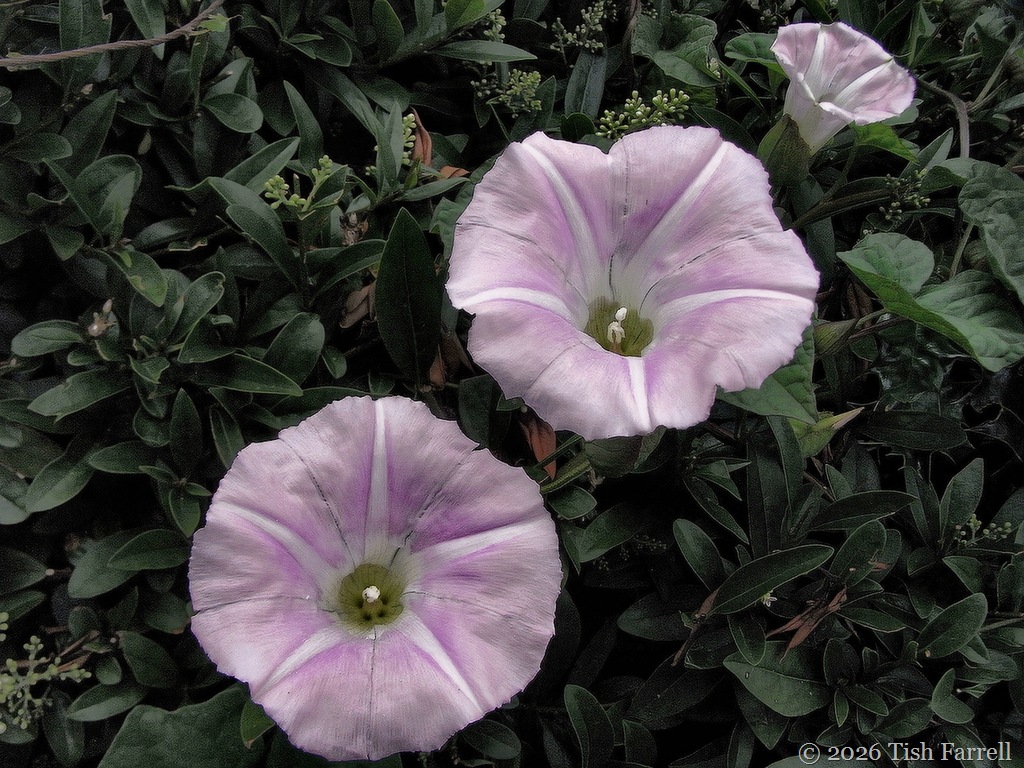
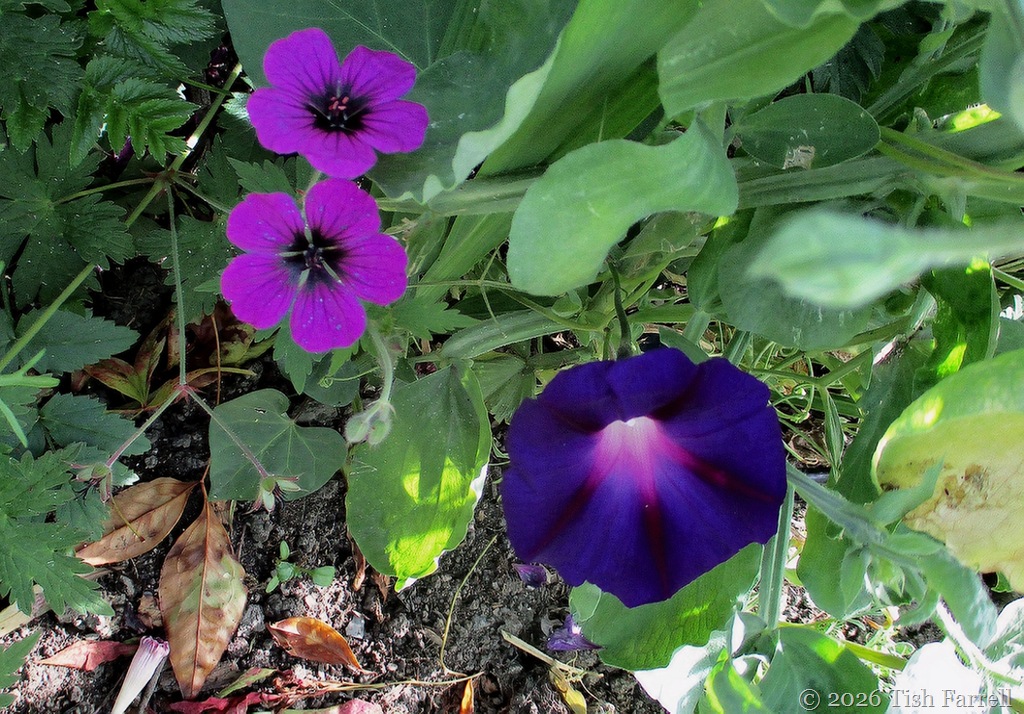
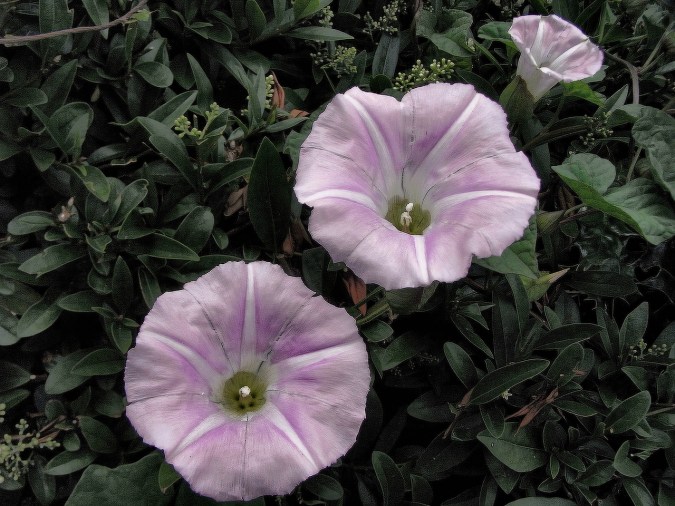
It’s usually a weed that provokes gardener’s fury, but the large flowered pink and white striped convolvulus that has just re-appeared in our otherwise horrid hedge is a welcome sight.  For a bindweed, it is most circumspect in its habits, and only spreads here and there.

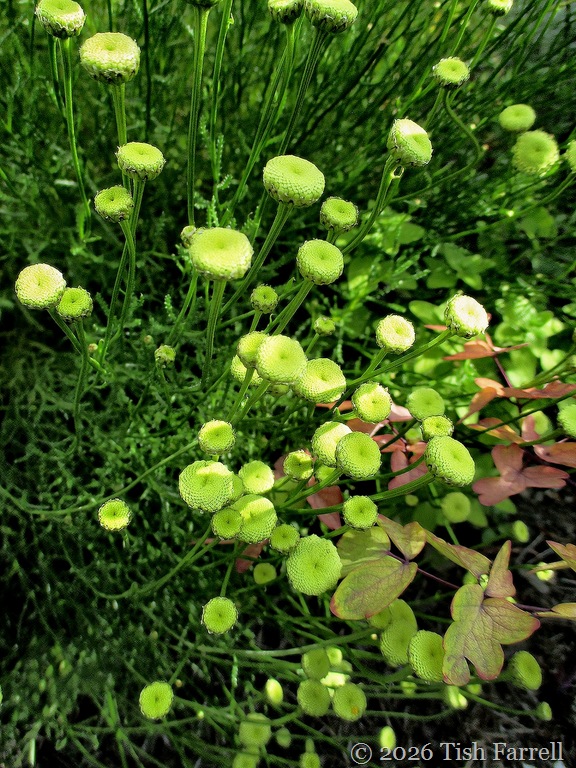
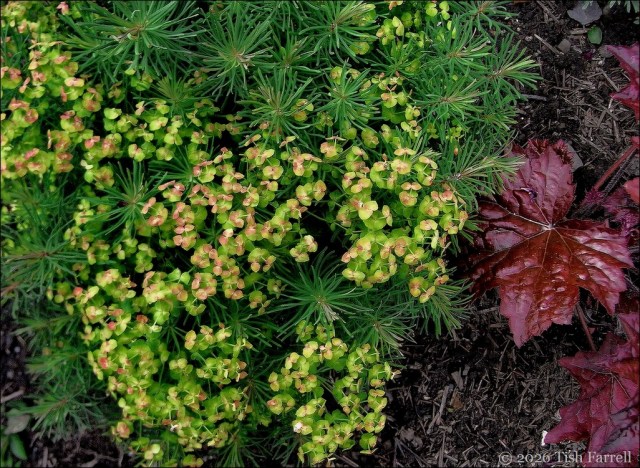
Another spreader, presently flowering is the pretty, low-growing spurge, Euphorbia cyparissias Fens Ruby. Its stems look like miniature conifers, and the tiny flowers several colours of green and russet. It likes to nudge up picturesquely with other border plants and, in that sense, it is a very weedy entity, but then any excess is easily removed. Here it is with a coppery coloured heuchera.


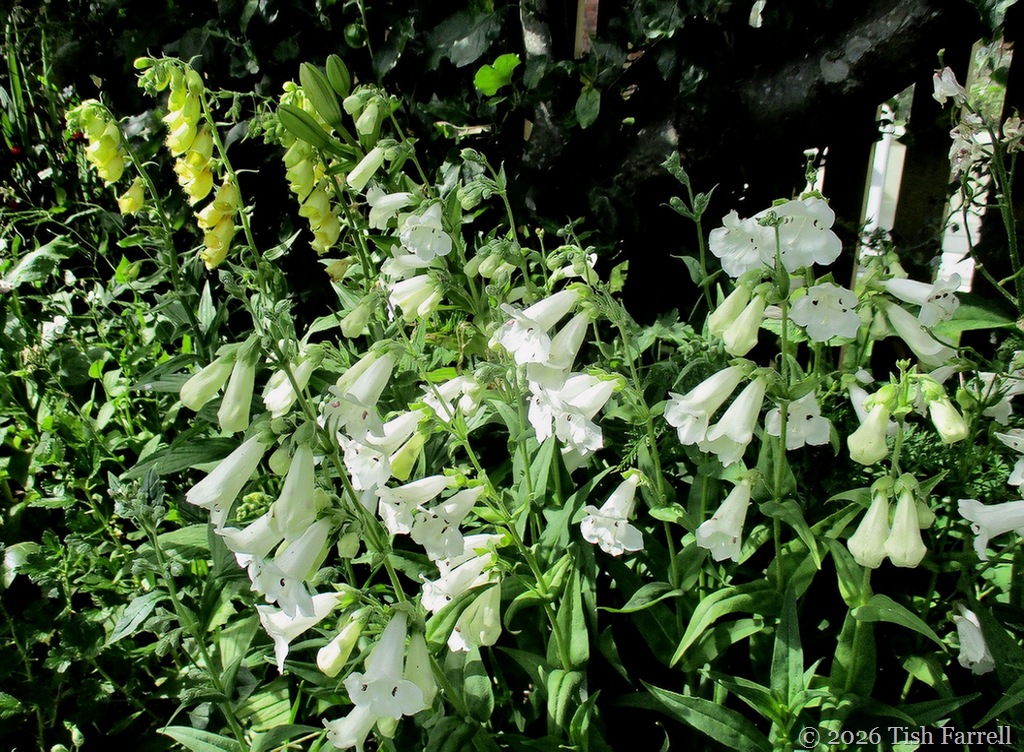
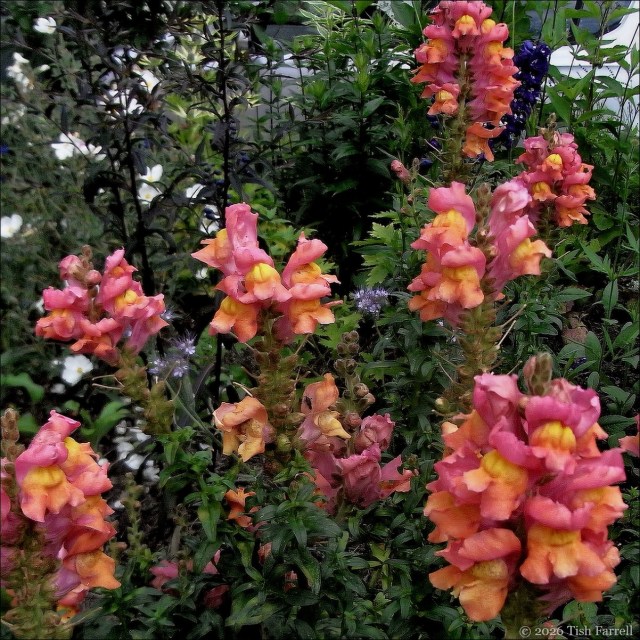
Then there are the self-gardening  regulars that seem to return each year, and with ever more flourish. I love these snapdragons. I don’t mind how much they seed themselves. The plants themselves are shrubby and don’t seem to mind the wind and rain. But most of all, their sun-rise shades brighten the dullest day.

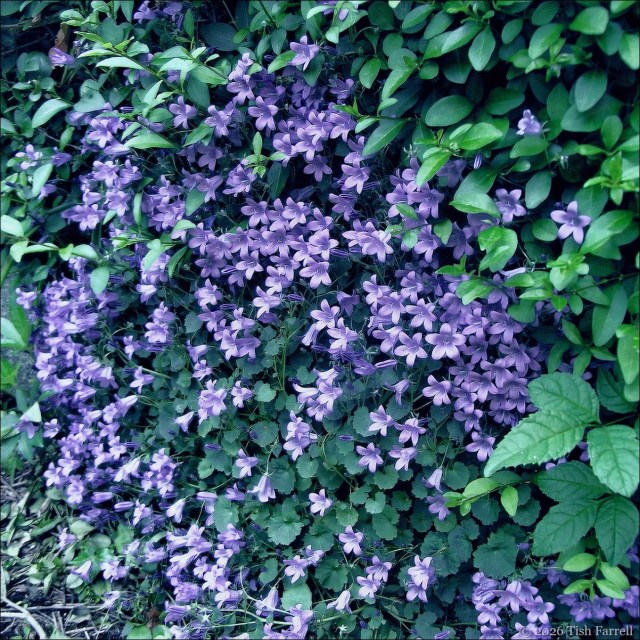
Likewise, the campanula. Over the past few years it has colonised many dull and unpromising quarters of the front garden – growing up the hedge, out of concrete walls, and along the path. It flowers its purple-blue socks off.

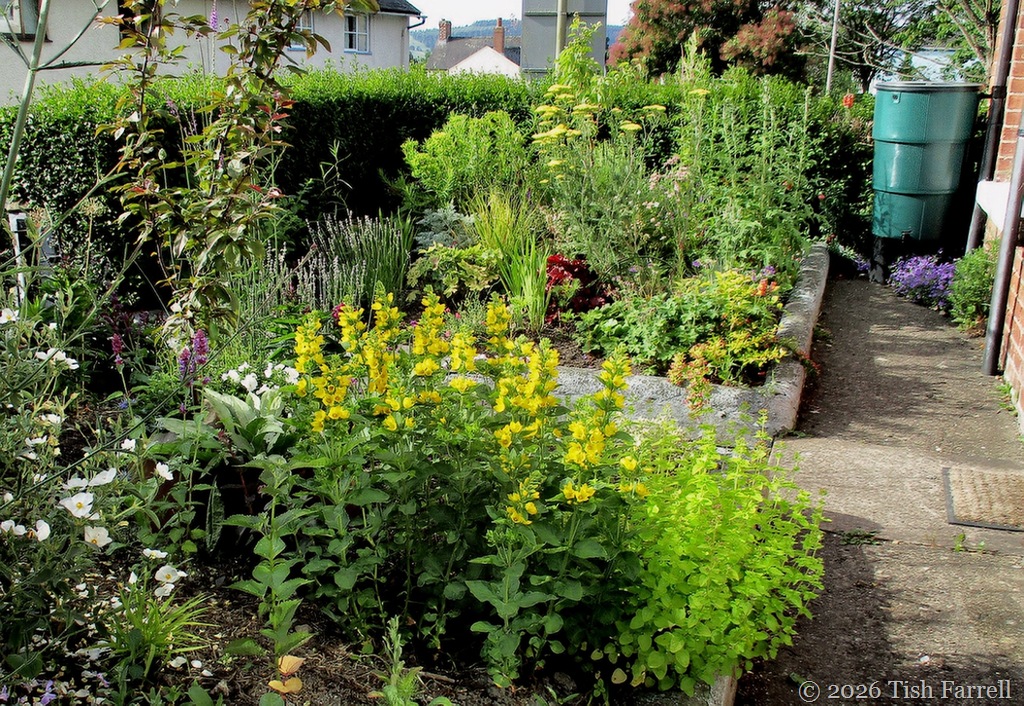
Here it is improving the looks of the privet hedge that surrounds the front garden borders. It’s another plant that copes brilliantly with weird weather, wet or dry.

Copyright 2026 Tish Farrell
Six on Saturday 13 June 2026 Please call in on our host, Jim. As ever, he has some wonderful plants to show us this week.

It’s All Birds And Bees In Our ‘Castle’ Garden

IMG_7447ed

Well, they do say an Englishman’s home is his castle. And for this English woman, this stronghold must obviously include the garden. At least I like to think the garden is my domain; my own small fiefdom.

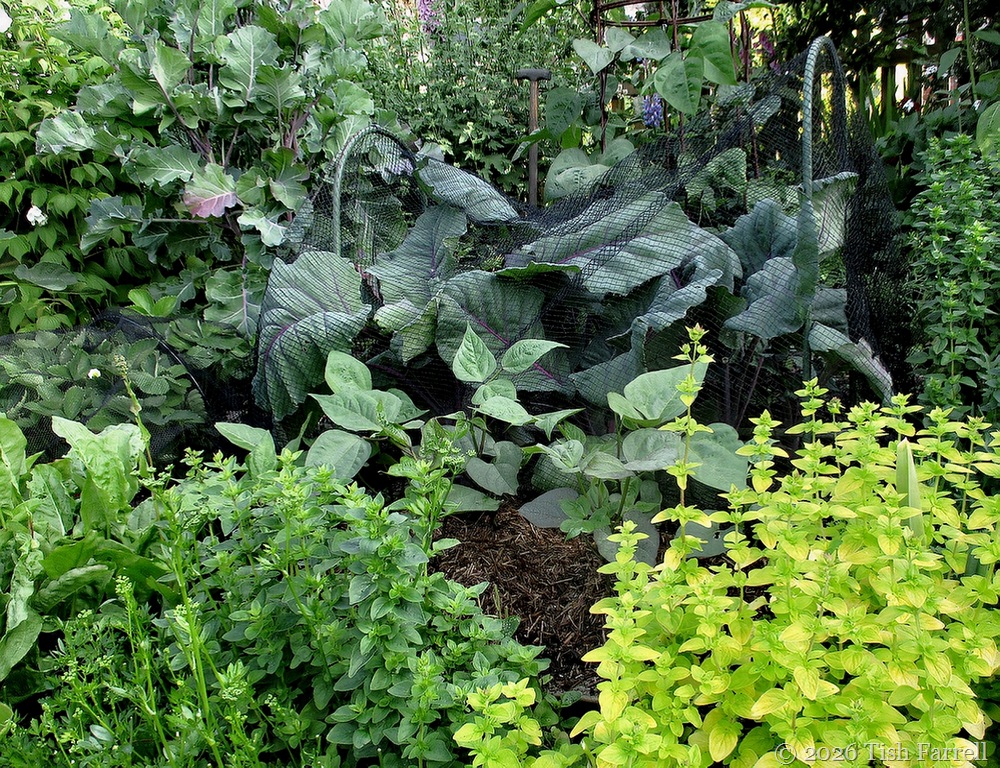
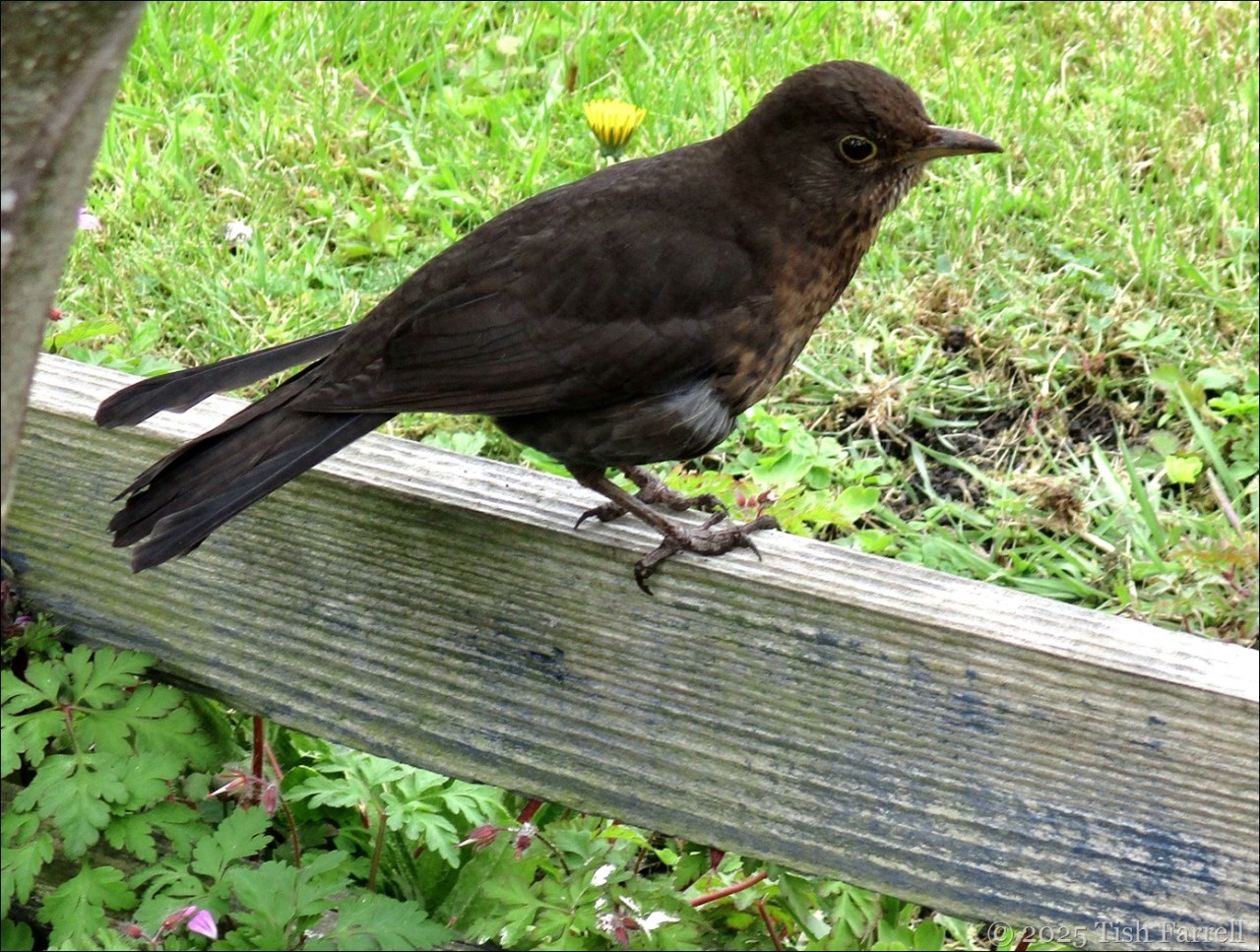
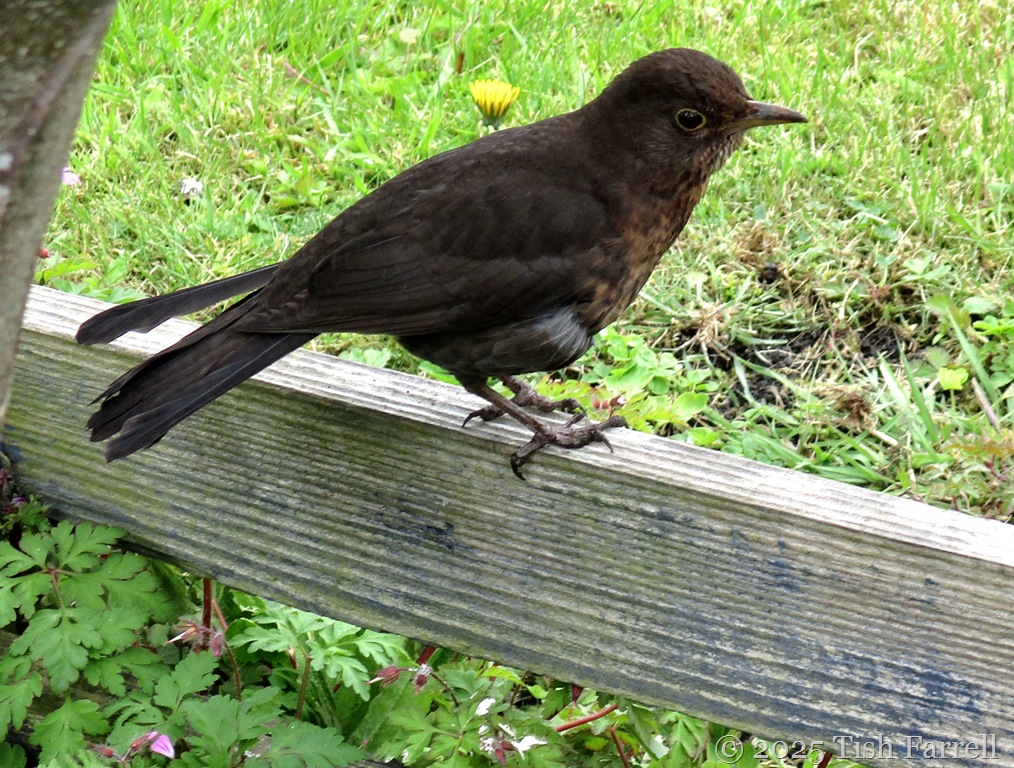
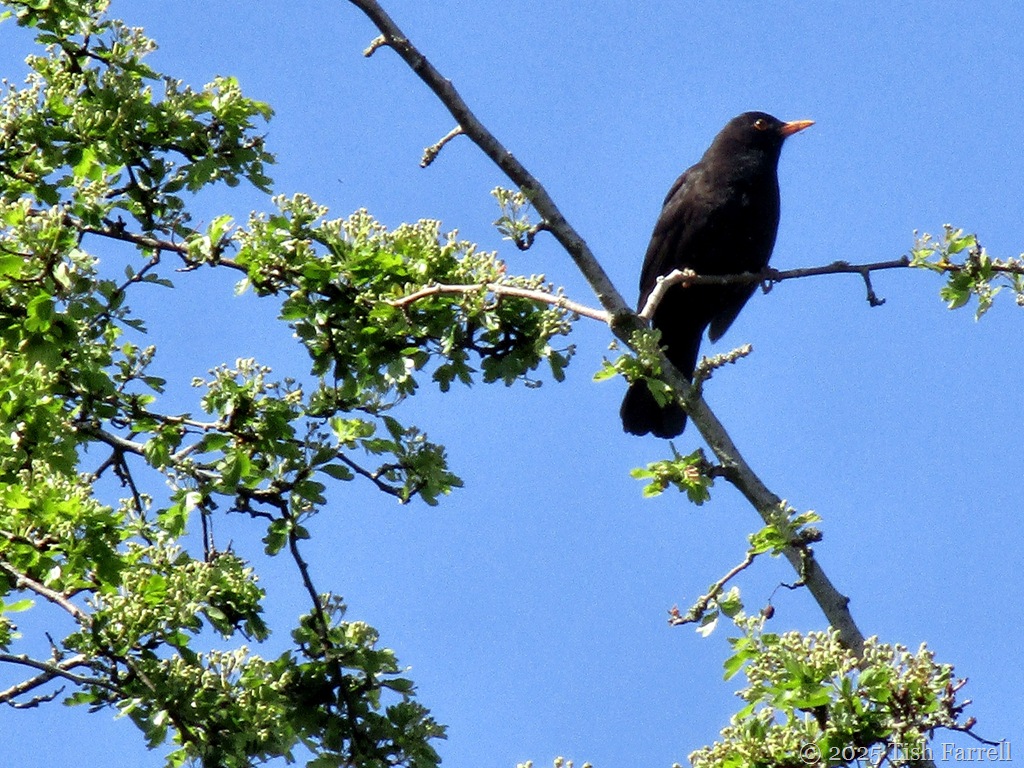
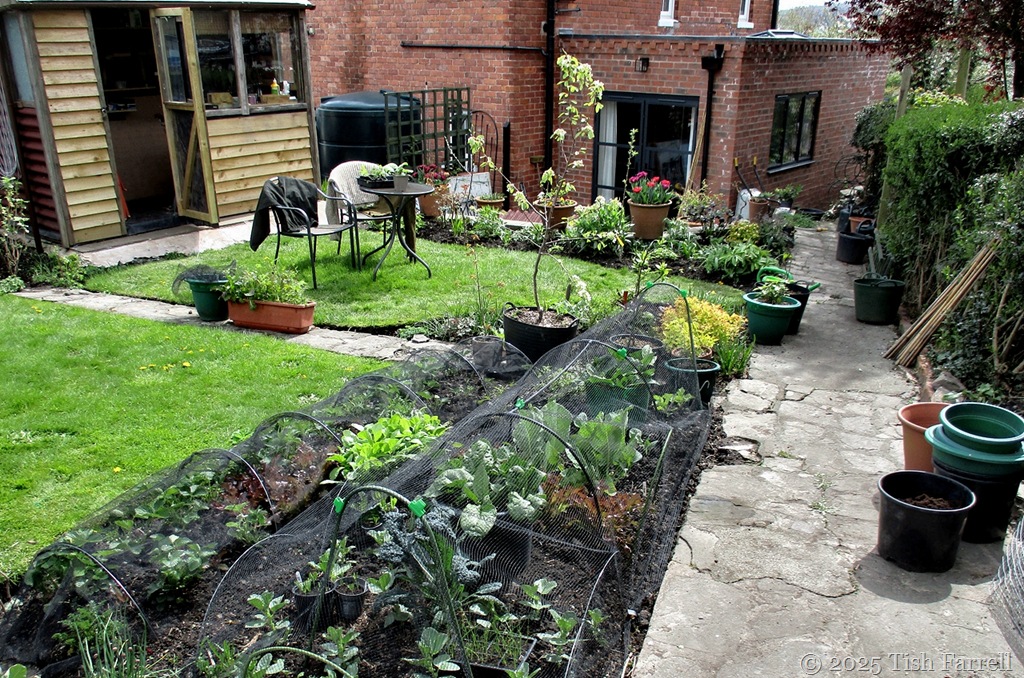
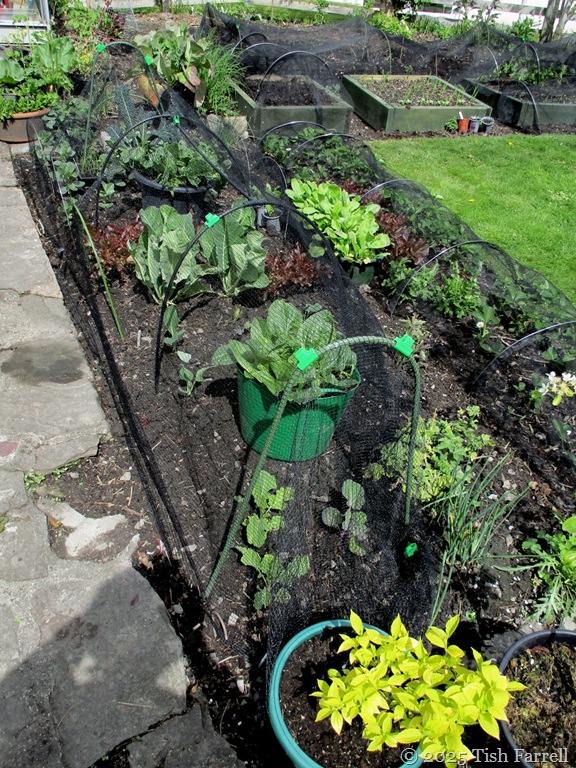
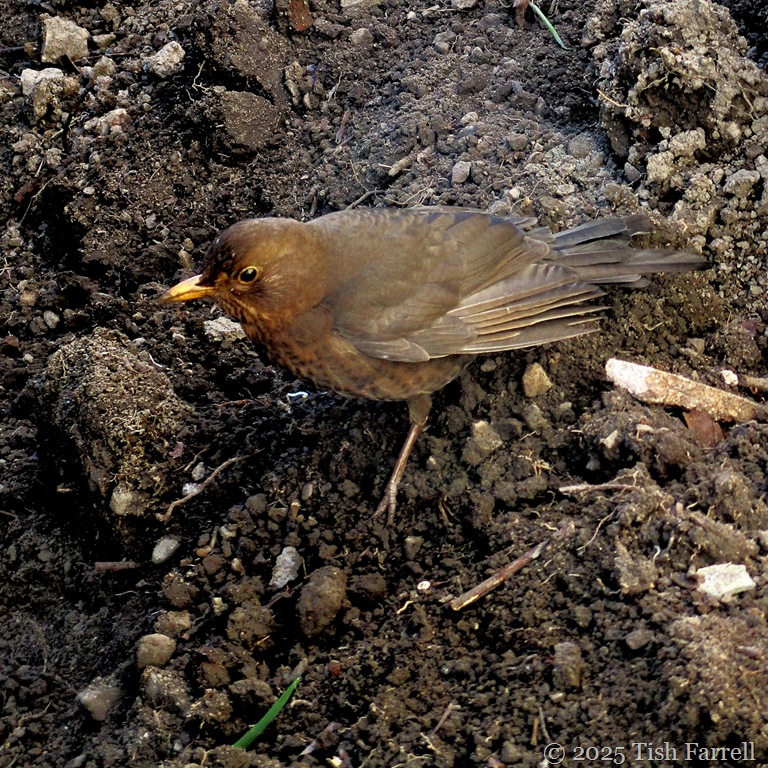
The wildlife, of course, has other notions. This mama blackbird, for instance, is quite sure my purpose in life is to provide her with fresh feeding stations. As soon as I begin work in the garden she’s there, poised to snatch a worm or grub. If I do not provide quickly enough, she fixes me with that beady eye, and starts her own digging.  This has led to us falling out somewhat. I’ve had to net all my vegetable beds to stop her rooting out my seedlings.

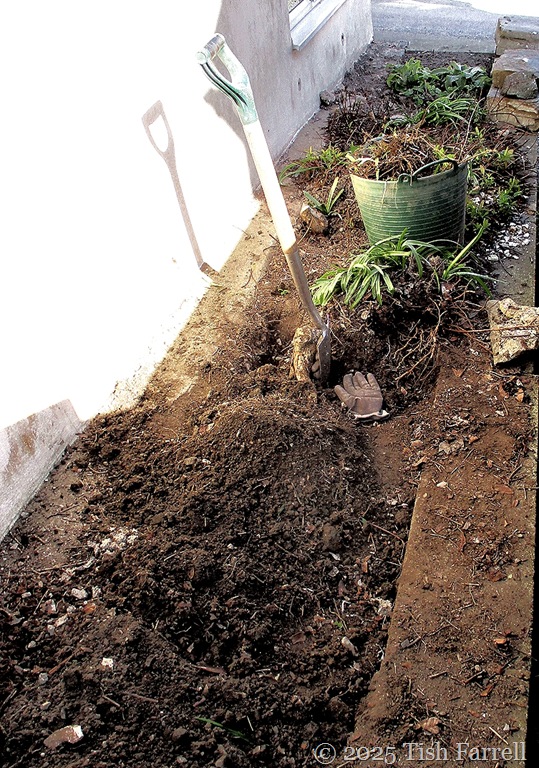
But she did keep me company while I cleared the boundary wall with our neighbour’s garage. It was a horrendous job, hacking out ingrowing and overgrowing hypericum (Rose of Sharon) that years ago had been planted along the top of the wall, and since turned itself into a stretch of brutal anti-tank wire, while inviting Spanish bluebells, ash trees and willow herb to join in the fray.

IMG_7328 ed

I’d been tackling the job on and off since last summer. But now it’s done.

IMG_7332 ed

I’ve planted the road end with a couple of trailing blackberries designed for hanging baskets and also some foxgloves which had grown themselves in the back garden. As for the rest, for this year I’m thinking of putting in various kales and perhaps courgettes; nothing permanent in other words. I’ve discovered that hypericum shoots and roots from the tiniest scrap of itself, so it will probably take a few seasons to clear the bed.

Meanwhile mama blackbird has been well fed, and the feeding clearly paying off. Two days ago, while planting a hornbeam sapling to fill a gap in our rear hedge of horrors, I had the sense of being watched. When I peered into the tangle of privet, holly and sycamore, there she was, sitting still as stone, on a very neat nest, looking straight back at me. I left her in peace.

As blackbirds go, I suspect she is rather elderly. Her tail feathers look more than a touch bedraggled. But she has us weighed up as non-threatening entities, choosing to nest right by the path that we use all the time. She is not afraid to leave it either, when she sees me with a spade. Yesterday,  when I was unearthing some ash tree saplings further down the hedge, she was right there, just in time to gobble up a big juicy worm.

IMG_7417

Male blackbirds don’t do nest duty, but I’m assuming this is papa. He’s taken to singing sweetly in the hawthorn tree just over the hedge. He shows up when I’m digging too, but not if mama is around. (She sees him off). He actually comes very close and tweets at me, if I’m not providing worms.

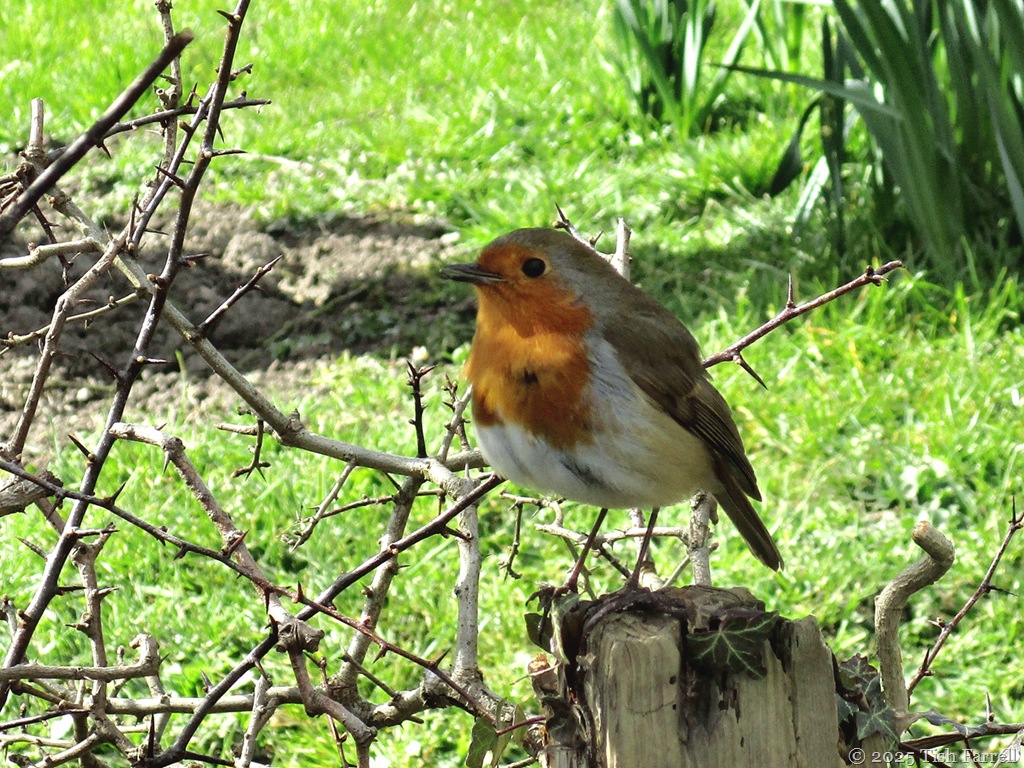
Earlier in the year it was the robin who would come nagging as soon as I set foot in the garden. He/she was especially pleased with operation dig-out-compost-bin, but now is perhaps too busy with egg minding to be around so much.

IMG_6911ed

IMG_6843

*

Other birdlife, as in pigeons, I’m not so pleased to see. They’re another reason for having netting all over the vegetable plots, though it doesn’t stop them from nibbling through the fine mesh if the plants grow too close to the edge. They like spinach, brassicas, chard, chicory, beetroot leaves, lettuce, young field bean leaves and lemon sorrel.

IMG_7437

IMG_7434

IMG_7508

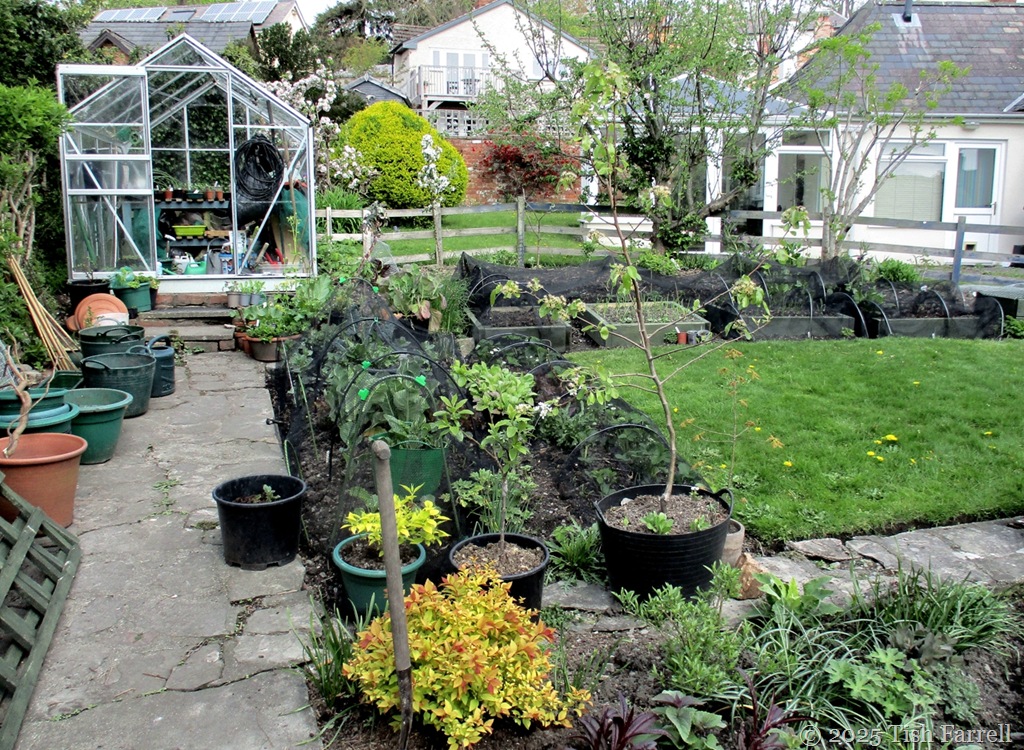
The garden is very much ‘a first draft’; there’s much to sort out (tidy) and much trial and error (given the lack of an actual plan). Next week a paling fence will start going up around the perimeter (from behind the greenhouse and round). It won’t be too tall but will create a boundary for fresh planting which might help focus this gardener’s mind.

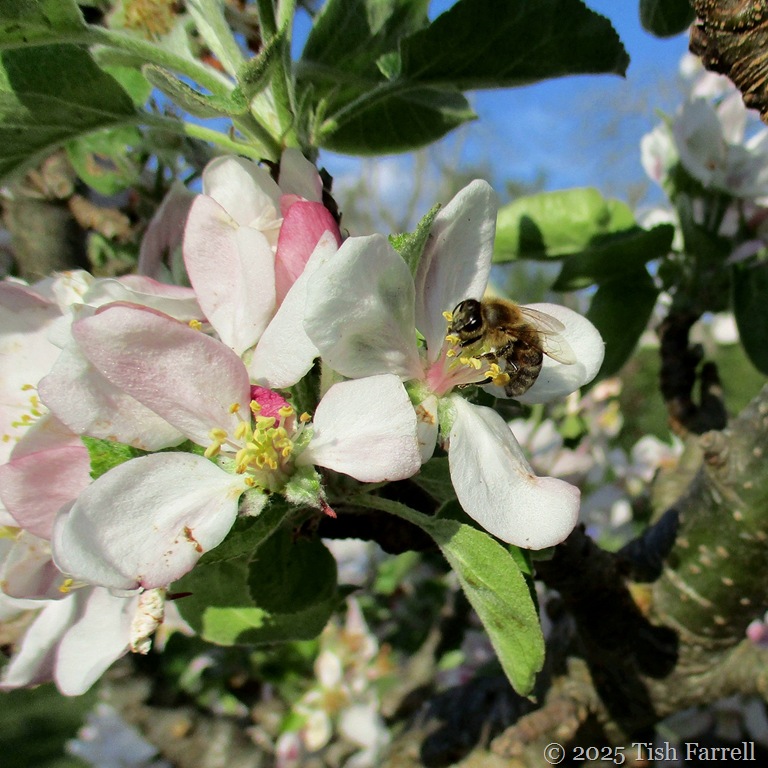
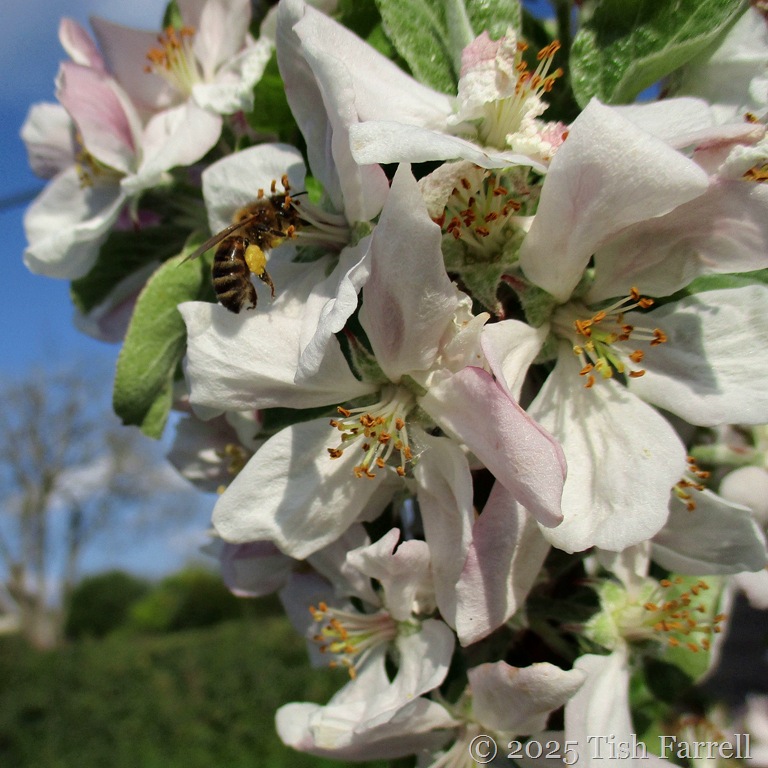
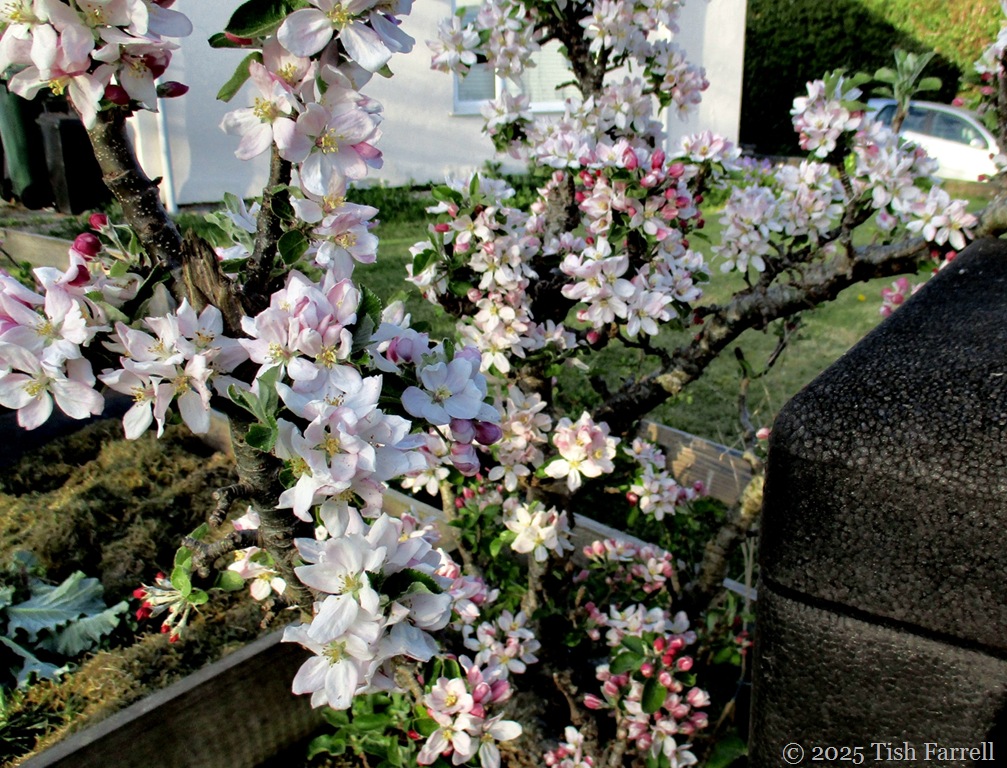
For now we are enjoying the apple blossom, and especially the little tree which is flourishing between the compost bins, one open, one hot. I think it’s a Crispin. The black hot bin is not a pretty sight, but the mass of flowers is lovely and, in a spot of warmish afternoon sun, is alive with bee hum. Just look at the pollen sacs on the bees’ legs.

IMG_7478

IMG_7474sq

IMG_7427

*

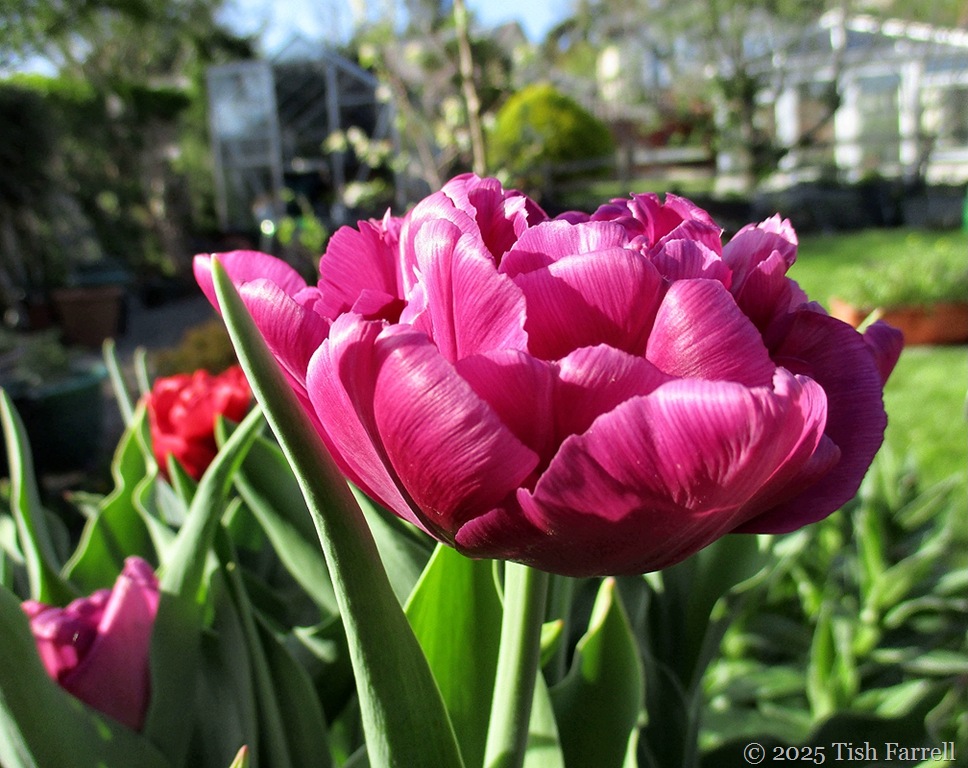
And there’s not only apple blossom. On the terrace wall we have tulips. They are presently looking rather glamorous:

IMG_7426ed

IMG_7425

So: spring is here in the Farrell domain aka Castle (also the locals’ name for the town), and in moments when the wind drops and you stand in the sun where the air is less frigid, it feels like it too. Cheers, fellow gardeners! Happy planting!

Six on Saturday: blackbirds, robins, bird defences, apple blossom, bees and tulips

copyrithg 2025 Tish Farrell
Leading You Up My Garden Path

IMG_8884

Our cottage is built into a fieldside bank. The garden is broad (as wide as the house), but not deep. Or rather it is deep since it drops off about 8 feet to the right of the frame. The two old privies back onto Townsend Meadow. There’s a very free-form hedge of many plant species behind the foreground flower bed, and a fenced portion (guerrilla garden on the field side) beyond the privies. The deep red smoke bush behind the brolly marks the boundary with next door, and I’m standing with my back against the bespoke, self-built Graham-Shed to take the photo. Here then is the Farrell domain – small and irregularly formed. An upstairs-downstairs-between-floors-short-on-planning sort of a garden.

IMG_8100

IMG_8105

IMG_7797

IMG_7796

IMG_7963

IMG_8299

Square Perspective #18 A seafood teaser from Becky today.

Six Word Saturday  And a fabulous Vatican shot from Debbie.

Today In The Garden ~ Granny’s Bonnets Galore

IMG_1614

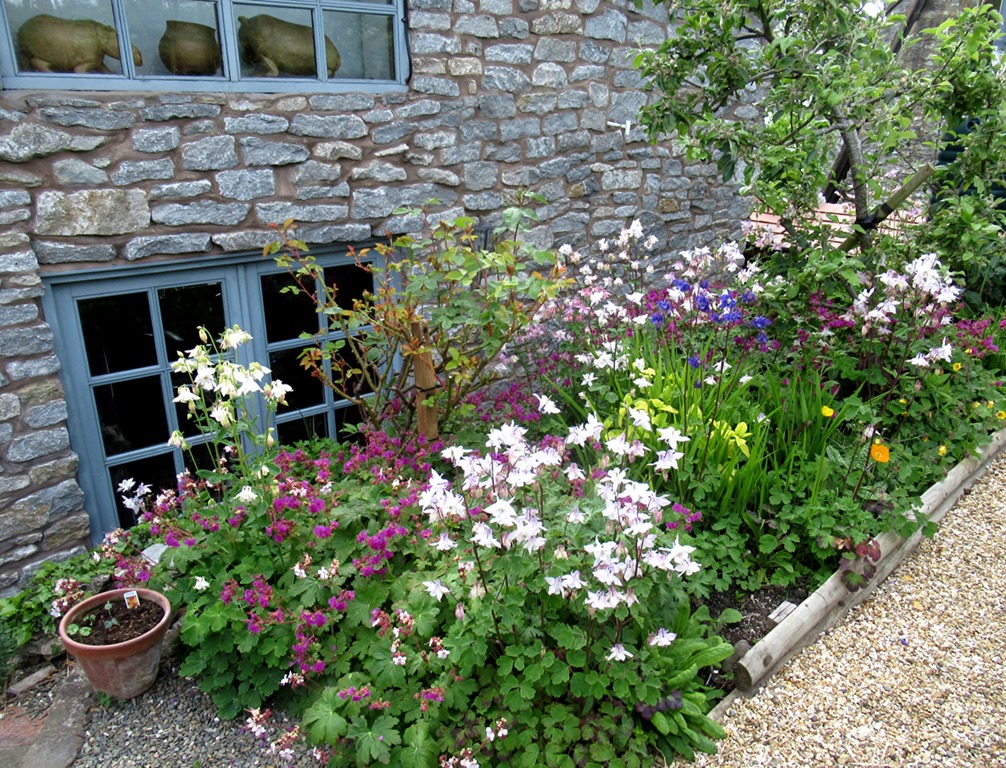
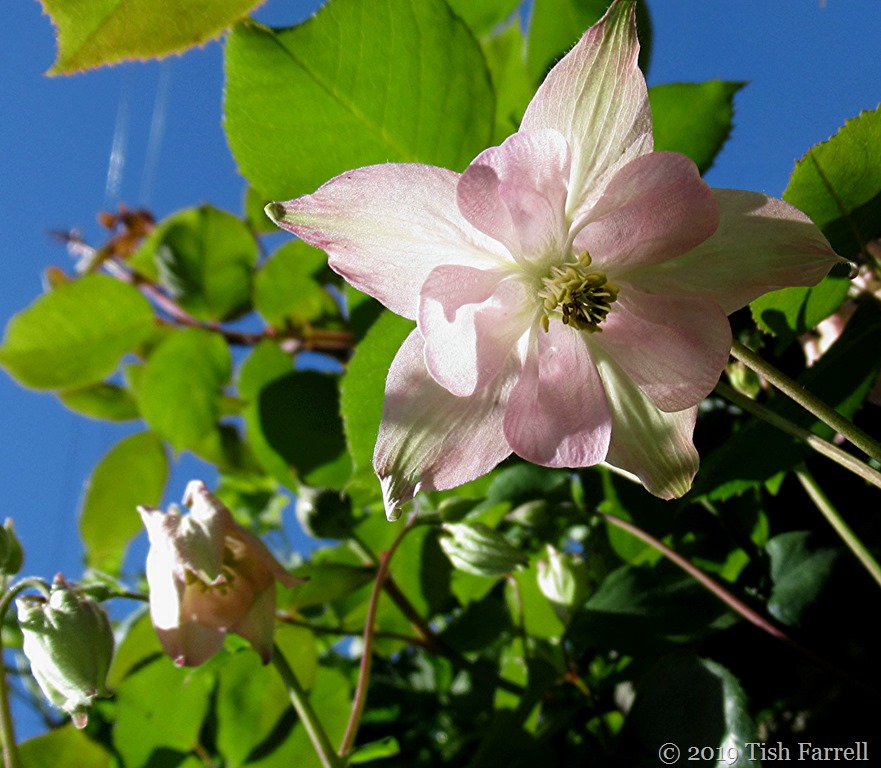
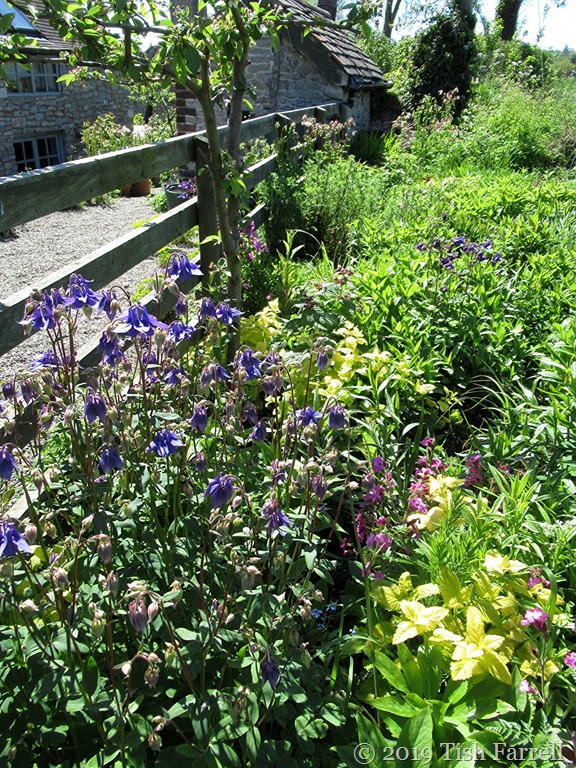
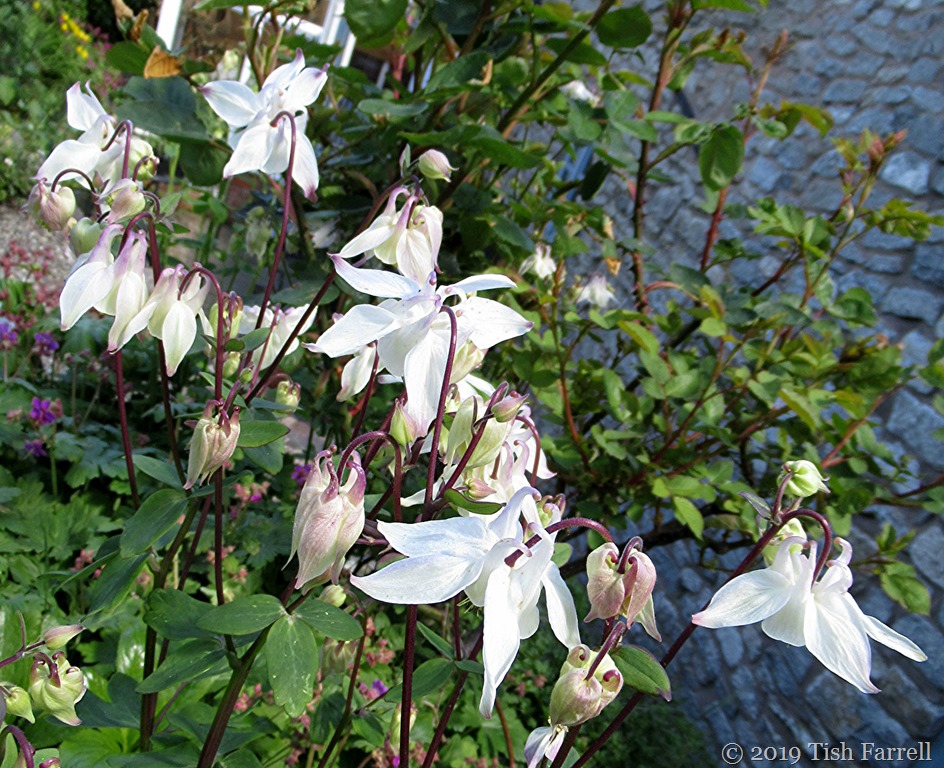
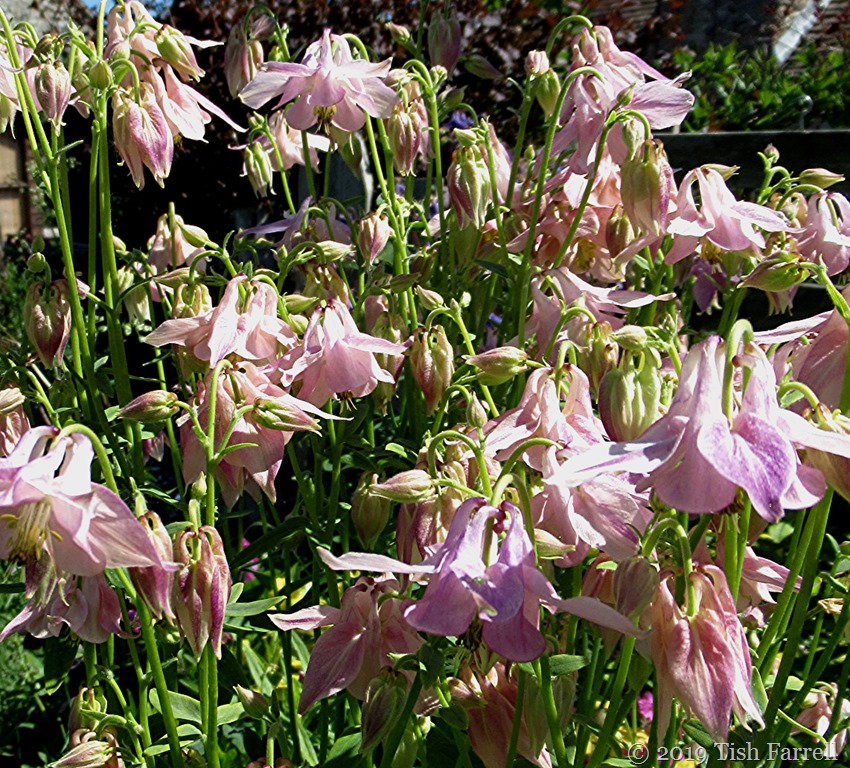
I’ve said before there’s a lot goes on in our garden that has little to do with me. This month’s aquilegia/columbine/granny’s bonnets invasion is just one of them.  Year after year they self-seed and appear in subtly new colour variations. Sometimes the mauve palette predominates, sometimes the pink and claret. This year there are several white ones with mauve hints, and also some new salmon pink ones that have chosen to grow in amongst the Gloire de Dijon climbing rose which is just about to break into blooms of the very same shade. Makes you wonder if the Grannies have more than bees in their bonnets. I mean, did they plan this?
IMG_1607

Out in the guerrilla garden (between our back fence and the field) the Grannies are growing in thickets. They have also crept round to front garden for the first time this year, though last year I did plant a species yellow one out there (a plant rescued from an abandoned allotment plot) in hopes that in time it might mingle with the residents and create some new shades.

IMG_1563

IMG_1561

IMG_1586

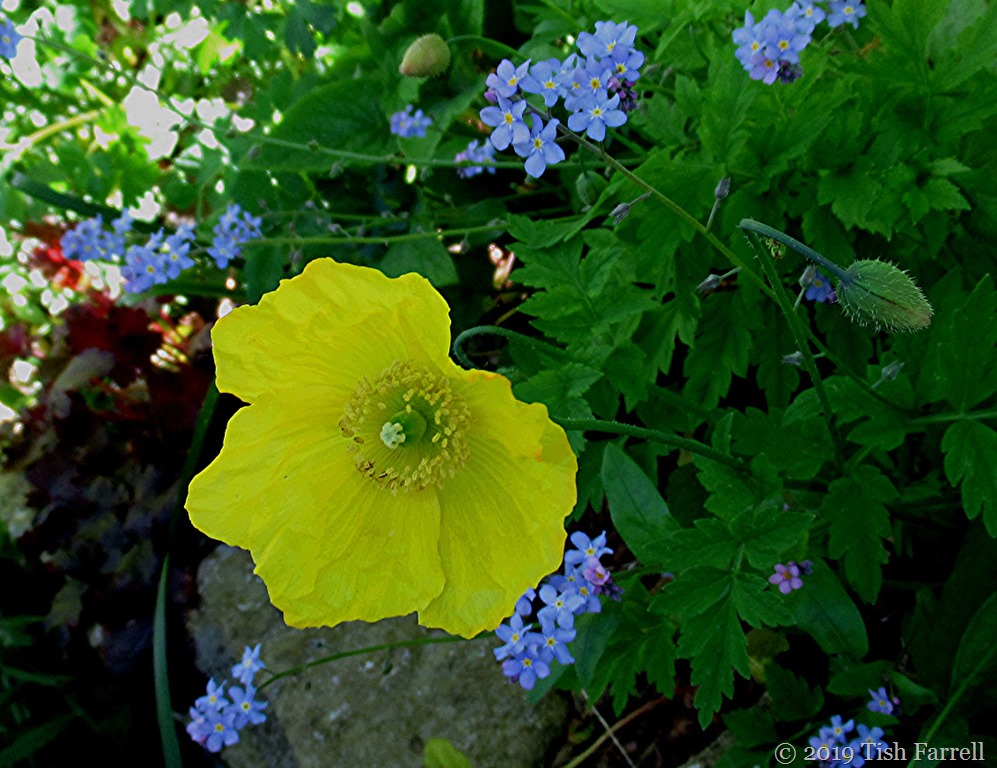
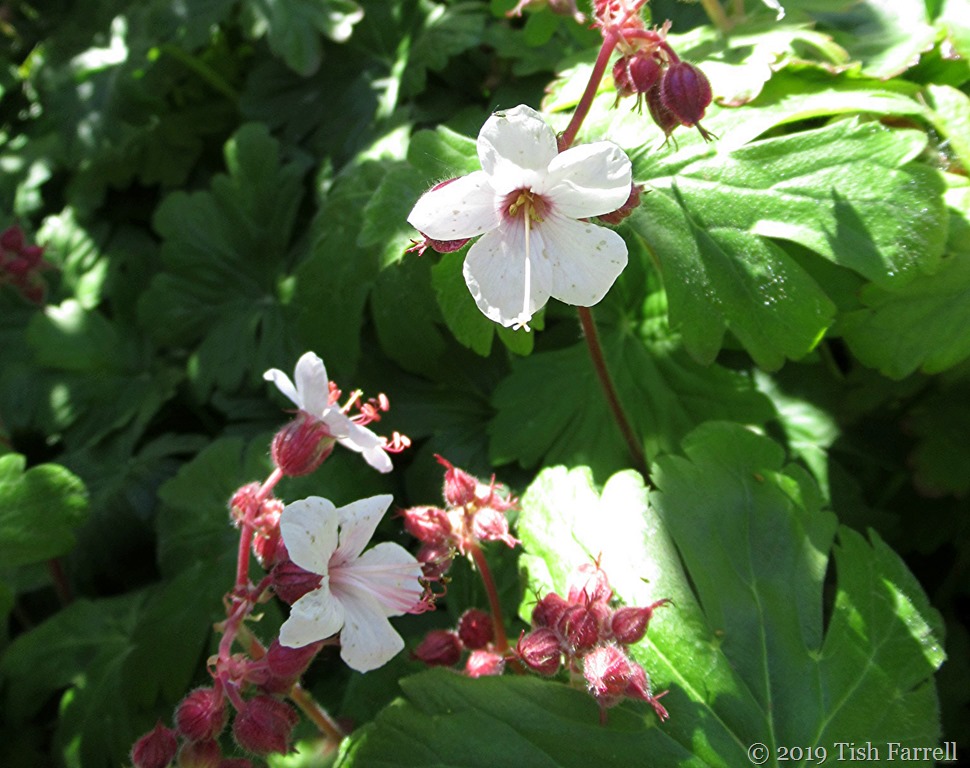
And then besides the Granny’s Bonnets, there are the self-gardening Welsh poppies, forget-me-nots and perennial geraniums (which also mingle and change colour). Soon there will be foxgloves and corn cockles, and if we’re lucky, the opium poppies may visit us again. When friends ask us if we’re going away, we always feel a touch bemused. With so much going coming and going outside the back door, why would we need to?

IMG_1618

IMG_1589

IMG_1599

Whenever we can, we sit on the bench at the top of the garden, stare at clouds (though there wasn’t a single one this morning when I took these photos), listen to the racketing of rooks, the keening call of buzzards, watch the jackdaws fly over, hear the garden buzz, observe the wood across the wheat field as it changes in shade and texture day by day, exchange greetings with a passing walker on the field path. And we think – this is a good place to be; a very good place.

IMG_1556