Still hot today, but there are promises of a degree or two cooler than yesterday. And please, please, please can we have the breeze back. For now, the phlox paniculata are gently roasting, especially the large petalled magenta/purple varieties. Only Adessa ‘Pink Star’ is keeping her cool, here seen alongside the starry Neptune’s Gold Sea Holly which doesn’t appear to mind the heat.
*
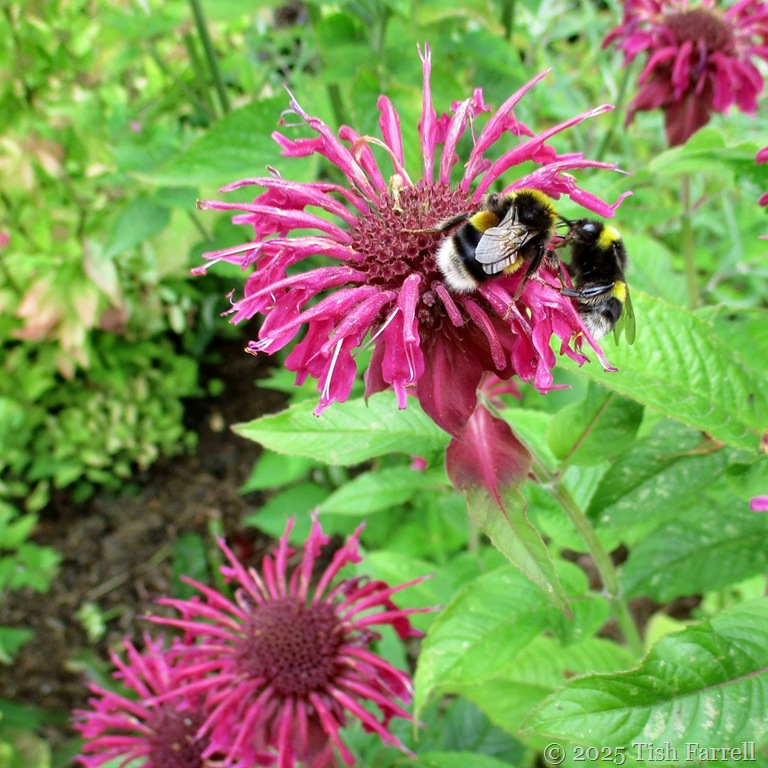
In the back garden, most of the border plants are fading fast, apart from the bergamot/bee balm/monarda. Over the last few days, it has burst into life and bees, although I’m sorry to see the individual flower parts are soon turning crispy round the edges. (But then aren’t we all!)


*
The peripheries of the garden don’t suffer full-on sun until after mid-day, and this is where I have the beans – French climbing Violette, and a few Borlotti and Butter Beans, growing up canes and obelisks. The runner beans are growing alongside the compost bin, mostly Enorma but also a few St. George. They are now providing a pleasing seasonal screen along this short section of garden which overlooks the road.

Actually, I love bean flowers (almost as much as the beans):


*
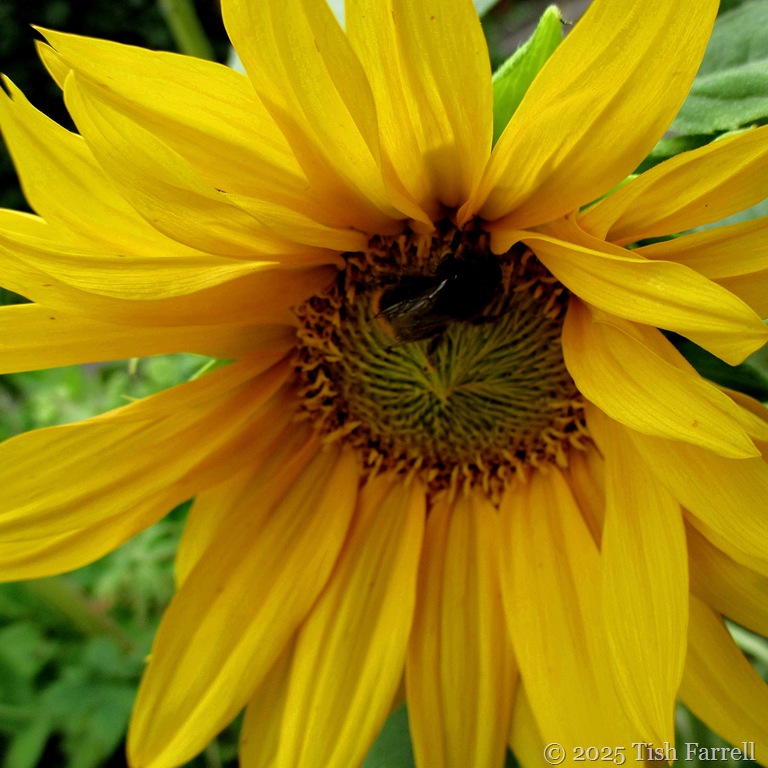
Behind the runners, in the old apple tree corner, is a raised bed with the butter bean obelisk, a courgette plant and a self-grown sunflower. Today, the courgette plant has a quartet of blooms, plus one courgette ready for picking.


*
You can see this week’s number six in the photo above, on the right, beyond the courgette leaves. It just happens to feature in today’s newsletter from Beth Chatto’s Plants and Gardens. So here we have Aster x Frickatii Monch as it starts its season, and rather sooner than expected.

In the newsletter, granddaughter, Julia Boulton, who now runs Beth Chatto’s says of it:
“Absolutely the best Michaelmas daisy, for long display and sheer beauty: does not need staking, and is not affected by mildew. Deserves the best soil and position in the garden.” Its further statistics are: height and spread: 1m x 45cm; conditions: full sun, rich and fertile soil; flowering: Aug | Sep | Oct.
I’m not sure why I planted it in front of the apple tree. That spot does get dappled sun and then full-on glare at the end of the day, but there are much sunnier spots in the garden where it could show itself off to better effect. (Added to the re-do file).
Finally, a view of the a front garden bed, just to show it’s coping with 33 degree C plus days – the achillea ‘Moonshine’ drying on the stem, the allium drumsticks still doing their stuff, Artemisia Powys Castle, very much containing herself alongside a rather weedy apricot coloured Achillea, (Lachsshonheit) which I thought I’d lost, and a young Crocosmia Harlequin (bottom left) about to flower. Background support from Euphorbias, Santolina rosmarinifolia, Pheasant’s Tail grass, and crimson leaved heucheras :

Copyright 2026 Tish Farrell
Six on Saturday: For more views of Jim’s fabulous and mindfully curated plant collection.