Eclipsed [Six on Saturday]

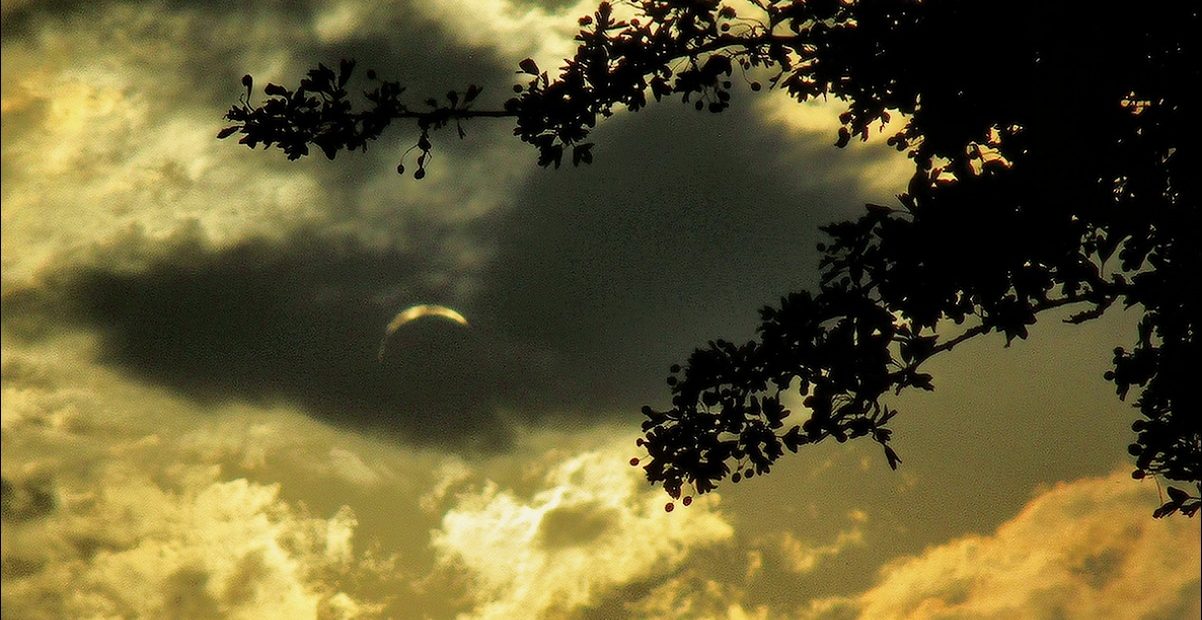
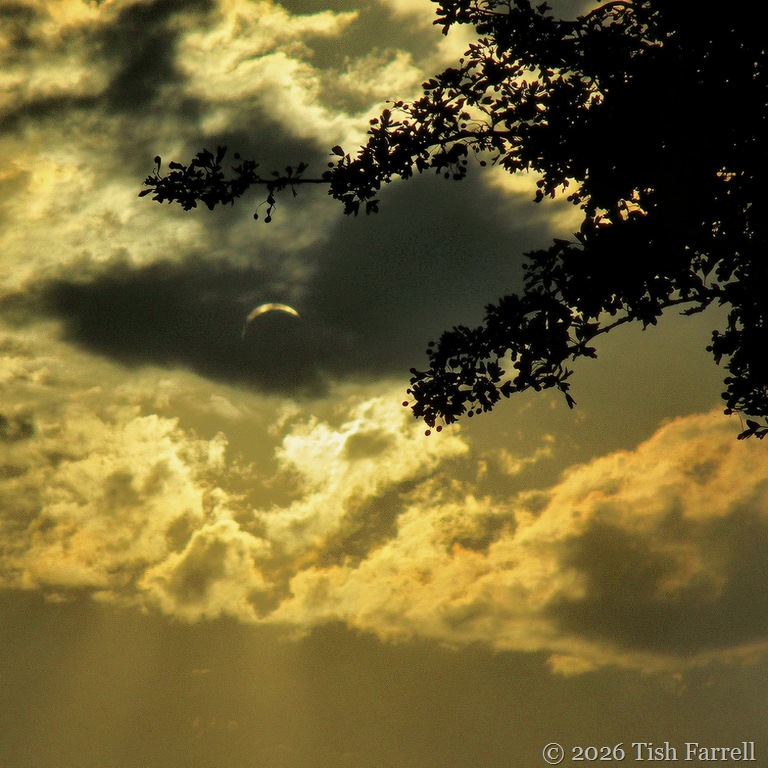
not an eclipse

On Thursday evening we sat in the garden and watched, through a big dark cloud, a very partial partial eclipse of the sun. The cloud, though, created quite a light show. While this was going on, I took a photo of one of our sunflowers, basking in the unearthly glow.
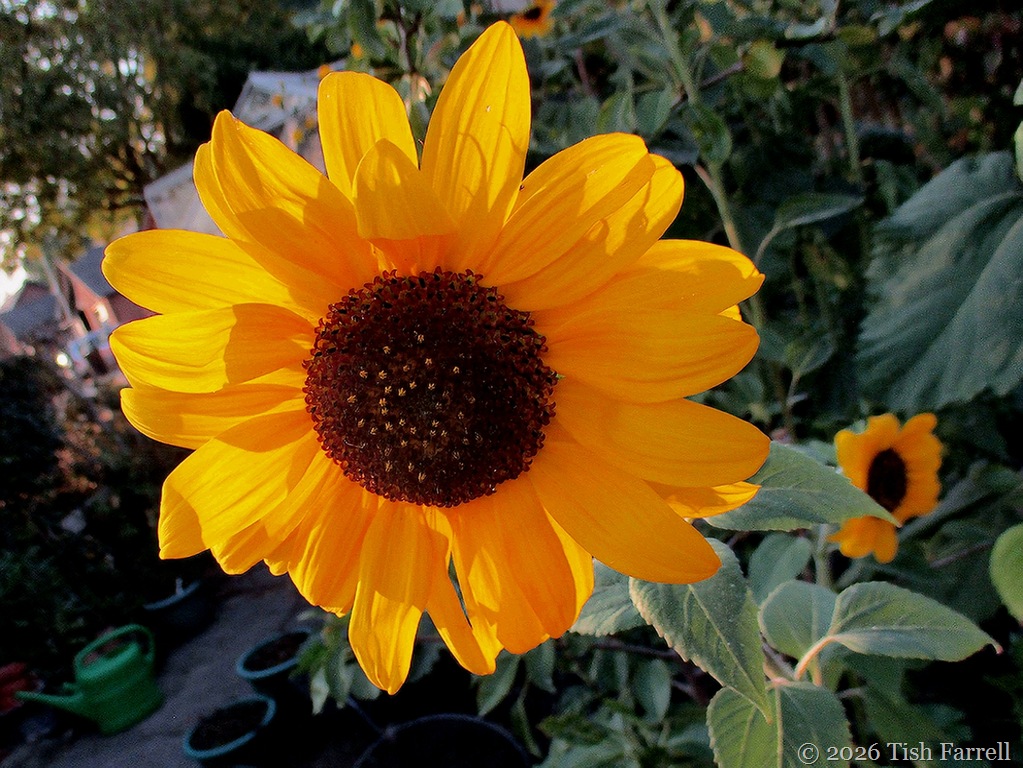
sunflower non eclipse

In fact this crop of self-grown, mostly unattended sunflowers has positively thrived during the long heatwave. I have been removing the dead flowers and putting the heads along the edge of the borders, just in case any wildlife wishes to eat the seeds. I must have done this last year with the ones I grew intentionally. Which explains how this year’s lot came to be. So: who knows what will happen next year – a sunflower forest?
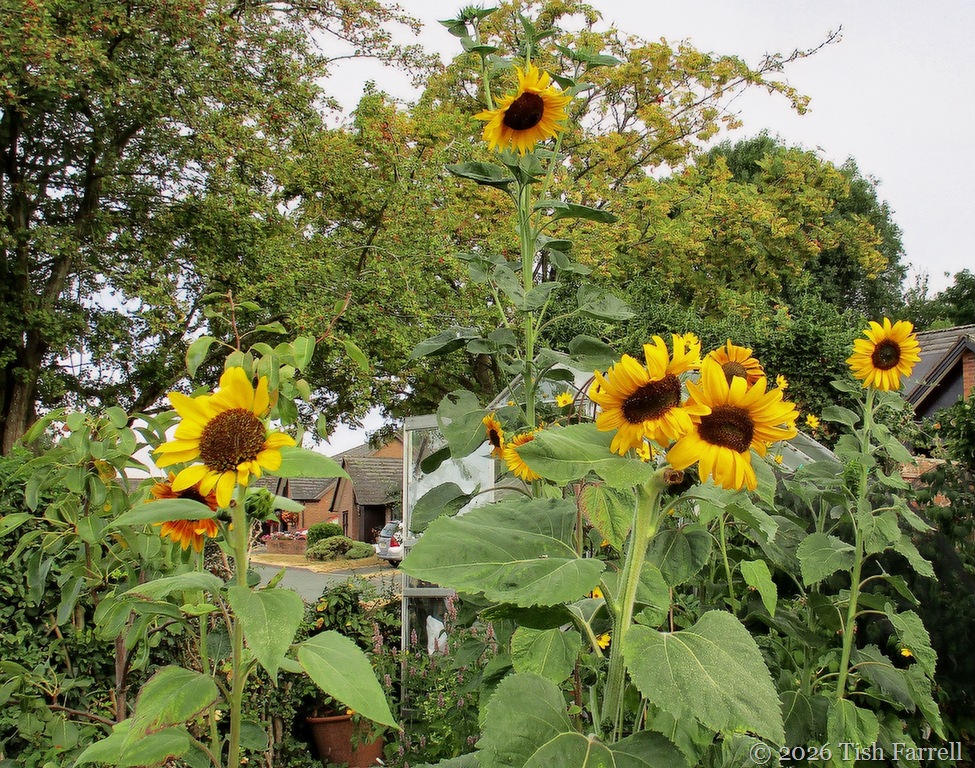
sunflower crew 3

*

Thriver and SoS no. 2 is the Rudbeckia Herbstsonne. It is growing in the top of a boundary wall beside next door’s garage. The wall is basically a raised bed, and there is probably quite a depth of soil inside it. I never did get to the bottom of it. When we moved into The Gables three years ago it was choked with Hypericum Hidcote that had turned itself into the plant world’s version of chain-link fencing, intermeshed with brambles,  and several well grown ash tree saplings. It took a marathon of digging to extract everything.

It is a rather odd spot for gardening. The wall runs from the road to our back garden, aligned east-west. I planted the Rudbeckia at the westerly end, thinking to screen the visibility gap between us and next door. And it works! I’ve not watered it all summer and here it is, complete with Red Admiral butterfly.
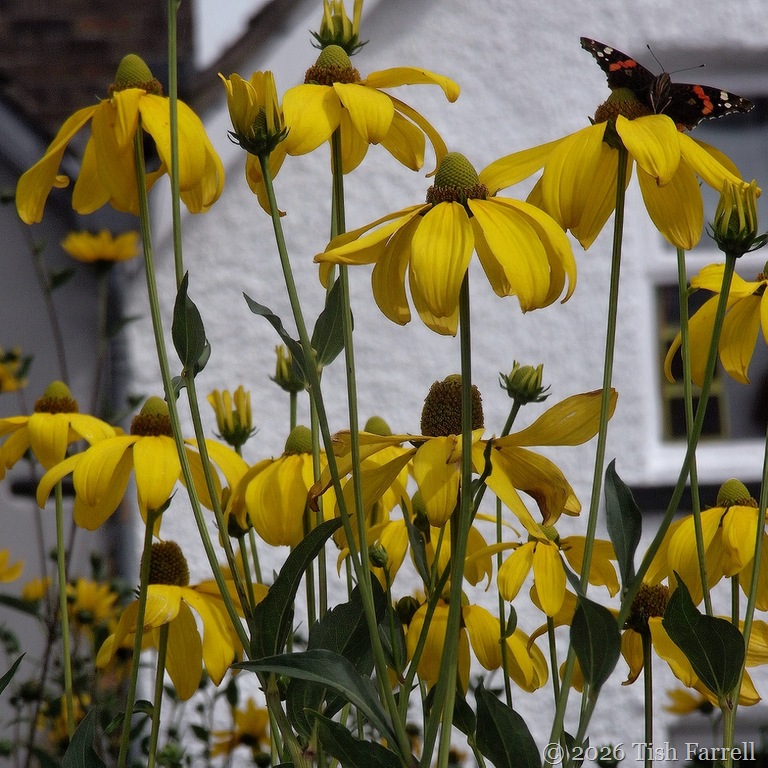
rudbeckia

*

Thriver no, 3 is a neat little grass in the front border – Festuca glauca Intense Blue. This bed has had some water, but not much. I like its fountain looks and the way the grass reflects the light (which makes it hard to photograph.)
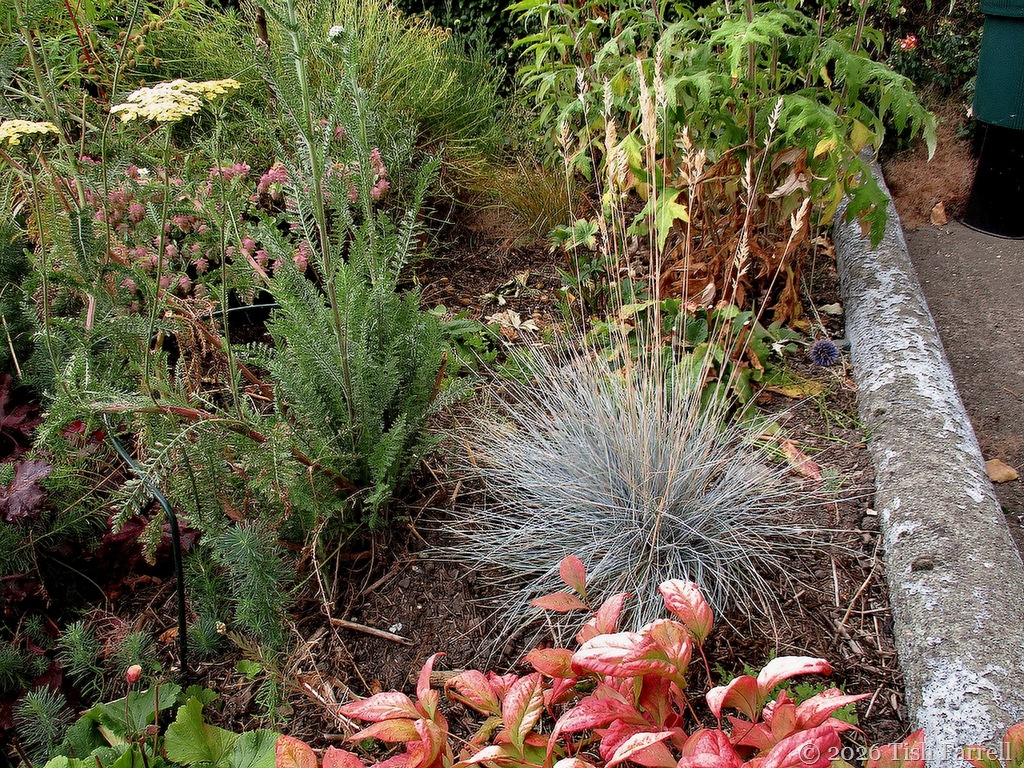
Festuca glauca Intense Blue

*

Number 4 is offered as proof of existence – or maybe circumstantial evidence at best. Here we have raindrops on sorrel leaves. At some point between Thursday night and Friday morning we had a spatter of rain. It fell on various surfaces but none apparently on the soil, which then and now remains dry as dust. The promised rainstorm for Friday afternoon did not happen.
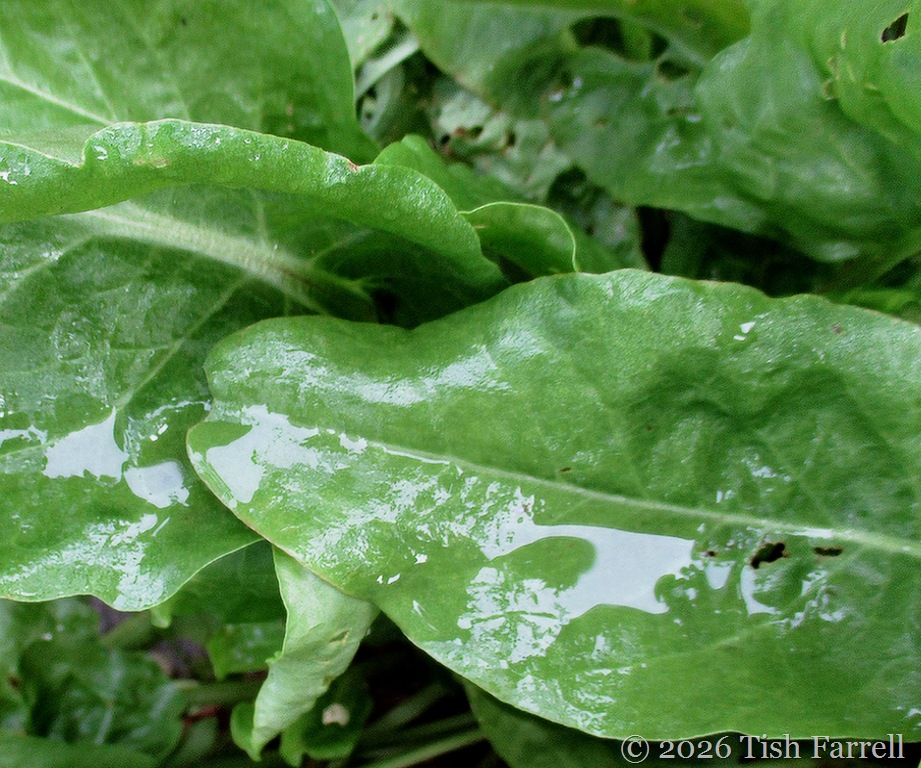
sorrel and rain

*

No. 5 is the kind of infestation that comes with stressed plants and stressful conditions. The ants have set up aphid factories all over the garden, but especially in unsightly encrustations along the stems of otherwise lovely claret cosmos. The Dyer’s Chamomile is also a desirable location, as is the Montbretia. I’ve tried spraying with slightly soapy water, and gently wiping off by hand, but one ends up causing more damage to the flowers as well creating blackfly soup. And anyway, the ants only come and set up business again as soon as my back is turned.
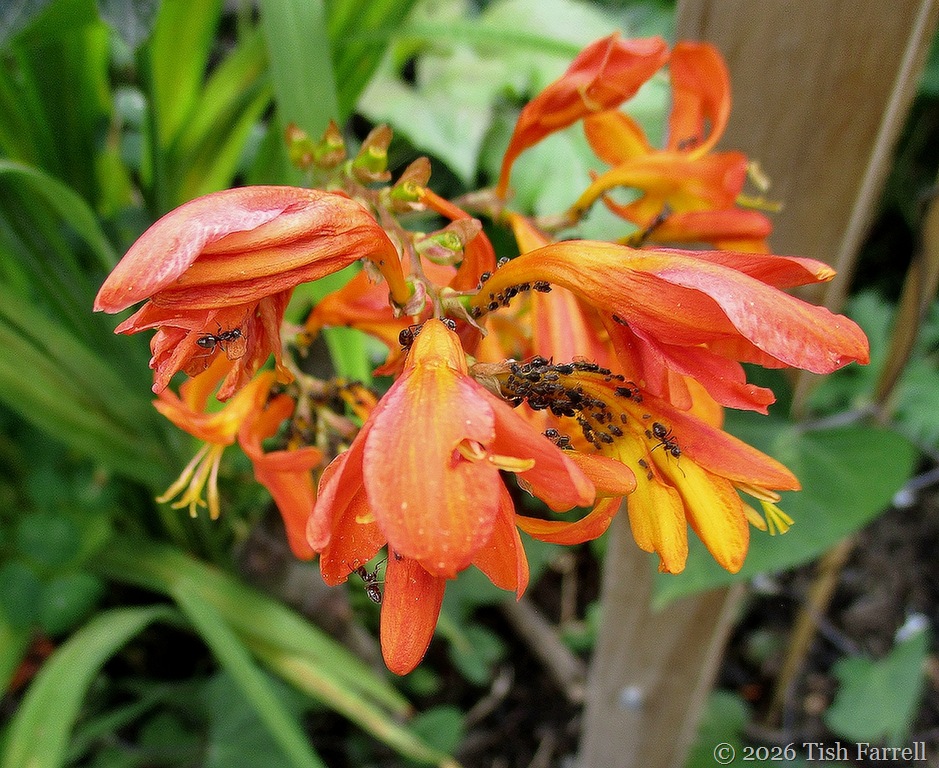
Montbretia and blackfly factory

*

But back to the good garden moments this week – a new blue butterfly spotted on the Korean Mint (Agastache). It’s a male Common Blue, wingspan about 3 cm. Exquisite.
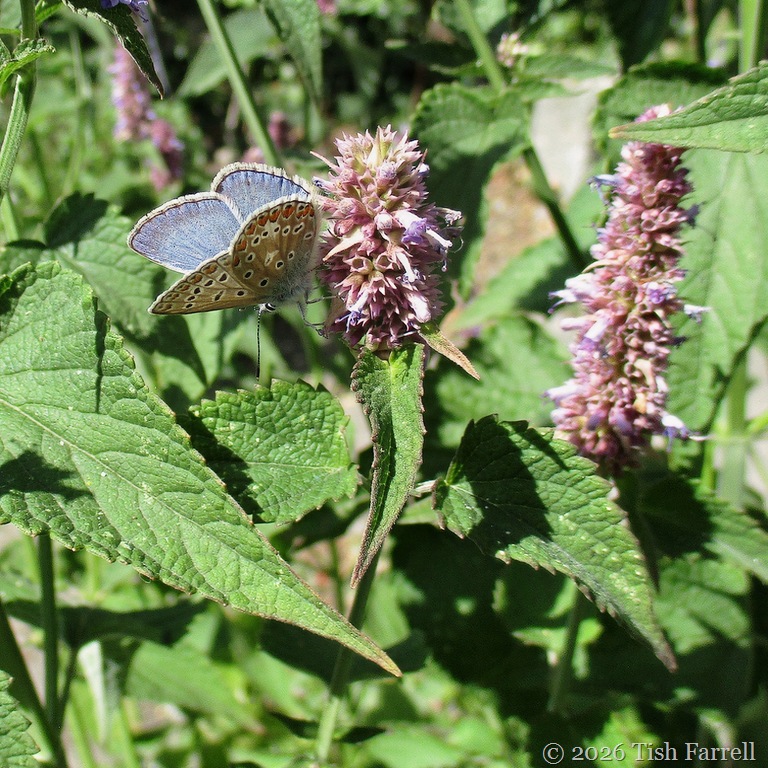
Common Blue on Korean Mint


Copyright Tish Farrell 2026

*


Six on Saturday: The hot dry weeks may be taking their toll, but there are still some wonderful plants in Jim’s Cornish garden
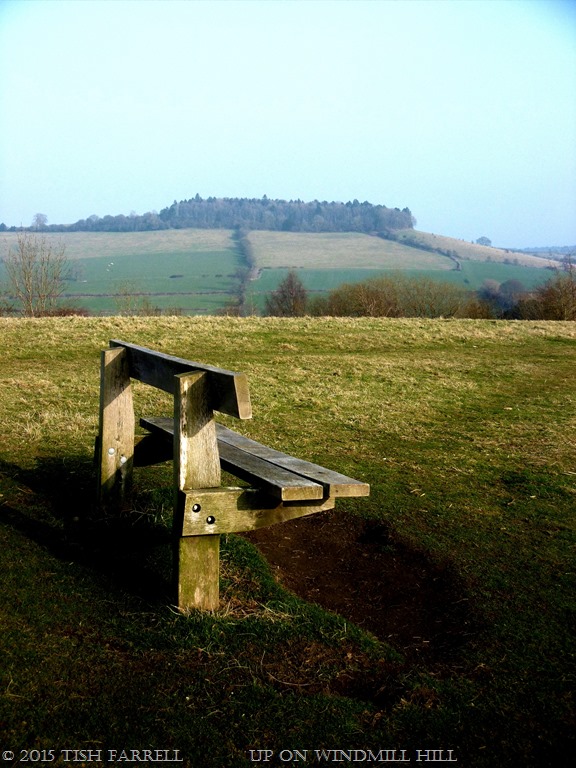
A bench with many views and a windmill

P1000684

P1000674

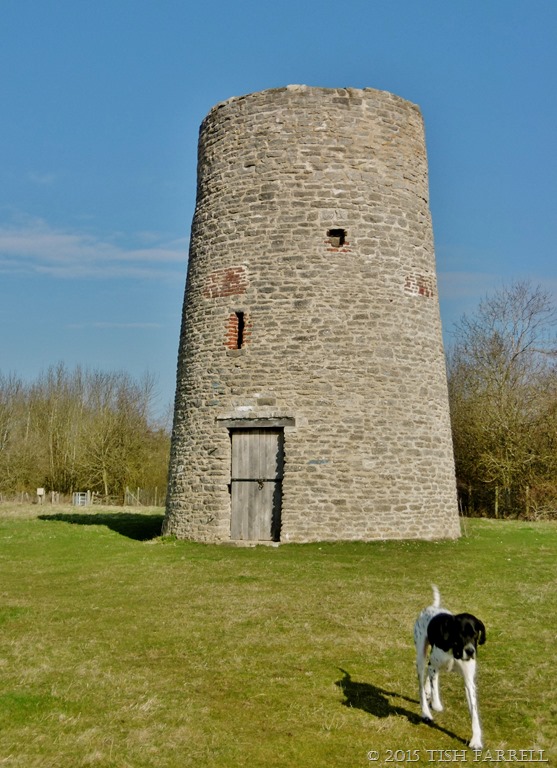
This bench is only a short walk from our house, although a bit of a steep haul up Windmill Hill. The windmill itself is quite a landmark in Much Wenlock, although much about its history, and how it looked when in use, remain to be discovered by the stalwart Windmill Trust whose members take care of it.

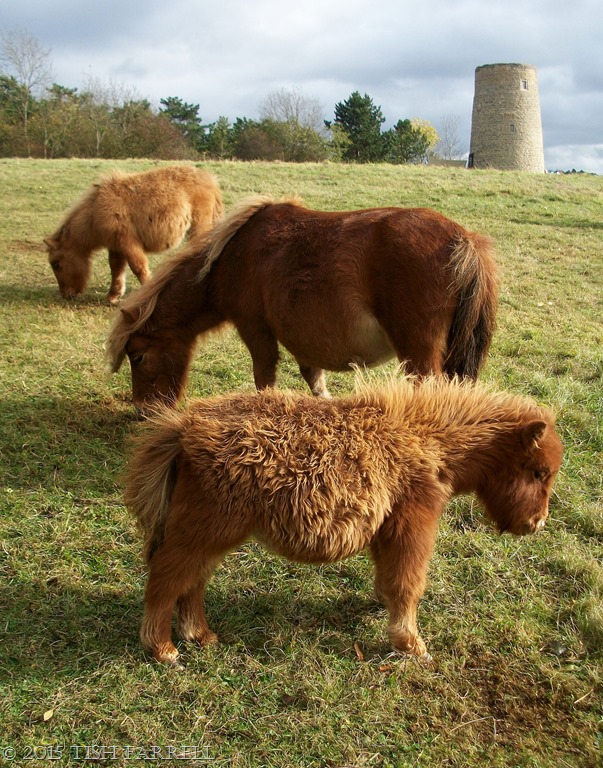
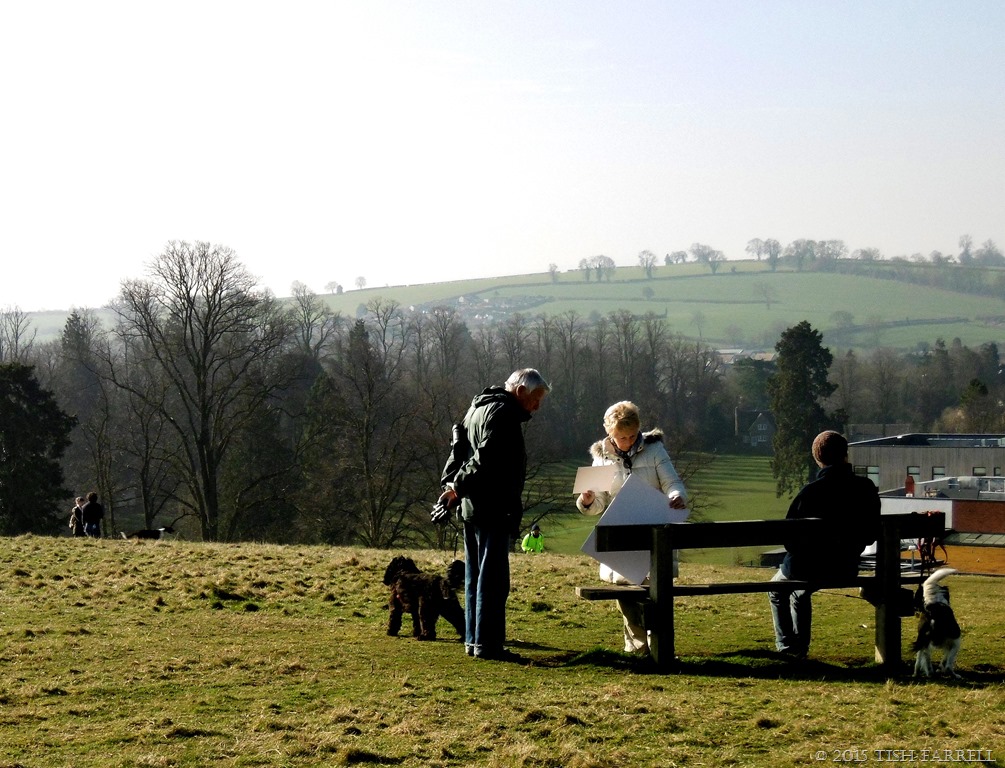
There is always something to see from this bench, quite apart from the views across Shropshire. Even the vegetation is interesting. It is a rare remnant of limestone meadow, and in late spring there will be cowslips and orchids here, wild thyme and primroses. Later there will be agrimony, giant  knapweed, St John’s Wort, yellow bedstraw and hare bells. Sometimes the miniature ponies graze here, all part and parcel of preserving the meadow.

100_6660

*

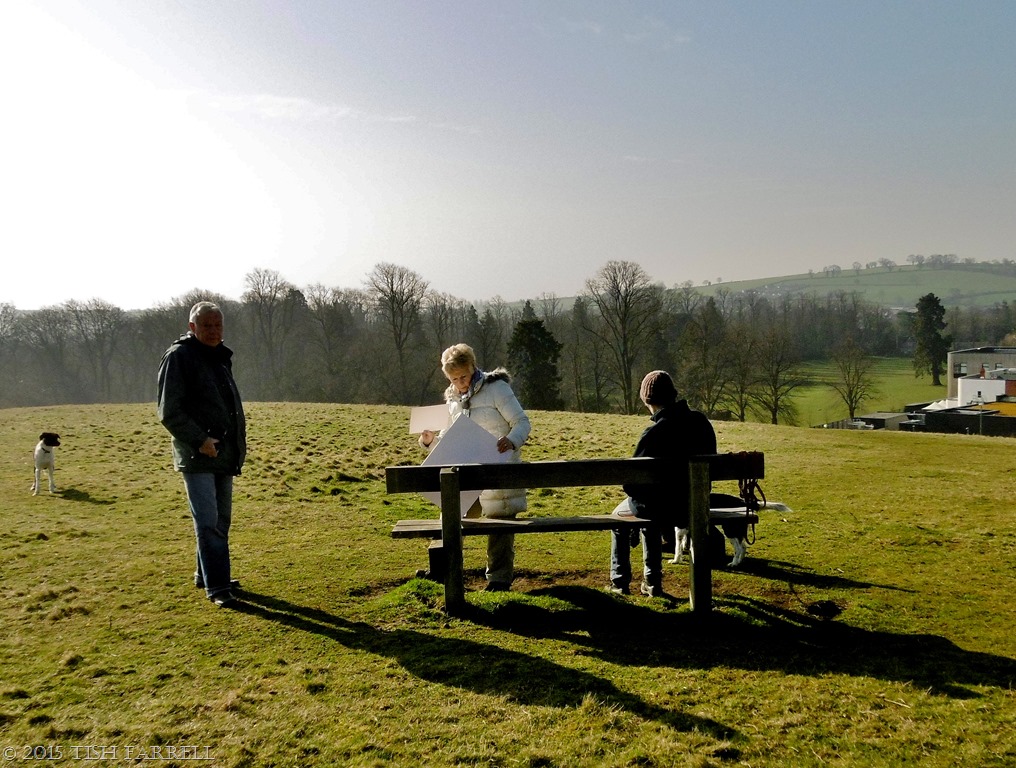
Recently some of us combined dog walking and watching the eclipse from here. And while we were doing that…

P1000748

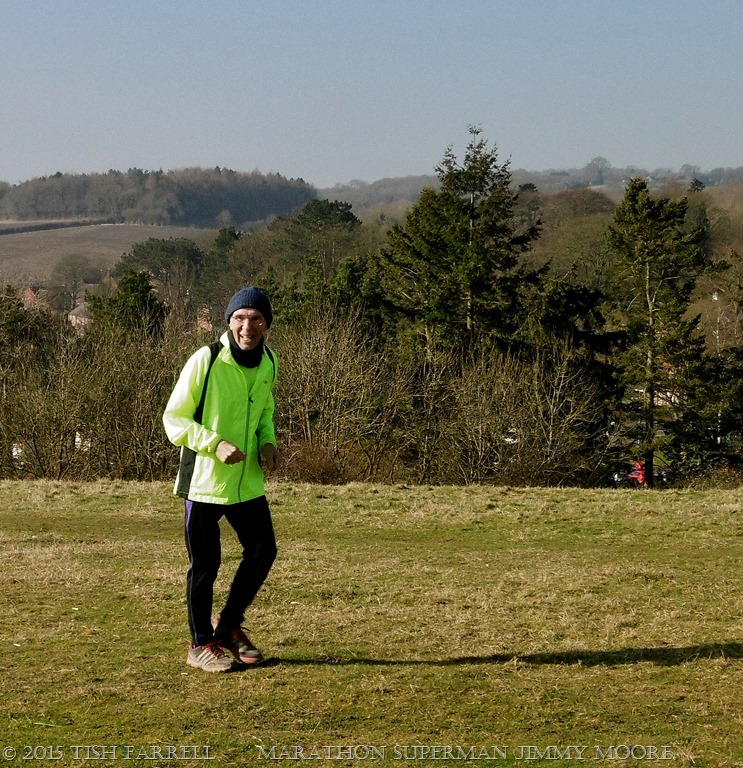
… we also caught a glimpse of local marathon hero Jimmy Moore, apparently eighty years old this year, and still out training.

P1000750

He, more than most, has done so much to uphold the values of the town’s erstwhile physician, William Penny Brookes (1809-1895). Brookes reinvented the Olympic Games in Much Wenlock in the 1850s, and provided the inspiration for the modern Olympic Games.  The Wenlock Olympian Games are still held every July on the field below and at the nearby William Brookes School. The three-week series of contests attracts athletes from around the world. Jimmy has also coached many youngsters  participating in the Wenlock Games.

P1000685

P1000736

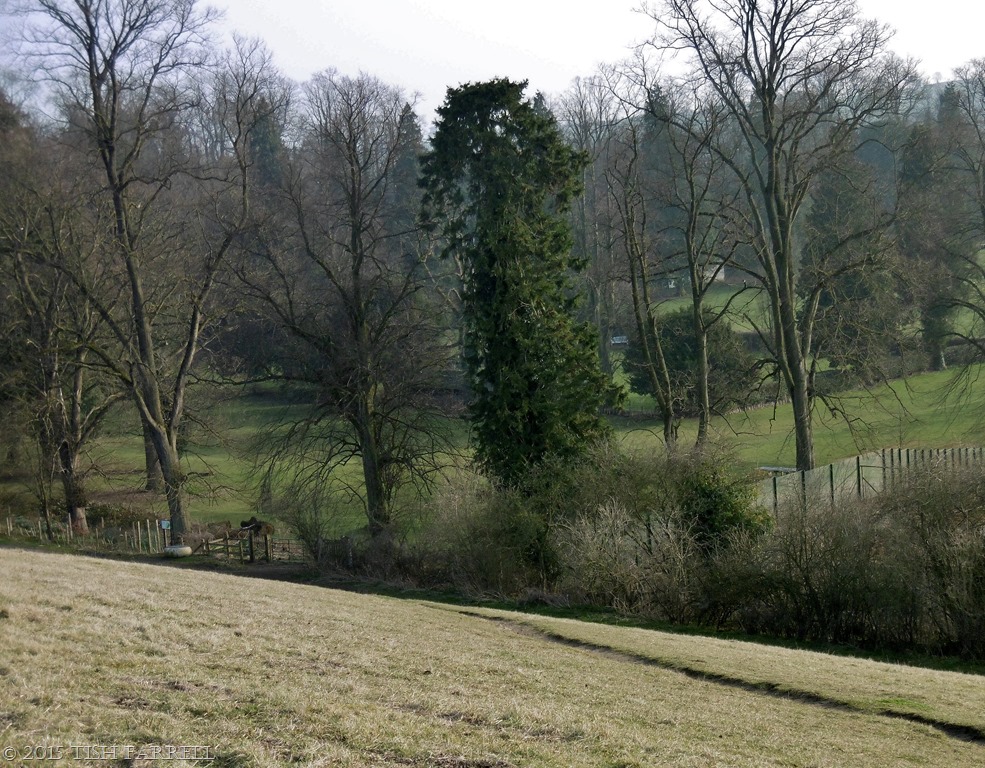
And finally, I thought I’d pass on some Olympian glow on this Monday morning. You can just see the windmill in the background, the William Penny Brookes Academy on the left, and the community’s own Linden (Olympian) Field in the centre ground. Besides, it is not good to linger about, sitting on benches, splendid though their views may be. Latest medical opinion informs us to keep standing up.  Or to quote Tom Petty and the Heartbreakers  “if you don’t run, you rust.”  Walking, however, is probably best for most of us.

Copyright 2015 Tish Farrell

At Travel Words during April, Jude is looking for benches with a view

Eclipsed in Much Wenlock on World Happiness Day and Taking a Solar Selfie

100_5065 Here I am on top of Windmill Hill, Much Wenlock’s landscape landmark, and this is the only way I could see the partial eclipse – with my back to it, and camera at the ready. We had such clear skies, and the sun was so bright that we remained bathed in sunshine throughout this cosmic event, although it did seem very cold. Lots of people who were out walking their dogs had gathered  at the windmill too, one lady monitoring the process through a pin-hole viewer. This is the scene before me as I take the photo over my shoulder: windmill and pointer. Had the eclipse actually happened? P1000779 P1000764 P1000788 Aftermath. I caught the sun in the trees as I walked home across the Linden Field. This, incidentally, was the place where the Much Wenlock Olympian games were, and are still held every year. They were devised in 1850 by the town’s physician and herbalist, Doctor William Penny Brookes, and went on to inspire the founding of the modern Olympic Movement. Windmill Hill provided the natural viewing platform where spectators sat to watch the events. See how this little town of ours spread its good hearted influence around the world. Wishing everyone joy on this, International Day of Happiness   #eclipse #International Day of Happiness