Where Does It Lead?

Wenlock edge and Graham

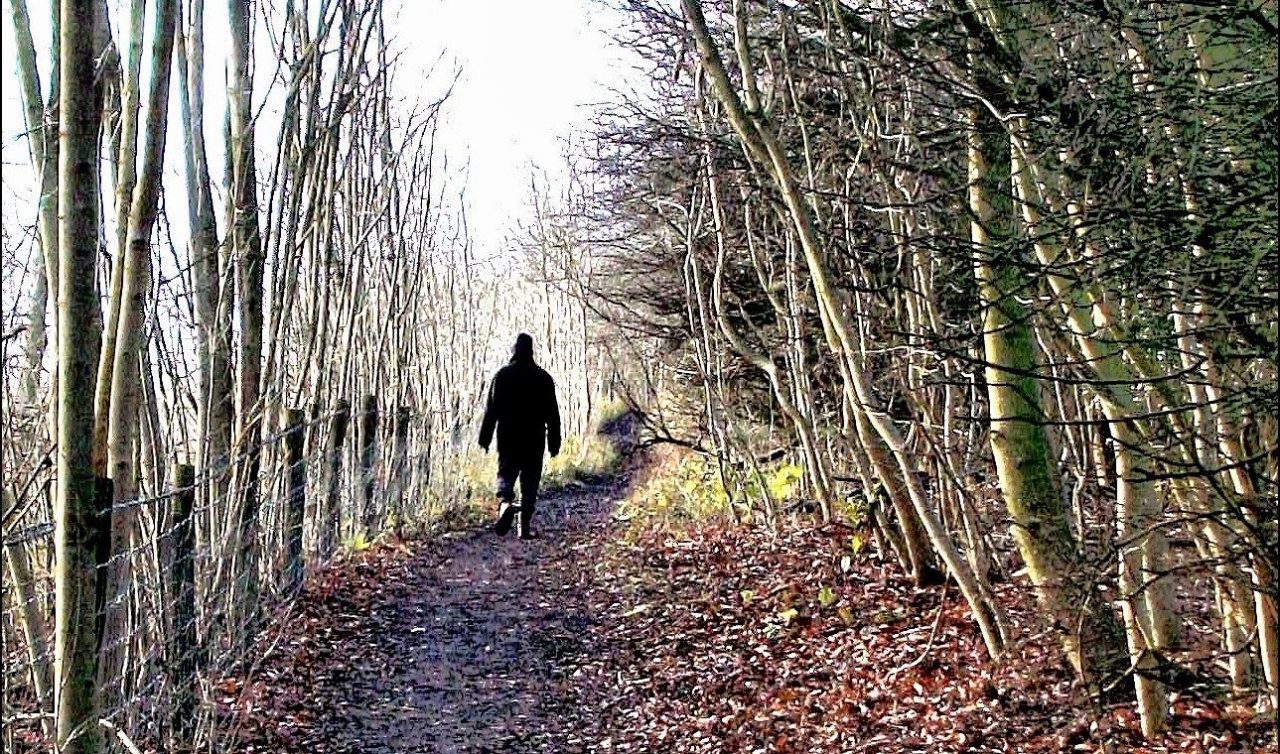
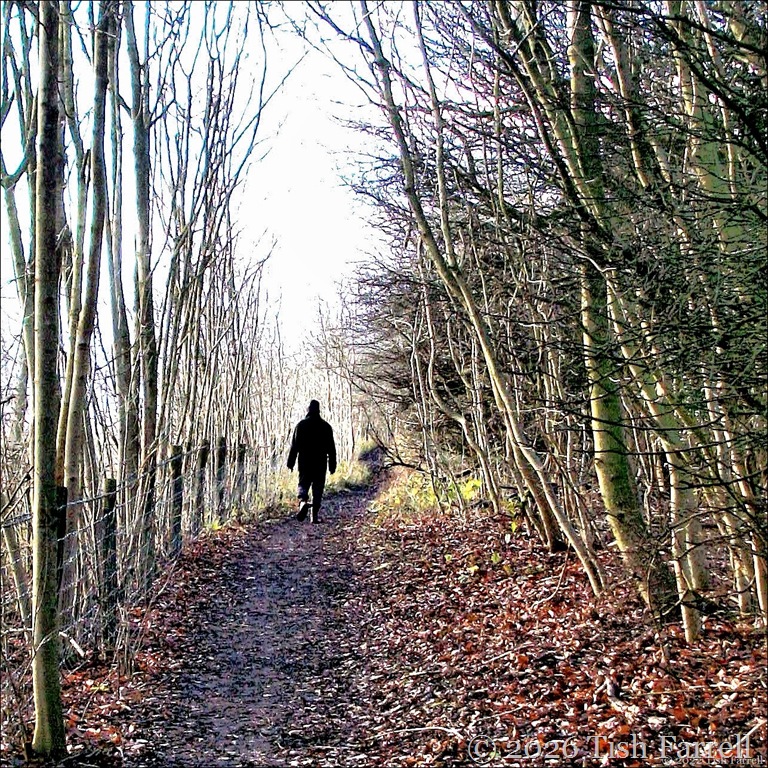
Paths are mysterious things, tracks through time and space, spanning decades, centuries, millennia; the footworn proof of repeat passing.

This first path runs along the top  of Wenlock Edge, a twenty mile limestone ridge that crosses from east into south Shropshire. These days it is a popular resort for recreational walkers, but the route itself is probably thousands of years old, used by prehistoric traders who travelled the county’s less wooded uplands into Wales. The traded goods included finely worked stone axes of the Neolithic era, 5-6,000 years ago. Later, itinerant smiths (and seeming recylcers of damaged metal ware, including fine cast arrow- and spearheads of the Bronze Age) came this way.

*
old railway line Wenlock

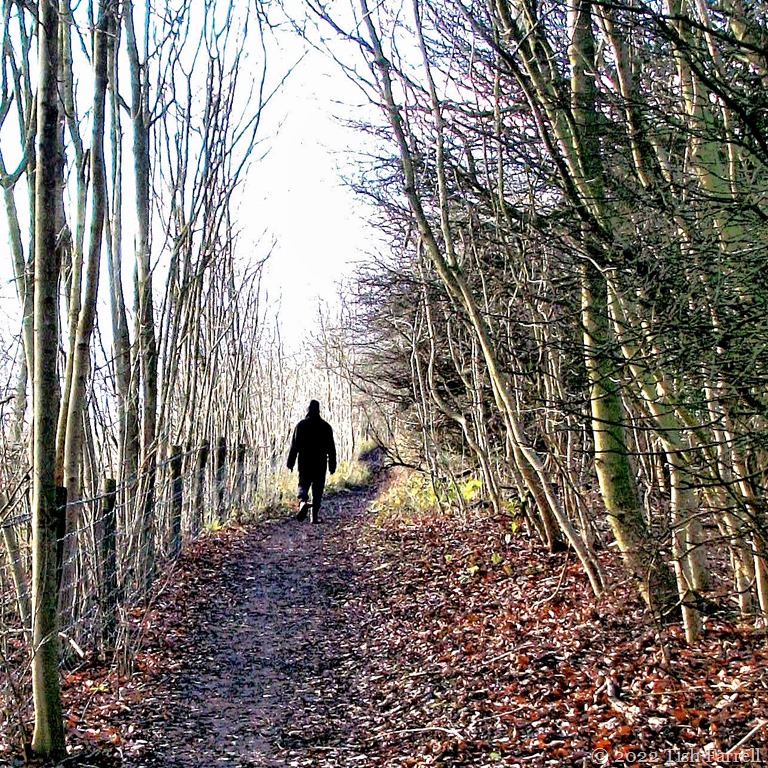
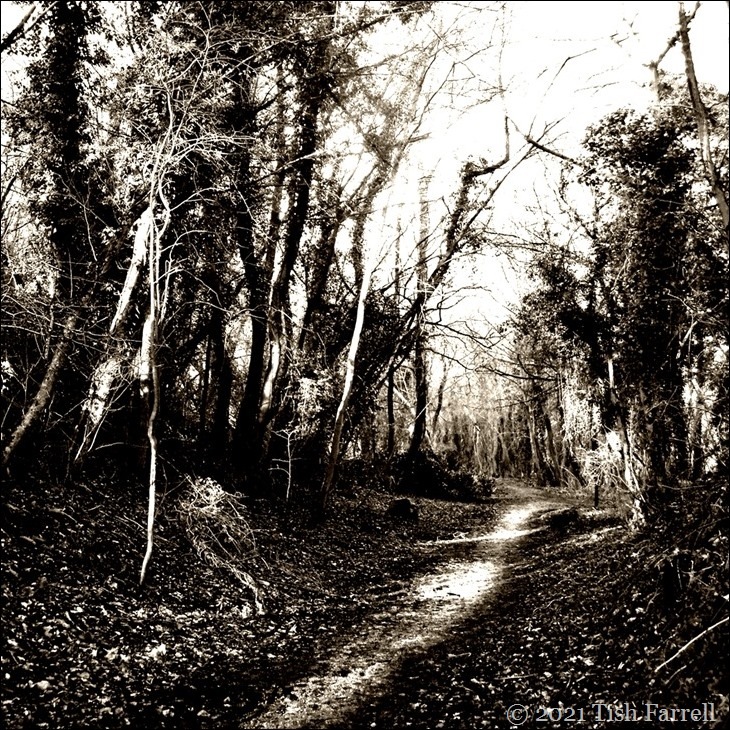
This second path is of more recent origins despite the sepia looks. It marks a segment of the Severn Valley Railway, opened through Much Wenlock in the late 1860s and closed in the 1960s. Now the original track bed is much colonised by ash and hazel and ivy, kept in check by the county footpath wardens. It’s hard to conjure the steam trains that once came roaring through here, bound for the Wenlock Edge quarries to take on truckloads of limestone, the flux needed for South Wales’ steel making.

And then there’s that other ghost train, the festive Great Western special that every July brought thousands of people from far and wide to watch (and take part in) the Much Wenlock Olympian Games. Back then, this still popular annual event) comprised many and varied sporting activities, devised by the town’s doctor, William Penny Brookes to foster good health and wellbeing among ordinary folk.  His activism did not stop at health either. There were livelihoods to improve too, so he also fought for the line extension that brought the railway to Much Wenlock.

Over the years we lived in Wenlock this was a favourite place to wander, and in every season.

*

And so paths like these extend in ever more dimensions: of imagination; of history;  of recollection and memory; of the telling of tales.

Copyright 2026 Tish Farrell

Lens-Artists: Where does it lead? This week Egidio sets the theme with an enticing gallery of photos. Go see!
The Power Of Juxtaposition

Juxtaposition 9

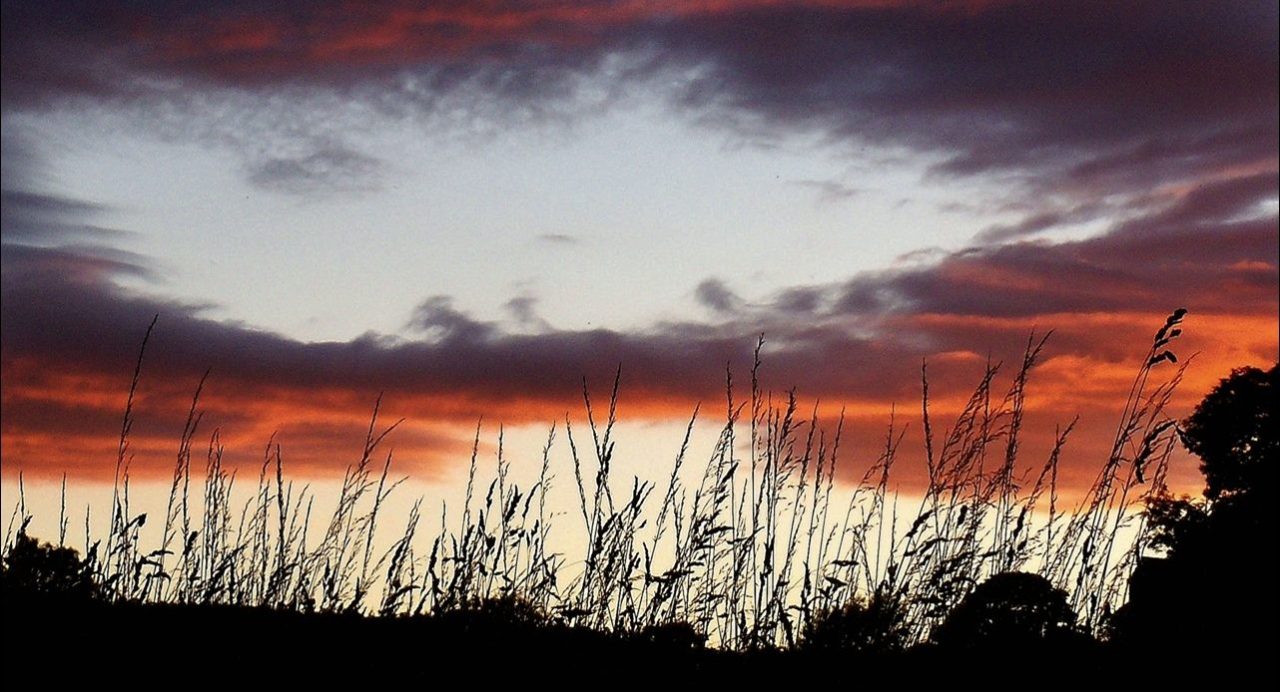
Grasses, sky and clouds on Wenlock Edge

*

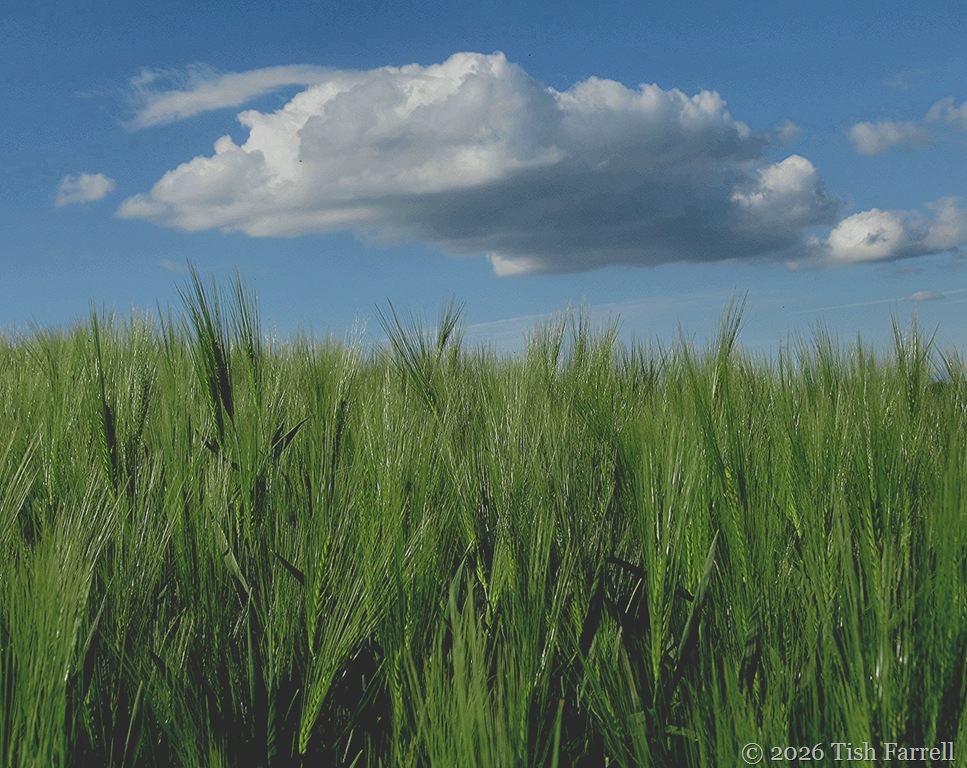
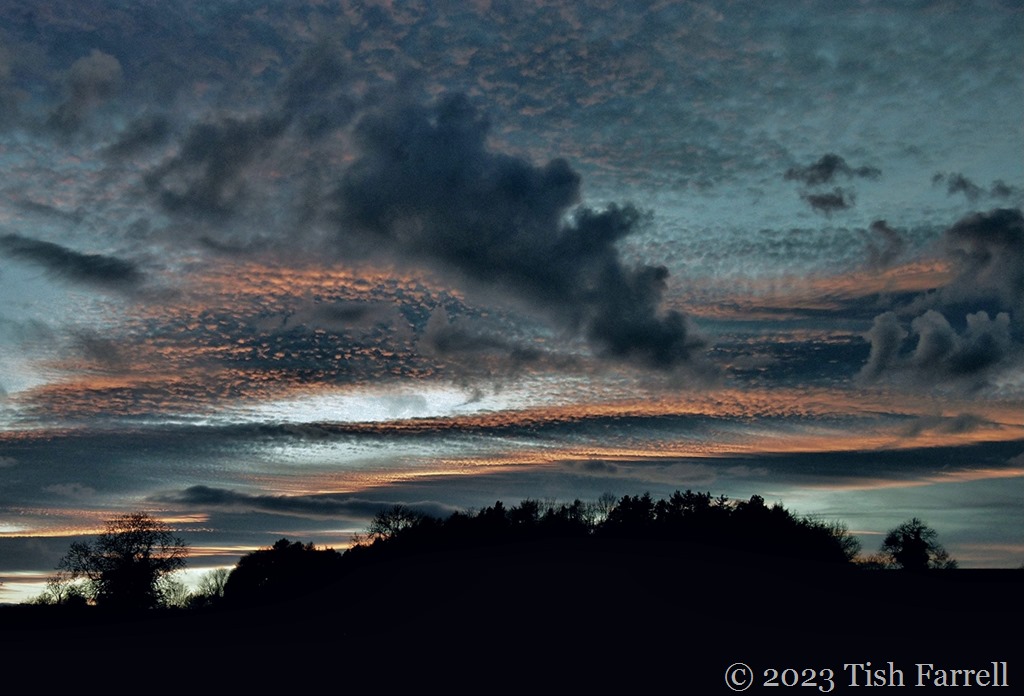
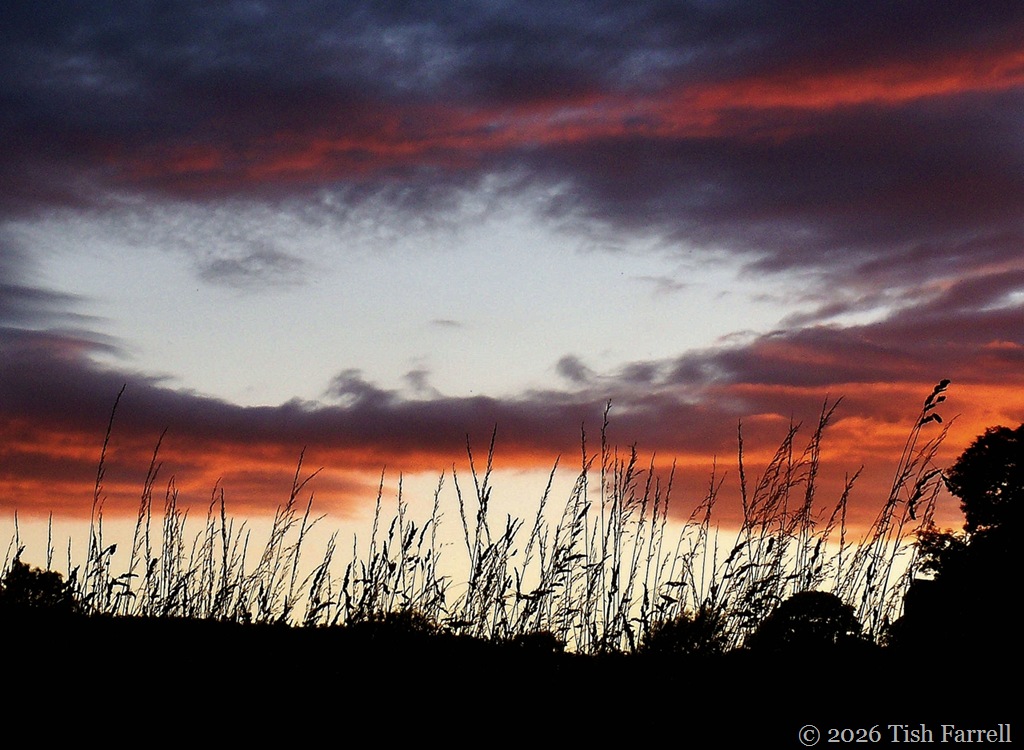
Sometimes you need to lie down to take a photo; taking this header shot was one of those moments. I wondered how the thin stems of meadow grasses would look against the fiery sky. They had much to compete with. Some more distant treetops got a look in too. Earth to sky: we’re holding our own despite the light show.

And a different take on earthly-aerial juxtapositions; this time a barley field, sun reflecting off the tufty awns that surround the grain. I liked the contrasting textures of spiky crop and meringue-soft cloud; the green against the blue, white-grey contrast:

IMG_0331ed

*

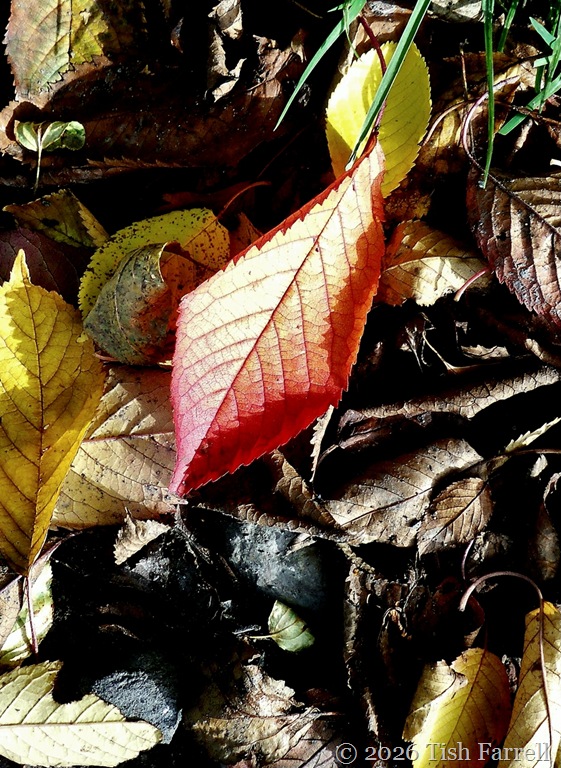
The colour red always makes its presence felt. Here a single red bird cherry leaf:

Juxtaposition 6

100_7750

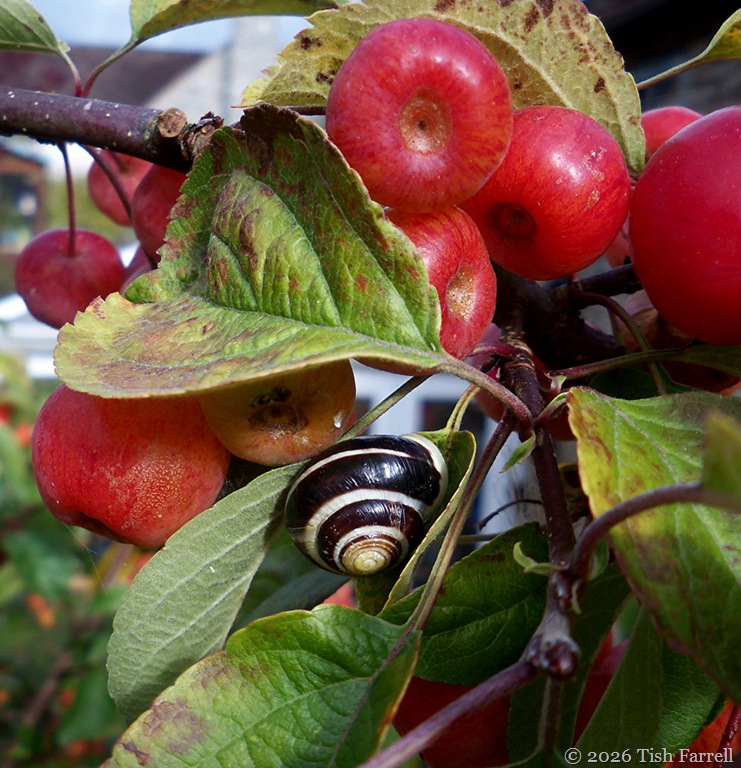
The showy crab apples somehow make a lowly snail all the more remarkable.

*

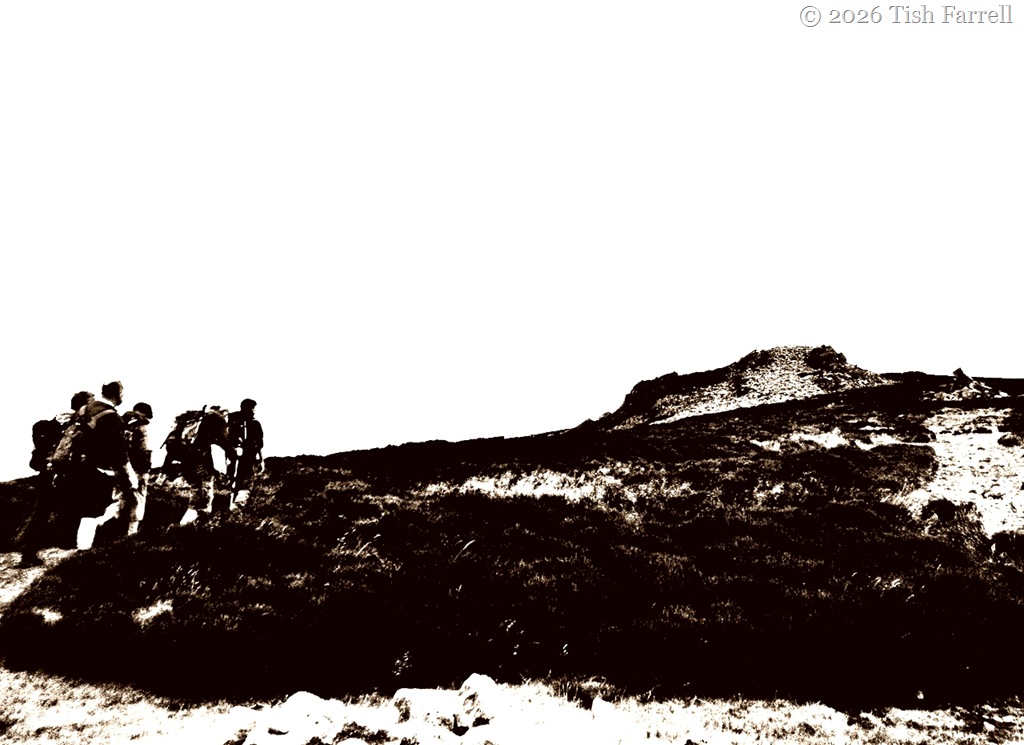
I do take an awful lot of landscape photos, but perhaps you can have too many ‘good views’. The presence of some living/moving element generally makes for a more engaging shot:

Juxtaposition 11

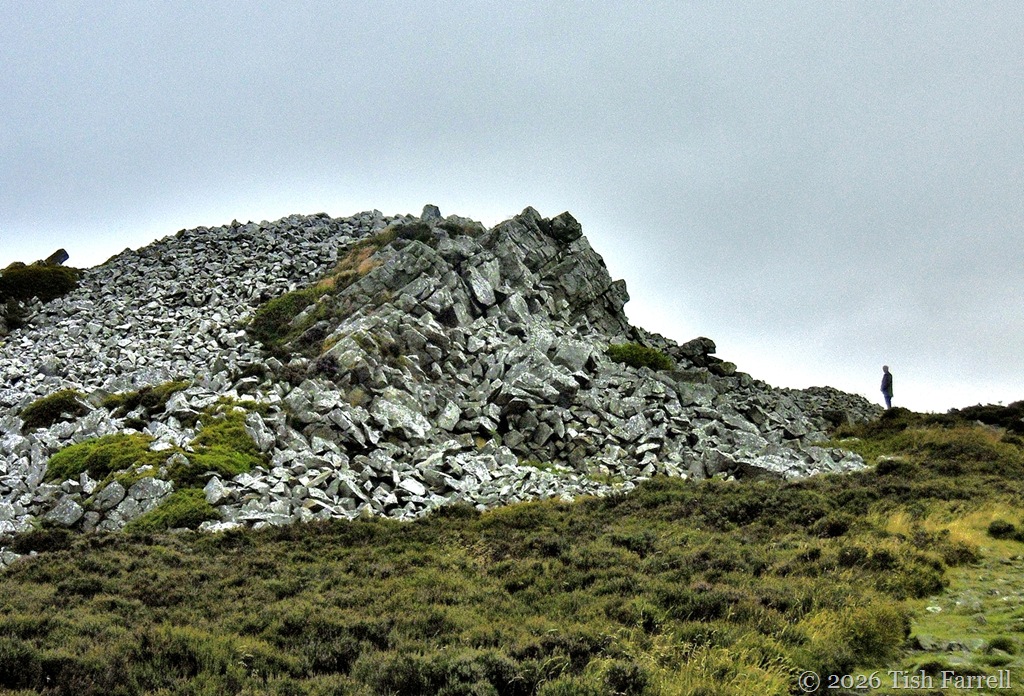
This rather strange view of a Stiperstones tor was shot in monochrome in gloomy midday light. Odd things seem to happen in this mysterious Shropshire upland: so who knows where the sky went. But then I liked the happenstance appearance of the tight-knit group of hikers. They walked into the shot, their group posture conveying group purpose: they will reach the top.

And you want to follow them.

*

Juxtaposition 10

This is another chance Stiperstones photo, taken on the same day. Despite the poor light the tor does seem to radiate something. That’s my other half on the skyline. As ever he has stopped to see what had become of me, dawdling somewhere behind. I was so pleased when he stood still. There he is – a tiny human beside a momentous stack of geology, remnant of the ancient days when this quartzite ridge was crushed and fractured during the last Ice Age.

Back then, two great glaciers (one from Ireland, the other from the heights of Plynlimon in mid-Wales) convened in the Shropshire hills. They kept the ridge company, not covering it, but nudging the tops through alternating periods of freeze and thaw. Needless to say, this would not have been a human-friendly landscape. Even now, in bad weather, it is a brutally exposed spot.

*

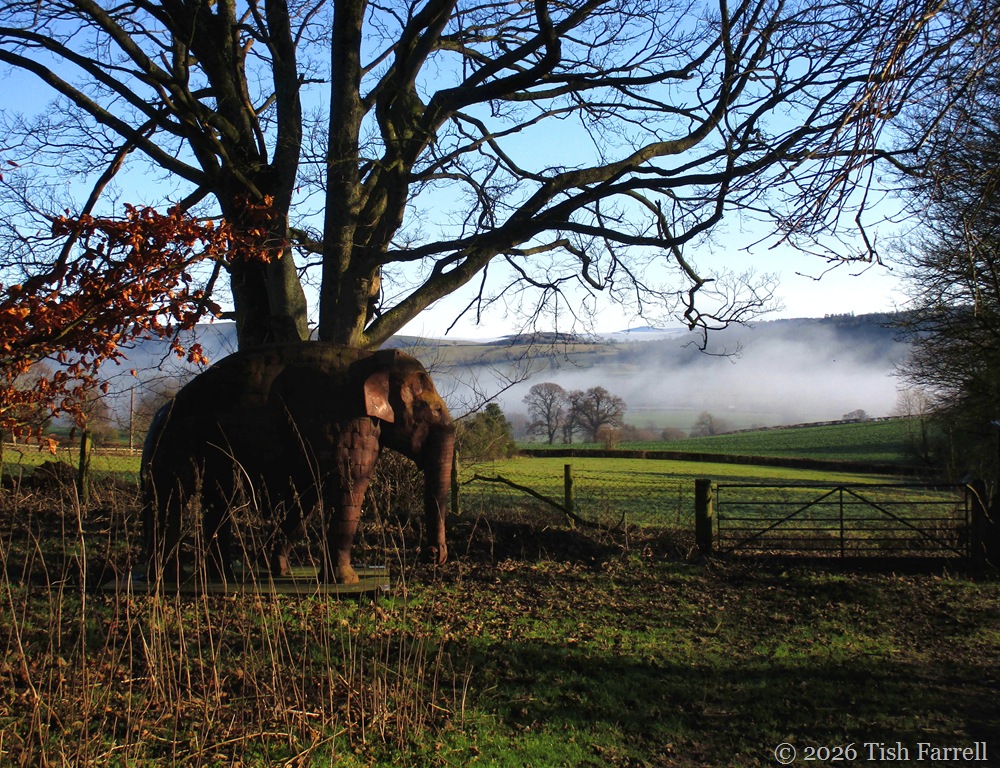
And closer to home, the not quite live elephant on Wintles Hill adds a certain something (if only viewer puzzlement) to this Shropshire autumn landscape. The different layers of sunlight and shadow also caught my eye:

IMG_6641

Copyright 2026 Tish Farrell

#IAmNotACrop


Lens-Artists: the power of juxtaposition  This week Patti at Lens-Artists asks us to consider the power of juxtaposition in our compositions. Please see her super post for guidance and inspiration.

The Silence Of Stones

100_6999ed

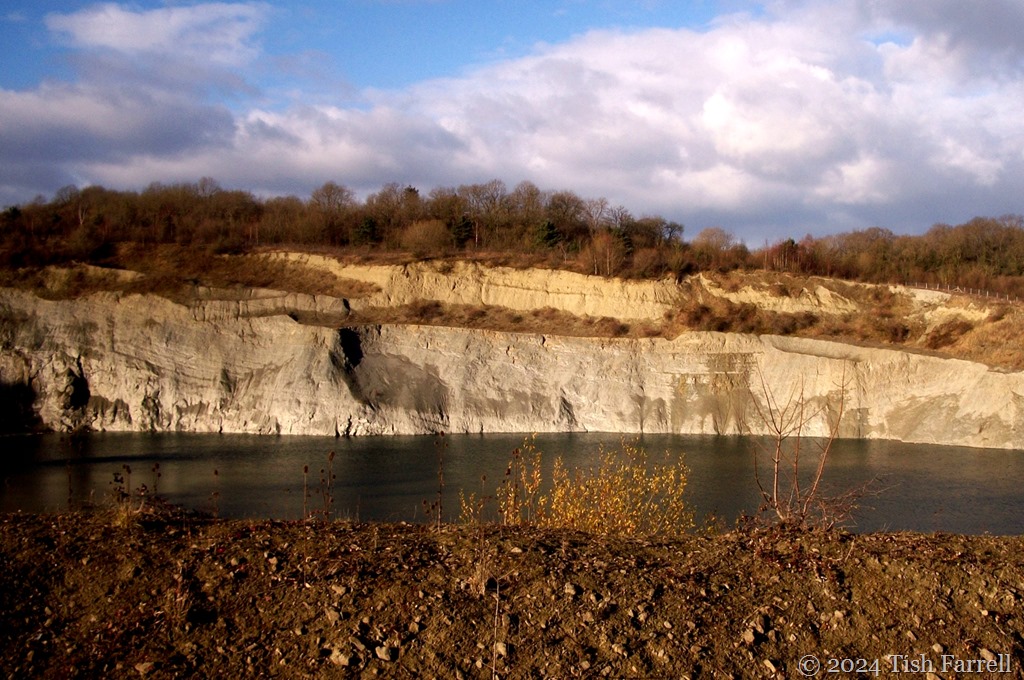
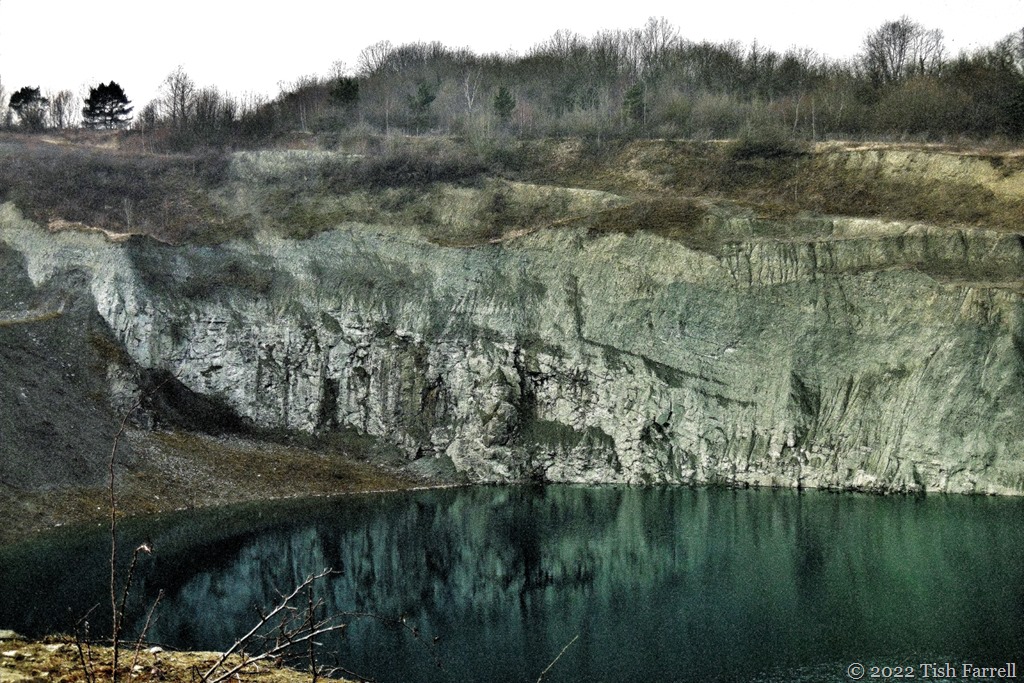
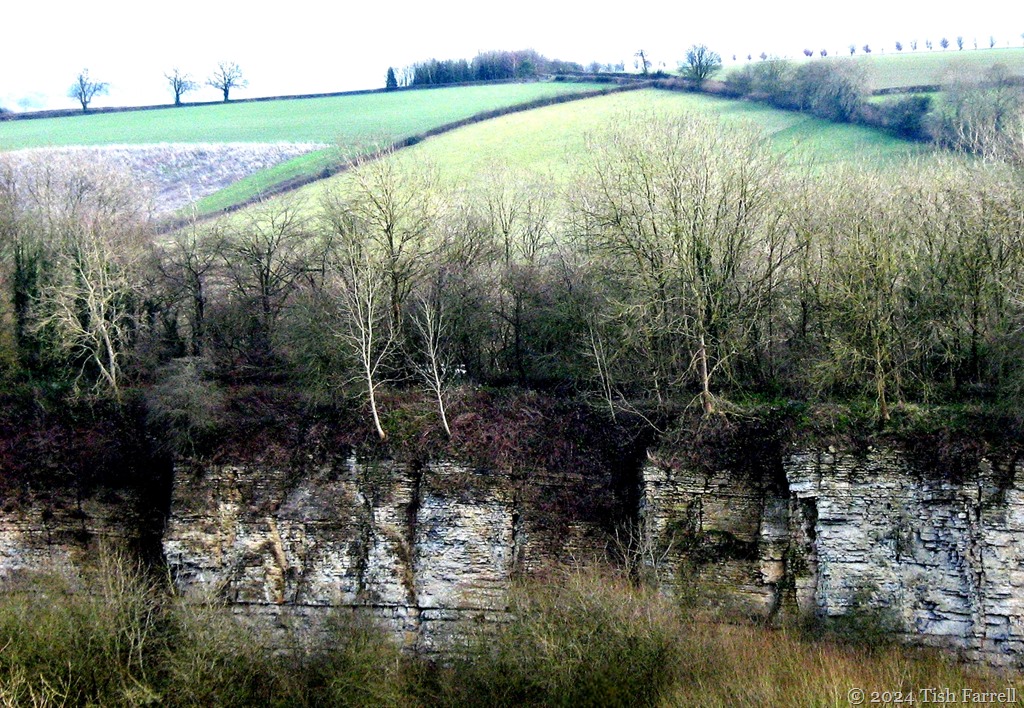
This is Shadwell Quarry on  Windmill Hill, Much Wenlock, part of the Wenlock Edge Silurian reef system.

There’s an air of brooding here, even on a bright winter’s day: of violation survived, albeit roughly; scrub and small silver birch trees recolonising the horizontal shelves. It’s a silence all its own, cupped by sheered off walls and the mysterious deep pool below. Then there is my own silence: awe at the scale of this one-time endeavour now shut down, truncated, closed as if it never mattered: the hard lives of the men who worked here, their injuries and doubtless deaths, unrecalled.

P1000657 Shadwell

Half a century ago, this hillside and the nearby town of Much Wenlock rocked with every quarry blast. Then came the soft fall of lime dust that clung to every surface.

The quarry closed in the 1980s, but in its heyday in the late 19th-early 20th centuries, steam powered goods trains huffed and clanked up the incline from the Ironbridge Gorge to the quarry’s own siding, there to take on stone to use as flux in iron smelting at the Coalbrookdale Works and the furnaces of the Black Country; industries that are also long defunct, or exported to China along with the roar of red-hot hearths, the crucibles’ hiss of pouring iron, shouts of foundrymen.

But then there’s another absent soundscape here, one so ancient it is hard for human minds to grasp. The limestone reef exposed in this quarry began to form over 400 million years ago in a shallow tropical sea somewhere off the Comoros Islands in the Indian Ocean. In waters teeming with corals, sea lilies (crinoids), bony fish, sponges, trilobites and molluscs began the depositing, compacting and solidifying of decomposing animal parts. And while this was happening there was apparently no terrestrial life, but instead there were endless howling gales rampaging across the landmass; brutal winds terrifying in their loudness.

Good that they’ve gone then. Instead we are left with other ungraspable events, for instance, envisaging how vast land masses shunted around the planet, ending up in places many thousands of miles from where they began; the slow, slow scrunch of tectonic plates; the gradual upthrusting and folding of ancient strata; a world we somehow think is in our power!
The stones beneath our feet, the rocky uplands maybe silent, but they have wider, wiser perspectives to impart if we choose to pay attention. I think our ancestors may have understood something of this.

IMG_1947 ed

Wenlock Edge quarry

*

Lens-Artists: Silence  This week Egídio explores the principles of silence in the work of American photographer, Robert Adams. Please see his photo essay and be inspired.

Sky Views Over Townsend Meadow

lens P1050990

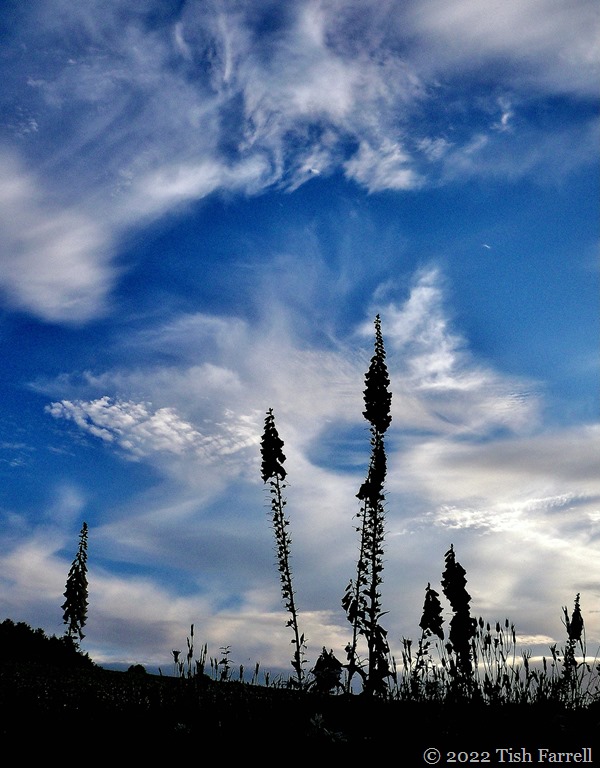
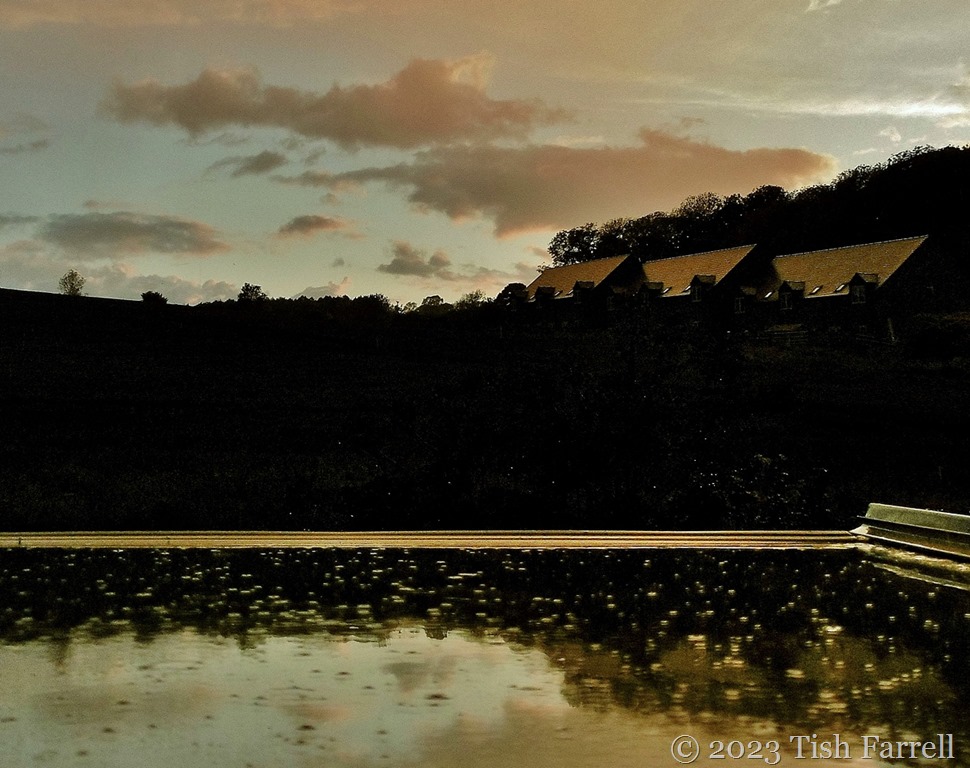
I do miss the ever changing sky-show over the field behind our Wenlock cottage, the weather and cloud effects heightened by a false horizon created by the crest of Wenlock Edge and the way the ground there falls steeply through some thousand feet of hanging woods to farmland and the North Shropshire plain.

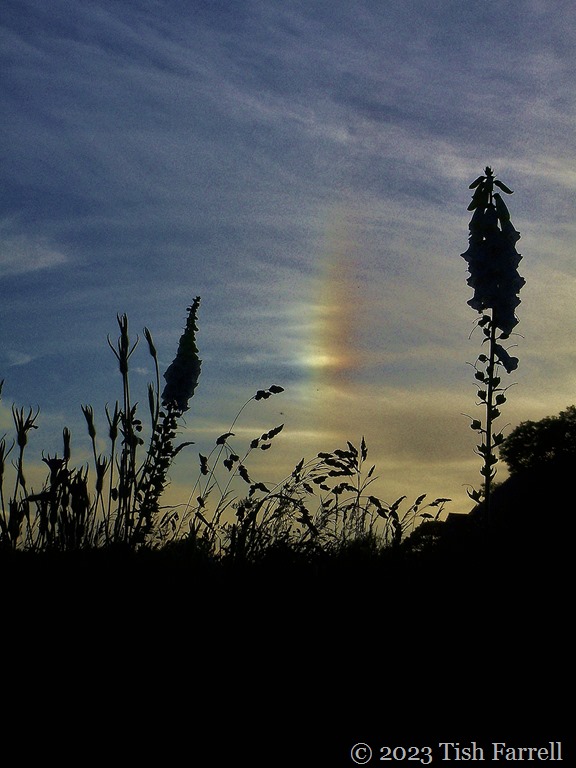
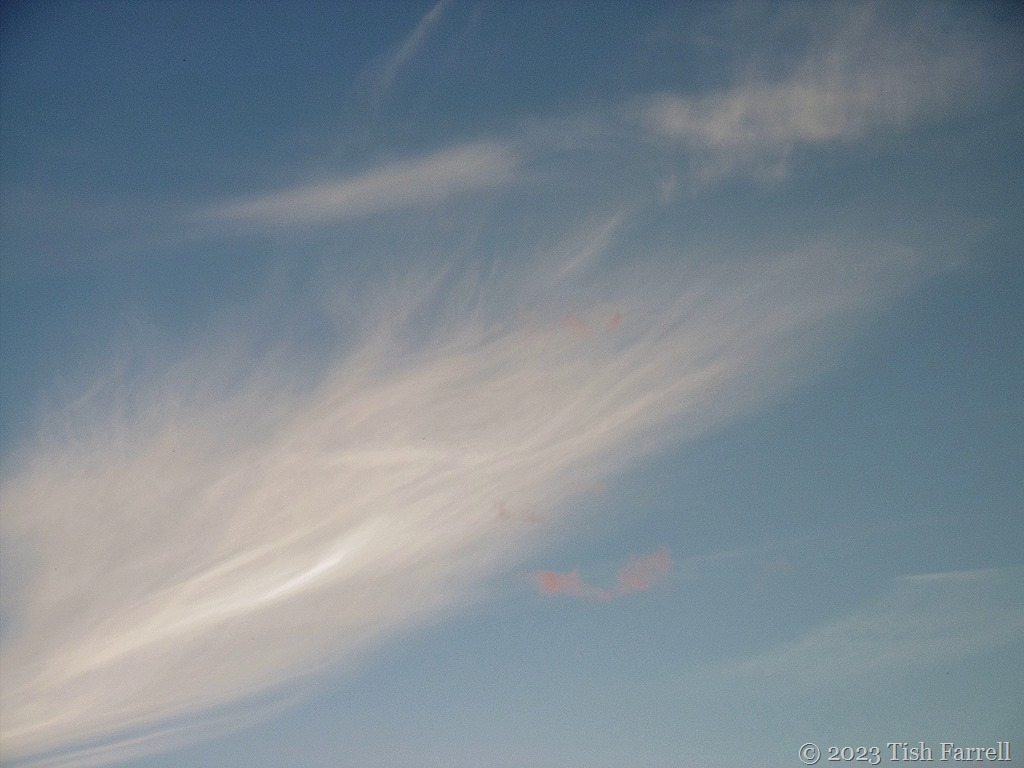
I think our elevated viewpoint of the lowland’s rising clouds might explain an unusual ‘rainbow’ phenomenon witnessed one fine, dry June evening after the sun had dropped behind the Edge. Here it is (it was rather more vivid in real life)…

lens100_5851

At the time I thought it was a fire rainbow, but I’m not sure it was. They apparently occur in fluffy cirrus clouds at around 20,000 feet when the sun shines at a particular angle through ice crystals. Anyway, I’m assuming the reason for the effect seen in the photo is something similar – to do with rising cold air above Wenlock Edge, some icy vapour caught by the sun shining up from below. Further info welcome from any atmospheric scientists out there.

*

lens 1

Another early evening sky in June

*

lens P1040221

February sunset and shower from the office window

*

IMG_0658ed

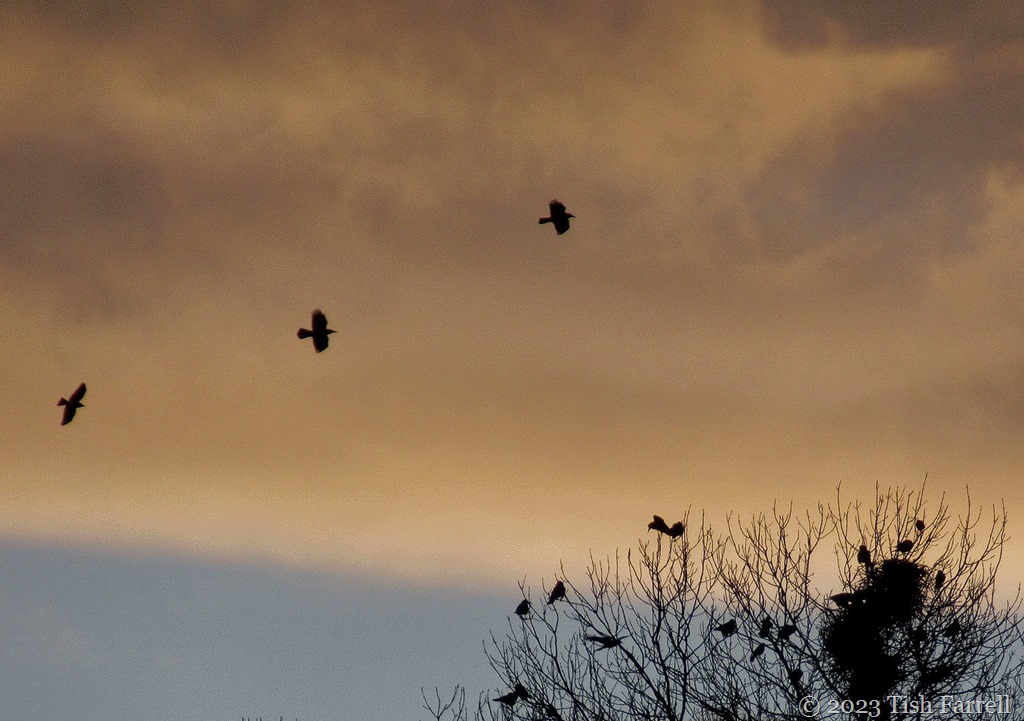
Winter at the Sytche Lane rookery

*

100_6323ed

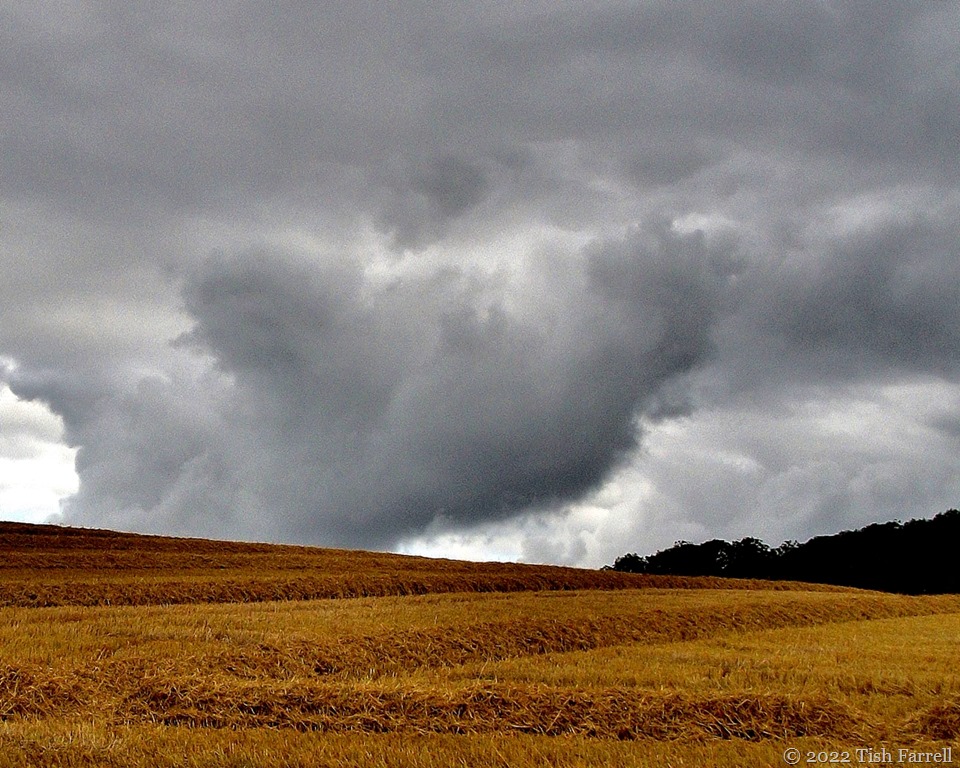
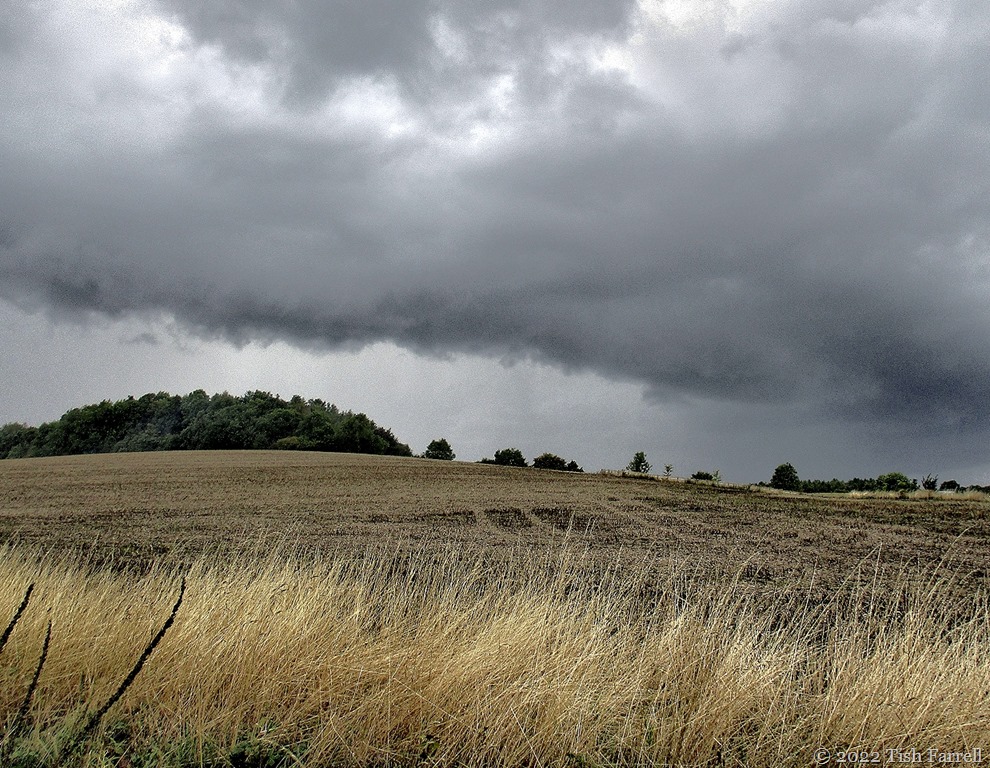
Late summer storm brewing

*

lens 2

A rare dawn shot

*

lens ed

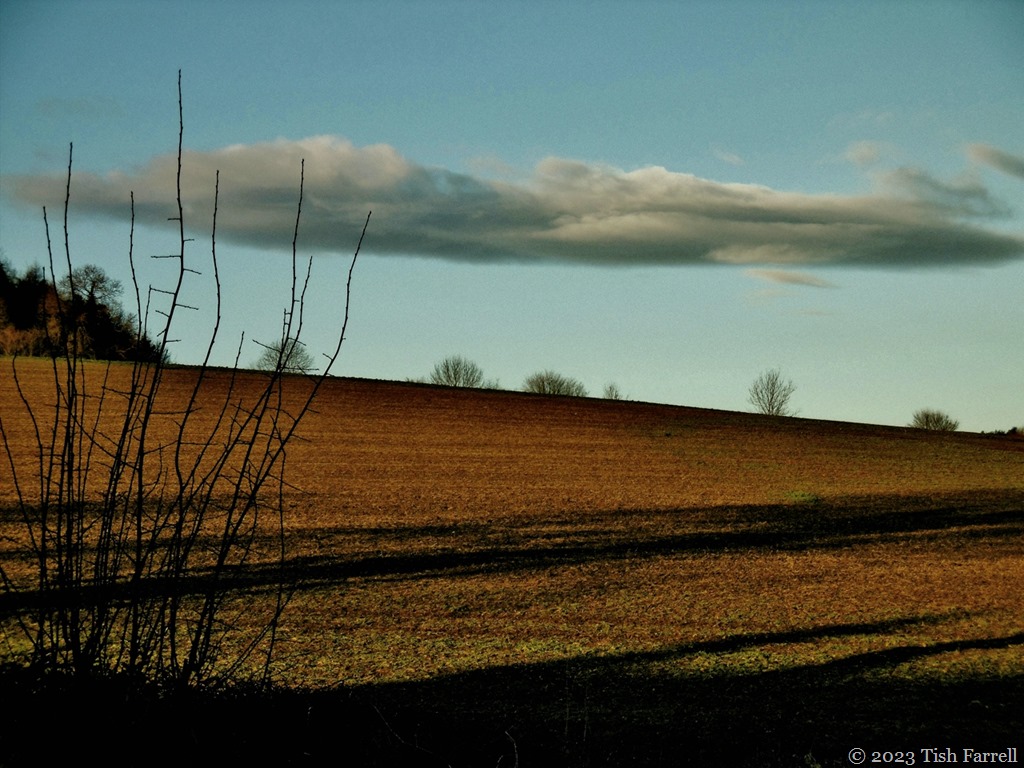
And a soothing cloud view to finish – because it’s definitely good for our well-being to gaze at clouds. It helps to broaden our visual and mental perspective. I learned this last week while listening to an interview about mindfulness and anxiety with Harvard Medical School professor and psychotherapist, Dr. Ron Siegel. He has some recorded guided meditations HERE for anyone who needs a bit of extra soothing.

Lens-Artists: Skyscapes or cloudscapes  This week Amy sets the theme with some stunning examples.

Winter On The Edge

100_7046 sq

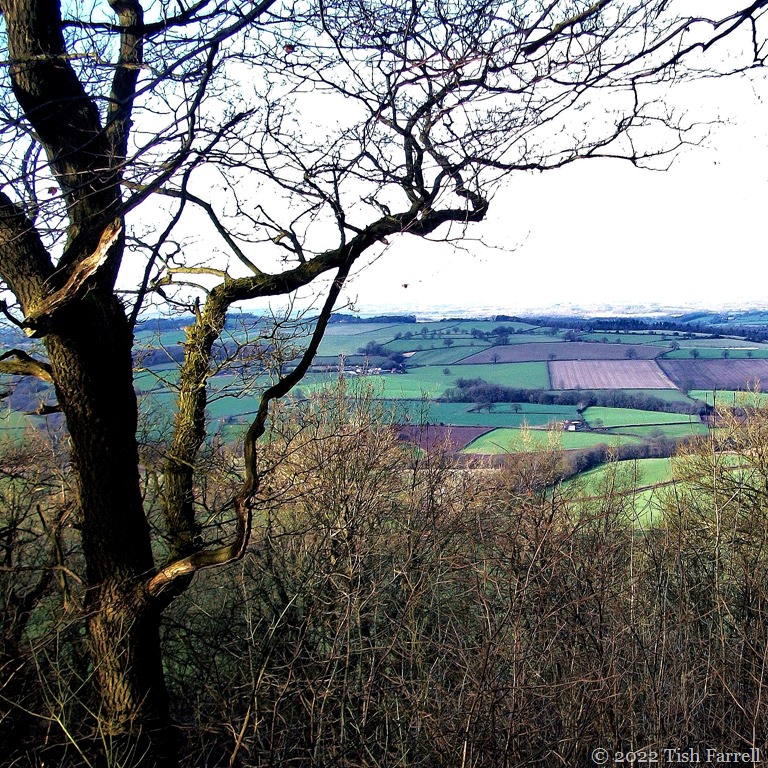
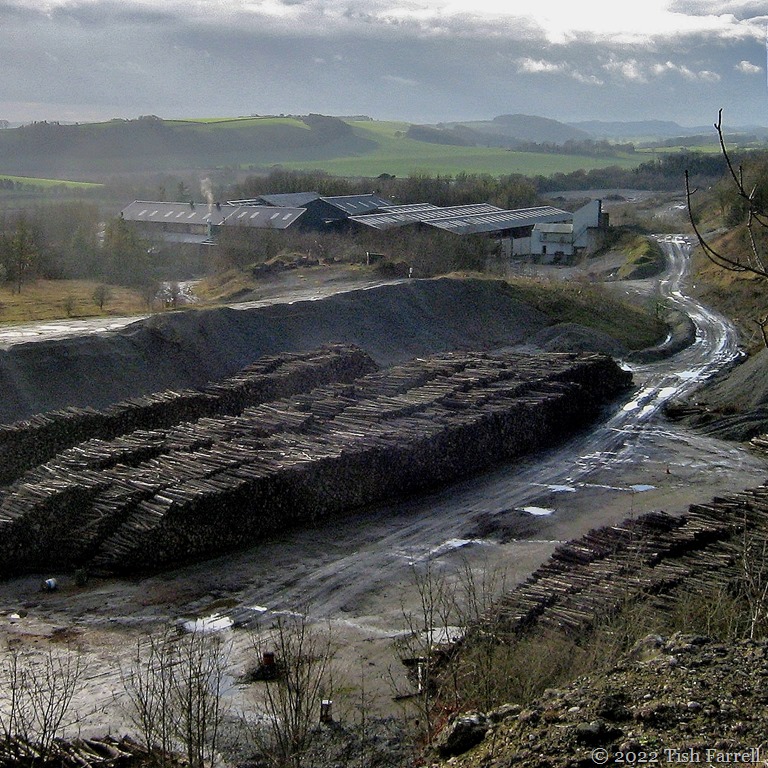
The National Trust owns the north-east facing scarp of Wenlock Edge. There’s a good path along the summit which, in gaps through the trees, offers stunning views of north-east Shropshire. It also skirts the old limestone quarries which now provide quarters for, among others, a garden fencing company and an outfit turning trees into pellets for industrial wood burners. The quarry enterprises are by no means scenic, but they have a certain drama. The National Trust trail and map are HERE.

100_7056sq

Looking towards the North Shropshire Plain and the Wrekin

*

100_7051sq2

IMG_1929sq

Edge Renewables

*

IMG_1946 - sq

Walking Squares #8  Join Becky on her daily November walks

Coming Home From The Edge

IMG_0067sq

It’s interesting but when you are walking about in Much Wenlock, you are very rarely aware of how steeply the land rises towards Wenlock Edge, or of the fact that the town sits in a distinct hollow with other not-so-steep hills rising to the east and south.

In this photo I am walking down from the Edge, following the path that ends up on Sytche Lane, a short hop from our garden gate. We’re lucky to have so many good walks on our doorstep, and mostly field paths, too.

Walking Squares #5 Today Becky is taking a walk close to home.

IMG_0067cr

Over The Home Hill: More Hills

P1050952ed2

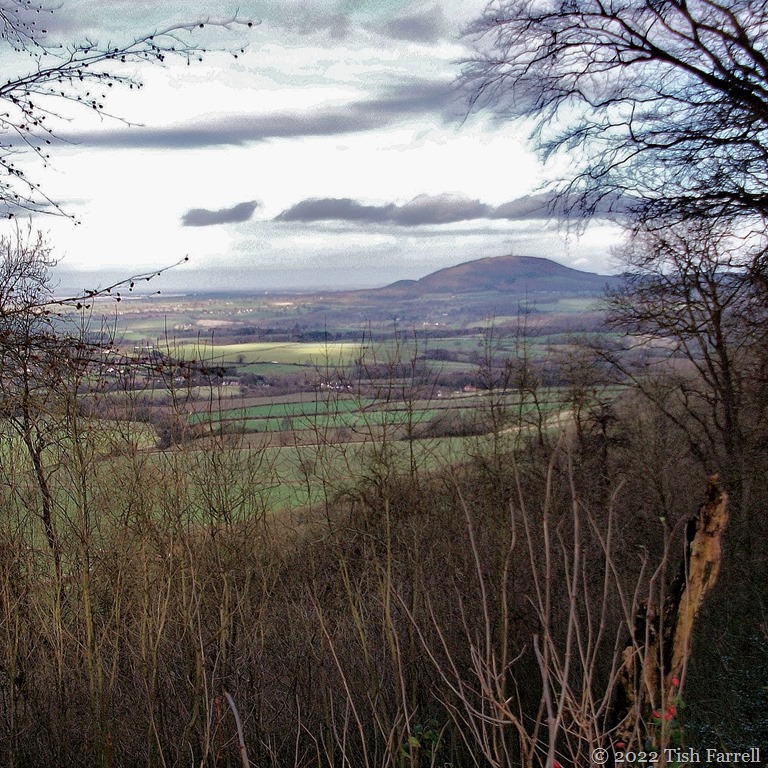
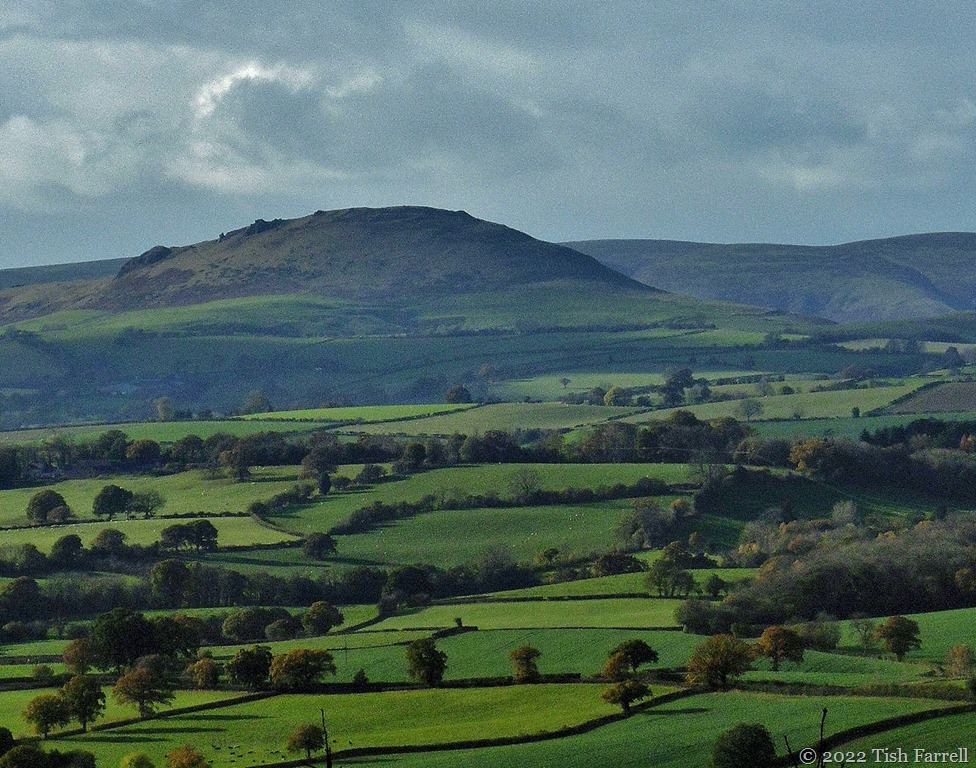
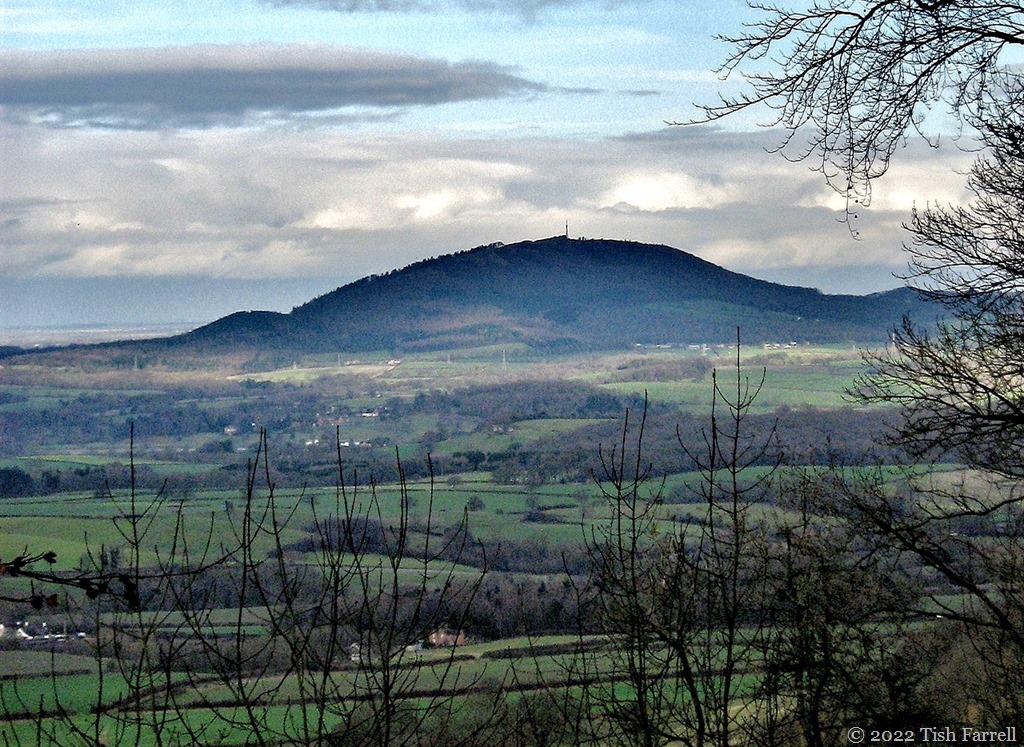
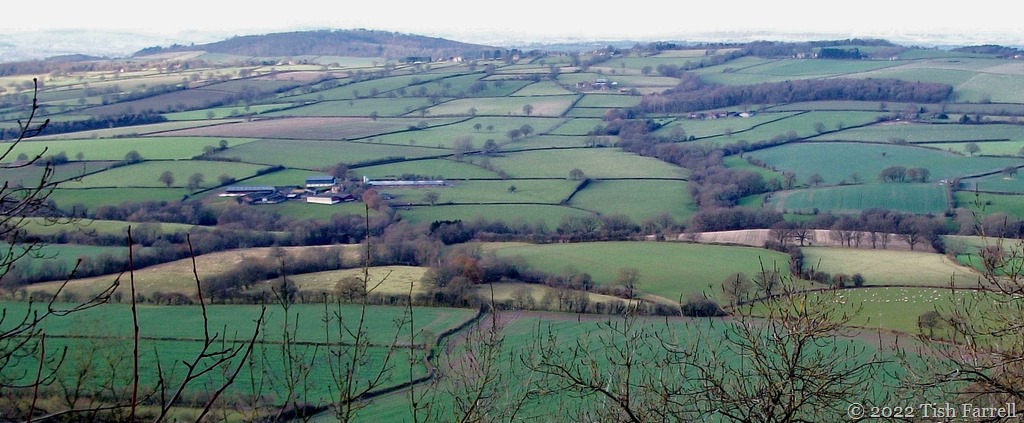
Wenlock Edge behind our house runs for twenty odd miles, a wooded escarpment that bisects the county of Shropshire on a north-east-south-west axis. It’s not always easy to see out for the tree cover, but here and there, a few choice viewpoints give you a glimpse of Shropshire’s other hills, the Long Mynd living up to its name in the distance here. I’m fumbling for the name of the hill in the middle distance (not recognising it from this angle). It could be Caradoc.

*

If we turn right round in the other direction, then we can see Clee Hill:

P1050963ed

*

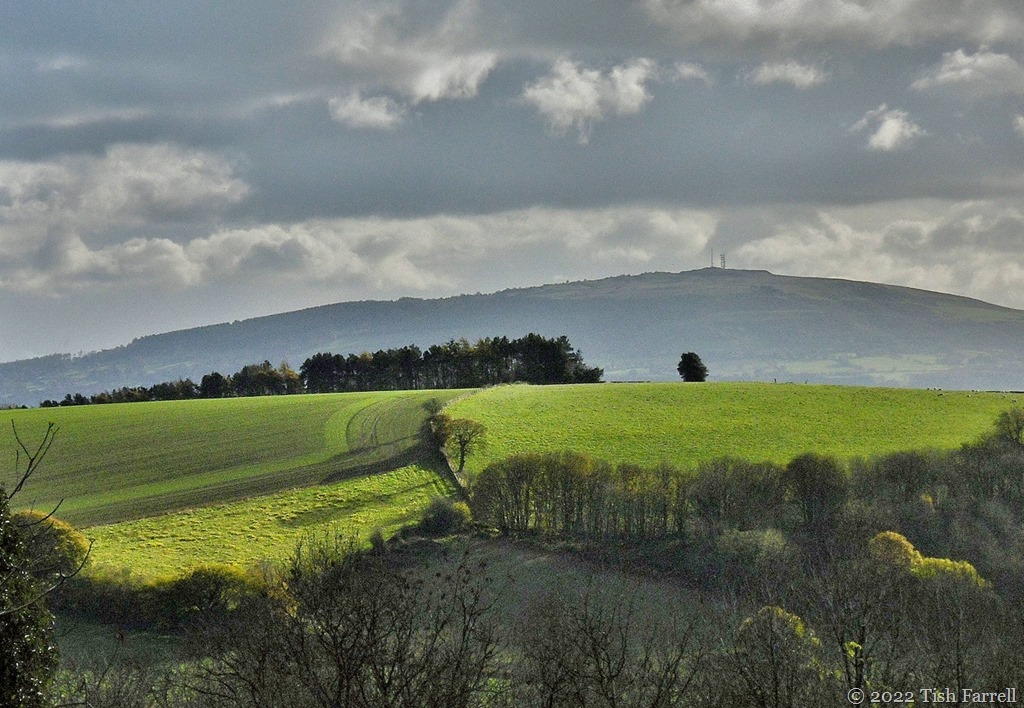
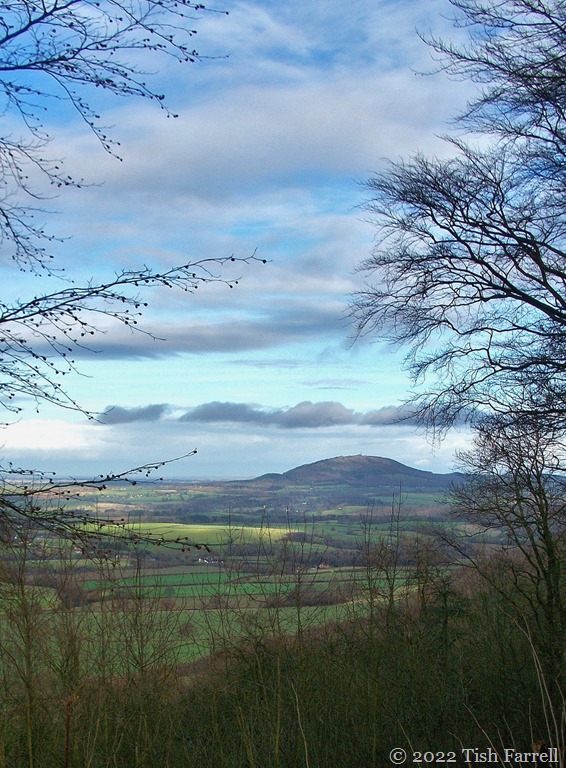
Closer to home, you can take the National Trust footpath out of Much Wenlock and head for the Edge landmark, Major’s Leap, from where, on a winter’s day, you may be treated to an other-worldly view of the Wrekin, subject of many quaint Shropshire tales. (My version here).

IMG_1949ed

*

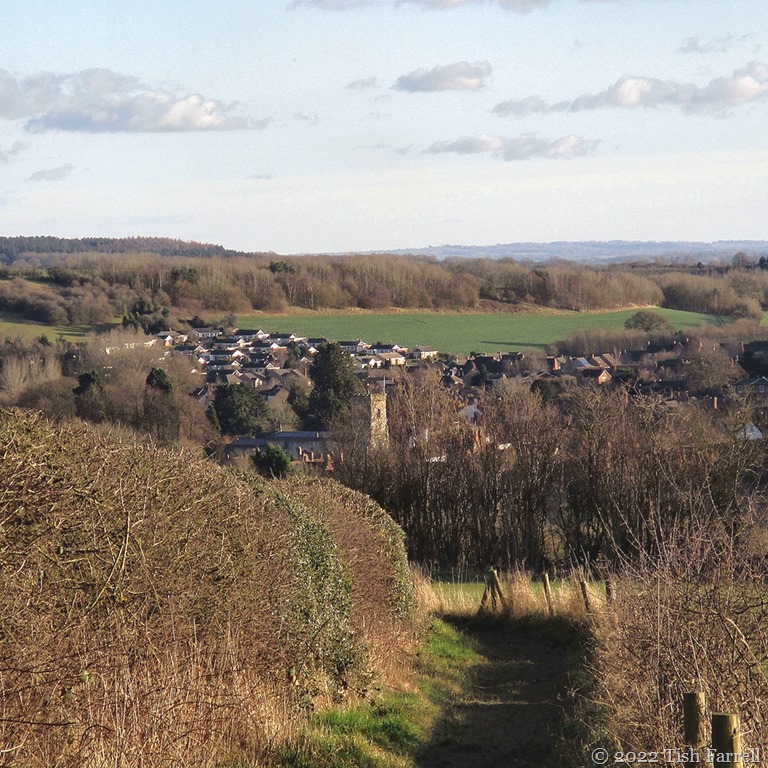
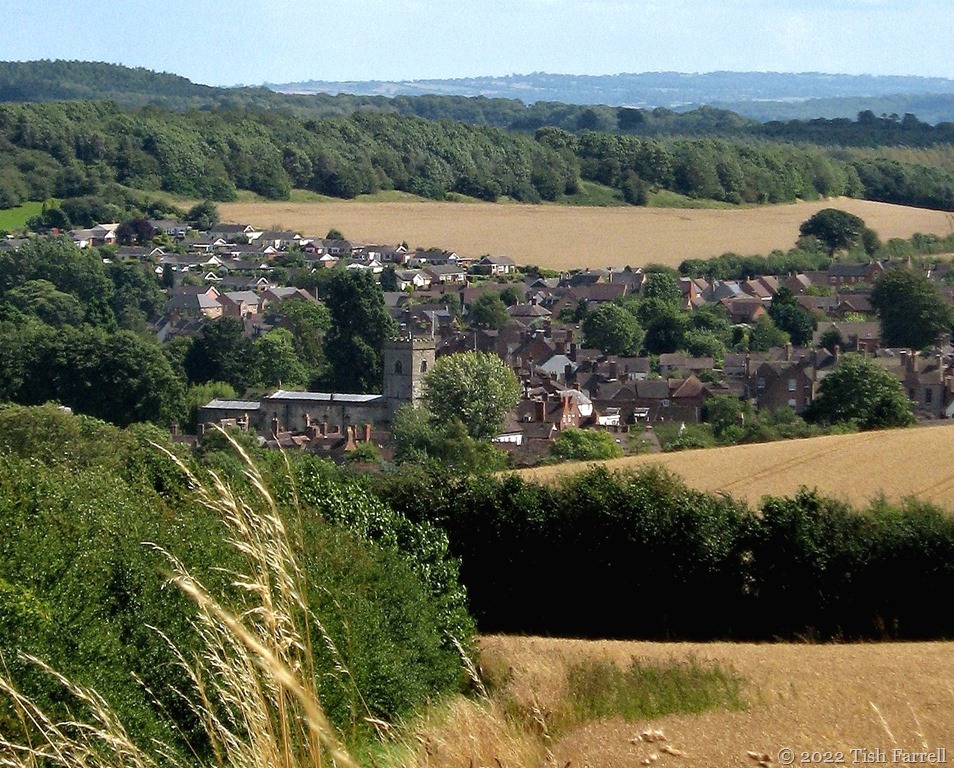
And coming down the Edge footpath behind our house you have a fine view of Much Wenlock hugged round by hills, Walton Hill and Shirlett Forest:

IMG_1373ed

*

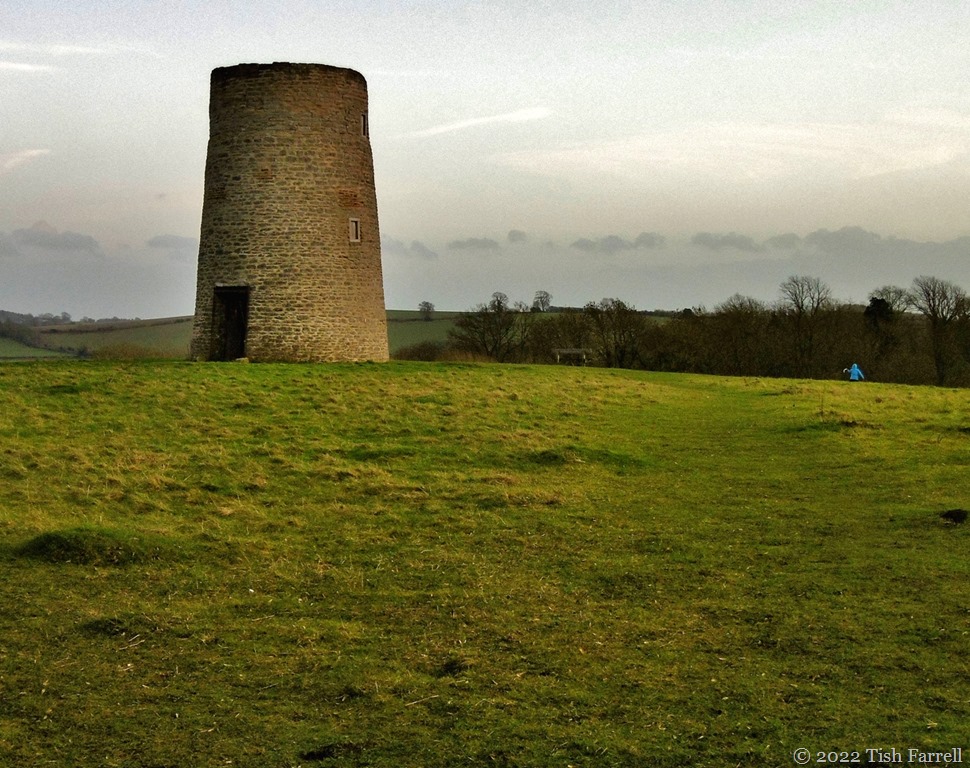
And while I’m showing off our local hills, I can’t leave out the town’s favourite landmark: Windmill Hill with a small turquoise person heading over it:

P1030046ed

Lens-Artists: over the hill  Donna at Wind Kisses has set this week’s challenge.

There’s A Storm Coming…

IMG_1459ed

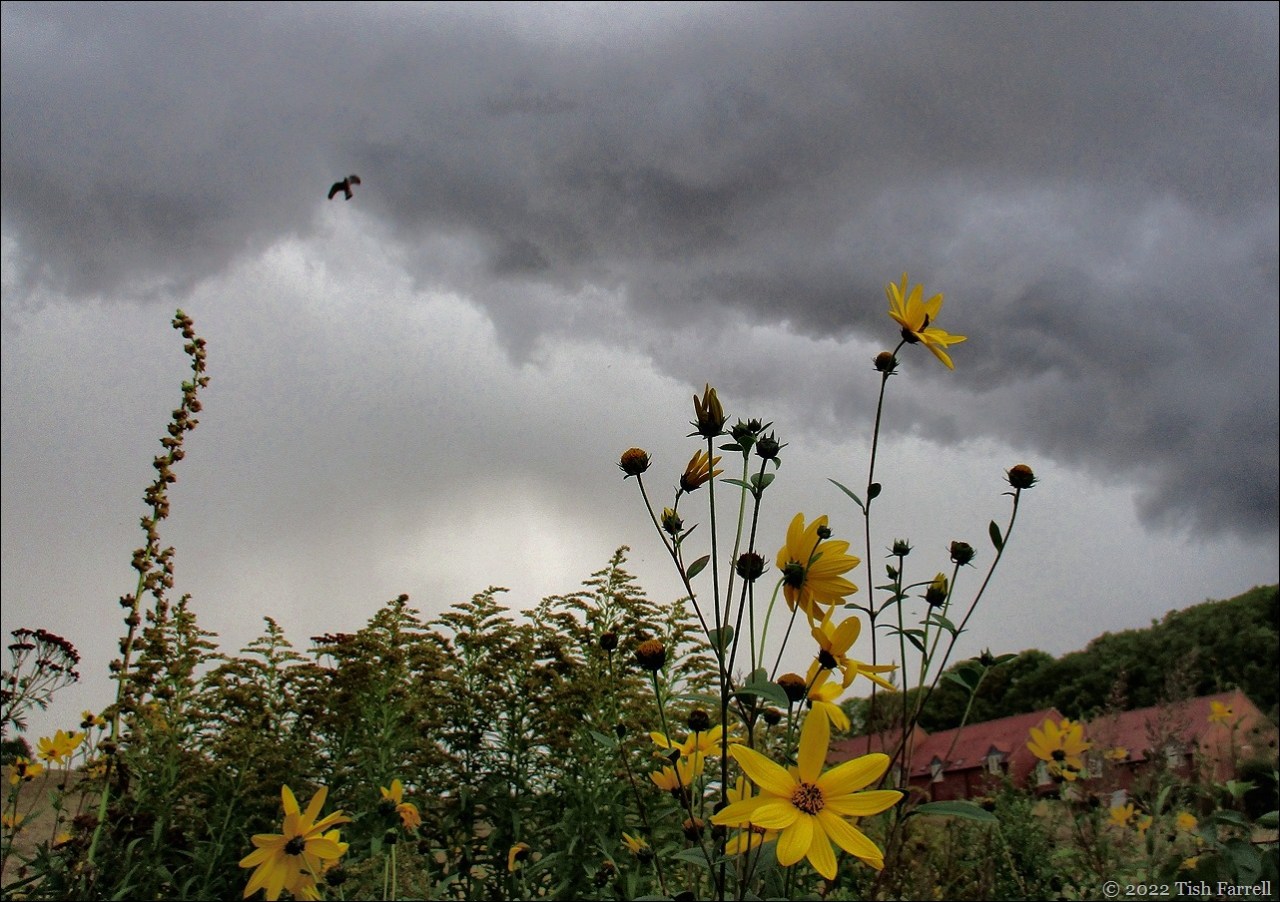
Over the garden fence this afternoon. And yes, after weeks of drought, we’ve had some rain, though the showers have not been as generous as these clouds seem to promise. I watched them roll out across Townsend Meadow towards Wenlock Edge. A cloud serpent, or a Chinese dragon in many shades of grey. There were pigeons flying every which way and some horizontal lightning.

Nothing like a spot of wild weather to stir the spirits.

IMG_1447ed


Quiet Scenes On The Edge

P1060107sep

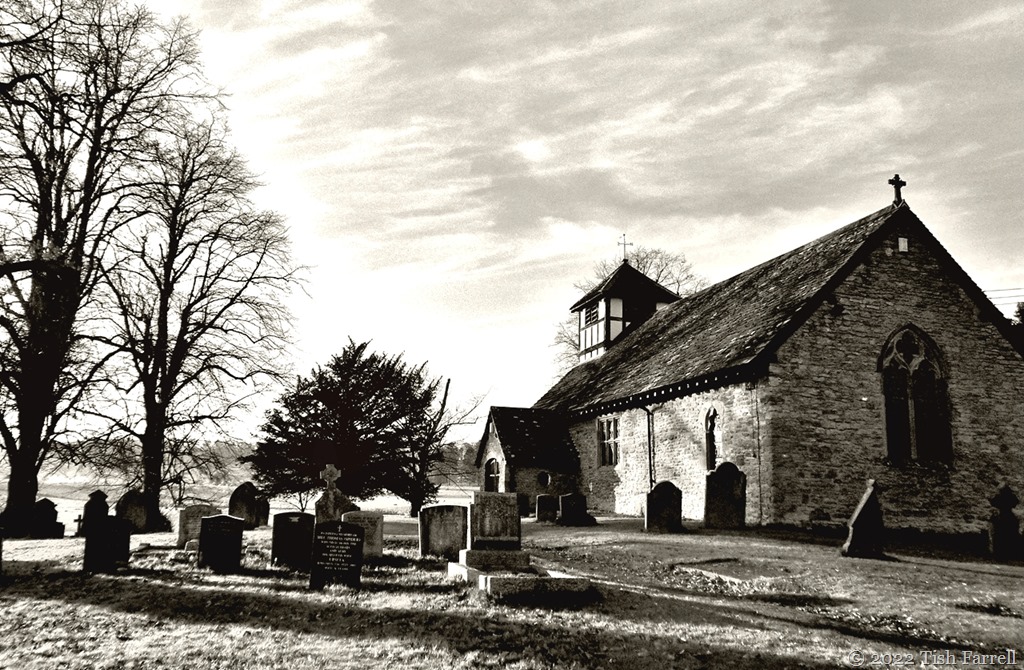
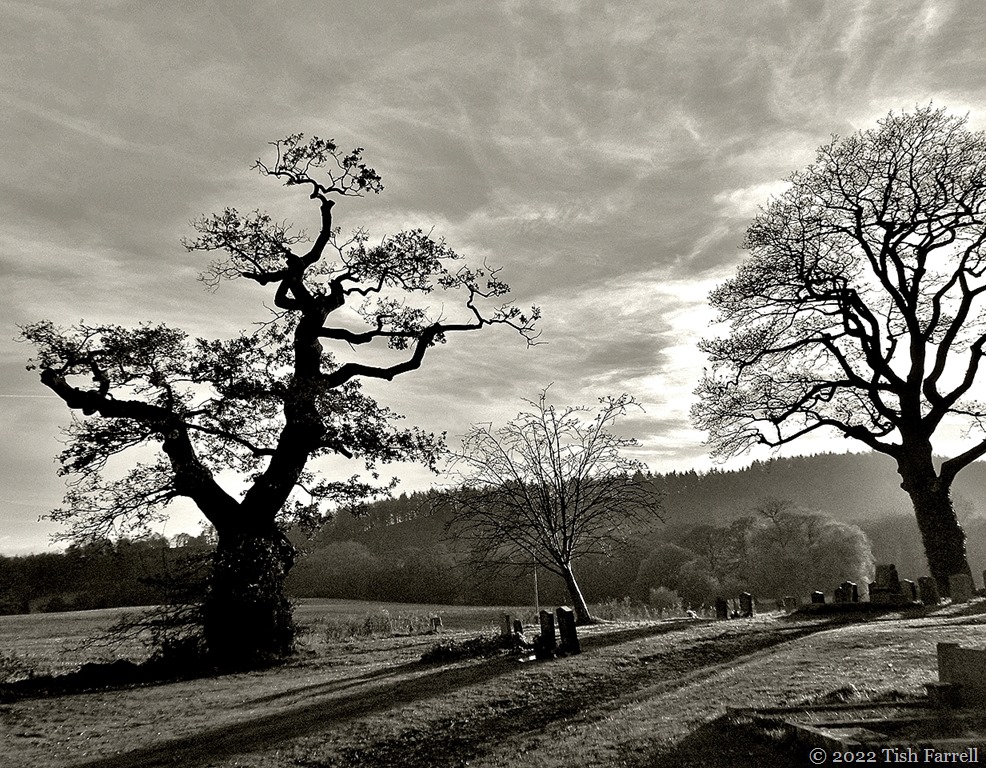
The hamlet of Easthope lies a few miles south-west of Much Wenlock. To reach it you travel along Wenlock Edge towards Church Stretton, then drop down a winding lane, too narrow for comfort. At the village heart is St. Peter’s church and the meadows of Manor Farm. The houses are scattered round: old limestone cottages, some ancient timber framed buildings, some modern homes built last century, a gracious rectory no longer ecclesiastically engaged. Most look out on the Mogg, a darkly forested hogsback ridge whose trees hide the the remains of  an Iron Age hillfort known as The Ditches.

You can just see the conifer tops of the Mogg between the churchyard trees in the next photo.

P1060116sep

I took these photos one bright December afternoon. It was something of a pilgrimage.  My good friend and artist Sheilagh Jevons resides in this peaceful graveyard, the perfect spot for a woman so in tune with the Shropshire landscape and its liminal spaces and much in love with the Mogg. Her house and studio were just down the lane from the church and she called her home The Mogg.

*

P1060049sep

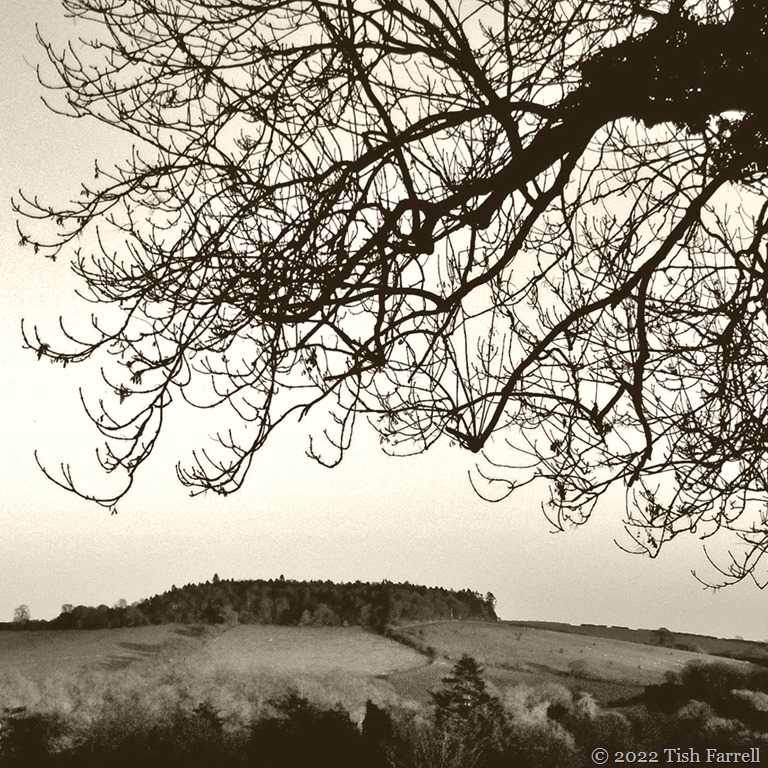
Here is another hill topped with a conifer plantation. It lies on the easterly side of Much Wenlock, and this is the view I see as I come home from the allotment, stepping out under the big ash tree that guards the unofficial ‘gateway’ through the field hedge.

*

P1100113sep

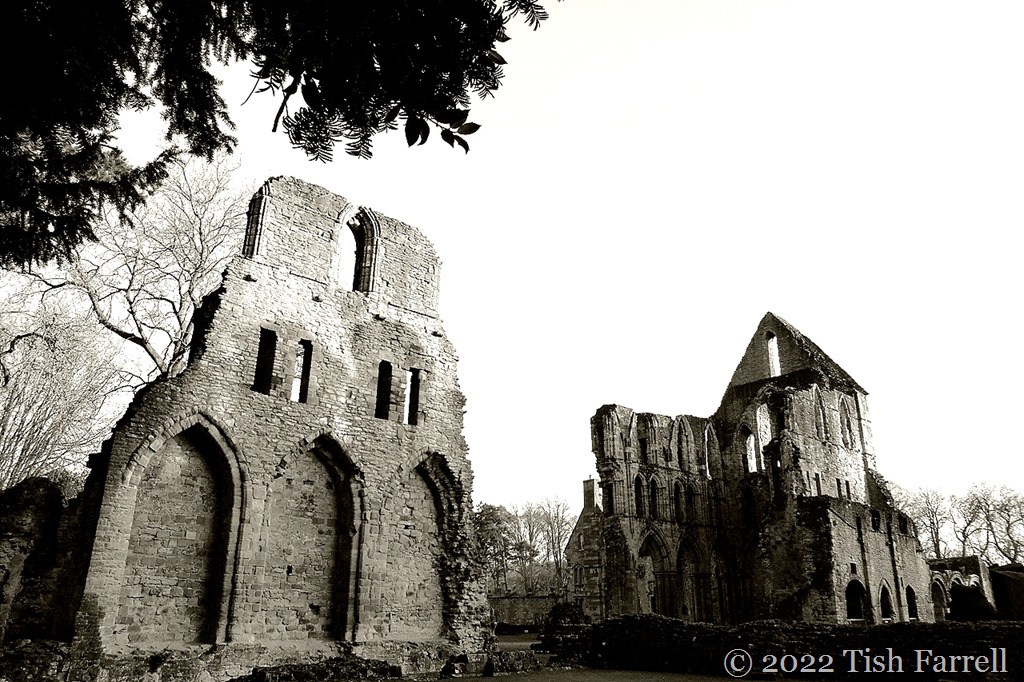
And naturally, one of the most peaceful spots in the town are the ruins of Much Wenlock Priory whose origins, in the charge of Saxon princess and abbess, St. Milburga, go back to 670 CE. The remains you see here are much later, dating from successive building phases in the 12th and 13th centuries. In its day, Wenlock Priory was among the grandest monastic houses in Europe, its monks belonging to the Cluniac order and brought here from France. It’s a mysterious thing to think of now, a French community ruling the lives, body and spirit, of Shropshire folk. All dissolved in 1540 of course, with the protecting lead stripped off the roofs by Thomas Cromwell’s team of asset strippers.

Cee’s Black & White Photo Challenge: peaceful

And Another Shropshire Ghost

100_7053cr

In an earlier post this week I mentioned Wild Edric our heroic Saxon warlord who challenged the Norman interlopers and ended up as a ghost haunting the Stiperstones. Now shunt forward a few hundred years to the 1640s, a time when England was locked in civil war: Roundhead Parliamentarians versus Charles 1 and the Royalist army. The Parliamentarians were intent on curbing the king’s proclivities to do as he liked at the nation’s expense; the Royalists were set on protecting the monarch’s prerogative.

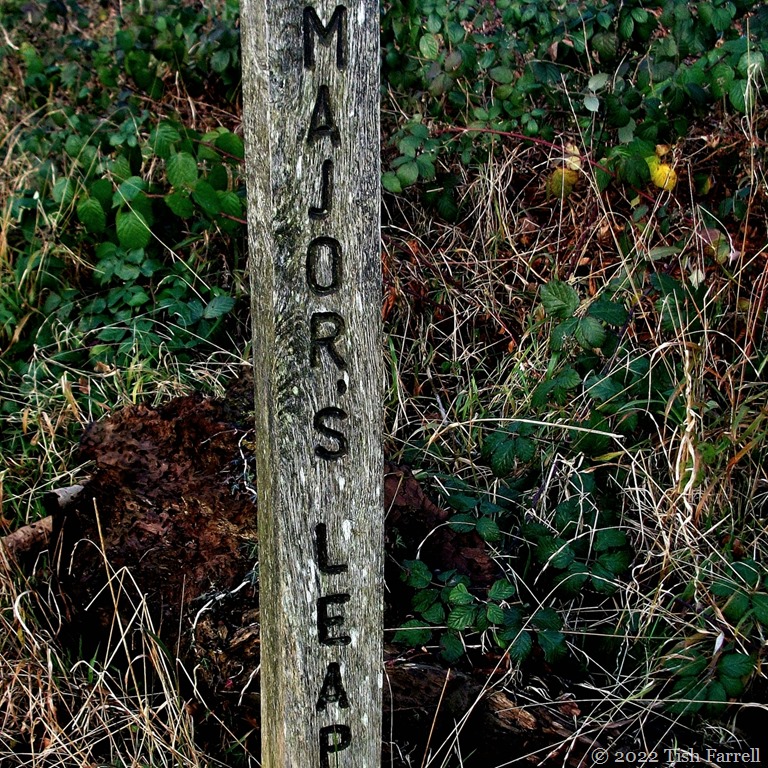
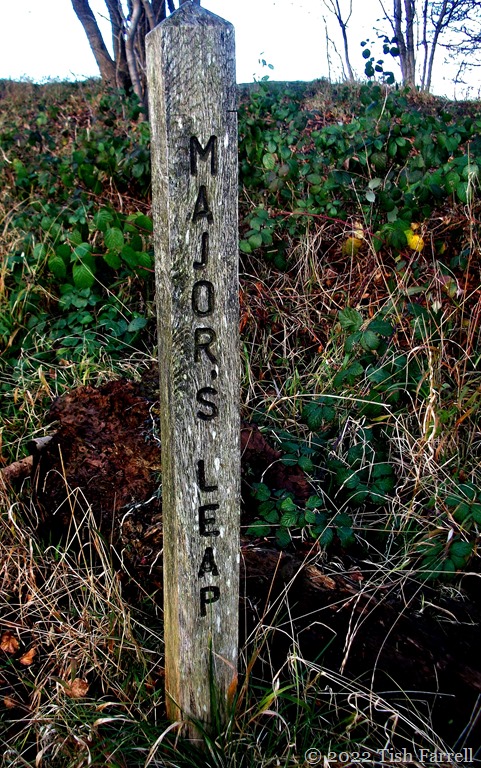
We’ve shifted from the South Shropshire hills to Wenlock Edge, a wooded limestone escarpment that rears up above the county’s farming lowland for nearly 20 miles. Enter one Major Thomas Smallman, fleeing on horseback from his home in nearby Wilderhope Manor. He is a King’s man, carrying despatches for the Royalist headquarters in the county town of Shrewsbury, some dozen miles away. On his heels are Cromwell’s troops. Trying to evade them, the major veers off along the Edge. But there’s no escape. He and horse leap over the precipice. It is a two hundred foot drop. The major was caught up in a crab apple tree, and so survived to deliver his despatches to Shrewsbury, but his valiant horse was lost. Perhaps that’s why a ghostly major on horseback may sometimes be glimpsed near this signpost on the Edge footpath.

100_7053

*

And to give you a notion of what lay before the major when his horse took off:

100_7057res

The Square Odds #10