A hard frost overnight, but this morning a big sun; the garden fence lit up; a glow of crab apples.
Passing on brightness among the shadows.
A hard frost overnight, but this morning a big sun; the garden fence lit up; a glow of crab apples.
Passing on brightness among the shadows.
We woke to snow this morning. Not too much and already melting at 8 a.m. but, even so, far too early an occurrence for the time of year.
The first photo shows the kitchen rooflight.
I think it’s likely to be an indoors day.
Becky shows us some very fabulous Norwegian shadows today.
Yesterday we had sun. We did! And a fine afternoon it was for a short tramp up and round the town.
As you can see, Bishop’s Castle is on a steep hill. The header view shows the High Street below the Town Hall. We’re around half way up the hill.
Now I’m walking you backwards, past the Town Hall, past Bamber’s elephant mural into the Market Square, and crossing Salop Street.
*
And now I’m turning you right around to look up Bull Street:
And we’re still not at the top.
Bull Street leads to Bull Lane. If we look right and downhill, there’s a fine view of farm fields, doubtless winter wheat and oil seed rape.
But we’re not going down, but left and up to the crossroads where Bull Lane meets Castle Street, Wintles Lane and Montgomery Road.
Now we’re at the top of the town, by the blue house that is growing a fine shadow tree:
*
And in the shade, on the house wall opposite, a tribute to our two local Morris dance teams, the Shropshire Bedlams and Martha Rhoden’s Tuppenny Dish
*
At the crossroads it’s decision time – to go left and back into town via Castle Street (where there is no castle, only some ground it once sat on and some more good views):
*
Or cross the road into Wintles Lane:
*
If you want to see the elephant sculpture, then you need to take the Wintles Lane option and follow the footpaths on the right. And climb another hill:
It’s also worth clambering up here for the view of the Long Mynd.
And from here, too, you can turn about and look down on the town. A fine spot on Planet Earth:
This time last week, the wind was racketing around the garden, threatening to uproot and mash the herbaceous plants. But in the end, damage was minimal. In fact some plants have been thriving since.
And especially
1) Cornelia rose
She’d been in a big pot by the greenhouse all summer. And as she was new, I’d been concerned about keeping her suitably watered during the long summer drought. She did flower a little back then, but not for long. But since the storm, and removal into a bigger, bottomless pot, she has sent out elegant arching stems laden with buds and blooms. She’s a hybrid musk, and the flowers, though small like wild roses, smell delicious. I’m hoping she will eventually fill the gap between the hedge and the greenhouse.
2) Cosmos bigger and better
The gale might have blown their frocks off, not to mention nearly scooting them out of the ground, but the Cosmos plants on the terrace wall have come back bigger and better, and are covered in new buds. I’ve been filling vases with them.
*
3) Tree tomatoes?
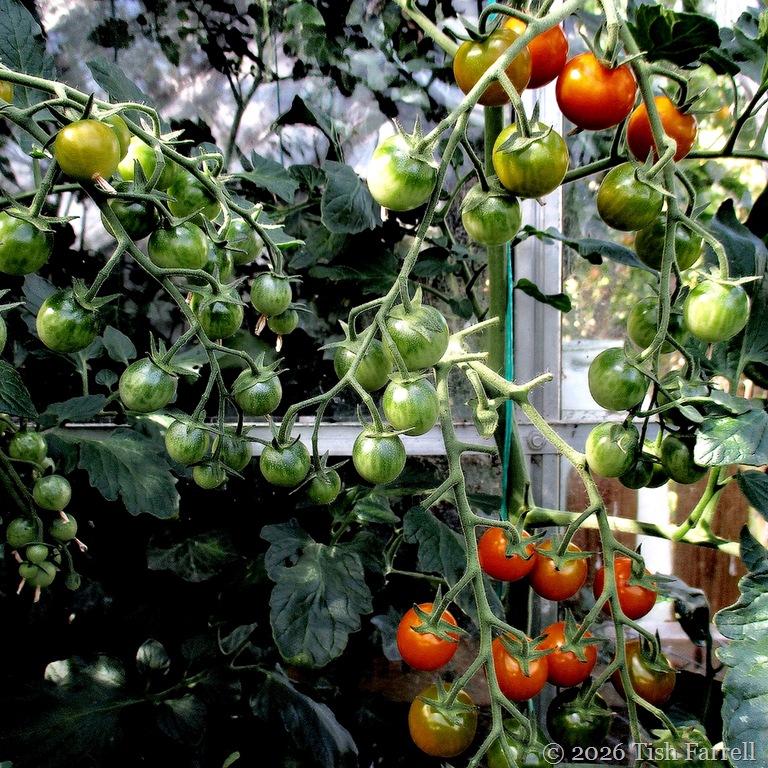
Nor did the big wind deter tomato production in the cooking apple tree. Daft, I know.
![]()
This plant was one of my rejects, a pot-bound Sungold seedling that had hung around on the garden path long after I’d potted up the main plants in early June. Eventually, I stuck it the ground , and generally forgot about it, though I did provide it with a supporting stick. Some time later I discovered that it had climbed way up into the apple tree, and so chopped off its top growth. And again ignored it. Then it began fruiting and has been doing so for many weeks – just a few tomatoes at a time. They’re delicious too.
Here it is – you can just see a strand of green fruit hanging down to the right of Jelly King crab apples, green obelisk behind.
*
4) The Kabuki calabrese gets the prize this week for making me smile a lot. I always find it exciting when my brassicas start to sprout. And this particular plant has survived remarkably unscathed after the summer attack of flea beetles which make holes in everything of the brassica family. The flower head isn’t exactly big enough for two. Well, not yet. Watching brief activated.
*
5) Grumble of the week
Well, there always has to be something. Now I’m wondering what on earth is making holes in my Swiss Chard (mature and seedling versions) and also the Perennial Spinach. I thought I’d finally protected all the edible greens from all comers with a covering of fine black netting. All summer I’d managed to fend off butterflies from the caulis and purple sprouting. And kept the pigeons at bay. But now I have holey leaves. He who is a sometime plant pathologist posits caterpillars, but I can see no obvious sign of them. Suggestions, anyone?
*
6) Sunbathing
And not to end with a fit of gardening disgruntlement, since the storm we’ve been having some wonderful sunny spells, warm enough to make one put autumn woollies straight back in the cupboard. Even the ladybirds have been sunning themselves. I’ve been finding them all around the garden, including some very tiny ones.
And that’s it from our Shropshire garden. Happy gardening, folks.
Please call in on our host Jim at Garden Ruminations.
1. Storm-struck
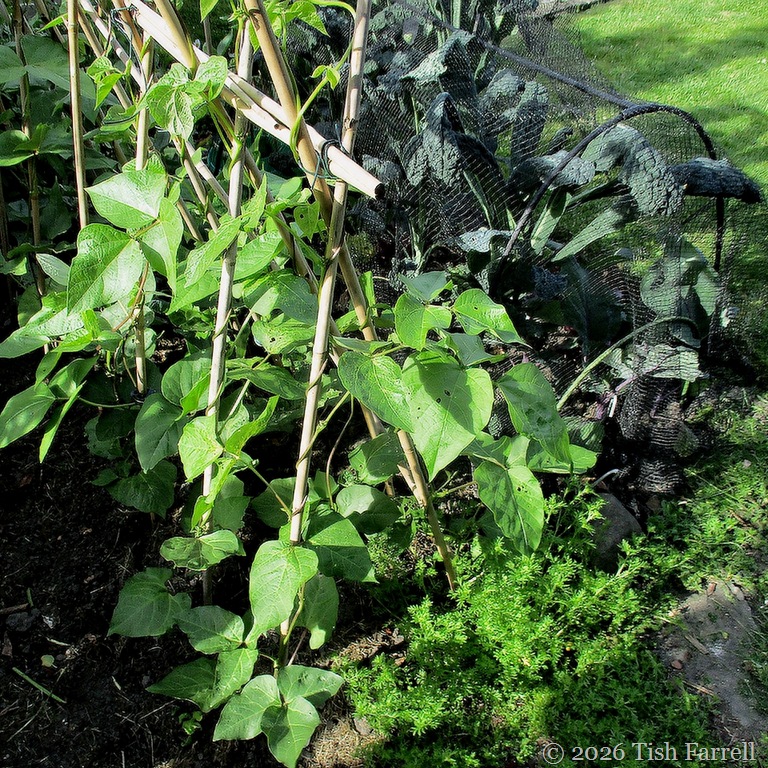
This morning at breakfast time – with a high wind whooshing about the place and rain lashing the kitchen doors, the garden definitely looked a no-go area. I could see three dozen bean canes splayed like pick-up-sticks across the top path by the greenhouse. Drat and double drat. When I dismantled the runner bean rows a week or so ago, I had forgotten to tether them securely to the hedge. I could also see the cosmos at the top of the steps being tossed about. Since late September and the onset of rainy days, it has been flowering magnificently. Now it was having its petals blown off. More curses. And I could see that the Selinum (farthest right at the wall top) which is still flowering as well as seeding, was now rearranged at a 45 degree angle.
Not a happy gardener.
Cosmos unclothed; Helianthus blown away.
And then, quite suddenly, towards midday, the rain stopped and the sun came out, although we still have a mighty blow, with now-and-then gusts that lift you off your feet.
I did a quick tour of the garden, but there was not much to be done mid-gale, apart from attempting a bit of support for the Selinum.
2: Apples
With the wind, I was expecting another heavy crop of windfalls. But when I went out to check the damage, I was pleased to see that most of our remaining apples are still clinging sturdily to their stalks. Which is good news as I already had a stack of windfalls in the kitchen. And there’s only so much apple sauce we can eat, and all the neighbours are overwhelmed with apples too and putting them out at their gates for anyone to take. However, I recently discovered an easy apple chilli chutney recipe, and so, as gardening was out, this was what happened next.
*
3. In love with Michaelmas daisies
I’m not expecting the late flowering flowers to survive the wind, but that won’t include the Michaelmas daisies (Symphyotrichums/Asters whatever they’re called these days). I took this photo with the wind still blowing. Only a couple of small side stems damaged.
Its neighbour, a compact little variety (I think it could be Purple Dome) has only just decided to flower:
And at the bottom of the garden this tall white bushy version, White Ladies maybe, and…
…Aster x frikatii Monch have been flowering since the hot days of summer:
*
4. Great Dixter Nursery
And so like Jim, I’ve been doing some plant buying. I have recently discovered that Great Dixter House and Gardens has an online plant shop. They sell some very lovely plants (1 and 2 litre sizes) at very reasonable prices. That’s where I found Patrinia as featured in an earlier SoS. And it’s where I also found ‘Symphyotrichum Les Moutiers’ which is now planted in my front garden. We’ll have to wait nearly a year before we see it in action though. Do give the link a quick look.
5. Ongoing edibles
The salad stuff hasn’t been troubled by the unruly weather. The radicchio and endive, rocket, land cress, and Moroccan Cress lettuce are presently thriving, though everything has to be netted against pigeons.
We also have some Swiss chard, beetroot, parsnips and leeks, and a new bed of winter greens (planted out on the runner and borlotti bean bed) is looking quite good. And there are still a few climbing borlotti beans to pick in the side-garden wall bed.
*
6. A happy face
Now as I’m writing this, the rain is back and the wind is still blowing. So I’m finishing off with another garden stalwart. I was so pleased to find this marigold looking so fresh-faced as I went round the garden late-morning. Of course, we eat these too. Perhaps I shouldn’t mention that though.
Happy gardening folks – whatever your weather. Even on distinctly unpromising days, there’s usually something in the garden to be glad about.
copyright 2025 Tish Farrell
Six On Saturday Please catch up with Jim at Garden Ruminations.
Here in Bishop’s Castle the rainy weather continues as we head towards the autumn equinox. Just now it’s pouring steadily, threatening to dampen spirits for today’s Michaelmas Fair. This is always a hugely jolly affair of stalls, parades, Chinese dragons, steam engines, vintage vehicles and street performances – assorted bands, Morris dancers, a jester from Chester, the singing farmer, to name but a few of the events. And then the whole thing is rounded off mid-evening with a magical lantern procession through the town (the lanterns made by children). All very much dependent of weatherly cooperation. But then I’m sure, this being the Castle, everyone will make the best of it, brollies and waterproofs at the ready.
Definitely not a day for gardening though. Also as the season winds down, it’s hard not a feel a touch dispirited by the ongoing sogginess. The few roses on their second flowering don’t like it much either. But come hell or high water, to say nothing of last winter’s three solid weeks of snow and frost, the little pansies, viola magnifico [1] above still soldier on. This plant has been flowering continuously for twelve months.
And talking of pansies, what is it that nibbles the yellow ones? And is it the same thing that bites off the buds from my only lupin whenever it tries to flower?
*
*
The Cosmos [2]doesn’t mind the weather either. In fact it seems to be having a new lease of life, and I’m enjoying the drifty looks of it, its stems hanging in raindrops.
*
The Japanese ‘Uchiki Kuri’ squash [3] plants weren’t as productive as I’d expected, and I had high hopes of some later planted plants. They’ve produced a couple of tiny ones, and I’ve nipped off extraneous shoots, but I think it’s probably too late for them now.
*
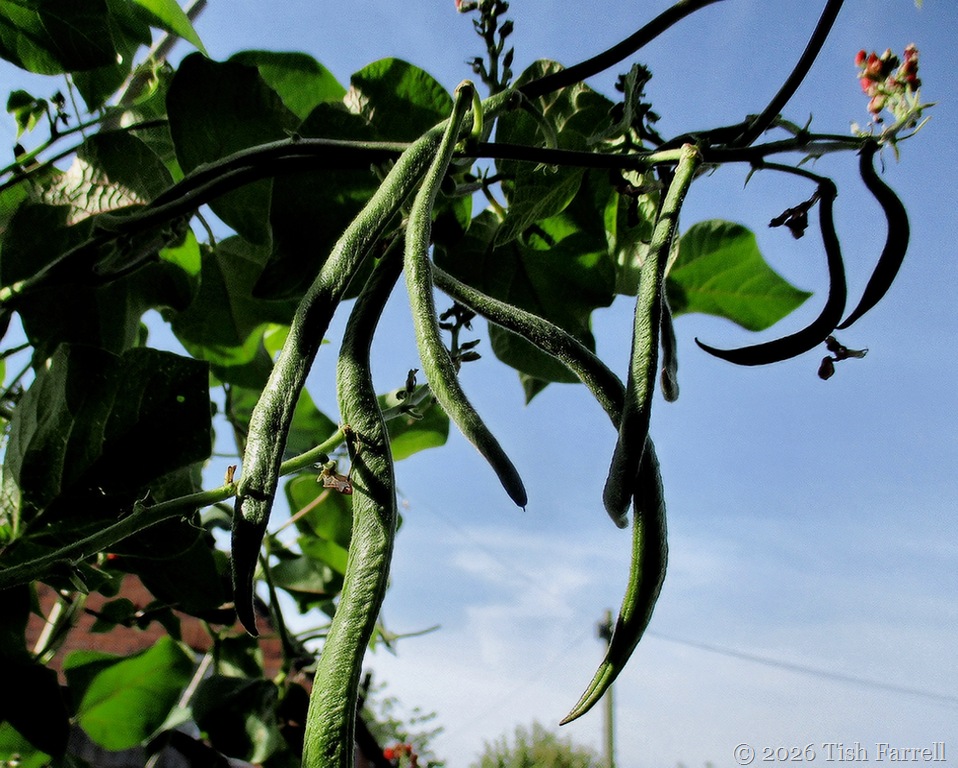
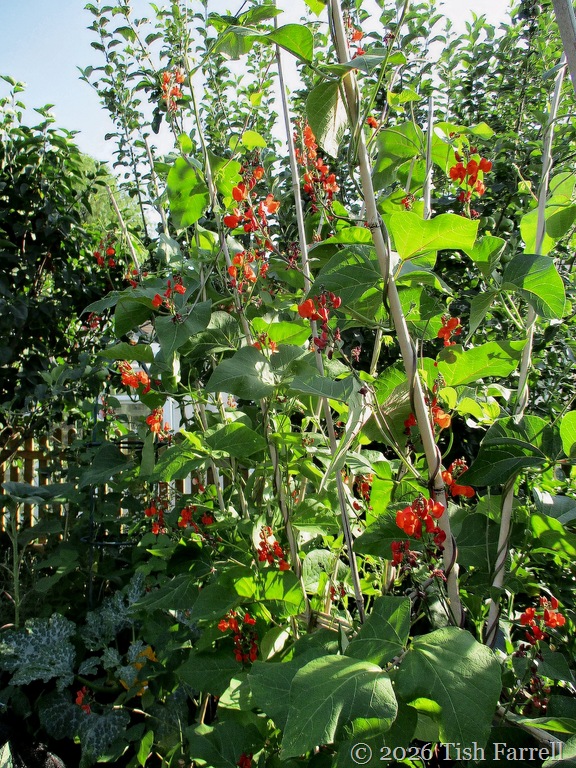
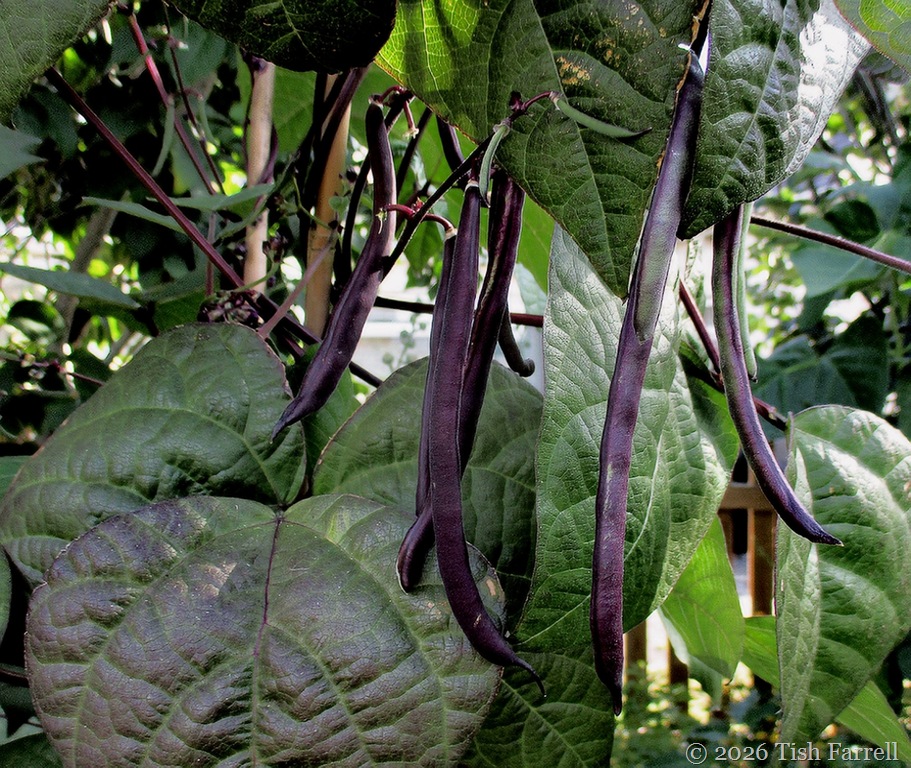
The borlotti bean crop [4] is looking more promising. I picked all the dwarf variety some weeks ago, but the climbing ones are just beginning to dry in their pods. I love them for their looks alone, though they’re pretty good in the pot too.
*
Despite my weather whingeing, the garden is still looking colourful. The rudbeckia and Michaelmas daisies certainly brighten the place up. There are also still some sunflowers at the bottom of the garden, and my two very small crab apples trees [5], Evereste and Jelly King are looking their vibrant best.
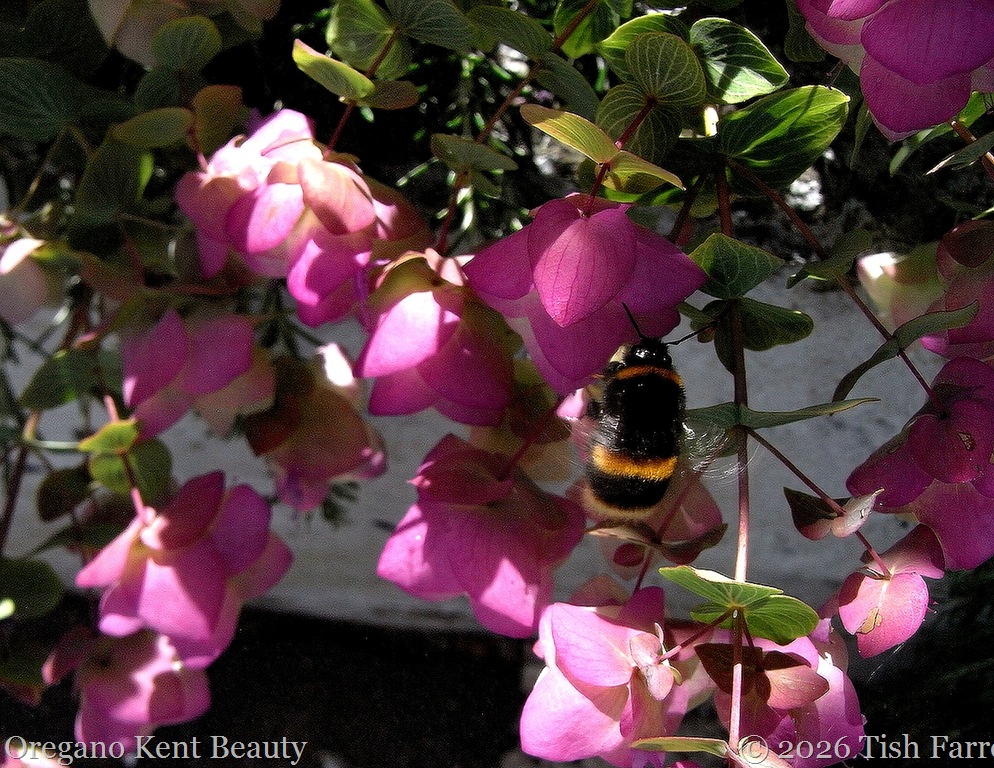
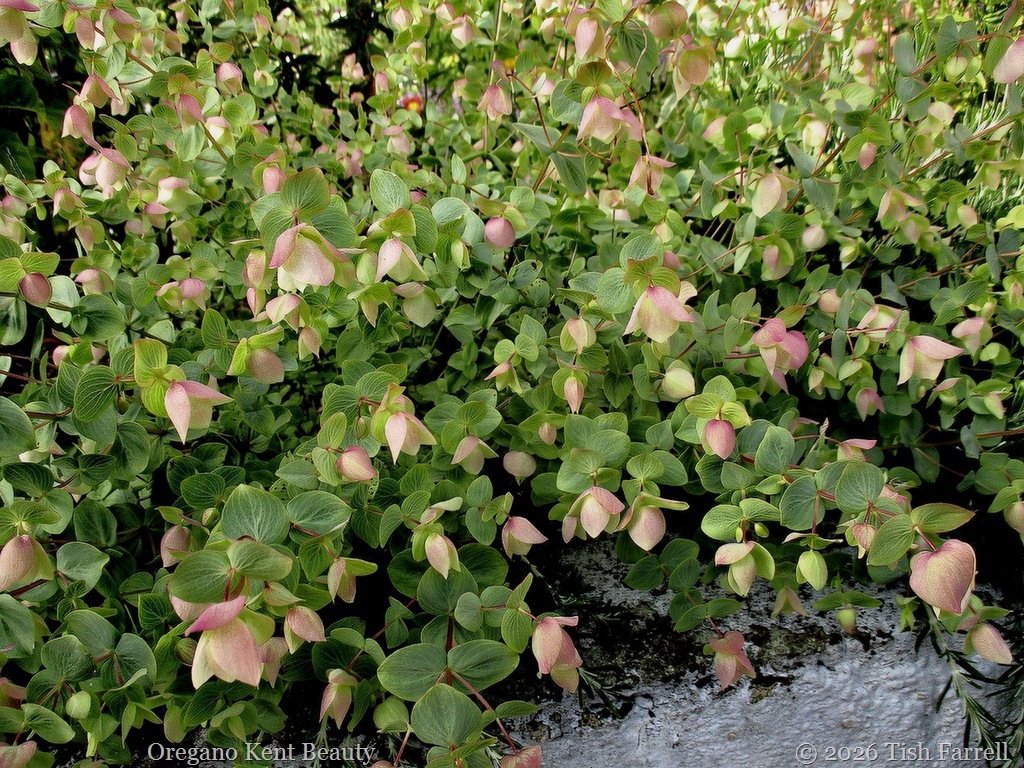
This miniature Evereste is in a corten steel raised bed, along with some origano Kent Beauty, and Santolina. Silvery Artemesia Powis Castle behind.
*
Jelly King is lighting up the furthest corner of the garden. I’m not sure I want to sacrifice the apples to making jelly (perverse I know, considering this is why I chose it). They look so lovely, and in fact, now I have found sources of wild apples (see previous post) I think I will leave them, first for us to look at, and later for the blackbirds.
Finally, here’s one of my newish garden plants that has been so glad of the rain, Persicaria Blackfield [6], red bistort. It really struggled all through the summer, despite my hand watering. But then with the first of the recent showers, it perked up and began to flower. It’s interesting that the drought seemed to have had a miniaturising effect on the whole plant, as if it was making itself small to save itself. I’m hoping it will settle in now and come into its own.
*
Six on Saturday Please visit host Jim at Garden Ruminations. He’s been very busy despite the weather.
Come September and the months of drought simply switched off. Instead we have rain between showers. There have been days and days of lowering skies and serious downpours, and although this may be considered ‘typically English weather’, it comes as a shock after months of wall-to-wall sunshine.
But then last Tuesday we had a reprieve. Cloud yes, but rain on hold.
Let’s go for those crab apples, I say to he-who-builds-carports-that-aren’t-for-cars. He was not keen. The crab apple tree we first spotted in August is on top of Wintles Hill. It’s quite a haul up the green lane from town, followed by a gasping scramble up a steep sheep field. But he kindly yielded and came along too. It’s glorious once you’re up here, he says.
Back in August, when were are last here, the world felt toasted, the farm fields bare from an exceptionally early harvest, the grass brown and dead looking. But this week, after so much watering, all was mostly green again – the pasture fields rejuvenated. We even found some field mushrooms, the first I’d seen in years.
*
When we arrived at the tree we found it as crammed with fruit as it had been a month earlier, but now there was a mass of tiny apples underneath. (We’ve also had gales).
*
Since August I had been dithering about gathering the apples. It seemed too early. I had inkling they were better for making jelly after they’ve weathered a cold spell. But oh well, we were there now and with bags to hand. The fallen apples were anyway ripe and it occurred to me, that given the mass of apples still on the tree, I could come for another forage later in the year. And then I’d know, one way or the other – before or after a frosting.
As I was crouched, head down, picking over the fruit, I noticed the tree’s trunk – or rather trunks: talk about the drive to survive come what may…
Wild art as well as wild apples then.
There is definitely a remnant slip of hawthorn in the melee of roots and stems. But it makes me wonder: how ancient is this tree or trees? And how amazing that, here on so exposed a hilltop, and with so many gaps in its infrastructure, it can still produce such a prodigious crop.
These first few photos aren’t from my garden (if only), but here to illustrate gardener’s lust [1] ~ that moment when a new plant begins to root itself in the psyche, aka mental compost, until you know that you simply have to have it.
Well, that’s what happened last week when we went to visit the walled garden of Wildegoose Nursery here in Shropshire. (See previous 2 posts). It was a hazy day, but everywhere the garden was alight with the frothy, apple green seedheads of Patrinia monandra/aff punctiflora [2] a tall and gracious plant, and one quite new to me. (And yes, it does seed itself everywhere, but I was told unwanted stems pull up easily).
At Wildegoose it sets off not only the reds and bronzes of late summer sedums, Eupatorium, and Heleniums, but also the fading stems of Verbena, Sea Holly, Echinacea and Hydrangea:
It’s a perennial, clump forming (50cm wide), hardy plant, with spreads of tiny yellow flowers from July to September. The seedheads, though, can last well into the winter. The plant was first collected in China by the Gothenburg Botanic Garden, or so the Beth Chatto site tells me.
And the reason I was looking there, was because it was only later when we arrived home, and I was scanning through the photos that I suddenly saw how lovely Patrinia might look in our so much smaller garden. And I knew Wildegoose was about to close for the winter, and that we were unlikely to get there before it did…And so to postal sources, although of course the plant, if ordered now, will naturally come pruned of those lovely seedheads…(Oh, the self-inflicted anguish of the besotted and too impatient gardener!)
*
Meanwhile, back at The Gables we’ve been having a week of thunderous downpours with intermittent spells of warm September sunshine; April showers on steroids. The lawn is quite rejuvenated, although I hate to tell it, now it isn’t rock hard, I’m going to dig more of it up to make a new strawberry bed. (Psst. Don’t tell Graham).
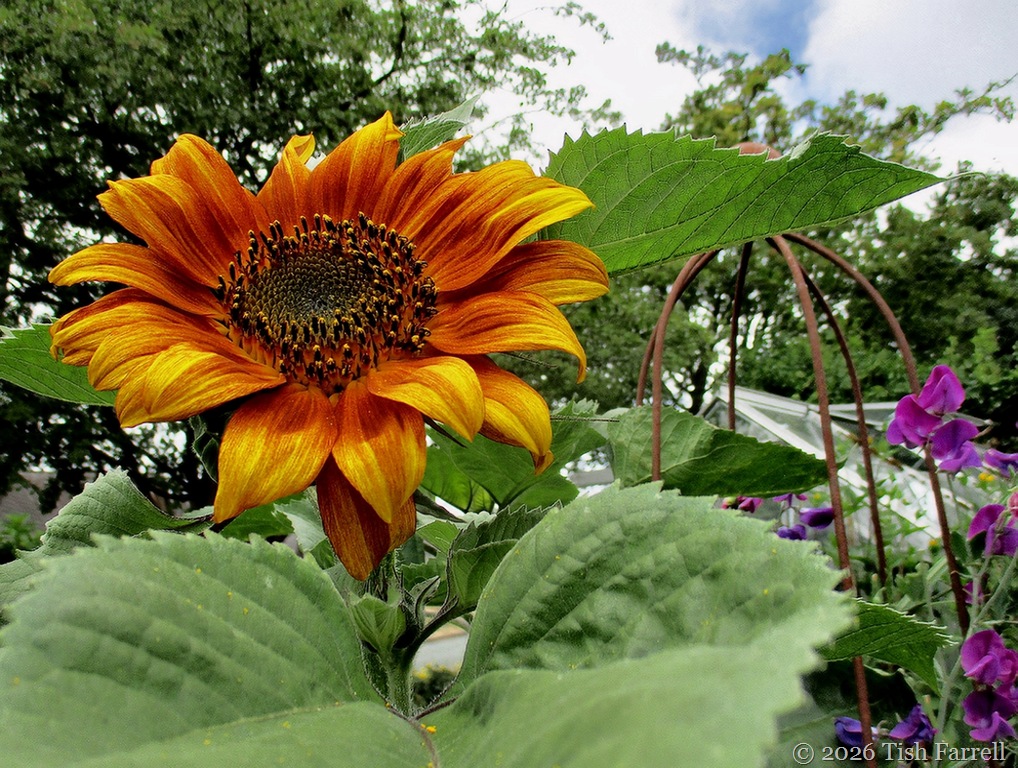
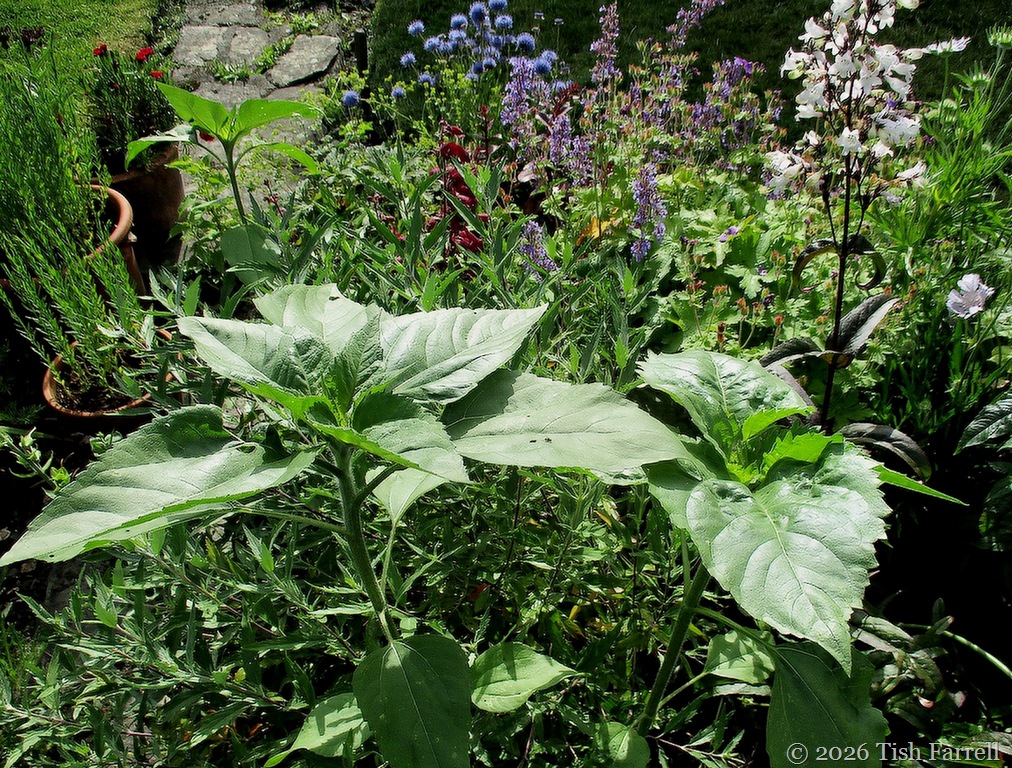
So yes, we are heartily glad of the rain, even if it comes like swift deliveries from Niagara Falls. The Helianthus [3] by the greenhouse is certainly having a new lease of life. It’s lighting up one of the shadier parts of the garden, an unexpected full-on display when it’s already been flowering for weeks.
*
In the border along the terrace wall, the Michaelmas Daisy [4] is at last beginning to flower. It’s been a mass of buds all summer, but was obviously saving itself for more autumnal days. It should be splendid in a week or so, and especially if the Rudbeckia keeps going.
*
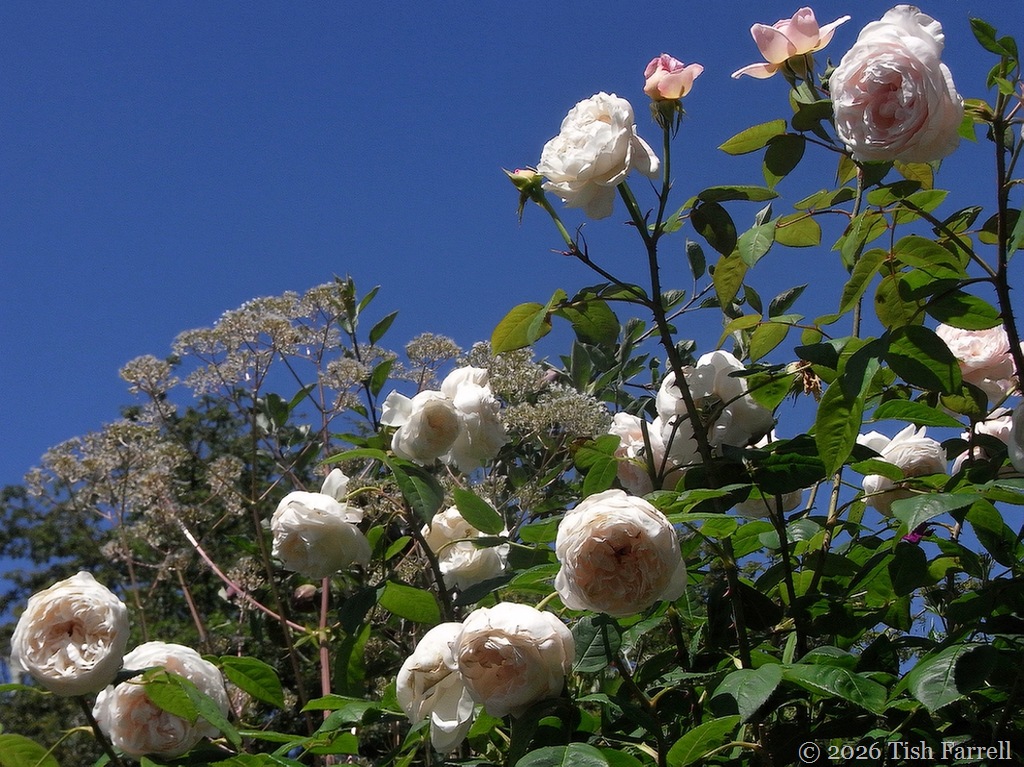
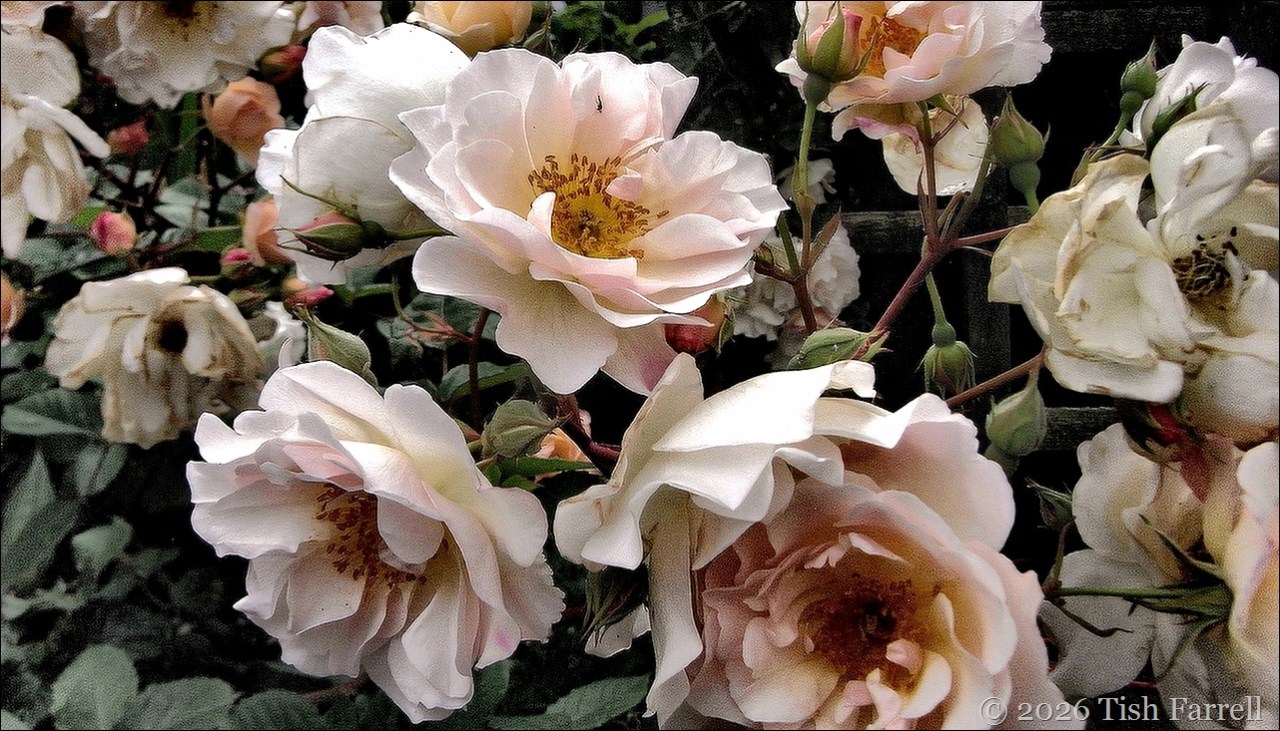
Further along the border, between the Japanese Anemones and Selinum, St. Cecilia rose [5] has been spurred into a second flowering. We inherited her with the garden. She was in a poorly state, but though the flowers, when fully open, are rather wan and saintly, and thus none too remarkable, I decided to nurture her. She anyway smells quite nice, and is appealing when the buds are seasonally dewdropped and seen beside the presently seeding heads of Selinum.
*
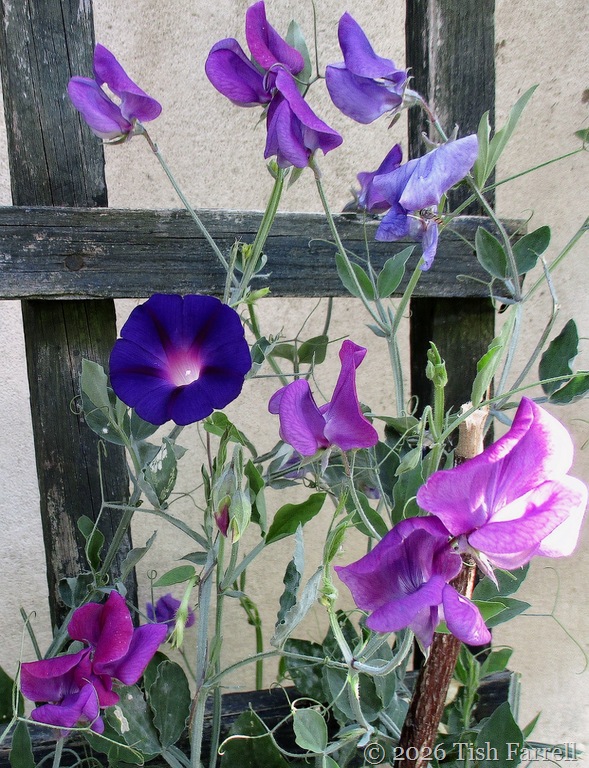
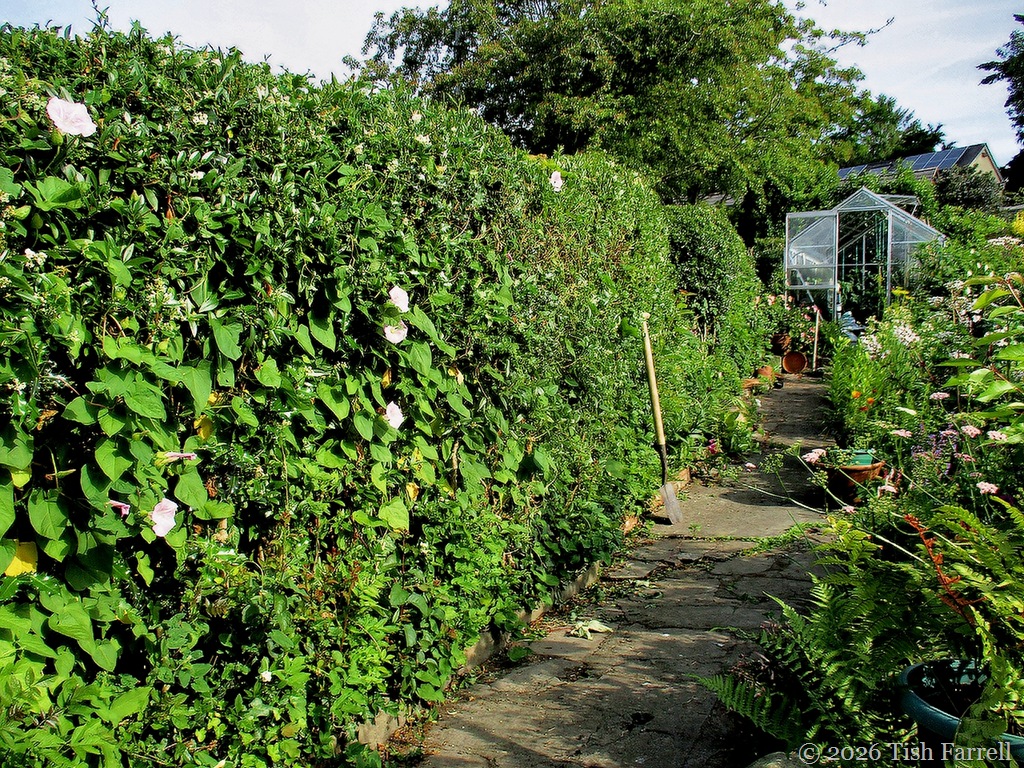
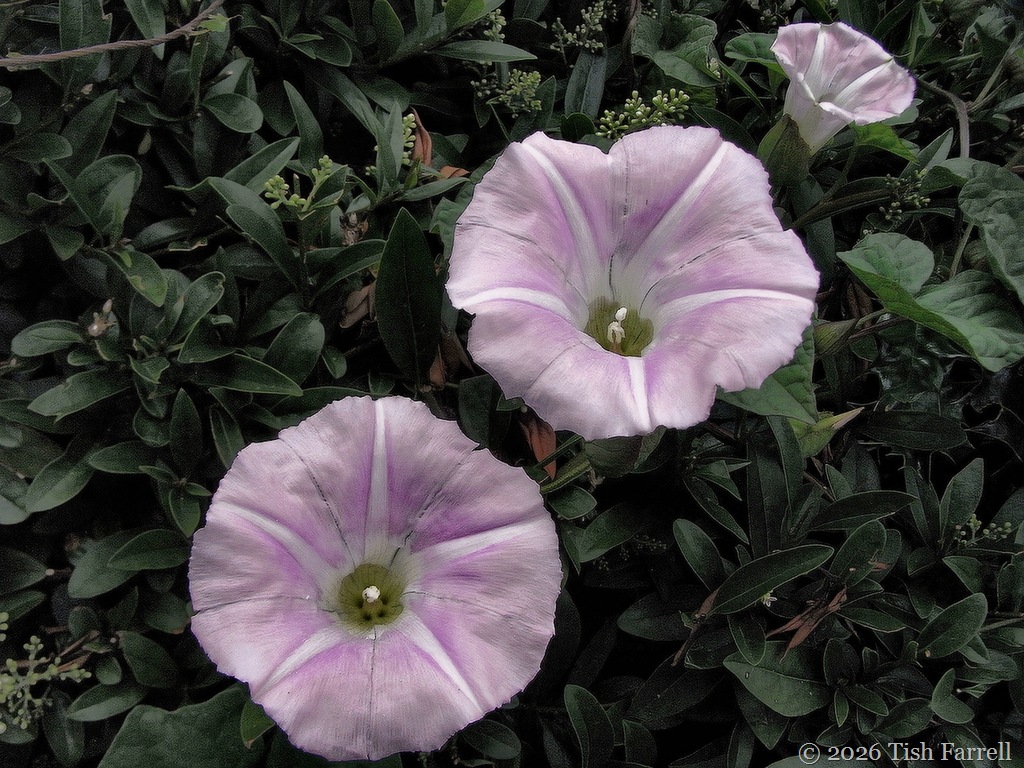
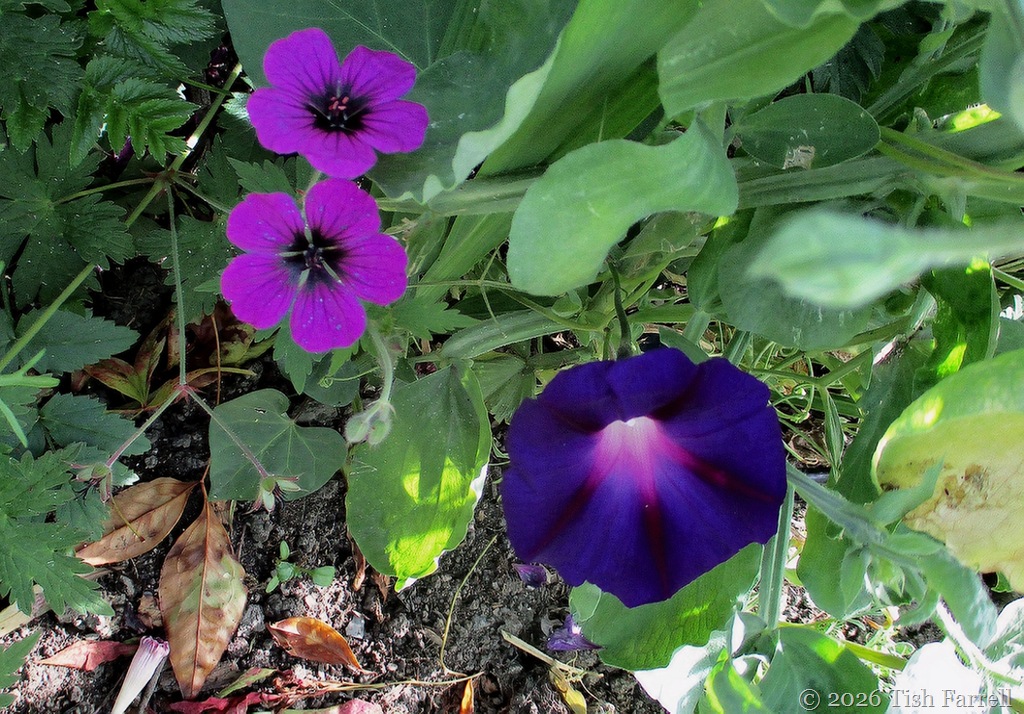
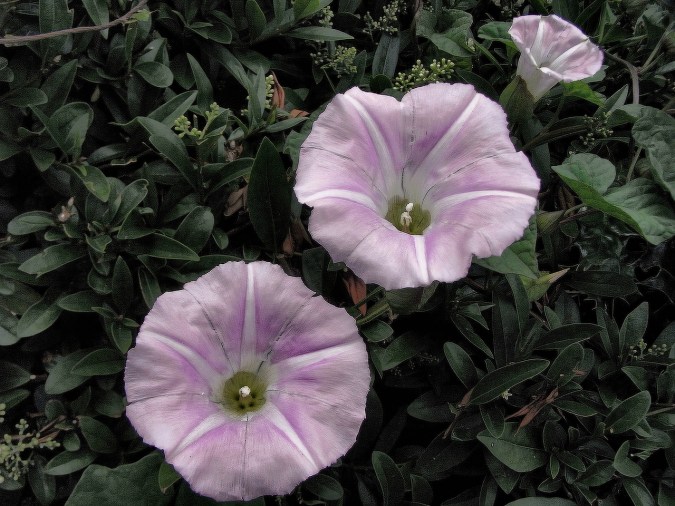
And finally the Morning Glory [6] growing on the trellis by the oil tank looks to be enjoying the cooler, wetter days. I’m surprised it’s still going after the torrential downpours, the flowers lasting longer through the day too.
Happy gardening, folks, whatever your hemisphere.
Six on Saturday Please visit Jim in Cornwall for his week’s garden news.
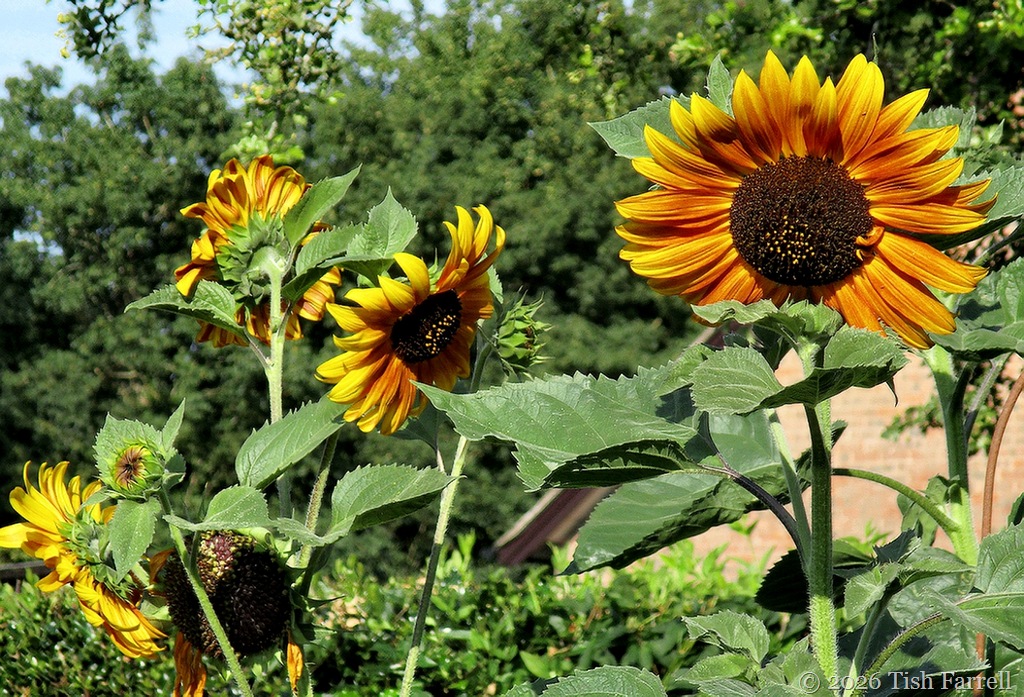
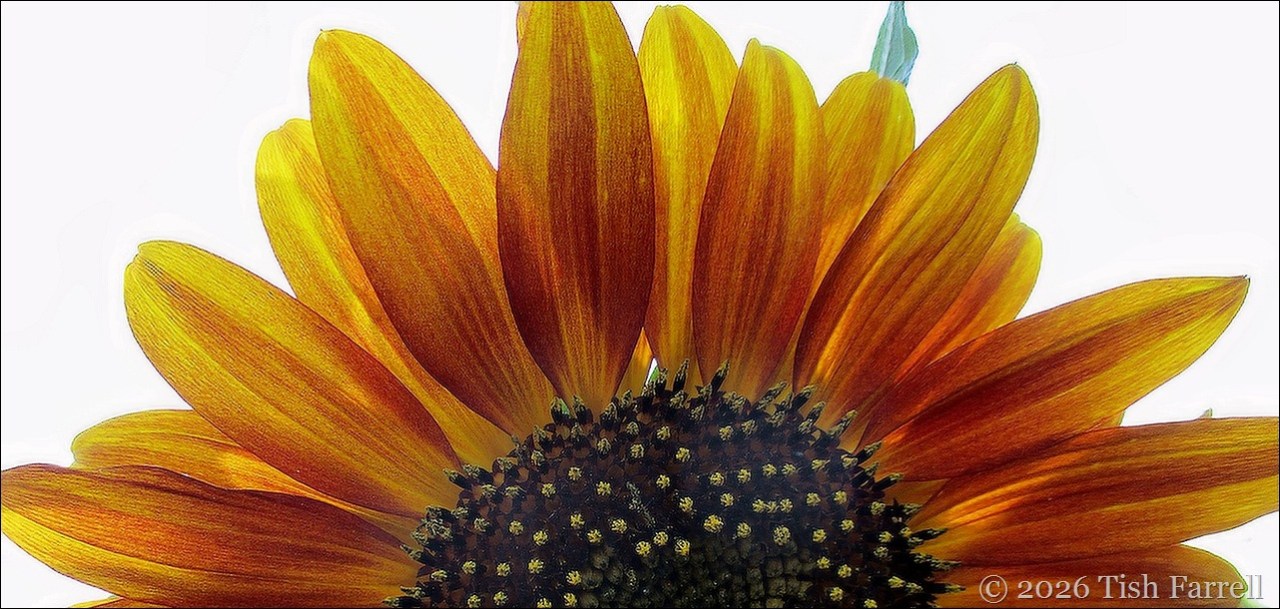
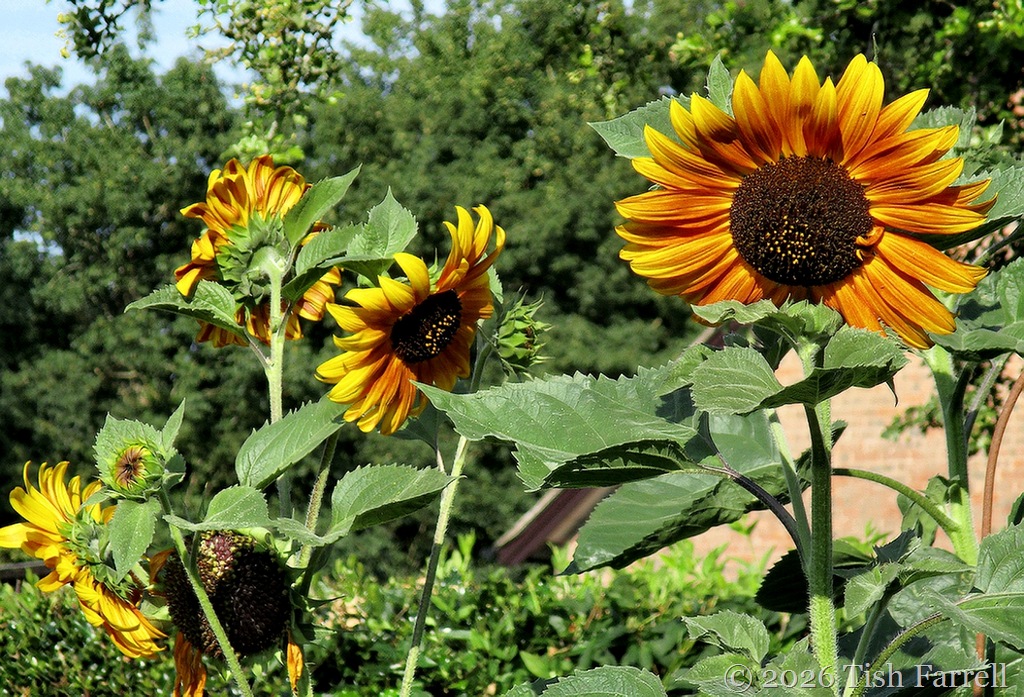
The garden looked shell-shocked after this week’s deluge. Rain at last! But rather too much at one go. “It never rains but what it pours…” etc etc. Anyway, the giant sunflowers [1] held their own and are still putting on a show. Then there were the almost immediate signs of revival by the lawn which had been dusty brown all summer. This reminded me of our Kenya days when our lawn of tough Kikuyu grass was reduced to looking like old sacking during the long dry season. But come the short rains and up would spring masses of green shoots, an instantaneous green sward.
The rain stirred the caryopteris [2] into flowering. It is supposed to be late, but this year seemed particularly so. As a shrub, its structure is rather underwhelming. The small silver-grey leaves and lax stem tendencies make it look rather like some unkempt garden escape on waste ground. Or maybe it was just the way I pruned it. The instructions said give it a good cut back. Or then again, maybe it is simply the effect of a long, dry summer. This variety is Heavenly Blue. And if the overall look isn’t too exciting, the sapphire sprays are gorgeous, and bee-life loves them.
I have some other young caryopteris shrubs by the greenhouse. These have yellowish leaves and are a variety called Gold Crest. At the moment, their shape is rather more appealing. Also the contrast colours of flowers and foliage is pleasing.
*
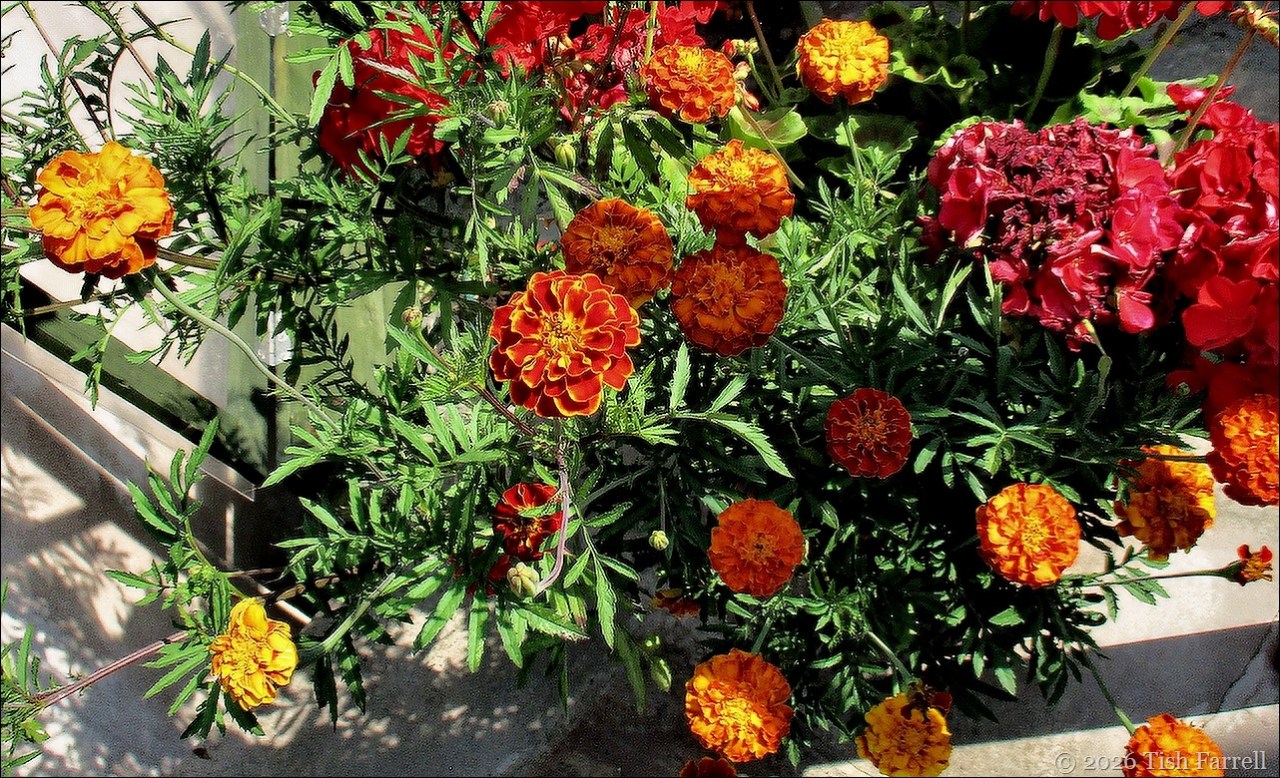
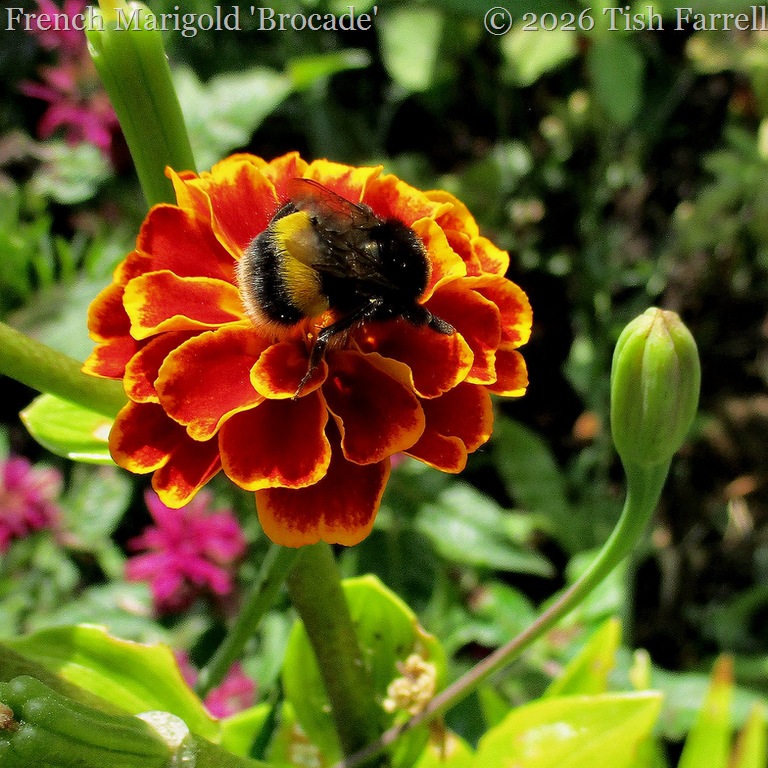
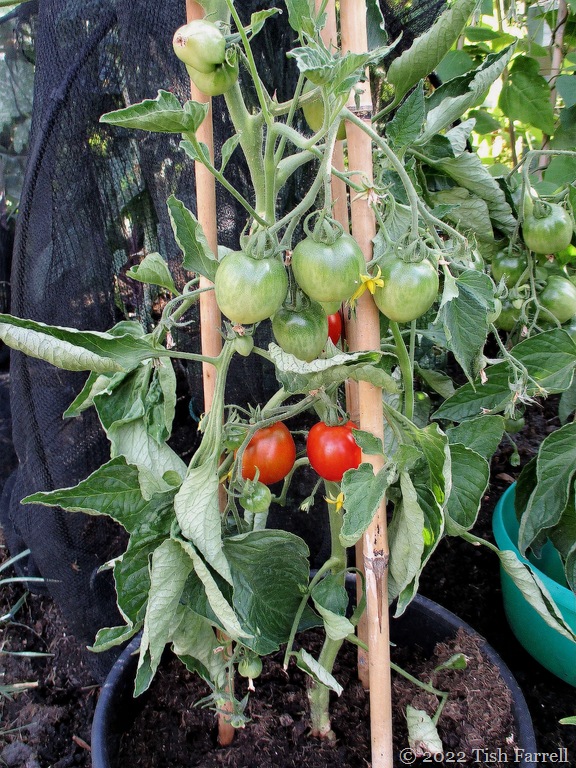
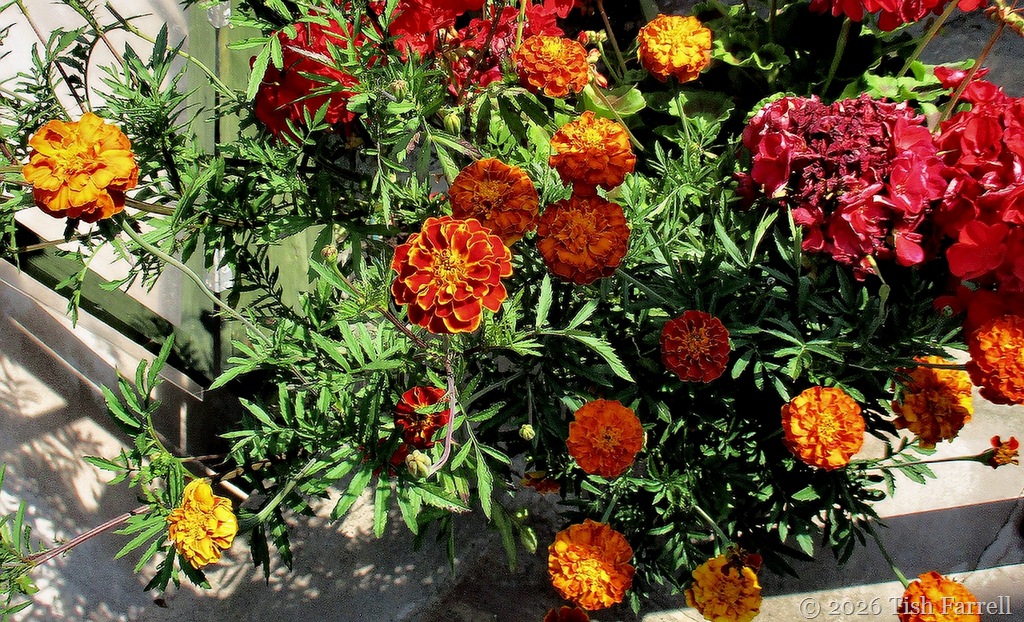
The French Marigolds [3] have also appreciated a good dousing. Grown from seed this spring, Red Gem has been flowering all summer. She’s supposed to deter white fly, so I planted her out in the greenhouse amongst the tomatoes, and also between the raised beds where I have a rather late performing Tumbling Tom cherry tomato. The individual flowers are tiny but it’s still a good show.
*
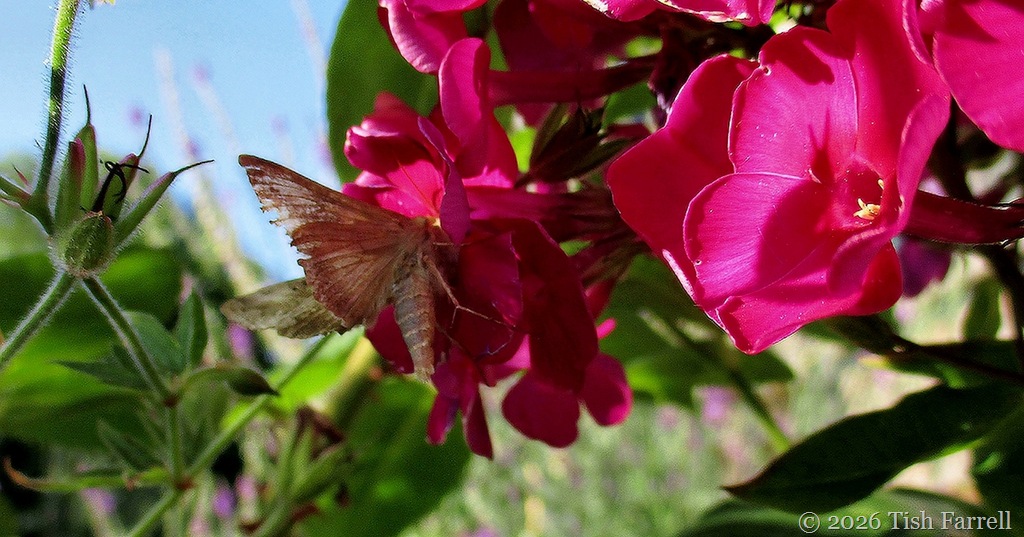
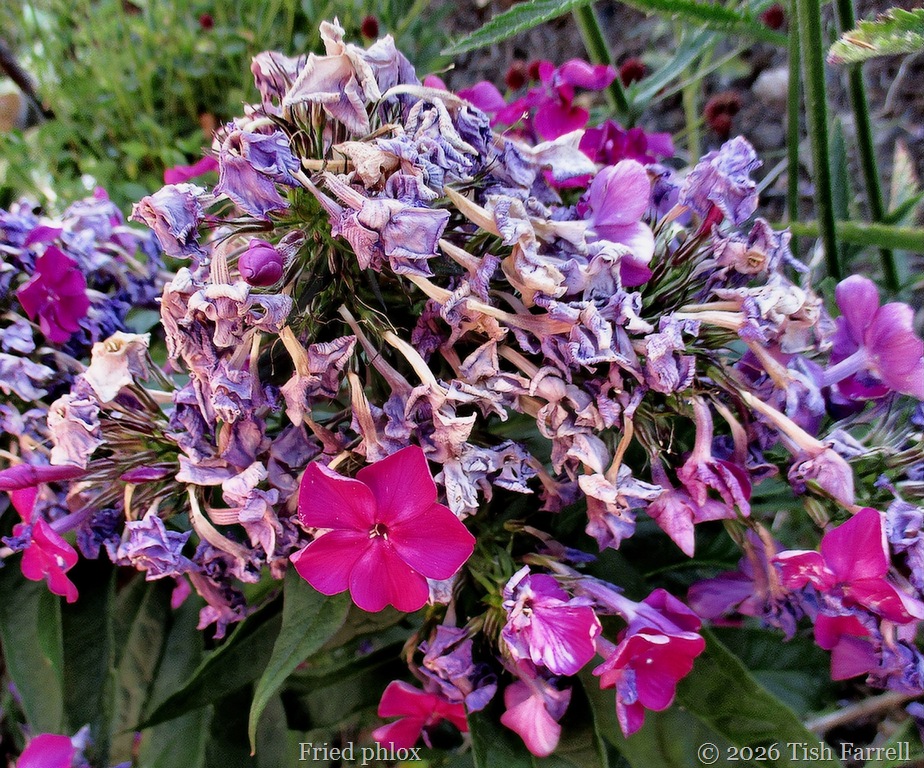
Another plant that’s done well until this week is one of my new favourites: phlox Norah Leigh [4]. I should have featured her when she was in full bloom. But she still has a few flowers, and although I’m generally unkeen about pink, I find the contrast with the variegated foliage very attractive. I’m becoming a bit of a phlox fanatic.
Here she is after the heavy rainstorms:
And here she is a week of so ago, before the rain: a stalwart show considering the dry weather, and that I only bought her as smallish specimen back in the early summer :
*
Some of the seed grown Madonna Lace Didiscus [5] are still going too. Also much loved by insects. When the flowers fade they transform into little silvery sputniks – quite magical on a dewy September morning.
*
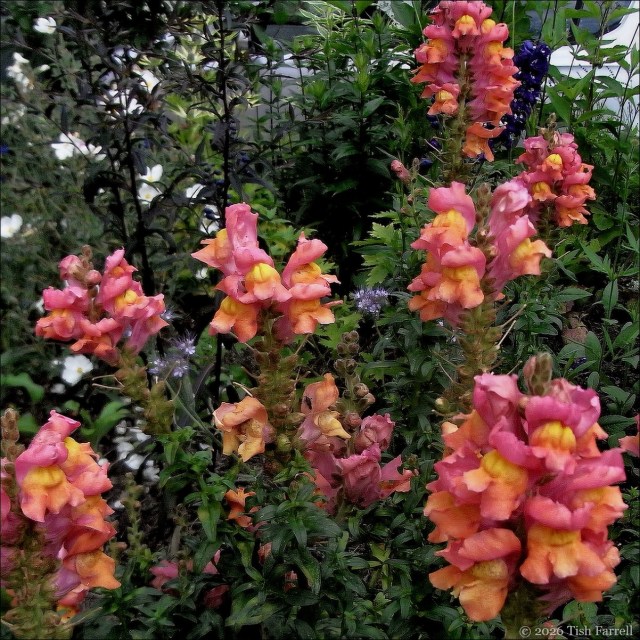
But the prize for the longest flowering flower this year goes to the self-sown and -grown snapdragons [6]. They’re on their third blooming round at least, and the plants are now growing quite shrubby with masses of seed heads among the latest flowers. The original volunteers have made some new plants in the course of the summer and these are also flowering now. And there’s me thinking that our front garden soil, which is full of old paving mortar and mashed roof tiles is somehow problematical. Norah Lea and the snapdragons are clearly loving it.
*
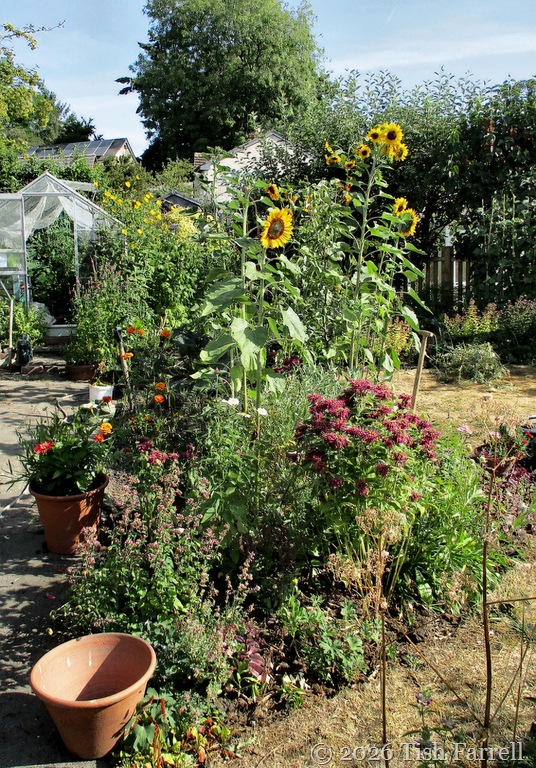
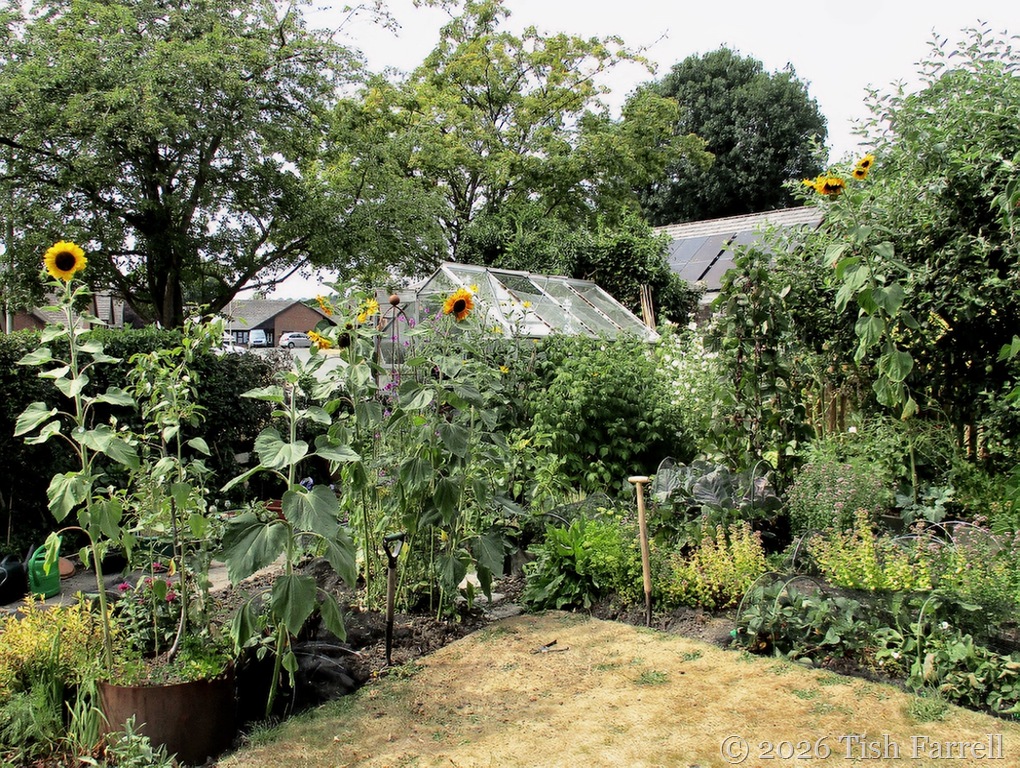
Late summer in the back garden. He who-builds-sheds’ wing shade is obscuring the sunflower view from the kitchen door, though we have been glad of it. Here’s what it’s hiding:
Six on Saturday Please call in on Jim and see what he’s been up to in the garden and at the allotment.
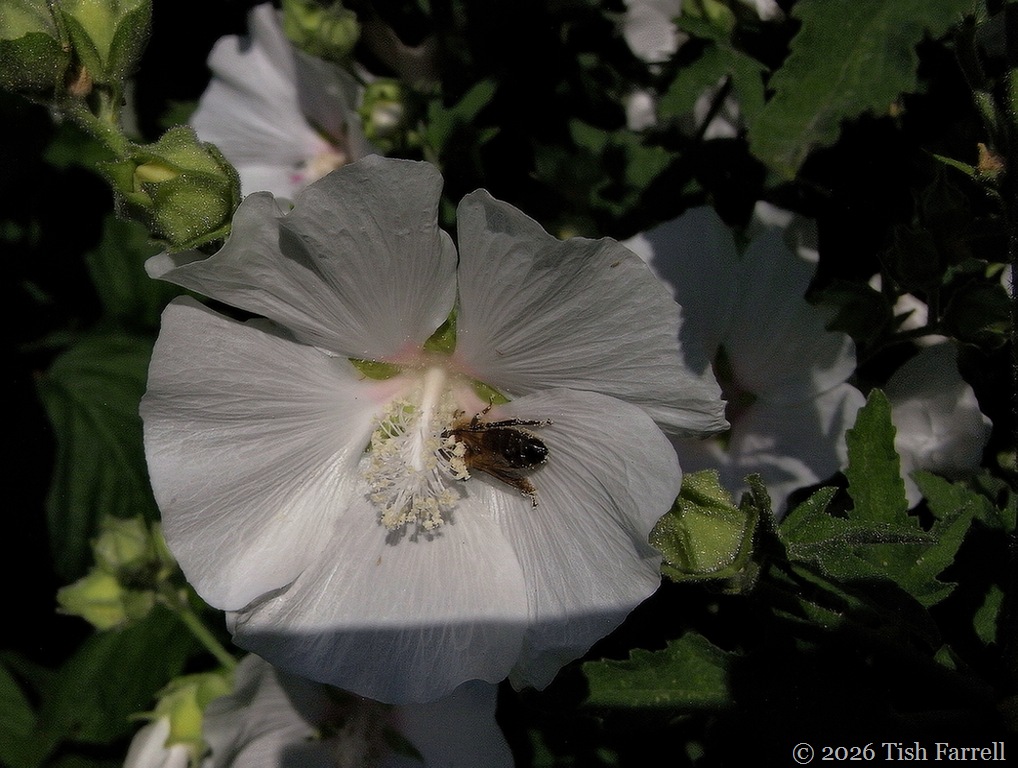
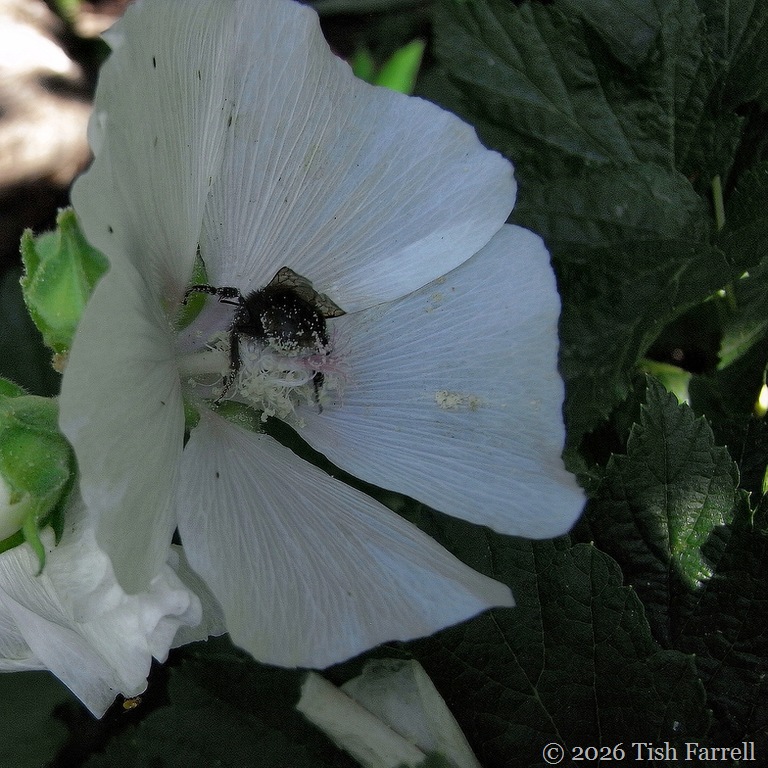
It’s been a sixes and sevens sort of a day – perhaps nothing new in the Farrell domain. It started off beautifully. At nine this morning the garden was filled with hot sunshine. There was a wind, but it felt warm, and it was wafting the scent of squash flowers across the lawn. Who knew that Japanese squash flowers smelled so lovely. And why would they need to when they already make such a show – little suns on stalks. Anyway, the bees were crowding in, not only drilling into the nectar chamber beneath the single stamen, but also bathing themselves in pollen.
Talk about a bug bacchanalia. It was all bees knees and no decorum. Each bee shoved its way in, regardless of existing occupants. After much frenzied barging about, followed by concentrated scoffing, it stumbled out again, looking slightly dazed, before diving into another squash flower.
*
Perhaps the bumble and honey bee punters knew the squash bar would soon be closing. For so it was. By ten o’ clock, summer had gone. The wind turned cold; sky was dark and down came the rain in short sharp bursts. We needed it of course, but for a spell it seemed as if autumn had dropped in too, the seasons changing before our eyes. All very disconcerting.
The squash flowers were spoiled of course, their petals sadly deflated.
Grey skies loomed on with more rain threatened. With the sudden coolness, it seemed like a good time to plant out cabbages, though I still had to fend off all the white butterflies who for weeks have been trying to lay their eggs on my netted kales and caulis.
And then something odd started going on with the town hall clock. Sometime around lunch time it began to chime. And then kept on chiming in somewhat drunken fashion. I think it must have chimed at least twenty ‘o clock, and I vaguely wondered what this might mean, and if we’d suffered some kind of Rip Van Winkelish space-time shift. And would we care if we had.
Meanwhile, between showers, he-who-build-sheds, pressed on with his construction that looks like a car port but isn’t for the car. The sun and blue sky returned. The squash plant developed several new buds nicely set up for tomorrow’s opening. Inside a deflated one I found a bumble having a kip. I didn’t disturb it.
Just another day at the Castle.
copyright 2025 Tish Farrell