
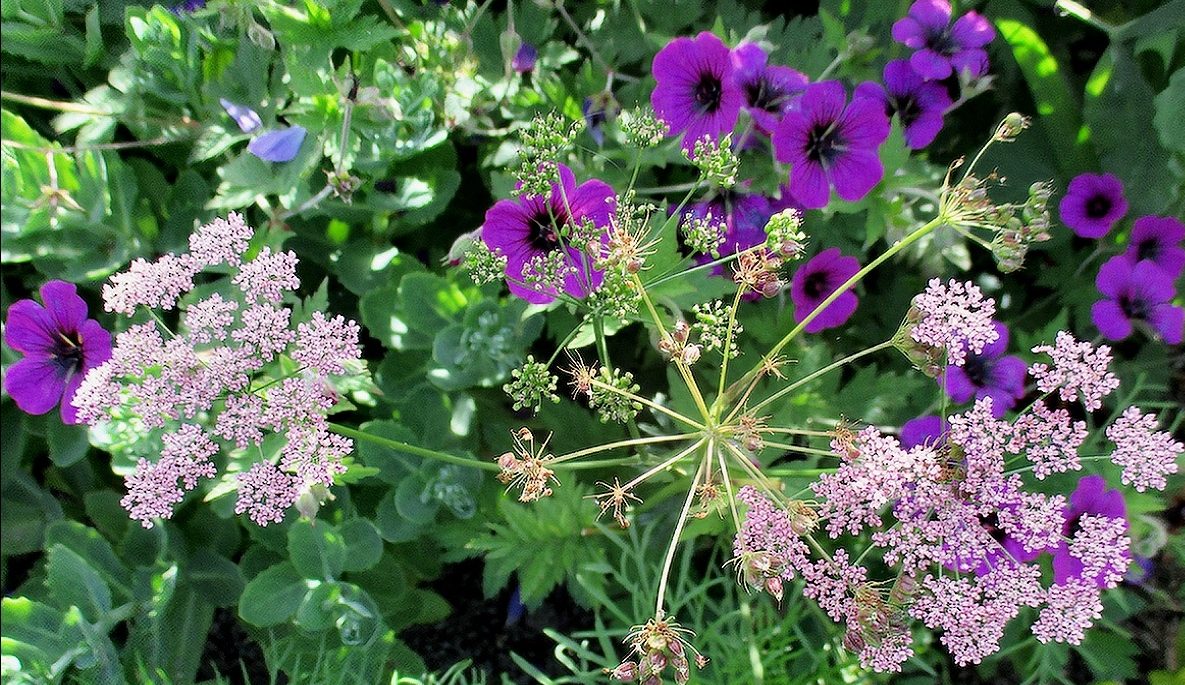
Out early in the garden of the longest day, and already it is warming up. I can see the plants around me switching gear: late spring to summer. Some change feels instant, and I’m sorry to see the small cascades of Cornelia and Penelope roses fading fast, their petals suddenly dull and papery. They have flowered since late May, their scent filling our small back garden, competing even with the serial winds. Likewise, I note that several of the hardy geraniums have swiftly departed – yesterday mounds of glorious blue, busy with bees, today a tangle of spent green stems. Time to wield the secateurs.
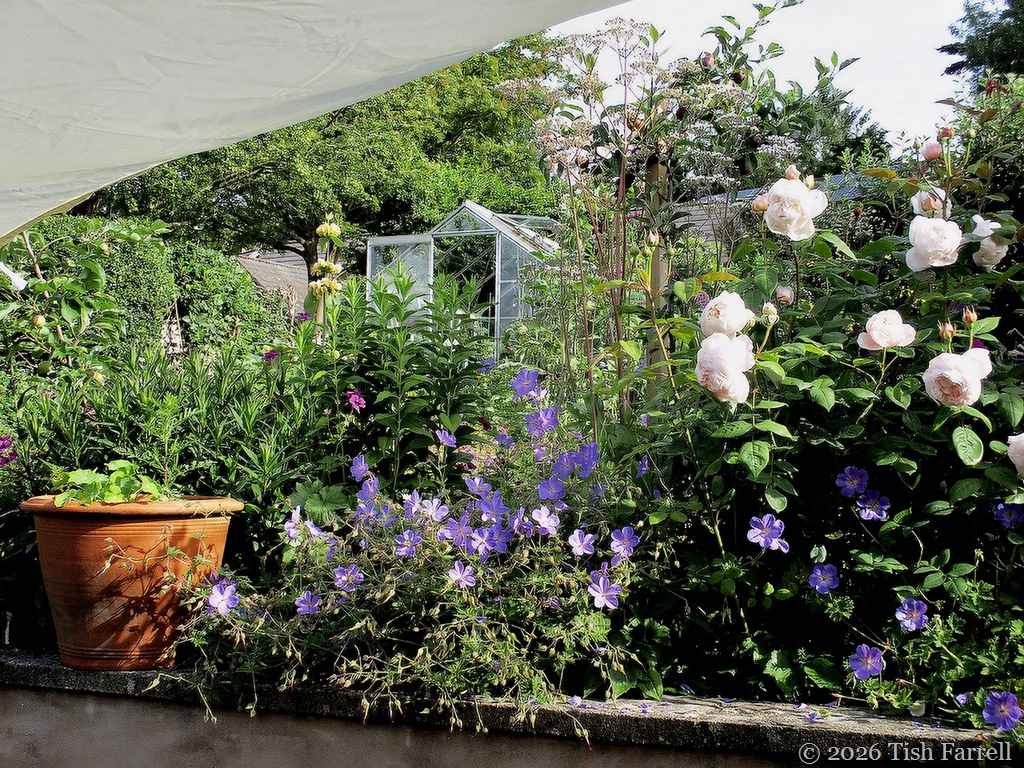
Meanwhile, the rose in the photo above is just starting out. St. Cecilia, she with the pale and floppy blooms. When we moved into The Gables nearly three years ago, I found her as a couple of weedy stems, much overgrown. I’ve fed her up since, although I have mixed feelings about shrub roses in the midst of herbaceous borders. Vicious to weed around for one thing.
Directly under her is blue geranium Rozanne, a new arrival last year, who struggled to settle in during the drought, and then was disrupted by an ants’ nest in the top of the wall. Usually this is a plant you can’t stop. Once she gets going, she should flower all summer and into the autumn. In fact I often used to curse her in our Wenlock garden as, year by year, one plant sprawled into an invasion many feet wide and long. Now I find I’ll put up with sprawl to have the long summer blue.
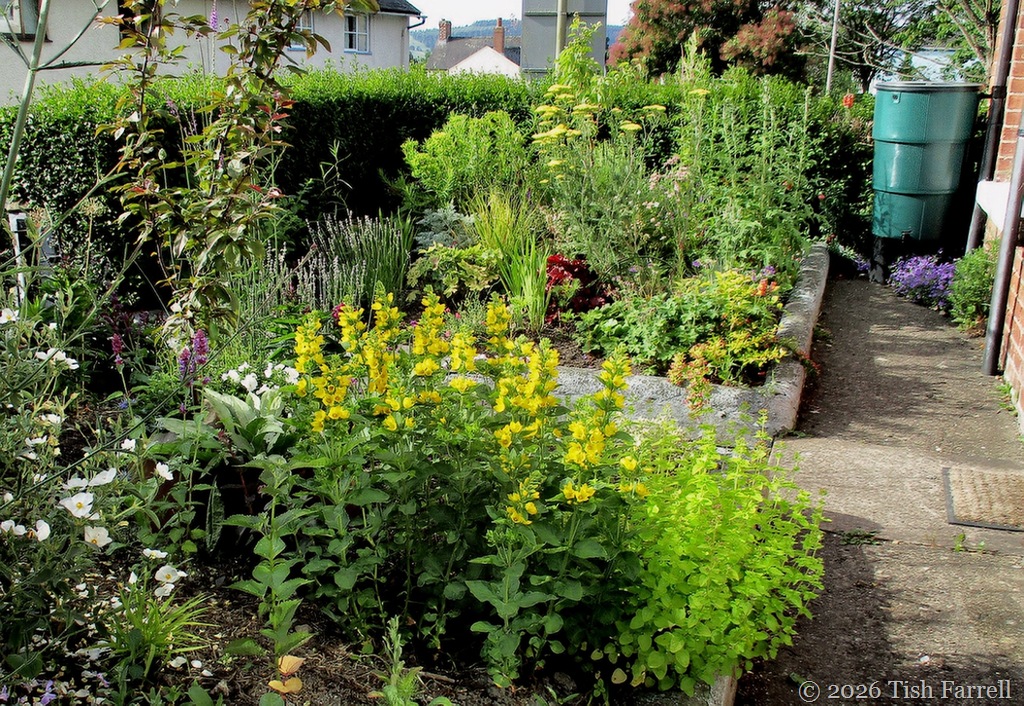
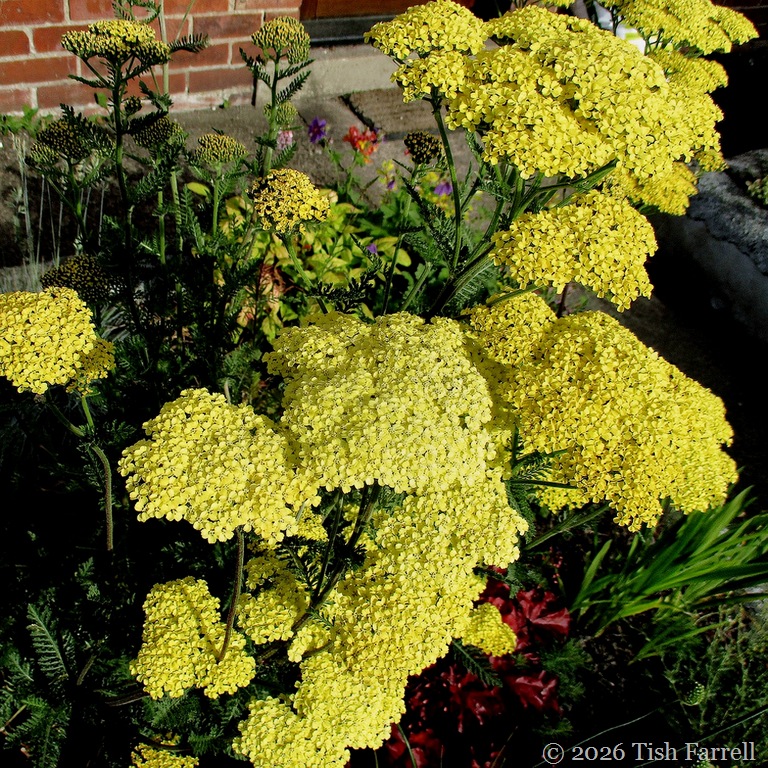
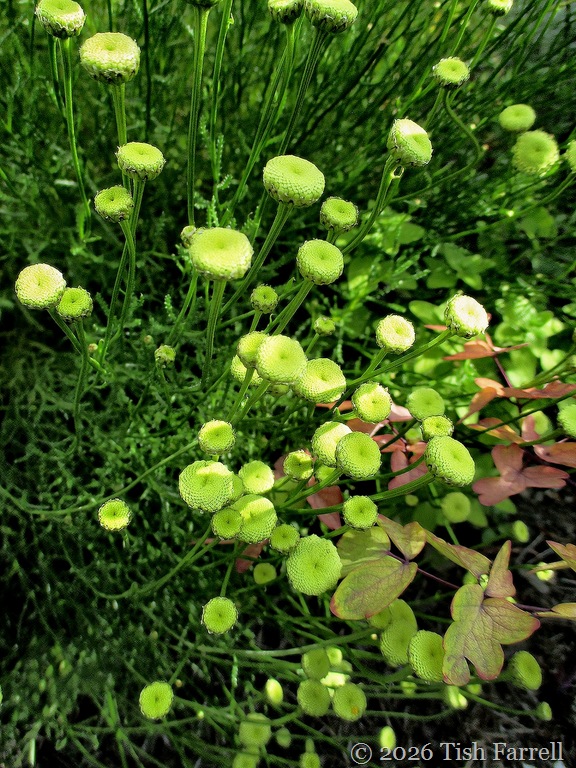
In the front garden borders, the earlier mauve shades have given way to the vibrant gold of Moonshine achillea and yellow loosestrife, and to the leafy greens of euphorbia and golden marjoram. There’s also a very vigorous cotton lavender tumbling from the crab apple’s raised bed, presently a mass of yellow buttons on brilliant green stems..
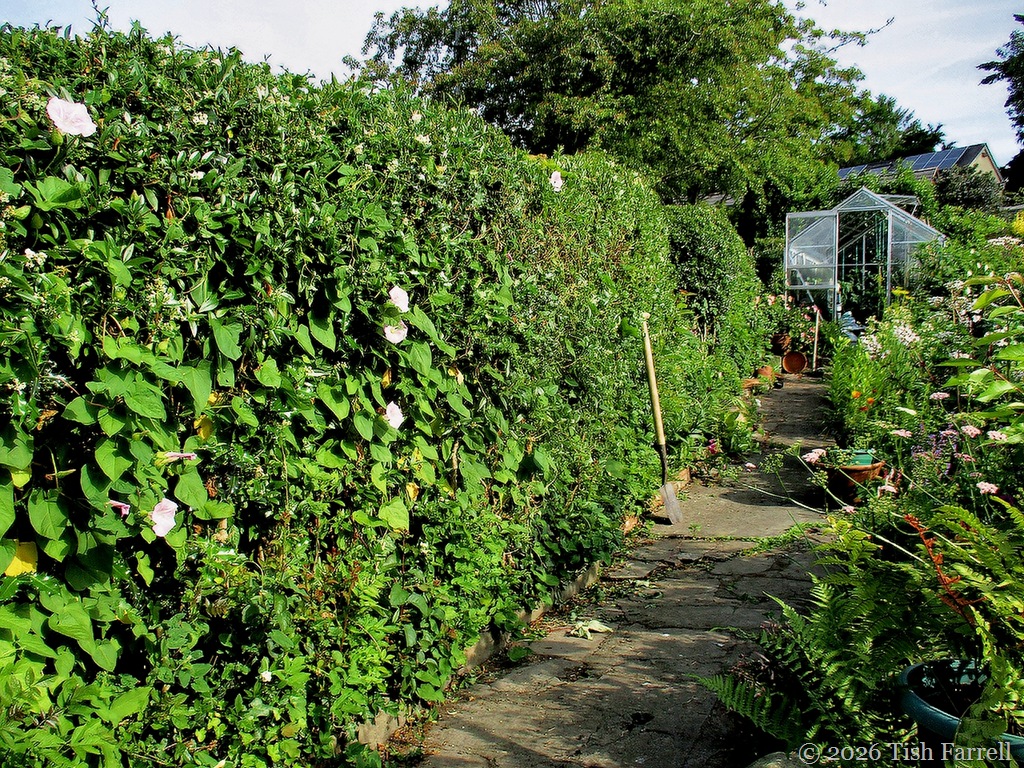
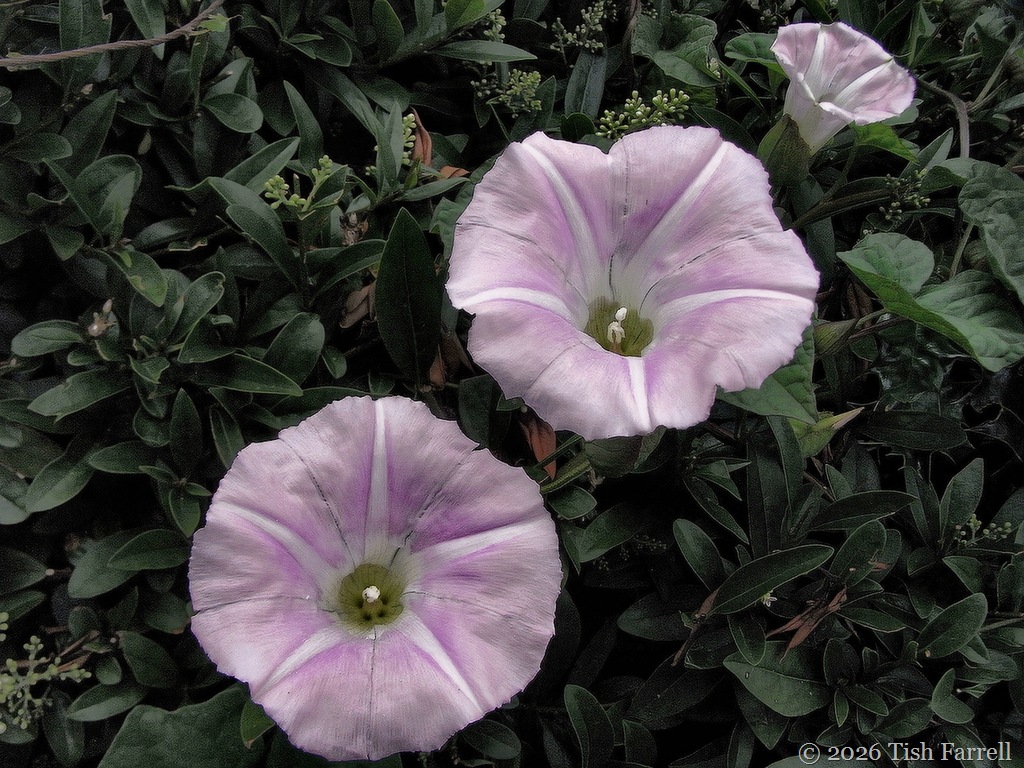
In the back garden, now is the time of bindweed – both wild and cultivated. In the hedge we have the locally feral, pink and white flowered version. It even survived last Friday’s big cut.
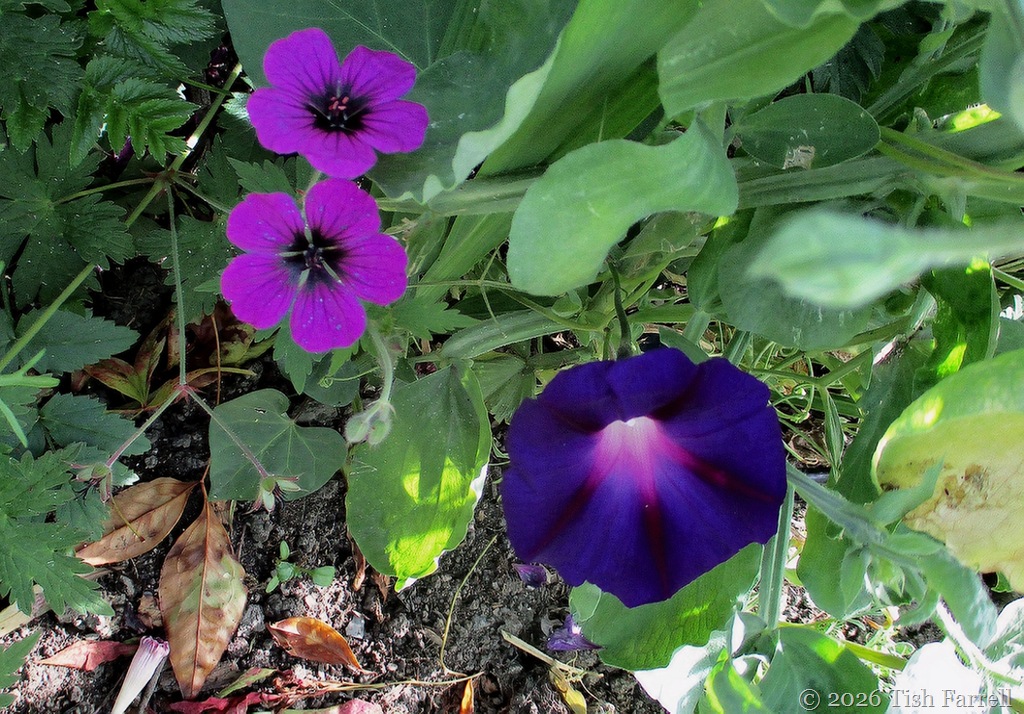
And then among the nearby sweet peas, where I planted the seedling some weeks ago, I found the first Morning Glory flower – Black Knight is its name; here keeping company with hardy geranium, Ann Thompson. They both like a good ramble. It will be interesting to see where they end up.
The hedge, as may be seen, is a challenge. It wants to be a forest and is filled with sapling ash and sycamore trees. This has happened because the whole length was once hemmed in with chicken wire and so impossible to keep a check on invaders. And then, egged on by ivy, everything has leaned on everything else so that the holly is horribly meshed with hawthorn, privet, field maple, forsythia, elder, and cherry. There are also some rather strange gaps, which I’m attempting to fill with cherry and field maple and briar rose (these presently at sapling stage). The bindweed does briefly improve the overall look.
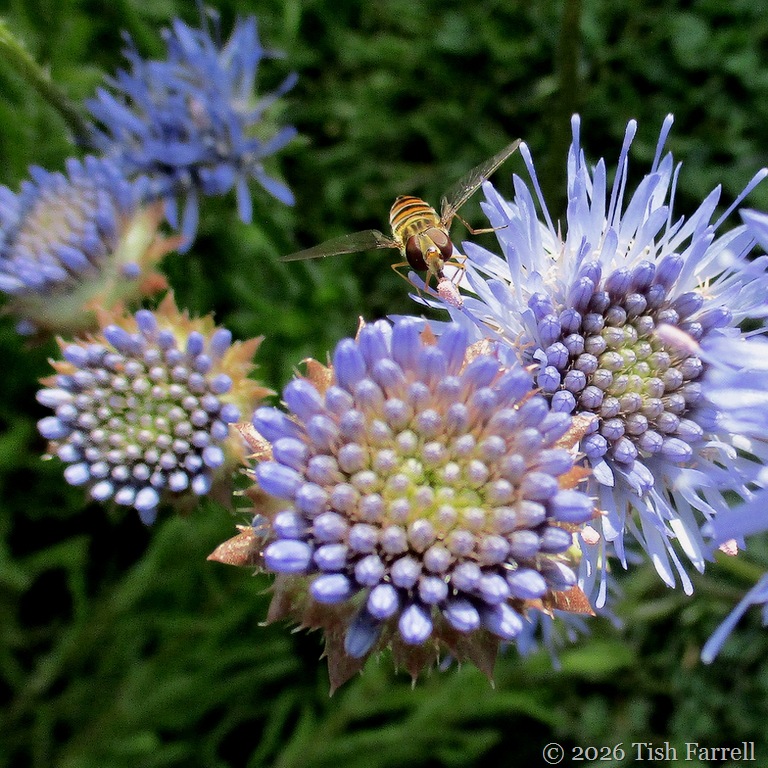
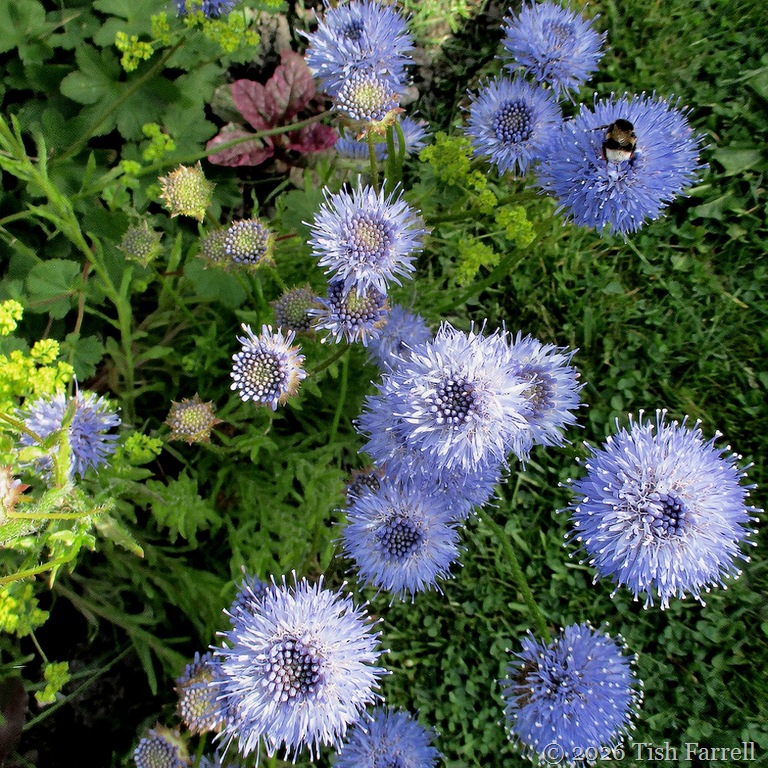
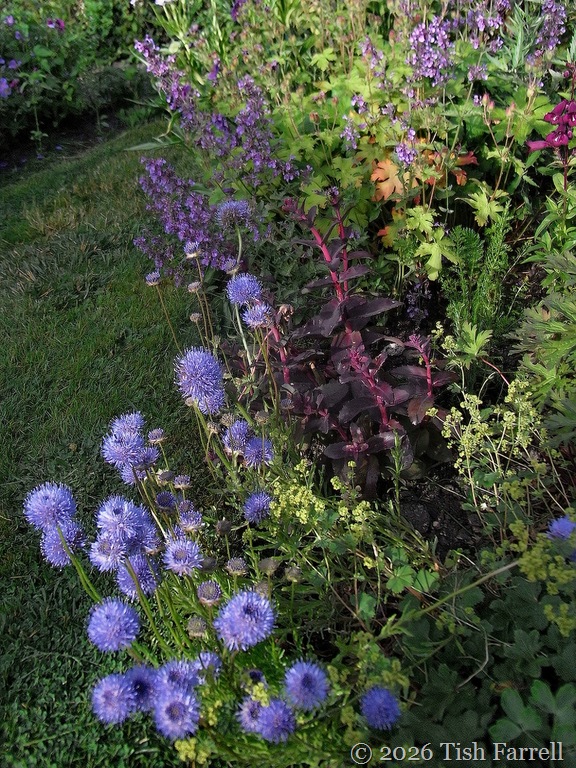
In the back garden bed, with geraniums over, the sheep’s bit scabious are the current stars…almost literally, a floral constellation and a magnet for hoverflies and bees:
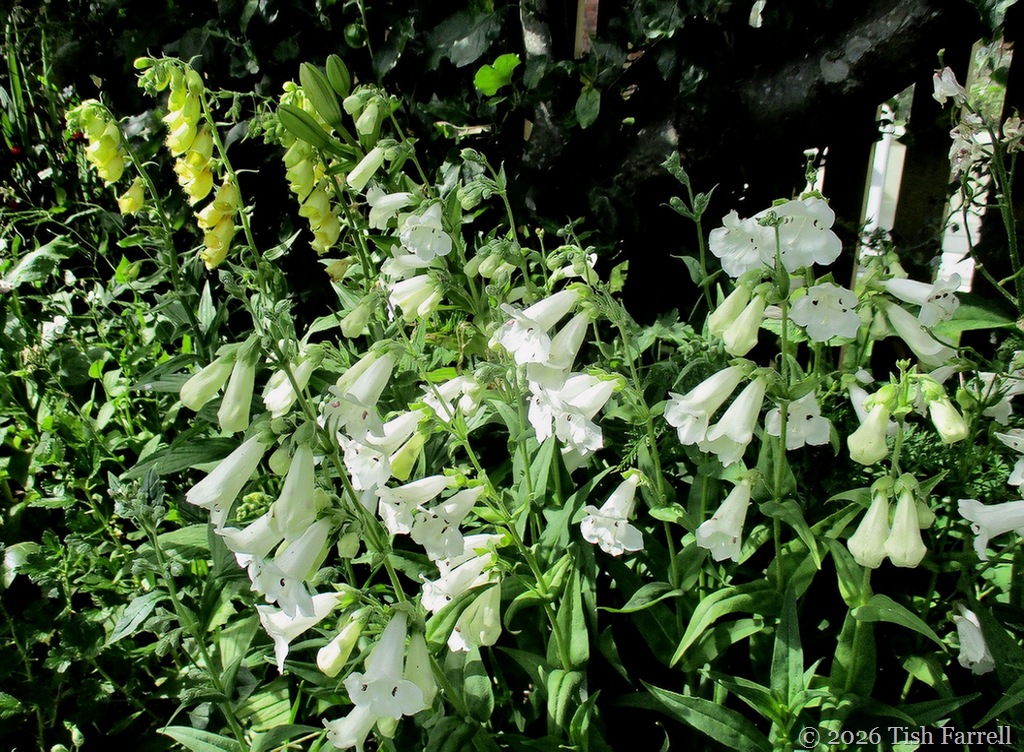
The feral foxglove season is over now. All through May and early June we had majestic self-grown spires – purple ones, white ones – in every quarter. Some of the plants were enormous, making the most of the overwintering mulch I’d spread on the borders. I’ve pulled most of them up. There are already enough seedlings about the place. In their stead, in the shady periphery under the old apple trees, come the perennial foxgloves. They are altogether more delicate in looks and structure – ivory white and buttery yellow. Very cooling to look at.
In front of them is a path and then a row of raised beds for vegetables.
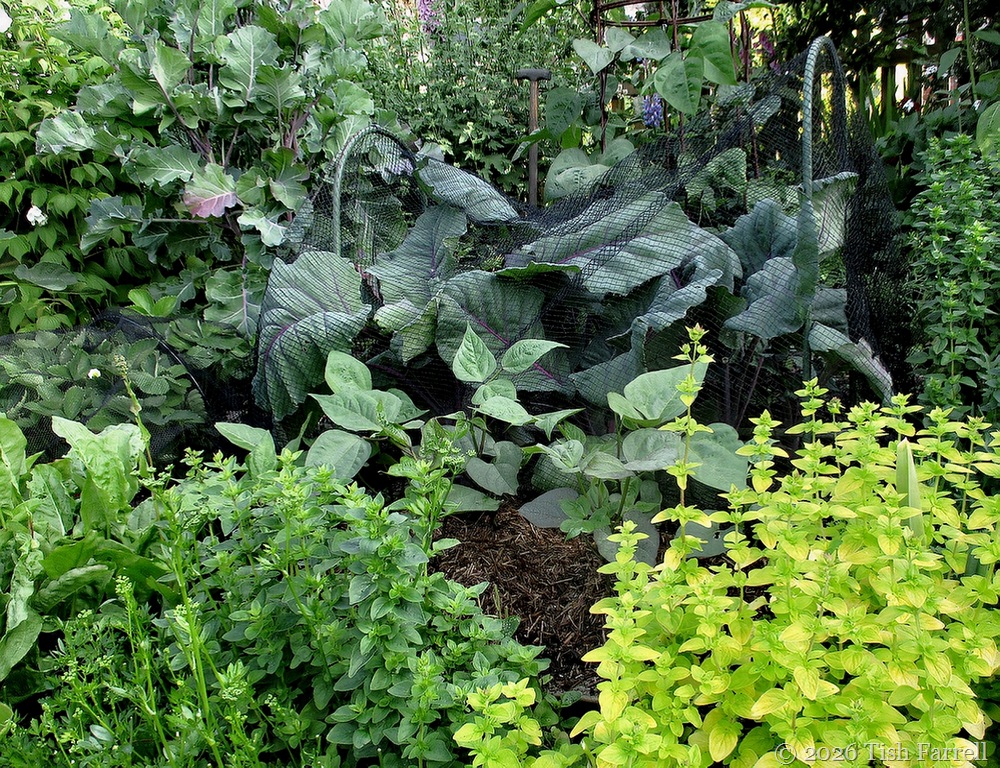
Here the French beans, cabbages and herbs have all put on a sudden growth spurt – almost overnight. I also appear to have grown something that I can only describe as a brassica bush (top left corner). It is nearly as tall as me and is a mass of branching stems of tender kale leaves, but also among them now, some sprigs that look like purple sprouting. It’s been in the garden since last summer and only now decided to perform, having missed the March-April ‘hungry gap’ when I was expecting it. Ah, well. Am happy to crop it whenever it comes.
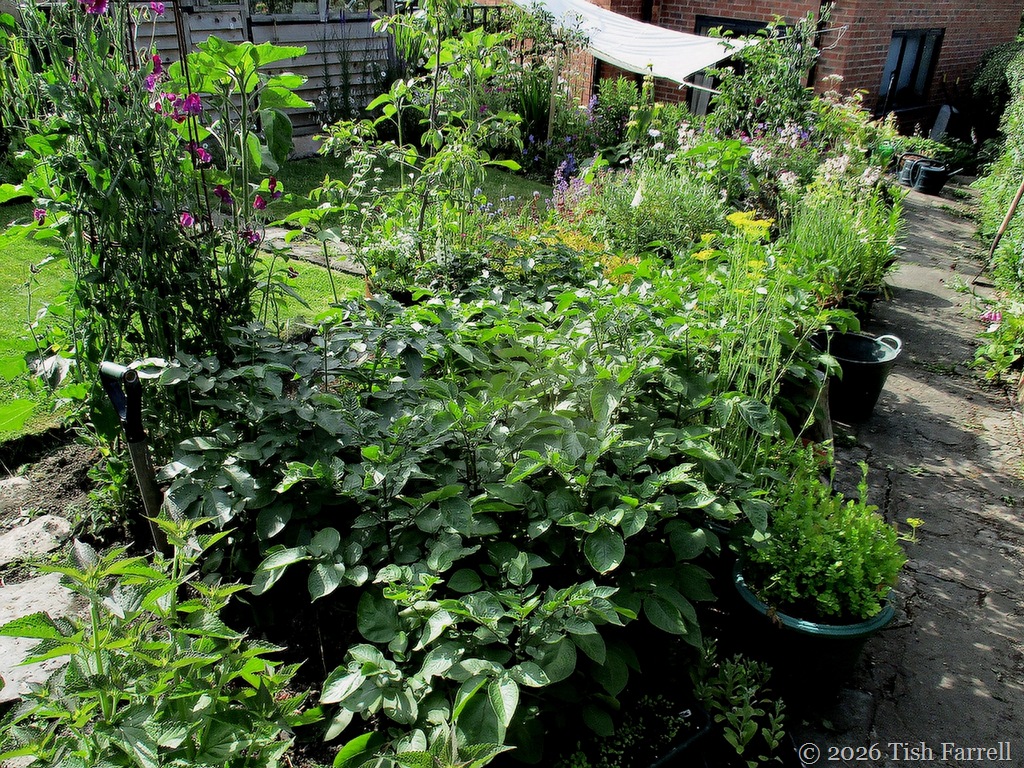
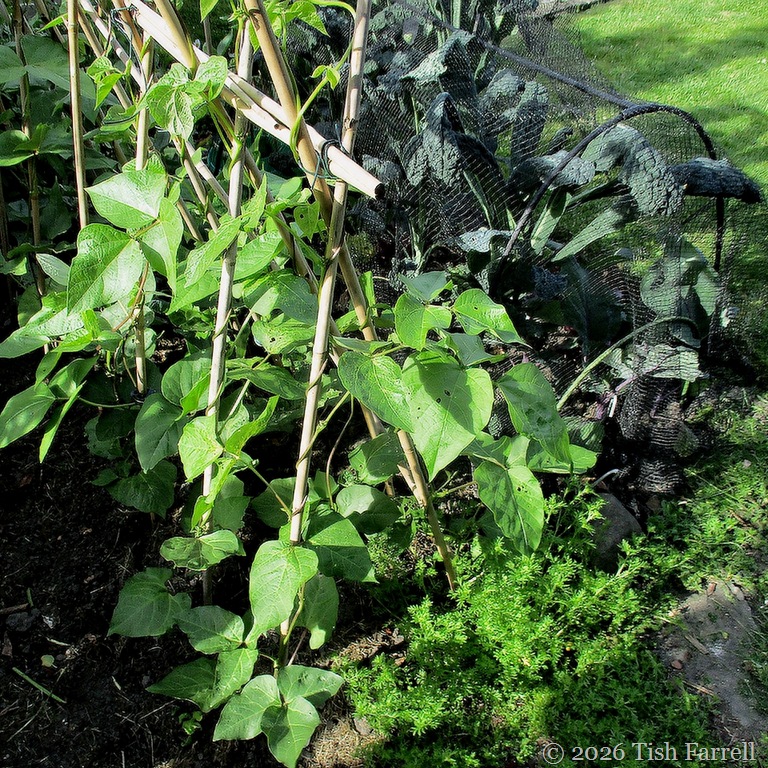
The two rows of potatoes are looking promising. The runner beans, too, are growing well, finally each plant up its own stick, now that I’ve untangled the knitting nonsense created by the June winds.
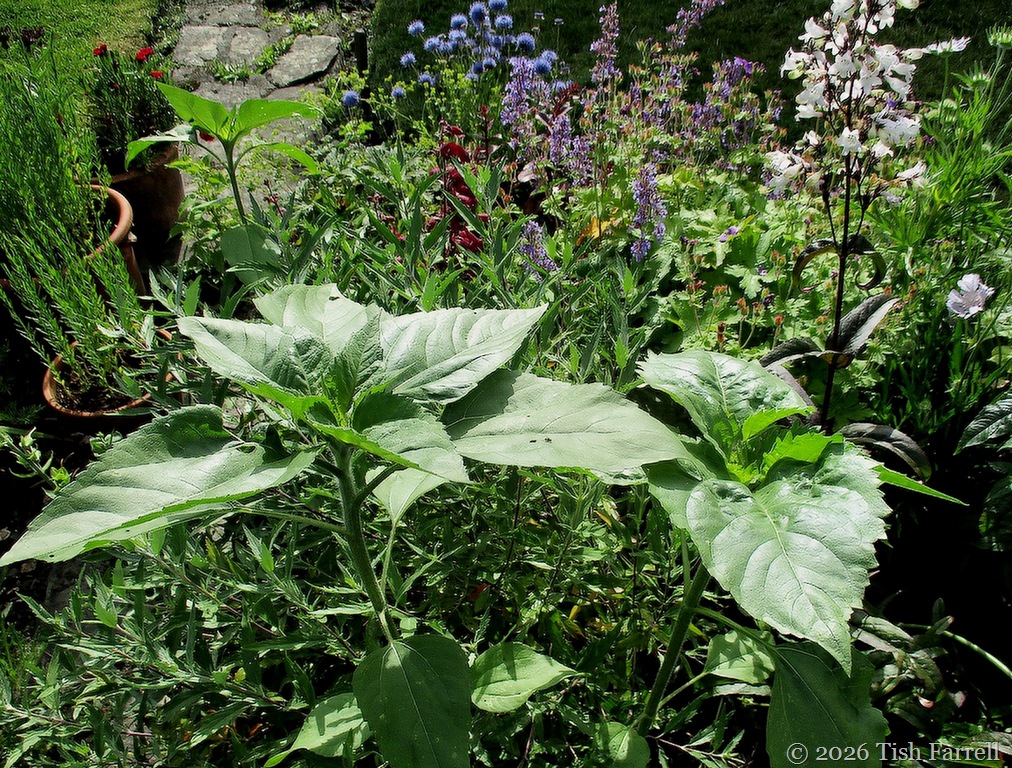
The next big blooming event will involve the sunflowers. They have sowed themselves all over the garden. One is already so tall it clearly has magic beanstalk ambitions. So as they say: watch this space.
Copyright 2026 Tish Farrell
