Six On Saturday: And Another Fine Day

front grass flower

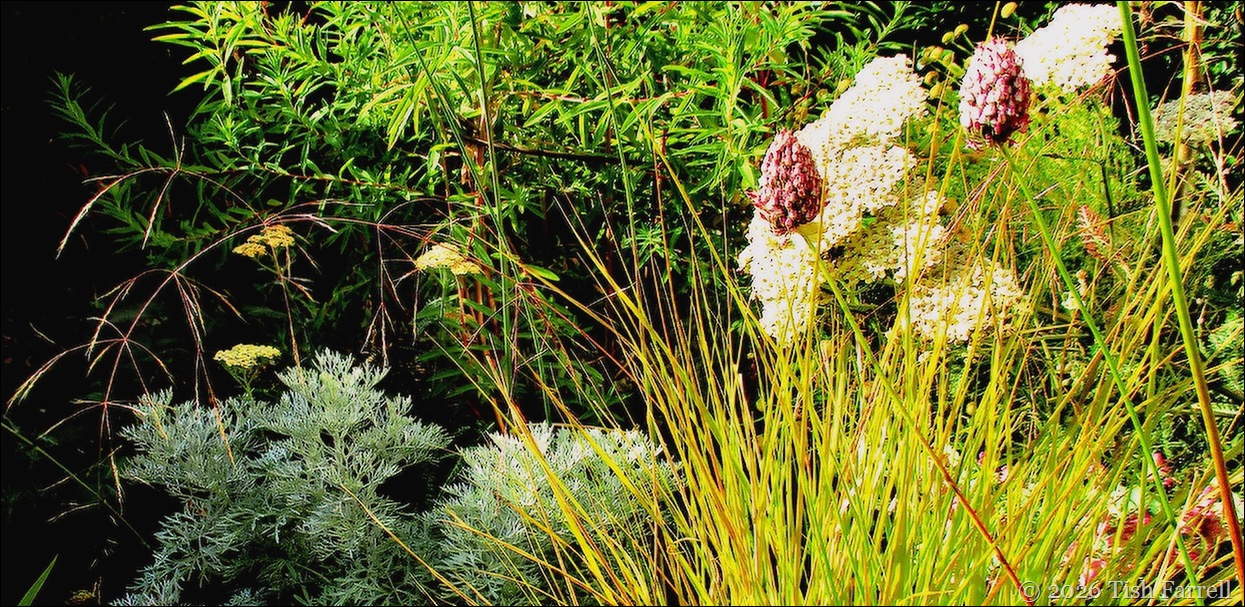
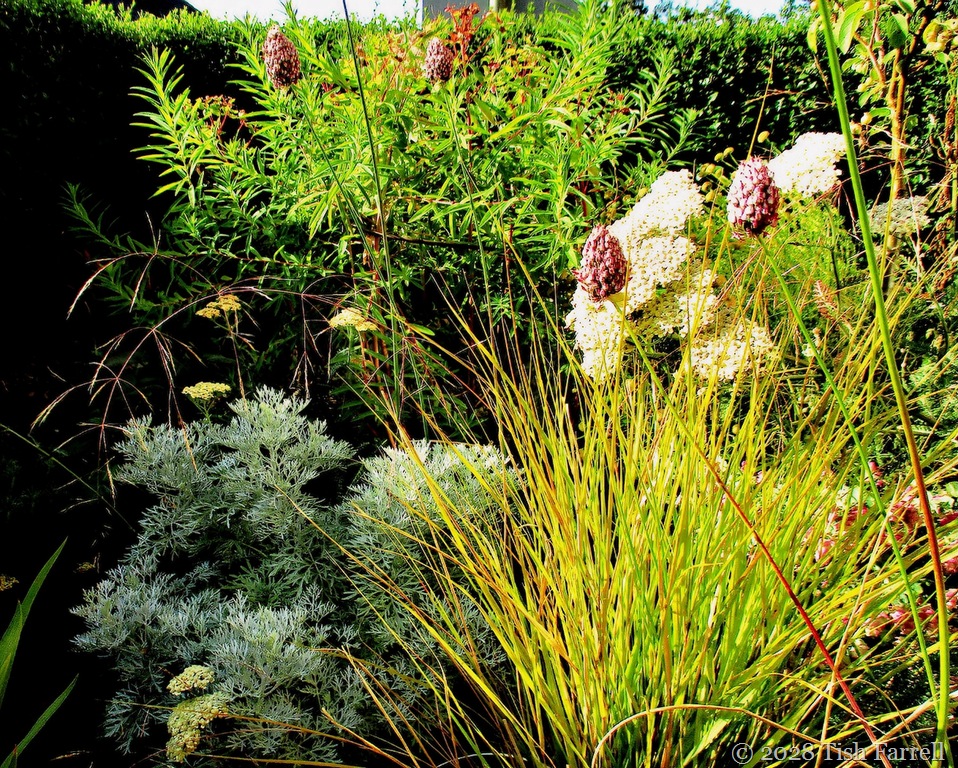
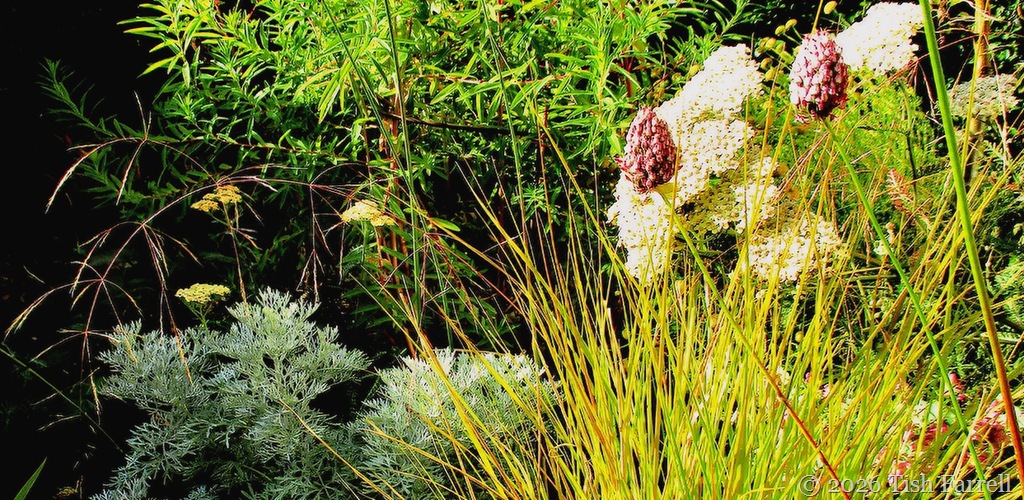
This morning at 8 a.m. the front garden had drowsing looks, the borders brimming with sun and bee-hum. For the first time I noticed that the pheasant’s tail grass, (Anemanthele lessoniana) had put out long and lovely flower stems. Such delicate structures. They caught the light, like the glint of spider’s webs.

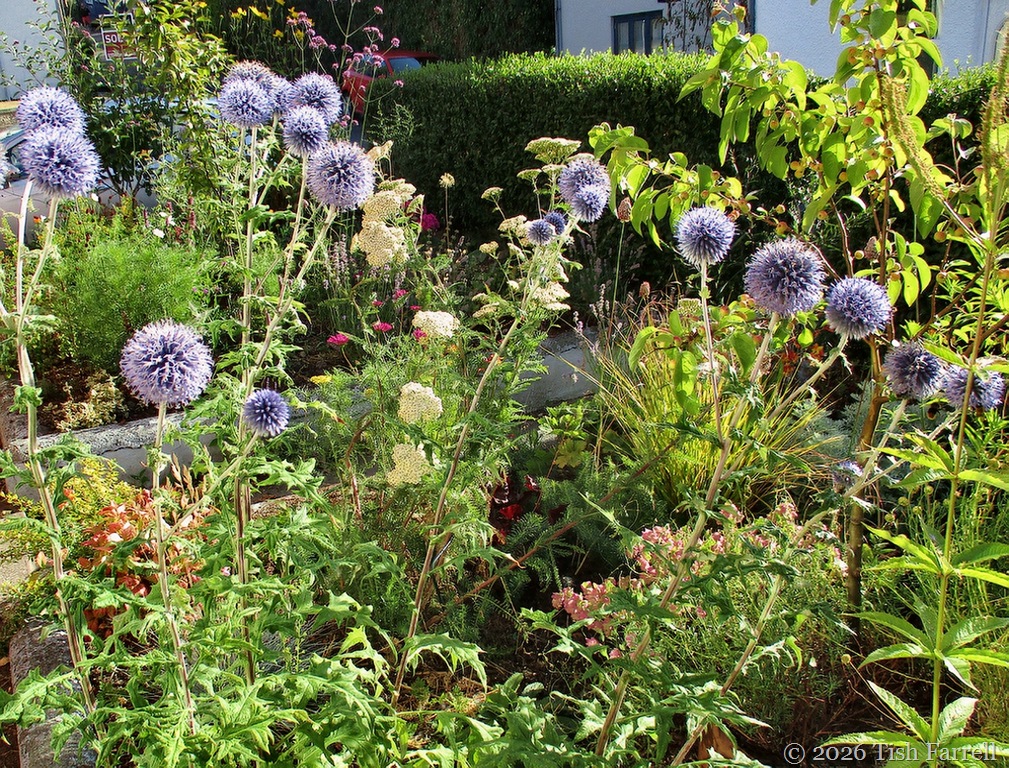
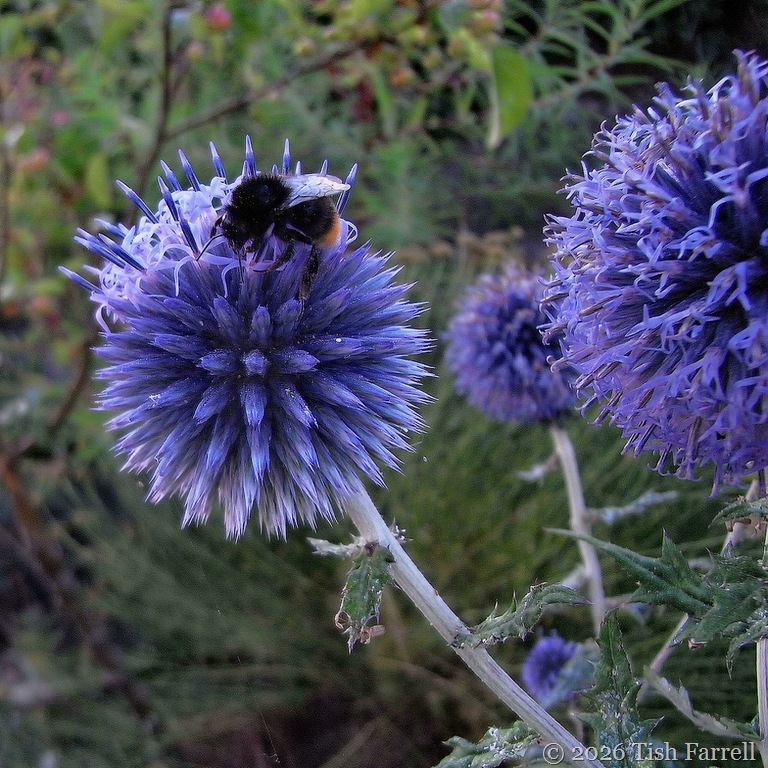
I also noticed that the Artemisia Powys Castle was looking rather fine after a very slow start. The Echinops, too, in front of the living room window, had sprung up tall. Last year it was blighted by aphids, but now the flowers are at nose-height and full of bees.
Echinops 4

bee in echinops 3

But there’s a sense that something has changed. The sun is hot, rebounding off our red-brick house, and yet there’s the strangest chill too, as if a tranche of Arctic air has just floated in. For a brief time a huge black cloud loomed over the town. It made me think of rain, but actually it looked more like snow. Curiouser and curiouser. Anyway, it was soon gone, leaving us with sunshine and a brisk, cool wind.

Earlier in the week I was feeling fed up with the garden – not only with the heat and drought effects, but also with my general gardening M.O. Too much randomness and ad hocism, so much short termism. Where was the overall plan? I was also especially cross to find that many of our young apples were already spoiled. I pointed out the damage to the man in our house, he who builds sheds and car ports that aren’t car ports and is presently engaged in constructing a work table from his extensive collection of waste-wood. Summoned from shed and power saw, he duly dusted off his plant pathologist’s hat, and informed me that the Christmas Pearmains and Red Devils have been zapped by codling moths. Nothing can be done about it, says he. Hmph and double hmph.
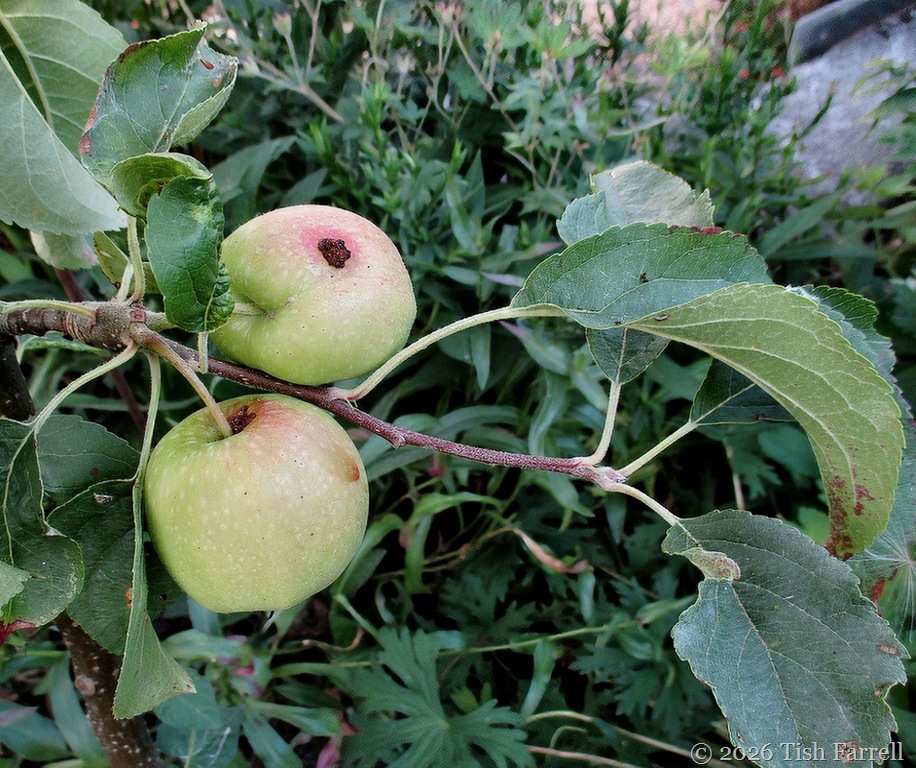
codling moth

But then there’s always something to be pleased with in the garden, once you start looking. It was then I noticed how well the Agastache AKA Korean Mint was doing. It is another of my happenstance plantings. I grew the original plants from seed two years ago. They were vigorous specimens while they lasted, and although they did not survive the cold, wet winter, they did leave the makings of many, if discreetly settled, offspring. There’s one monster growing beside the greenhouse. I think it stole all the rhubarb’s muck, leaving the rhubarb to wither away.

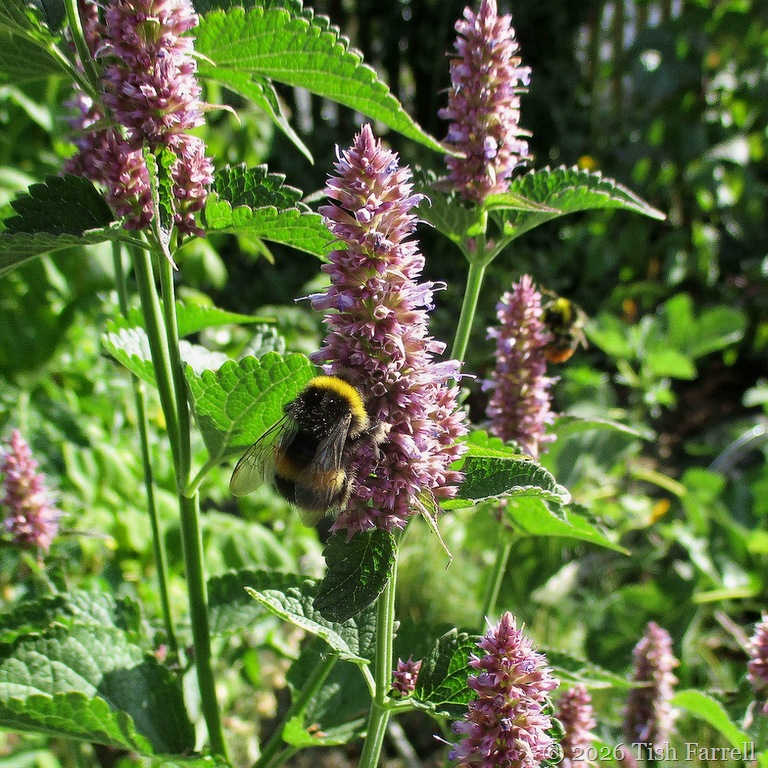
agastache Korean mint

agastache 4

Other seeded plants are growing well in what, to me, seem most inhospitable spots, including between the cement front path and border wall. Here one example is keeping company with a similarly seeded lavender. Bees and butterflies love this plant, and I can see why. I’ve been cropping and chopping some of the tender flowering side shoots and adding them to salads. Agastache also comes in many pleasing colours…so there’s a thought…
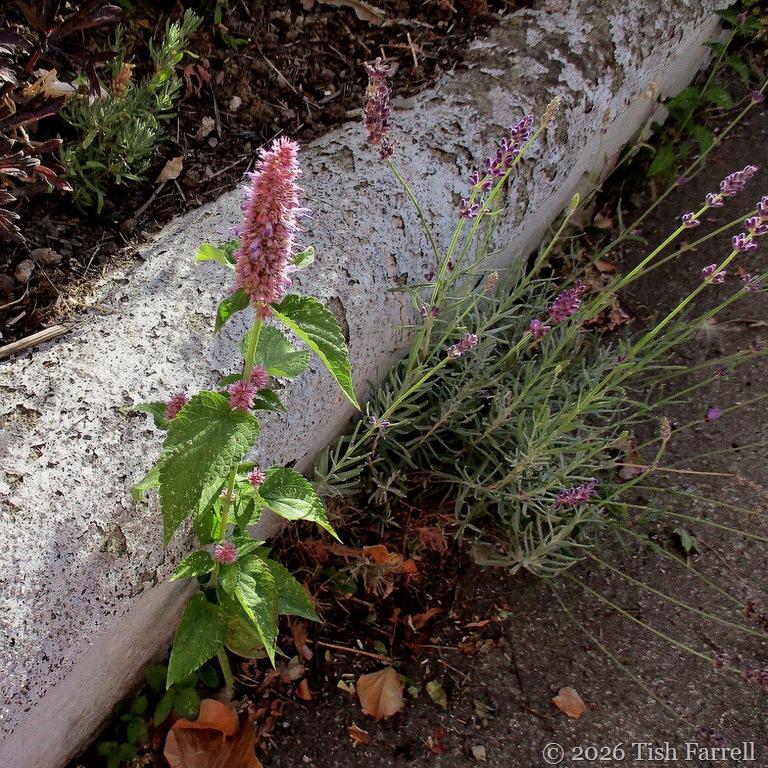
agastache front path

*

Given the heat and drought, I’ve been surprised to have had some success with plants that I actually meant to grow from seed this spring. Just now making its presence felt is Dyer’s Chamomile (Anthemis Tinctoria). It is one of the most cheerful high-summer plants, and especially now as much of the garden colour is on the fade. I have it in various places, including a pot with some snapdragons and small hover flies on the back garden steps.
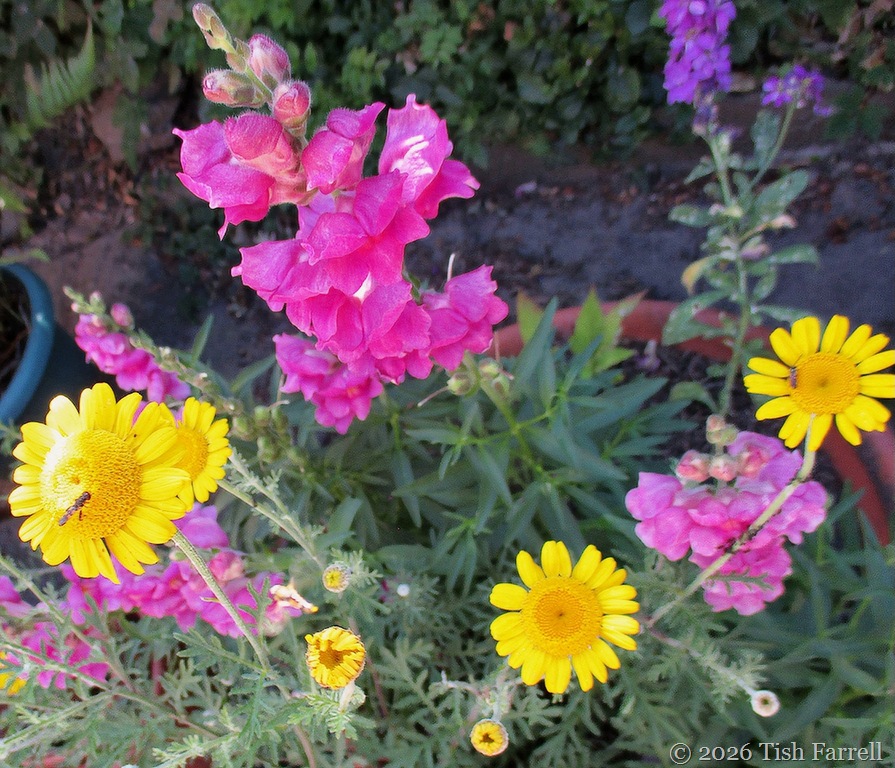
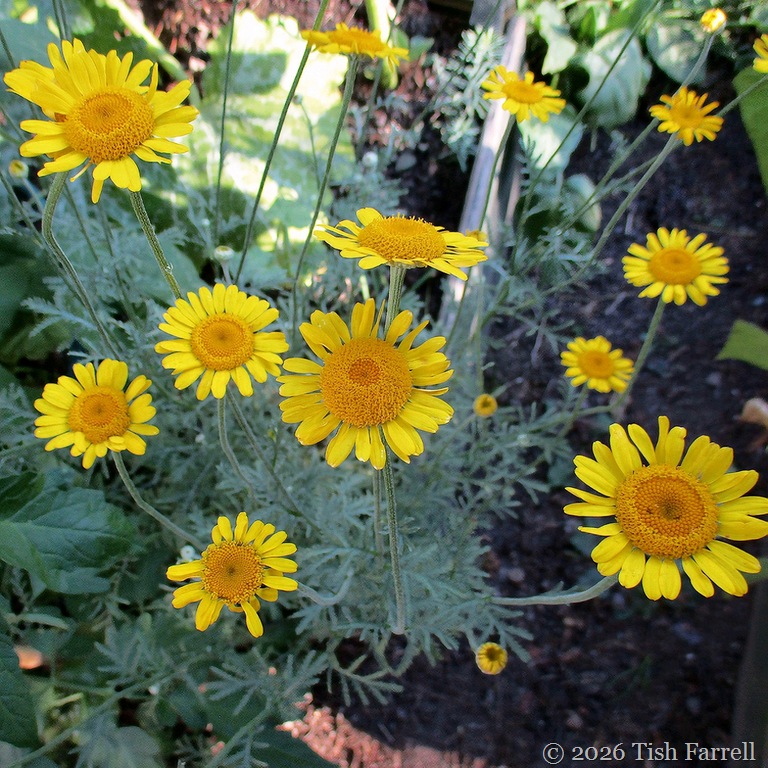
anthemis and snapdragon

anthemis 2

anthemis

The bushiest clump is sharing the corner raised bed with a few butter beans, a courgette and self-grown sunflower. The above photo also includes the male blackbird. It stalks me in a slightly creepy manner, and when I’m not in the garden, spends its time tossing mulch out of the borders. We have had words.

But my star plant of the week is Lemon Bee Balm (Monarda Citriodora). The ones I’ve grown are still pretty small. I’d not been paying them much attention, beyond keeping them alive, and only yesterday did I consult the growing info that told me I should have pinched out the tops several times, and not just once, i.e. if I wanted them to bush out.

And now that I see their flowers, I long for them to be bigger and better AT ONCE. What fascinating floral structures they have, even by monarda standards. (As ever, note to self: read all the instructions).
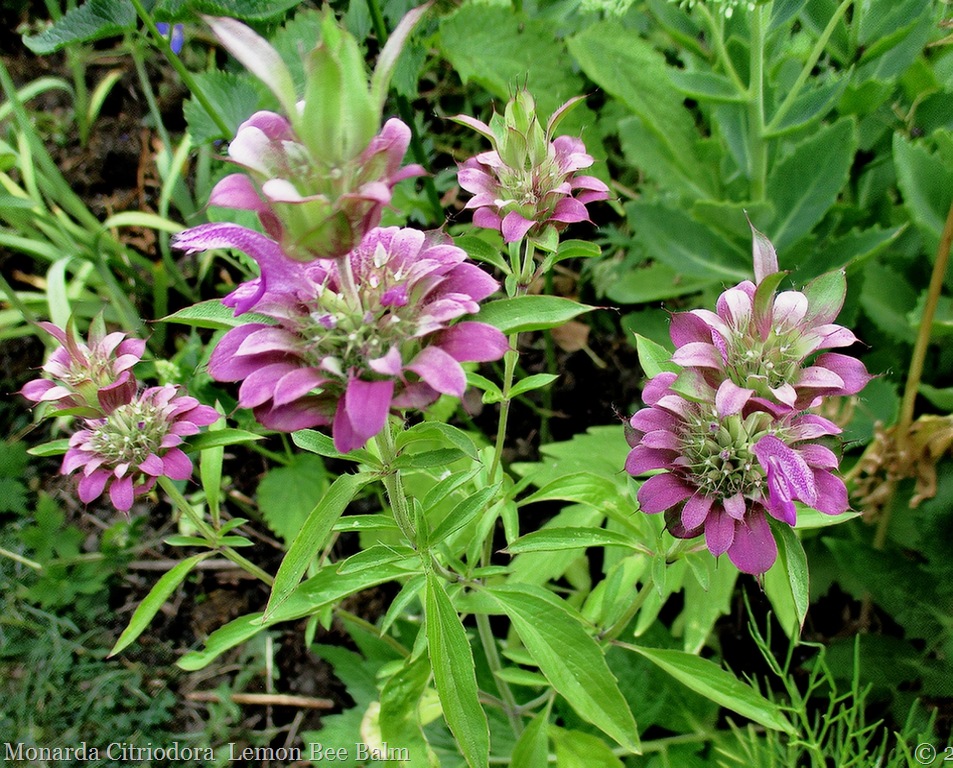
bee balm

When I did finally get to them, the growing instructions also told me that this plant is known to attract humming birds. Now how wonderfully fantastical would that be. And do you know – I think they just might…

*

Copyright 2026 Tish Farrell

Six on Saturday This week a scarlet zinnia and deep blue agapanthus are among the stars in Jim’s garden domain.
front header

As We Walked Out One August Evening

IMG_8622ed

So why don’t we have supper with the elephant? says I. We can take a picnic.

It was Sunday evening, and he-who-builds-sheds had been toiling all day on a new construction. (We call it ‘the car port’, but it’s not for the car.) The response was not altogether encouraging. I knew he was thinking of the hill climb in the heat. I thought of it too, but the notional destination outweighed resistance. I packed a couple of small cool bags with spicy cooked chicken, bulgar wheat salad, apples and some elderflower kombucha.

We set off a little after six. The sun beamed hotly. (What a summer we’ve had).

The walk I had in mind is a climb of two parts, the first being the short sharp yomp up our street to the top of the town. This haul can be alleviated half way up from our house by deviating into Laburnum Alley, a shady ginnel of ancient walls and overhanging greenery, that wends more gently around garden perimeters, and brings you, breathing easily, into Welsh Street.

Next there’s an even stretch along the road around the Wintles mini eco-village before we head into the shade of this settlement’s privately owned (but freely accessible) woodland enclave of vineyard, allotments, and bosky meanderings. The Shropshire Way also bisects it. We pass through the gate into the field behind the gardens, and start the main climb. We’re headed towards Wales now, the Long Mynd our right.

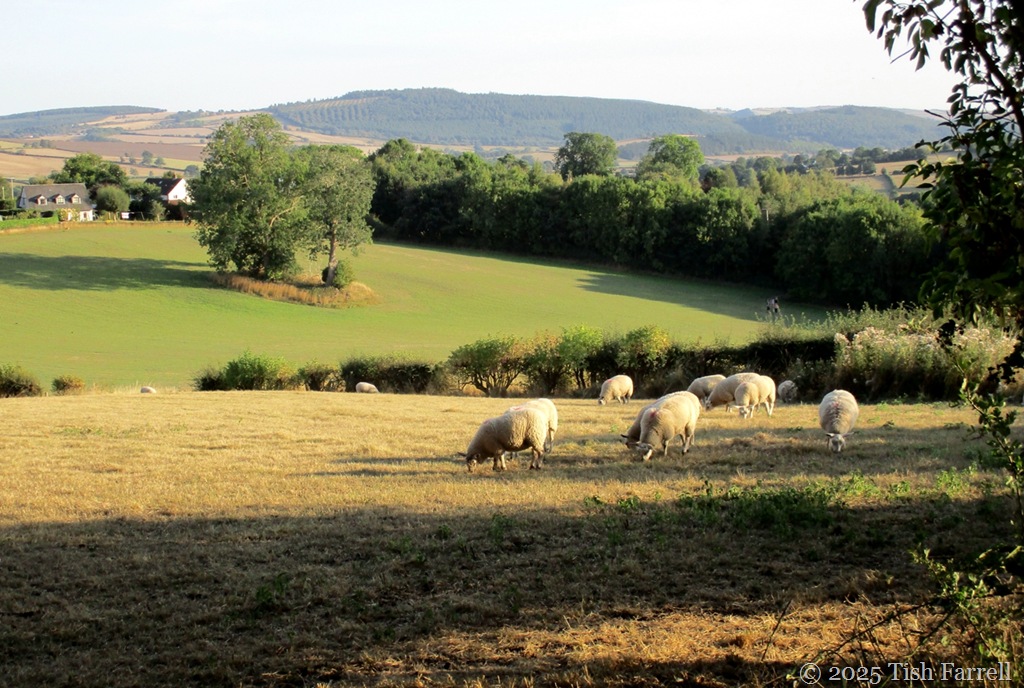
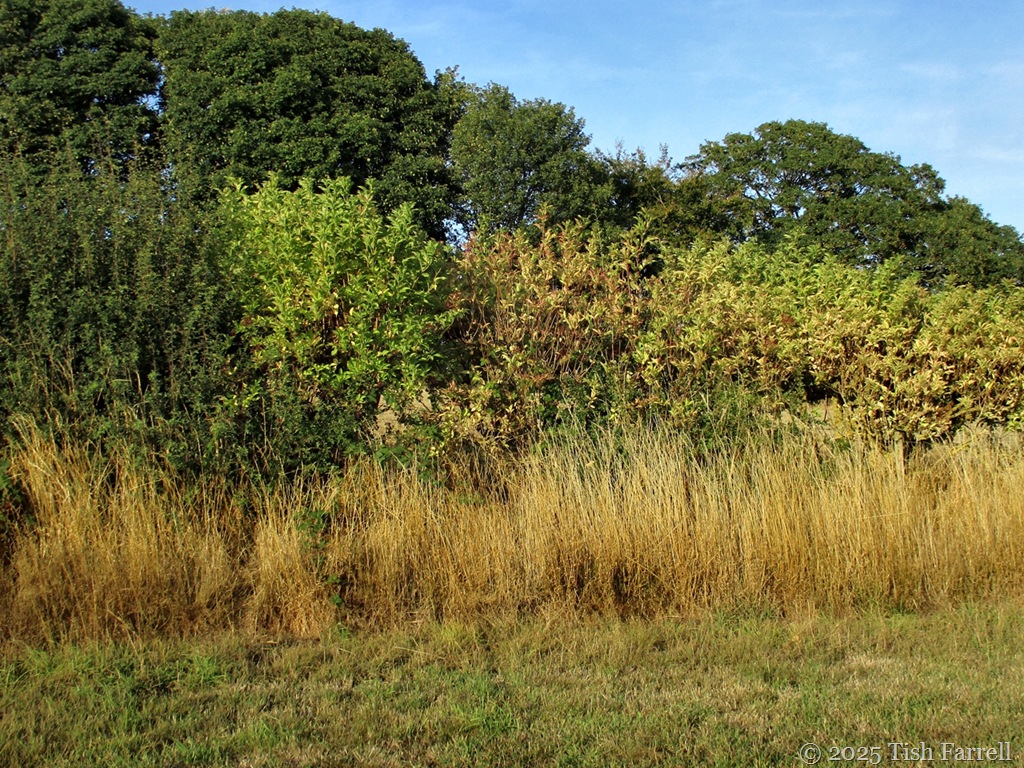
The field behind the Wintles woodland still looks remarkably green, this despite the months of drought. But above us, the fields are pale ochre, shorn of pasture or wheat, the hedgerows tousled, fringed with dead grasses and thistles bursting with down.

IMG_8613 ed

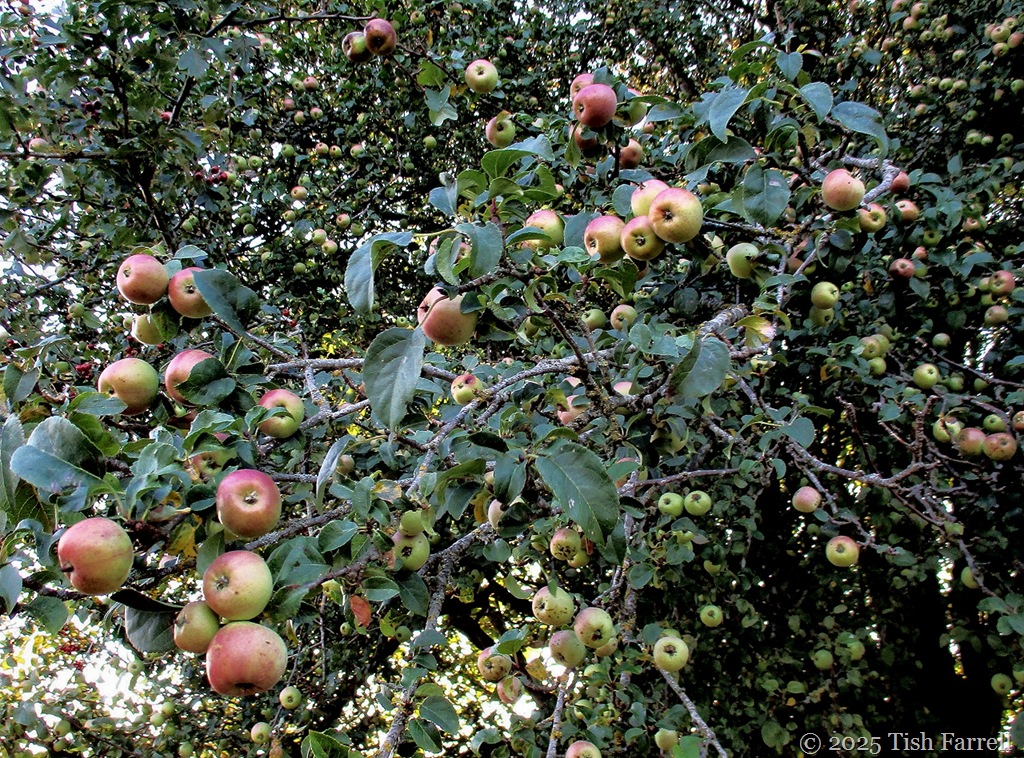
The few sheep we pass seem happy enough, and we begin to see that not everything has suffered from the lack of rain. The red clouds of the berry-laden hawthorns are astonishing, so copious is this year’s crop. The elders, too, are weighed down with ripe black berries, and later we see bushes of fat blue sloes (think passingly of making sloe gin), and then come upon a crab apple tree so crammed with fruit it is almost too good to be true. Excitement mounts. Crab apple jelly will definitely happen – if not yet, then very soon, and feasibly in quantities for all of Bishop’s Castle.

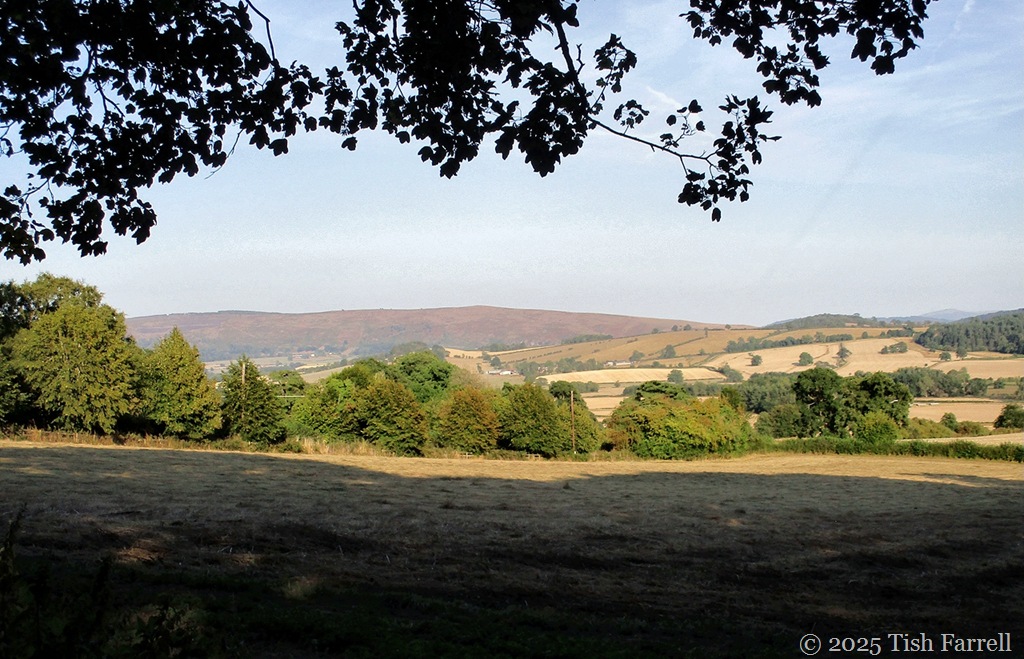
But first the picnic. We follow the footpath markers through two gates and into the trees below Foxholes Campsite. There’s a good view of the Longmynd now…

Longmynd

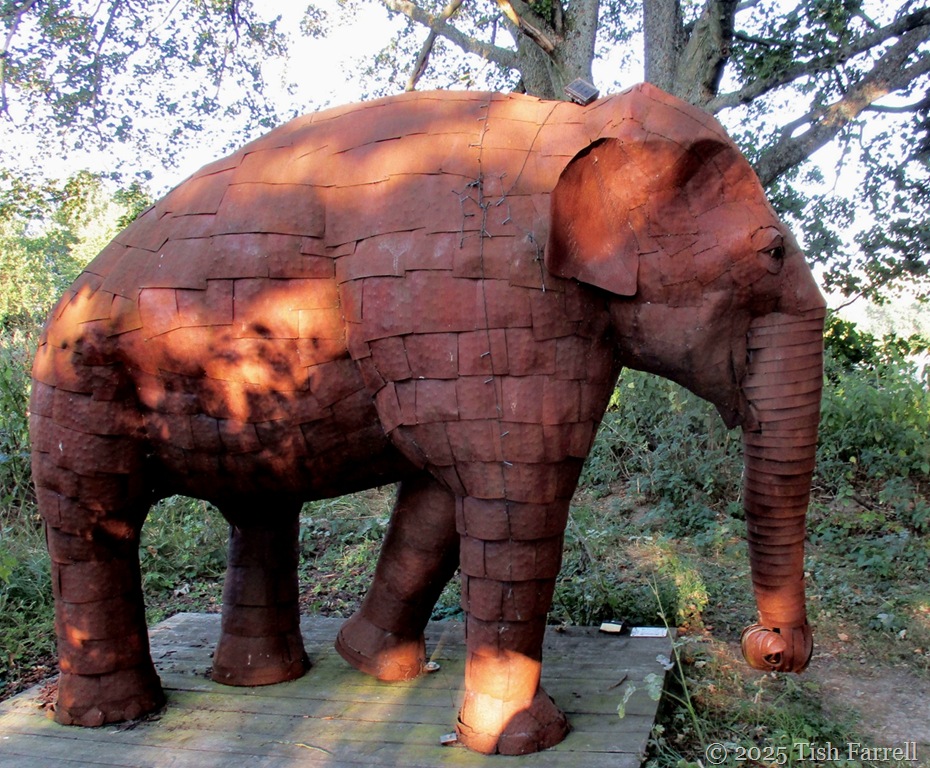
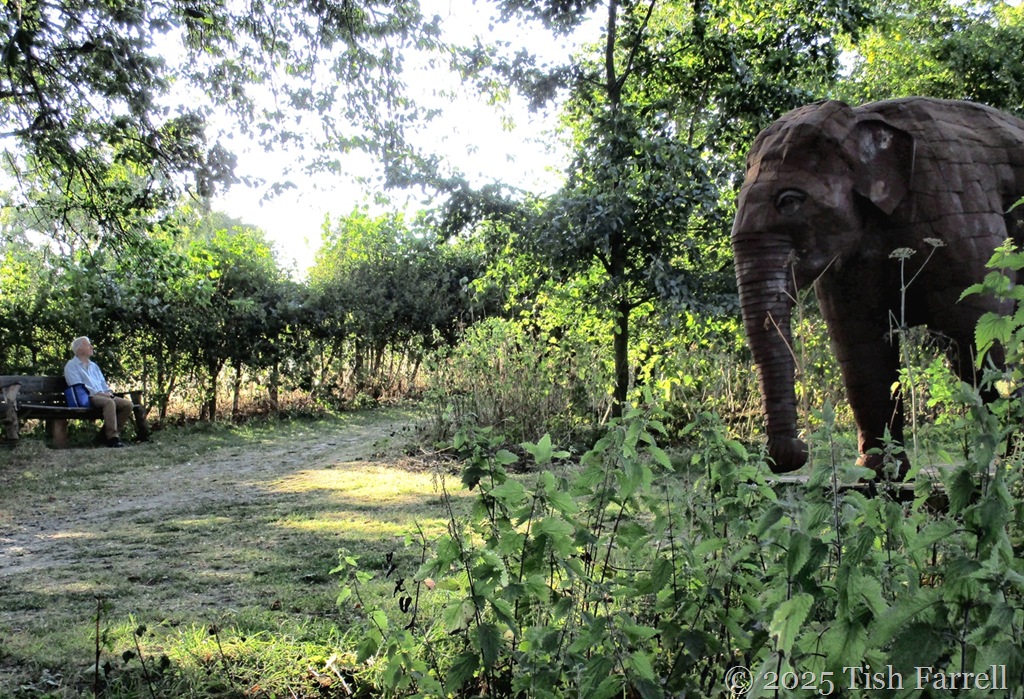
…and there is also an elephant…an Asian elephant…

elephant 2

*

Some of you will have seen this before, and I’m sorry to say that I’ve still not tracked down who made her or why she is here in this particular spot.

*

IMG_8627ed

But here, then, was the envisioned picnic spot.

We ate our supper, sitting on a fine seat commemorating a lost love, greeting camping folk as they passed by, listening to the breeze in the trees. The elephant did not have much to say. Nor did Buddha who was sitting near us:

Buddha

Just some quiet communing.

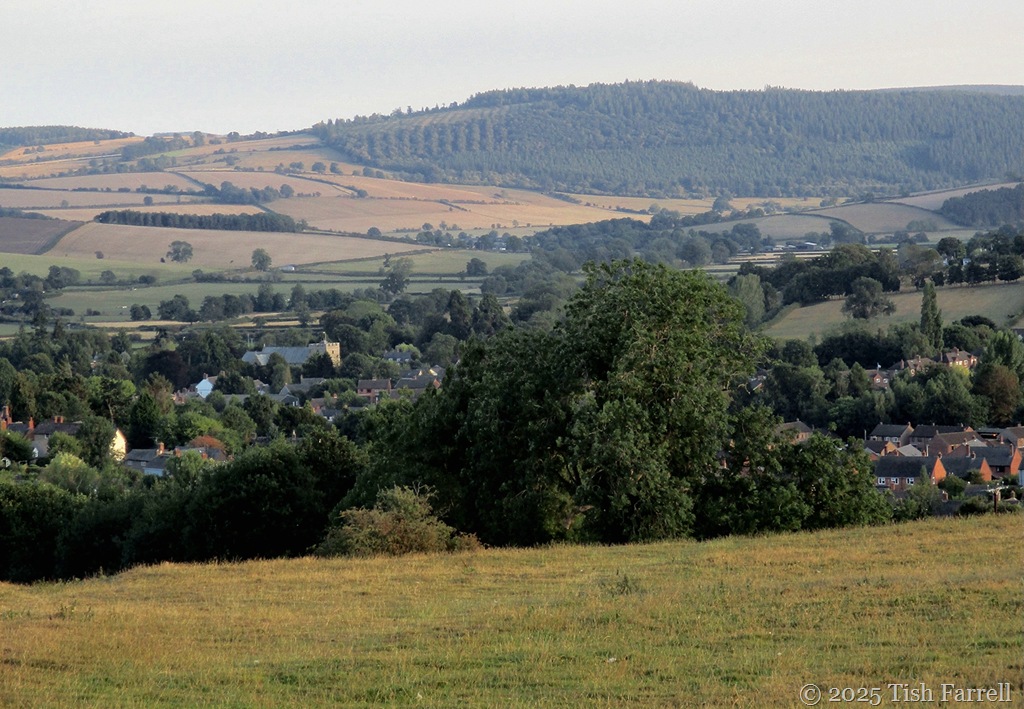
Once we’d eaten, I thought I could risk suggesting a little more climbing. This time to the top of the hill to see the views towards Montgomery.

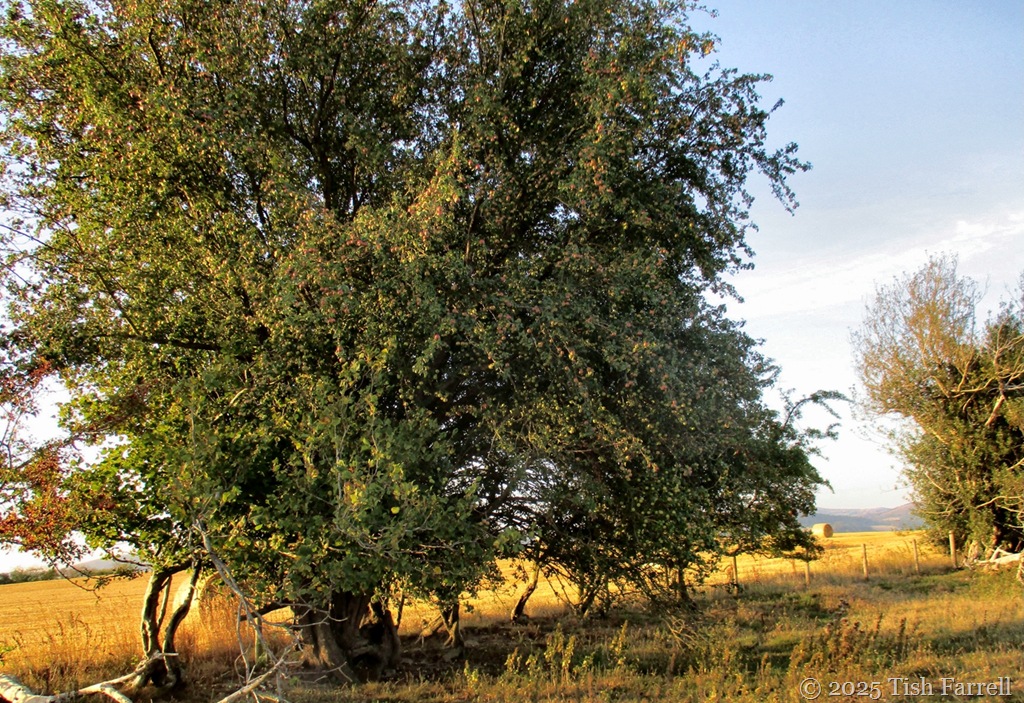
It was here we found the crab apple tree.

crab apple and haw accessories

crab apple tree

*

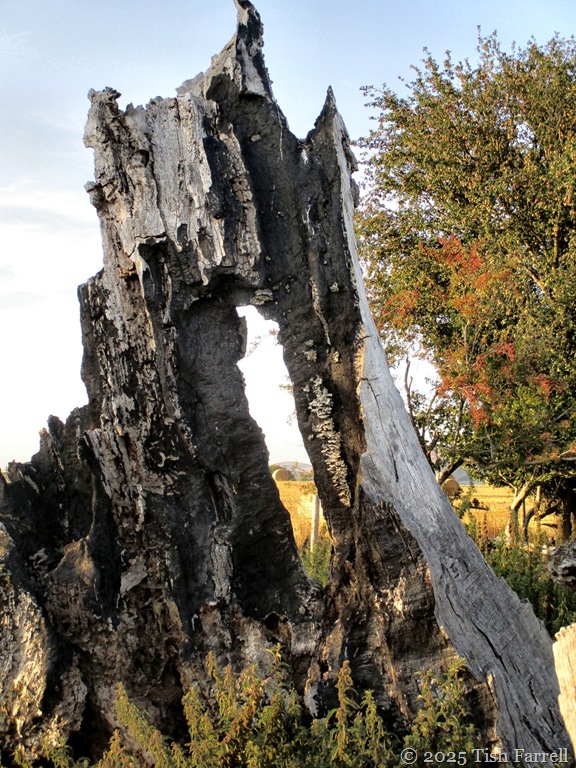
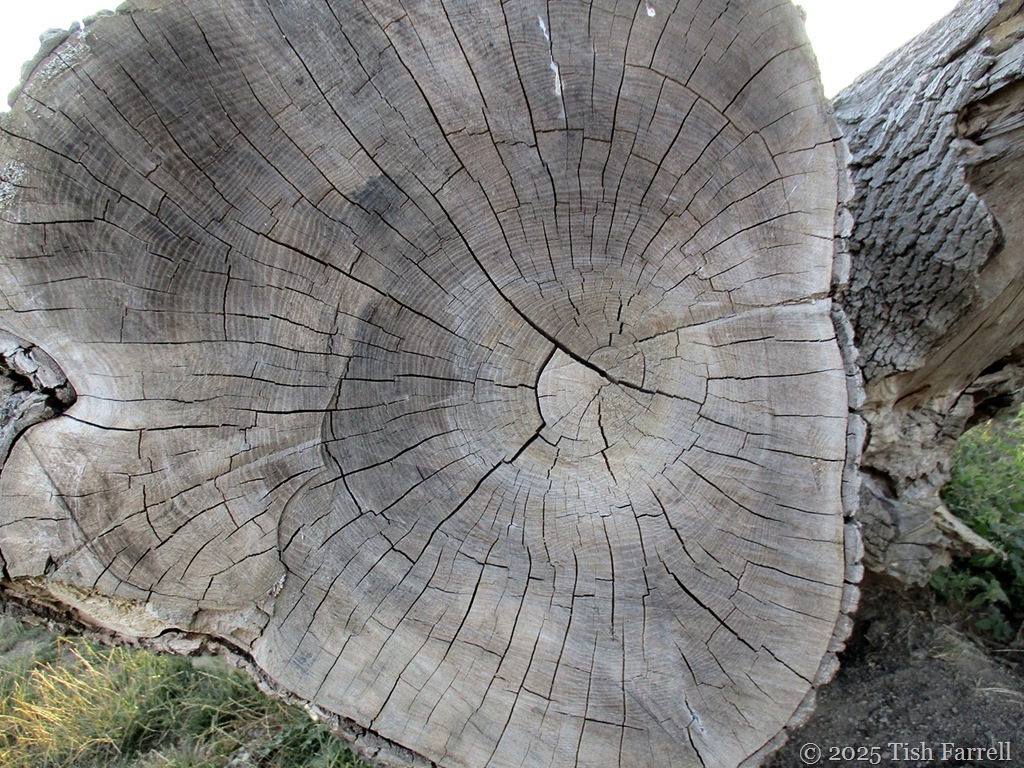
And next to it a fallen giant with its own elephantine qualities. It looks to have been struck by lightning many moons ago:

tree window

tree rings

*

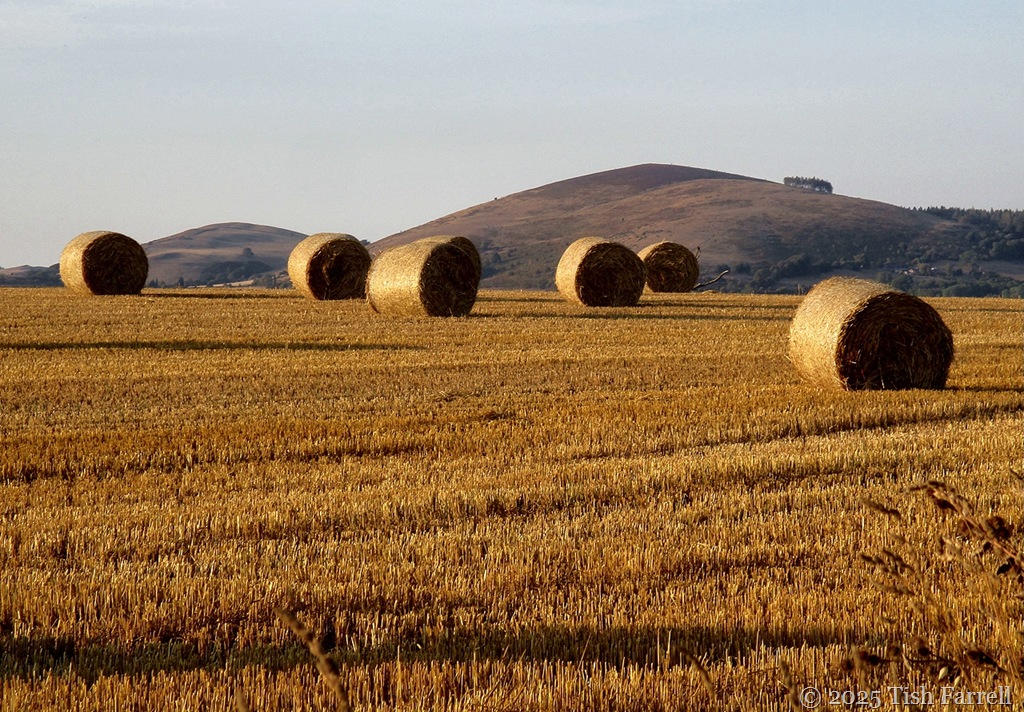
And beyond it the wheat field, the crop harvested and the straw bound in roundels, which for some reason are always appealing:

stubble

*

Then it was time to turn for home, slithering down the hill on sun baked ground…IMG_8666ed

*

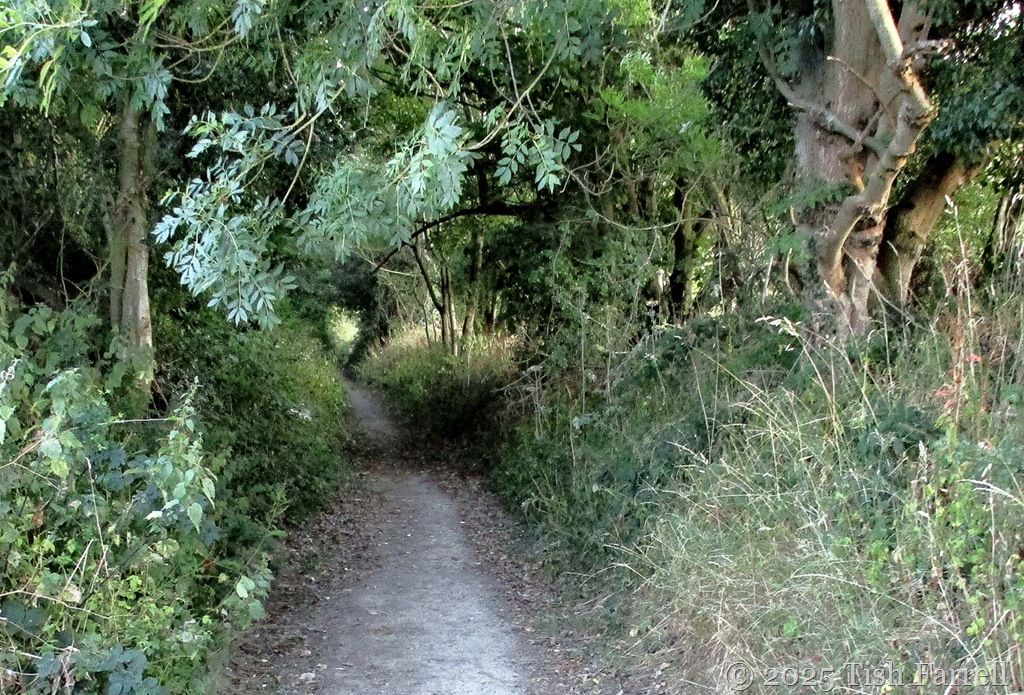
…and on down the hollow way, back to the Wintles.

hollow way

*

We should do this more often, we said when we arrived back at the Gables.

copyright 2025 Tish Farrell

The Changing Seasons ~ August 2022

IMG_1235ed

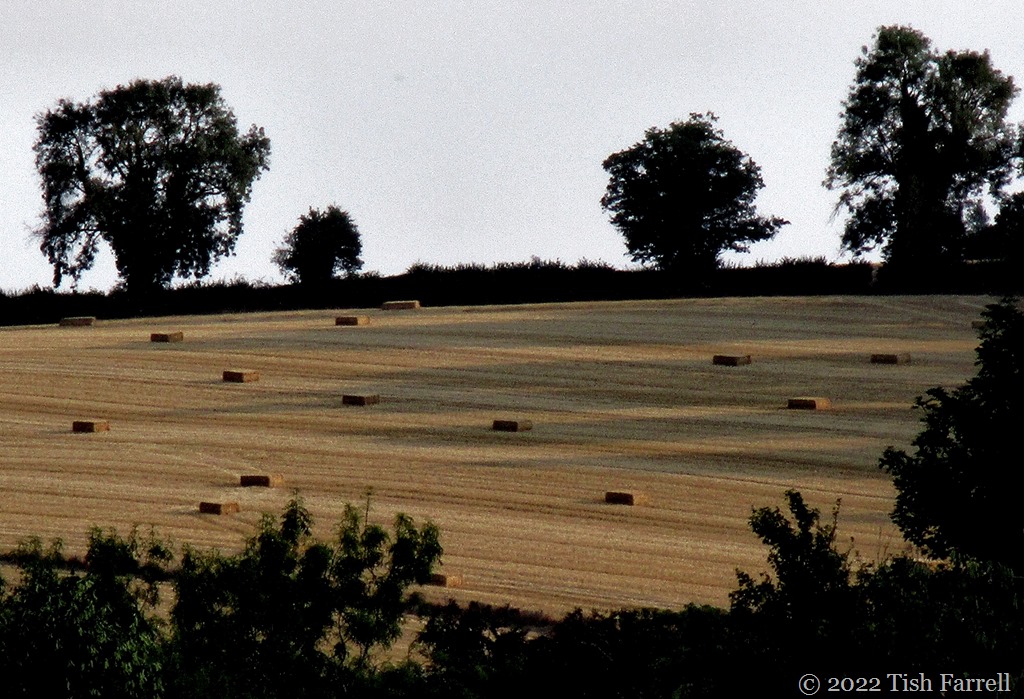
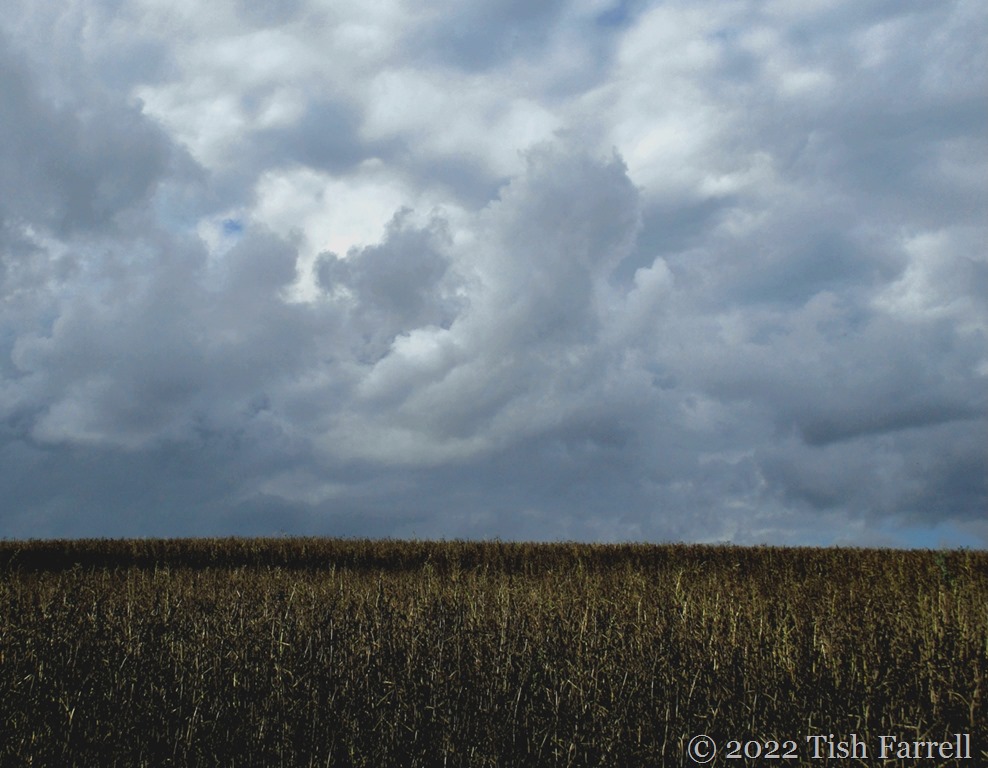
Harvest time in Much Wenlock came early this year. With the brief heatwave that lasted less than a week, but the months of drought, some crops looked baked-in-the-ground. Without regular rainfall, our heavy Silurian soil very quickly turns to concrete and cracks open.

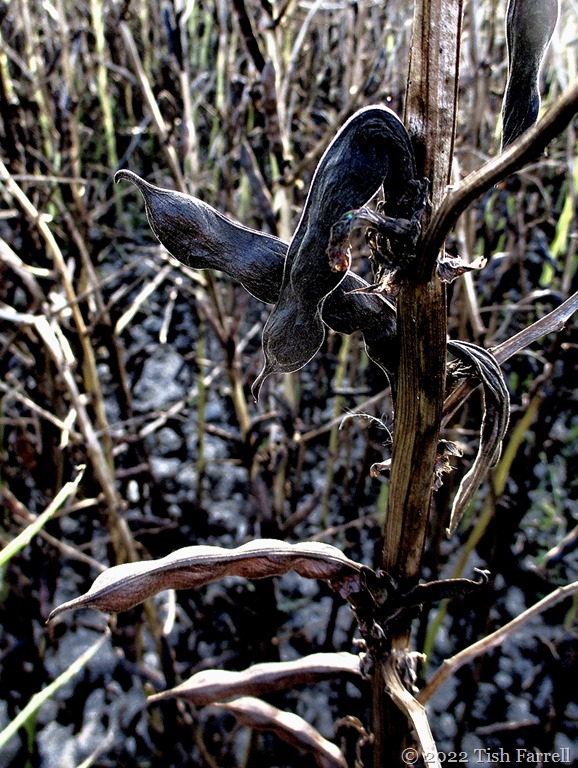
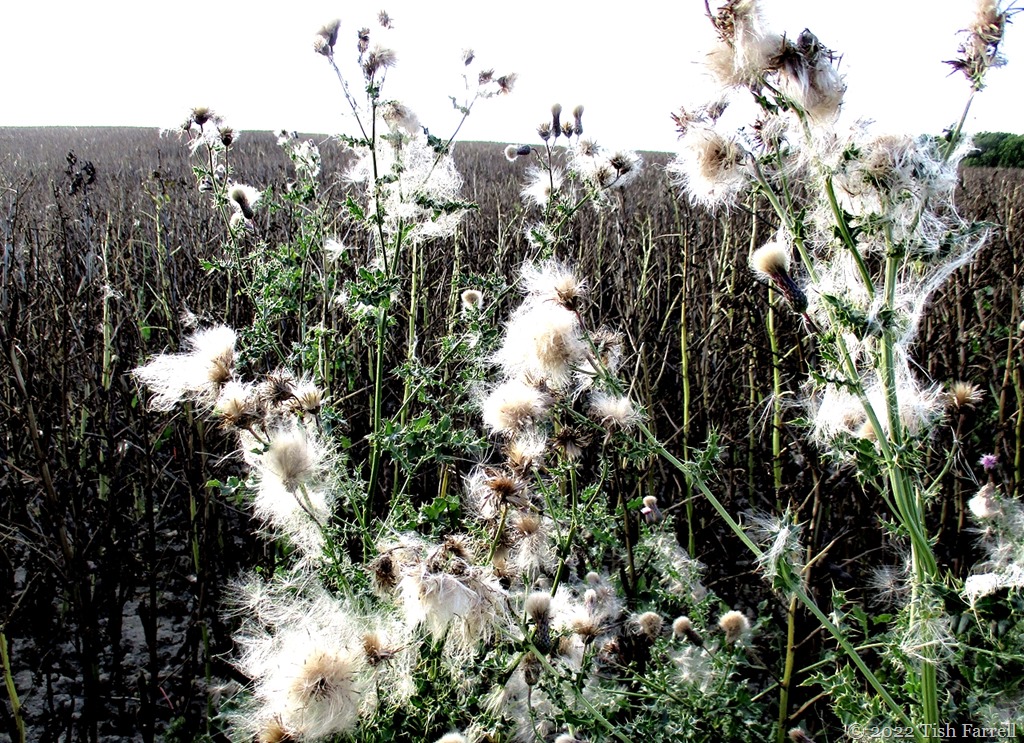
The field beans in Townsend Meadow behind the house that started off so well in spring, did not make good, fat pods before they started turning black and drying out. The plants themselves have been standing in the field, blackened and leafless for weeks. Until today that is (September 1st), when they were finally harvested amid a great dust storm. I dare say  the beans that have been harvested will be very well dried, but probably only suitable for animal feed.

IMG_1335ed

IMG_1332ed

Thistles and the field bean crop just before harvest

*

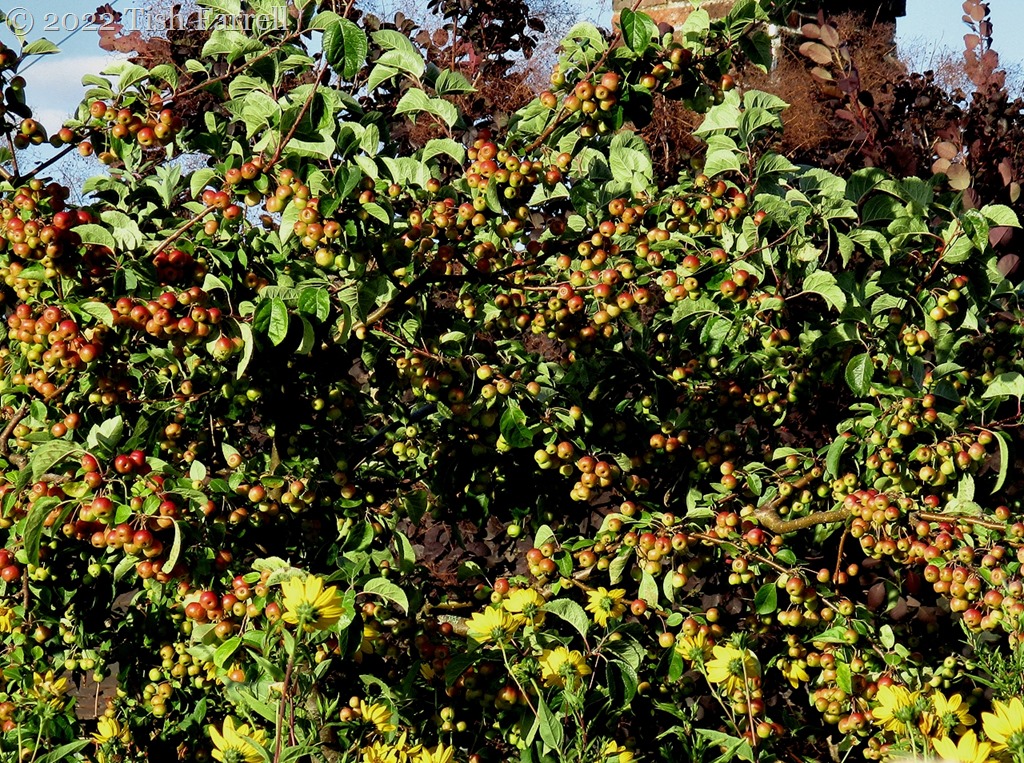
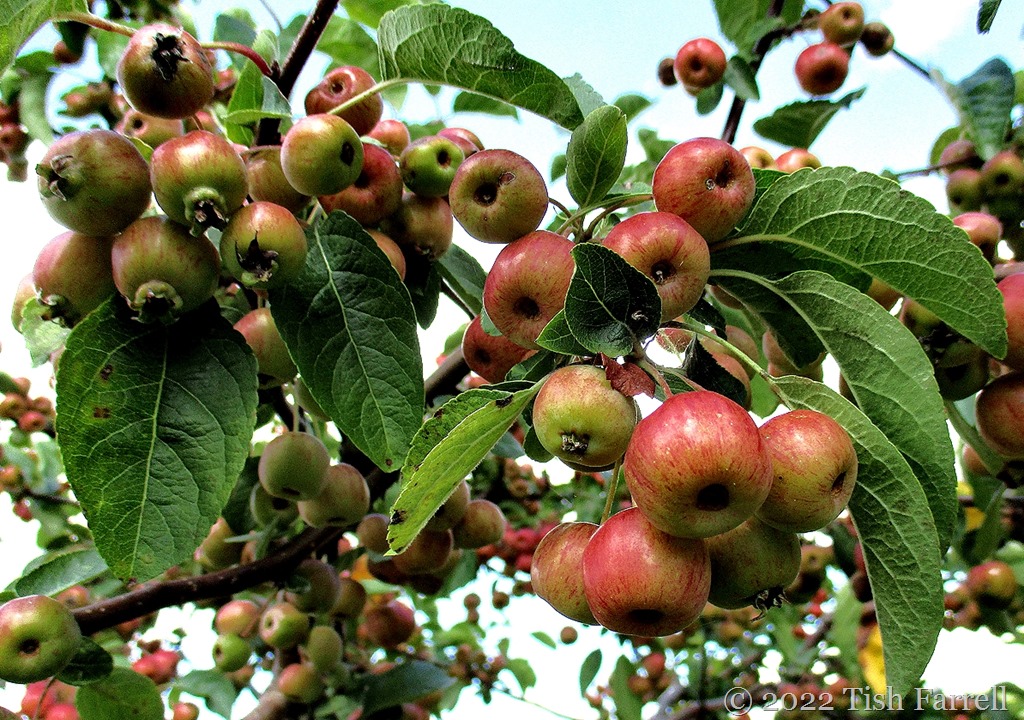
Now when it comes to apples, both wild and cultivated, it’s a whole new story. Here is the crab apple tree in our back garden. The fruit is tiny, but what a crop. I’ve never seen this little tree so laden: enough to make crab apple jelly and leave plenty for the over-wintering birds.

IMG_1295ed

IMG_1317ed

*

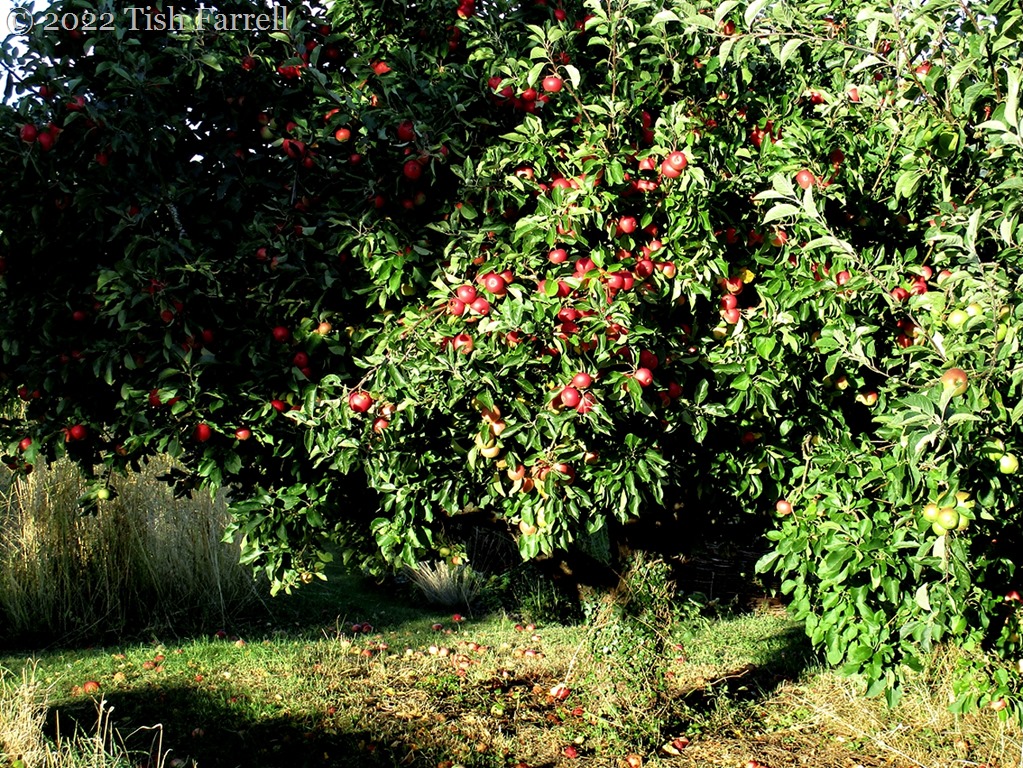
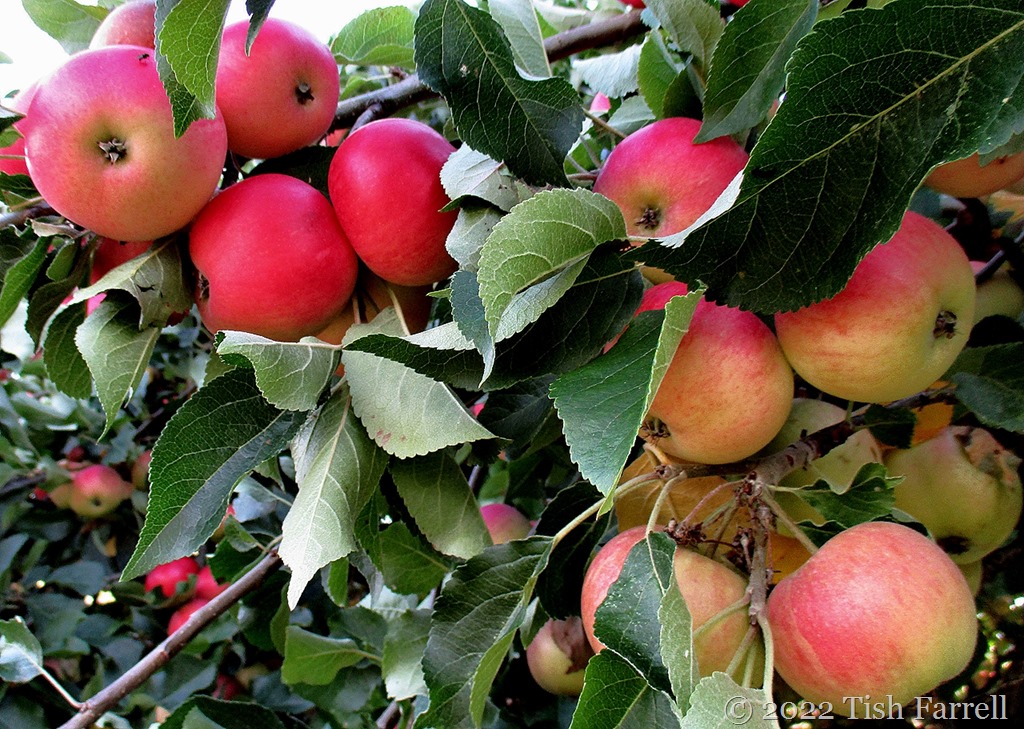
Up at the allotment, the Discovery apple tree is also cropping earlier than usual, and again, weighed down with fruit. The skins are bit tough though; again likely due to lack of rainfall:

IMG_1282ed

IMG_1292ed

IMG_1288ed

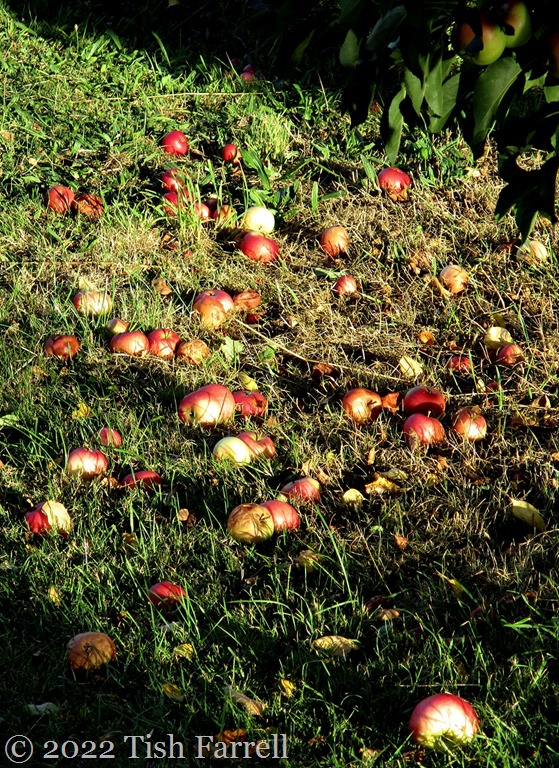
Windfalls in August

*

Since the three very hot days early in the month, we’ve had lots of cool and cloudy days, when we were sure it was going to rain. We’ve even had weather forecasts that threatened deluges. But no. They did not materialize. Only one passing shower that teased all the plants, and this gardener into thinking things were about to improve.

IMG_1274ed

*

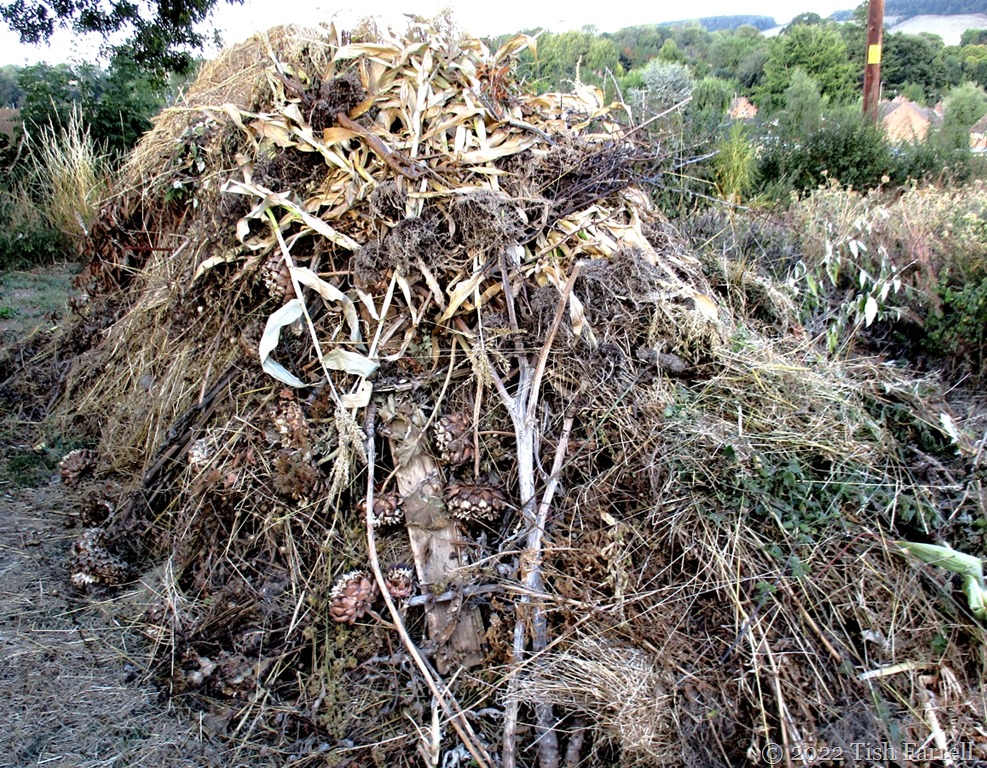
Here’s the allotment bonfire in waiting. It looks very autumnal. The stalks of the artichoke plants on the pile, dried so hard they could not be chopped up for compost.

IMG_1347ed

IMG_1148ed

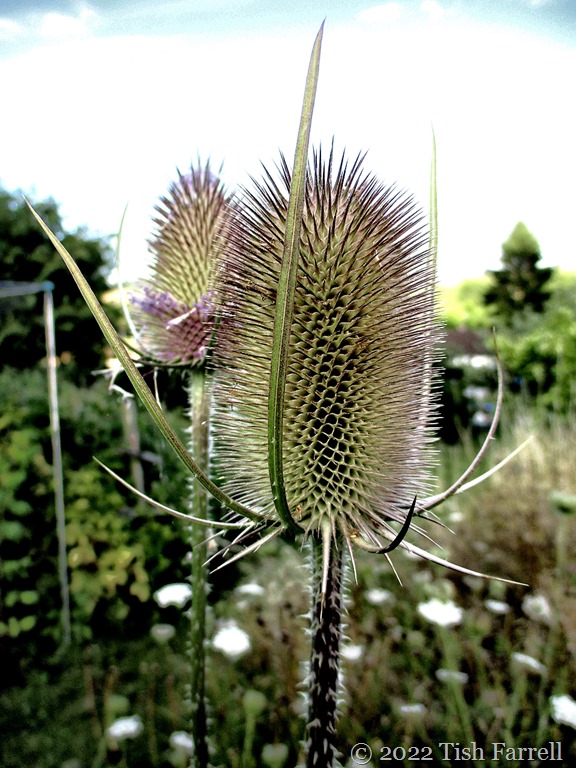
Teasels already

*

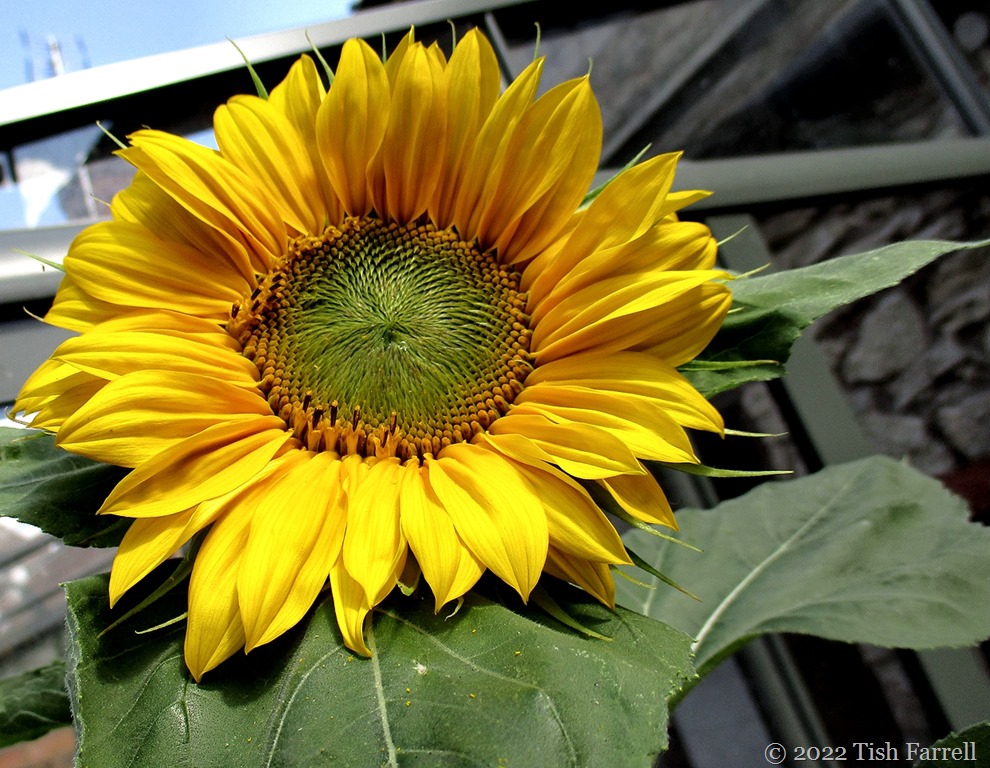
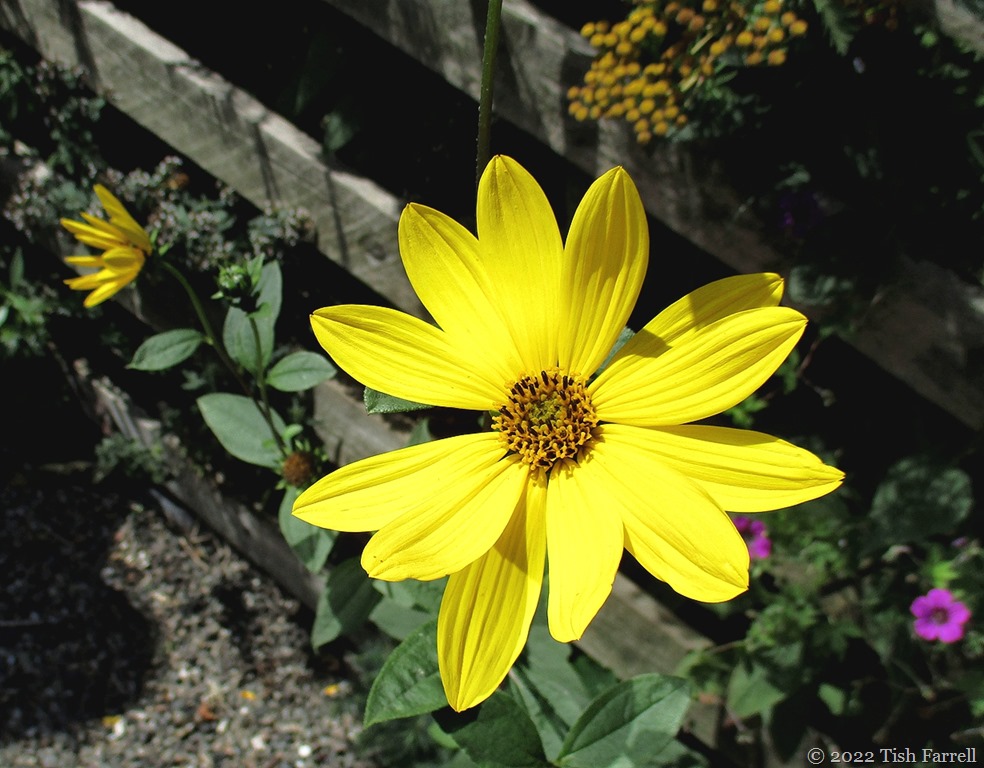
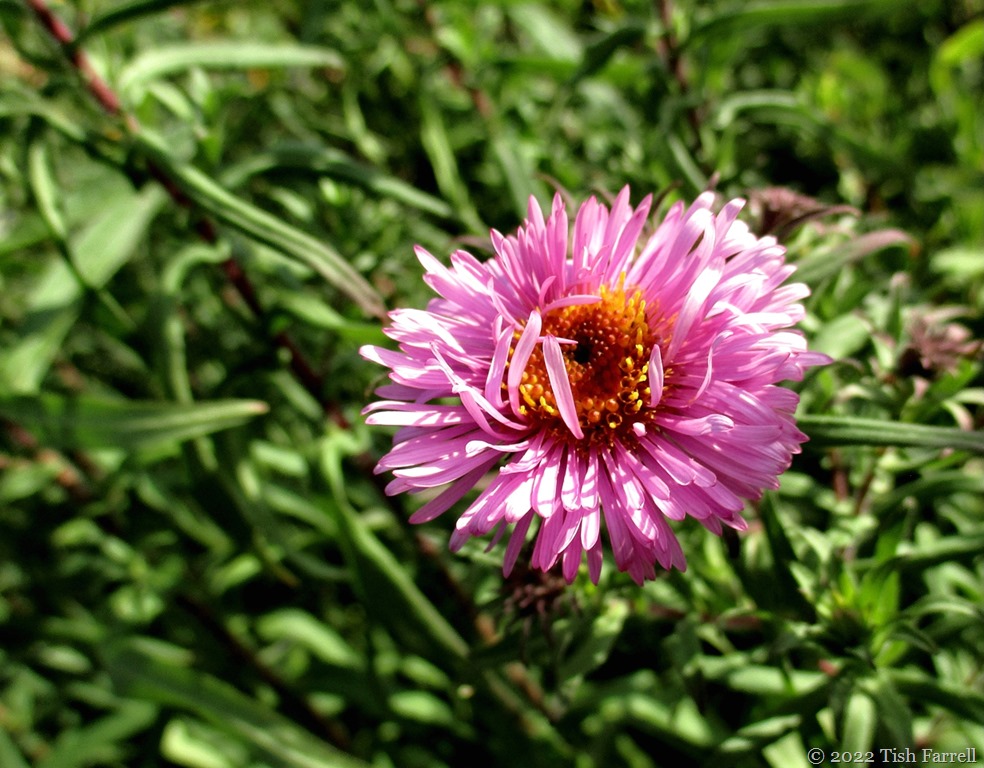
In the home garden, many plants have struggled without rain. The phlox that usually flowers all summer, bloomed and then was quickly desiccated. Hand watering simply did not cut it. Now though, some of the helianthus (perennial sunflowers) are trying for a bold recovery, and I spotted the first Michaelmas daisy yesterday. The geraniums, too, have soldiered on valiantly. Things in pots (cosmos and echinacea) are probably faring better because it’s easier to manage the watering. Which also means we have a jolly new sunflower just out by the greenhouse door. It’s sharing a tub with some tomatoes.

IMG_1324ed

IMG_1316ed

IMG_1329ed

*

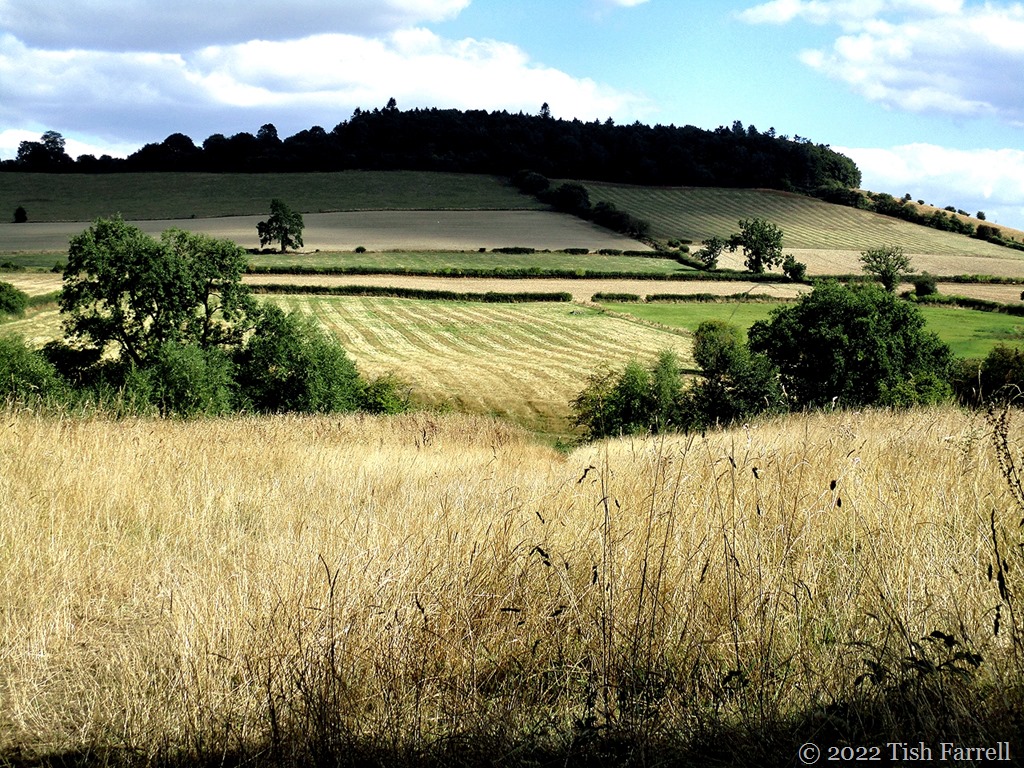
And finally a view from Wenlock’s old railway line, taken yesterday:

IMG_1327ed

The Changing Seasons ~ August 2022:   Please visit hosts Brian at Bushboys World and Ju-Lyn at Touring My Backyard

Changing Seasons ~ Is It August Or Autumn In Much Wenlock?

P1010872

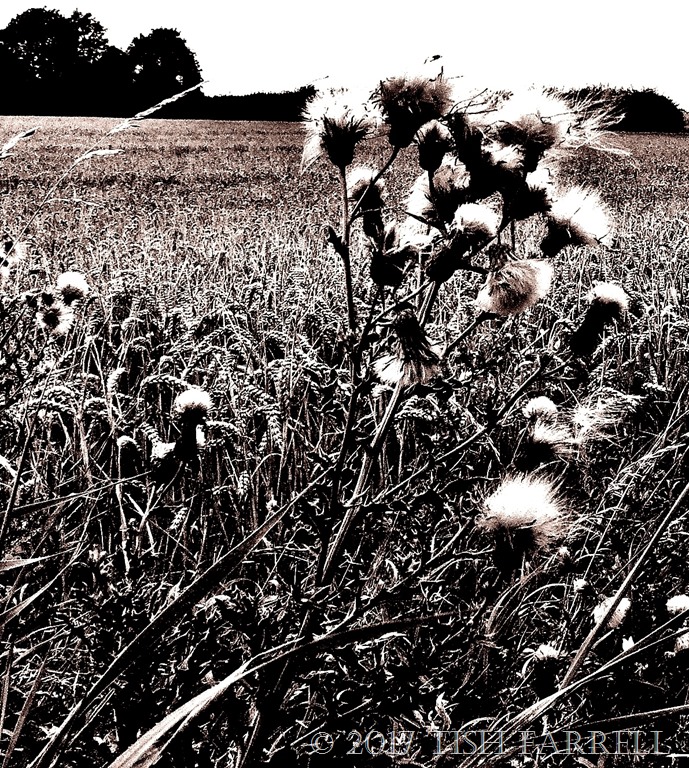
Much like this thistle down in the field behind the allotment gardens,  I’m feeling wind-blown; swept off course somehow; as if I’ve woken from a Rip Van Winkle deep-sleep and found myself in another time. I’m not the only one either. Others I’ve spoken to feel equally unsettled and disorientated.

One moment, around mid-June we were having sun-shiny suppers out in the garden, the evenings still warm after sunset; summer stretching  ahead and full of promise.

Next it was all change – to cool, wet and windy. It seems as if autumn  has been here for weeks. The fields above the town are harvested and already ploughed. The still-standing wheat has a grey look as if it has been  left in the field too long (or had too much Roundup). The apple trees are shedding apples, leaves are turning colour,  and the Linden Walk has browning drifts of fallen lime tree seeds.

The question is: has autumn come to stay, or will there be another shot of summer just when we least expect it. In November maybe?


This slideshow requires JavaScript.

The Changing Seasons Please visit Max for his take on Norway’s changing season, and also to catch up with the challenge rules.