Vision Of Things To Come ~ Thursday’s Special

100_4930

The endless envisioning of how plants will grow and crop is what keeps us gardeners gardening. In the face of failure we regroup, and start again – perhaps a different variety is required, or more careful cultivation techniques; maybe weather conditions were against us, so prompting us to think how we might come up with new strategies to reduce the worst effects if the same thing happens next year.

So it becomes an on-going pursuit of forward thinking, learning, re-learning and visualizing. I find it also helps to try and see things from the plant’s point of view. If I were it, am I getting everything I need: food, appropriate levels of moisture, protection from extremes (which among others can include ravages by aphids, pigeons, drought and tempest). With climate change we may have to rethink entirely the kinds of fruit and vegetables we grow.

This year I am probably growing too many sweet corn plants. I thought the first lot of seedlings were set to fail after being assaulted by several days’ torrential rain while I was away. Just in case, I sowed more seed. But then the shredded little efforts rallied, and the second sowing burgeoned, so now I have about three dozen plants on the go.  They are greedy crops too, and also need lots of watering, which is hard work up at the allotment where cans have to be filled and hauled from the water tank. The site is also very exposed, and its heavy soil prone to turning to concrete at the slightest hint of a drought.

To cope with this I have adopted two different approaches. The later batch of plants has been planted out in a bed of deep litter from a dismantled compost heap. Hopefully this will both shelter and feed the plants as they get going and stop them drying out or needing quite so much watering.

The earlier batch I set out in a plot where I have overwintered trefoil and fenugreek still growing. I sowed these plants at the end of last summer as a green manure, and had meant to dig them in this spring. Then I had a much better idea, one that relieved me of much digging. When it came to plant out the sweet corn, I simply popped the seedlings in amongst the green manure plants.

There are all sorts of advantages to this. The fenugreek and trefoil are nitrogen fixing so should nurture the sweet corn. They also act as weed suppressants as well as providing shade and shelter to the developing plants.

So far this seems to be working quite well. I’m also trimming back the trefoil and fenugreek as the corn grows, so acquiring a crop of green stuff for the compost heap and to use as mulch around the beans, which also like to keep their roots cool and moist.

IMG_5104

So now my vision is of summer’s end and lots of juicy golden cobs – perhaps enough for us and all my allotment neighbours. We’ll see…
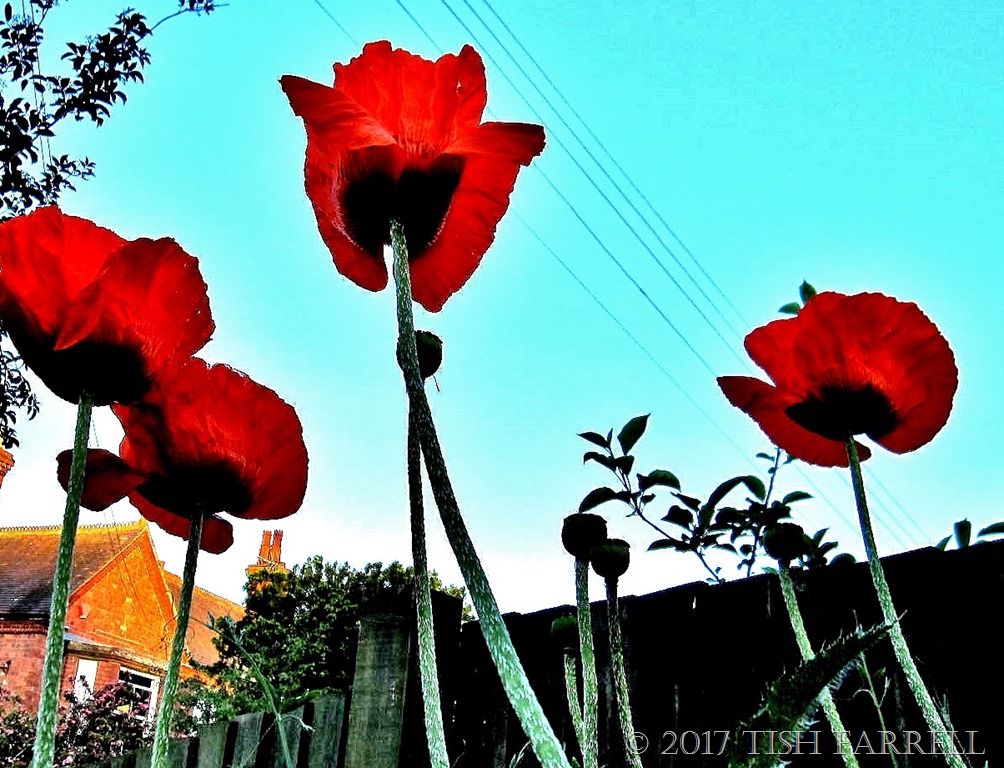
 

Thursday’s Special: vision

Did The Earth Move For Me? Not Blooming Likely. More A Case Of DIY

All right I confess. I’m a fraud. I call myself a writer, but in reality I move soil.  Year in and year out I move soil. It has become my lot in life – not only on the home front with The Man In My House  Who Keeps Having Ground Moving Notions, but also on my own time up at the allotment. How did this happen? Was this the plan I had for myself?

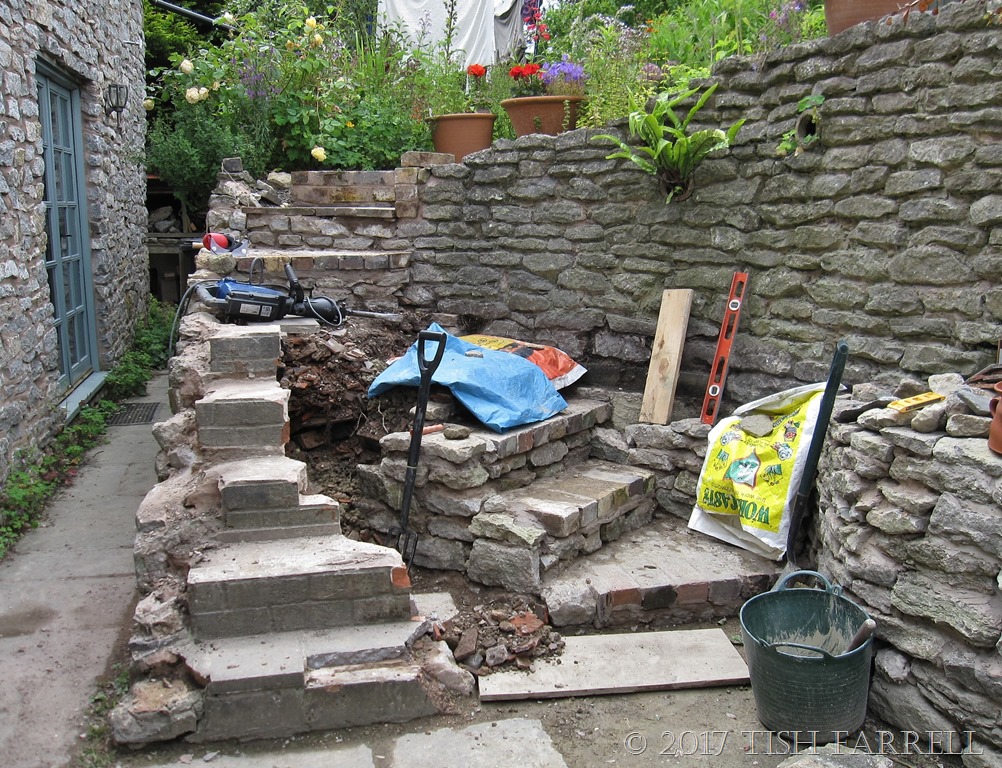
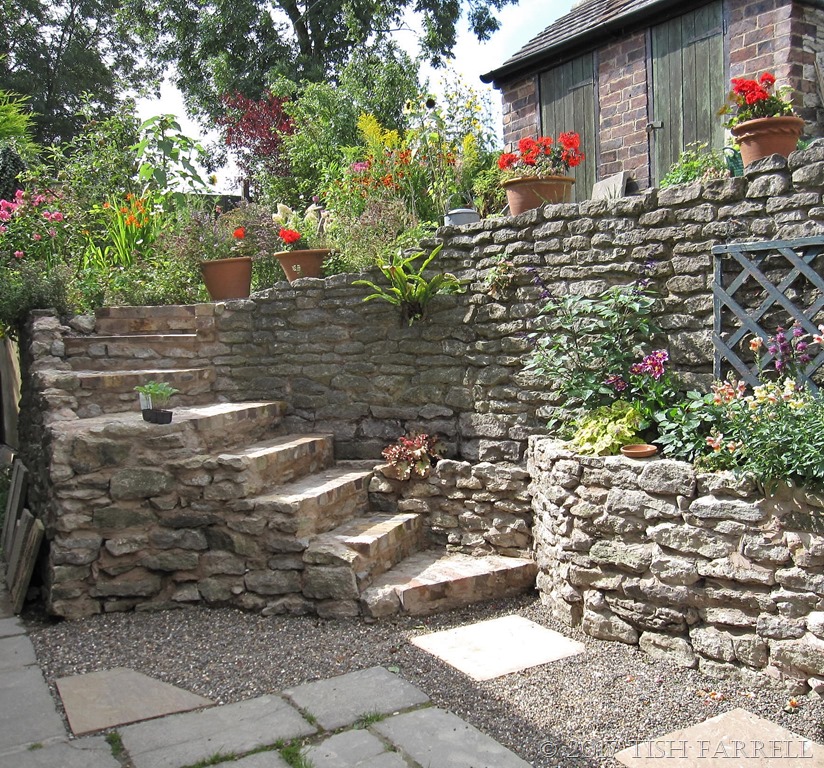
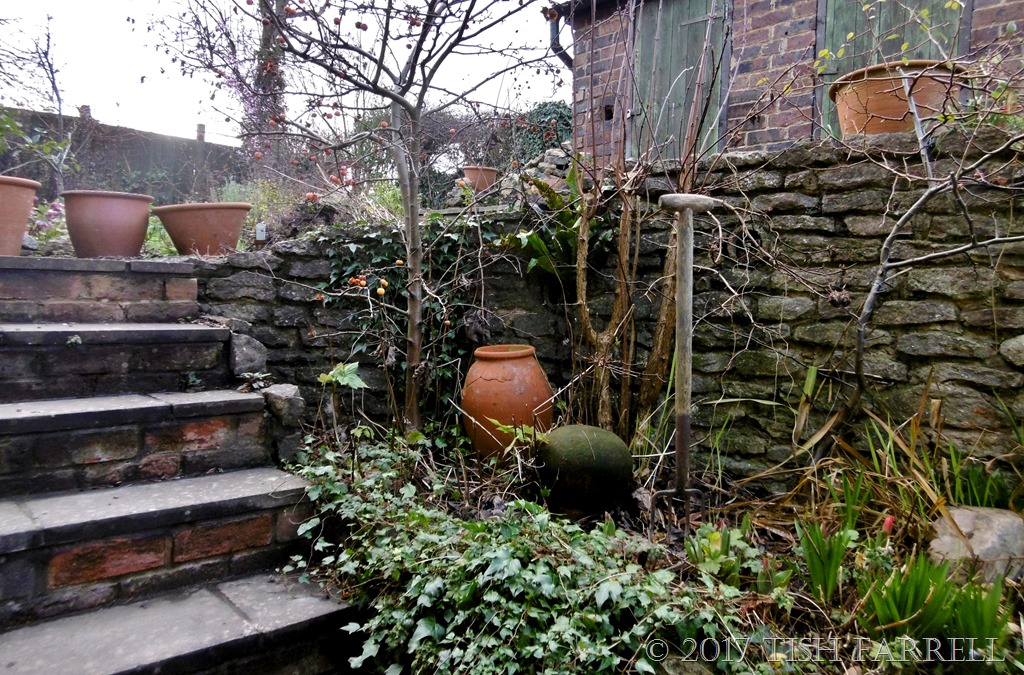
This time last year we were busy shifting ten tons of gunky green Silurian clay and the junk of builders past, removing a huge and hideous waist-high flower bed outside our back door. We had lived with it for ten years, but finally it had to go. Ground Moving Man, then became Wall and Steps Building Man – using traditional mortar and the old bricks and limestone lying around to place to build a much neater, narrower raised border, and safer steps to the top of the garden. (Our cottage is built into a  bank).  The effort was as momentous, as it was cunning. The Wall and Step Builder had devised a way of dismantling the old steps in tandem with building the new ones so that we always had access to the upper quarters of our small domain, and thence my path to the allotment. Hats off to you, sir!

Here are views of the work as it proceeded.

A wintery before:

P1030179

*

During the synchronised step demolition and rebuilding (pretty good work for a retired plant pathologist):

IMG_2181

*

After – a bit heavy on the limestone perhaps, but we had it on site, which is always a bonus when you live on a road where deliveries can be tricky:

IMG_2820

Most of the clay spoil and erstwhile builders’ rubble that had been hidden behind the steps and in the bed was barrowed round the front of the house and tipped into a Hippo Bag. This natty item is sent through the post in return for some loot. You fill it with 1.5 tonnes of stuff, and then a truck comes and cranes it away. Ideal for people who live on a busy main road, and have no room for a big skip. We had several of these handy mega bags.

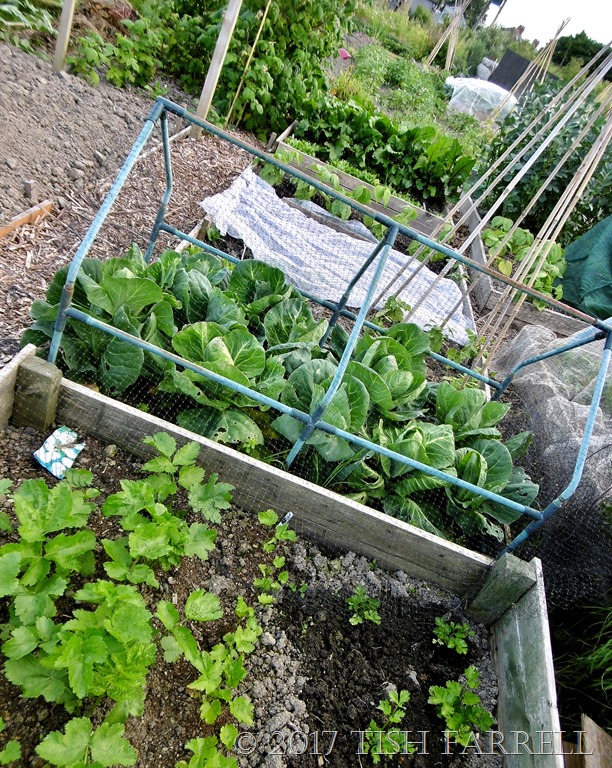
Meanwhile up at the allotment I was dismantling a forty-year old allotmenteers’ spoil heap the size of Everest, and using the substance, which only vaguely resembled compost, to make new raised beds and terraces on my polytunnel plot.  I shifted probably sixty barrow loads, and all with the aim of creating (ultimately) a NO DIG gardening system. I know this may sound mad.

The year before I had started clearing the plot by slicing off the neglected, weed-choked surface and piling the turves into pallet bins in the hopes that one day they would decompose into something usable. This was in no way compatible with the principles of NO DIG, but was my quick and dirty method of checking the buttercup, couch grass, and dandelion infestation. After learning the error of my ways early last spring, I gave it up for covering the remaining uncleared ground in layers of cardboard, and tipping a good six inches of spoil heap soil on the top. He Who Builds Walls and Steps then knocked up a few raised beds. (Those of you who come here often will know all this.)

P1080237

This year I find that ants have been busy in the horrid heap of weedy turves, and the ensuing soil is usable, so am now repatriating it to the areas whence I cleared it two years earlier. So good on the ants, but more earth moving required.

Meanwhile, the notions of NO DIG, also require the seasonal application of deep layers of compost to the surface of all beds. The only problem with this is making enough compost. You need tons and tons. However, last autumn I made an effort and amassed material in bins and heaps all over my two plots – wherever there was space in fact. And now these need digging out, or at least turning.

NO DIG, it seems, does not mean the end of wielding forks and spades – not by a long chalk. So there we have it – ‘my days’ career’ as a young Kenyan farm wife once described to me her life of endlessly hauling things about.

And back on the home front  this year we have already dug up the front lawn and replanted the bank beside the road. And we have dug up the back lawn and moved more soil so He Who Builds can now branch out into shed construction, though we did at least have two strong young men come and lay the paved concrete slab from which said edifice will arise. I am told it will have a curved roof.

The arrival of the shed will next dictate the remodelling of the back garden flower beds. All of which makes  me feel as if my  life is founded on shifting ground; the strata beneath my feet in perpetual motion and always needing to be somewhere else, and in some other shape. Perhaps one day all the earth in my vicinity will be in the places where we actually want it – no more moving required. Then perhaps I can give up the fraudulent writer posture and finish off a book or two; return to mental heaving and lugging, re-shaping and visualising, create the content and structure exactly as I want it – and all this without heft of spade or putting on my wellies. Perhaps…

IMG_3656

copyright 2017 Tish Farrell

Can You Have Too Many Strawberries? [Six Word Saturday]

IMG_5092

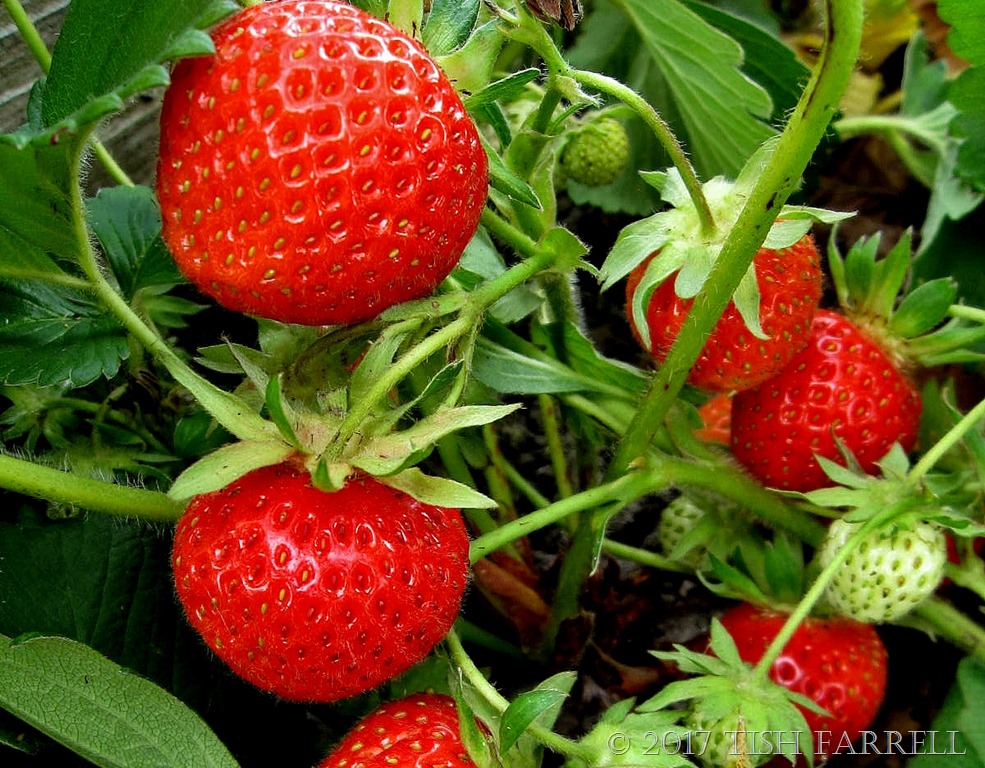
Up at the allotment the strawberries are cropping like crazy. Two weeks in (and despite having only a new, and quite small bed) we are a bit overwhelmed. We’ve already been sharing big bowls full with the neighbours. Fortunately said neighbours say they are more than happy to relieve us of the ‘problem’. But I can see that jam making might have to happen next, although today it’s far too hot to even contemplate standing over a pan of hot bubbling fruit. Maybe strawberry ice cream then. Now that’s more like it. I can stand over my  little ice cream maker, and chill while all is creamily churning. Aaah…


Six Word Saturday

#SixWordSaturday  #6WS

Early Morning Elephants In The Mara ~ All Very Much In Order

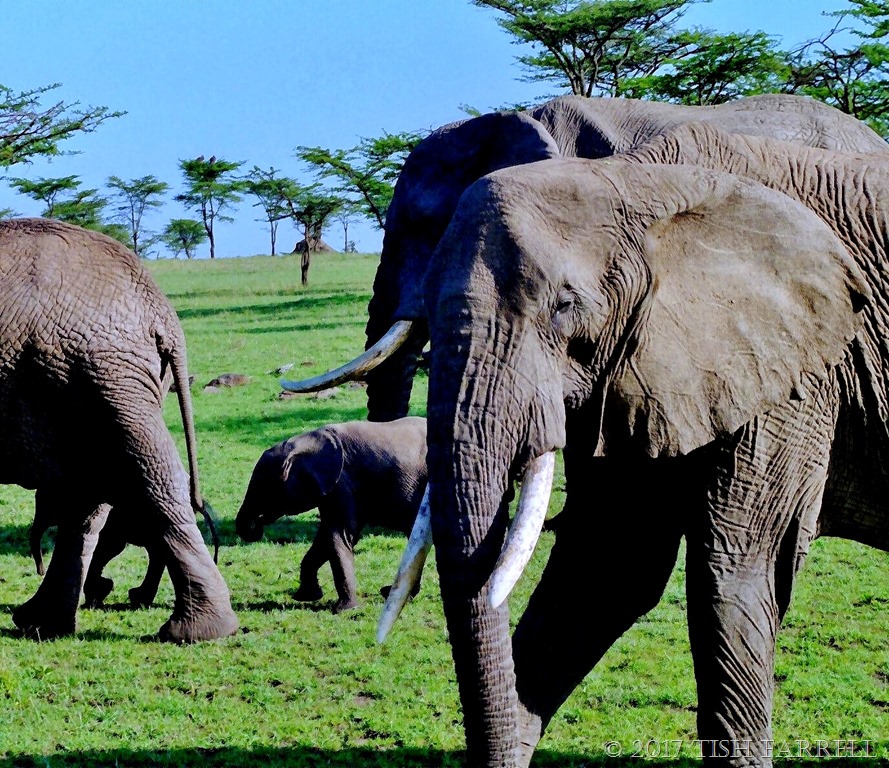
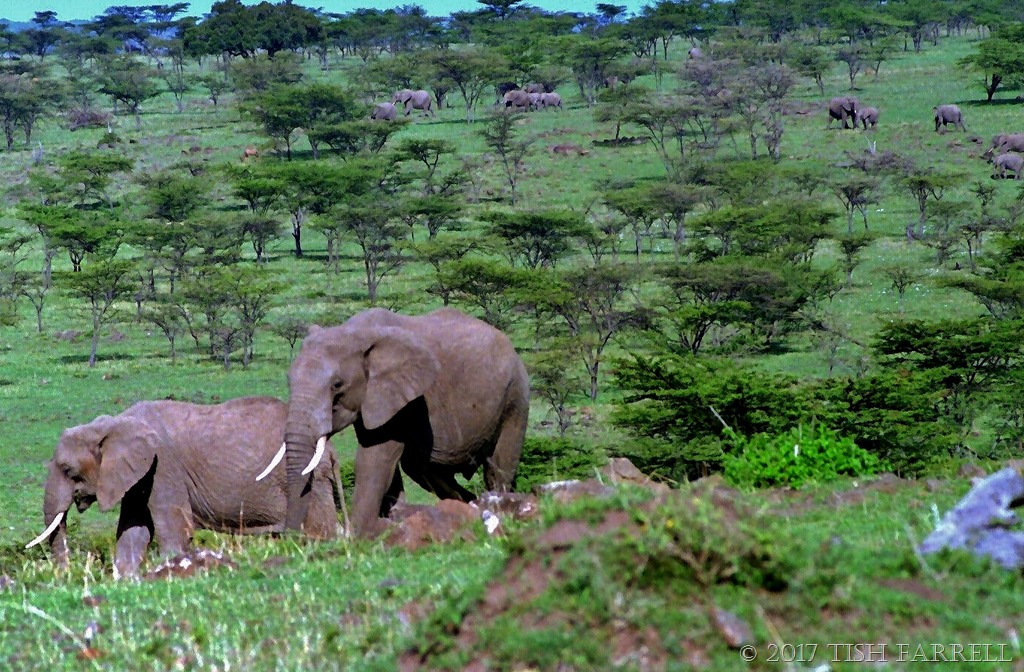
The thing is, they are noiseless as they move, their footfalls cushioned by pads of fat behind their toes. Of course there are the low frequency stomach rumbles that maintain lines of communication across the herd, but we weren’t close enough to hear those. Or maybe we were too intent on our own stomach rumbles. We had driven out of the Mara River Camp at first light, after only a 5.30 cup of tea. Breakfast was still a distant prospect when we found ourselves among this large, slow-moving herd.

They paid us no attention whatsoever. All we sensed was a wave of communal intention as they headed on through the thorn brush. In fact we were so beneath their notice, Daniel, our driver-guide, decided it would be fine to stop the truck and eat our picnic breakfast as the elephants moved on by.  I remember thinking how incongruous it was to be standing out on the Mara plains eating a hard boiled egg while these majestic creatures slowly passed me.

This is not to say that elephants cannot be dangerous; sometimes murderous if they bear a grudge for some harm done them; or if the bulls are in musth. But nothing was amiss this day. It was like one big family outing, the epitome of good elephantine order wherein mothers and children always come first.

Scan-131109-0004

Scan-131109-0026

copyright 2017 Tish Farrell

Daily Post: Order

Looking Out From Wenlock Edge ~ One Subject Two Formats

P1050952

P1050954

You can see why this part of Shropshire falls within an Area Of Outstanding Natural Beauty. These shots were taken on the viewpoint just past Hilltop on Wenlock Edge and I’m looking south-west towards the Shropshire Hills. You can see, too, why poet, A E Housman called them ‘blue remembered hills’. They seem like a memory even if you have never clapped eyes on them before.

And so when presented with the kind of blissful panoramic views that the Edge provides, it is tempting to try to capture all of it. And that usually does not work, not unless the light is perfect, and your photographic skills are considerably greater than mine. Even this landscape view is only a small segment of the 180 degree vista. I chose it because I liked the visual flow of man-made fields towards the grassy uplands, and the here-and-there accents of hedgerow and woodland; the many shades of green.  Also, despite the millennia of human intervention here, you can still discern the landscape’s natural rhythms beneath the pastoral surface.

It’s a soothing scene to look AT. But the portrait version, I feel, is doing something rather different. It invites you into the landscape as if stepping through a door; it is therefore more actively affecting. Just my thoughts anyway. Also a thank you to Paula for stirring us up to think about the different effects of landscape and portrait composition.


Thursday’s Special: Portrait vs Landscape

All Friends At Nairobi’s Elephant Orphanage

When it comes to the survival of orphaned elephant infants, loving friendship is the only thing that works. Baby elephants need continuous loving, tactile affection as much as they need food. Without it they quickly die.

Kenya’s Dame Daphne Sheldrick, pioneer in elephant orphan rescue and rehabilitation, learned this the hard way. For years she strove to create a rich formula to substitute for mother’s milk. But in her efforts to keep orphans physically alive, she also learned that the emotional ties between baby and surrogate mother were crucial to the baby’s survival.

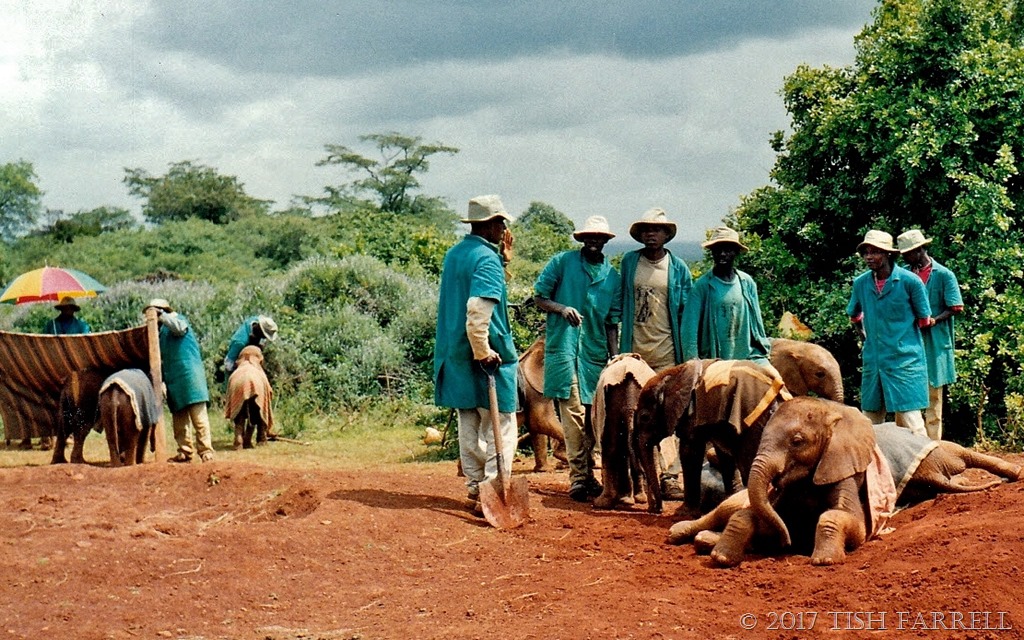
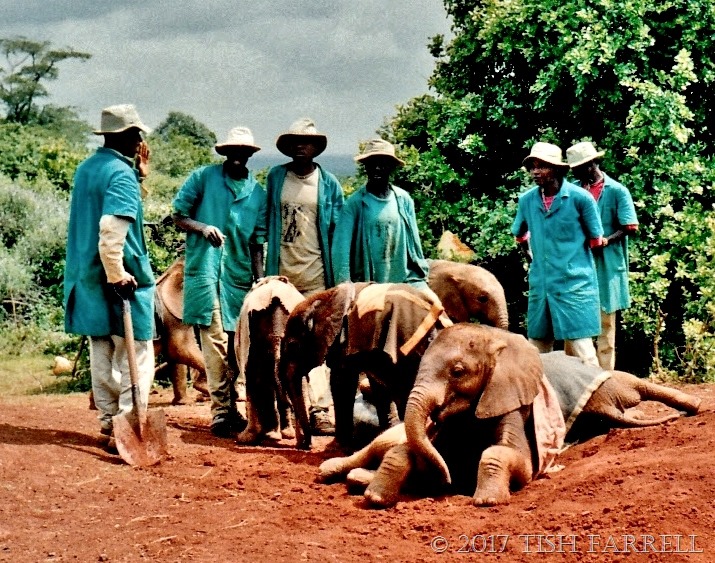
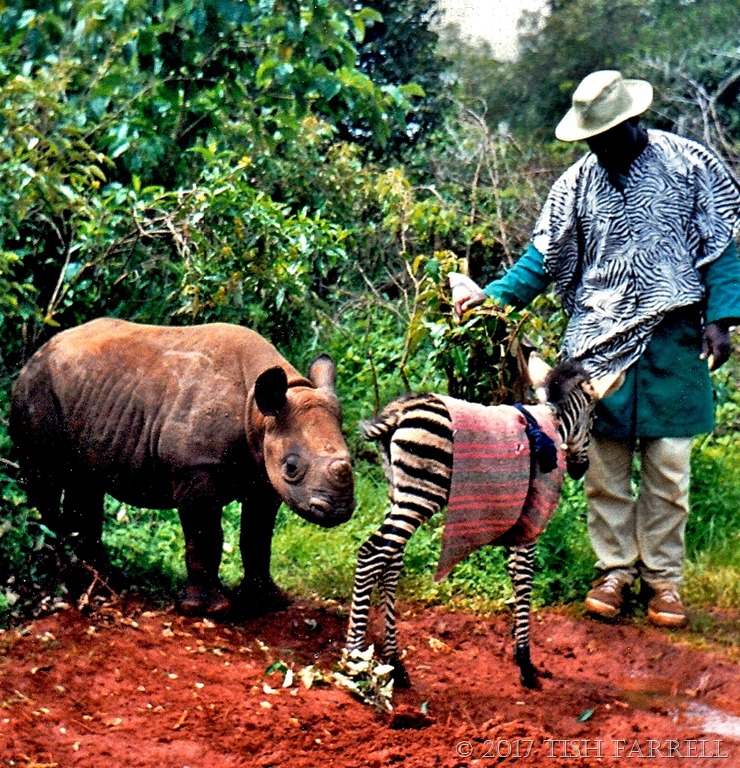
At her orphanage on the edge of Nairobi’s National Park she has developed an astonishing survival regime for all the young animals brought to her. Every orphan has its ‘mother’ i.e. one of the green-coated keepers seen in the photos. Every keeper is on full time duty with his charge, and this includes sleeping with the baby in its stall.

By day there is feeding, mud bathing and playing to be done. The blanket strung on a line in the top photo is there to simulate the overshadowing side of an elephant mother. The keeper feeds  his baby, holding the bottle down behind the blanket. The babies are also wearing blankets – at 5000 feet above sea level, Nairobi can be cool in July when this photo was taken, and in the wild small babies would anyway have the constant warmth and shelter of mother and aunts.

IMG_0029

The ultimate objective of the Sheldrick Wildlife Trust is to re-introduce the orphans to the wild. This is a painstaking and precarious procedure, recreating communities in the absence of wild matriarchs who are the custodians of herd memory.

Tsavo East National Park is one of the main locations for the rehabilitation process. This is the park where Daphne Sheldrick’s husband, David, was warden until 1976. During their time together at Tsavo, the Sheldricks pioneered the rehabilitation of many wild animals that had been reared in captivity. On David’s early death in 1977, Daphne set up the Trust in his memory. Forty years on some 150 elephants have been saved, along with rhinos and other species.

If you want to read about the elephants in detail there are keepers’ daily diaries HERE. You can find out what is going on in the nursery with the youngest orphans, or discover how the adolescents are faring at various forest locations as they learn to live again in the wild. A study of dedicated friendship in action then.

IMG_0033

If you are ever in Nairobi, then the orphanage is open to visitors for an hour each day. You can also donate to the Trust or foster an orphan. There are more details HERE.

Daily Post: Friend

Thursday’s Special ~ Pick-A-Word At Penmon Point

P1060605 (3)

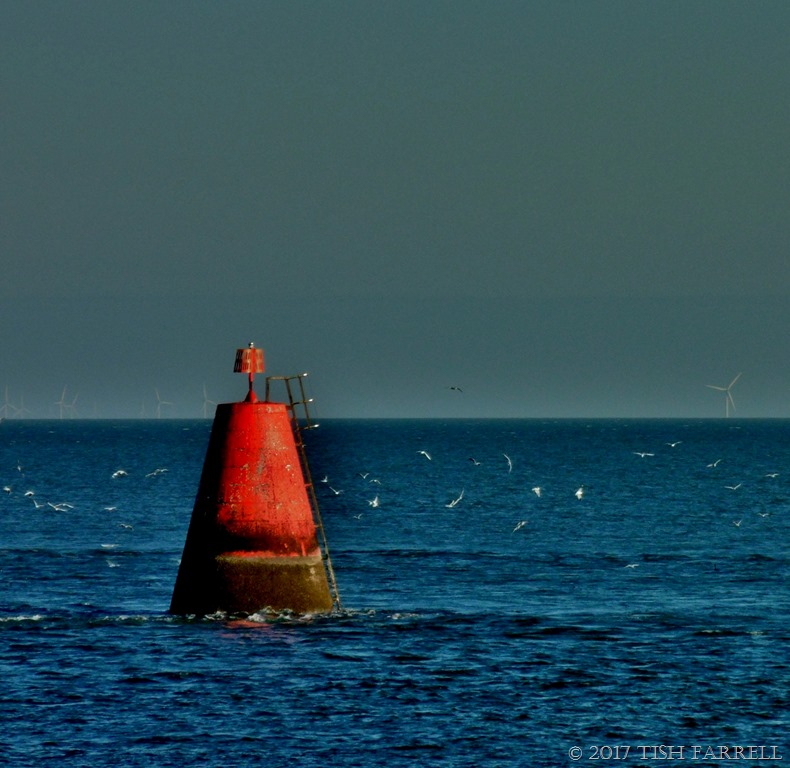
This buoy at Penmon Point, on the Menai Strait in Anglesey tells shipping to be vigilant – the channel between the main island and Puffin Island is too shallow for passage. The lighthouse says so too in a big notice on its topmost white stripe (out of shot):

P1060580

P1060566

This month Paula’s pick a word at Lost in Translation includes: branching, vigilant, pomp, hooked and continual. So I’m laying claim to them all – distantly branching wind turbines off the Great Orme, the need to be vigilant in these waters, the hooked profile of the bay, and the continual ebb and flow of the tide. And as for pomp, well I think the lighthouse has plenty of it.

But for a truly outstanding interpretation of these prompts, please visit Paula, and enjoy her Venetian gallery.

Oh No! The Poppies’ Frocks Are Blowing Off

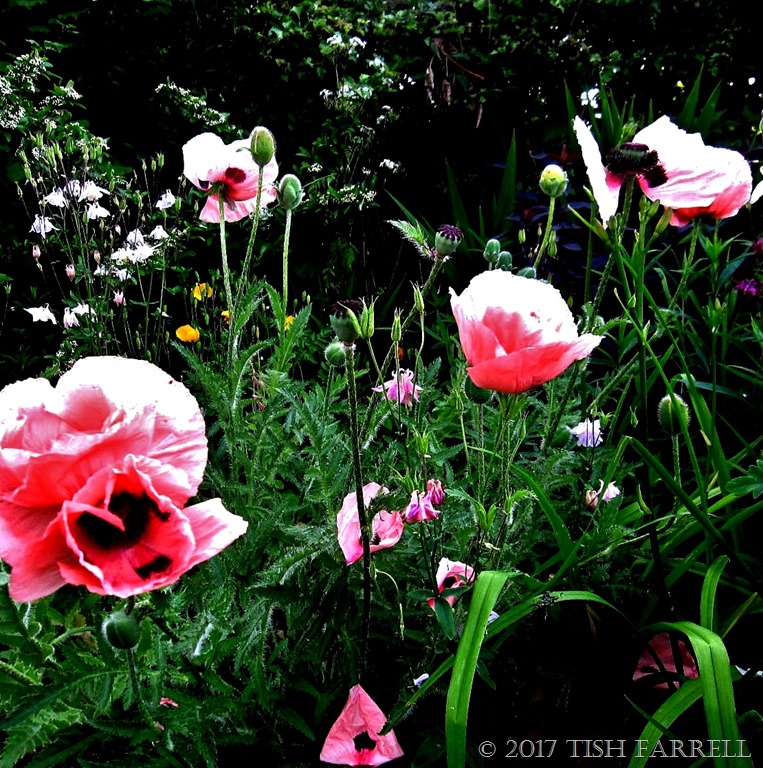
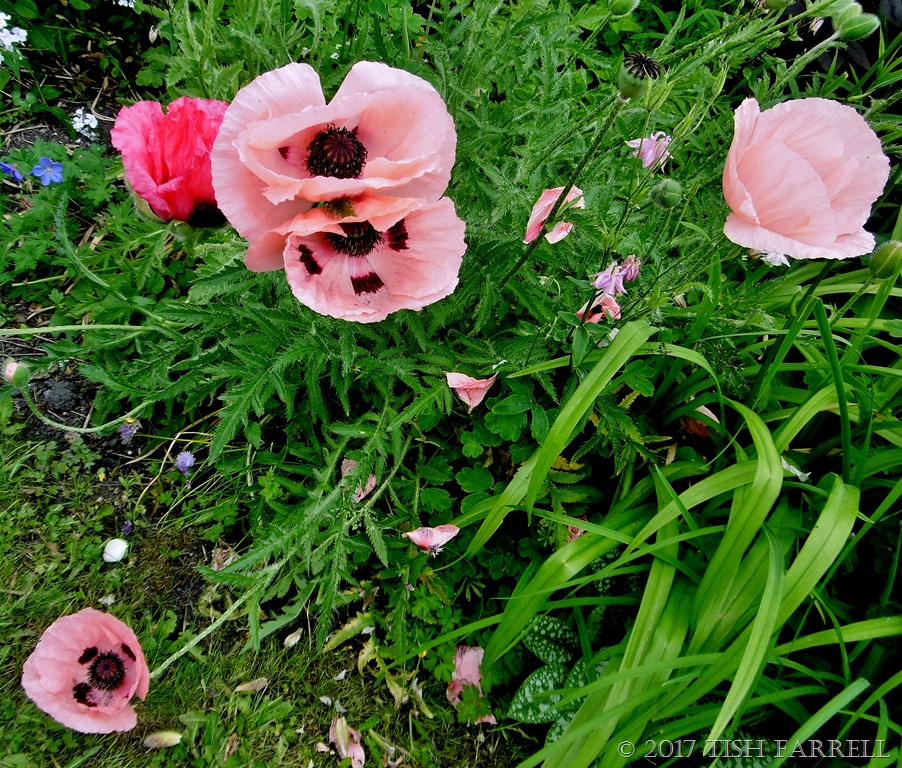
Last night as I was snapping the foxgloves outside the garden, a keen wind blew up. Inside the garden the oriental poppies were in complete disarray – a veritable strip-tease was going on. Of course it often happens – just when the poppies are looking their best, we have gale or deluge, and the garden party ends up a complete wash-out: everyone with draggled skirts, hair-dos shot and mascara smudged.

IMG_4946

IMG_4936

IMG_4943


But the good news is – when I got up this morning…


P1080167

P1080165

…there were new girls on the block, including one in lipstick pink. How could I have forgotten  that she would be coming along? Although how she got herself in with the salmon pink crowd I do not know.

While I’m here, I’ll pass on an oriental poppy gardening tip for those of you that grow them, and may not know: if, when the poppies have finally finished flowering, you cut the plants right down to the ground, you will be treated to a late summer flush.

Cee’s Flower Of The Day  Please visit Cee to see her lovely flower shots, and leave links to your own.