Long Mynd Wrought By 600 Million Years Of Earth Change

P1030457cr

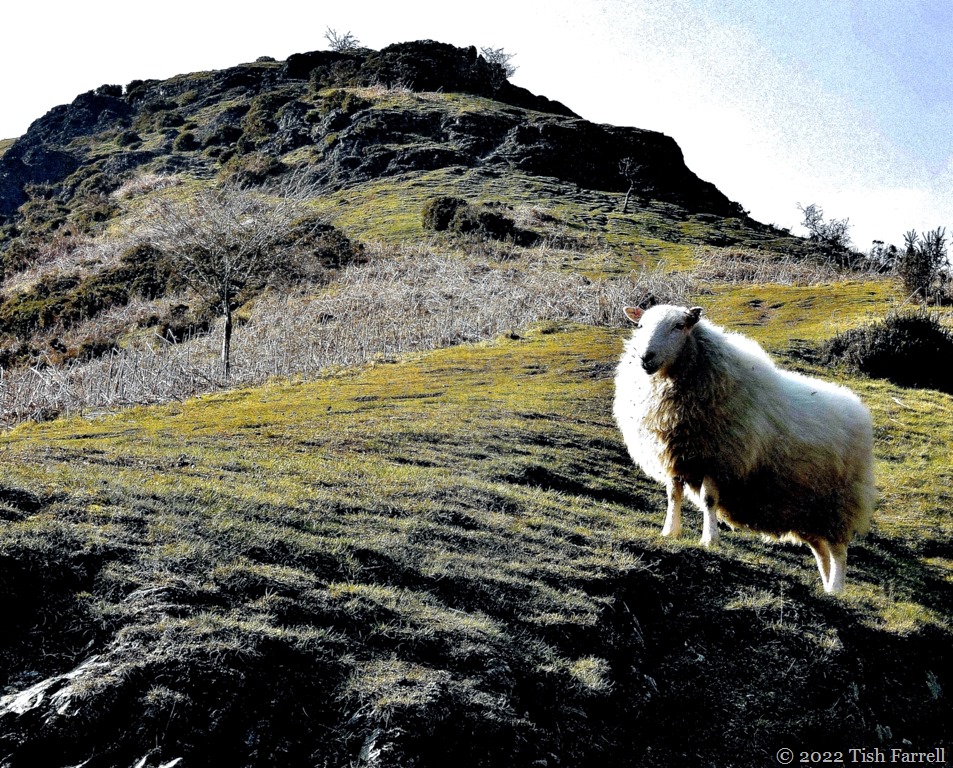
This sheep is posing on some of the world’s most ancient rocks, layers of mud-stones, sand-stones and shales laid down when this incipient Shropshire Hill was still lying in shallow seas somewhere in the Indian Ocean off East Africa. This was followed by much shunting and shifting across the planet, tectonic plates smashing and colliding.

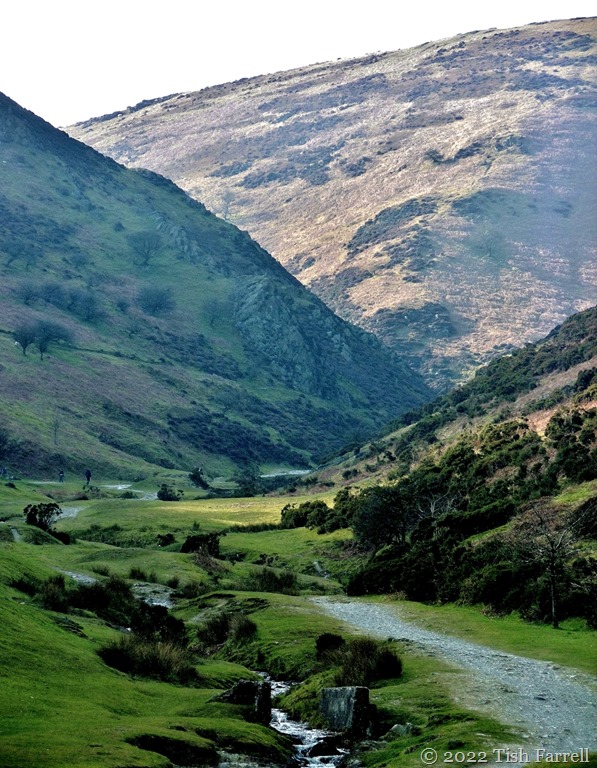
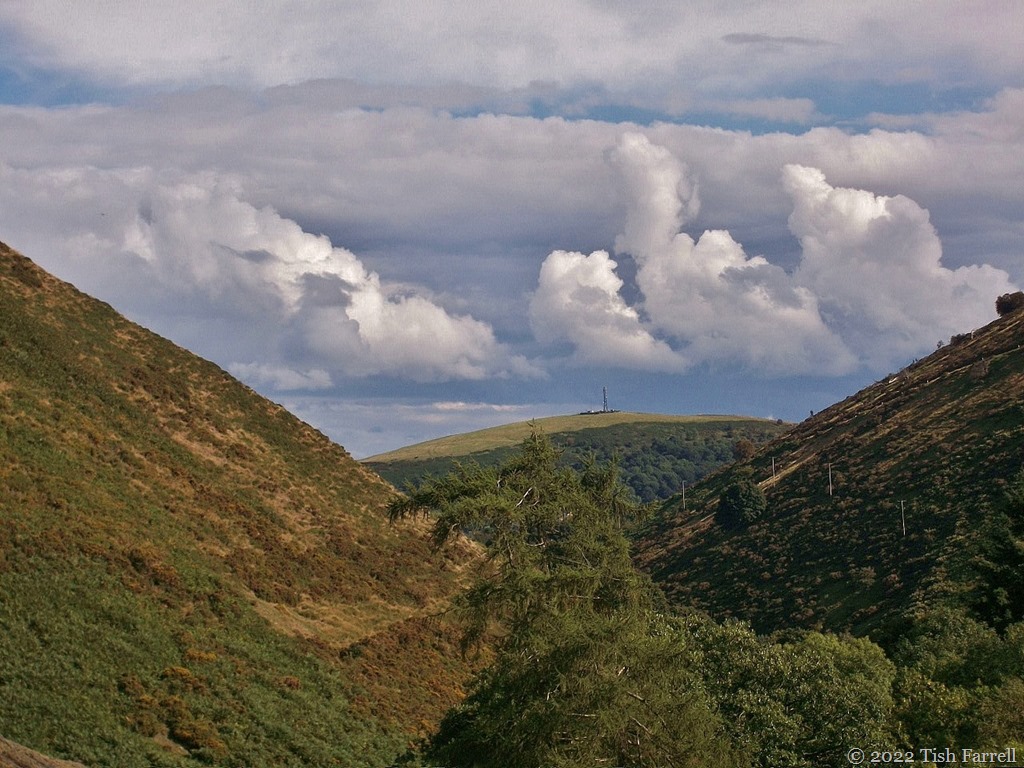
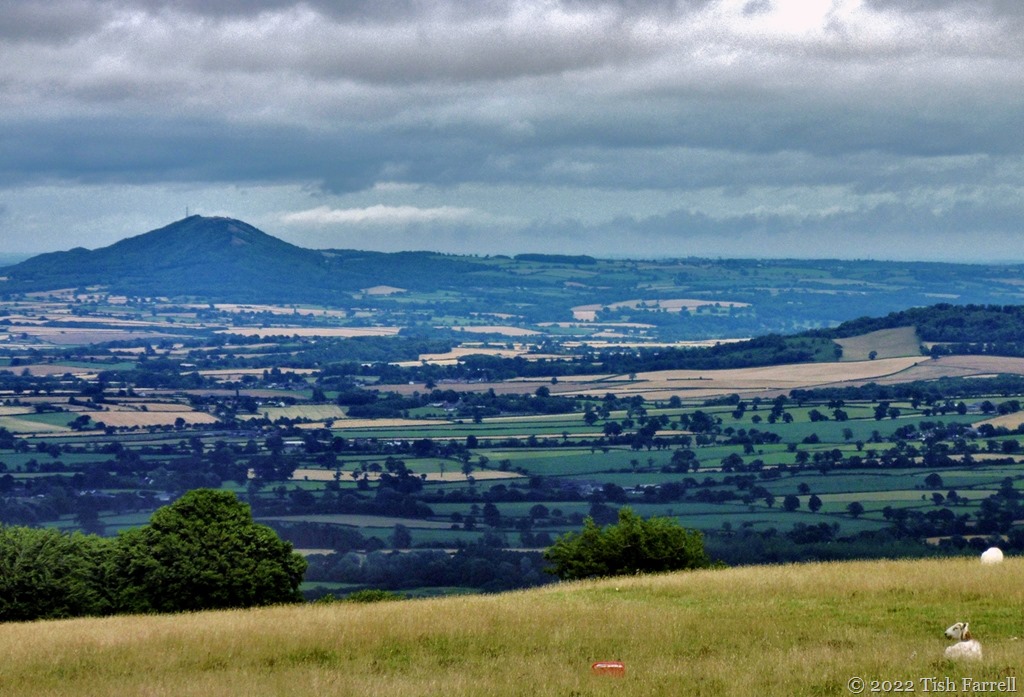
Our most local collision was along the Church Stretton Valley, just over Wenlock Edge, some twelve miles from where we live. To the east of it (some 600 million years ago) volcanic ash and lava formed our well loved hills of Wrekin, Lawley, Caer Caradoc and Ragleth. To the west lay the sedimentary formations of Long Mynd, which around 550 million years ago were folded and thrust upwards along the Church Stretton Fault.

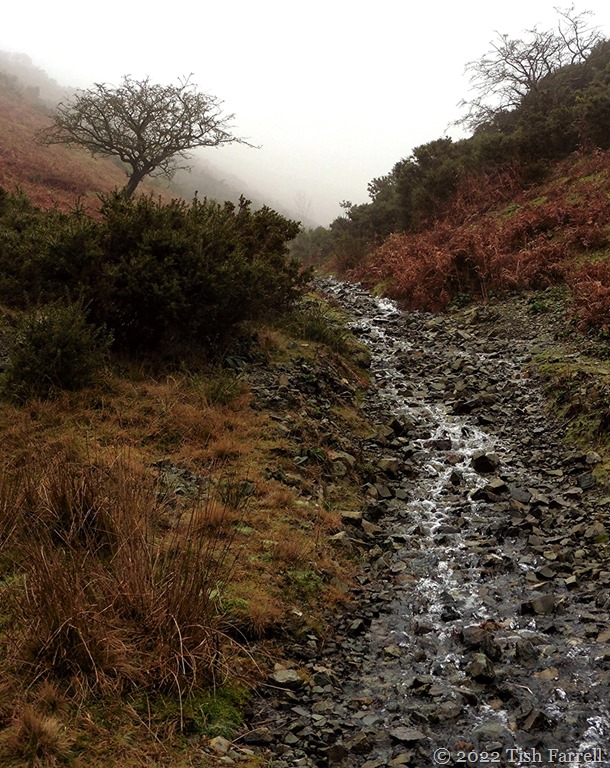
Then in recent times (2.4 million to 20,000 years ago) glaciers slipped and slid along the  Mynd’s flanks, although the summit was clear of ice. And then during successive interglacial (warming) periods (300,00-15,000 years ago) melting ice fed stream torrents that cut deep valleys and batches…
P1030461resized

P1030466resixws

P1100539res

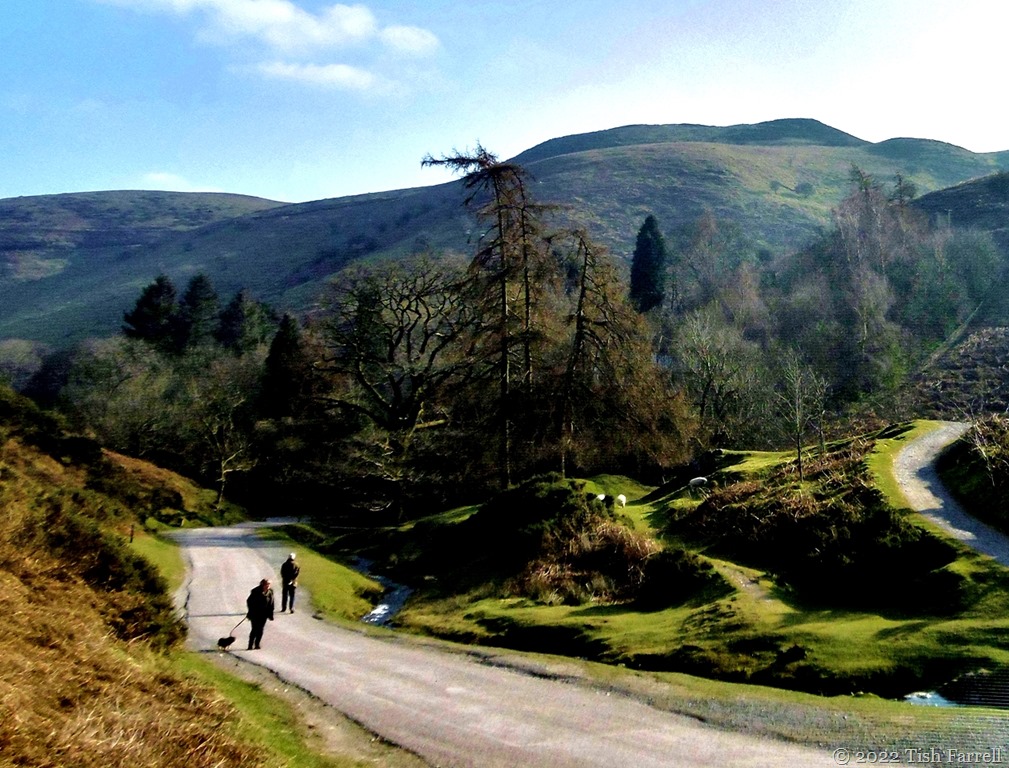
Ashes Hollow, one of the Mynd’s stream-cut batches

*

And so it might be timely to ponder on the momentous natural forces that brought about the formation of this single Shropshire hill – begun in tropical seas half a world away, then wrought by collision, compression, ice and melt-water. And all achieved without the meddling of humanity and on a planet that is endlessly reshaping itself.

100_4415

View from the Long Mynd’s Carding Mill Valley towards Ragleth Hill

*

P1080522resized

Looking east from the Long Mynd towards the Wrekin

*

Lens-Artists: Earth Story    Please visit Amy to see her very stunning Earth Story photos.

Spring Curves

IMG_0150cr1

Alder catkins catch the sun in the Linden Field

*

Spring came to Wenlock this week, both time-wise and weather-wise. We’ve had lunch in the garden three days running. Astonishing for March! Full-on sun and a general bursting of buds and blooms in every quarter. Even the moss on the garden steps has switched to hyper-green mode.

Over the road in the Linden Field there are prairies of wild garlic leaves just begging to be plucked for sauces and soups. In fact such  is the vegetative imperative of this particular plant, it’s to be found sprouting from the lime tree hollows on the Linden Walk. At the top of the field, under the oaks, the daffodils are at peak perfection. Also growing there are wood anemones, dog’s mercury, violets and primroses. Then beside the Cutlins path the horse chestnut trees are now a mass of sticky buds. And at home in the garden the white japonica is looking its serene best.

IMG_0174

IMG_0156IMG_0239cr

IMG_0257

IMG_0266

IMG_0271

This week Ann-Christine at Lens-Artists asks us to show her curves.

Lens-Artists: Curves

Don’t look now, but there’s a man in the tree…

IMG_0186cr

Monday morning. Sunshine after days of rain plus hints of spring.  A walk to the shops then. We set off down the Cutlins field path, pleased to find it dry underfoot, though we’re pleased too soon: at the path bottom by the kissing gate we find a huge puddle.  Ah well. Muddy shoes AGAIN. There are strange sounds too, out on the lane, shattering the peace of the Priory ruins. Chainsaws.

When we reach the Priory Hall (originally a National School that once served Much Wenlock’s poor children, but now is the town’s community centre), this is the sight that greets us. Goodness.

Then we recall the recent planning application. The line of  lime trees along the churchyard wall behind the Priory Hall has been scheduled to be taken in hand – three cut down and the remaining ones pruned. Better get a better look then. It’s not often that Much Wenlock provides so much excitement on a Monday morning:

IMG_0191cr

IMG_0189cr

IMG_0193cr

IMG_0197cr

IMG_0199cr

IMG_0207cr

Lens-Artists: Close and closer

ONE

P1060368cr

There may be signs of spring here in Shropshire, but the wind is still perishing cold. It’s reminding me of a wind-blown winter’s visit to Llanddwyn Island on Anglesey, where the sea-gale found every chink in one’s protective layers. Even so, it was a fine place to be: racing waves and whipped up grasses.

P1060369sq

P1060389cr

Cee’s Black & White Photo Challenge: one

Wind-Lines Past And Current

IMG_3317cr

These photos were taken during our blustery stay on Anglesey, North Wales, back in early January. The hawthorn tree in the farm hedge has been sculpted and stunted by the prevailing sea gales over decades. In its dormant state it is now so rigid a structure that the winter blasts have little apparent effect. By contrast, the grasses were bowing flat in the bed outside the converted chapel where we were staying. One knew how they felt.

IMG_3260sep

Cee’s Black & White Photo Challenge: Lines

Rocks, boulders, Stiperstones

P1080542cr

Shropshire’s mysterious Stiperstones featured in a recent Square Odds post. Here are more shots in monochrome, plus a few facts for geology lovers.

The grey-white rock of the ridge is quartzose sandstone known as the Stiperstones Quartzite Formation, created some 480 million years ago in the Ordovician era.

The tors and the rubble-like surroundings we see today are the work of more recent events in the last Ice Age (c. 115,000 – c. 11,700 years ago).  During this time, the eastern edge of the Welsh ice sheet was nudged up against the Stiperstones, not covering it,  but causing the quartzite to fracture during periods of intense freezing followed by thawing.

The highest point (Manstone Rocks) is 536 metres (1,759 ft) above sea level, making it the county’s second tallest hill after Brown Clee.  The ridge extends some 8 kilometres (5 miles), the summit crowned with a series of six distinctive outcrops.

For geology buffs there is a detailed overview of Shropshire’s 700 million year geological history by Peter Toghill HERE.

This next photo: men on Manstone Rock, the highest point on the Stiperstones…

P1080557cr

P1080558cr

P1050991cr

P1060001cr

Cee’s Black & White Photo Challenge: rocks, boulders, stones

Odd Moment With A Sheep And Old Tales Of Dodgy Deals

P1060951cr

I don’t know about you, but I feel quite uncomfortable being so closely scrutinized by a member of the ovine tribe. It happens now and then as I tramp the lanes and byways of Much Wenlock.

This one was in the field opposite Wenlock Priory ruins, which interestingly had much to do with sheep rearing in the early Middle Ages. In fact the sale of wool from its flocks was an important source of the Priory’s wealth. And so you may imagine the brotherly fury (even to the point of murderous intent) that was roused  when, in the late 1200s, the then Prior, John de Tycford, engaged in some dirty dabbling in the futures market and sold 7 years’ wool crop in advance and then kept the proceeds.

One monk, William de Broseley was so incensed, he left the Priory and gathered a gang in the woods, all set to ambush and kill the Prior. News of this plan did not go down well with the higher authorities, who instructed sheriffs to arrest ‘vagabond monks of the Cluniac order.’ William was duly captured and received his just deserts (not defined by chroniclers, but doubtless deeply unpleasant).

Meanwhile the Prior, who also went in for monastic asset stripping as well as having a history of fraternizing with money-lenders, had friends in a very high place: first King Henry III and then his successor-son, Edward Longshanks, aka Edward I. De Tycford, it seems, was good at political intrigue and had been royally employed on a  diplomatic mission to nearby troublesome Wales. It did not seem to matter that he had run the Priory into debt. When he left Much Wenlock in 1285 it was to take up an appointment  as Prior of Lewes in Sussex, not only another grand Cluniac house, but also a politically sensitive location. The army of Henry III had retreated into the Priory in 1264 during the barons uprising led by Simon de Monfort. This had caused serious division between the monks, many of whom were later punished or banished back to France.

And so it goes. It’s how the world runs. Power and money control ALL aspects of our lives, although we’re mostly too distracted to see how deep and wide this goes. Perhaps the sheep is trying to tell me something. Perhaps I ought to tell it: I am not a sheep.

The Square Odds #15

The Wenlock Poppy Bomb

P1050072cr

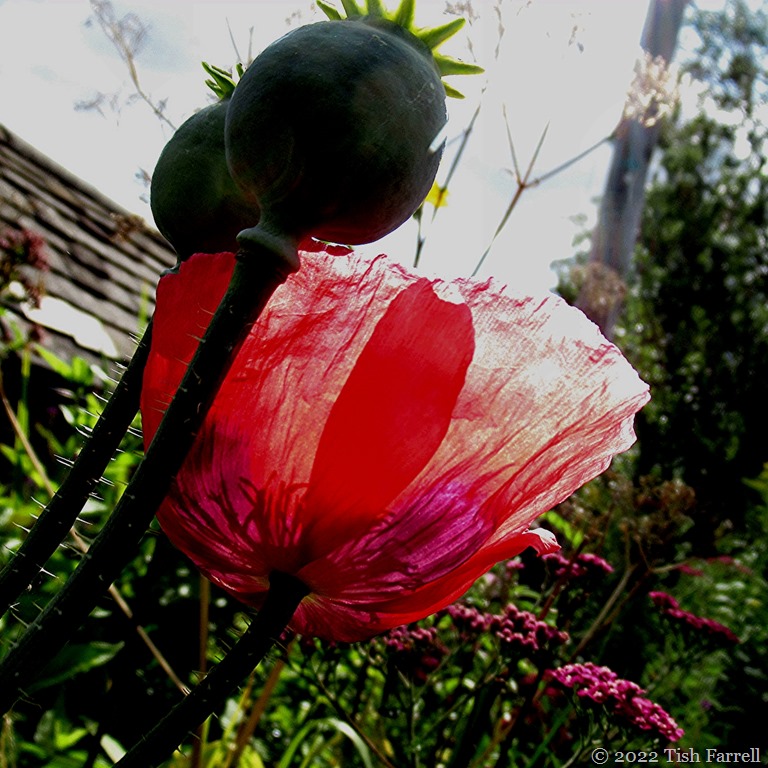
One mid-summer evening when I was leaving the allotment by the gate rather than by my usual route through the field hedge, I glimpsed, on the far edge of town, over rooftops, and between trees, an astonishing scarlet blaze where I’d never seen one before. Home was forgotten, and off I went to investigate: over the main road out of Wenlock and down a lane beside the old railway bridge, into a field with an abandoned barn by the gate, and there it was: an entire field of poppies.

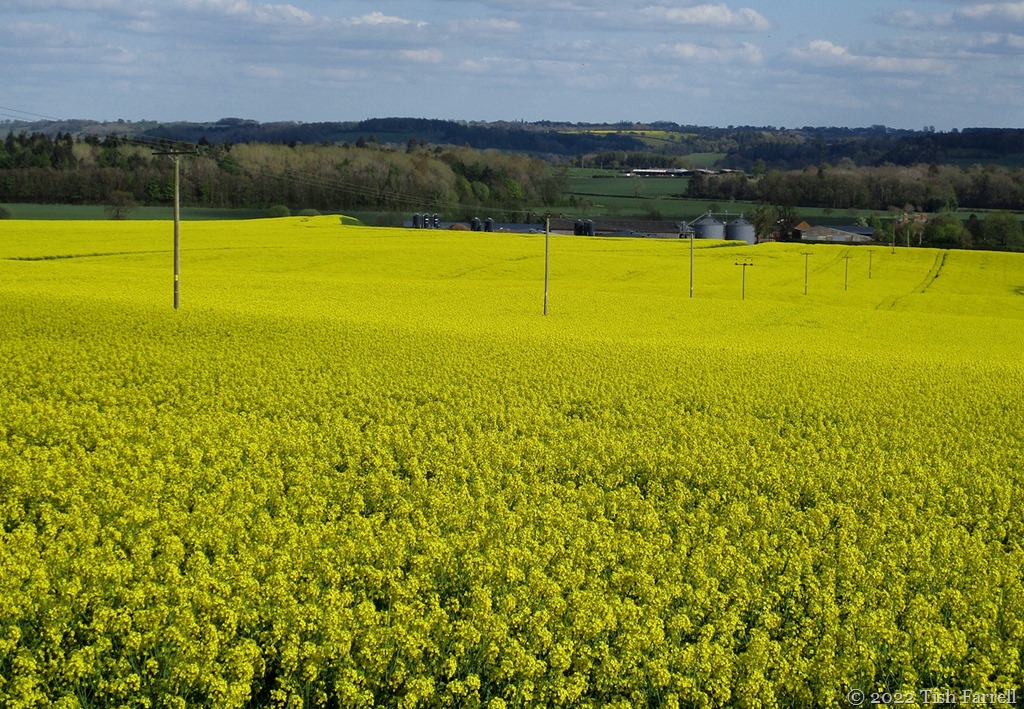
They looked to have exploded from an oil seed rape crop, but it was hard to tell. Had someone sabotaged the farm seed, or did the farmer do it on purpose? Whatever the cause, it’s not happened since. But it was one of those weirdly wonderful happenings wherein it was hard not to grow very over-excited and run amok. I took lots of happy snaps, then dashed home to spread the news to he had a much smarter camera. And then we went back and repeated the excitement, all fuses fired by poppy power.

P1050070cr

101_0340cr

101_0335cr

101_0335header

The Square Odds #14