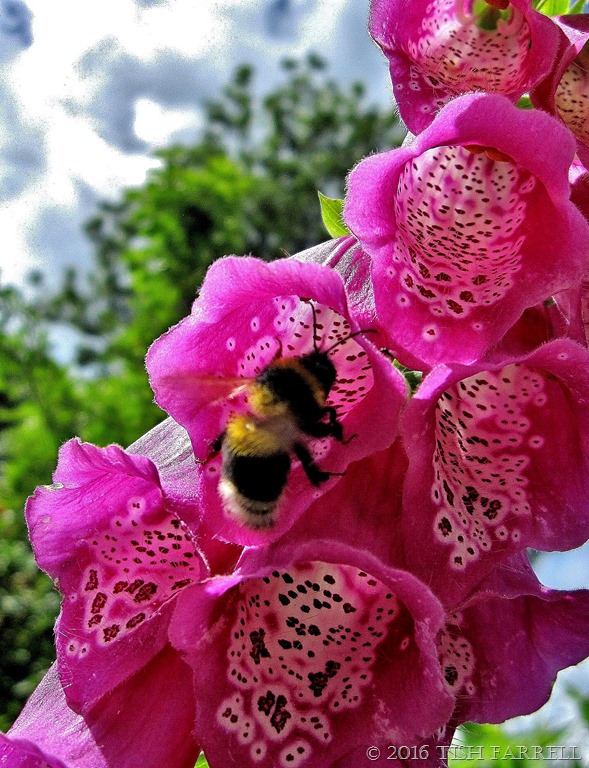
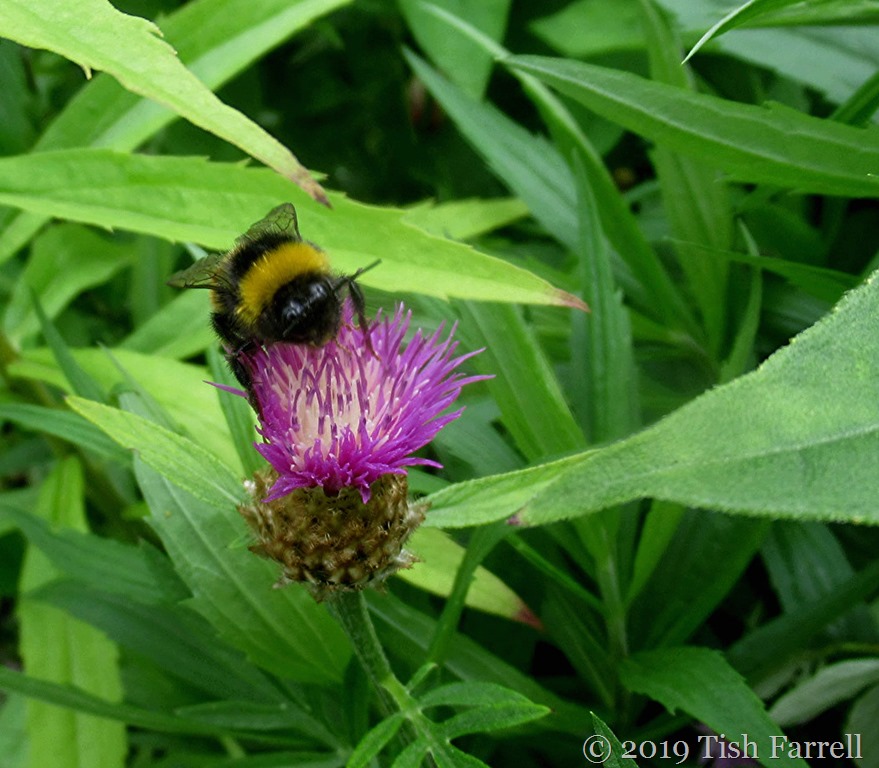
You have to admire the determined aim of this little bee – heading for the heart of the cornflower (Centaurea).


You have to admire the determined aim of this little bee – heading for the heart of the cornflower (Centaurea).


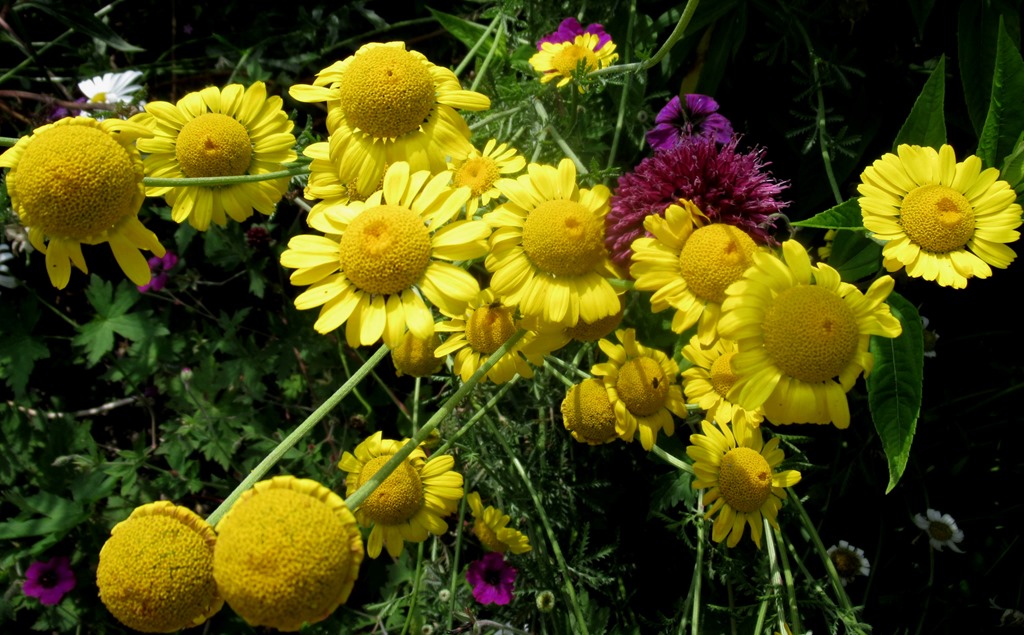
Without a doubt July’s stars in the-garden-over-the-fence are the Dyer’s Chamomile daisies, also known as Golden Marguerite (Anthemis tinctoria). They have flowered and flowered for weeks now, spilling out on to field path behind the house, tumbling into the garden through the fence. So much gold from a small packet of seeds bought from Jekka’s Herb Farm.
In fact some of you may remember that back in the winter I was worried about the plants’ survival. Some started flowering late last autumn and were still going in December. I was afraid that after such an untimely show, they would keel over and die. I needn’t have worried. I think they have magic powers, though they do have their foibles. For one thing, they are not early risers, and if you catch them too soon in the day, they will not be properly dressed. Each night as the sun goes down they fold back their petals, tight to the stem so they look like a crowd of golden lollipops. Now there’s a thought to ponder on. It makes me wonder if they do this to attract particular night-time pollinators.

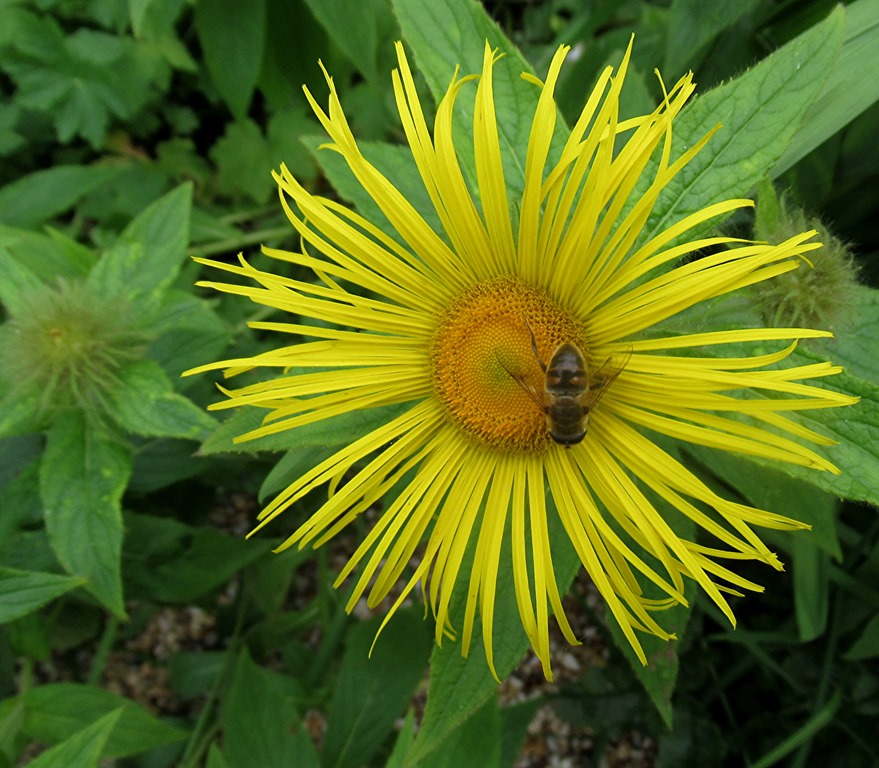
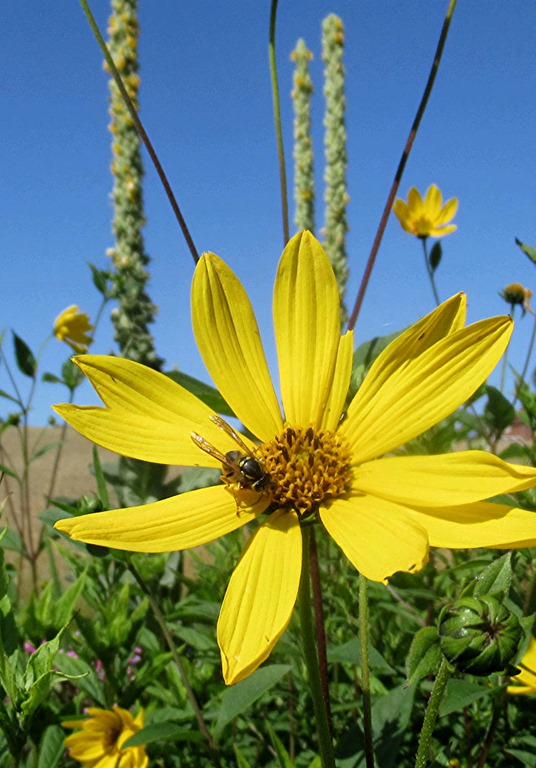
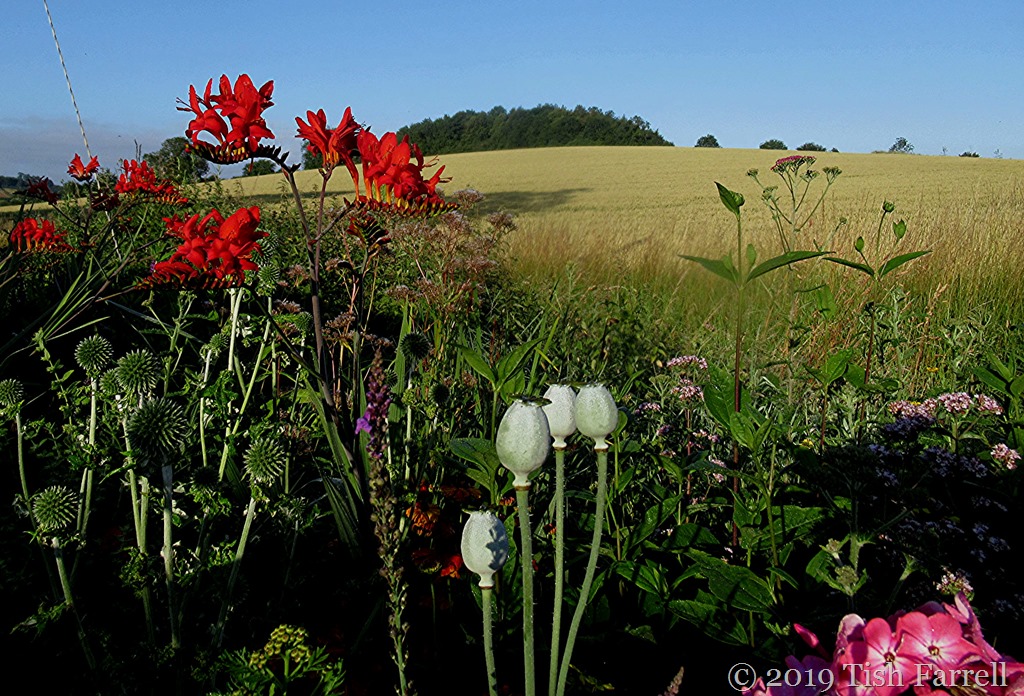
And talking of pollinators the garden has been humming with hoverflies, bumbles and honey bees. And now as the month draws to a close, hot on Marguerite’s sunshine heels come Helianthus, Doronicum, Golden Rod, while among them, dots of mauve and purple from Centaurea, Phlox and Drumstick Allium add a touch of flair. What a happy garden. Which of course makes us happy too. So I’m passing it on  even though today it is raining here in Shropshire.


The Changing Seasons ~ July 2019
Please pop over to Su’s to see her changing seasons in the southern hemisphere.


Three days ago the World Wildlife Fund and Buglife published their joint report on the state of British bees in the East of England. Their findings were based on the monitoring work of research institutions across a region whose great range of habitats make it potentially bee-rich territory. Some 228 species were included in the study.
And the conclusions:
• 25 species (11%) threatened
• 17 species (7%) regionally extinct
• 31 species (14%) of conservation concern
And the reasons? Climate change, habitat loss, pollution, disease and agricultural pesticides of the neonicotinoid variety (now banned by the EU). The report gives a county by county list of lost species, the ones most affected being solitary and rare species that occupy very specific wildlife niches: e.g. coastal dunes, heaths, woods, wetlands and brownfield sites such as old quarries and gravel pits. But it is not all bad news. At least that is to say there has been an increase in common food pollinating bee species – possibly a result of the more extensive growing of oil seed rape and efforts by farmers to create field margins to support bee populations.
For anyone interested in bees the report is packed with species specific information and excellent photos, and outlines many practical strategies for re-establishing lost diversity and habitat. In other words WE CAN DO SOMETHING.
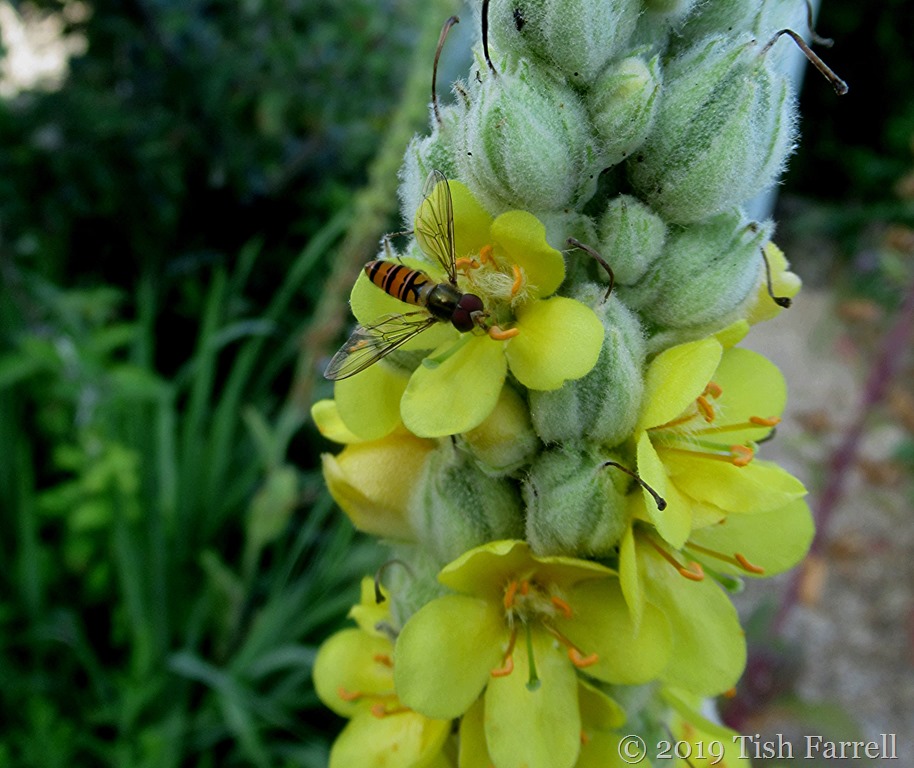
Talking of which, my bee photos were taken yesterday morning, the first of the year, and out in the guerrilla garden on the field margin, where I have planted (among other things) verbascum grown from seed a couple of years ago. It is such a stately plant and comes in many colours (common name mullein). Certainly this particular little bumblebee (red-tailed, male?) seemed very excited by the newly opening flowers.

Related: UN World Bee Day
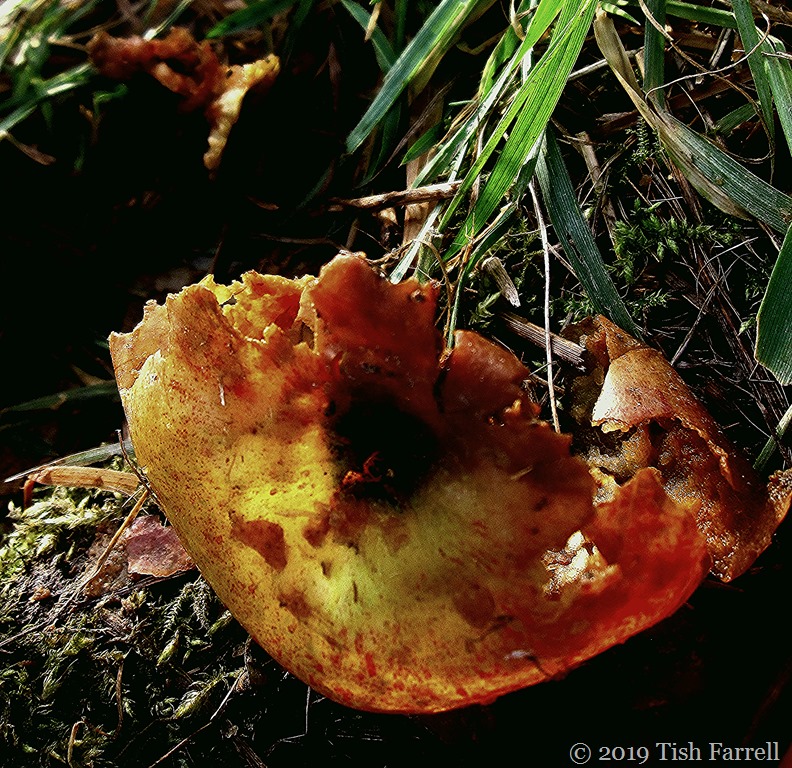
I usually do have a camera in my pocket when I go to the allotment, although gardening and snapping are not ideal co-activities given the photographer’s general grubbiness. Anyway, here are some of my favourite shots from the past few years: nature small but beautiful, and in no particular seasonal order. I especially love the header photo though – the winter sun caught in a windfall apple that has been hollowed out by blackbirds, so many natural forces at play here.
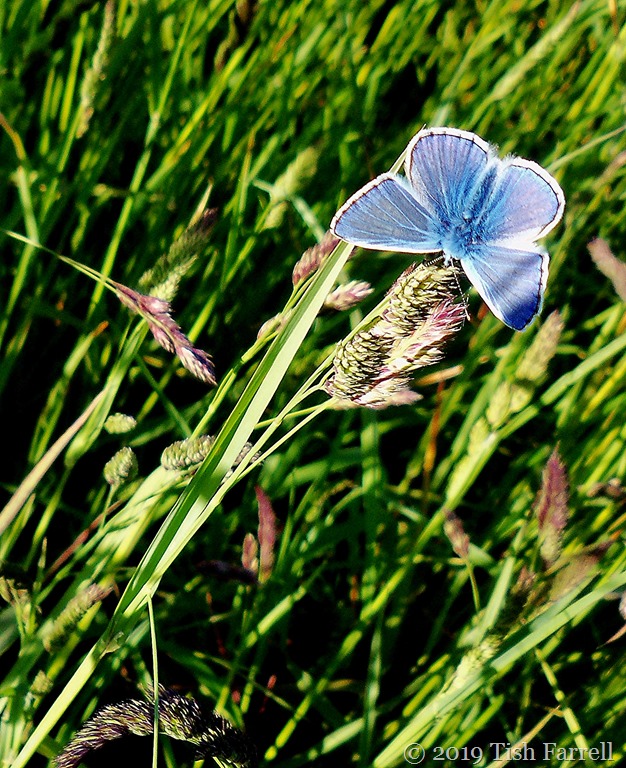
Also the fact that I caught a Common Blue butterfly, wings open and with a one-handed click and it turned out to be pretty much in focus, is hugely pleasing. These little butterflies flit about at high speed, and seem especially nervous if you point a camera at them.
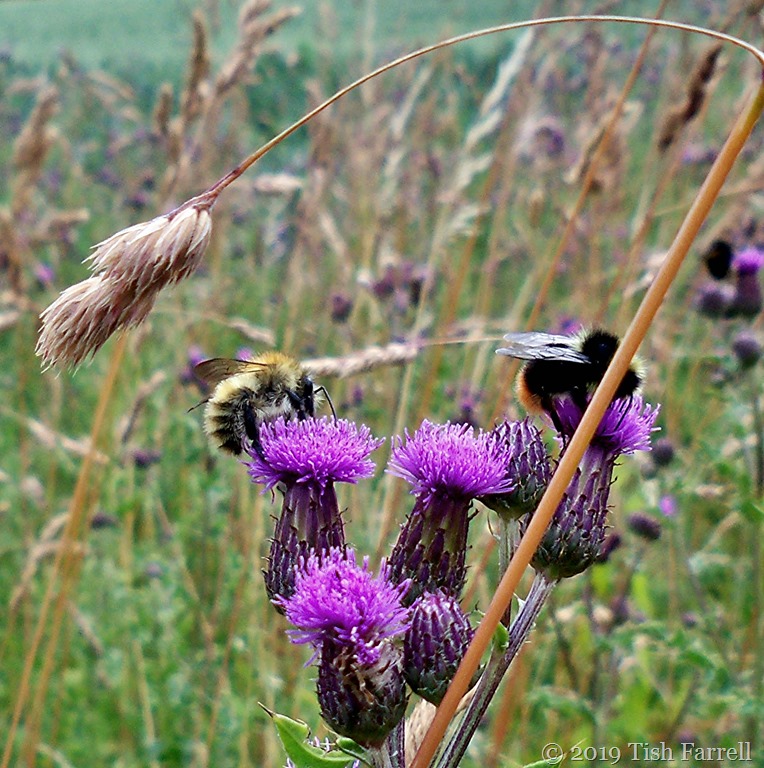
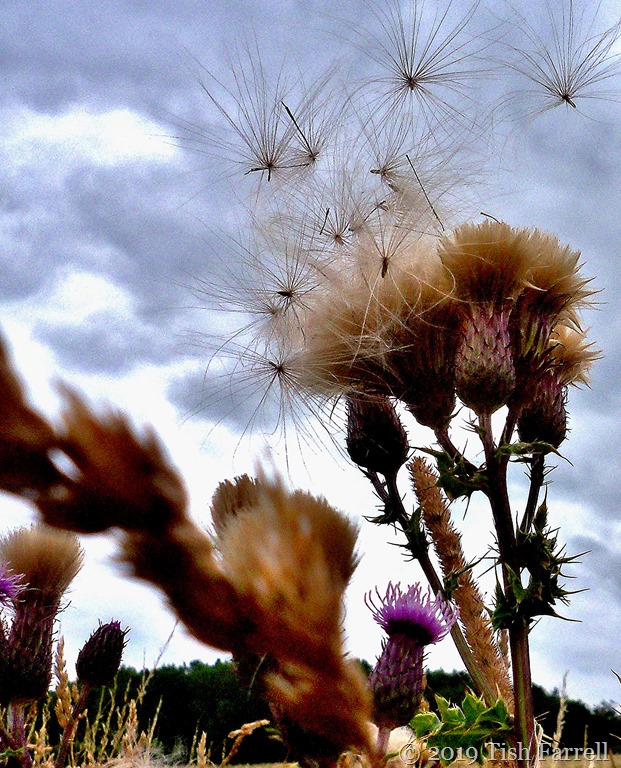
Most perversely too, while my gardener self fumes at finding dandelions, thistles and bindweed in the garden, since they are the most difficult weeds to oust, I still admire their beauty, and in all their phases. And the bees clearly love thistle flowers too.


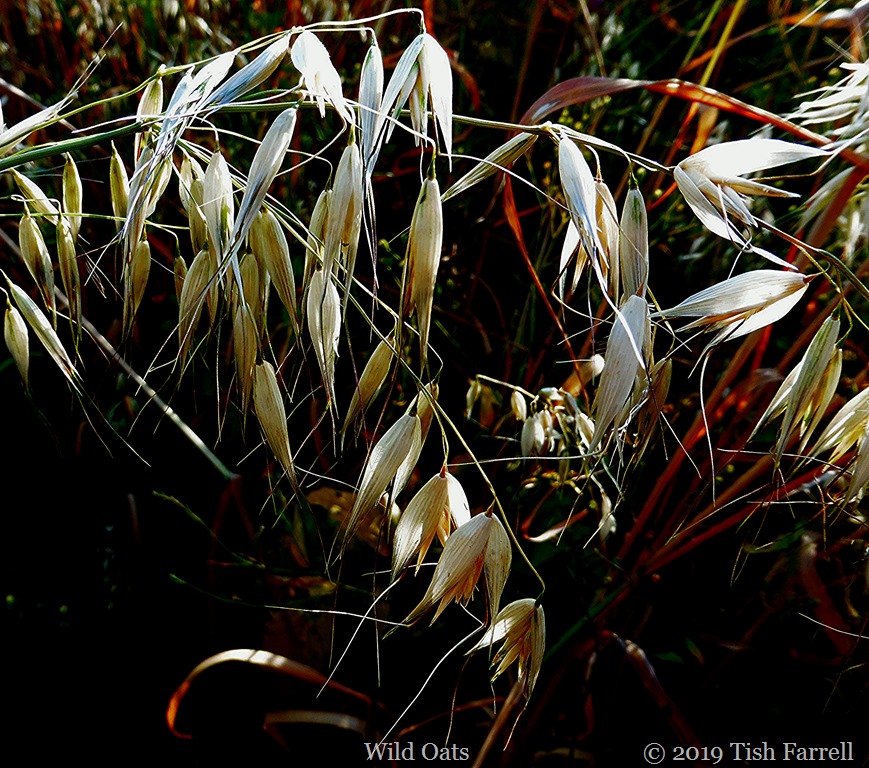
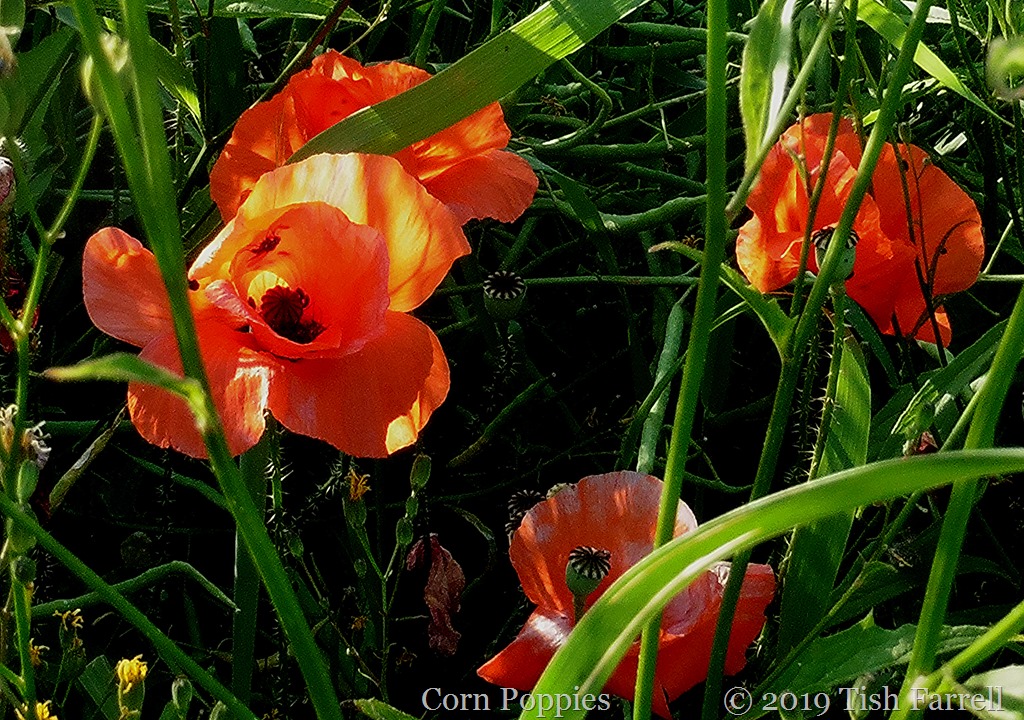


So much to see all around us. We only have to look.
This week Patti at Lens-Artists gives us nature as her theme. Please call in to see her and the other Lens-Artists’ work.
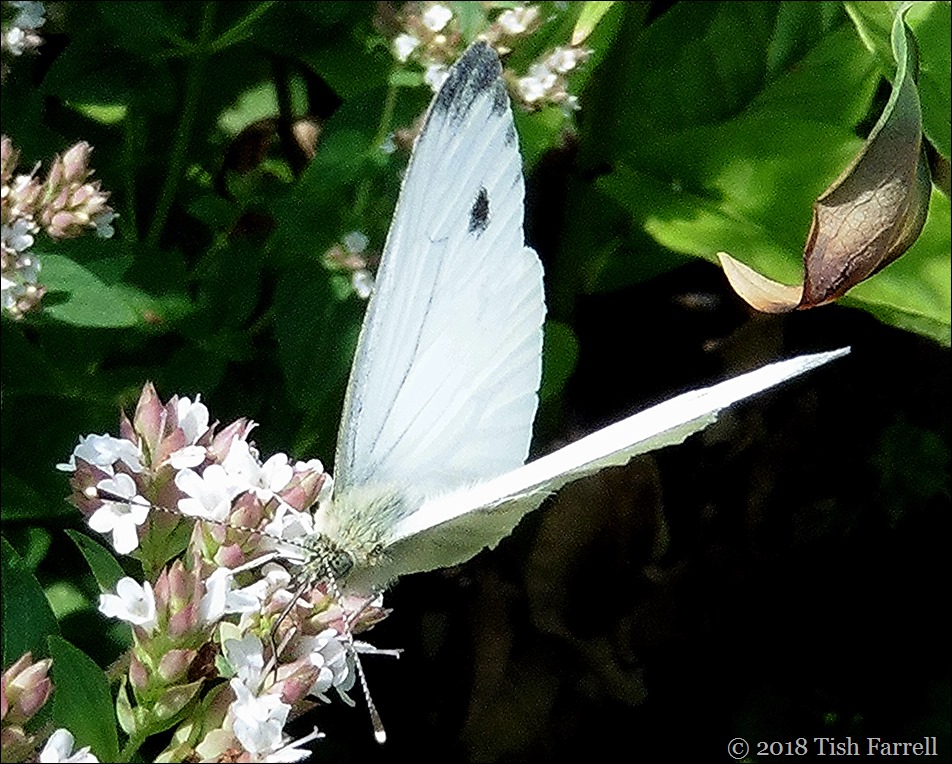

Today’s take-away special is definitely the oregano nectar smoothie. The Cabbage White butterflies and the honey bees have been gorging themselves, and while I am not too thrilled about feeding up the Cabbage Whites – given the mayhem they can create among my cabbages and broccoli – I have to admit they did look very lovely flitting around in the guerrilla garden. In fact I think I shall rename our unofficial planting behind the back fence ‘the biodiversity plot’ because, even as I write this, there is an awful lot of it going on there.
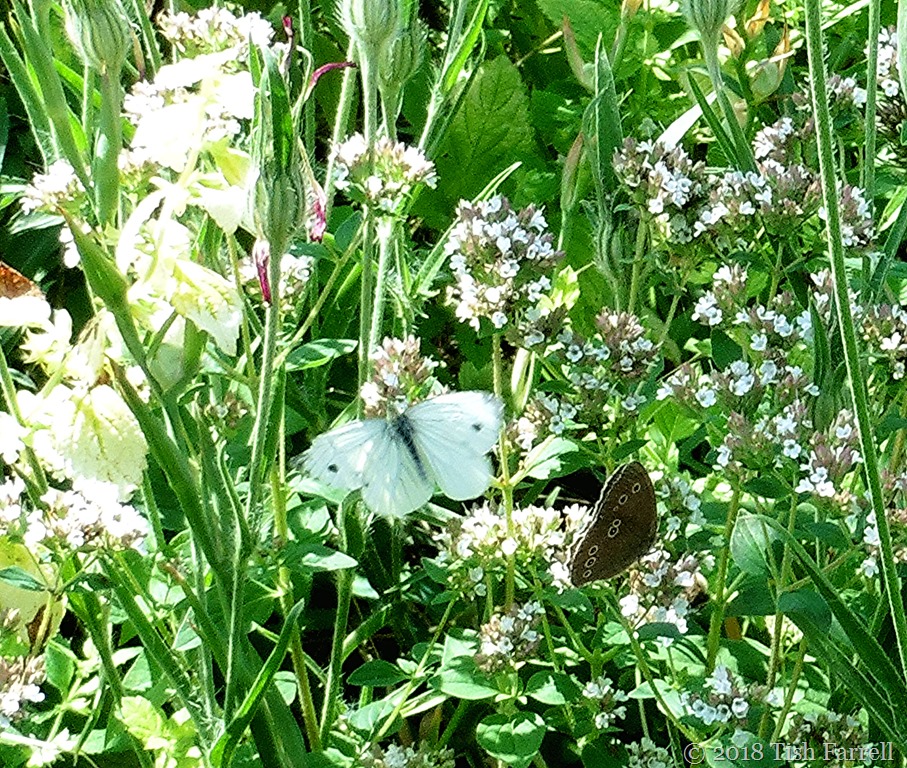


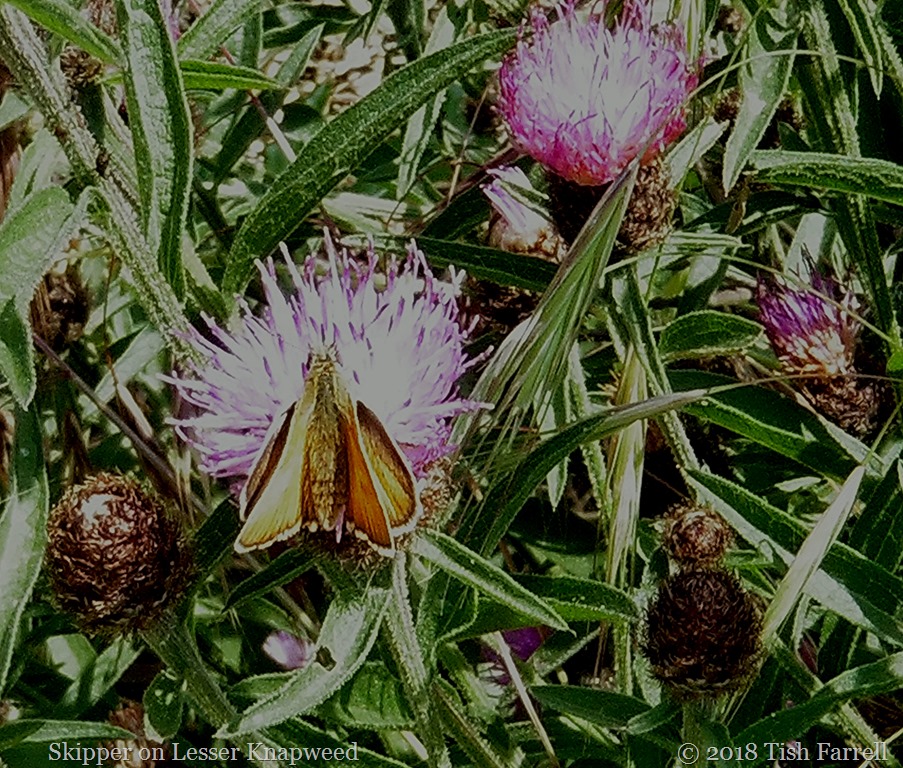
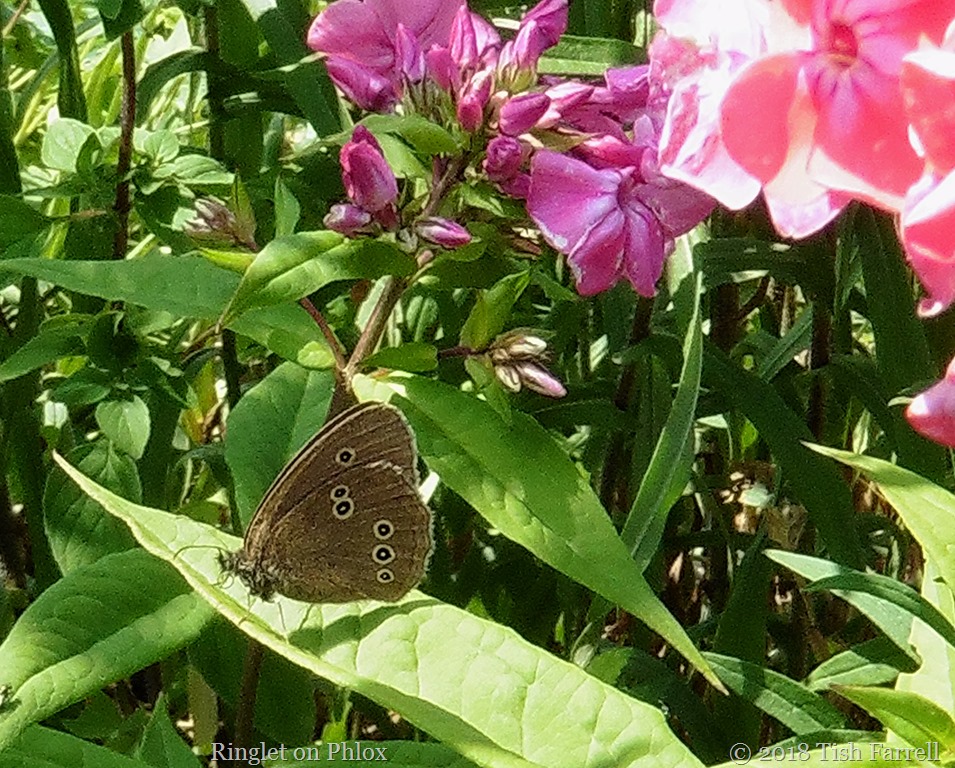
Noteworthy action includes crowds of longhorn beetles busy replicating in the spearmint flowers and on some ragwort that has recently arrived uninvited; skipper butterflies on the lesser knapweed, ringlet butterflies on the phlox and oregano; also passing tortoiseshells, peacocks and commas, and some rather small hoverflies.
Most of the bumble bees, however, are inside the garden still scoffing on the drumstick alliums. Now for a gallery of some of today’s lunch-time clientele:



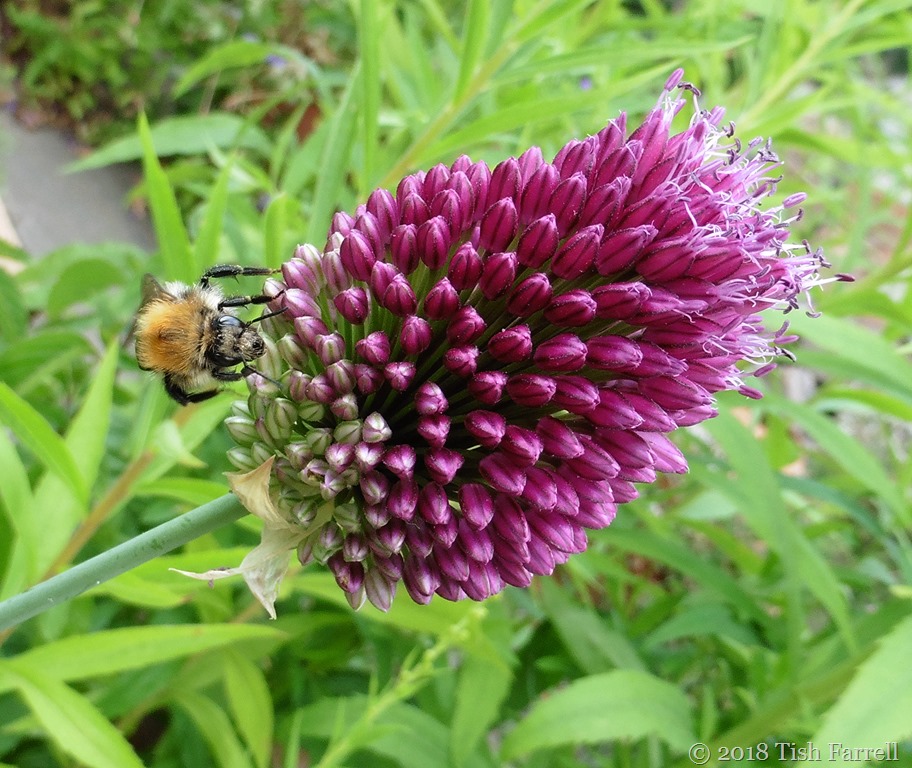
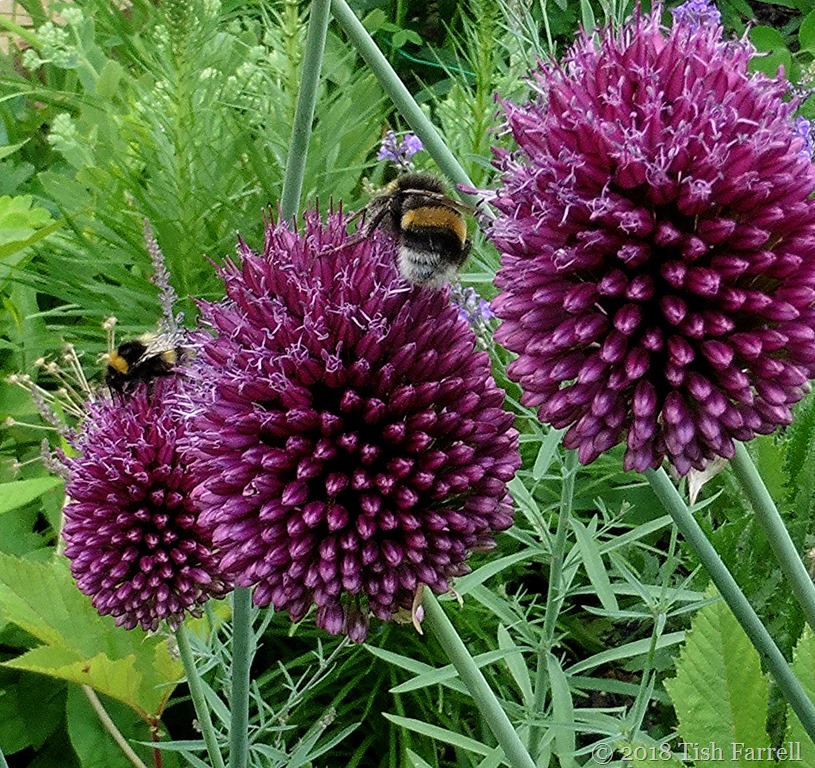
Yesterday the bumble bees were having a right royal tuck-in around the garden. Flower of choice was definitely the allium sphaerocephalon as featured here the other day. Some of the bees seemed to become quite comatose while supping, which made them much easier to snap. Several different kinds were partaking. I really must learn how to identify them. Friends of the Earth have a great app for us Brits with clever phones. I don’t have one, but could almost be tempted by this brilliant little guide.

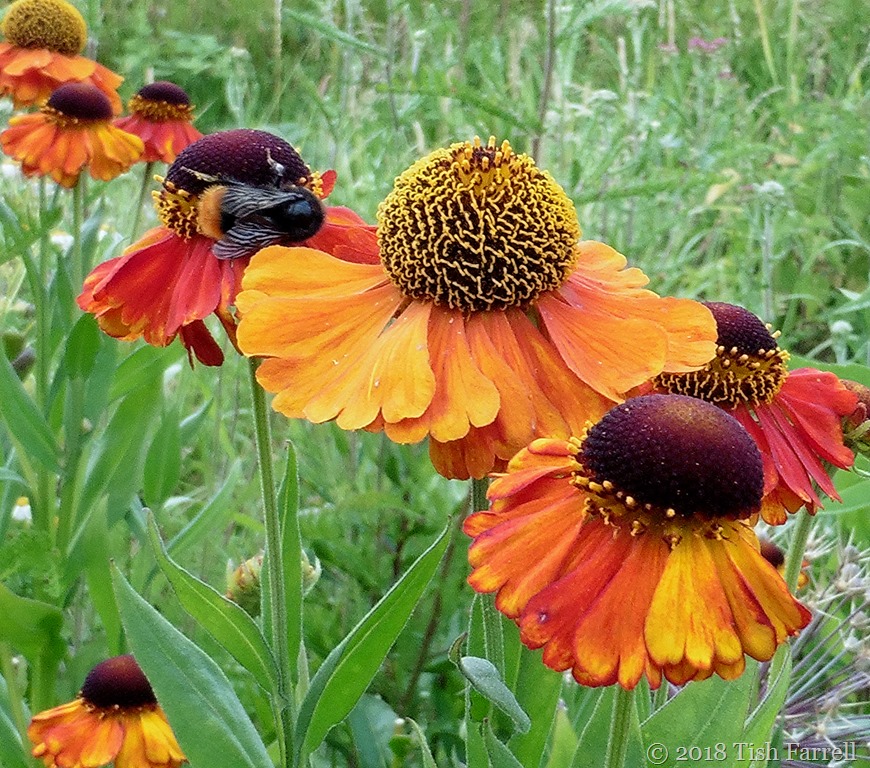
Meanwhile over the back fence in the unofficial (guerrilla) garden other favourite bee foods included the fabulously gaudy Sneeze Weeds (Heleniums) and the oregano which, with all the sunny weather, has recently burst into sprays of delicate pinkish white flowers.

Oh yes, and there were also bees in the Bee Balm (Monarda):

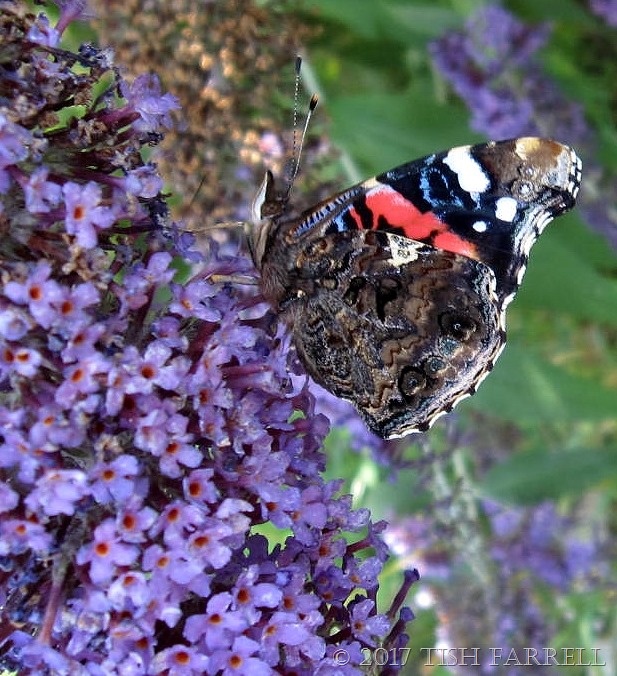


Over the past few days the butterflies have been feasting on the allotment buddleia bushes. From top down we have: Red Admiral, Comma, and Small Tortoiseshell. In the teasels we have assorted bumbles:
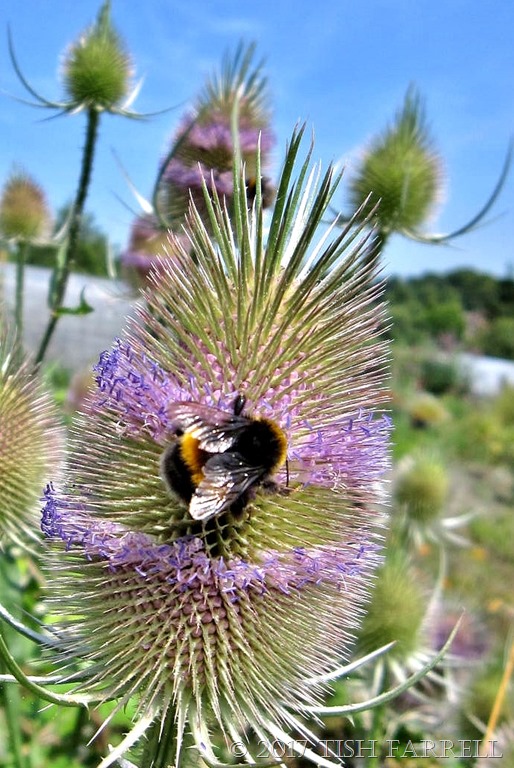
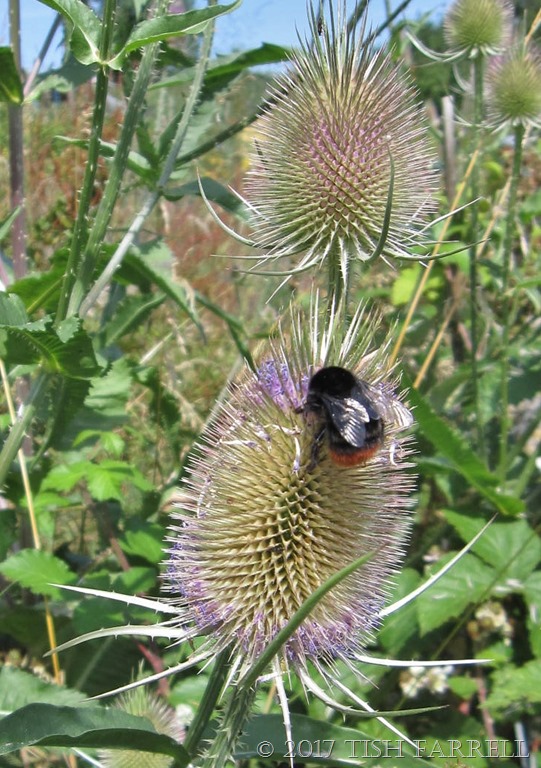
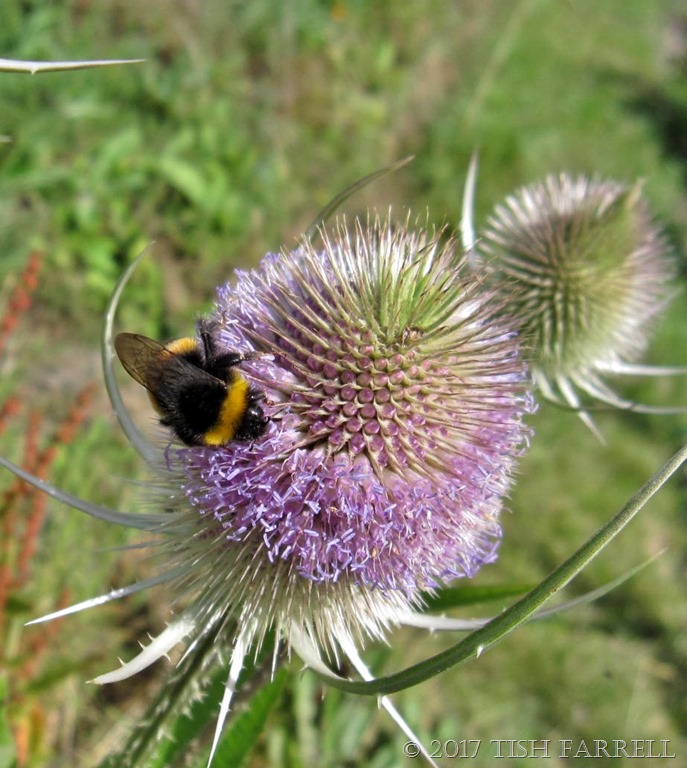
This morning when I arrived at the plot, there were insects everywhere. It was also very hot, so I was glad to take a break from sieving compost and wander round, capturing some of the busy foragers. Having had a nice little play with my Canon Ixus, I then went back to work. I harvested my onions, hung them in the sun to dry, watered the polytunnel jungle, fought the tomato vegetation into submission, discovered a neat little cauliflower out in the raised beds, picked French beans, courgettes, plucked a few beetroot to make borsch and a lettuce for our neighbours, sowed some golden beetroot, carrots and Florence fennel, then staggered home across the field whither I arrived a very dishevelled and grubby person. Back at the homestead, he who is building a shed in the back garden had erected the fourth wall to his edifice, or at least the framework for same. And having laboured all morning and well beyond lunchtime, we then retreated to the cool of the kitchen for a restoring cup of tea. And there you have it, Monday chez Farrell – overheated but happy.


Am linking this to Jo’s Monday Walk which (as ever) is totally fabulous this week. Please trot over there for a longer walk than mine to the allotment, and also for some very lovely candlelit scenes around the streets of Lagoa.
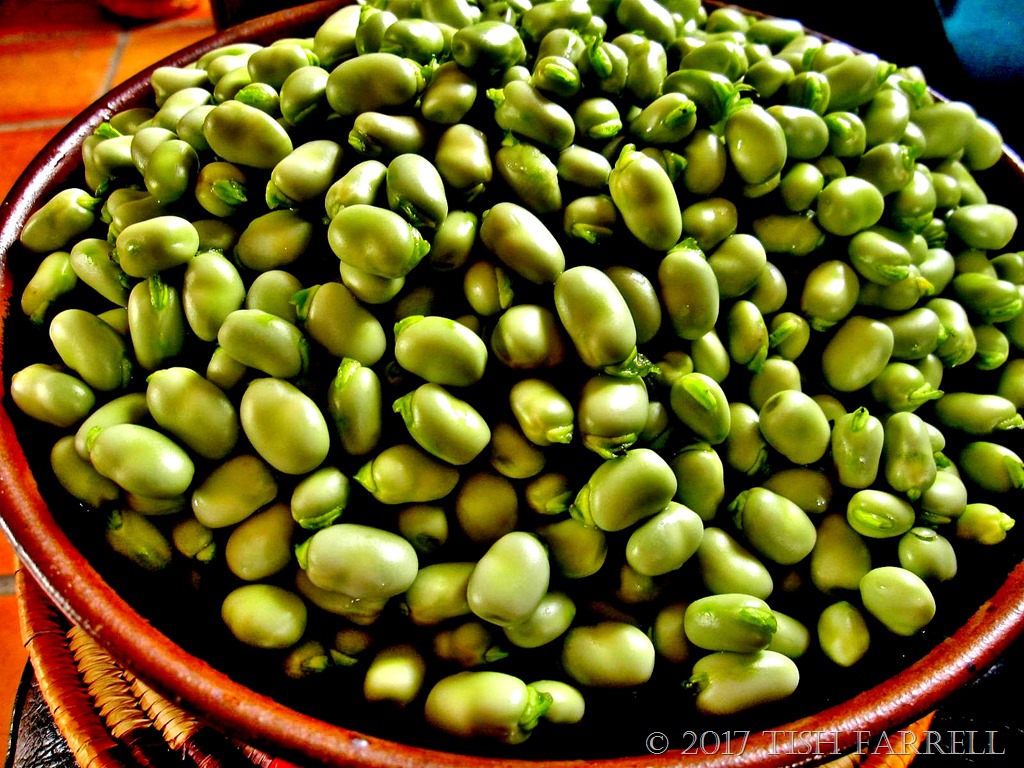
See what I grew from a handful of bean seeds – four pounds of shelled Field Beans from one square metre of raised bed (excuse the mixed metrification). For those of you who do not care for Broad Beans, these are their much smaller, juicier cousins, although they are all known as Vicia faba, faba or fava beans.
They are one of the oldest Old World vegetables, their remains found on ancient Neolithic settlements in the Near East, where their cultivation probably originated some 8,000 years ago. From there they spread across Western Europe and North Africa. Today, of course, they are perhaps best known as a staple of Egyptian cooking, the dried and rehydrated beans forming the basis of falafel.
I use them to make soup, or refried beans or a bean version of guacamole which is surprisingly convincing. Otherwise we just eat them steamed with melted butter and chopped parsley, or add them to a green salad with a vinaigrette dressing .
In the UK this small-beaned cultivar is usually grown as a green manure, or as animal fodder. As green manure it is good for breaking up heavy, clay soils. The seed is sown in autumn (September to November). The plants will germinate quite quickly, and are left to over-winter. In spring, once they have shot up to about half a metre or 2 feet, and before it flowers, you are supposed to dig them in. By then the roots will be quite deep, and they also have the added benefit of fixing nitrogen. A good follow-on crop would be cabbages or broccoli, or any brassicas.
I prefer to grow mine to eat. Not only that, they have wonderful flowers that waft their scent over the allotment in late spring and get the bees very excited. The plants require no attention. Slugs don’t care for them. I grow them in blocks which tends to make them self-supporting, so I don’t add string supports as you need to for broad beans. I don’t feed them or even water them, not even in our increasingly arid springs. I do, however, pick off all their growing tips at the end of May to discourage black fly invasions.

Growing Field Beans to eat seems to me like a win-win-win situation. They feed me and He Who Is Presently Building A Shed; they feed the bees; they feed the soil. They also freeze well, and there will be enough to dry to sow in autumn for next year’s crop. And then there’s all the top growth to add to the compost heaps. You may perhaps have noticed the bean weevil damage on the leaves. It is one of many endemic pests at the allotment, but their nibbling doesn’t seem to affect the crop. So now please conjure the sweet, subtle fragrance of bean flowers. There is no scent quite like it. Aaaaah…magic beans!
Copyright 2017 Tish Farrell
Please pop over to Debbie’s place at Travel With Intent. She’s currently hosting 6WS
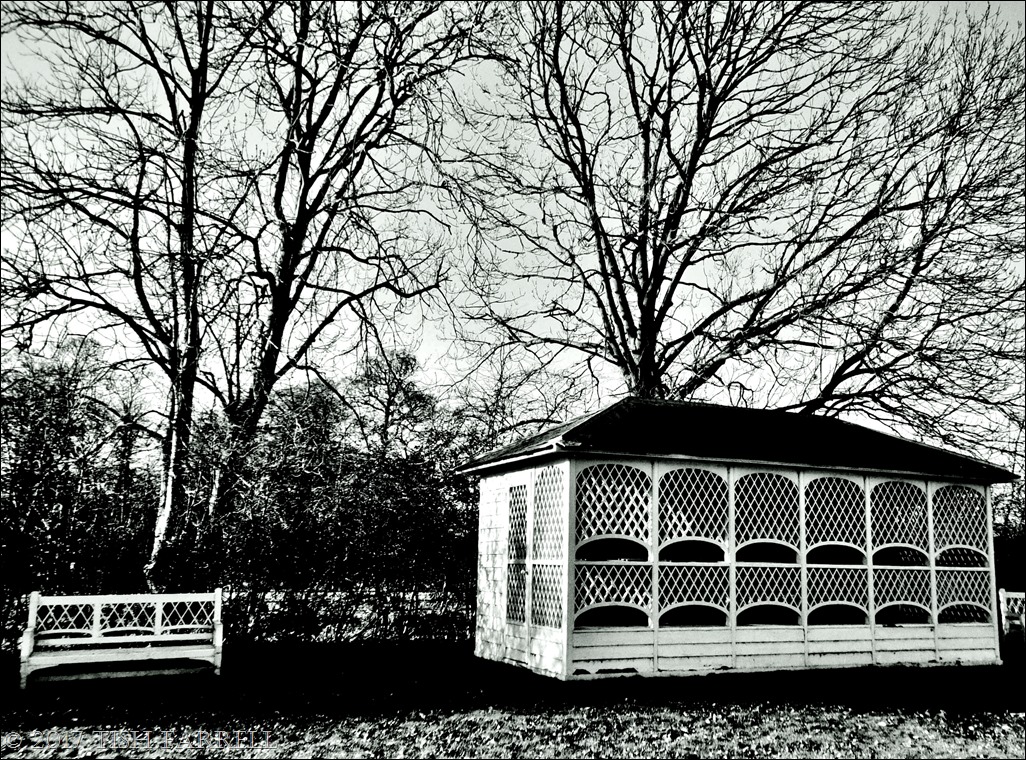
Well, I’d never seen one of these before. There it was outside the walled garden at Attingham Park, one of Shropshire’s grandest historic houses. Closer inspection and the spotting of an information panel inside one of the half-moon ‘windows’ yielded the knowledge that it was in fact the bees knees in accommodation – a grand house commissioned specially for the Second Duke of Berwick’s bees.
The house was originally sited in the Duke’s extensive orchards to encourage the pollination of the fruit trees. Behind each opening there would have been a traditional hive or skep – an upturned, domed basket made from coils of straw. This apian ‘des res’ apparently dates from the early 1800s and is only one of two known Regency examples in the country. The great landscape designer Humphry Repton and architect John Nash were both employed at Attingham around this time, and so either one could be responsible for the design.
The hall and park are in the care of the National Trust, and it is currently one of their most visited properties – over 400,000 visitors last year and growing. Millions have been spent on the house, and the next huge project is the recreation of Lord Berwick’s pleasure grounds. Nor have the bees been forgotten. There are a quarter of a million honey bees in the Park, and the Trust has recently established a large, new apiary in the Deer Park. There is also a National Observation Hive in the orchard where you can watch the bees coming and going. Attingham honey may be going on sale soon. So a big cheer to the National Trust for championing the bee cause, this in the face of determined eradication of the species by the Big Unfriendly Pesticide Giants. We’ll all be very sorry if bees become ‘a thing of the past’.
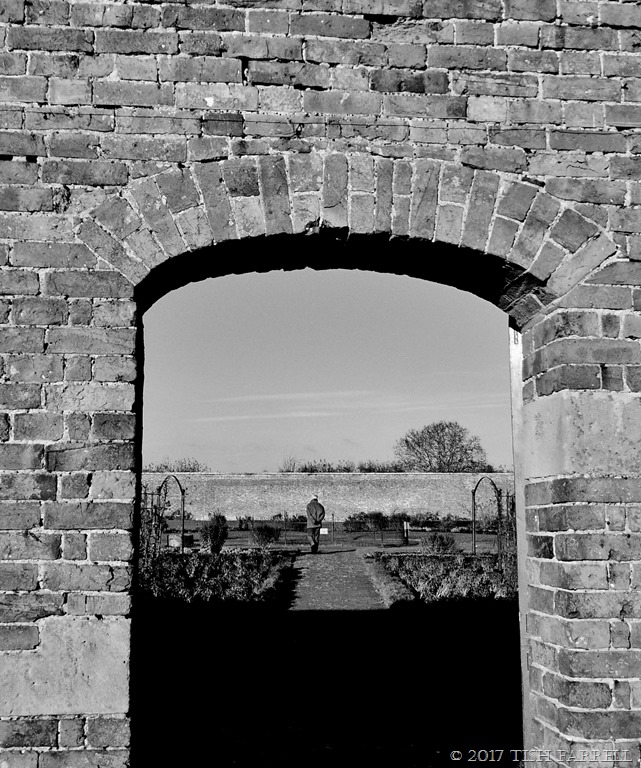
The walled garden in winter: a restoration project in progress. You can just glimpse the orchard beyond the far wall.
Black & White Sunday: Traces of the Past Now visit Paula for her fine entry.
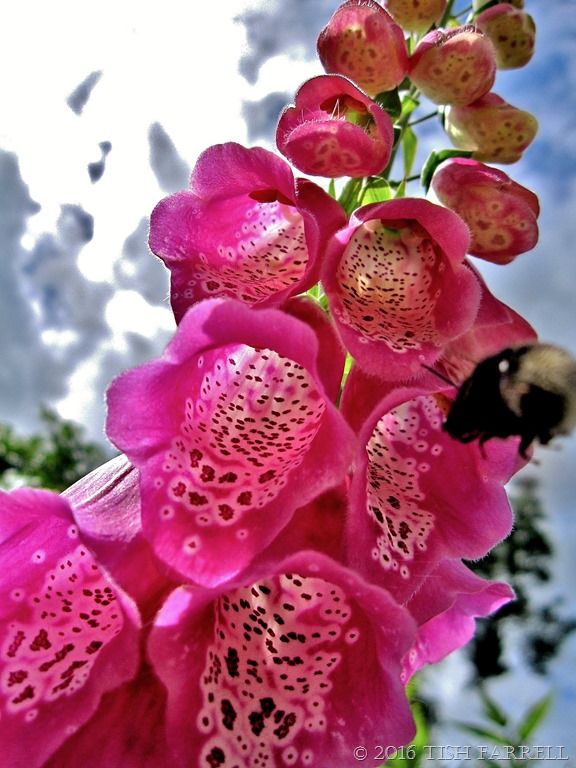
Yesterday at the Farrell establishment we had bees in poppies. Today it’s bees in the foxgloves, and thank you to Lynn at Word Shamble for mentioning bees and foxgloves in the comments. This reminded me I’d taken these snaps earlier in the month just before the foxgloves went over. I was trying out my new second-hand Canon Ixus 870 – and oh, the nippy little macro setting – I’m in love with it!
Also please drop in at Lynn’s blog to read a wicked piece of flash fiction: it definitely has a sting in the tale/tail.
Now for more shots of bees. Also just look at the foxglove’s come-hither devices – no ‘Sat Nav Map Error’ here; but an intricate systems of dots and splodges guiding in any would-be pollinator to get pollinating. It looks like every little ‘glove’ has its own touch-pad access code: