Seize The Day ~ A Lesson In Flowers

IMG_5287

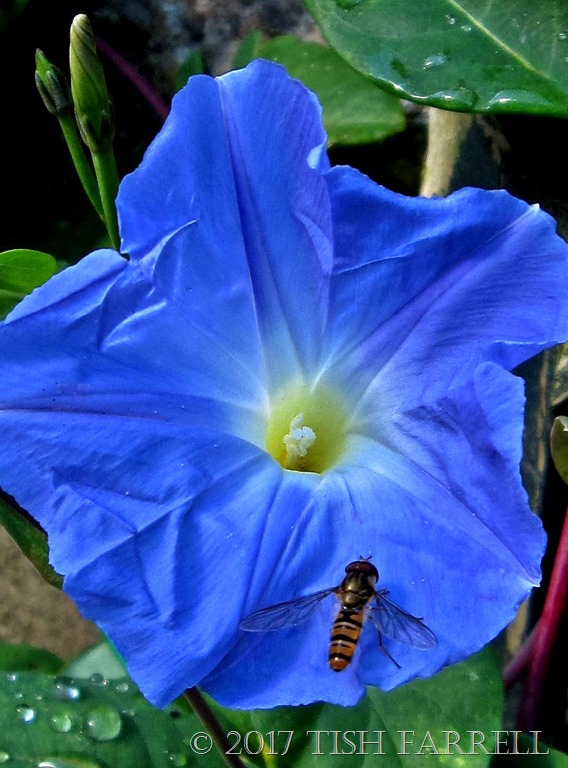
You  have to be out of bed rather earlier than I am to catch the Morning Glories unfurling.  That is probably lesson  number one: be up and doing earlier in the day; nurture the creative impulse before the world of dreaming totally recedes and mundane matters like doing the washing impose.

Then there is the lesson of making the most of opportunities as they arise, and at least here I came up to scratch. I dashed outside in my night attire to capture this scene. The hoverfly will feast. The Morning Glory will be pollinated. And I am watching, recording and posting. Everyone wins.

All the same, on the side lines my writer’s nerves are jangling. There are other lessons here. For one thing I have several works in stasis, projects that I dearly wish to complete. But for some reason I’m not attending to any of them. The danger is that procrastination may soon transmogrify into something toxic – a stultifying sense of failure that in turn becomes a downward spiral of non-doing and self-recrimination. The writer’s vicious circle.
IMG_5450

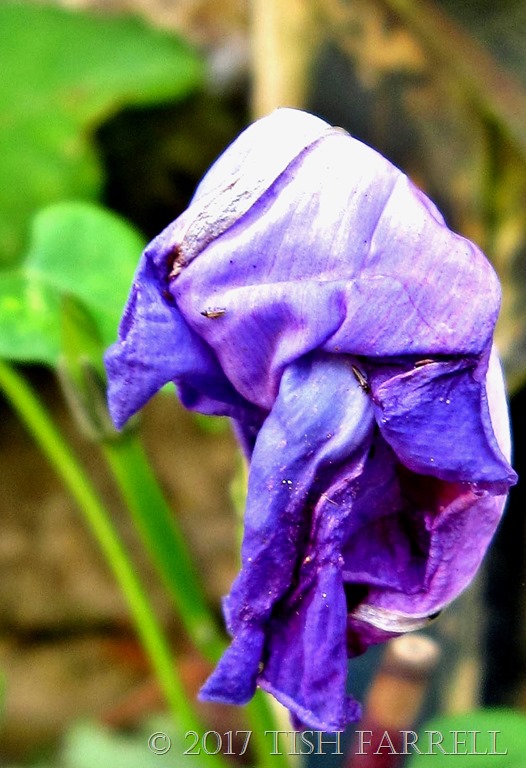
But wait! I’m hurrying back to see what has happened to the Morning Glory. By late afternoon the sky coloured canopy of the day’s high hopes has imploded – the colours deepening, bruise-like.  It is hard not to feel a pang of loss for such swiftly passing loveliness.

Yet there is a beauty here too in the subtle end-of-spectrum shades. Not failure, but process. Deep within the crumpled sheath things are happening. The hoverfly has done its work. There will be fruit in the making, new seeds to ripen and sow. Tomorrow is another day. Another chance to bloom. Time to get back to work then.


copyright 2017 Tish Farrell


P.S. For more beauty in decay, pop over to Sue Judd’s blog. It is a theme she explores in many arresting photo essays

Wandering Around Cotehele House In The Rain ~ Traces Of The Past

IMG_4619

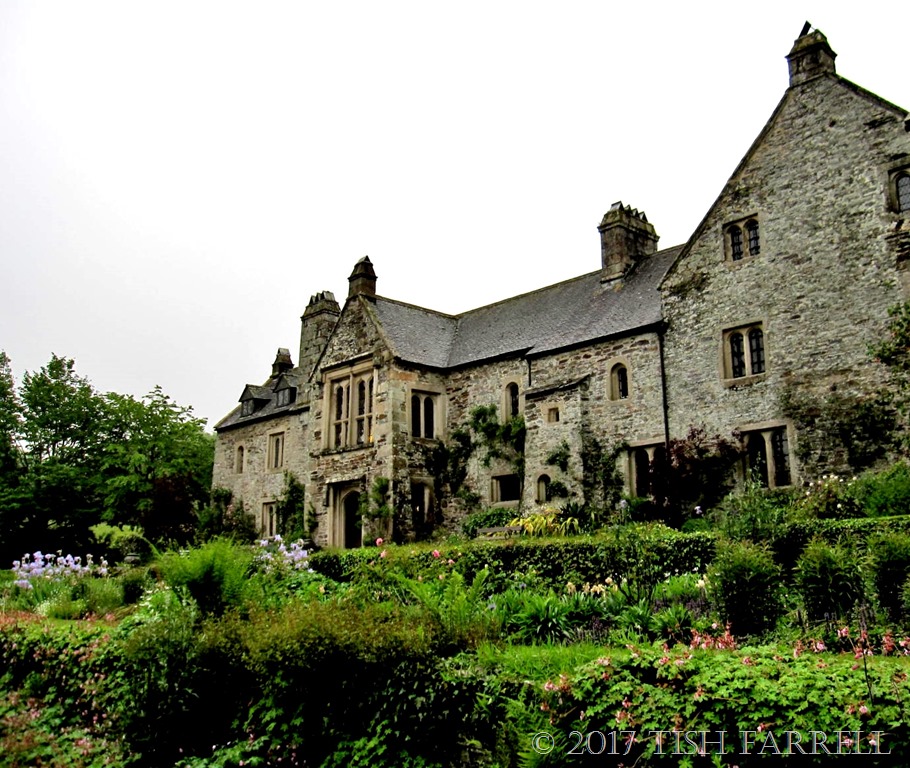
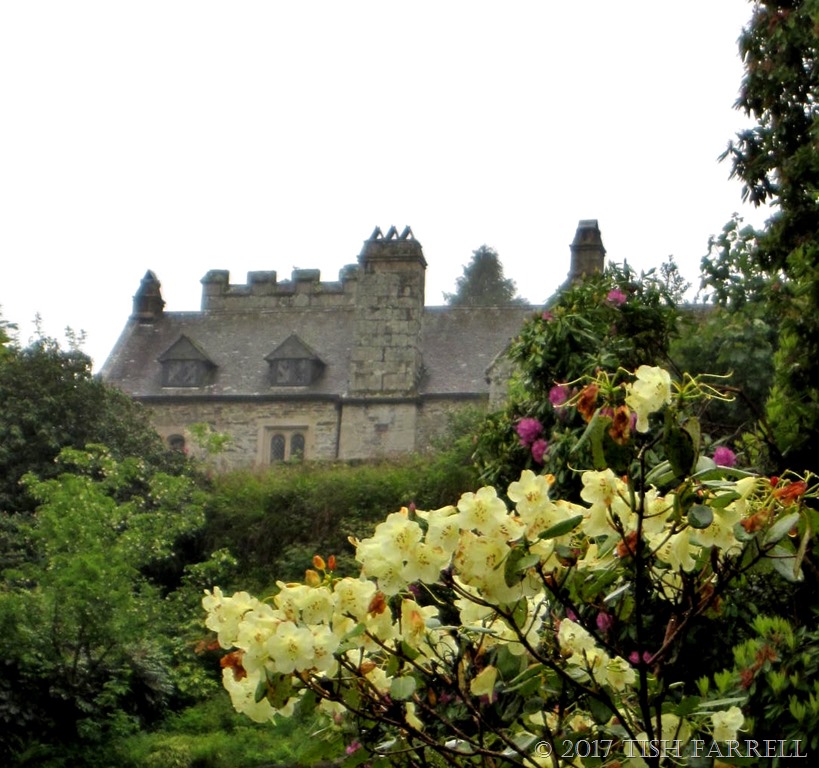
Cotehele House in the Tamar Valley in Cornwall began life around 1300 when it was owned by a family of the same name. Fifty years on, a marriage delivered it into the Edgcumbe family who owned it for the next (almost) 600 years. These new owners remodelled the house in the 15th, 16th, and 19th centuries, as well as building themselves another (their principal) house further down the Tamar River at Mount Edgecumbe.

In 1947 the 6th Earl gave the house to the nation in lieu of death duties, and it is now owned by the National Trust, one of their more atmospheric  properties. It was particularly atmospheric on the rainy May day when we were last there, and also on the rainy December day when we went there to see the famous Christmas garland.
IMG_4664

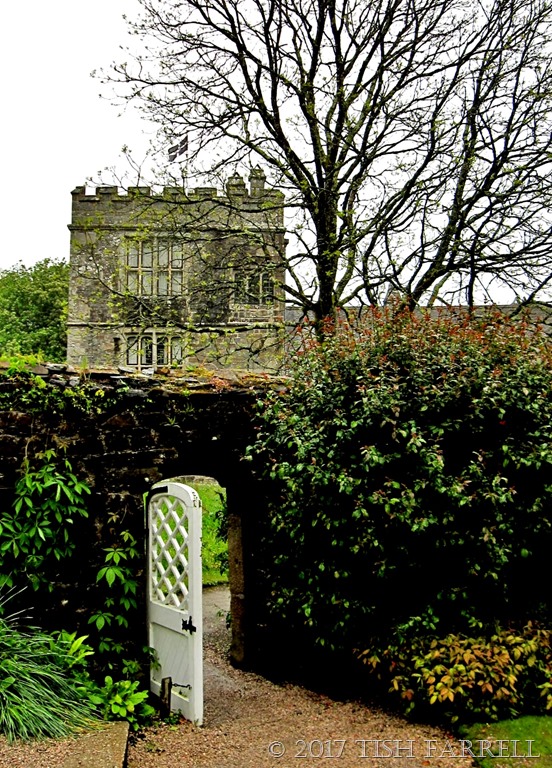
15th century Gatehouse

*

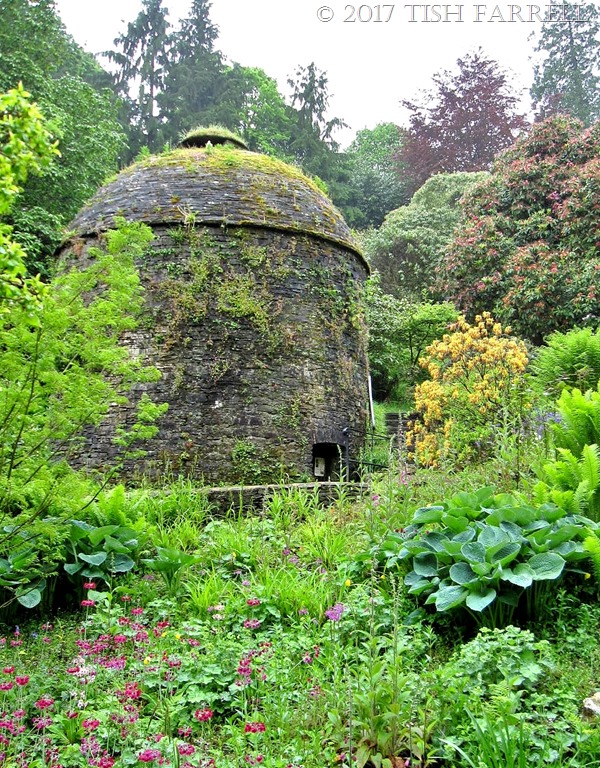
The house has extensive grounds. In the 16th century there were two parks and orchards. The 1730s estate map also shows a bowling green, and the dovecote of the first photo. This dates from around the end of 16th century. The lantern top provided access for the birds, which were of course cropped for meat.

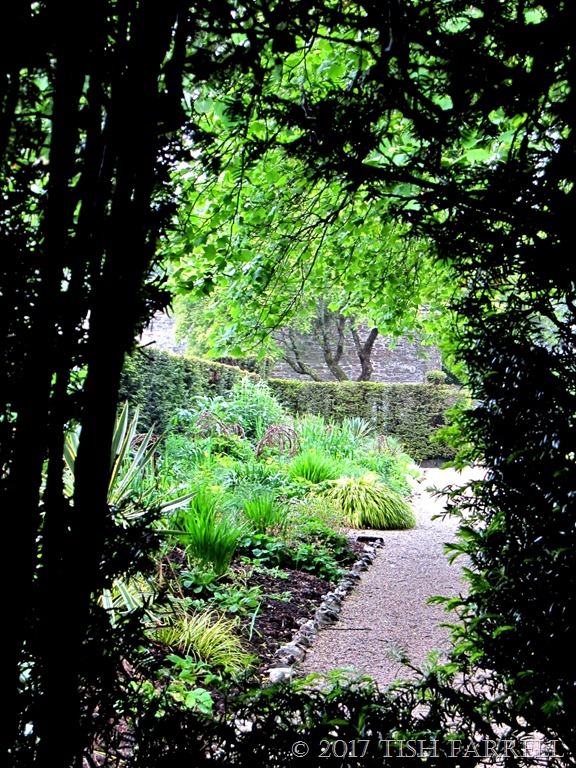
The gardens we see to today were most shaped in the late 19th and early 20th centuries and extend to around 6 acres: lovely even on a wet, and gloomy Cornish day.

IMG_4636

IMG_4608

IMG_4655

IMG_4638

IMG_4623

Thursday’s Special: Traces of the Past

Windswept On Llanddwyn Island

P1060362

I’ve chosen a very literal interpretation of Paula’s theme at Black & White Sunday. First of all I thought you could not get any ‘lower-lying’ than at sea level, at least not without immersion in said sea. And then I thought of Marram grass being laid low in the gale, and how I was attracted by its bowing texture.

P1060361

*

And then I thought of the sand beneath our feet:

P1060416


These photos were taken last Christmas on a beach walk to Llanddwyn Island on Anglesey, North Wales. You can see more about the island HERE.


Black & White Sunday: low-lying

First Allotment Spuds ~ Belle de Fontenay

Next to my excitement in turning over a well-rotted compost heap, comes the joyous anticipation of lifting the first potatoes. Will they have grown well? Will the slugs  and other pests have got in there first and had a feast? But no. Here they are – somewhat irregular in shape due to the long, long dry spell with only two or three rain showers to spur them on – lovely Belle de Fontenay.

This is an heirloom variety introduced in France in 1885. Pale yellow, firm, waxy – ideal for steaming or boiling, their flavour apparently improving with keeping , although I cannot verify that bit as we generally eat as I dig. And as well as arriving early, these pommes de terre have other obliging qualities. They don’t mind what kind of soil they are grown in, and they seem to love my allotment, which given its unyielding soil, is a huge plus.

This year I planted most of the potatoes on the ground I’d covered with several inches of partially rotted compost back in the autumn. I also sprinkled in some biochar and fish, blood and bone meal before planting in April.  This was a half and half no-dig enterprise, in as much as the overwintering compost cover saved me from having to dig over the whole plot as I would have done in the past.  I didn’t dig trenches either, just a row of holes, one for each potato.

The ultimate no-dig method would be to simply bury the spuds by hand in the compost layer, thereafter adding more compost to earth them up. But then that requires an awful lot of compost.

Anyway, compromise is everything when it comes to allotment gardening.

The spuds in the photo were delicious, steamed and shared last night with  good friends from Buffalo, Jack and Kathy, who come each year like swallows to spend the summer in Wenlock. Also on the menu was Chicken Hymettus (recipe below), and also from the allotment, finely  sliced greens (Tuscan kale, Swiss chard, beet leaves, Greyhound cabbage), Onward peas, lightly steamed, and served with  a walnut and parsley pesto sauce.


Hymettus Chicken (serves 4)

chicken portions cut in half if large – I used thighs as they were

limes – juice and zest of 3 (or 2 lemons)

saffron strands – a good pinch

oil and butter for frying

honey – 2 tablespoons preferably light and runny though I used gooey dark African

thyme – 2 teaspoons fresh chopped/ 1 level teaspoon dried

mint – 2 tablespoons chopped

salt and pepper

almonds flaked – a handful


Prick skin of chicken pieces, place in shallow dish and pour over lime juice and zest. Marinate in the fridge for 1-2 days, turning meat occasionally.

When ready to cook, put saffron in a cup and add 4 tablespoons boiling water and leave for 20 mins.

Lift chicken from marinade with slotted spoon and fry in butter and oil till golden brown all over.

Strain saffron and mix liquid with honey and the remaining marinade. Pour over chicken, add thyme (I actually used Greek oregano), half the mint, and salt and pepper. Cover and simmer very gently for 45 minutes, or until the chicken is tender.  Toast the almond flakes and to serve, sprinkle over the dish with the rest of the mint.

This recipe works well cooked a day in advance and then reheated.

copyright 2017 Tish Farrell

Six Word Saturday

Manhattan From The Staten Island Ferry

Our trip to New York a few years ago coincided with a heat wave. It was too hot to think or walk far from the iced coffee stalls in Central Park, or the cooling air conditioned corridors of the Met. The other best place to be was riding the Staten Island Ferry.  Nice breeze. Stunning views of Manhattan and dead cheap.


Thursday’s Special: please visit Paula and pick a word that inspires you. I’m going for ‘soaring’.

The Changing Seasons: And Most Of Them Happened In June

So much weather in June! The header photo rather sums up my feelings of rapid changeability – flowers in the garden one minute, then gone the next.

Here in the UK we’ve sweltered in temperatures above 34C. We’ve had prolonged drought. There have been cold winds. And now this week we’re having a ‘mini-monsoon’, the temperatures dropping so it feels and looks more like October. Yesterday along Wenlock Edge there was even fog, and this morning when I went outside to survey the plant life, it was to find autumnal spans of spiders’ webs glistening with raindrops, and the newly opened sunflower looking as if it wished to go back in its bud. It looked so forlorn staring at the place in the leaden sky where the sun should be.

On top of that, the last of the Teasing Georgia’s roses have been trashed and mashed, the foxgloves that were so stunning are all gone, and the allium seed heads (that look like floral fireworks ) are alive with the tiniest crab spiders, all busy being rather sinister despite being scarcely more than two millimetres across, and just out of their eggs. This first photo makes said arthropod look monster sized. For a better sense of scale look out for the spider on the second allium shot. It’s near the bottom edge, left of the flower stalk.

IMG_5195

IMG_5197

P1080232

IMG_5206

IMG_5183

*

But all is not lost in the garden. The late spring flowers may have been washed away, but the spires of verbascum are just opening, the yellow doronicum is doing its best to stand in for the sun, and geranium Rozanne is now on parade until the first frosts. Of course, as things are going, that could be next week. Who knows?

IMG_5200

IMG_5210

IMG_5211

This slideshow requires JavaScript.

Changing Seasons (versions 2 and 1)

Cloud Shadows Over The Great Rift

IMG_0008

I have just come home from the allotment with very wet knees ( the grass on the field path has suddenly shot up half a metre). It is a gloomy, drizzling evening here in Shropshire, and has been raining now for two days. This is very good of course. We’ve hardly had any rain since mid-May, and it’s a big relief not to have to water the vegetable plots. The veggies are very happy too – all upstanding  and glistening in the rain. The only thing is I think we have water-resistant soil. When I went to sow some Florence fennel, the surface compost was damp enough, but an inch down the soil was dry as desert sand.

More rain required then.

The advent of rain is of course a critical factor in the growing of smallholder crops over in Kenya where this photograph was taken during the July dry season. Very few rural farmers have ready access to piped water, reservoirs and water courses, and so irrigation systems are thus not feasible unless you are a very rich big landowner.   The monsoon seasons on the Indian Ocean are responsible for the country’s rainfall. It comes in two seasons: the short planting rains roughly October to December and the long rains in April-May. And so the clouds you see here, may be bringing shade, but they are not bringing rain.

And even in season, this is increasingly the case as Kenya’s forests dwindle. Without its tree-covered uplands, which invite the clouds to drop their moisture, the future will bring only increasing desertification. Or else when it does rain, there will be more flash flooding and landslides to carry off the fertile top soil.  Climate change, then, has both local and global origins, and we all need to think about this, and the part we may play,  wherever we live on the  planet.

copyright 2017 Tish Farrell


Thursday’s Special: over  Please visit Paula to see her totally stunning photo.

The More Things Change…

IMG_4948

The come-hither finery can be safely shed: the insect lure has done its work, leaving the fruit capsule primed and fattening; its contents – miniscule parcels of poppies-to-be – busy ripening, waiting on sun and wind to complete the enterprise. Nature in action. Where would we be without it?


Daily Post Photo Challenge: delta – i.e. an image showing transition, or the passage of time

Maasailand In Black & White

desert date mulului tree 001

I do not think of Africa in black and white, and when we lived there during the 1990s it was still in the days of conventional photography, and only colour film was readily available. So I am rather intrigued by these monochrome edits from the old Africa photo file.

They were taken in August – in the cool, dry, gloomy season, and the time of the wildebeest migration. We had driven down to the Maasai Mara from Nairobi under lowering skies, taking our visitors, Chris and Les, on safari. The roads were dusty and the bush country parched and dreary looking for mile after mile.

Amongst other things, the first photo shows how empty the landscape can be of wildlife,  or indeed of people. In the distance is the Oloololo Escarpment which forms  the north west boundary of the Mara Triangle. The tented camp where we were staying was on the Mara River outside the park, and part of the Mara Conservancy, a reserve managed by the Maasai themselves.

The lone tree is a Desert Date (Balanites  aegyptiaca ), and is typical of the open savannah where its presence is highly valued by humans and grazing animals alike. It fruits under the driest conditions. The tree has also long provided traditional healers with remedies; like the baobab, Balanites is one of Africa’s tree pharmacies. The fruit’s outer flesh was used for treating skin diseases, and preparations of the root and bark were used to combat malaria.

The oil within the fruit in fact has a host of remarkable properties. It has long been known that it kills the freshwater snails that carry bilharzia and the water fleas that are vectors of guinea-worm disease  (Trees of Kenya  Tim Noad and Ann Birnie). It has also been studied more recently by Egyptian scientists who reported their findings in the the 2010 Journal of Ethnopharmacology.  Their laboratory tests revealed anticancer properties for certain human carcinoma cell lines, as well as demonstrating selected antimicrobial, anthelmintic, and antiviral activity.

An all round useful tree then.

The shape of the trees in the photos is also typical. The result of having their canopies nibbled by passing giraffes, although there are none in sight here – only wildebeest and Thomson’s gazelle.

289


Black & White Sunday: typical