Looking Back: Traces Of The Past

IMG_3305

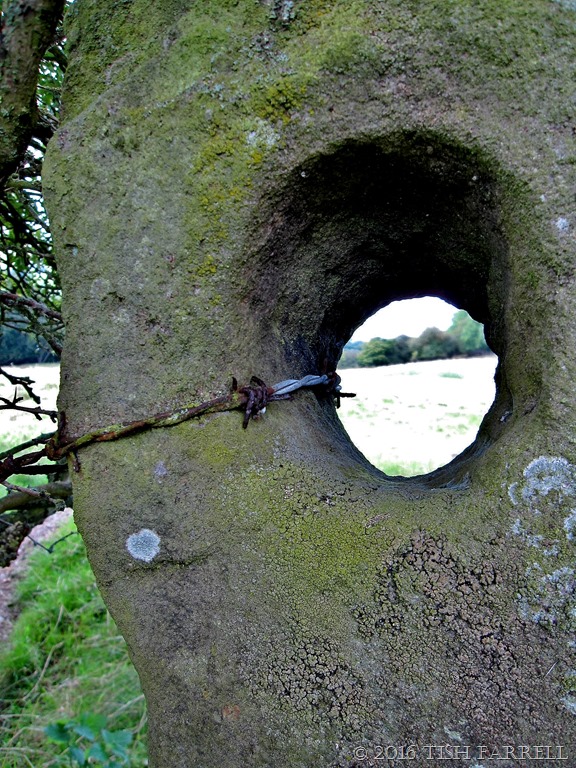
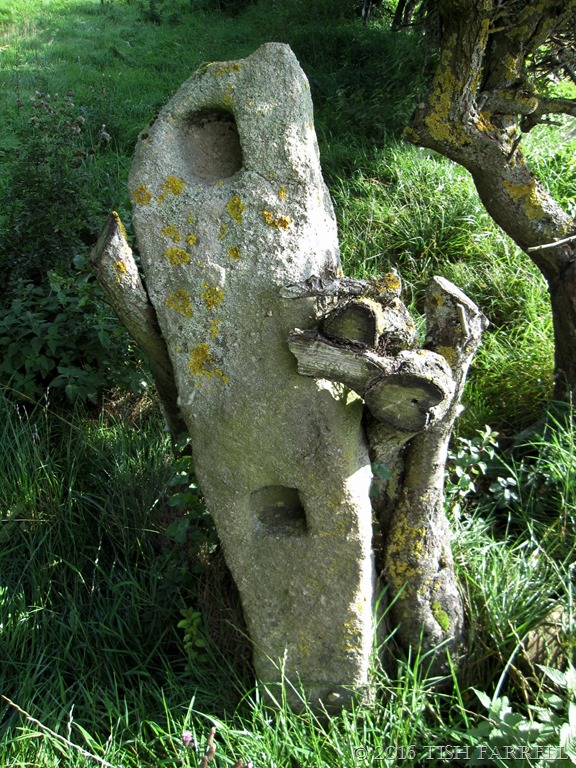
I took this photo on a whim, just to see how it would turn out. This old farm-field post was one of several on the footpath to the Hathersage stepping stones that cross the River Derwent just outside the town. For those of you who read my earlier Derbyshire posts, you’ll know I was on a quest to follow in my great grandmother’s footsteps, taking the path that she once took from Callow Farm and into Hathersage.

I don’t remember ever seeing stone posts like this before, and don’t know how old it is. But I think it’s safe to say that this and others were there in the late 1880s-90 when Mary Ann Fox passed by to do her shopping.

IMG_3285

You can read more of her story at Stepping Stones Through Time and Stronghold – The Telling Of Family Tales

There was also another idea running through my head when I took the photo – a far cry, too, from Derbyshire and my ancestors. When I saw the hole in the stone I was reminded of the 1960s young adult novel The Owl Service by Alan Garner. It is set in Wales and explores the rival affections between three teens through a parallel tale from the Welsh medieval story cycle of the Mabinogi.

It’s a great story, both the original and Garner’s use of it. Here’s a quick version of the myth.

The magician Gwydion makes a woman, Blodeuwedd, from flowers. She betrays her husband Lleu with a man called Gronw who tries to kill Lleu with a spear. He turns into an eagle and escapes. However, rough justice allows Lleu to have his turn to throw a spear at Gronw who may only use a stone for protection. Lleu throws the spear so hard, it passes straight through the stone and kills Gronw, and to punish Blodeuwedd for her part in all this, the magician Gwydion turns her into an owl.

So the first shot is my photo version – the stone of Gronw.

copyright 2016 Tish Farrell

*


If you want to post some of your own ‘Traces of the Past’ please visit Paula at Lost in Translation

#ThursdaysSpecial

All Gold On All Hallows’ Eve In Bishop’s Castle

P1050911

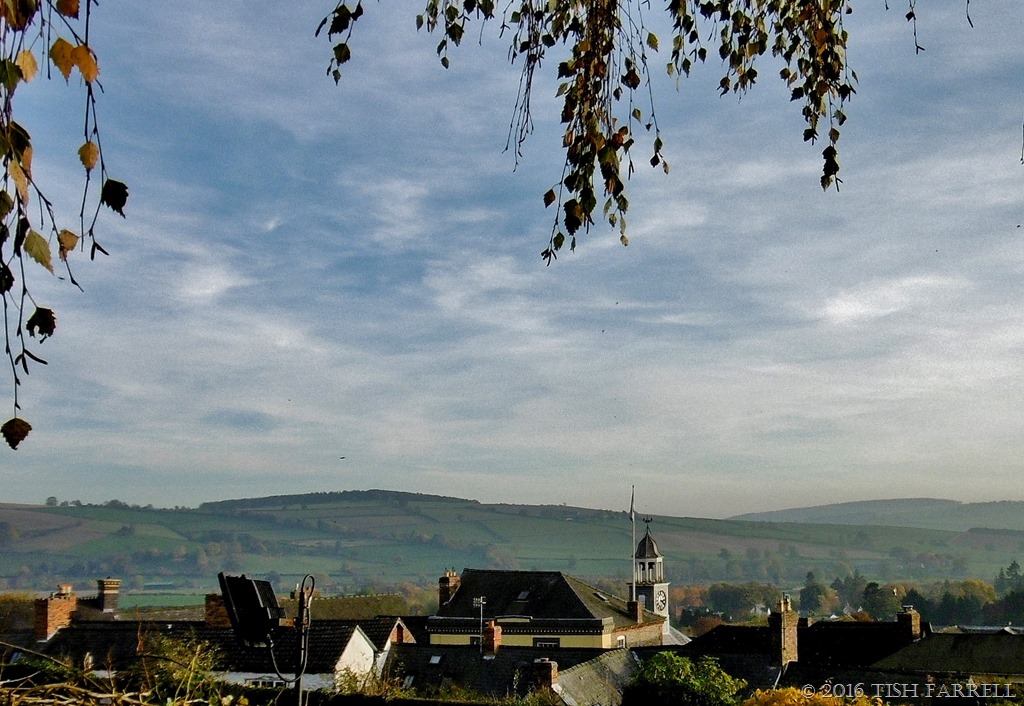
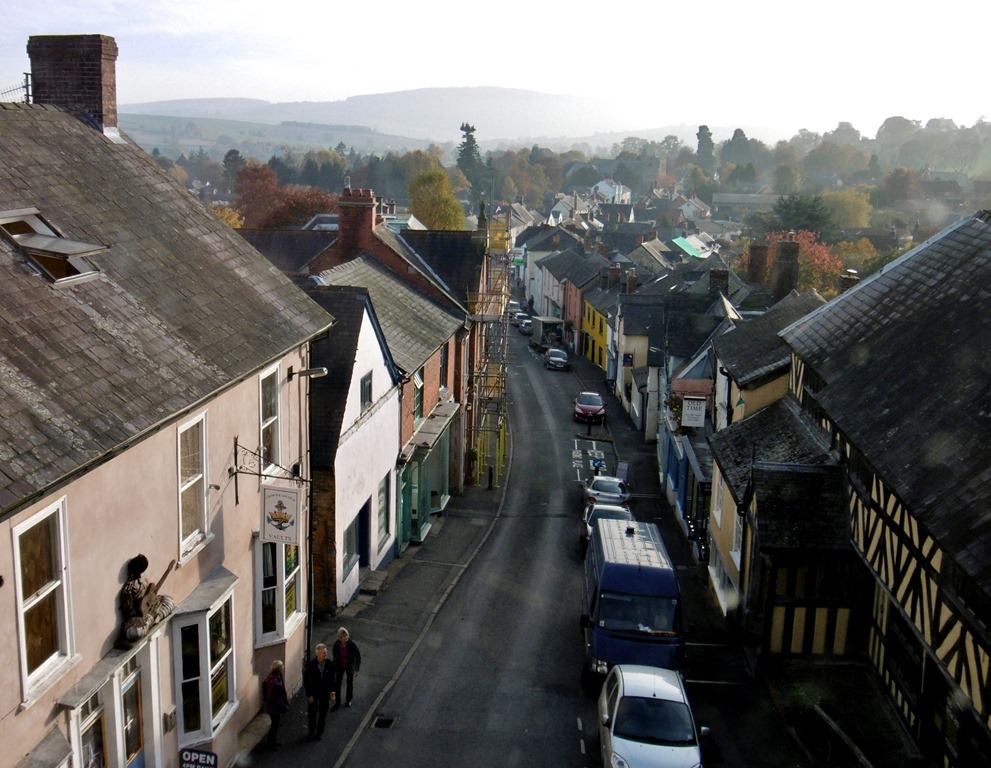
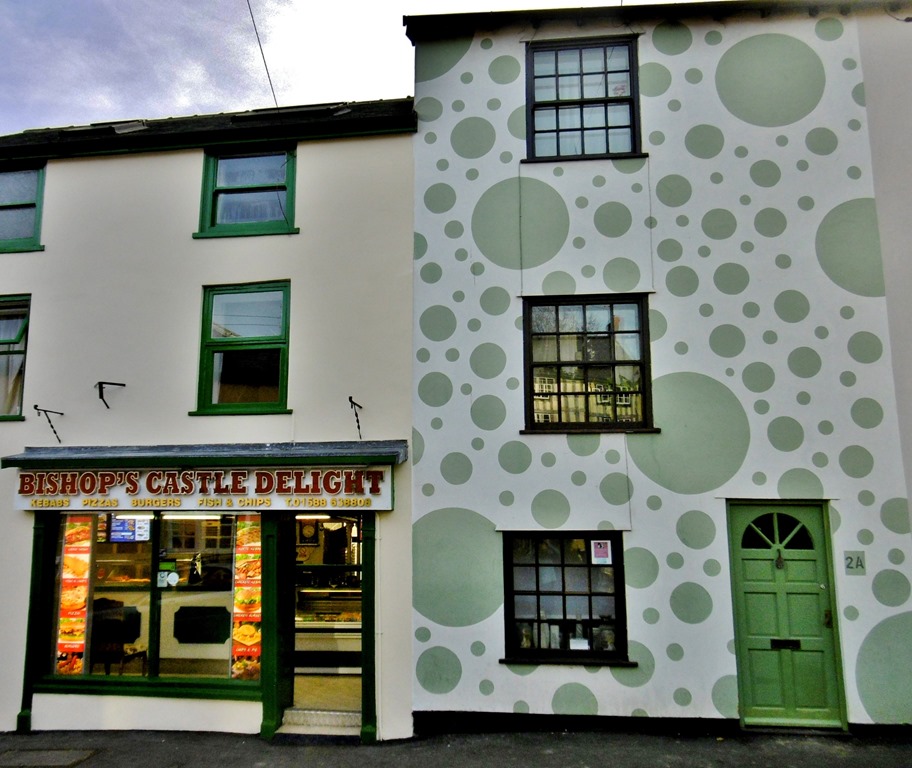
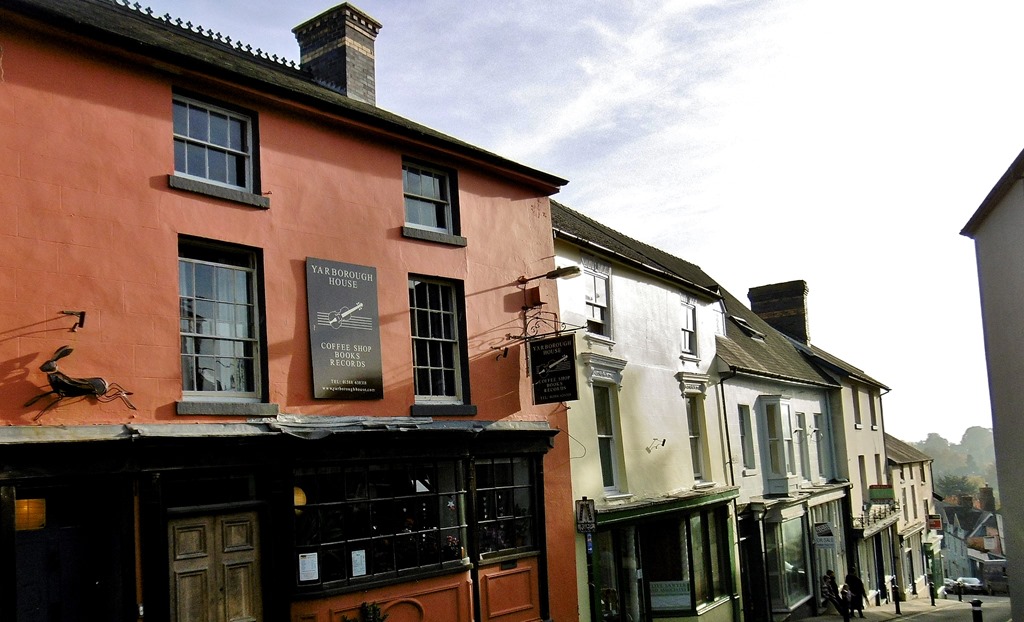
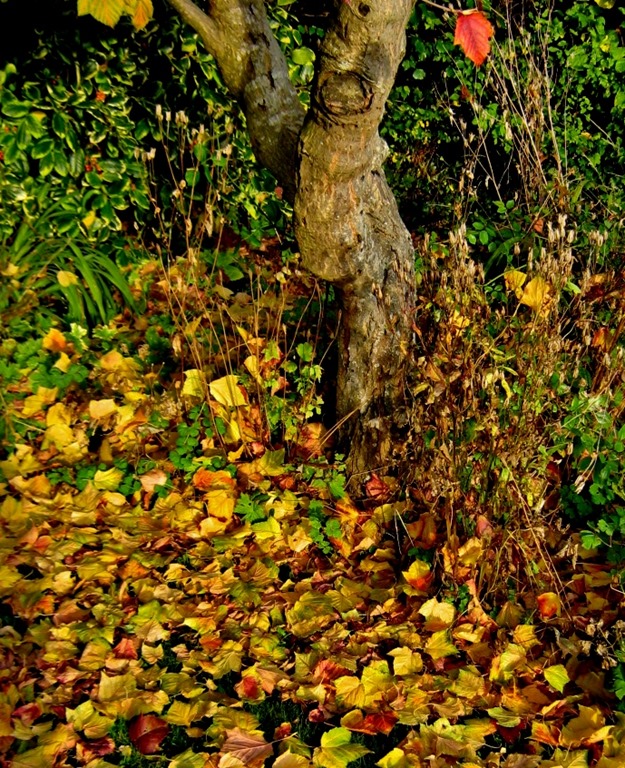
The Shropshire Hills lay in a golden haze on the last day of October. Not only that, it was warm and still, and in Bishops Castle, where we went for my birthday outing, all was drowsing. We were drowsing. Lunch at the Castle Hotel was long and leisurely, and the food unassumingly delicious, and we spent the afternoon drifting around the streets, looking in the windows of shops that were mostly shut. It did not matter. It was Monday, and clearly the proprietors of most of the town’s establishments had better things to do on Mondays. We simply made a mental note to return when we were more alert, and they were more alert, and on the kind of day when it didn’t seem too bothersome to open one’s purse and shop.

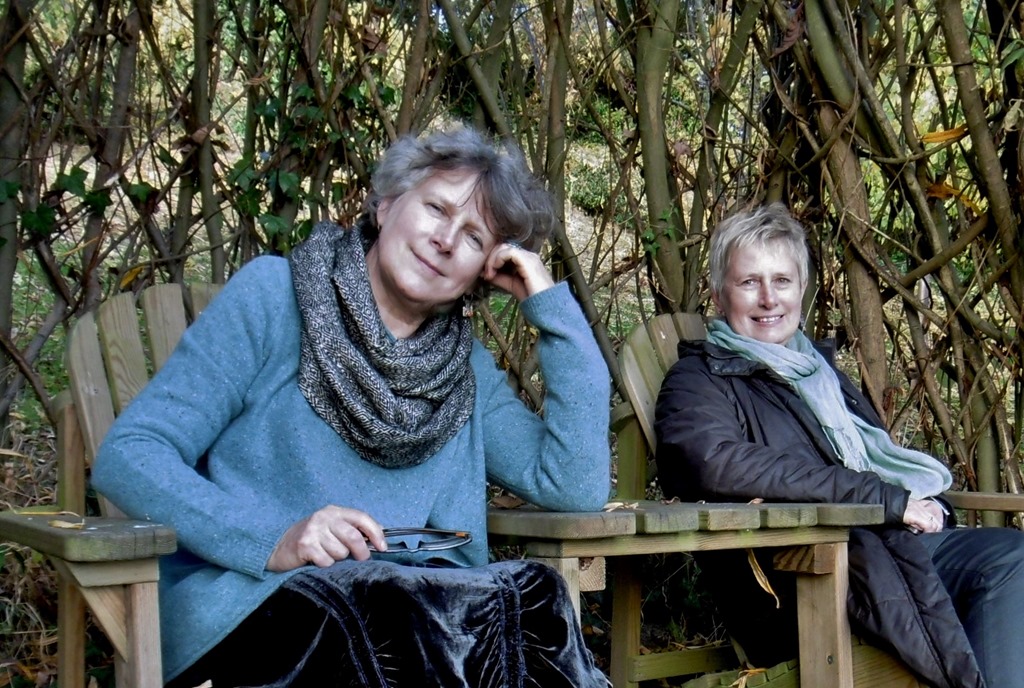
Here then are scenes of Bishop’s Castle. It is a town with a very long and steep high street – a handsome church at the bottom, a fine town hall at the top, and ancient hostelries  brewing their own ale at either end. And from every quarter, whenever you look down a main street you can see out to the countryside beyond. The best of all worlds then. I’m leaving the photos to speak for themselves, apart from saying, look out for the crocheted fairy cakes: they almost look good enough to eat. Oh yes, and there’s a shot of me with my best and only sister, Jo, in the garden of the Castle Hotel.

P1050866

P1050857

P1050878

P1050901

P1050889

P1050887

P1050886

P1050871

P1050855

P1050852

P1050903

IMG_2194

IMG_2196

P1050882

copyright 2016 Tish Farrell

*

I’m linking this to Jo’s Monday Walk. So if you want more than the amble I’ve given you here, pop over there for a proper walk. It’s in Portugal too.

Expressions Of Power ~ Secular And Spiritual?

P1050703 - Copy (2)

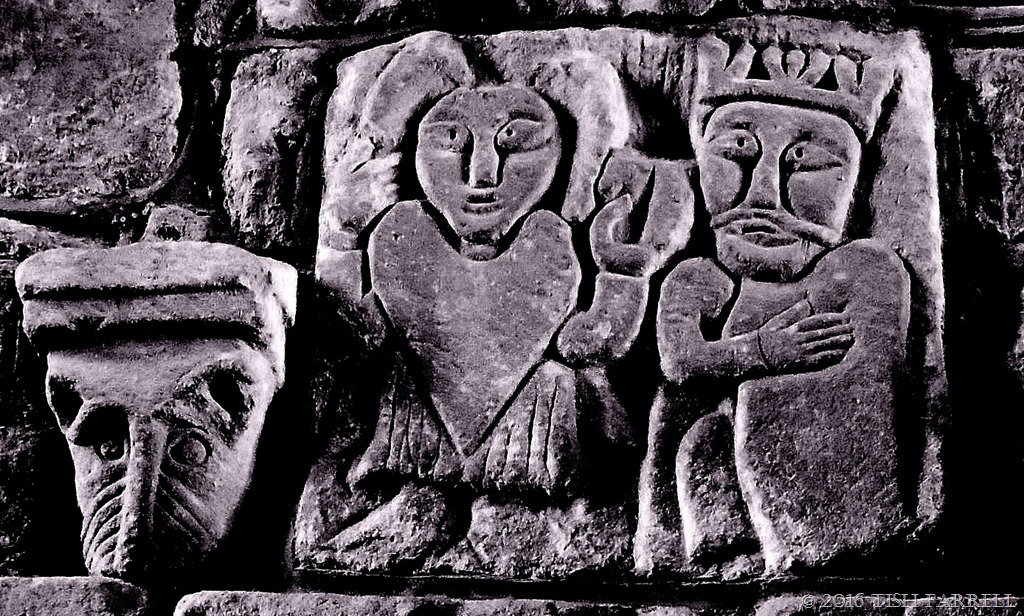
These Saxon carvings in Wirksworth’s St. Mary’s Church in the Derbyshire Peak District are around 1,300 years old. They appear to have been randomly placed in the walls during the rebuilding of the church during the thirteenth century. Nothing more is known about them, or of their precise age and origins.

At the time they were carved, Wirksworth, located in the English East Midlands, was part of the great Saxon kingdom of Mercia, whose kings and sub-kings held dominion over most of England between AD 600 – 900. i.e. until the Vikings arrived and spoiled it all with the imposition of Danelaw.

Mercia also included my West Midlands home county of Shropshire and, though seventy odd miles apart, it turns out that Saxon, and indeed later, Wirksworth has much in common with Much Wenlock; so much so, I think the towns should be twinned.

One of the Mercian kings’ cunning strategies to cement their power over their extensive territory was the spreading of Christianity, and the setting up of religious foundations and church minsters on their royal estates. These were ruled by abbesses, kings’ daughters and noble women who had been thoroughly educated for the job.

In Much Wenlock we have Milburga, daughter of King Merewald  who ruled over the Wenlock dual monastic house (monks and nuns) from around 680 AD. Her sisters and mother also had charge of religious houses across Mercia, and this function further included the management of the considerable estates and the resources that went with them.

The spread of Christianity across Mercia had its beginnings some thirty years earlier when Elchfrida (also Alchfliad), daughter of King Oswui of Northumbria married Peada, son of Penda, the last great pagan king of Mercia. According to Bede, Oswui had murdered Penda, and the later marriage of his daughter to Penda’s son was part of a peace treaty between Northumberland and Mercia, conditional on Mercia adopting the new faith. Elchfrida thus travelled south into Mercia with an entourage that included missionary priests, and it is supposed that one of them, Betti, founded the church at Wirksworth in 653 AD.

Which brings me back to the Saxon carvings. We clearly have a king. And so perhaps also his queen? It would be nice to give them names – say, Elchfrida and Peada? On the other hand the looks they are giving us are a little disturbing; Sphinx-like, enigmatic; as if they know something they cannot now reveal. Even the wild boar that has been popped in beside them by the thirteenth century mason re-cyclers looks to have something worrying on his mind.

But there is a post-script to this story. It would seem that not long after the marriage, Elchfrida betrayed her king, which led to his murder. For a brief time, then, her father King Oswui held sway over Mercia, until the uprising of 658 AD when another of Penda’s sons, Wulfhere, restored Mercian authority. It makes one wonder if Elchfrida, Christian or not, wasn’t a double agent all along. I wonder what became of her.

Wulfhere apparently went on to implement the ‘dynastic power and faith’ model with the founding of Repton Abbey near Derby. Here he installed his daughter Werburgh (later sanctified like Much Wenlock’s St. Milburga) as the first abbess. So here we have yet another example of ‘Princess Power’ Saxon-style – of royal women extending and consolidating the temporal power of their fathers through the exercise of spiritual authority.

Back in Wirksworth a document from 835 AD indicates that at this time the Wirksworth township was under the jurisdiction of Abbess Cynewaru. But there was serious trouble afoot. It seems she was being forced to cede some of her land holdings to Duke Humbert of Tamworth. She was especially afraid that this would compromise the sending of a gift of lead, valued at 300 shillings, which she made every year to Christ Church, Canterbury. (Wirksworth had been an important lead-mining area since Roman times).  Just to make sure that Duke Humbert knows where his duty lies, and who has the upper hand spiritually speaking, she proclaims in the charter that ‘if anyone should take away this my gift from Christ Church, Canterbury, may he be smitten with perpetual anathema, and may the devil possess him as one of his own.’

Fascinating stuff all this power-wielding.

copyright 2016 Tish Farrell


Black & White Sunday: Expression

Two Being Nosy On The High Street ~ As Caught By Nosy Writer ~ (That Would Be Me)

100_6264

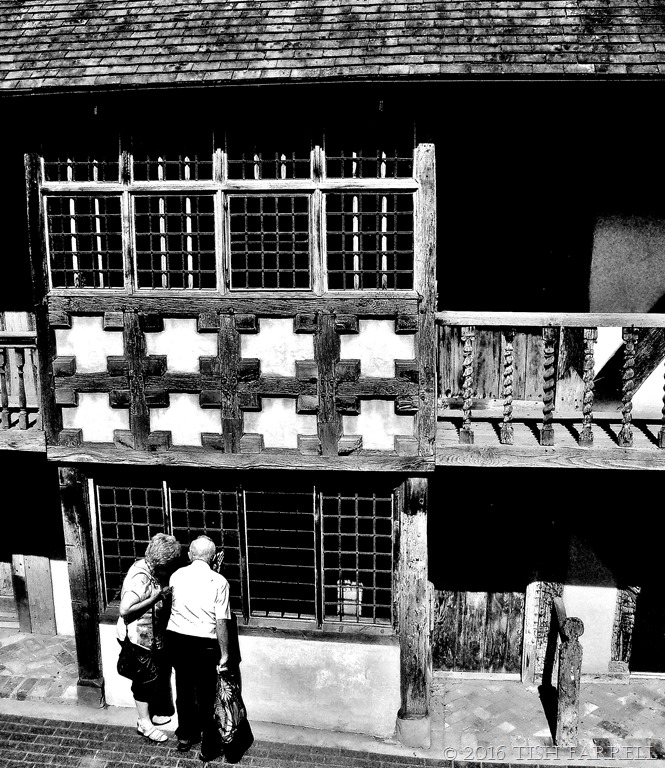
I do it myself of course when I’m walking along Much Wenlock High Street. The windows of Raynald’s Mansion are just too tempting for those disposed to be nosy. There are always interesting artifacts and pieces of unusual antique furniture inside. The place appears to be some kind of shop, but it is never open. The extraordinary timbered facade, built in 1682, was apparently a later addition to a fifteenth century hall. The Victoria County History for Shropshire rather sniffily suggests that this kind of construction was both crude and ‘old hat’ for a time when everyone who had money was going in for smart townhouse frontages in brick and stone. But  never mind the architectural snobbery. It is still one of the town’s most picturesque buildings. There are also said to be ghostly apparitions at these windows. Just the job for Halloween. I must look out for them the next time I’m out and about on the High Street.

 copyright 2016 Tish Farrell

Black & White Sunday: Couple(s)

Bears In Central Park: Who Knew?

Group of Bears by Paul Manship (1889-1966)

There was wall to wall sun when we visited New York in early June a few years ago. In fact it was so hot we spent most of our week there in Central Park trying not to melt. But the full-on sun certainly lit up these magnificent bronze bears. They are affectionately known as ‘The Three Bears’, and may be found at the Pat Hoffman Friedman Playground at Fifth Avenue and 79th Street. The work was gifted to the Park by Samuel N. Friedman in memory of his wife – a fine dedication all round.

You can find out more about  Paul Manship (1885–1966) at this link.


Daily Post: Shine

Thinking Pink Over Wenlock Edge: Thursday’s Special

P1010530

All right. All right. Call it art theft if you like. I’ve captured one of the Wenlock Edge Sky Painter’s quirkier pieces and am passing it off as my own. But then who could resist stealing that rose petal cloud? We all of us need one now and then. So please, be my guest. Cast off in the blue. Drift and dream. Who knows where it will take you.

*

Thursday’s Special  This week Paula asks us to think pink. Please waft over there for more pink thoughts.

Derbyshire’s Arbor Low ~ They Call It The Stonehenge Of The North

IMG_3357

Unlike Stonehenge a visit to Arbor Low does not include accompanying hosts of fellow enthusiasts, tacky gifts and bad coffee, nor the parting with large sums of money to go in (adult ticket £16.50). In consequence there are absolutely no facilities, no opening or closing times, and thus no need to pre-book to avoid the rush.

There is, however, an honesty box by the farm gate, and a requested fee of £1 per person. This is fine by me. The monument, though scheduled, is on private land. The farmer has to put up with the repeated nuisance of standing stones devotees, although on the September afternoon of our visit, takings suggested that scarcely a couple of dozen others had preceded us that day, and as we set off from the car there were only three people ahead of us on the track.

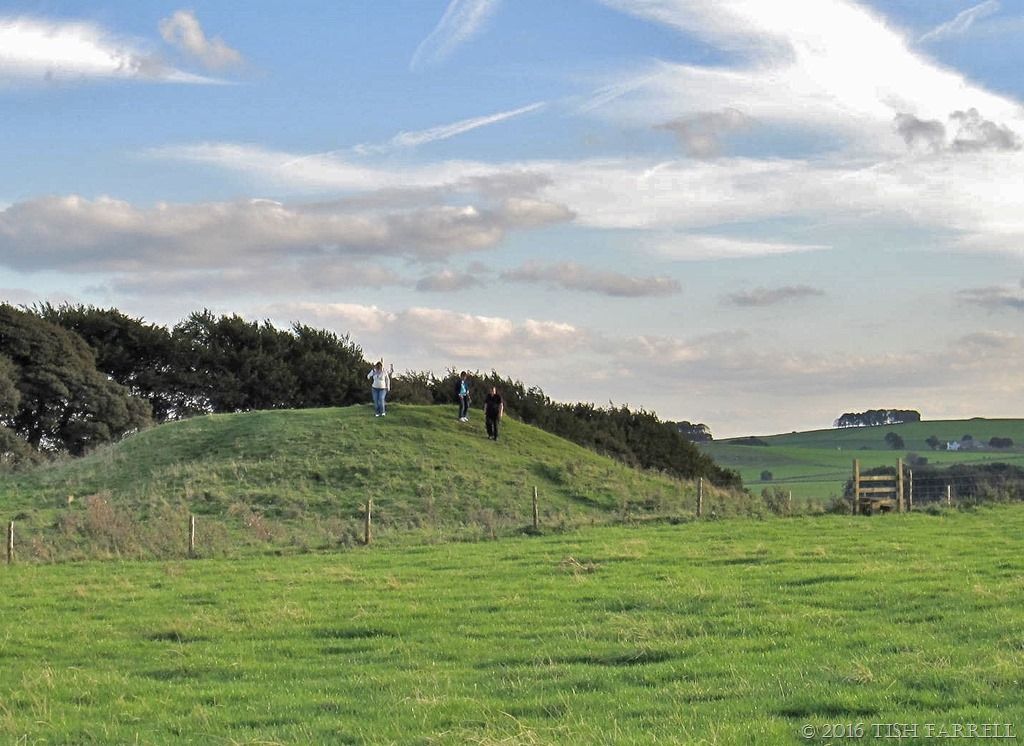
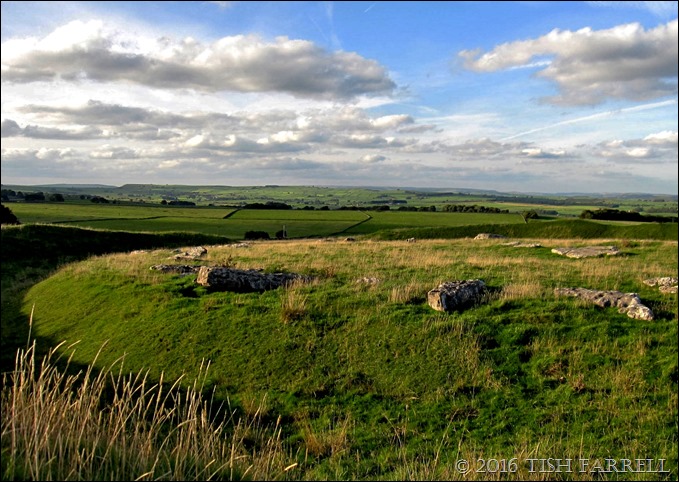
The only problem with Arbor Low is that once you’ve trekked through the farmyard and across the field to visit Derbyshire’s most important Neolithic henge (one’s head inevitably full of Stonehenge images, and lots of anticipation) it all looks decidedly flat when you get there, and so quite lacking in the upstanding drama of its more famous southern analogue. And while Arbor Low surely has considerable edge when it comes to setting (a thousand feet up on a limestone crest of the White Peak)  one wonders why the comparison has been implied at all. Isn’t Arbor Low its own special place?

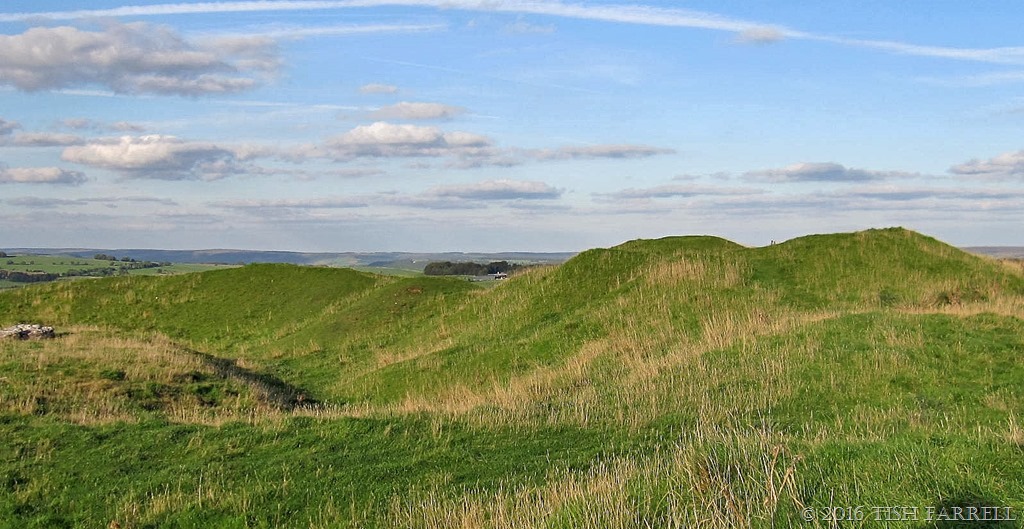
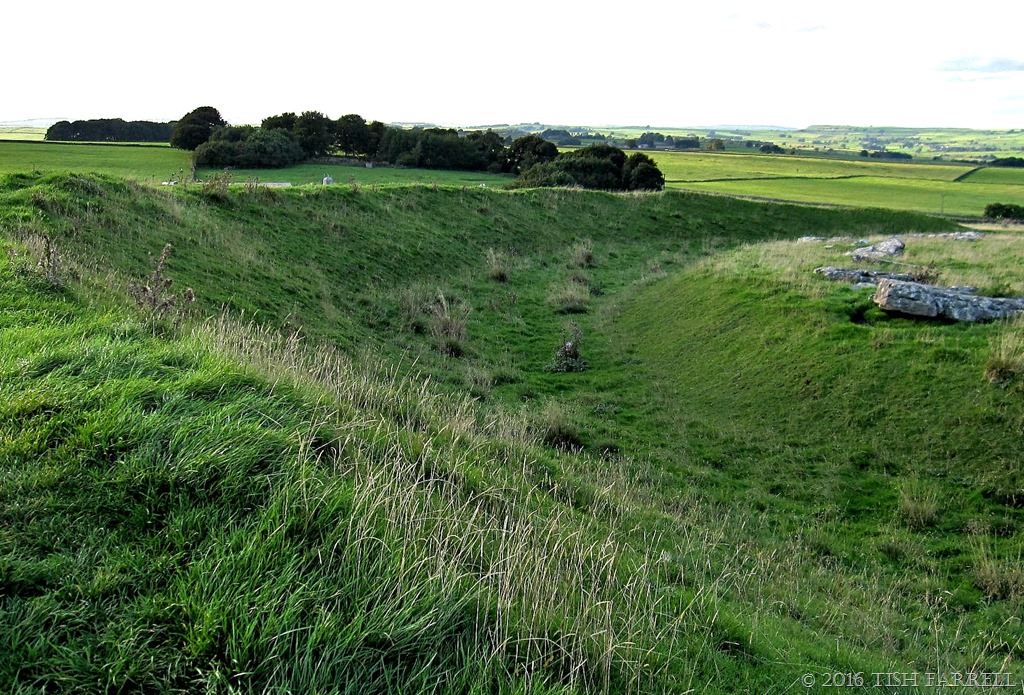
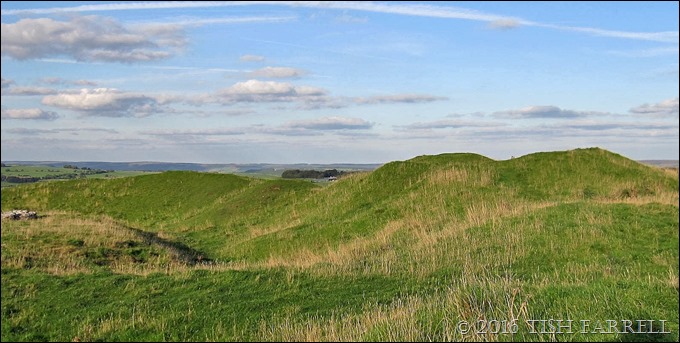
I suppose, then, that mentioning the two sites in the same breath is really more about emphasising their prehistoric importance than suggesting any correspondence in physical scale or appearance. Arbor Low is anyway a much smaller circle. But it does have its own unique features, apart from the recumbent stones that is. These include a very impressive encircling ditch and an outer rampart with the added extra of a later Bronze Age round barrow built across its southerly bank. You can see it on the right of the next photograph.
IMG_3358

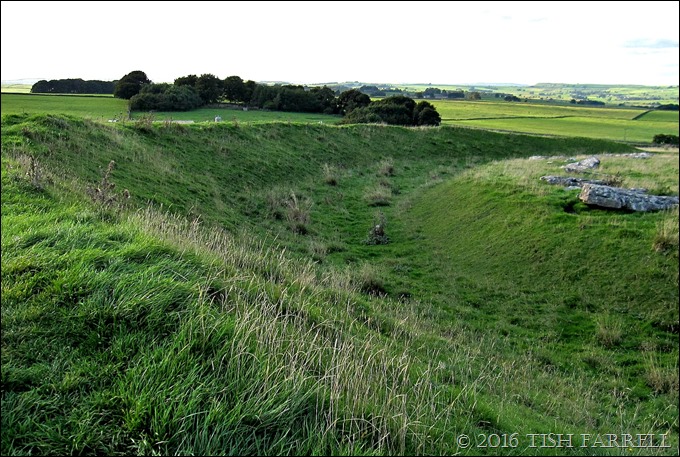
So now that I’ve raised the vision of Stonehenge with its great sarsen lintels, I want you to forget it, and think about digging. The time is some four and half thousand years ago. I am the foreman, and I am handing you an antler pick, and maybe a cattle bone shoulder-blade to use as a shovel. We have marked out a circle some 70 metres across, and now you have to start digging 3 metres down into the limestone bedrock, while shovelling up your spoil to create the outer bank.

After many, many, many man-, woman-, and child-hours you can step back and regard the massive earthwork thus created. The freshly dug limestone of the rampart will doubtless have an unearthly white-grey glow. It will be visible from miles around, despite a more wooded landscape than today. At sunrise and sunset it will look spectacular against the skyline, the bank much taller and with a sharper profile that the present remains. In other words, it cannot be mistaken for anything other than a highly prestigious, and momentous man-made structure – the visual shock equivalent of coming upon a designer high-rise in the middle of a wilderness. Or maybe Starship Enterprise.
IMG_3354

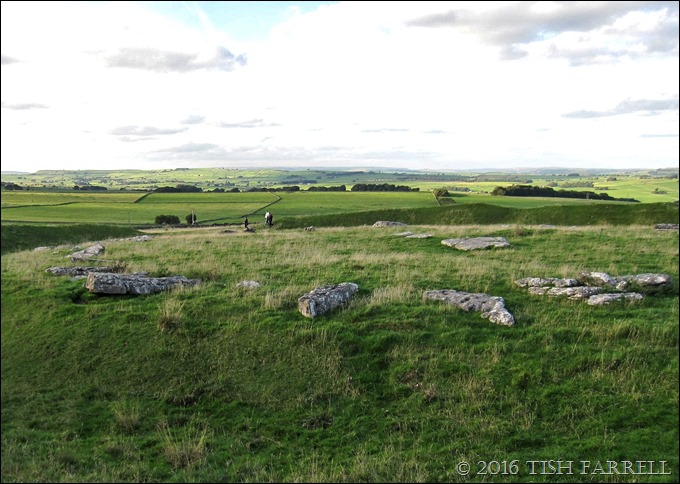
After all the digging you are left with a central oval platform around 50 metres across. Perhaps the limestone slabs are already located there, set up on end, and bedded, after much hefting and shunting, in the rocky ground. They could have been worked during the making of the ditch, or sourced from somewhere nearby. In any event, they would have involved considerable effort given your limited toolkit of stone, wood and bone.

From outside the earthwork – and because of the height of the outer bank, you cannot see either the stone circle, or to observe anything that is going on within. Stepping through the entrance to view the newly built monument is thus perhaps a deliberately contrived catch-your-breath moment: the scene before you covert, unnerving, awe-inspiring, drama-filled. If some ceremony is in progress – a narrative declaimed or sung, the outer bank will amplify the sounds in mysterious ways – echoing, resonant, other-worldly; it may be a place of loud whispers.

There will perhaps be no grass cover, just an exposed limestone arena. Around the oval platform you will see some forty standing stones.
IMG_3347

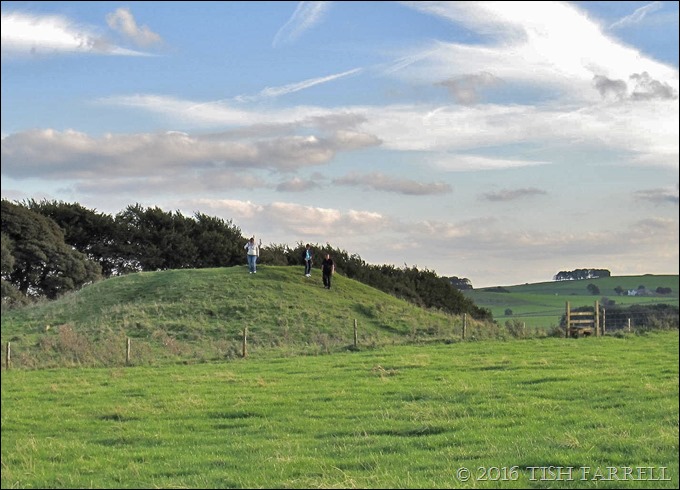
In the centre there is also some kind of sanctuary, a rectangular configuration of more standing stones. The barrow on the southern bank is not yet there. It will be another thousand years before this spot is used as a burial site – perhaps by strangers, perhaps by the distant descendants of  you henge builders. These newcomers have also built another barrow, Gib Hill, just across the field from Arbor Low. Here they raised their own tomb atop the long barrow built by your forebears, a monument that possibly long preceded the stone circle. And so although you can no longer remember the rites and customs of these ancestors, you do know that, like the great mediaeval cathedrals of Europe with their roots in Roman and Saxon times, this place was considered ‘sacred space’ for a millennium and more…

*

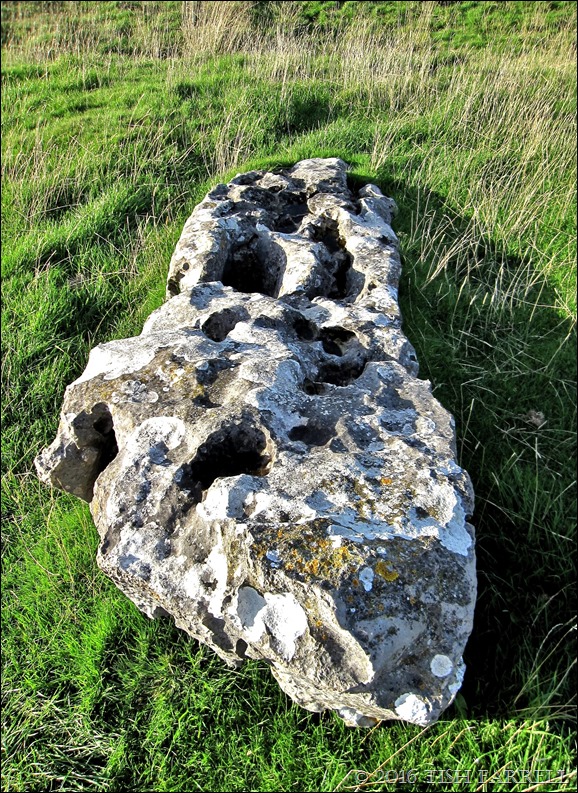
And so back to reality and the flattened circle we see today. No one knows when the stones were laid low or why. There are other so-called recumbent stone circles in Britain. Sometimes some of the stones have also been buried. Superstitious dread could have much to do with it: an attempt to neutralise the stones’ power perhaps. There is also archaeological evidence in other contexts that suggests that the prehistoric occupants themselves have ritually ‘closed’ particular sites, perhaps prior to moving to a new centre of operations. There are other more practical reasons too: later farmers came along and simply re-used or moved the stones because they were ‘in the way’.

I also seem to remember from my student field-trip days to Avebury stone circle in Wiltshire that one of the stones had been buried in mediaeval times to cover up a murder. When the stone was being restored to its upright position, beneath it was found the grisly remains of a surgeon-barber, identifiable by the tools of his trade that were still with him. More fanciful interpretations of this find could of course suggest the presumed continuing practice in pagan sacrificial offerings, i.e. the kind of activity that we modern folk so very much like to associate with all ancient stones.
IMG_3353

I suppose one of the most surprising things I discovered about Arbor Low is that there has been no archaeological exploration of this site since early Victorian times when the local antiquarian Thomas Bateman of Lomerdale Hall, and serial excavator of prehistoric barrows, tackled the place. It was he who discovered a human burial in the stone circle barrow and, during his Gib Hill excavation, uncovered a stone cist (a slab built tomb) in which the cremated human remains were placed along with an urn and offerings of meat and flint tools. And this, it seems, is all that is known.
IMG_3364

So many mysteries then, and no likely answers. Instead I’ll leave you with the words of Thomas Bateman and his description of Arbor Low from his Vestiges of the Antiquities of Derbyshire 1848:

…the solitude of the place and the boundless view of uncultivated country are such as to carry the observer back through a multitude of centuries, and make him believe that he sees the same view and the same state of things as existed in the days of the architects of this once holy fane.


copyright 2016 Tish Farrell

The Local Garage, Much Wenlock

P1050141

As you drive over Wenlock Edge and descend into Much Wenlock town, this is one of our first eye-catching local landmarks. I don’t know when it was last open for business, but the blurb on the poster now seems a touch ironic:

The more we progress the further you go                                                                                                                   The Michelin Man

I should perhaps say we do still have a fully functioning motor repairs place, but it obviously isn’t here.

Daily Post Photo Challenge: Local

Be-eautiful Borlotti

IMG_3522

Well I simply couldn’t miss taking part in Yvette’s inaugural Friday food challenge over at Powerhouse Blog. So here you have them, my favourite beans, caught at the allotment in a sunset glow. Not that they need external aids to enhance their beanificent beauty. Not for nothing do the Italians call them: Borlotto Lingua di Fuoco –  Fire Tongue.

I love everything about them. I love growing them. I love the way their pods change colour through the summer – from green to deep claret. Then, as picking time draws near, the leaves turn yellow, and start to fall, revealing hanging rows of glowing pods.

P1050738

But the best bit is shelling them. You never know what colour they will turn out – pea green, cream with pink speckles or claret with creamy streaks. Every bean is different.

100_6425

I usually freeze them freshly podded, or you can dry them. Freezing means they are quick to cook, and you don’t need to do the overnight soaking necessary for dried beans. They are highly nutritious, mineral and fibre-rich, and can be used in soups, or to make baked beans. I use them mostly in re-fried bean dishes. This simply involves mashing up a batch of cooked beans with fried onion, garlic, and a few chopped tomatoes, then adding seasoning, chopped parsley or coriander, plus spices of choice (I use chilli and cumin), turning all into a shallow, heatproof dish, topping with cheese, and putting under the grill for 10 or 15 minutes. We eat this by itself with a salad, or as a side dish with just about anything savoury. A poached egg on top would also be good.

You can find out how to grow borlotti beans HERE. Then pop over to Yvette’s for more vegetable offerings:

fridayfoodbadge

copyright 2016 Tish Farrell

Maintaining A Web Presence Despite The Big Windows 10 Update Ambush

IMG_3601

The blogging schedule, and life as I knew it went haywire last week after Microsoft (welcome to the totalitarian state of cyberworld) inflicted on us the apparently much vaunted (though I actually didn’t know a thing about it until it happened) anniversary update of Windows 10, so sending thousands of worldwide users into a state of serial rebooting frenzy.

While it is true that my newish laptop made it through unscathed, my older PC, on which I do all my writing and blogging, was completely banjaxed web-wise. And not only could I no longer access the internet or my email for more than five minutes together, and then finally not at all, the update transformed my printer into a fax machine. Now that is clever. I do not own, nor have ever owned a fax machine. Needless to say, my virtual fax gadget would not print off Marilyn Armstrong’s corn bread recipe that I had downloaded from her blog. Rats and double rats.

I should have known that things were not going well for the PC when it took hours and hours and hours to complete the update. The temper was thus well frayed before I discovered what Microsoft had done to my settings. I mean, how dare they? HOW DARE THEY!

I was well into a second day of cursing and fretting and attempting all sorts of unnecessary and time-consuming procedures (defragmenting, dis-installing Google Chrome, rebooting, removing all weighty files from the PC to an external hard drive, re-setting the router, disconnecting from internet provider) when I finally went to the laptop and googled ‘Windows 10 update problems’. And low and behold, there revealed was the worldwide extent of the Microsoft mess-up.

In an article in Forbes Magazine  lovely, lovely Gordon Kelly addressed the problem of those inflicted with rebooting-itis, and in so doing revealed that it was possible to go into computer SETTINGS  and find the option to revert to pre-update settings.

Select and press enter.

Well, for goodness sake!

It sounded too simple for words. But, by Lucifer, it worked. Astonishing. One click, and my little corner of the internet universe was restored. The printer stopped masquerading as a fax machine and printed the corn bread recipe. The only problem is, will this work the next time Microsoft inflicts an unwanted all-system update on us? What settings might my machine revert to next time? Should I not risk it? Should I try to go back to Windows 7, which was perfectly adequate for my purposes? Is it even possible to do that now I’m infested with Windows 10, or will everything be screwed up?

Mr. Kelly says Microsoft really needs to unhook security updates from general operations, AND more importantly, give people an option. I should think so too. Mr. Kelly also informs us that Microsoft mean to instigate charges for the use of their wretched system with its overblown advertising and unnecessary apps and gizmos which take ages to clear out of one’s machine.

He says that to start with the $7 per month fee will only be charged to commercial users, but one can see where this is heading. Frankly, I would like a bit of compensation for two days of wasted time and utter fraughtness. Apart from which, what if I had been running a small business that was dependent on internet function; what if the laptop had been afflicted too, and I hadn’t found a solution that avoided calling in a computer expert and cost me money?

Mostly though I would like to be assured that Microsoft is NEVER, EVER going to do this again. No organisation should have this kind of power – to have total control of my machine on my desk  in my own home, and without a by or leave. I mean, what have we let in here? A cyber version of Pandora’s Box?

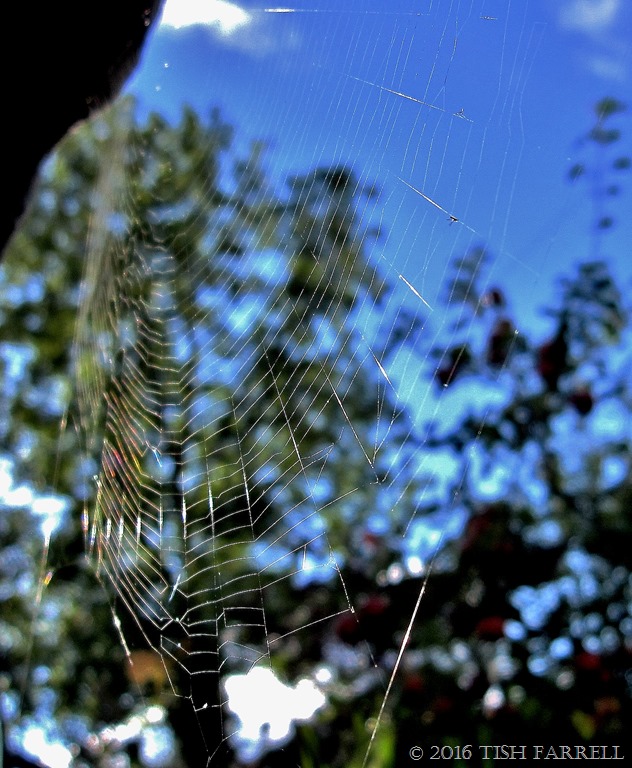
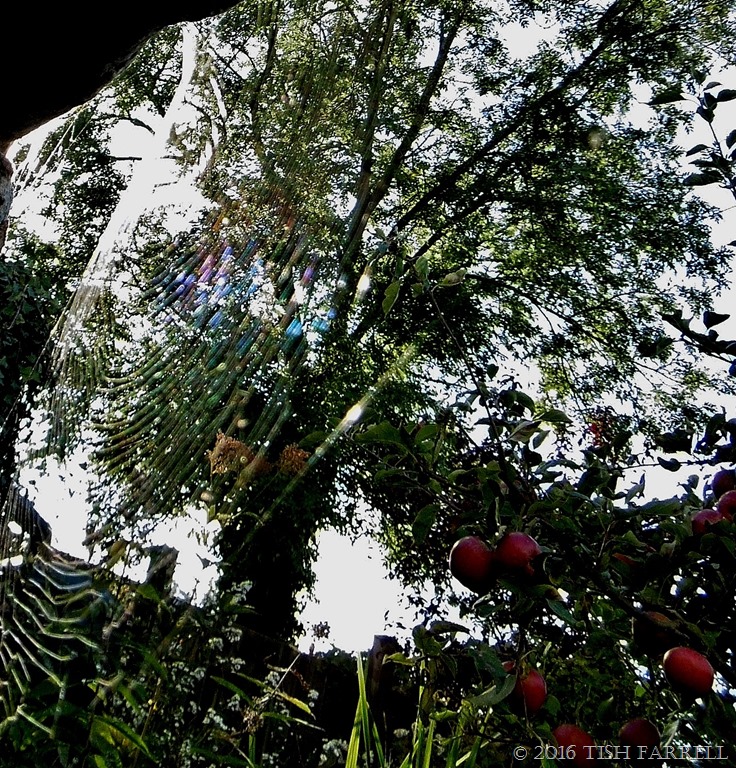
And now I’ve wound myself up again, I’ll go back to where I started with a soothing image of an untainted kind of a web, as seen yesterday in the corner of the kitchen door. This version even comes with its own rainbow and strangely displaced hydrangea reflections from across the garden. Looking at it now, the Luddite lifestyle option suddenly seems appealing – out with the hi-tech machines, back to the solitary writer’s garret and a quill pen? Hm. Maybe not. But perhaps I’ll log off and go and make Marilyn’s corn bread. Far more wholesome.

P1050810

copyright 2016 Tish Farrell