July’s Changing Seasons ~ To Shropshire’s Mysterious Stiperstones

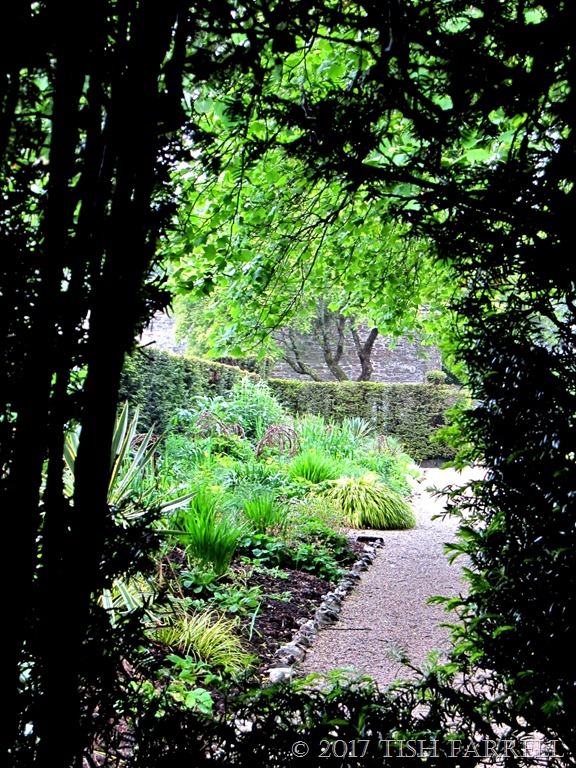
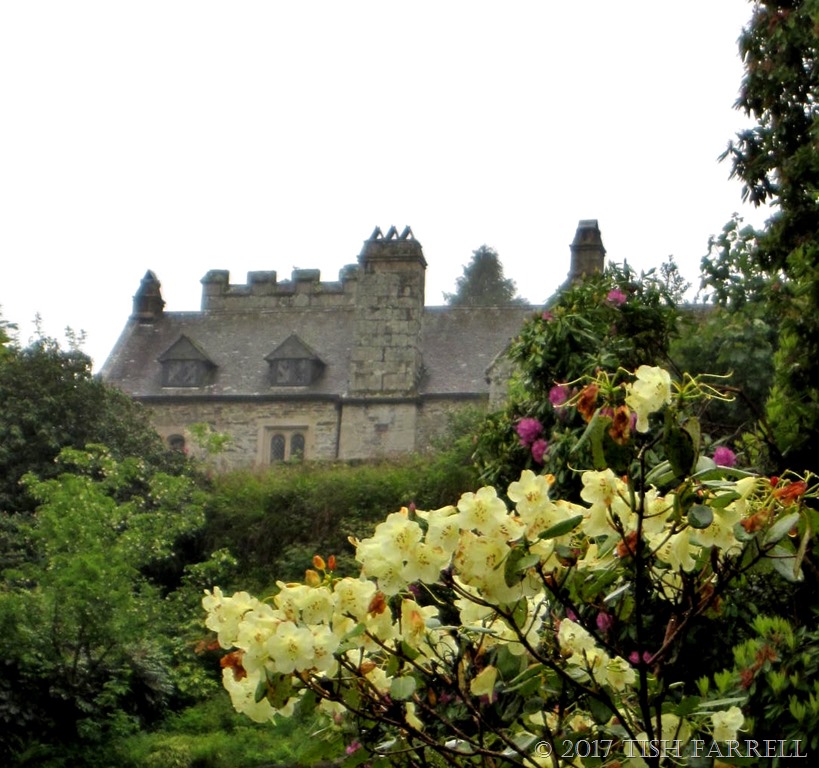
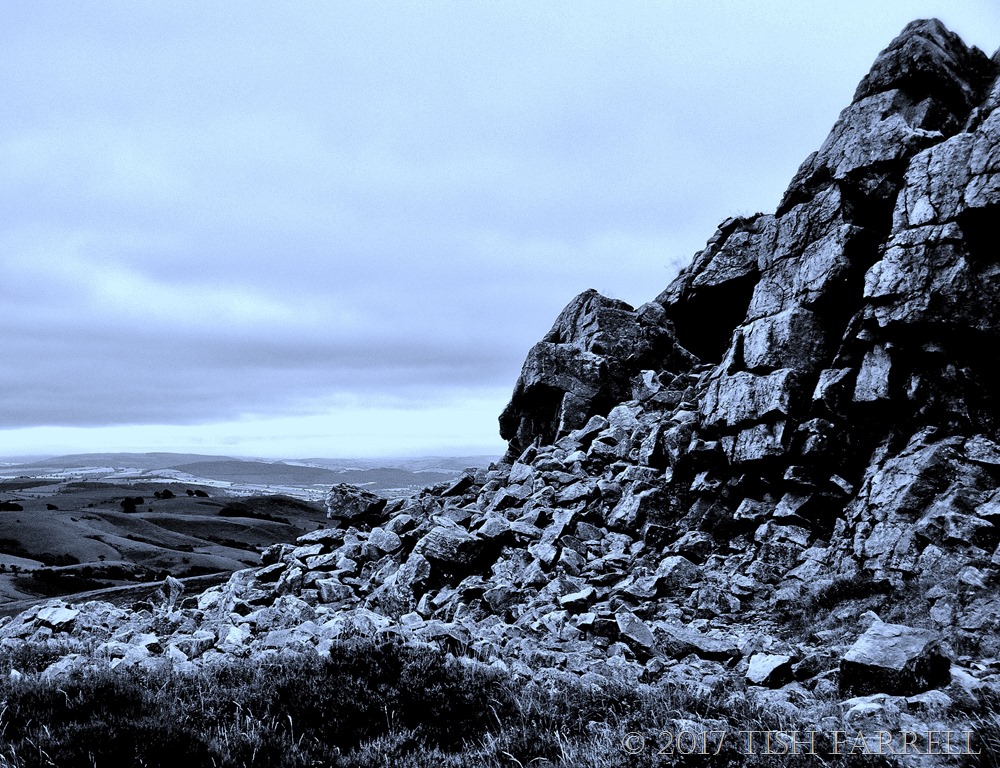
It is a wild and brooding place, one of the strangest in South Shropshire’s hill country. For one thing the Devil has his chair there, and when the mist comes down, this is where he sits – brimming with pent-up malevolence but unseen by us mortals.

We did not encounter mist on Saturday when we ventured there so we assumed the Devil was out. But there were lowering skies, a near absence of light and the threat of rain. Oh yes, and wind, that somehow caused a discontinuity of function between brain and feet, so making the trek over moorland paths strewn with quartzite cobbles somewhat hazardous.

The Stiperstones ridge extends 5 miles (8 km), and at its highest point on Manstone Rock is 1700 feet (536 metres) above sea level.  Standing on the top you can look west across the great expanse of Wales, and on clear days see Snowdon and Cader Idris mountains. Turn east, and you can scan across the Long Mynd to north east Shropshire and far, far beyond.

The ridge has ancient origins and half the world away, some 60 degrees south of the equator. It probably began existence as a quartz sand beach laid down by a shallow sea during the Ordovician, some 495-443 million years ago. Thereafter the landmass moved one inch a year for the next 450 million years to reach its present location 50 degrees north of the equator. A slow, slow journey, then, of 7,500 miles.

You might think, as you look at succeeding images, that it doesn’t look much like a beach these days. In fact it has suffered much folding, sending the beach skywards, and tilting it at angles of 80 degrees in places. Along its length are a series of  quartzite tors described by the eminent Victorian geologist, Murchison, as ‘rugged Cyclopean ruins’ (The Silurian System 1854). Besides the Devil’s Chair and Manstone Rocks there are also Diamond Rock, Cranberry Rock, Nipstone Rock and several other eye-catching outcrops.

The place is also described as ‘relict landscape’, one that is undergoing continuous weathering. What we see today was mostly shaped during the last Ice Age when the quartzite was locked in permafrost. Moisture seeped into the cracks, and as it froze, expanded, causing the rock to fissure and fragment.

The moors below the ridge-top are rich in whinberries and cowberries, and so provided food and grazing for human populations from at least the Bronze Age. These people from prehistory left us their burial monuments – stone cairns along the hill’s spine. Then around 100 CE the Romans arrived, avidly searching of silver, but mostly mining lead, and smelting it in hillside boles to provide material to line their plunge pools, make water pipes, cover roofs, construct their coffins, and for the craftsmen of Wroxeter Roman City to use in the production of pewter.

Down succeeding centuries lead mining expanded dramatically. The flanks of the Stiperstones are littered with adits and the mine shafts that featured so dramatically in Mary Webb’s Gone To Earth.  One of the biggest concerns, Snailbeach Mine, started at the foot of the hill in 1783, employed 500 workers at its height. For a century and more, then, the wild countryside was also a filthy industrial zone of delving, massive spoil heaps, steam-pumping engines and hard-worked men and boys.

Yet somehow this phase too has somehow welded itself into the mythic fabric of the landscape, an impression heightened by the strange visual effect of Stiperstones quartzite – that it somehow looks black against the light, when in fact it is grey and speckled with ice white crystals.

And on that note I’ll leave you with the words of Much Wenlock’s Mary Webb, whose writerly landscape this very much was – and in all senses. This quote is from The Golden Arrow:

The whole countryside was acquiring in his eyes something portentous, apocalyptic. For the personality of a man reacting upon the spirit of a place produces something which is neither the man nor the  place, but fiercer or more beautiful than either. This third entity, born of the union,  becomes a  power and a haunting presence – non-human, non-material.

This slideshow requires JavaScript.

copyright 2017 Tish Farrell

Changing Seasons – Please visit Max for this month’s jaw-dropping vistas from his trekking trip to the Romsdalseggen: not for the faint-hearted.
Butterflies In The Buddleia, Bees In The Teasels And All’s Well At The Allotment

IMG_5571

IMG_5418

IMG_5437

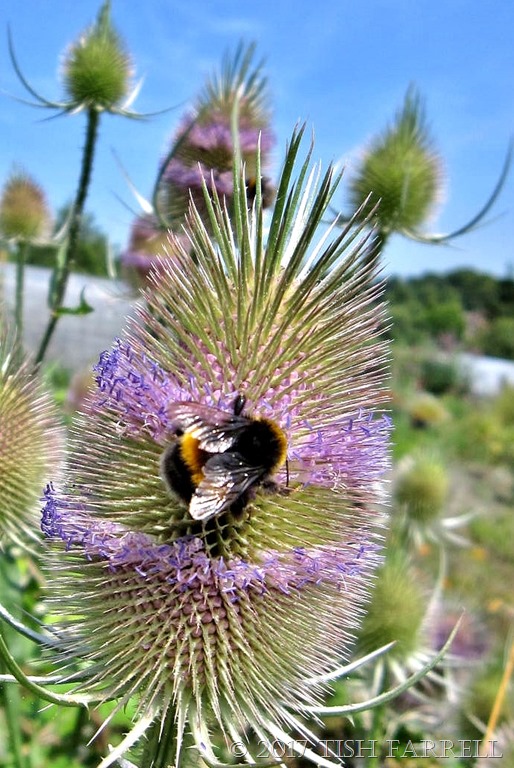
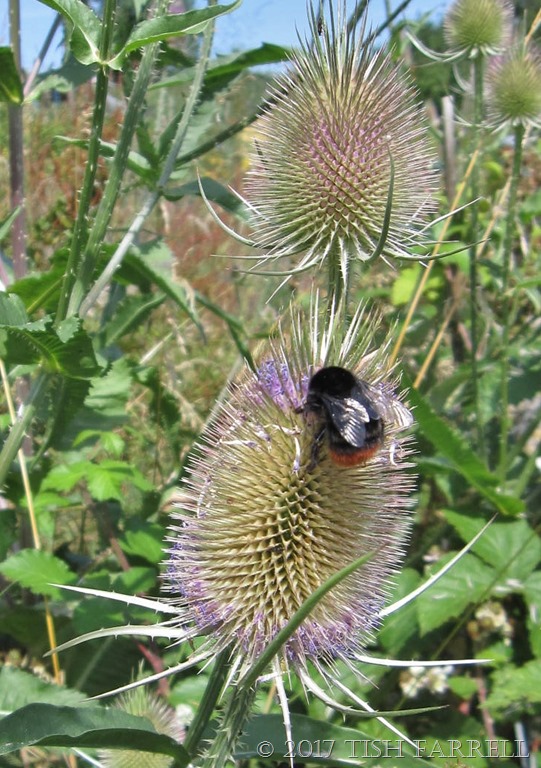
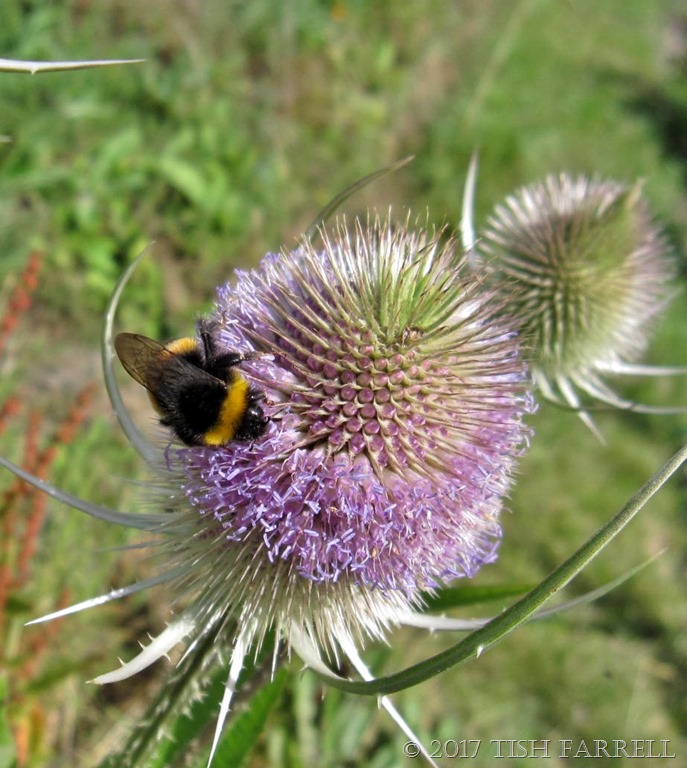
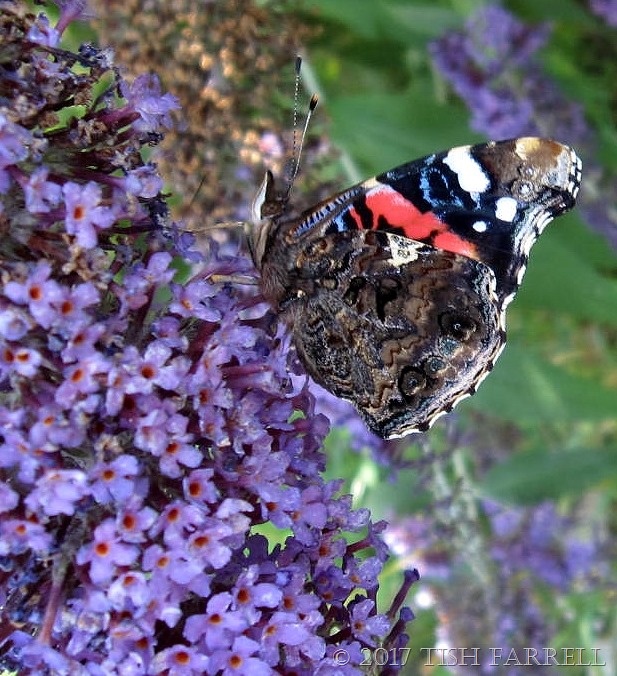
Over the past few days the butterflies have been feasting on the allotment buddleia bushes. From top down we have: Red Admiral, Comma, and Small Tortoiseshell. In the teasels we have assorted bumbles:

IMG_5552

IMG_5545

IMG_5395

This morning when I arrived at the plot, there were insects everywhere. It was also very hot, so I was glad to take a break from sieving compost and wander round, capturing some of the busy foragers. Having had a nice little play with my Canon Ixus, I then went back to work. I harvested my onions, hung them in the sun to dry, watered the polytunnel jungle, fought the tomato vegetation into submission, discovered a neat little cauliflower out in the raised beds, picked French beans, courgettes, plucked a few beetroot to make borsch and a lettuce for our neighbours, sowed some golden beetroot, carrots and Florence fennel, then staggered home across the field whither I arrived a very dishevelled and grubby person. Back at the homestead, he who is building a shed in the back garden had erected the fourth wall to his edifice, or at least the framework for same. And having laboured all morning and well beyond lunchtime, we then retreated to the cool of the kitchen for a restoring cup of tea. And there you have it, Monday chez Farrell – overheated but happy.


Am linking this to Jo’s Monday Walk which (as ever) is totally fabulous this week. Please trot over there for a longer walk than mine to the allotment, and also for some very lovely candlelit scenes around the streets of Lagoa.

Monochrome Strawberries ~ A Challenge Too Far?


IMG_5092 - Copy (2) - Copy

I don’t know about you, but the transformation of luscious red strawberries into non-colour is more than a little disturbing. For one thing it’s challenging my atavistic hunter-gatherer impulse to be drawn to a much-loved, ripe and ready fruit. My hand is reaching out to pick even as I am anticipating the sweet juiciness on my tongue and the inevitable dribble down the chin.

But what am I to make of the monochrome fruit? At the moment I’m thinking not only do they NOT entice, but I would also give them quite a wide berth. I’m also thinking I could be onto a whole new weight-loss-fad – ‘The  Monochrome Diet’ anyone?

copyright 2017 Tish Farrell


P.S. Many thanks to Paula at Lost in Translation for her intriguing ‘After and Before’ photo editing exercise. It throws up all sorts of perceptual conundrums.

Seize The Day ~ A Lesson In Flowers

IMG_5287

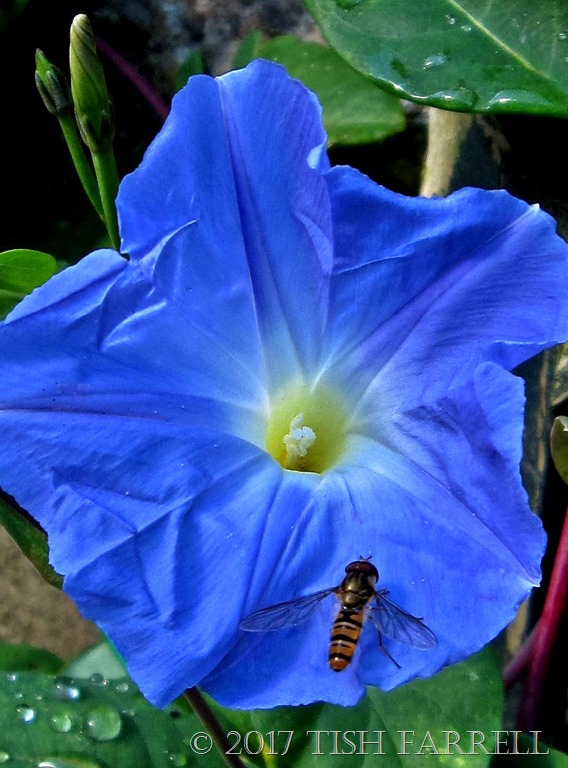
You  have to be out of bed rather earlier than I am to catch the Morning Glories unfurling.  That is probably lesson  number one: be up and doing earlier in the day; nurture the creative impulse before the world of dreaming totally recedes and mundane matters like doing the washing impose.

Then there is the lesson of making the most of opportunities as they arise, and at least here I came up to scratch. I dashed outside in my night attire to capture this scene. The hoverfly will feast. The Morning Glory will be pollinated. And I am watching, recording and posting. Everyone wins.

All the same, on the side lines my writer’s nerves are jangling. There are other lessons here. For one thing I have several works in stasis, projects that I dearly wish to complete. But for some reason I’m not attending to any of them. The danger is that procrastination may soon transmogrify into something toxic – a stultifying sense of failure that in turn becomes a downward spiral of non-doing and self-recrimination. The writer’s vicious circle.

IMG_5450

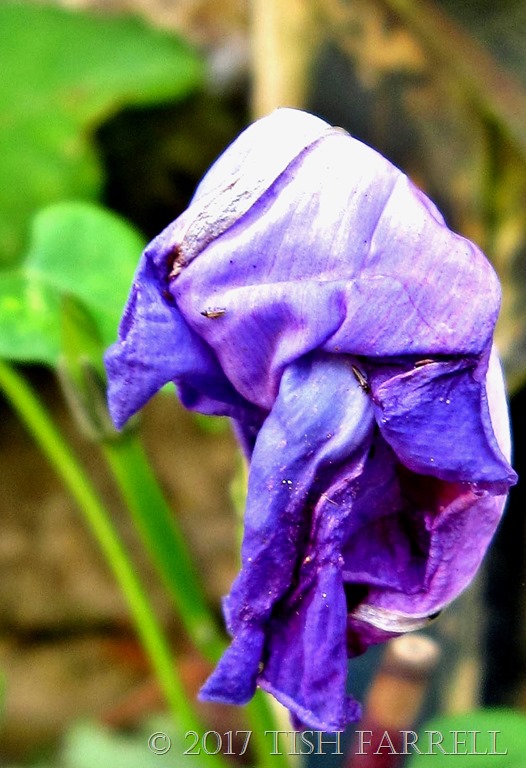
But wait! I’m hurrying back to see what has happened to the Morning Glory. By late afternoon the sky coloured canopy of the day’s high hopes has imploded – the colours deepening, bruise-like.  It is hard not to feel a pang of loss for such swiftly passing loveliness.

Yet there is a beauty here too in the subtle end-of-spectrum shades. Not failure, but process. Deep within the crumpled sheath things are happening. The hoverfly has done its work. There will be fruit in the making, new seeds to ripen and sow. Tomorrow is another day. Another chance to bloom. Time to get back to work then.


copyright 2017 Tish Farrell


P.S. For more beauty in decay, pop over to Sue Judd’s blog. It is a theme she explores in many arresting photo essays

Wandering Around Cotehele House In The Rain ~ Traces Of The Past

IMG_4619

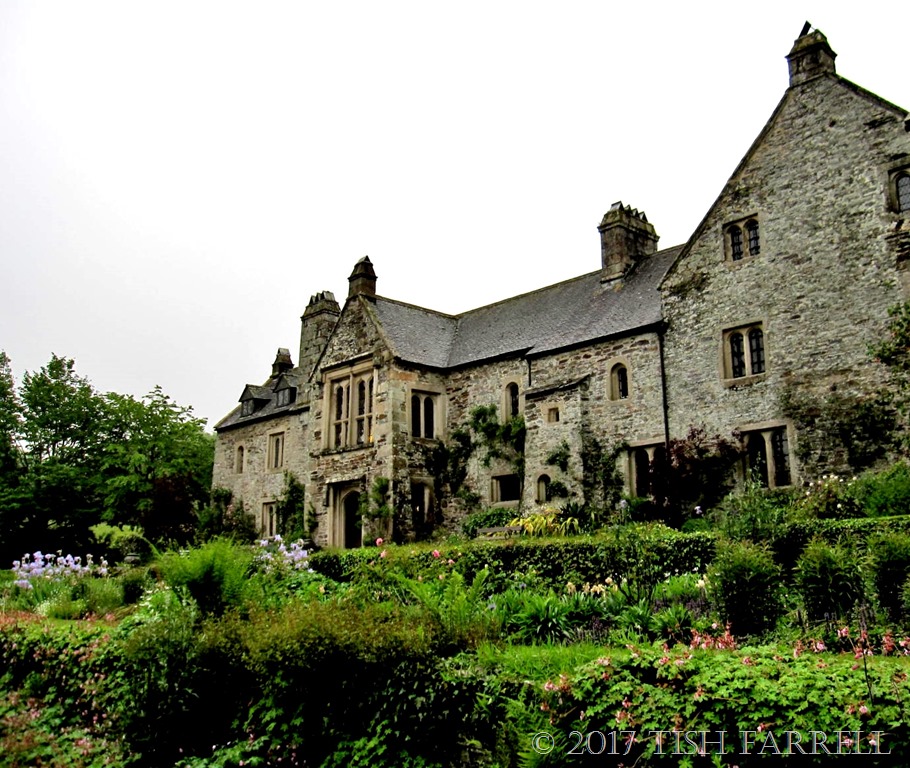
Cotehele House in the Tamar Valley in Cornwall began life around 1300 when it was owned by a family of the same name. Fifty years on, a marriage delivered it into the Edgcumbe family who owned it for the next (almost) 600 years. These new owners remodelled the house in the 15th, 16th, and 19th centuries, as well as building themselves another (their principal) house further down the Tamar River at Mount Edgecumbe.

In 1947 the 6th Earl gave the house to the nation in lieu of death duties, and it is now owned by the National Trust, one of their more atmospheric  properties. It was particularly atmospheric on the rainy May day when we were last there, and also on the rainy December day when we went there to see the famous Christmas garland.

IMG_4664

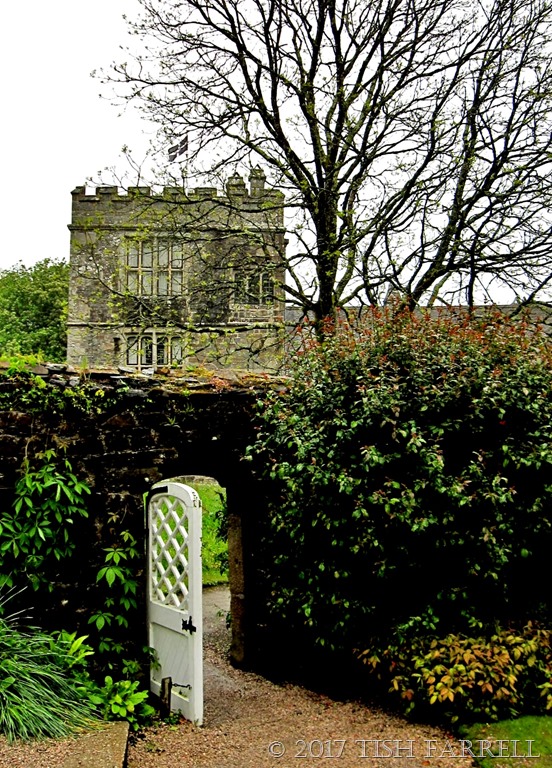
15th century Gatehouse

*

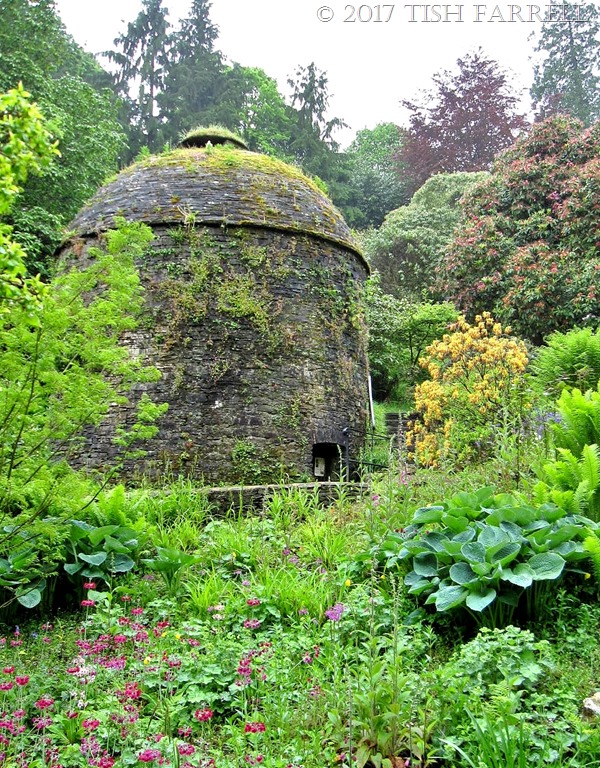
The house has extensive grounds. In the 16th century there were two parks and orchards. The 1730s estate map also shows a bowling green, and the dovecote of the first photo. This dates from around the end of 16th century. The lantern top provided access for the birds, which were of course cropped for meat.

The gardens we see to today were most shaped in the late 19th and early 20th centuries and extend to around 6 acres: lovely even on a wet, and gloomy Cornish day.

IMG_4636

IMG_4608

IMG_4655

IMG_4638

IMG_4623

Thursday’s Special: Traces of the Past

Windswept On Llanddwyn Island

P1060362

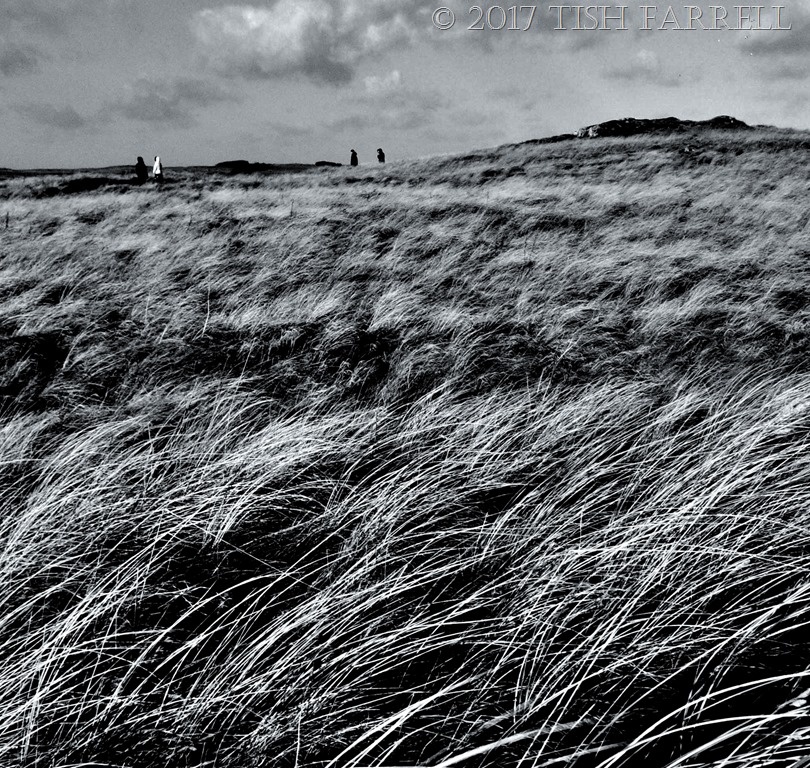
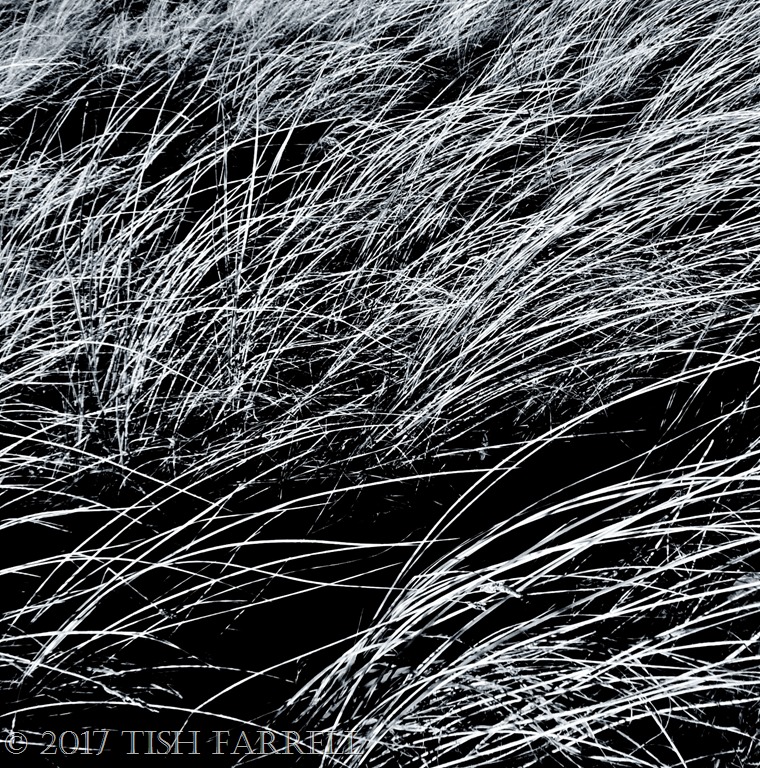
I’ve chosen a very literal interpretation of Paula’s theme at Black & White Sunday. First of all I thought you could not get any ‘lower-lying’ than at sea level, at least not without immersion in said sea. And then I thought of Marram grass being laid low in the gale, and how I was attracted by its bowing texture.

P1060361

*

And then I thought of the sand beneath our feet:

P1060416


These photos were taken last Christmas on a beach walk to Llanddwyn Island on Anglesey, North Wales. You can see more about the island HERE.


Black & White Sunday: low-lying

First Allotment Spuds ~ Belle de Fontenay

Next to my excitement in turning over a well-rotted compost heap, comes the joyous anticipation of lifting the first potatoes. Will they have grown well? Will the slugs  and other pests have got in there first and had a feast? But no. Here they are – somewhat irregular in shape due to the long, long dry spell with only two or three rain showers to spur them on – lovely Belle de Fontenay.

This is an heirloom variety introduced in France in 1885. Pale yellow, firm, waxy – ideal for steaming or boiling, their flavour apparently improving with keeping , although I cannot verify that bit as we generally eat as I dig. And as well as arriving early, these pommes de terre have other obliging qualities. They don’t mind what kind of soil they are grown in, and they seem to love my allotment, which given its unyielding soil, is a huge plus.

This year I planted most of the potatoes on the ground I’d covered with several inches of partially rotted compost back in the autumn. I also sprinkled in some biochar and fish, blood and bone meal before planting in April.  This was a half and half no-dig enterprise, in as much as the overwintering compost cover saved me from having to dig over the whole plot as I would have done in the past.  I didn’t dig trenches either, just a row of holes, one for each potato.

The ultimate no-dig method would be to simply bury the spuds by hand in the compost layer, thereafter adding more compost to earth them up. But then that requires an awful lot of compost.

Anyway, compromise is everything when it comes to allotment gardening.

The spuds in the photo were delicious, steamed and shared last night with  good friends from Buffalo, Jack and Kathy, who come each year like swallows to spend the summer in Wenlock. Also on the menu was Chicken Hymettus (recipe below), and also from the allotment, finely  sliced greens (Tuscan kale, Swiss chard, beet leaves, Greyhound cabbage), Onward peas, lightly steamed, and served with  a walnut and parsley pesto sauce.


Hymettus Chicken (serves 4)

chicken portions cut in half if large – I used thighs as they were

limes – juice and zest of 3 (or 2 lemons)

saffron strands – a good pinch

oil and butter for frying

honey – 2 tablespoons preferably light and runny though I used gooey dark African

thyme – 2 teaspoons fresh chopped/ 1 level teaspoon dried

mint – 2 tablespoons chopped

salt and pepper

almonds flaked – a handful


Prick skin of chicken pieces, place in shallow dish and pour over lime juice and zest. Marinate in the fridge for 1-2 days, turning meat occasionally.

When ready to cook, put saffron in a cup and add 4 tablespoons boiling water and leave for 20 mins.

Lift chicken from marinade with slotted spoon and fry in butter and oil till golden brown all over.

Strain saffron and mix liquid with honey and the remaining marinade. Pour over chicken, add thyme (I actually used Greek oregano), half the mint, and salt and pepper. Cover and simmer very gently for 45 minutes, or until the chicken is tender.  Toast the almond flakes and to serve, sprinkle over the dish with the rest of the mint.

This recipe works well cooked a day in advance and then reheated.
copyright 2017 Tish Farrell

Six Word Saturday

Manhattan From The Staten Island Ferry

Our trip to New York a few years ago coincided with a heat wave. It was too hot to think or walk far from the iced coffee stalls in Central Park, or the cooling air conditioned corridors of the Met. The other best place to be was riding the Staten Island Ferry.  Nice breeze. Stunning views of Manhattan and dead cheap.


Thursday’s Special: please visit Paula and pick a word that inspires you. I’m going for ‘soaring’.

The Changing Seasons: And Most Of Them Happened In June

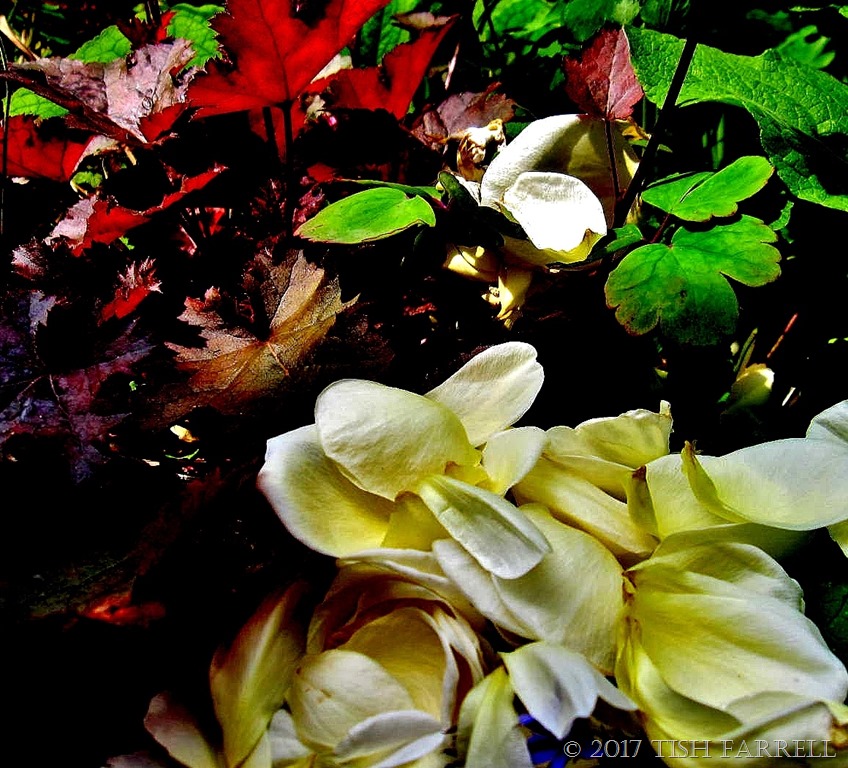
So much weather in June! The header photo rather sums up my feelings of rapid changeability – flowers in the garden one minute, then gone the next.

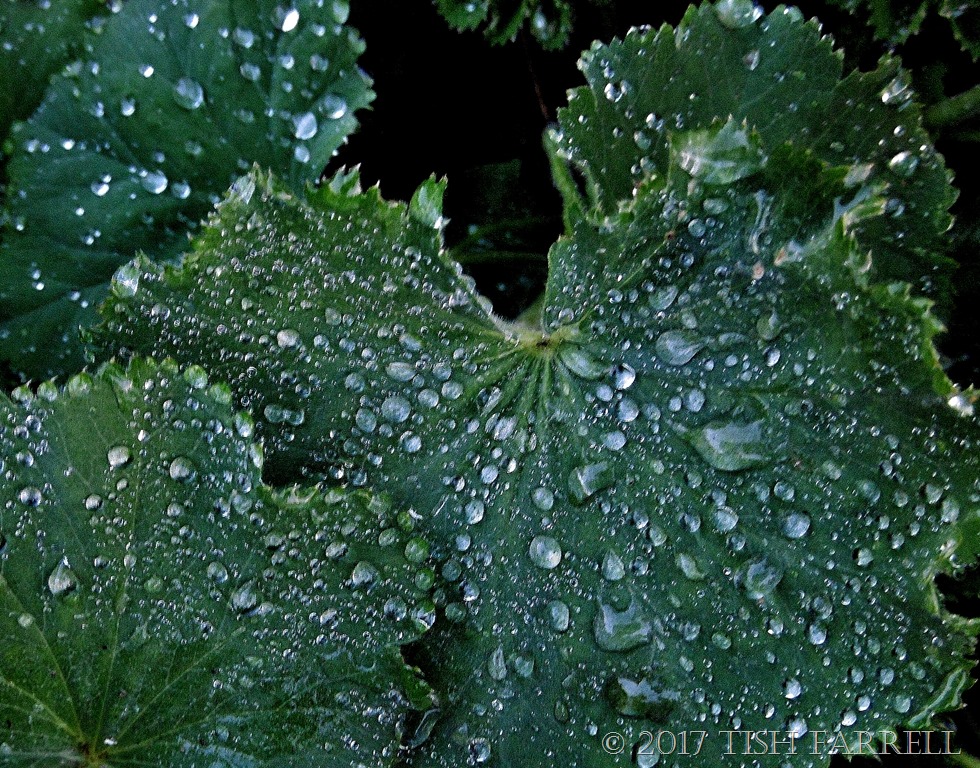
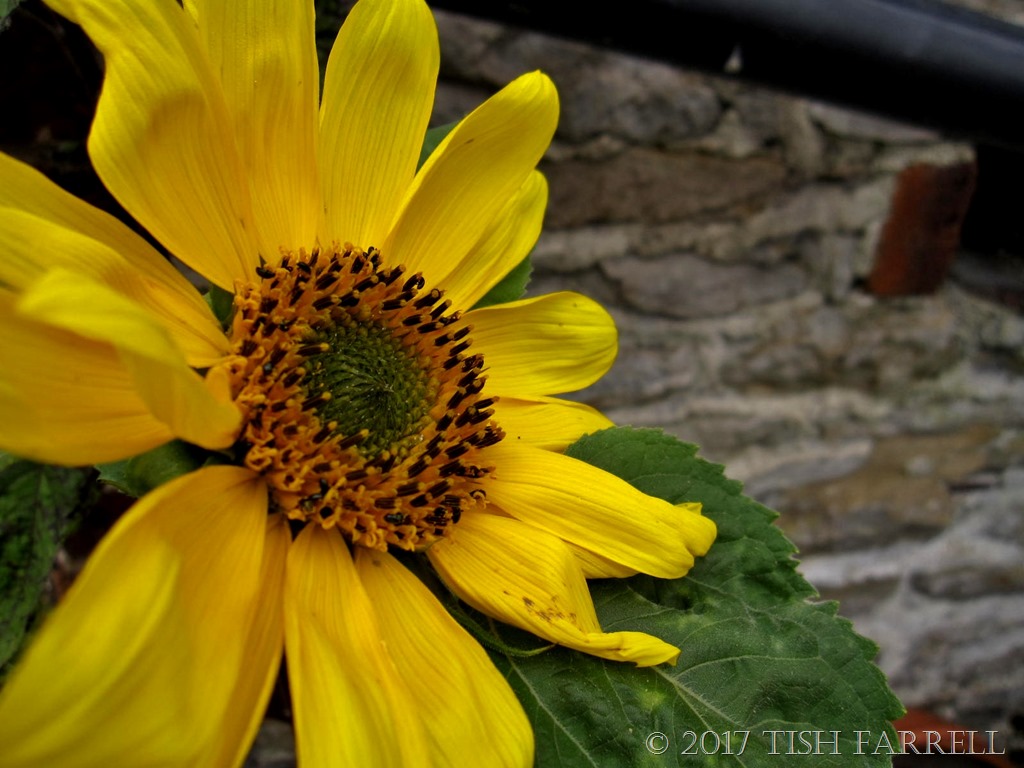
Here in the UK we’ve sweltered in temperatures above 34C. We’ve had prolonged drought. There have been cold winds. And now this week we’re having a ‘mini-monsoon’, the temperatures dropping so it feels and looks more like October. Yesterday along Wenlock Edge there was even fog, and this morning when I went outside to survey the plant life, it was to find autumnal spans of spiders’ webs glistening with raindrops, and the newly opened sunflower looking as if it wished to go back in its bud. It looked so forlorn staring at the place in the leaden sky where the sun should be.
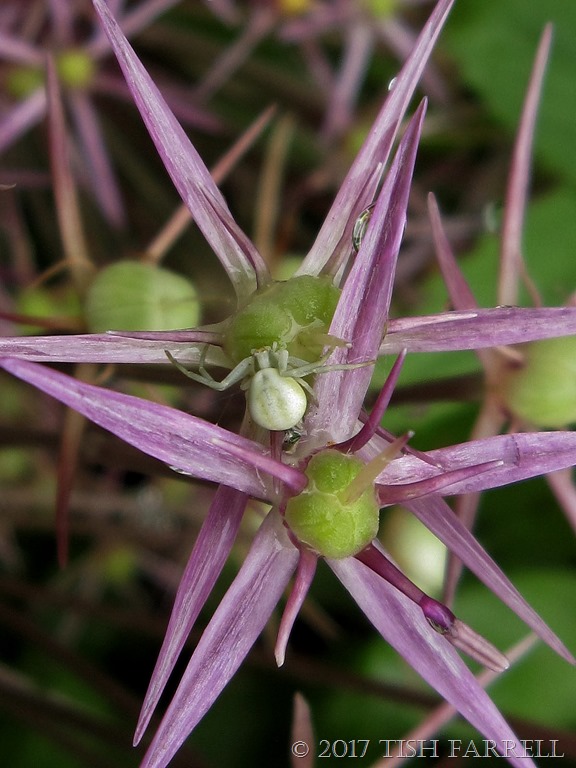
On top of that, the last of the Teasing Georgia’s roses have been trashed and mashed, the foxgloves that were so stunning are all gone, and the allium seed heads (that look like floral fireworks ) are alive with the tiniest crab spiders, all busy being rather sinister despite being scarcely more than two millimetres across, and just out of their eggs. This first photo makes said arthropod look monster sized. For a better sense of scale look out for the spider on the second allium shot. It’s near the bottom edge, left of the flower stalk.

IMG_5195

IMG_5197

P1080232

IMG_5206

IMG_5183

*

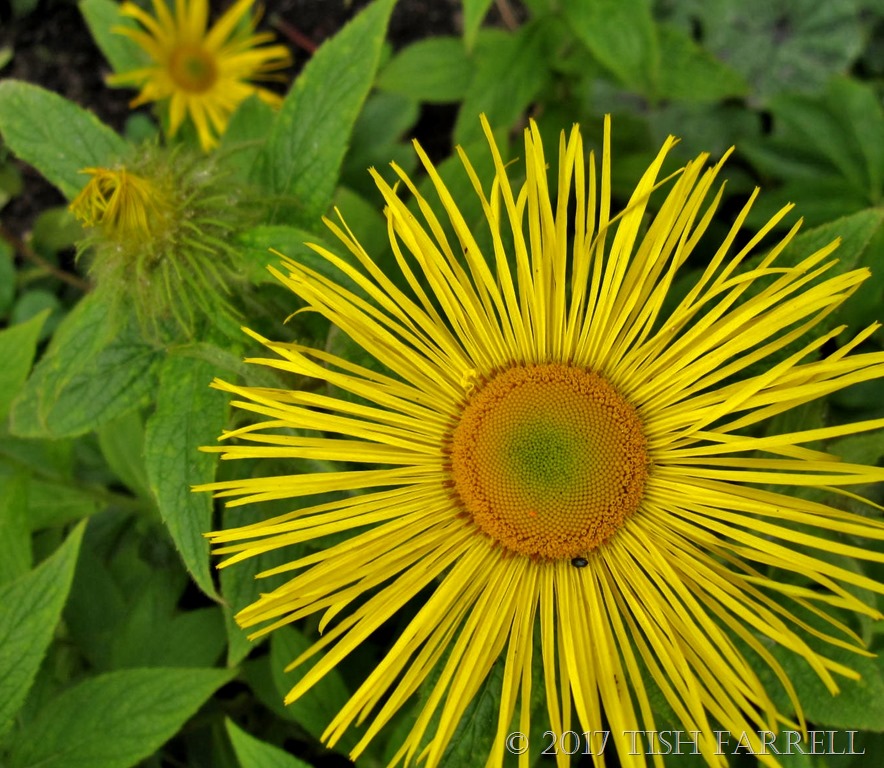
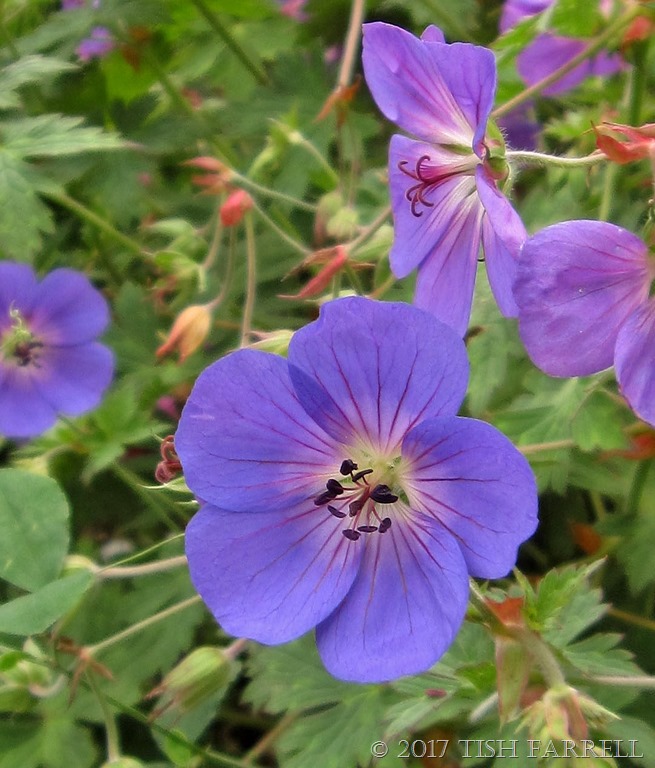
But all is not lost in the garden. The late spring flowers may have been washed away, but the spires of verbascum are just opening, the yellow doronicum is doing its best to stand in for the sun, and geranium Rozanne is now on parade until the first frosts. Of course, as things are going, that could be next week. Who knows?

IMG_5200

IMG_5210

IMG_5211

This slideshow requires JavaScript.

Changing Seasons (versions 2 and 1)