The Way We Were ~ More From The Kenya Diary

Greater love hath no man than he who spent hours and days, and more hours and days transcribing this writer’s Kenya journal. Prior to transcription, and due to various computer glitches, it existed only on reams of faded, flimsy print-out paper. It was just about scannable, which was tiresome enough to complete, but the end result then required hours of copy editing. So thank you Graham.

And for those who don’t know the background to this, from January 1992 to January 2000, Graham aka the Farrell Team Leader, was working out in Africa on various British aid agricultural projects. The first year we were largely itinerant, travelling up and down the Mombasa highway between Nairobi, Kiboko, Taita and Mombasa.

Graham was working on a project to control Larger Grain Borer, a voracious grain-decimating beetle introduced to Africa in a consignment of US food aid. The actual home of this pest is Central America, and Graham had spent some time studying its behaviour in Mexico. He was then employed on a short-term consultancy project by the Natural Resources Institute in Kent, and thence despatched to Kenya.

His main base was the Kenya Agricultural Research Institute in Nairobi, but there was also a field station a hundred miles south at Kiboko, where the Kenyan project staff worked. When Graham had to make a visit, we stayed at Hunter’s Lodge, once the home of big white hunter, John Hunter, and later (in the ‘60s) developed into a small tourist hotel. The place had its heyday around this time, or until the horrendous dirt road to Mombasa was tarred, and coast- or city-bound travellers no longer broke their journeys at Hunter’s Lodge.
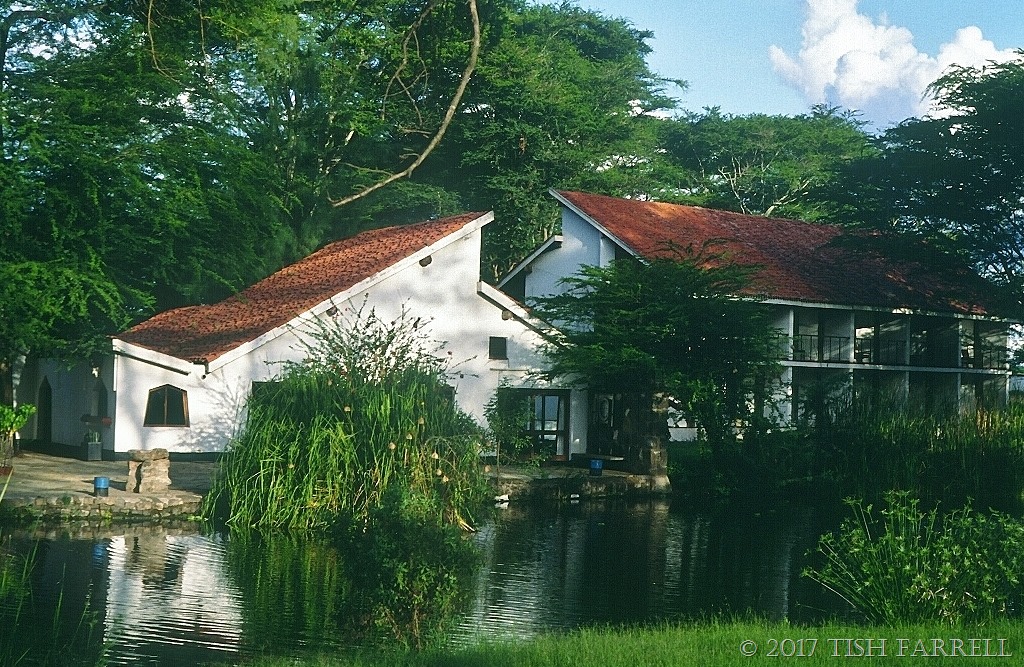
sundowner

In our day it was unusual to find any other overnight guests there, although there were plenty of staff, the waiters always smartly turned out in black trousers, white shirts and red bow ties, and ever in attendance in case anyone turned up.

Much of 1993 was then spent in Lusaka, Zambia. Graham was attached to the European Union Delegation, contracted there to organise the distribution of food aid during a period of prolonged drought. But at the end of that year we returned to Nairobi, in the first instance, to close down the Larger Grain Borer project at Kiboko, but later to run a crop protection project which involved British and Kenyan scientists working in partnership with smallholder farmers to overcome various crop and livestock problems. And here we stayed until the start of 2000 when the British Government closed the project down.

While we lived in Nairobi we were housed in a British High Commission house, which also came with Sam, our house steward. He lived with his family in a cottage at the bottom of the garden, but as we never had enough for him to do, he only worked mornings. His actual home was in Western Kenya where he owned three very small smallholdings in different places. Then there was Patrick, our day guard, also provided by the BHC. He never had much guarding to do either, so Graham paid him to look after the garden which he did with impeccable diligence. His home was also in Western Kenya, where his wife and children lived on his own smallholding. Sam told me Patrick had deployed his earnings from guarding and gardening on the building of a good stone house for his parents and was currently building one for himself. He was also paying for his children’s education. While he was working in Nairobi, which was 11 months of the year, he rented a room in one of Nairobi’s slums.
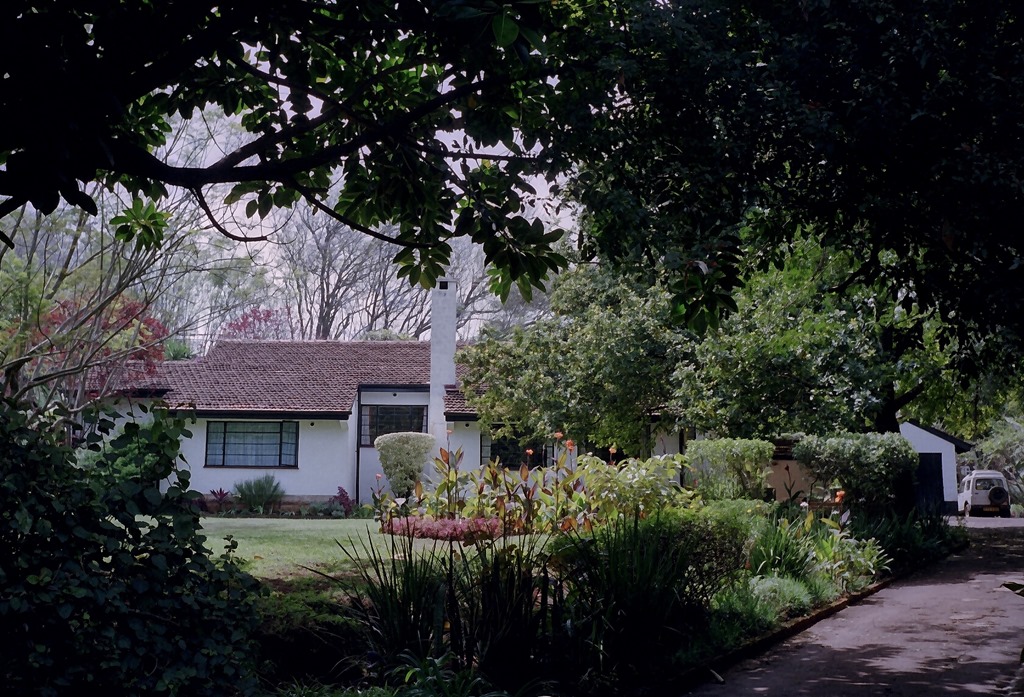
Scan-140809-0043

The following extract gives a few glimpses of expatriate Nairobi life and those cultural events that owe more than a little to the country’s British colonial past.

*

29 August 1994

Months have passed and no journal entries. In June we went home to England for three weeks. It was cold and windy and time was gobbled up visiting family and storming the shops. Then came the weeks of adjusting again to Nairobi living. It seemed very strange that, after all our days and miles of travelling, the only news Sam had when we got back was that the avocado tree had finished fruiting. Otherwise, everything was as we had left it.

And to root myself in once more, I took to gardening. Another effort to get the better of the over-shaded vegetable plot; flower beds cleared for tomatoes and herbs; a new plot excavated under my office window; seeds sown and the ever vigilant Patrick following up with the watering can at dawn and at dusk.

In July we went to the Ngong Racecourse for the Concourse d’ Elegance,  one of Nairobi’s annual multicultural events. It is a specialist car rally wherein owners show off their vintage vehicles including aged safari trucks (one of which had ‘starred ‘in  Out of Africa), wartime jeeps, a venerable Mini, period Peugeots, Alfa Romeos, Mercedes, Volvos and a red E-type Jaguar.
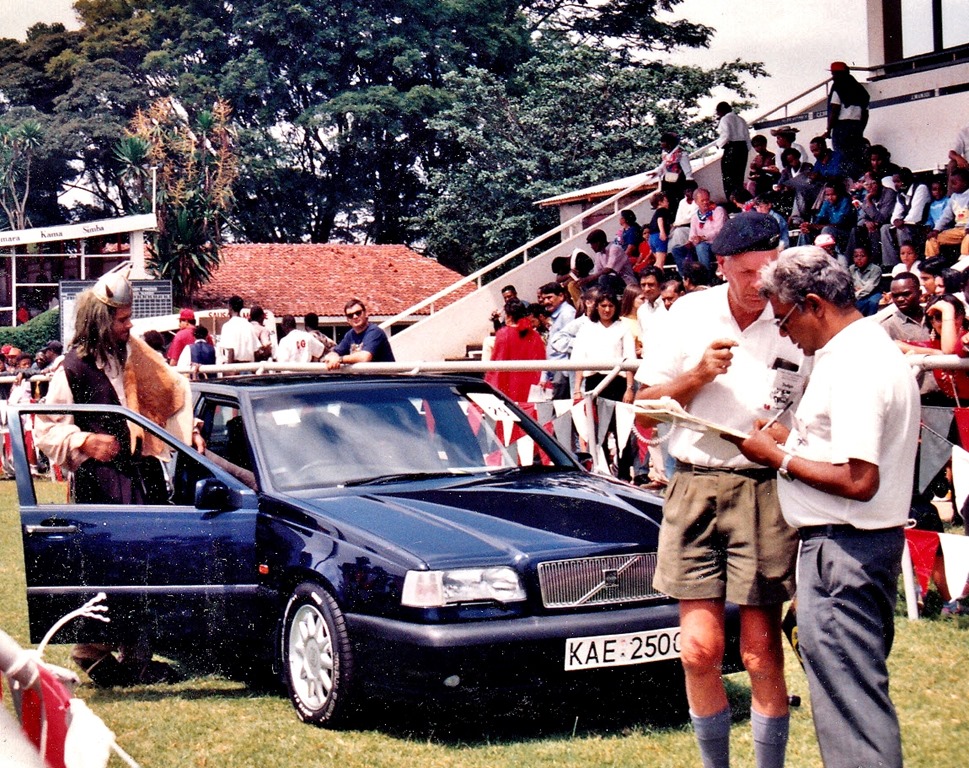
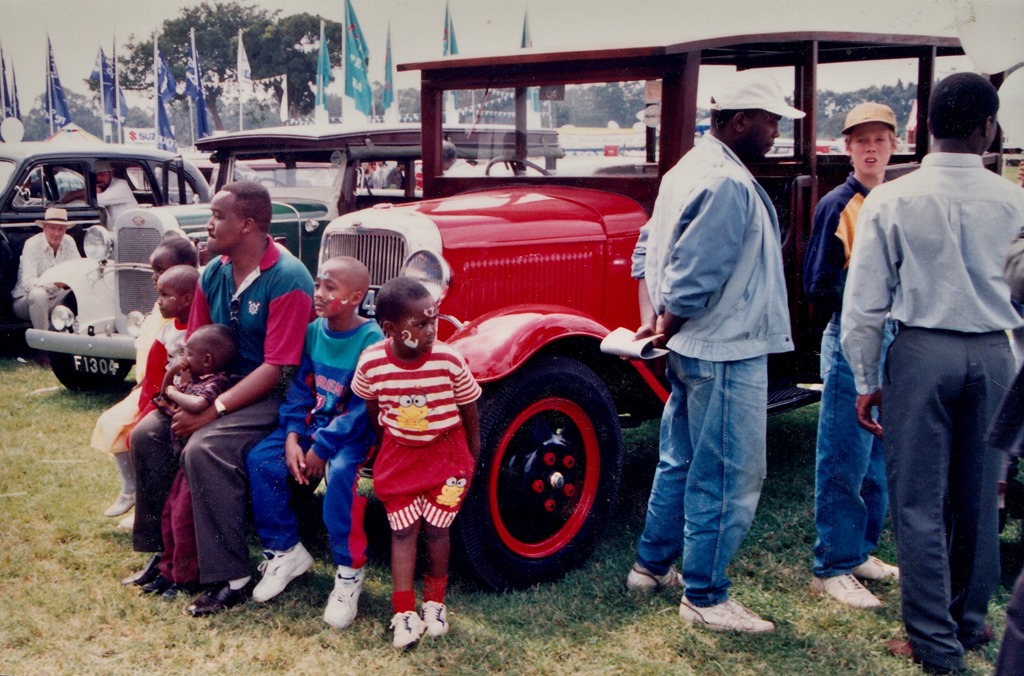
Nairobi car rally 4_0001

Nairobi car rally 3

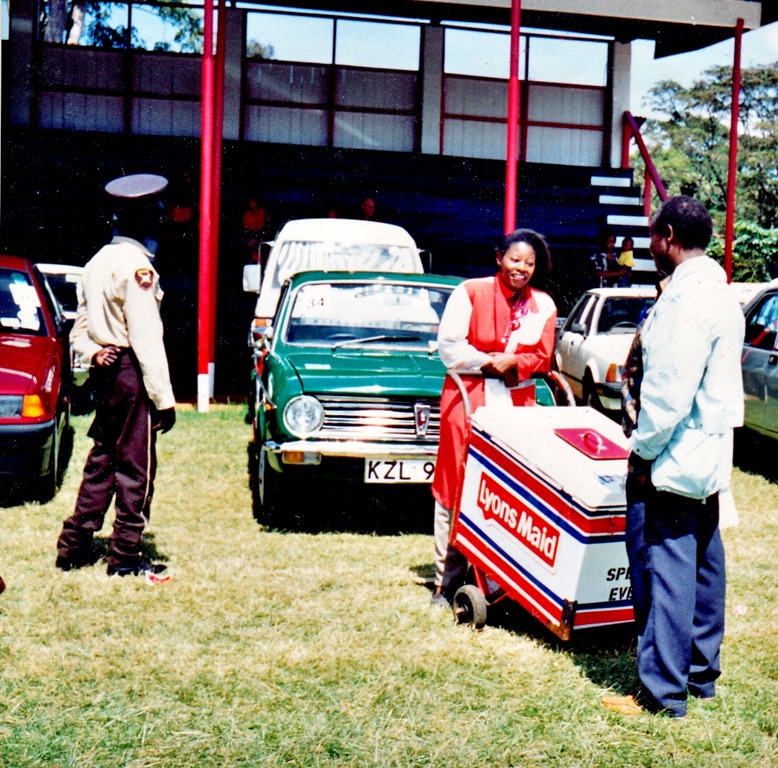
Car owners from the Asian community were dressed up as maharajahs and Arabian Nights grand viziers, the Europeans in more peculiar costumes – a woman dressed as a large black spider, one chap in full Viking gear. There was an overall atmosphere of the English Village Fete. The Kenya Society for the Protection of Animals laid on donkey cart rides around the race course grounds; Mr Magic was doing tricks for the children; the East African Ladies group had a charity cake stall. There were welly-wanging contests, face painting, remote control model car races, hotdog stands and Lyons ice-cream carts.
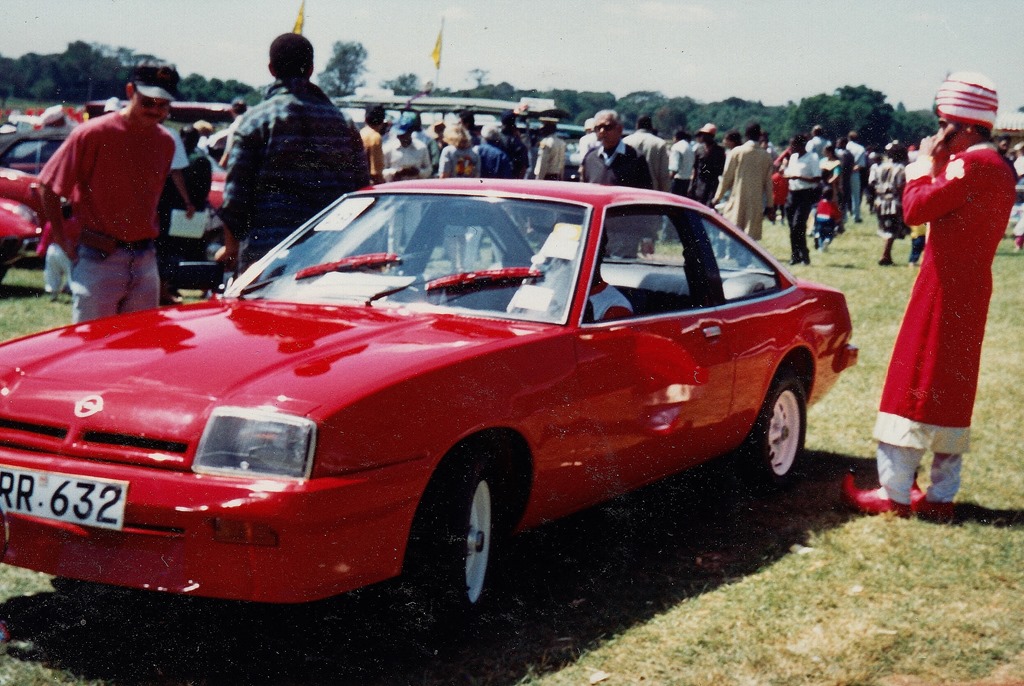
Nairobi car rally 2

Nairobi car rally 4

Nairobi car rally 4_0002

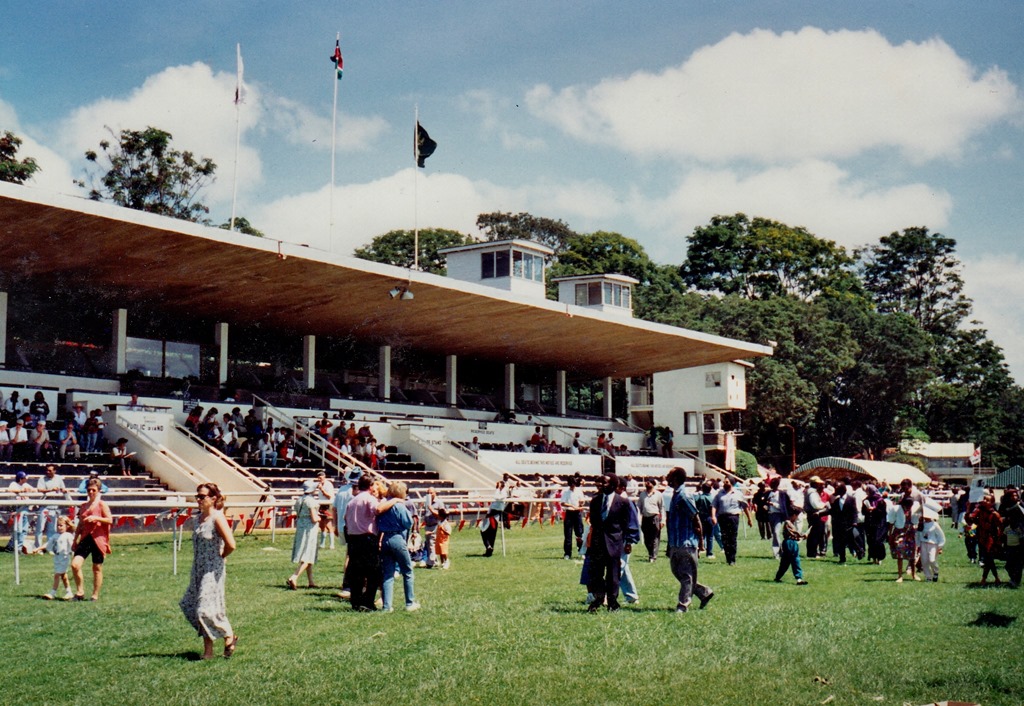
The racecourse itself is a picturesque colonial relic. Stands of gum trees, the tiered main grandstand creeper-covered and housing a shady restaurant, and nearby the race steward’s offices, the Jockey Club members’ precincts, the collecting ring sheltered by mature trees.

We thought we’d like to see what the place was like on race day, so a week  or so later we turned up for the Lonrho races. Kenyans take their racing seriously and the whole ground was humming with activity. The ‘old colonial’ set were very high profile, chaps in their grey plaid racing suits, members’ tickets dangling from lapels, their ‘good ladies’ in Ascot frocks and hats to match. In fact the woman who won the best outfit contest truly looked as if she was anticipating entry to the Royal Enclosure. At such times you can only blink: the British abroad – what are they thinking?

The first race was something of a novelty event being a camel race. The beasts and riders came from the anti-stock-theft police patrol in the remote north. There were four contestants, the riders in  bright racing colours. But the camels weren’t too lively and it took some time to cajole them to the starting line. And even after the gong  had been rung, it was hard to tell if the race had started. Every spectator head was craned, gazing across the course for signs of activity. Time passed. It was thus the biggest excitement when the first camel hove into view. He finally jogged  fast enough to reach the finish line, his rider waving not only arms but also legs to celebrate their mutual victory. It was hard to imagine that these camels ever caught up with any cattle-thieving bandits.

Then the serious racing began, most of the horses from wazungu stud farms up in the Rift Valley, and their riders so slender-limbed and tiny, I wondered if  the race horse owners employed their jockeys from the Okiek community,  the last of Kenya’s original indigenous inhabitants of slight-statured hunters. We sat in the grandstand for a while, watched the Kenyan Air Force band marching on the course between races, listened to the commentator who sounded to be the very same man who serves at every English agricultural show and sporting event wherever it is on the globe, looked at the Kenyan mamas in their elaborate kitenge costumes, had our ears blasted as two Air Force buglers dashed up into the grandstand to trumpet the start of the race,  admired the fine looking Kenyan rider, whose task it is to lead the mounted jockeys to the starting gate,  he sporting his  English hunting pink jacket and tight white breeches – yet another of Nairobi’s cross-cultural phenomena that challenge perceptions at every turn. It was all so absorbing that we didn’t even get round to placing any bets.

Our next trip to the racecourse was in early August, to another extraordinary multicultural event. This time to the Royal Ballet performing their specially created programme in aid of Kenyan conservation, Dances for Elephants. The week’s performances were aimed at raising funds for various Kenyan wildlife projects – rhino surveillance, Grevy’s zebra surveys, elephant monitoring, conservation education in Maasailand. It was the brainchild Royal Ballet Mistress, Rosalind Eyre and Oria Douglas-Hamilton, wife of Dr Ian Douglas-Hamilton, Kenya’s resident elephant expert.

Performances were laid on at several venues: at the racecourse, at the Lake Naivasha home of the Douglas-Hamiltons (complete with picnic hampers), at the Windsor Country Club and at the residence of the British High Commissioner, Sir Kieran Prendergast. Local businesses sponsored tickets so cohorts of Nairobi school children could go to the racecourse matinee and have their first ballet experience.  A congratulatory telegram also arrived from HRH The Prince of Wales, wherein he praised the sixteen dancers’ efforts and generosity in giving up their time. He also said he wished he could be with us, which we could not fail to doubt as we had recently read newspaper reports of another “Diana” scandal looming back in the UK.

We arrived in the racecourse at sundown, and again found the place was thronging.  It was a clear evening and I wondered if anyone had warned the dancers how chilly Nairobi was in August.

The audience was well catered for though. There was a tent serving hot drinks and hotdogs as well as a bar. We had come prepared with our own flask of cocoa, cushions and wraps. The grandstand was mostly filled with members of the diplomatic community and Kenyan professionals from the companies that had sponsored the event, but we could sit where we wanted among the concrete benches of the grandstand. The Jockey Club members’ padded seats comprised “The Circle” for which people had paid 3,000 shillings a ticket instead of our 700  bob. We settled down on Vitafoam sponge mats on the front row.

The stage was ingenious – two flatbed trucks parked tail to tail. Cranes rearing up behind each cab supported the roof and stage light tracking. Either side were the enormous speakers of the sound system that had been donated to the cause by Lufthansa. The racecourse and its stands of gum trees lay to their back and, as the sun disappeared behind them, black kites wheeled overhead,  mewing and on the lookout for abandoned hotdogs.

At dusk the dancing began – excerpts from the whimsical ballet ‘Still Life at the Penguin Cafe’, opening with the zebra dance, “White Mischief”. It could not have been more surreal, of itself and also because there was the stage backdrop of the African plains with the real African sky behind it, and real African ‘sound effects’  of cricket and frog call.

*

Here is a version of what we saw out on the Ngong Racecourse on a chilly Kenyan night (best viewed full screen):
https://www.youtube.com/watch?v=Jh0TPvus7r4

5 Minutes With An Artichoke And A Red-Tailed Bumblebee ~ Regular Random

IMG_5731

IMG_5748

IMG_5752

IMG_5754

IMG_5742

IMG_5741

IMG_5740

IMG_5738

IMG_5749

IMG_5745


Frequently Flying Scientist, Desley Jane, is a very talented photographer. Macro mode is a particular speciality, and especially when it comes to making delicious little cakes impossibly tempting. This week she has quite a different subject for her ‘Regular Random’ slot. So please visit her and join in the challenge. These are the rules:

  • choose a subject or a scene
  • spend five minutes photographing it – no more!
  • try to see it from many angles, look through something at it, change the light that’s hitting it
  • have fun!
  • tag your post #regularrandom and ping back to this post

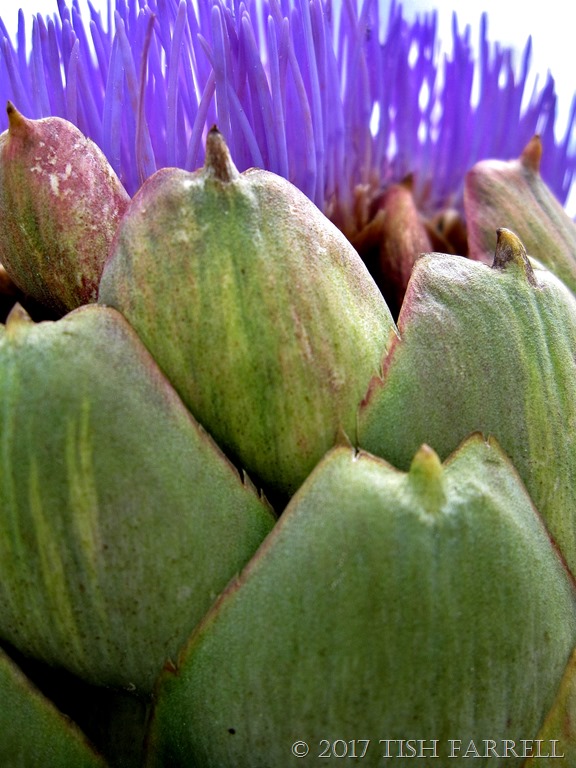
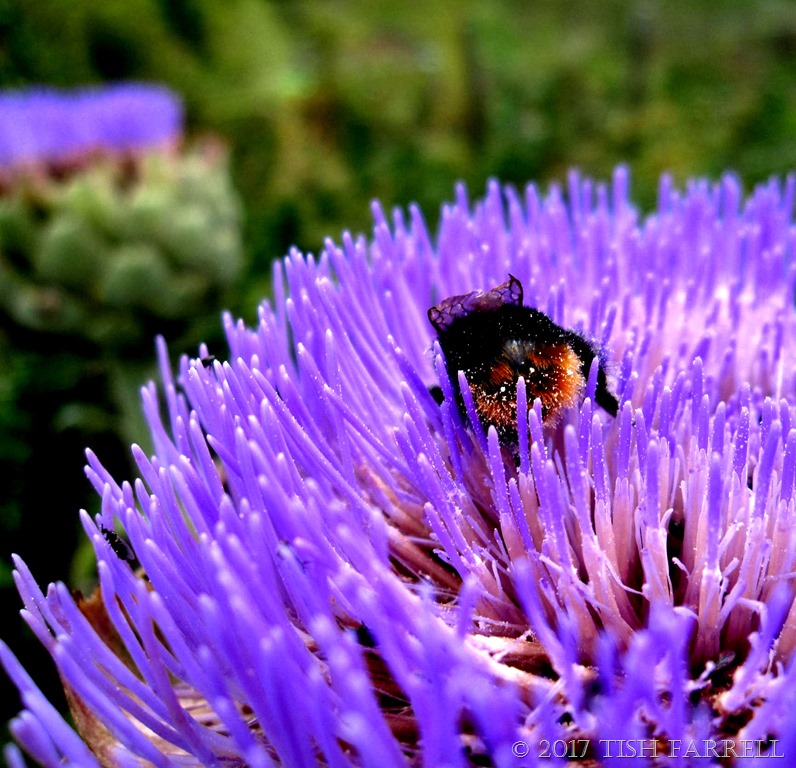
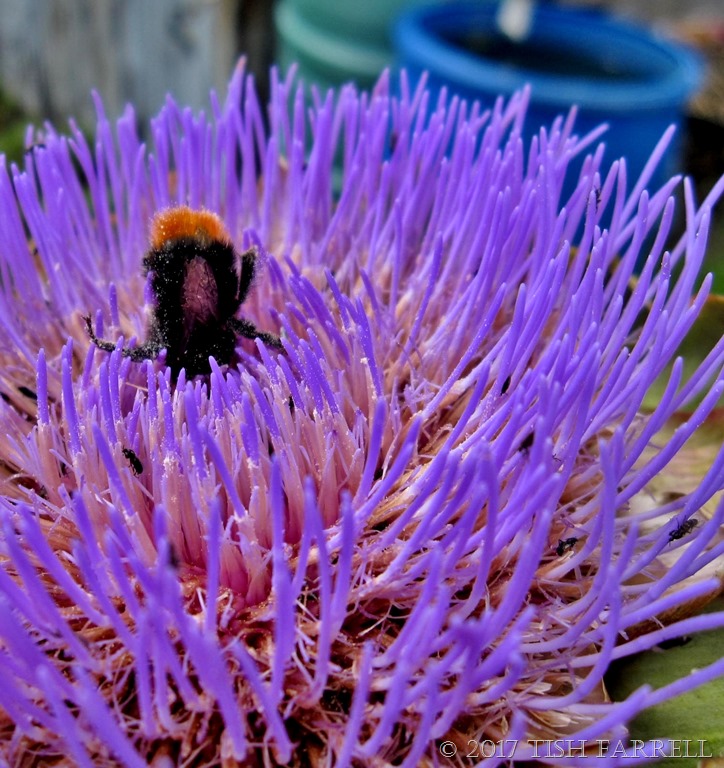
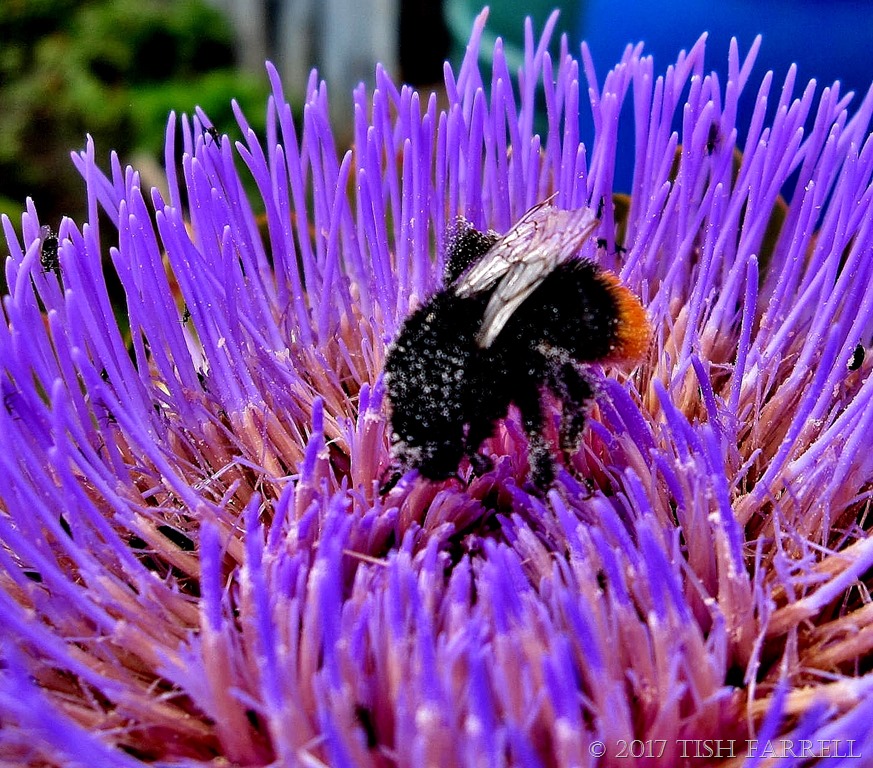
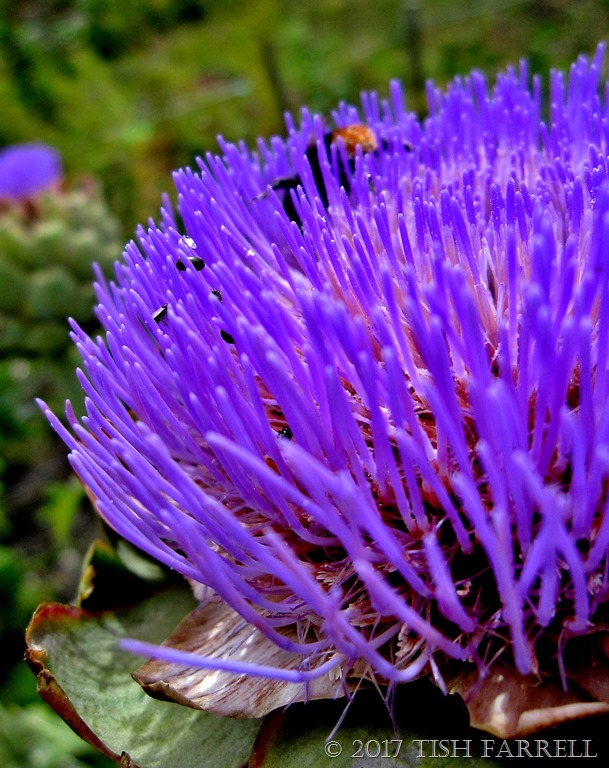
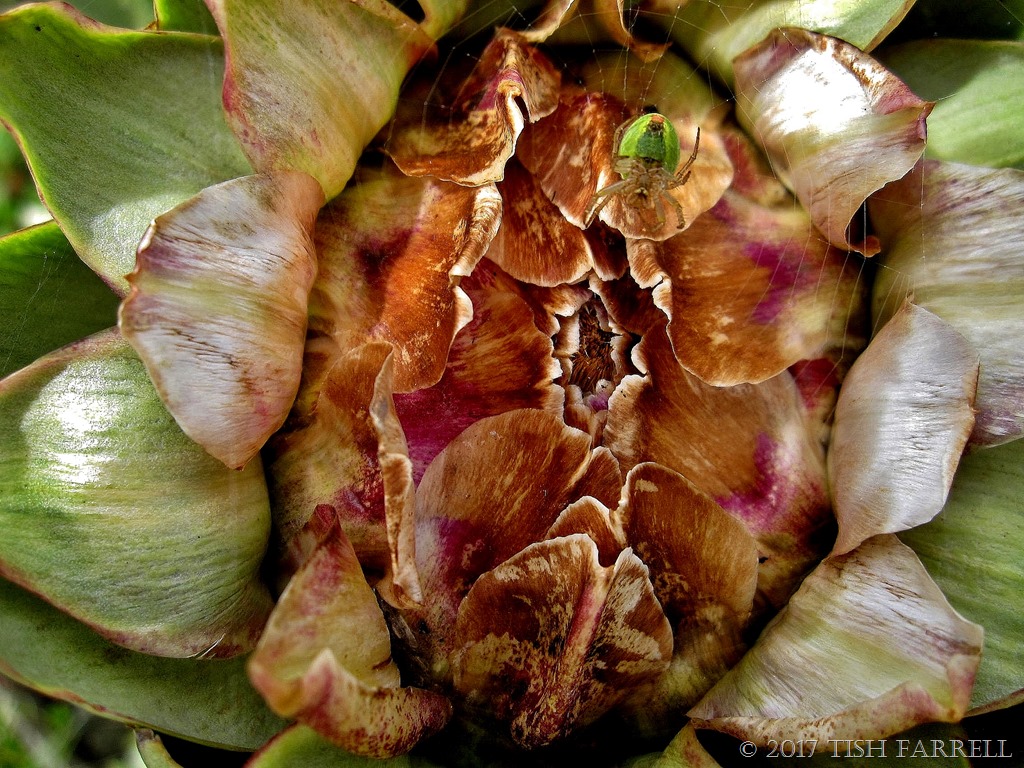
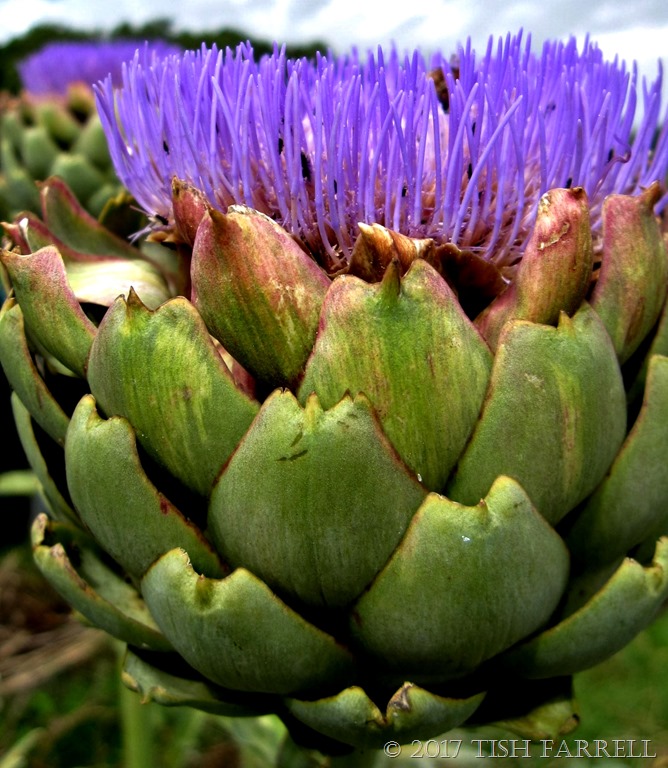
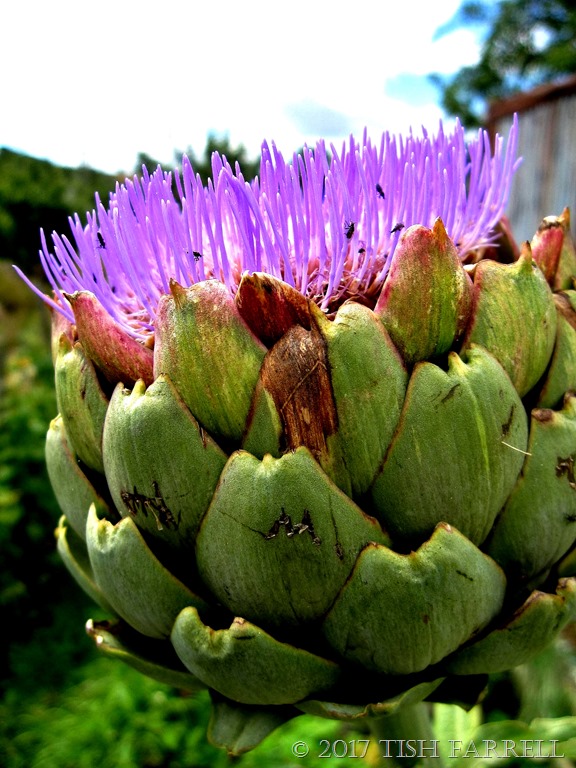
My five minutes was devoted to some allotment artichokes. The sun was full on, the artichoke flower rather too tall, and the wind kept gusting, so the outcome is definitely random. Nice performance by the pollen dusted bumblebee though.

Monday Magic ~ Red Admiral On Doronicum And A Slice Of This Writer’s Life

IMG_5817

So far my Monday has been unusually zippy. This morning I did the final edit on a short story and emailed it off to a literary magazine that specialises in ‘emerging writers’. Because the thing is, and this can be a commonly depressing condition for many long-published, but still unknown writers, after many years of publication, and awards won on three continents – (am especially proud of the Golden Duck for my contribution to children’s science fiction writing,  Write Your Own Science Fiction Stories), I am still emerging. It is a damn slow process too – being half in and half out of my chrysalis. Nor am I entirely sure if those parts which are out  have fully metamorphosed.

Anyway, I was quite pleased with the story and, having despatched it into cyberspace, I then felt free to go gardening for three hours. The allotment is verdant because at last we’ve had rain that has soaked into the soil. The runner and French beans have switched into prolific mode; I have a polytunnel full of groovy little yellow squashes, and the tomatoes are beginning to ripen.

Out on the plots there were butterflies everywhere, and for a while I faffed about with my Canon Ixus running after them in daft-bat mode. I also got the mower out and cut all the paths around my one and half plots – not my favourite task. Then I faffed some more, snapping an artichoke which proved a particularly absorbing subject.

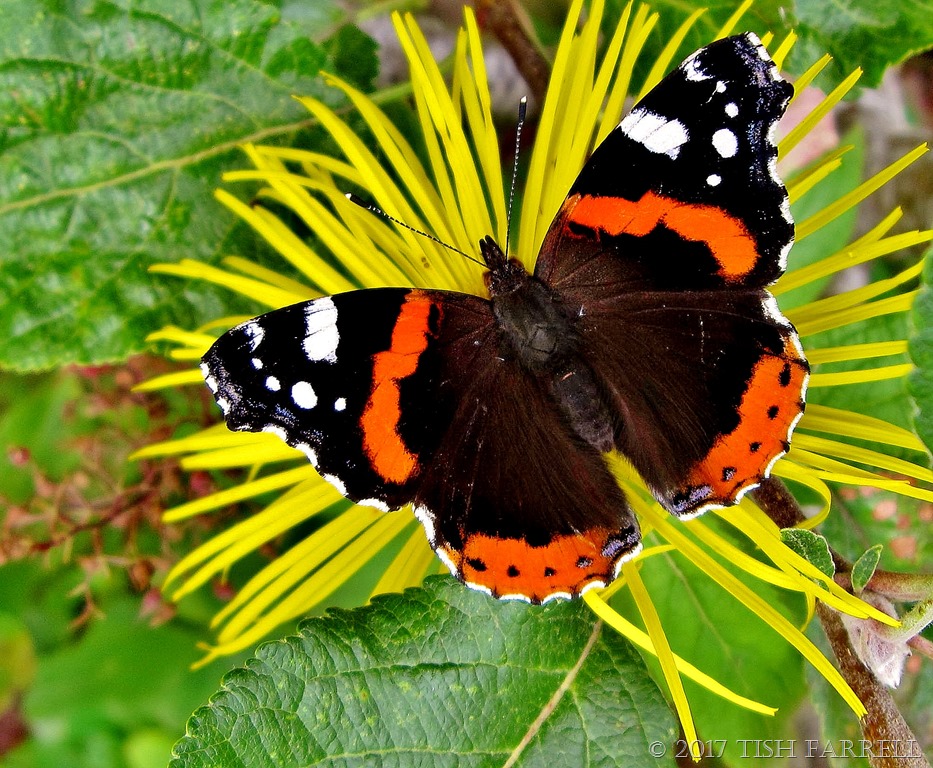
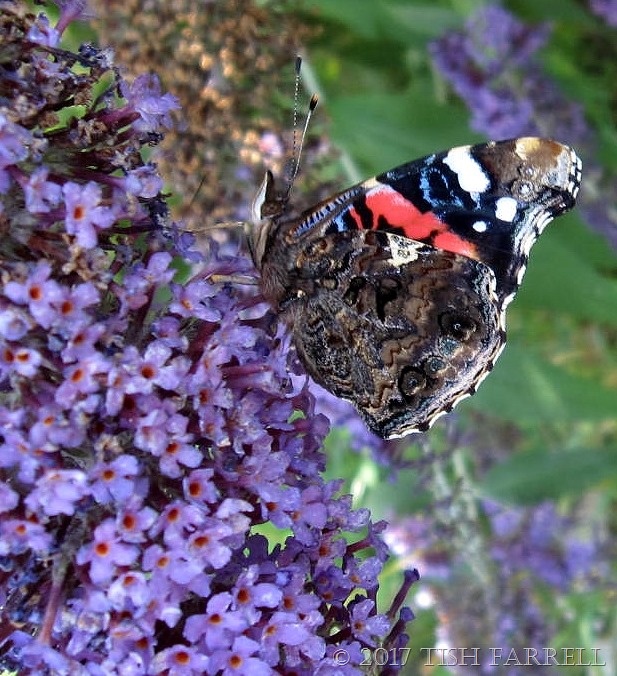
Around 2 pm I thought I ought to head home and provide lunch for He Who Is Teaching Himself To Make Mortise And Tenon Joints So He Can Create A Shed Door, (where would we be without those life enhancing You Tube videos that show you such things as how to skin a dover sole, make almond milk and clean the stairs properly?) And it was then I spotted this Red Admiral on the Doronicum beside said evolving, currently doorless shed.

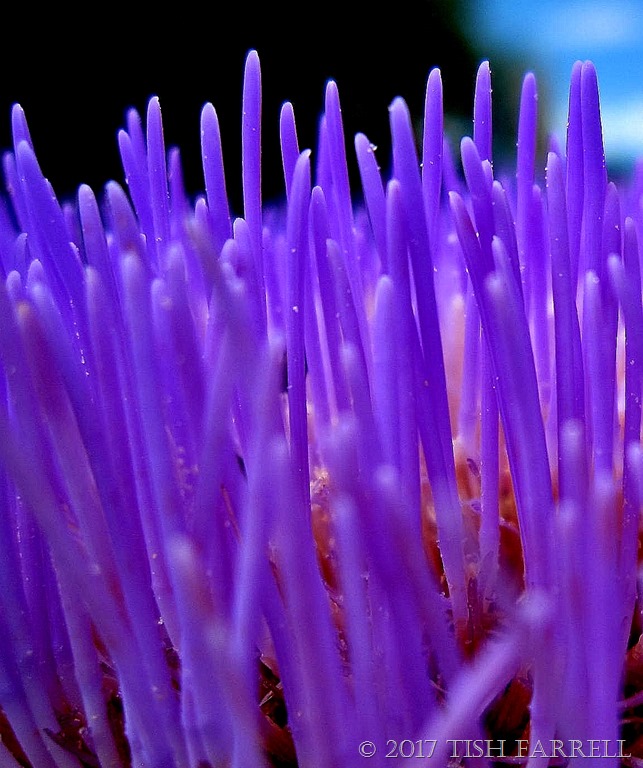
I am taking the butterfly as inspiration. This is how it will be when I’m full emerged. What I splash I’ll make. How high I’ll fly. Though I do hope for a slightly longer life span. In the meantime here’s a rather fascinating view of life inside a gone-to-seed globe artichoke.

IMG_5735

Happy Monday

P.S. Did you spot the web?

How Many Hoverflies In An Opium Poppy?

IMG_5464

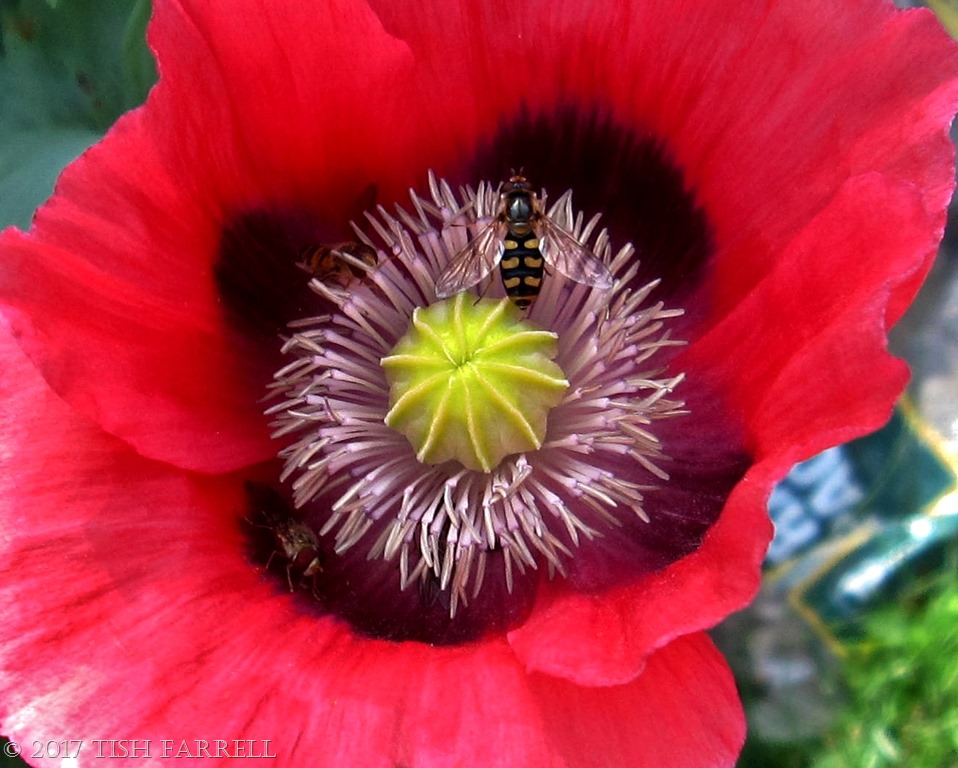
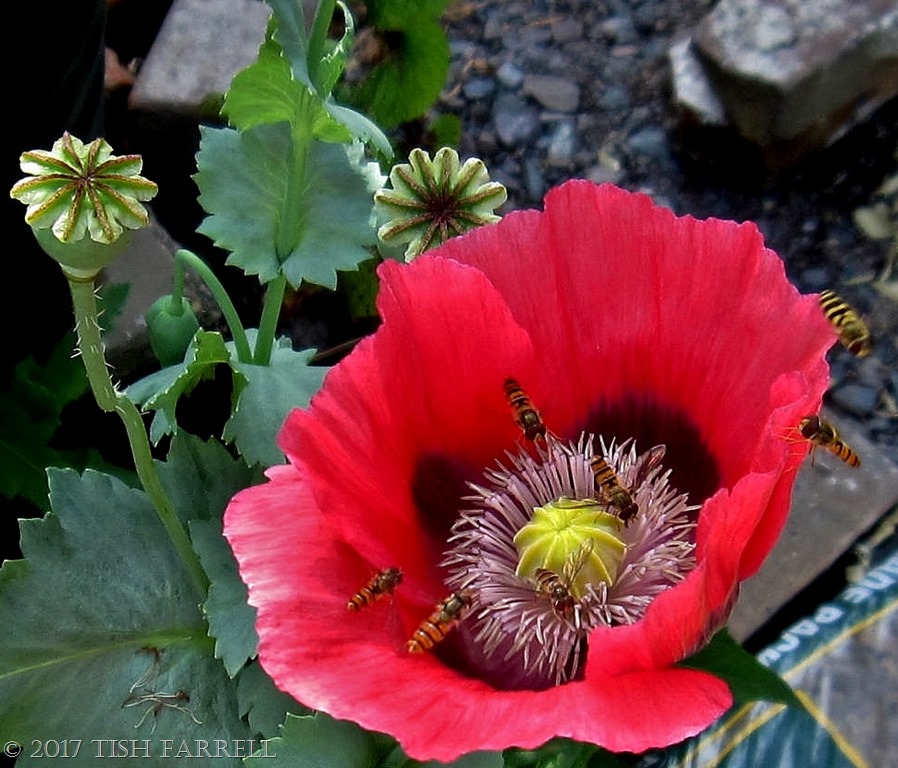
No, it’s not a joke question, but there’s clearly a lot of satisfaction going on in these photos. So many hoverflies, and different kinds too. Also photographer satisfaction – in that I managed to capture them so I could show you. Then there’s gardener satisfaction too – always something new to discover out in the garden, with or without camera. The only problem is I’m sure Ark is going to ask if I know what species they are.  Nope, I don’t,  but here’s the place to find out, which further adds to my satisfaction, because I can now provide this very fascinating link – at least as far as hoverfly lovers are concerned.

IMG_5465

IMG_5466

Daily Post: Satisfaction

Having My Cake And Eating It ~ That Would Be Gluten Free Lemon Zucchini Cake

P1080617

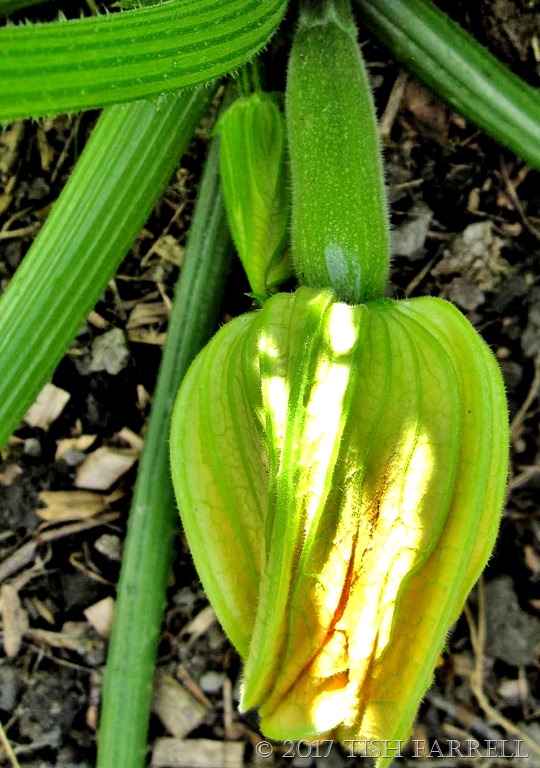
This year I seem to have started off the zucchini aka courgette season with a glut. I anyway usually slice them into spaghetti strips or noodles to use, seasoned, sprinkled with fresh chopped oregano or coriander, and warmed through with a little oil or butter, instead of pasta. They go well with either tomato or meat based sauces.

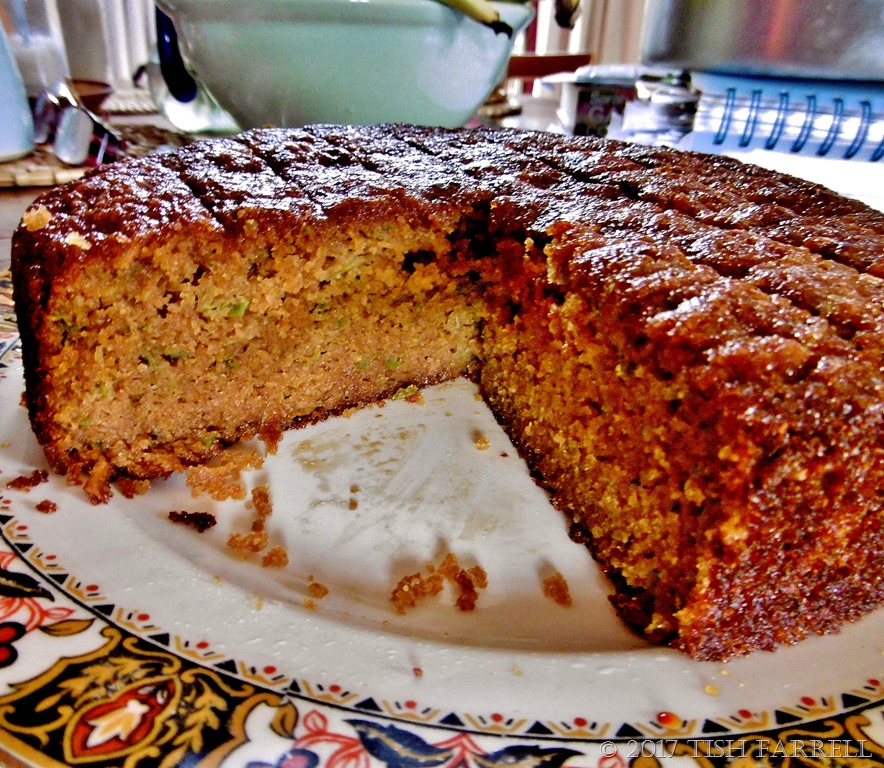
But then as the harvest began to multiply beyond the sensible, including exceeding neighbour capacity, my mind wended towards cake. I remembered having a delicious slice of lemon courgette cake last year in a museum cafe.  So I did a trawl of recipes on the internet, and adapted a gluten free flour one found at The Pink Rose Bakery into a ground almond-polenta version. In fact I’ve been using ground almonds (and or polenta flour) in most of my cake recipes these days. They give much lighter, moister results.

So this is what I did:

Lemon Zucchini Cake

20 cm/8” deep cake tin, oiled

oven 180 C/160 C fan/350 F

Ingredients

250 gm/ good 8 oz of coarsely grated zucchini/courgette placed in sieve over sink to drain

2 large eggs

125ml/4 fl oz vegetable oil. I used groundnut

150gm/5 oz sugar. I used coconut flower sugar for its slight toffee flavour

112 gm/4 oz polenta flour

112 gm/4oz ground almonds

3/4 teaspoon baking soda

1 teaspoon gluten free baking powder

3/4 teaspoon vanilla essence

zest of one unwaxed lemon, though zest of two would not hurt if you like lemon

Method

1. In large bowl beat eggs, oil and sugar together until smooth;

2. Stir into the batter all the other ingredients except the zucchini;

3. Gently squeeze any excess moisture from zucchini and add to the mix, distributing well;

4. Pour into tin and bake for around 45 mins until lightly browned and firm to the touch. I was using a fan oven. Probably wise to check after 30  mins.

5. Cool in tin for 10 mins. Turn out onto rack and sprinkle with coconut flower sugar.

Options: You could drizzle it with icing made with lemon juice and icing sugar, or maybe add a carrot cake topping, although we found the cake sweet enough without. I’m also thinking you could swap the lemon zest for orange zest, and use half a teaspoon of cinnamon in place of the vanilla essence. And I think the cake would be good served with fresh raspberries and creme fraiche. Unfortunately we have now eaten it before I could try out this last suggestion. But never mind. There are plenty more essential ingredients growing at the allotment.

copyright 2017 Tish Farrell

IMG_5406

Daily Post Photo Challenge: Satisfaction

Fading Flowers In All Their Glory

IMG_5612 - Copy

I never used to like dahlias. As a small child I soon learned they harboured earwigs, the sudden sighting of which still sparks pangs of revulsion.  But this winter I relented – over the dahlias that is.

For the past few years I had cast envious looks over the fire-coloured rows grown by fellow allotmenteers. Not only did they yield lots of cutting flowers all summer long, but their presence brightened up the allotment for everyone working there.

But next I would think of earwigs, and the slugs that attack leaves and flowers, and the fact you have to lift the tubers in autumn and store them in frost-free conditions. It all seemed too much of a faff.

And then in the dark days of mid-winter, when gardeners are at their most susceptible to images of lush and succulent growth – whether floral or vegetable,  I was ambushed by Sarah Raven’s plant catalogue, a little publication that takes horticultural lust to a whole new level. So be warned. Plant lovers open the link at their own risk.

Ms Raven, a one-time medical doctor, now exercises her life-enhancing inclinations by sharing her growing-cooking-flower-arranging aesthetic in print, on screen and on home-run courses. One of her cunning knacks sales-wise is to group the plants in striking or subtle colour-ways. It works. You want them all.

And so it was, I overcame my dahlia resistance, and ordered a few tubers, starting fairly modestly, just to see how we would get along together.

They arrived in January,  in perfect condition and with full growing instructions, which I duly followed. For one thing I realised I could make good use of the winter-depleted polytunnel to start the plants off. I also bought a packet of the Sarah Raven dark cosmos seed collection, and I am pleased to say that both cosmos and dahlias are now flowering vigorously outside my polytunnel.

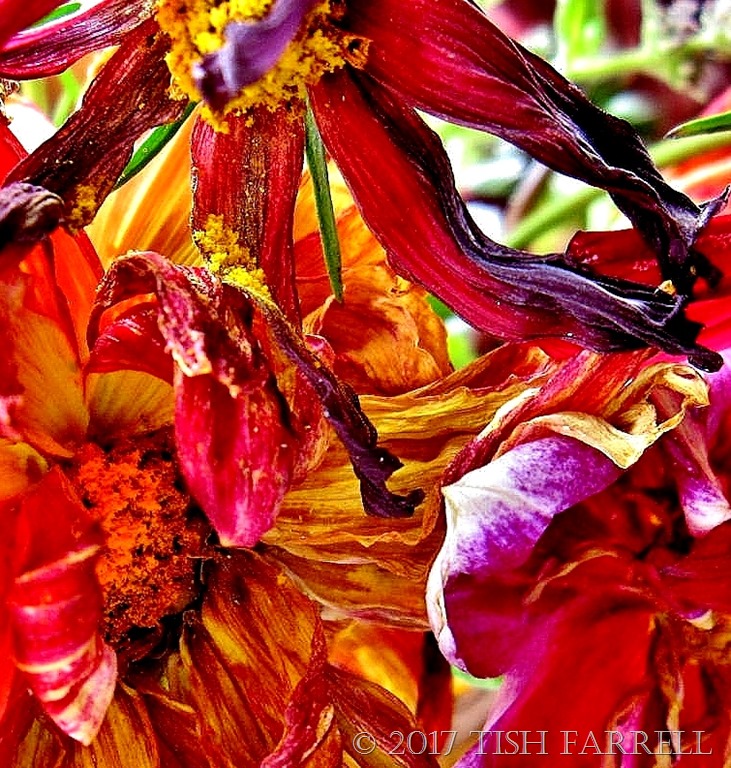
They look so bright and cheery there I am presently rather stingy about cutting them. But when I do, I’m pleased to find I enjoy them twice – both alive and dying when they take on a new kind of beauty.

So in my own Fading Flower Collection we have cosmos Dazzler (top), dahlia Dark Butterfly (bottom left), and dahlia Ripples (bottom right).

But to show you how at least one of them started out, here’s Dark Butterfly in full flight up at the allotment – pleasing lots of small insects, but thankfully earwig free. They, the little ratbag, pincering varmints, have been chewing my cauliflowers instead. It’s the gardener’s way of course: win some; lose some, and then, just now and then, when all goes to plan:  win, win, and WIN!

IMG_5535


Cee’s Flower of the Day  Please visit Cee’s blog. Another great spot for plant lovers.

Back To The Stiperstones ~ Or Slow Under The Surface, And What On Earth Were The Luftwaffe Doing Here?

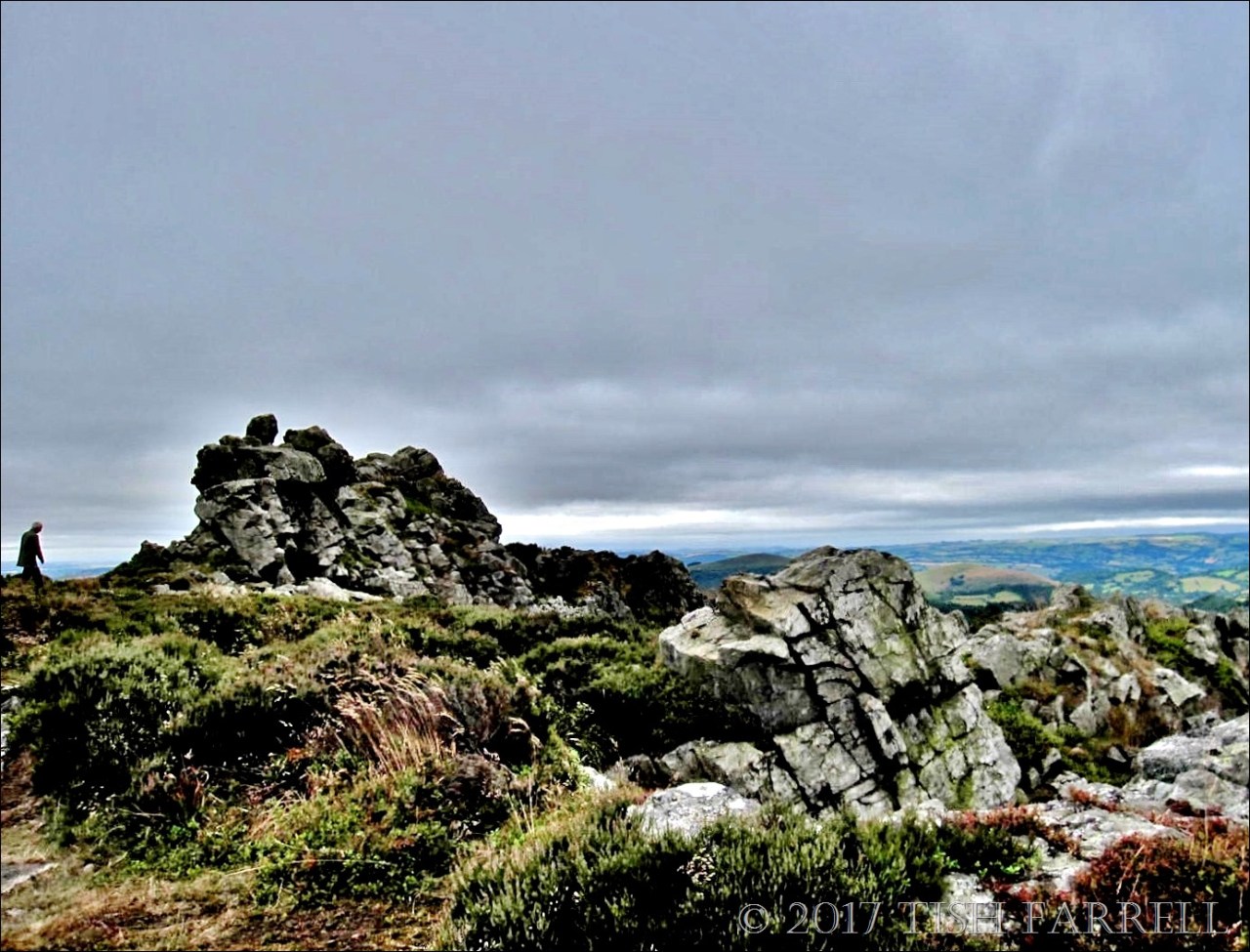
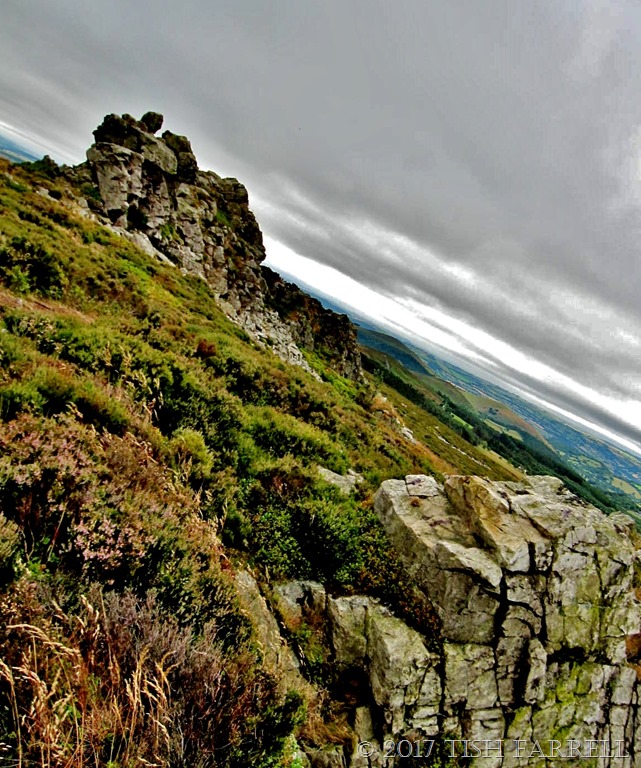
This week at Lost in Translation, Paula’s prompt is ‘SLOW’. So here is another vista from our recent trip to South Shropshire’s Stiperstones (see also the previous post.) And the reason I’ve chosen it is because I cannot think of anything slower than the trans-global  journey of the landmass on which these hills sit. It has been travelling an inch a year for 450 million years, moving up from its source on the southern shores of the Iapetus Sea, 60 degrees south of the equator and roughly where the Indian Ocean is today. I’m not sure if the land beneath our feet is still heading north, or if one day Shropshire will be in the Arctic.

That’s quite a thought.

The other aspect of slow-going to be seen in these photos is the gradual weathering of the folded, upthrust former beach from which this 5-mile ridge is mostly formed. Much of the shaping began with the last Ice Age when the glaciers extended across Shropshire.

A far more recent, and somewhat bizarre reshaping apparently took place during World War 2, when the Luftwaffe, flying over the north end of the Stiperstones, mistook the rocks of the Devil’s Chair outcrop for a town with ammunition dumps, and duly bombed the place. How they came to this conclusion is hard to understand. Even in the heyday of the local lead mining industry, the communities were small and sparse and tucked into hillsides and valleys. There has never been a town in these parts. Perhaps in the dark the strangely glowing quartzite exercised some mystical, mystifying interference in pilot perception. Who knows?

It is anyway another good yarn to add to the tales of witchcraft and devilry that, in the human imagination of ages, enmesh these bleak uplands.

IMG_5519

We certainly saw no signs of bombing, though it might be hard to spot among the heaps of fragmenting quartzite. These particular shots were taken at Cranberry Rocks at the southerly end of the Stiperstones. We did not make it as far as the Devil’s Chair; it was too hard underfoot and too windy. But we do mean to make another visit one day soon, and tackle the hill from the northern end. We just have to remember not to go when mist threatens, or we might come on the Devil himself, brooding nastily on his craggy, Luftwaffe-remodelled throne.


copyright 2017 Tish Farrell

Butterflies In The Buddleia, Bees In The Teasels And All’s Well At The Allotment

IMG_5571

IMG_5418

IMG_5437

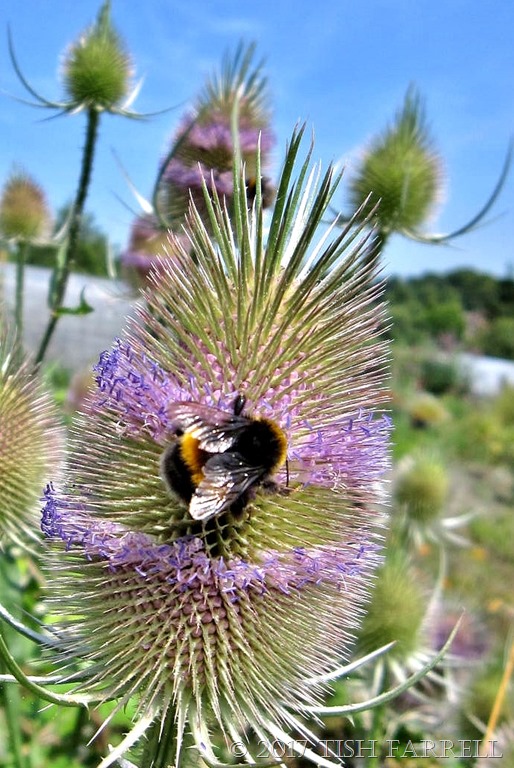
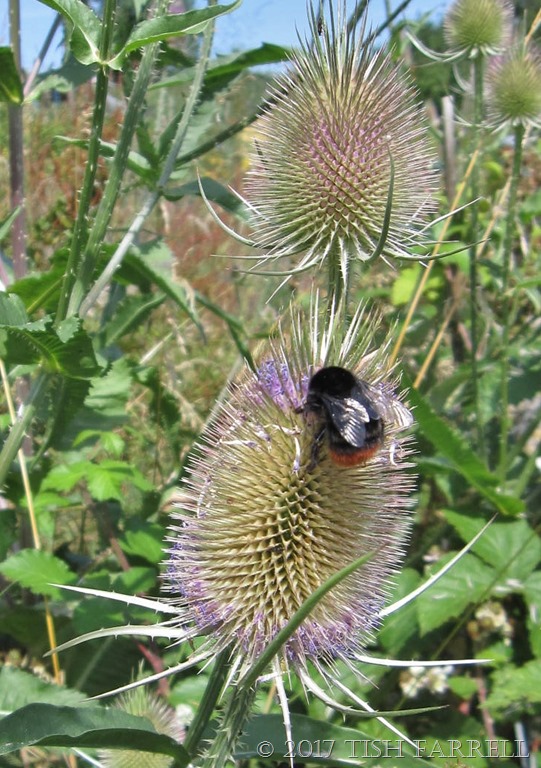
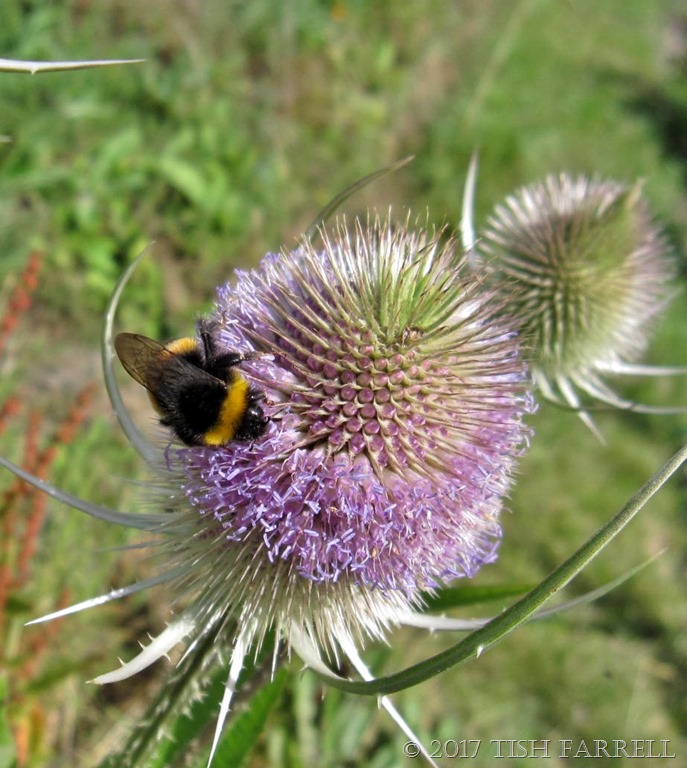
Over the past few days the butterflies have been feasting on the allotment buddleia bushes. From top down we have: Red Admiral, Comma, and Small Tortoiseshell. In the teasels we have assorted bumbles:

IMG_5552

IMG_5545

IMG_5395

This morning when I arrived at the plot, there were insects everywhere. It was also very hot, so I was glad to take a break from sieving compost and wander round, capturing some of the busy foragers. Having had a nice little play with my Canon Ixus, I then went back to work. I harvested my onions, hung them in the sun to dry, watered the polytunnel jungle, fought the tomato vegetation into submission, discovered a neat little cauliflower out in the raised beds, picked French beans, courgettes, plucked a few beetroot to make borsch and a lettuce for our neighbours, sowed some golden beetroot, carrots and Florence fennel, then staggered home across the field whither I arrived a very dishevelled and grubby person. Back at the homestead, he who is building a shed in the back garden had erected the fourth wall to his edifice, or at least the framework for same. And having laboured all morning and well beyond lunchtime, we then retreated to the cool of the kitchen for a restoring cup of tea. And there you have it, Monday chez Farrell – overheated but happy.


Am linking this to Jo’s Monday Walk which (as ever) is totally fabulous this week. Please trot over there for a longer walk than mine to the allotment, and also for some very lovely candlelit scenes around the streets of Lagoa.

Monochrome Strawberries ~ A Challenge Too Far?


IMG_5092 - Copy (2) - Copy

I don’t know about you, but the transformation of luscious red strawberries into non-colour is more than a little disturbing. For one thing it’s challenging my atavistic hunter-gatherer impulse to be drawn to a much-loved, ripe and ready fruit. My hand is reaching out to pick even as I am anticipating the sweet juiciness on my tongue and the inevitable dribble down the chin.

But what am I to make of the monochrome fruit? At the moment I’m thinking not only do they NOT entice, but I would also give them quite a wide berth. I’m also thinking I could be onto a whole new weight-loss-fad – ‘The  Monochrome Diet’ anyone?

copyright 2017 Tish Farrell


P.S. Many thanks to Paula at Lost in Translation for her intriguing ‘After and Before’ photo editing exercise. It throws up all sorts of perceptual conundrums.

Seize The Day ~ A Lesson In Flowers

IMG_5287

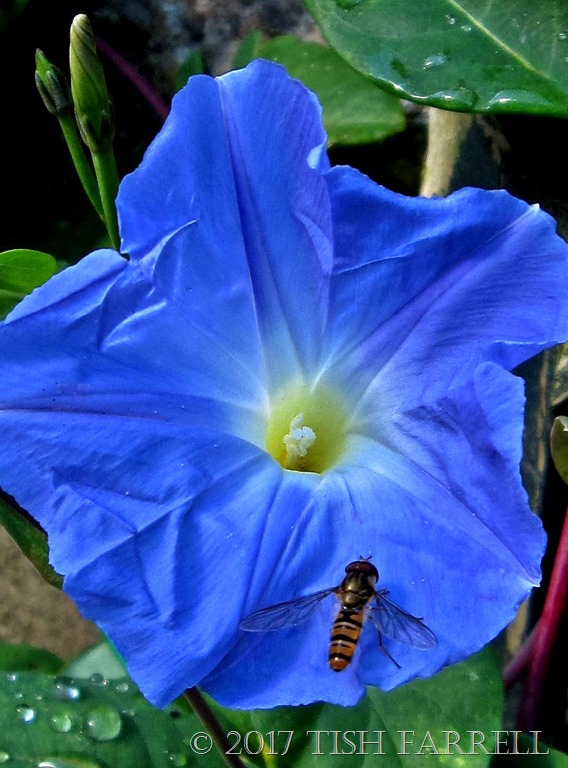
You  have to be out of bed rather earlier than I am to catch the Morning Glories unfurling.  That is probably lesson  number one: be up and doing earlier in the day; nurture the creative impulse before the world of dreaming totally recedes and mundane matters like doing the washing impose.

Then there is the lesson of making the most of opportunities as they arise, and at least here I came up to scratch. I dashed outside in my night attire to capture this scene. The hoverfly will feast. The Morning Glory will be pollinated. And I am watching, recording and posting. Everyone wins.

All the same, on the side lines my writer’s nerves are jangling. There are other lessons here. For one thing I have several works in stasis, projects that I dearly wish to complete. But for some reason I’m not attending to any of them. The danger is that procrastination may soon transmogrify into something toxic – a stultifying sense of failure that in turn becomes a downward spiral of non-doing and self-recrimination. The writer’s vicious circle.

IMG_5450

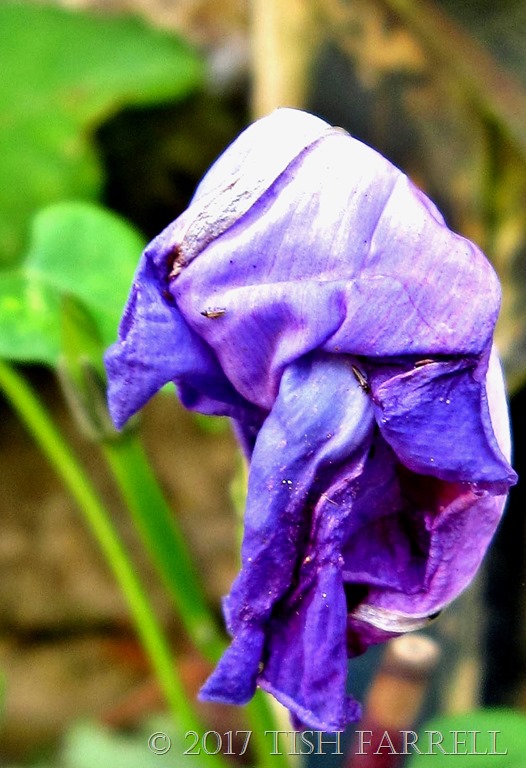
But wait! I’m hurrying back to see what has happened to the Morning Glory. By late afternoon the sky coloured canopy of the day’s high hopes has imploded – the colours deepening, bruise-like.  It is hard not to feel a pang of loss for such swiftly passing loveliness.

Yet there is a beauty here too in the subtle end-of-spectrum shades. Not failure, but process. Deep within the crumpled sheath things are happening. The hoverfly has done its work. There will be fruit in the making, new seeds to ripen and sow. Tomorrow is another day. Another chance to bloom. Time to get back to work then.


copyright 2017 Tish Farrell


P.S. For more beauty in decay, pop over to Sue Judd’s blog. It is a theme she explores in many arresting photo essays