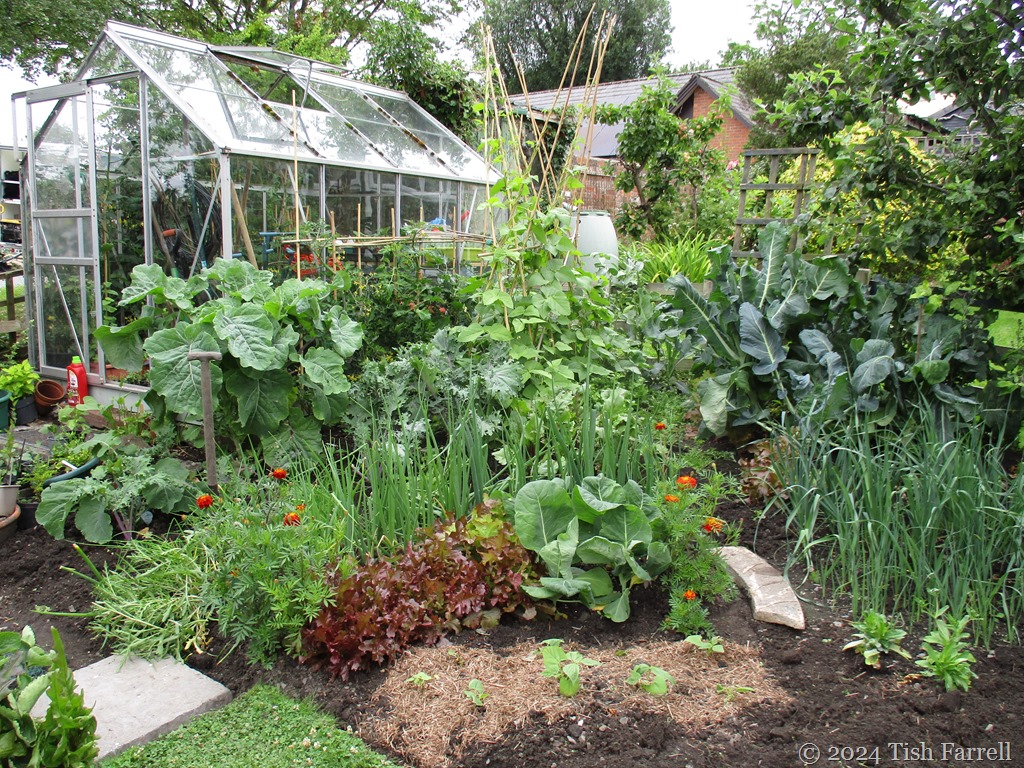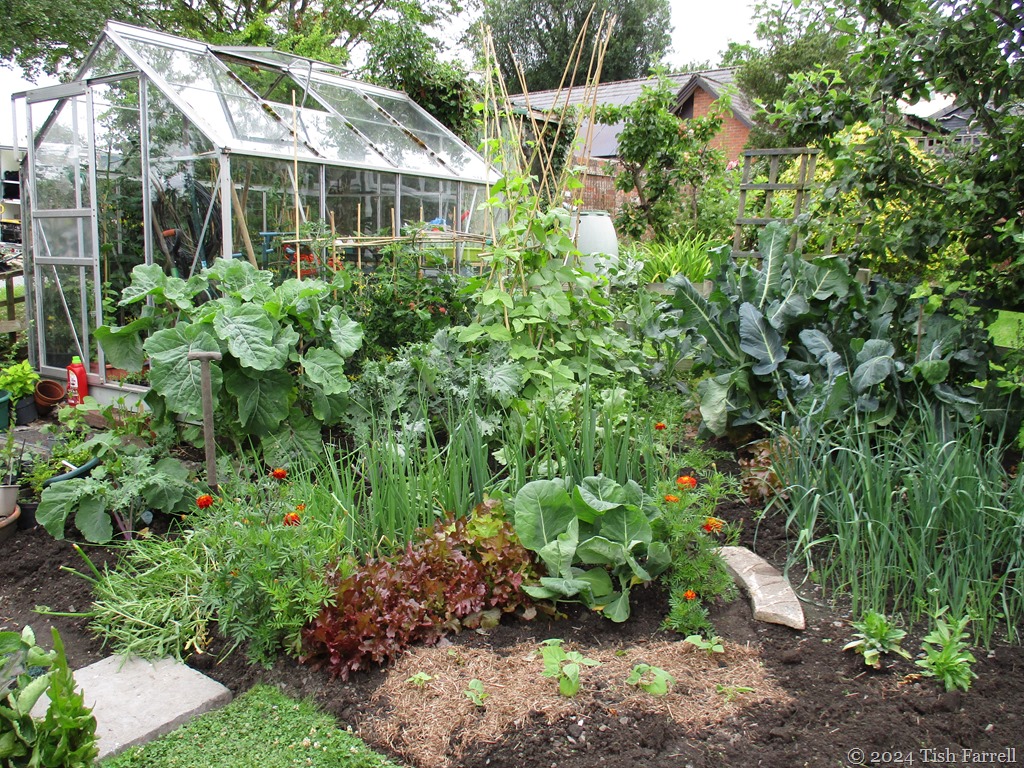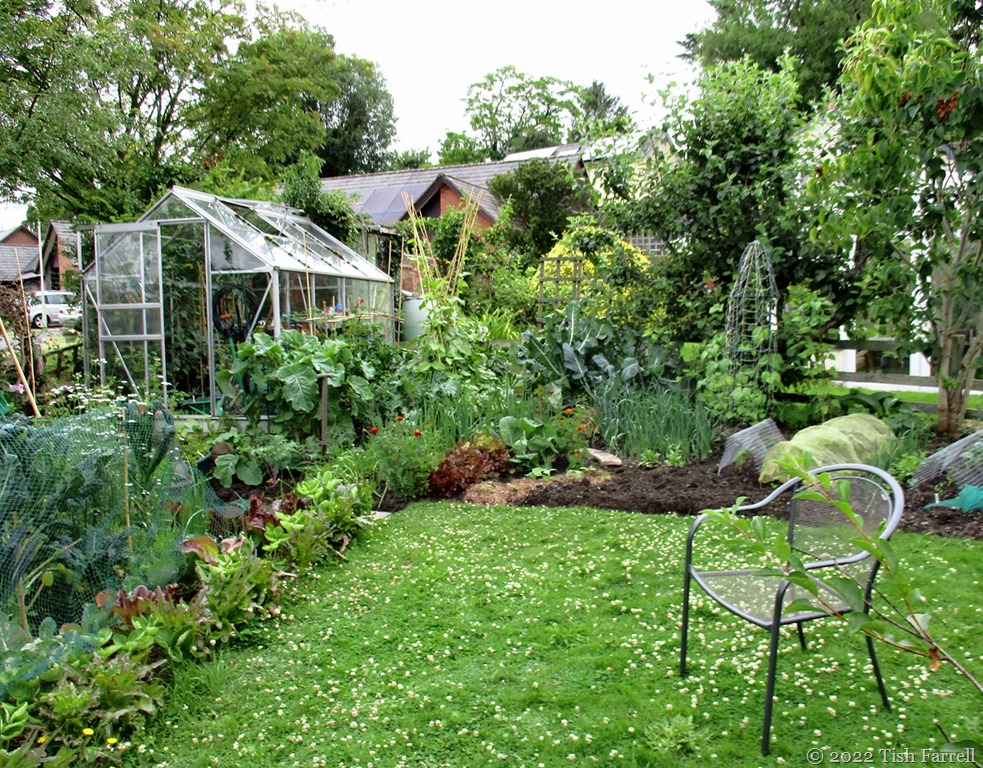
As I said in my last Six on Saturday post we have a new garden. I also said that for various reasons – rampant weeds to clear and too much wet weather from winter to spring – I was all behind come growing time; things got sown or planted out wherever there was space at that particular moment.
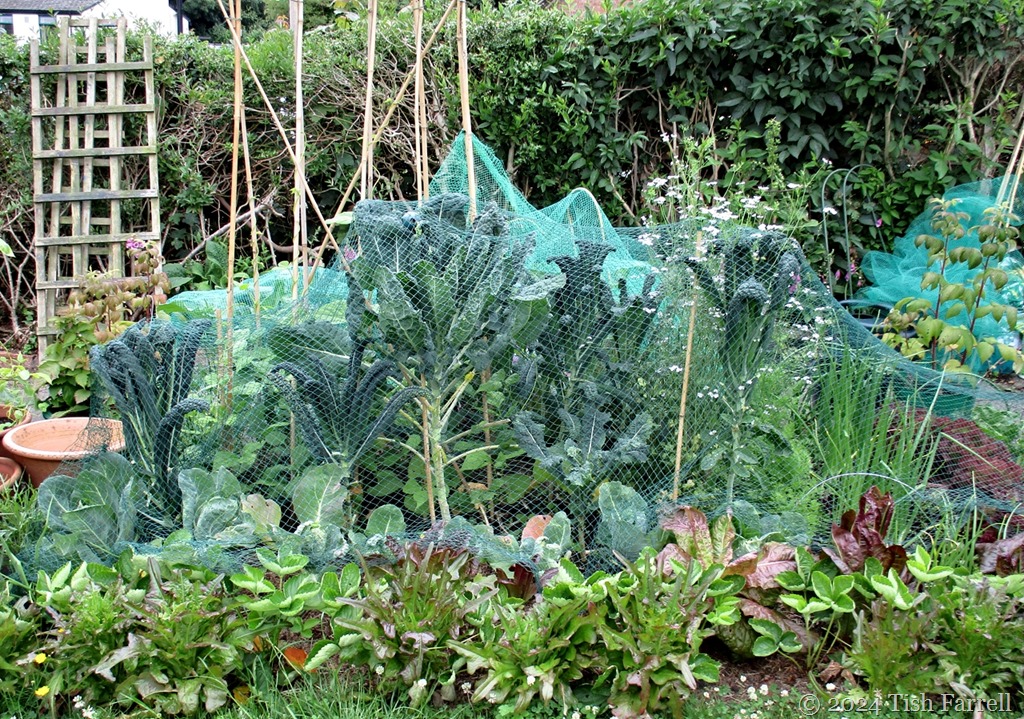
This has since made protecting cabbages, purple sprouting, kale and cauliflowers, first from pigeons, and more recently from hoards of cabbage white butterflies intent on laying their eggs, somewhat problematical, not to say given rise to a mishmash of netting and other protective devices rather too reminiscent of my former allotment contrivances.
So number 1, since it is preying on both my mind and on my brassicas: CABBAGE WHITE BUTTERFLIES…
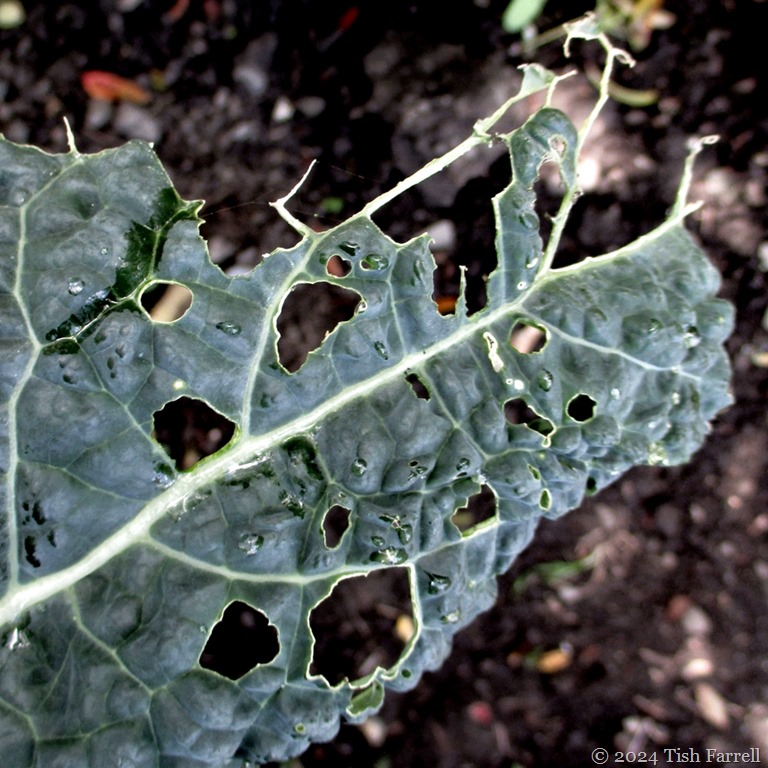
Caterpillar damage on Tuscan kale
*
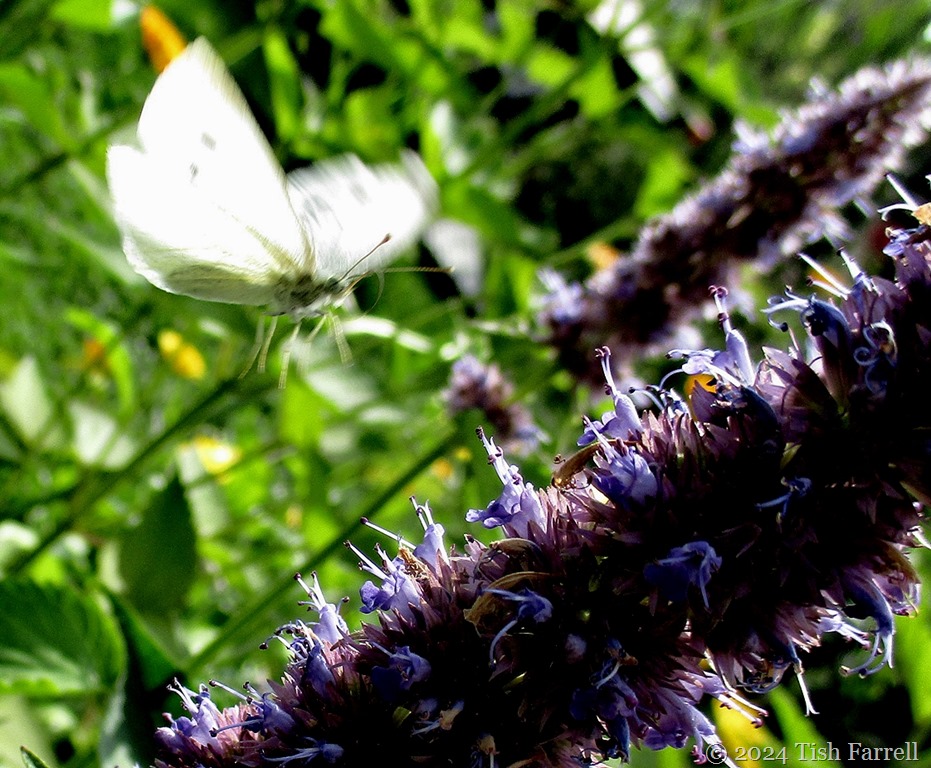
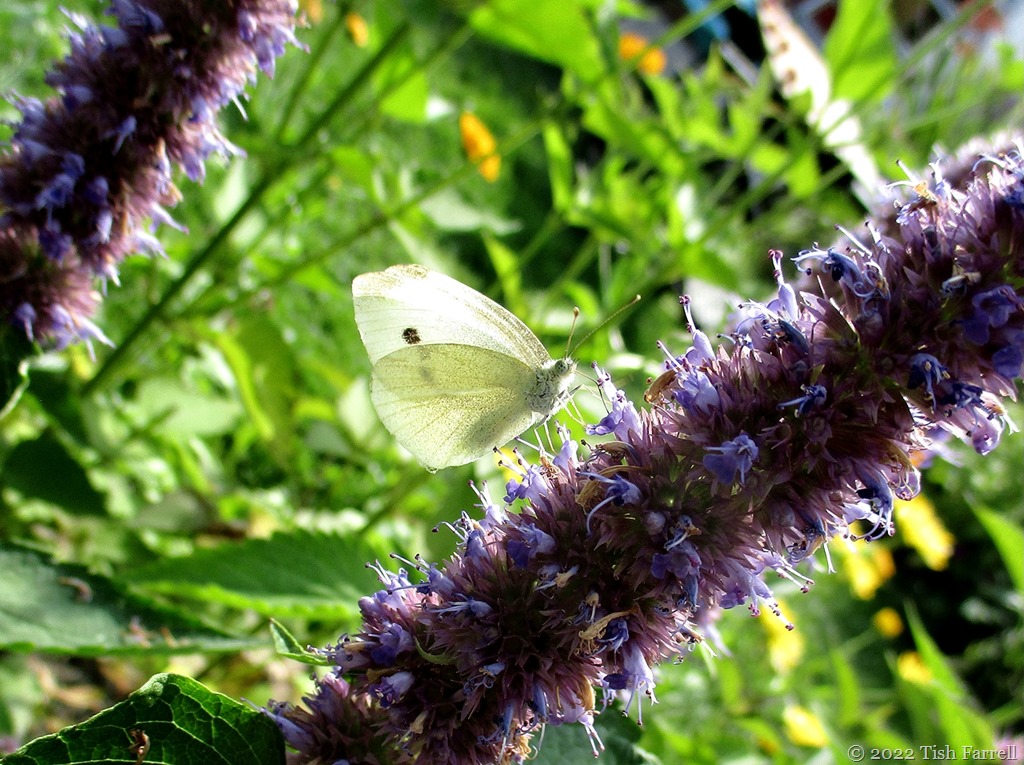
I actually quite like this photo. The more so as the target of interest is my SoS 2: agastache or Vietnamese Mint. The butterfly is calling in for an energy fix, which I suppose I should mind. (Enough procreation, thank you!)

*
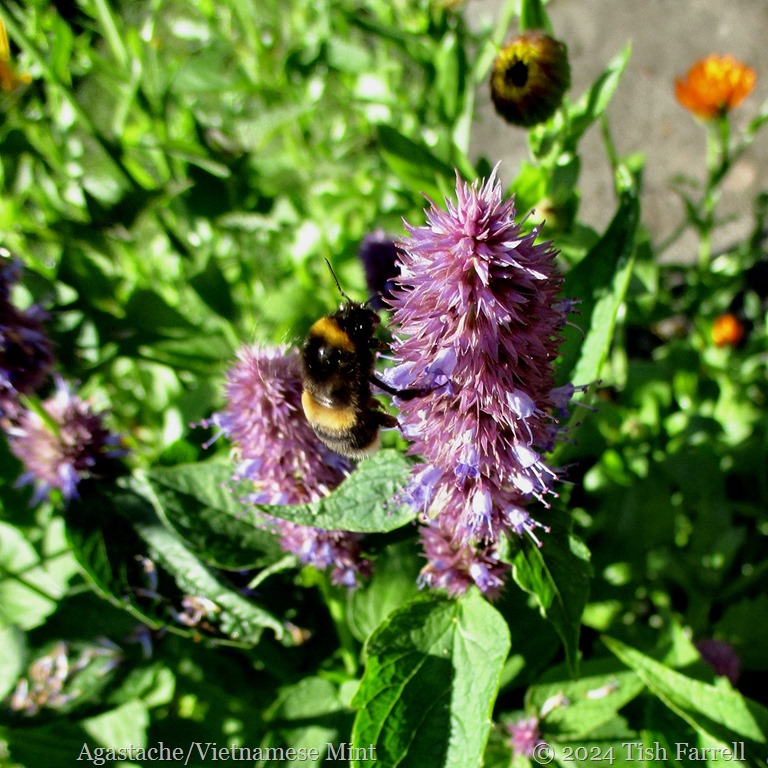
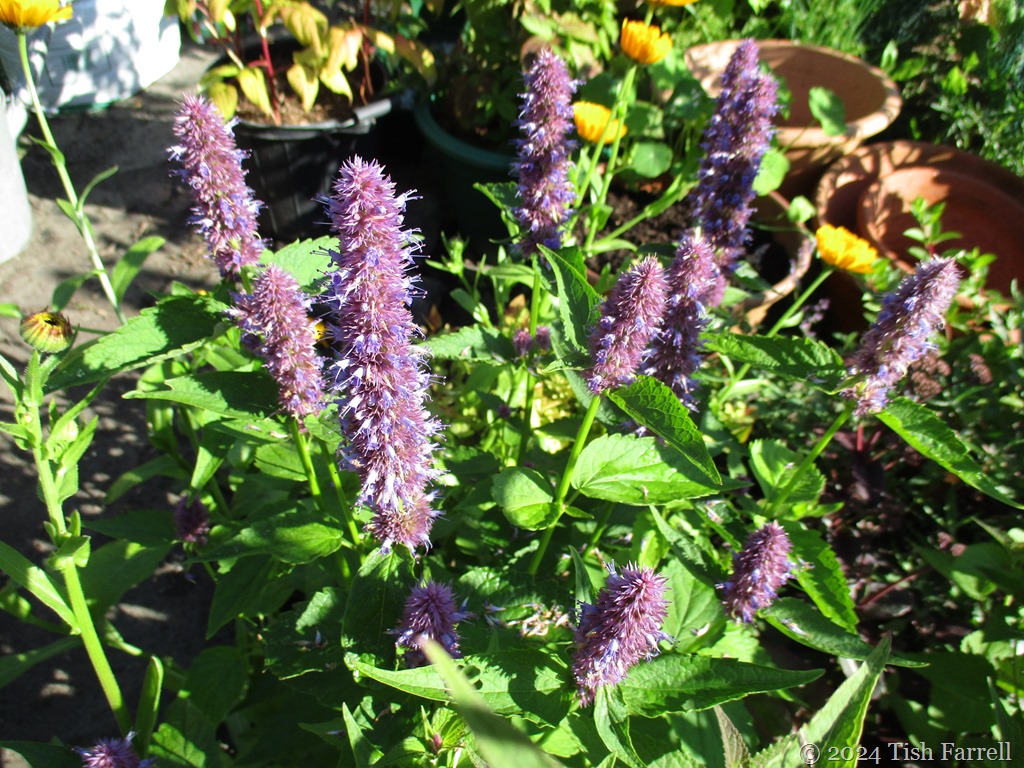
I love the agastache. It smells of aniseed and its leaves are edible. It’s a perennial (I grew lots of it from seed this spring), though I’m not sure how hardy it will prove in a Bishop’s Castle winter. Anyway, it is a very tidy plant, growing beautifully upwards with lots of purple-mauve spires – not easy to photograph well.
*
SoS 3 is one of this week’s very pleasing finds: a nice young toad lurking by the outside tap.
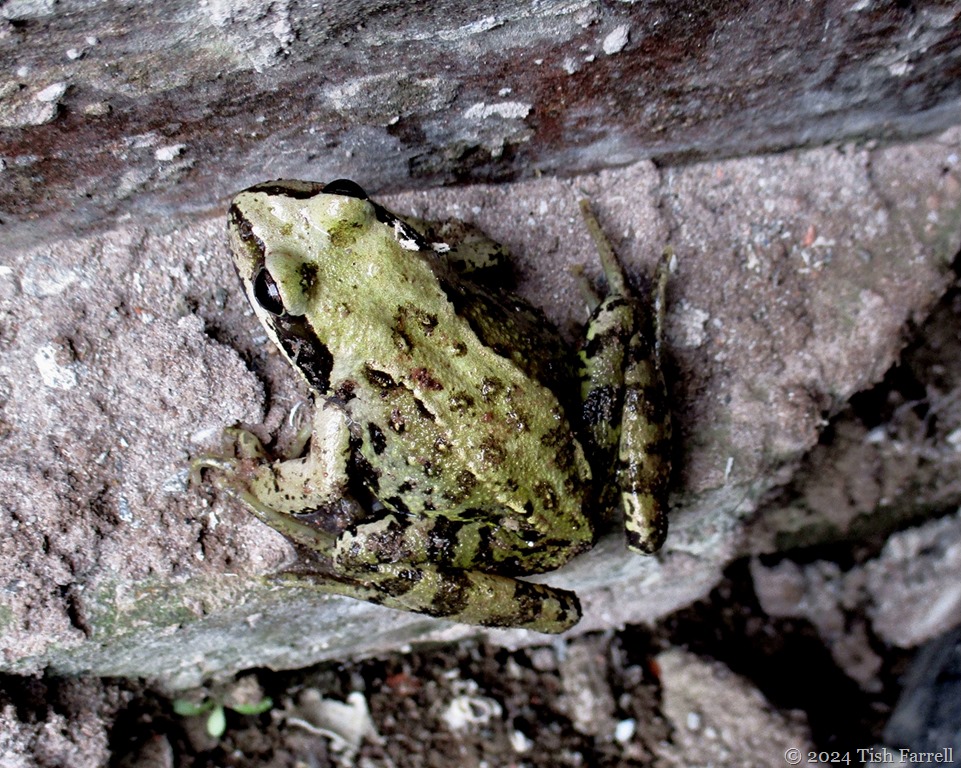
We’d already found a much bigger toad hiding under an old tile by Graham’s new garden shed creation. I’m wondering if there may be more, because so far there has been very little slug damage along the vegetable rows – so little in fact, I can’t quite believe it. (Lull before storm?) We were besieged with molluscs in Much Wenlock. We do have the odd big snail however.
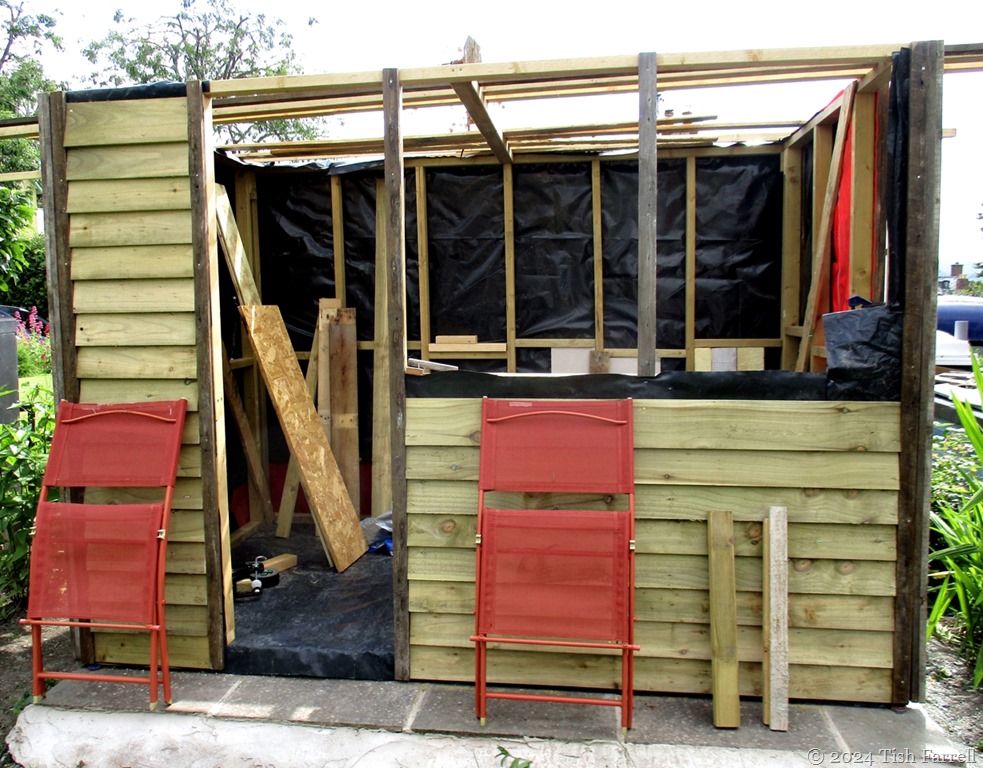
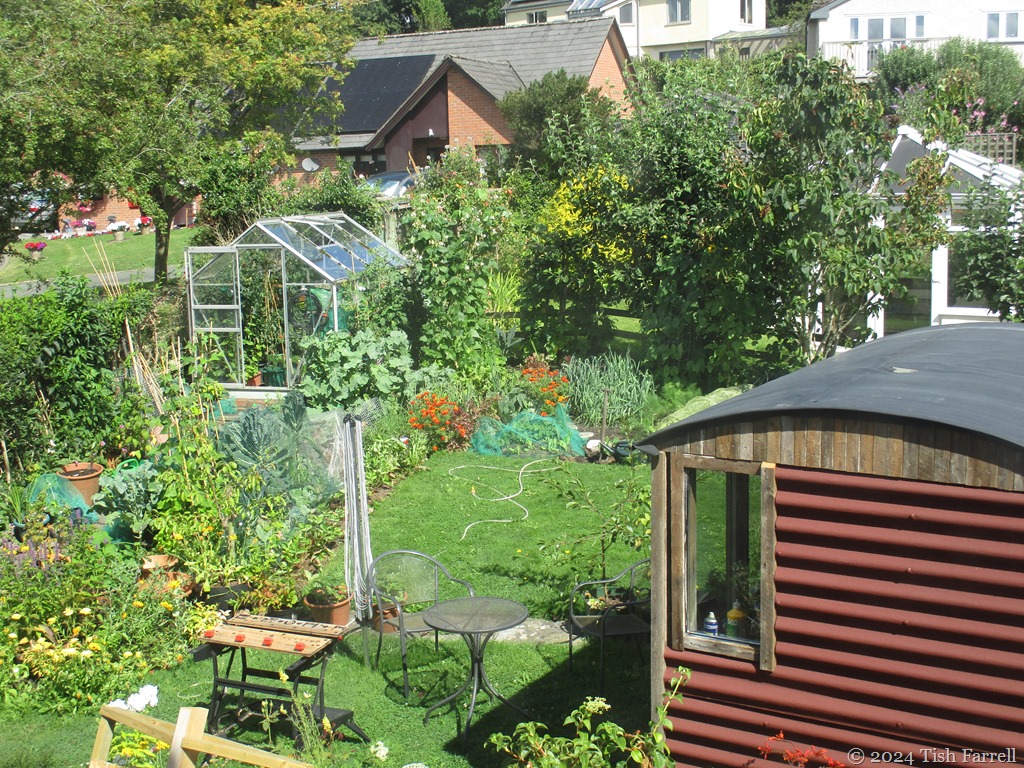
Talking of the new garden shed, this is number 4. I’ve mentioned elsewhere that it’s being built from scratch, incorporating recycled parts from our April roof makeover and other assorted materials, the whole inspired by a Great Western Railway goods wagon. I’ve had to sacrifice what might otherwise have been a large and useful garden border, but never mind. I’m liking the shed. It’s presently having its rubber roof applied.

 *
*
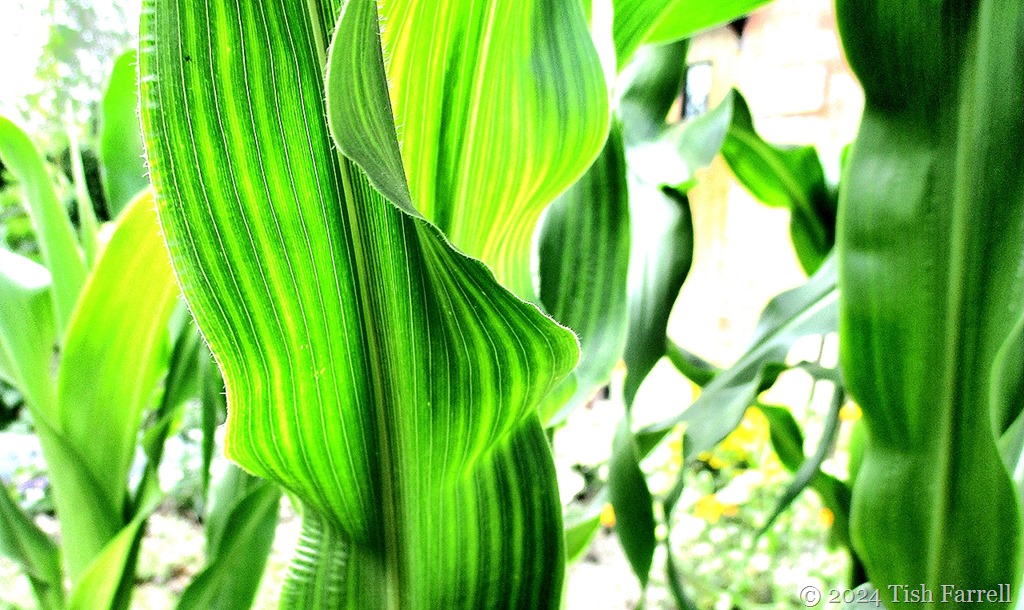
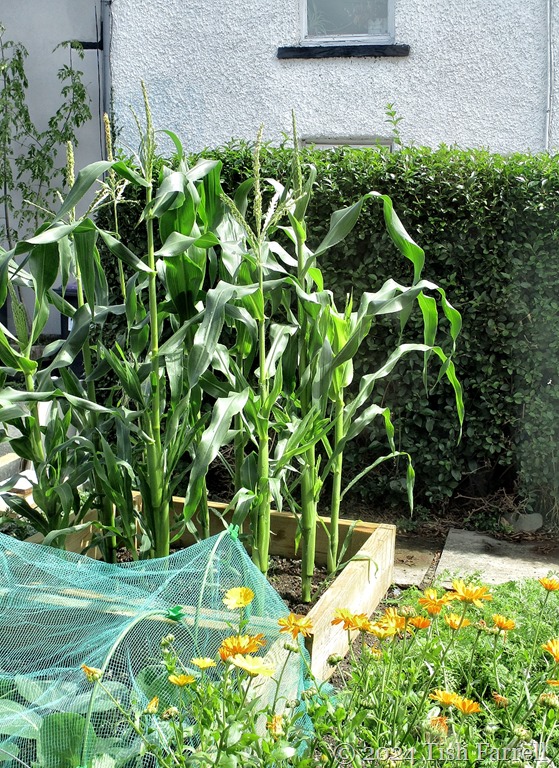
SoS 5 is the front garden sweet corn. It’s growing tall and starting to tassel. Possibly planted rather tightly, but so far the plants don’t seem to mind.
*
As seen a couple of weeks ago:

I also have a neighbouring raised bed with cabbages and spring onions. On the farther side of the front garden there is now a row of purple sprouting growing where the potatoes were, netted of course.
The two raised beds seen here were made from building work off-cuts, and I’m hoping for more to be made when the shed is done, and eventually I’ll move these to the back garden.
Or maybe not. The front garden does seem a good growing spot.
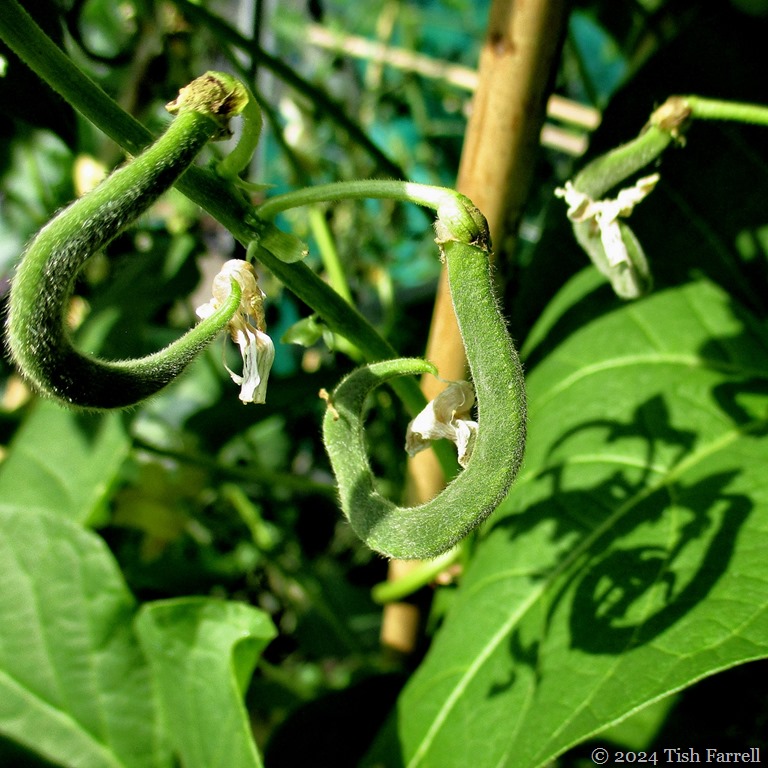
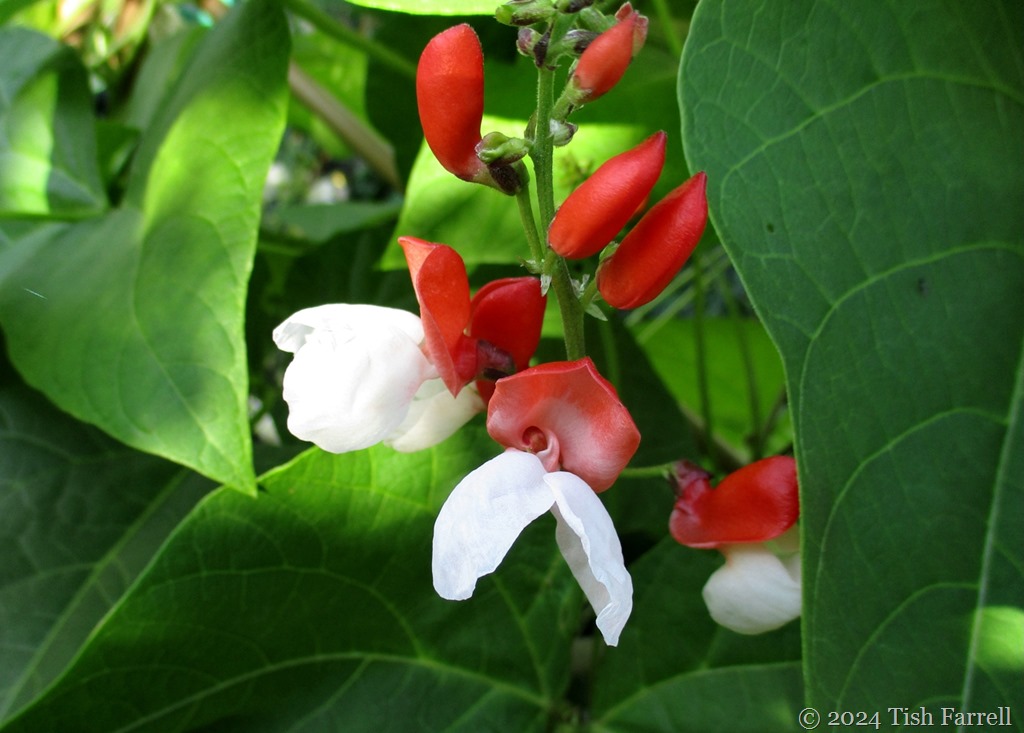
There’s also some good growing going on at the bottom of garden. I’m pleased that back in the winter I managed to make a good compost filled trench for the runner beans. It brings me to no. 6 – last night’s first meal of the season. Always a gardening landmark in Farrell household.

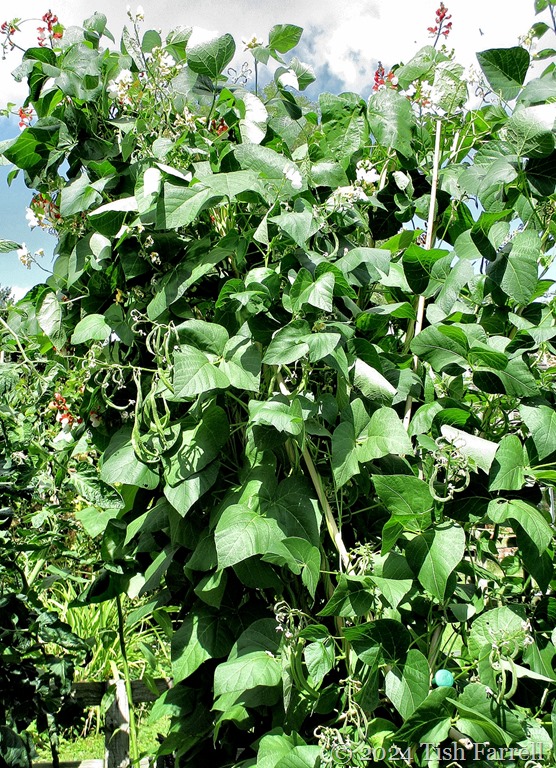
The trench of garden waste and hot bin compost certainly seems to be working well for runner beans Emergo and Painted Lady
*

Up, up and away…
*
Please visit Jim’s lovely garden at Garden Ruminations