Many people do not know, and that once included me, that hippos are among Africa’s most dangerous animals. They do in fact kill quite a few people every year, usually local fishermen. The main source of contention is when a human presence is deemed an obstacle to a hippo’s return to its territorial waters. Hippos spend the dark hours roving through the bush chomping large quantities of grass. But they like to return to their lakes and rivers by sun-up.
They are very thinned skinned and although they produce a red oily secretion to protect themselves, any unexpected delay out in the hot sun can cause them to become ferociously overheated, if not downright murderous. We had a hair-raising experience ourselves when we were living in Zambia. We were on a guided bush walk in the magnificent South Luangwa Valley. Lucky for us we had a wise Zambian Park Ranger accompanying our party. You can read the story at Grouchy Hippo, Laid Out Lions.
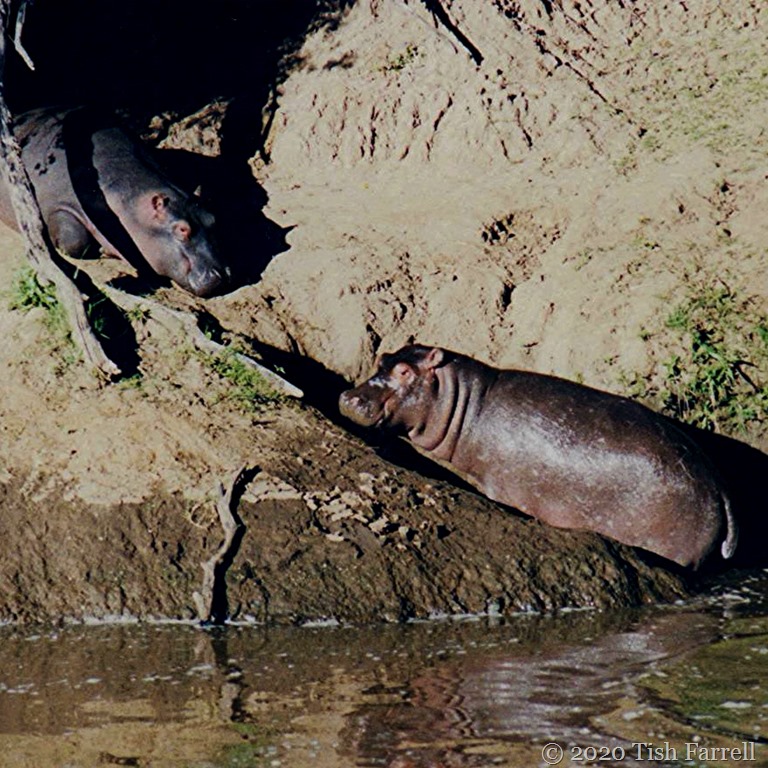
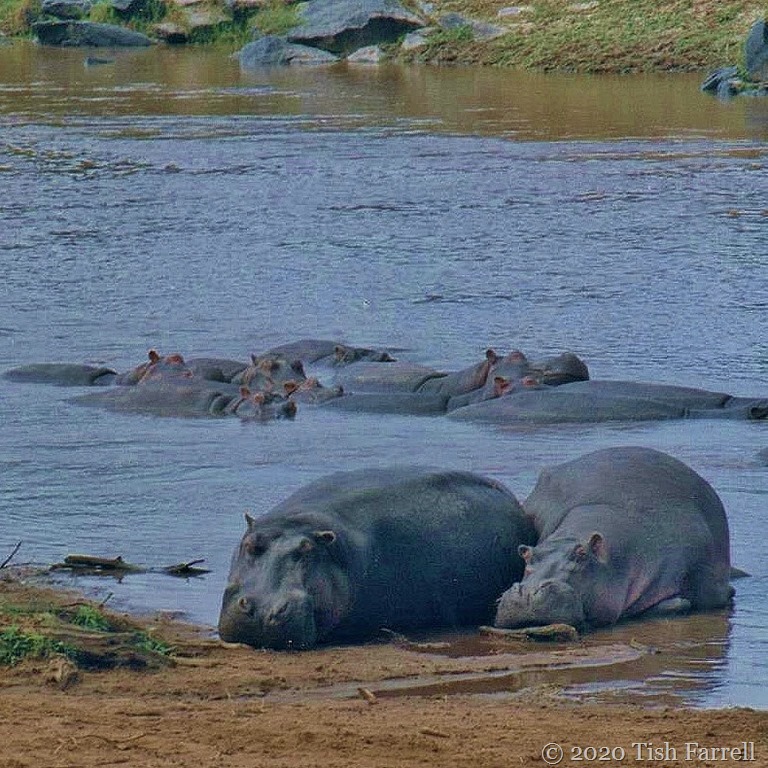
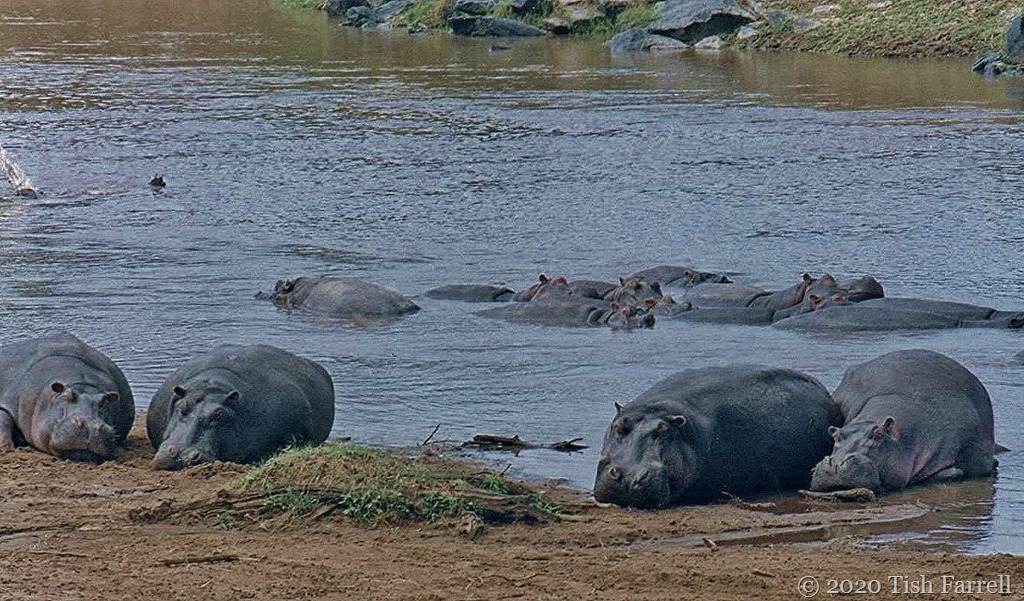
The hippos in the photo were our neighbours at Kenya’s Mara River Camp. Every morning at first light I would watch them emerge from the bush on the bank across from our tent. Full grown hippos weigh anything between three and six thousand pounds so the return to the river, even on custom-made hippo-slides, took some negotiating: head first or bottom first that is the question.
I might be on a bit of roll with this ‘two by two’ from the old Africa album, though as yet I haven’t come up with an ark to house the featured pairs. Actually it’s now raining so hard in Shropshire (and for days to come if the forecast is anything to go by), it may well be prudent to come up with one.
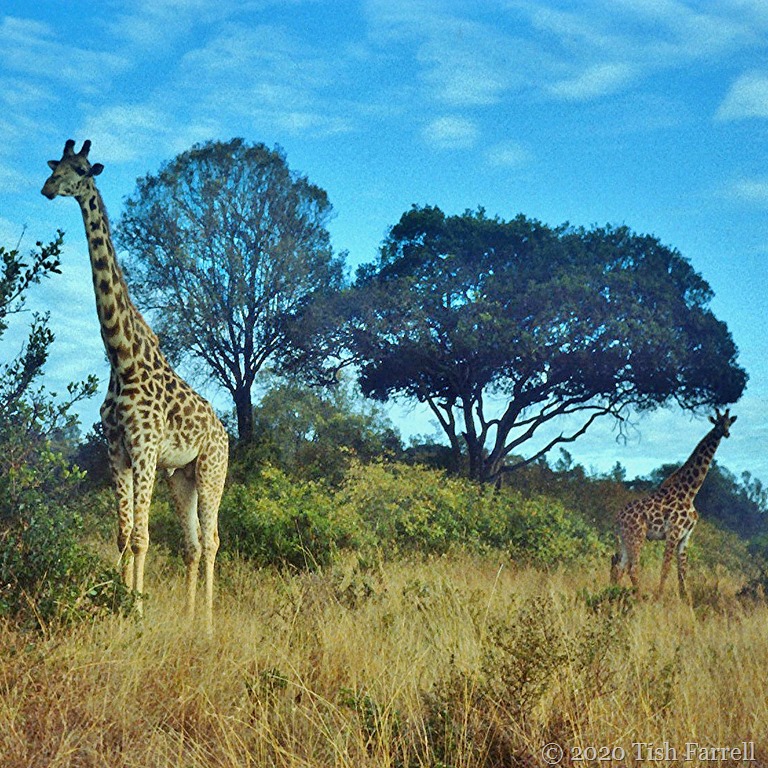
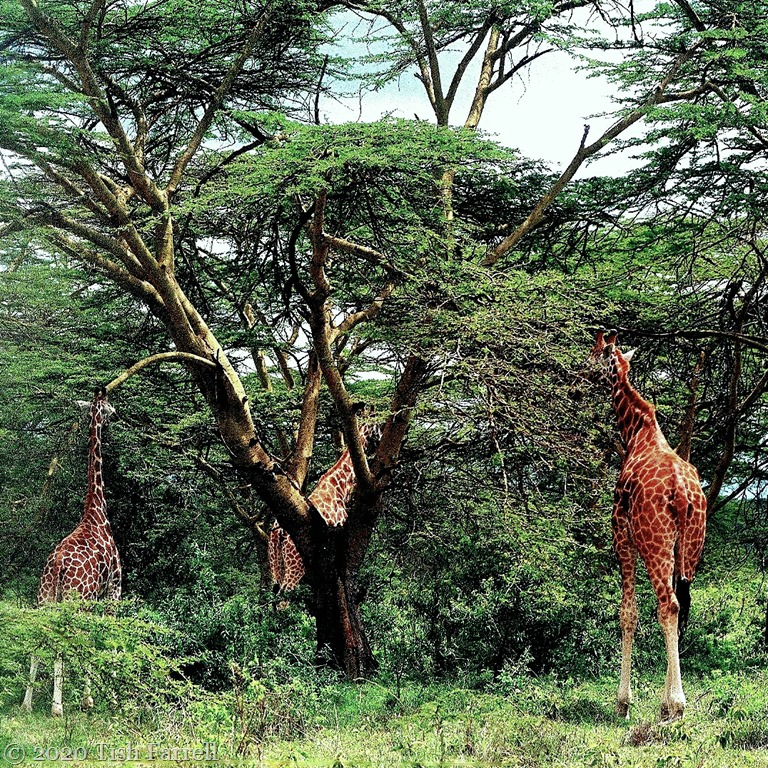
Anyway, here we have a pair of Maasai giraffes in a dreamy, somewhere-in-Tsavo setting. Please imagine the subtle spicy-sweet scents of dry bush country. There will be a soundscape too – high-whining crickets and the kroo-kroo-ing of ring necked doves.
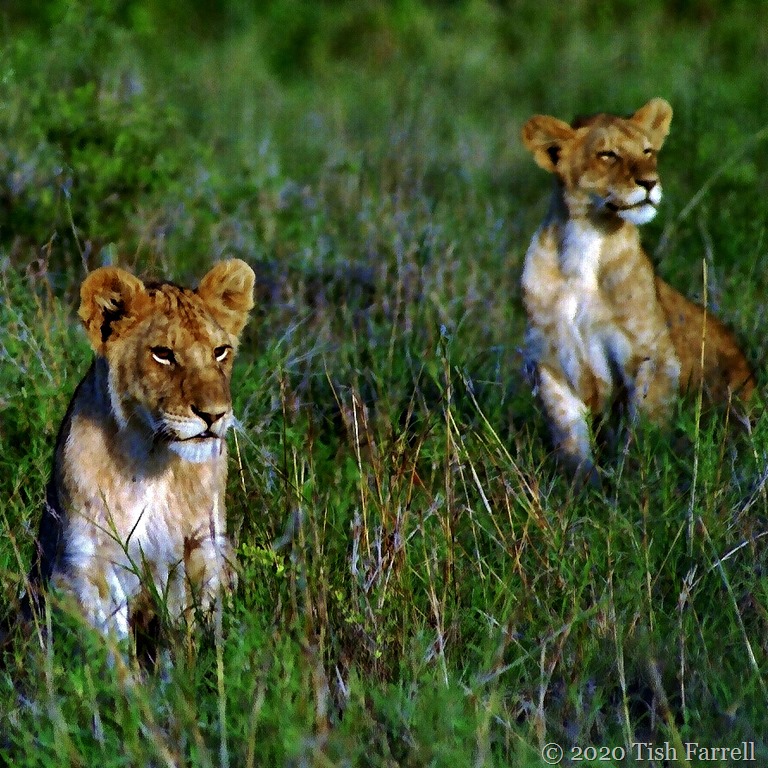
Gloomy Shropshire skies today had me rifling through the Farrells’ old Africa album, though it has to be said that Kenya, too, does a good line in gloom, cold and wetness at certain seasons. Anyway, the sun is shining in this particular shot, taken in the Maasai Mara long ago, and these ‘likely lads’ of the leonine kind (or maybe a lad and lass) are anyway sure to raise a smile.
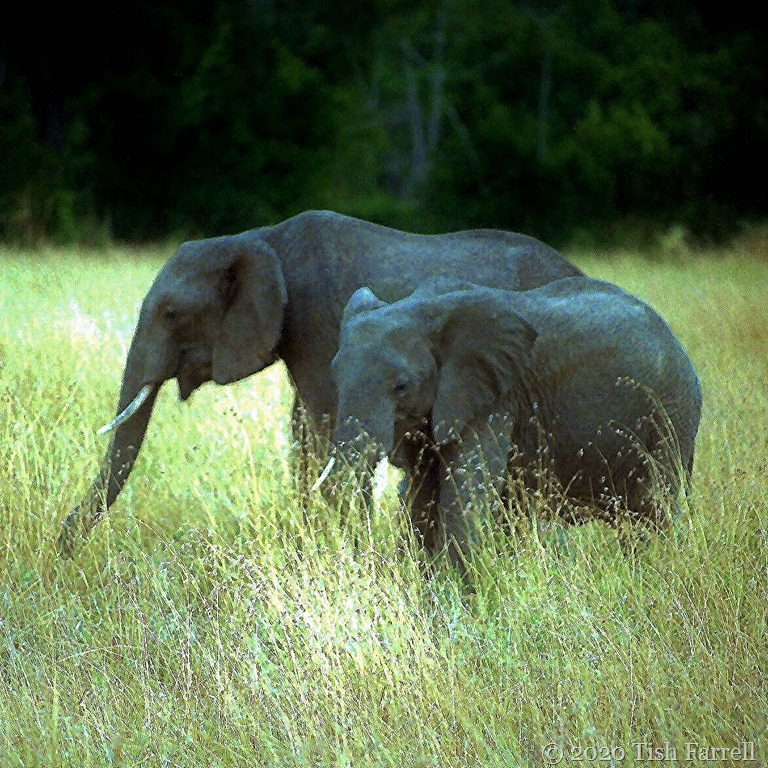
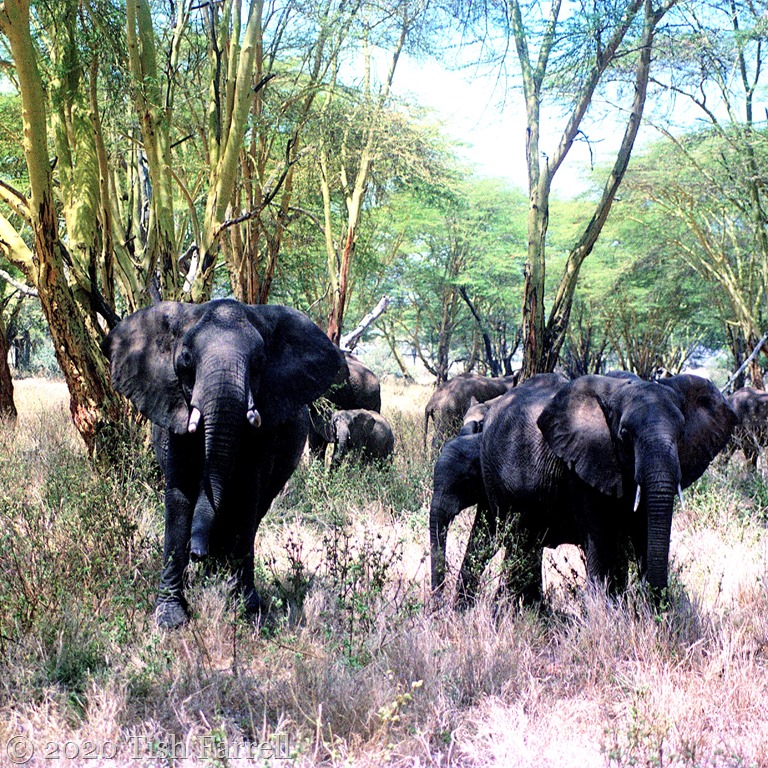
The elephant on the left is the matriarch of this little family group of six adult females and three infants. She is giving us the once over before concluding we are no threat to her charges. In elephant world, the matriarch rules; she is the keeper of the family knowledge; the guide and decision maker. She will also kill any creature that is deemed a threat.
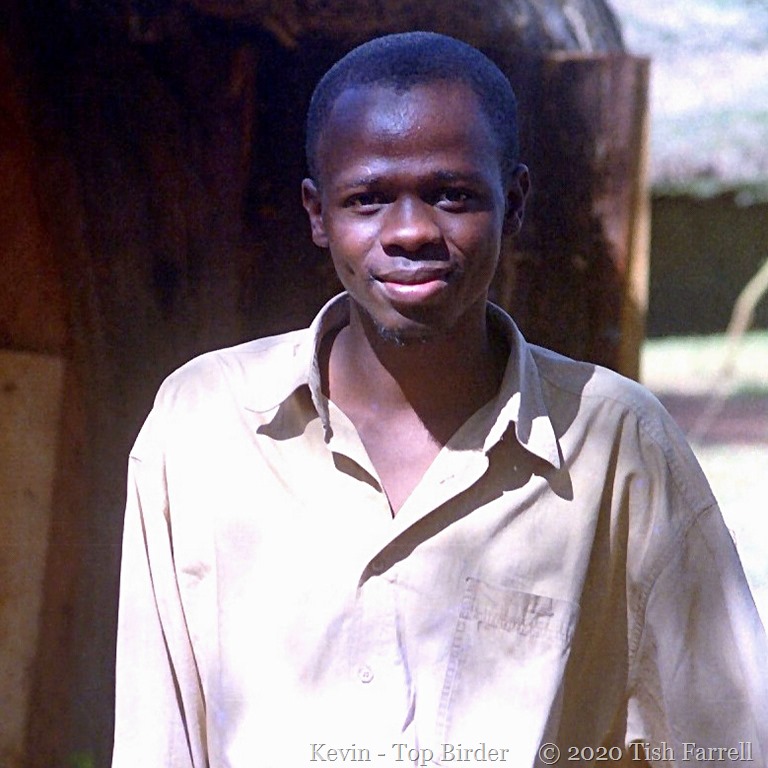
Following on from yesterday’s post on Lewa Downs Conservancy, here are some notes from that trip. We’re out on a morning drive with Kevin our expert guide:
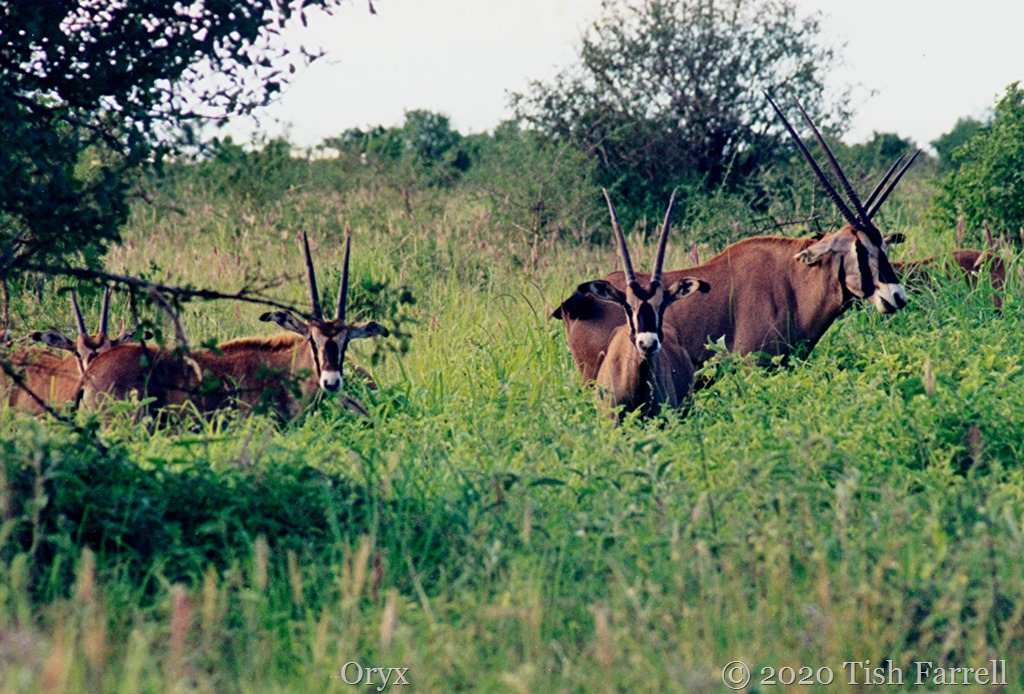
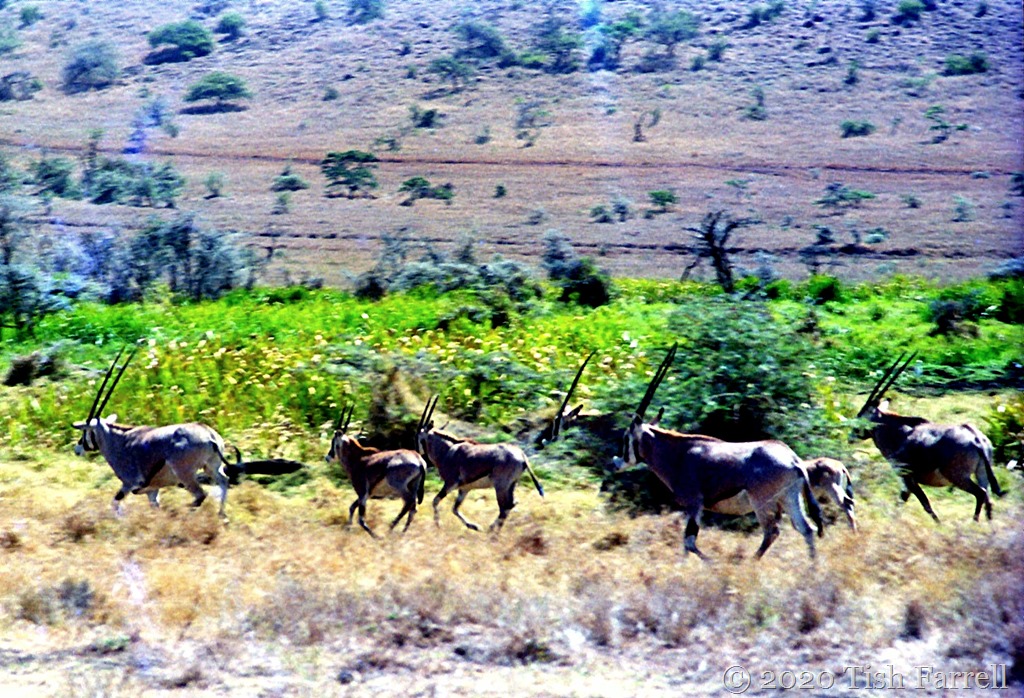
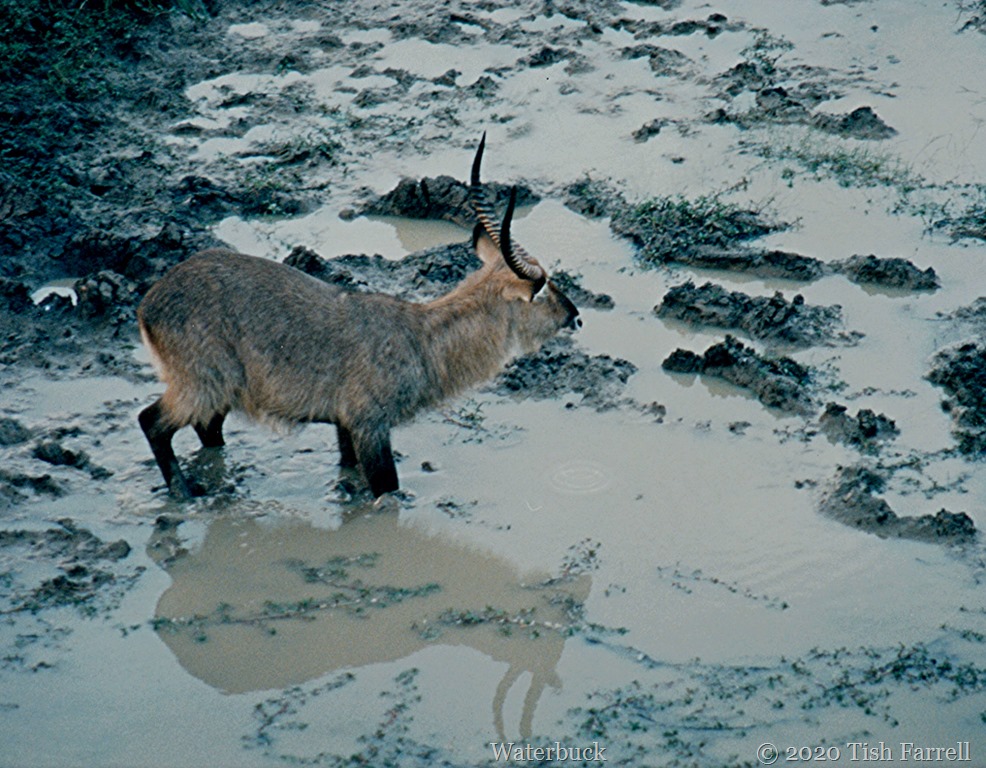
By now it’s late morning and we’re down by the swamp. The waterbuck stare out at us, and as we follow the track that skirts the reed bed we come upon a herd of oryx. They’re very shy though and won’t stay.
Kevin drives on towards a clump of fever trees, now following elephant prints along the track, and as we reach the acacias there is a lone old bull, large as life and very close. Too close? When it comes to elephants the warning signs to look out for are ears spread and trunk up and to the side. But we’re not bothering him. He views us serenely through long lashes, shakes his battle torn ears, ambles alongside the truck for a while then wanders off.
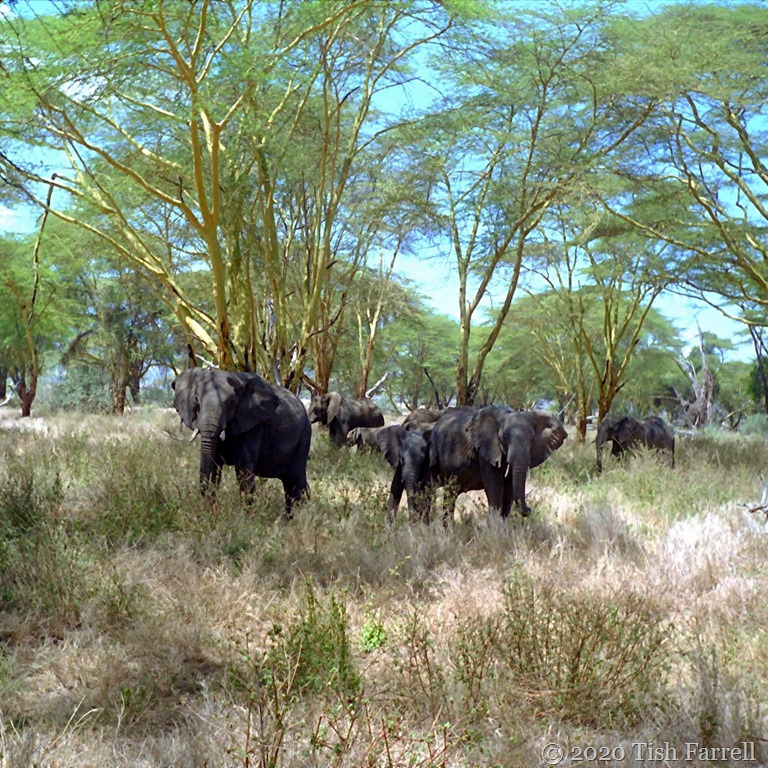
Graham meanwhile spots a group of elephant across the swamp and Kevin sets off for a better view. For a while we park on the track, torn between watching brilliant carmine bee eaters in one direction and the little herd in the other. The elephants are about fifty yards away in the fever trees, and I think that’s close enough, but no, Kevin is eyeing up the lie of the land, picking out a line of solid ground. Soon we are parked with swamp on our right and elephants on our left.
At first the matriarch adopts an intimidating stance, but then changes her mind. Our presence in no way interrupts tree browsing and bottom scratching, and no attempt is made to shield the youngest calf from our view. We watch for ten minutes or so, listening to the taptapping of a nearby woodpecker, the call of hadada ibis, spot a vervet monkey watching us watching the elephants. Then Kevin decides it’s time to leave them in peace. As we pull away over the rough ground we’re left with the musky, goaty, muddy smell of elephant in our nostrils.
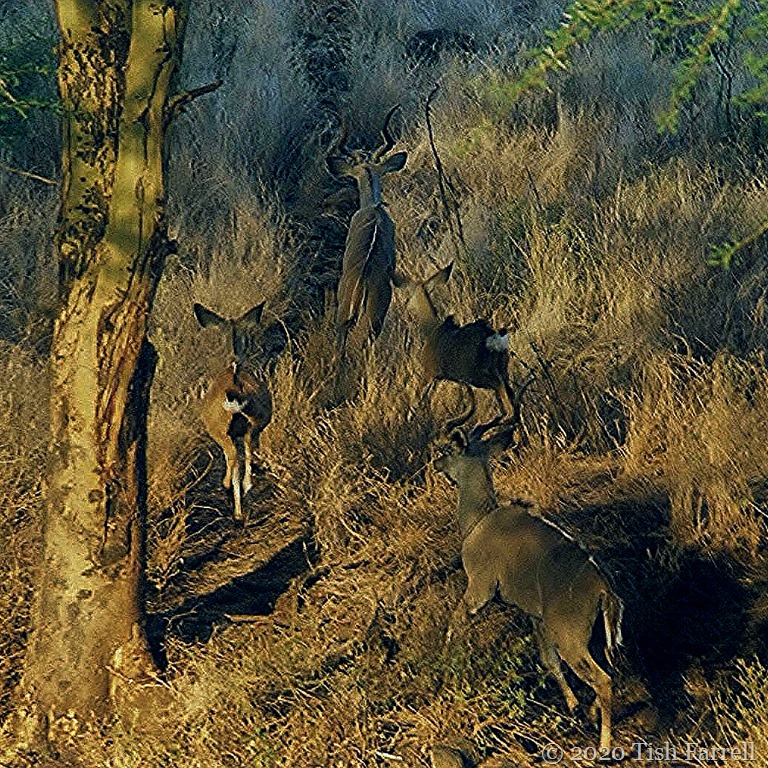
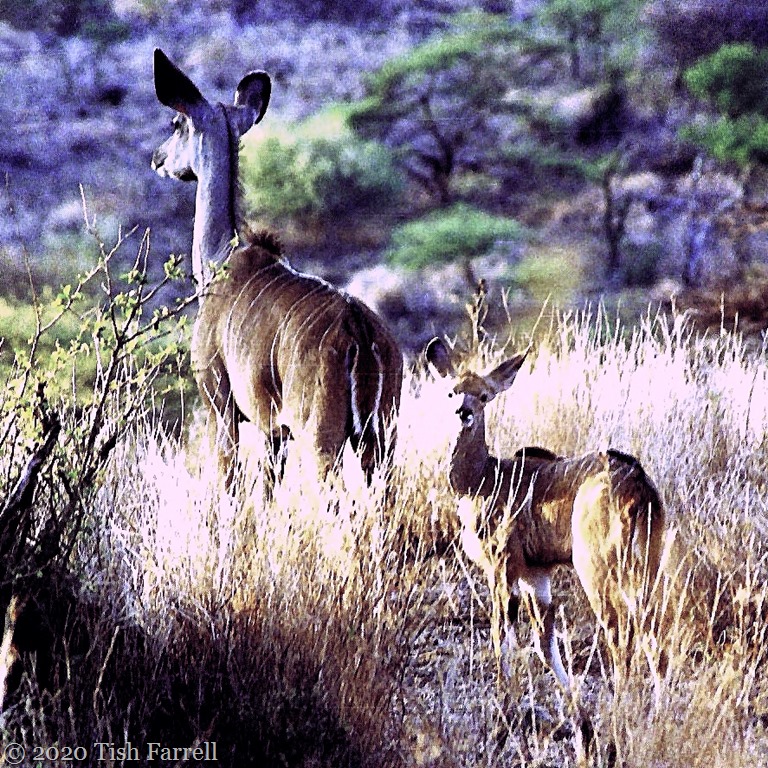
This sunset view of retreating greater kudu was taken at Lewa Downs, a private nature conservancy on the northern foothills of Mount Kenya near Isiolo. The reserve is 62,000 acres, and was once a colonial cattle ranch. The descendants of the original settler family still own the land, but now their focus is on wildlife conservation, upscale tourism, improving the lot of local communities and helping to protect surviving members of Kenya’s black rhino population.
When we visited years ago we stayed in the small Lerai tented camp run by the same outfit whose camps we stayed in at Mara River and Elmenteita, i.e. fairly low key by comparison with Kenya’s super luxury safari ‘camps’, and aimed more at visitors with dedicated interests in wildlife, particularly ornithologists and professional wildlife photographers.
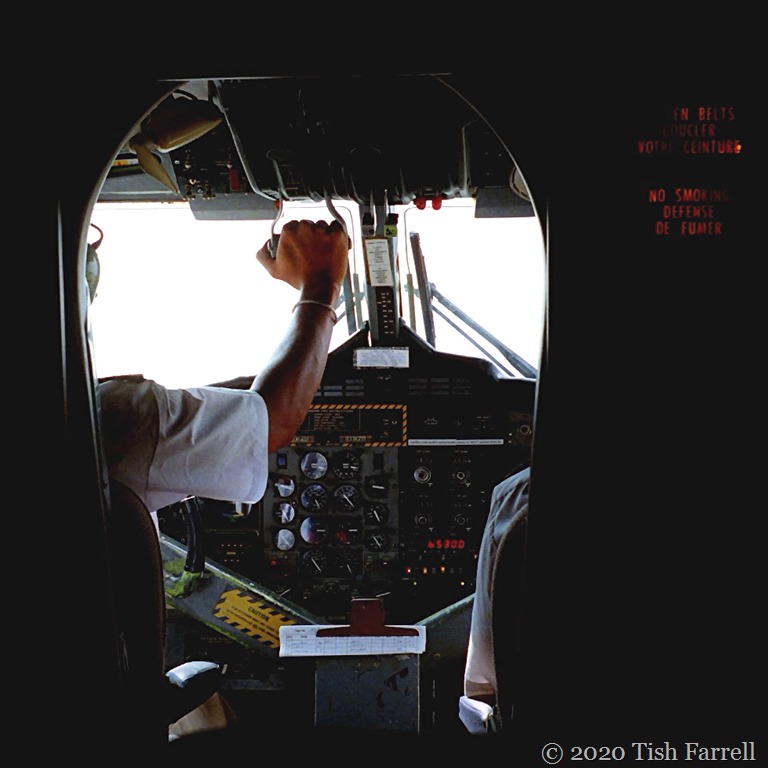
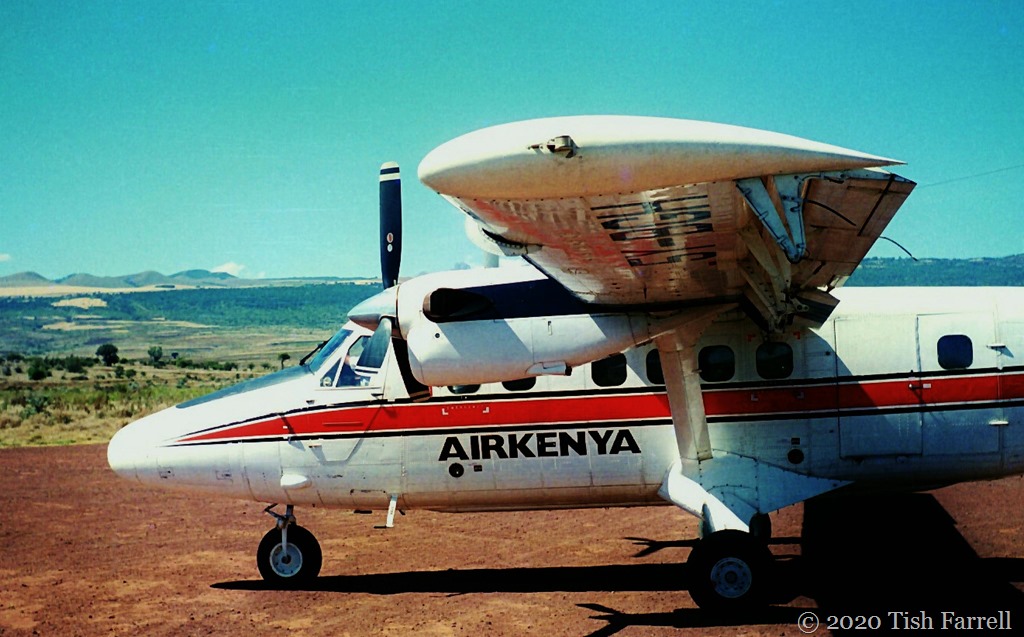
We flew up there in a Kenya Airways Twin Otter 20-seater plane. (Kenya’s internal aerial bus service is brilliant). There were only two others aboard and, after running through the safety procedures, the co-pilot leaned out of the cockpit with a bowl of boiled sweets and a cheery ‘pass it back!’ The next moment we were sprinting off the tarmac at Nairobi’s Wilson airport and banking over the nearby national park where small groups of wildebeest were gathered along city perimeter fence. So even before the safari is properly begun there’s a little wildlife spotting to do.
Next we whipped up the Great Rift, the old volcano Longonot in the valley bottom, the smallholdings, tea and coffee farms of Limuru up on the eastern escarpment. And in no time we were over Nyandarua, the Aberdares Range, and looking the dark snow-streaked spires of Mount Kenya in the eye. In fact in the same amount of time it had taken us that morning to get through Nairobi’s traffic jams to the airport we had covered the couple of hundred kilometres to Lewa.
Soon we were flying low over the marsh buzzing zebra before putting down on the dirt landing strip whose only permanent structures then were a windsock and a thatched hut. Our transport, an open green safari truck, sped towards us in a cloud of pink dust. Kevin, our guide for the two-day stay, greeted us with a big grin. We found out later that his family were originally from Tanzania, his people the Chagga who live on the slopes of Kilimanjaro, and are renowned for their capacity for running up the mountain. Kevin also turned out to be a very passionate ornithologist, especially interested in the European migrants that were just then visiting Lewa. A bit of an irony I thought: a case of the reversed ‘exotic’ when he became, to my mind, rather over absorbed by the presence of a migrant tufted duck. That’s not what we came to see! Here’s some more of what we did see:
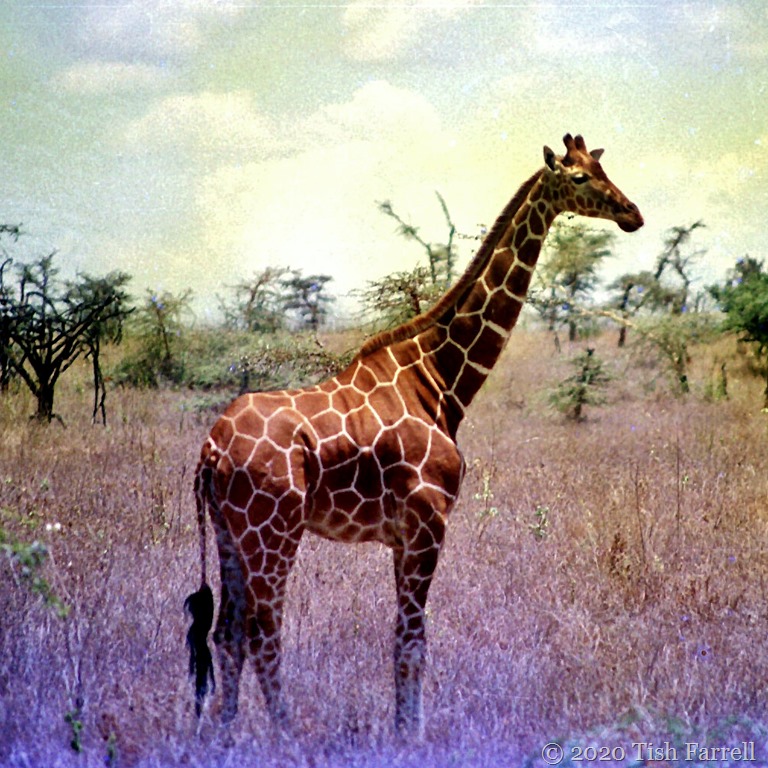
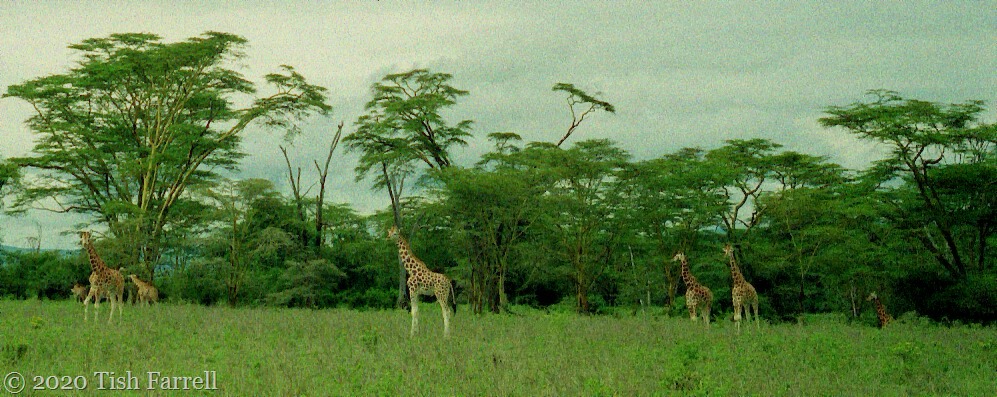
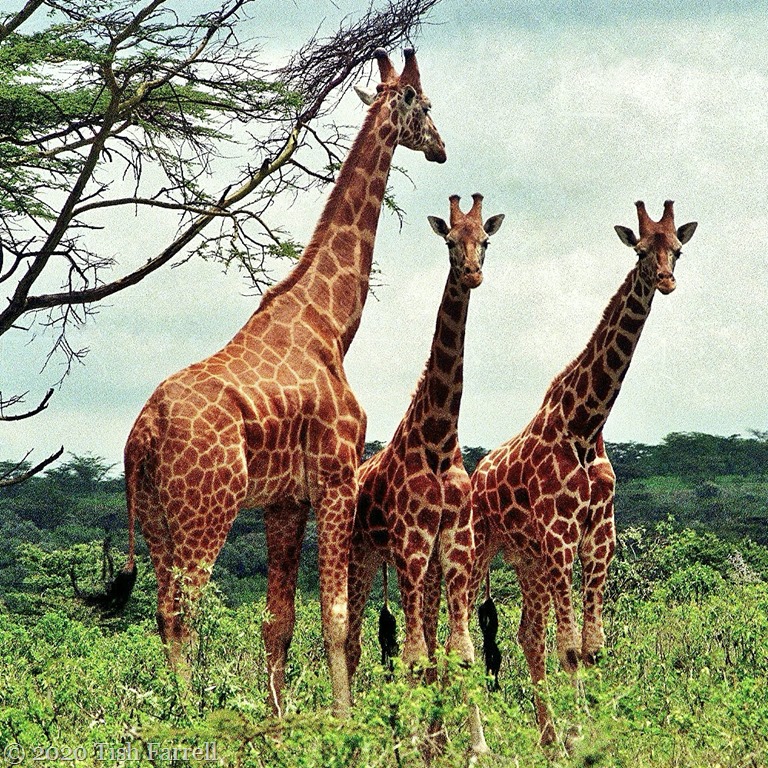
A reticulated giraffe, one of the three main giraffe races in Kenya. It is mostly found in the northern districts. This photo’s for Brian at Equinoxio. (The weird colour flashes are due to poor film processing at the time).
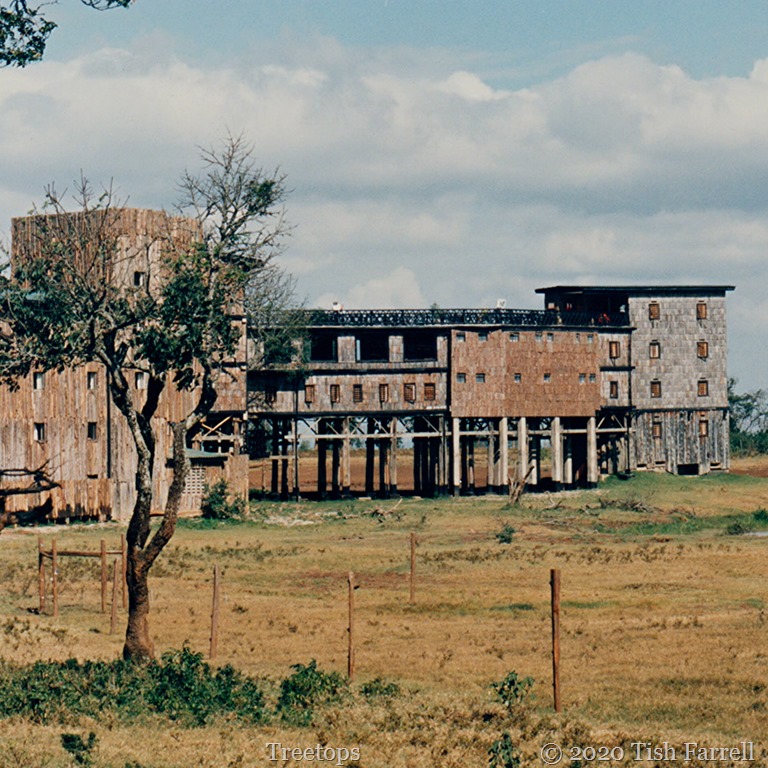
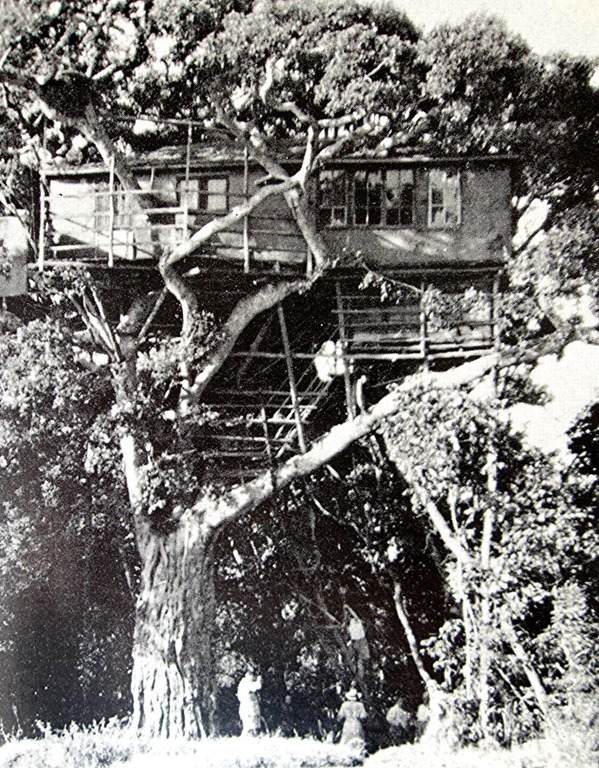
Mention of Treetops in Kenya’s Aberdare National Park inevitably brings up residue of British colonialism, and in particular the extraordinary connection with the UK’s present monarch. The original Treetops was little more than a 1930s bungalow-affair, a rickety contrivance lodged in the branches of an ancient mugumo tree, a species of wild fig which happened to be very sacred to the local Kikuyu people. Princess Elizabeth spent the night there in February 1952 and, as the well trammelled narrative goes: she went up the tree as a princess and came down a queen, although it was only later in the day that she was informed that her father, George VI had died.
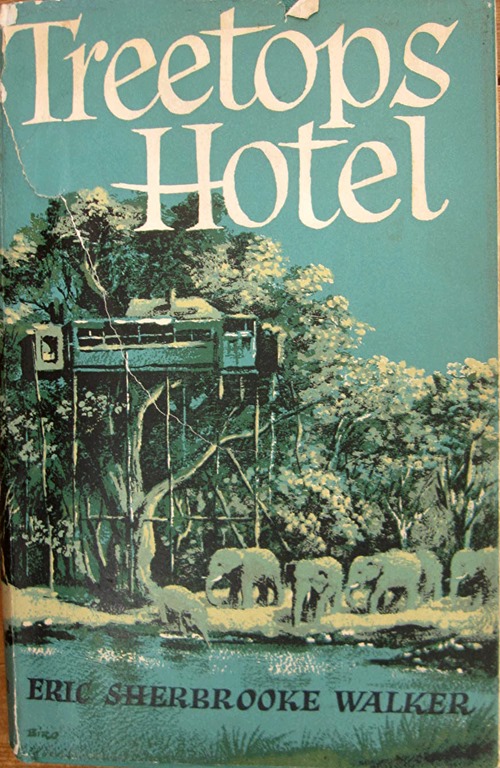
Here’s the original Treetops where the royal party stayed, taken from the book by its builder, Eric Sherbrooke Walker, Treetops Hotel.
The Sherbrooke Walkers, like most of the early settlers in British East Africa, were of the officer-gentry-aristocracy class. Eric Sherbrooke Walker had served in the Royal Flying Corps during World War 1, followed by a stint in military intelligence with the White Armies in Russia during the Bolshevik uprising wherein he earned the Military Cross and other honours. After the war, during America’s prohibition era, he took up rum running off the West Indies and made enough money to marry Lady Bettie, daughter of the Earl of Denbigh. They then set off on an adventurous trip across East Africa, which soon left them short of money and in turn led to the notion of setting up their own country house hotel.
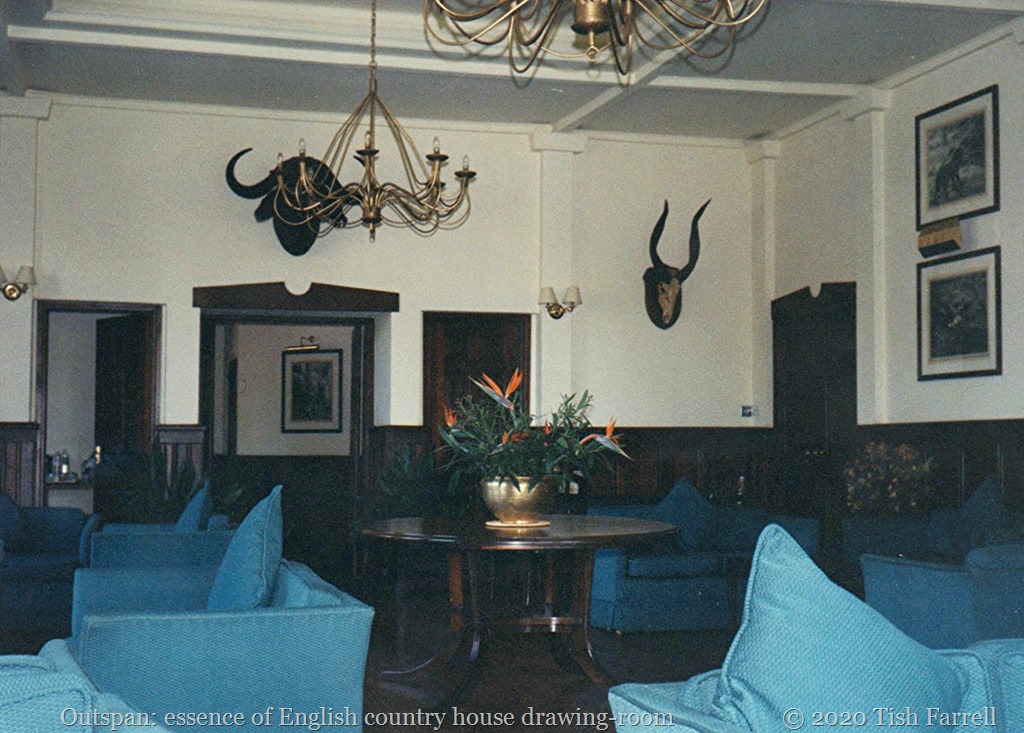
In 1926 they pitched up in Nyeri in the forested highlands of Kenya’s Central Province, bought 70 acres from the colonial government, and set about creating the genteel Outspan Hotel. By the end of 1927 they had built ten rooms and opened for business for the New Year of 1928. The big attraction to their settler guests, who though well-heeled usually had very primitive facilities on their African farms, were rooms that came with private bathrooms and running water. So began a successful enterprise of country inn-keeping in the English manner but with views of snow-capped Mount Kenya and the Aberdare range thrown in.
The 1920s was the era of the grand East African shooting safaris when the likes of Bror Blixen, Denys Finch Hatton and John Hunter acted as Great White Hunters for extravagant entourages of European (especially British) royalty and Indian maharajas. But by the 1930s, many safari goers had begun to turn their attention from trophy hunting to big game photography – an activity greatly promoted by American adventurers and film makers, Martin and Osa Johnson.
And it was this new craze that prompted the Sherbrooke Walkers to create Treetops. Small parties of guests could spend the night in the top of the mugumo tree and watch elephants, rhino and forest hogs lit up by a spotlight, do more early morning game watching over tea and biscuits before being transported back to the Outspan for hot baths and breakfast. As a unique combination of eccentric British-gentry-rustic with elephants thrown in it could not fail. As more and more visitors wanted to stay there, so rooms were added, and more props put in to hold up the tree branches.
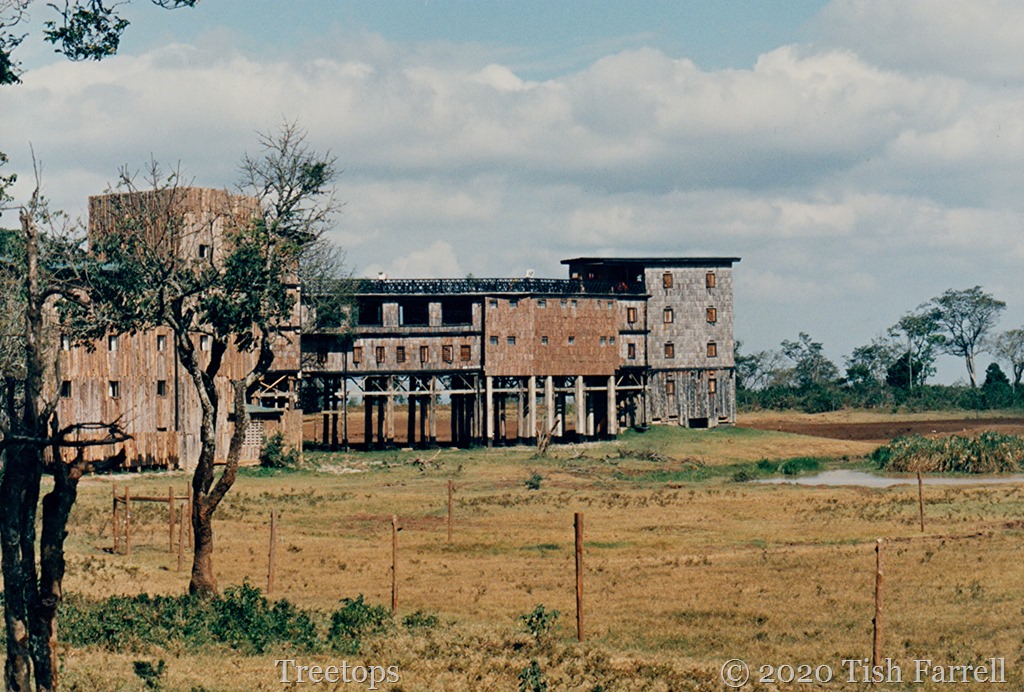
And then in 1954 the original Treetops was burned down. This was during the so called Mau Mau uprising when it apparently became a target for the Land and Freedom Army. Later the place was rebuilt and added to over the years. The header version dates from September 1996, the fourth iteration under the ownership of Block Hotels. When we went I had been spending previous week alone at the Outspan, which still served as ‘base camp’ for Treetops, while Graham was at a seminar at the nearby Aberdares Country Club. He then joined me for the trip to Treetops.
In a letter to my aunt written shortly afterwards I told her that were among a party of 99 – (Israelis, Koreans, an international museums outing, and 40 retired Americans from the Friendship Club) all of us being ferried into the Aberdare National Park in a bus, and then deposited in the bush so we could walk the last few hundred yards to Treetops – ‘a rustic fortress between two waterholes’ was how I described it back then. Before we set off Dishon, the ranger who met us pointed out the well timbered refuges along the path, to be resorted to in case of charging buffalo or elephant. He was also carrying a rifle.
But there were no alarming encounters. In fact we saw no sign of any big game while were there, only the red billed hornbill that sat on the tree outside the dining room, baboons, buck and warthogs.
The rooms were tiny, more like cubby holes, and the building was very noisy. Many of the elderly women guests were up all night. When I could not sleep around 2 a.m. I got up and found them, of all things, putting on their make-up in the ladies’ communal washroom. When the actual ‘wake up’ call came at 6.30 a.m. the place was surrounded by an Aberdares fog. And so it seemed that whatever romance there might once had been was quite lost. The best bit was driving out of the park through the Kikuyu smallholdings. Out of the stands of maize came files of school children in coral coloured sweaters and jade green dresses and shorts, trotting off early to the local primary school.
I gather from looking at the current website that Treetops is under new management and the number of rooms much reduced in order to provide en suite bathrooms. It all looks very luxurious, but somehow also misses the point, the batty English tree-house charm of the original. Though whether that was ever at all an appropriate installation in the African highlands is another question.
It is fairly uncommon to catch hippos like this – snoozing ashore, though they may do it on sand banks in rivers. Their usual routine is to spend the night in the bush, roving far and wide and chomping masses of grass. Then at first light they start returning to the river so they can be well submerged in their watery territory before sun up. Their hides are 2 inches (5cm) thick, and although a red oily secretion gives some protection, they are very susceptible to over-heating and drying out. It can thus be fatal to find yourself between a river and a hippo intent on swift immersion.
We had our own alarming charging hippo encounter on the Luangwa River when we were living in Zambia. That story is HERE.
These particular sleeping hippos were caught on an early morning game drive, around 7 a.m. We drove right by them along a secluded stretch of the Mara River flood plain. Not an eye’s blink from any of them.
*
And the origins of the saying: to sleep like a top?
My Dictionary of Phrase and Fable tells me it relates to the children’s toy, the traditional wooden spinning top. Once well whipped into action, there is a point when the top seems perfectly still and silent.
And here’s an early 17th century usage:
“O for a pricke now like a nightingale, to put my breast against. I shall sleep like a top else.”
The Two Noble Kinsmen a play attributed to a John Fletcher – William Shakespeare collaboration.