The Smoke that Thunders

Scan-130703-0003

We inhabitants of Great Britain, that one-time source and bastion of Empire, somehow take it for granted that other people’s geography should be named after our explorers, our lords and our monarchs. It was part and parcel of the colonizing process, this laying claim to territory, the ‘making it ours’ rather than theirs, the indigenous inhabitants’. Also, much as a head-hunter gains spiritual power by consuming the brains of his enemy, so explorers, lords and monarchs accrued grandeur by bestowing their names on natural-world-wonders. It was one way of acquiring grand-scale permanence over frail bodily transience. Some might say it was a form of megalomania.

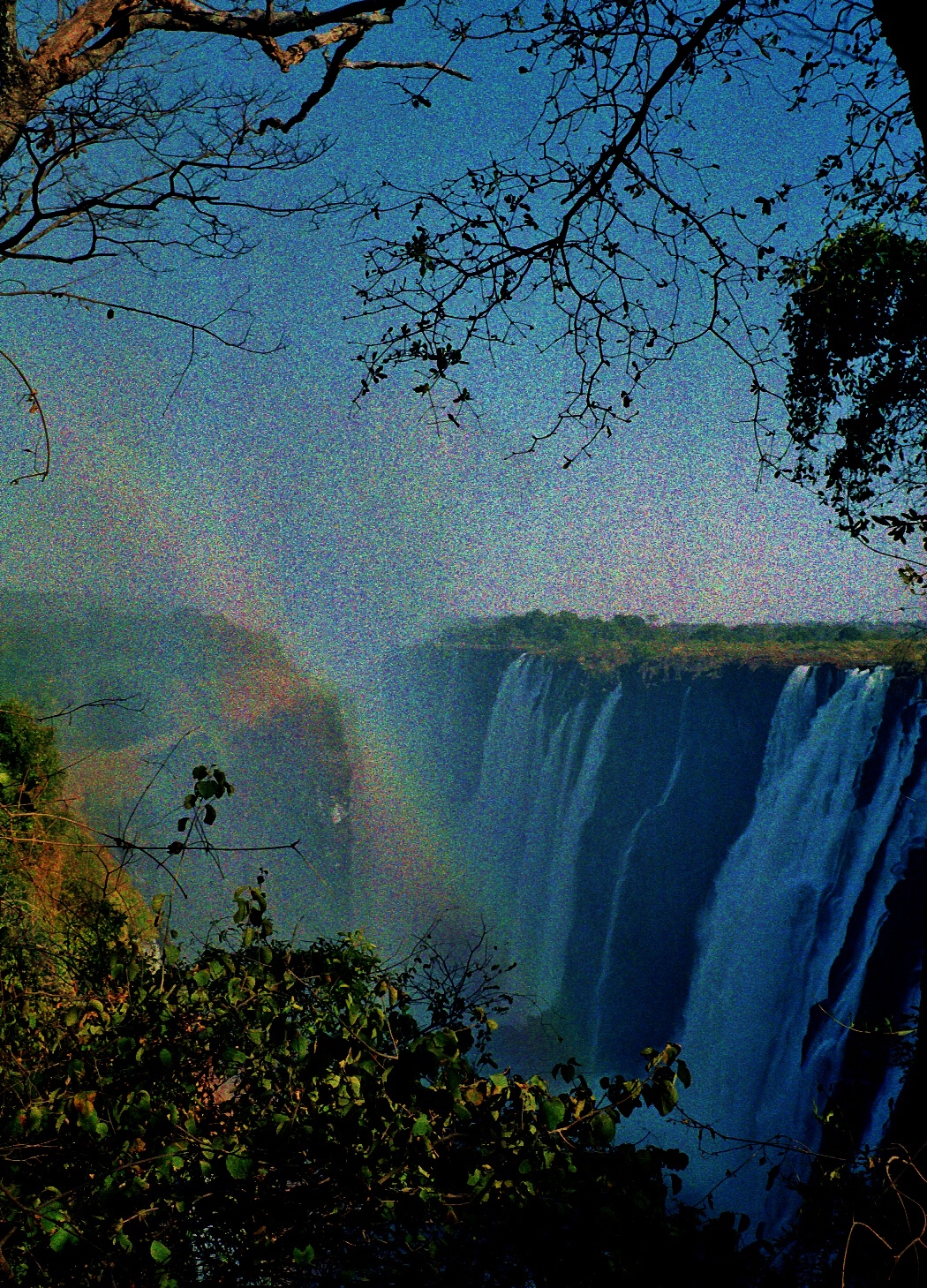
All of which is to say that the photo above shows one of the most famous examples of colonial misappropriation – the great southern African cataracts of Victoria Falls. They were ‘discovered’ by missionary, David Livingstone, in November 1855. This was in the days before the British map-makers had staked out the colonial territories of Northern and Southern Rhodesia, (named after the mineral-hungry Cecil Rhodes), and now known (respectively) as Zambia and Zimbabwe.

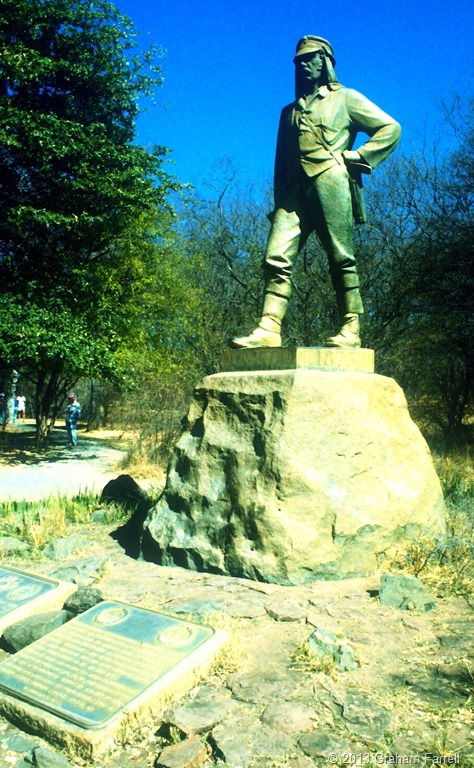
Livingstone is thought to be the first European to set eyes on the falls, and his presence is commemorated both in the name of Livingstone Island, just above the falls, and in the town of Livingstone on the Zambian side of the cataracts.

Scan-130703-0004

 Livingstone Monument

But the fact remains that when Livingstone arrived this, the largest falling curtain of water in the world, already had at least one very fine name. The rainbow spray from the toppling cascades rises like smoke that can be seen for miles, and the Zambezi, as it drops through 110 metres, simply roars. And so it is fittingly known by the indigenous Tonga people as Mosi-oa-Tunya, the smoke that thunders.  Also fittingly, and by way of restitution, this is also the name that UNESCO puts first in its World Heritage Site citation for the falls.

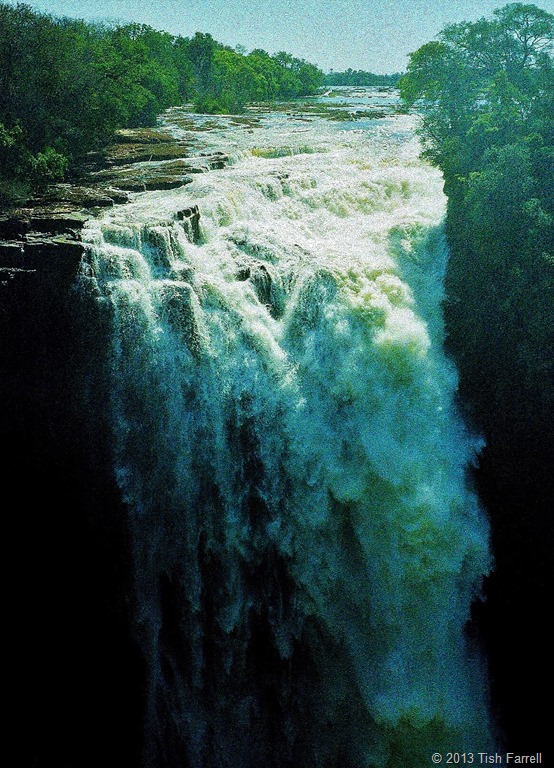
Victoria Falls and Zambezi

The falls from the Zimbabwe side at Victoria Falls town. The spray is a challenge to the the photographer.

*

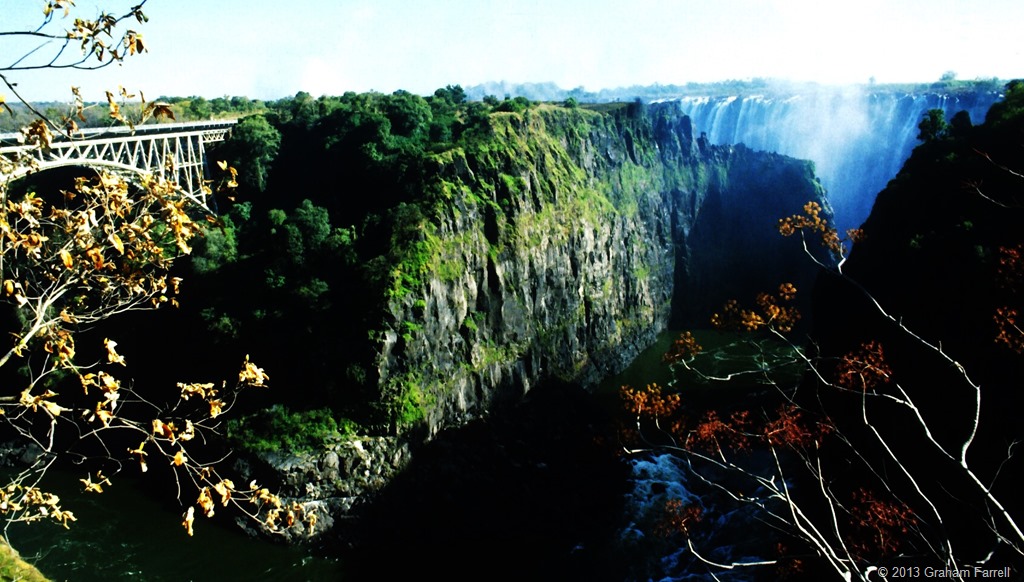
The photo below shows the falls from the Zambian side. The rains had been poor when the shot was taken, and much of the water from the Zambian side of the Zambezi is anyway abstracted for industrial purposes. It is hard to convey the scale, but it shows well how the Zambezi has cut through the basalt plateau over which it flows. Over the last hundred thousand years the river has repeatedly carved out new gorges, wearing down cracks of softer sandstone within the basalt and creating a zigzag of massive fissures. The current falls go over the eighth gorge, but there are already signs that the ninth is beginning to form.

I have the foolhardy distinction of almost hang-gliding off the falls’ knife-edge courtesy my kanga-wrap, just then being used as an umbrella. G had business in Livingstone and we were staying in a hotel near the river, or I should say near the absence of river. I saw people walking across the waterless river bed towards the Zimbabwe side of the falls, and one Sunday afternoon, urged G. to set off on an outing. In no time we had a young Zambian boy offering to be our guide. He led us through a maze of huge boulders and oily stagnant pools. At one point I noticed fresh elephant droppings and fully expected the massive stones to transform into pachyderms, since that’s the sort of thing elephants do. All around the sky was turning from brilliant blue to a steely grey. I forgot about elephants and thought of flash-floods instead. I was beginning to wish we had not come.

Zambia's Victoria Falls looking along knife-edge to Zimbabwe's falls

But the boy pressed on, heading we later discovered for Livingstone Island. He had promised to show us the best place to view the falls. And so we followed. And then came the deluge. In seconds we were soaked to the skin by very cold, hard rain. When I looked back across the river, our hotel seemed very far away, and the empty river bed so very wide. We ran after the boy into the trees on Livingstone Island, and there we huddled under the dripping vegetation. Time passed. And more time passed. We grew colder and wetter.

Finally, when there was no sign of the rain letting up, G. asked the boy how far was this viewpoint. Oh, not very far, he told us. We followed him out into the driving rain. And sure enough, in a few paces, there we were on the knife edge. I held my kanga high above my head, fly-sheet style, in a bid to fend off the downpour. But as I craned over the precipice, the wind gusted and I felt the threatening lift as it filled the kanga…

After that there could only be a swift retreat. Shaken by my close shave with the abyss, I turned for the distant shore and tried to run. But the rocks were slippery, and every boulder looked like an elephant, and the more it rained the more I glanced upstream for that wall of rushing water. By now our guide had disappeared. I don’t think we had even given him a tip, and that was even more worrying. To leave without his kwacha? What did he know that we did not?

Of course it was all panic and no substance. After a hot shower and a bottle of Mosi back at the hotel, it seemed like a great adventure, though we did wonder if Livingstone Island was in Zambia or in Zimbabwe, and if, in the rainstorm, we had become illegal immigrants into Zimbabwe. Of course we hadn’t, but it added a little more spice to the story.

Scan-130703-0007 (2)

Victoria Falls - Cecil Rhodes' railway bridge

The Victoria Falls bridge, built in 1905 in a bid towards fulfilling Cecil Rhodes’ dream of the Cape to Cairo railway line. He insisted it was built where the falls’ spray would fall on passing trains.

Victoria Falls - Zambian side with rainbow

Related:

UNESCO World Heritage Site

Sun, Steel and Spray: A History of the Building of the Victoria Falls Bridge by Peter Roberts

Where’s My Backpack Ailsa’s Travel Theme: Height

More takes on height:

http://suejudd.com/2013/10/04/weekly-travel-theme-height/

http://cosytravels.wordpress.com/2013/10/04/travel-theme-height/

http://laavventura.wordpress.com/2013/10/04/travel-theme-height/

http://bastet1952.wordpress.com/2013/10/04/travel-theme-high/

http://sustainabilitea.wordpress.com/2013/10/04/travel-theme-height/

© 2013 Tish Farrell

Grouchy Hippo, Laid-out Lions

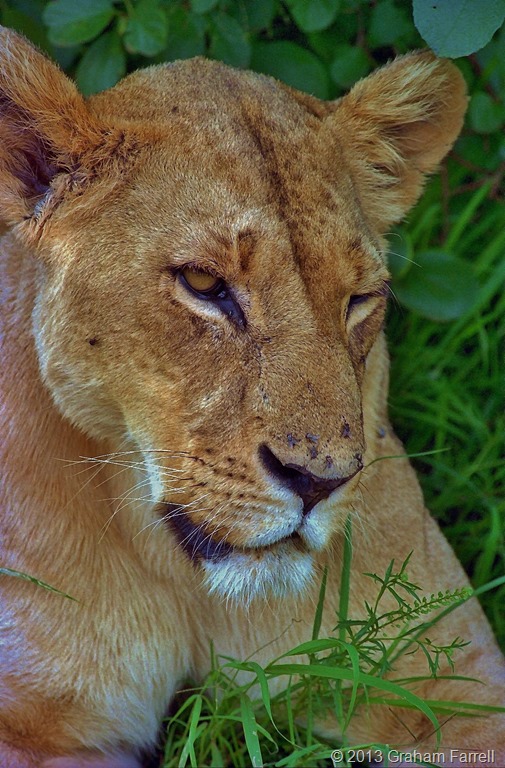
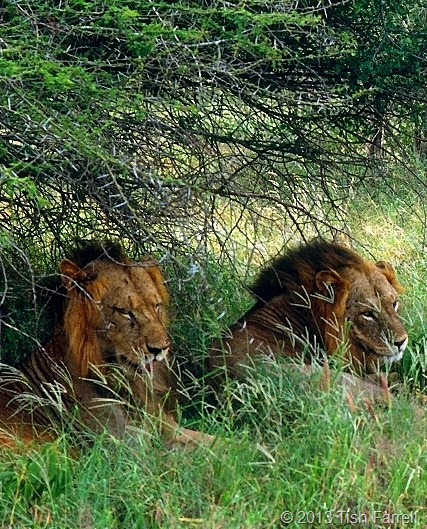
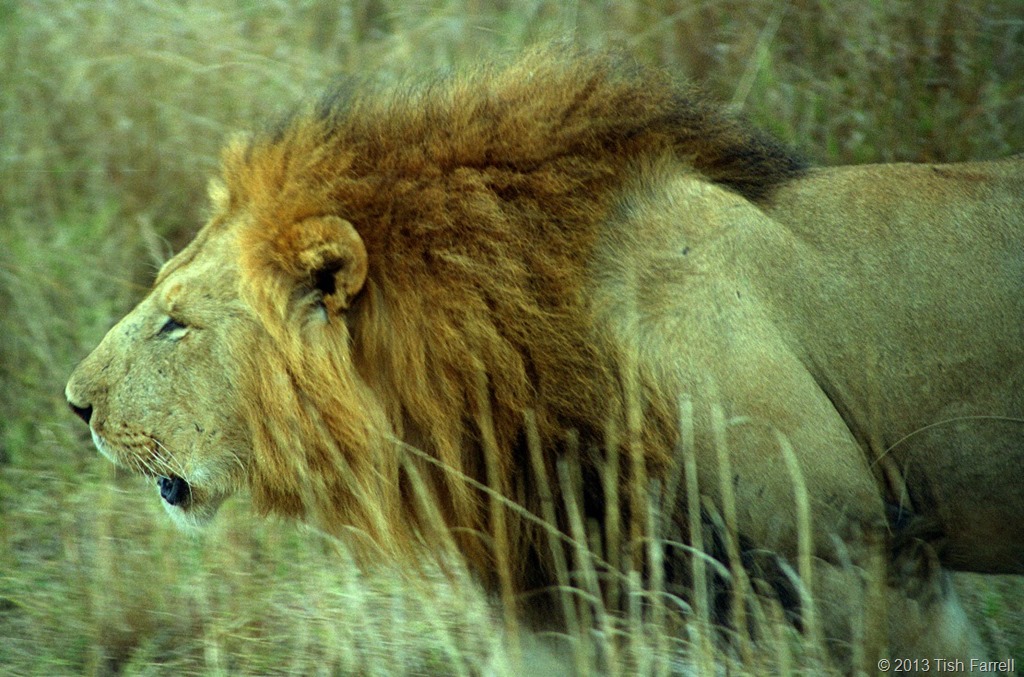
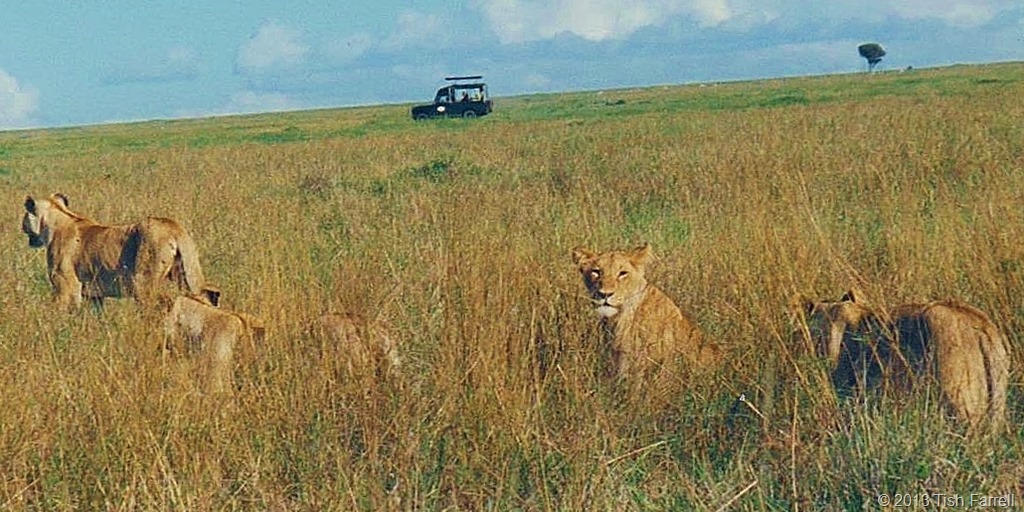
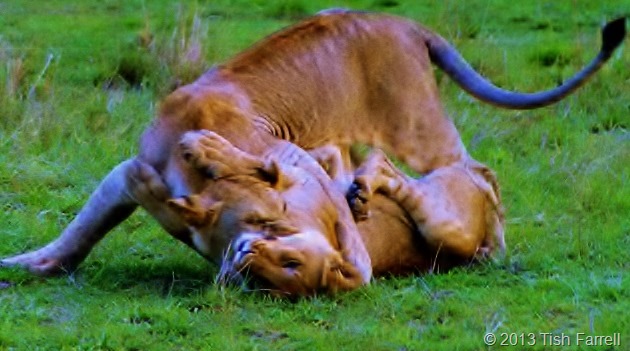
It always seemed astonishing to me that, should you be lucky enough to locate them, you can simply drive up to dozing lions and take their photographs. Even if you sit doing this for half an hour or more, they will barely deign to register your presence. These big cat shots were all taken in Kenya, but it was while we were living in Zambia, and visiting South Luangwa, that our young South African guide briefed us on the proper protocol when encountering lions.

Scan-130429-0024


lions in the Taita reserve 1992

At the time we were driving around a Luangwa salt pan where we had come upon a pride of lions lying about in the thorn scrub. The guide told us that as long as  our profiles remained within the frame of the vehicle (in this case an open-topped safari truck) the lions would not give two hoots about us. To them we would appear to be part of the truck and from which they perceived no particular threat.

South Luangwa - out on the salt pan lion hunting

Out on the Luangwa salt pan, me in the back seat. The lions had been spotted earlier before the sun came up.

South Luangwa - spot the lions 1

Not a good photo, but the light was poor and I had only my Olympus trip.

*

However, I was scarcely reassured by this newly acquired knowledge of how-not-to-upset-a-lion when the next day, at 5 a.m., the same guide took us on a hike through the bush. It is all so very different on foot. For one thing, it can be hard to see  far ahead, what with all the tall grasses and potato bushes. The guide, though, seemed perfectly relaxed. He had already led us to within thirty paces of a browsing elephant, and assured us that it was entirely peaceable since its ears were not out, nor its trunk thrust to the side in charge mode. He had explained, too, how elephants move silently, in effect walking on tiptoes, the backs of their feet cushions of fat. For a time I kept looking behind me. It had never occurred to me before that something as large as an elephant could sneak up on me.

Our guide then spotted a herd of buffalo. This pleased him because he said that in Luangwa lions preyed on buffalo and the big cats were thus never far behind. And so keeping a careful watch on which way the wind was blowing our scent, he and our accompanying park ranger, White, set out to find some. This involved much careful manoeuvring, first around a small group of  passing elephants, and then around the buffalo herd.

Clearly, being on foot, the keeping-one’s-profile-inside-the-vehicle strategy would be quite useless. We had no vehicle. Instead we were told to stake out likely trees to scramble up. I eyed the leadwood and sausage trees doubtfully. A few decades had passed since I had done any tree-climbing. I did not think I could do it – not even to escape a charging  lion or buffalo.

Later I was to read a white settler tale of how if you were ‘treed’ by buffalo, they would lick any appendage you had not managed to haul high enough into the branches, and go on licking until your flesh was abraded to the bone. I’m glad I did not know that then. I already knew that buffalo were probably the most dangerous beasts in Africa, and it did not do to cross them- ever.

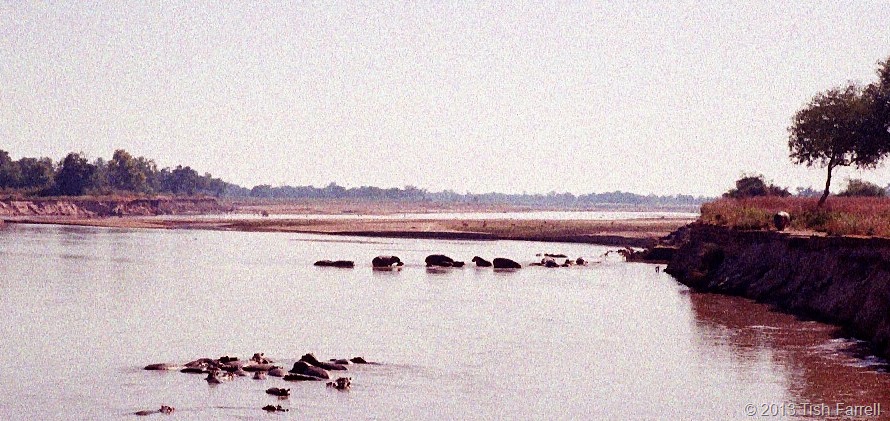
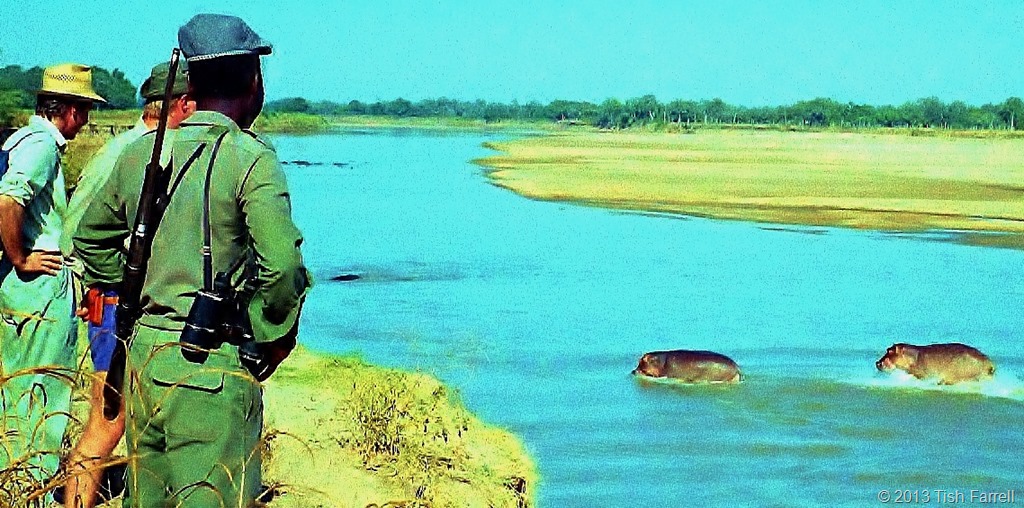
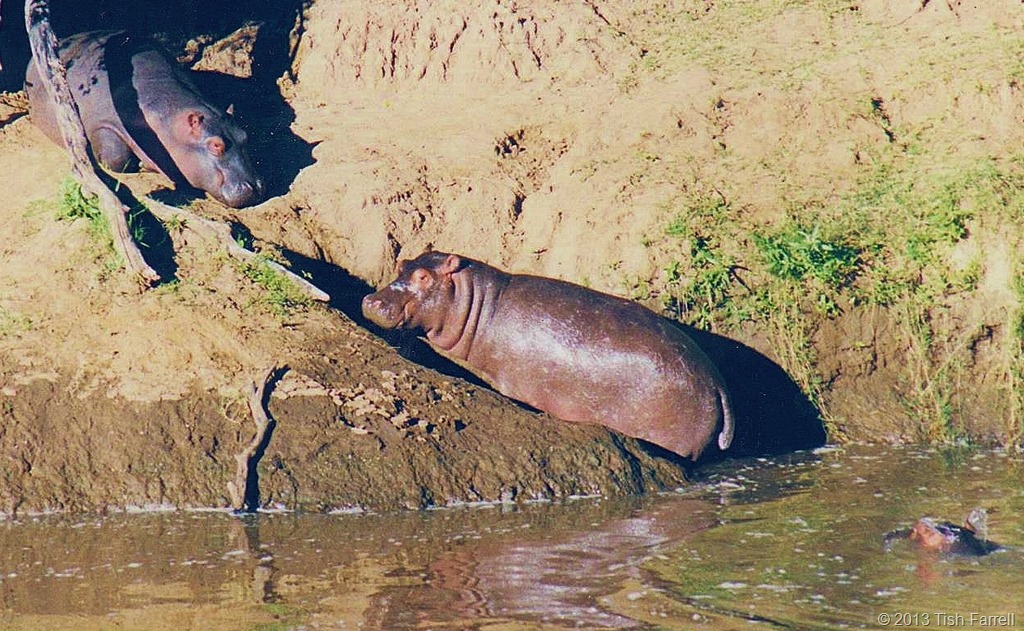
In the end we did not find lion. I was both disappointed and relieved. By then we had been out walking for several hours, and had only stopped for a tea break. The late morning sun burned down overhead, and we headed back to camp along the Luangwa River, me thinking mostly of breakfast. The members of our small party chatted amiably, enjoying the shimmering meanders of the river. We might have been walking in a city park for all the care we were taking. It was lucky, then, that we had White, the park ranger with us. It was he who drew our guide’s attention to the big bull hippo further along the track. The great beast was attempting to negotiate a shelving river bank, and having some difficulty. Several times he slithered half way down, but could not bring himself to take the final plunge.

The guide said it was most unusual to see a hippo out of the river so late in the day. They liked to be back in the river before sun-up, this after the night spent foraging for grass. He was clearly upset, but we were still some way off, so we stood and watched. Some of us were even laughing at the hippo’s dilemma. The bank was simply too steep. His huge bulk gleamed an angry red under the sun.

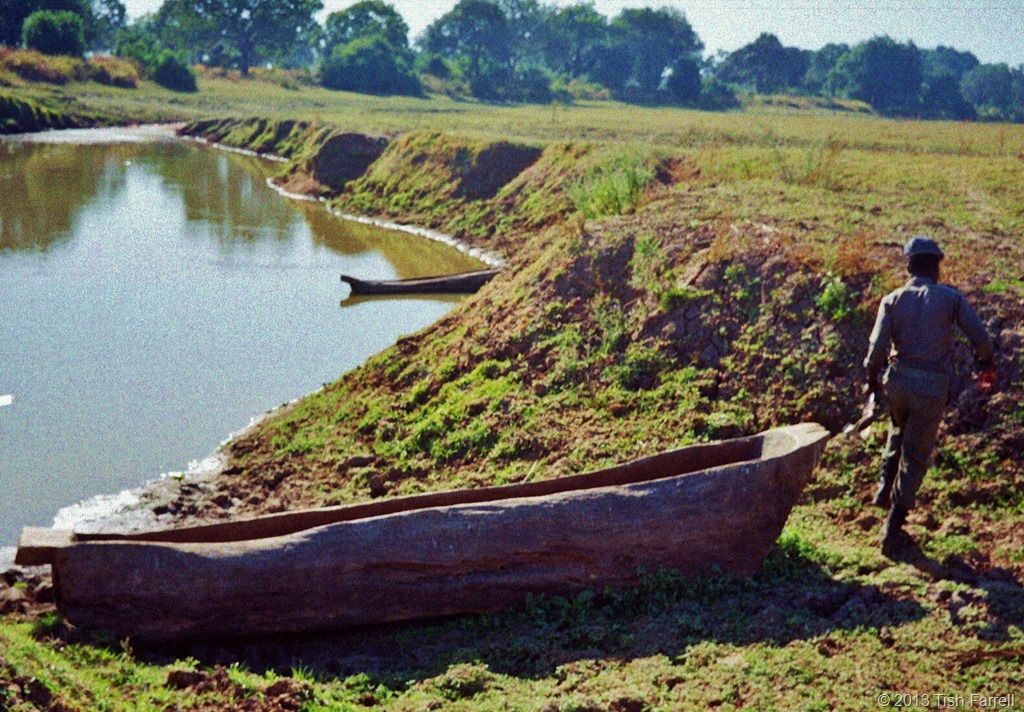
Then someone must have laughed too loudly, for suddenly the bull gave up trying to slide into the river. With a bellow he swung towards us and came charging down the path. While White took up a position behind a thorn bush, the guide urged us to move several hundred yards back along the path, across an old lagoon to where a fisherman’s big dug-out had been beached. We were to stand behind the dug-out until he came for us.

We did not need to be told twice. The boat looked reassuringly substantial, although it reminded me of the guide’s earlier tea break tale. We had stopped at a fisherman’s old campsite, and it was there that he told us how a fisherman had recently been mangled to death by a hippo. As we reached the dug-out I vaguely wondered if this boat had belonged to the poor man.

Meanwhile the ranger and the guide, held their position behind the thorn bush, and began to clap very loudly.

For too many seconds the bull came on. The ranger had his rifle at the ready. The guide kept clapping. Then at the last moment, the hippo ran out of steam and veered off into the undergrowth. There were sighs of relief all round.  When the guide came to round us up, he informed us that White had been more than ready to, as he put it,  part the bull from his brains, but they were nonetheless glad that this had not been necessary. Apart from being scared, the incident made me uncomfortable. I saw then that safari-going had its responsibilities, and was not simply an exciting jaunt. If White had been forced to shoot the hippo it would have been because we were intruding at a moment when the bull saw himself at great disadvantage. Who could blame him for charging?

South Luangwa - hippos and bull on the bank 2 wider view

The hippo when first sighted. You can just spot him under the tree on the right. Thereafter, I was running not snapping.

*

South Luangwa - traditional fishermen's dug-outs on a lagoon

The dug-out refuge point, and White leading us back to the path, the hippo now vanished from sight.

*

South Luangwa - dawn walk and hippos

Watching more peaceful hippo near our camp.

*

Back in camp it was of course a case of ‘travellers’ tales’.  We could sit around over a late breakfast, talking of all the things we had seen that morning, and especially of our near miss with one very angry hippo. At such times, and as so often happened in Zambia, life did not seem altogether real.

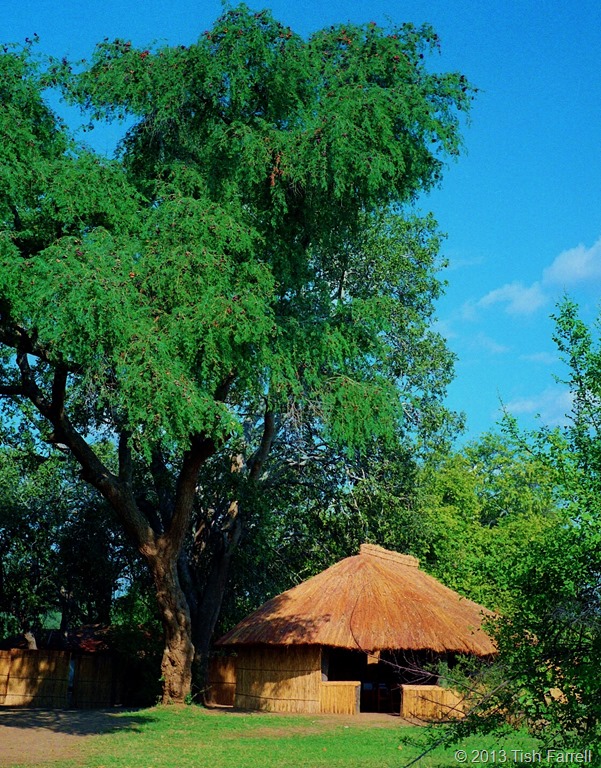
South Luangwa - Tenatena camp dining room under a rain tree

The dining room at Tena Tena camp, beside the river and under a rain tree


© 2013 Tish Farrell

Arch Wizard of Wales: Clough Williams-Ellis “Architect Errant”

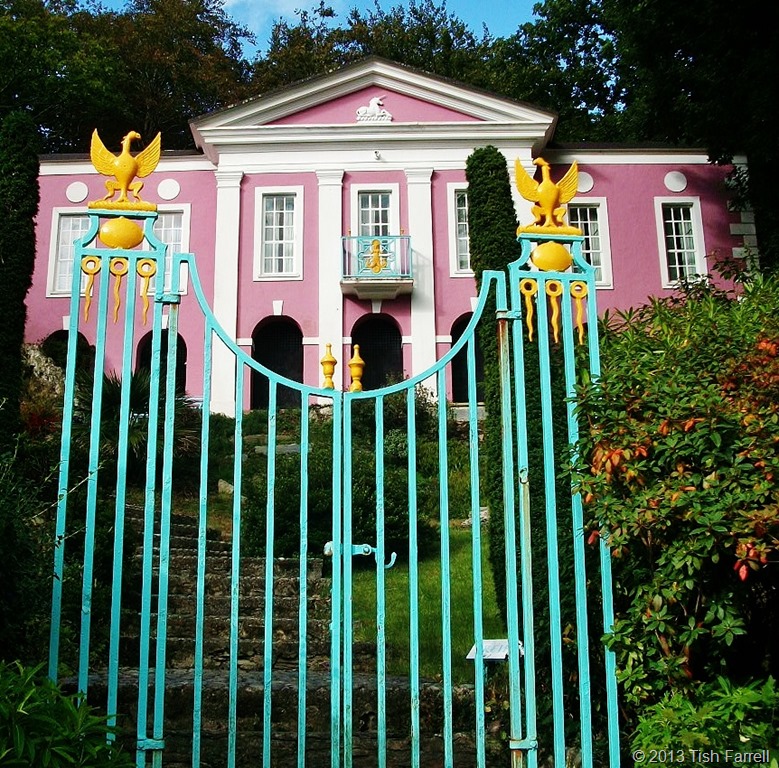
Surely only a wizard could have conjured this  place – or so I thought, aged six, when we, the Ashford family first made pilgrimage to Portmeirion on the North Wales coast.

100_4683

“Cherish the past. Adorn the present. Construct for the future.” This was the life-long credo of Clough Williams-Ellis, the man who dared to build an Italianesque village on a beautiful Welsh headland.

*

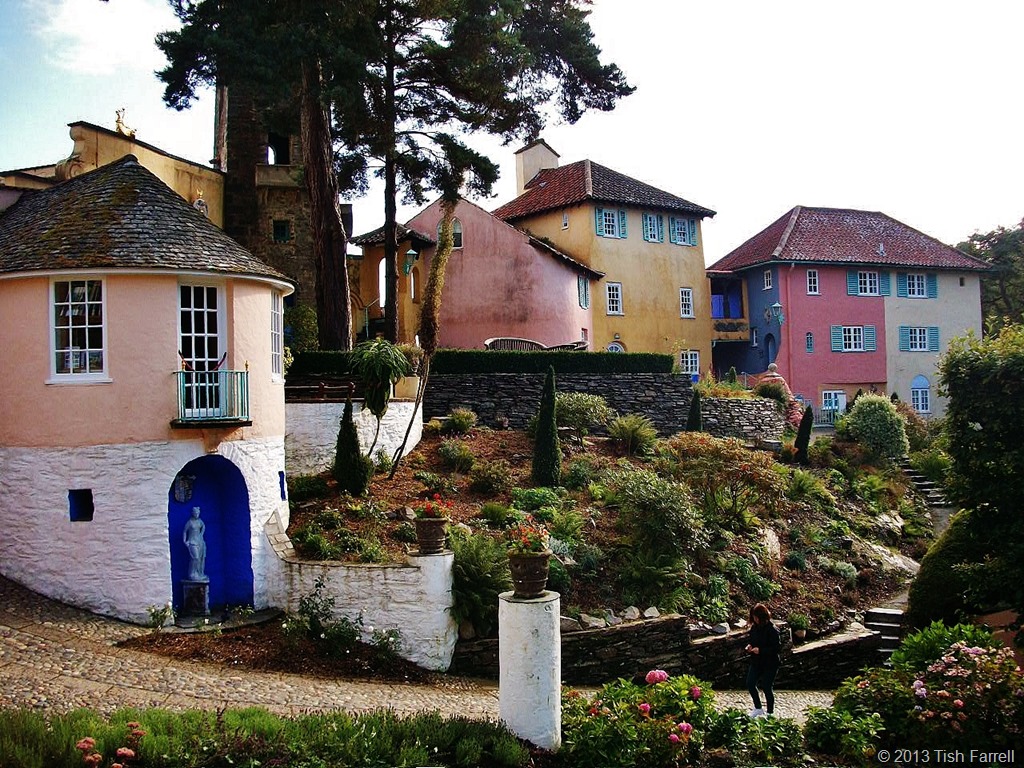
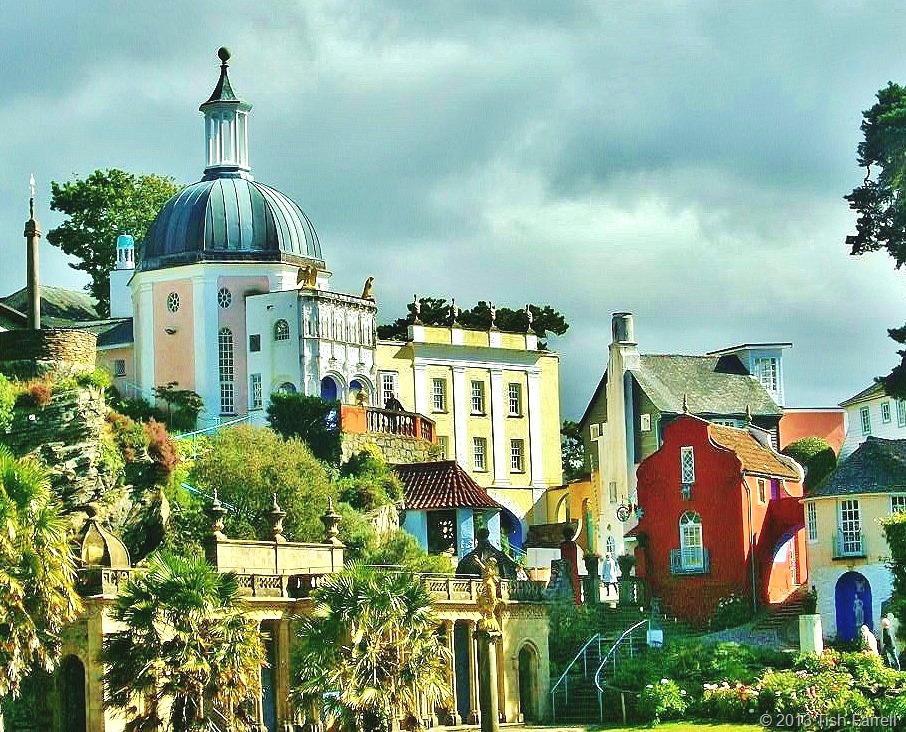
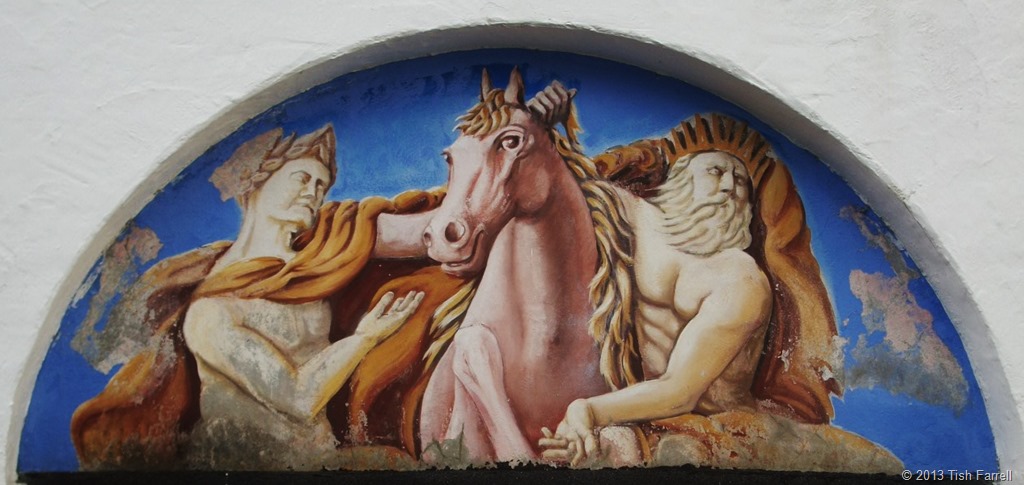
It was like stepping into a living picture book or melting through the mirror into Looking Glass Land. The houses were the rich, powdery, pastel shades of Loveheart sweets (does this strange confection still exist?). There were mythic frescoes in places were a child might least expect them, and best of all, a shell grotto that was just like the Little Mermaid’s deep-sea garden.

It was enchanting from the moment we stepped through the gatehouse entrance. How could there be so much colour, so many decorative flourishes to catch the eye, so many mermaids – here on a wooded Welsh headland with the lowering grey sky above? And the weather was gloomy on that first visit; I was forced to wear my dull brown mac over my pretty summer dress. The photos taken that day show me looking pensive and withdrawn. But I did love the place, and was quick to register the tones of admiration in my parents’ voices whenever they uttered the name of the man who had conceived this folly to beat all follies – Sir Bertram Clough Williams-Ellis, self-taught architect and champion for the preservation of rural Britain.

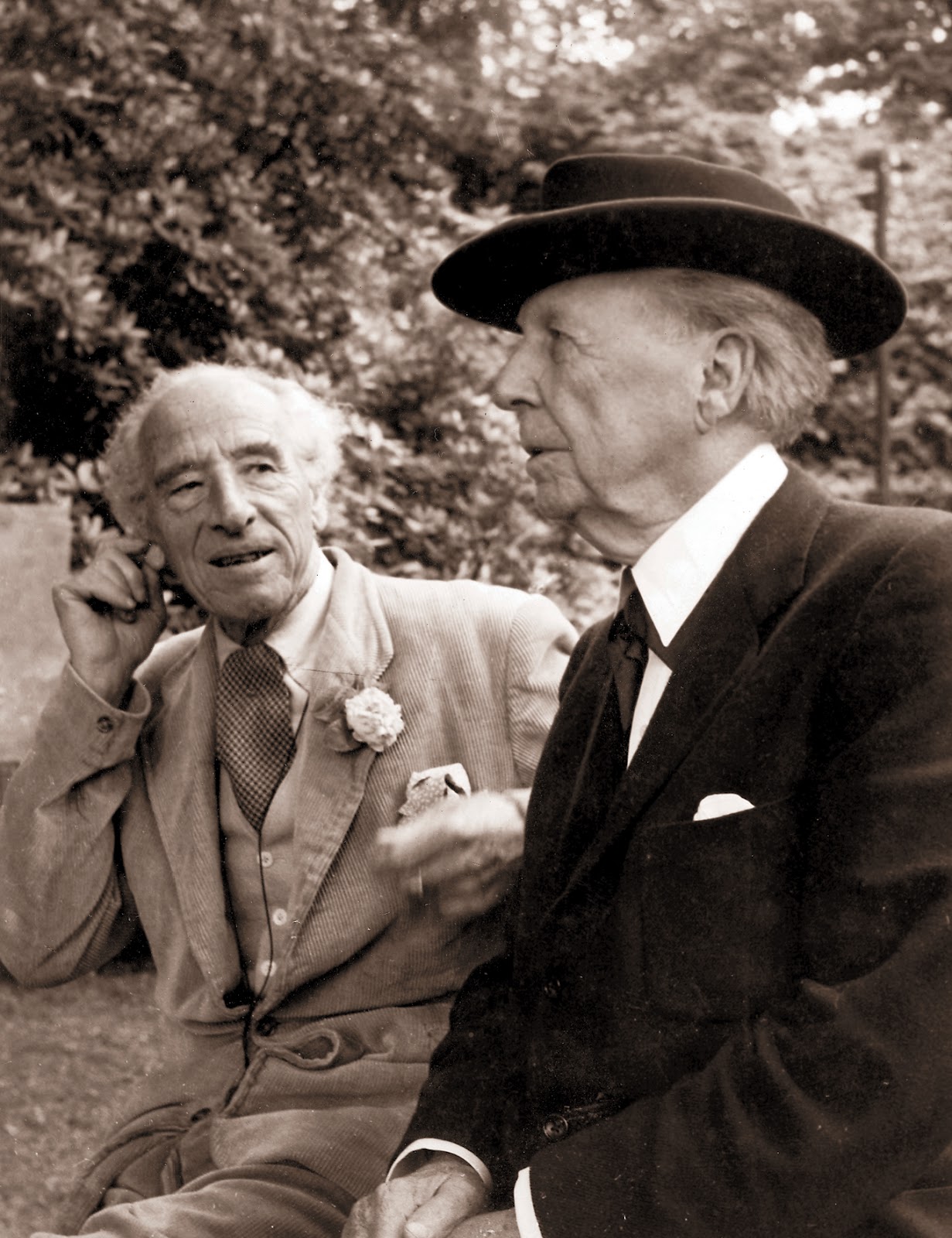
Clough Williams-Ellis (left) with Frank Lloyd Wright at Portmeirion in 1956

*

Of course he built Portmeirion to prove a point: that a beautiful site could be developed without wrecking  it. When he bought the land in 1925  he described it as “a neglected wilderness.” There was “a pale mansion, a hundred years old, spread along the balustraded terrace on the sea’s edge.”

That house became the Portmeirion Hotel, and some of its associated cottages were integrated in the village plan. The two previous owners from the 1850s onwards had planted the site extensively with specimen oriental trees and exotic plants, many of which still survive. The planting, along with the building of a close-knit hillside village continued from 1925 under Clough’s direction for the next fifty years.

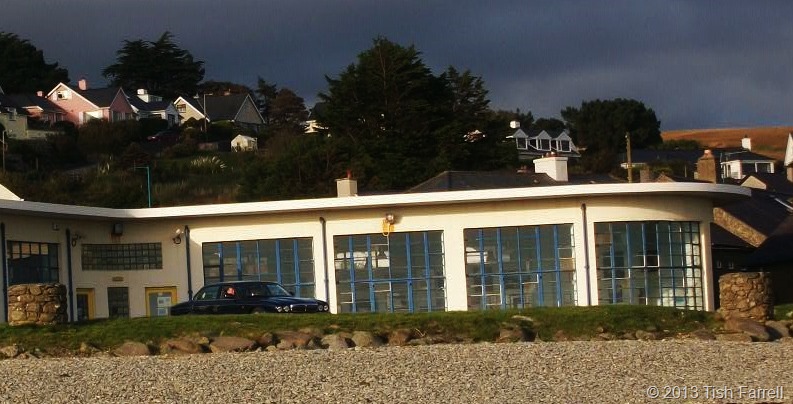
Many of the original plans still exist. The first phase of development was influenced by Clough’s interest in the Arts and Crafts movement. Later buildings followed Classical lines. He also made use of what today we refer to as architectural salvage, and indeed he called Portmeirion  “a home for fallen buildings.” With this architectural bricolage are references to some 5,000 years of architectural history from around the world. Critics of modernist inclination thus tend to overlook Clough’s contribution to architecture. This is a mistake. On our most recent visit to Wales we discovered his Caffi Morannedd Cafe at Criccieth, a few miles north of Porthmadog.

100_4741

Caffi Morannedd by the sea at Criccieth

*

Of course it was at Portmeirion that I first learned there was such a thing as architecture, and that this was something altogether more momentous and wonderful than drawing pictures of “our house” as one endlessly did at primary school.

Clough was also intent on giving people pleasure. He fought all his life to create and preserve beauty, which he called “that strange necessity.” But this did not mean that he was against development. “Enterprise by all means,” he said in 1931 when he was Chairman of the Council for the Rural Protection of Wales, “but reasonable, seemly development where it is in the public interest and nowhere else.”

And oh how fine it would be if English planning authorities were ruled by such objectives, instead of developer aspiration.

100_4627

As a child, I liked the way the houses seemed to have grown out of the rocky hillside, and that there was a mysterious “smugglers’ path” through a tunnel of overgrown rhododendrons that led to a secret sandy cove and the little tin lighthouse on the headland. It was all such fun, and created by a man who, like any magician, or indeed a wizard, wanted everyone to take delight in his illusions.

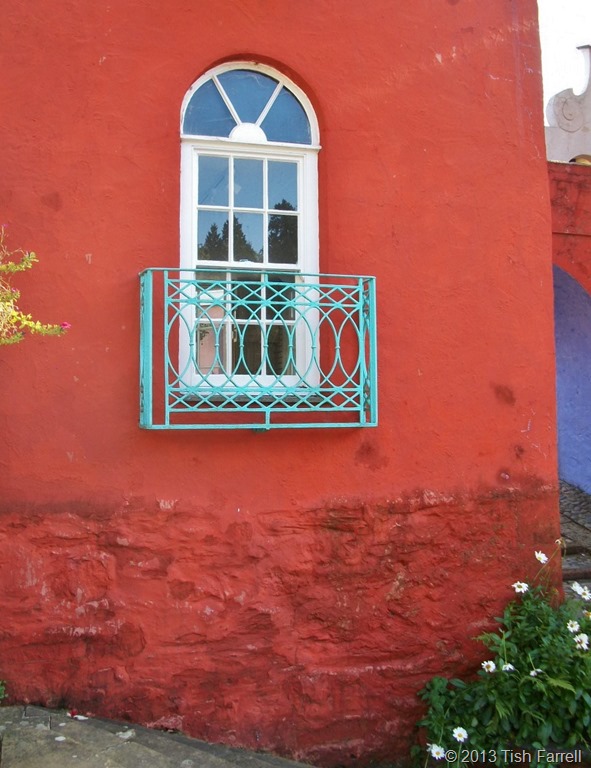
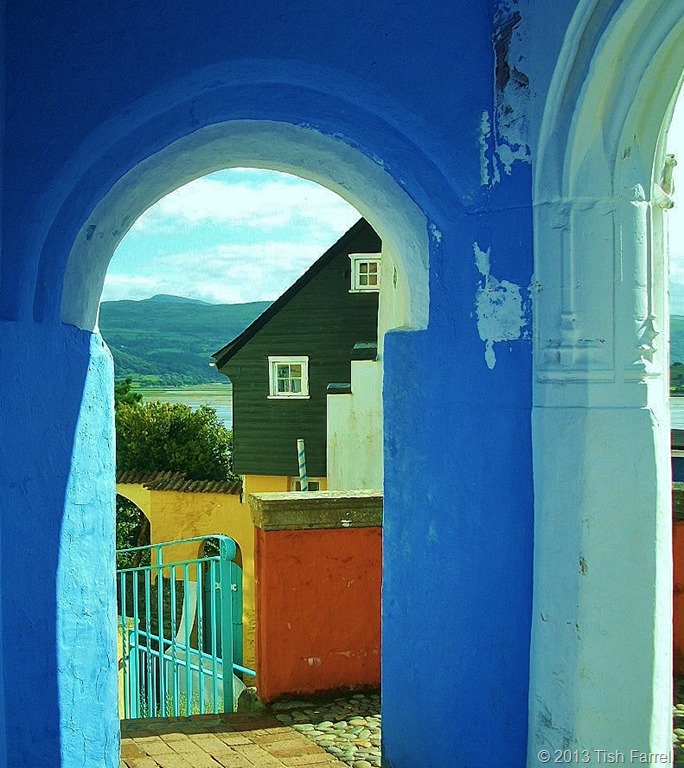
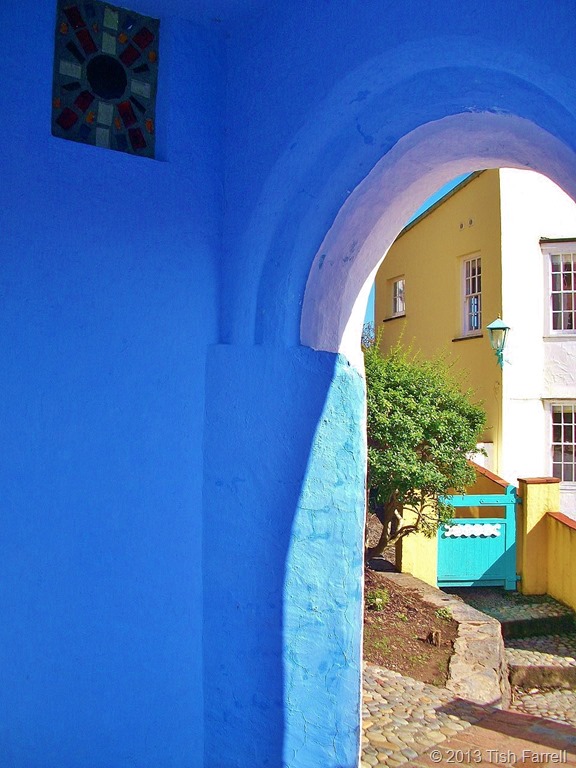
And now, since this post was prompted by Sue Llewellyn’s Word A Week arch challenge, here are some more views of Portmeirion – naturally with arches of all kinds in mind – all taken last week in Wales under mostly sunny skies.

 100_4672.jpg

100_4692

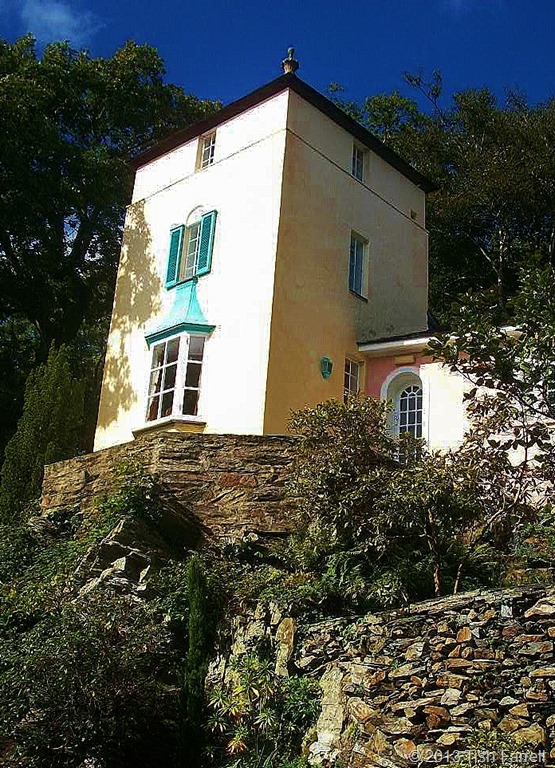
Unicorn Cottage: this illusion of a stately home is in fact a bungalow

*

100_4643.jpg

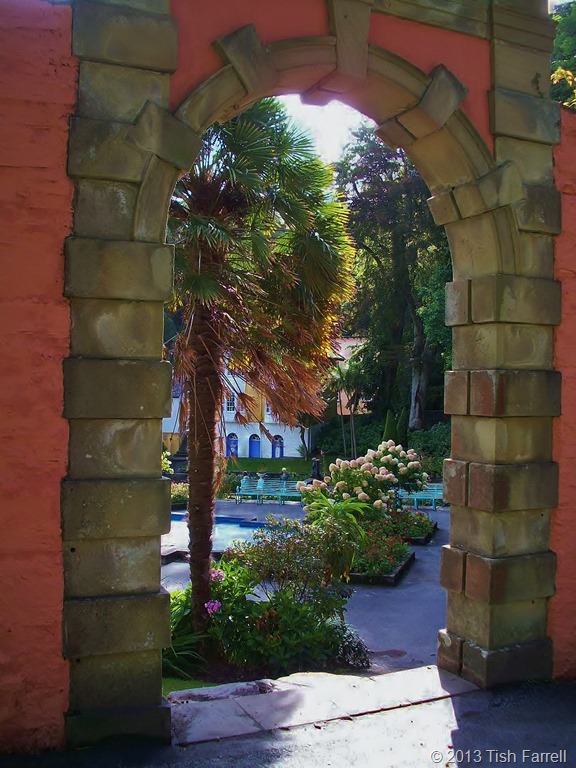
Arch with a view: glimpse of the estuary below the village

100_4645.jpg


IMG_0676.jpg

100_4631

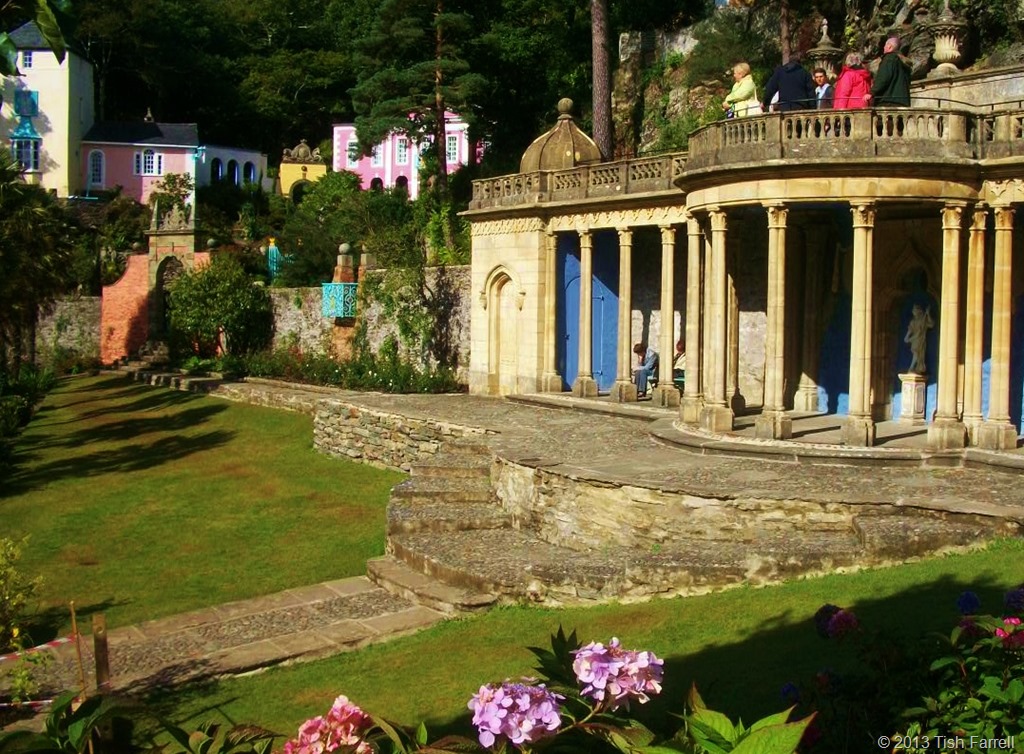
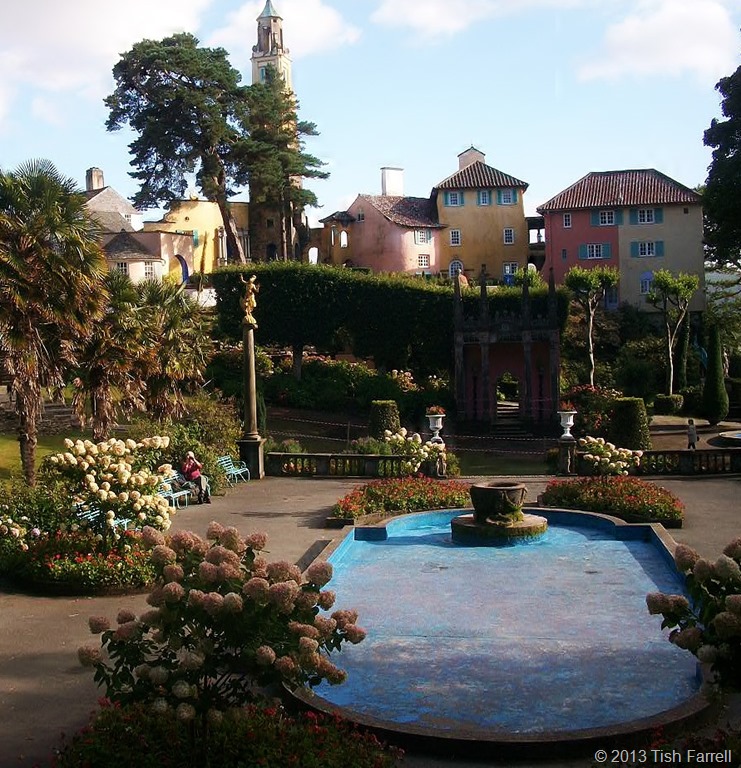
In the foreground, behind the palms, is the colonnade from a Bristol bathhouse built in 1760. Another view below.

100_4636.jpg

*

100_4661

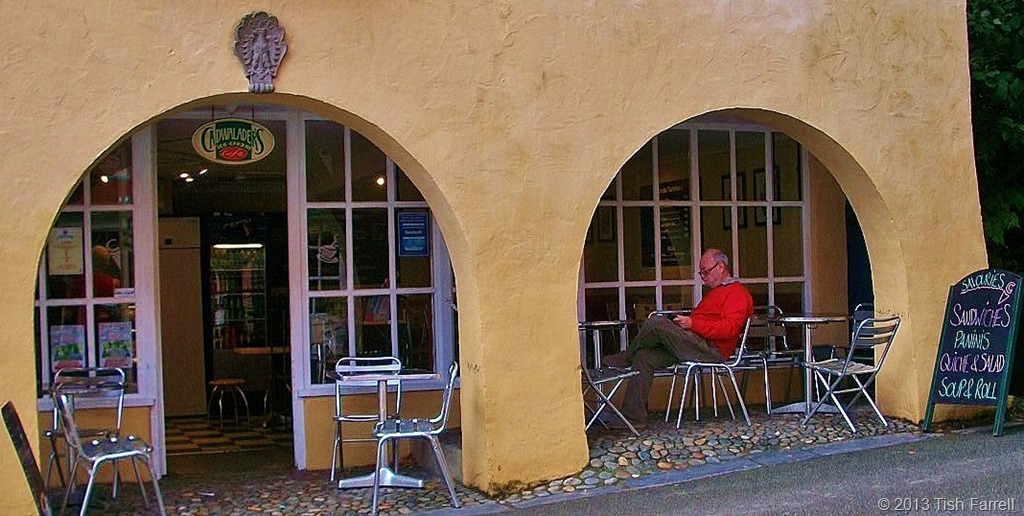
There are cafes and restaurants in the village, and cottages to let.

*

100_4666

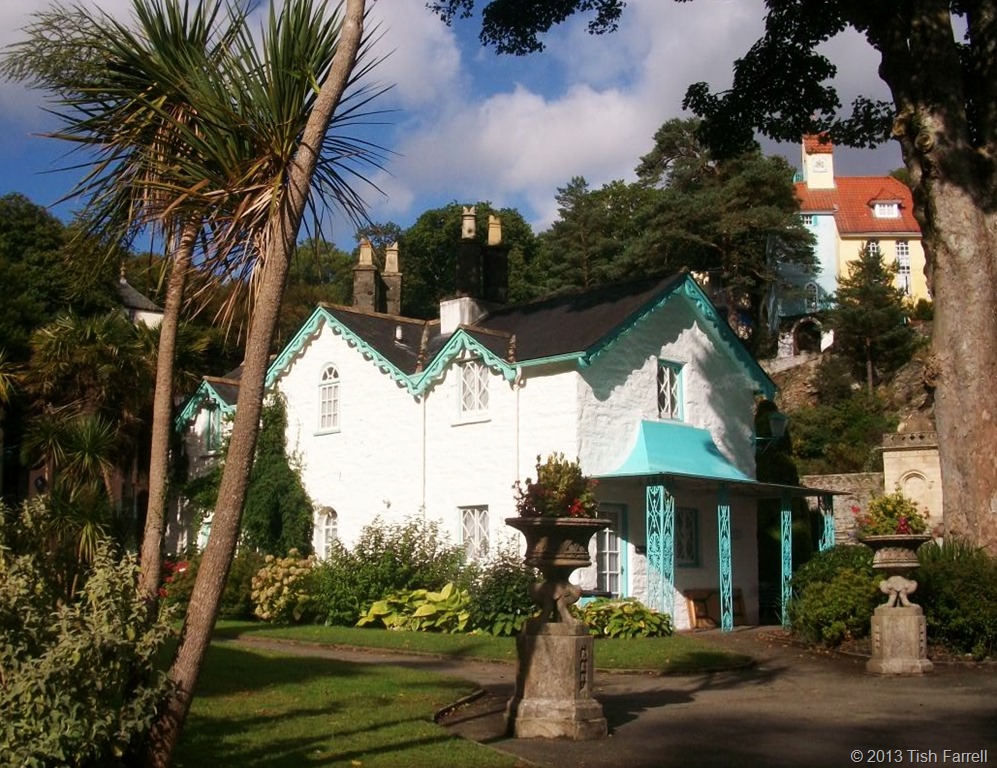
Mermaid Cottage was already on the site when Clough bought the land. It was built in the 1850s, and Clough adorned it with the canopy and added the palms for the Mediterranean look.

100_4668.jpg

*

100_4680

*

100_4667

The Hercules Gazebo, complete with cast iron mermaid panels, serves to disguise a generator.

*

100_4672

*

100_4673

*

100_4674

The Prisoner, the cult TV series of the late 1960s starring Patrick McGoohan, was filmed at Portmeirion. It put Portmeirion on the map and its association with the place is still celebrated.

*

100_4677

Arches at all angles.

*

100_4691

Archway to the Piazza and (below) the Piazza itself below.

100_4693

*

IMG_0670

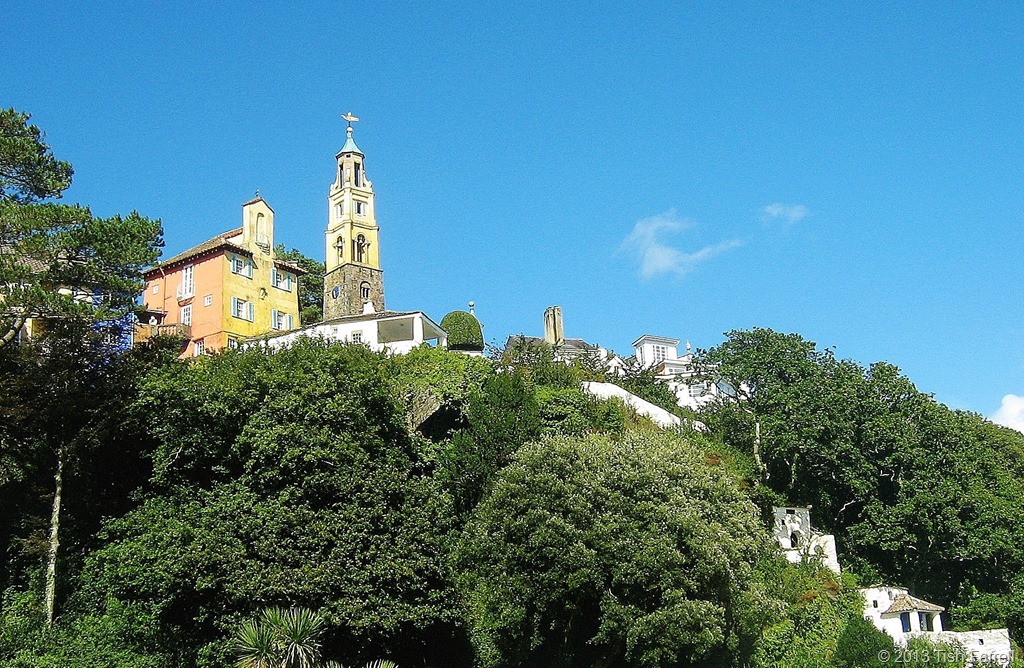
The village from the estuary.

IMG_0660

The arc of the Dwyryd Estuary taken from the esplanade at the Portmeirion Hotel

*

4363309520_fcd2edd736[1]

Clough Williams-Ellis 1883-1978  Photo: Polandeze Creative Commons

A man who lived creatively in all senses, and whose work has delighted millions.

copyright 2013 Tish Farrell

References:

http://www.portmeirion-village.com/en/visit/clough-williams-ellis/chronology/

http://www.brondanw.org/english/history/portmeirion.html

http://www.100welshheroes.com/en/biography/sircloughwilliamellis

Marvellous Multicoloured Maine


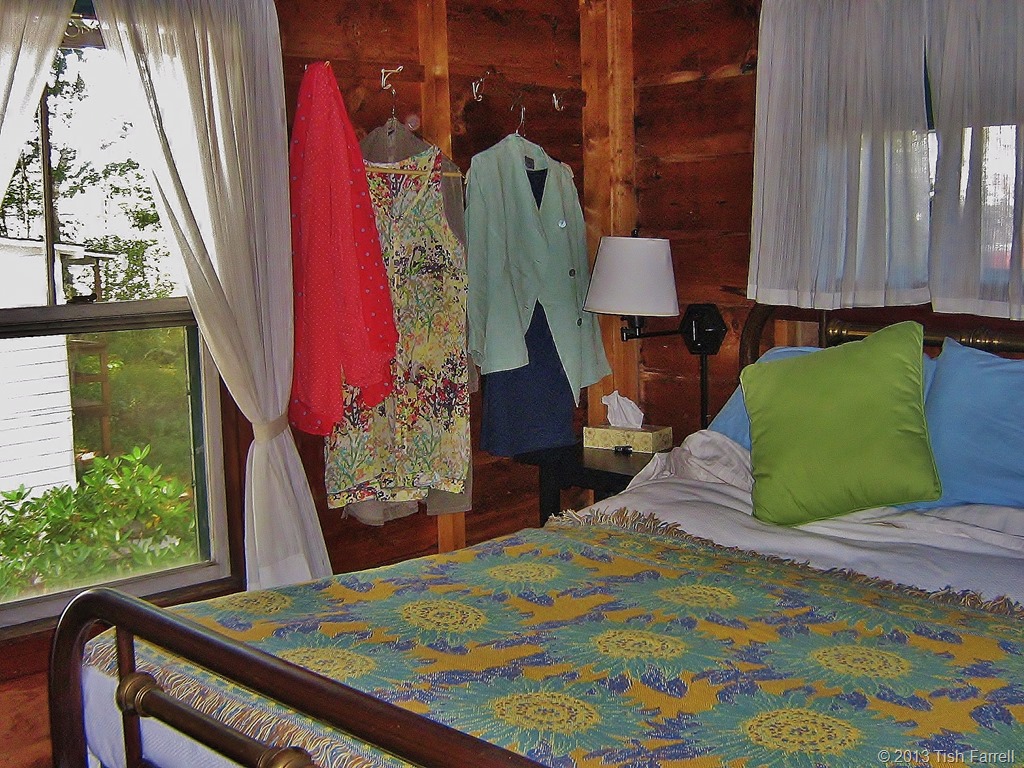
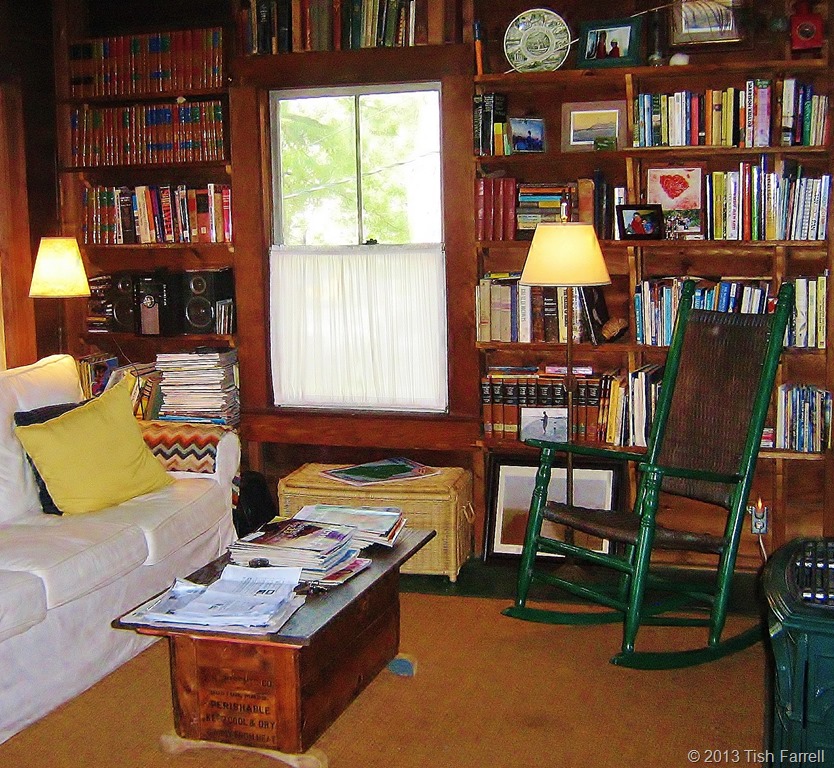
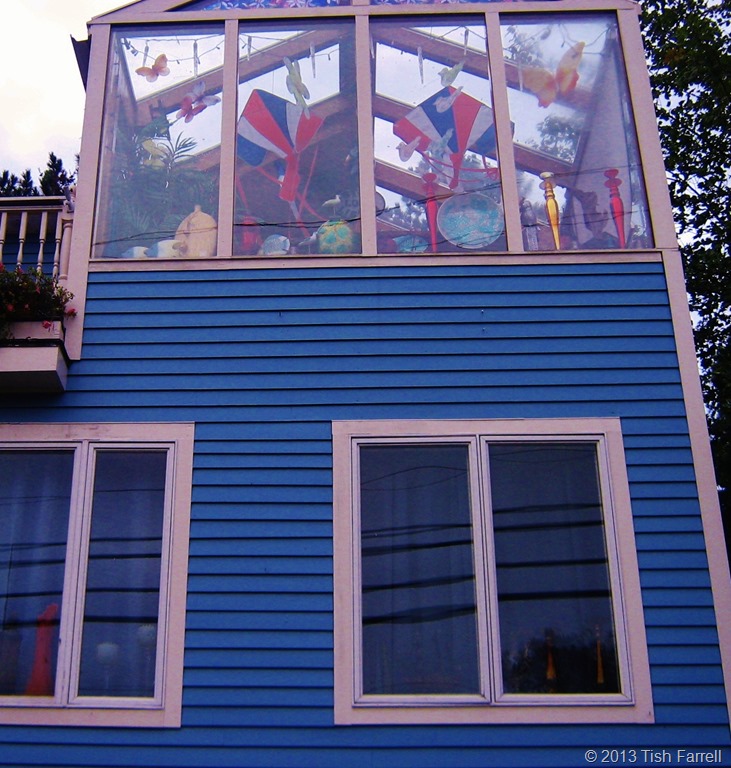
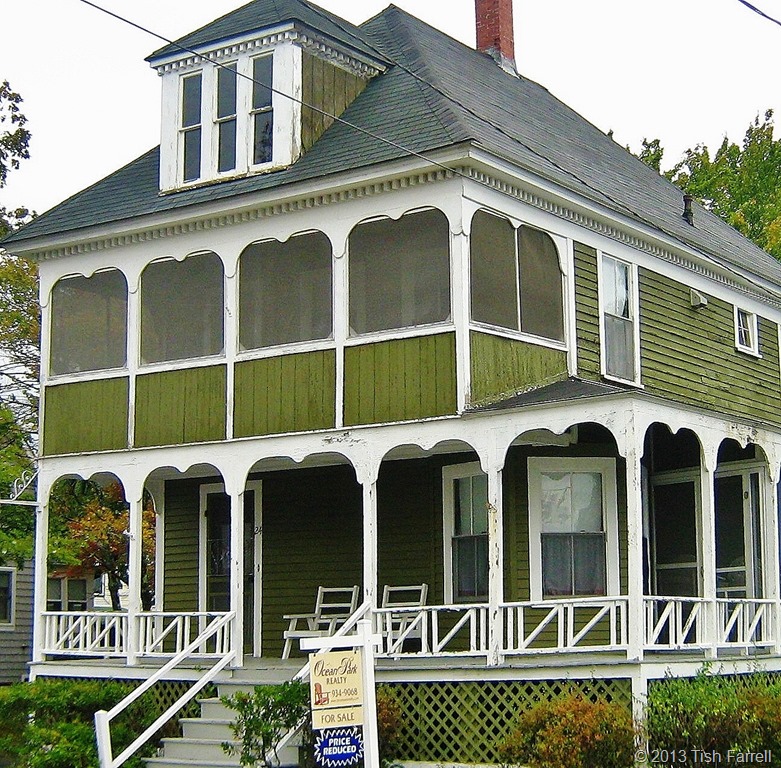
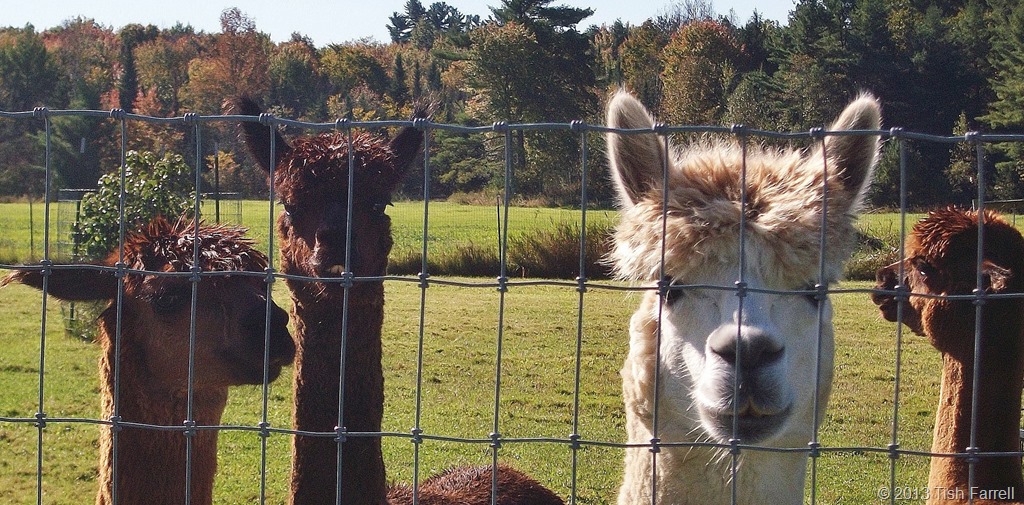
I read somewhere that most Americans, when asked, said they would like to live in Maine. I’m not surprised. This time last year we were setting off there with high hopes. We were not disappointed.  Our American cousins had given us the use of their magical beach house in Ocean Park, Old Orchard Beach. Later we would go to their farm in Richmond where they keep alpacas. So here’s a tribute to colourful Maine, and big thank you to Jan and Craig Wanggaard.

Travel theme: Multicoloured

074a

078

100

110

IMG_0062

IMG_0063

IMG_0047

IMG_0050

IMG_0126

Portland 10

OOB9

IMG_0129

IMG_0164

IMG_0216

IMG_0239

Portland Headlight 3

IMG_0315

IMG_0326

IMG_0328

The Farm 16

The Farm 6

073b

IMG_0057

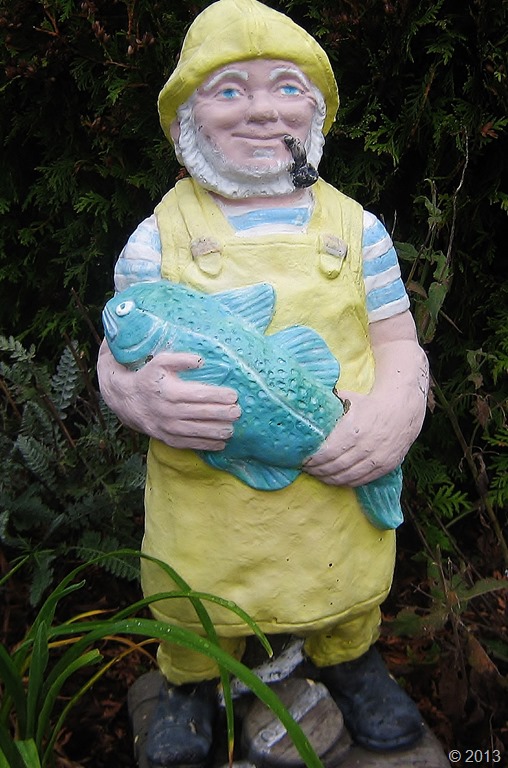
And finally, a sea-faring ‘garden gnome’. When I posted this photo on my Face Book page, FB wanted to me to tag and say (quote) “who this person” was. Any guesses?

IMG_0099

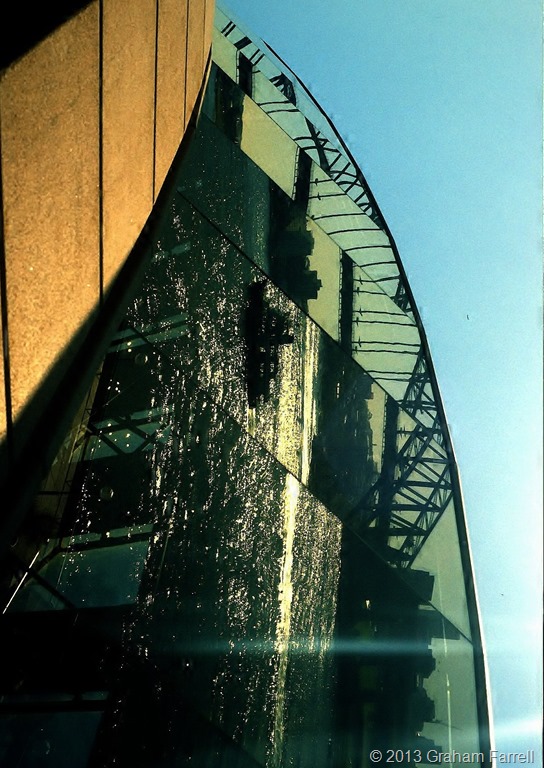
Sydney Harbour Bridge reflected from the Sydney Opera: an unusual point of view


http://dailypost.wordpress.com/2013/09/06/unusual/

Scan-130703-0024


We have a copy of this photo on our landing wall, taken by the Team Leader some years ago. I suppose it’s a case of familiarity  making you forget to look at things with due care and attention. In fact, come to think of it, I may have scanned the slide back to front and upside down. But then that should be OK too for this particular challenge, and whichever way, I think it deserves a more appreciative audience. The man who caught this image by chance doesn’t seem to think that it’s up to much as a photograph. What do you think?


Kevin, Kudu and Kirinyaga


006

004

003

005

002

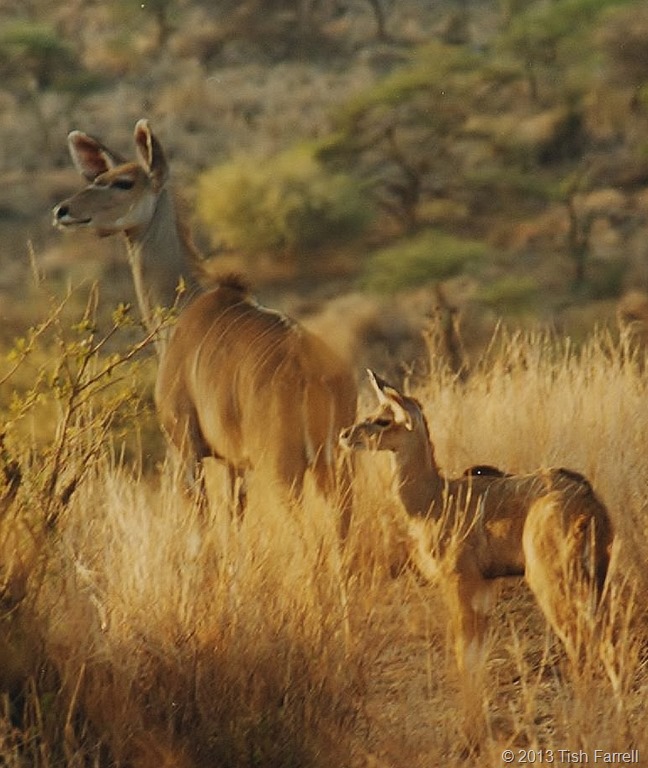
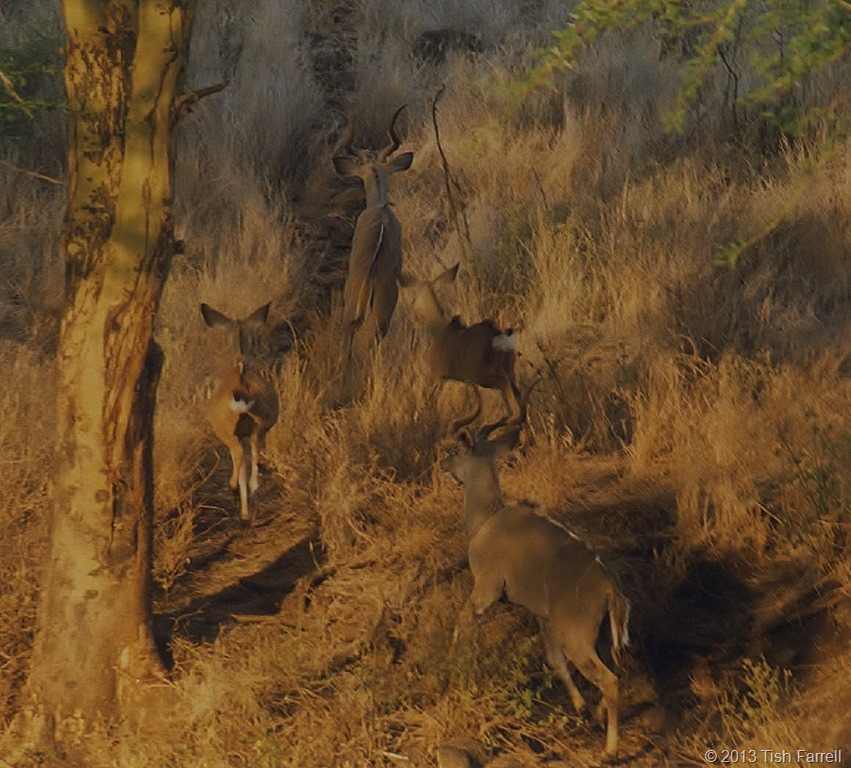
Kevin was the talented young naturalist who was our guide and driver when we visited the Lewa Conservancy Trust, north of Mount Kenya, many years ago. At sundown it was he who spotted the kudu in deep cover long before they emerged from the brush for us to see them. Wildlife photos tend to give you the wrong idea of what game spotting is really like. Often the sightings are frustratingly vague and fleeting. The second kudu shot is not really in focus but then it shows how it was – beautiful creatures melting silently into the bush.

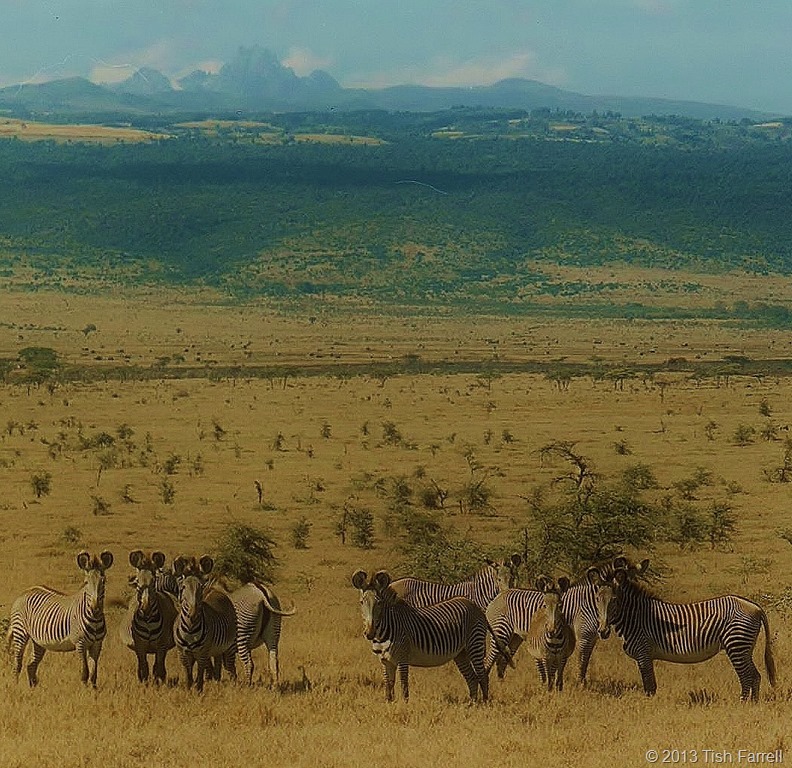
In the final photo you can see Grevy’s Zebra, a special focus of the conservation effort at Lewa. Kevin said he called them Micky Mouse because of their rounded ears. Their stripes are much finer than the common Burchell’s zebra.

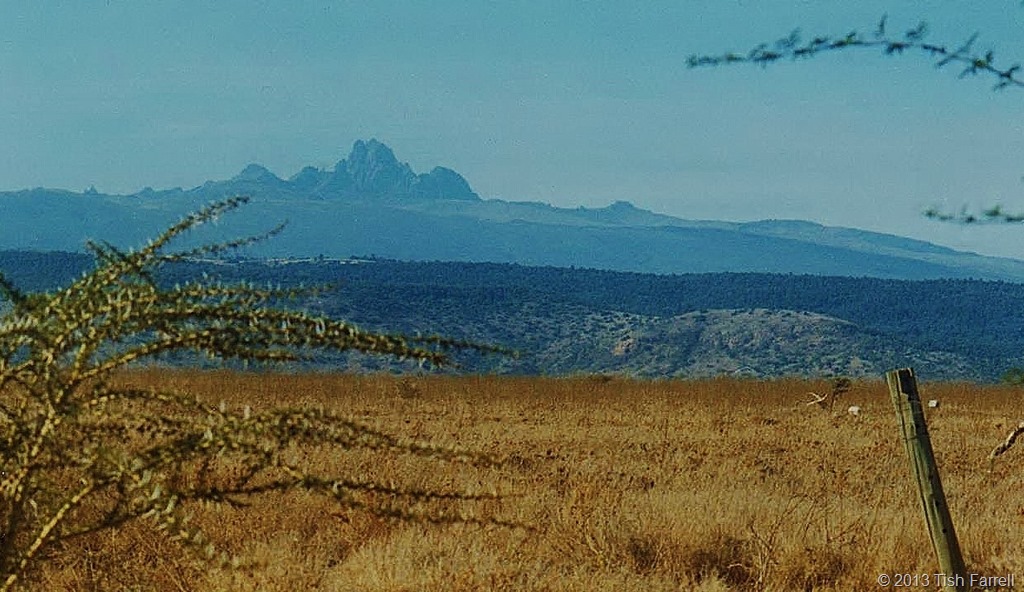
In the far distance are the misty spires of Mount Kenya, which  local people also know as Kirinyaga. The mountain top is one of the dwelling places of Ngai, the Creator of All, and has been considered a sacred place  for centuries – long before missionaries set foot in East Africa and tried to teach them about one God.

Lewa was once a colonial cattle farm, but now it is a private conservation enterprise working alongside local communities to improve the quality of life for humans and animals alike. In consequence, they have an impressive anti-poaching record. See the video below and take heart in the fact that conservation in Africa can also be a success story.


 http://flickrcomments.wordpress.com/2013/09/10/k-challenge/

Letters from Lusaka: Part II

100_4437

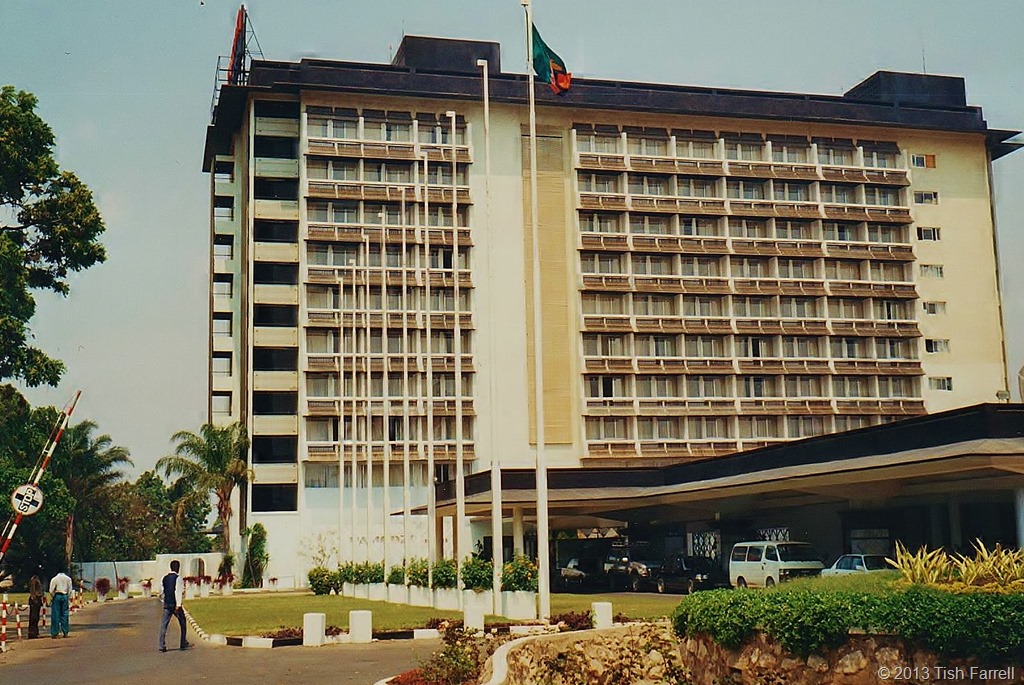
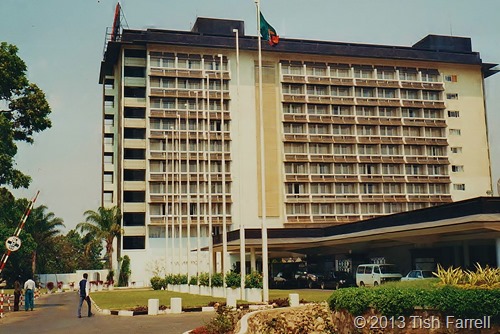
In 1992-1993, during the first years of Zambia’s multi-party democracy, we were posted to Lusaka, Zambia’s capital.  The Team Leader was charged with distributing European Union food aid to drought-stricken Zambians. (Part I is HERE). For the first couple of weeks, and the irony was not lost on us, we lived in the 4-star Pomodzi Hotel, in air-conditioned luxury.

*

Notes from an aid nomad’s life in Zambia

While we are still at the Pomodzi I do the unthinkable as far as white locals are concerned. I walk out of the hotel grounds and down a couple of avenues to the Ridgeway Hotel. One of the visiting NRI chaps has told me that it has a good gift shop, and there may be the possibility of finding some local books.

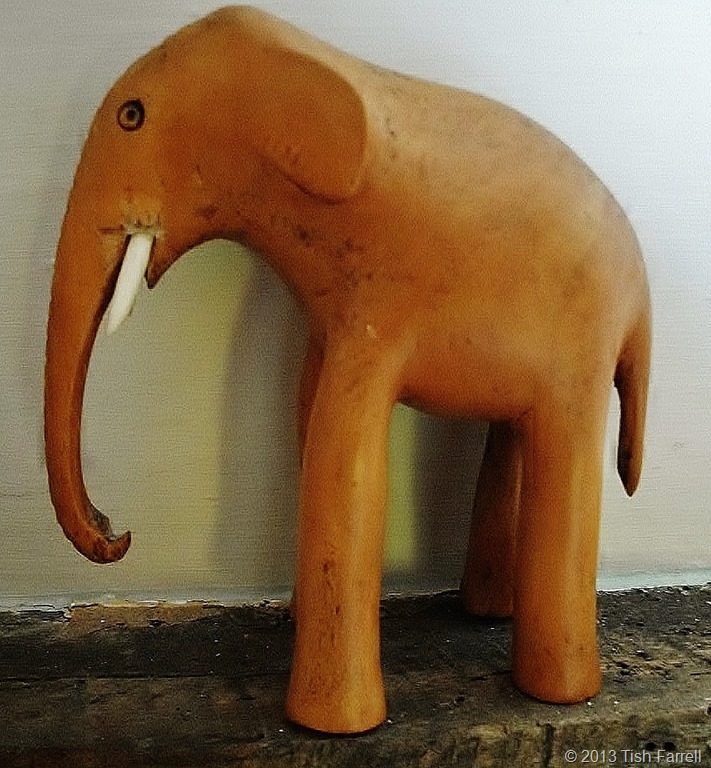
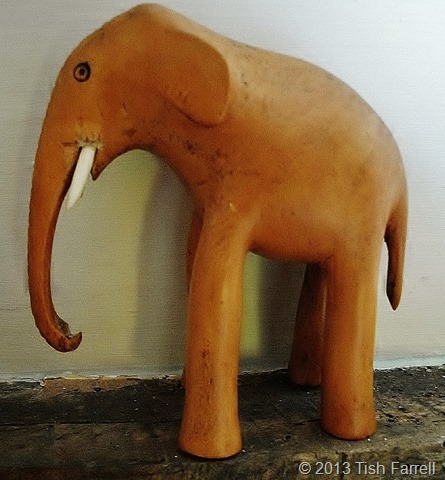
I set off on the basis that as I am not travelling by car, I will not be car-jacked. I am not. I buy a wonderful Tonga basket and a small olive-wood elephant for luck, but there are no books. I do find a map though – Lusaka one side, Zambia on the other. I study the country’s boundaries, trying to make sense of colonial cobbling that created a nation whose North Province lies to the east of its Central Province.

The country nestles in the heart of southern Africa between eight countries. In outline it resembles a foetal chick curled on its back within a protecting shell. In reality, though, I soon learn that Zambia has no such protection. It simply has too many borders and not enough military personnel. There are only some 300, 000 taxpayers in a population of eight million, which is not enough to pay for more soldiers. The north-west border with Zaire is lethally porous. Members of President Mobutu’s own unpaid armed forces regularly drive into Zambia’s Copper Belt and conduct armed pillaging campaigns against innocent drivers and householders. Sometimes they come as far south as Lusaka.

*
002

Pomodizi Hotel

*

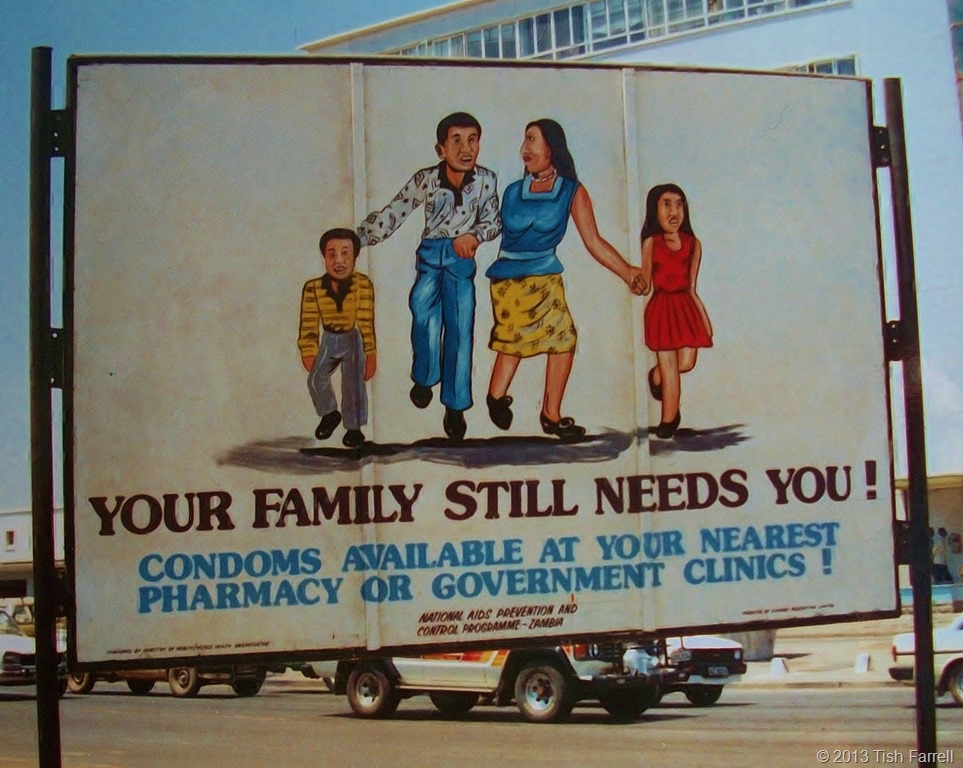
We are told that when driving at night we must never stop at red traffic lights (locally known as robots), since this is the moment that car-jackers will choose to pounce. Over in Eastern Province the threat comes from the conflict in Mozambique as RENAMO guerrillas cross the border to shoot up Zambian buses and steal food. In Western Province UNITA fighters from Angola’s war terrorize Zambian villagers. Famine, then, is only one cause of death; there are many others, and the mineral resources that Cecil Rhodes sought so hard to control through his dark-hearted dealings with local chiefs are high on the list.

100_2135

AIDS awareness down on Cairo Road.

*

Then there is malaria and tuberculosis, and as the rains bucket down through December, the cholera season begins. Overflowing septic tanks and pit latrines are polluting the city’s boreholes. At first, oblivious of such dangers, we eat out at downtown restaurants. We are down in Livingstone, near the Zimbabwe border, G checking out the contents of grain stores, when I am stricken with amoebic dysentery. Again it is the Delegation secretary who comes to the rescue and directs us to the mining companies’ private clinic, downtown on Cairo Road. The diagnostic facilities there are impressive, the British-born doctor patronizing. But after a three-day course of very large pills, I recover. I am lucky. Of course I am.

*
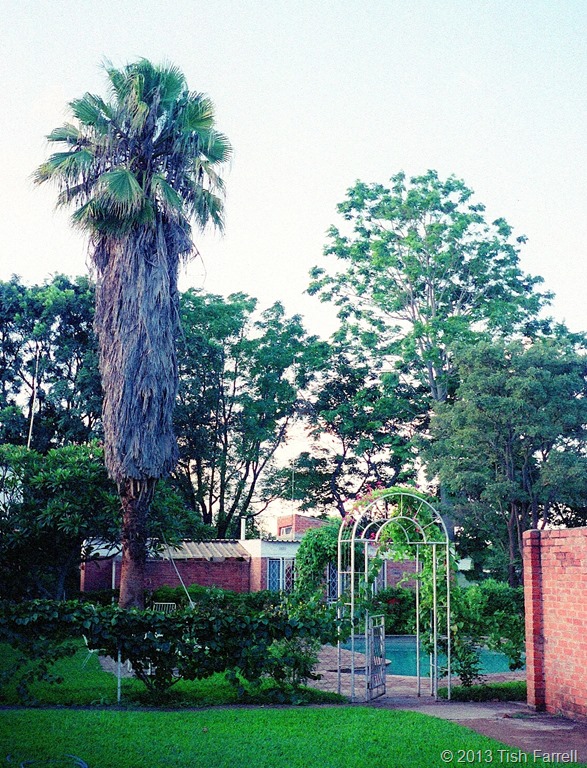
Sable Road - compound pool

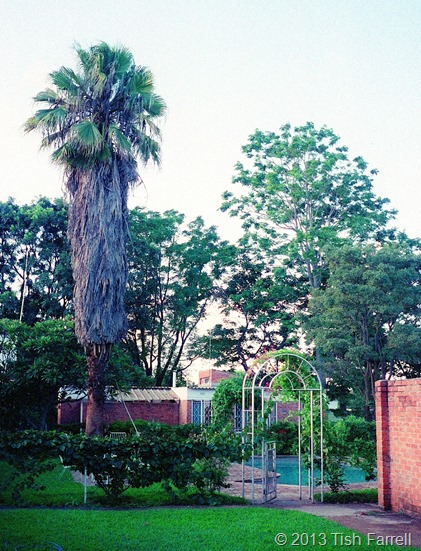
Six or so houses share the gardens, including a very small pool.

*

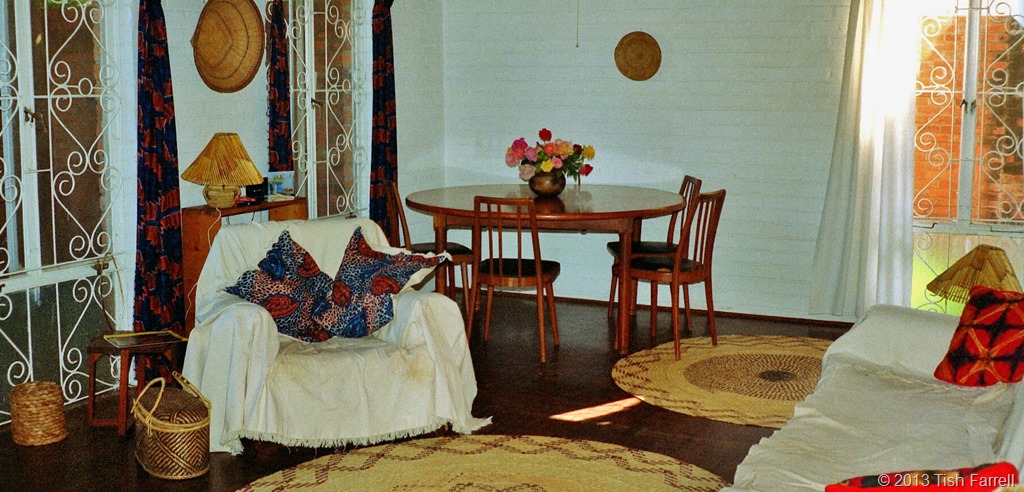
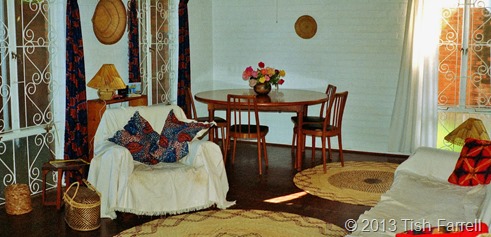
We like our little house. It is red brick, single storey with a sheet iron roof that, during the rains, resounds as if someone is firing bullets into a host of upturned buckets. The living room has French doors opening onto a tiny high-walled garden. There is a big avocado tree in the corner where African sparrows come twittering in to roost in late afternoon. Above the wall, when it is not raining, arcs the blue Zambian sky. To the rear, a small kitchen gives onto a walled back yard and a patch of grass. There are two bedrooms, a tiny study and a bathroom. Outside the front door is a communal garden and terrace – garden seats set by a small swimming pool, a tall palm that rustles endlessly in the high plateau breezes, a sweet scented frangipani tree. No house overlooks any other and there are shady walk ways in between each property.
Sable Road our sitting room

Home in Sable Road

*

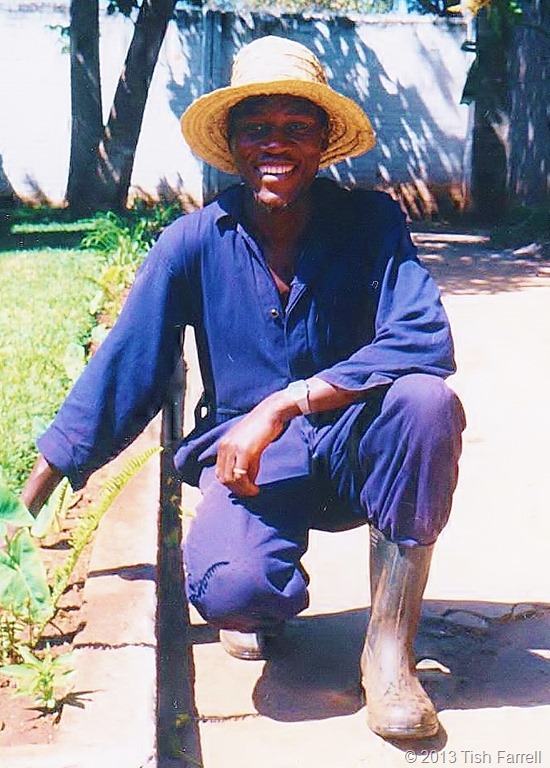
The gardens are tended by a gentle young man called Stephen Nyangu. His name suggests erstwhile connections with the Nyanja royal clan. But Stephen’s situation is a far cry from tribal pre-eminence. He sweeps, mows, weeds, plants, prunes and waters six days a week, from seven in the morning to five in the afternoon. Then he cycles the couple of miles to his compound home in Leopard’s Hill Road where he lives with his wife and four children. The gardens he cares for bloom strangely under sub-tropical skies with tea roses, violets, pansies, Sweet William and Madonna lilies. He also washes all the cars and hefts all the dustbins to the big compound gate to be emptied once a week. For this he earns twelve thousand kwacha a month, about eighteen pounds. He has no leave beyond national holidays, and after work he runs a cigarette stall.
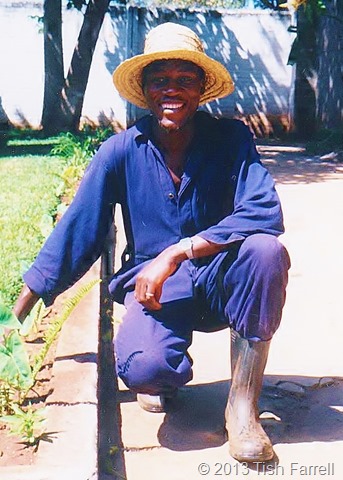
014

Stephen Nyangu works day and night to keep his family.

*

On my first day in our new home, it is Stephen who knocks on my door. “Good morning, madam. My name is Stephen. If there is anything you want me to do, I am just out there.” He gestures in the general vicinity of the pool. “Call me.” He is the only person on the compound who bothers to introduce himself. In ten months we scarcely see any of the other tenants beyond the Sikh couple who live next door. They nod to us. They have two much pampered, miniature Pomeranians and a maid called Isa. Isa looks a good-hearted soul and she works in several of the other households on the compound once she has done her daily tasks for the Sikhs. These include much furious chopping at seven a.m. Perhaps she is chopping for the Pomeranians. When she is left in charge of them for three months while their owners go on leave, she grows so fed up with their insistent yapping that one day she yells SHUT UP. And so shocked are the indulged little canines, that they do just that. I want to hug Isa.

I further decide that my house is scarcely big enough to justify even a once-a-week cleaner, this despite the constant slick of red dust that blows in every day. I thus do my own housework.

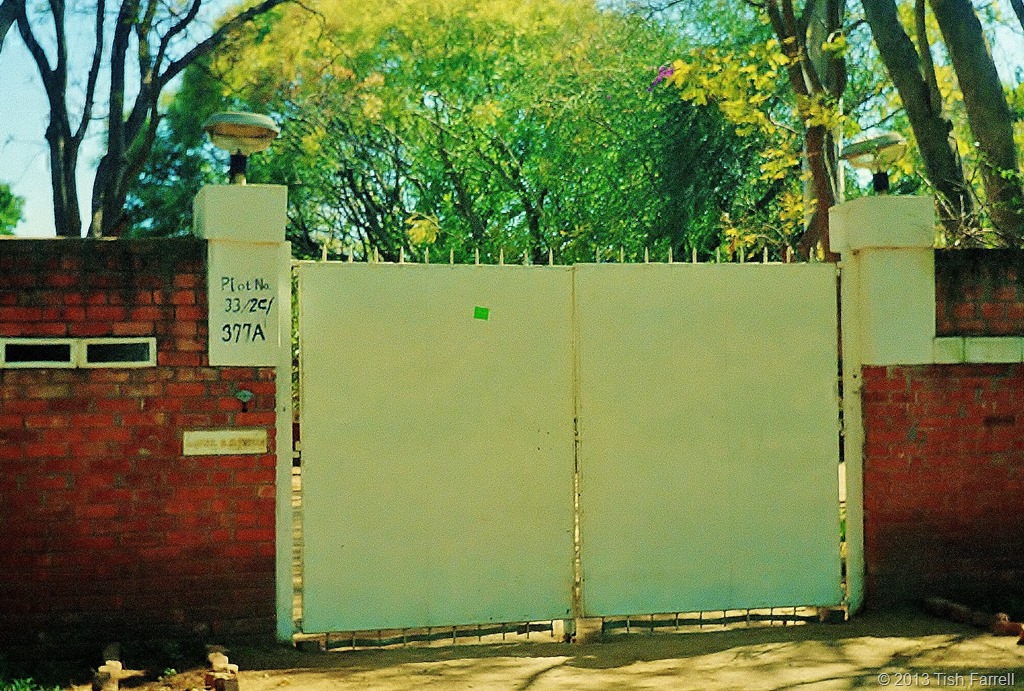
Our compound is on Sable Road in Kabulonga, the heart of the diplomatic quarter. Our next door neighbour is the Egyptian Embassy. At night the guards fire off rifles. We never do know what is going on there, and sometimes it sounds like a siege. Our compound is one of the least fortified on the road. The iron gate has open railings instead of sheet metal armour plating, and our day guard, Sammy, always leaves it unlocked  anyway during the day, while he plays draughts with a neighbouring house-guard. He’s a bit  nonplussed by my habit of going out on foot, and at first dashes from his game to open the gate as if I were a passing vehicle. We soon come to a silent arrangement whereby we greet each other, I open the gate for myself and he keeps on with his game. 

We soon discover that our household security provision falls short of official standards. European Union and British High Commission employees are advised to have internal security gates installed, external security lights, roof siren, alarm buttons, window bars, a pack of Dobermans and ridgebacks, a two-way radio and armed twenty-four-hour guards. The fortification of a property may cost around £5,000. Somehow we survive without most of these devices, although the top of our garden wall, which also forms the rear of the compound, is quite high and is further cemented with shards of broken glass.
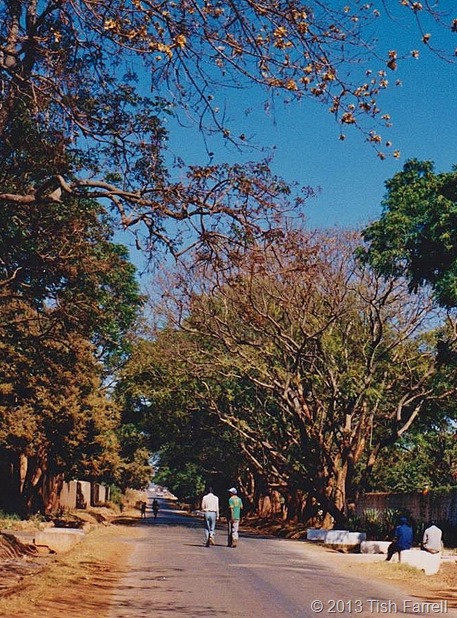
015

Sable Road in the dry season.

*

The nights, though, can be nerve-wracking. Rounds of automatic gunfire are common after dark. Some European locals, we hear, have made a ritual of standing on their front lawn at 9 pm every night and shooting off their sporting rifles – just to let “the thieving bastards” know what’s what. These are the same people who will tell you that, when they are not trying to relieve you of all your worldly goods, the Africans are really very charming. But gunfire aside, it is anyway hard to sleep in the perpetual gloaming of the security lights dotted around our compound. The insects, too, grow louder as the night draws on, and then the dogs wake us.
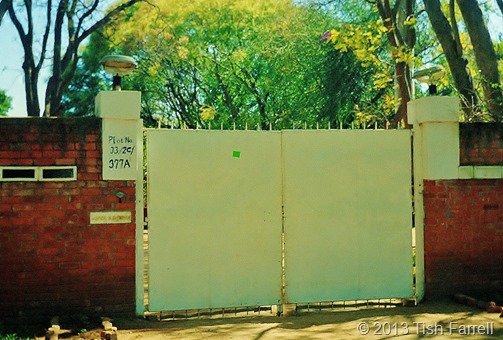
Elite suburban living

Expatriate living: guard house and armoured gates.

*

I call it the Kabulonga Howling. It begins with a solitary keening which swells into a relayed dog lament that spreads from compound to compound until a monstrous crescendo resounds across the suburbs. Once reached, it quickly subsides, to be replaced by the insistent beat of Zambian disco music, thrumming away beyond our perimeter wall. We have no idea who lives behind our glass-spiked rampart. I have tried standing on the brick barbeque in the back yard, but I still cannot see over the wall. Instead, I often hear a Zambian boy badgering his little sister whose name is Lorna. Lorna is always being ordered to do something or other. There is meek compliance in her little voice. It is the lot of many Zambian women to defer to men, and my heart aches for her. One day I find an arrow in the back garden – a stiff plant stem tipped with a bent Mosi beer bottle cap. For a moment I examine it like Robinson Crusoe finding unsettling signs of life on his confining island shore.

By day G. drives off early to the EU Delegation. It is only five minutes’ drive away. I begin to tend the back garden, sowing beans, courgettes, carrots. Things quickly sprout, but the land snails are as big as my fist. I write and read, although finding books is a challenge. We can find no bookshops in Zambia since the nation can no longer support a publishing industry. Once a week we drive down to the British Council on Cairo Road to borrow books from their library. We do this, ignoring white Zambians’ warnings that our Suburu will be car-jacked if we park anywhere downtown. Whenever we go to the library, most of Zambia’s students seem to be studying hard, filling every seat. It is hard to gain qualifications in a land without books.

Newsprint , too, is hard to come by. Newspapers sell out quickly each day and I have to rely on G. bringing the Delegation copy home at lunch-time for quick scan through. Soon we hear that four Zambian Daily Mail accountants have been arrested for ripping off their own company’s limited newsprint stock and selling it to a rival newspaper.

Then there is the challenge of household shopping. Our local shop is Kabulonga supermarket where I frequently search the shelves to the strains of  Michael Bolton’s The Lady in Red. A beautiful girl in cobalt blue chitenge and matching head-cloth that is  tied with great flourishes, is often on the till. She has the poise of a princess.

When it comes to shopping, it is a matter of buying whatever is in stock and then thinking of something to do with it. Treats include cartons of delicious and imported Ceres grape juice, and jars of sweet pickled beetroot. The local yoghourt comes in big tubs, plain or strawberry. Other staples include corned beef and South African wine. The supermarket smells of countless forms of perfumed cleaning products that at Christmas time are parcelled up into gift packs to make the ideal gift, along with small bales of second hand clothing.
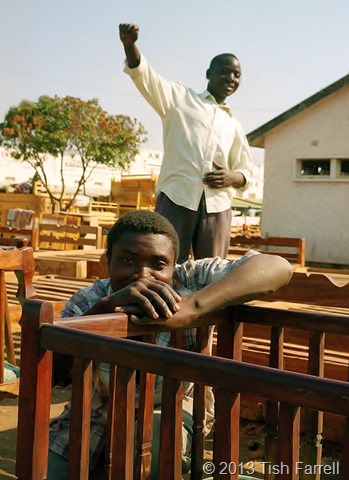
Kamwala roadside furniture market

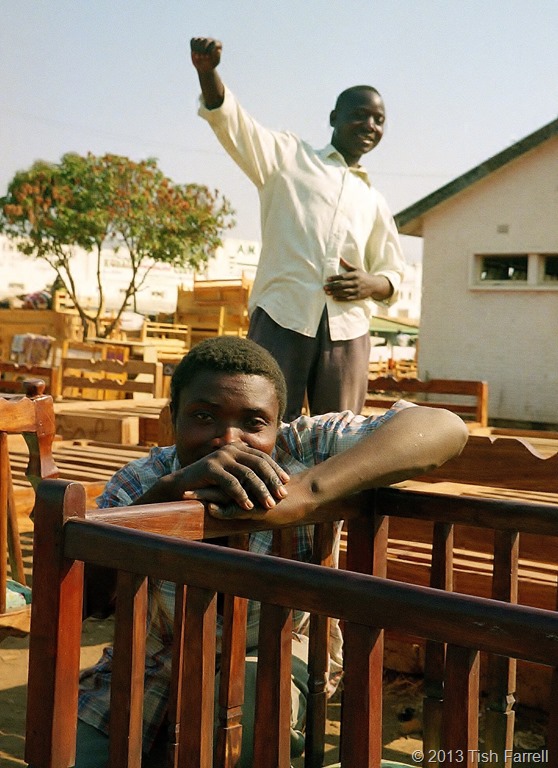
There are plenty of roadside artisans. We bought our bed from traders in  Kamwala Market

*

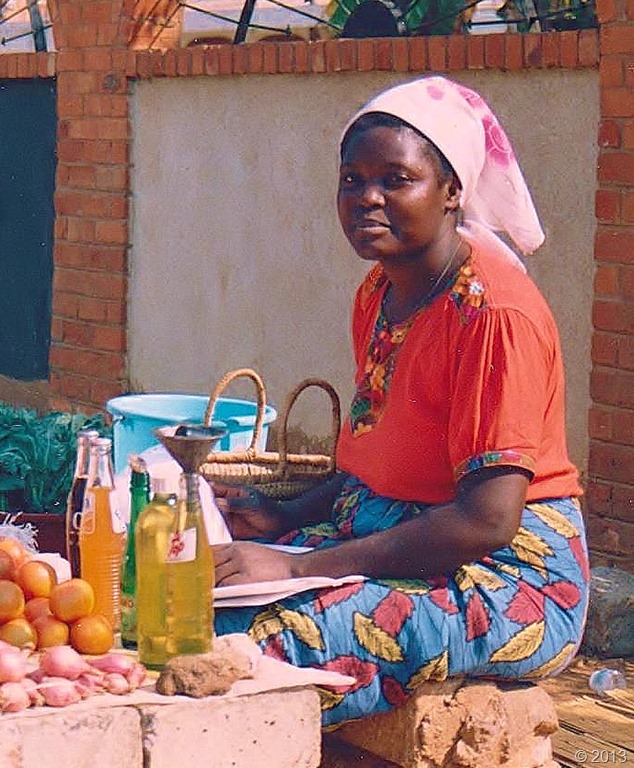
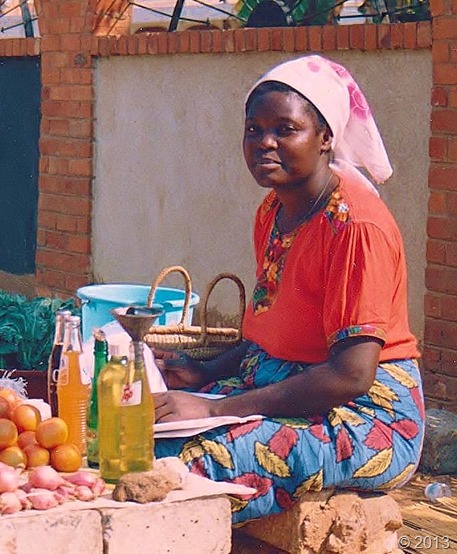
There are of course shopping opportunities everywhere along Lusaka’s streets – cigarette and second hand clothes stalls, a man selling bread, another with his scrawny hens, fish from a freezer connected to nothing, caterpillars dried or roasted, large woodland mushrooms the colour of cygnet down, little pyramids of tomatoes. If I buy two piles of tomatoes from the young woman in the photo, she gives me an extra tomato as a “special gift”, and then wraps the lot in computer print-out.
001

I also walk down to the Maluwa Cooperative in the hopes of something more interesting than beetroot and corned beef. Again I never know what I will find there: perhaps, if I’m lucky, a good mission-reared chicken in the cold cabinet, or button mushrooms, some Gouda cheese, broccoli, new potatoes, French beans, bunches of roses. If he catches me walking, an elderly white Zambian in a pick-up, (his ‘boys’ in the back), always insists on giving me a lift. He means well, and it is easier to comply with his desire to save me from imagined predations of Zambians than to argue.

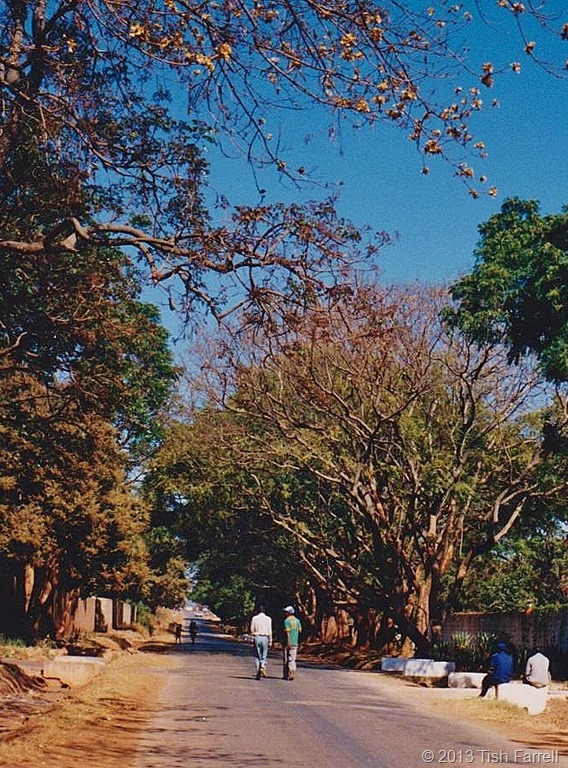
But I like it out on the road. There is so much life there outside the high walled, razor-wired residences of the elite. People greet me. A taxi driver trying to mend his broken-down car offers me a lift, presumably in hopes that if I agree, his vehicle will conveniently right itself. I grin and say no thanks. I like his style though. As I step out again on the dirt road that has lost its asphalt, my footprints are impressed in the dust among the countless prints of others.

*

G. spends his days rushing round to meetings with aid agencies. There are fears that donations of free maize will dissuade farmers from planting their own crops, despite the good rains. Too much free maize is also likely to depress the economy, and this must be avoided. Much is given out as payment for working on public enterprises such as road building or making bricks for the building of clinics. Unemployed women, in particular, are keen to do such work. Receiving a sack of mealie meal, sugar, beans and cooking oil in return for their labour gives them independence from menfolk who might otherwise take any cash earnings. G. also has to travel down south to Choma and Kalomo to oversee the distribution of EU maize by the Red Cross. There are more trips out east and to the Copper Belt.
011

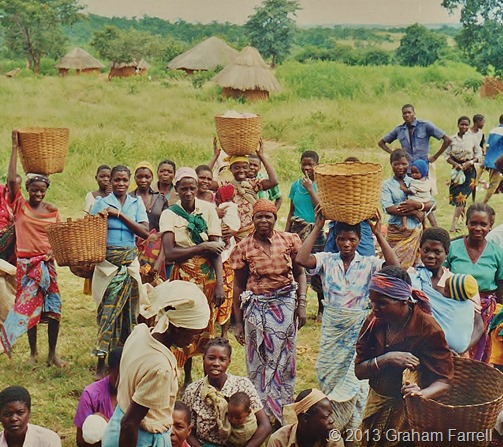
Villagers coming to collect cooking oil and maize meal from Red Cross food aid distributers.

*
012

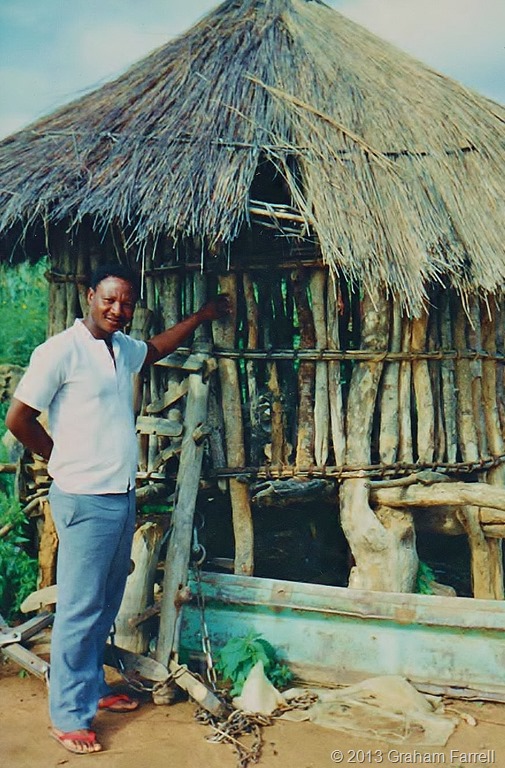
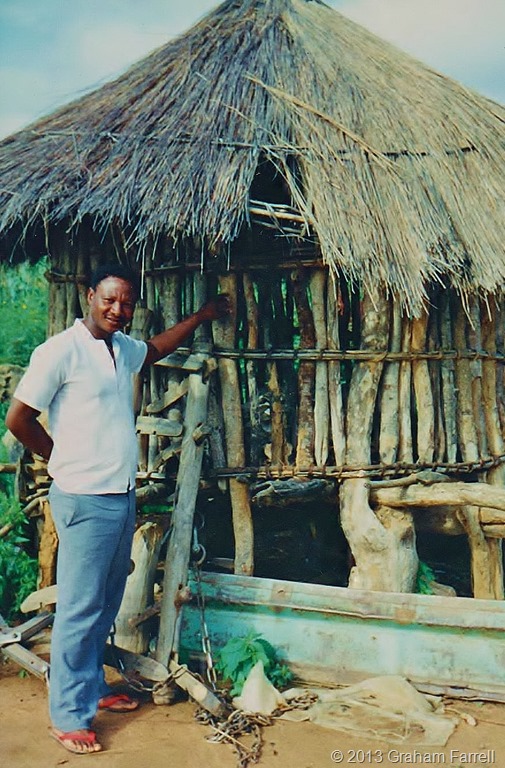
A farmer shows Graham his empty granary.

*

In March G. comes home saying there is a bit of flap on. Brussels has phoned the E.U. Delegation saying that the BBC has reported a coup in Zambia: is everything all right there, they ask. The diplomats scratch their heads. No coup has been observed, but a few days later it is clear that something has happened. Major Rezi Kaunda, son of the long-serving and recently supplanted, ex-president, Kenneth Kaunda, has been arrested. He is reported as being under armed guard. Further details explain, somewhat bizarrely, that he is sitting in the yard of Woodlands police station with his flask of tea and a radio. Fourteen plotters in all have been arrested both in Lusaka and the Copper Best. These include the editor-in-chief of the Zambia Times.

Later we hear that an incriminating document, The Zero Option, has been seized. It gives detailed plans of how members of the UNIP opposition old guard, led by Rezi, intend to make Zambia ungovernable by fuelling a crime wave, infiltrating the unions and government departments. It is mooted that this campaign of destabilisation has already been instigated and is responsible for the alarming crime wave.

President Chiluba has only been in office for a little over a year. His Movement for Multi-Party Democracy defeated Kenneth Kaunda in the first democratically held elections since Independence in 1964. Kaunda Senior had been in power all that time, but on defeat, chose to bow out gracefully. Meanwhile Frederick Chiluba claims that he is on a clean-up mission of this potentially rich, but now run-down state. He declares a limited State of Emergency while order is restored.

We all breathe a sigh of relief. No need for the emergency evacuation that the High Commission is so unlikely to provide for us. Besides, G. still has much work to do, and there’s so much I still want to discover. One thing I am itching to know is how this copper-rich nation, with its deposits of sapphires and amethysts and airy upland mopane forests is one of the poorest on earth. Why are its impoverished, beleaguered but hard-working peoples being so ruthlessly structurally adjusted by the World Bank? I am beginning to suspect that the spirit of Cecil Rhodes is restless and abroad once more, but that, as they say is another story.
Eastern Province

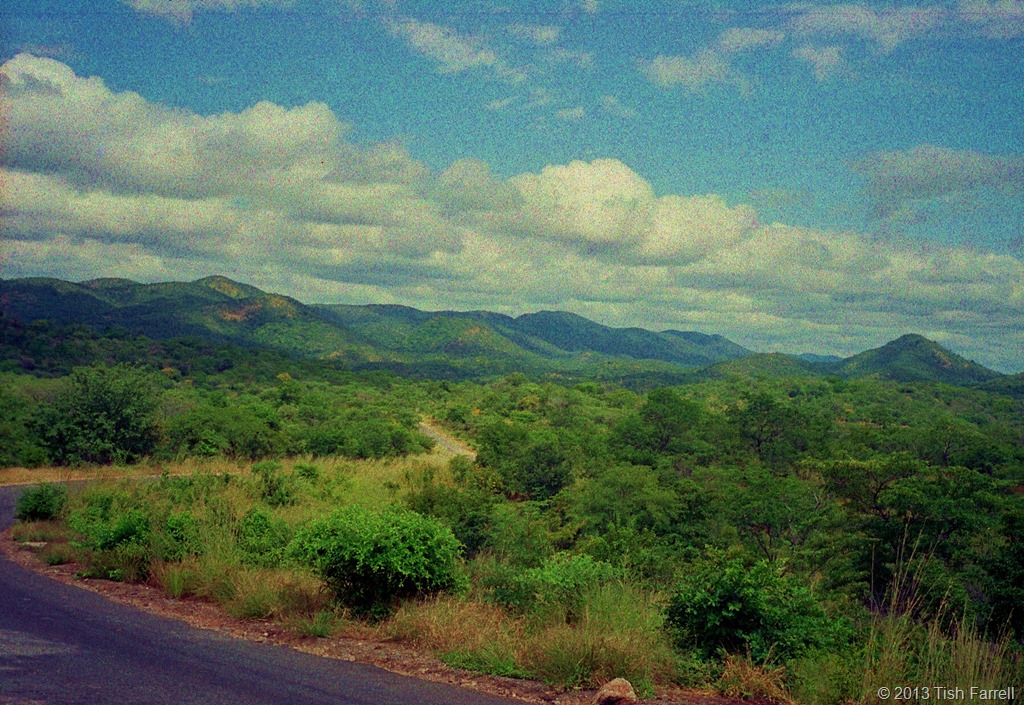
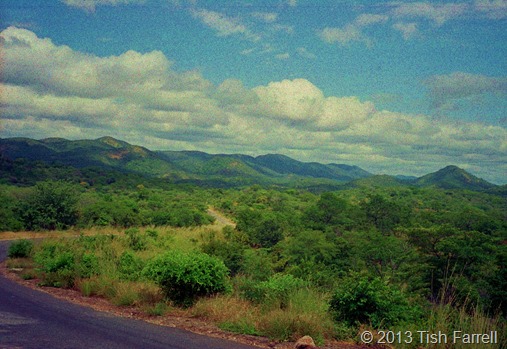
Zambia is often called ‘the air-conditioned state’. It comprises an upthrust, tilted plateau some 5,000 feet above seal level. The natural vegetation is mopane woodland. This view was taken along the Great East Road.
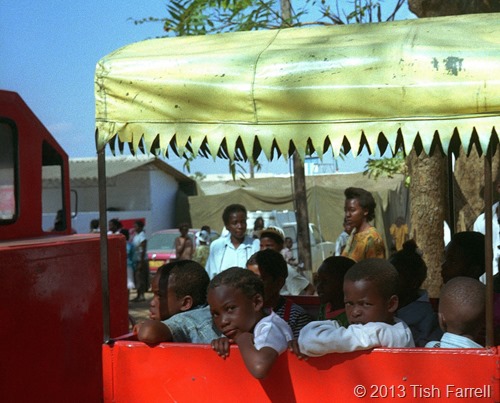
Lusaka agricultural show - miniature railway

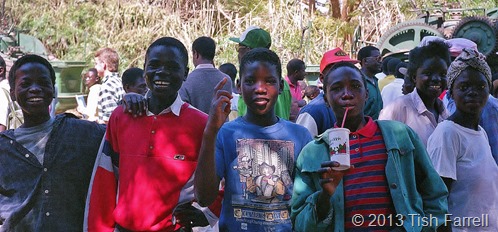
Lusaka agricultural show - kids

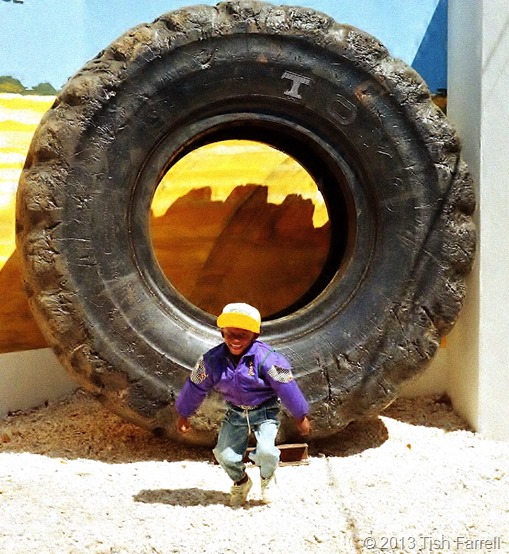
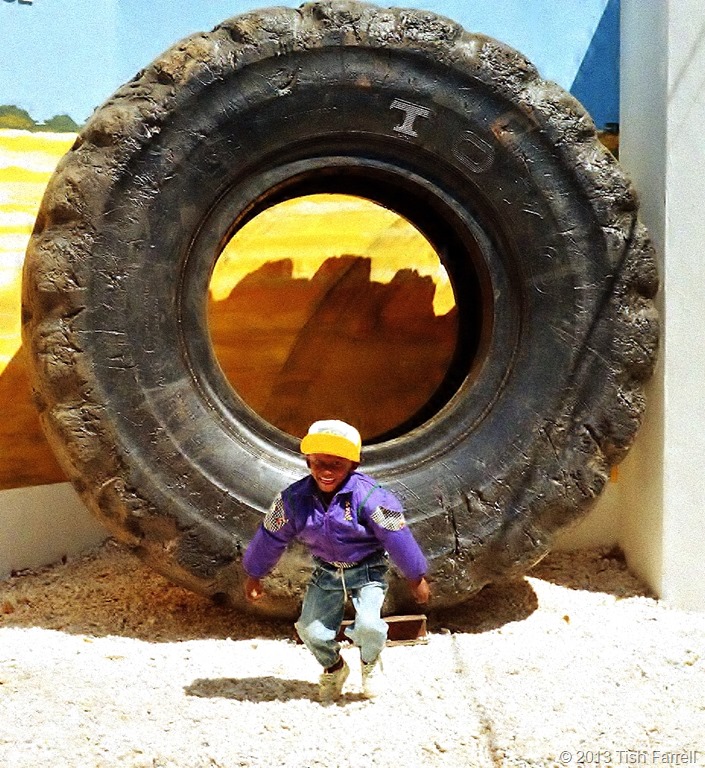
Lusaka agricultural show - Boy and copper belt truck tyre

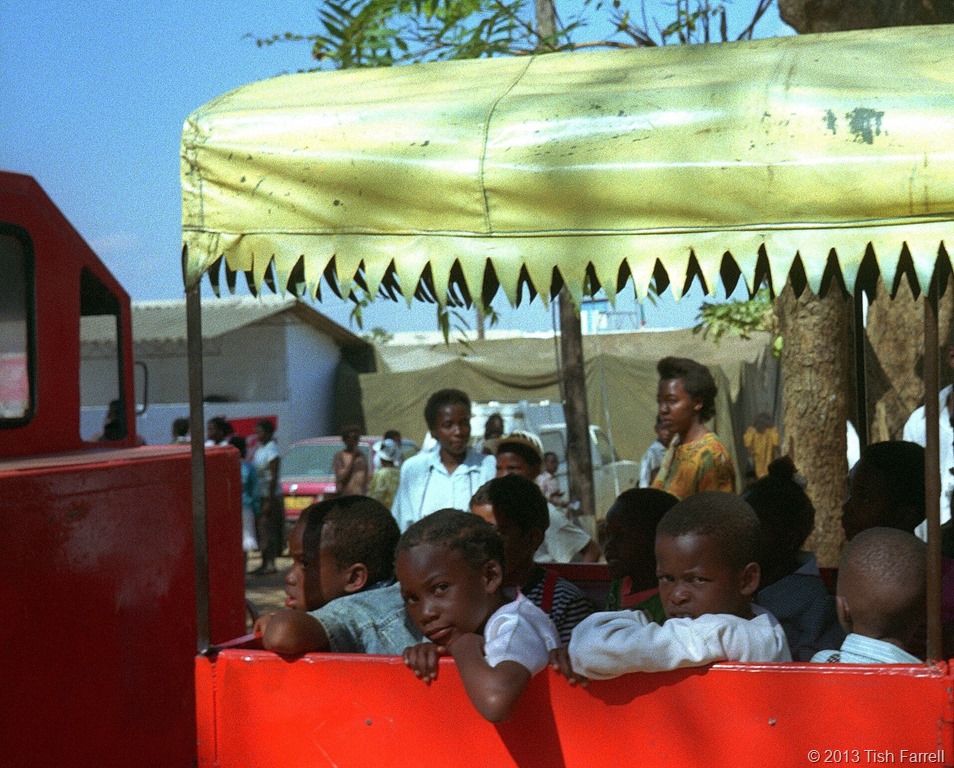
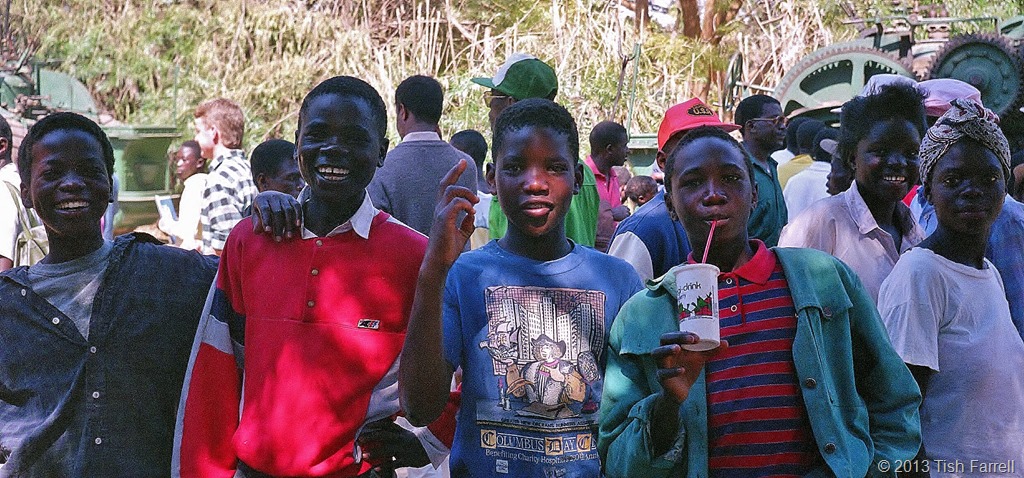
Kids at the Annual Lusaka Agricultural Show. 1993’s slogan is ‘Produce to Prosper’. Produce and get a fair price  from multi-nationals would be my preferred slogan.

*

© 2013 Tish Farrell

Far away in Africa

Where’s My Backpack: Distance

002 (2)

This shot of Kilimanjaro, which is actually miles and miles away, was taken from Kenya’s Mombasa Highway near Kibwezi just after the rains. Below it are the green cones of the Chyulu Hills on the approach to Tsavo. Like Mount Kenya, this huge old volcano is very elusive. Sometimes it will fill the sky, other times it is more like a mirage. The next shot was taken in the early morning during the dry season. The mountain often appears with the sunrise, but twenty minutes later you will see nothing at all in the space that it occupied.
003

*

010

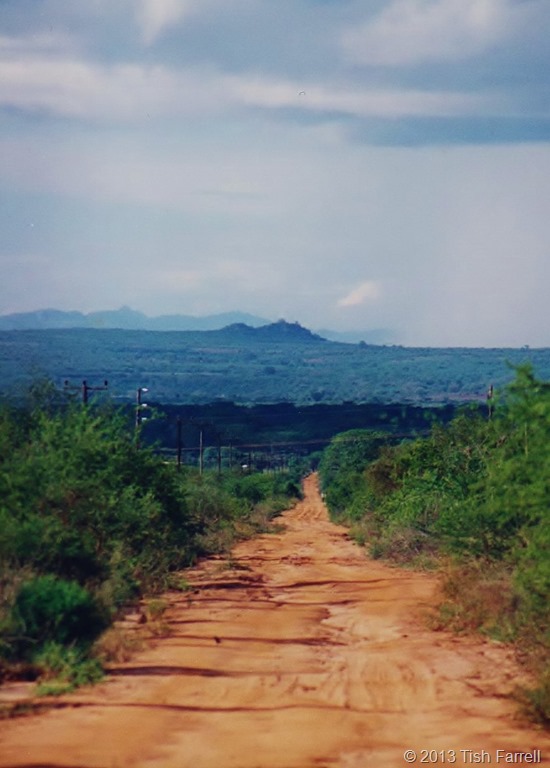
This dirt road is heading back towards the Mombasa Highway from Kenya Agriculture Research Institute’s Range Station at Kiboko. Buffalo lurk in the thorn scrub, and much else besides.

*

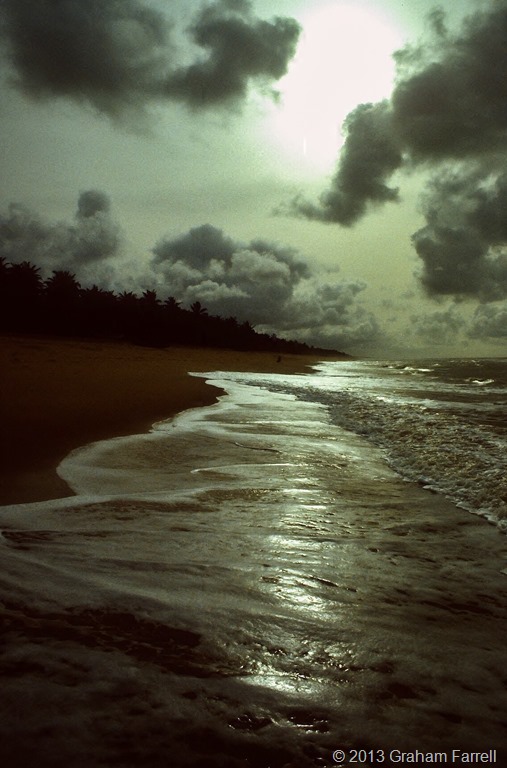
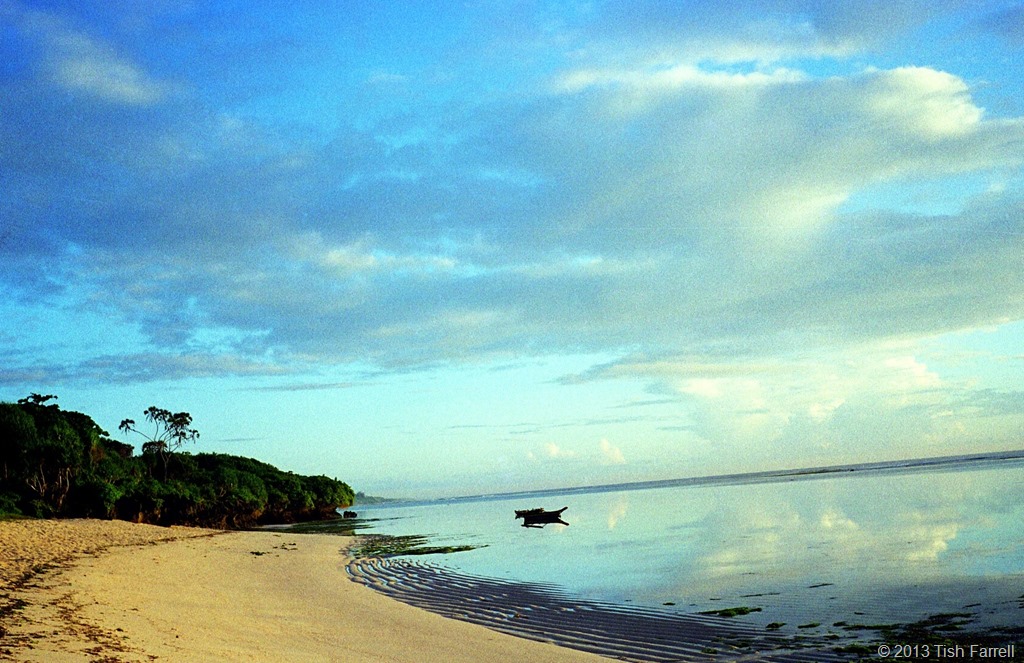
dawn on Tiwi with dugout

Early morning on the reef at Tiwi Beach, South Mombasa. The dug-outs belong to the local Digo fishermen, who make a living selling their catch to tourists staying that the local beach villages. (See Beaches – Mombasa)
*

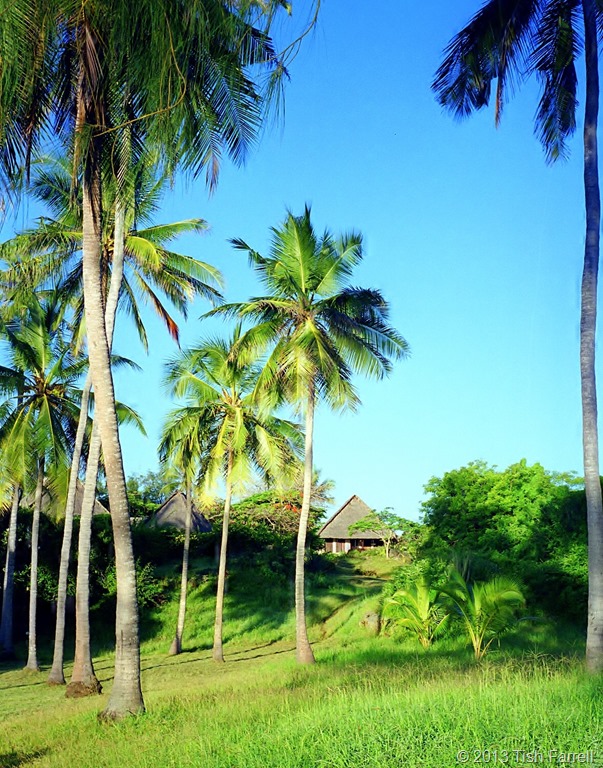
Capricho and palms

A glimpse of Maweni Beach Cottages, built in the local style: coral rag walls and high makuti roofs thatched with coconut palm. Many of the local coconut plantations are ailing, due to too much tapping of flowering shoots to make the local brew tembo.

*

Mara grassland 3

Mara grasslands and, in the distance, the Ololua Escarpment.

*

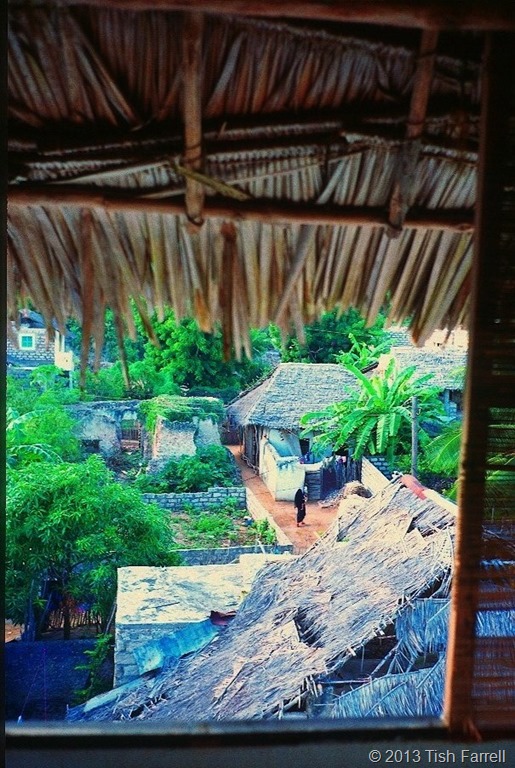
Scan-130426-0029.jpg

A room with a view, the ‘penthouse suite’ of the erstwhile Island Hotel, Shela Village, Lamu. This room had three whole walls of windows – the absolutely most perfect place for Nosy Writer to survey local life.

*

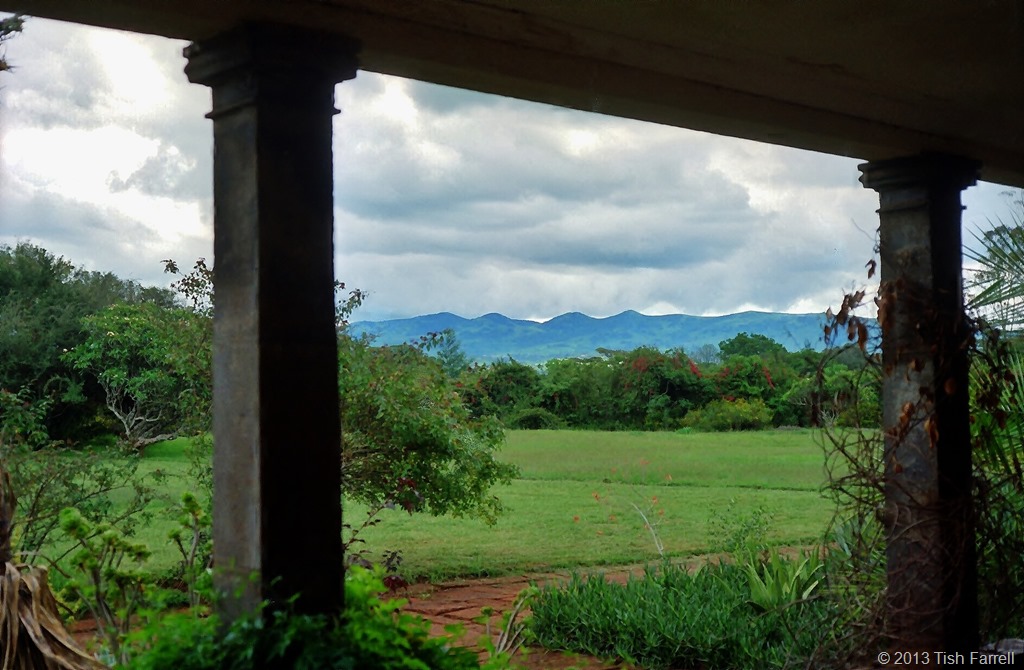
Scan-130429-0005

“I had a farm in Africa, at the foot of the Ngong Hills.”

Karen Blixen Out of Africa

The view that Karen Blixen saw from the veranda of her home outside Nairobi.

*

001

The Mombasa Highway just north of Kiboko. This shot was taken as we were heading to Nairobi about sixty miles away. The arid scrubland is part of Ukambani, home of the Akamba people, but Maasai come to trade here too. It was unusual to see the road with absolutely nothing and nobody on it.

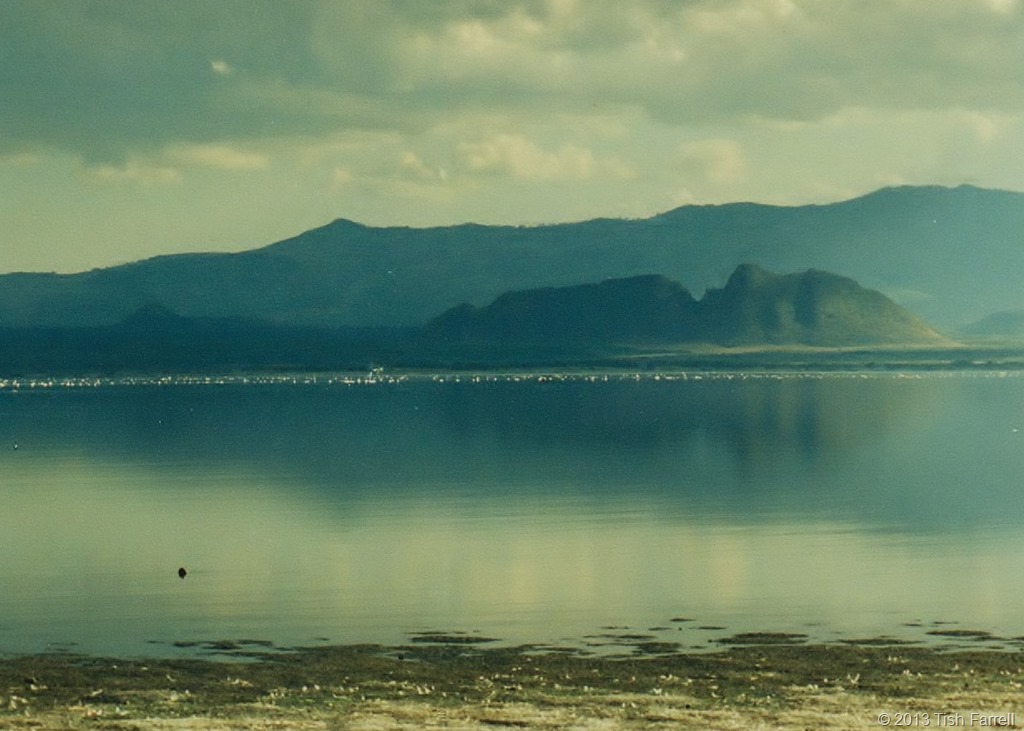
And finally back up the Rift, north of Nairobi, a view across Lake Elmenteita of Lord Delamere’s Nose. This was the name the Maasai gave to the exploded volcano on the lake shore. Lord Delamere was one of the first white settlers in what was then British East Africa. I leave it to you to imagine what his nose looked like. Before Lord Delamere arrived to occupy this part of Africa, the hill was known as the Sleeping Warrior.

001 (2)

© 2013 Tish Farrell