Indian Ocean Bliss

dawn over Tiwi lagoon

Dawn over the reef on Tiwi Beach, South Kenya Coast

It’s a dog’s life on Tiwi Beach, the white strand where ocean roars on coral and trade winds waft the coconut palms; and where, best of all, as far as the local canines are concerned, there are quiet coves sparse in holidaymakers. It means they may do as they please. For after all, it is their own resort, and every morning they set off there from the beach villages along the headland, nose up, ears blown back in the breeze, ready for the day’s adventures.

But the dogs are not churlish. They can take or leave the odd pale human wrestling to right his windsurfer on the still lagoon; ignore the sentinel heron that marks the reef edge beyond; pay no heed to the etched black figures of the Digo fishermen who search the shallows for prawns, parrot fish, or perhaps a mottled lobster or two.

© 2013 Tish Farrell

From Going to the dogs on Mombasa’s Southern Shore

Continues HERE

Post prompted by Paula at Lost in Translation where you will find more blissful images.

Rambling Tales: My Little Pony, Windmills, Olympian Dreams

100_6661

For a small community a lot goes on in Much Wenlock. In fact you  never do know what you will find even a stone’s throw from the doorstep. So it was that on a recent  foray up Wenlock’s Windmill Hill, and for quite another purpose, G and I met up with this astonishing little horse.  Given its newness on the planet, I was impressed by its air of stolid self-containment. It did not move an inch as I walked around it snapping photos. I asked it a few questions of course, but it seemed lost in thought. I even felt it might be having an identity crisis: I am a real little horse, aren’t I? Or am I?

100_6654

Then at last it reached a happy horsey conclusion and went off to do a bit of grazing with the other little ponies. But please do not ask about the man in the next photo. He has the most irritating habit of walking into my shots. Does anyone else have a man who does this? Here, though, he is perhaps adding some sense of scale, a factor drilled into me as important during my student-archaeologist days. And archaeology, not little ponies, was the real reason for this outing to Windmill Hill.

100_6656

In the background you can see the limestone tower that gives the hill its name. It is a famous local landmark, and only a short walk from our house. In its time, it has been both a watch tower and  a windmill. Carved stones from its interior suggest construction dates of 1655-57, but none of the members of the Windmill Trust, the volunteers who look after the monument, has been able to discover quite what the mill would have looked like during its working life.

On the day of our visit a small archaeological dig was taking place beside it to investigate the possibilities of earlier human activity on the site. We went to see how the diggers were getting on, but disappointingly they said they had not found much that was particularly old. There were broken clay pipe stems  of course– a feature wherever you turn a spadeful of earth around the town. Clay pipes were an important manufactured product here in the 17th century, and clearly used extensively by the locals as well as being exported.

100_6665

On finding there had been no great discoveries, we wandered off across the hill. In early and late summer the pasture here is covered in wild flowers typical of a limestone meadow – orchids, cowslips, agrimony, wild thyme, St. John’s Wort, knapweed, drifts of yellow Lady’s Bedstraw, but now the grassland has a tired look, though clearly tasty enough for the ponies.

We scanned the fields all round. Recent lidar remote sensing surveys have revealed the existence of extensive mediaeval remains a few fields away from the windmill, and also the possible outline of a Roman villa. In any event, there would have been much human activity in the area from at least 680 AD when Milburga, the daughter of the Mercian king, Merewahl,  became abbess of Much Wenlock Abbey. Her land possessions were extensive. She also later became a saint, renowned for all manner of odd miracles.

But great antiquity apart, the views from the hilltop reveal everyone’s idea of  a typical English farming landscape, although it does not come without its adjacent ‘blot’. The ground immediately behind the hill falls away into a bleakly huge quarry with a deep pool of strangely turquoise water.

100_6670

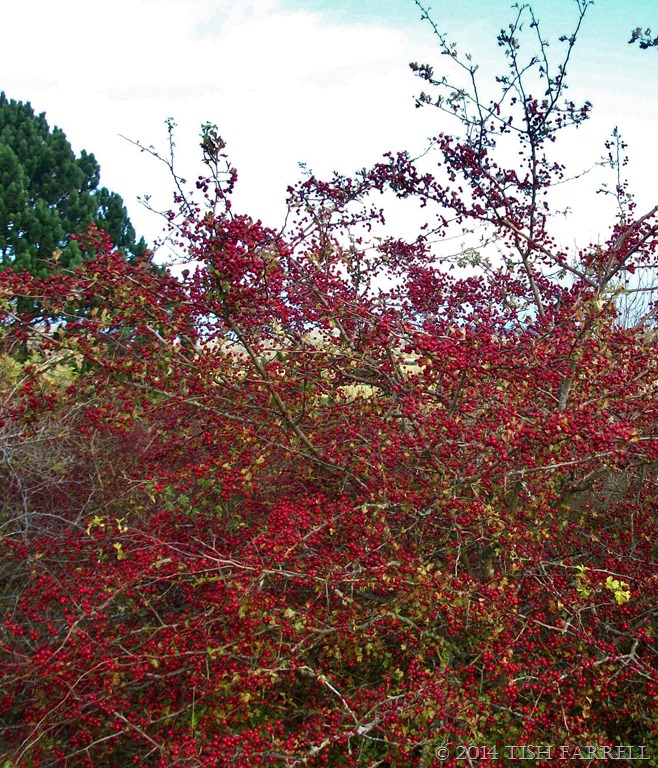
Now disused, the workings are screened by conifers, and also by this astonishing display of hawthorn berries. Plans to turn the site into a diving school with log cabins seem to have to been dropped.

100_6669

At the foot of Windmill Hill is the Gaskell Recreation Ground, or Linden Field. Having long been used for village cricket and bowls, it was bequeathed to the people of Much Wenlock in the 1930s by a descendent of the Gaskell family who owned much of Milburga’s former domain. It was here too, from 1850 that the first modern Olympian Games took place every year, attracting athletes from across the country. The man responsible for reviving this prestigious sporting event was the town’s local doctor, William Penny Brookes.

067

Every year, thousands of visitors would come to watch the games, arriving on the Olympian Special train. The station was conveniently situated  beside the field, the bringing of the railway being another of Penny Brookes’ successful projects for the benefit of Much Wenlock. The field was bare of trees in those days, so spectators could sit on Windmill Hill, amphitheatre-style, and have a fine view of track and field events.

Penny Brookes was also a campaigner of national standing. It was he who argued for the introduction of physical exercise into Victorian schools. He even did clinical trials to prove how young bodies grew well as a result of it.  His fame spread, and in the 1890 Baron Pierre de Coubertin, charged by the French Government to improve the physique of the French army, came to Wenlock to see Dr. Brookes’ Olympian Games for himself.  An elderly Penny Brookes apparently took this opportunity to share his ideas with the younger man, but sadly died four months before the launching of the first international Olympics in Athens in 1896. De Coubertin did, however, pay tribute to the Shropshire doctor’s vision: 

” If the Olympic Games that Modern Greece has not yet been able to revive still survives today, it is due, not to a Greek, but to Dr W P Brookes.”

The Much Wenlock Olympian Games still take place on the Linden Field every July, and attract sportsmen and women from around the world. The Olympic Association also acknowledged Much Wenlock’s contribution to the modern movement with the naming of the Wenlock Mascot in the 2012 games.

*

But now here we are heading homewards, taking the path that runs down edge of the Linden Field, and beside the old railway line. Here William Penny Brookes left another legacy. He planted an avenue of lime trees – the Linden Walk. Many of the trees are around 150 years old and still going strong. The scent of the blossom in summer is transporting, but the walk is beautiful any time of the year. It is one of the town’s many treasures, and accessible to all.

100_6680

As I stopped to take this photo, a young woman went powering past me, clearly in training for some event. But as you can see, that man is also there again. It is a puzzling phenomenon – how he is ever in my sights.

copyright 2014 Tish Farrell

Jo’s Monday Walk

Flickr Comments

Thursday’s Special: Manscape to Landscape

100_6544

This shot was taken a couple of weeks ago from the ruins of a gold mine crushing mill at Cefn Coch, Dolymelynllyn. During the 1860s there was a gold rush involving the working of several mines around Dolgellau, on the southern edge of the Snowdonia National Park in Wales. It is a dramatic landscape, a hard place to toil, cracking open the earth in hopes of riches. The remains of the industrial buildings stand starkly against the hillsides, the moorland vegetation gradually reclaiming the stonework.

copyright 2014 Tish Farrell

Now hike over to Paula’s blog for more splendid landscapes: Lost in Translation’s  Thursday’s Special

Related: Now that summer’s done, we take the Dol Idris path

Polytunnel Vision

100_6616

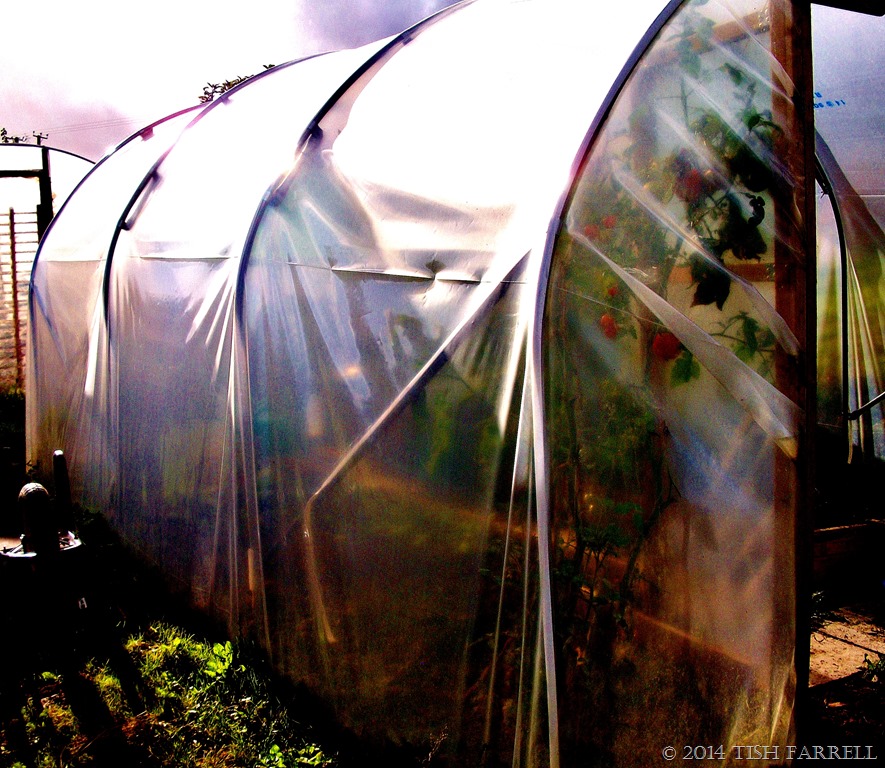
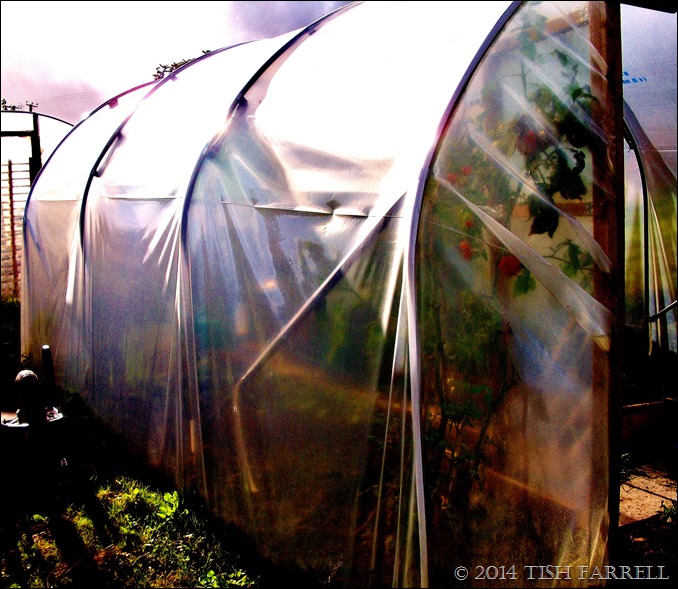
Oh all right, I know. As ambitions go, wanting to own a polytunnel might seem pretty odd. Also it’s not as if I don’t have enough housework in the house without having additional premises to tend elsewhere. But then sometimes in life you get precisely what you wish for, and most unexpectedly at that.

Ever since I took over my plot from Much Wenlock Allotment Society some seven years ago I have increasingly thought that a polytunnel was the very thing I needed. Gardening on the edge of Wenlock Edge can be challenging. The site is exposed, sloping, and often very windy. Much Wenlock is also in a frost pocket, and thus is a degree or so cooler than anywhere else in Shropshire.

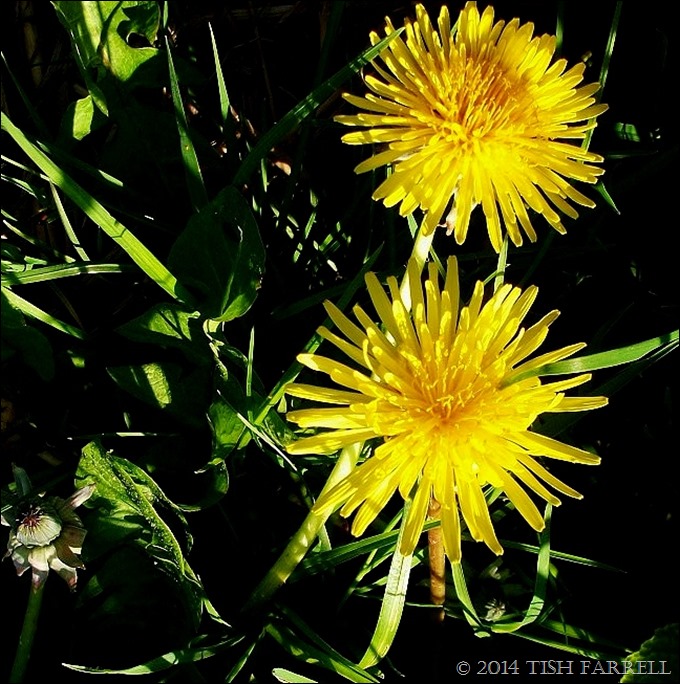
Worse still, the soil comprises a decaying fossil volcanic ash that is like wet cement when it rains, and hard baked cement when it doesn’t rain. It has thus taken seven years of digging, mulching, composting, green manuring, horse manuring, hacking and weeding to get the soil looking like something that vegetable plants might want to grow in. The dandelions, however, grow most verdantly, along with the creeping buttercups, sow thistles, docks, bindweed and couch grass. And so despite improvements, small vegetable seeds still find the soil heavy going. If they germinate at all, they struggle, the soil creating a bonsai effect on the roots, and then the slugs quickly finish them off. Most seeds thus need to be germinated under cover, and grown on before they can stand a chance after being planted out.
100_5367

And then, of course, there are the pigeons. They sit on the telegraph wires and watch what I’m doing. They especially like to eat cabbages and newly sprouted pea plants down to the roots. The rotters. In consequence I spend a lot of time making defensive systems out of environmesh and bits of wire fencing. This kind of protection also has to be applied to beds of leeks, garlic and onions due to the arrival in our part of the world of the allium beetle that likes to lay its eggs in the fleshy roots. The effect of these assaults on the leeks is especially dramatic: they unfurl in spiral fashion and develop rust-coloured stripes.

So you can see that to be an allotment gardener in Wenlock requires the same kind of pig-headed (idiot) tenacity it takes to be a writer. I have visions of deep, humus-laden beds bursting with lush, green spinach and broccoli, in much the same way I have visions of producing beautiful books that everyone wants to devour, and feel nourished by.

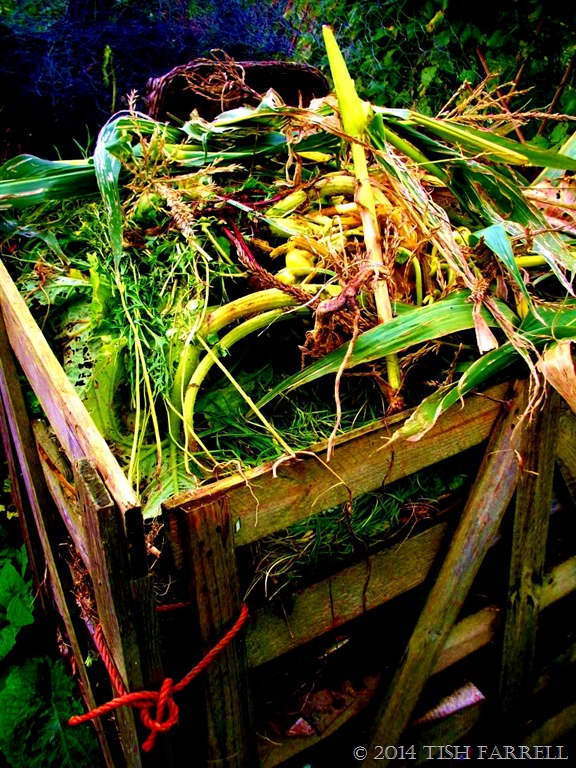
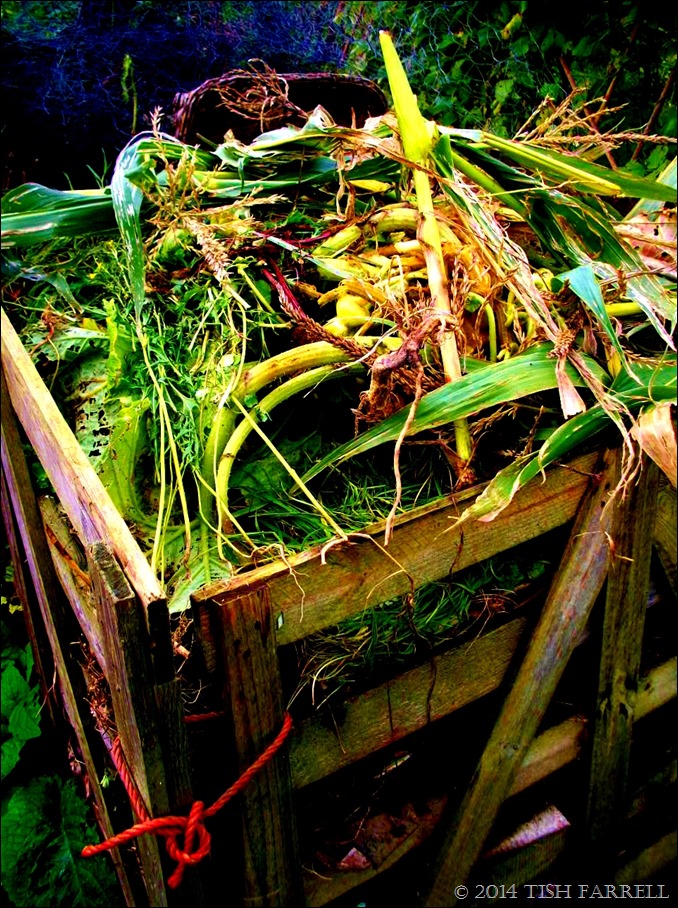
And that’s where the polytunnel comes in. I’m hoping I can crack both objectives in one fell swoop, this on the basis that if I can raise and eat more broccoli and spinach, my brain might produce writing with the requisite added enrichment. We can but hope. I might also say, as I probably have before, the contents of my writer’s brain have much in common with the contents of my compost bin, although at least they don’t smell. (Please note pallet structure installed by the Team Leader aka Graham who endlessly tries to bring order to my chaos).
100_4954

Anyway, back in the early spring when I was clearing my plot I noted, with a severe pang of envy, that my neighbours, Bob and Sally, were making preparations to erect a fourteen foot long polytunnel. I could see it was hard work, with foundation trenches to dig (in the aforementioned concrete soil) and the frame to erect. I watched them toil, hanging doors, and making beds. Next, I watched as my other neighbours, Pete and Kate, followed suit. Their installation was even more hard work, being on a slope. It took them weeks to complete. In the meantime I kept the Team Leader posted as to these events, from time to time mooting the possibility of us having a tunnel; perhaps something smaller, I hazarded.
100_5631

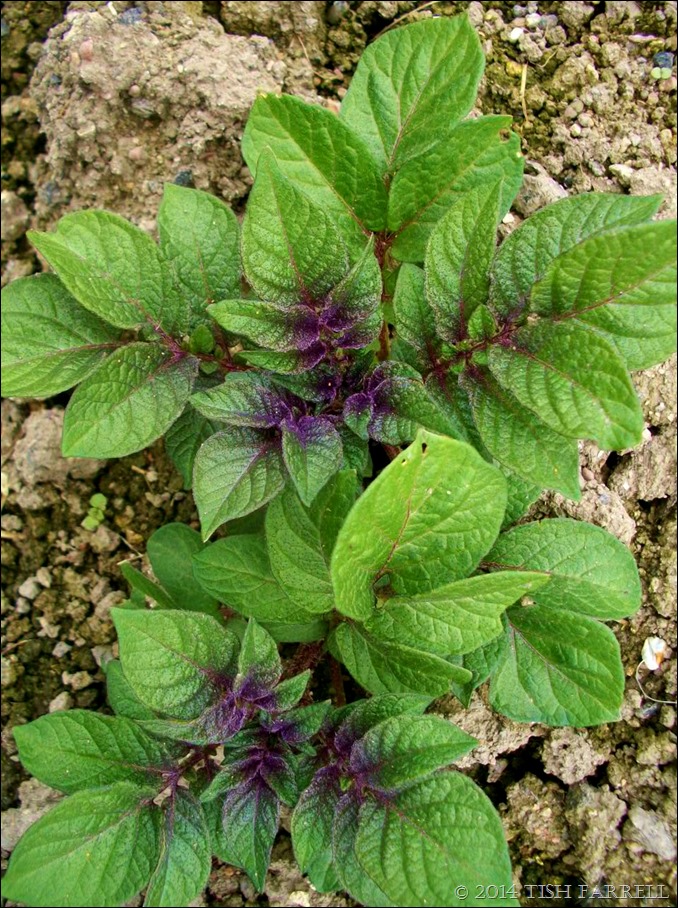
I have to say the response wasn’t altogether encouraging, even though we were by then falling out at home over whether the small conservatory on the back of the house was my potting shed and greenhouse, or his workshop. Increasingly my bean and sweet corn seedlings were having to compete with saws and wrenches and other man-things whose function I cannot identify. Nor was there the possibility of building either a man-shed to contain his stuff or a woman-greenhouse to contain my stuff since the garden at  home is too narrow.

Back at the allotment I watched the new polytunnels fill with tomatoes, cucumbers and peppers…I thought longingly of gazpacho that simply cannot be made from flavourless supermarket produce. Ho hum.

Then out of the blue in mid-summer, a little bird, otherwise known as ace fellow allotmenteer, Phoebe, told me that Bob and Sally were moving and were looking to sell their tunnel. She thought I should discuss terms with them.  Not long after this I received a small inheritance from my once passionately gardening Aunt Evelyn of whom I have written elsewhere.

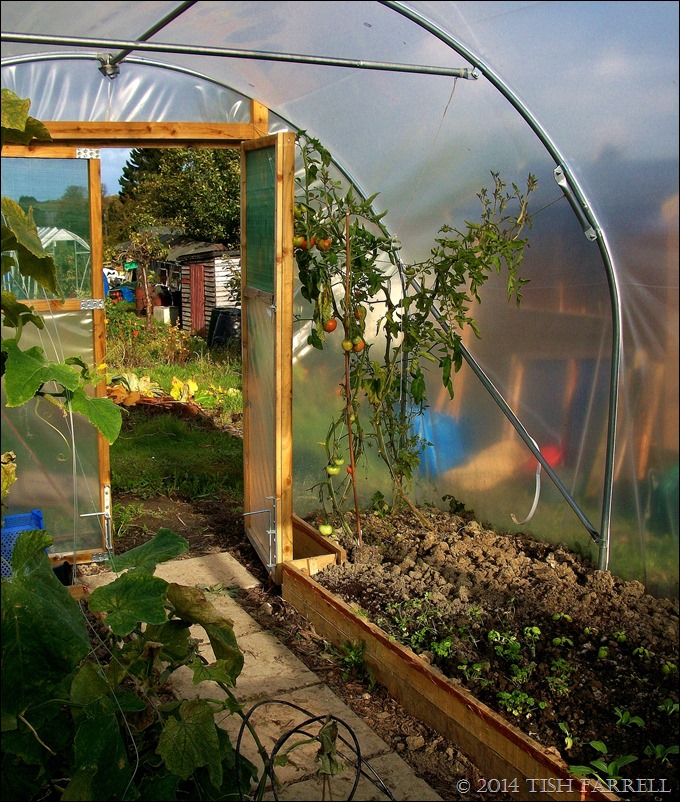
And so to cut a long story short, a week last Sunday I became the proud owner of the Auntie Evelyn Memorial Polytunnel, complete with potting bench, garden chairs and an automatic watering system. My aunt would have loved it. Bob and Sally even left me the last of their tomatoes and cucumbers. Not only that, the plot comes with a new shed that does not lean, nor provide roosting space for snails as my old one does. Already the Team Leader has added a shelf and guttering. In short, my water butt runneth over…Or will do very shortly.
100_6619

I have started clearing the tunnel’s beds and planted out lettuce and oriental vegetables to extend the salad season. But from now on, it is all new territory on the gardening front. There’s a lot to learn about tunnel cultivation and management. Planning and forethought are required. Better get cracking with that spinach and broccoli then.

Related stories about my aunt:

The Many Faces of Evelyn Mary Ashford

Grand Girl: Great Prospects

The Birds; Who, Where, When?

      copyright 2014 Tish Farrell

Please do visit Flickr Comments  to read more bloggers’ ‘P’ stories, or to add your own.

Still Life at the Allotment

100_6630

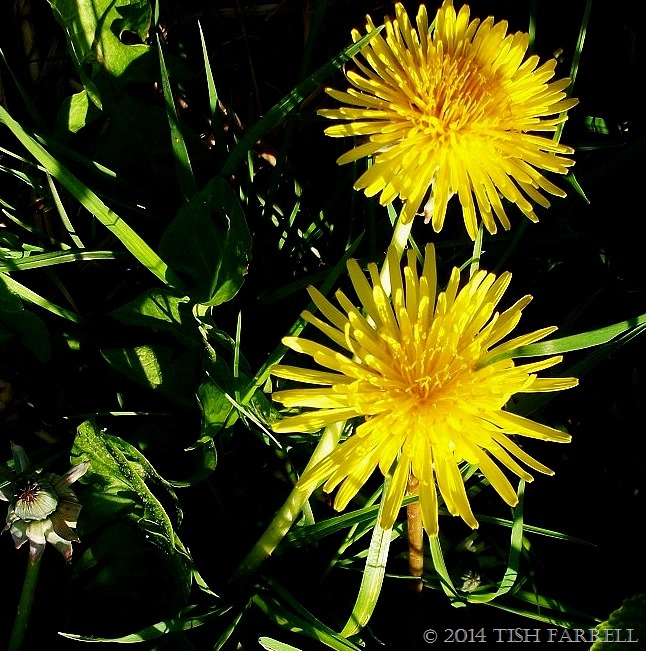
Mid October and the marigolds are still blooming up at the allotment. I love the way they simply grow themselves amongst my vegetables. In a mild winter they may flower into December.  It was also good to see this bee out and gathering pollen. These days, every bee is precious. Once we have killed them all with agri-chemicals, we can expect to starve. It’s as simple as that. My allotment empire has recently expanded – more of which in the next post – so I’m intending to grow more varieties of late and early flowering plants on my plot. Or maybe I should simply stick to marigolds, and let them grow EVERYWHERE. The flower petals are lovely in salads, and a herbal tea of marigold flowers is good for warding off flu. Simply looking at them makes you feel better. All that orange straight into the brain, lighting up the little grey cells as the days darken.

‘Happy Autumn’ northern dwellers.

100_4930


For more vibrant treats visit Cee’s Fun Foto Challenge

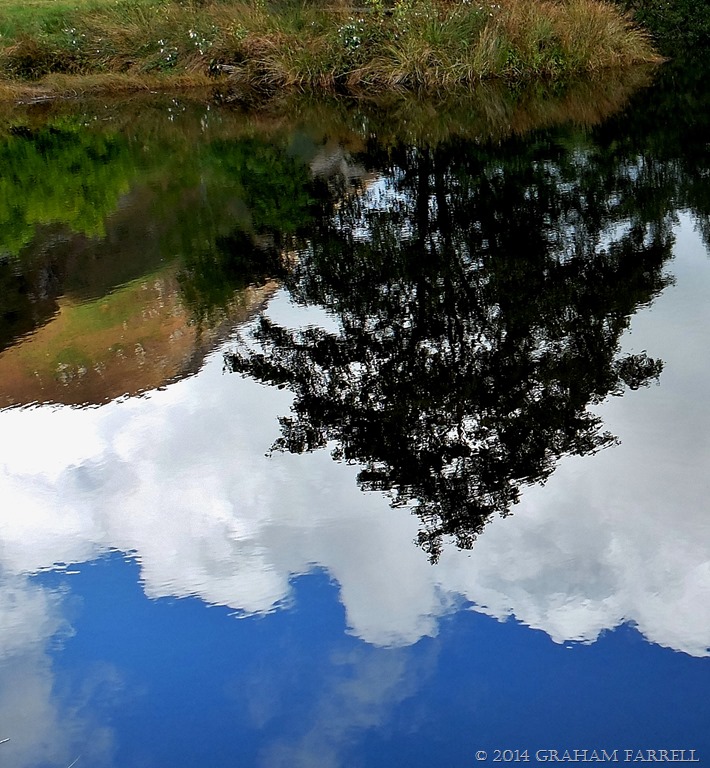
Refracted, reflected beneath Cadair Idris

Dolgellau 110

This photo was taken on a recent trip to Wales. On a sleepy October afternoon we took a stroll beneath Cadair Idris, one of Snowdonia’s most spectacular mountains. I wrote about the walk in an earlier post. You can follow in our footsteps here: Now that summer’s done, we take the Dol Idris Path…

http://www.visitwales.com/working-with-us

@visitwales

DP Photo Challenge

Oloololo Escarpment: Maasai Dreaming


Scan-140726-0002 (3)


Night on the Mara River – darkness wraps round, close as a Maasai’s blanket.  It is cold, too, on the river’s bend. We press closer the campfire, our white faces soon roasting red. No one speaks. There’s too much to listen for. A hyena whoops across the water?  It sounds close. It sounds unearthly, sending shock waves through vulnerable bones – mine, conjuring packs of predators, out there, circling our ring of light. And even as I think it the Maasai are on us.  Six warriors, spears in hand and naked to the waist.  Their leader tosses his ostrich-feather head-dress that looks like a lion’s mane.  He is fearless.  He is lion.

Then the singing starts, a nasal falsetto that resonates through time and space – the winds’ whine through Mara grasses.  The Maasai girls trip lightly into the firelight, their wraps like flames – yellow, red; close-cropped heads hung with beads; chins jutting forward as the crescent necklets – tiny beads so patiently strung – rise and fall on skinny chests.  The moran start to leap – higher, faster.

excerpt from Dances With Warriors © 2014 Tish Farrell

Continues HERE

Flickr Comments for more bloggers’ stories

DP Weekly Photo Challenge

Portmeirion: Pastiche in pastel?

100_4693

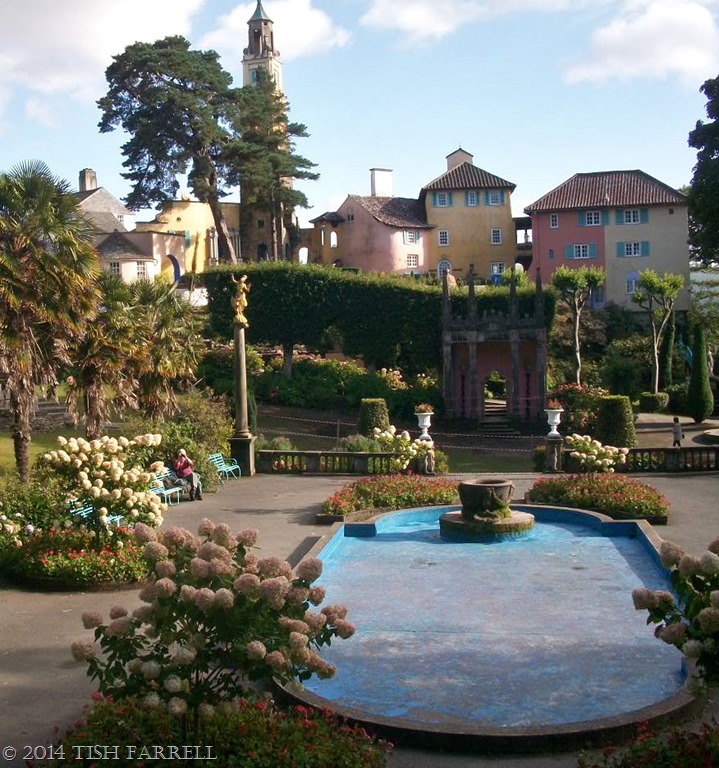
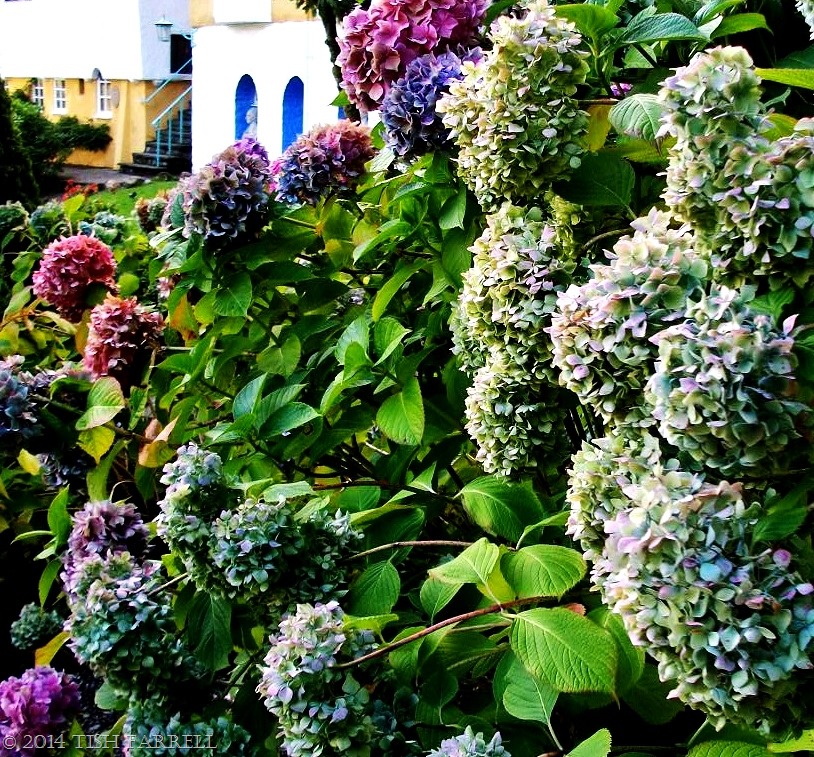
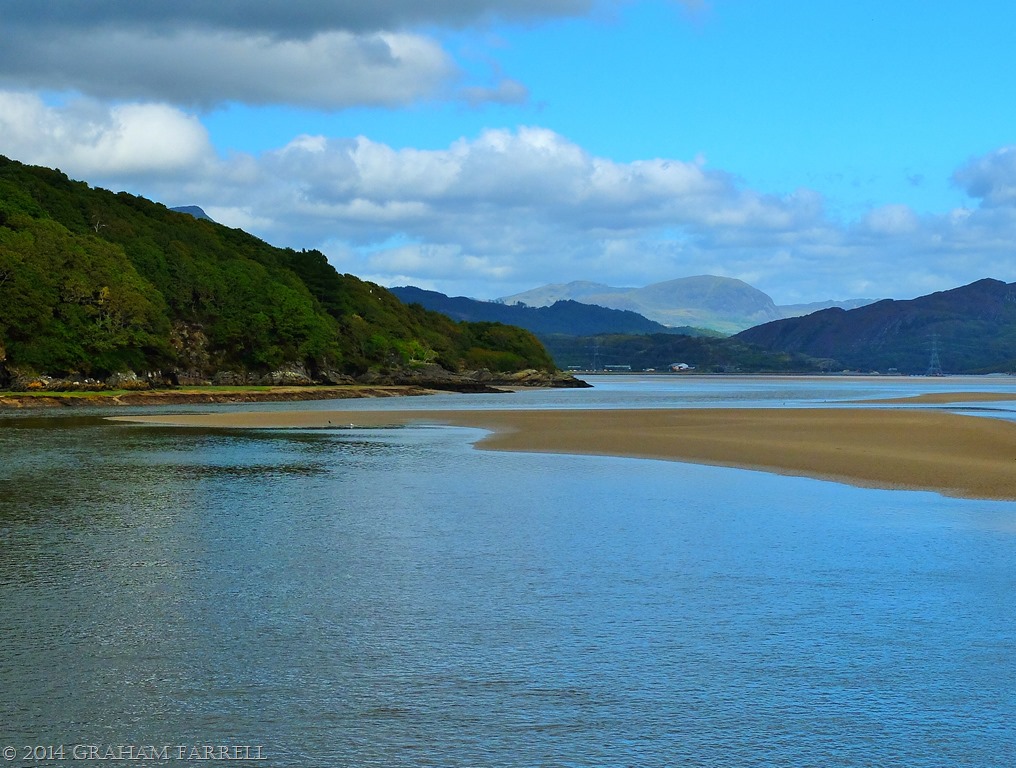
Cee’s challenge this week instantly conjured vivid childhood impressions – of Edinburgh Rock, those tartan packs of sugar sticks that delivered instant tooth decay in soft shades of lemon, apricot and rose; my long-lost, but once treasured set of Lakeland crayons whose red plastic wallet held so many delicious colours of mauve and blue, and Portmeirion, the Welsh cliff-top confection of architect Clough Williams-Ellis. All three come in colours that, even now, I long to bite into. Bizarre, I know. Anyway, I have already written about Portmeirion HERE. But now for some more soft-hued scenes of an Italianate village and its ever surprising setting on the rugged North Wales coast. It is a place that has fascinated me for fifty years. It is also the place where The Prisoner, the cult TV series of the late 1960s starring Patrick McGoohan, was filmed. Devotees still gather there. Curiouser and curiouser…(allusion to Alice in Wonderland fully intended).

100_4695

100_4715

100_4633

100_4716

IMG_0669

holiday 098

Cee’s fun foto challenge: soft pastels