Passing Glory ~ Three Old Roses

100_7676

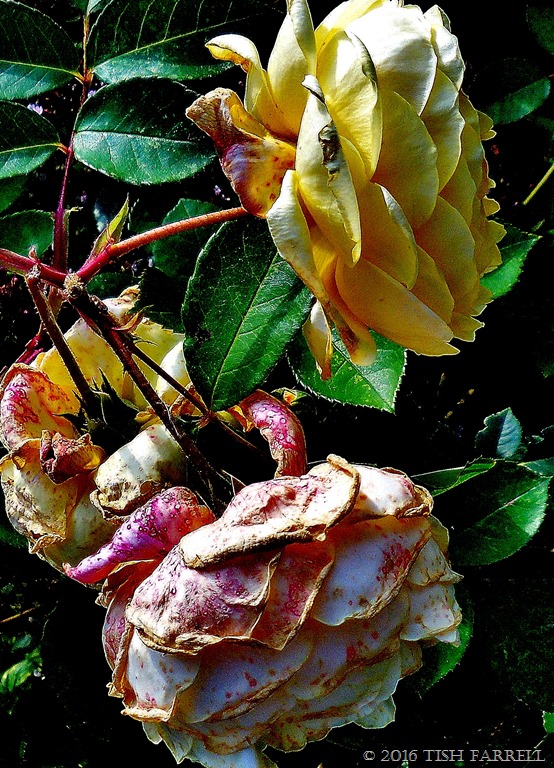
This lovely rose grows up the wall in our back garden. Please meet Gloire de Dijon, also known less picturesquely in English as Old Glory. It’s a cross between an unknown tea rose and Souvenir de la Malmaison, an old Bourbon rose, and was introduced to the world by one Pierre Jacotot in 1853. He lived in Dijon, France, a place also famous for its mustard.

When the rose is fully opened it has dense whorls of pale peachy-pink petals that change colour as they age. Their scent is mesmerizing – notes of clove and jasmine that transport me back to Zanzibar where jasmine sprigs were nightly placed beside our plates at the hotel where we ate dinner.

And once the roses have passed their best, even dead-heading them is a delight – crushing fading petals  between my hands, inhaling their last fragrance that also soaks into the skin, and can be smelled for hours.

Like Sue Judd at WordsVisual, I’m drawn to the aesthetic of decaying plant life. I think there is great beauty here – these lingering shades of erstwhile glory.

*

Thursday’s Special: Three of a kind

Please visit Paula to see her own lovely study for this challenge. And definitely go and see Sue Judd’s stunning daffodil study at the link above

Warning: Reptile Alert

100_6792

On several warm days last summer I found a slow worm sunbathing on our lawn. When I say ‘lawn’ I use the term loosely. There’s not much grass in it, only many buttercups, dandelions and even some dreaded ragwort.  Nor is this so-called worm a worm, or even a snake. And for that matter it is not slow. If it doesn’t like the look of you it can slither off at quite a pace. At other times it may pretend to be a bit of old rope, not very convincingly I might say.

Slow worms (Anguis fragilis) are in fact legless lizards, although this is possibly no comfort for those of you out there with a snake phobia. (Sorry, if you viewed this by accident).

That they are lizards is apparently proved by the fact they can blink their eyes and shed their tails when attacked. They grow up to half a metre in length, and may re-grow a shed tail, although it won’t be quite as long as it started out. Provided they are not caught by the local cats, who do not know they are dealing with a protected UK species, they live up to 20 years. They like old gardens and to burrow in compost heaps. And best of all, they eat slugs.

*

Until the first Sunday in April, Jude is looking for examples of garden wildlife at The Earth Laughs In Flowers

And thank you Anna at http://unavistadisanfermo.wordpress.com for nominating me for the 7-day nature photo challenge. As I’d just done this post on slow worms, I thought I’d start with it. Anyone who wants to take up the challenge from me, please do. The actual M.O. is to nominate another blogger to take up the challenge on each of the 7 days you post a photo. But since every likely soul seems to have already been nabbed, I’m following Gilly’s lead and throwing it open. In fact I think I’ll just link back to Anna who got me into this – because she’s lovely and takes some great photos around Milan. Please do visit her.

#7-dayNaturePhotoChallenge

February: In The Monochrome Garden

P1030162 - Copy (3)Petasites fragrans   winter heliotrope

These are the leaves of winter heliotrope, a November to February flowering evergreen that originated in North Africa, and is now considered a wayside weed here in the UK. It has a great tendency to spread and form carpets. On the other hand it does flower when other plants are busy hibernating.  Also the flowers – a fleshy, purple pink – smell of vanilla, and track the sun’s course during the day. And all I can say to that is, this year winter heliotrope must have really had its work cut out. Sun. What sun?

Sometimes the plants make no flowers at all. There were certainly none to be seen on this clump, but then it was growing in deep shadow. The other fascinating thing is that the male and female characteristics appear on entirely separate plants, and it is usually the male flowering variety that we see in the UK.

I must also confess that I’ve learned all this just now. When I took the photograph yesterday in the gardens of Benthall Hall, I thought it was butterbur, a plant that grows in like fashion and has many other similarities of leaf and flower.  It was only when I was editing the shot, that I noticed the leaves looked too smoothly rounded and heart-shaped for butterbur. Next came a quick check on Google, which in turn led to realizing that this was an entirely new plant for me. So thank you, Jude, for setting this particular challenge – and the proposition of using both monochrome and looking for patterns in our chosen garden subject. It was the heart-shaped leaves that attracted my attention. I thought they would make a good design for Valentine’s Day.

For more about this challenge, please go over to Jude’s garden photography blog:

February: Monochrome

And now here is a shot of Benthall Hall, caught before a squall sent us scurrying to the car. P1030167

This sixteenth century home of the Benthall family is just a mile or two up the road from my house in Wenlock. The land on which it stands was once part of Wenlock Priory’s extensive domain, but now the house and grounds belong to the National Trust.

I hadn’t visited the house for years, and this weekend was its first opening of the year. For me, one of the property’s  most fascinating stories is the fact that in the late nineteenth century, the plant hunter, botanist and co-founder of Maw & Co, the world famous decorative tile works, George Maw was a tenant. He planted the gardens with his botanical treasures, and in particular crocus of both the spring and autumn varieties. Botanical images of course inspired many of the Maw’s tile designs that graced public buildings across the world during the Victorian era. Today part of that heritage, including original design catalogues, is on show not far away at the Jackfield Tile Museum in the Ironbridge Gorge. It is well worth a visit if ever you are in Shropshire. But one thing is certain, we will be back to explore George Maw’s garden as the year progresses. Please expect further reports.

copyright 2016  Tish Farrell

Winter Garden From My Window

P1030045

It’s the final week of Jude’s Winter Gardens challenge over at The Earth Laughs In Flowers. This, then, is the view of my garden captured on Saturday afternoon. It’s as much as I’m prepared to show you at the moment, so dreary is it after weeks  of rain. Also there was a definite lack of gardener-input in the autumn. Things just kept on growing and it was hard to know when to chop them back.

So they didn’t get chopped, and the place now has the look of a garden version of Miss Haversham’s attic. But you may just spot (in the bottom right hand pane) a small clump of tete a tete daffodils. Even they  aren’t planted, but are sitting on top of the soil. They were tipped out of a pot bought last spring, at which point I had every intention of re-planting them. Oh well. Neglect hasn’t stopped them thriving. They started flowering at the end of December.

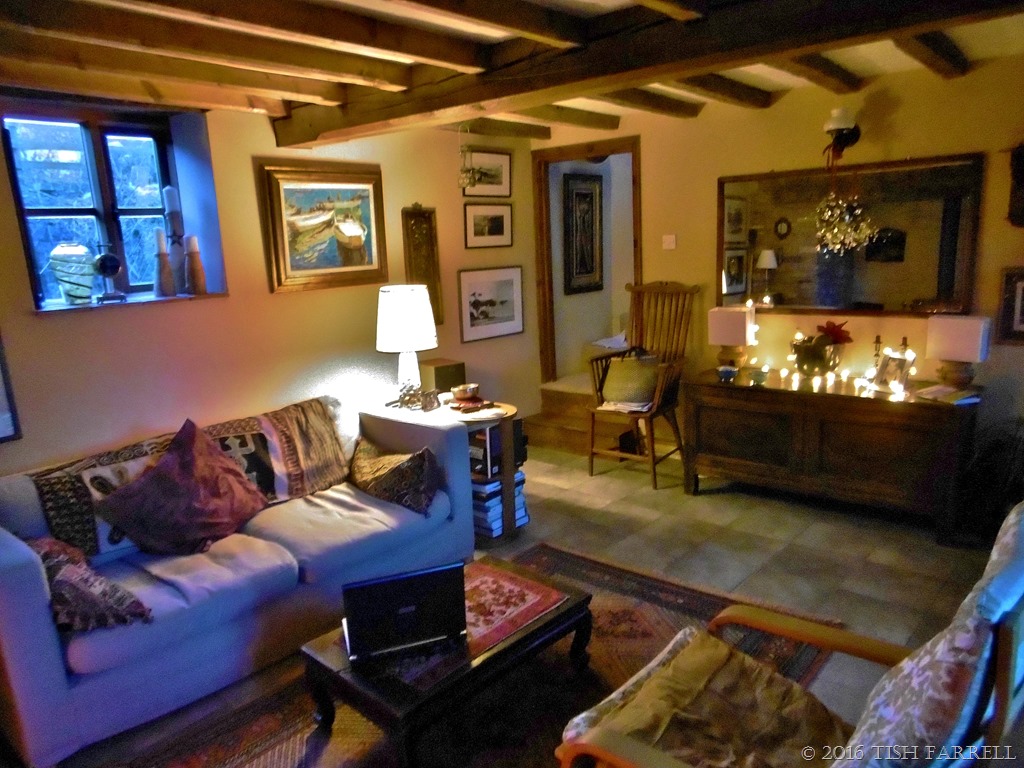
I have to confess that I’m a fair-weather gardener, at least where dampness is concerned. And it really is too cosy indoors. Also unlike the garden, the house is now clean and tidy, which was the real reason I took the first two photos – to document that tidiness is possible. And I’m sharing the proof with the world in an attempt to stem backsliding tendencies.

P1030043

But housework and fair-weather gardening aside, I am getting twinges of planters’ itch. My first delivery of vegetable seeds arrived earlier last week – all those crisp packets of pent-up potential, and now it is February. Hurray! Time to sow the peas and leeks in the allotment polytunnel, and start off the aubergines and sweet peppers at home.

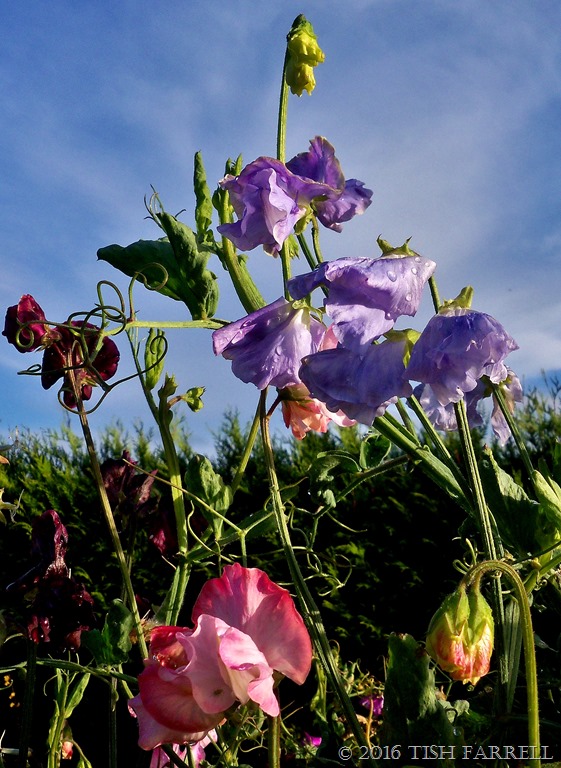
And talking of sweet things, my first sowing of sweet peas on the kitchen window sill is already sprouting. So apologies to Jude for not quite sticking to the winter garden plot. I’m  finishing  this post with thoughts of summer, and deliciously scented blooms to come. And I know she won’t mind because she knows very well that it’s forward-dreaming that keeps gardeners going through the long winter season.

100_7878

copyright 2016 Tish Farrell

Well Hello Hellebores!

100_8773

100_8774

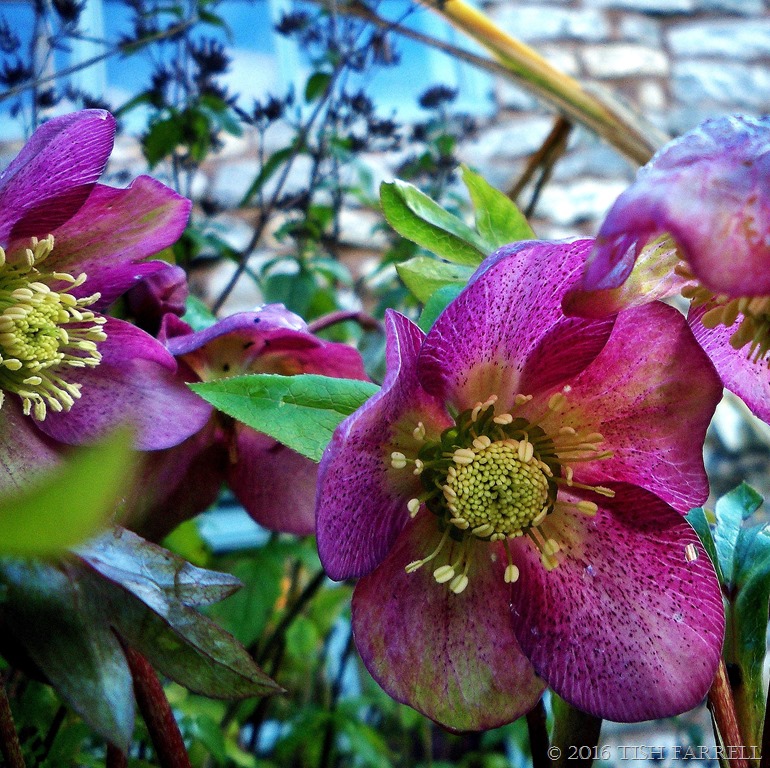
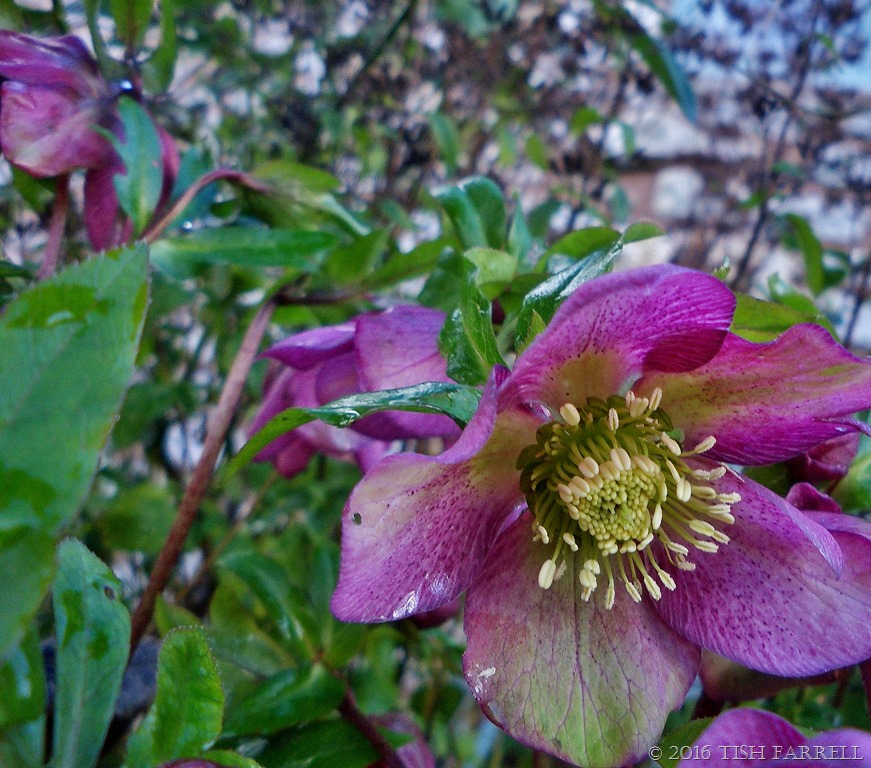
Show us your hellebores, said Jo at Restless Jo – this in a chat about Jo’s last week’s hellebore post which she linked to Jude’s new  Winter Garden  photo challenge. And so thinking to oblige, and in between sleet and rain, sleet and rain, and more rain and rain,  I dashed out into the garden with the digital camera only to find the currently flowering hellebores in most reclusive mood. They all had their heads determinedly earthwards as in the next photo:

100_8776

And so the only way to capture the first two shots was for me to stand on my head, and send the camera underneath on macro setting, and press. The whole enterprise was totally discomposed, and what’s more, it had started raining AGAIN. But then that’s winter in the garden for you. Anyway, despite shooting blind I’m quite pleased with results – sort of candid-camera shots of shrinking violets hellebores.

For more bloggers’ winter gardens please visit Jude over at The Earth Laughs In Flowers blog.

January: Winter Garden Harvest

P1020995

Yesterday, after several days of rain, I trudged, stick in hand, clad in big hat and waterproof – (looking a bit like Gandalf, I thought, but definitely without any concealed fireworks) along a very squelchy field-path to the allotment. To say the plots are not looking their best is an understatement. All seemed dank, dreary, waterlogged, weedy, and downright dismal, and certainly not worthy of a photo – not even a moody, atmospheric one. BUT there was produce, much of it still thriving in the mild, wet weather. So here we have it – on the kitchen table my winter harvest, a humble ‘still life’ tribute to the Flemish masters who created such scenic wonders out of lemons, melons and grapes. And also inspired by Jude who kindly said we could interpret her winter garden challenge any way we liked.

So please pop over to her garden photography blog for more Winter Gardens

The Cotehele Christmas Garland

P1020954

Even on the dreariest, dankest of days Cotehele is a magical place. For nearly 600 years this medieval-Tudor house was the home of the Edgecumbe family who aquired it through marriage in 1353. In 1947 it passed into the ownership of the National Trust in lieu of death duties.  Naturally, December is not the best time to visit, not if you wish to see the main house, or wander in the gardens. But from mid-November to 31st December Cotehele does have one very special attraction that makes it well worth the trip up winding, narrow lanes and into the mysterious Tamar River hinterland.

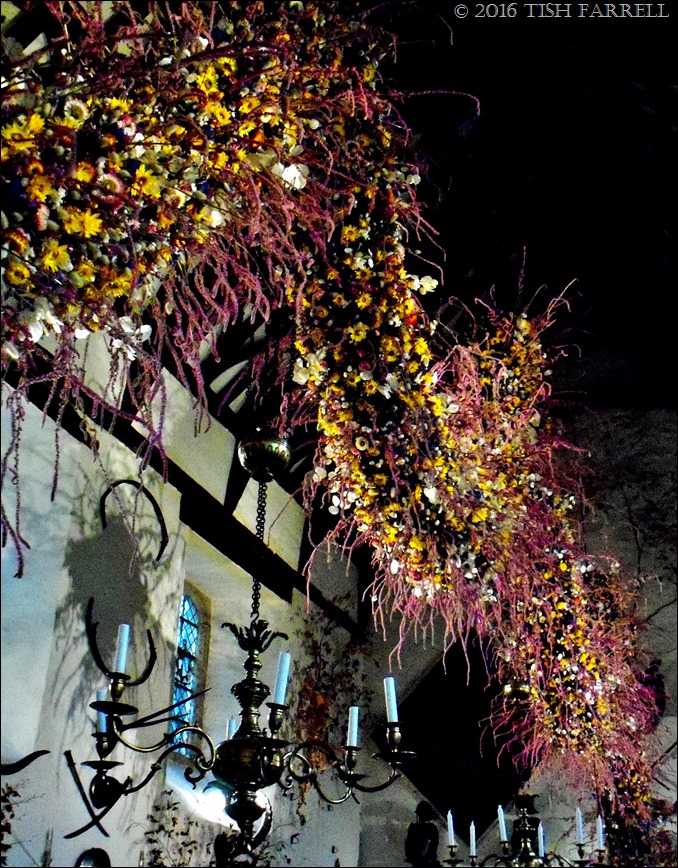
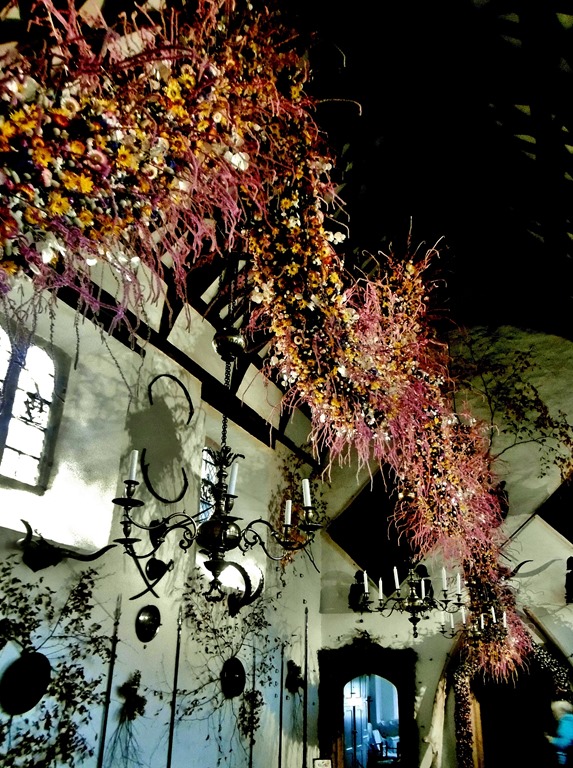
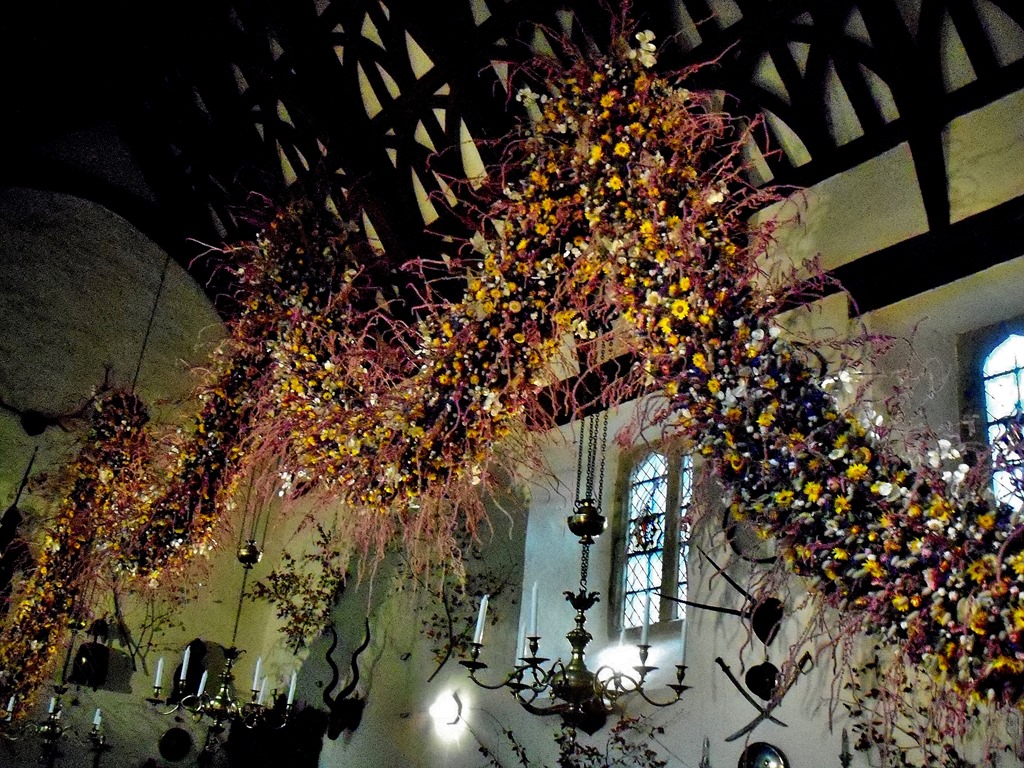
Every year in the Great Hall, and with a log fire flickering in the grate below, an epic swag of dried flowers is hung from the rafters to brighten the festive season.

The garland comprises one hundred feet of rope dressed with 46,000 dried flowers, all of which are grown on the Cotehele estate.  When you step into the Hall there is the faintest scent of summer hay, all of which puts one in mind of old English Hardy-esque midsummer relevry, and brings on a fit of nostalgia for the rustic yesteryear that probably never was.

But it does not matter. As invented traditions go (and the notion for it began in 1956), the garland is beautiful, and a darn sight more picturesque than that other English invention of similar vintage – the Ploughman’s Lunch that is still found lingering dolefully on most pub menus.

The garland takes staff and volunteers two weeks to construct. The base is made up of cuttings from 60 evergreen pittosporum trees. Added to these are statice, grasses, helichrysum, pink pokers, xerochrysum, acrolineum and helipterum. The whole creation lifts the spirits, and in the darkest days of the year, what more could one ask for, that and a delicious bowl of homemade soup in the National Trust tea room?

100_8667

100_8661

100_8686

Cotehele Great Hall

copyright 2016 Tish Farrell

Turn of the year in my garden ~ Bench Series 50

P1020222


This month Jude at Travel Words is giving us a free hand with our seating arrangements. Please hop over to her place at Bench Series #50 to take part in the challenge and to sample other bloggers’ seats of fancy.  My entry, I confess, is rather off-beam bench-wise, but it summons a sense of its place in my garden scheme of things. The bench itself is not very exciting to look at in real life, but it is a good place to sit. From it you can look out on our bit of guerrilla gardening behind the boundary fence, at the the field and the footpath beyond, and thence up at the big sky over Wenlock Edge. Back in the summer, as I came up the path from the allotment, I would  often find Graham sitting there, waiting to see what I was bringing home for supper. So yes. A good place to simply be.

copyright 2015 Tish Farrell

Life, the universe and everything: all is (extra)ordinary

100_7579

I whinged a lot during the year about this and that at the allotment – too much wind, too much rain, not enough rain, not enough sun, too many slugs, an invasion of dandelions and buttercups, too little compost, but even so – yes, even so – I have had a magnificent harvest, and it has made us, along with a few friends and relatives, and many of Graham’s workmates very happy.

Excess runner beans have been recycled into a surprisingly delicious piccalilli-type chutney; cherry tomatoes have become tomato chilli jam, or Chillied Out Tom, as Graham named it when making the labels. I’ve made only a few pots of ordinary jam since we do try not to eat much sugar – raspberry, strawberry, damson, and we have a freezer full of field (fava) beans that I’ve discovered convert into the most delicious bean hummus if, after cooking, you relieve them of their skins, and add lemon juice and garlic.

Today, over half way through October, and I am still picking peas, carrots, beetroot and courgettes, and the last of the summer lettuce. Then there are the winter crops coming on: various kales, leeks, caulis, cabbages and Brussels sprouts. This week, too, I’ve been making a new strawberry bed, planting out Elsanta, and Alice varieties, and ordering a few Flamenco which are ever-bearers – fruiting from spring to the first frosts. Then there were overwintering onions to put in, Radar, being a reliable variety, and also garlic beds to make.

I have routed the tomato jungle from the polytunnel apart from a few plants, and it’s a relief to see some space. While I was doing this I came nose to nose with a large toad, which was very pleasing, once we’d got over being scared of each other. Eat more slugs, please toad. I’ve planted out the tunnel’s raised beds with winter salad stuff including purslane, winter lettuce, bunching onions, chard and lamb’s lettuce. I’ve sown a few seeds in there too, just to see what will happen – some herbs, rocket, and various Chinese leaves and mustards. As it gets cooler I will cover those that emerge with fleece.

Otherwise, it’s been all systems go, tidying the plot. This afternoon I was taking down the runner beans and their canes, and digging over the bed, but I was doing it to the heady scent of sweet peas that are lingering on. I also have some jewel coloured nasturtiums growing in the corner of the polytunnel. They smell delicious whenever I open the door, and of course you can eat every part of them – flowers, leaves and seeds, so I’m hoping they’ll keep going into the winter.

There’s just so much to be grateful for in this extraordinary world of ours, though we’d do well to nurture it a bit more so it can continue to nurture us.

100_6937

(Extra)ordinary