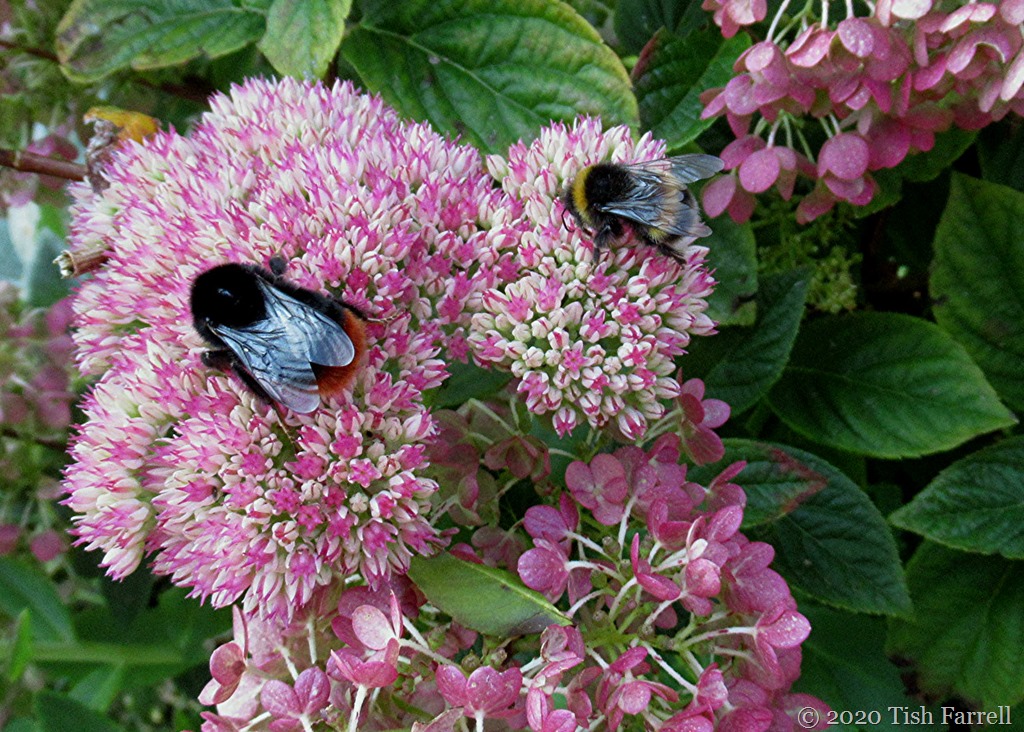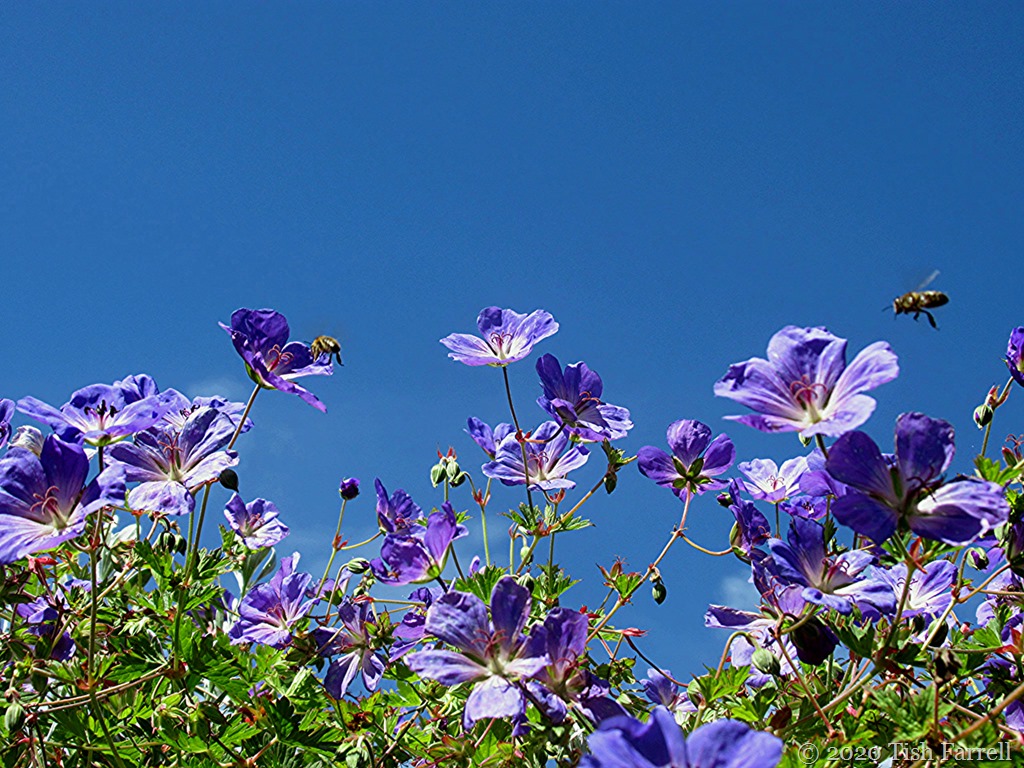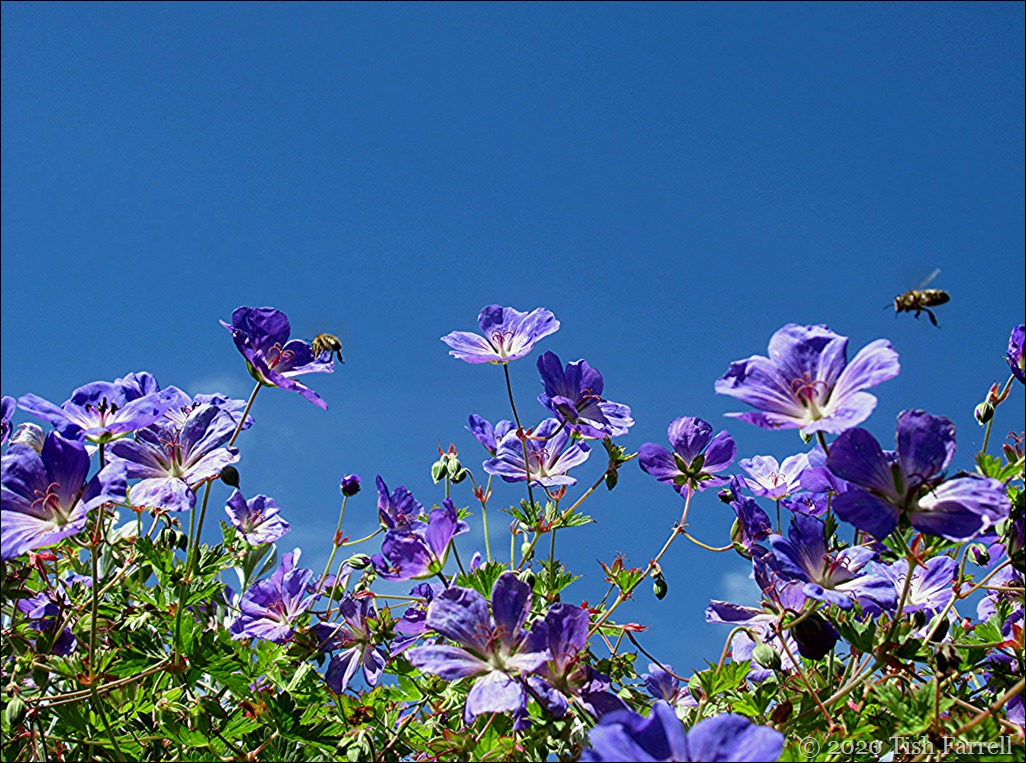
Late summer sedums provide essential nectar for bees as they stoke up for the winter. The plants are easy to grow, tolerate gardener’s neglect and low rainfall, add splashes of welcome colour just when other flowering plants are fading, and best of all, provide us with the gently humming company of bees. Bee-lissful!
Gardens
Knowing Our Onions…
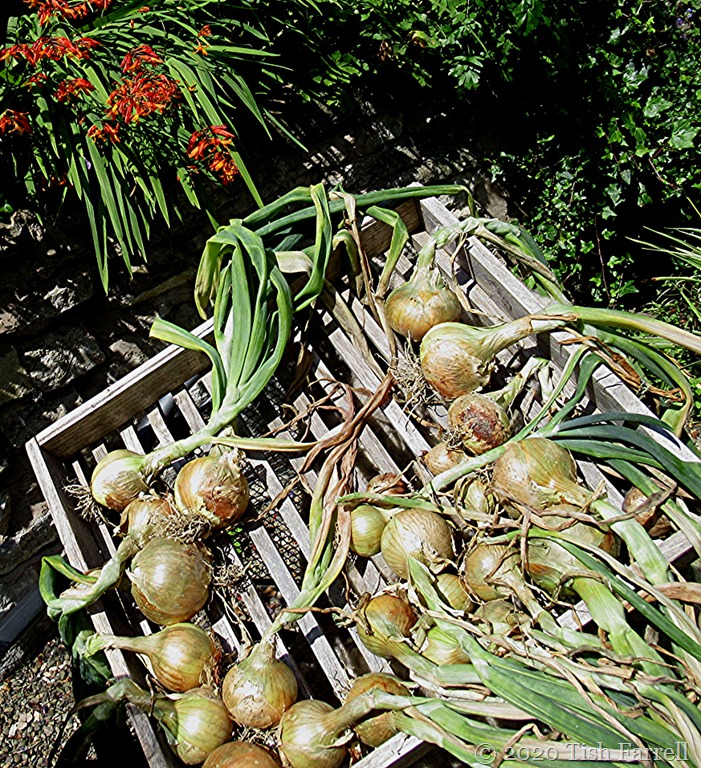
…and a fine piece of domestic cooperation: Sturon onions grown by me in allotment raised beds, then neatly strung up by he-who-builds-sheds, though only after an online refresher course on how to do it. Anyway this is the sum of my onion crop, organically produced, planted out as sets in March and harvested at the beginning of August. You could call it pandemic produce, though I’d rather not, as at present it appears to be wholly disease free.
Sturon onions anyway are supposed to be good keepers. On the other hand, onion consumption in the Farrell household is so considerable, they will probably not last long. A field full would better cover a year’s culinary requirements. Still, when we’ve eaten these, there will be the leek crop to start on. That should see us through to spring when hopefully the world will not be so demented.
Lens-Artists: Creativity in the time of covid This week Tina at Travels and Trifles has set the challenge. Please go and see her very lovely photos.
Bums Up ~ Just Another ‘B’ Movie
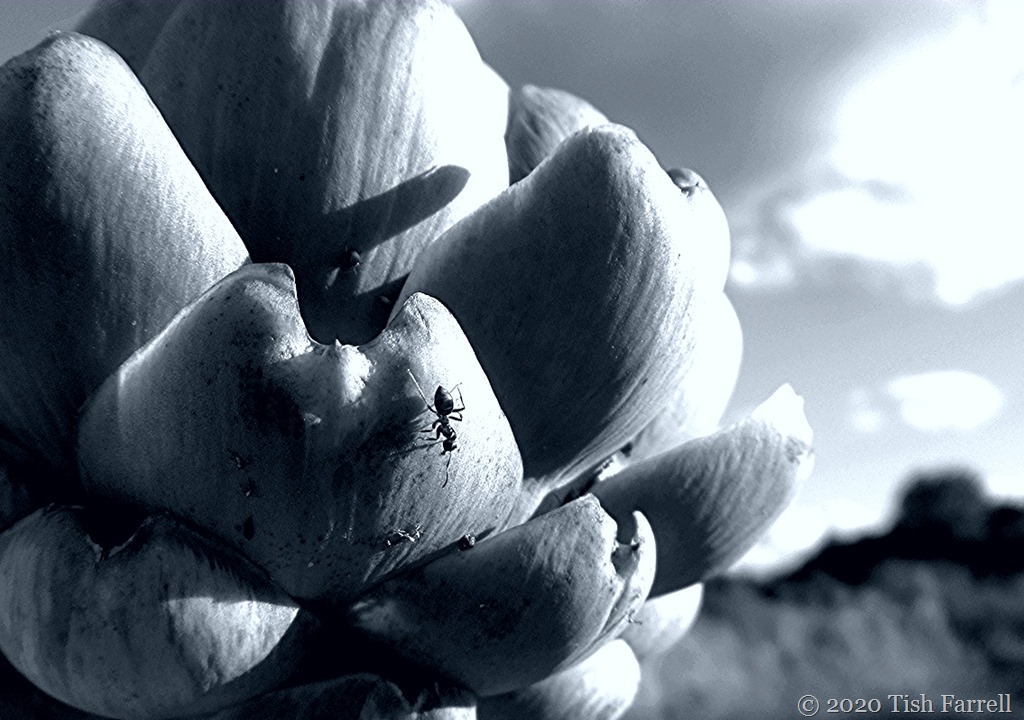
Up at the allotment a few evenings ago: much feeding excitement in an artichoke flower.
Today In The Garden ~ Dinner Rush
The Changing Seasons ~ July 2020
The last day of July and it’s HOT! And rather a shock to the system. For much of the month, the Edge has been cloud-bound with low light and at times even chilly. Every now and then I’ve grown confused and thought it must be September. The wheat in Townsend Meadow is already looking overdone. (So soon!). The vegetable plots seem confused too. Many plants, especially the climbing beans, seem to have gone into a trance – as if they’ve given up before they’ve hardly begun. But then it’s a sign of the times, if not the status quo – confusion.
And at least the potatoes and onions have remained steadfast and productive. There should be tomatoes soon too. August also comes with fresh cultivating possibilities. I’ve been preparing to sow Chinese greens, endives, spinach and Swiss chard for the autumn and winter. Maybe some carrots too – the stubby little Paris Market variety, which can be sown late. And then when the potatoes are harvested it will be time to sow over-wintering green manures: mustard, annual rye and field beans. So the round of soil nurturing continues. It’s all part of a process of extending gratitude for keeping us Farrells, (friends and neighbours too) well nourished. We seem to be keeping the insect world pretty well fed too.
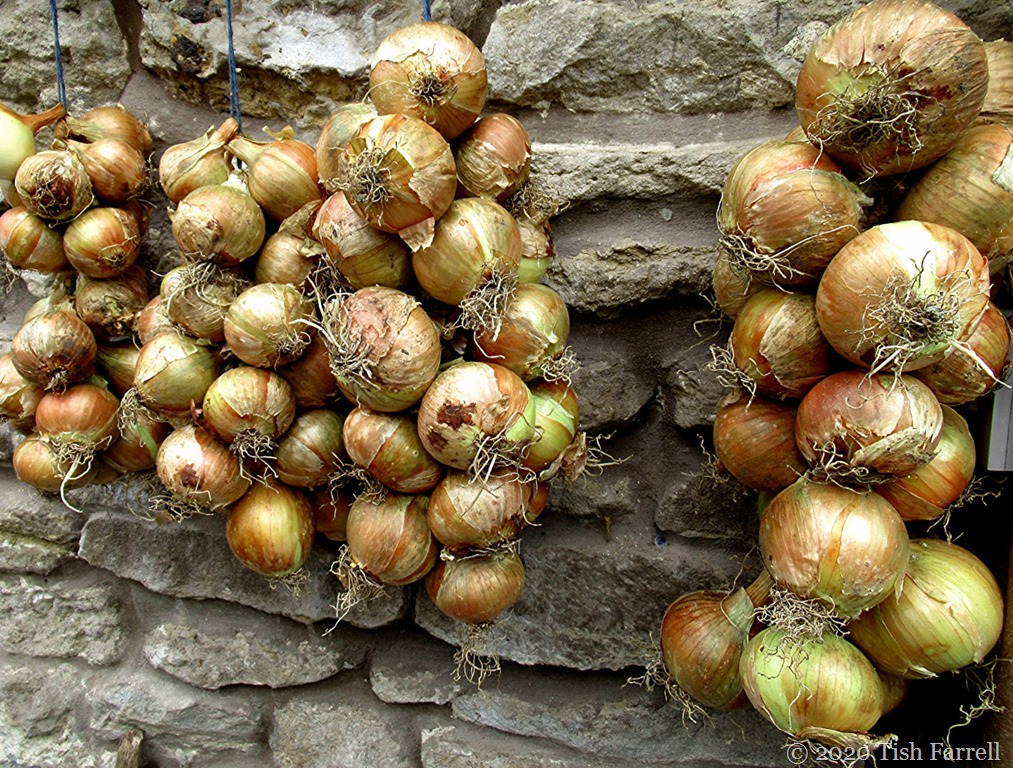
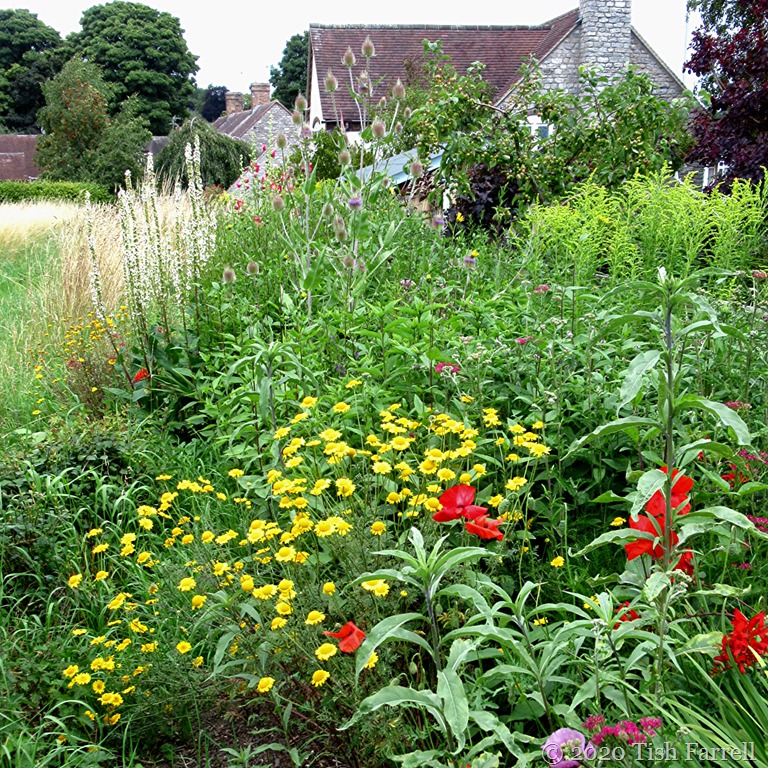
Now for scenes from the gardening fronts. On both sides of our garden fence the yellow helianthus and golden rod are bursting forth among the hot reds, pinks and purples. It’s a gaudy scene, and though I don’t care for the colour of the pink phlox, in the present heat wave it smells wonderful – a sweet warm meadowy scent. Meanwhile up at the allotment, the communal fruit trees are already showing signs of prodigious production, and I’ve brought bundles of very fine onions home to dry:
Some Peacock Perspectives
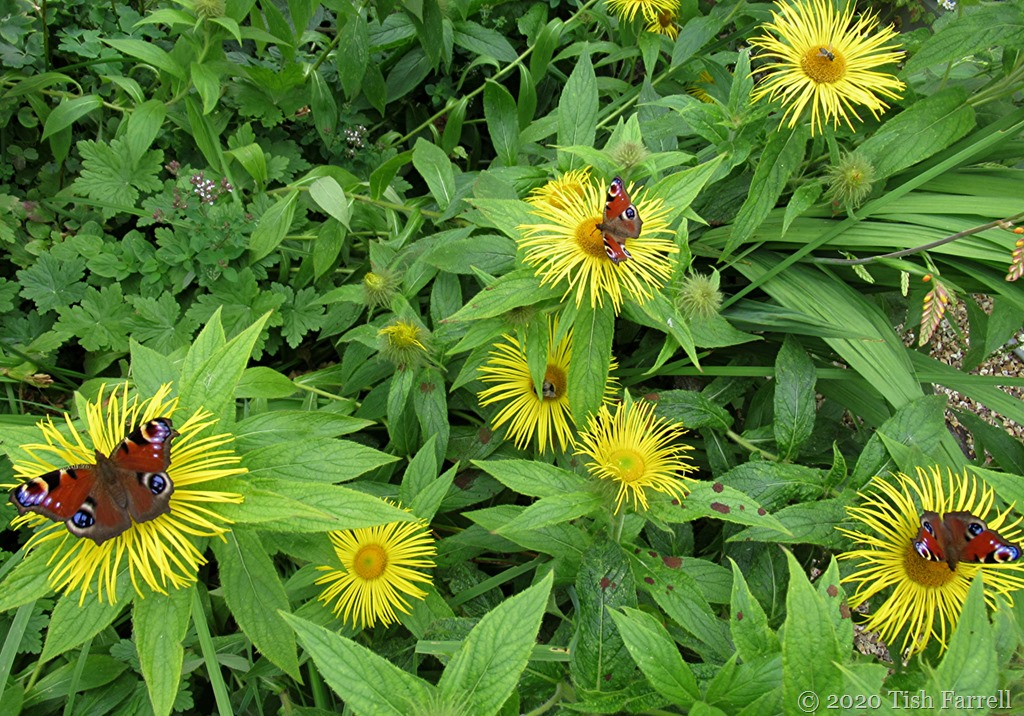
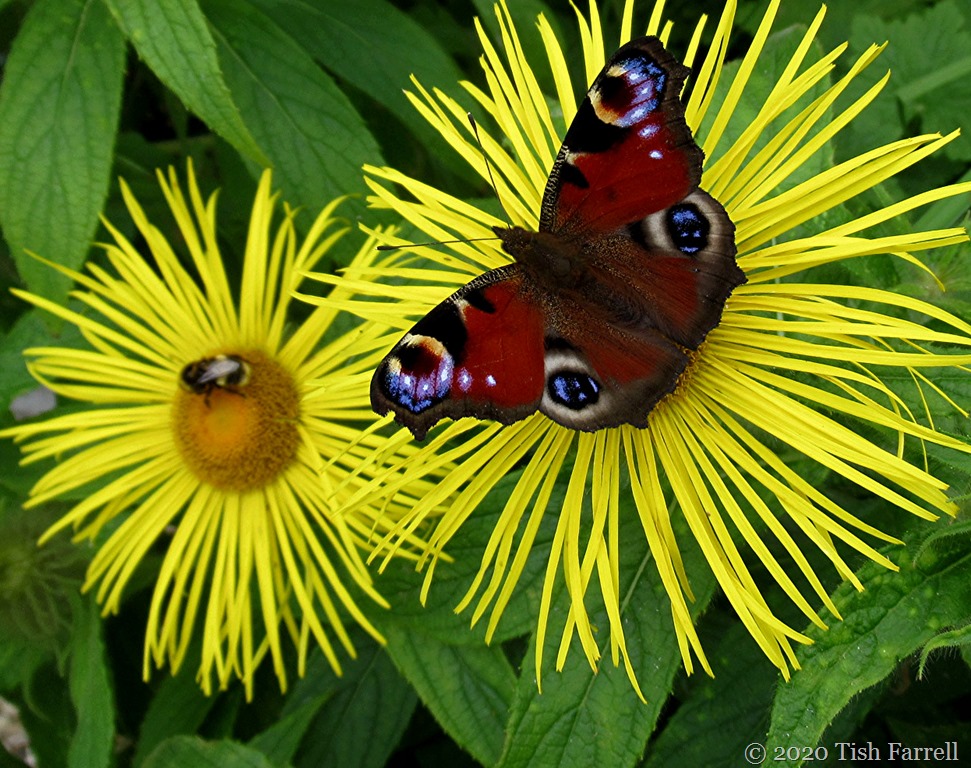
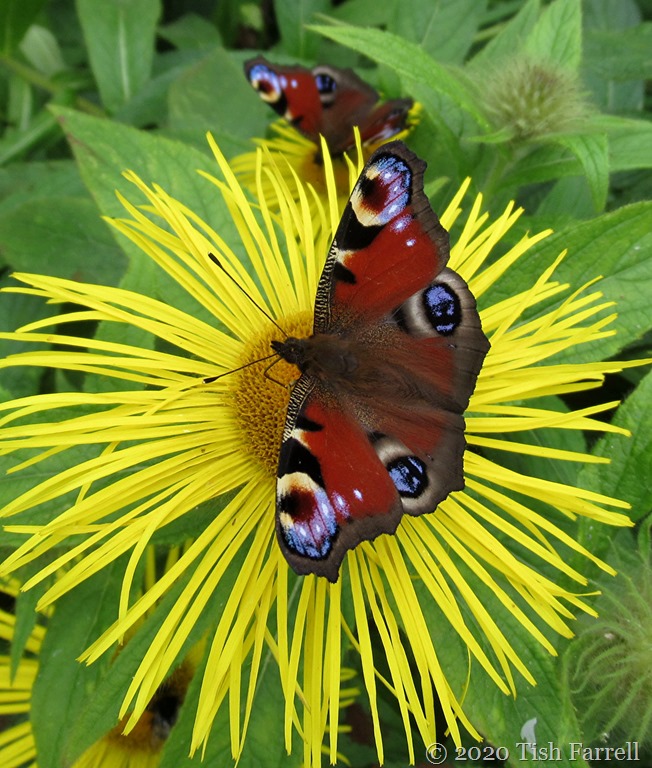
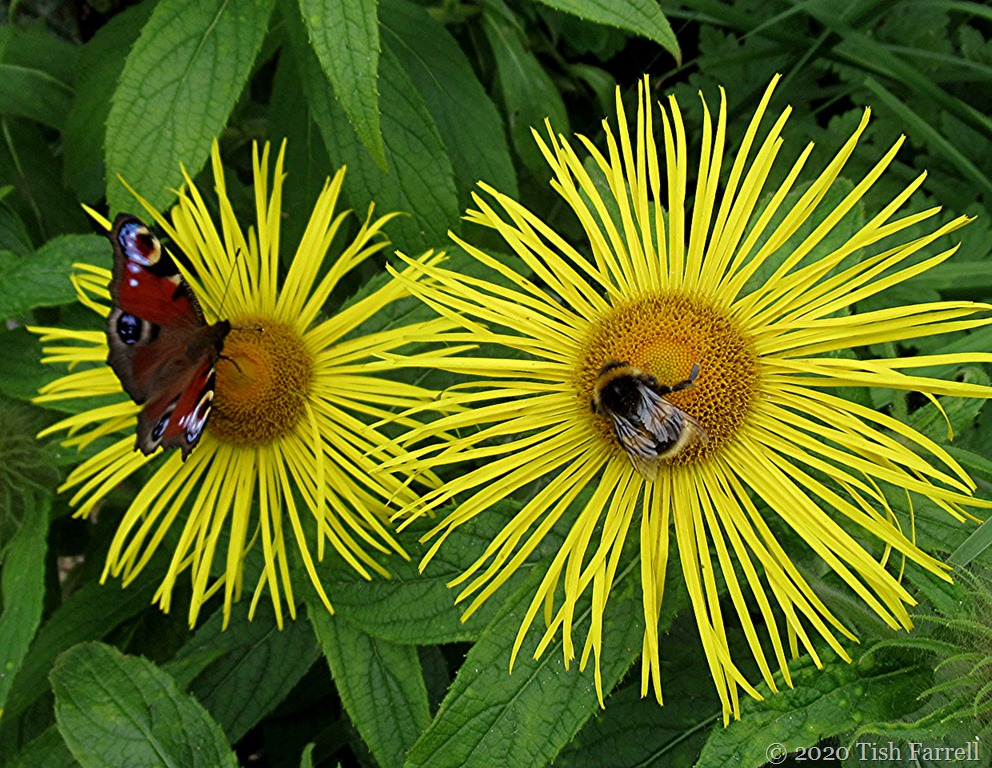
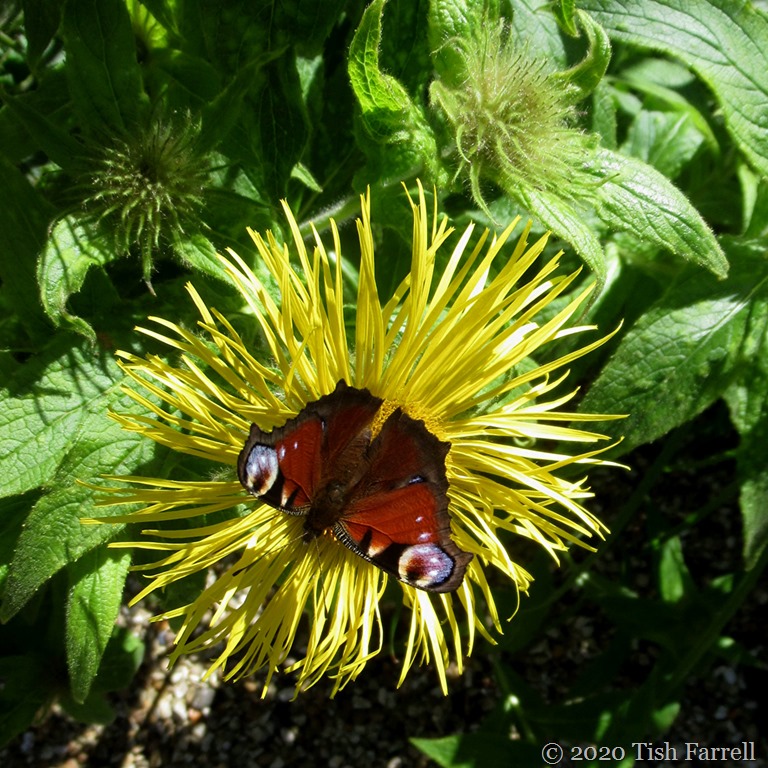
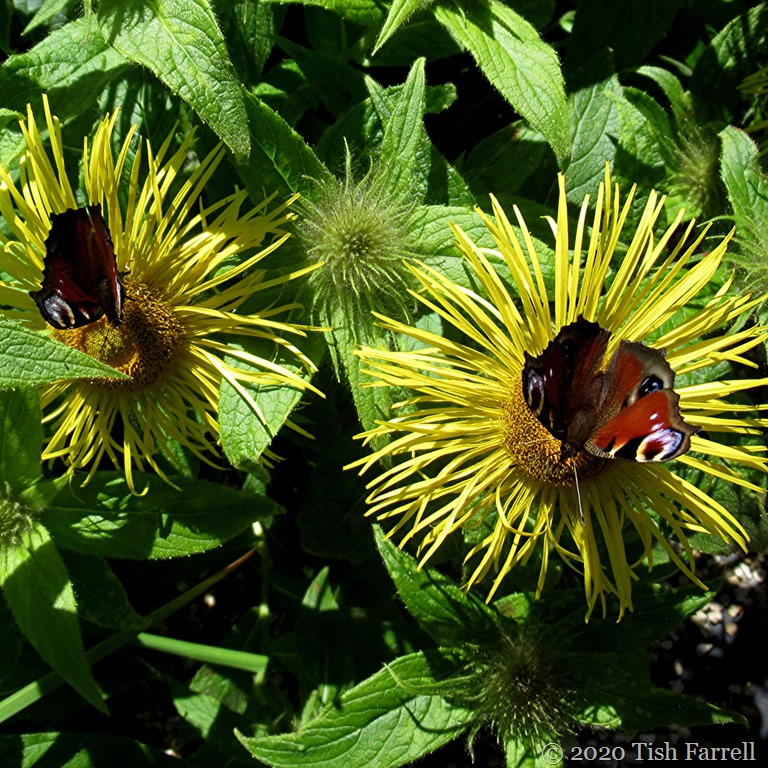
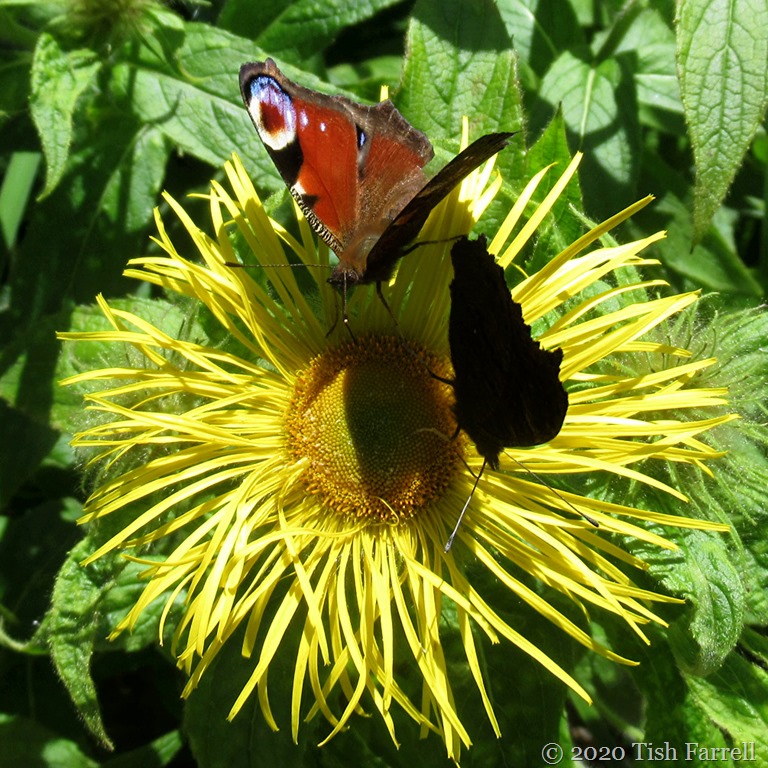
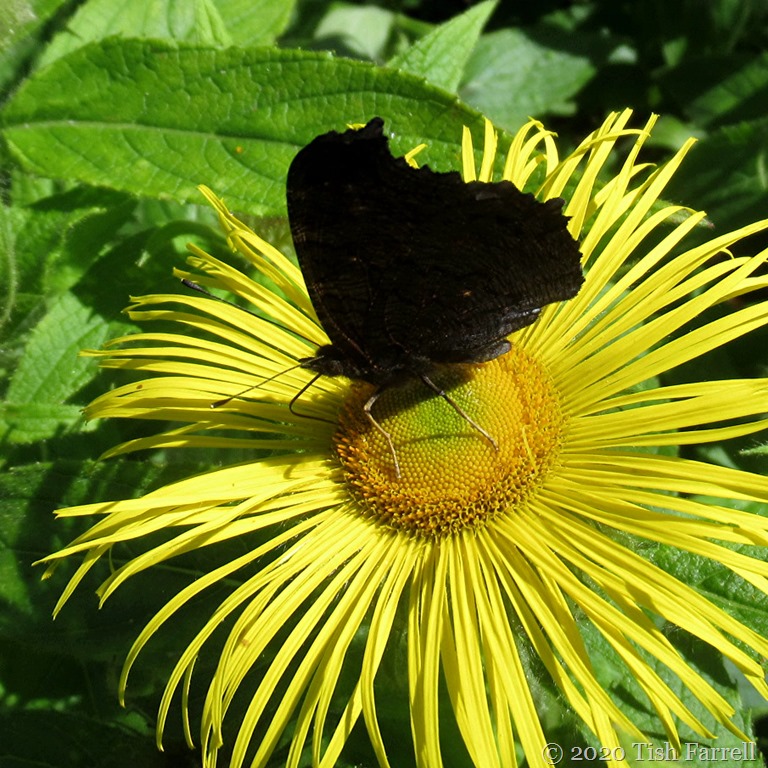
Today in the Sheinton Street garden we have both sunshine and warmth, elements that have been lacking so far this month. And so amongst the Doronicum we also have a profusion of peacock butterflies, sip-sipping like mad at the tiny compound flowerlets. I watch them as I hang out the washing – the survival imperative played out before our very eyes.
A Prickly Perspective
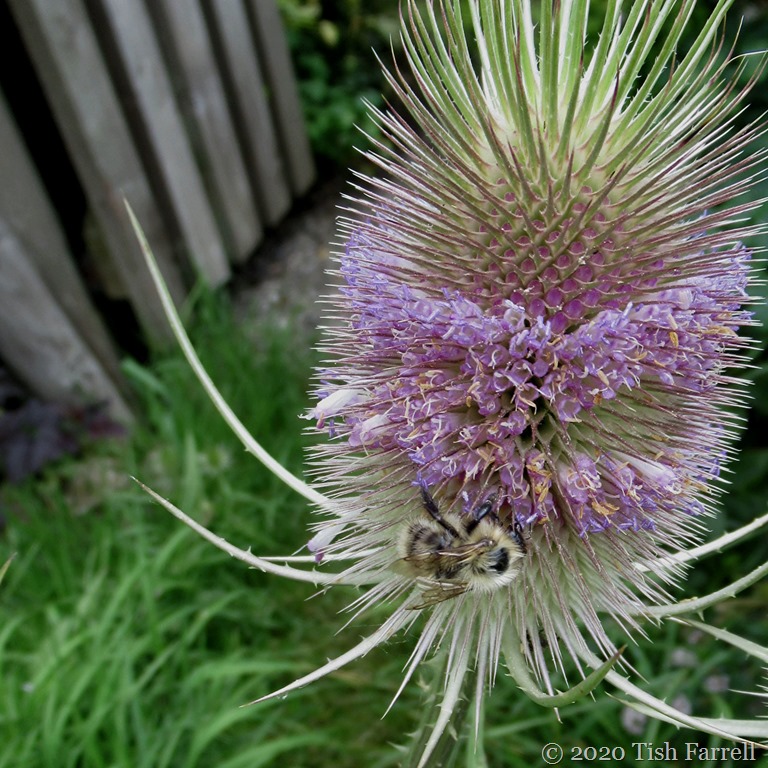
This thistly entity is a teasel flower. It is borne aloft a magnificently statuesque plant most often to be found on waste ground. It seeds promiscuously and every part of the plant is prickly. In past times some of those prickles were put to good use. The dried flower heads were split and pinned to a cruciform structure, called a teasel cross or card (a bit like a table tennis bat) and used in the weaving industry to raise the nap on finished cloth.
There are photos and more information HERE.
I’m sorry I can’t tell you what kind of little bumble bee this is; the ID charts defeated me though my best guess is a carder bee. (Which would be appropriate). I anyway like the way its colour scheme ‘goes’ with the teasel’s ashy tones. I also admired the way it picked its way so gingerly through the spiny elements to reach the nectar in the tiny segmented florets.
This scene was captured over the garden fence in the guerrilla garden, where all is presently thriving. Here is a field-side perspective with the teasel bringing up the rear. I transplanted it as a seedling found on an abandoned allotment plot. I might just regret the introduction, but for now it’s looking rather splendid.
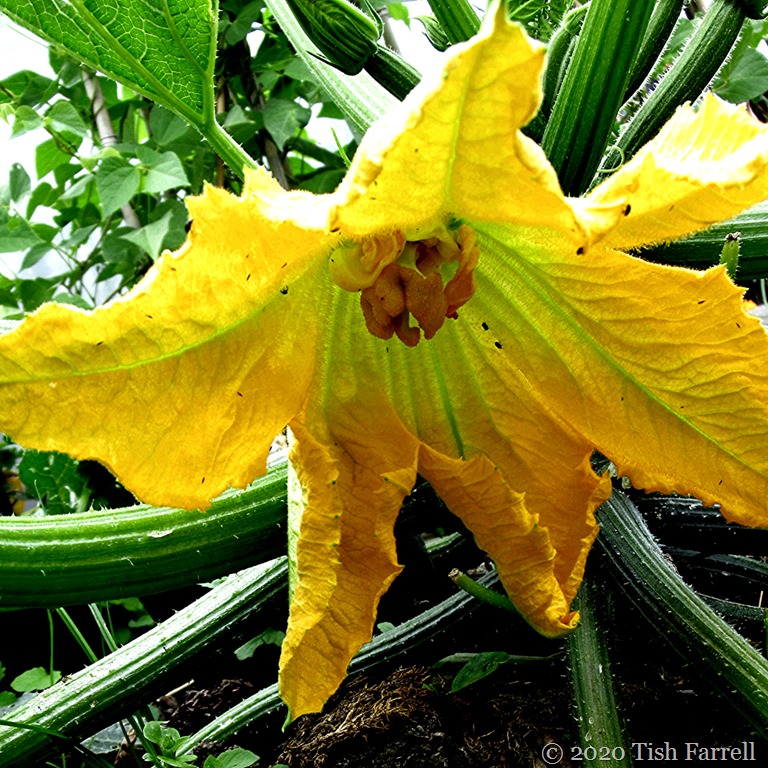
Zucchini ~ The Prequel
Wild Wild Eating
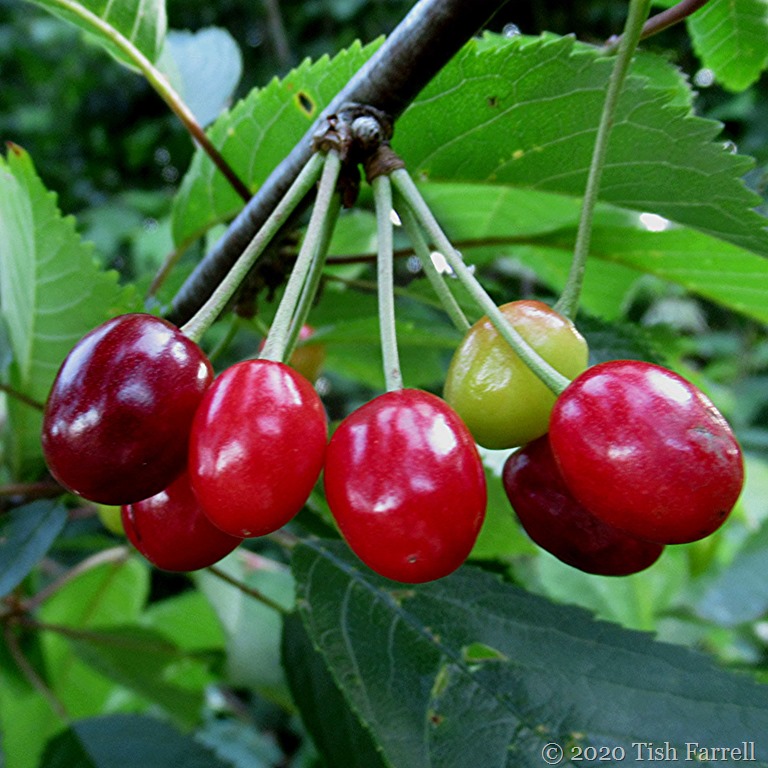
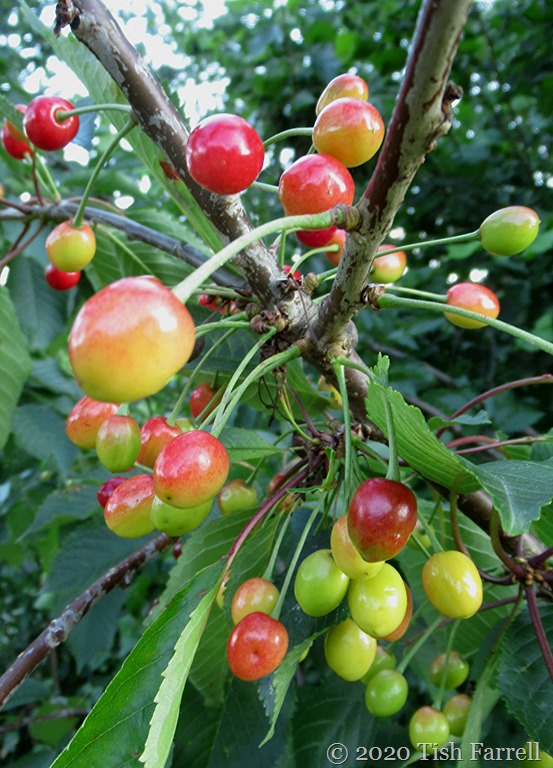
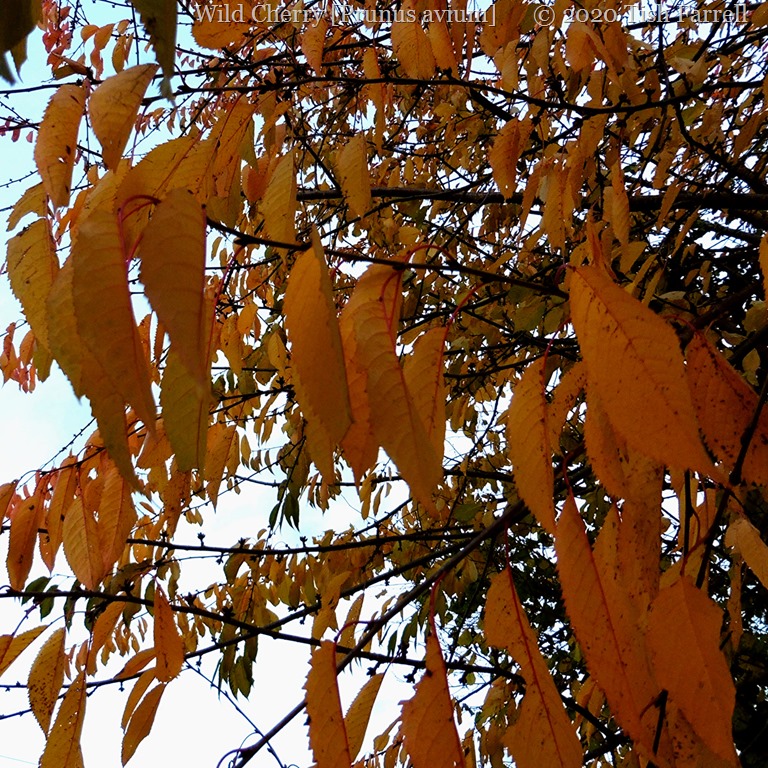
There’s a little ‘copse’ of wild cherry trees (Prunus avium) in one corner of the allotment. Most years I scarcely notice the fruit. The cherries are usually less than half the size of a cultivated cherry, and more stone than flesh. But this summer there has been a magnificent crop, and I’m afraid I’ve been grabbing handfuls as I pass, stuffing them in my mouth, and spitting out the stones willy-nilly. Delicious, but most uncouth, and doubtless my regardless foraging activities will give rise to a whole new forest.
And why not? These native British trees are very beautiful; quite stately in habit and tall with handsome chestnut coloured trunks. Hitherto my dealings with them had been confined to autumn when I go and rake up the leaf fall to make compost. And what a golden harvest it is. The leaves are very lovely; so much so, I often feel they should be edible too. I have yet to try them. In the meantime, the Woodland Trust has more to say about the Wild Cherry.
Thought For The Day: Even An Ant May Cast A Shadow
Friday evening at the allotment: the ant and the artichoke.
Please visit Thom at Writing Prompts and Practice for the true story behind this photo:
‘Be strong, be brave, and cast a big shadow.’