Three cheers for the brave RNLI crews

P1020590

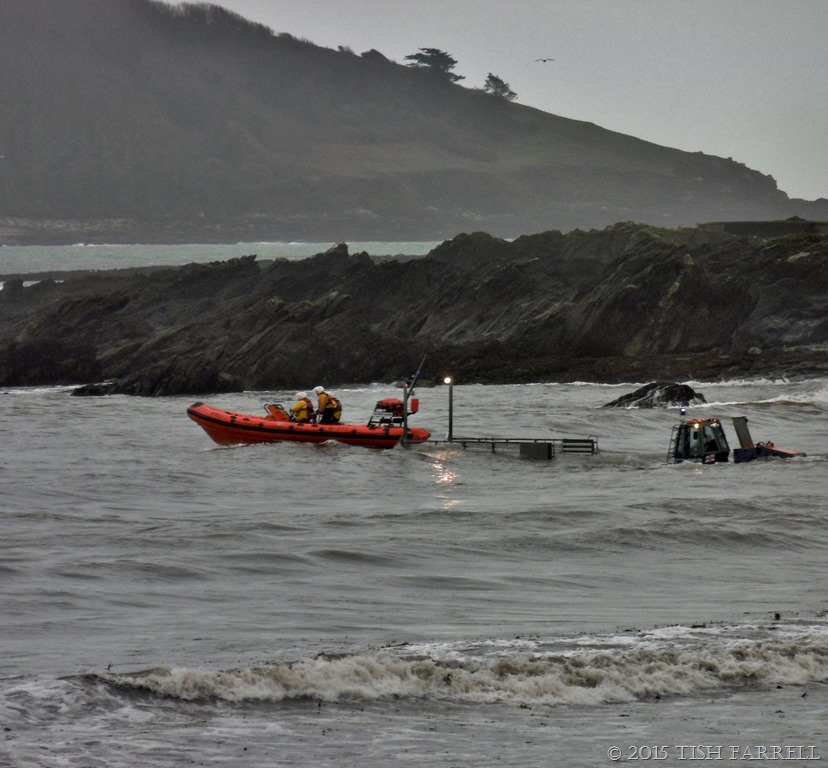
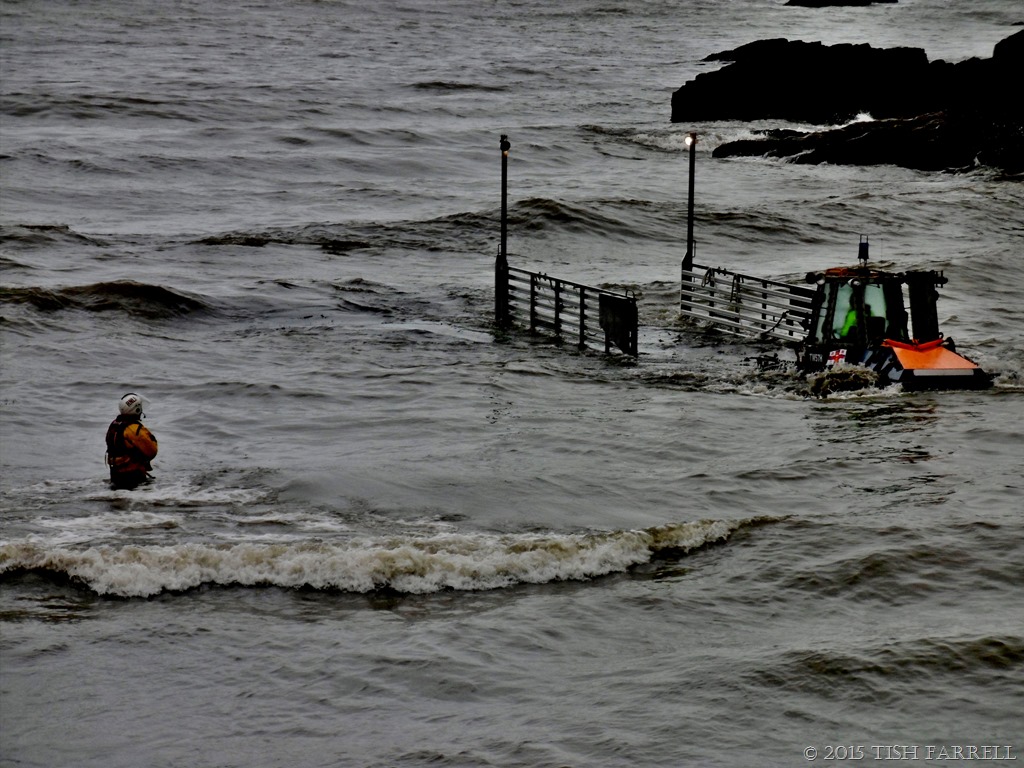
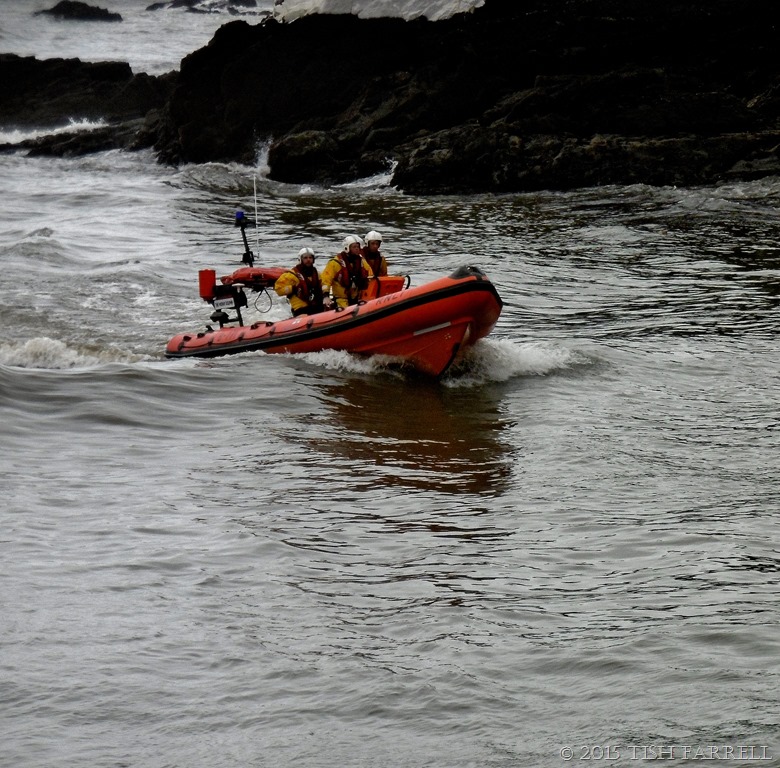
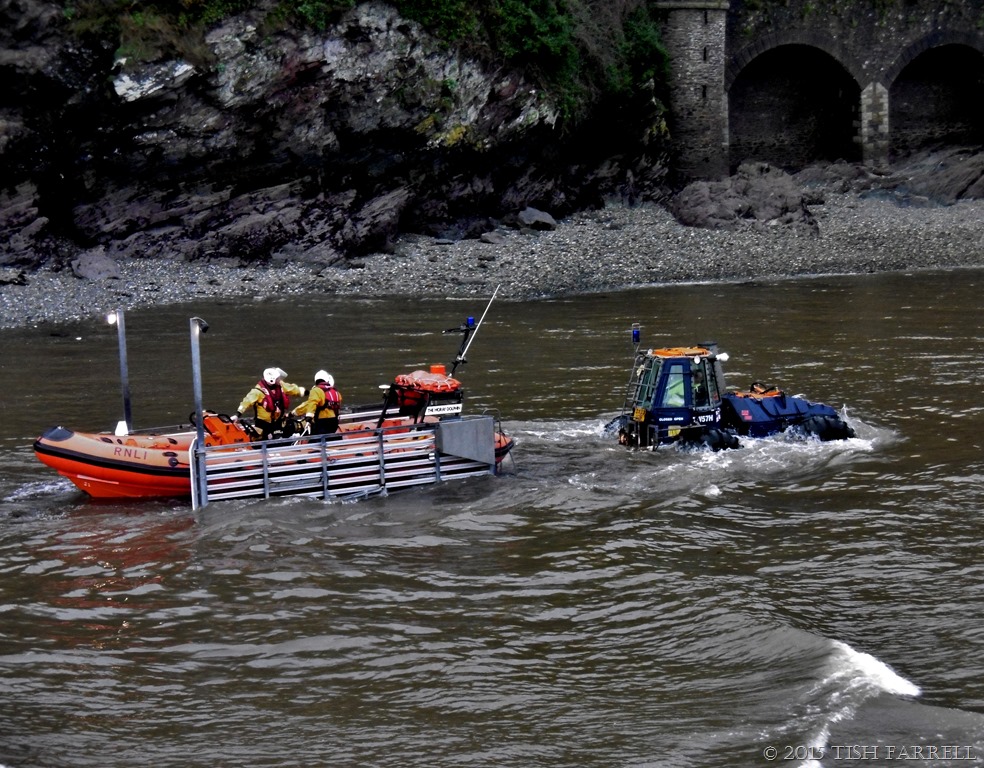
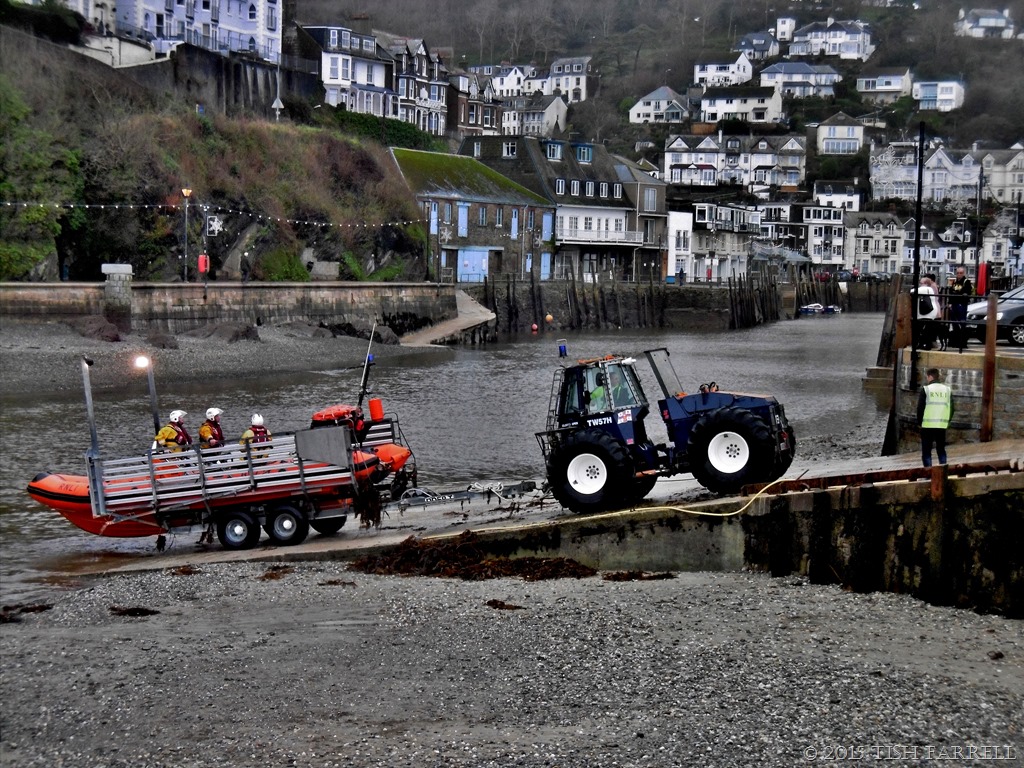
The Royal National Lifeboat Institution, “the charity that saves lives at sea” has rescued over 140,000 souls since 1824. On Christmas Day we saw the Looe team turn out for a practice run in stormy seas. Here they are being launched from the sea tractor. Hats off to them is all I can say. Oh yes, and a very big THANK YOU.

P1020627

P1020642

And safely back to base…

P1020652

P1020653

Now

Have I mentioned pallet scrattling?

100_8257

No. I thought not. It appears to be an inclination that comes upon men of a certain age, and especially those who possess wood burning stoves and sheds.  Suddenly their eyes are peeled, and whenever they’re  away from home, they’re on the look out for abandoned builders’ pallets. You know, those rough wood platforms that come with deliveries of bricks and tiles, engines and other heavy duty what-not that requires shunting round warehouses on fork-lift trucks.

In our house the fad started with Graham needing a work bench that would fit into the conservatory. This was quickly followed by the need for another bench that would also fit into the conservatory. Fortunately these wants coincided with a big delivery of technical equipment at work. Oh the joy: multiple pallets were suddenly free for the asking. It even determined the kind of car we owned – hatch-back naturally. At one stage there were so many pallets that Graham had to share some with Bob. Not an easy share I can tell you.

Also recycling pallet wood is not necessarily straightforward. This is where the ‘scrattling’ comes in, a word invented (I think) by my sister’s chap, the aforementioned Bob, who is an ardent pallet scrattler. You see there is an art to dismantling pallets  so as to extract the best and most serviceable timber. In fact it is really advisable to watch some You Tube videos for best practice before you start.

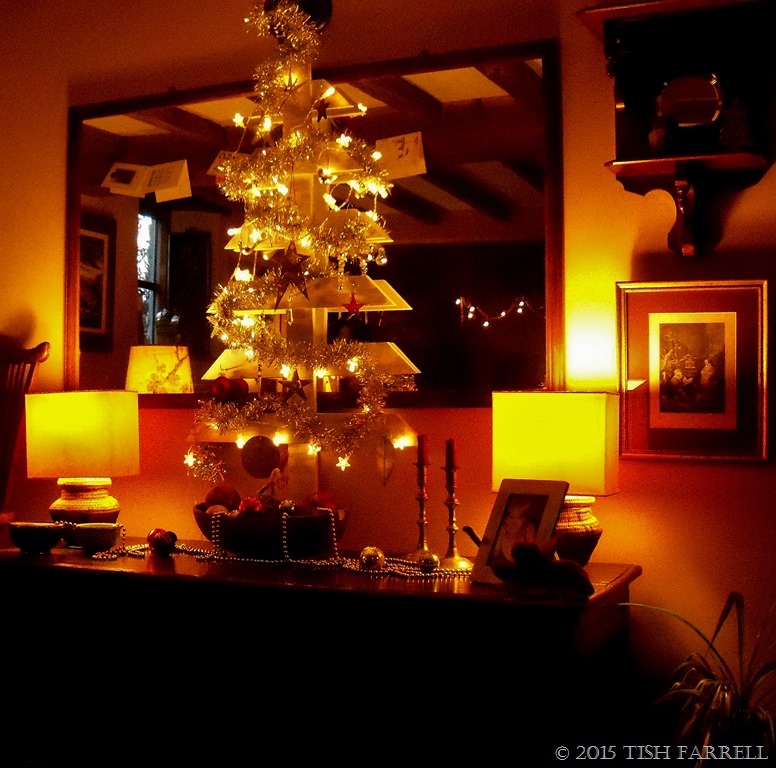
Of course I should not be snide about this most worthwhile of older-man pursuits, I whose allotment is the lucky recipient of pallet compost bins and several raised beds. Also at home this Christmas we have a festive pallet tree, and here it is in our sitting room…

Happy Festive Season Everyone

Gathering of Elephants

Scan-131109-0004

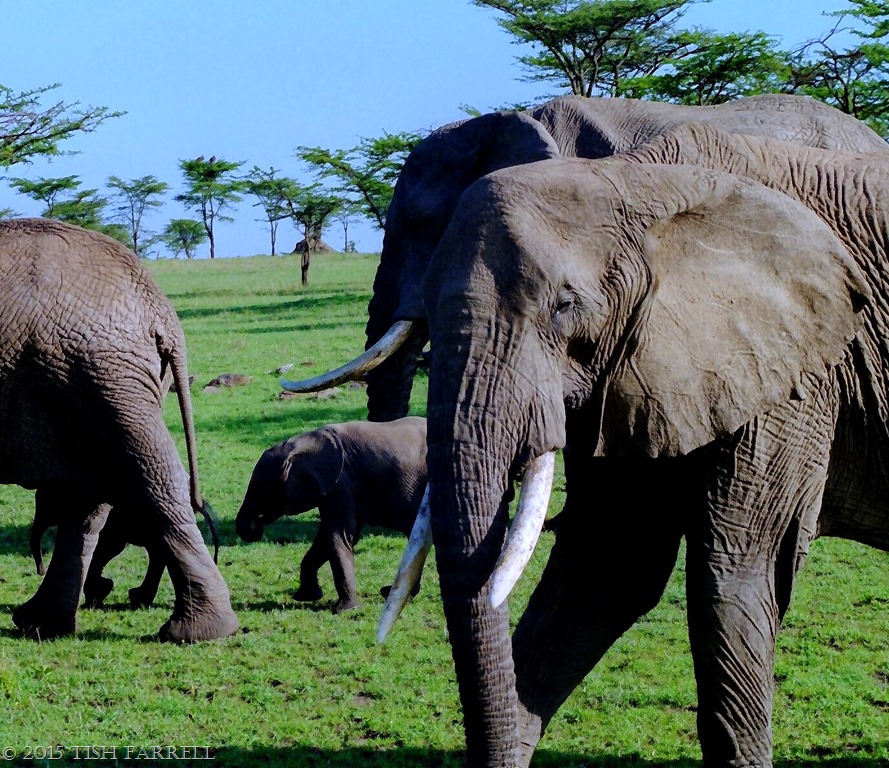
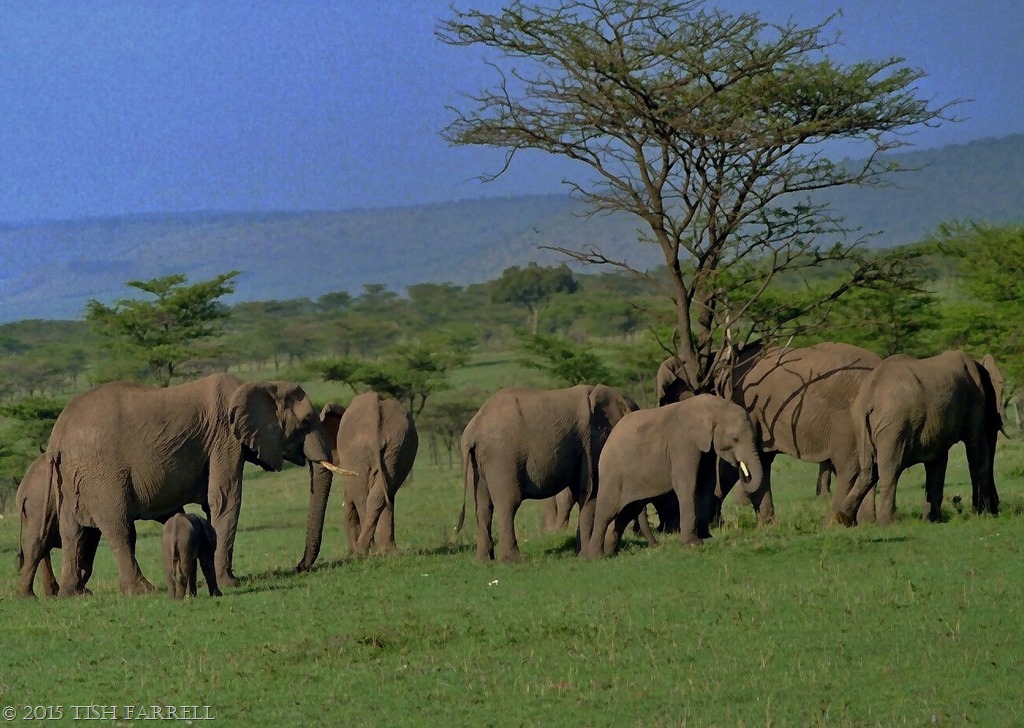
Early morning in the Maasai Mara. Our last Christmas in Kenya, and we’re out on a family safari with my sister and co. Daniel, our guide from Mara River Camp is both driving and game spotting. The rest of us are not awake yet. And so when we find ourselves among a large herd of elephants, it is hard to believe. A waking dream, then.

Daniel stops the truck. And the elephants move by us as if we’re not there. It must be a dream.

Even so, we are soon aware – first of their utter quietness, and then of an all embracing unity of purpose. These dozens of imposing creatures are acting with one mind, moving as an elephant entity through the thorn trees.

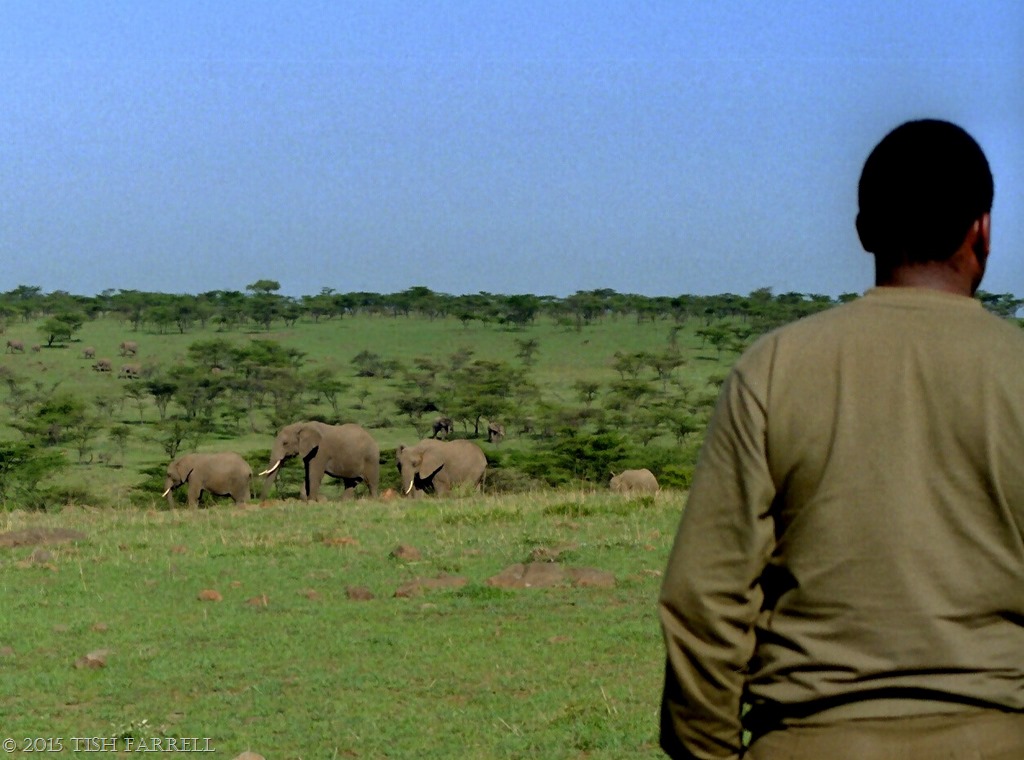
We drive on a little way to an upland vantage point from where we can see across the valley. Daniel announces that this a good place to have our picnic breakfast. He says it’s all right to get out of the truck. I wonder at the strangeness of standing out in the African bush at Christmas, eating hard boiled eggs and croissants as elephants pass us by.

Scan-131109-0032

Scan-131109-0025

Gathering

Turn of the year in my garden ~ Bench Series 50

P1020222


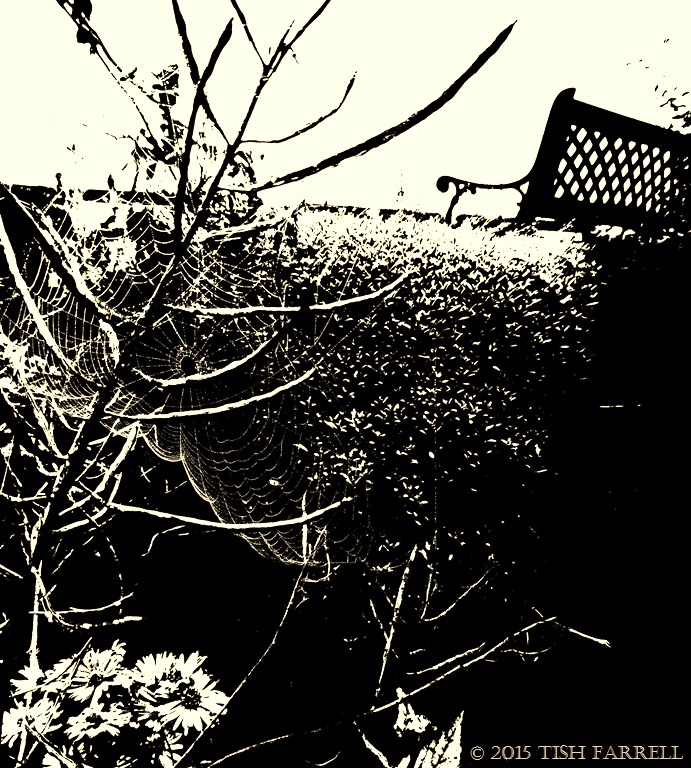
This month Jude at Travel Words is giving us a free hand with our seating arrangements. Please hop over to her place at Bench Series #50 to take part in the challenge and to sample other bloggers’ seats of fancy.  My entry, I confess, is rather off-beam bench-wise, but it summons a sense of its place in my garden scheme of things. The bench itself is not very exciting to look at in real life, but it is a good place to sit. From it you can look out on our bit of guerrilla gardening behind the boundary fence, at the the field and the footpath beyond, and thence up at the big sky over Wenlock Edge. Back in the summer, as I came up the path from the allotment, I would  often find Graham sitting there, waiting to see what I was bringing home for supper. So yes. A good place to simply be.

copyright 2015 Tish Farrell

Iron in the Soul ~ Warrior of Llyn

100_4526 - Copy

I have been a multitude of shapes
Before I assumed a consistent form.
I have been a sword, narrow, variegated,
I have been a tear in the air,
I have been in the dullest of stars.
I have been a word among letters,
I have been a book in the origin.
From a translation of the Welsh medieval text of The Book of Taliesin, a sixth century Welsh bard and courtly singer.

 *


It is said that the Iron Man of Mynydd Tir y Cwmwd sings in the wind. I can believe it too: bold laments of long ago battles, a proud Celtic warrior fending off invading Roman governors and power-hungry English kings. Sadly, the cause was lost on both fronts, although at least these days Cymru,* Wales, has its own Welsh Parliament, and Cymraeg, the Welsh language, is nurtured, learned in schools and spoken widely with great pride. And so it should be. It is one of the world’s wonderful languages, the words formed from the rush of sea on rocks, the wind whistling down from the heights of Yr Wyddfa** (Snowdon, Wales’ highest mountain). Under past times of English domination much was done to stamp out the Welsh culture altogether. It is what invaders do – belittle, ban, override  heartfelt expressions of a conquered people’s culture.

{*roughly pronounced Kumree and **Ur Oithva}

You can read the rest of this earlier post about the Iron Man of Llanbedrog at Warrior Wind-Singer of Llyn

copyright 2015 Tish Farrell

This Sunday at Lost in Translation, Paula’s ‘Black & White’ word is ‘winding’. Please follow the link to take part her challenge and see more winding renditions.

In the background on Zanzibar’s farms

Scan-130429-0006 - Copy (2)

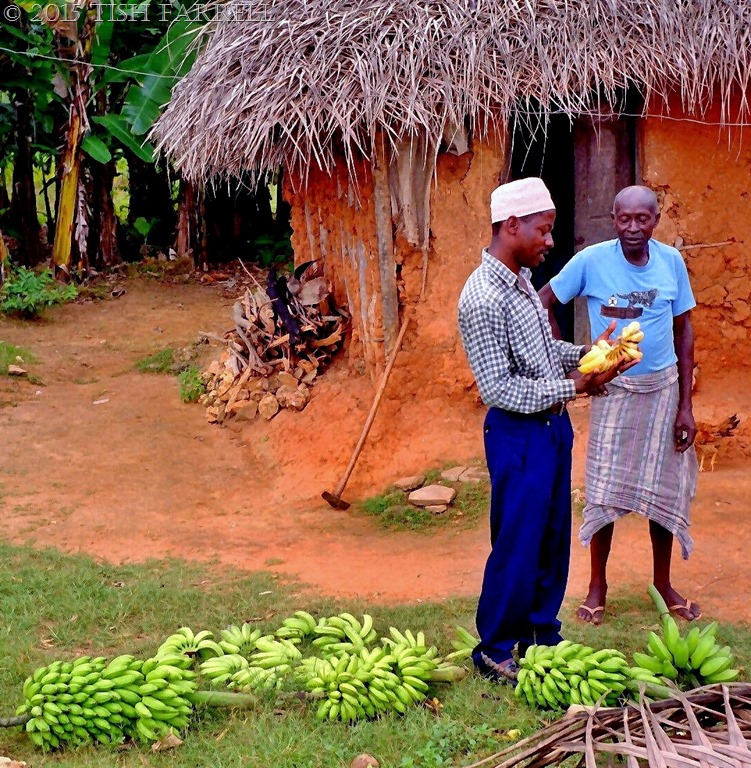
One of the must-do tours if you visit Zanzibar is a trip around the island’s spice and fruit farms. Hari our guide was intent that we should taste everything we saw growing, so here he is bargaining with a farmer for a ready-to-eat bunch of bananas. You can see the banana grove in the top left corner. Banana branches are usually harvested when the fruit is still green. There’s a knack of knowing just when to cut them.

Being a nosy writer who is always in need of background detail, and also a one-time student of cultural anthropology, I try to capture slice-of-life moments whenever I can. They’re usually not the best quality photos, but I hope to make up for technical shortcomings with content interest. (And yes it would be nice to have both). So here is my take on this week’s Thursday’s Special challenge from Paula – ‘in the background’. My choice of subject, however, did mean I had to switch my blog snow off. There’s enough climate change going on without having icy precipitation on Zanzibar.

Scan-130429-0007

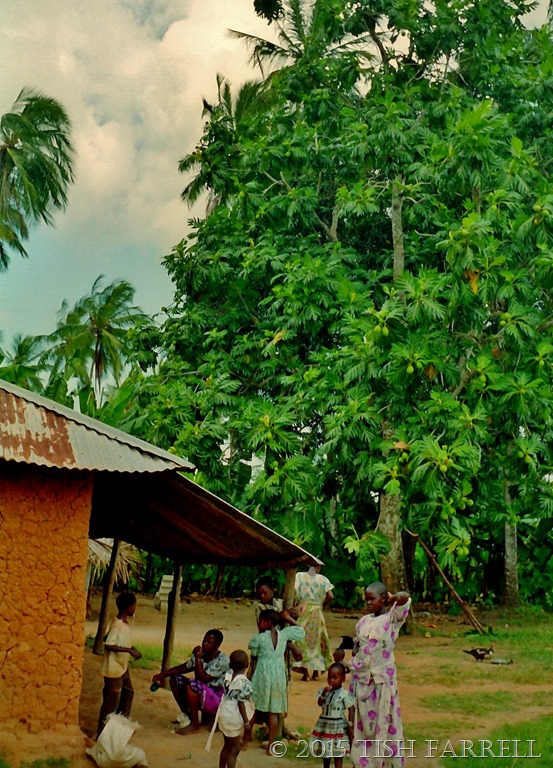
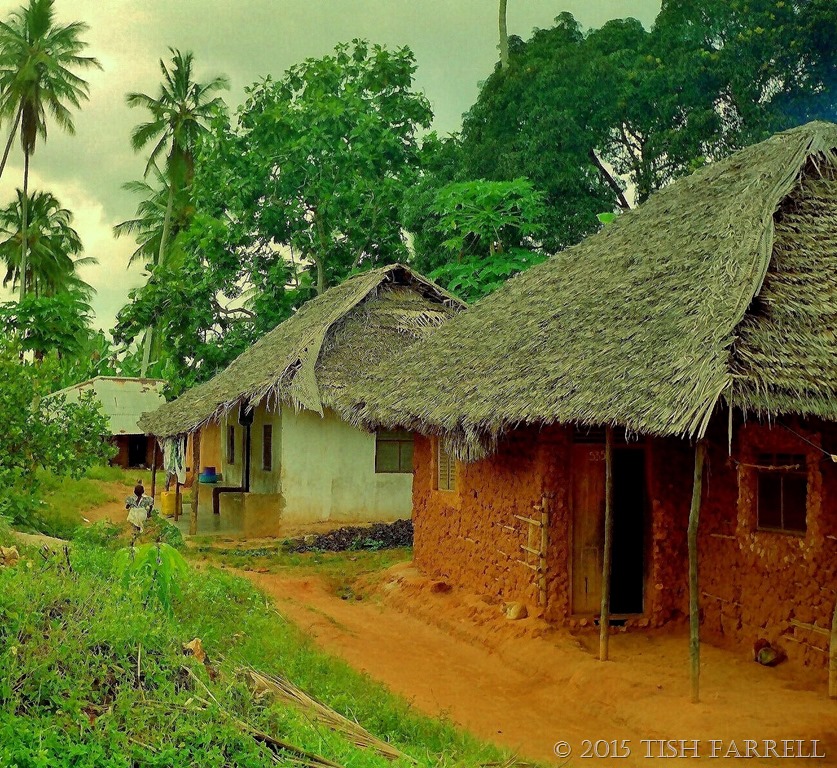
This farming family has a jackfruit orchard, as well as coconut palms. The jackfruit apparently weren’t ready for tasting, but I was anyway more distracted by the presence of the domesticated Muscovy duck. Now how did that arrive in the tropics? The mabati iron sheets on the farm house roof  (i.e. instead of traditional palm thatch) are a sign of  prosperity, and therefore of status.

*

Scan-130429-0010

Scan-130429-0010 - Copy (2)

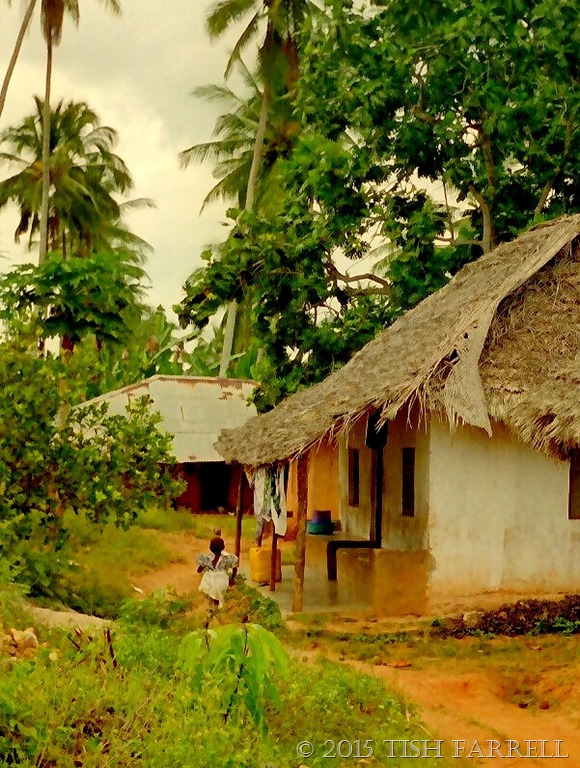
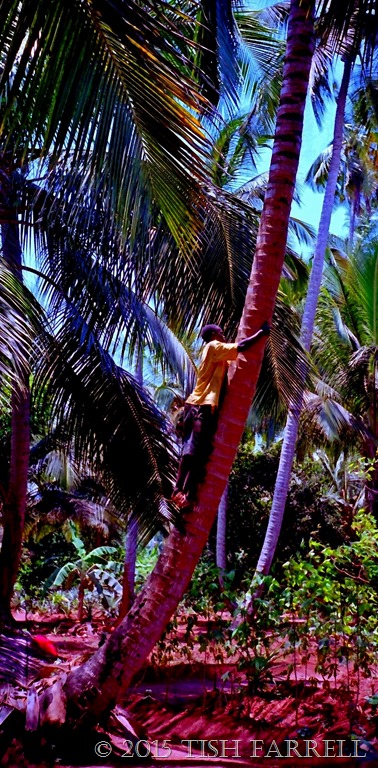
I’m wondering where this little girl is off to in such a hurry. Also one of the reasons why I’m showing off the tall trees in the background is that if you intend to make a living from them, then someone has to climb up them to pick the fruit…

Scan-130429-0074 - Copy

Thursday’s  Special: In the background

Wenlock Priory through the pines ~ an enduring landmark

P1000492

P1000494


How impressive then must the beautiful church have been in the days of its prosperity, when the pilgrim came down to it from the grassy hillside and its bells made the stillness sensible.

Henry James on Wenlock Priory Portraits of Places

Much Wenlock has many historic landmarks, but its Priory is the one with the oldest roots, dating back to the seventh century when  the Saxon princess, Abbess Milburga, presided over a dual house of monks and nuns.  In medieval times, under Norman rule, it was expanded to become one of the most imposing (male only) religious houses in Europe.

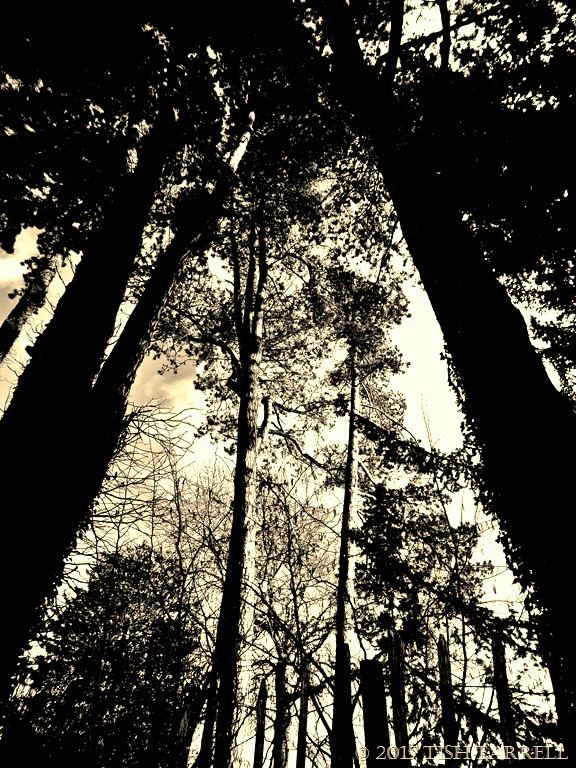
Then along came Henry VIII with his marriage problems, and in 1540, as part of his Dissolution of the Monasteries campaign, (i.e.the  liberation of monastic wealth), the lead was stripped off the roofs. The Priory has been ruinous ever since. Meanwhile the Corsican pines have grown up along the boundary wall.  I don’t know when they were planted, or by whom, but spiring above the ruins, they somehow give a sense of lost architectural glory.

There is of course much romance in dilapidation as Henry James’ description in the quote above betrays. He was certainly taken with the place, and came here two or three times as guest of the Milnes Gaskells  who lived in the Prior’s House abutting the ruins. The Priory was at that time the Milnes Gaskells’ own private garden feature, and part of the tour for all their many house guests.  I particularly like this next, perhaps unlikely image of a recumbent Henry James gazing up at the remains:

You may lie upon the grass at the base of an ivied fragment, measure the girth of the great stumps of the central columns, half smothered in soft creepers, and think how strange it is that in this quiet hollow, in the midst of lonely hills, so exquisite and so elaborate a work of art  should have arisen.

You can read more about Henry James in Wenlock HERE.

Now please visit Paula at Lost In Translation for more Black & White Sunday  landmarks.