Remembrance

100_6098

Private Giles Victor Rowles  14th Battalion 1402 AIF

Died of wounds at the Battle of Lone Pine, Gallipoli, age 19 years.

Buried at sea August 10 1915, 2 miles off Mudros Harbour, Lemnos.

IMG_0568

Born in Hollinfare, Cheshire, England 1896, son of Mary Ann Williamson Rowles and Charles Rowles. Remembered by his step-siblings on his parents’ gravestone in Hollinfare cemetery.

 *

Also worth remembering, in Britain, 16-year-olds are still recruited into the armed forces. War veterans call for a re-think on recruitment of sixteen-year-olds

*

No Glory in War 1914-1918

#NoGloryInWar  @WarNoGlory

Luminous Lions in the Maasai Mara

Scan-140726-0004 (8) - Copy

It’s as if the East African landscape only becomes itself at sundown and sunrise; is only visible to us humans in steeply angled light. It reminds me of the magic painting books I had as a child: nothing but white pages, the images barely descried, a palimpsest of silvery lines. All is blank then; staringly dull. But take a pot of water, and ply a paint brush across the page, and all springs astonishingly to life. Everywhere bursting in colour.

Out in the bush the wild life anyway lies low during the midday hours.  And even if you could see them, the equatorial sun flattens the vista. You lose a sense of scale and distance. Even a magnificent eland spotted in the Great Rift at noon can look strangely unimpressive.  Just a big antelope then.

Kenya’s game parks and reserves are vast – hundreds of square miles. The animals are not fenced in although, increasingly along the borders, farming (large and small scale) encroaches on grazing grounds and migration routes. But this lack of containment means you can drive around a game reserve for hour after hour and see nothing but thorn scrub; or the retreating rear end of a warthog if you’re very lucky.

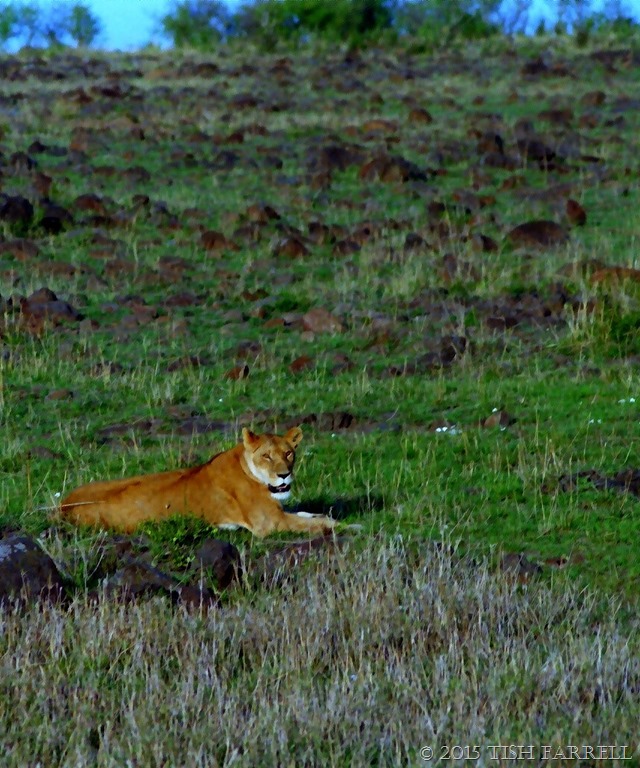
But then the sun begins to set, and you are out with a local driver-guide who knows where to look; and the light turns rose-gold, and the land puts on its best colours. And what was distant, and unfocused takes on form and clarity. Out of mind-numbing absence, and hours of searching, emerges this big-cat presence…

Scan-140726-0011 (2)

Scan-130520-0016

Of course they were there all along. Only now they let us see them. Apart, that is, from the big male who is still hiding in the grass behind his mate. It’s another piece of bush magic, how a 500-pound big cat can disappear in twelve inches of grass. Can you spot him?

copyright 2015 Tish Farrell

Ailsa’s travel theme: luminous

New Edition on the way ~ Mau Mau Brother

Screenshot 2015-11-05 10.37.32 (2) - Copy

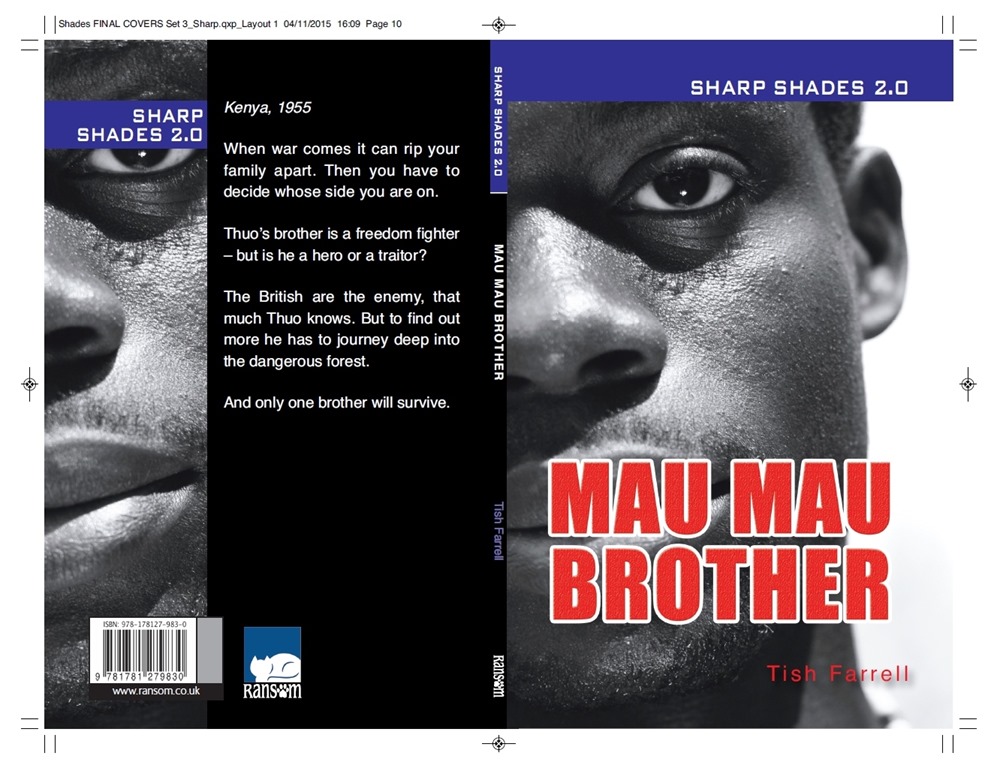
It’s always a thrill, nerve-wracking too, when the book proofs arrive. But then with this new Sharp Shades edition of Mau Mau Brother  there was no need for qualms. Ransom’s Art Director, Stephen Rickard, has done my story proud, both in the final edit, and the inclusion of some moody grey-scale images.

The story that was 6,000 words in the original Shades series has been chopped in half, but spread  over the same 64-page format to become a Sharp Shades edition. And it works. And I’ll repeat that for the benefit of any writers who are reading this, and who are a touch sensitive about heavy editing: three thousand words from my tightly written 6,000-word story (you can see an extract  of the original HERE) have been expunged, and the end result is great.

I’d better explain.

When I am not growing cauliflowers, making leaf mould and generally hanging about on WordPress, one of the very important things I do is write short fiction for teens who are striving to build a reading habit.

Back in the spring, Ransom, who publish these works, suggested that my latest title, Mau Mau Brother,  would make a good Sharp Shades edition if I was prepared to cut it by half. As I wrote in a post back in April HERE, I was doubtful that I could, but I said I would try. In the event, I found myself stuck at around 3,400 words and Ransom asked me to hand it back for some more pruning; they would let me see the finished text for my approval, they said.

A few days ago they did just that, and I am really pleased with the end result. They are great people to work with.

Not only that, Ransom Publishing are specialists in the production of accessible fiction and nonfiction for struggling readers of all ages. Their strap-line is ‘UNLOCKING LITERACY’. For those of us who can read and write fluently, it is hard to imagine not having these skills.  But if you can’t read well, you are effectively disenfranchised as a functioning member of the community. Locked out in every sense.

The Shades series includes some 60 titles written by many well known and seasoned children’s writers. The titles are aimed at young adults with an interest level of  12 years +, but a reading ability of 9-10 years. Many young people are also daunted by the size of a book, while still wanting ‘the excitement of a great story told with pace and style. ‘ At 64 pages, the books are compact, easy to handle. The cover images are striking, edgy, and with all the style of quality mainstream fiction. In other words, they may be small, but they don’t look  ‘less’.

Inside, the story is presented novel-style, in chapters, but with plenty of white space on the page.  To cater for the less able reader, the Sharp Shades editions have half the number of words of a Shades title, far fewer words per page, are set in a larger font and have added illustrations.

Personally, I think the books in both Shades series are appealing to any reader of any ability. They make for handy quick-reads that fit in most pockets. And just because they are aimed at people who struggle with their reading, doesn’t mean the stories are either simple or simplistic. They embrace themes that matter to all of us: love, hate, fear, injustice, belonging, relationships, families, overcoming threats and hardship. So I’m not going to say any more about Mau Mau Brother. The blurb on the back of the book pretty much covers it. Thank you, Steve Rickard.


Screenshot 2015-11-05 10.37.32 (2) - Copy


Related:

Killing Words ~ a case of verbal decomposing?

Losing Kui – an extract


@ransombooks  #RansomPublishing

@Literacy_Trust  #NationalLiteracyTrust

Our first autumn cauliflower

100_7997

Isn’t nature marvellous. I can’t believe that I grew this bee-eautiful purple-flowered cauli from one very tiny seed.  It looks a bit misty here, because it’s covered in fog. They weather has definitely turned here in Shropshire.

I was so excited when I first spotted it a couple of days ago. I’ve been nurturing the cauliflowers for a long time, feeding them liquid seaweed feed among other things. The seeds were sown in spring, then planted out in early summer in my new plot behind the polytunnel.

It was hard going too, clearing the ground for them. It had not been cultivated for several seasons and was choked with dandelions of epic proportions, and masses of creeping buttercups. The soil was heavy and claggy too. It seemed most unpromising, although I know that brassicas are fairly tolerant of these kind of conditions. For one thing, they like to be solidly rooted. In fact I’ve learned that caulis won’t flower properly if they are not well anchored from the start.

Once I’d planted out the young plants, (along with a handful each of Carbon Gold fertilzer, and worm casts, and an encircling of lime),  I had to make sure they were well defended with a covering of  mesh. This to stem the pigeon decimation that generally goes on at the allotment. The rotters line up on the overhead electricity cables and watch what we humans are up to, and plan their raids for when we’re not there.

Anyhow, they didn’t get this cauli, and we did. I steamed it, and then made a quick sauce with creme fraiche.  Here’s what I did.


Really Amazingly Quick Cauliflower Cheese

  • Break the cauliflower into florets and steam for a few minutes.
  • Drain, reserving a cup of the steaming water in case you might need it.
  • Melt a small piece of butter in the now empty pan.
  • Add some chopped garlic and/or sliced onion. Cook until soft and translucent.
  • On a moderate heat, stir in a small tub of creme fraiche. Stir it until it warms through. If it seems too thick, add a little of the reserved vegetable water, say a tablespoon at a time.
  • Season, and add any fresh chopped herbs of choice.
  • Stir in a couple of handfuls of grated hard cheese. I use pandano.
  • Then toss the cauliflower in the sauce and serve.
  • Any other quickly steamed vegetables can be included in this – peas, carrot sticks, chopped kale, chard, leeks, celery. Whatever appeals. Good served with a jacket potato, or Italian black rice.


So here you have MY flower of the day, as inspired by Cee’s Flower of the Day. I thought maybe we should give vegetables a look-in on the floral display front. Mind you, I don’t know what Cee will think. Aw, she’ll love it.

copyright 2015 Tish Farrell

The Carrion Crow

100_7827

A large black bird that feeds on the carcasses of beasts

Dr Samuel Johnson


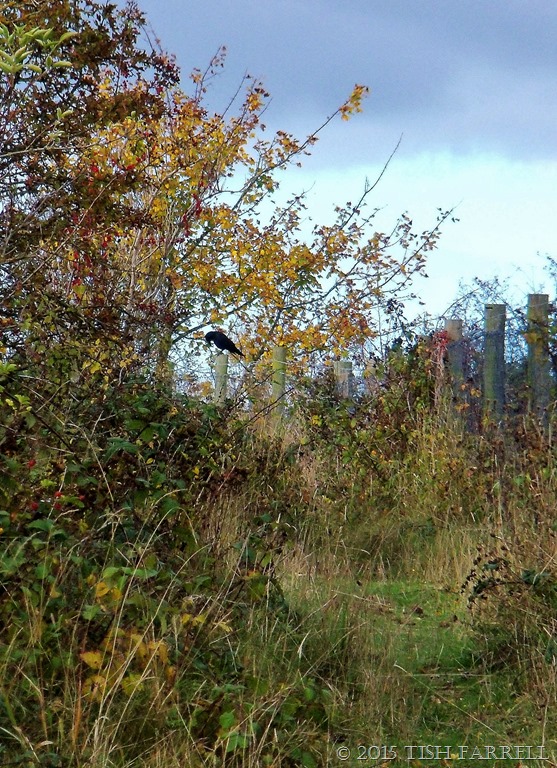
I didn’t think this shot would work. My little Kodak EasyShare was on maximum 5x zoom. But when I looked at the image on screen, I decided it was worth posting. It anyway illustrates an important fact about carrion crows. They are very hard to sneak up on, which is why I couldn’t get any closer and take a better shot.

The next second it was gone, flying off with its guttural ‘kraaar’ call.

Carrion crows are solitary birds unless, that is, they have a mate. This one does have a consort. The pair’s territory includes Windmill Hill, the Linden Field and Townsend Field behind our house; at least this is where I see them foraging together. They are usually a little way apart, rooting  through the grass. They are also notorious egg thieves and snatchers of poultry and pheasant poults, and so are much despised by country folk in general, and game keepers in particular.

When separated, the crows call one to the other. The single ‘kraaar’ that echoes through the trees, or across the fields. It is  a melancholy sound, but also a wake-up call. I find myself instantly responding, scanning the landscape, tuning in to its resonance. What’s going on out there?  Perhaps I have crows in my ancestry.

These birds are very clever. In nest-building season they perch in the tops of trees and watch where the other birds are building their nests.  They also, as their name and Dr Johnson suggests, eat dead animals. Well somebody has to clean up the environment.

You can tell them apart from rooks by their longer, sleeker profile. Rooks are altogether shaggier with a long, greyish bill and a face-patch. Rooks of course hang out in crowds, some of their rookeries being known to have several thousand nests.

But all in all, I like the crows best. They teach me to be watchful.

copyright 2015 Tish Farrell

‘Bench’ with a mission

100_7167

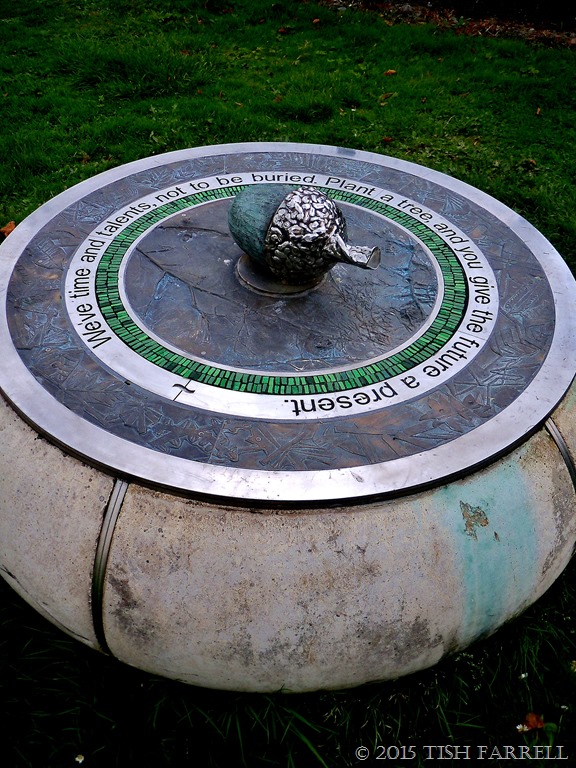
We’ve time and talents, not to be buried~

Plant a tree, and you give the future a present ~


Over at Travel Words’ Bench Series 44 Jude is charging us to find a bench with a message or an autumnal theme. This may not  be a bench as such, but it does have a message and a seasonal acorn. Also, along with the inspirational motto, it was designed to provide a perch and meeting point for the town’s passing visitors.

There are four more of these artworks-cum-tuffets sited around the perimeter of Much Wenlock’s Linden Field, the venue for the Wenlock Olympian Games since the 1850s. The works were created in 2012, the year in which the International Olympic Movement acknowledged Much Wenlock’s historical connection to the modern games by naming one of their one-eyed, androgynous mascots ‘Wenlock’.

Anyone remember he/she/it? Perhaps better not to. The mascots were apparently conceived by a committee, and delivered into the world by a company in Telford. The intention was well-meaning: not to make reference to an identifiable ethnicity, gender, or known human disability.

Here on home ground, members of our local William Penny Brookes Foundation decided to mark the town’s Olympics connection by commissioning community sculptor, Michael Johnson, to work with local school children, and Wenlock poet, Paul Francis. Their brief was to celebrate the life and work of the Wenlock Games’  founder, Dr. W P Brookes. If you click on the Michael Johnson link you can see the other four pieces. The designs on the bronze panels were derived from work by the town’s school children.

The frame is stainless steel with  stone side panels and bronze sections on top. Every tuffet has a piece of thought-provoking text, each one relating to William Penny Brookes’ major contributions to the town’s wellbeing.

100_7028

I love the idea of them, although I’m not too sure about the weathering capacity of the stone component. I just wish they were sited in places where more locals and visitors might see and appreciate them, and indeed sit on them for a spell: perhaps on the High Street, in the Square, on the Church Green opposite the doctor’s former home.

Anyway, this particular tuffet definitely has a mission to propose. Should you choose to accept it, please note, this tuffet will not self-destruct, but the world might be happier.

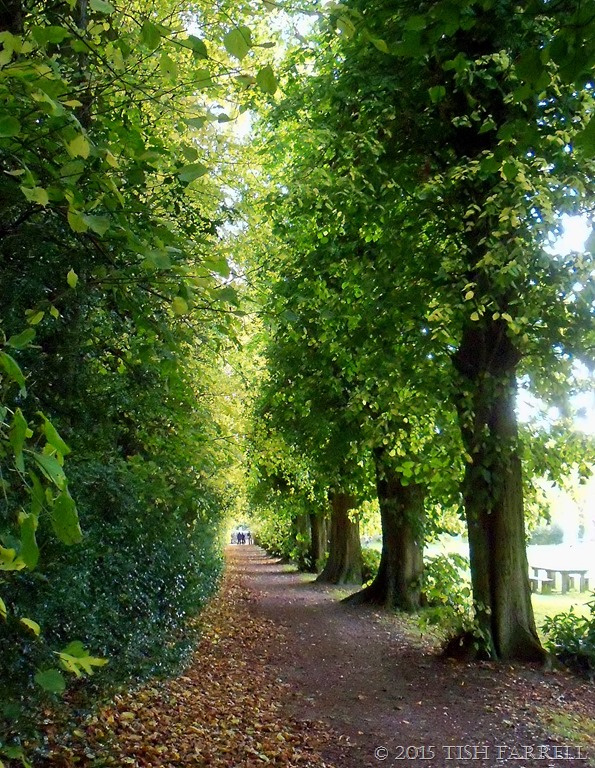
I’m thus leaving you with a view down the Linden Walk that borders the field and was planted by Dr. Brookes over a century ago. It is a joy to walk here whatever the weather, and whatever the season. So yes: more trees needed.

100_7851


We’ve time and talents, not to be buried~

Plant a tree, and you give the future a present ~


My treat – today in Ludlow

100_7924

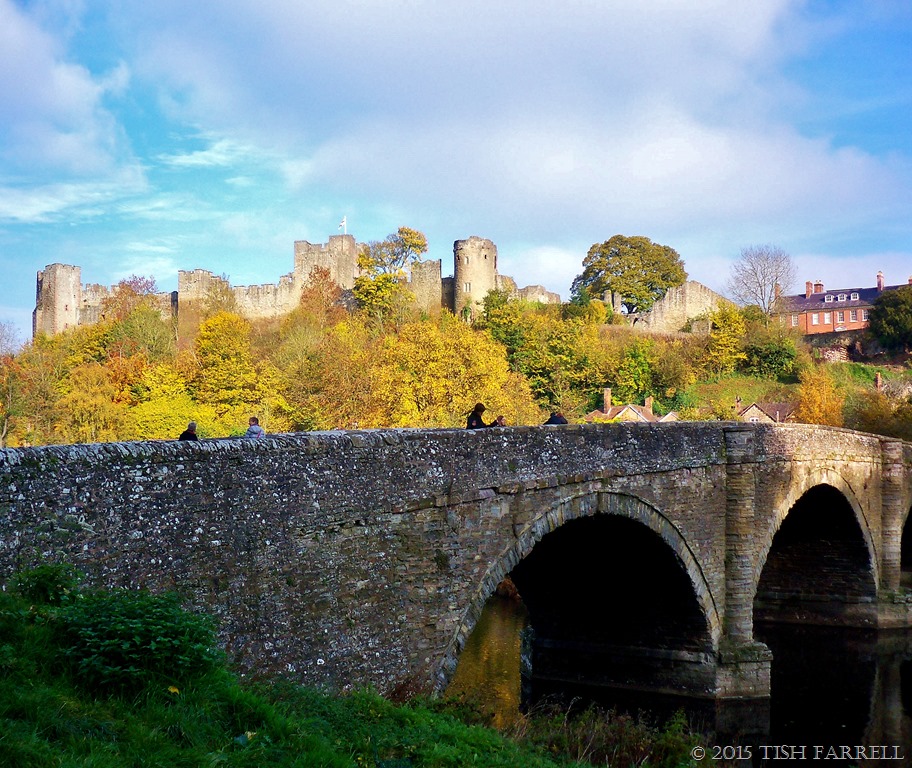
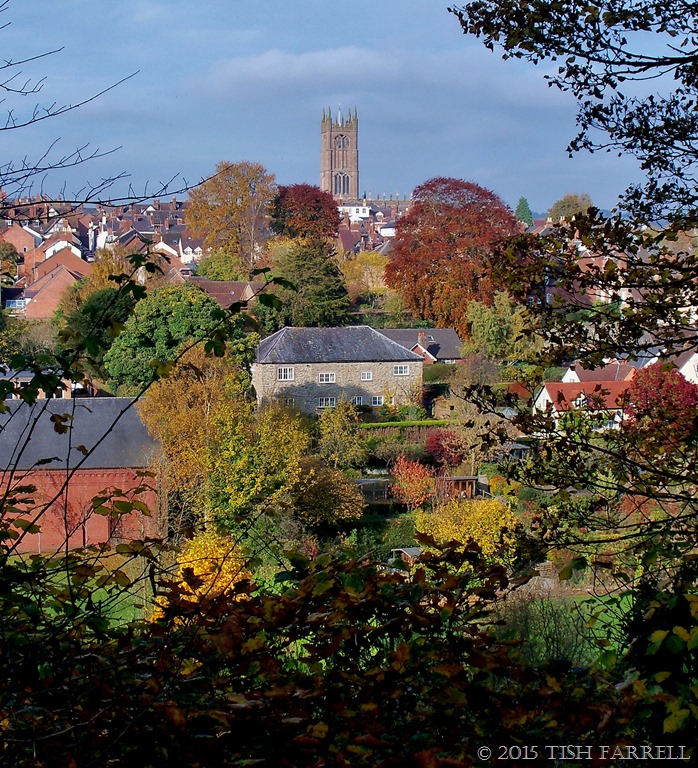
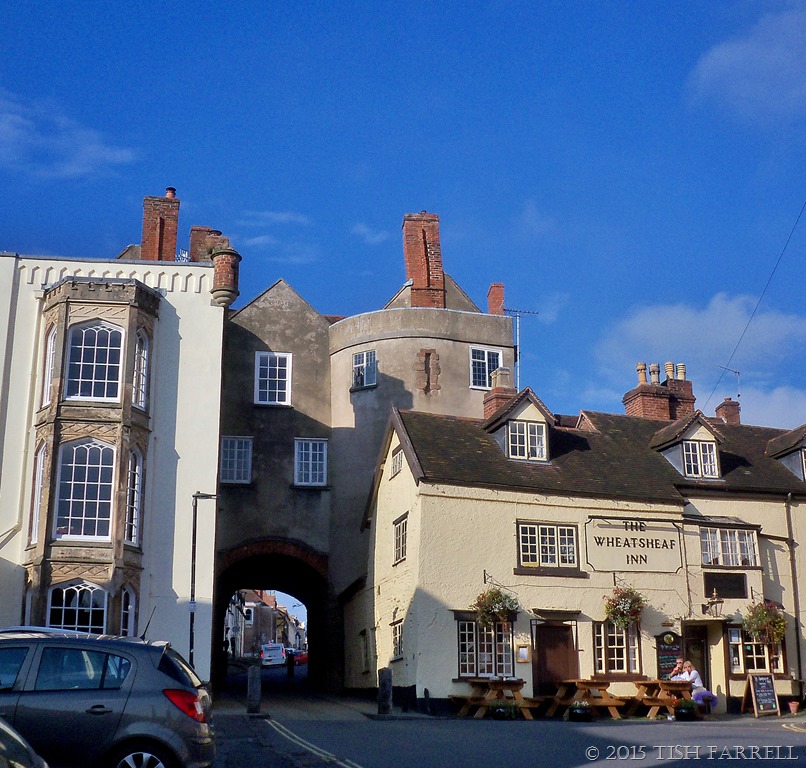
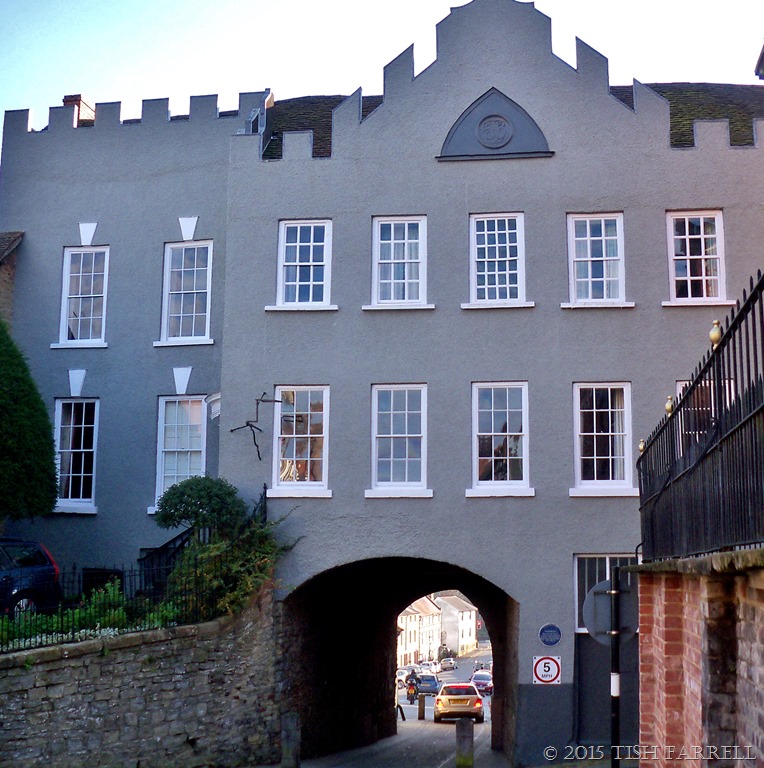
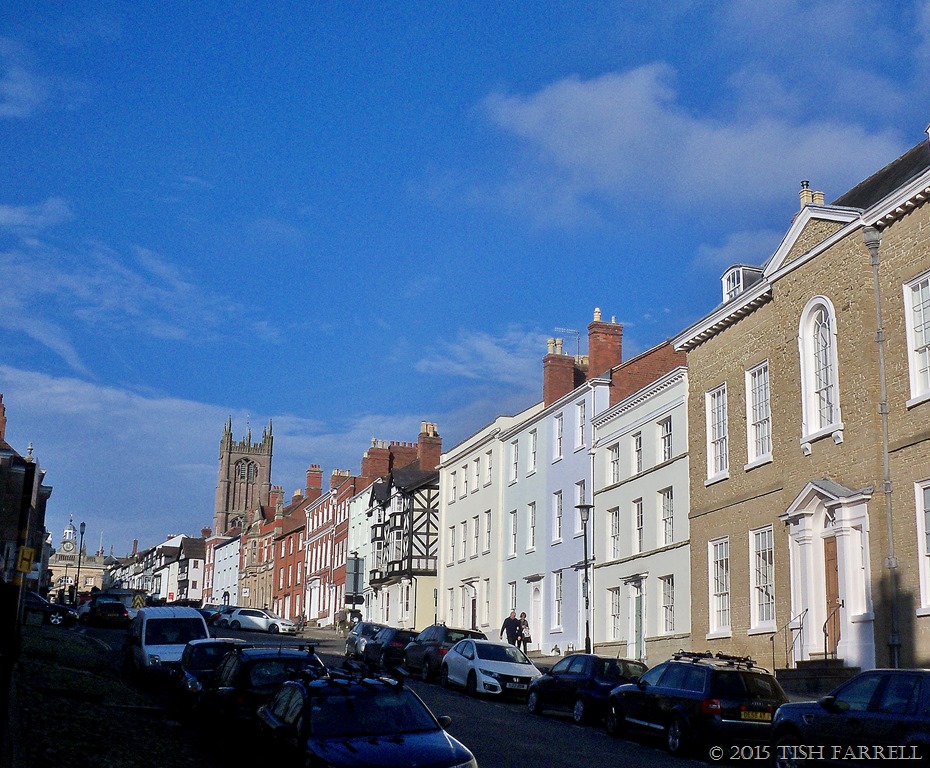
It could have been summer today – warm enough to sit outside without a coat. Well for heavens’ sake, just look at that sky. And what better place for a meander on a dreamy autumn day than Ludlow. It is one of Shropshire’s loveliest towns, and has more antiquity than you can shake a stick at.

The castle, whose ruins dominate the skyline, was begun over a thousand years ago during the Norman Conquest of Britain. It was built to secure the border with Wales, and was one of the first stone castles in the country. Over ensuing centuries it figured in all manner of political machinations including the York v Lancaster Wars of the Roses.  When the Lancastrian side won, the victor, Henry Tudor, shortly to become Henry VII claimed Ludlow Castle. He later gave it to his eldest son, Prince Arthur. In 1501 Arthur and his bride, a fifteen-year-old Katherine of Aragon, came here for their honeymoon.  A year later Arthur was dead. Katherine was then betrothed to Prince Henry, Arthur’s brother, but it wasn’t until 1509 that they were married. By then Henry was king. Their marriage endured for 24 years before things went horribly wrong. And we all know what happened next – Anne Boleyn and some serial beheadings.

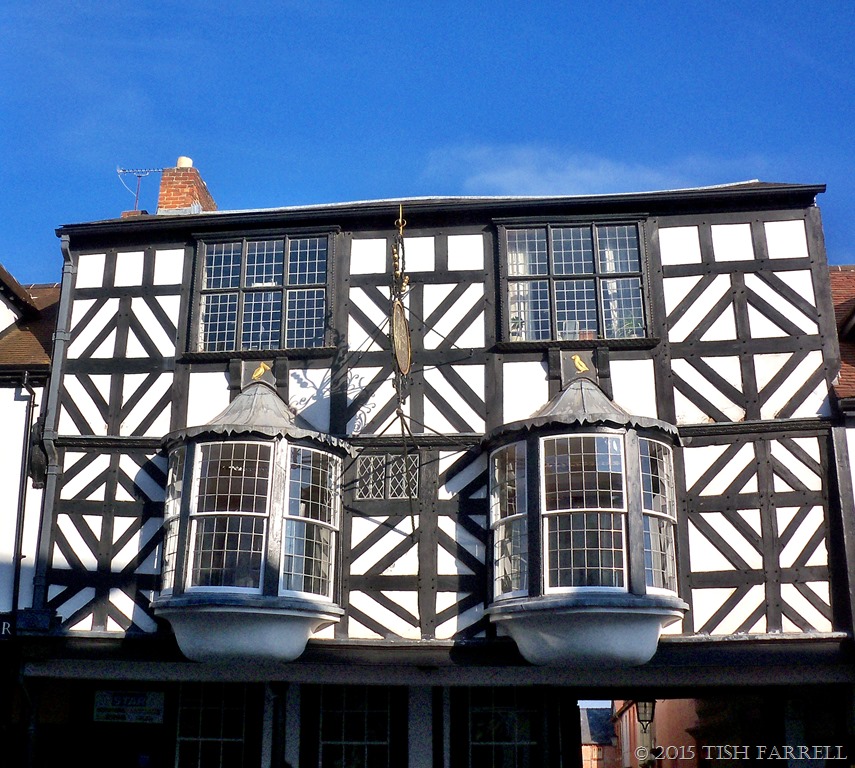
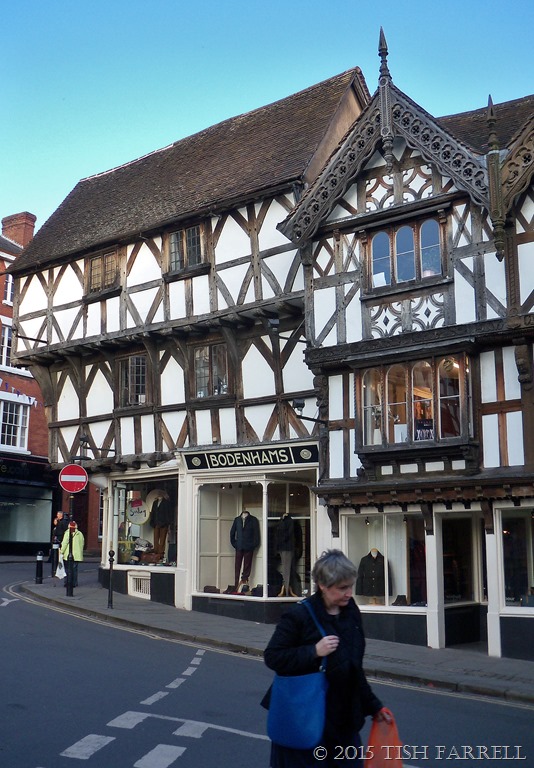
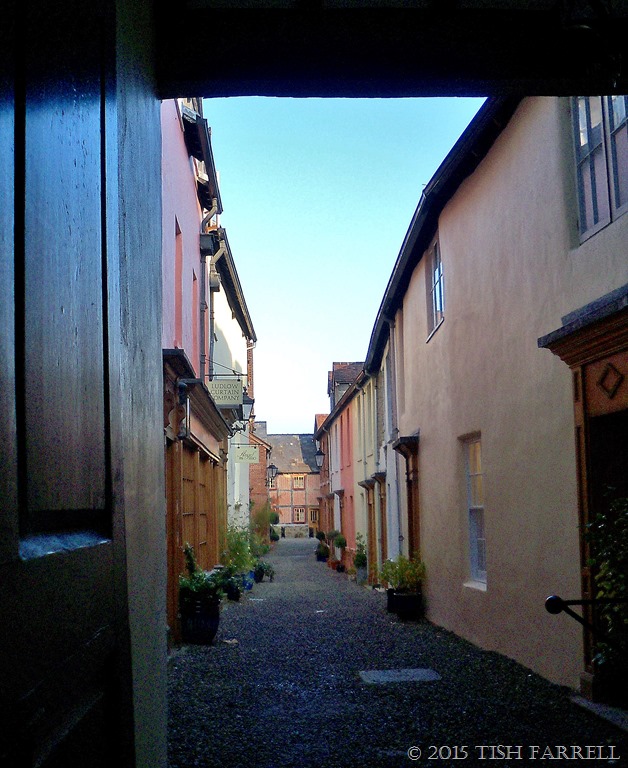
So enough history. Here are some more views – my treat to you:

100_7936

100_7940

100_7941

100_7945

100_7949

100_7956
100_7958
100_7963
100_7946

Treat

It’s a wonderful world…

100_7819

Earlier in the week, and in between leaf gathering for the allotment leaf mould project, finishing off a short story about Swahili spirit possession, I took myself on a wander around Wenlock’s byways to see what was what. We are very lucky in that respect. Our town is compact, having grown up around the medieval Wenlock Priory. One minute you’re on the High Street, the next you’re out in the Shropshire countryside. And there’s just so much to see out there.

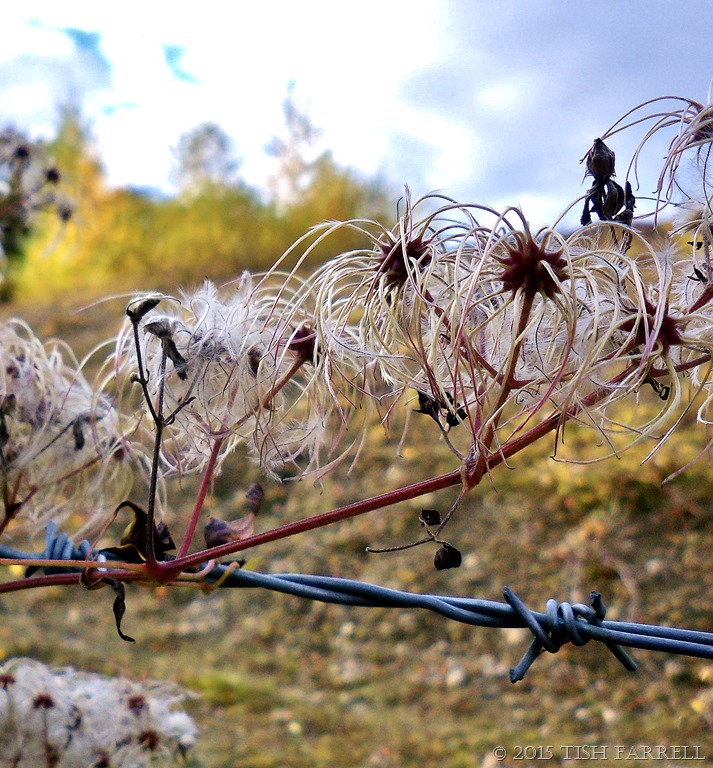
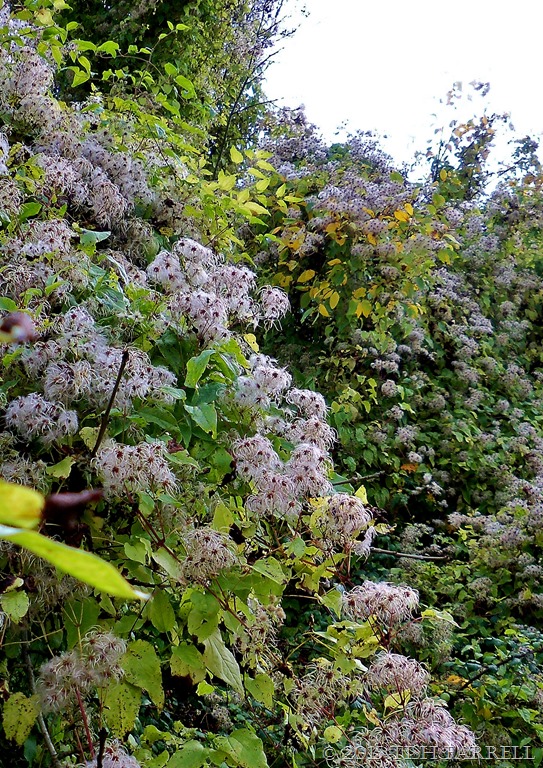
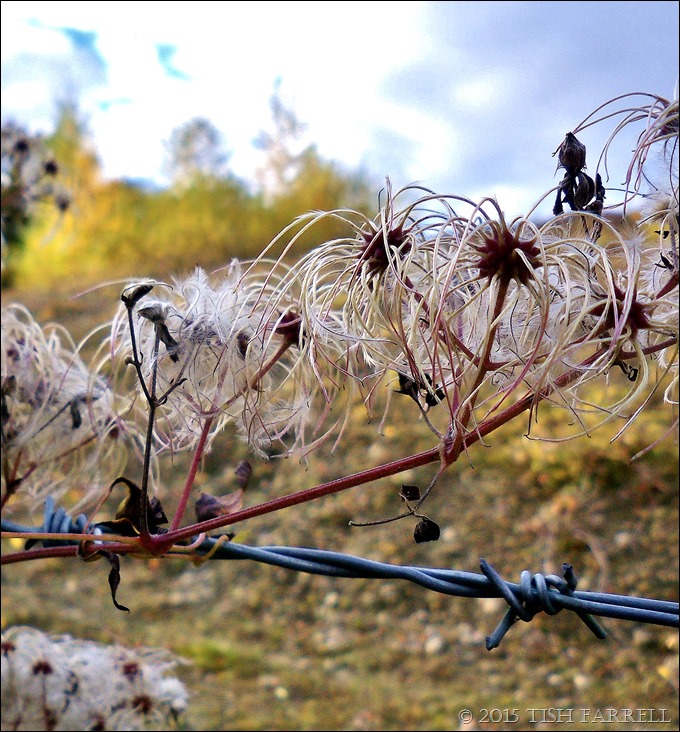
This wild clematis, aka Old Man’s Beard, caught my eye (above and below). It was arching over the path beside the abandoned Shadwell Quarry, and had then anchored itself on the fence. I like the congruity of the barbed wire and the twining plant stem.

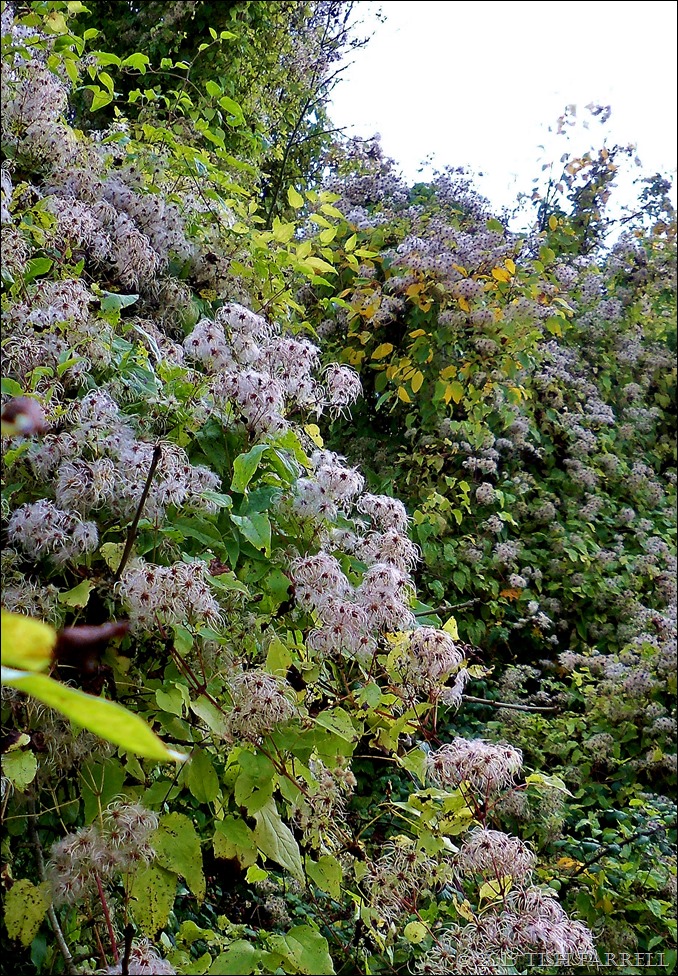
It comes into its own in the autumn with its feathery seed heads, and as you will see in a moment, it is an impressive climber.

During the summer it mostly creeps greenly through the trees and you tend not to notice it. I’m also grateful to Richard Mabey’s treasure book Flora Britannica for reminding me that another country name for this plant is Traveller’s Joy.  Mabey tells us that the plant was christened by 16th century botanist and herbalist, John Gerard who named it  thus because of its habit of ‘decking and adorning waies and hedges, where people travell’. He sounds like a sound chap, to pay tribute to the joy-making qualities of plant life.
100_7818

Like many varieties of clematis, this one does have medicinal properties – for kidneys and skin complaints – but as the whole plant is very acrid, it requires careful preparation. The most common traditional use is to roll the dried stems and smoke them as cigarettes, hence the plant’s other names of boy’s bacca and smokewood.

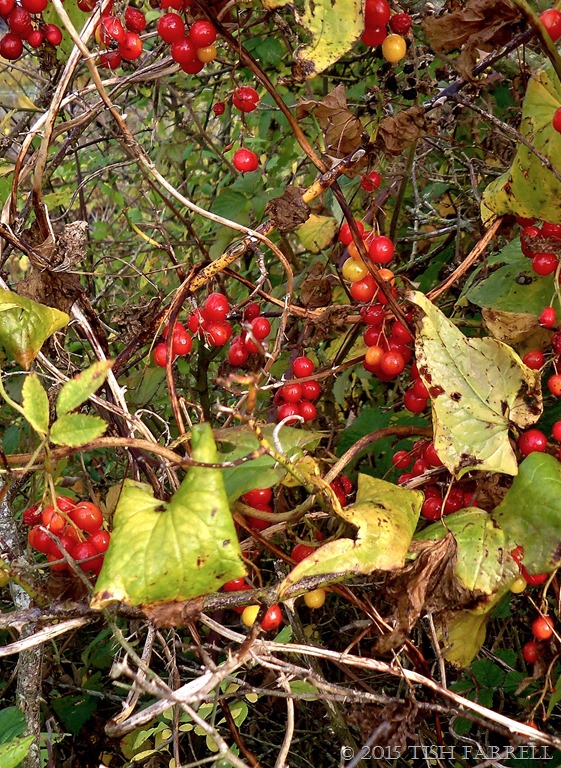
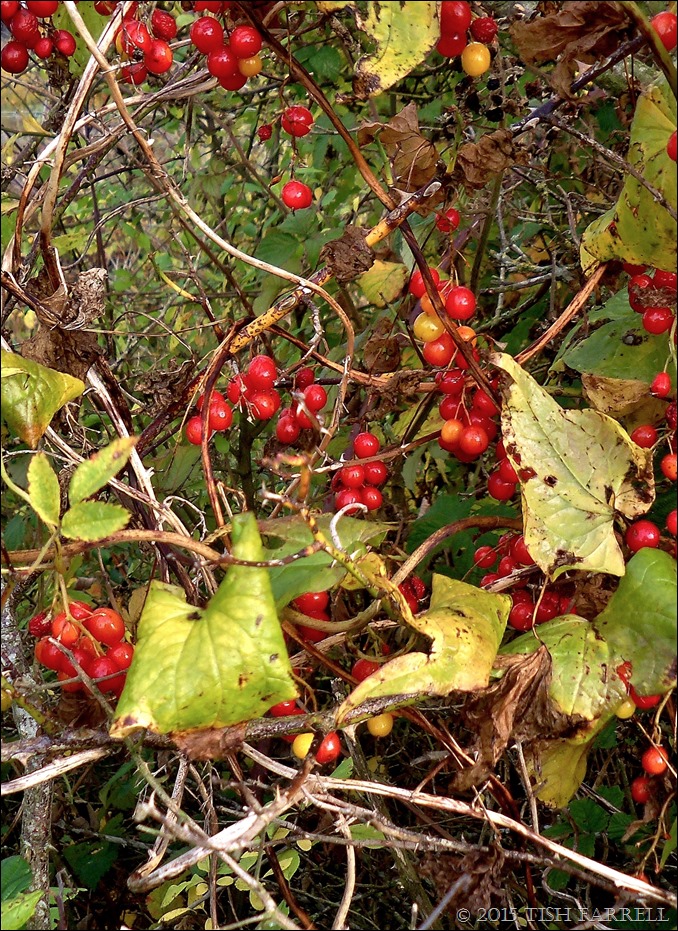
But this next plant is definitely one you do NOT want to consume in any form, despite its being related to cucumbers. All parts of White Bryony are poisonous and cattle deaths from eating it have been well recorded. But in autumn it is so very beautiful, and twines through hedgerows like strings of red and gold amber beads.
100_7828

The roots, though, are particularly toxic and grow very large. In 18th century Britain they featured in the mandrake root scam. Mandrake is a Mediterranean plant with a root that looks pretty much like a naked man or woman. It was in great demand as an aphrodisiac and narcotic. (If you know your Harry Potter, you will know that mandrake shrieks when it is being uprooted.) Unprincipled persons of the rabbit-catching variety thus began to fashion bryony roots into the highly desirable mandrake root. It was by no means an easy process either, and involved several phases to complete the subterfuge. Presumably the recipients did not live to tell any tales.
100_7815

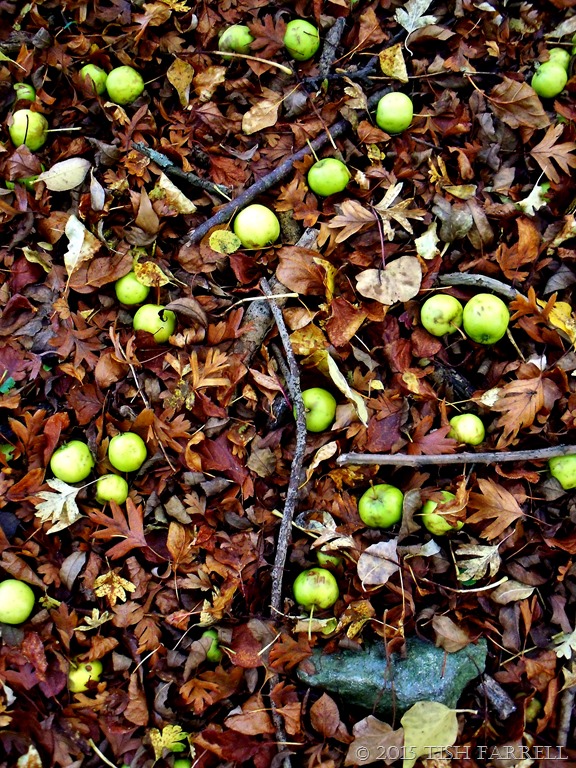
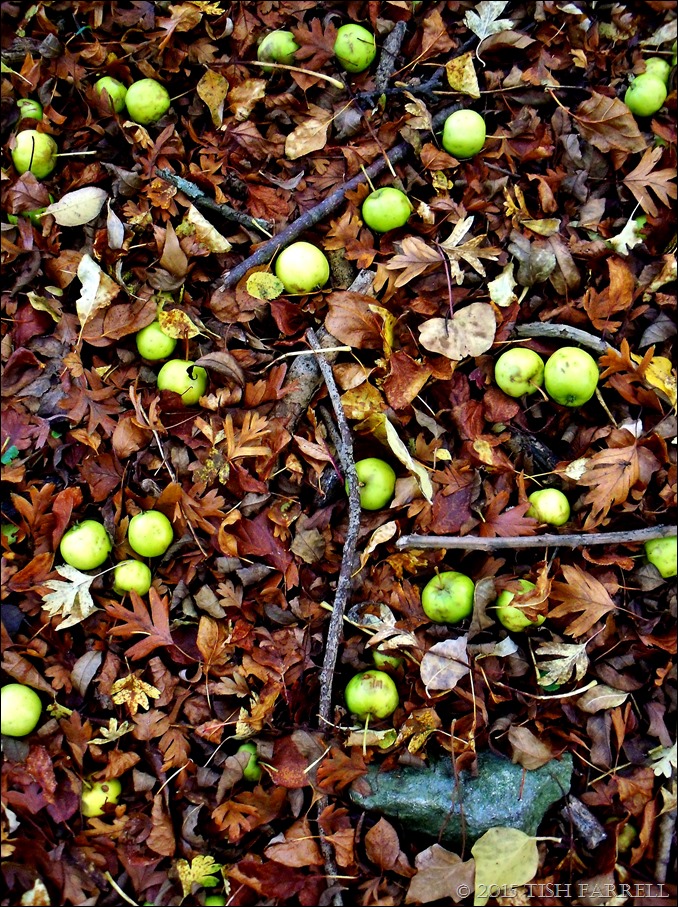
And here are some crab apples, Malus sylvestris  in Latin, woodland apples. They make brilliant, jewel like jelly which is good on toast or with roasts. Mabey says they are the ‘most important ancestor of the cultivated apple, M. domestica. More than 6,000 named varieties have been bred over the centuries, of which probably only a third still survive.’

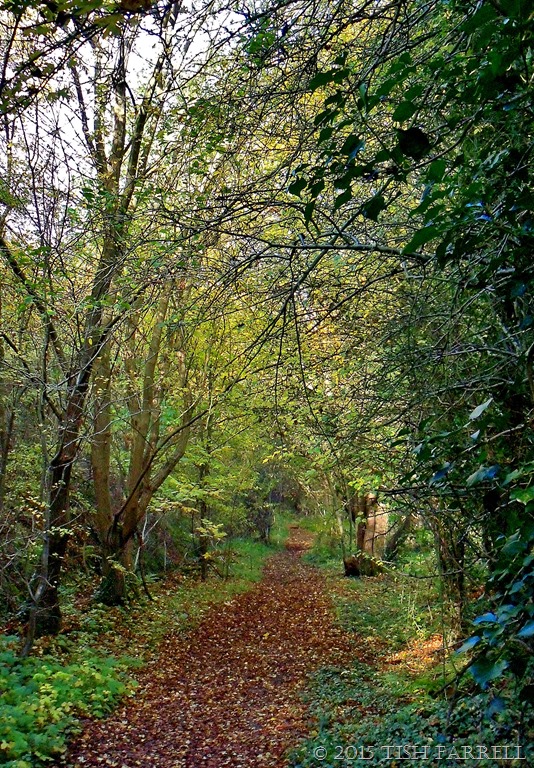
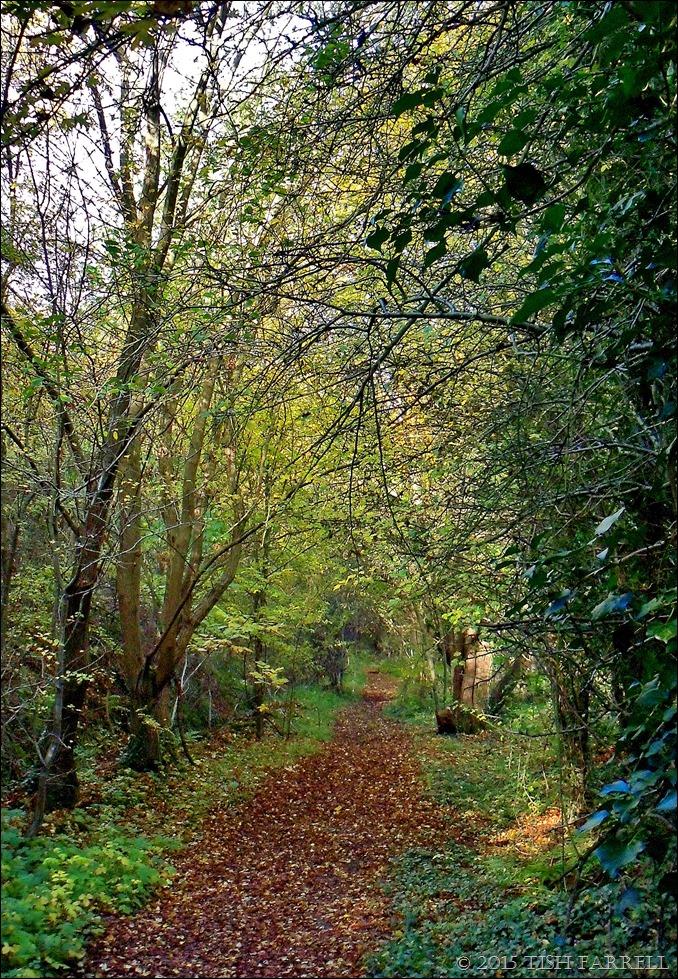
I found these, a little bruised, beside the old railway line that once served Shadwell Quarry. Now a footpath, this is one of the town’s most attractive places to walk. Ash trees and ivy overhang the track these days, and it has an other-worldly feel, far removed from industrial quarrying, trucking and smelting .
100_7809

It is hard to imagine that steam trains once came chugging down this track. The branch was built specifically to haul away Shadwell limestone to use as fluxing stone in the iron-smelting industry. In 1873, alone, 22,500 tons was shipped out of Wenlock.

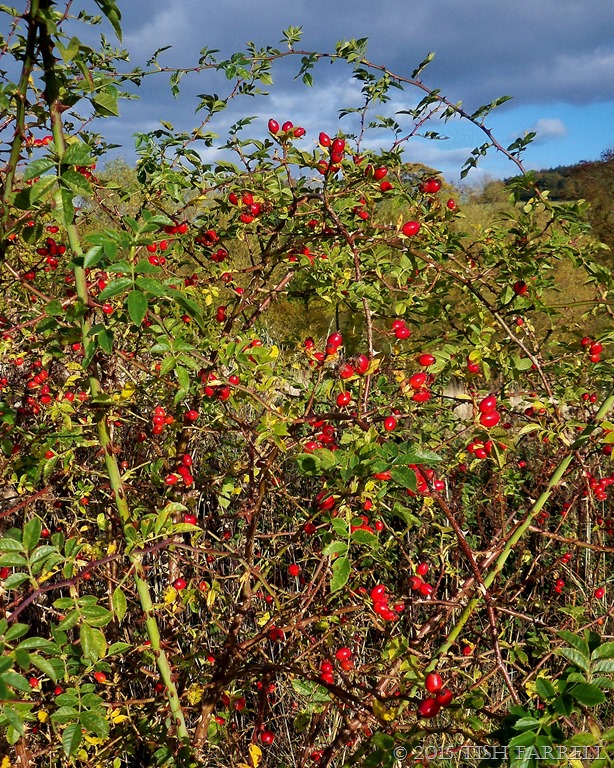
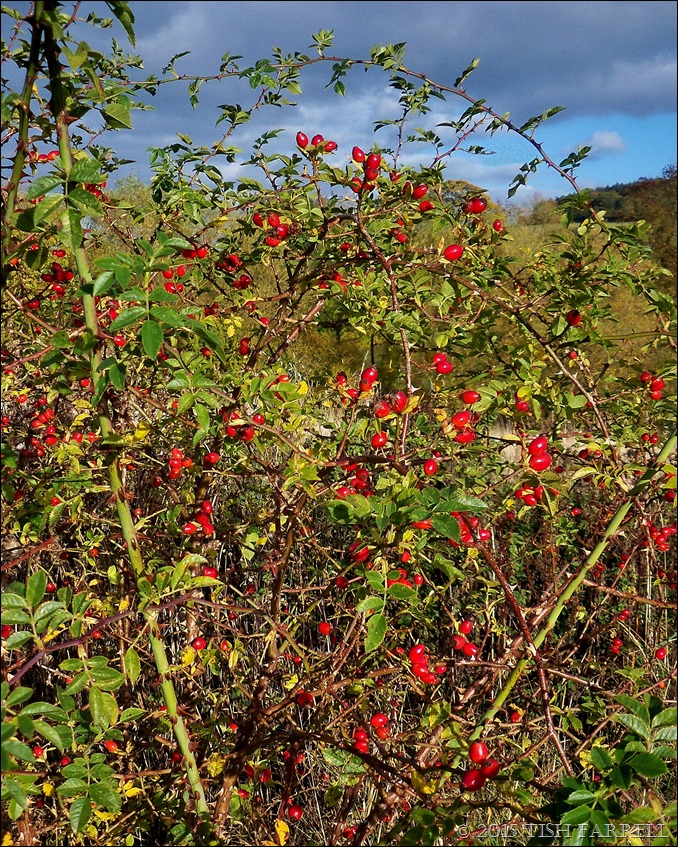
You can walk ‘there and back’ along the path, or there’s a longer circular route that takes you across fields, and down the lane to the Priory and into town. Out in the fields I found that the rose-hips, fruits of wild roses,  were doing pretty good jewel impressions too. They are also known as heps or itchy-coos.
100_7806

The fruit have hairy insides which are a powerful irritant (and presumably much known to aggravate the coos or cows), but once removed, the hips have highest vitamin C content of any common native British fruit. During World War 2 and into the 1950s there was a national campaign to collect hips to make syrup according to Ministry of Food guidelines. It involved much mincing, stewing and straining, and a lot of sugar which I think was possibly counterproductive health benefit-wise. Nonetheless, caring mothers spooned it into their children.  Some of us will still remember the taste.

*

Finally a note about this post. Apart from celebrating the Shropshire countryside, it’s also inspired by 1) Lucile Godoy at Photo Rehab and Perelincolors who in Tech of the Month have been urging us to ‘fill the whole picture’ in our compositions. See their blogs for some useful guidance. (Photos here taken with a Kodak EasyShare 380).

And 2) by Jo’s Monday Walk.

Happy composing and walking everyone.

copyright 2015 Tish Farrell

Climate change before my eyes? Sweet Peas on 28 October

100_7878

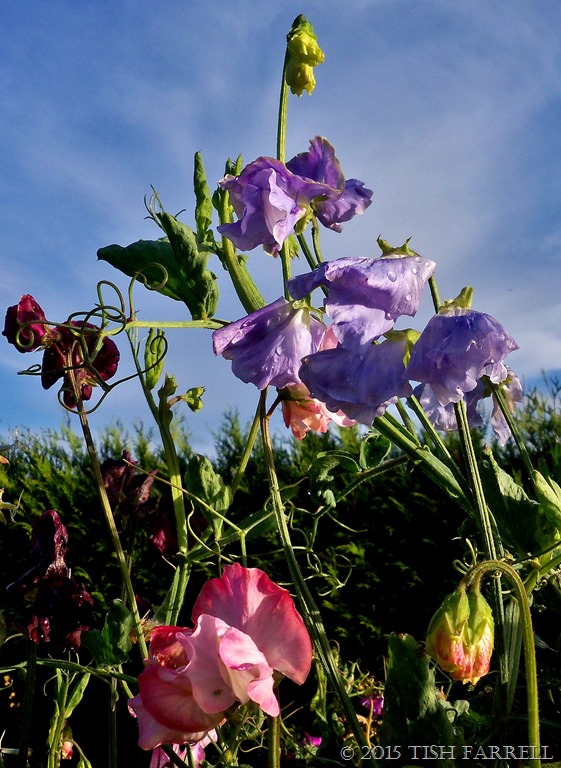
Up at the allotment my teepee of sweet peas has been flowering since June. Twice I have thought they were over, and thought of pulling them up. But here they are (photographed yesterday) still budding and blooming, and it’s nearly November. The sky is pretty impressive too.

100_7871

In fact there’s a lot going on on my plot. My cabbages and Brussels sprouts have grown another six inches in the last few days, and are fighting their way out of their protective enviromesh. The leeks are fat and juicy, and the courgettes are still (just) producing a few fruits. The new strawberry bed is finished, the asparagus mulched, and the over-wintering onions and field beans are in, and sprouting. And, most exciting – to me at least – I have created two huge new compost heaps. Next up, is leaf collection to make leaf mould. It’s a slow process, but worth doing for seed compost. This week on BBC Gardeners World, Monty Don, told me to gather every single leaf because they are so precious. So I shall.

Because if ever I heard a mega-tactic to avoid writing, then this is it. Sorry, can’t write the novel. Must pick up leaves – one at a time.

Actually, I have been writing, though not the novel. Two short stories completed in the last few weeks. In fact today it’s far too wet to go out leaf collecting. So maybe, just maybe, I’ll take a leaf from the sweet peas’ book, and go and grow the masterwork.

copyright 2015 Tish Farrell
#Cee’sFlowerOfTheDay