Nightfall Over Wenlock Edge

100_5021

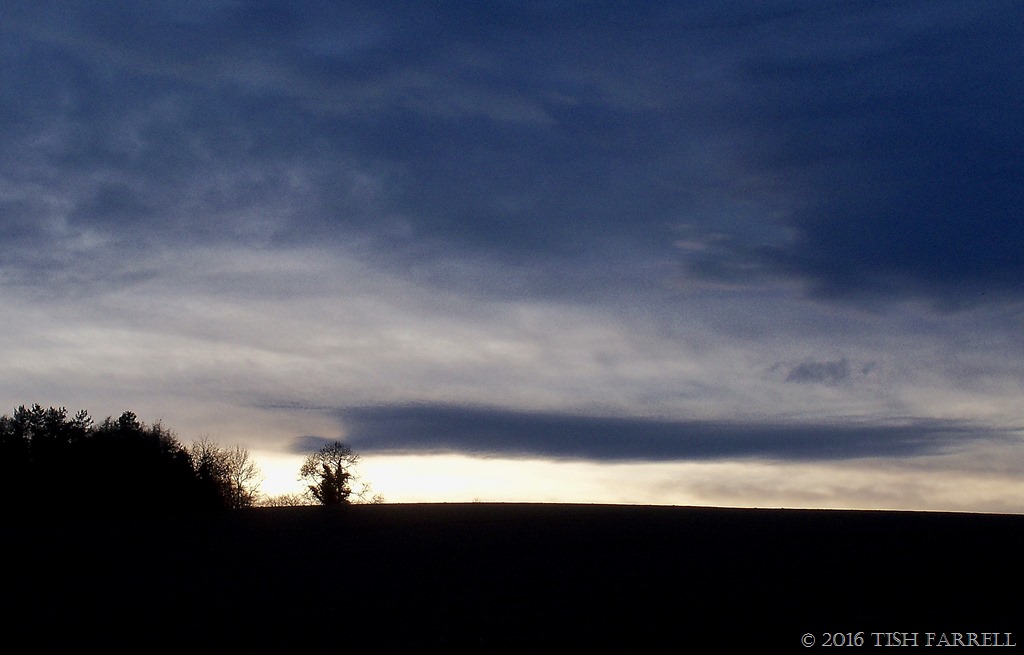
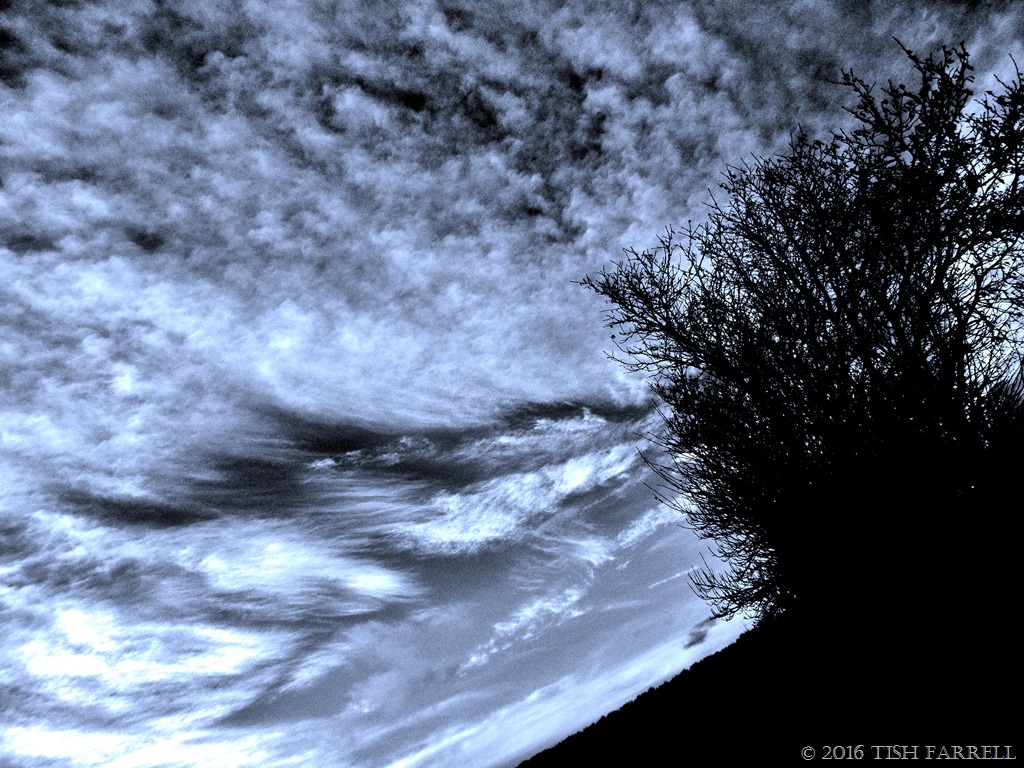
This photo was taken from the field path in Townsend Meadow behind our house, a scene captured one day last winter when I was late home from the allotment. I often stop at this  point on the path to take photos. The ash tree silhouette always catches my eye, whatever the season, and I love the way the day seems to slip behind the hill as night shuts down on top and shadows creep up to meet it. It’s a bit like a stage set. Or it could be Rip Van Winkle Land.

*

Be inspired by things of the night over at Paula’s Thursday’s Special: Nocturnal


The Railway Men 2 ~ Black & White Sunday

P1040806

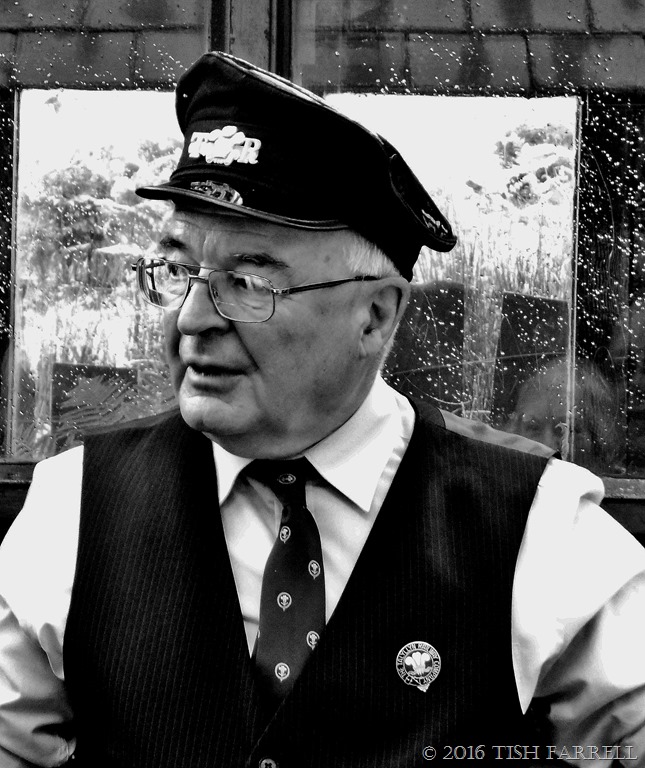
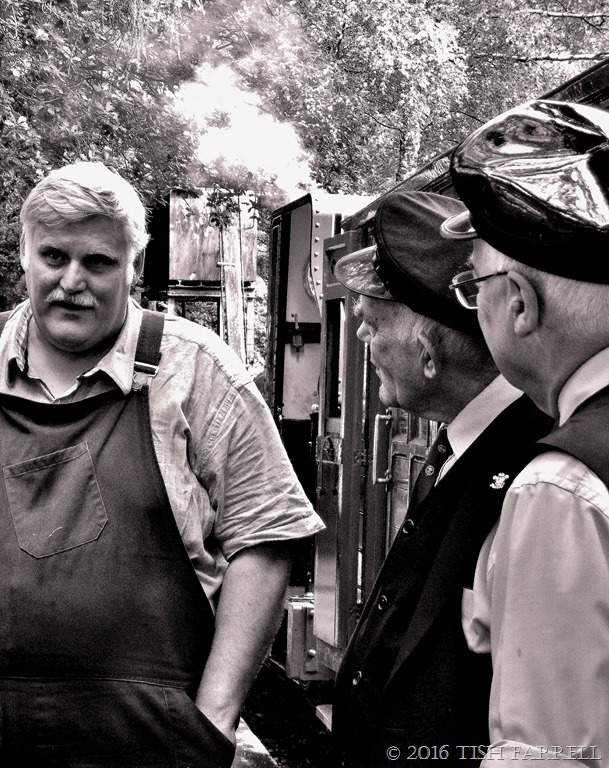
Here’s another portrait from our Victorian day out on the Talyllyn Railway in June. Looking at their website this morning I see they’ve got a very special trip coming up next month – The Halloween Steam and Scream. Oh what a hoot. I think I want to go. It’s my birthday too. There will be a choice of two Steam and Scream trains departing from Tywyn station at 5.15 and 7.15 on several October nights including the 31st. Everyone can dress up as ghouls, goblins and witches; there are prizes for the best carved pumpkin lantern, and you can book a feast at the railway cafe.

Join us for a fun spooky evening train ride along the Talyllyn Railway to the haunted woods at Dolgoch, says the blurb.  Those woods are pretty spooky in broad daylight, but on a dark autumn night in the Welsh hills…Watch out for the Hessian Horseman  and his Celtic brother. Yikes! And double yikes!

*

Now please visit Paula at Lost in Translation for more B & W Sunday portraits.


@TalyllynRailway

#RheilforddTalyllynRailway

As High As An Elephant’s Eye

Scan-131109-0004

And it’s a wise eye. A knowing eye. And it’s a privilege to have been allowed to sit and watch a great herd move by us and around us. So quietly. Measured footfalls. Moving across the Mara thornland. Infants. Adolescents. Mothers. Aunties. The big bulls. All moving as one. To their own rhythm.

*

Thursday’s Special: Eye contact

Power Lines: But Who Has The Power?

P1030628

P1030649

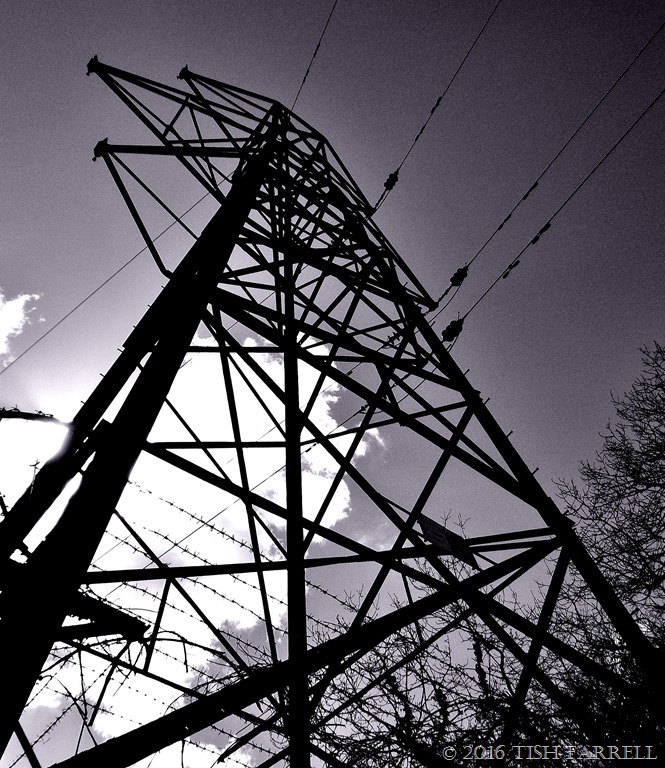
I suppose we English take the presence of electricity pylons for granted. They march across our countryside enabling us to make toast and boil the kettle, watch TV and keep the packs of supermarket frozen peas frozen,  to heat our homes and charge the appliances we think we can’t live without – cell phones, tablets, laptops, cameras.

It makes me wonder though – how much power we actually need, and just when we might get around to deploying clean, renewable energy sources. Next stop fracking.

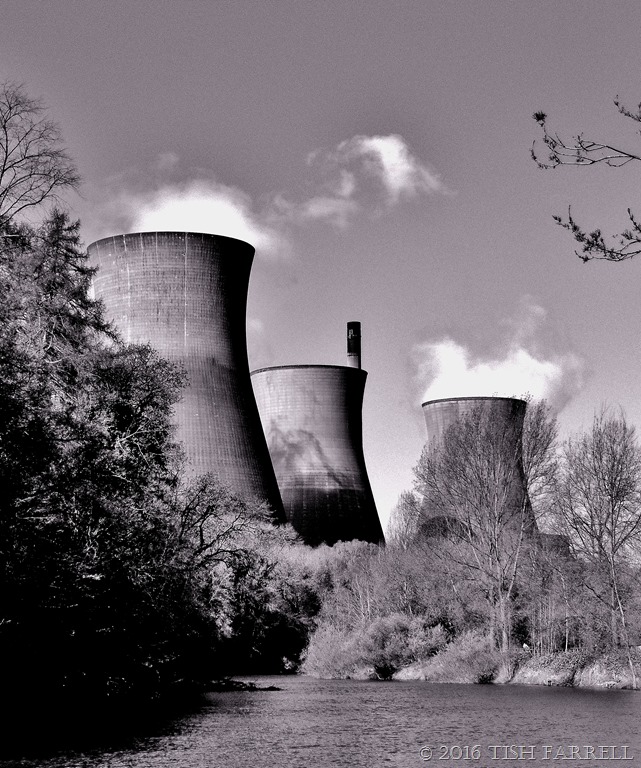
These particular pylons dominate the fields around Benthall Hall above the Severn Gorge, and until last year transmitted energy generated at the now decommissioned Ironbridge Power Station.  I’m not sure how our lights stay on these days, or who to ask about it – which to me suggests a worrying situation.

We regard the provision of electricity as our natural right, while at the same time rarely considering how little personal power we have in how it is produced and delivered. We probably don’t know who owns it – this absolutely essential resource. The same applies to that other absolute necessity – the clean water that pours from our taps. So I’m also wondering if we haven’t surrendered too much power – blithely assuming that the corporate owners (whoever and wherever in the world they are) will always act in our best interest and give us what we need?

P1010072


This week at Black & White Sunday Paula asks us to show her ‘towering’.

This Morning Over My Garden Wall: Still Life

IMG_2868

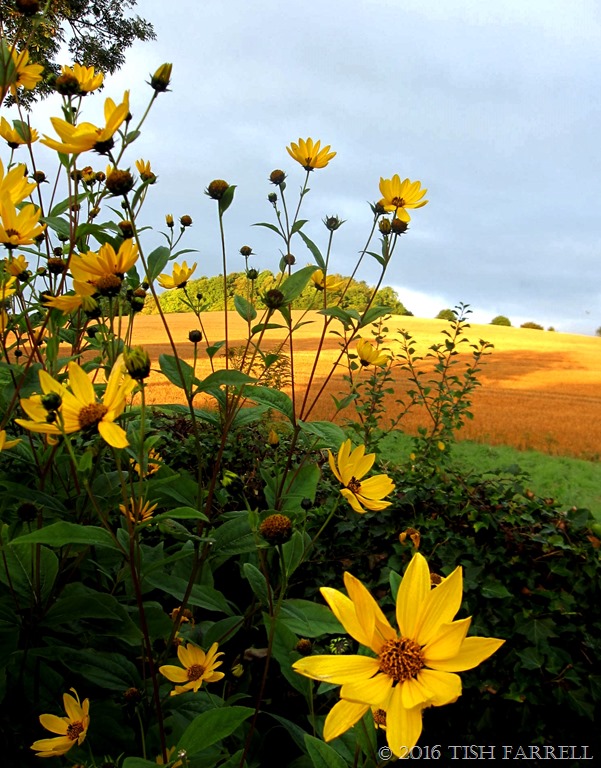
The wheat field behind the house has been harvested leaving us with a yellow stubble carpet to look at. At least for now. Doubtless it will soon be ploughed and re-sown. This morning I watched the early morning sun spread down the hill. Liquid amber. The garden was still in deep shadow, but even so, the rudbeckia were not to be outdone,  making their own sunshine.

IMG_2886

Framed On Lamu

Scan-130428-0113

I said in my last post that we seem only to go to the seaside at Christmas. It was a habit begun when we lived in Kenya through the 1990s: December is the high holiday season, and heading for some Indian Ocean beach cottage was what all Aid-industry wazungu did.  Coral beaches glistened. The sea was warm, and fresh fish, mangos, papaya, eggs and sun-baked tomatoes arrived daily at your cottage door courtesy of the local Digo traders.

We have of course been repatriated for many years, but somehow we still have not re-shaped ourselves for northern latitudes. Perhaps being blown inside out on a midwinter Welsh or Cornish beach only serves to burnish memories filled with clattering leaves of coconut palms, the roar of surf on reef, and the ‘ding-ding’ of the vegetable seller’s bicycle bell. Oh yes, and of a Christmas Dinner that only involves a barbecued lobster, salad, and a glass or two of Tusker beer.

Mostly we spent Christmas at Maweni, on the south Mombasa coast, joined there by UK friends and family, who still remember these as the best Christmases ever. One year, however, when we had no visitors, we took the Christmas Eve flight out of Nairobi’s Wilson Airport, and made for Lamu. We were booked in for four nights at the Island Hotel in the heart of Shela village.

Our Air Kenya plane was small, a couple of dozen passengers aboard, and our journey just over an hour. We took off over the city’s sprawling tin towns, banked over the grasslands of Nairobi National Park, then turned towards the sun, or would have done if it had been at all visible through the lowering cloud. Beneath us the bush country of Eastern Kenya looked comfortingly or uncomfortably close, depending on your inclination, though either way the unending view of brown scrub soon grew monotonous. Also the flight’s chosen altitude, which seemed neither quite up nor down, played havoc with my Eustachian tubes; I tried to spot elephants to distract myself from the accompanying earache, though had no luck on either front.

We touched down on Manda Island airfield in gathering storm clouds – inky black -and were ushered into dhow taxis at the airport jetty, quickly sorted by the Swahili boatmen according to destination: Shela village or Lamu town. Our baggage followed on our heels, piled up on push carts, and was just as swiftly stowed – all highly efficient.

By now the storm meant business. It was starting to rain. Our dhow rocked unsteadily at its moorings. The crew hoisted an awning to give us some shelter, and it was at this point it occurred to me – as I sat, unexpectedly shivering in the tropics, with the sky shut down to the sea, and rain like knives – that all the swift efficiency I was witnessing might also be seen as a general urgency.  We had to cross the Strait before the storm grew any worse, a voyage of around twenty minutes. I remember thinking, as the engine sparked into life, it sounded all too puny for our purposes.

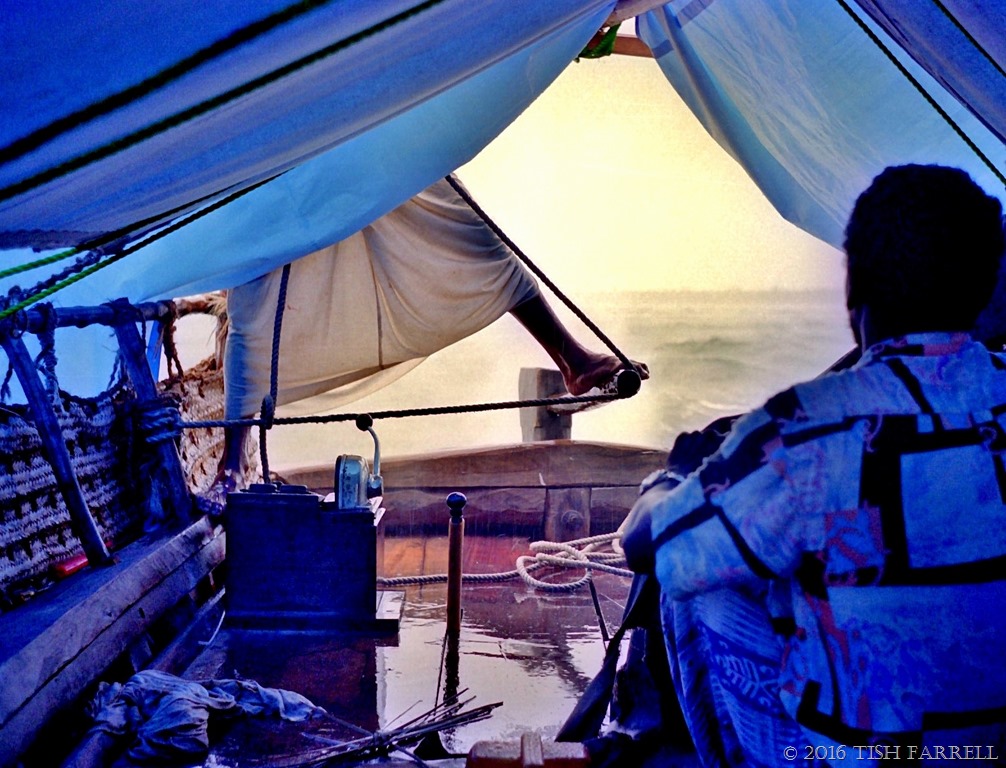
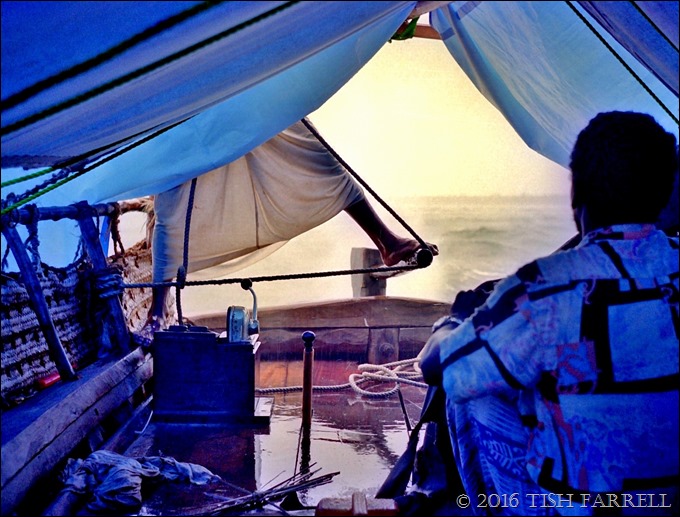
Finding ourselves crammed under the awning with several other travellers we could not see much, which was probably as well. When the sea is choppy, Lamu dhows sit alarmingly low in the water. This brought on another interlude of would-be distraction as I attempted to take a few photos. This shot of our boat captain is one of my favourite Lamu photographs. I’ve posted cropped versions of it in other posts. I like the way his kikoi sarong mimics a dhow sail.

In the end there was no real cause for anxiety (if one overlooked the lack of life belts), and we weren’t afloat long enough to feel too queasy. The storm came to nothing and by the time we put in at Shela harbour the rain had stopped. Within the sheltering arm of the bay there was no wind either. Now as we were handed ashore we began to melt in the sudden humidity. All seemed airless, sticky, sultry, otherworldly in the kind of vaguely luminous gloom that conjures the tropics’ tristesse of Somerset Maugham. It was hard to get one’s bearings. I felt myself slither into sheep-mode: please someone take me to where I need to go.

And being Kenya, where hospitality is always top of the list, someone did.

Our guide led us up winding pathways – past overgrown gardens and abandoned houses where the coral rag walls steamed darkly. The air was spiked with salt and jasmine. My ears were still troubling me and my footfalls echoed strangely on the sand covered alleyways. I was hearing the world as if through a long drain pipe. It did not help.

My heart sank too as we were led further into the maze of dark streets and tall village houses where the air became thicker and hotter. I had visions of four stifling, mosquito ridden nights. And then we were there – shown into a dark vestibule straight off the street. It could have been a merchant’s house in a Sinbad tale. And finally when we were shown to our room, four floors up, I knew I’d been given the best Christmas present possible.

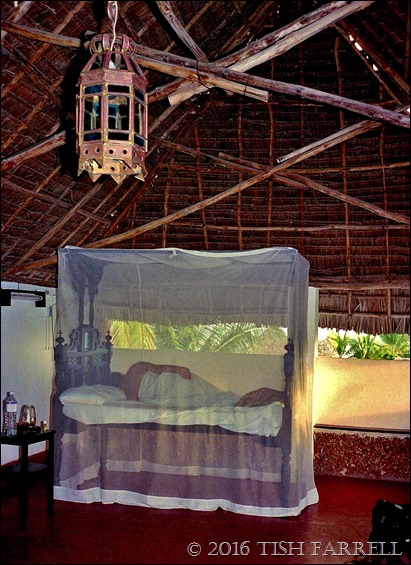
They called it the penthouse suite. And roof-top it was – with a high makuti thatch, woven from palm leaves. But here any expectation of luxury ended, at least in western eyes. The room was certainly huge, but it housed only a bed – an antique Lamu contrivance that was too short for a tall man and too narrow for two people to sleep comfortably side by side. Sleeping in shifts would be called for then.
Scan-130428-0123

The Penthouse Suite

*

Leading off the main room was a little sitting area with deck chairs, and next door, a concrete cubicle wherein a cold-shower shower could be had. In fact there was only one complete wall that went from floor to ceiling, and seemingly made so in order to provide a place to hang the door. Otherwise the walls were mostly windows, or rather, they were large spaces open to the elements.

And here was the luxury. The breeze. It blew through the room, bringing not only coolness, but also seeing off the mosquitoes. It was like being at sea. Or having one’s own look-out post, for in three of the four quarters we could survey the intimacies of Shela village life.

One of our views took in a neighbour’s rooftop bedroom one floor down. Sometimes the bed would be occupied. At other times only a bright kikoi lay abandoned on the simple rope-strung frame. Under the eaves there was a store of big yellow pumpkins. It felt like a privilege to have one’s stranger-closeness deemed so acceptable by Shela folk. And indeed, over those four days we received nothing but smiling kindness from the people we met there.

You can read more on this at: Christmas on Lamu: Views of Swahili Community

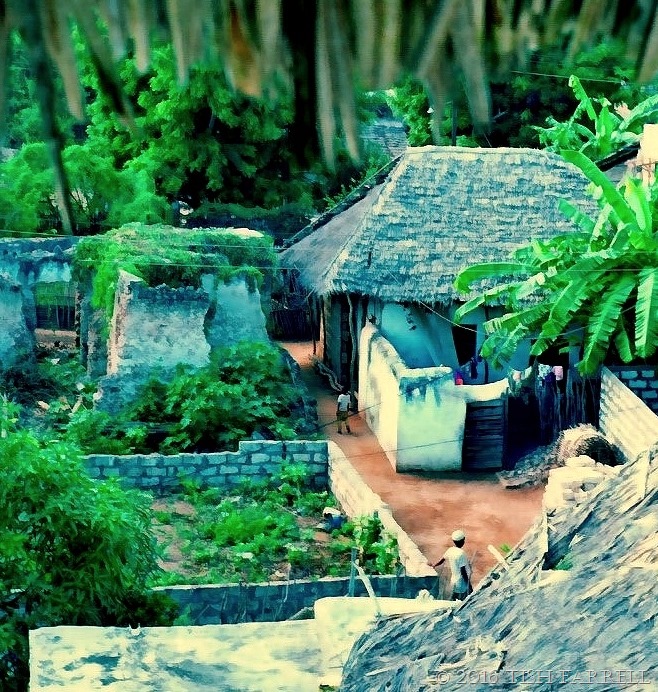
For now here’s a rear window view – first as I took it, framed by the thatch and wall, and then cropped to within an inch of its life, using the house walls and roof as the frame. My camera was a little Olympus trip, and the time: before digital was invented.
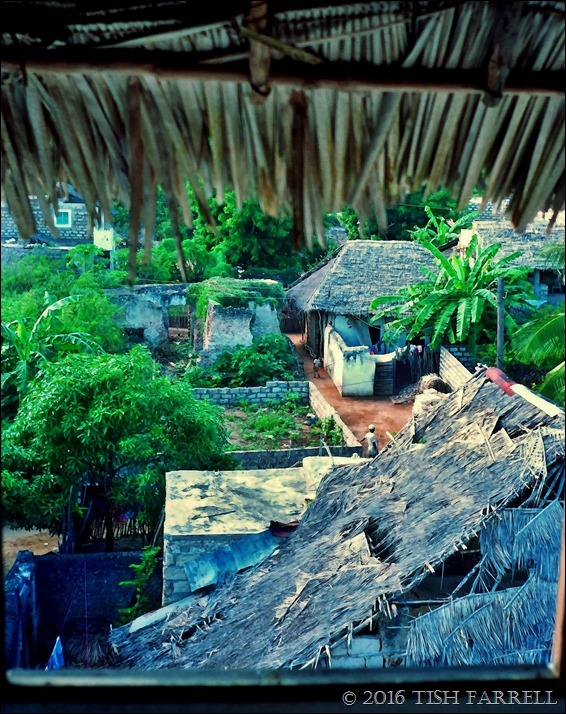
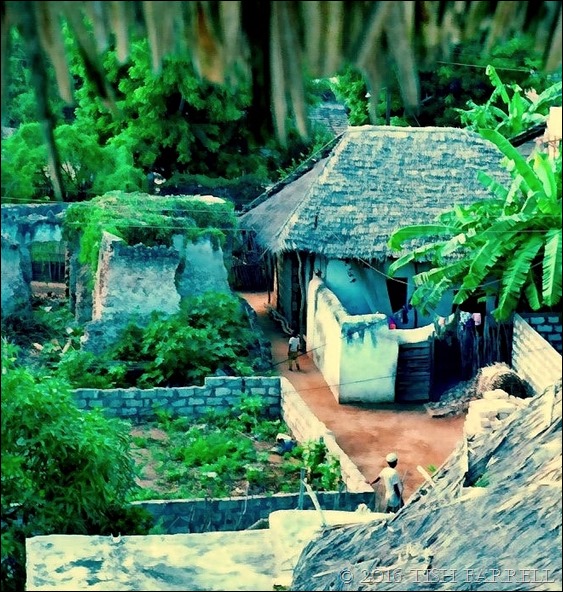
Scan-140802-0004

Scan-140802-0004 (2)


Frame

Thursday’s Special: Seaside Disorder

IMG_0788

For some reason we mostly go to the seaside at Christmas, and not at all in high summer. Of course a beach can be a dramatic place any time of the year – changing and unchanging all at once, figuratively and physically. How we treat with it reflects our current mood or emotion – heightening  or lowering it, depending on our inclinations.

This photo was taken on Ynys Mon,  the island of Anglesey in North Wales. It was Boxing Day. The wind was perishing yet spirit-filling too, but then I always find ‘going to the beach’ exciting, in much the same way as I did when I was four. You just never know what you will find there in the margins between land and sea.

So here we have a tumble of razor shells embedded in a beach stream that was running off the marshy hinterland. I think there’s a viscid quality about the stream in the winter’s light, as if the shells have fixed there by the water rather than by the shift of sand.  I like the slashes of greyish-white across medley of ochre shades. An intriguing state of disorder, then: the beach endlessly creating its own artwork.

Thursday’s Special

August’s Changing Seasons: Fruitful

IMG_2800

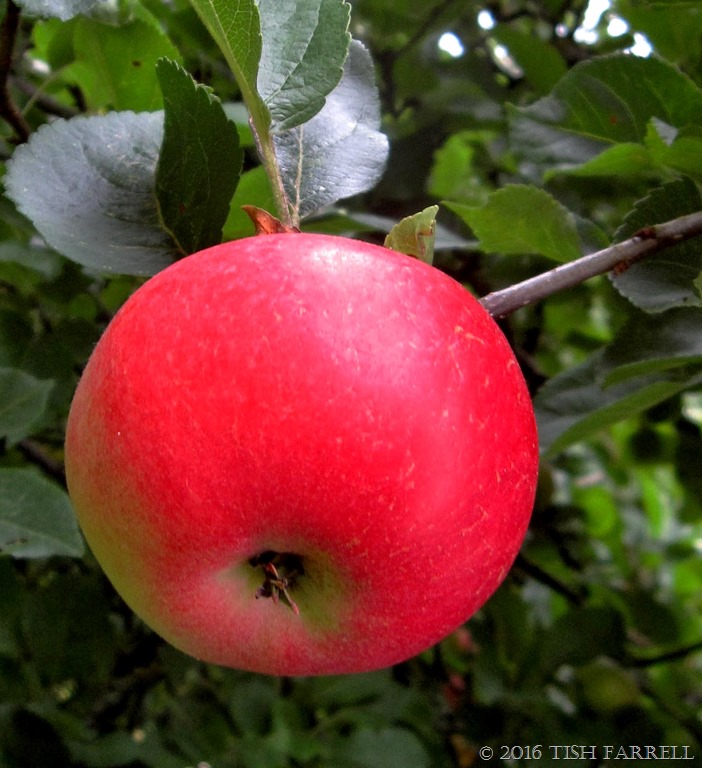
Who wouldn’t be tempted by such a perfect apple? I came upon it yesterday  as I was leaving the allotment. It’s growing on an very old and lovely tree that every year puts on its own magnificent Garden of Eden of show. We allotmenteers share the apples. They are crisp, juicy, sharp and sweet all at once. I don’t know the variety.

It’s important to  keep tabs on the crop though. The window of opportunity for gobbling is brief since the apples don’t keep very well. I’m already thinking that they might be good in Tarte Tatin that most delicious of French classic deserts.  I usually use Coxes Pippins later in the year, but since this August feels so autumnal, it’s an excellent excuse to make it sooner. I have a deep cast iron frying pan, which works a treat, both for the initial caramelizing of the apples on top of the cooker, and the final cooking with added the pastry lid inside the oven.

I should also say these apples have the most delicious fragrance too – lemon crisp. They anyway sum up August for me: the garden’s rich harvest.

*

Changing Seasons: August  Every month around the 20th Cardinal Guzman posts a Changing Seasons challenge. There are two variations to choose from, so follow the link for further instructions. They are easy-peasy.

The Railway Men: Black & White Sunday

P1040808 - Copy

The Talyllyn Railway in mid Wales is the oldest preserved steam railway in Britain. Over the past half century it has inspired many other such ventures and there are now some 500 miles of restored lines across the country.

That they are there at all and can offer us steamingly enjoyable train rides is mostly down to armies of enthusiastic volunteers like these chaps in the photo. It’s an enterprise fraught with responsibilities too; the health and safety implications are momentous: track, rolling stock and passengers all to be kept in good order.

And in case you missed it back in June, you can read more about Tish and Graham’s big train day out at:

Partners in steam on the Talyllyn Railway – Woo-hooooo

*

This week at Black & White Sunday Paula’s challenge is COMPOSITION. Please visit to see her own very fine composition, and the other entries it inspired.

My own photo was composed in Dynamic Monochrome.

Big Sky Over Wenlock Edge

P1000424

I am always fascinated by silhouettes. I also seem to do a lot of sky watching these days. This shot of a farm hedge in one of the fields behind the house was taken late one winter’s afternoon using the Dynamic Monochrome setting on my Lumix compact camera. There was just enough light left. I added the blue-ish tint in Microsoft Picture Gallery.

This week for Black & White Sunday Paula asks us to post a favourite b & w photo, so this is one of mine. You have the rest of the week if you want to join in, but please visit Paula’s blog where you will find more ‘favourites’.