February: In The Monochrome Garden

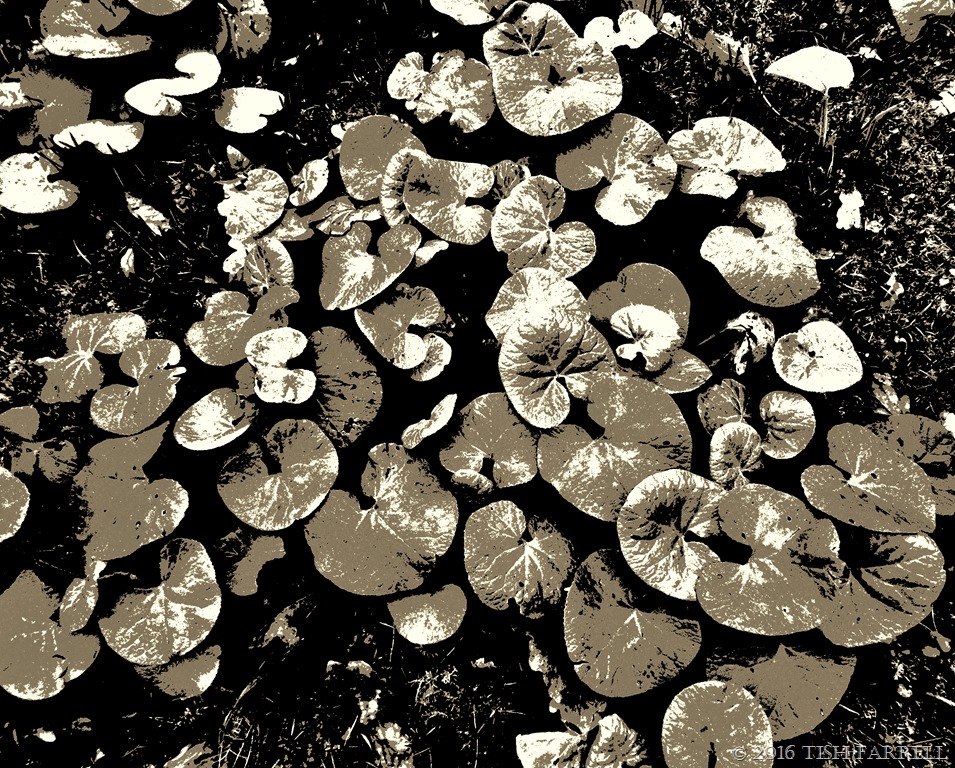
P1030162 - Copy (3)Petasites fragrans   winter heliotrope

These are the leaves of winter heliotrope, a November to February flowering evergreen that originated in North Africa, and is now considered a wayside weed here in the UK. It has a great tendency to spread and form carpets. On the other hand it does flower when other plants are busy hibernating.  Also the flowers – a fleshy, purple pink – smell of vanilla, and track the sun’s course during the day. And all I can say to that is, this year winter heliotrope must have really had its work cut out. Sun. What sun?

Sometimes the plants make no flowers at all. There were certainly none to be seen on this clump, but then it was growing in deep shadow. The other fascinating thing is that the male and female characteristics appear on entirely separate plants, and it is usually the male flowering variety that we see in the UK.

I must also confess that I’ve learned all this just now. When I took the photograph yesterday in the gardens of Benthall Hall, I thought it was butterbur, a plant that grows in like fashion and has many other similarities of leaf and flower.  It was only when I was editing the shot, that I noticed the leaves looked too smoothly rounded and heart-shaped for butterbur. Next came a quick check on Google, which in turn led to realizing that this was an entirely new plant for me. So thank you, Jude, for setting this particular challenge – and the proposition of using both monochrome and looking for patterns in our chosen garden subject. It was the heart-shaped leaves that attracted my attention. I thought they would make a good design for Valentine’s Day.

For more about this challenge, please go over to Jude’s garden photography blog:

February: Monochrome

And now here is a shot of Benthall Hall, caught before a squall sent us scurrying to the car. P1030167

This sixteenth century home of the Benthall family is just a mile or two up the road from my house in Wenlock. The land on which it stands was once part of Wenlock Priory’s extensive domain, but now the house and grounds belong to the National Trust.

I hadn’t visited the house for years, and this weekend was its first opening of the year. For me, one of the property’s  most fascinating stories is the fact that in the late nineteenth century, the plant hunter, botanist and co-founder of Maw & Co, the world famous decorative tile works, George Maw was a tenant. He planted the gardens with his botanical treasures, and in particular crocus of both the spring and autumn varieties. Botanical images of course inspired many of the Maw’s tile designs that graced public buildings across the world during the Victorian era. Today part of that heritage, including original design catalogues, is on show not far away at the Jackfield Tile Museum in the Ironbridge Gorge. It is well worth a visit if ever you are in Shropshire. But one thing is certain, we will be back to explore George Maw’s garden as the year progresses. Please expect further reports.

copyright 2016  Tish Farrell
On reflection: can there be too much of it?

P1030051

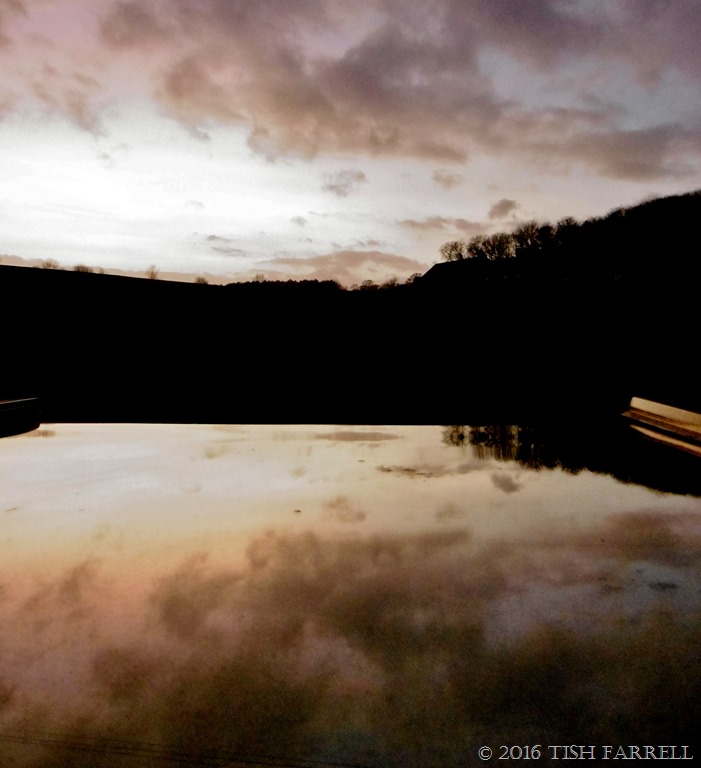
Writers are past masters of diversionary tactics. This particular writer spends a considerable amount of avoiding the work in progress. She is not sure why. But staring out of the window is definitely a popular pastime. On the other hand, who wouldn’t want to stare at a sky like this, the sun going down behind Wenlock Edge.

Then I discovered something really neat as I was trying to snap it. My office has a cabin bed in the corner under the roof light. So I clambered on the bed, and opened the window to the horizontal to give myself a makeshift ‘tripod’. I then set the Lumix to sunset mode and rested it on the back of the window. And this is what happened.

Who’d’ve thought avoiding writing could be this much fun. But there’s a lesson here too. Sometimes we overthink the pieces we are working on. Sometimes we need to loosen up and play. And ask questions. Definitely ask questions. E.g. What would happen if I let my characters think for themselves, and stopped trying to control them? What if I let them go play? What might they not come with? Something magical, diverting, extraordinary? Do I have the nerve to let them go?

copyright 2016 Tish Farrell

The Bees’ Knees In Vibrancy

100_3915

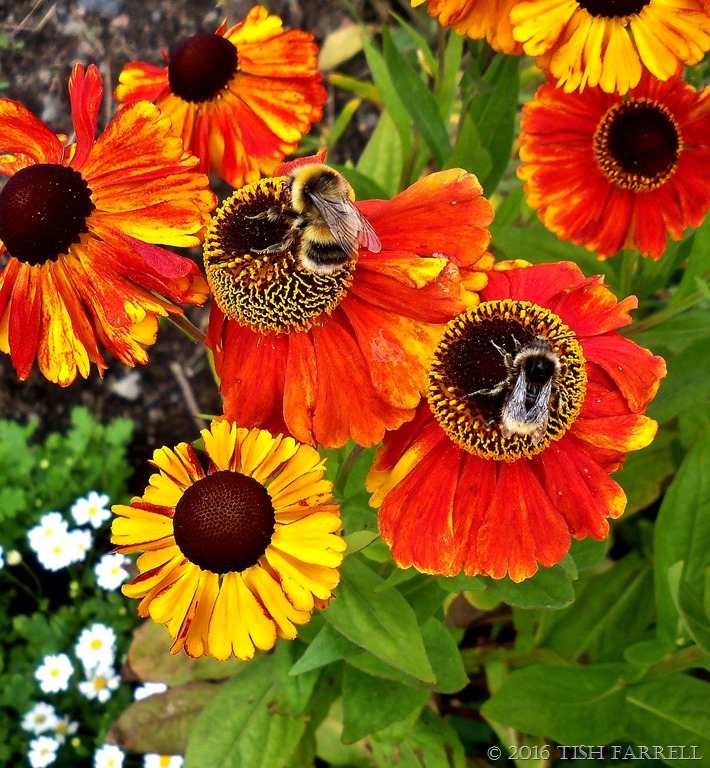
This is one my favourite photos. If you look hard you can even see the bees’ wings vibrating. And yes, for those who come here often, I know I’ve posted it a few times before. But isn’t it joyous – hot red, buzzing bees, sunshine.

And how about bees in the sneeze weeds (aka Heleniums)

100_6719

Or the bee on this sunflower that was growing last summer in a pot by the shed:

100_7053

All of which is to say we need to keep thinking about bees. We cannot do without them. They pollinate many of the plants that provide us with essential foods.  In the northern hemisphere new seeds are coming into the shops, so we can all think about sowing some bee-friendly flowers. You don’t need a garden. A pot of oregano will please them, and make you happy too when you’re making spaghetti sauce.

P1010778

And then sedums will provide a valuable late summer nectar boost for honey bees. There are many varieties of this plant – large and small. They don’t need much attention and will grow in containers too:

100_7435

If you want to find out which plants are bee friendly, there are many bee sites on the web. But for local first-hand information ask your local beekeepers society. There will be one. Meanwhile the Royal Horticultural Society provides some useful guidance if you want to give your life and bee-life lots more buzz.

IN 2016 THINK BEES

Happy Wednesday Wherever You Are

Vibrant

Vibrant: me on Lamu Island far too long ago


Scan-130426-0017

It was a four day trip over Christmas. We’d been living in Kenya for three or so years by then, and another five to go before we would return to the UK for good. Lamu Island  set my imagination alight. Later I began writing a teen adventure aimed at the African schools literature market. It was published by Macmillan in their Pacesetters series around the time we left Kenya in 2000.  It’s still in print, and even if I say so myself, quite a good yarn. I have a feeling my brain cells were a little more vibrant back then. Perhaps they are craving the African light…

100_3649 - Copy

Vibrant

Thursday’s Special: Organized Noise

100_8271

This week Paula’s guest at Lost in Translation is Tobias  M. Schiel. He has set us a challenging challenge entitled Organized Noise. I think I have the gist of it – and this is my take on what he says (so if I’ve got it all upside down and backwards, Tobias, please tell me) – that you can use the camera’s eye to frame everyday  ‘stuff’ and ‘clutter’ that of themselves do not have aesthetic appeal. In other words, the photograph itself endows the scene with creative interest and possibility through framing, focus and cropping. It thus exposes something intrinsically or extrinsically fascinating in a context that we might otherwise screen out as uninteresting or unworthy of particular notice. As Tobias says, this is more likely to work in the abstract.

So I’m  not sure that this photo of a stricken pine on Cornwall’s Seaton beach quite fits the bill. But I’m posting it because the scene as a whole caught my attention. The tree had been blown off the cliff.  The way it was lying suggested to me a crash-landed dragon, the peeled trunk in the foreground its snout and eye.  But with a more abstract eye, the main thing that struck me about this pile of beach debris was the vivid range of colours – materials natural and unnatural.

Maybe this next shot is a better example? – a close up of some of Seaton’s amazing geology:

100_8281

In his explanation, Tobias says that this approach is used in musical composition, but as a writer I can see that this photographic version is also a visual analog for what the best creative writing does: that is, it takes a scene, or a detail of it, something that others might miss altogether were it not for the affecting way in which the writer chooses to delineate it, often mixing heightened reality with metaphorical abstraction.

Thanks to Paula and Tobias for hosting this fascinating challenge.

copyright 2016 Tish Farrell

Through A Web Darkly ~ Inside The Old Barn

100_8881

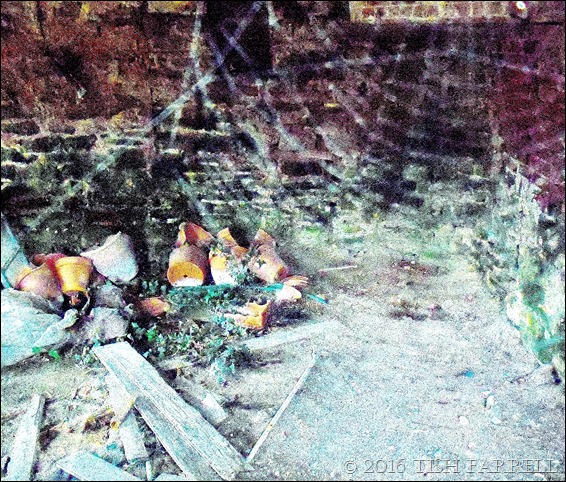
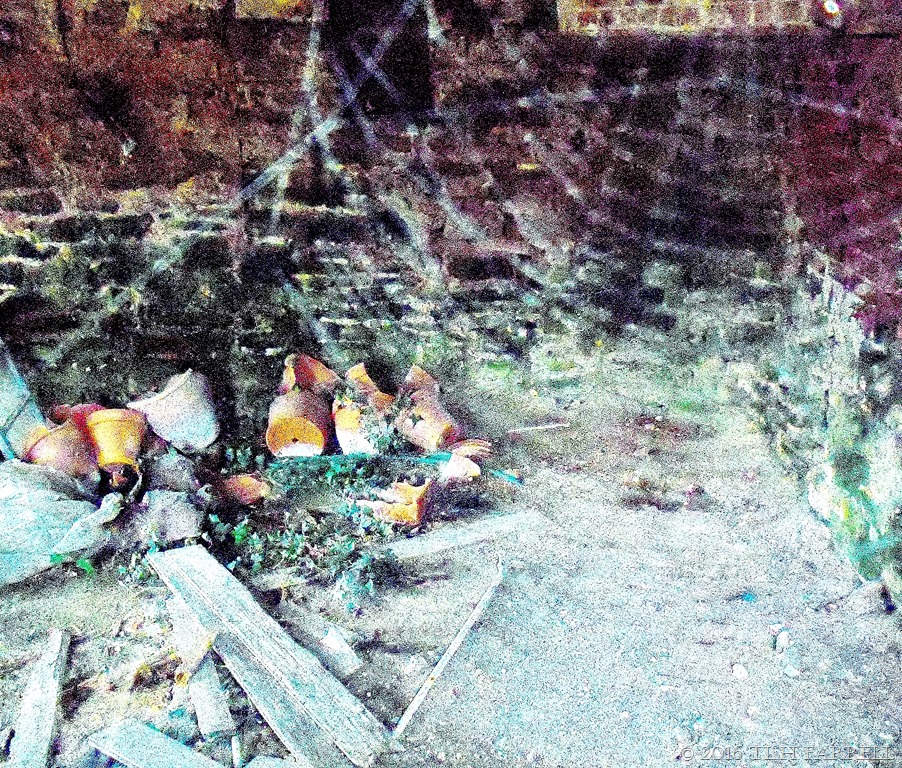
I took this photo yesterday. The footpath we were following winds through an old farmyard, everywhere rustic dereliction. Being nosy, I had to peer in through the barn window. This shot was taken through a spider’s web, and is admittedly rather weird. My first thought is some kind of time warp or threshold. So if it inspires any of you to create a piece of poetry or prose, please feel free to link back here so I can read what you’ve come up with. No rush.

*

Many thanks to bloggers for their fun responses. So nice of you to play along:

T N Kerr   A Very Special Birthday

Sandra Conner Beyond the Web

Gerry  Sneak the Spider

Seaton Seascape

P1020706 - Copy - Copy (2)

All I can say is my Lumix point and shoot was on a very strange setting when I took this photo. I blame the gale that was blowing along Seaton Beach, though you’d hardly know it by the ‘frozen-in-time’ look of this shot.

Cee’s Black & White Photo Challenge

This week Cee says the subject can be anything beginning with the letter ‘S’. Please follow the link to see her work and other bloggers’ renditions.

The Changing Seasons 2016: January On Wenlock’s Olympian Field

We had the first hard frost of winter today and, after weeks of dreariness and both rising and falling damp, it was a great relief to feel some good crisp cold. Not only that there were clear skies. And sun. And brilliance. Up on Windmill Hill there were also fine views all round, although the midday light did have the strangest quality – creating vistas that were sharp in parts, but soft-focus in others. The landscapes I snapped looked like water colours even before I snapped them. Also the farm fields loomed in unnatural shades of green, at least for January.

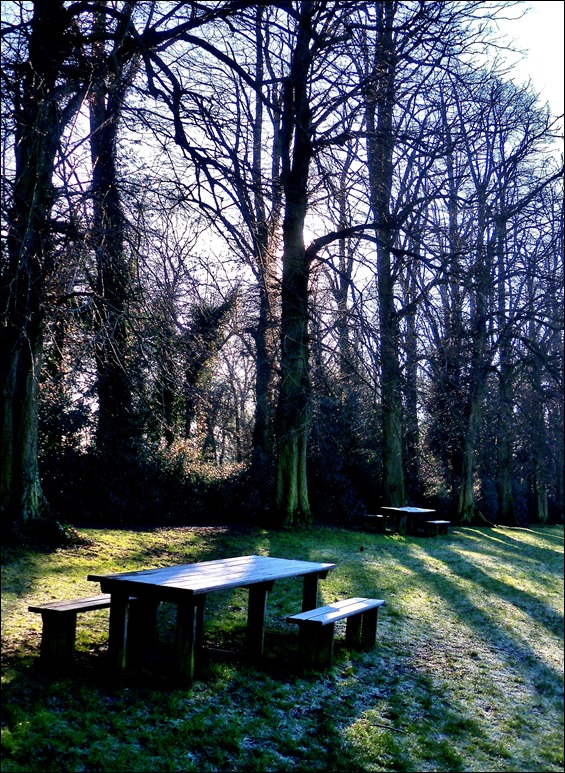
As we strode home beside the Linden Walk we passed the frosty picnic tables. They looked as if they had been freshly spread with perfect white cloths, but sadly there was no sign of lunch. It seemed a long way off till summer.

This post was inspired by Cardinal Guzman’s The Changing Seasons monthly photo challenge, which now comes in two versions. Please follow the link for more details.

I’ve chosen to feature Much Wenlock’s Linden Field and nearby Windmill Hill, since this was where the modern Olympic Movement had its beginnings, and was (and continues to be) the venue for the annual Much Wenlock Olympian Games, founded by Dr. William Penny Brookes, the town’s physician, in 1850.

These days the games take place at the William Brookes School just below Windmill Hill, and on purpose built tracks, but in the old days spectators sat on the hillside and watched the events taking place in the field below. Please conjure races on penny farthing bicycles, hurdling, tilting, and all manner of athletic events – not least the Long Foot Race that was only open to Greek speakers. There would also have been cricket and football matches, and fun events such as ‘an old woman’s race’ for a pound of tea, and a blindfold wheelbarrow race.

Dr. Brookes had serious objectives however. He was a man ahead of his time, who embraced a holistic view of human health that included both physical and mental exercise. He also planted the Linden Walk, no doubt because as a trained herbalist as well as a physician, he knew of the soothing effect, and sense of well-being imparted by lime tree blossom on warm summer days. It is good to walk in his footsteps.

copyright 2016 Tish Farrell

Well Hello Hellebores!

100_8773

100_8774

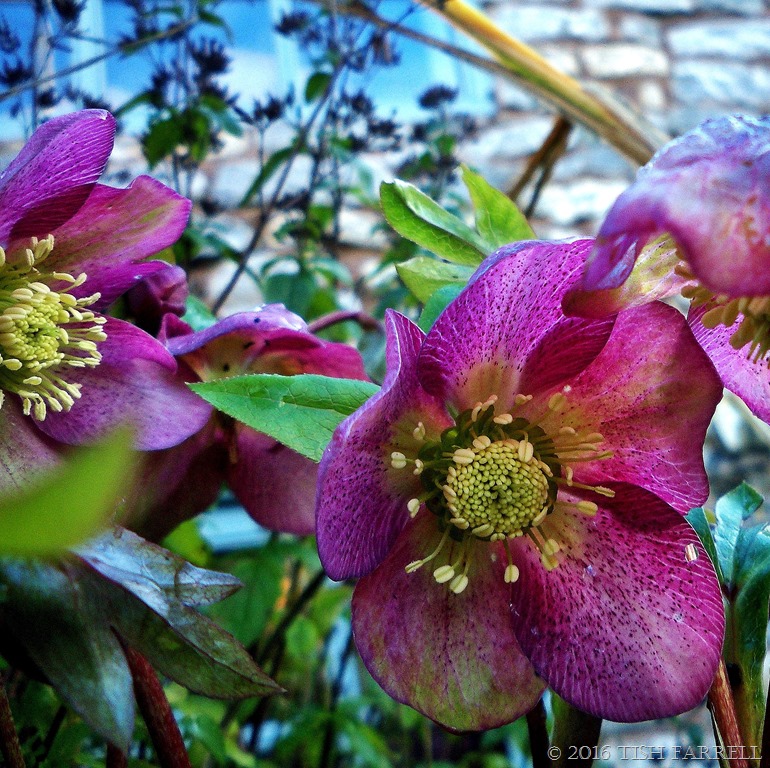
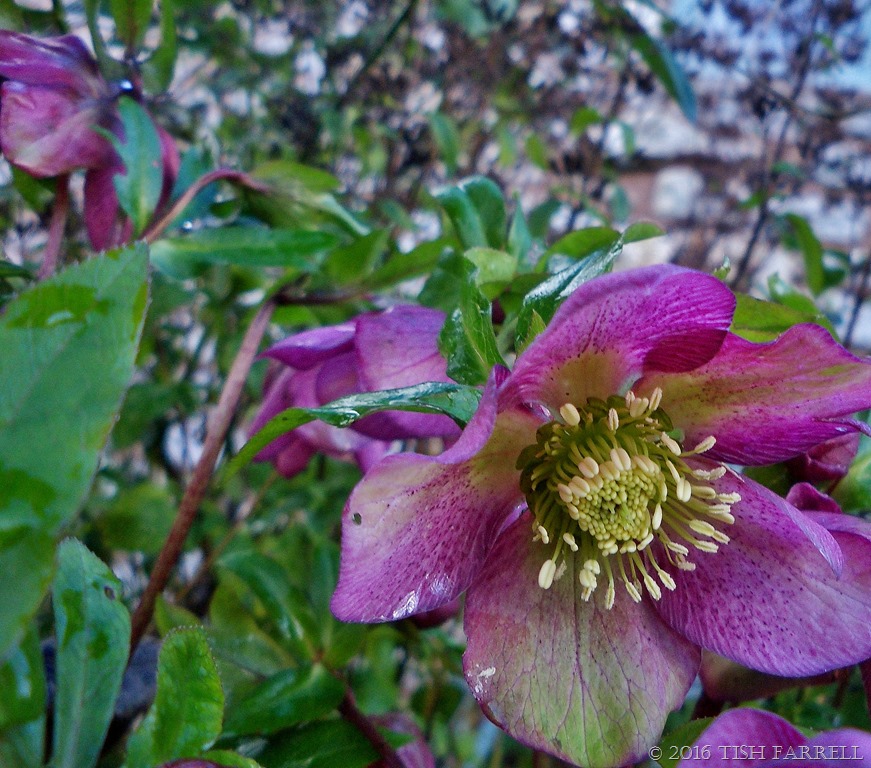
Show us your hellebores, said Jo at Restless Jo – this in a chat about Jo’s last week’s hellebore post which she linked to Jude’s new  Winter Garden  photo challenge. And so thinking to oblige, and in between sleet and rain, sleet and rain, and more rain and rain,  I dashed out into the garden with the digital camera only to find the currently flowering hellebores in most reclusive mood. They all had their heads determinedly earthwards as in the next photo:

100_8776

And so the only way to capture the first two shots was for me to stand on my head, and send the camera underneath on macro setting, and press. The whole enterprise was totally discomposed, and what’s more, it had started raining AGAIN. But then that’s winter in the garden for you. Anyway, despite shooting blind I’m quite pleased with results – sort of candid-camera shots of shrinking violets hellebores.

For more bloggers’ winter gardens please visit Jude over at The Earth Laughs In Flowers blog.

January: Winter Garden Harvest

P1020995

Yesterday, after several days of rain, I trudged, stick in hand, clad in big hat and waterproof – (looking a bit like Gandalf, I thought, but definitely without any concealed fireworks) along a very squelchy field-path to the allotment. To say the plots are not looking their best is an understatement. All seemed dank, dreary, waterlogged, weedy, and downright dismal, and certainly not worthy of a photo – not even a moody, atmospheric one. BUT there was produce, much of it still thriving in the mild, wet weather. So here we have it – on the kitchen table my winter harvest, a humble ‘still life’ tribute to the Flemish masters who created such scenic wonders out of lemons, melons and grapes. And also inspired by Jude who kindly said we could interpret her winter garden challenge any way we liked.

So please pop over to her garden photography blog for more Winter Gardens