Scattered Leaf And Light At Croft Castle ~ Spring Happening

P1030871

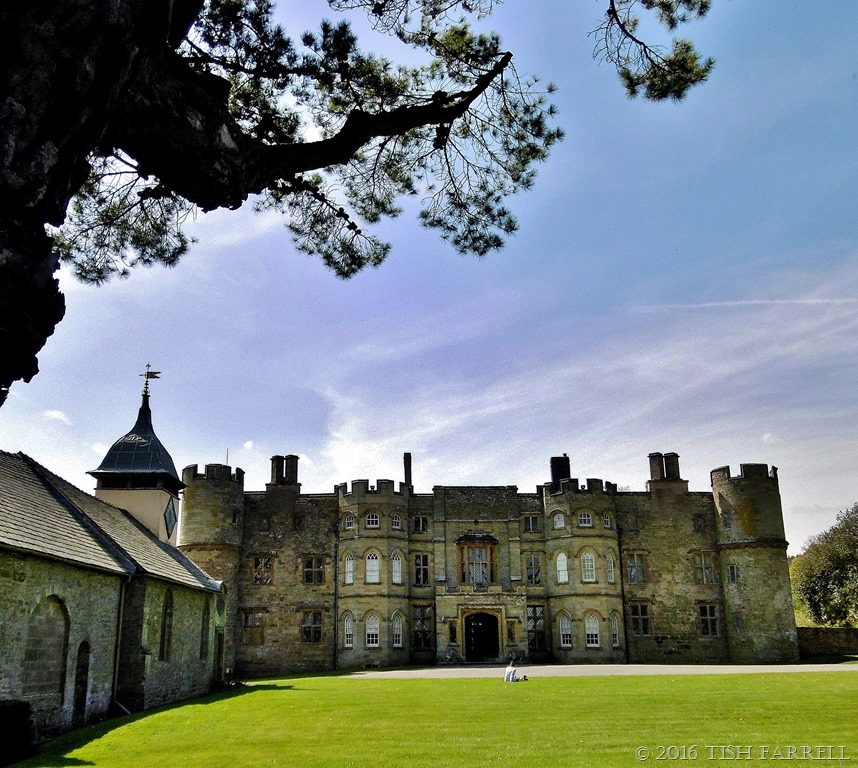
Yesterday our Thursday outing took intrepid Farrell Safaris over the Shropshire border and into Hereford. Our destination was Croft Castle in the wonderfully named village of Yarpole. The house is a castellated fifteenth to eighteenth century fantasy with magnificent turrets (only for show) –the whole set in glorious parkland of veteran trees. The present house replaced an 11th century castle, and the Croft family who occupied it then, continued to preside over this corner of England for nearly a thousand years. All is now in the care of the National Trust. And if anyone reading this intends to visit, then take a good tree book. And also your walking shoes as there are several long walks including one to the Iron Age hillfort of Croft Ambrey.

I’ll post more about Croft another time. For now I’m trying to keep on theme with Paula’s Thursday’s Special. This week it is ‘scattered’ so please pop over there for more renditions.

Now for a scattering of tulips in the walled garden:

P1030917

And oh well, I know you really wanted to see the Castle, so here it is framed by the branches of a very ancient conifer. There’s some good cloud-scatter too.

P1030889

“the undiscovered country from whose bourn no traveller returns” ~ Or Is It?

P1030697

Every other Thursday we’ve taken to popping along Wenlock Edge to Church Stretton. This used to be Graham’s daily commute – eighteen miles of Shropshire hills, old quarries, small villages and neat farm fields. Oh yes, and the occasional deer. Just now the Edge woodlands along the road are a haze of blue bells and bursting greenery. We never fail to think how lucky we are to live in such a place.

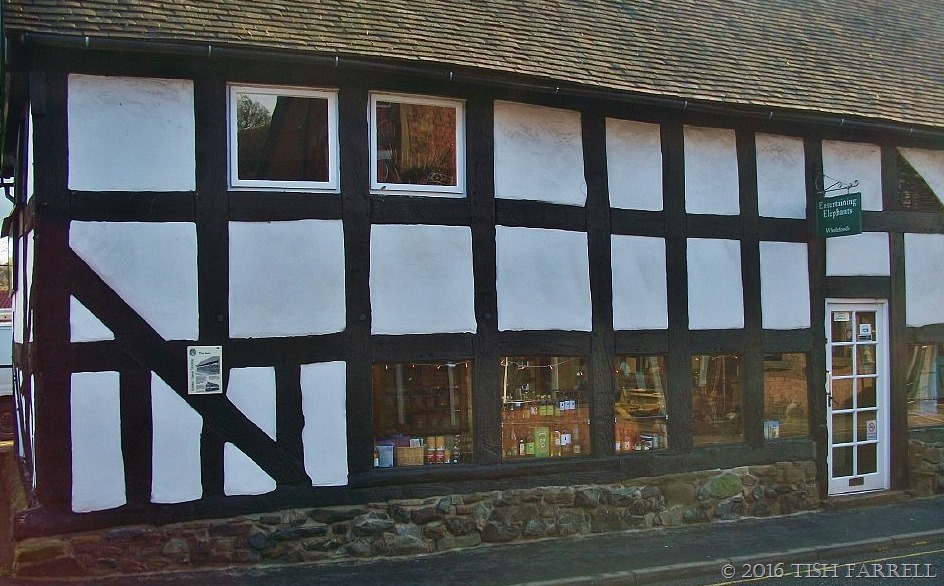
The object of the excursion is to stock up on organic and other ethically produced foodstuffs at my sister Jo’s brilliant shop – Entertaining Elephants  (a name coined by the previous owners from Maurice ‘Where the Wild Things Are’   Sendak’s  Alligators All Around  alphabet book.

100_3498_resized

With the shopping done, a few picnic items gathered together, and the weather apparently in spring-mode, we decided to head west around the southern end of the Long Mynd towards Bishops Castle and the Welsh Border, and so to the Bronze Age stone circle of Mitchell’s Fold.

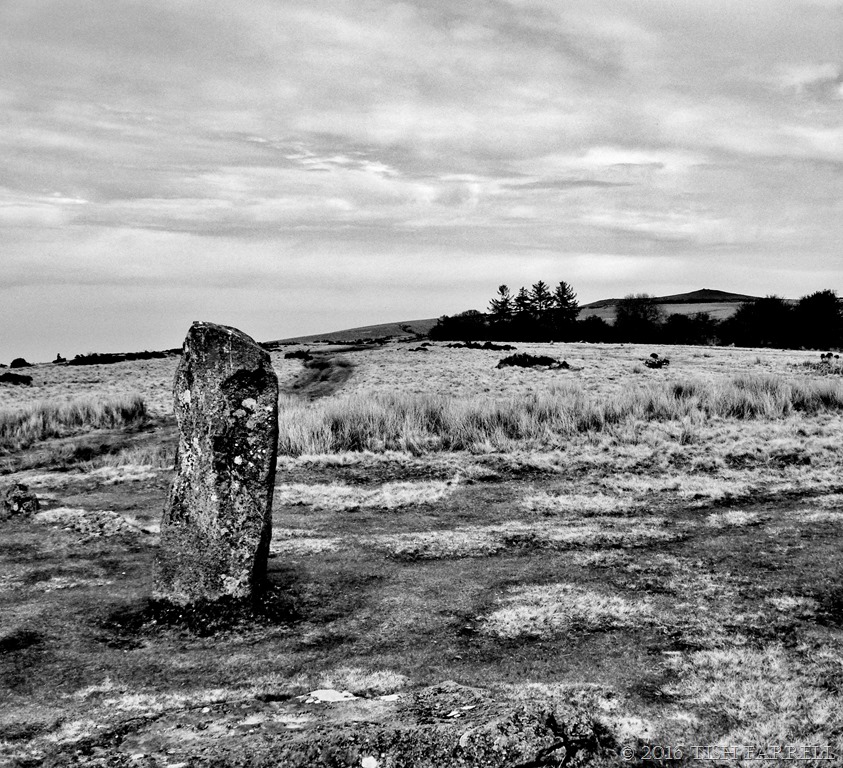
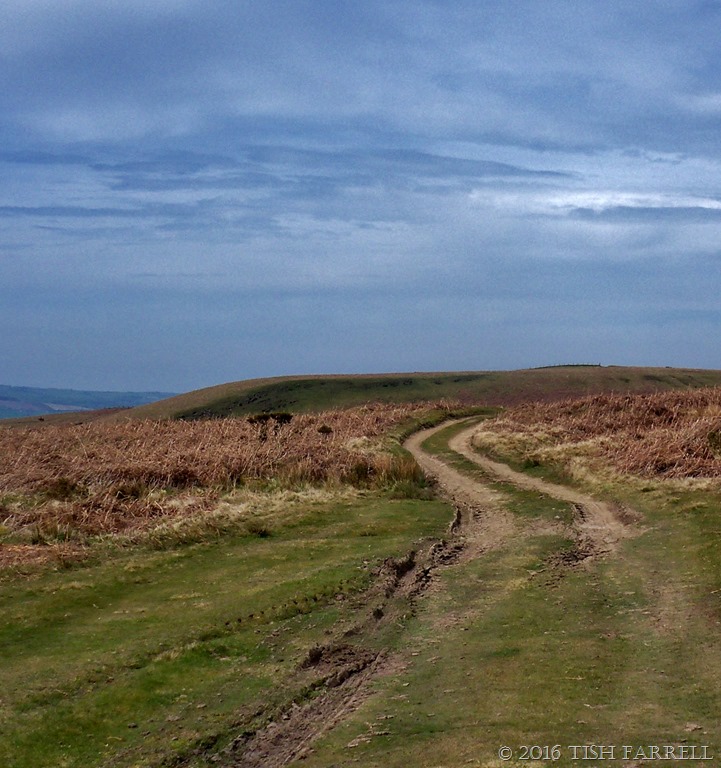
The last time we were there was at least twelve years ago and it had been snowing (see header photo). I don’t remember what prompted us on that occasion to drive out to so remote a place in such bad weather. We weren’t even living in Shropshire at that time, but in the midst of Christmas visiting from Kent. I remember tramping up the icy track to the circle, and despite the bitter cold, being entranced. All of Wales spread before us. It was like standing on top of the world – a parallel universe of Celtic warriors, old gods, poets and shamans.

On Thursday our notions of spring proved deceptive. Once out of the valleys the wind was vicious. We huddled in the car on top of Stapeley Hill to eat the picnic since attempts to stand outside blew the food away. While doing this we observed and were observed by a passing police Range Rover, which carried on over the hill track on a route that was distinctly signed ‘no vehicles’ and disappeared into Wales.

Police car – what police car. There it was gone. Very odd.

100_9486

Having got ourselves this far, we determined not to give into wimpishness, and inappropriate clothing, and pressed through the gale to Mitchell’s Fold. Of course it was not ideal photographing conditions due to wind, haze, midday light and cold fingers.

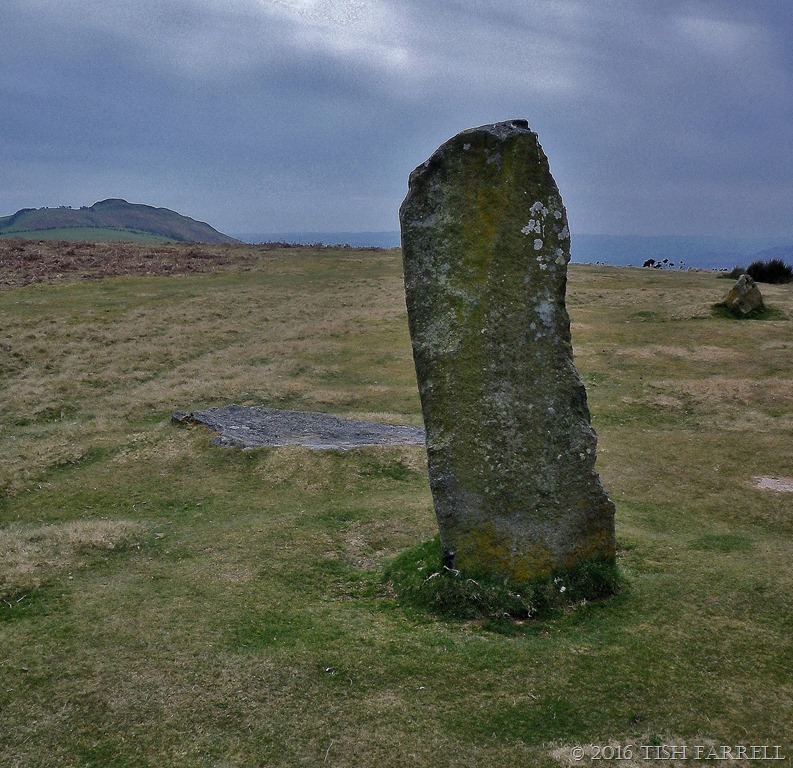
An English Heritage information board had made an appearance since our last visit, although I thought its proximity to the circle rather insensitive. It anyway did not have a great deal to tell us, other than the monument is now believed to be at least 3,000 years old, and that the largest of the standing stones was once one of a pair, probably forming an impressive portal. I’m assuming that the presumed partner is the one you can see lying prone beside it. The stones are local dolerite.

100_9479

As stone circles go, it is no Stonehenge, but it does have the edge (in all senses) when it comes to setting:

P1030690

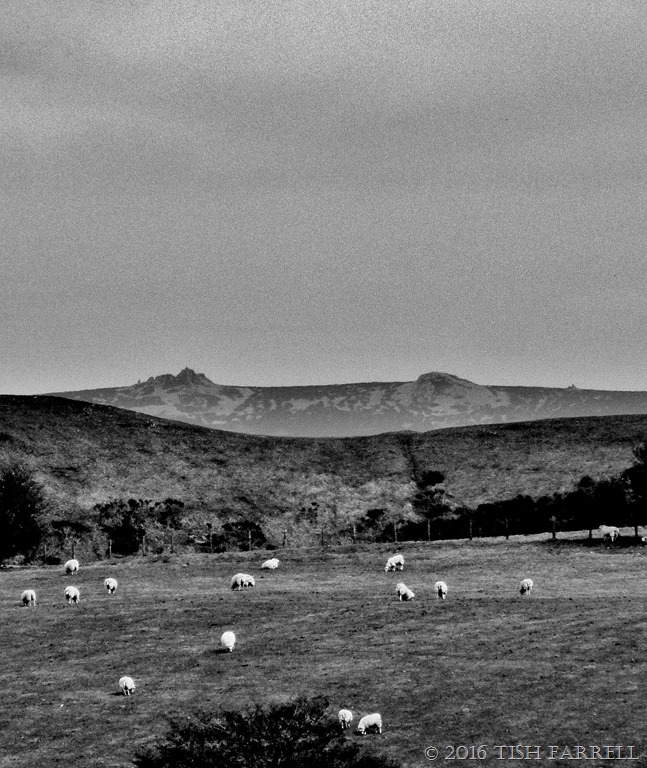
Looking back into Shropshire from the circle (and on maximum Lumix zoom) you can see the cairn-like summit of the Devil’s Chair on the ridge of hills known as Stiperstones, a wild terrain of old mine shafts, ghosts, satanic dread and legend:

P1030691

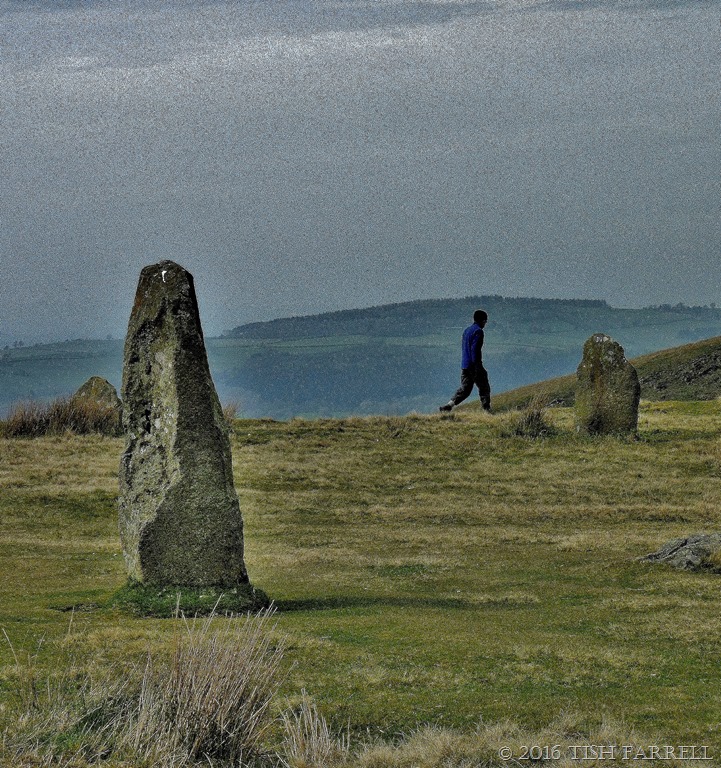
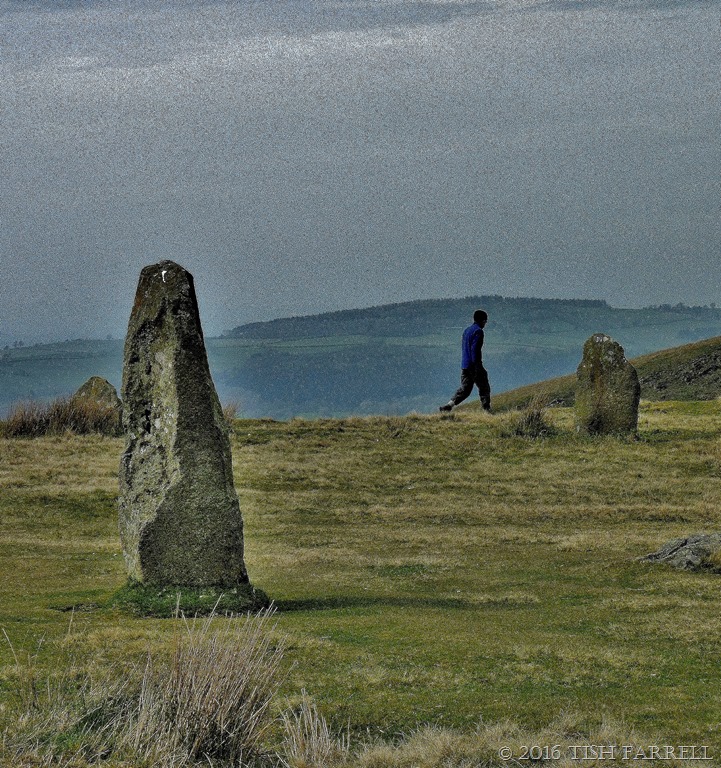
And then when I turned back to the stone circle, there was that strange lone figure loping through the stones. Here he is again (btw the title quote is from Shakespeare’s Hamlet ).

P1030697

It seemed like a good moment to leave, although not before agreeing that we would return in summer – with hopefully more warmth and some clearer skies.

IMG_2180

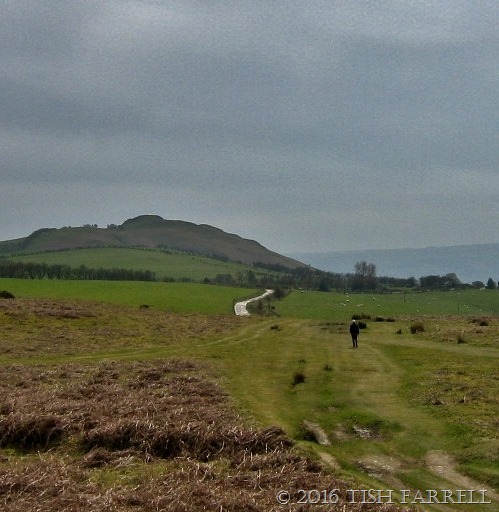
As ever, as we return to the car, Graham is in my shot. Here though he is providing a convenient marker for some ancient  medieval rig and furrow plough marks. You can just make out the light and dark stripes running  north-south in the cropped grass behind him. At least I’m assuming that this is Graham and not another traveller from the undiscovered country of Shakespeare’s imagined after-life. In places like Mitchell’s Fold you just never do know.

copyright 2016 Tish Farrell

P.S. For more on the earlier trip to Mitchell’s Fold see my long ago post Witch-catching in the Shropshire Wilds – also including the legend about the wicked witch Mitchell, who gave the place its name.

Even though she’s off on her travels again, and by way of wishing her the best of times, I’m linking this to Jo’s Monday Walk



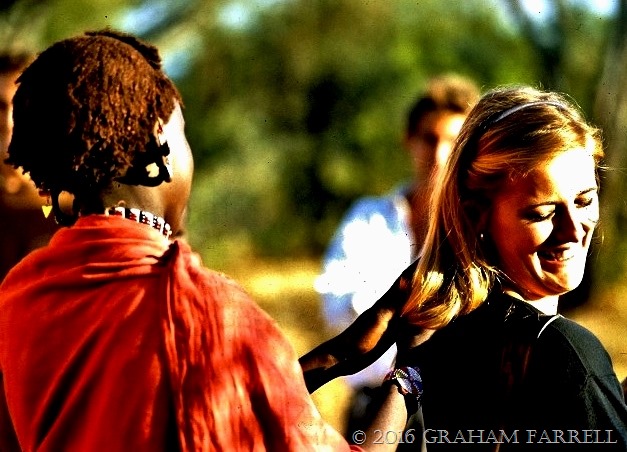
Admiration Maasai-style

Masai_Julie_171

This shot of one of Graham’s fellow travellers was captured long ago in Tanzania when he was on an African overland trip. I find the gentle, almost reverential way in which the young Maasai moran is holding  the girl’s hair very touching. There is some irony too. Usually when a Maasai warrior turns up anywhere, it is he who is the focus of everyone’s admiration. It goes with the territory: the glowing red shuka and the fine beads. He even expects it.

 
Admiration


Trying Not To Dig The Plot And 30 Minutes Of Weird Weather

On a very dull Tuesday afternoon I thought I’d brave the cold wind and walk across the field to the allotment. On went the woolly hat, quilted coat (over three layers) and the wellies.

Unsurprisingly I had the allotment to myself – not another mad gardener in sight. I set about emptying one of the compost bins, and spreading the contents  (a hand’s width deep) over a metre wide stretch of ground that had been cleared of over-wintering sprouts and broccoli. It seemed a good day to do it, and I was glad I had prised myself from the house.

This year I’m experimenting with the ‘no dig’ system of cultivation, so apart from tweaking out one or two noxious weeds, I resisted the temptation to get out my favourite spade. The objective is to cover the soil with enough interesting organic matter to excite the worms in the soil below. They then do the digging, and other soil-friendly organisms get going too so that, hopefully, the later seasons’ crops – cabbages and sweet corn – can be planted out on the much improved, and better nourished ground.

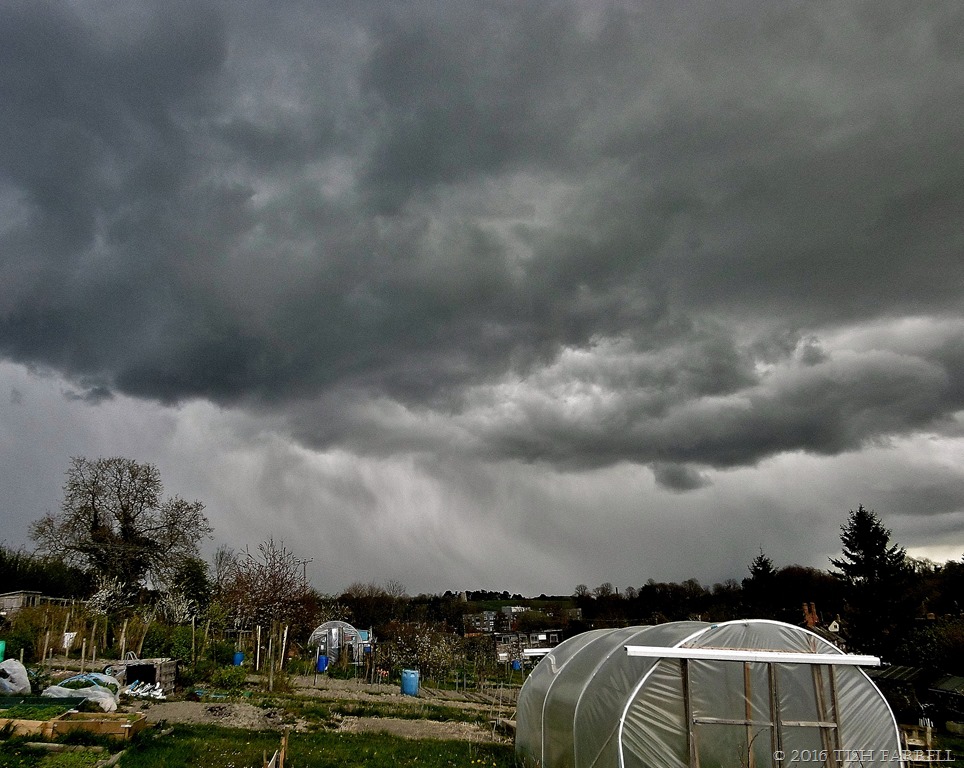
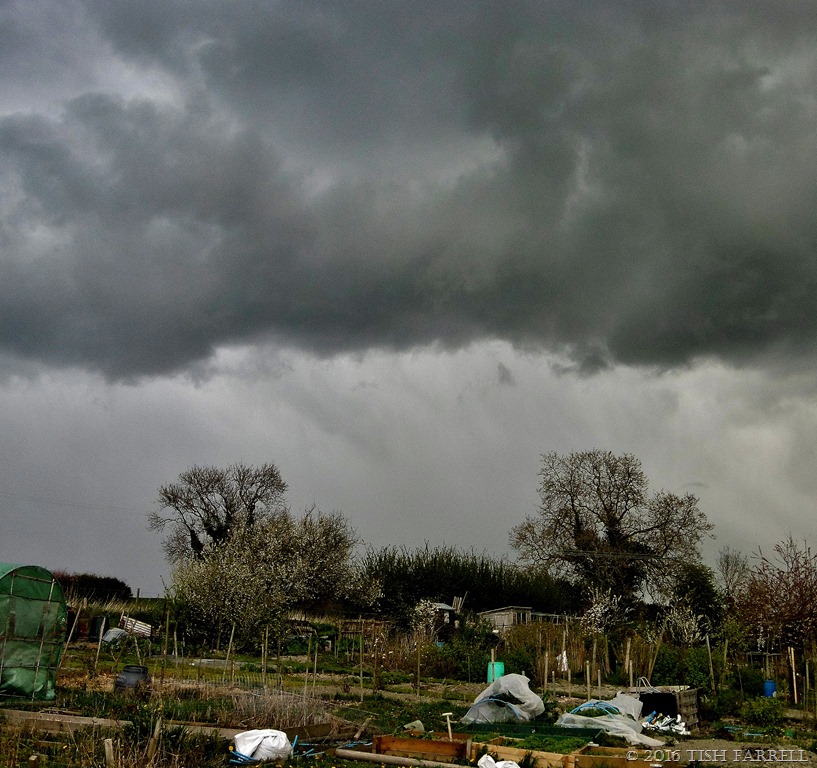
I was thus in the middle of this very absorbing activity when someone upstairs switched off the lights and I turned to find a tempest sneaking up on me.

P1030788

Yikes! By the time I had scooted across the plot to the shelter of my polytunnel, we were having a small, but very concentrated snow and hail blizzard. It was far too stormy to think of making for home. Instead, I  pottered about in my tunnel sowing some purple Brussels sprouts seeds in modules,  while trying to remain hopeful that this truly was a passing squall and not the heavens falling in as the heavyweight clouds suggested.

P1030789

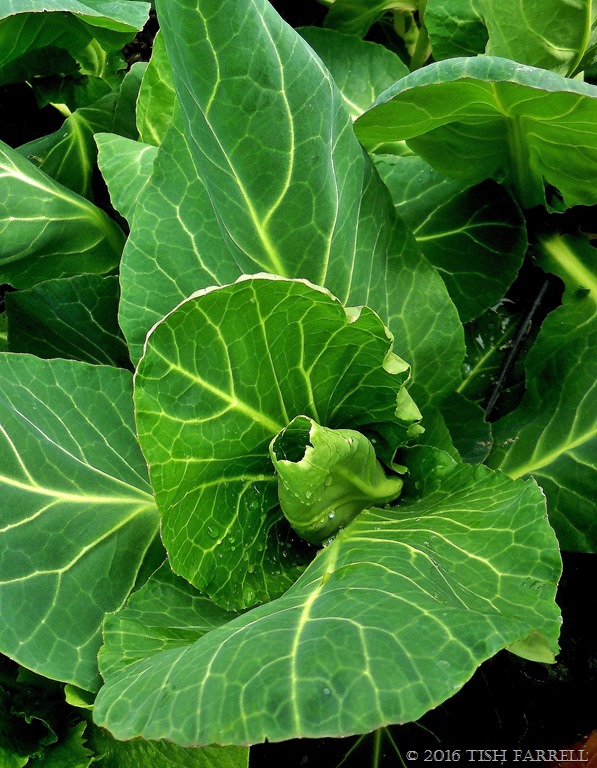
I forgot to record the actual blizzard that followed, so here are some Précoce de Louviers  pointy spring cabbages that are growing most happily in the tunnel.

100_9256

When I stuck my nose out of the tunnel some twenty minutes later, this was the view over Much Wenlock:

P1030792

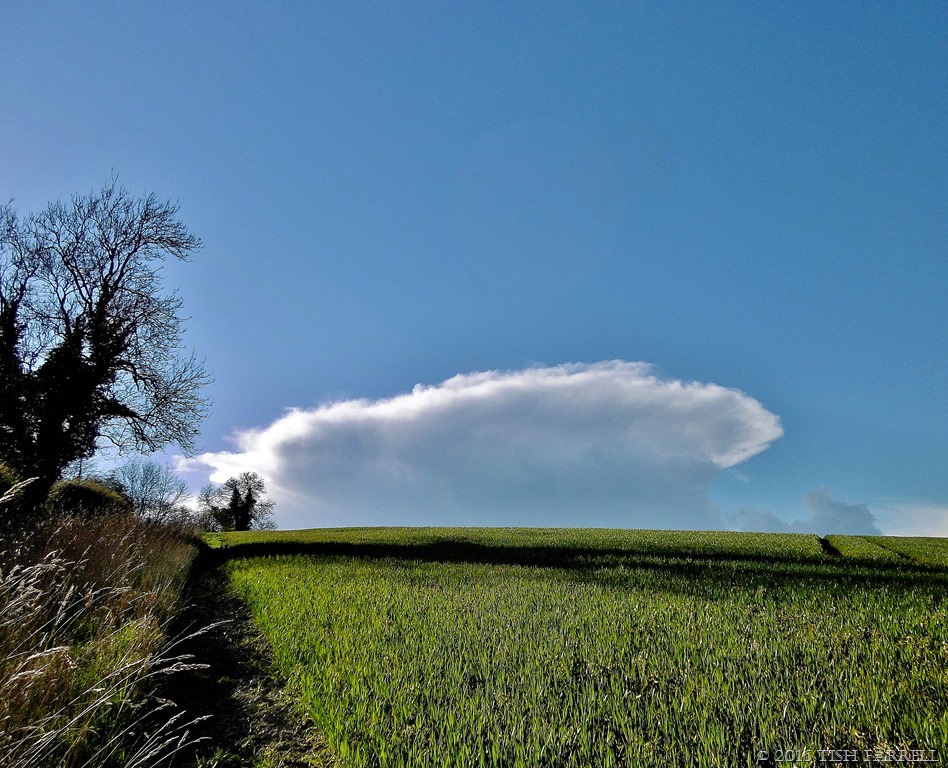
By which time it was too late, and the ground too wet to go back to compost spreading.  As I walked home across the allotment, I watched strange, but less threatening clouds gather over the hills:

P1030793

And when I stepped through the hedge into the wheat field behind our house, the sky looked as if butter wouldn’t melt in its mouth: snowstorm, what snowstorm?

Clearly the figment of a delusional, non-digging gardener then:

P1030797

copyright Tish Farrell 2016

The Abstracted Writer ~ That Would Be Me

Thinking that just maybe it’s never too late to be a ‘poster girl’, and especially if some serious photo-editing is involved, I thought I’d give myself the Warhol treatment for this week’s Daily Post Photo Challenge. It’s perhaps also a metaphor for the state of me – spreading myself in too many directions at once.

Abstract

April’s Changing Seasons: Fifty Shades Of Grey And A Little Bit Of Blue

P1030781

We Brits are renowned for an unbridled capacity to talk about the weather, and this month there has been so much of it, and sometimes all at once. In the Farrell household the question has been  hourly batting back and forth between he and she who live in our house: have you seen the weather forecast?

He has a major earth-moving project in the back garden – dismantling a raised bed, and sawing up next winter’s firewood supply since we keep using the logs that have already been chopped. She has a major earth-moving project up at the allotment – filling raised beds with a recycled compost mountain. There is also seed sowing, hardening off and planting out of vegetables to consider, all of which are dependent on weather conditions in general, and knowing how long arctic winds and icy rain will last in particular.

But what can one say about British weather that our greatest poet, William Shakespeare has not already said, since even he, with all he had to write about, was somewhat climate-fixated:

With hey, ho, the wind and the rain…

For the rain it raineth every day.

He’s not too heartening for next month either:

Rough winds do shake the darling buds of May.

Oh well. Better hang on to the woolly hats  and vests, wellies and waterproofs.

*

Cardinal Guzman The Changing Seasons April 2016 Go here to see the Cardinal’s take on April, plus his rules for the challenge. Then join in!

Winter’s Afternoon–A Shropshire Rhapsody

P1000347

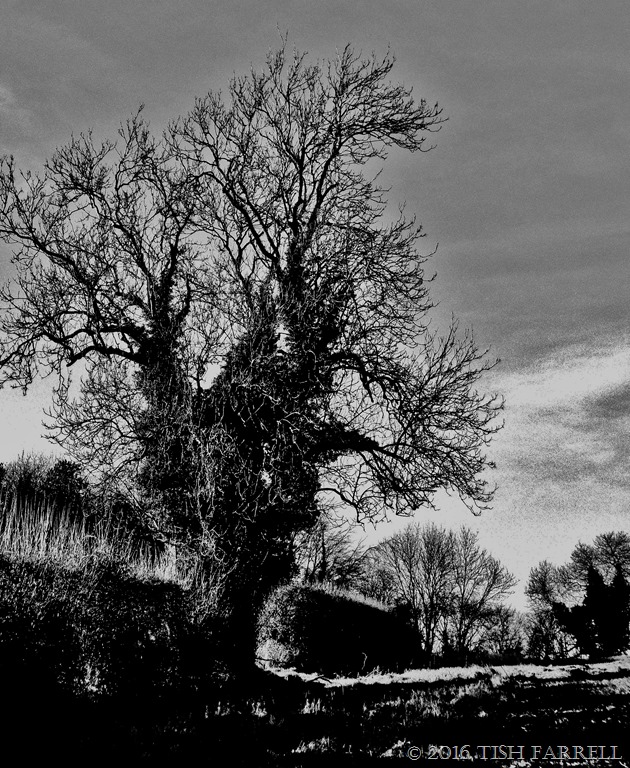
This week Paula’s theme at Black & White Sunday is rhapsody. This instantly made me think of George Butterworth whose promising career as a composer ended with a sniper’s bullet on the Somme in 1916.

He is best known for his arrangements of English folk songs, and in 1911 and 1912 he set to music eleven of A E Housman’s A Shropshire Lad poems. In the recording at the link below you can hear a ten-minute melodic evocation of my home county. It begins with one of the songs,  Loveliest of Trees. This leads into the full orchestral Rhapsody which widens our gaze to embrace wide blue vistas – music of landscape, and of love and loss.

The photo was taken in the field behind our house. The tree is not a cherry as in the Butterworth-Housman song, but an ivy-clad ash. They thrive along Wenlock’s limestone Edge.

https://www.youtube.com/watch?v=1xMPichAUrM

Black & White Sunday: Rhapsody

#ShropshireHillsAONB

Happy Earth Day From The Shropshire Hills, Some Of The World’s Oldest Rock Formations

P1030457

Not so much Monarch of the Glen as Sheep on the Long Mynd,  a hill so old that it has some Pre-Cambrian geology named after it. I’m talking here of Longmyndian shales, siltstones and sandstones (sedimentary rocks) that were laid down in shallow seas at a time when this part of the earth was moving up the planet from Antarctica.  This would be around 560-550 million years ago.

The Long Mynd (mynd means mountain in Welsh) lives up to its name too. It is a very long plateau with steep valleys, and was formed by a very big CRASH when sea levels fell and the seabed deposits collided with a plate of volcanic hills to the east. The result was the folding, tilting and compressing of the Longmyndian shales, siltstones and mudstones along the Church Stretton Fault. This was around 550-400 million years ago.

The Longmynd then continued to be knocked into the shape we see today by the following Ice Ages when glaciers shunted around its flanks, making it an island amongst frigid wastes. When the ice finally began to retreat around 30,000 years ago, rain and melting snow fed streams that cut steep valleys or ‘batches’ into the Mynd’s sides.

Isn’t geology wonderful when you forget about the hard words, the mind-boggling quantities of time, and just admire the consequences?

P1030462

One of the Mynd’s best known features is Carding Mill Valley where these photos were taken. Since Victorian times it has been one of Shropshire’s most popular countryside resorts. Generations of Salopians (Shropshire folk) will have fond childhood memories of spending Bank Holiday Mondays picnicking there, feeding egg sandwiches to the sheep, getting soaked in the stream, and going home with green bottoms from sliding down the hillsides.

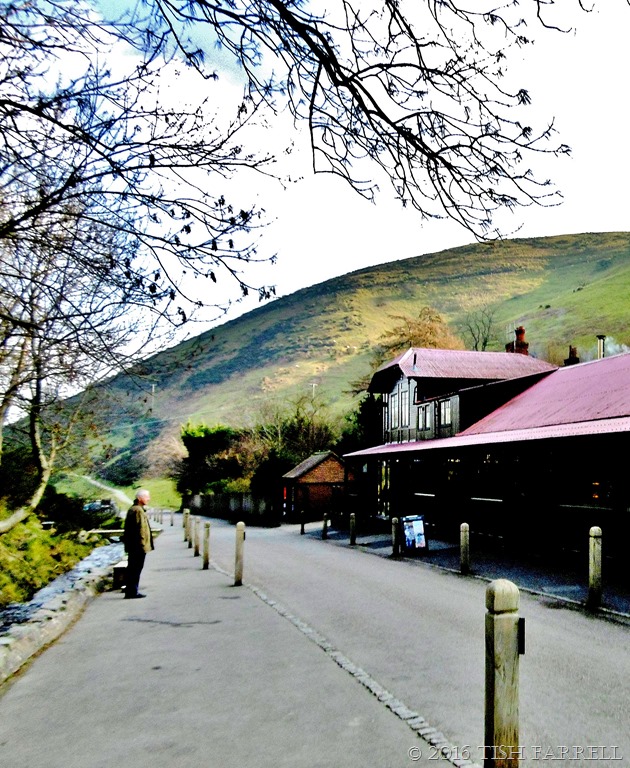
Today both valley and Long Mynd are in the guardianship of the National Trust that not only manages the landscape, but provides very excellent homemade refreshments in the Edwardian Pavilion tea-room  that’s coming up next.  If, while you are looking at that, you also scan towards the top of the hill, directly above the pavilion’s main roof, you might just discern the verge of a very hair-raising single-track road that takes you over the top of the Long Mynd to the small village of Rattlinghope, known locally as Ratchup. I have a grim memory of driving down there in a car with dodgy brakes, and only intermittent passing places beside precipitous drops.

P1030473

Unlike the geology, the landscape you see in the shots is not natural, but man-made. The valleys would once have been wooded. Archaeological finds from c 3,500-2000 BC indicate that Late Stone Age (Neolithic) people were travelling along the open top of the Long Mynd ridgeway, an ancient trade route between Cumbria in the north, Wales to the west, and Cornwall in the south-west. Earlier Mesolithic hunter-gatherers came this way too. But the main clearance probably took place during the Bronze Age (c.2,000-1,000 BC). These people farmed in the Shropshire Hills and buried their dead in cairns and burial mounds all along the ridgeway.

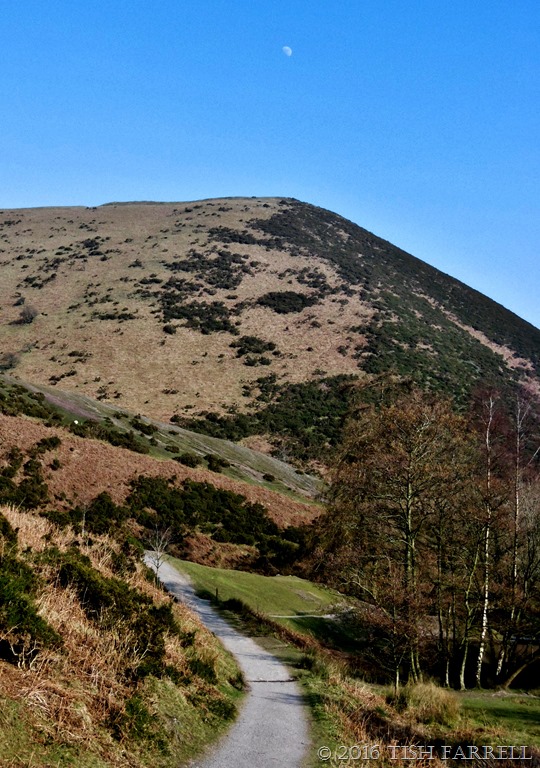
In the next photo you can just see the green ramparts of the Iron Age hillfort Bodbury Rings. It is lying right along the hilltop skyline towards the summit, and ending directly under the moon. This was a summer herding camp of the Cornovii people, and dates from around 400 BC.

P1030444

We may not know very much about the past peoples who lived and died in this landscape, but they did leave behind clues that showed us that they honoured it in significantly sacred ways. That would be a good thing to remember on this Earth Day. Much of the world is in dire need of loving care. We are lucky in Shropshire to have so many people, and charitable bodies who do take care of the place for everyone’s pleasure and inspiration.

copyright 2016 Tish Farrell

 *

Earth  Daily Post Prompt

I’m also linking this to Jo’s Monday Walk for when she’s regularly back with us. I think she would like this walk up Carding Mill Valley.
#ShropshireHillsAONB  #NationalTrustShropshire  #CardingMillValley

Not Any Old Bridge ~ But The World’s First Cast Iron Bridge Built By Abraham Darby in 1779

P1000831

For this week’s Thursday’s Special Paula is asking us to focus on traces of the past.  For those of you who have not seen my earlier posts on the Ironbridge Gorge, this bridge was the first to be made from cast iron, and in a single arch that spans the River Severn in Shropshire. It crosses the Severn Gorge just a few miles from my house, and is a World Heritage Site.

The height of the bridge was dictated by Quaker Ironmaster, Abraham Darby’s desire to show off – not only to prove the versatility and potential of cast iron, but also to build the first bridge on the the Severn that would allow the river’s big sailing barges (Severn trows) to pass under with out lowering their sail masts. One up on all the river’s stone bridges then! And what a sales (sails) pitch it was too, for people to see his bridge with a fully rigged sailing barge passing beneath it.

He also built the bridge in one of the most spectacular parts of the Gorge, and on the site of a treacherous ferry crossing. Before the bridge was built people had to cross between the two industrial settlements of Broseley and Coalbrookdale in a coracle, an ancient skin covered craft that was used by local poachers.

The bridge itself is a curious construction. If you look closely at the iron framework you can see that although Abraham Darby was breaking new ground (and in its day the Iron Bridge was definitely a world wonder), the building techniques include the kind of joints that people would expect to see in carpentry: mortise and tenon joints and dovetails.

It is hard to know if Darby was erring on the side of caution by sticking to tried and tested construction methods, or simply being innovative in ways that weren’t too innovative for people’s sensibilities. After all, one of the best ways to make people accept and welcome the new, is to start from something they already know and recognise. In such ways does the past follow us into the future.

P1000843

copyright 2016 Tish Farrell

Traces of the Past

Bumble Bee Bliss & A Change In The Weather

IMG_2157

April and it’s all change. On Saturday I was whinging about the snow that had invaded our early morning landscape. By Sunday we were sitting coatless on Benthall Hall’s tea room terrace, and consuming carrot cake and hot chocolate with the sun on our faces. It was February when were last there, and grey and stormy, with no possibility of sitting outside. Now we were in danger of overheating with a nice grey hen pootling around our feet, and the air filled with bee-hum. Later, when we ambled around the gardens, we came upon these newly opened rhododendron flowers and a very happy bumble bee. To say it was gorging itself is an understatement. Up to its armpits in pollen it was. Food at last. Bzzzzzzz.

*

Check in at Cee’s Flower of the Day for  more floral displays.