Life, the universe and everything: all is (extra)ordinary

100_7579

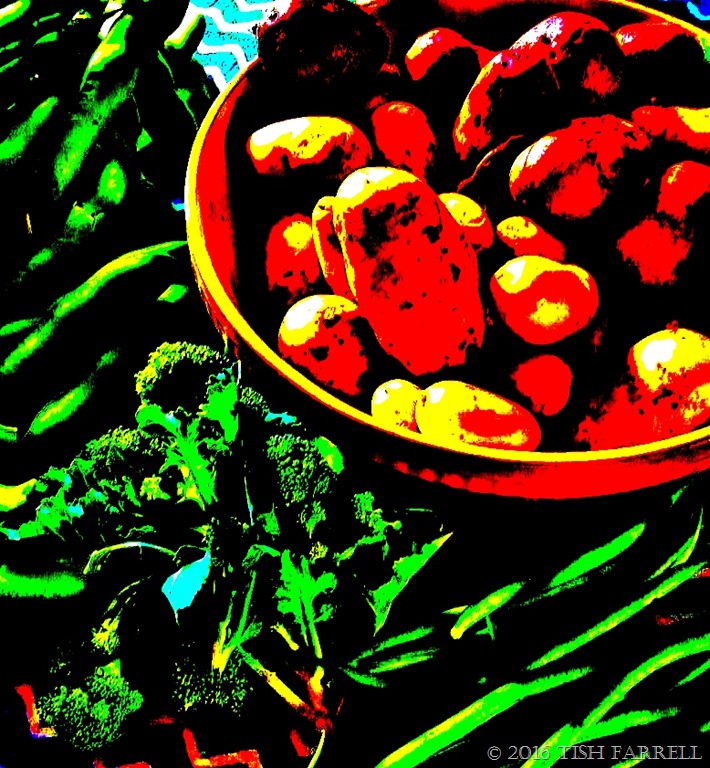
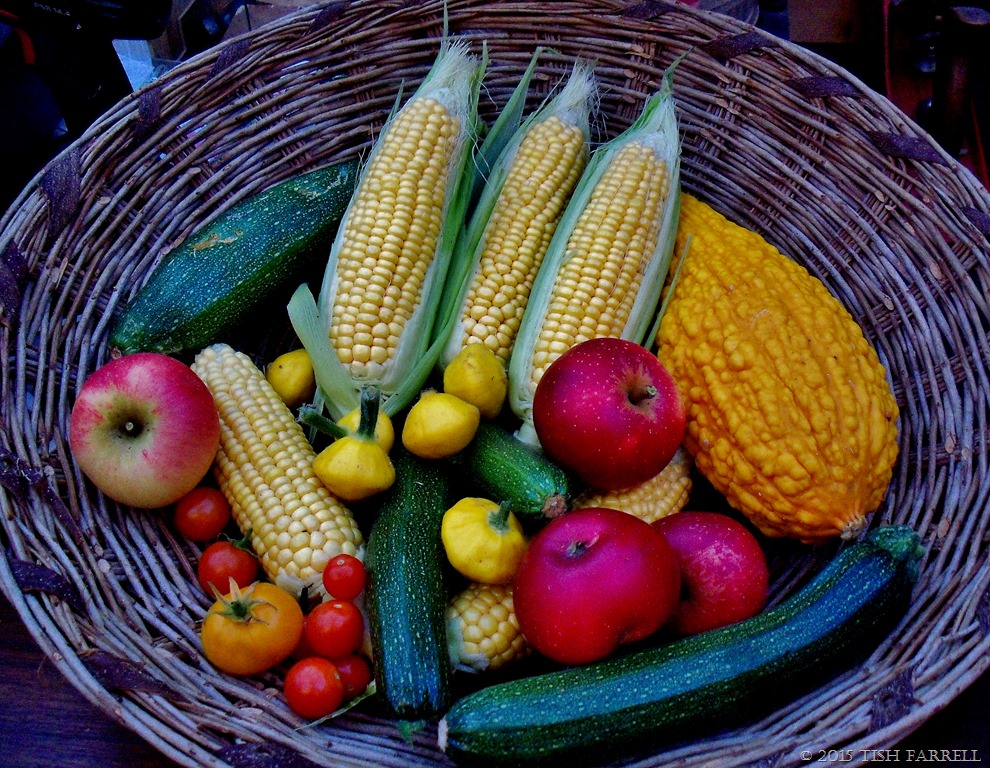
I whinged a lot during the year about this and that at the allotment – too much wind, too much rain, not enough rain, not enough sun, too many slugs, an invasion of dandelions and buttercups, too little compost, but even so – yes, even so – I have had a magnificent harvest, and it has made us, along with a few friends and relatives, and many of Graham’s workmates very happy.

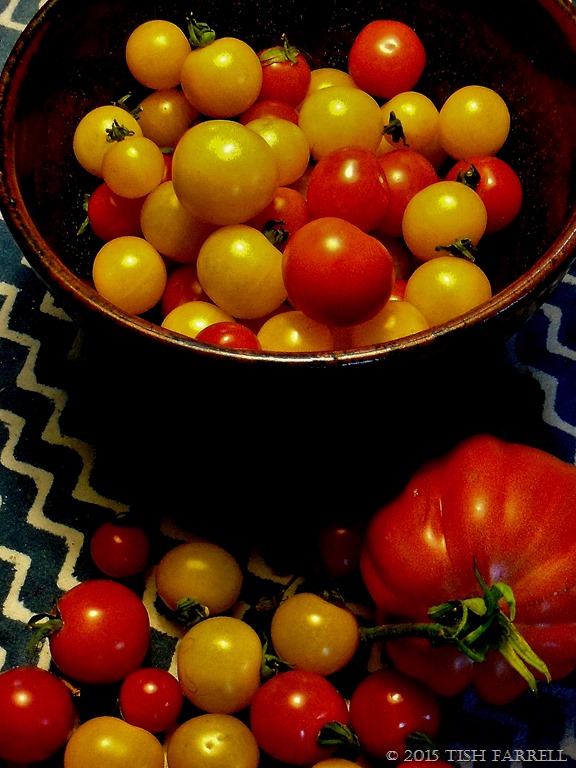
Excess runner beans have been recycled into a surprisingly delicious piccalilli-type chutney; cherry tomatoes have become tomato chilli jam, or Chillied Out Tom, as Graham named it when making the labels. I’ve made only a few pots of ordinary jam since we do try not to eat much sugar – raspberry, strawberry, damson, and we have a freezer full of field (fava) beans that I’ve discovered convert into the most delicious bean hummus if, after cooking, you relieve them of their skins, and add lemon juice and garlic.

Today, over half way through October, and I am still picking peas, carrots, beetroot and courgettes, and the last of the summer lettuce. Then there are the winter crops coming on: various kales, leeks, caulis, cabbages and Brussels sprouts. This week, too, I’ve been making a new strawberry bed, planting out Elsanta, and Alice varieties, and ordering a few Flamenco which are ever-bearers – fruiting from spring to the first frosts. Then there were overwintering onions to put in, Radar, being a reliable variety, and also garlic beds to make.

I have routed the tomato jungle from the polytunnel apart from a few plants, and it’s a relief to see some space. While I was doing this I came nose to nose with a large toad, which was very pleasing, once we’d got over being scared of each other. Eat more slugs, please toad. I’ve planted out the tunnel’s raised beds with winter salad stuff including purslane, winter lettuce, bunching onions, chard and lamb’s lettuce. I’ve sown a few seeds in there too, just to see what will happen – some herbs, rocket, and various Chinese leaves and mustards. As it gets cooler I will cover those that emerge with fleece.

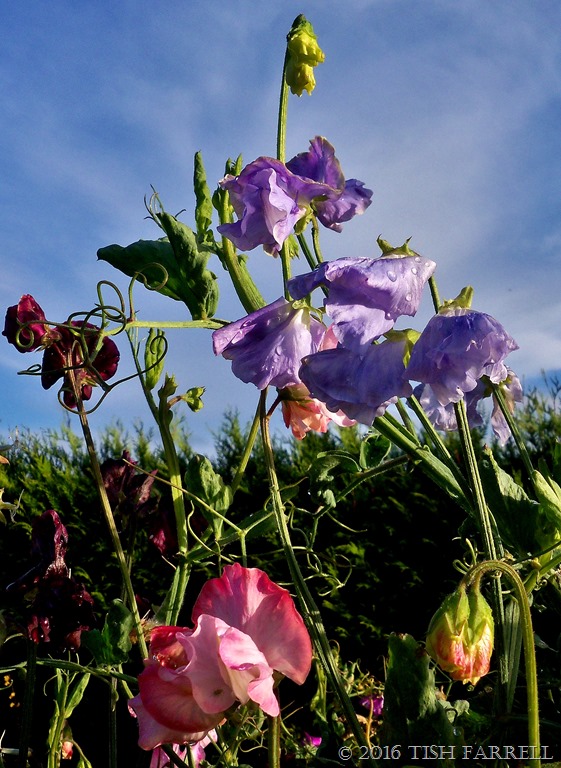
Otherwise, it’s been all systems go, tidying the plot. This afternoon I was taking down the runner beans and their canes, and digging over the bed, but I was doing it to the heady scent of sweet peas that are lingering on. I also have some jewel coloured nasturtiums growing in the corner of the polytunnel. They smell delicious whenever I open the door, and of course you can eat every part of them – flowers, leaves and seeds, so I’m hoping they’ll keep going into the winter.

There’s just so much to be grateful for in this extraordinary world of ours, though we’d do well to nurture it a bit more so it can continue to nurture us.

100_6937

(Extra)ordinary

Pushing the boundaries: welcome to my new web design page

The following themes are now available at this address:

P1020229

‘The Miss Haversham‘

*

P1020239

‘Galadriel’s Garlands’

*

P1020250

‘Wired’

*

P1020252

‘WWW.’

*

100_7596

‘Web Apps ’

*

100_7634

‘The Neuron’

*

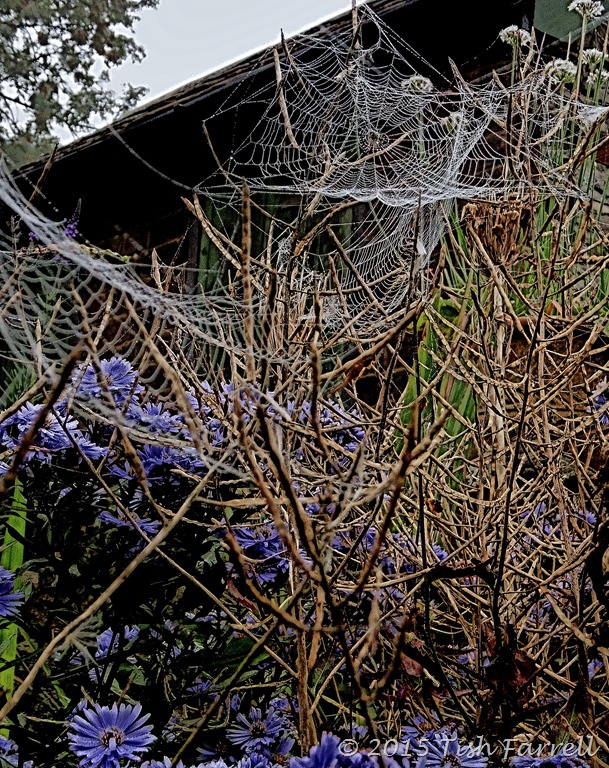
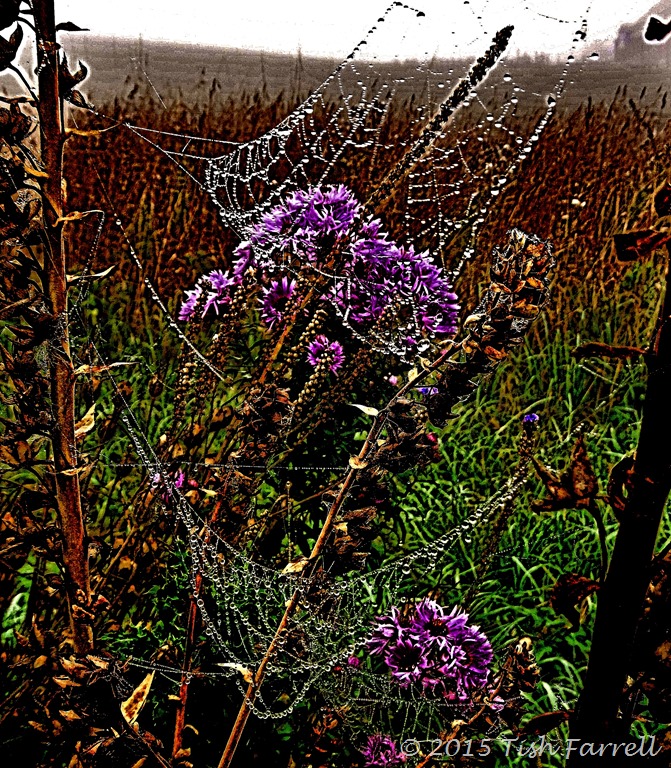
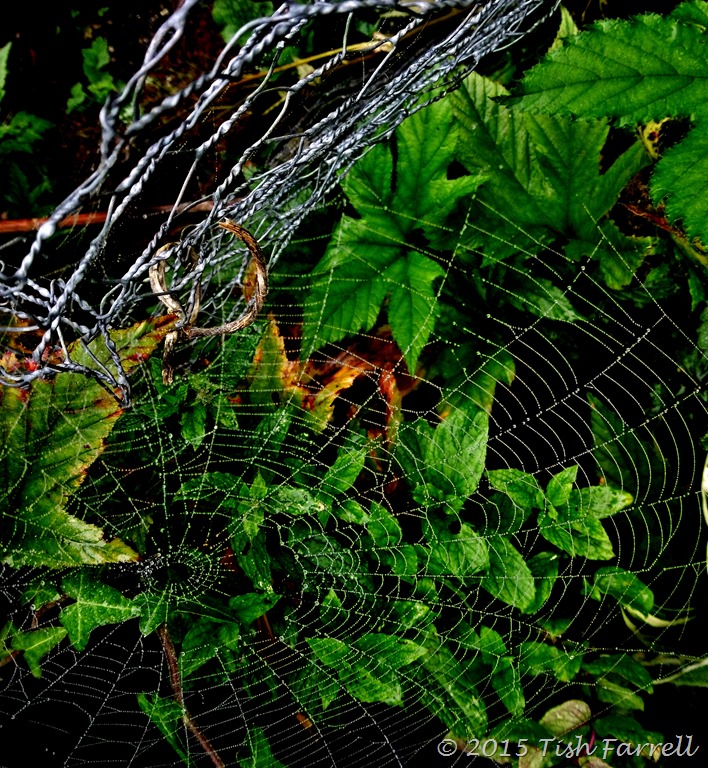
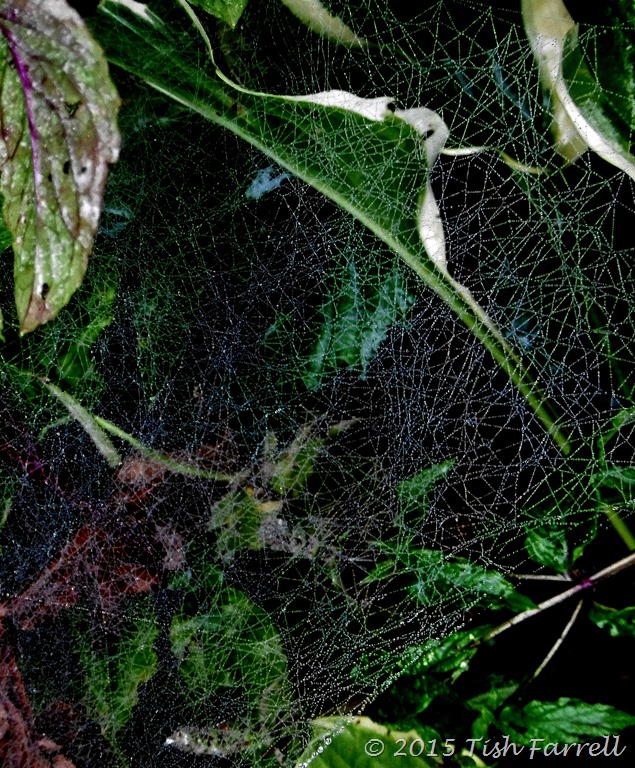
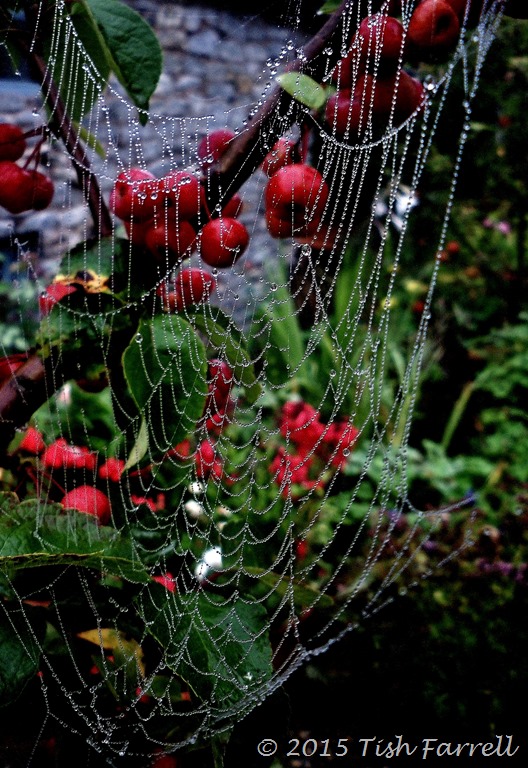
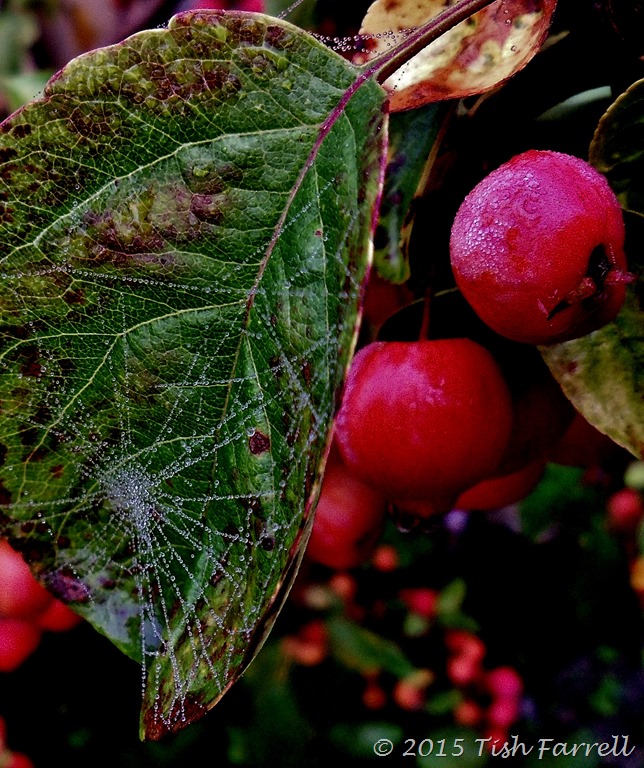
When I looked out of my bedroom window this morning all was dull and dank. There was no view of the Edge, only fog on the field that in the past two days has been  harvested, harrowed and re-sown, and is anyway looking gloomily autumnal. But when I walked out into the garden I found every leaf and stem was glittering with dewy webs.  So much spinning and weaving in the night – a thousand spider-stiltskins run amok. And even if you don’t like spiders, you can still admire their fog-enhanced artwork. Well, can’t you?


Boundaries

Help, Mr. King! My polytunnel needs editing

100_6203

I have written elsewhere how gardening and writing become mixed up in my life. But just see what happens when you don’t rein in your gardening writing, when you let your setting run riot. Words, like plants, need a certain space to perform well; to be the stars of the show; to say their piece effectively.

I never intend to over-create. In fact my internal critic warns against it, whether gardening or writing. The polytunnel mayhem is of course easily explained: I simply had to  plant out every last tomato seedling. How could I not, when I had nurtured each one through the cold spring months that seemed never ending?

All I can say if you write like this, and then don’t engage in some ruthless excision tactics, you will not be able to find the tomatoes for the overgrowth.

On the fiction writing front, Stephen King (On Writing: A Memoir) would call this kind of chaos “a thicket of description”. It’s what happens when writers become too attached to the minutely researched details of their setting, and then feel they can’t sacrifice a single beloved element.

It can also happen when you start a story in the wrong place, and then flounder about trying to write yourself to the right place. It’s like planting all your tall-growing tomato plants at the front of the bed, and then wondering why you, or anyone else can’t see what’s going on behind with short varieties. This, then, is also a setting problem: you have not planned the planting scheme and stuck to it (more or less).

All of which is to say, there comes a point when you have to take out a whole batch of words and shoot them – this so the survivors have room to expand and thrive (the excess tomato plants you could of course give to someone else.)

Stephen King explains the situation further (pp 138-9). He gives an example of using a real location as his setting for a piece of narrative, in this case the Palm Too restaurant in New York. It is somewhere he knows. As he starts to visualize the place, he summons the first four things that strike him. These, he says, are likely to be ‘the truest and the best’ details. He also says he can  make up a few other things too, but there is really no need for more:

“This isn’t the Taj Mahal we’re visiting…and I don’t want to sell you the place…it’s not about setting, anyway – it’s about the story, and it’s always about the story.”

Put another way, you could say that fiction writing is never about the writer. To create, you need to GET OUT OF THE WAY. And the better you succeed in this, the better the story. This is not to say that the writer’s experiences and cast of mind do not inform/infuse the narrative, but think conduit and transit time, rather than compendium drag.

Words are fiction’s conveyance to transport readers out of themselves and into the lives of others in new/penetrating/exciting /inspiring ways. The words need lift, energy, vivacity. Anything that snags transition must be cut.

This is probably the hardest lesson for the starting-out writer to believe, let alone put into practice. But it is a truism: less is almost invariably more. Not believing this is one of the reasons we have slush-piles, and why publishers now mostly shut their doors to unsolicited submissions. It’s the reason why I have too many tomato plants in my polytunnel, when I could have made the best of, say, half a dozen of the strongest plants.

But then as Stephen King advocates, practice (lots of practice) will yield improvement. So I vow to improve in my prose and in my planting. For now I leave you with Mr. King’s brief words on the means to create viable settings:

“The key to good description begins with clear seeing and ends with clear writing, the kind of writing that employs fresh imagery and simple vocabulary.”

100_6937 N.B.: use only the brightest and the best tomatoes, and not too many.

Happy writing!


Related: Errant muse? But there’s still life at the allotment

copyright 2015 Tish Farrell

Secrets, conspiracies, tragedy, dark comedy

– a fast-paced novella of interwoven tales

set somewhere in East Africa

In my garden after the rain

100_6854

Ladybirds seem to have been in short supply this year, so I was pleased to find this one nestling in my sage bush. Like bees, we absolutely need ladybirds. They are our natural pest controllers, preying on aphids and scale insects that can otherwise cause massive damage to food crops. As I was taking this photo, I was also delighted to scare off the harvestman spider that was creeping up on the ladybird. If you look in the bottom right corner above the copyright notice, you can just see the spider’s legs. Yikes!

*

100_6836

And here’s more evidence of spider activity: ambush exposed by raindrops in a garden pot.

*

100_6857

Now for one of my favourite plants in the garden. The flowers of this later flowering phlox remind me of jasmine and are half the size of the usual cottage garden varieties. It has just the faintest subtle scent, and doesn’t mind shade.

*

100_6863

Heuchera is another wonderful plant, and especially for ground cover. It comes in several hundred variations, and although understated on the floral front, it more than makes up for this with colour-bursting leaves that last all spring and summer. Also I see there’s spider lurking top left. I think it’s another harvestman. The bright green leaves amongst the heuchera are self-sown aquilegia seedlings. More granny’s bonnets to look forward to next year then. You never know what colour the flowers are going to be either – mauve, purple, pink, red, white. It’s one of the best things about plants that do their own gardening.

*

100_6832

The tiny fruit on our Japanese crab apple are just beginning to take on their autumn colour. Soon they will be a deep russet red. I don’t think snails eat apples. At least I’m giving this one the benefit of the doubt; it’s probably just been sheltering from the rain.

*

100_5373

And now for a flashback-fastforward: the crab apple tree in April – spring past, spring to come…

Today Was a Good Day

Bees in the Sneeze Weeds

100_6723

The season of mists and mellow fruitfulness has arrived in Much Wenlock on the coattails of spring, missing out summer altogether.  Perhaps we’ll have it at Christmas instead, the barbeque months that, back in March, the tabloids were screaming we were in for, along with prolonged drought and associated mayhem that would, shock-horror, stop people from watering their lawns, or hosing down their Range Rovers. Mind you, these are the sorts of rags that would have us believing it is raining migrants. (That would be people so desperate that they risk all to run away from home).

Anyway, whatever’s going on with the climate, the upshot is that much of the garden and the allotment has a very ‘left-over’ look, which is why I almost want to dash out in the garden and hug the sneeze weeds – bees notwithstanding – for being so vivaciously red and yellow as too much autumn dullness descends.

How can a plant so glorious be real? All the flowers in the photos, in all their wonderful variation, are growing on a single plant. And, as you can see, the bumble bees are gorging themselves. There are also some very tiny emerald beetles in amongst the pollen. Sneeze weed, by the way, is a country name for Helenium, which is a far more gracious name for such a generous plant, although one rarely used in the Farrell household.

100_6724

And it’s thanks to the bees and other precious pollinators that we are at least having fruitfulness, if not  harvest-hot weather. Up at the allotment apples are already weighing down the trees. They look like jewels:

100_6546

100_6681

Even the ornamental crab apples look good enough to eat raw. They’ll make brilliant jelly after a touch of frost, which hopefully won’t happen yet.

Then there are the brambles:

100_6682

And the little yellow squashes that look like flying saucers:

100_6738

And the runner beans have started to crop (this photo was taken a week or so ago). The sweet peas on the end of the row are there to attract pollinators:

100_6503

Of course, when it comes to weather, we Brits are never happier than when we’re grumbling about it: too hot, too windy, too wet, too dry.  But then even if someone did steal summer, we still have so much to be thankful for. Feeling mellow, however, may not be an appropriate response these days. There may well be some hard lessons to learn when it comes to adapting to an increasingly erratic world climate, and not only for ourselves, but for the people who find their own lands are no longer habitable. We should not be surprised if they risk all to make for the lands of plenty.

copyright 2015 Tish Farrell

Mellow  is the theme over at Ailsa’s Where’s My Backpack

Bee In My Bonnets, Granny’s That Is

P1010543

Today over at Lost in Translation, Paula’s Thursday’s Special theme is minuscule, which is a word I often have problems spelling because it comes in two versions, and that then leads me to make up  my own. Anyway, I instantly thought of  pollen grains, which made me think of bees, and of the small busy world of pollen gathering that goes on all spring and summer, mostly unnoticed by us humans. And so since I believe we cannot think of bees too much or too often, given the valuable work they do for us, here’s another bee snap.

I am also grateful to Pauline at Memories Are Made of This, who in today’s post also has bees on her mind, for reminding me a few a weeks ago in one of her comments that Granny’s Bonnets is another name for columbines or  aquilegias. So there you have it – bumble bee in my Granny’s Bonnets, but not in my actual bonnet, although my other half would often beg to differ on that statement.

copyright 2015 Tish Farrell

Thursday’s Special: Minuscule

Storm Poppies

100_6118

Last Saturday I somehow lost track of five whole hours. There is so much to do up at the allotment – weeding, picking peas, strawberries and raspberries, digging up the new potatoes, tying up the tomatoes in the polytunnel, watering, feeding, turning the compost heap, sowing more peas, constructing pigeon defence systems, wandering about neighbours’ plots, taking a few snaps.

But one of the nice things about having the polytunnel is that when a storm strikes, I can potter around in there until the downpour  passes.  As you can see from the sky, we were in for a deluge, and I caught these poppies just as it was arriving. There was something malignant, I thought, about their stance. Something a little predatory about those seed capsules. Perhaps I’ve been spending too much time in the garden.

copyright 2015 Tish Farrell

Thursday’s Special: Seeing Red

I’m in love with the Japanese crab apple tree in my garden at Sheinton Street. There is hardly a moment in the year when it does not give pleasure. Even now in February there are still a few tiny apples on its bare branches – minimally disposed like a left over Christmas tree that someone forgot to undress. The black bird still visits, although by now the apples have been frosted and lost their bloom.

But then I also know that by the time the last one has fallen, there will be tight rosy-red buds bursting to make the next crop, bees permitting. And while I think of it, I’m grateful to fellow blogger, Mélanie at Mon Terrain de Jeux who tells me that crab apples sound much lovelier in French, and I agree – pommes sauvages.

On the other hand, my little tree is so finely wrought and well bred, and its fruit so exquisite, that I can imagine no situation when it might be tempted to wildness – unlike its large, unruly English cousins that grow in our farm hedgerows. Those I raid in October for their not so pretty fruit to make jars of crab apple jelly. (How could I possibly pick my own pommes sauvages?). The jelly is delicious on toast and croissants, and the jars glow like jewels as the hot jelly is poured into them. Mmmm.

More things to look forward to then: blossom, bees, pommes sauvages, toast…

100_5546

For Paula’s Thursday’s Special challenge ‘Red’ at Lost in Translation

One Word Photo Challenge: Strawberry

100_4110

I’m being utterly literal in my response to Jennifer Nichole Wells’ latest challenge.  Well, what better example of the colour strawberry than an actual strawberry, and ones that were growing so happily last year on my allotment ? Also they look so juicy, and remind my cold toes that summer will happen, if not quite yet. I’m also thinking – looking again at Jennifer’s colour swatch – than I can also use a shot of my raspberries to illustrate ‘strawberry’, or is that being too perverse?

100_4193

Anyway, it’s clear where my thought are heading. February is the month when things can be started off in my polytunnel – this in preparation for the spring planting. There are potatoes to chit, broad beans and peas to sow, and excitement is building like rising sap. So much to look forward to.