Winter Harvest

100_7006

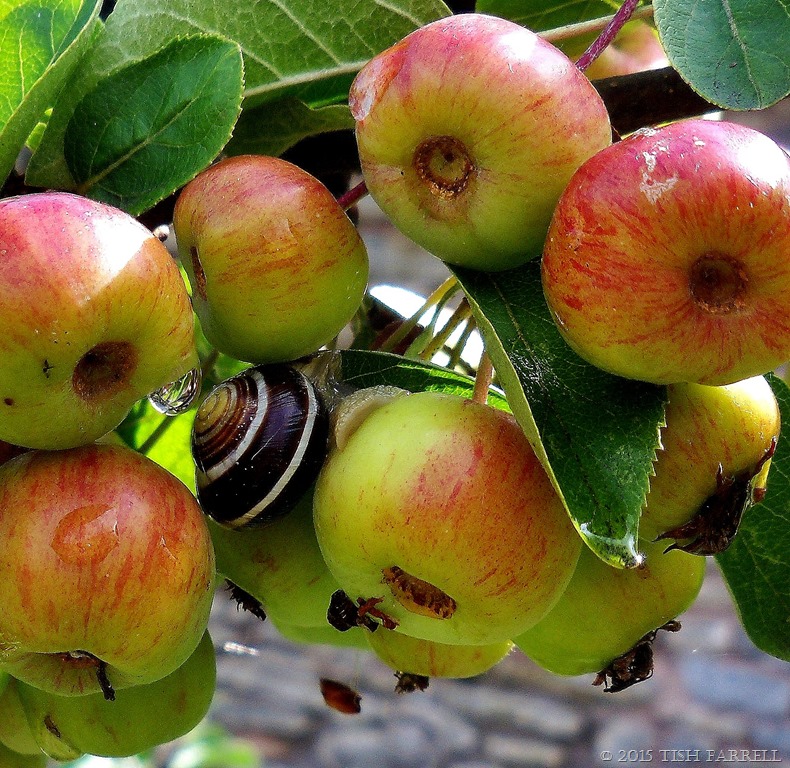
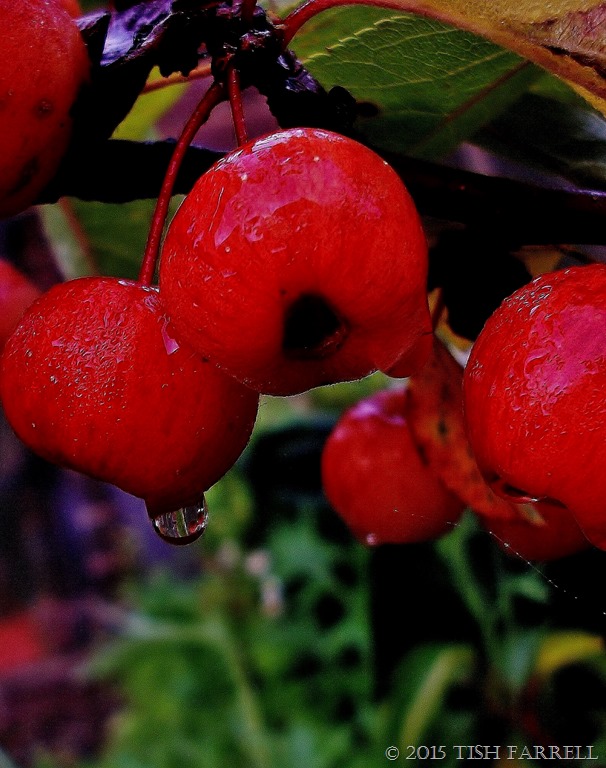
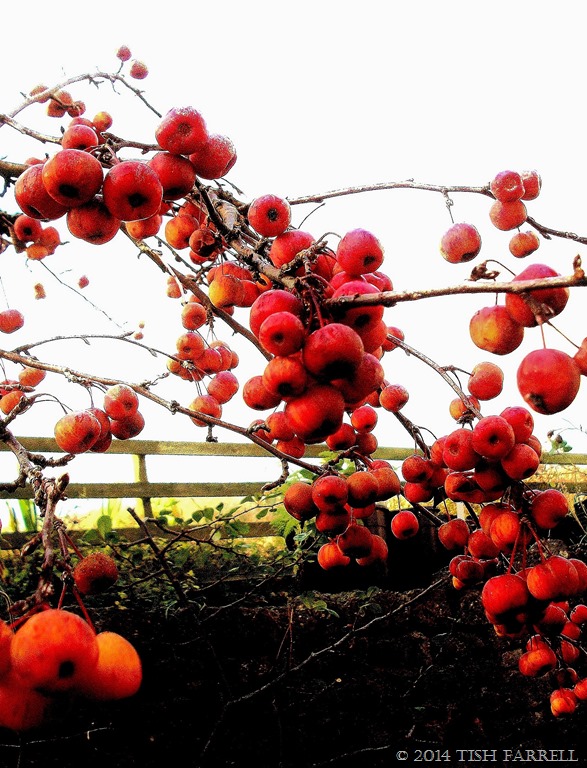
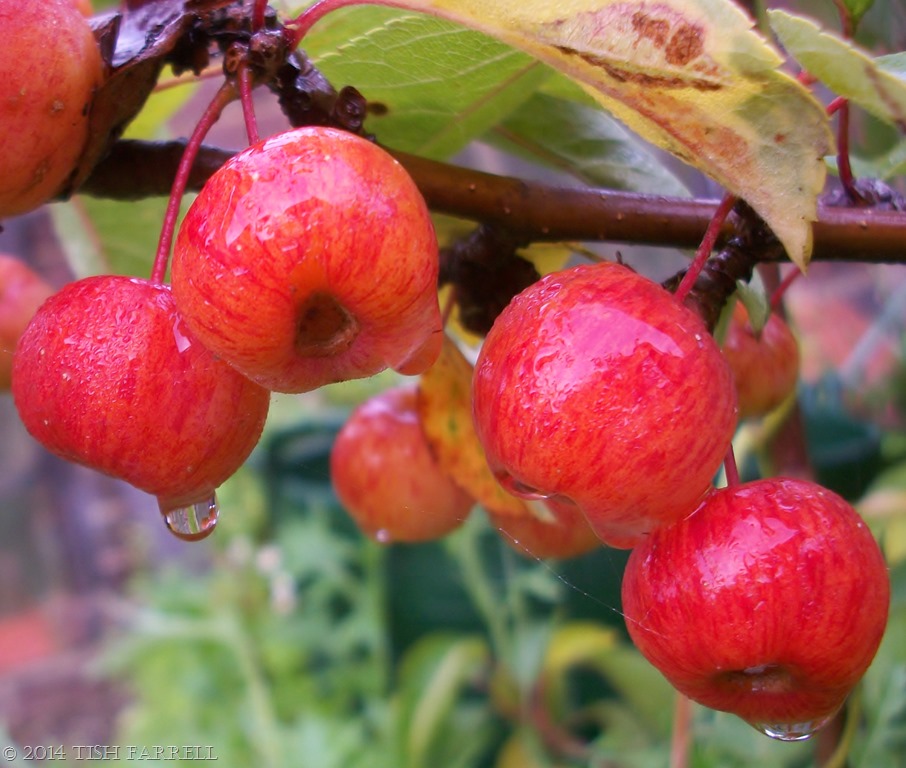
At twilight these crab apples glow like tiny lanterns against the darkening sky. And that’s when the blackbird comes to feed. Or at least this is the time when I most often spot her silhouette bobbing amongst the fruit. You will have to imagine her. It is a piece of English winter magic.  A gift.


Flickr Comments for more bloggers’ stories and photos

One Word Photo Challenge: Scarlet

100_3415

We planted the Japanese crab apple tree in the garden in 2006, not long after we moved into Sheinton Street.  Now is its season of fiery scarlet glory. Each fruit glows like a miniature lantern, brightening the gloomiest autumn day. And today is just such a day in Much Wenlock, my usual sky-view over Wenlock Edge, a blanket of grey mist. Even so, the apples glisten. I know, too, as we head into winter, we will have the pleasure of watching the blackbirds come to feed on the fruit, grey days then enlivened by their darting silhouettes foraging among the branches. Few of these tiny apples will be wasted. And then before you know it, the tree will be bursting with purple-pink buds that open in showers of pale blossom. Spring. Splendid how one thing leads to another.

copyright 2014 Tish Farrell

For more studies in scarlet, visit Jennifer at One Word Photo Challenge: Scarlet 


Polytunnel Vision

100_6616

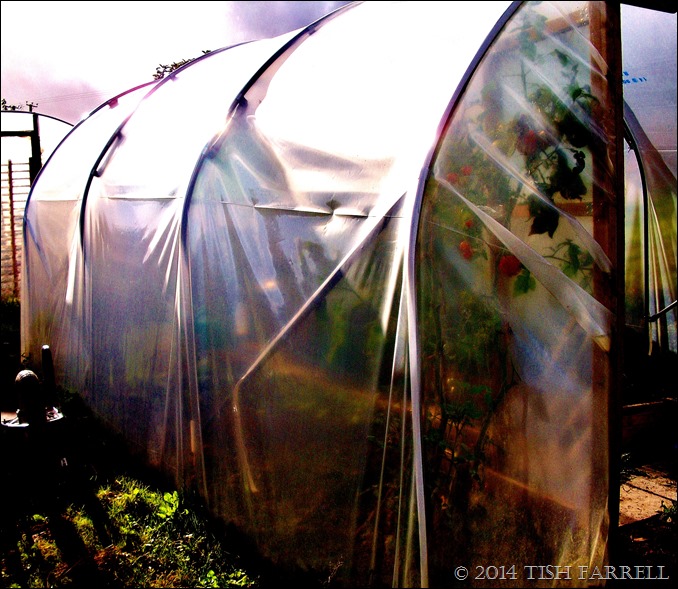
Oh all right, I know. As ambitions go, wanting to own a polytunnel might seem pretty odd. Also it’s not as if I don’t have enough housework in the house without having additional premises to tend elsewhere. But then sometimes in life you get precisely what you wish for, and most unexpectedly at that.

Ever since I took over my plot from Much Wenlock Allotment Society some seven years ago I have increasingly thought that a polytunnel was the very thing I needed. Gardening on the edge of Wenlock Edge can be challenging. The site is exposed, sloping, and often very windy. Much Wenlock is also in a frost pocket, and thus is a degree or so cooler than anywhere else in Shropshire.

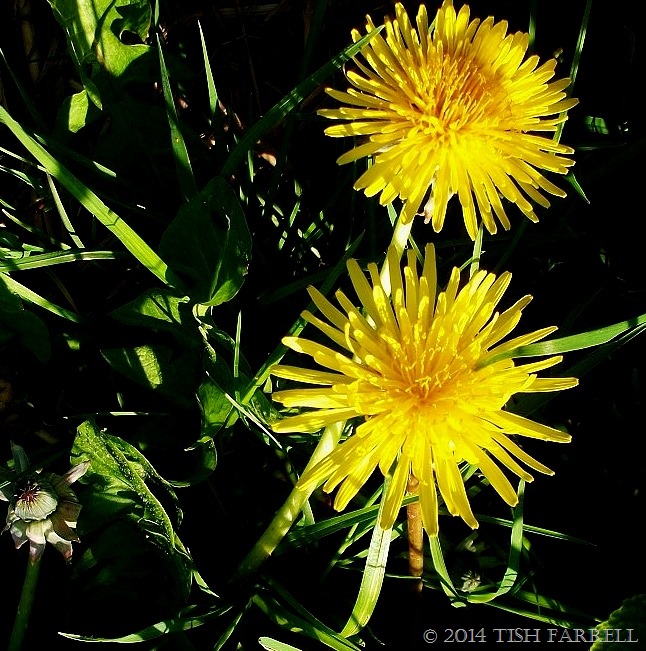
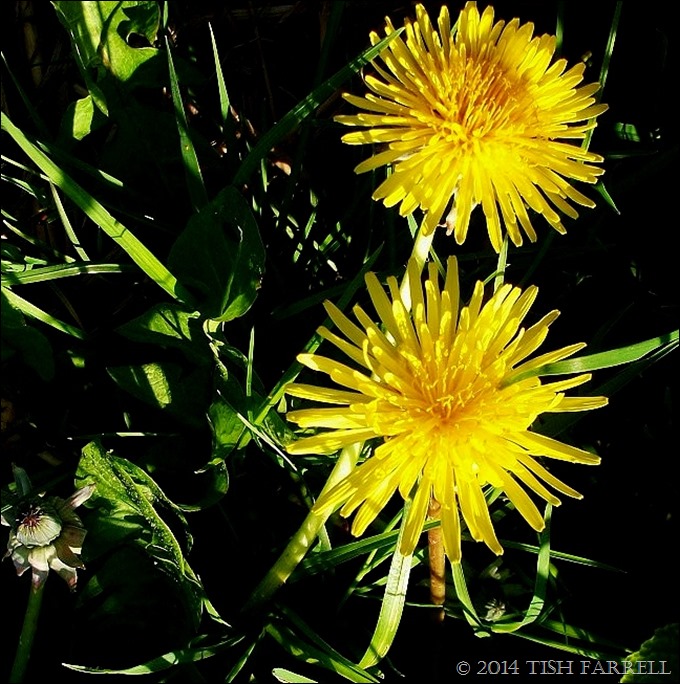
Worse still, the soil comprises a decaying fossil volcanic ash that is like wet cement when it rains, and hard baked cement when it doesn’t rain. It has thus taken seven years of digging, mulching, composting, green manuring, horse manuring, hacking and weeding to get the soil looking like something that vegetable plants might want to grow in. The dandelions, however, grow most verdantly, along with the creeping buttercups, sow thistles, docks, bindweed and couch grass. And so despite improvements, small vegetable seeds still find the soil heavy going. If they germinate at all, they struggle, the soil creating a bonsai effect on the roots, and then the slugs quickly finish them off. Most seeds thus need to be germinated under cover, and grown on before they can stand a chance after being planted out.
100_5367

And then, of course, there are the pigeons. They sit on the telegraph wires and watch what I’m doing. They especially like to eat cabbages and newly sprouted pea plants down to the roots. The rotters. In consequence I spend a lot of time making defensive systems out of environmesh and bits of wire fencing. This kind of protection also has to be applied to beds of leeks, garlic and onions due to the arrival in our part of the world of the allium beetle that likes to lay its eggs in the fleshy roots. The effect of these assaults on the leeks is especially dramatic: they unfurl in spiral fashion and develop rust-coloured stripes.

So you can see that to be an allotment gardener in Wenlock requires the same kind of pig-headed (idiot) tenacity it takes to be a writer. I have visions of deep, humus-laden beds bursting with lush, green spinach and broccoli, in much the same way I have visions of producing beautiful books that everyone wants to devour, and feel nourished by.

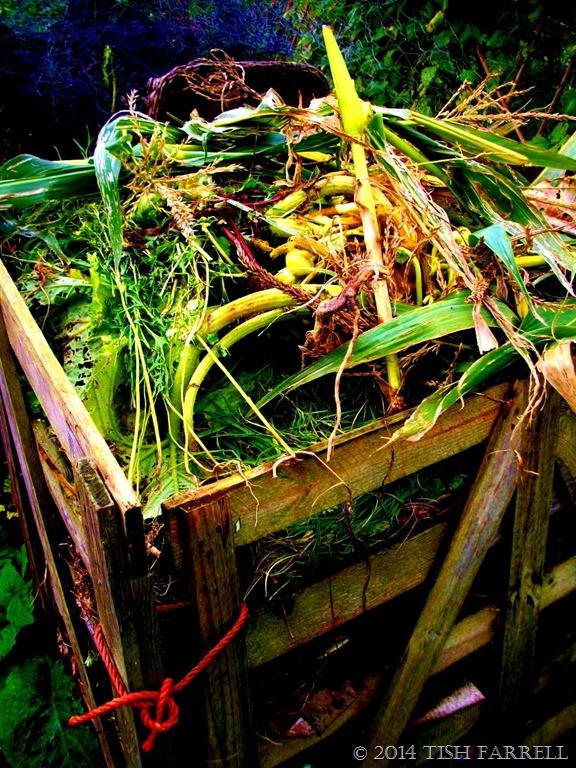
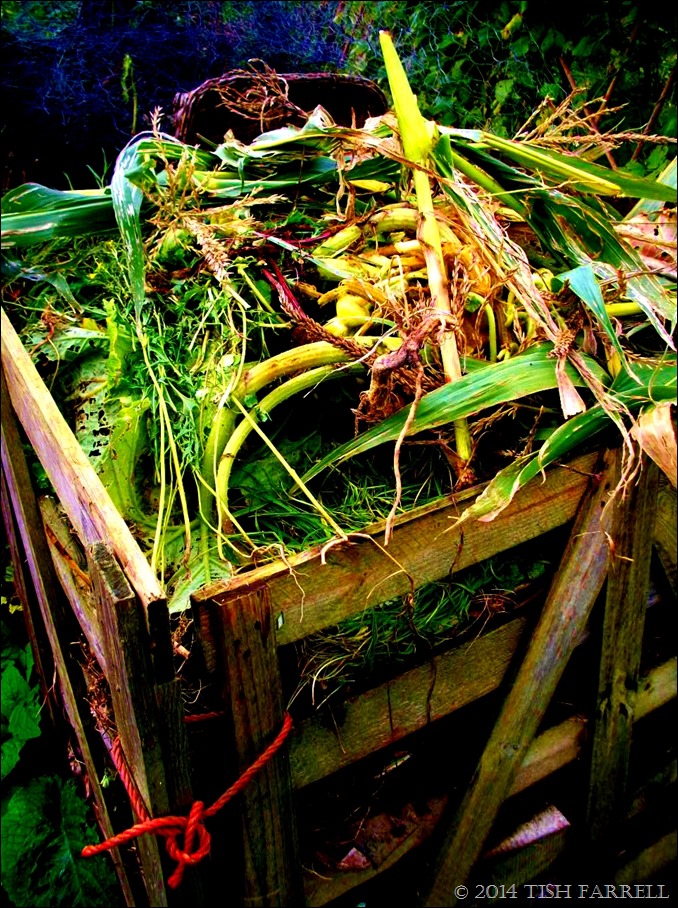
And that’s where the polytunnel comes in. I’m hoping I can crack both objectives in one fell swoop, this on the basis that if I can raise and eat more broccoli and spinach, my brain might produce writing with the requisite added enrichment. We can but hope. I might also say, as I probably have before, the contents of my writer’s brain have much in common with the contents of my compost bin, although at least they don’t smell. (Please note pallet structure installed by the Team Leader aka Graham who endlessly tries to bring order to my chaos).
100_4954

Anyway, back in the early spring when I was clearing my plot I noted, with a severe pang of envy, that my neighbours, Bob and Sally, were making preparations to erect a fourteen foot long polytunnel. I could see it was hard work, with foundation trenches to dig (in the aforementioned concrete soil) and the frame to erect. I watched them toil, hanging doors, and making beds. Next, I watched as my other neighbours, Pete and Kate, followed suit. Their installation was even more hard work, being on a slope. It took them weeks to complete. In the meantime I kept the Team Leader posted as to these events, from time to time mooting the possibility of us having a tunnel; perhaps something smaller, I hazarded.
100_5631

I have to say the response wasn’t altogether encouraging, even though we were by then falling out at home over whether the small conservatory on the back of the house was my potting shed and greenhouse, or his workshop. Increasingly my bean and sweet corn seedlings were having to compete with saws and wrenches and other man-things whose function I cannot identify. Nor was there the possibility of building either a man-shed to contain his stuff or a woman-greenhouse to contain my stuff since the garden at  home is too narrow.

Back at the allotment I watched the new polytunnels fill with tomatoes, cucumbers and peppers…I thought longingly of gazpacho that simply cannot be made from flavourless supermarket produce. Ho hum.

Then out of the blue in mid-summer, a little bird, otherwise known as ace fellow allotmenteer, Phoebe, told me that Bob and Sally were moving and were looking to sell their tunnel. She thought I should discuss terms with them.  Not long after this I received a small inheritance from my once passionately gardening Aunt Evelyn of whom I have written elsewhere.

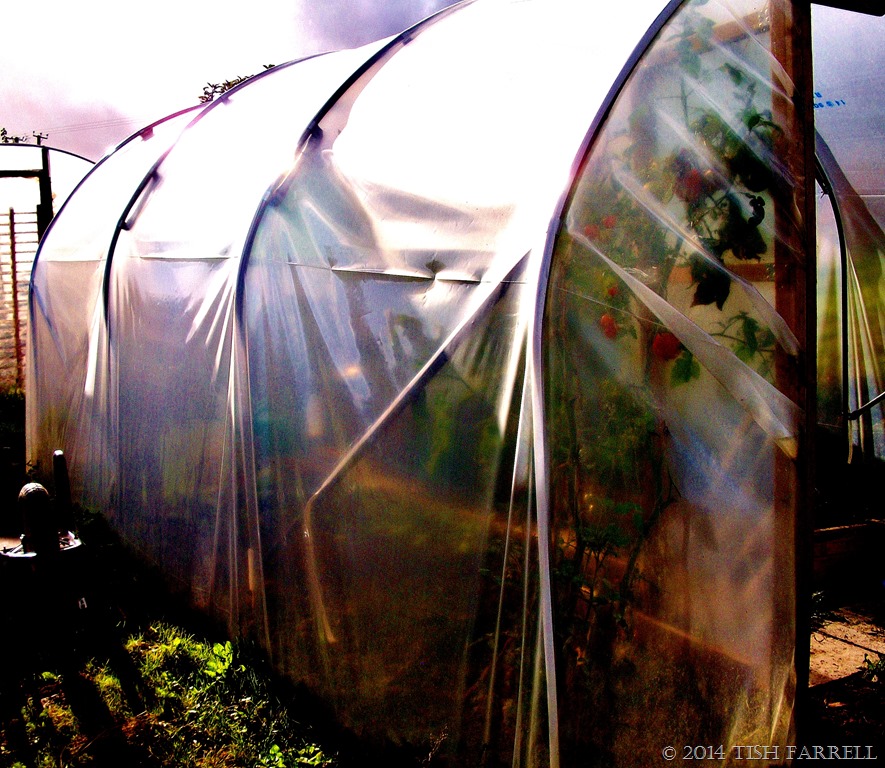
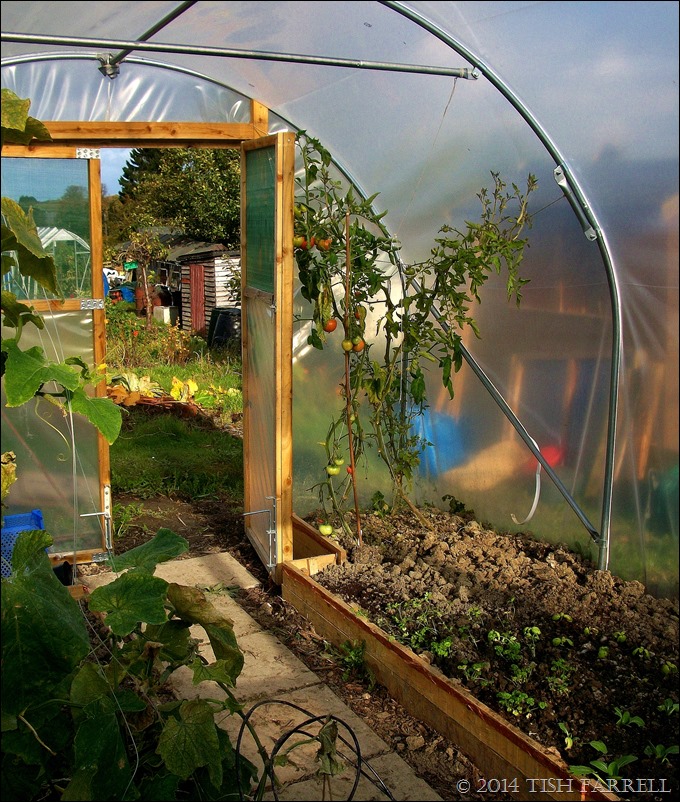
And so to cut a long story short, a week last Sunday I became the proud owner of the Auntie Evelyn Memorial Polytunnel, complete with potting bench, garden chairs and an automatic watering system. My aunt would have loved it. Bob and Sally even left me the last of their tomatoes and cucumbers. Not only that, the plot comes with a new shed that does not lean, nor provide roosting space for snails as my old one does. Already the Team Leader has added a shelf and guttering. In short, my water butt runneth over…Or will do very shortly.
100_6619

I have started clearing the tunnel’s beds and planted out lettuce and oriental vegetables to extend the salad season. But from now on, it is all new territory on the gardening front. There’s a lot to learn about tunnel cultivation and management. Planning and forethought are required. Better get cracking with that spinach and broccoli then.

Related stories about my aunt:

The Many Faces of Evelyn Mary Ashford

Grand Girl: Great Prospects

The Birds; Who, Where, When?

      copyright 2014 Tish Farrell

Please do visit Flickr Comments  to read more bloggers’ ‘P’ stories, or to add your own.

Still Life at the Allotment

100_6630

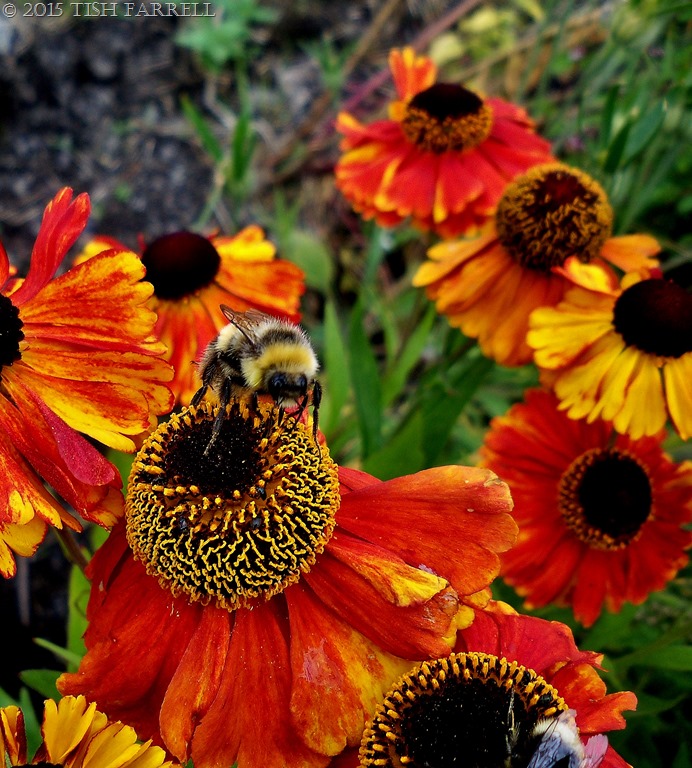
Mid October and the marigolds are still blooming up at the allotment. I love the way they simply grow themselves amongst my vegetables. In a mild winter they may flower into December.  It was also good to see this bee out and gathering pollen. These days, every bee is precious. Once we have killed them all with agri-chemicals, we can expect to starve. It’s as simple as that. My allotment empire has recently expanded – more of which in the next post – so I’m intending to grow more varieties of late and early flowering plants on my plot. Or maybe I should simply stick to marigolds, and let them grow EVERYWHERE. The flower petals are lovely in salads, and a herbal tea of marigold flowers is good for warding off flu. Simply looking at them makes you feel better. All that orange straight into the brain, lighting up the little grey cells as the days darken.

‘Happy Autumn’ northern dwellers.

100_4930


For more vibrant treats visit Cee’s Fun Foto Challenge

Strawberry & Rhubarb Cordial


100_4110

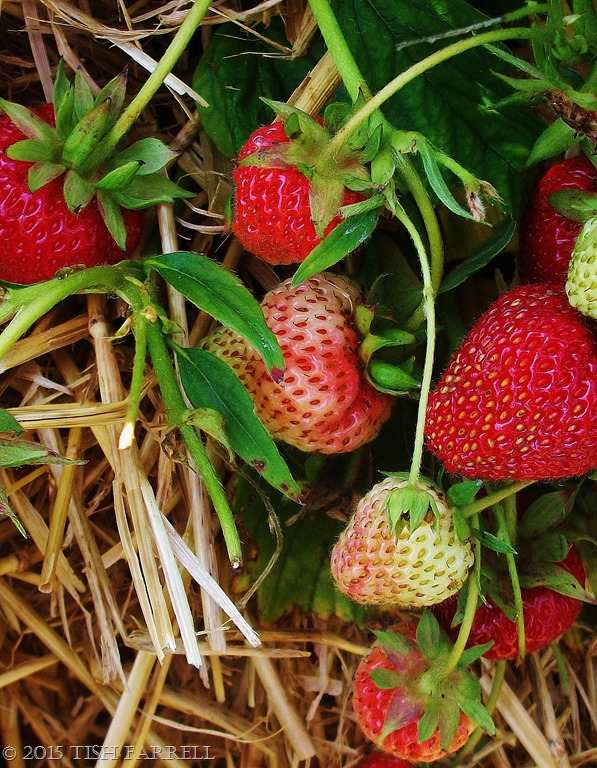
This photo did not involve much travel on my part, only a tramp across the field to my allotment where the juicy, chin dribbling strawberry season has just begun.  Nor am I being very original since I posted this recipe this time last year. But on the basis that many of you may have missed it, or forgotten it – here it is again. Also since the previous posting I have indeed tested it (several times) with prosecco  and can thus confirm that it does beat a bellini hands down. I froze some of the cordial too, and it was still just as delicious in our Christmas cocktails. I also think you could churn it in an ice cream maker and make a delicious sorbet, or turn it into ice lollies or lovely pink ice cubes to drop into champagne. Here it is then:


Strawberry and Rhubarb Cordial

4 sticks of rhubarb chopped

300 gm/10 oz ripe strawberries, hulled and cut in half

320gm/11oz caster sugar

1 litre/1.75 water

juice of 2 lemons

Place the fruit in a heavy based pan, add sugar and simmer on low heat for 10 minutes until the fruit begins to soften.  Add water and increase the heat slightly. Cook gently for a further 15 minutes until the fruit is completely soft.

Leave to cool then strain through a sieve, pressing the pulp into the syrup. Add lemon juice and store in the fridge.  For non-alcoholic moments, dilute with chilled sparkling water, and add a sprig of mint.

Enjoy…

100_4182

copyright 2014 Tish Farrell


Ailsa’s Travel Challenge: Fresh

Apple Blossom Time

100_5647


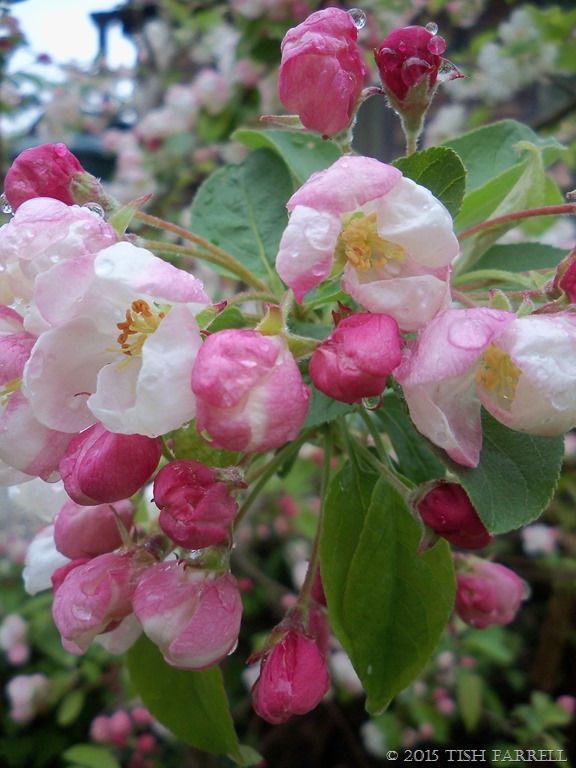
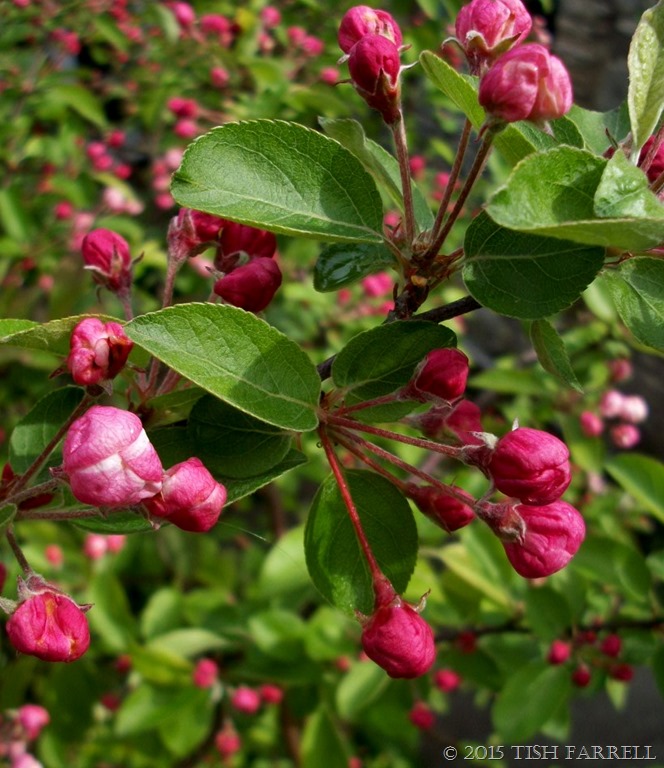
I confess that I posted this photo the other day, along with several other shots taken up at the allotment. But then I thought it deserves to be seen again, and on its own, and without me blethering on. So here you have it: apple blossom ~ what could be more lovely?

Ailsa’s Travel Theme: blossom


Related:

Rooti-toot-toot ~ spring at the allotment up close and vegetal

Three bees, two bees, one bee, gone bees?

100_3915

100_3920

100_3926

There have been worrying reports this week that wild bumble bees are now catching  deadly diseases from domesticated honey bees. Numbers are declining  across Europe, North America, South America and also in Asia. You can read the Guardian article about the situation HERE. Then there are problems with pesticides that halve bees’ capacity to gather pollen. Last month the Guardian reported that:

“A two-year EU ban of three neonicotinoids, the most widely used insecticides in the world, began in December, following research that showed harm to honey and bumblebees. The neonicotinoids are “systemic” pesticides, being applied to seeds so that the chemical spreads within the plants. Over three-quarters of the world’s food crops require insect pollination, but bees have declined in recent decades due to loss of flower-rich habitat, disease and pesticide use.”

You can read the rest of the article HERE.

One thing is certain, without bees we will start going hungry. But if this is all too depressing, here’s a view of our Much Wenlock garden taken last summer where there were in fact very many bees. So for all of us who think that winter will never end, take heart. Summer will come again.

100_3922

Weekly Photo Challenge: threes for more trios

@guardian @guardianeco

Errant Muse? But there’s still life at the allotment

100_4927

I’ve posted this photo of my last summer’s allotment produce to prove something. I thought it might be a good antidote to my dreary state of writing stuckness. (And may be yours too). For one thing it shows conclusively that if I can’t get to grips with the several novels now backed up in brain and filing cabinets, then I can at least produce beautiful vegetation. (In season of course). Most of it is edible too, although I would not recommend the zinnias. Marigolds are fine however – in salads and as herbal tea. Excellent for the immune system, or so a herbalist friend tells me.

100_4943

I sometimes think my allotment life is a metaphor for my writer’s life. Sometimes I think  it’s the other way around. This reminds me of the great Welsh poet, R S Thomas. In my post about him the film link shows him, in his elder years, out bird watching on the Welsh coast. Speaking to camera, and with a wry smile, the Nobel nominee says he is supposed to be a poet, but that when the poem is going badly, then he is a birdwatcher. Likewise for me, when the writing stalls, then I am a gardener. I am mostly a gardener.

100_4941

The common ground between growing and creating is obvious: seasons of  productivity followed by dead times when the creative flow seems to be, well, DEAD. This is the natural order of things. I know it. And so I am forgiving when it comes to the garden. I do not expect it to grow things in December and February (or at least not much). But when it comes to writing, I fret, fume and grow ever more despondent with myself because the ideas in my head cannot be rendered, as I would like them, to word, to screen, to finished work.  And I do not forgive this. I consider it a grave fault.

100_4945

Yet I know, too, that good growing and writing, require a fertile medium, one that is well turned and appropriately nourished. You need plans and timetables, while remaining open to alternative courses of action. You also need the right medium for the job in hand. All this takes time: years of learning, of preparation, and the application of improving strategies. You have to understand your ground from the inside out. And that brings me to another essential condition – good drainage. And  in my home town poor drainage is a problem; both brain and allotment, then, are equally afflicted. They are not free-draining. But at least I know how to improve the soil. Grit is good.

100_4954

In the absence of creative flow, ungoverned gathering of new material can start filling the gap. This in hopes of finding a  spark, some fresh inspiration to jump start the writing. The activity can of course have its good points. You may indeed find the very thing you need. Besides which, well rotted down and aerated compost improves content and structure for any future cultivation. On the other hand, ever growing stagnant piles of poorly decomposing matter simply overwhelm and add to the stalled flow problem. In other words, there comes a time when you simply have to give your brain a rest, leave the compost heap to rot down, and allow the period of dormancy to run its course. The hard thing is to keep faith during this process of seeming inactivity; to believe that you WILL recover and complete the works you began.

That wonderful woman, poet and Jungian psychoanalyst, Clarissa Pinkola Estés has some very heartening things to say about this. In her autobiographical exploration of the nature of story, The Faithful Gardener, she says that new seed is faithful, and that it roots most deeply where the ground is the most empty. In The Creative Fire she also says that everyone is an artist even if they have not lifted a brush to the canvass or opened a new Word file (I paraphrase). Finally she tells us that the only thing you need to create is to get out of the way.

And so in a bid to get out of the way, I leave you with some summer marigolds. Before your eyes they are passing through their natural cycle from bud, to falling flower to newly forming seed head. Perhaps if we stare at them long enough, absorbing all that very creative orangeness, we stalled creators will ‘hear’ what they are telling us.

100_4935

© 2014 Tish Farrell

*

Frizz’s Tagged E  Go here for more ‘E’ stories

*

Related:

Bright Fields on Llyn: windows in time, mind and space and other stories from Cymru

Onwards and upwards…the big New Year ‘do-over’