
Hint: forget about the horse!
Cee’s Black & White Photo Challenge: Capturing the photographer


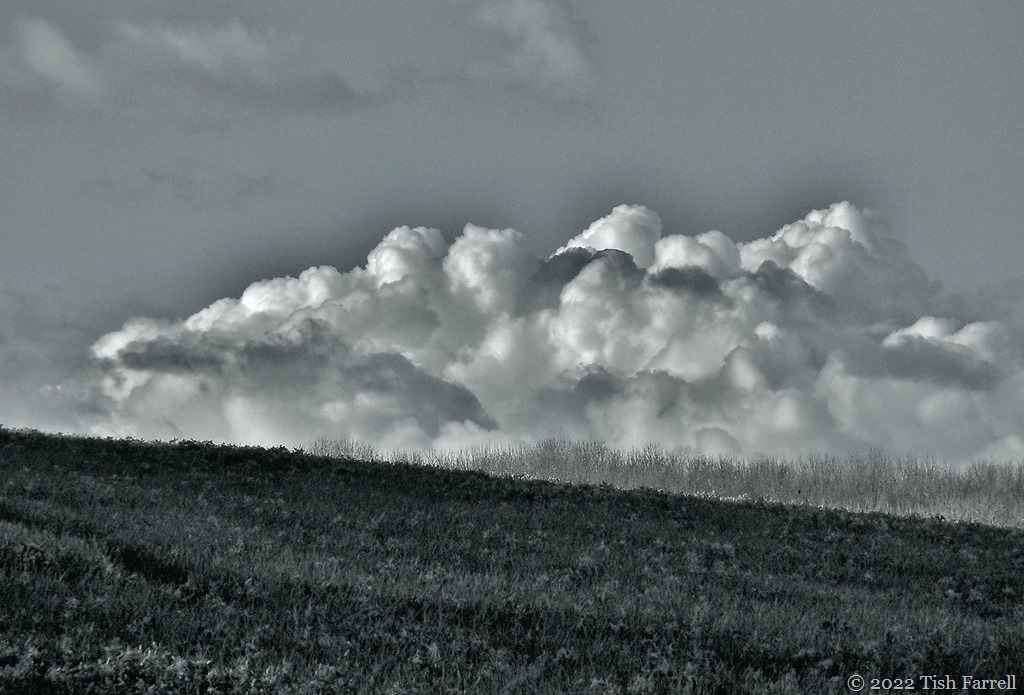
“Clouds pass and disperse.
Are those the faces of love, those pale irretrievables?
Is it for such I agitate my heart?”
― Sylvia Plath Elm
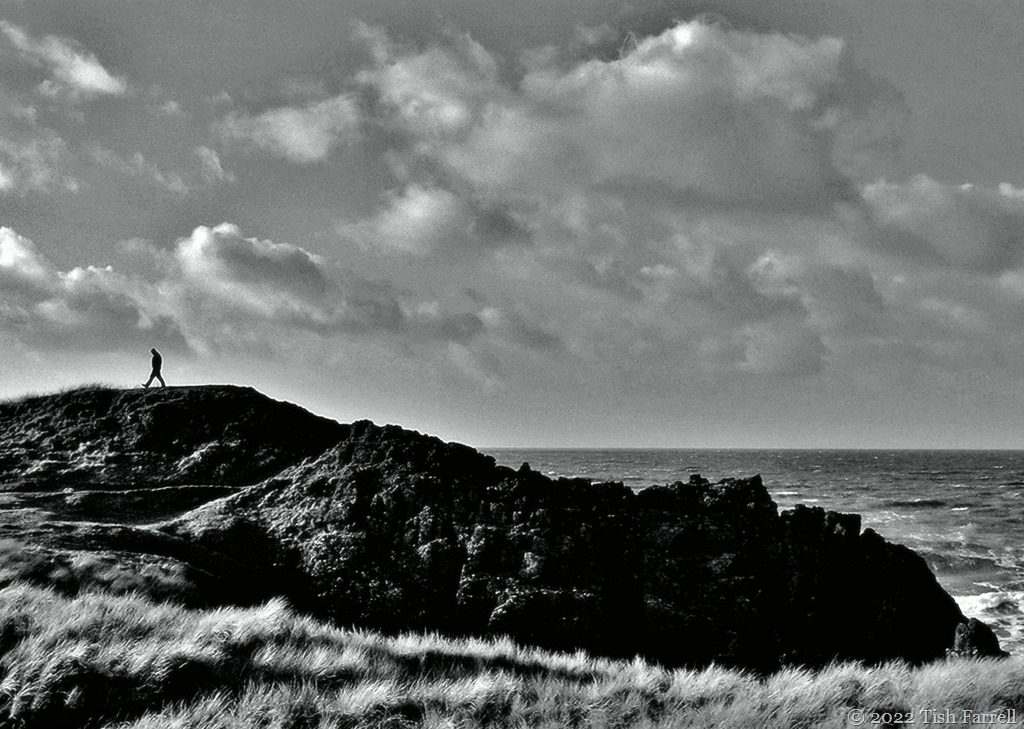
There may be signs of spring here in Shropshire, but the wind is still perishing cold. It’s reminding me of a wind-blown winter’s visit to Llanddwyn Island on Anglesey, where the sea-gale found every chink in one’s protective layers. Even so, it was a fine place to be: racing waves and whipped up grasses.
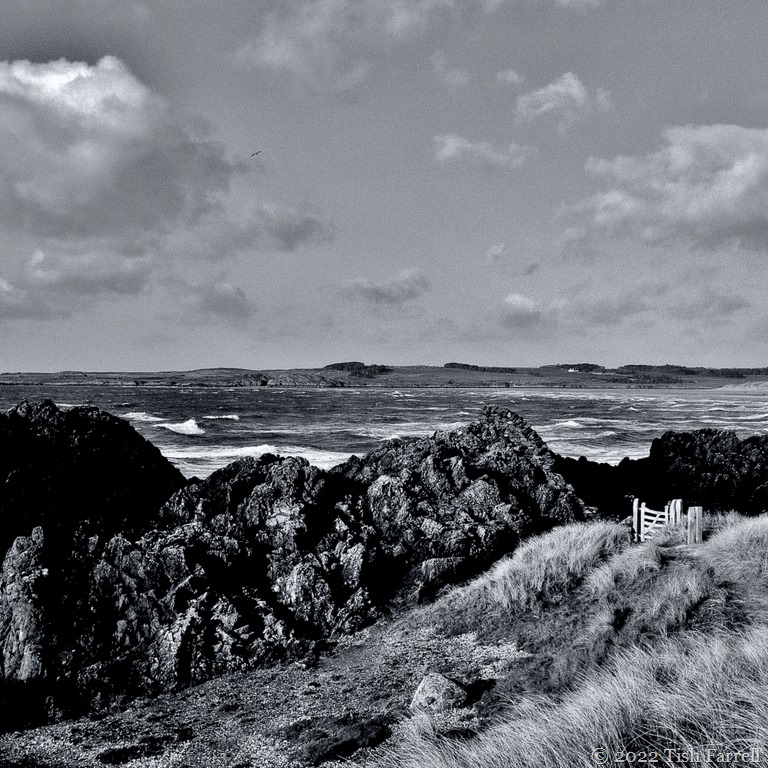
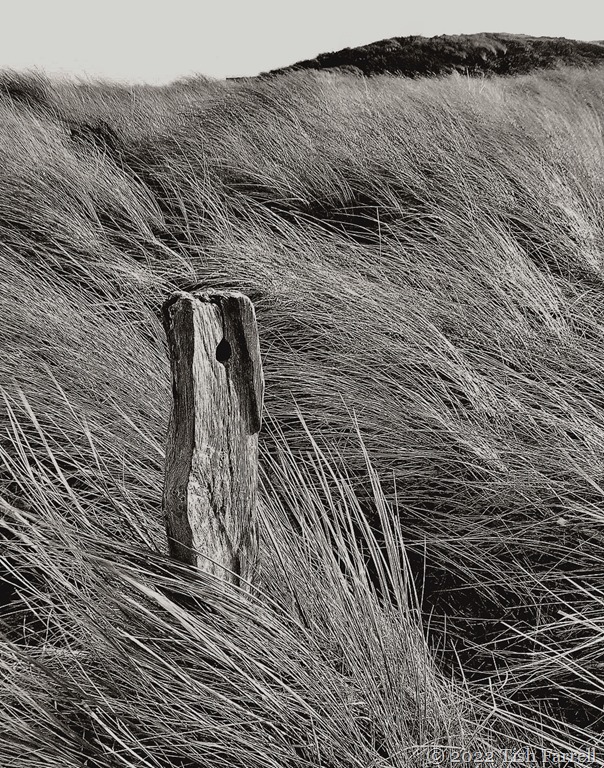
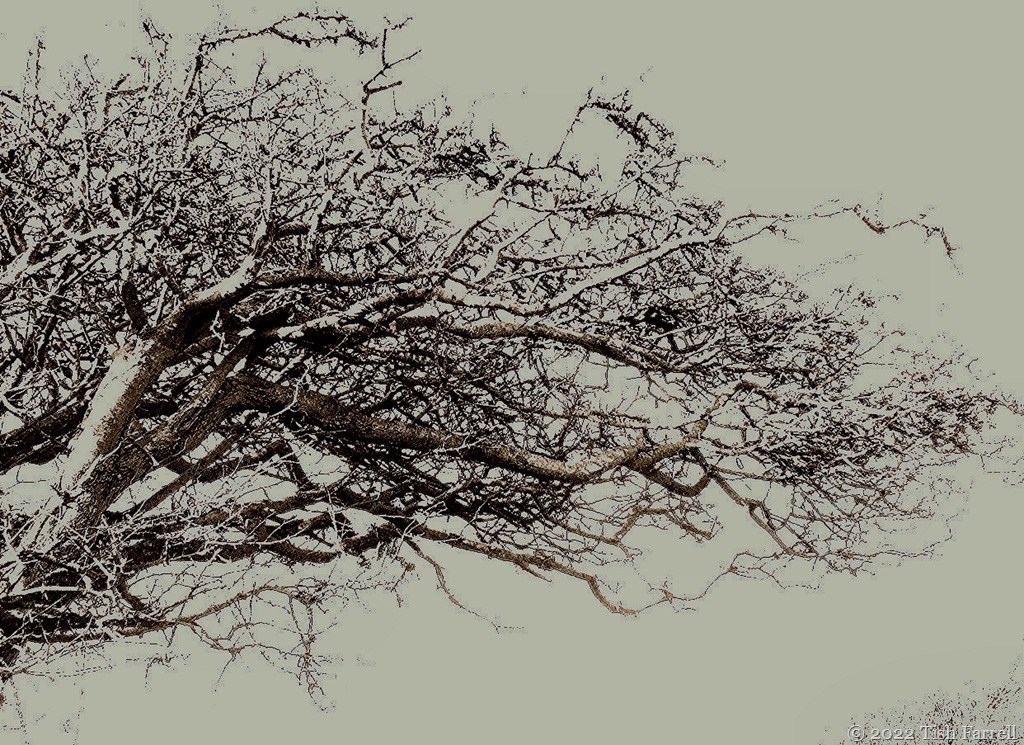
These photos were taken during our blustery stay on Anglesey, North Wales, back in early January. The hawthorn tree in the farm hedge has been sculpted and stunted by the prevailing sea gales over decades. In its dormant state it is now so rigid a structure that the winter blasts have little apparent effect. By contrast, the grasses were bowing flat in the bed outside the converted chapel where we were staying. One knew how they felt.

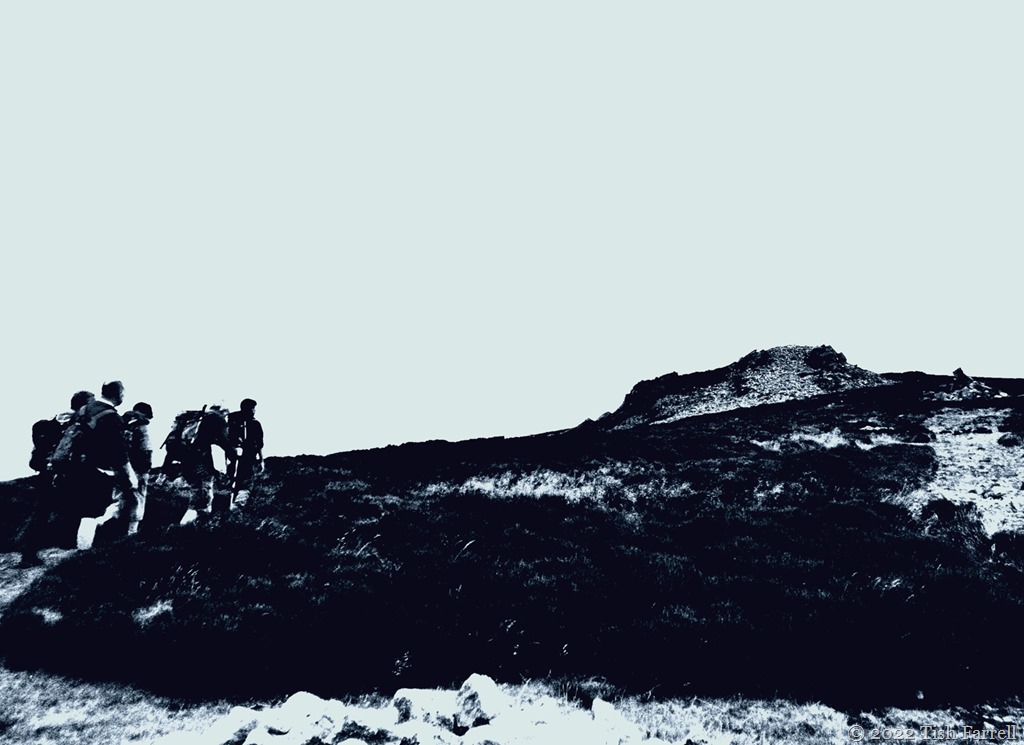
Shropshire’s mysterious Stiperstones featured in a recent Square Odds post. Here are more shots in monochrome, plus a few facts for geology lovers.
The grey-white rock of the ridge is quartzose sandstone known as the Stiperstones Quartzite Formation, created some 480 million years ago in the Ordovician era.
The tors and the rubble-like surroundings we see today are the work of more recent events in the last Ice Age (c. 115,000 – c. 11,700 years ago). During this time, the eastern edge of the Welsh ice sheet was nudged up against the Stiperstones, not covering it, but causing the quartzite to fracture during periods of intense freezing followed by thawing.
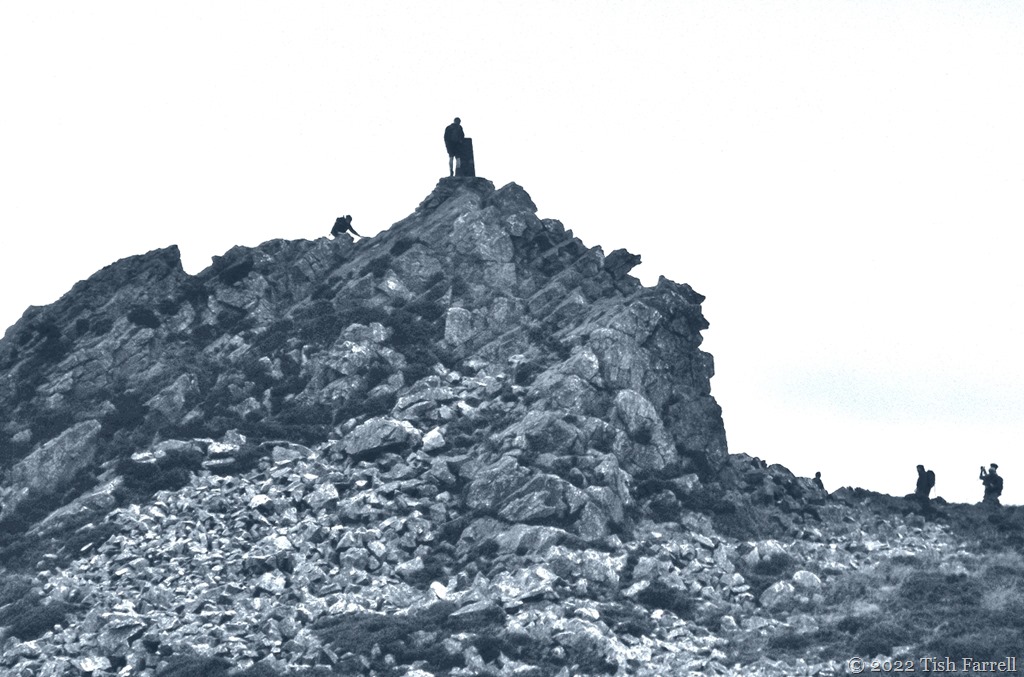
The highest point (Manstone Rocks) is 536 metres (1,759 ft) above sea level, making it the county’s second tallest hill after Brown Clee. The ridge extends some 8 kilometres (5 miles), the summit crowned with a series of six distinctive outcrops.
For geology buffs there is a detailed overview of Shropshire’s 700 million year geological history by Peter Toghill HERE.
This next photo: men on Manstone Rock, the highest point on the Stiperstones…
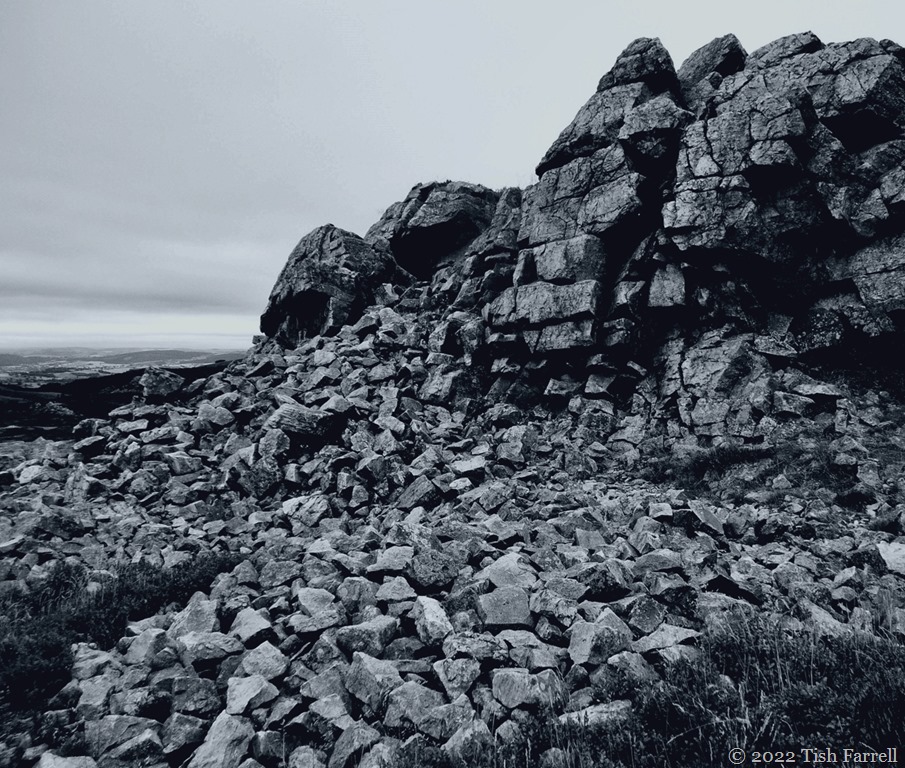
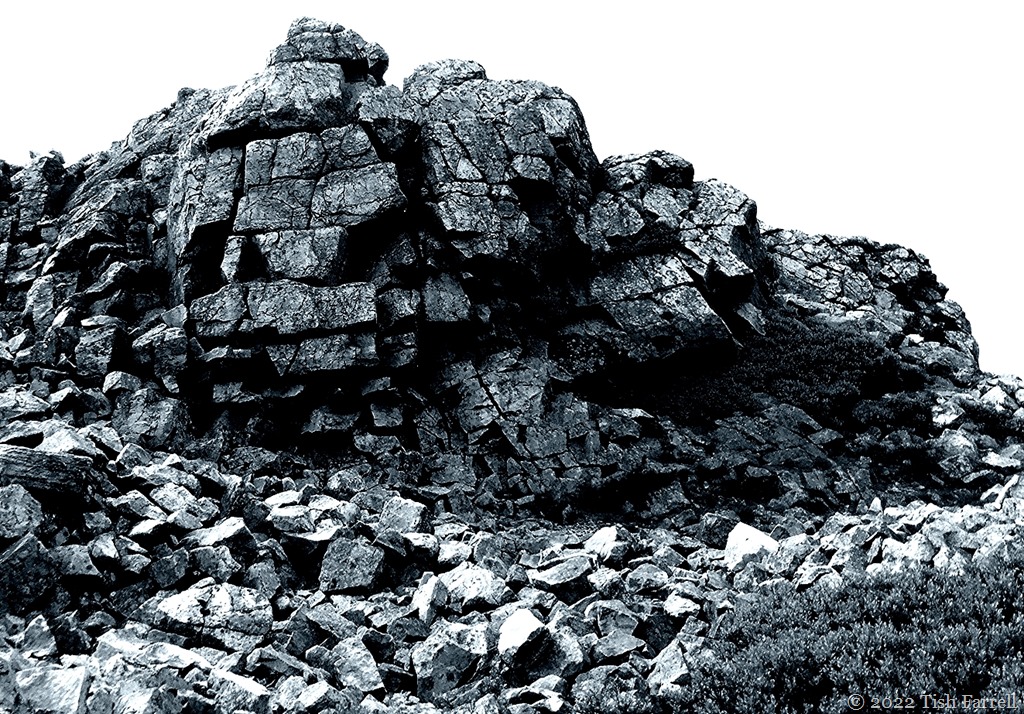
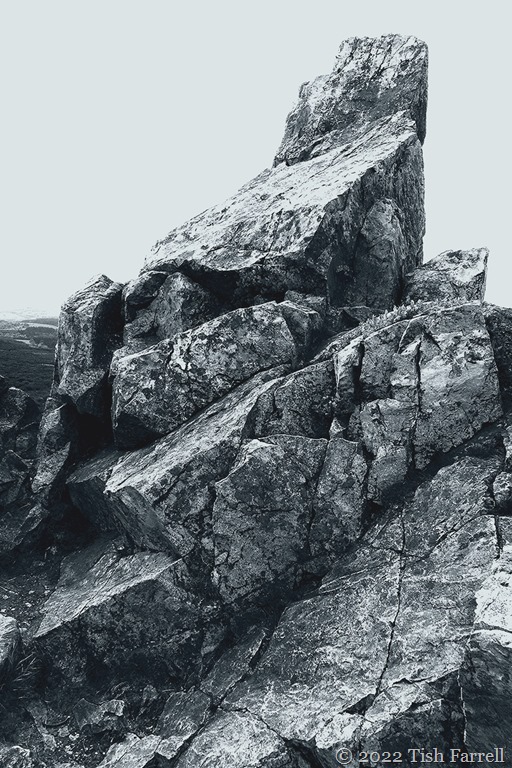
Cee’s Black & White Photo Challenge: rocks, boulders, stones
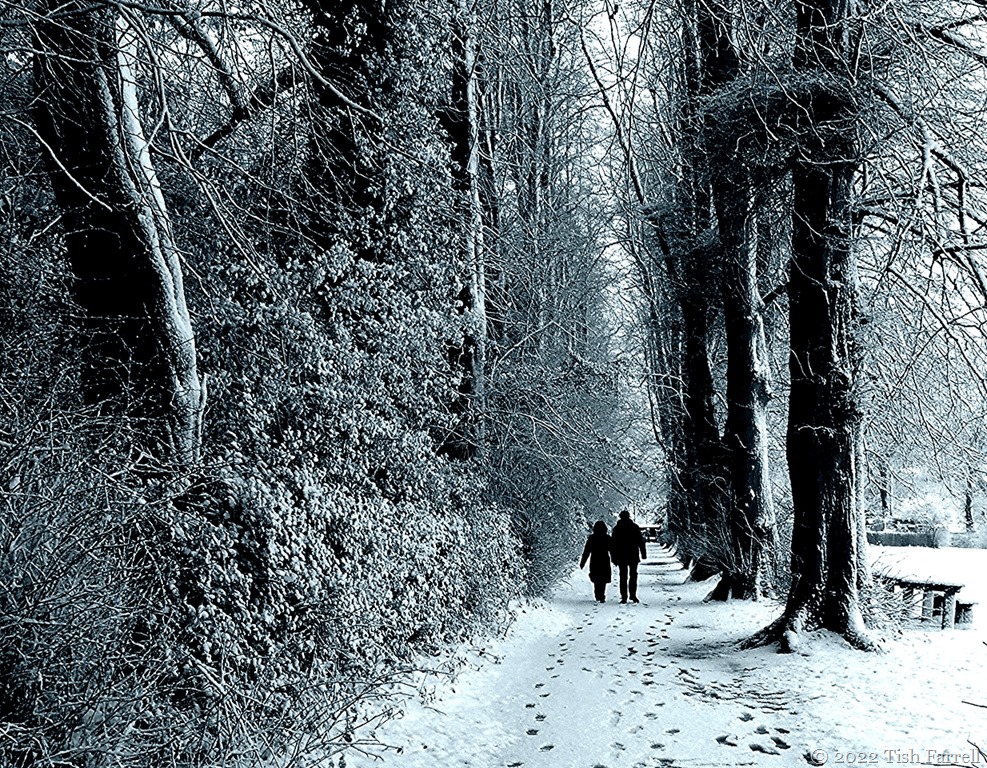

Taken a few winters ago. This year we’ve only had frost. So far.
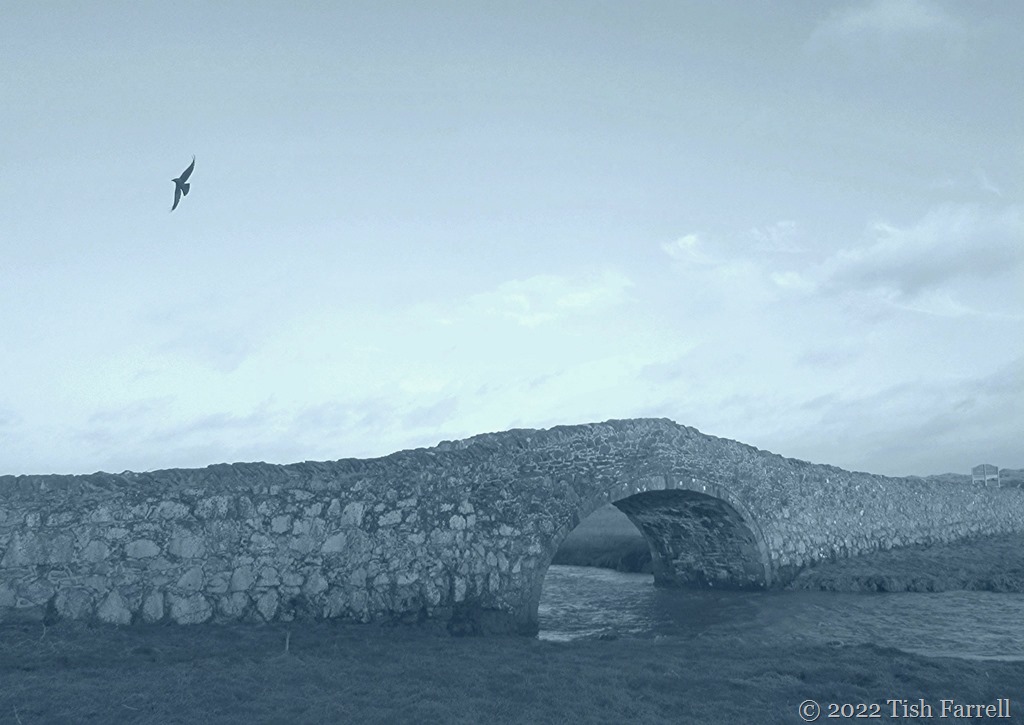
This seventeenth century packhorse bridge in the Anglesey village of Aberffraw is quite a landmark and much photographed (on sunny summer days). You can see why it catches the photographer’s eye, but on a bleak and windy January day, I’m thinking it’s the local jackdaw that adds a certain something to the scene.
There was also a jackdaw ‘fly-by’ when I visited the village church, another of Anglesey’s ancient places of worship, St Beuno’s. As with ‘the little church in the sea’ in the previous post, parts of it date from the 12th century.

It was by no means the earliest church in Aberffraw. That was built some five centuries earlier by St. Beuno himself, though no traces of his work remain. As with many early Christian places of worship it was probably a simple thatched and timber-framed structure that would leave few signs of itself. But in their time, both these churches probably served as royal chapels to the Princes (and Princesses) of Gwynedd who in the early Middle Ages held court close by. Their palace likewise left little trace of its existence, having been dismantled and its parts dispersed after England’s King Edward I invaded Wales (1277-1282). Although I did read that it was discovered belatedly that the village council houses had been probably been built over the site. The way things change!


Day’s end and a gathering of Grevy’s zebra, the largest and most northerly race of zebra-kind. It was a chance encounter. For two hours Kevin, our Chagga guide had been driving us along the dirt tracks of the Lewa Downs reserve. It was new territory to us; our first trip to northern Kenya from our then home-town of Nairobi. The landscapes were breath-taking, sweeping rangelands, pale grasses, beetling gorges, the distant gauzy backdrop of the Matthews Range.
Earlier we had stopped to follow a Greater Kudu family on foot. They were moving in single file up a steep bush trail. We lingered under a thorn tree and in the late day light, watched as they melted one by one into dappled cover. Then it was back to the truck and more trail bashing, the only sign of wildlife, massive piles of elephant dung on the track, and some torn up thorn trees where the herd had passed.
We scanned the bush country all round for a glimpse of them, but they were gone, or at least we could not see them, which is not the same thing. Elephants are invisibility specialists. No matter. As I said, the country was magnificent, the light like liquid amber, and the air filled with the soothing scent of acacia blossom. Lemony with tones of jasmine. As ever, out in the bush, all felt like a dream.
And by now, too, the sun had dropped behind the mountains, the light fading fast. We headed back to camp, and it was then, as we rounded a bend on the trail, we met the zebra. There was only just enough light left to take their photo, but they obligingly stood perfectly still.
And just in case you’re wondering what the difference is between Grevy’s and the plains zebras, here’s another sundowner scene, this time from the Maasai Mara far to the south:

These are Common or Burchell’s Zebra, smaller than the Grevy’s. Their all-over, widely spaced stripes are thicker; ears pointed to Grevy’s endearingly round. Their social habits are different too, the plains’ zebra living in family groups with much grooming between members while their cousins appear to move in less structured gatherings.
But what about the stripes, you may ask: is every zebra’s livery unique?

It is hard to be sure from the Grevy’s portrait, though I’m thinking it’s highly likely. But when it comes to the plains’ cousins, I have told the tale before of how once in Zambia, on a New Year’s Day game drive, a rather tipsy guide waxed lyrical about the very particular patterns on each zebra’s ‘butticles’, and how it was by such means that zebra offspring recognised their respective mamas. I don’t know about the last bit, but these two photos from Nairobi National Park certainly prove a point, final blurry butticle shot aside: the stripes truly do not match.


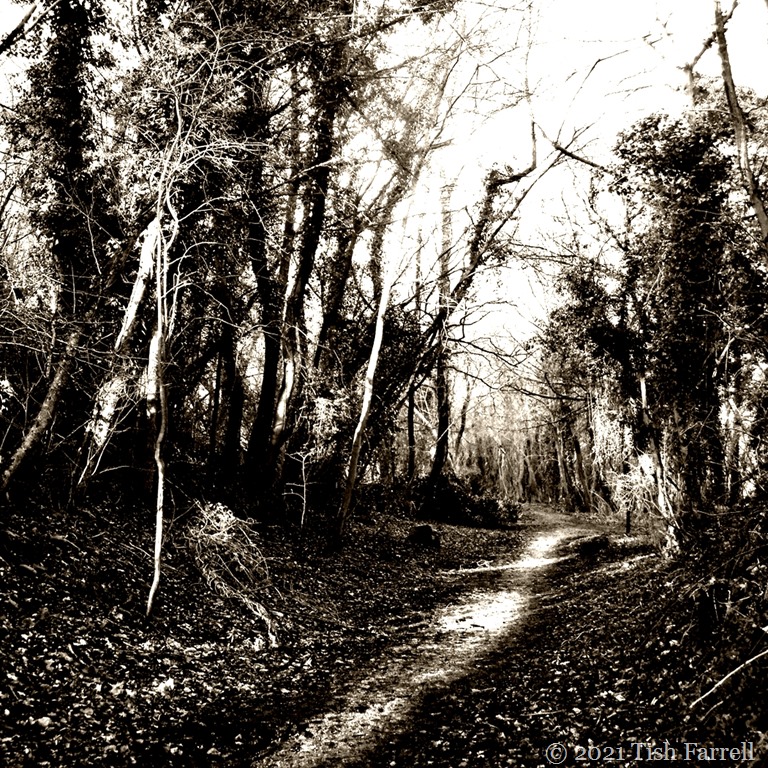
The old railway line
*
Becky’s entertaining Past Squares month is nearly done, and this week Cee’s black and white photo challenge is vanishing point, and so the two notions seemed to coalesce…

Wenlock Priory ruins
*
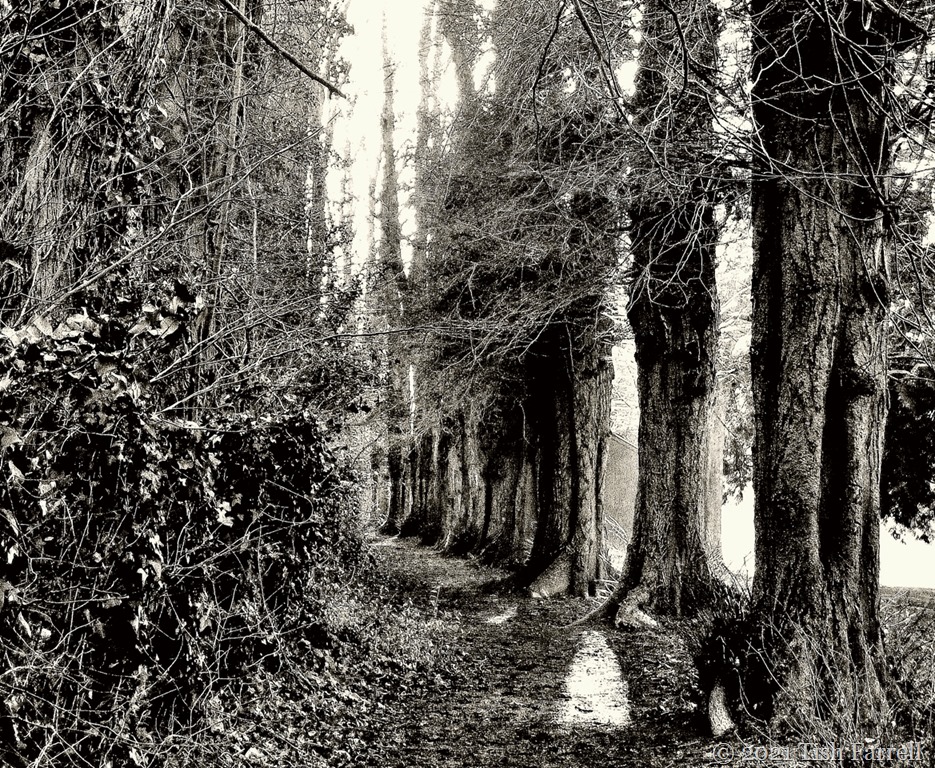
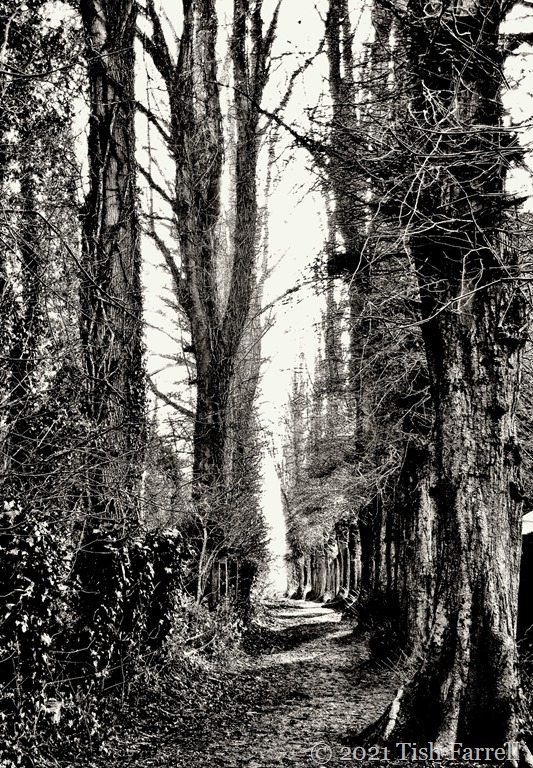
The Linden Walk
*

Path to Bradley Farm
*
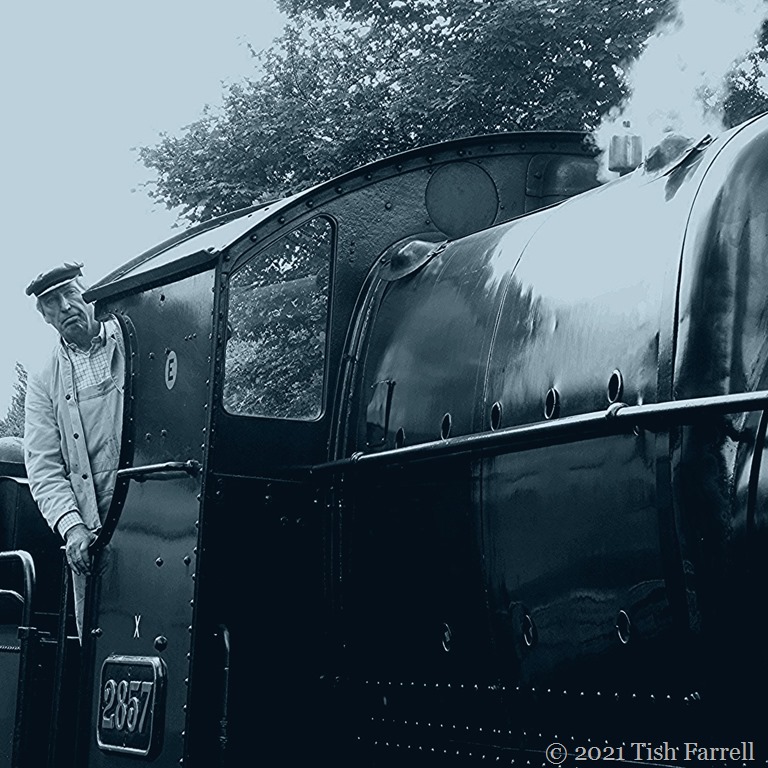
Once we Shropshire folk had a very scenic Great Western Railway line that ran along the banks of the River Severn, including passing along the wooded slopes of the Ironbridge Gorge, now a World Heritage site. Just north of Ironbridge there was a branch line to Much Wenlock and South Wales far beyond. Much of the Severn Valley line has gone now, and that also goes for our Much Wenlock branch that once served the limestone quarries and livestock farmers. Mostly all that remains are stretches of track bed that have been overhauled to create walking and cycling routes. But we do still have a working section – the Severn Valley Railway, which is run as a heritage attraction from Bridgnorth to Kidderminster in Worcester where you can also connect with the mainline system. As their strap line claims ‘it’s a great day out.’ And for someone who still remembers travelling in steam trains as a matter of course (visions of Crewe Station where family outings to North Wales began) I still have pangs of nostalgia whenever I’m around a steam locomotive stoking up.
