Nice By Night ~ Hotel Negresco

Hotel Negresco, Promenade des Anglais

“If only I were at Nice, I would recover.”

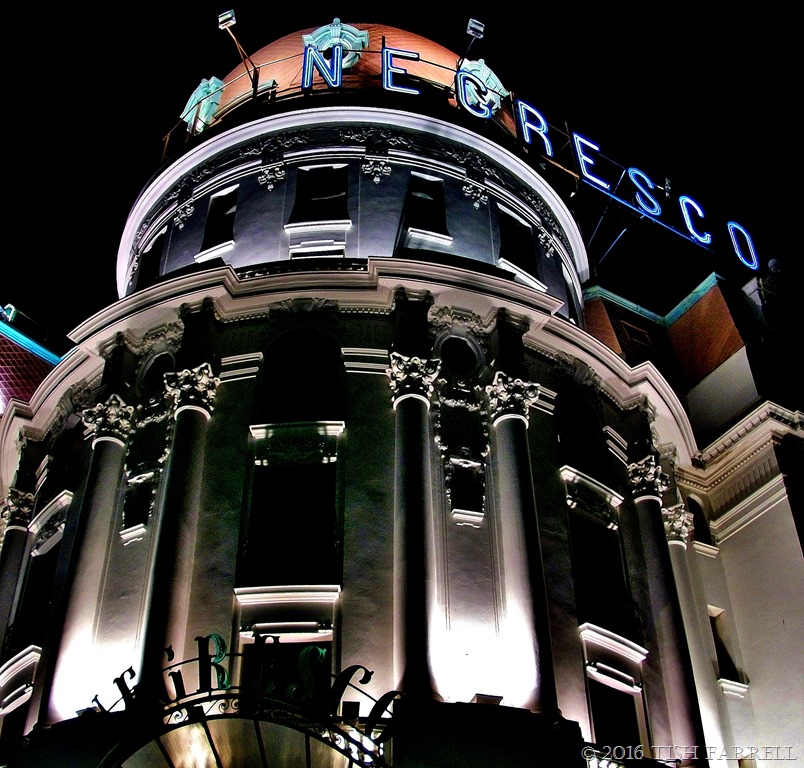
So said Queen Victoria on her deathbed in 1901. She has a point. Who would not feel better after a stroll along La Promenade des Anglais, one’s gaze filled with the perfect Côte d’Azur blue of the La Baie des Anges. For a monarch, who had made a career of mourning  the death of her consort, Prince Albert, Nice was the one place where she sparked into life. She would travel there under the name of Lady Balmoral, and go exploring the backstreets of Nice in a donkey cart. The Hotel Negresco, however, was after her time, opened in 1913. It dominates the La Promenade des Anglais. Past guests include Salvador Dali, Princess Grace of Monaco,  Duke and Duchess of Windsor, Ava Gardner, and Edith Piaf. This night shot looking up to the characteristic terracotta cupola, and the cool blue of the illuminated sign, somehow sums up the Nice-ness of Nice.

*

Thursday’s Special

This week Paula’s guest is Cardinal Guzman. He challenges us to post some night photography, and provides lots of useful tips.

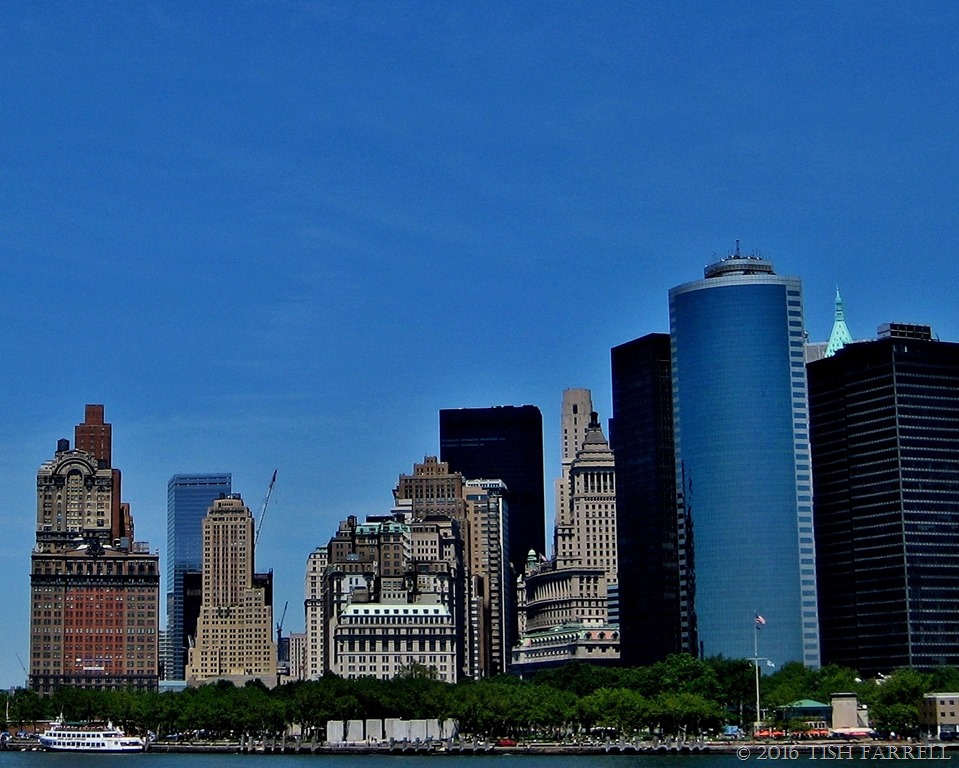
Tall Story? Downtown Manhattan From The Staten Island Ferry

New York 009

Doesn’t time just fly. I can’t believe that it’s nearly eight years since we sailed into New York on Queen Mary 2, star of the Cunard fleet. The Atlantic crossing takes seven nights, and seasoned Cunarders will be quick to tell you that this voyage is a crossing (The Crossing in fact) not a cruise. We docked at dawn in Brooklyn after a long and majestic glide up the Hudson River. The Statue of Liberty glowed through the mist. It was May, and a heat wave was brewing.

Over Brooklyn and the dockside cranes a huge red sun was rising. It gave a surreal glow to the instantly recognisable (to us that is) corporate blue and yellow of the new IKEA store (America’s first if I remember rightly). It was set to open the following month, and we later noticed much associated fanfare on bill boards around the city. Free sofa cushions came into it somewhere. I also remember feeling a bit offended that I’d been at sea a week, all pent up for the grand sail-by of the Statue of Liberty and that first stunning glimpse of the Manhattan skyline, only to have this bland blue furniture shed be the next landmark imprinted on my mental landscape.

They should definitely move it.

Anyway, for those visiting NYC by plane rather than ship, you can have the grand ‘sailing into New York’ moment for free, and thus as  many times as you like, on the Staten Island Ferry. Pick your moment for the best shots. Sunset would be good.


Thursday’s Special: tall  Please sail over to Paula’s for more tallness.

Vibrant: me on Lamu Island far too long ago


Scan-130426-0017

It was a four day trip over Christmas. We’d been living in Kenya for three or so years by then, and another five to go before we would return to the UK for good. Lamu Island  set my imagination alight. Later I began writing a teen adventure aimed at the African schools literature market. It was published by Macmillan in their Pacesetters series around the time we left Kenya in 2000.  It’s still in print, and even if I say so myself, quite a good yarn. I have a feeling my brain cells were a little more vibrant back then. Perhaps they are craving the African light…

100_3649 - Copy

Vibrant

In the background on Zanzibar’s farms

Scan-130429-0006 - Copy (2)

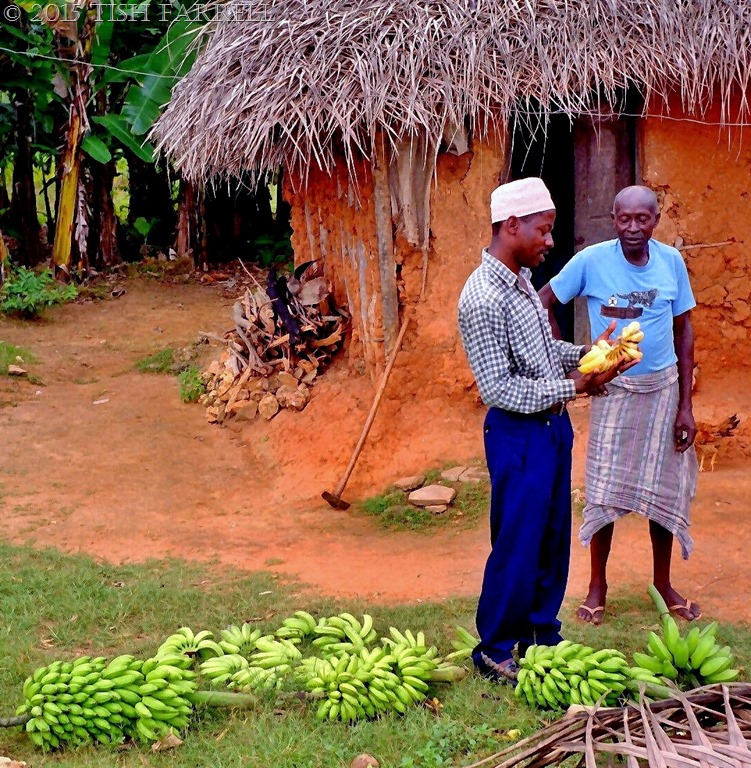
One of the must-do tours if you visit Zanzibar is a trip around the island’s spice and fruit farms. Hari our guide was intent that we should taste everything we saw growing, so here he is bargaining with a farmer for a ready-to-eat bunch of bananas. You can see the banana grove in the top left corner. Banana branches are usually harvested when the fruit is still green. There’s a knack of knowing just when to cut them.

Being a nosy writer who is always in need of background detail, and also a one-time student of cultural anthropology, I try to capture slice-of-life moments whenever I can. They’re usually not the best quality photos, but I hope to make up for technical shortcomings with content interest. (And yes it would be nice to have both). So here is my take on this week’s Thursday’s Special challenge from Paula – ‘in the background’. My choice of subject, however, did mean I had to switch my blog snow off. There’s enough climate change going on without having icy precipitation on Zanzibar.

Scan-130429-0007

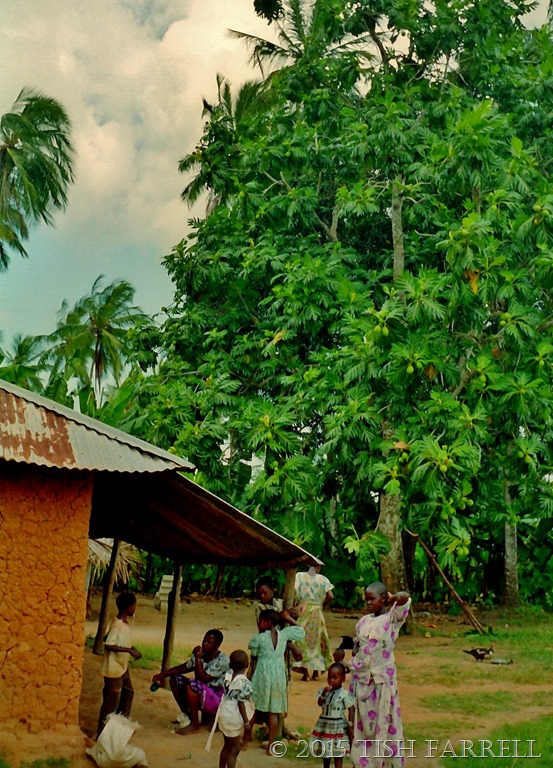
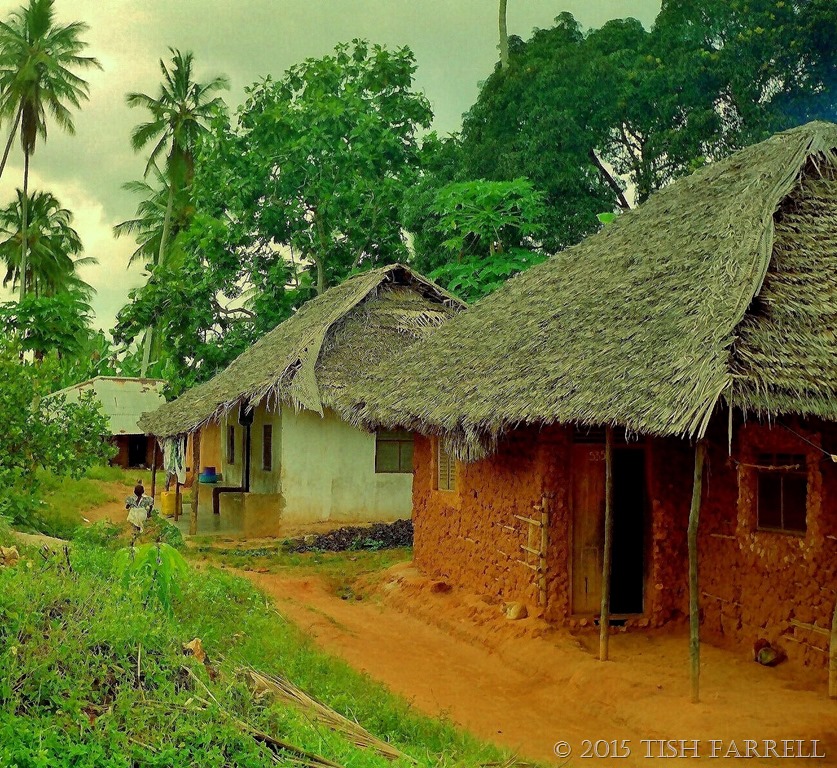
This farming family has a jackfruit orchard, as well as coconut palms. The jackfruit apparently weren’t ready for tasting, but I was anyway more distracted by the presence of the domesticated Muscovy duck. Now how did that arrive in the tropics? The mabati iron sheets on the farm house roof  (i.e. instead of traditional palm thatch) are a sign of  prosperity, and therefore of status.

*

Scan-130429-0010

Scan-130429-0010 - Copy (2)

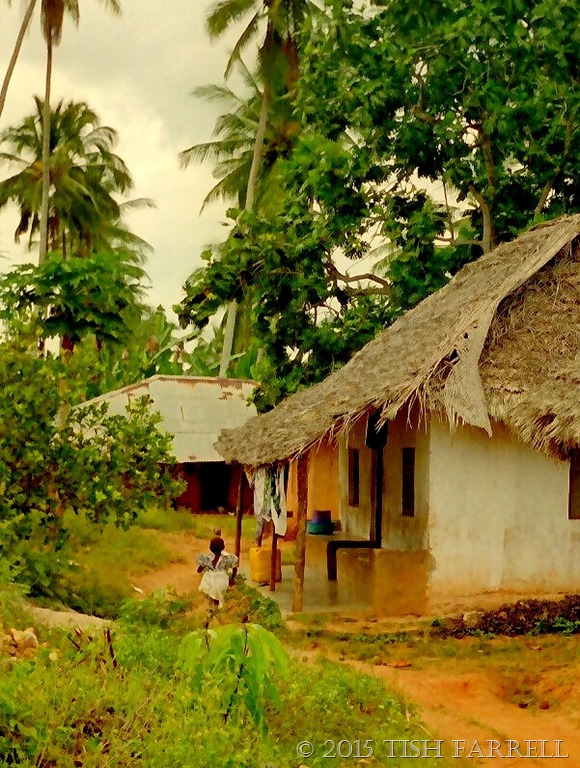
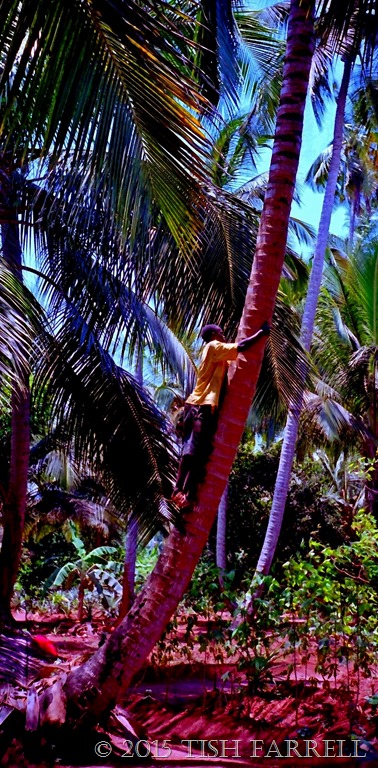
I’m wondering where this little girl is off to in such a hurry. Also one of the reasons why I’m showing off the tall trees in the background is that if you intend to make a living from them, then someone has to climb up them to pick the fruit…

Scan-130429-0074 - Copy

Thursday’s  Special: In the background

Three dhows at sundown on Lamu

Scan-140801-0001

You, the very lovely people who have been following my blog for a while, will have seen this image before – possibly more than once. But I’m sure you won’t mind seeing it again. Even if I say so myself, it is a blissful scene,  and a chance capture in the Manda Strait on Boxing Day too long ago.
Trio

Walking through time on Lincoln’s Steep Hill

100_3935

Steep Hill in Lincoln has seen a lot of history its time. The invading Romans built the first road around AD 48 to link their legionary fort of Lindum Colonia on the top of the hill with the riverside Iron Age settlement at bottom. After the Romans came marauding Vikings, who then gave up pillage for commerce, and so turned Lincoln into a thriving trading centre. Next in 1066 came the invading Normans. All have left traces of themselves around the city.

Today, Steep Hill ranks among the most scenic streets in Britain. It now links the city’s historic Cathedral Quarter in Bailgate, with the bustling shopping centre down by the river.

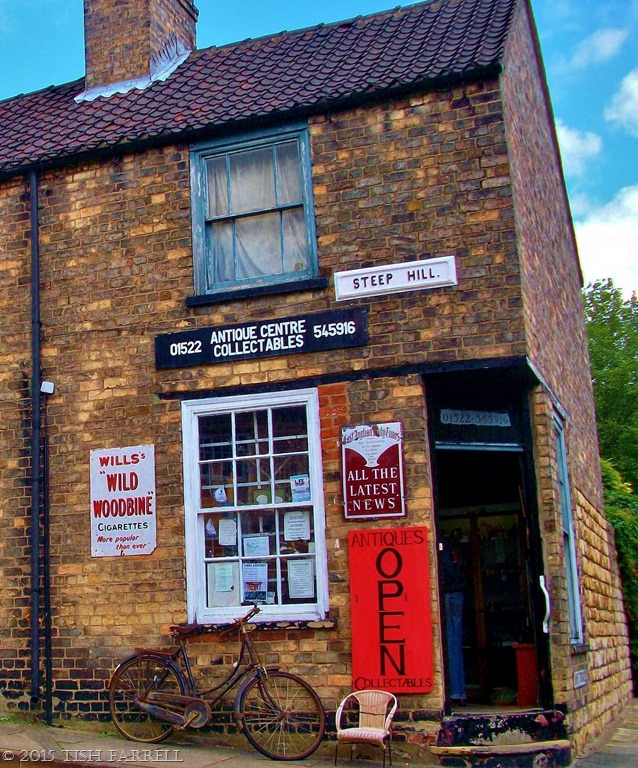
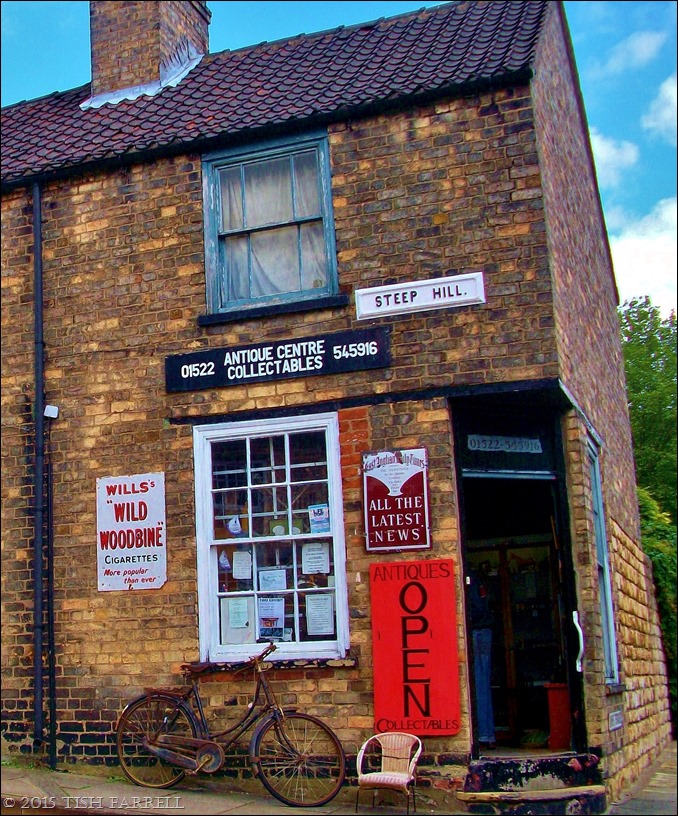
But a word of warning. You definitely need to take plenty of time to walk up it. In the lower reaches it rises seven feet for every one foot (just over 2 metres for every 0.6 metres). In fact I was so concerned about staying alive on the ascent, I forgot to take any photos until I stopped for a breather outside this curio shop (above). The building itself is unremarkable, probably nineteenth century, but it struck me that it has many things of its own to say about the passing of time. I like the worn steps and the old bicycle. I also imagine that it might once have been a corner shop where you popped in for your milk and bread and a packet of tea.

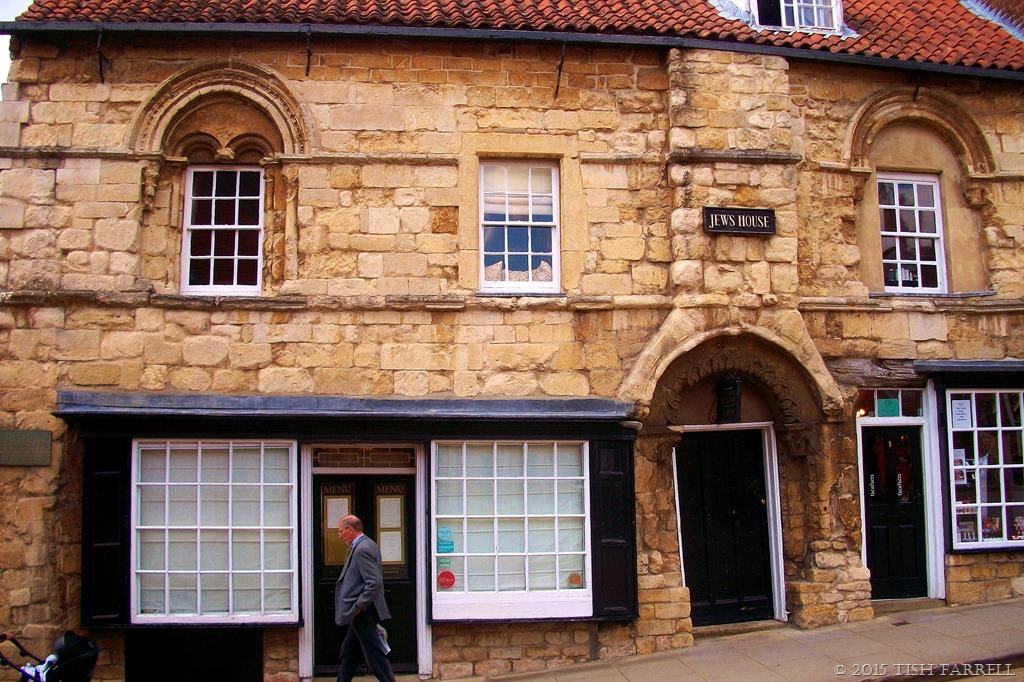
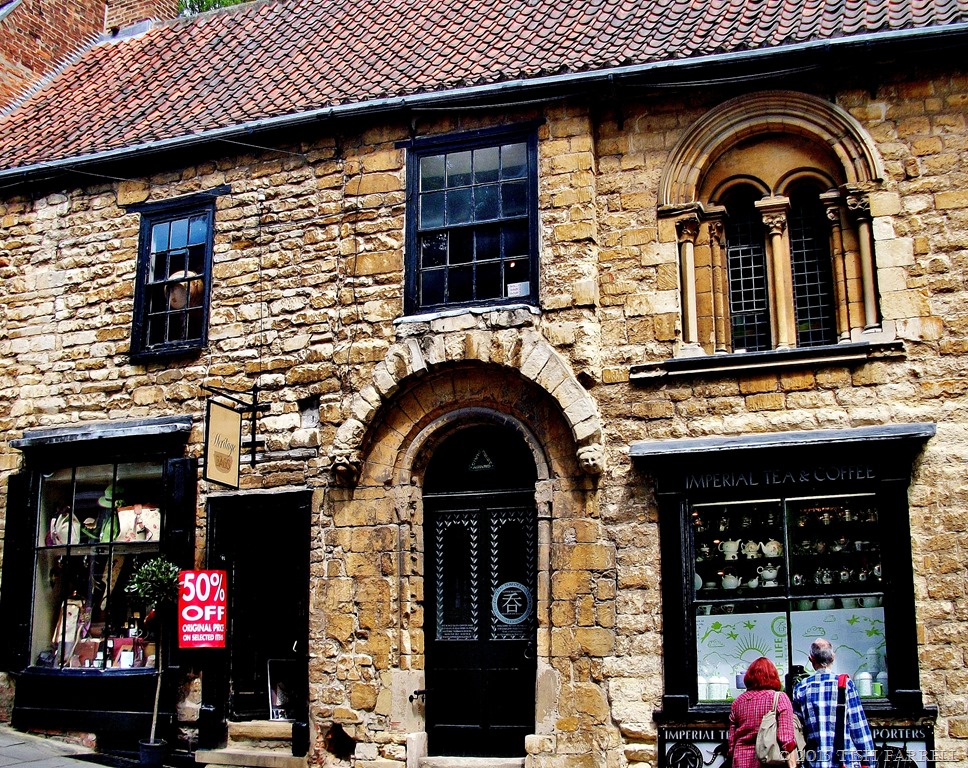
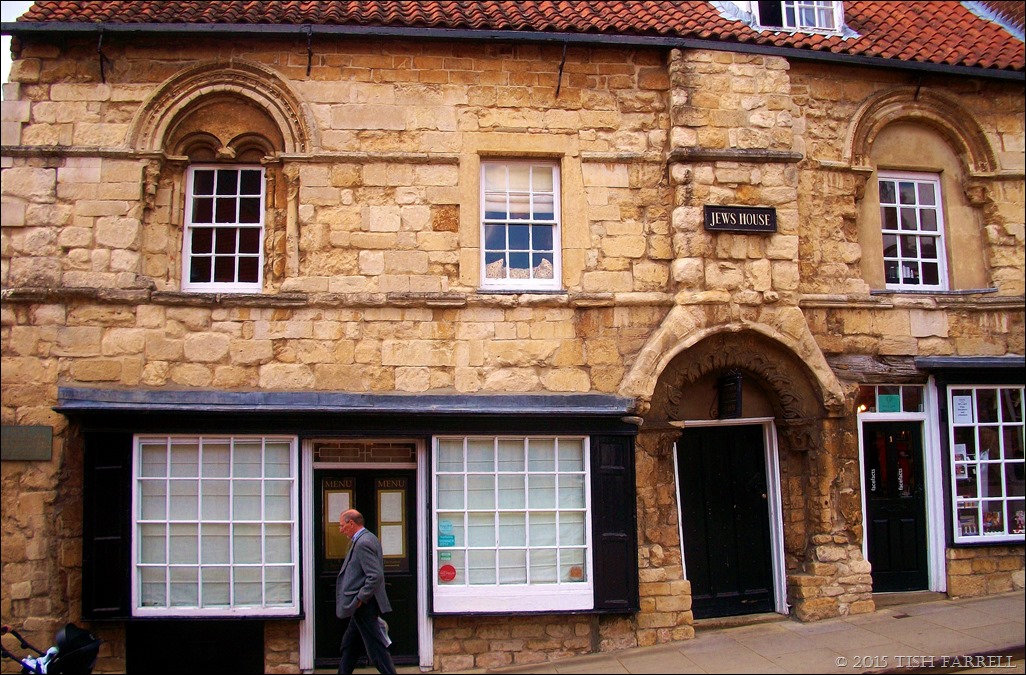
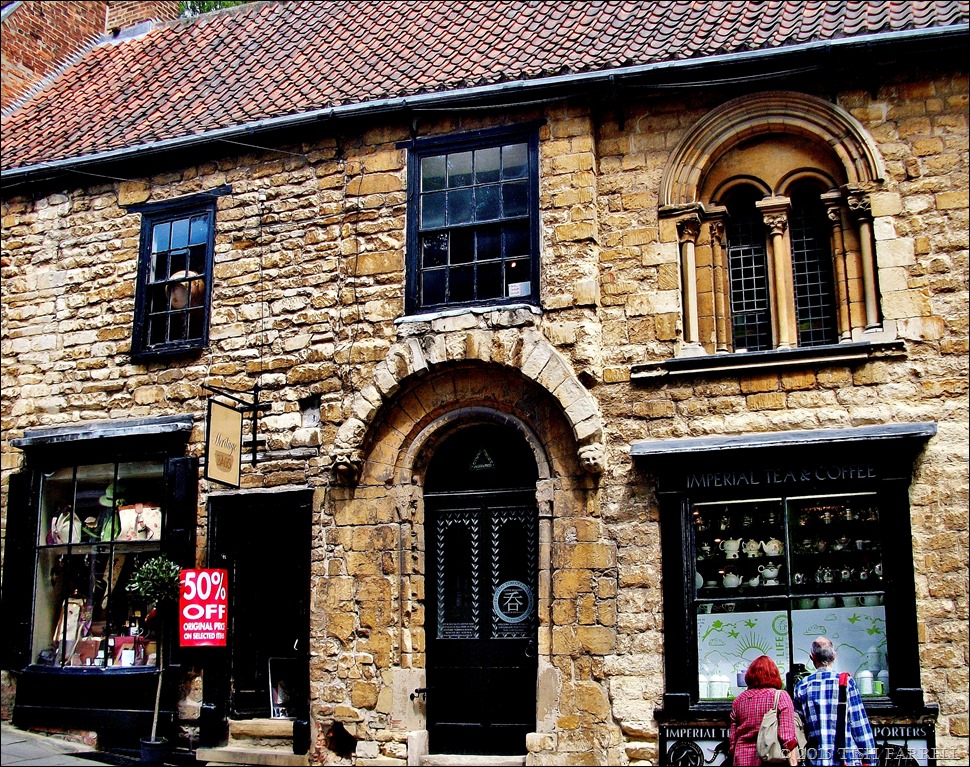
Heading on, though, you come upon these astonishing old sandstone buildings. The Jews House is 12th century, and dates from the time when the city had a strong Jewish community. But like many others in medieval England they fell foul of bigotry and false accusations, and the entire community was expelled in 1290. The Norman House below it is also 12th century, and said to be one of the oldest surviving domestic buildings in Britain.
100_3938

100_3931

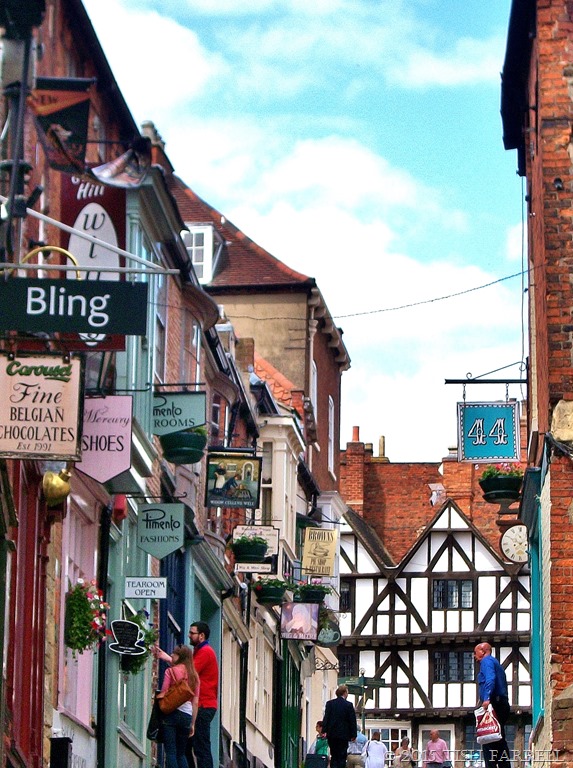
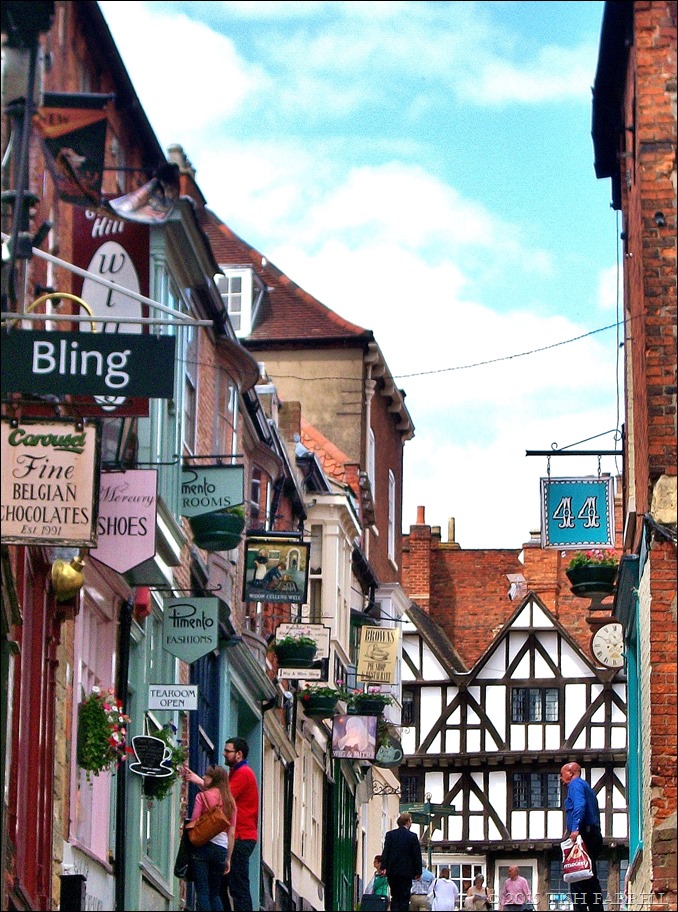
And it’s at this point we reach the part of the street that is seriously concerned with a preoccupation of our own time – shopping:
100_3932

At the top of the hill is Castle Square. The castle was built by the Normans on the site of the Roman fort, but it was under wraps and being restored when were there so I couldn’t photograph it. Ahead, though, you can see the fine timbered 16th century building that was once a Tudor merchant’s home, and is now the Tourist Information Centre.

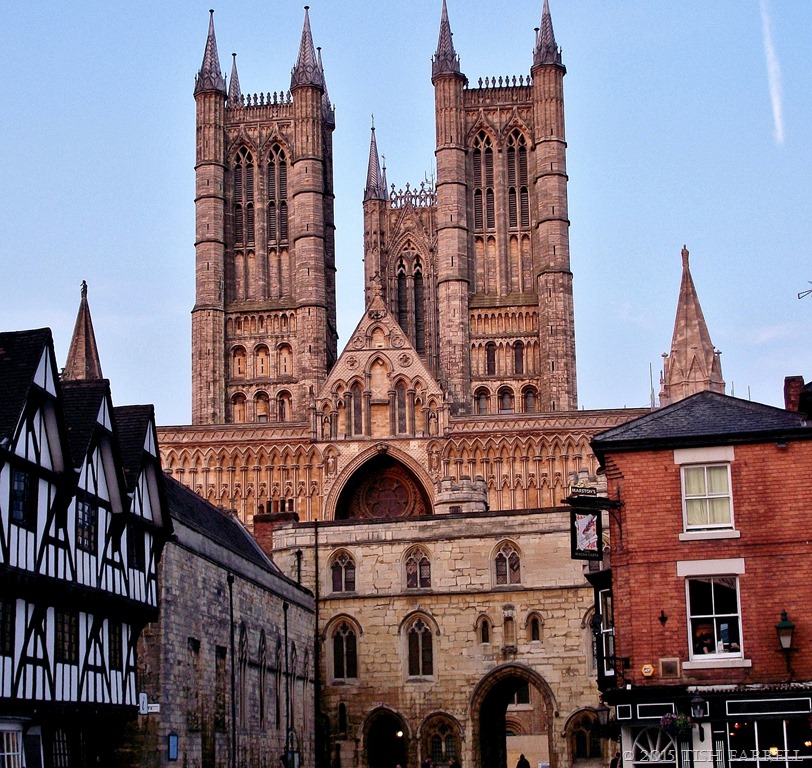
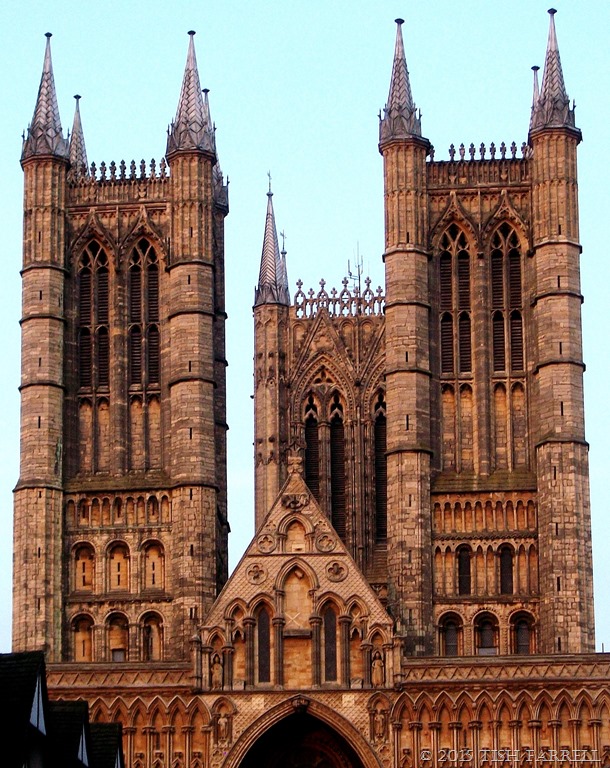
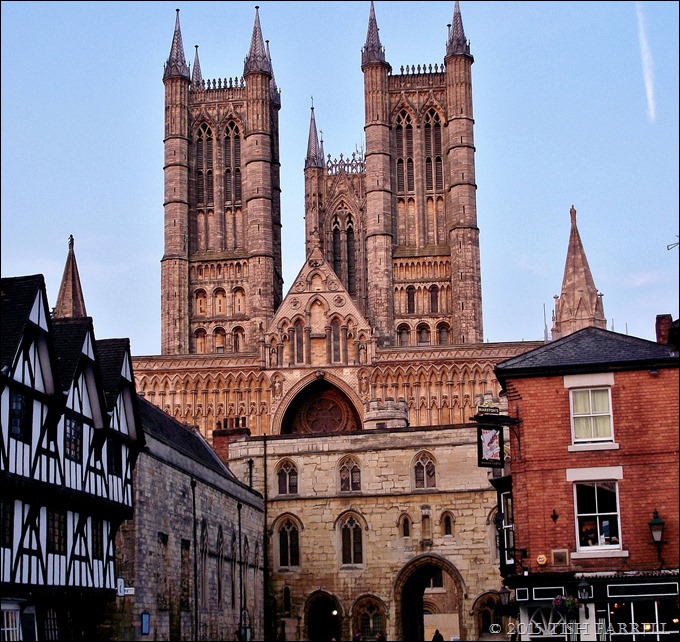
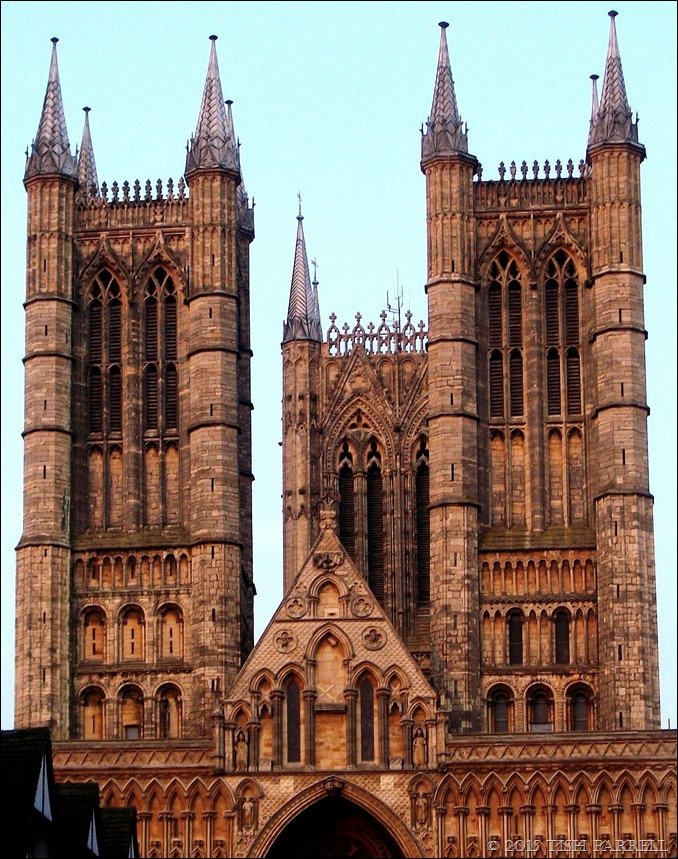
And finally, coming up is the building we’ve been struggling up the hill to see – Lincoln Cathedral in all its splendour. Work began on it in 1088, and continued through several phases over the following centuries. The towers, for instance, were raised and improved upon during the early 1300s. All in all a breath-taking feat of architectural engineering, to say nothing of standing the test of time. It is Britain’s third largest cathedral:
100_3975

And so if any of you are thinking of visiting the UK, Lincoln is definitely a must. It is a city to wander around, layers and layers of time revealed at every turn. There are museums and galleries and even a surviving town windmill. Pleasingly, too, the cathedral towers now provide nesting sites for peregrine falcons. As you walk around the precincts their mournful calls echo off the leaded roofs. These sounds, too, give one a wistful sense of times past.
100_3976


Today Paula’s guest, Debbie Smyth, at Thursday’s Special is asking us to think about time. Please visit Debbie and Paula for their own interpretations of the theme.

Wind Catching ~ The Ancient Art And Science Of Persian Air Conditioning

77

Wind towers – aren’t they  just beautiful? Not only that, they provide low-tech, totally renewable energy solutions to day-time desert heat waves. Within the capped tower is a port that is opened towards the prevailing wind. Some towers are multi-directional, the vents opened and closed as appropriate. Air is drawn into the living quarters below, its movement providing the cooling effect.

When there is no wind, the tower acts as a chimney, venting hot air from the interior. A more sophisticated version involves an underground canal, qanat, in which case the wind tower vent is opened away from the prevailing wind, and the system pulls cooling air up from the canal. You can read more about this if you follow the link.

But it seems to me to be an example of perfect human ingenuity – problem solving with minimal impact on the natural environment, while at the same time harnessing natural resources without depleting them. Persian architect-engineers came up with such elegant and aesthetically pleasing solutions over 2 millennia ago, although Ancient Egyptians apparently had something similar.

And not only can you have upmarket palace installations, but there is also the demountable, flat-pack desert nomad version.

The first kind was photographed (above and below) in Dubai at the restored Sheik Saeed Al Maktoum House on Dubai Creek. It is now a museum, but built in 1894, it was originally the home of the ruling Al Maktoum family. Persian architectural techniques arrived in Dubai in the nineteenth century along with the development of the pearl fishing industry there.

The portable Bedouin version I spotted in the Dubai Museum  in the courtyard of the old fort. Apparently the disadvantage of this kind of makeshift structure was that close proximity to the cooking hearth could have the unintended consequence of turning it into an actual chimney, and thus a major fire hazard.

80

85

78

75

 copyright 2015 Tish Farrell

For more wind themed posts please visit Ailsa’s blog at Where’s My Backpack

Thursday’s Special: gold Inside

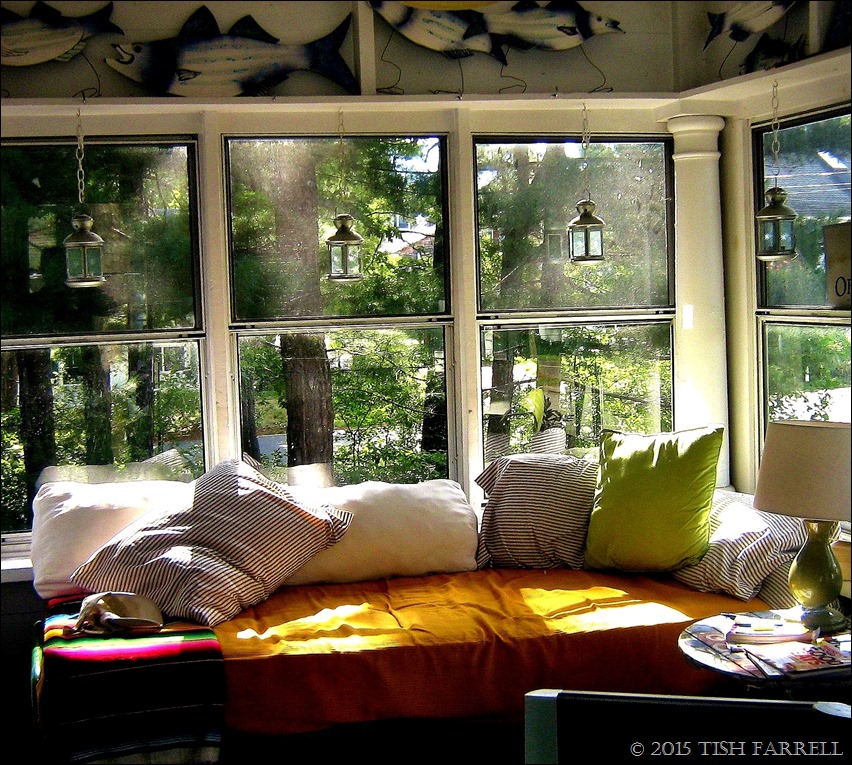
In the afternoons, Cousin Jan’s cottage by the sea in Southern Maine fills with September sunshine. Everything about the place is golden: scent of old timbers, sand in the floor boards, the sun bleached covers of the cushions. The play of light makes me think of Proust’s À la recherche du temps perdu  or Colette’s Le blé en herbe. You want to curl up like a cat, absorb the warmth through every pore, and dream. The cottage has just the places to do this too. You can slumber, lulled by the breeze in the garden pines and the neighbours’ wind chimes. Later, as the day’s warmth fades, you can blow the dreaming away, walking briskly along the beach that stretches for miles, the Atlantic rolling in at your feet.

copyright 2015 Tish Farrell

Thursday’s Special: Gold Inside

This week at Lost in Translation, Paula has invited guest blogger, Ron, to share his insights on interior photography. Follow the link to see his wonderful work. And then go here to see Paula’s and other bloggers’ responses to the challenge.