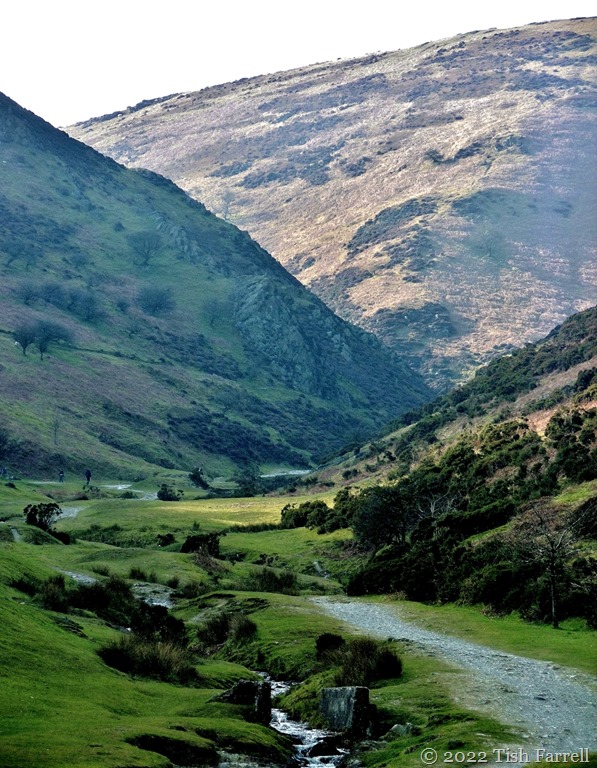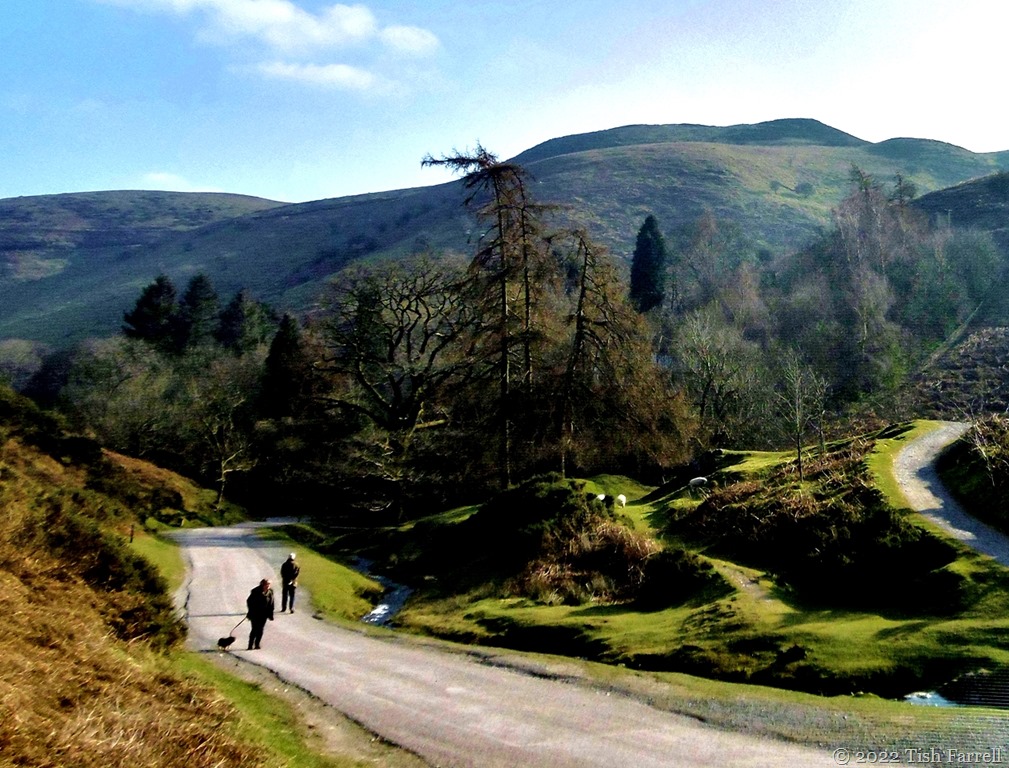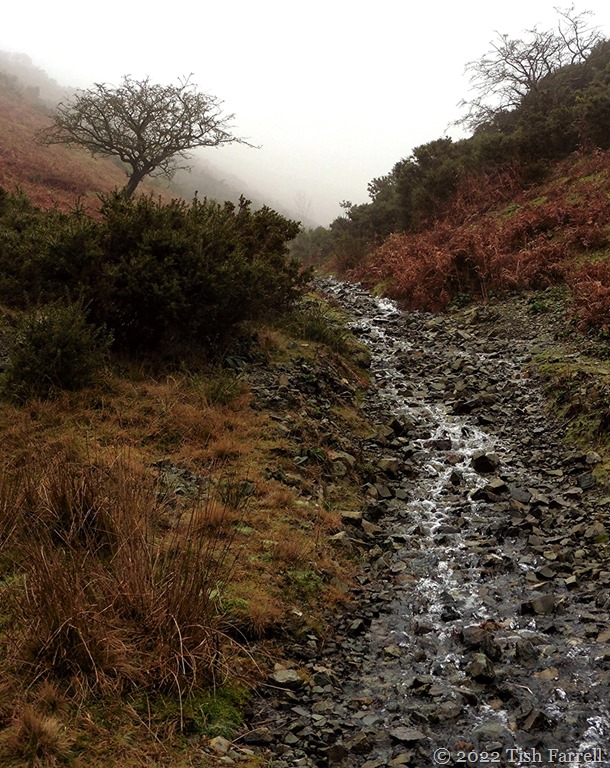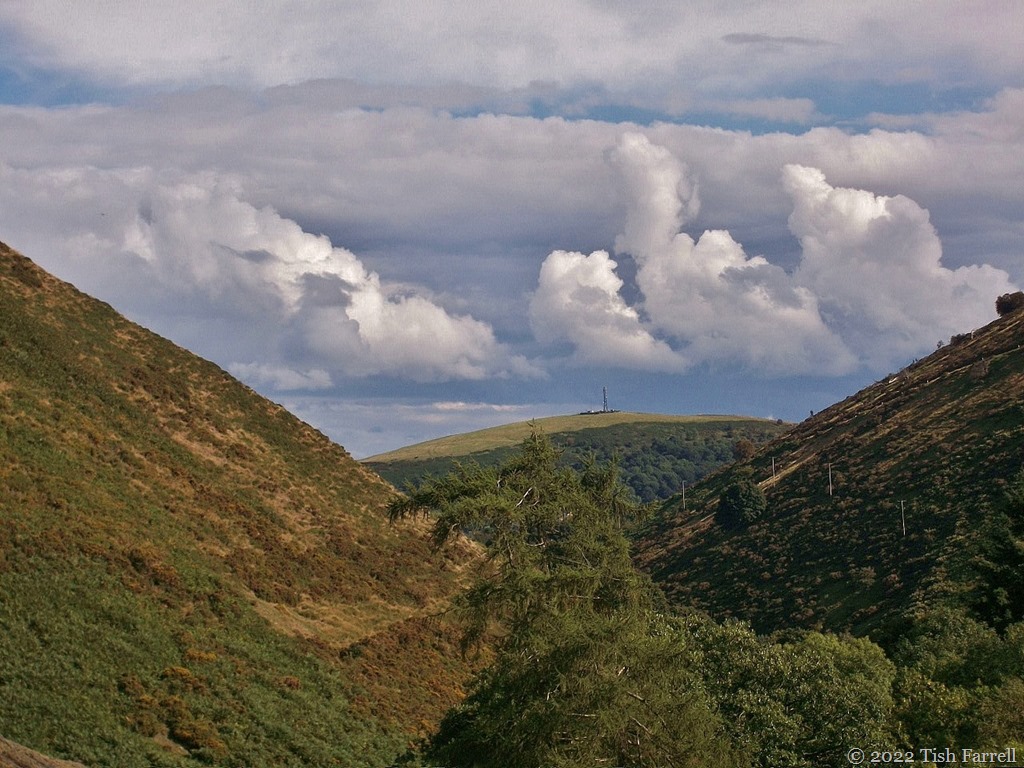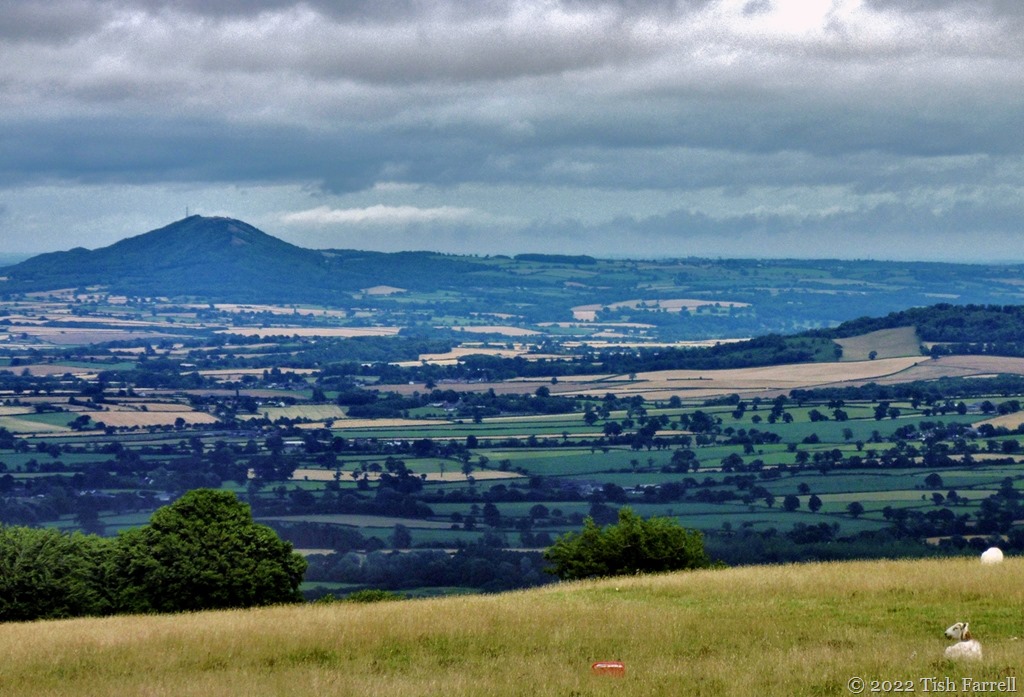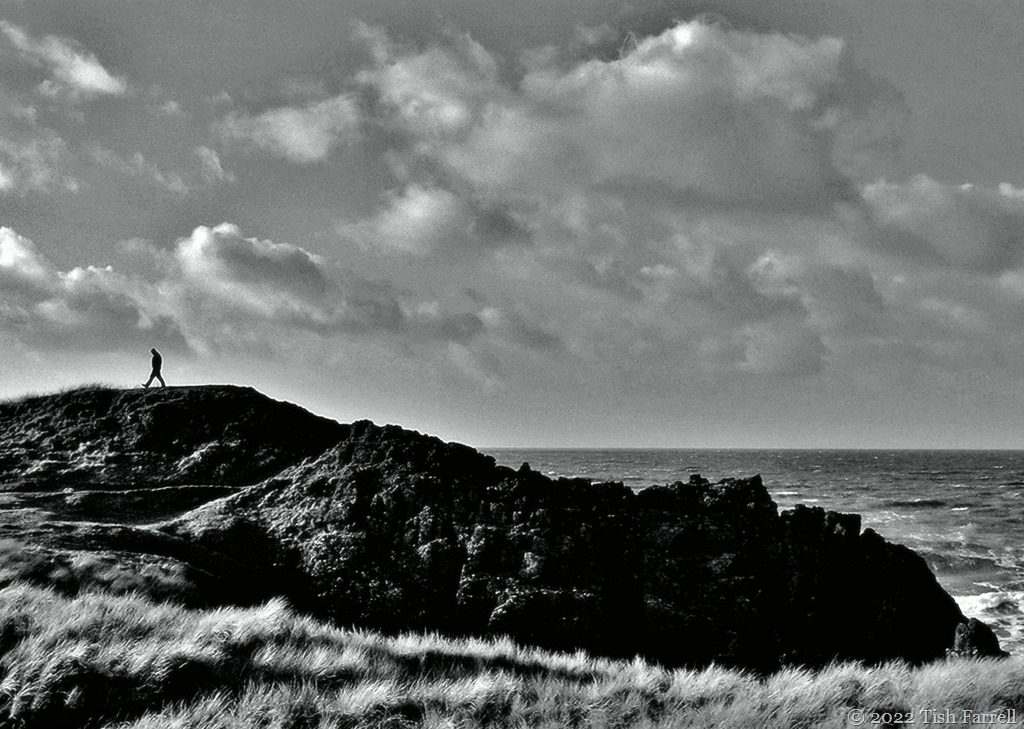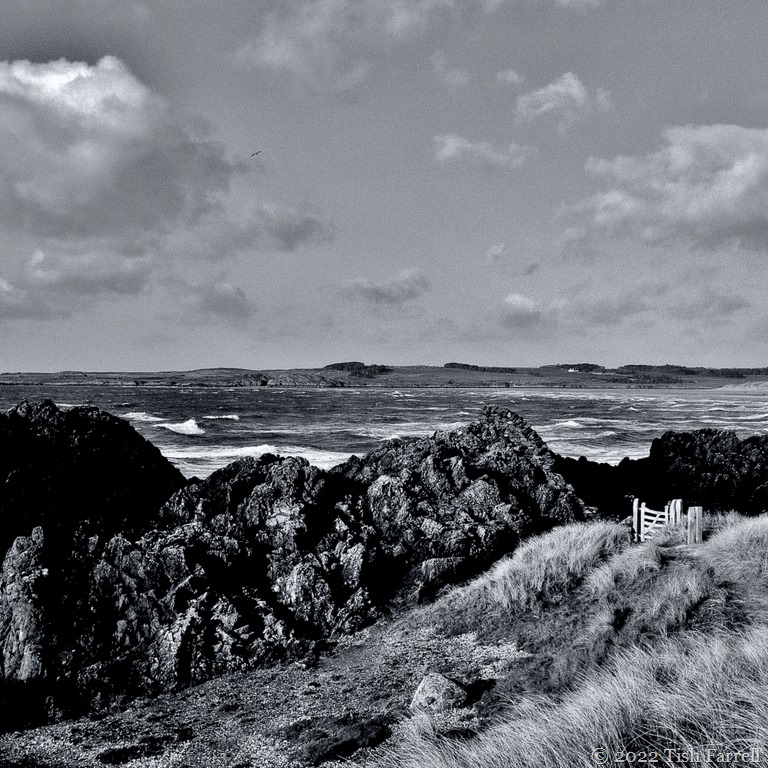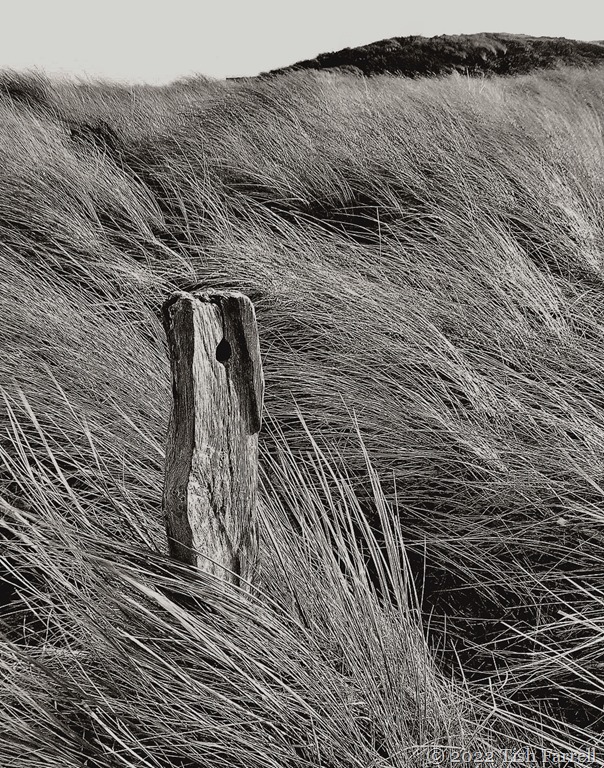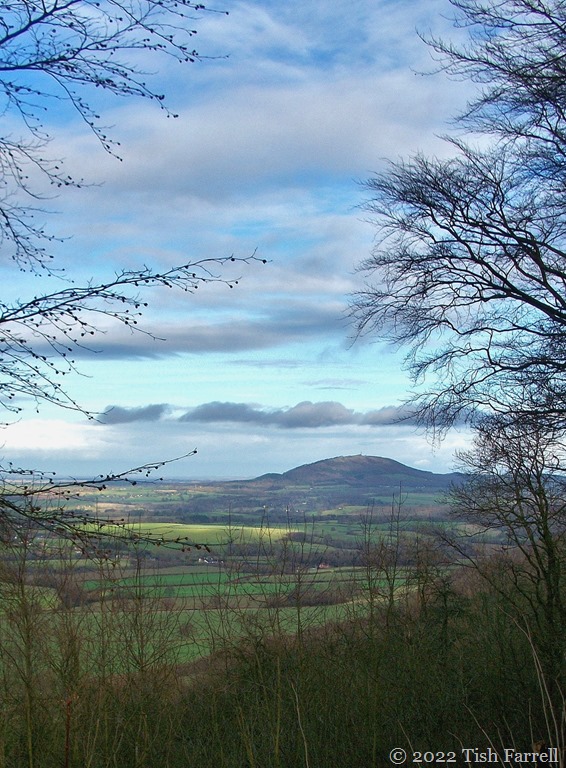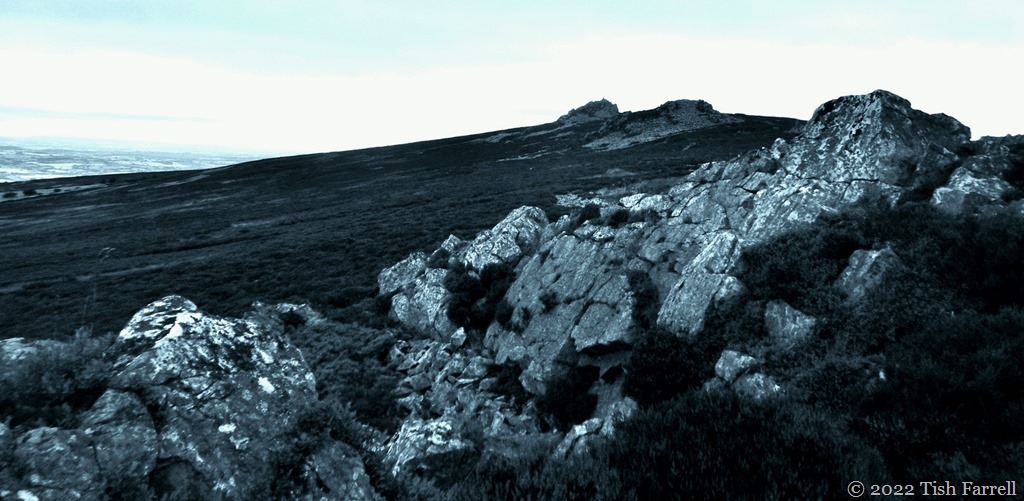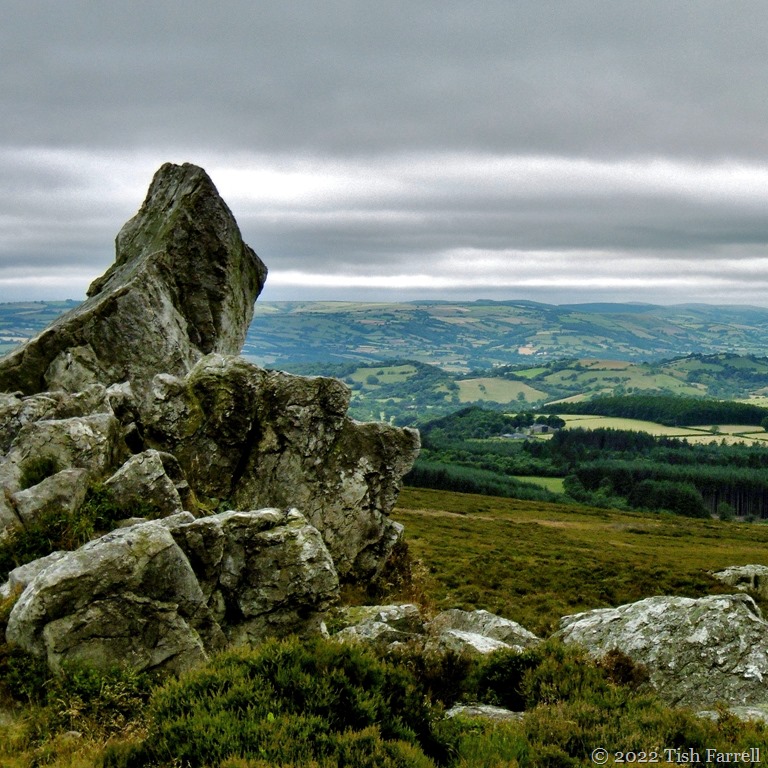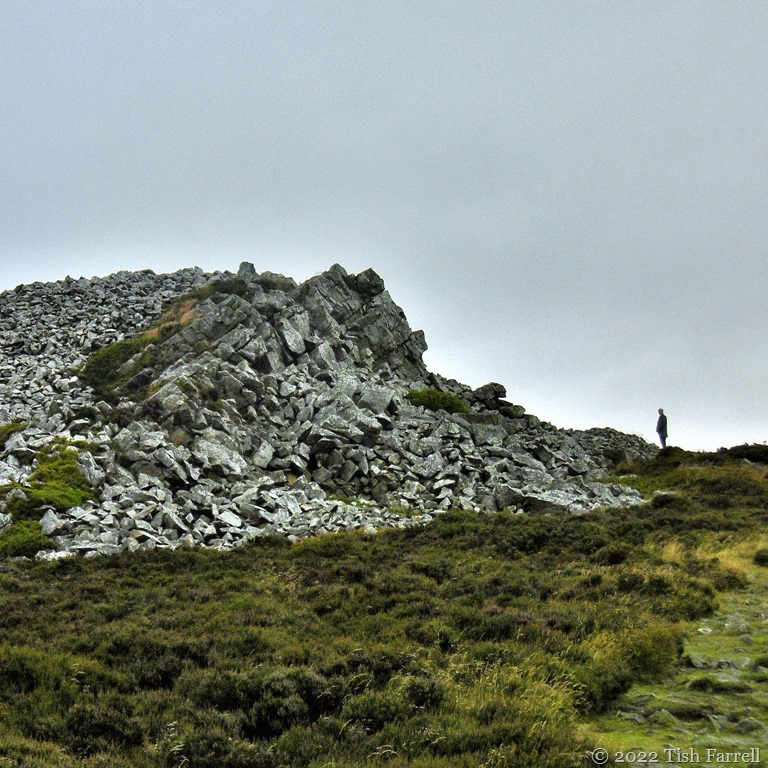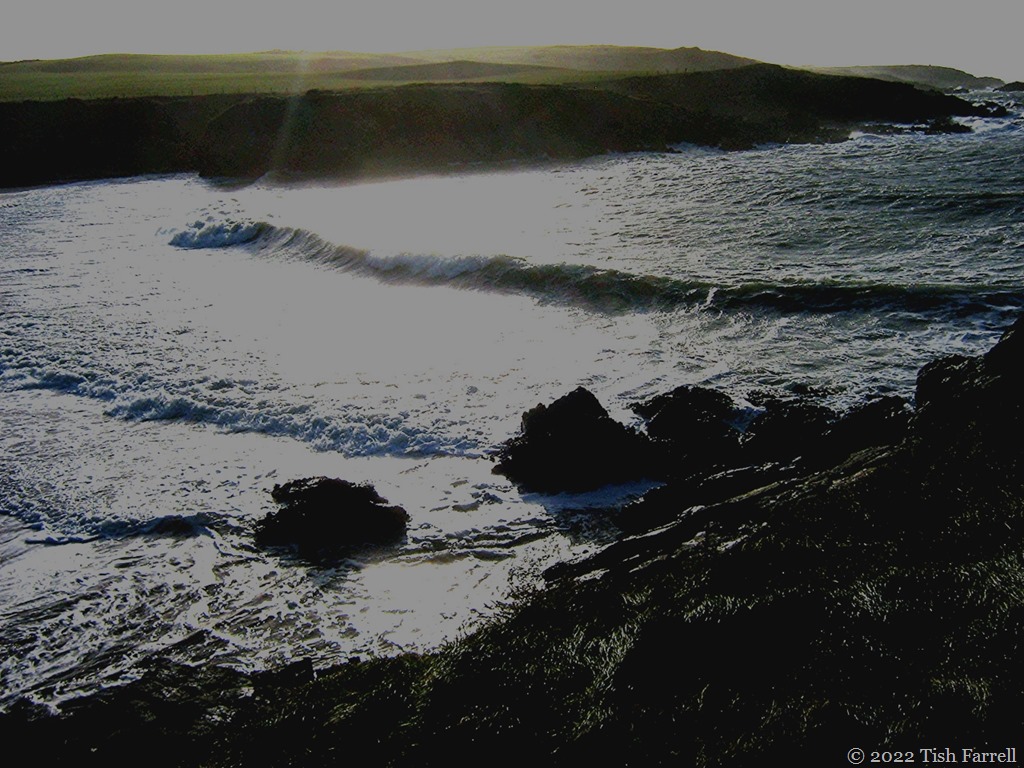
There may be signs of spring here in Shropshire, but the wind is still perishing cold. It’s reminding me of a wind-blown winter’s visit to Llanddwyn Island on Anglesey, where the sea-gale found every chink in one’s protective layers. Even so, it was a fine place to be: racing waves and whipped up grasses.
Landscape
Wind-Lines Past And Current
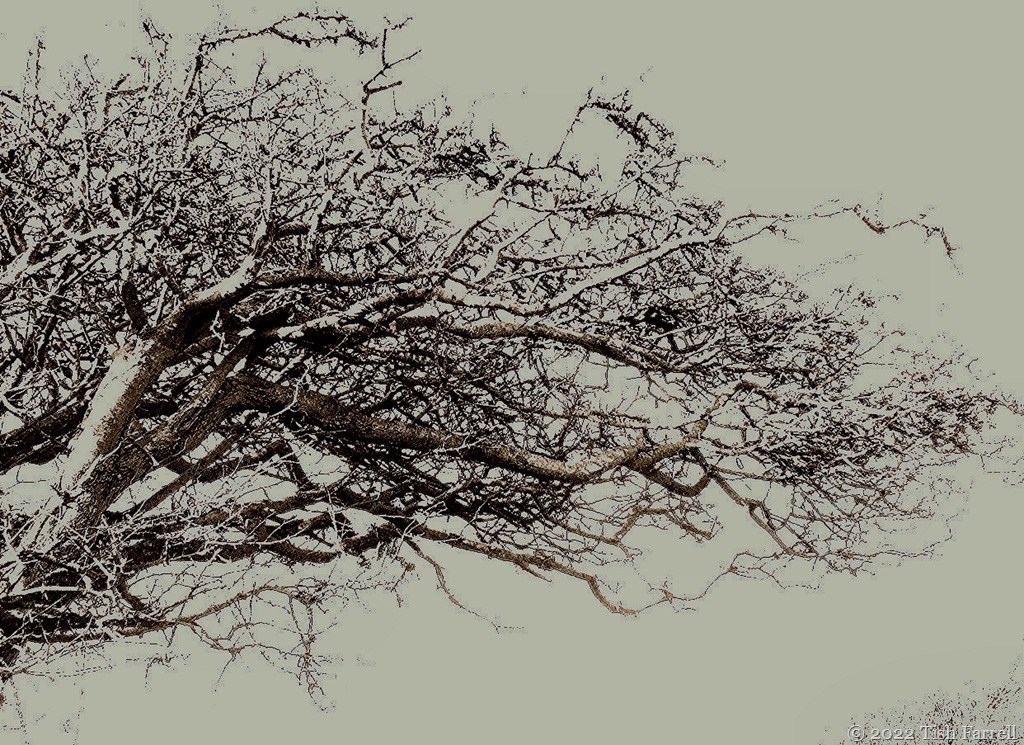
These photos were taken during our blustery stay on Anglesey, North Wales, back in early January. The hawthorn tree in the farm hedge has been sculpted and stunted by the prevailing sea gales over decades. In its dormant state it is now so rigid a structure that the winter blasts have little apparent effect. By contrast, the grasses were bowing flat in the bed outside the converted chapel where we were staying. One knew how they felt.
And Another Shropshire Ghost
In an earlier post this week I mentioned Wild Edric our heroic Saxon warlord who challenged the Norman interlopers and ended up as a ghost haunting the Stiperstones. Now shunt forward a few hundred years to the 1640s, a time when England was locked in civil war: Roundhead Parliamentarians versus Charles 1 and the Royalist army. The Parliamentarians were intent on curbing the king’s proclivities to do as he liked at the nation’s expense; the Royalists were set on protecting the monarch’s prerogative.
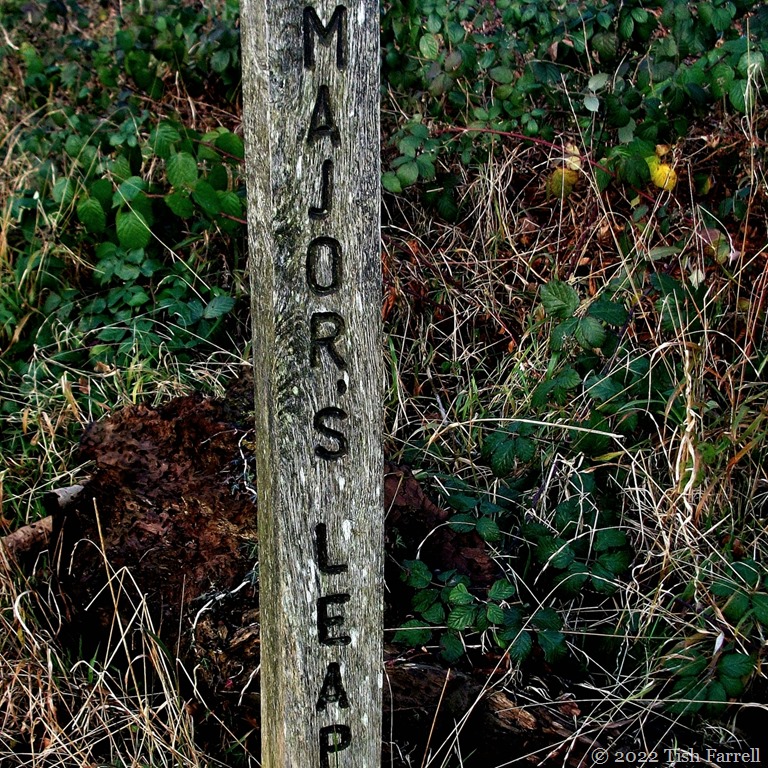
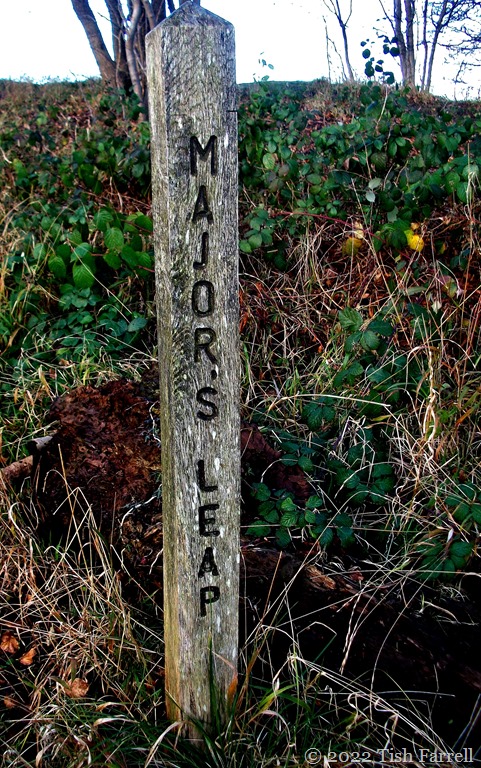
We’ve shifted from the South Shropshire hills to Wenlock Edge, a wooded limestone escarpment that rears up above the county’s farming lowland for nearly 20 miles. Enter one Major Thomas Smallman, fleeing on horseback from his home in nearby Wilderhope Manor. He is a King’s man, carrying despatches for the Royalist headquarters in the county town of Shrewsbury, some dozen miles away. On his heels are Cromwell’s troops. Trying to evade them, the major veers off along the Edge. But there’s no escape. He and horse leap over the precipice. It is a two hundred foot drop. The major was caught up in a crab apple tree, and so survived to deliver his despatches to Shrewsbury, but his valiant horse was lost. Perhaps that’s why a ghostly major on horseback may sometimes be glimpsed near this signpost on the Edge footpath.
*
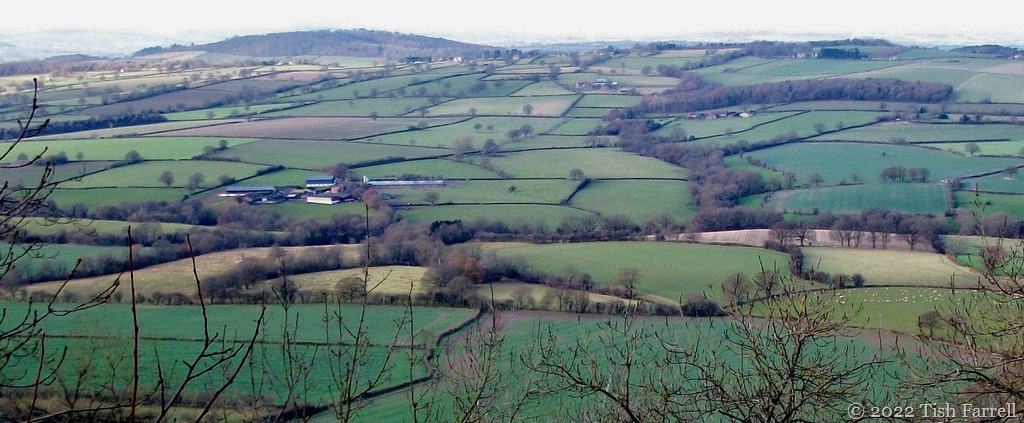
And to give you a notion of what lay before the major when his horse took off:
The Square Odds #10
Odd Rocks On The Stiperstones
With its series of other-worldly outcrops, the Stiperstones ridge has to be one of Shropshire’s most compellingly strange landscapes. The cragginess was wrought by the scything, crushing and cracking action of ice during the last glacial period. But natural forces alone don’t explain the sense of weirdness. It is also a place of old lead mines (going back to Roman times), and of older-still Bronze Age burial cairns.
And on the supernatural front, there are ghosts there, most notably of Saxon lord, Wild Edric, our local King Arthur, who rampaged against the Norman invaders and is said to have been imprisoned in an abandoned lead mine. When he rides again, it is said the natural good order of things will be restored to the land.
And last, but scarcely least, there are the sinister witchy happenings, especially when the mist falls and Old Nick himself is said to occupy the most mysterious of all the outcrops – otherwise known as the Devil’s Chair. (See Mary Webb’s novel Gone to Earth whose heroine Hazel Woodus is tragically enthralled by the landscape and legends of the Stiperstones.)
*
As a 6/7th Shropshire lass, I’m ashamed to say I have not yet got myself to the Devil’s Chair. On our last two expeditions we did not get further than Manstone Rock. This year’s ambition perhaps. On a mist-free day of course!
And Another Odd Capture
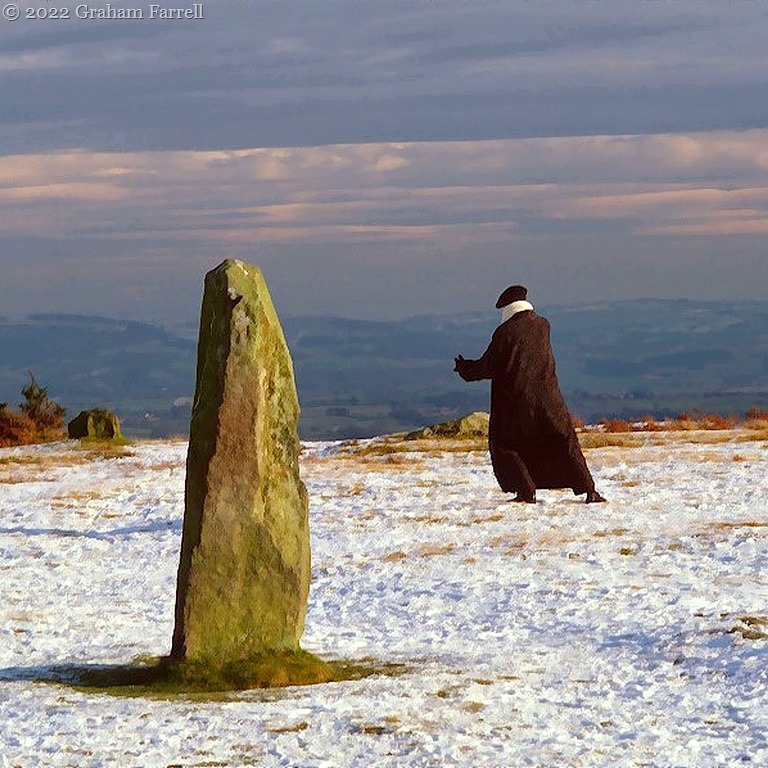
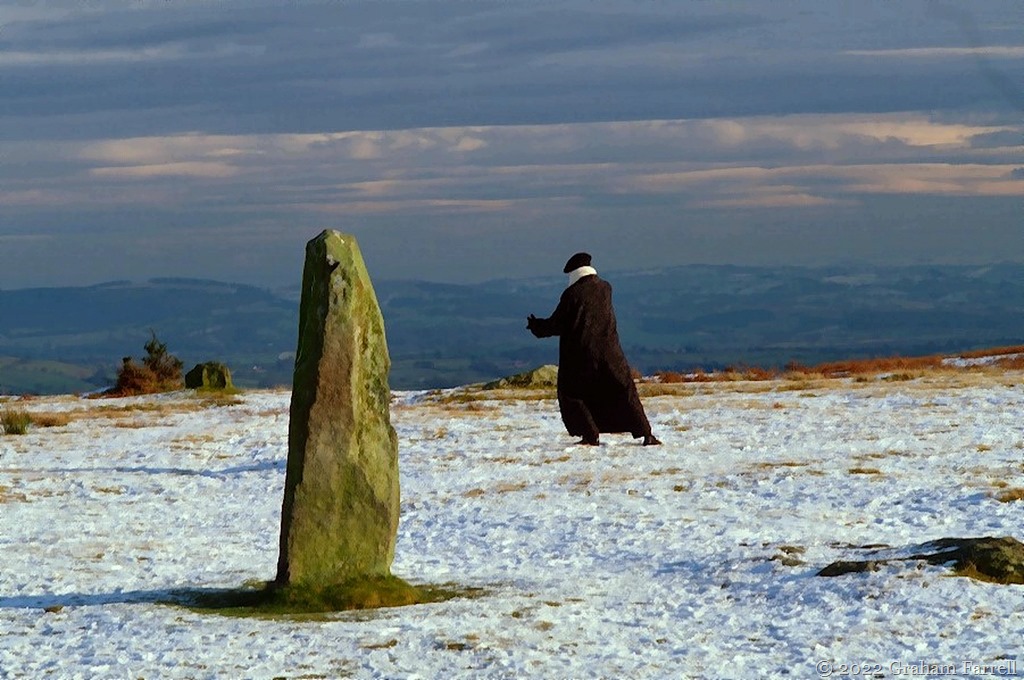
It’s hard to know how to follow yesterday’s yarn about my recent small-hours radio ‘haunting’, but since Shropshire landscapes cropped up in it, I thought I’d have a ‘rummage’ through that particular photo file. And so I found this one of me, courtesy of he-who-builds-sheds-and-greenhouses in the days before he did such things.
It must have been taken in the second winter after we left our life in Kenya. We had settled in Rochester, Kent. For the eight years we’d been living in Africa, Graham had been employed by the Natural Resources Institute (NRI), once the scientific arm of British Government overseas aid, but now part of the University of Greenwich. Its offices were based in the old Chatham dockyard, just up the road from Rochester. (Odd factoid: both locations have strong Charles Dickens connections). And so Graham was returning to base, though he had never had a desk there. It was a strange situation.
Neither of us wanted to be there. For one thing we were overwhelmed by the hemmed-in urban congestion of the Medway five towns: Strood, Rochester, Chatham, Gillingham and Rainham massing together so closely so that once in their midst, you could not see out or move for traffic. The one source of local relief was the River Medway that wound between them. We had bought a house there – in one of the new riverside developments that were sprouting up along its banks.
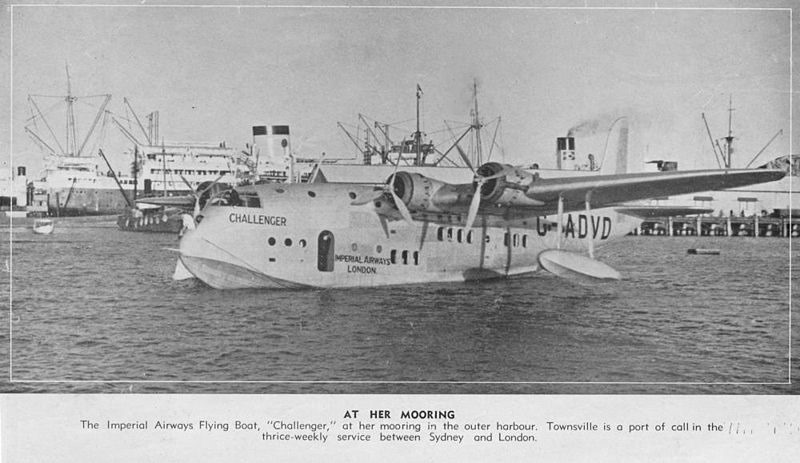
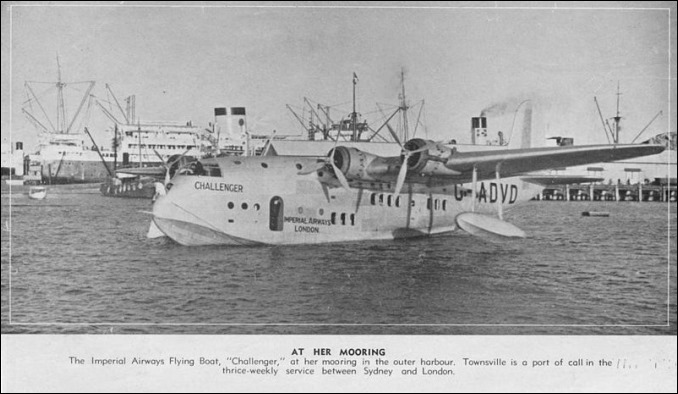
A little oddly too, our particular townhouse enclave was on the site of the old Short Brothers Empire flying boat factory, the craft that had served Imperial Airways during their 1930s pioneering of air travel to Africa, India and beyond. Later Imperial morphed into BOAC (British Overseas Airways Corporation), and I remembered that some of the first flights to Kenya used to land on Lake Naivasha and, while the crew put-up in the cottages of the Naivasha Country Club (where we ourselves had once stayed), travellers to Nairobi would have to complete the last sixty miles by dirt road.
The connection was a small ‘haunting.’ Added to when one of our first house guests, an expat friend from Nairobi (actually an Englishman who had settled in Australia) told us that his father had been a steward with Imperial Airways. (This was the same person who, on another visit from Australia, came to stay with us in Much Wenlock, and on arrival told us he had a cousin living up the road).
*
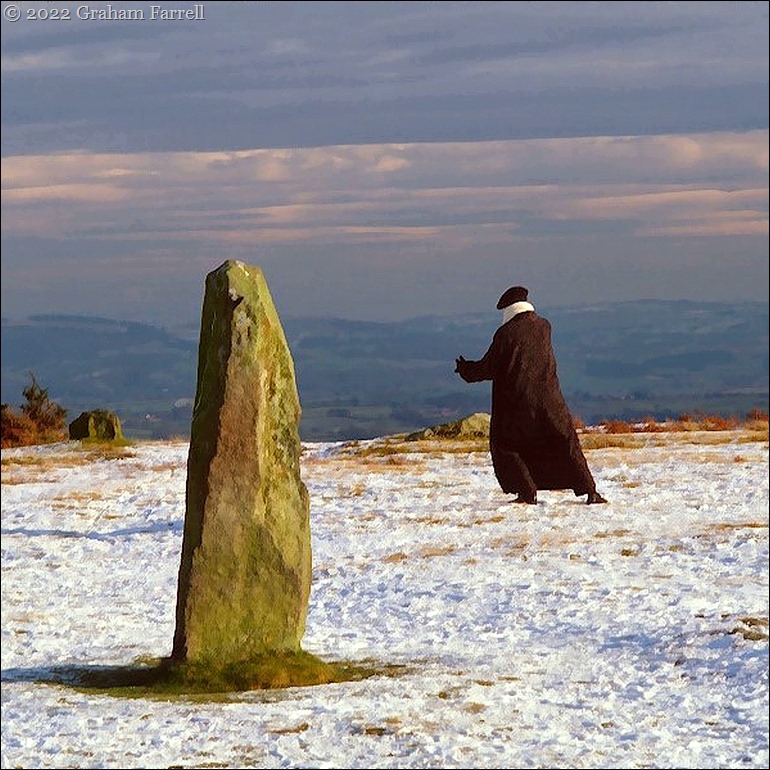
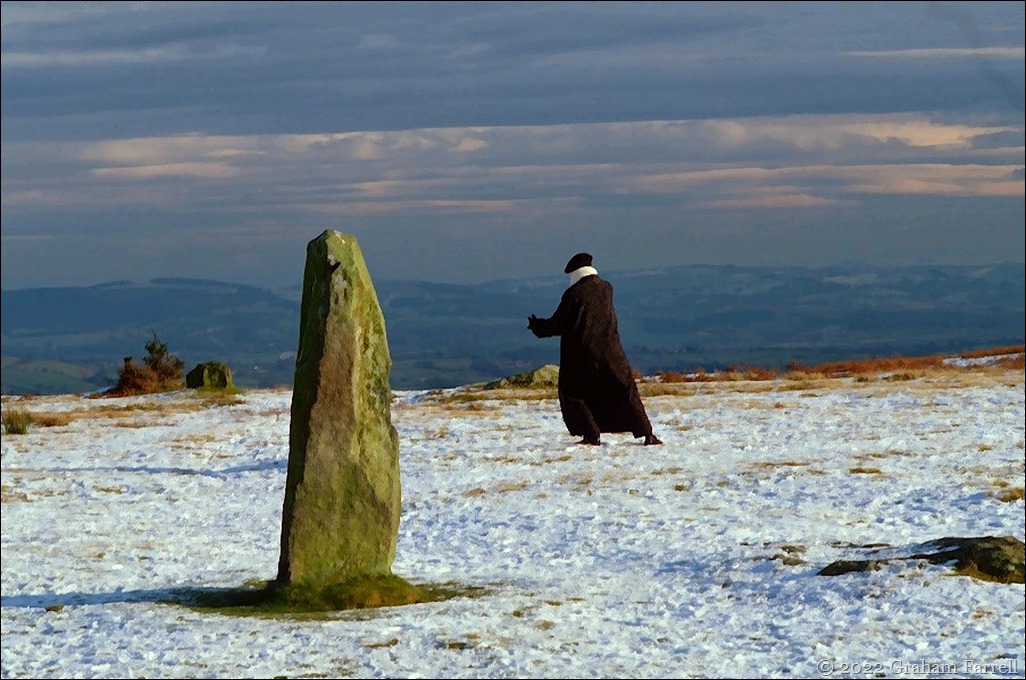
But back to the header photo. One of my adjustment strategies to UK life was to go to T’ai chi classes. This then explains the pose. I think I am in the throes of grasping the sparrow’s tail.
But what of the location?
One reason we didn’t want to be living in Kent was because family and friends were mostly faraway in the West Midlands: Shropshire and Staffordshire – and between them and us was the evil M25 London orbital car park motorway. We could access it in either direction from Rochester. It never made any difference. The jams seemed to last for days.
But then the photo shows we must have broken out. Here we are in Shropshire in late December 2001. It is one of the county’s most mysterious locations: Mitchell’s Fold, a Bronze Age stone circle, sitting on the borderland with Wales. I don’t remember now why we chose to be driving round the Shropshire hills in such wintery weather, but there’s more about that visit and the circle’s folk lore associations with wicked witch Mitchell here: Witch Catching In The Shropshire Hills
Copyright 2022 Tish Farrell
The Changing Seasons ~ January 2022
Our January blew in with sudden squalls and sea gales off the Celtic Sea, and a week’s sojourn on west coast Anglesey. From the sands of Aberffraw and nearby Newborough we could see the mountains of Snowdonia across the Menai Strait, a wood-cut frieze: sometimes steely grey, sometimes indigo; watch as snow dusted the high slopes. The place was blisteringly cold, but enthralling too. And we did have sunshine interludes too.
*
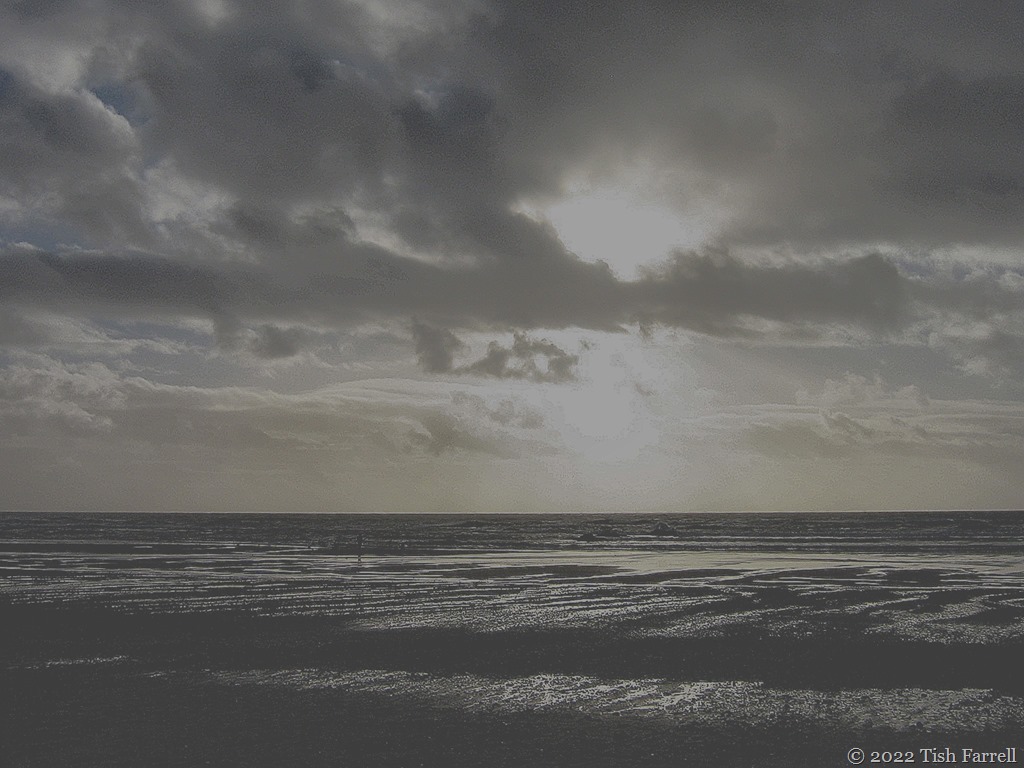
And the deep-cloud afternoons did give up their gloom just in time for some breath-taking sunsets.
*
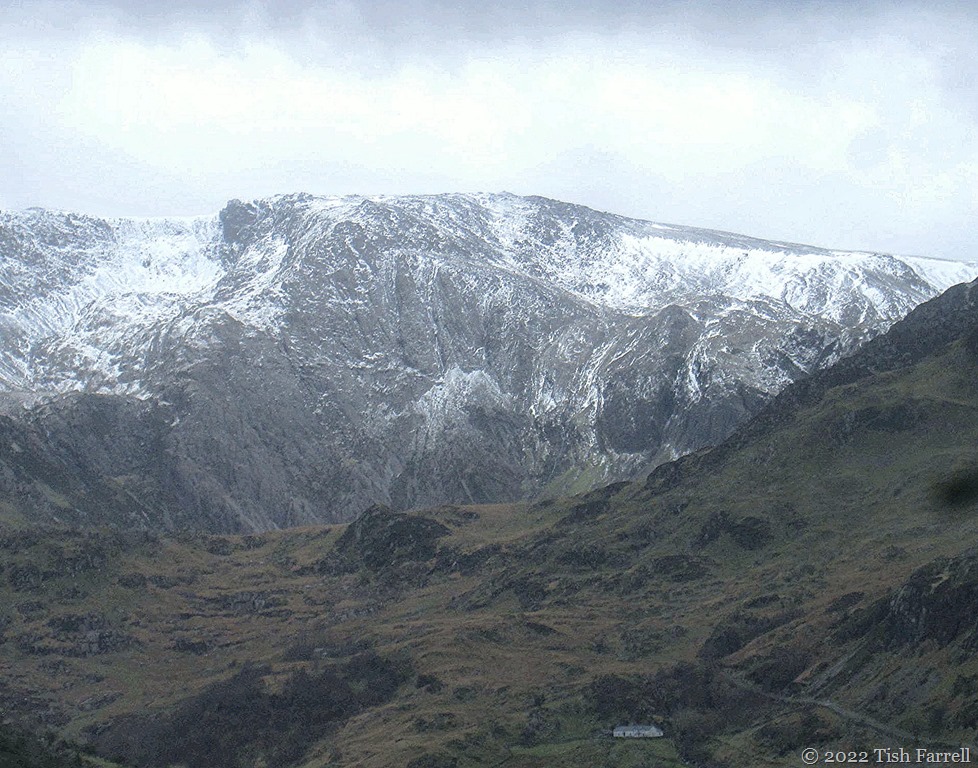
And then, too soon, it was time to leave, and then, as often happens when we drive over the Menai Strait away from Anglesey, the morning light failed. An eclipse of the sun? Some ancient Celtic curse on the land made manifest? In any event, our hundred-mile, mid-day drive home to Much Wenlock proceeded through a depressing dusk, although it did have its moment of mystifying grandeur as we wound through the Llanberis Pass. Can you spot the tiny white farmhouse at the foot of the photo?
*
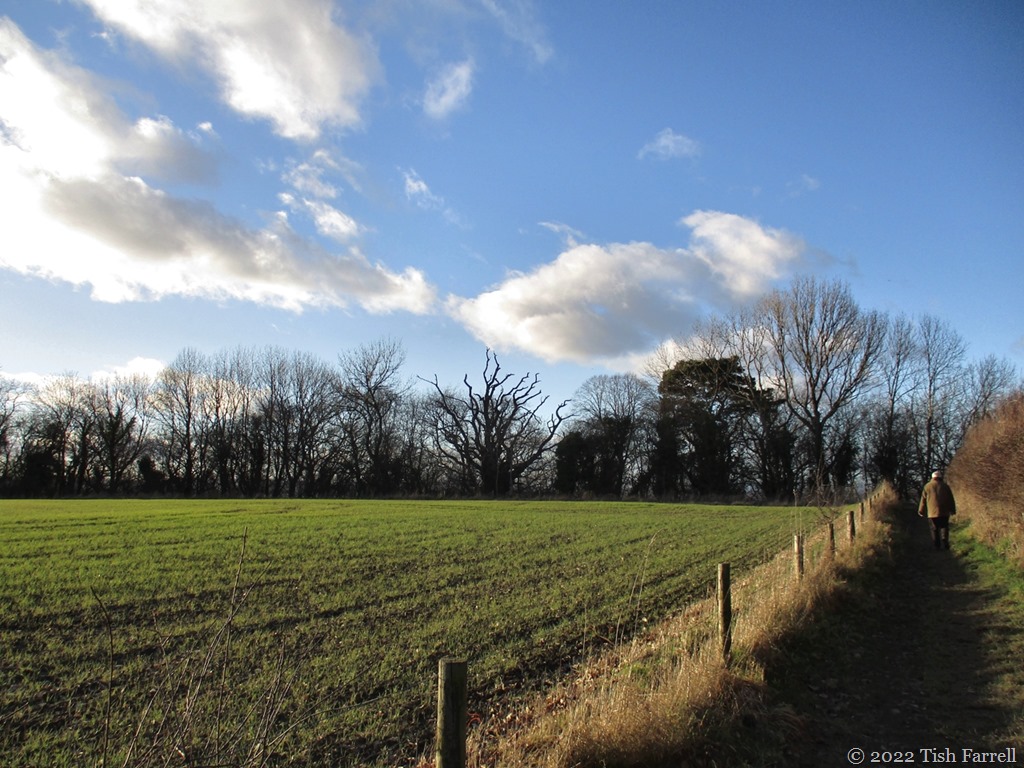
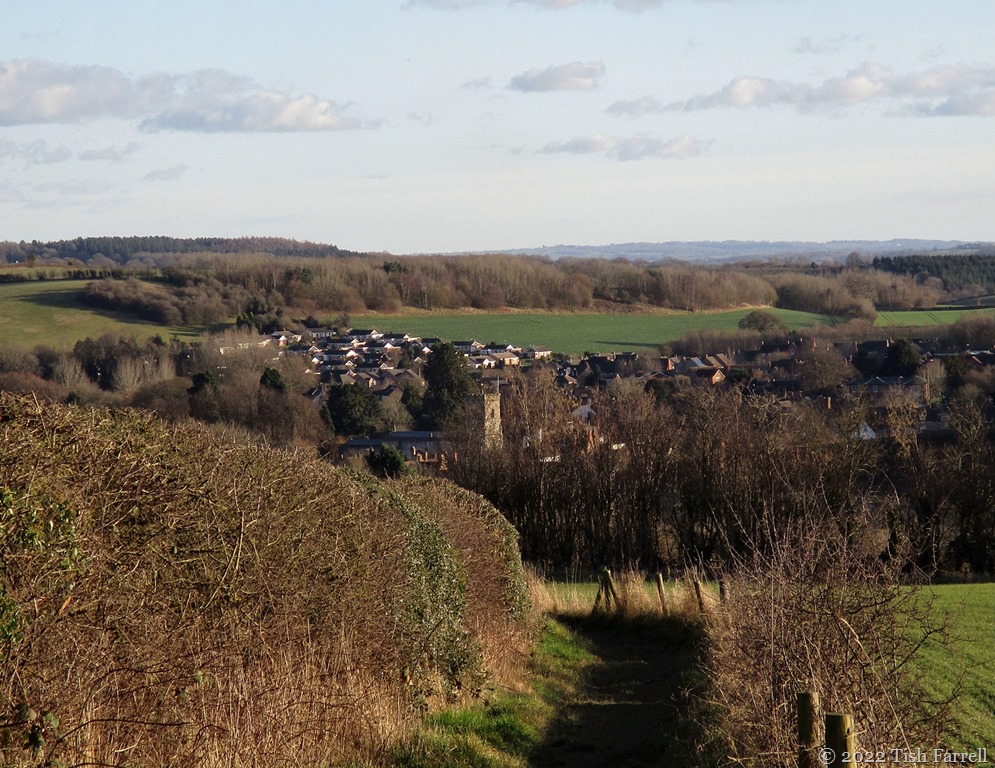
And so back home and last week’s walk up on to Wenlock Edge, taking the field paths behind the house. A gentler landscape certainly, and warmer too after a brisk upward hike. Also from our side of the Edge its true drama is quite concealed. We see only fields and treetops, but when you reach the path that runs along the ridge summit, it is only when you peer through the underbrush that you see that the land simply drops off – falling through hundreds of feet of hanging woodland, so steep as to be inaccessible except to birds and small mammals and perhaps an adventurous deer. This impression of no-man’s-land and apparent lack of management by humankind adds to its eeriness. On winter days, too, when the trees are bare, you can glimpse the village of Homer way below, and beyond it the farm fields of the Shropshire Plain.
The path up to Wenlock Edge
*
Looking back on the town
*
Over the Edge
*
On the homeward path with view of the Wrekin
*
And on the home front, a wintery upstairs garden:
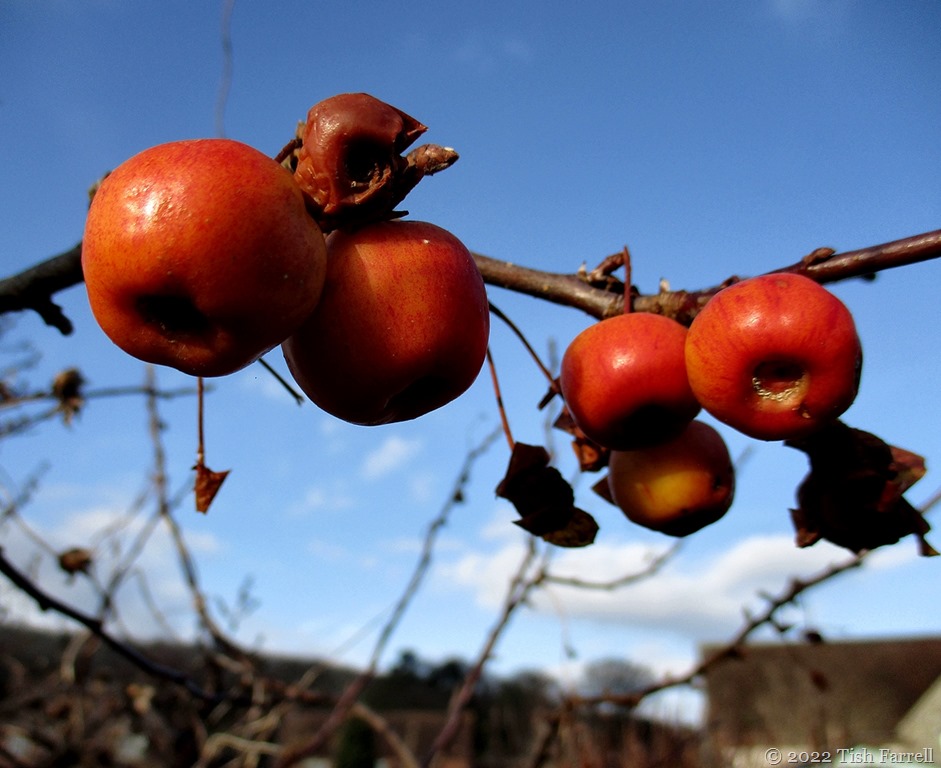
But still a few crab apples left
*
And in the kitchen: some surviving allotment marigolds and crusty spelt-flour soda bread:
The Changing Seasons: January 2022. Please call in on our hosts, Ju-Lyn in Singapore, and Brian in Australia and see their January vistas.
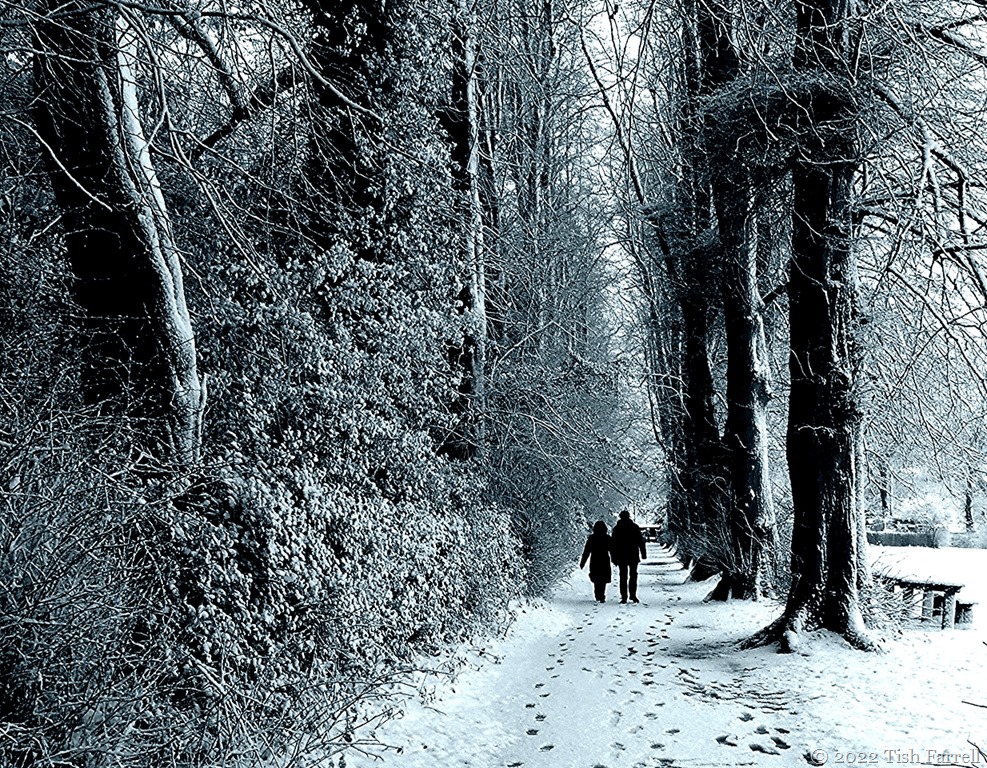
The Linden Walk In Winter
Taken a few winters ago. This year we’ve only had frost. So far.
The Beach At Aberffraw ~ January Sunset
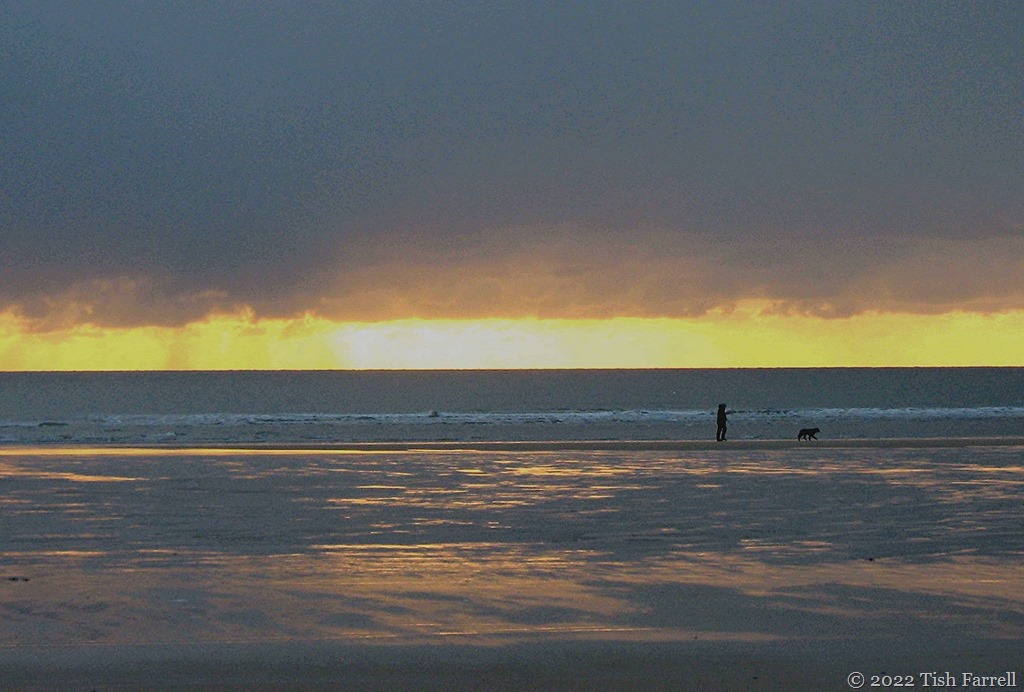
As I may have mentioned, once or several times, the January winds during our recent trip to Anglesey were vicious; not only the fearsome bluster but also the endless fusillade of icy darts that penetrated every ill protected piece of flesh. But they could not be avoided. My sister’s cockapoo needed walks, and coming equipped with built-in woolly suit, she did not give a fig for gales and freezing sea pools. If anything, they spurred her on: much racing and paddling and digging. It was hard not find such energy and all-round canine joy infectious. And then when we reached the beach beyond the dunes and estuary, there were sights like this: Celtic Sea sundowner; next stop Ireland. Tempest or not, how could this be missed. It had been so long since we’d seen and smelled the sea.
We weren’t the only ones to feel excited:
The Changing Seasons ~ This Was November
Well, we’ve had lots of gloom in Much Wenlock, a morning of fog, twenty four hours of frigid gales, a night-time sprinkling of snow, woken up to some light frosts, and enjoyed a few days of bright sun and clear skies. We’ve also had huge quantities of leaf fall this year, which is always bound to gladden this gardener’s heart. Anyway, I’ll feature the best bits – November high spots in the garden and out and about on the Linden Field and Windmill Hill.
First, though, some orientation. I know several of you love the Linden Walk, but you may not have a gist of the overall lay of the land. For some reason I’ve not thought to provide it before now. So: in the next photo I’m standing inside the lime tree avenue, intent on capturing the Linden Field to the left, and therefore the position of the old windmill on the hill just above it (and barely visible far left centre because (drat and double-drat) the sun was shining on it). The field was used for the Much Wenlock Olympian Games (started by Dr. William Penny Brookes in the 1850s and still going today) and the hillside below the windmill once provided a natural auditorium for the games’ attendees.
In the foreground is the cricket club pitch (orange fencing) and beyond it the hedged and tree shaded corner of the town’s bowling green.
*
Now the old railway line, which often gets a mention here, runs along the right side of the Linden Walk (i.e. looking at photo above). These days all that is left is a deep and tulgey cutting. Dr. Brookes lobbied for the building of the railway to Much Wenlock, and every year a special Olympian Games train was put on to bring thousands of visitors to the field. In the next photo, and turning back on ourselves, you can see the entrance gate. The station stood to the left of the gate, and is now a private house.
*
About face once more, and then head up the Linden Walk until your reach the field boundary. Here, running along the base of Windmill Hill is a single avenue of specimen oaks and conifers, all planted over the last 150 years or so to commemorate various Olympian Games events. At this point you can carry straight on and join the old railway path, or turn left for the windmill.
*
It’s a bit of a climb, but this ancient limestone meadow is always interesting, no matter the season. Just now the grasses are golden, punctuated with dark stems of knapweed seed heads.
It’s a favourite spot with dog walkers, and naturally there are some fine views in several quarters:
*
Behind the windmill is Shadwell Quarry, long disused and earmarked for development. A somewhat treacherous path runs around the quarry’s perimeter fence, but I like it because, if need be, you can always grab hold of the chain-link fencing, and there are also some handy posts to serve as camera tripods. You get quite a different, almost ethereal view of the windmill from here.
The wood below windmill hill is another favourite spot. There’s an unexpected copse of beech trees on the hill slope, terrain that, long ago, looks to have been dug into for railway track-bed ballast. Now there’s a mysterious quietness about this spot, and at the moment a stunning beach leaf carpet all around.
*
On the home front the garden is descending into vegetable chaos, but the shrubby convolvulus and geraniums Rozanne and Ann Thomson having been flowering boldly, and the crab apple tree on the garden fence is putting on its usual autumn show, pigeons allowing. At the allotment too, the pot marigolds and nasturtiums have flowered and flowered until the recent frost. Up there it’s been a time for tidying away bean vines and sweet corn stalks, making compost heaps and gathering fallen leaves to make leaf mould. With the arrival of frosts I’ve tucked up the polytunnel salad stuff in horticultural fleece, and in the outside beds begun to harvest the parsnips which are all the better for a good chilling. The recent gales have blown over the sprouting broccoli, but it seems to be continuing to sprout on the horizontal, which is making it much easier to harvest. Once I again I omitted to stake the plants securely. Ah well. Next year.
*
And finally a little jug of sunshine: allotment nasturtiums and pot marigolds all self-sown, but going strong through most of November:
The Changing Seasons: November Hosted by Brian at Bushboys World and Ju-Lyn at Touring My Backyard.
Hinterland
Wales on cloudy winter’s days can yield some broodingly dramatic expanses of blacks and greys. There is certainly a lack of light as we drive through Snowdonia’s national park one Christmas Eve. (These photos were taken from a moving car). Even so, there is no lack of colour. If anything the rugged moorland russets of bracken, turf and heather are heightened by the grey-black backdrops.
Here, then, are landscapes of the mind, settings for the doings of ancient Celtic heroes, wizards and shape shifters, whose remnant tales still survive today, albeit in transcribed and edited forms in the Mabinogion.