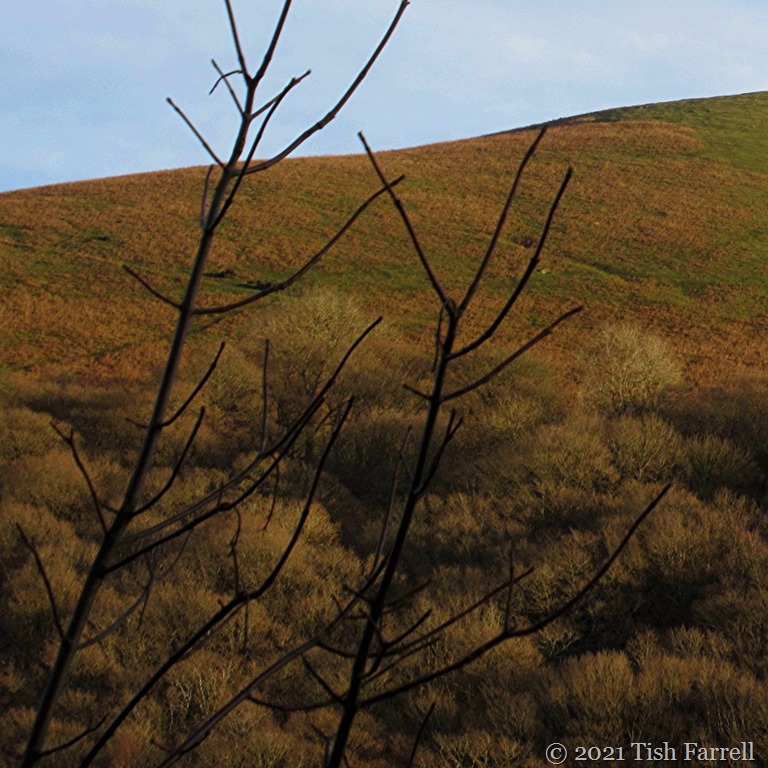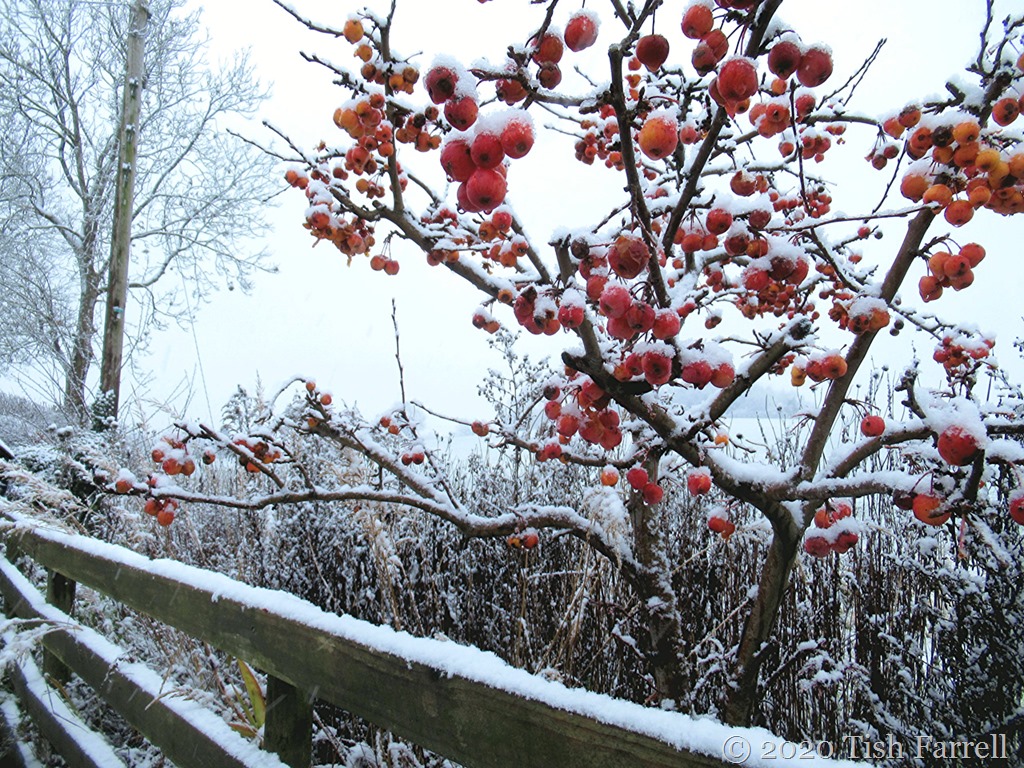
On Saturday night we had high winds and deluge. Rain pounded the roof-lights for hours. The gale buffeted about the cottage. Today we woke to eerie stillness, the sort that only comes with snow.
Landscape
Over The Garden Fence ~ December 2020
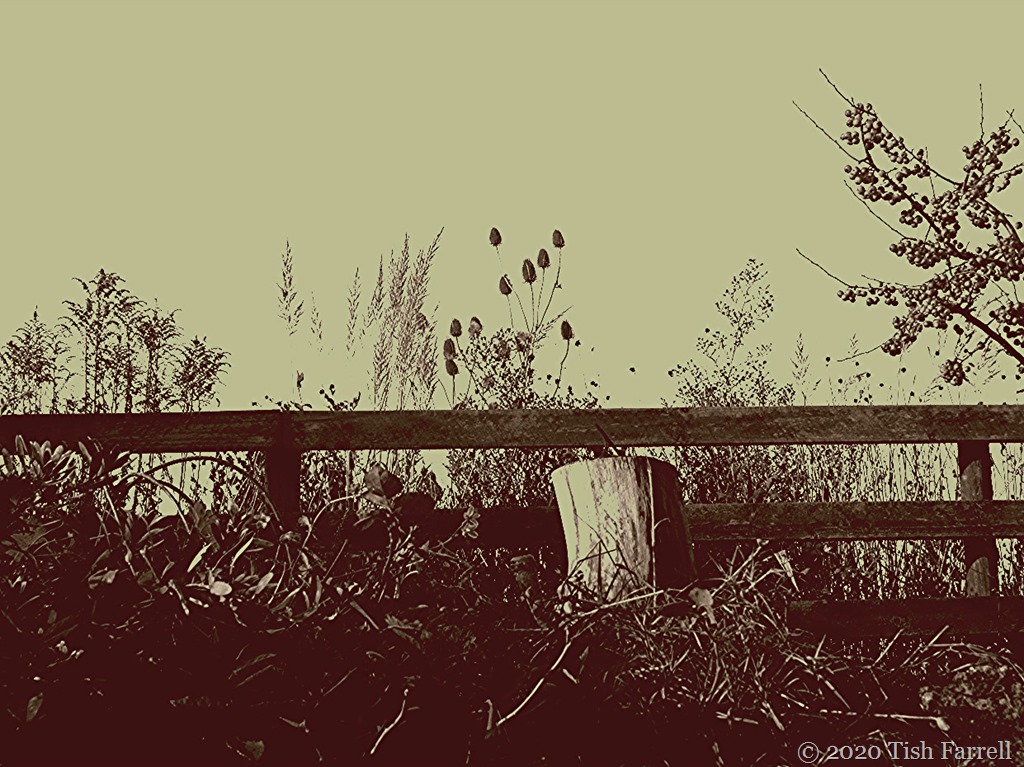
This is probably the last shot of the ‘guerrilla garden’ for this year. I’ve been enjoying the silhouettes over the fence, so have yet to raze the dead stems of our unofficial planting along the field edge. Golden Rod, Fountain Grass, Teasels, Michaelmas Daisies and the crab apple tree, and in front, the winter’s light on the ash log sundial that a good chum made us one year as a Christmas present. I’m sorry you can’t see what time it’s telling, though I’d say it’s around noon, the sun in the south. And talking of sun, in the northlands the days are already lengthening. Soon there will be signs of spring in my Shropshire garden. You will be the first to know.
Happy holidays to all who visit me here on the Edge.
And a big, big thank you for the many kind words you have posted here in these strangest of times. Wishing us all better days ahead.
My World In Sepia
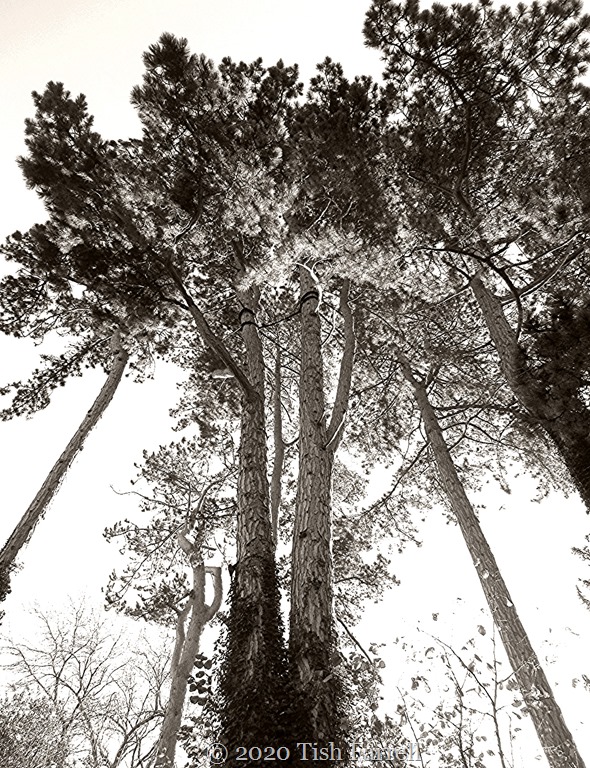
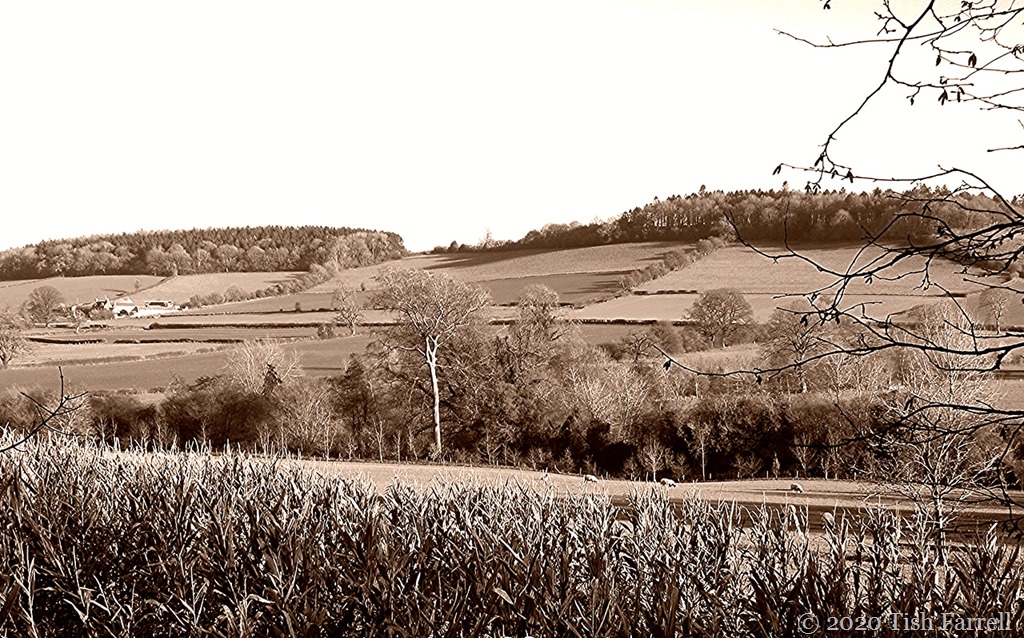
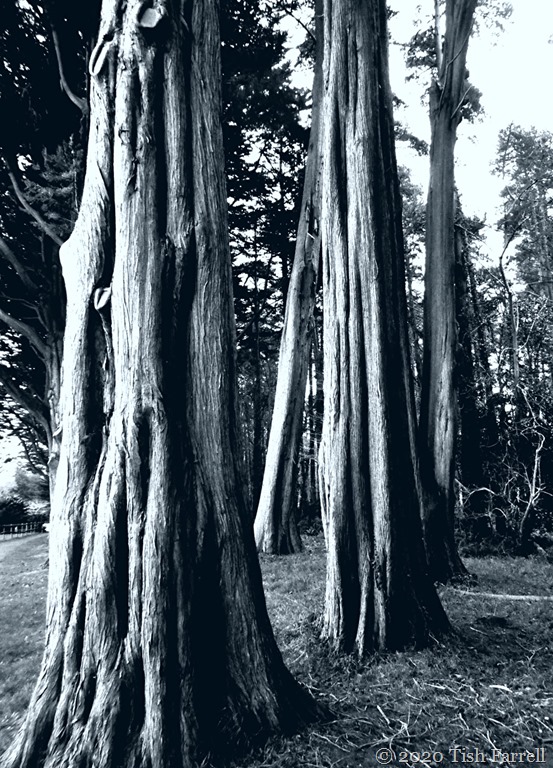
I seem to be having a ‘sepia season’ just now. It’s suiting my mood. And I anyway like the ‘antique’, slightly mysterious cast it gives some of the shots. I took them earlier in the week – along the lane from the Wenlock Priory ruins. The magnificent Corsican pines tower over the Priory visitor entrance, the place shut up for months now. I’ve no idea how these trees came to Shropshire, but I’m guessing that the Milnes Gaskells who once lived in the Prior’s House, or The Abbey, as they called it, may have planted them. This would be back in the days when Henry James was a repeat visitor and the priory ruins were something of an extended garden feature for his genteel English hosts.
The next two photos provide views of what was once the Priory ‘parkland’, now mostly owned by Wenlock Estates, a family trust, and grazed by sheep. In the Priory’s heyday the monks apparently had a high old time, hunting on horseback across their extensive domain. And not only that. One wild young monk, William Broseley, headed a gang of bandits, Wild West style, and Prior Henry de Bonvillars in 1302 was charged with raiding and horse stealing over on the Welsh borders.
Sheep were also an important monastic commodity, the wool a source of great wealth in the early Middle Ages. In 1284 another slippery Prior, John de Tycford, caused consternation and monkish fury within the sacred confines when it was found he had robbed the house of its wealth through a spot of canny futures dealing. He managed to sell seven prospective years of wool and then make off with the loot. Things are much more peaceful here these days.
Lens-Artists: You Pick It This week our excellent hosts, the Lens-Artists, invite us to choose our own topic.
In A Winter’s Light ~ Ynys Mon
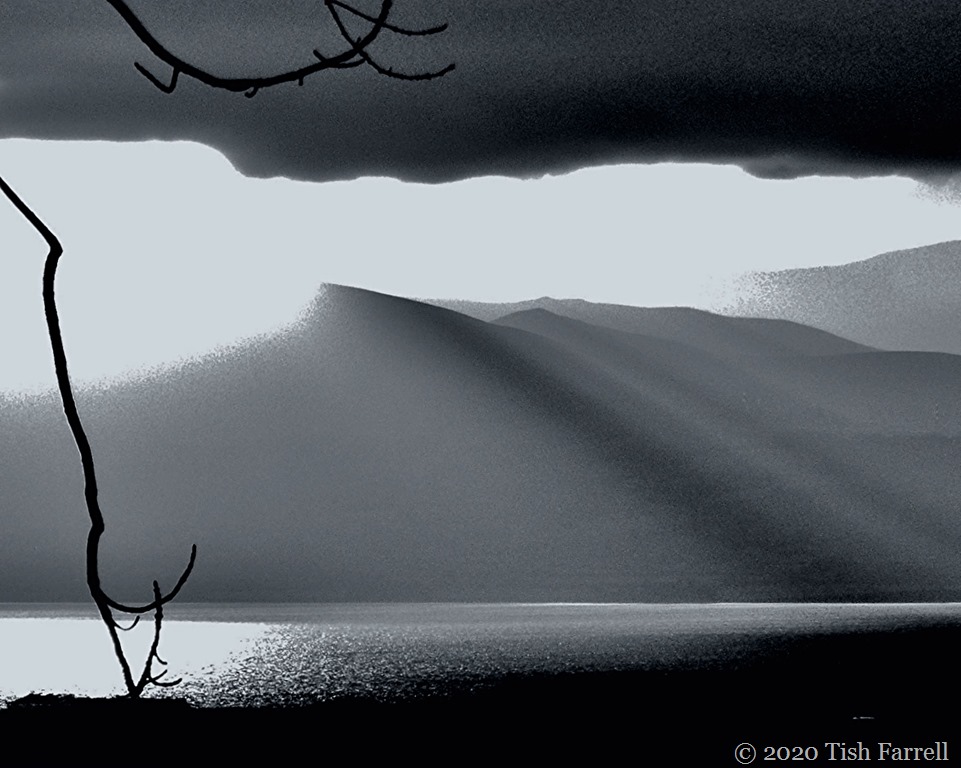
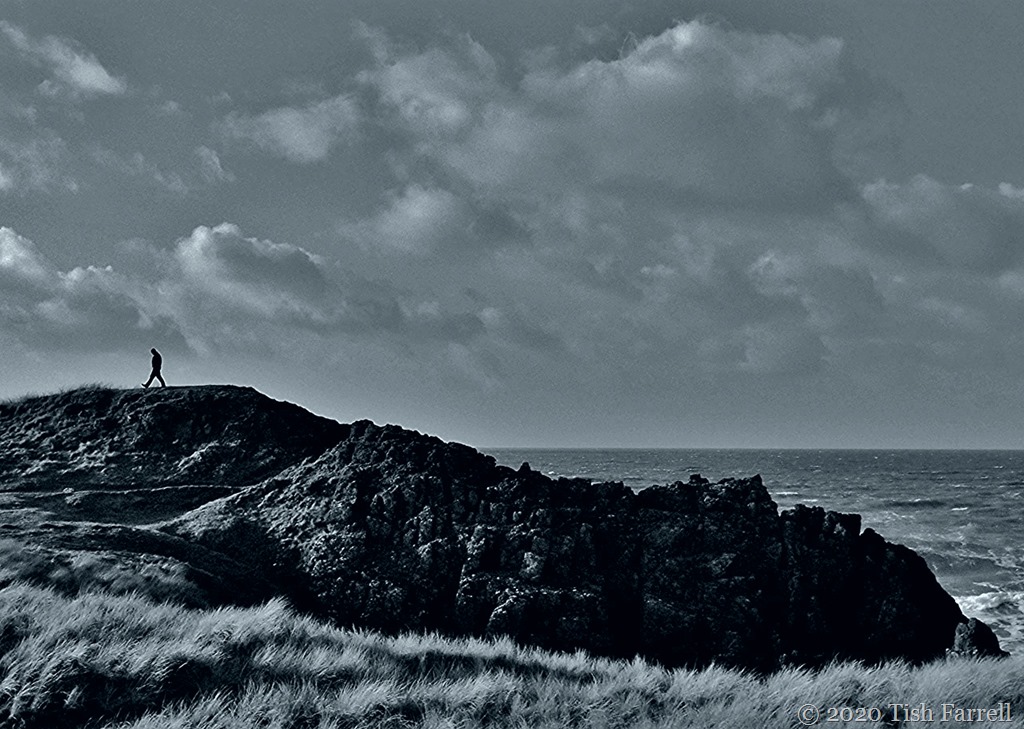
Winter light over the sea can make for some mysterious monochrome images. The first photo was taken early one morning, above the small town Beaumaris on the island of Anglesey (Ynys Mon). In the foreground is Menai Strait; beyond it the mountains of Snowdonia in mainland Wales.
For several years Anglesey has been a favourite place for family Christmases. There have been times of hair-raising gales, but also days of brilliant sun and unexpected warmth. This searchlight-sun effect over the Strait is a particular local phenomenon, and you quickly understand why the Celtic Druids, and later the early Welsh Christian saints were so drawn to the place. Landscape as transcendental meditation.
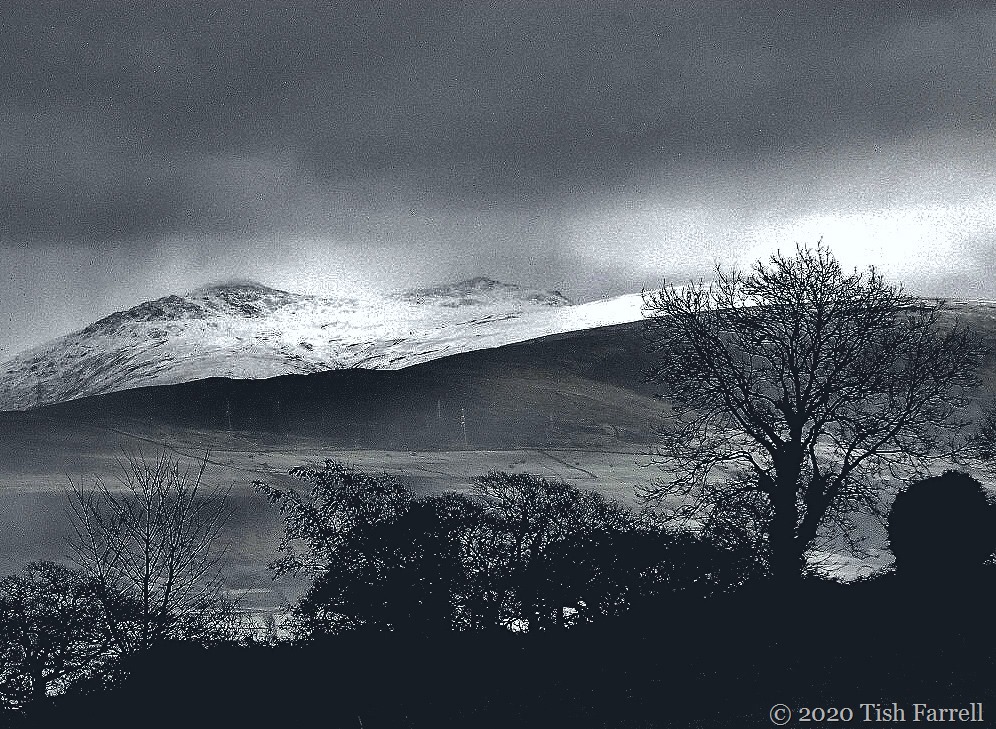
You can hardly see the Strait in the next photo (below the tree silhouettes), and it was anyway just going dark. But even so there’s a luminous glow on the field slopes of the far shore – a reflection off the water? And then there are the snow slopes making their own light. I like seeing how much of an image can be gained from the least amount of light. At the time I was using my little Kodak EasyShare ‘point and shoot’ camera. It was interesting what it could come up with.
*
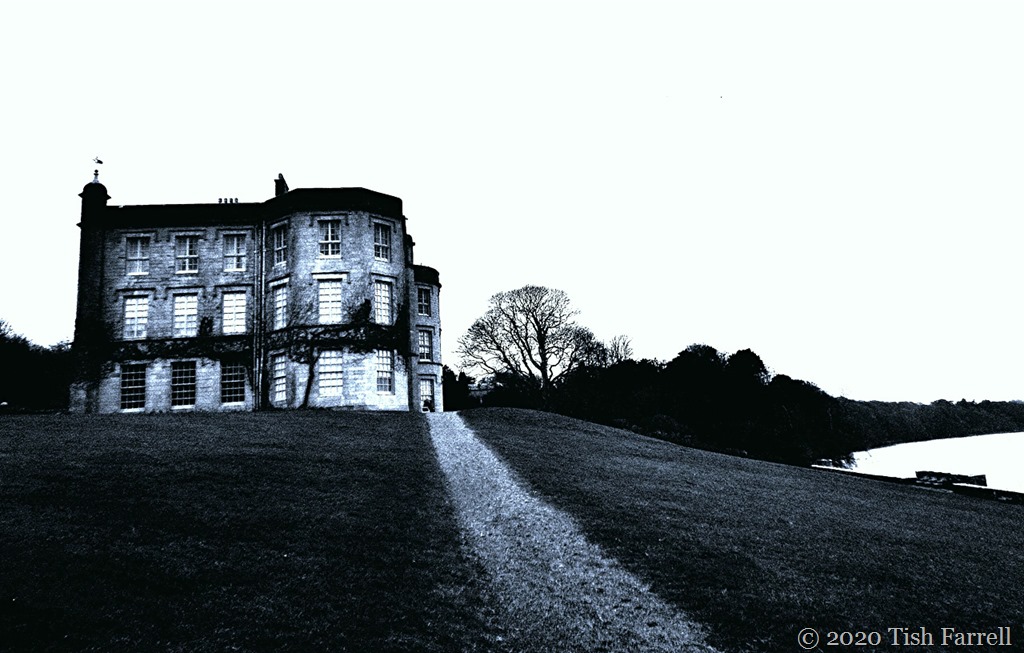
The morning we visited Plas Newydd it was broodingly gloomy – as if the sky gods had forgotten to switch the lights on.
*
But some sunnier days on the beach at Newborough:
2020 Photo Challenge #46 This week’s assignment from Jude: make sure you have contrasts in your image(s). Clear whites and strong blacks will add impact and create attention.
More From The November Hedgerow
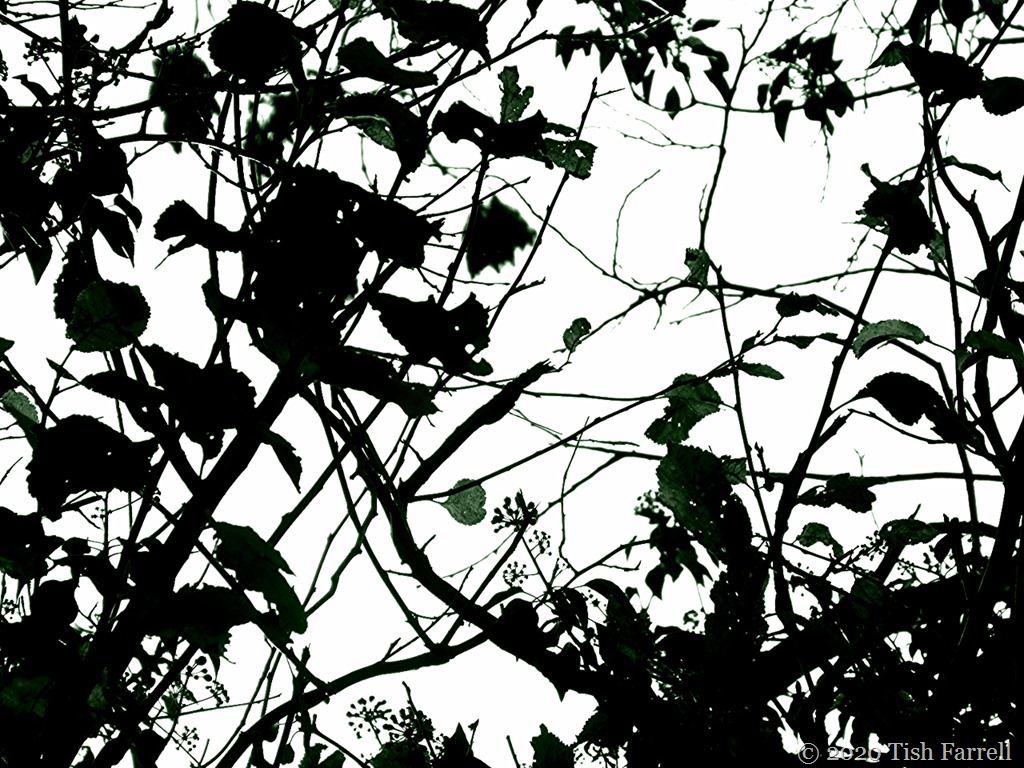
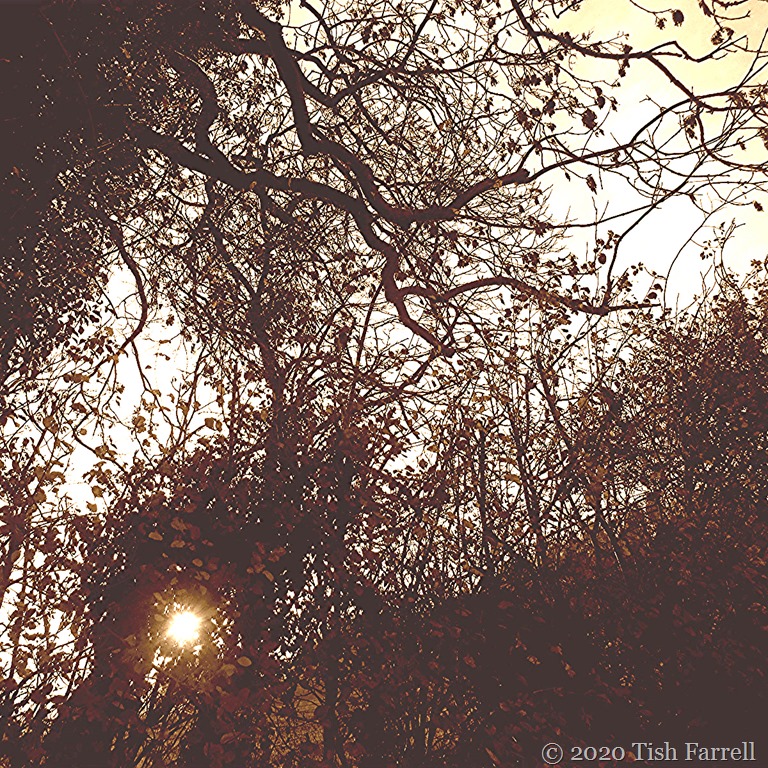
Through A Hedge Backlit
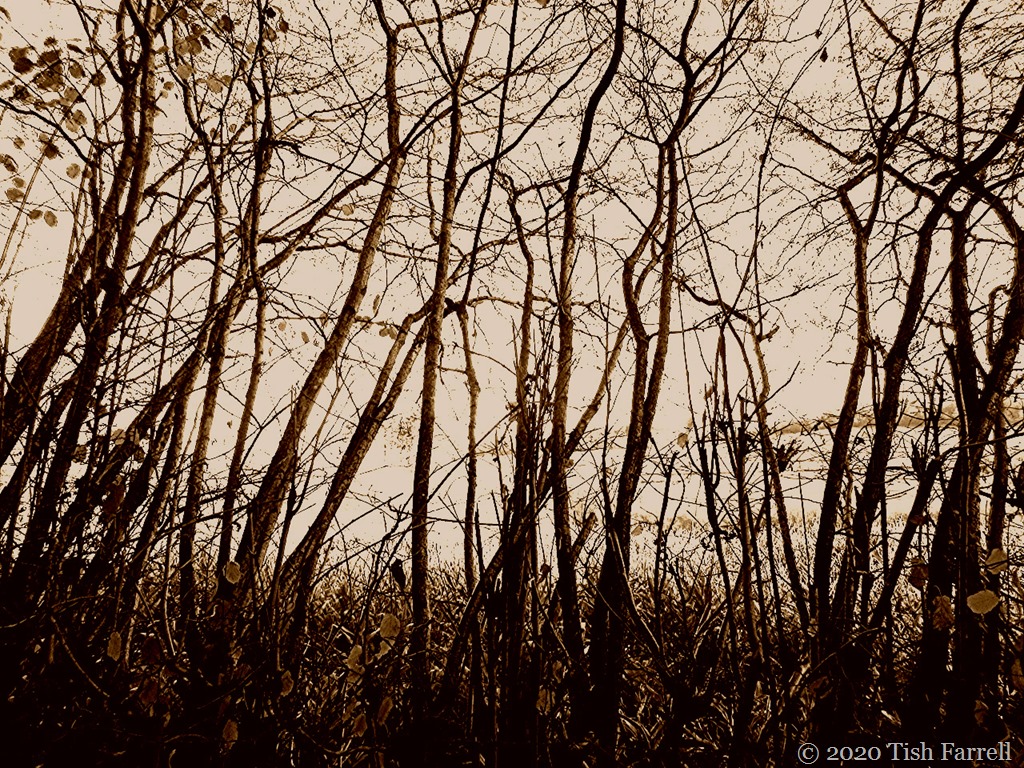
I took these photos yesterday, late afternoon, as I was going gardening. The hedge runs up beside the allotment, the south-westerly boundary to Townsend Meadow behind our house. As I reached the gap under the ash tree, the unofficial gateway to my garden plot, the sun burst through the hedge bottom. So I ditched the compost I was hauling, and fished out my camera. I was still thinking about the leaf photos in my last post, and decided monochrome could work here too, this time catching the plant-life silhouetted in the lowering sun. I added the sepia glow in the edit. In the northern hemisphere, sunshine in November always seems a specially precious gift, brimming with untapped possibility.
Lens-Artists: the sun will come out tomorrow Anvica’s Gallery has set the spirit-lifting theme this week. Go visit!
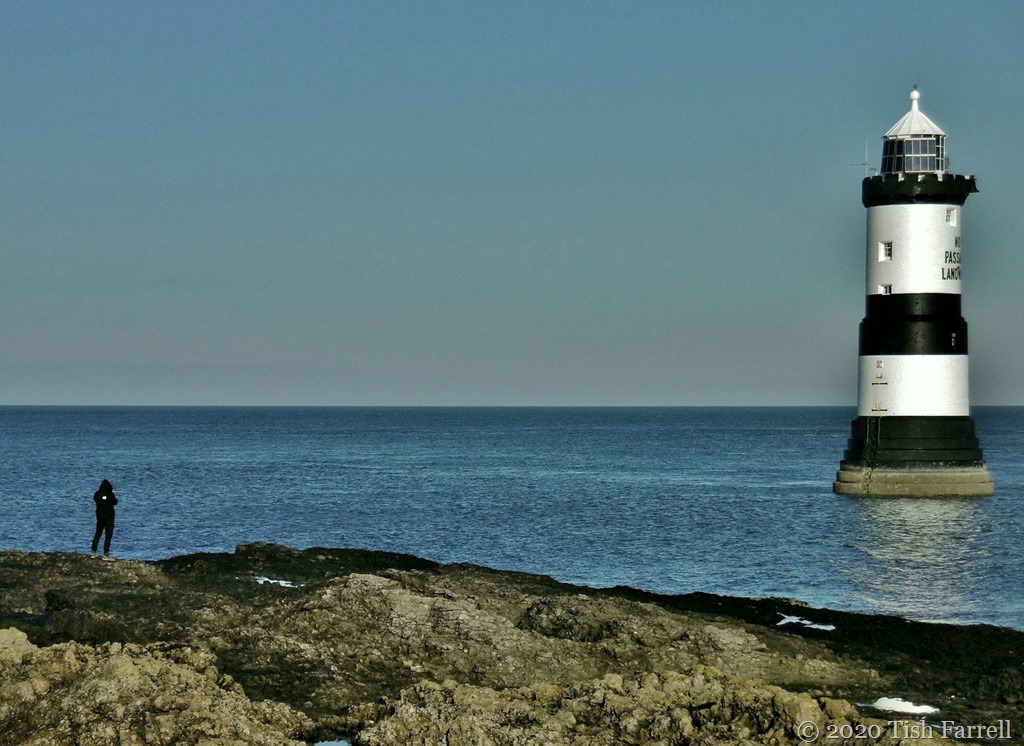
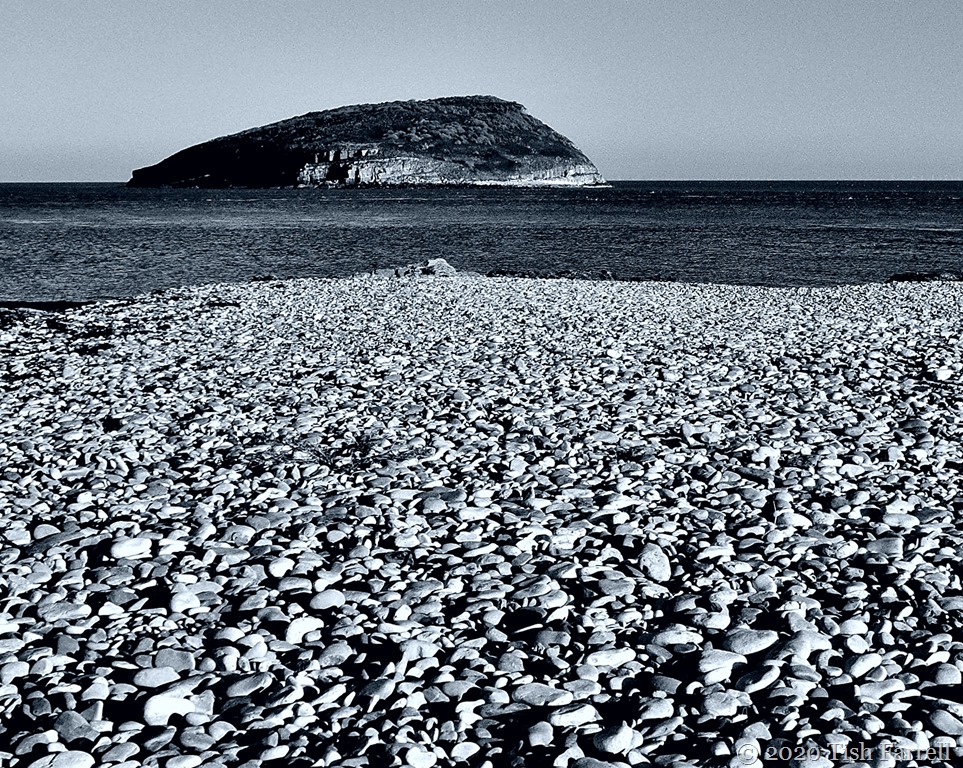
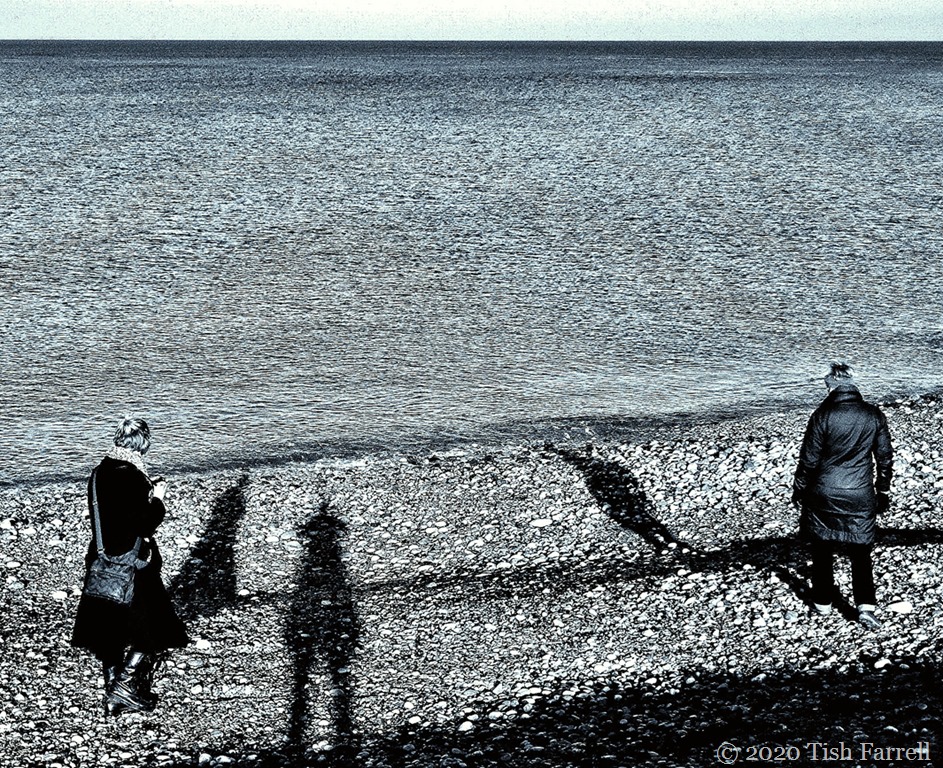
Making The Most Of Negative Space
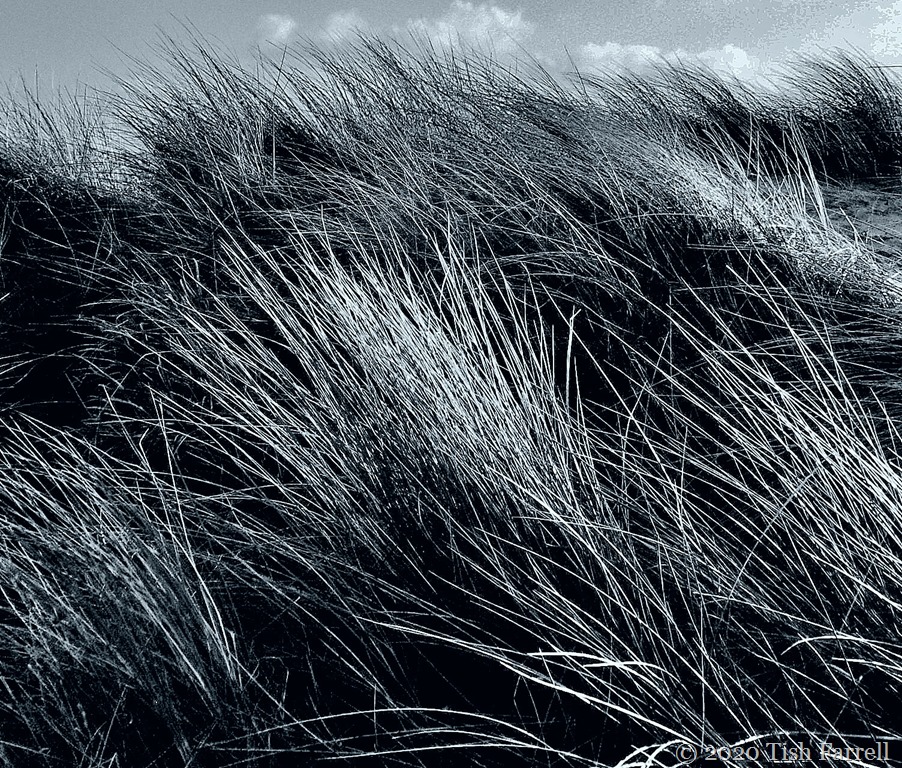
This week at Lens-Artists Amy asks us to show her negative space. These photos were all taken at Penmon Point on the island of Anglesey a few Decembers ago.
copyright 2020 Tish Farrell
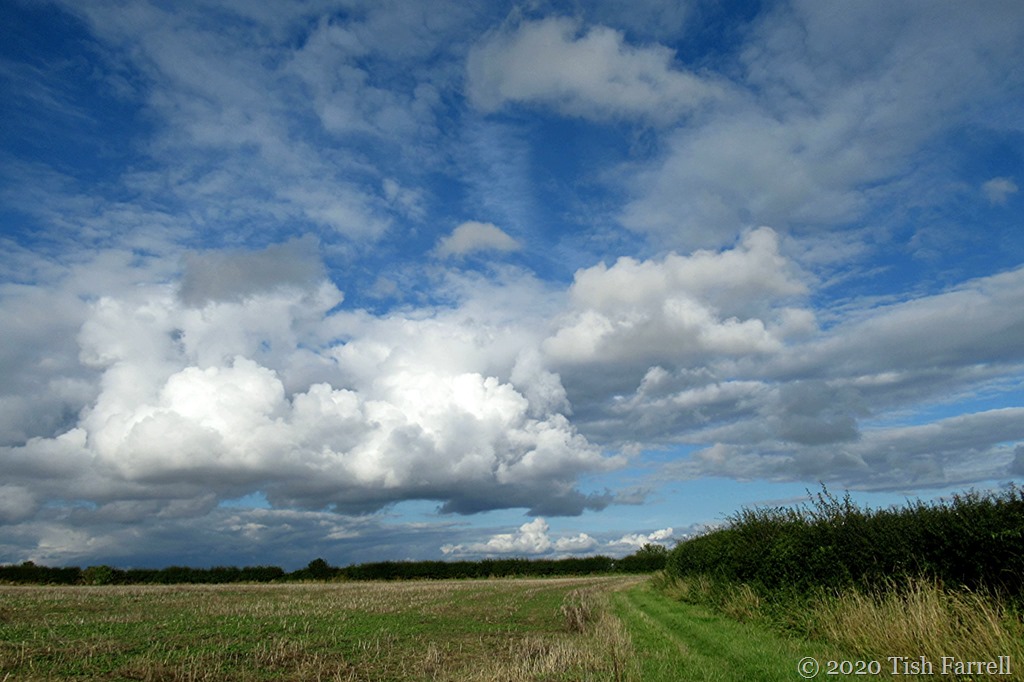
After The Storm: Big Skies On Wenlock Edge
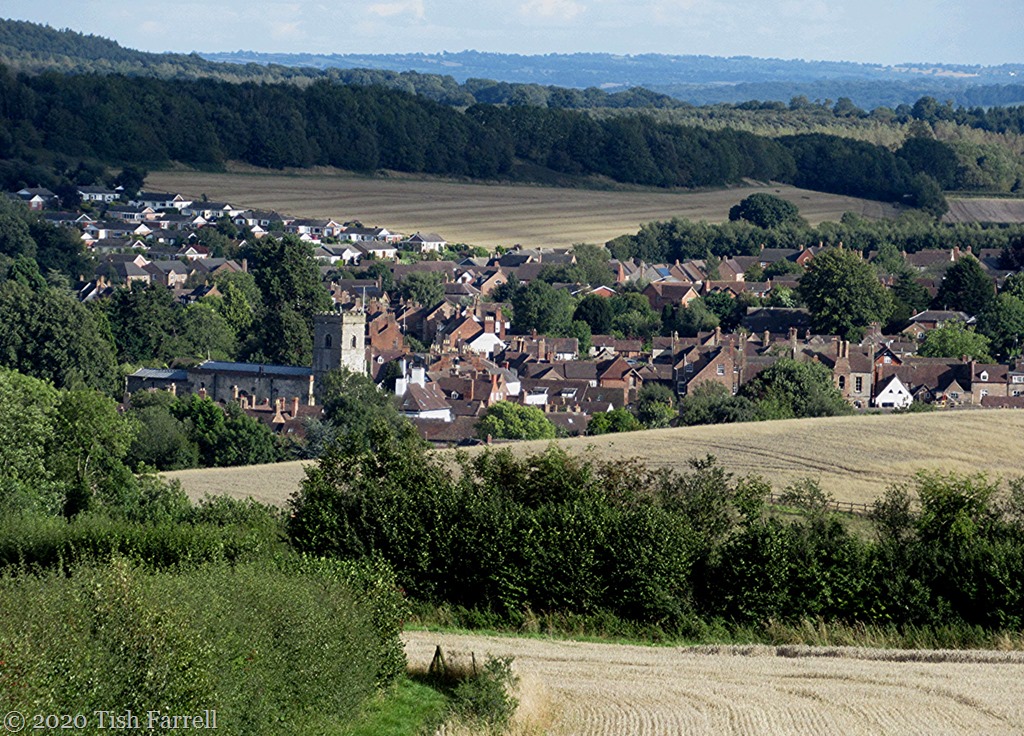
Late afternoon yesterday, calm restored after Storm Francis’s racketing about the place, we took ourselves off and up for a walk along the Edge. It was scarcely a hike, more of a ramble, though the climb up through the fields beyond Sytche Lane is a touch demanding. But then that gives me a good excuse for a breather while I snap a view of the town.
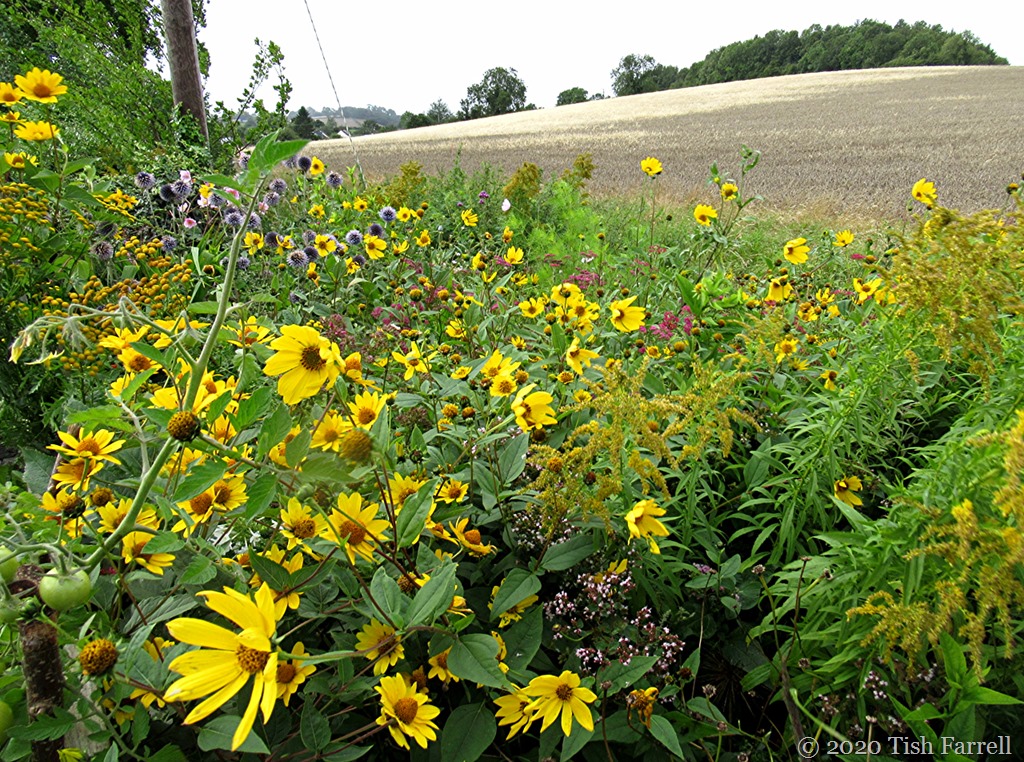
This flank of Wenlock Edge has been good wheat growing land for centuries, but this year, in the fields that could not be harvested early, the crop is looking grey and mildewed. Too much rain when it was least expected. I suppose it will be ploughed in. The hedgerows, on the other hand, were bursting with wild produce: wall to wall sloes (wild bitter damsons) which, after a good frost or a spell in the freezer, are excellent for making sloe gin or vodka; brilliant red haws on the hawthorn bushes; elderberries and rosehips beginning to ripen. All very autumnal.
Turning away from the town to the south: Clee Hill.
*
Once up on Wenlock Edge, and now heading in a northerly direction we come upon a view we had not seen before. Something was missing since the last time we were here – which just goes to show that we should go rambling more often. So what’s missing: guesses anyone? Clue: Ironbridge Gorge dead ahead.
From this point the path along the Edge runs out flat and even, fields on the right, ancient hanging woodland on the left where the escarpment falls alarmingly away to the Shropshire plain below. I thought of A.E. Housman’s poem ‘On Wenlock Edge’, (number 31 in A Shropshire Lad) and wished I’d come up here on the morning of the storm. It would have been exciting – all thrashing boughs and wind rush:
On Wenlock Edge the wood’s in trouble;
His forest fleece the Wrekin heaves;
The gale, it plies the saplings double,
And thick on Severn snow the leaves.
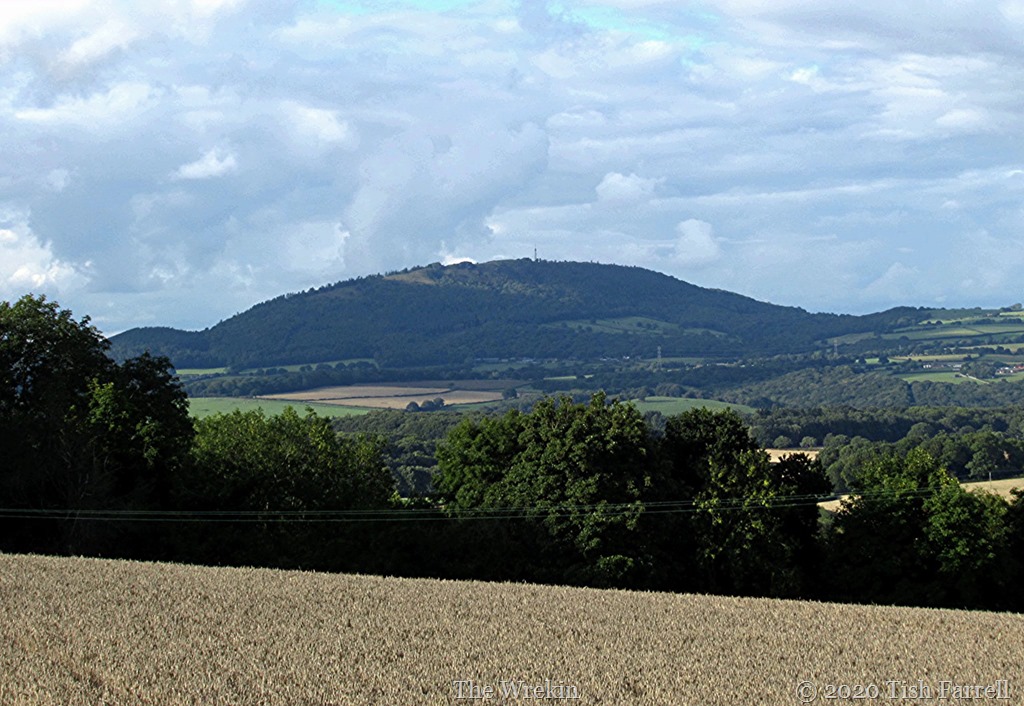
And finally, since Housman has kindly provided the caption, coming up is the Wrekin, as seen from the homeward path.
There’s an Iron Age hillfort on the summit, once a stronghold of the Celtic Cornovii clans who inhabited the Welsh borders and English Midlands. After the Roman occupation, the local Cornovii became the Romanized inhabitants of Wroxeter/Viroconium Roman City whose remnants still survive (just off-screen to the left) beside the River Severn. The Wrekin itself, as all locals know, was made by a very grumpy giant called Gwendol. You can read my version of that story HERE.
*
I’m linking this to Jo’s Monday Walk: she is an inspiration to all of us to get rambling. This week’s expedition includes some very fine Portuguese Roman remains at Mirobriga, an archaeological site which also has Iron Age connections.
Look Out: Here Comes The Wind!
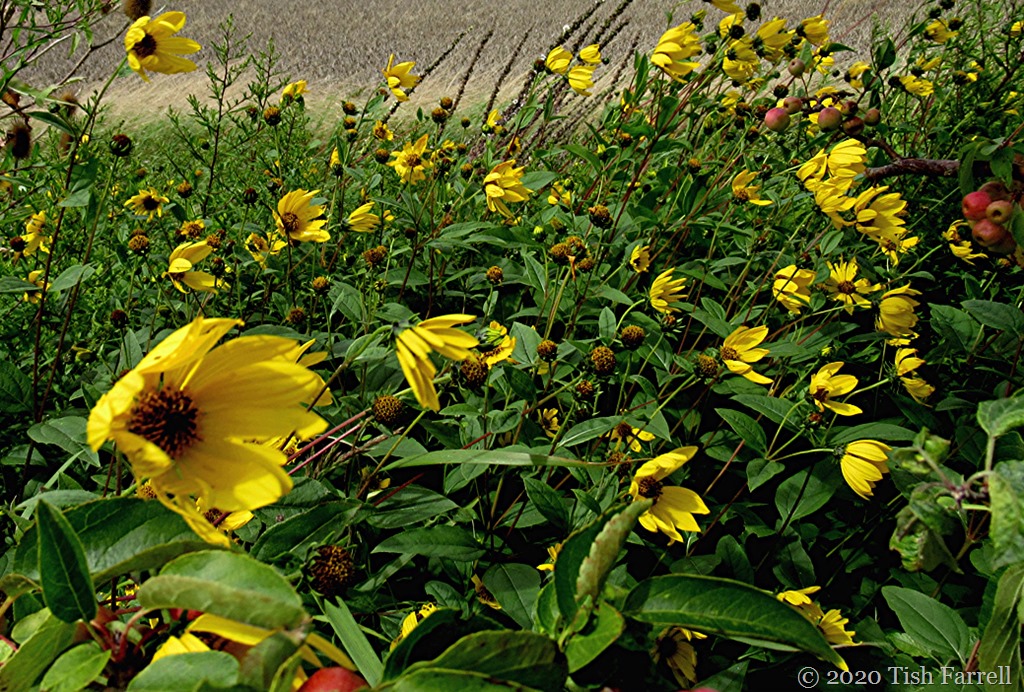
This morning over the fence the guerrilla garden was all of a frenzy, the helianthus being whipped hither and thither as Storm Francis started to make his presence felt. The odd thing was the wind was warm, and it was rather marvellous to stand in it. Exhilarating even. Left one feeling well swept in the mentally cobwebbed department.
Now though in early evening we have lowering cloud banks over the Edge and intermittent lashings of rain. Francis is still blustering about but only with 40 mph gusts, or so the weather folks tell me. We’re lucky here in inland Shropshire. Out on the coast there have been 70+mph winds and much flooding and damage. It makes me wonder with all this year’s upset and turbulence: did some entity out in the universe open Pandora’s Box back in January?
Can’t See The Wood For The Trees?
These photos were taken on an October morning not so long ago – on the path to Croft Ambrey Hillfort from Croft Castle in our neighbouring county of Herefordshire.
The old saying of not seeing the wood for the trees has deep resonance now. We need to start seeing. The Centre for Evidence-Based Medicine in Oxford is a good spot for some illumination; lots of informed common sense on matters covid from Professor Carl Heneghan who is also a practising doctor.