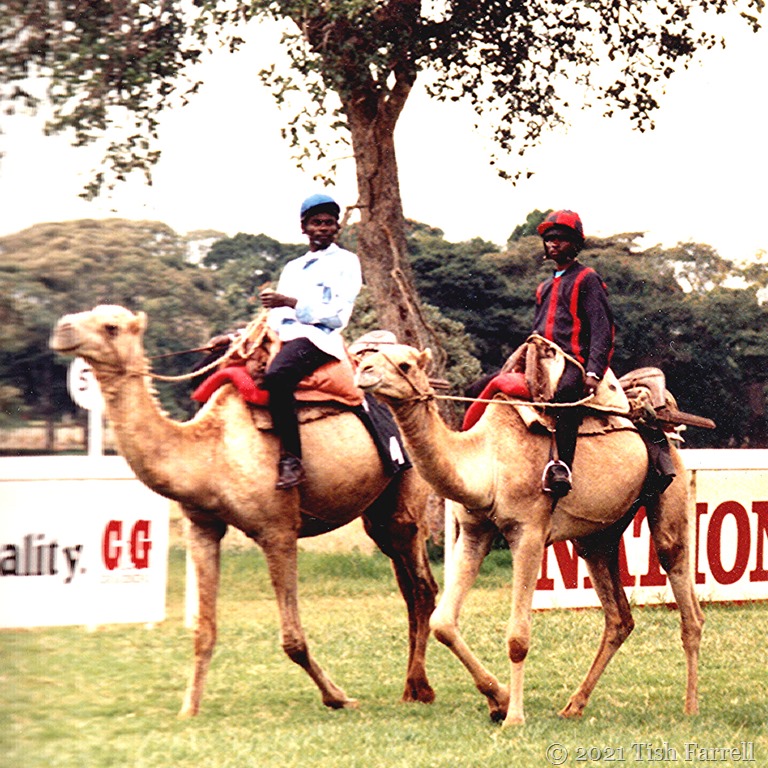
It was meant to be a diverting event between the horse racing at Nairobi’s Ngong Racecourse. Officers from Kenya’s Police Anti-Stock Theft Unit were demonstrating their mounted expertise by racing their camels. The camel units usually operate far away in the arid zones of the Northern District, patrolling the border with Somalia, so perhaps the genteel and leafy ambiance of the Jockey Club enclave did not enthuse the camels.They certainly took much urging to leave the starting line and then, having started, there was little inclination to finish. An underwhelming contest then, though it added to the many and varied goings on of a Nairobi racing weekend.
The Ngong races are a hangover (pun retrospectively intended) from British colonial settler days when, for a week around Christmas, farmers left their lonely farms and ranches and gathered in town to let their hair down. For many it was a drunken spree, at least if you are to believe Evelyn Waugh’s 1931 account in Remote People. I’ve quoted from it before but it’s worth a second go:
I found myself involved in a luncheon party. We went on together to the Races. Someone gave me a cardboard disc to wear in my button-hole; someone else, called Raymond, introduced me to a bookie and told me which horses to back. None of them won…
Someone took me to a marquee where we drank champagne. When I wanted to pay for a round the barman gave me a little piece of paper to sign and a cigar.
We went back to Muthaiga and drank champagne out of a silver cup which someone had won.
Someone said, ‘You mustn’t think Kenya is always like this.
*
I see from the internet there has been plenty of racing at the Ngong Racecourse during January. These days it is a well ordered multi-cultural affair. I’ve also just had a quick trawl through the Kenya Jockey Club’s Facebook photos but found no sign of camels. Obviously lacking in appropriate competitive attitude.
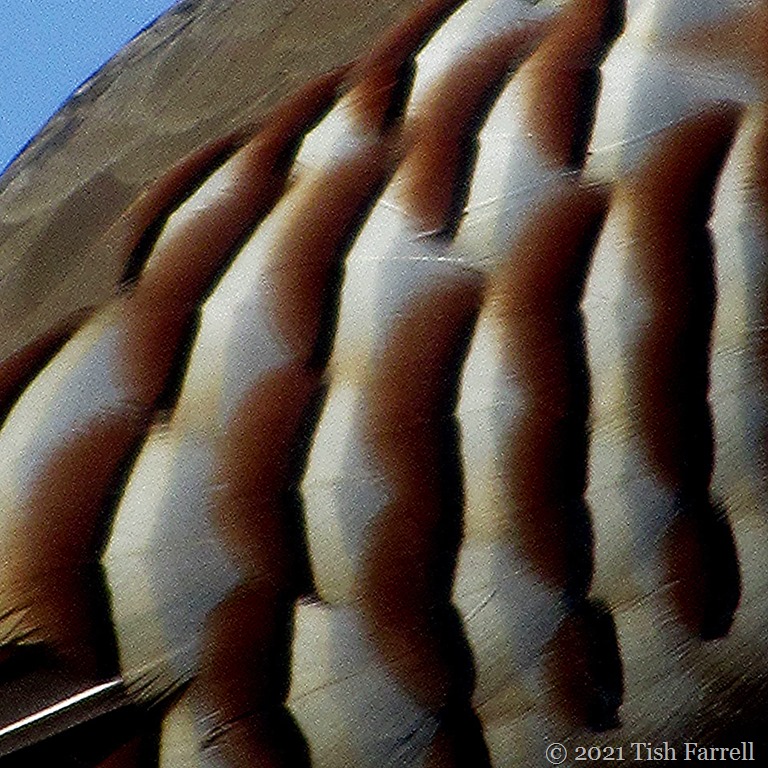
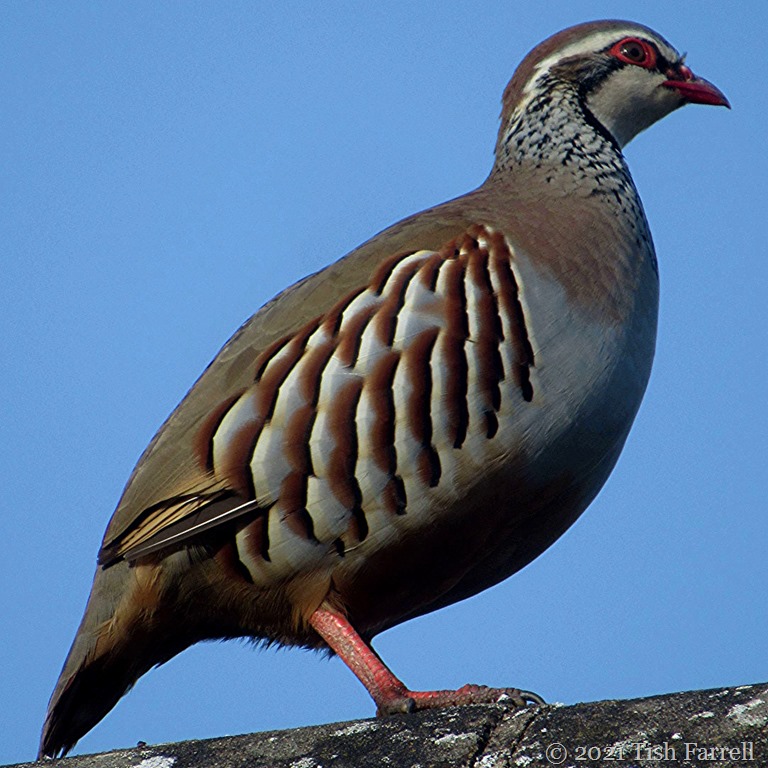
One of the extraordinary things that happened last March, along with advent-lockdown, was the appearance of this red-legged partridge on top of the old privy roof. Well! Never had this kind of thing happened in the garden before. In my experience partridges are rather covert birds. You’re lucky to have a fleeting glimpse if you happen to startle one along a farm-field hedgerow. This one, however, stood in full view for ages. Not only that, it began to further advertise its presence with some very loud and rasping calls. It was all rather thrilling. Who knew that partridge plumage was so very magnificent. I certainly didn’t.
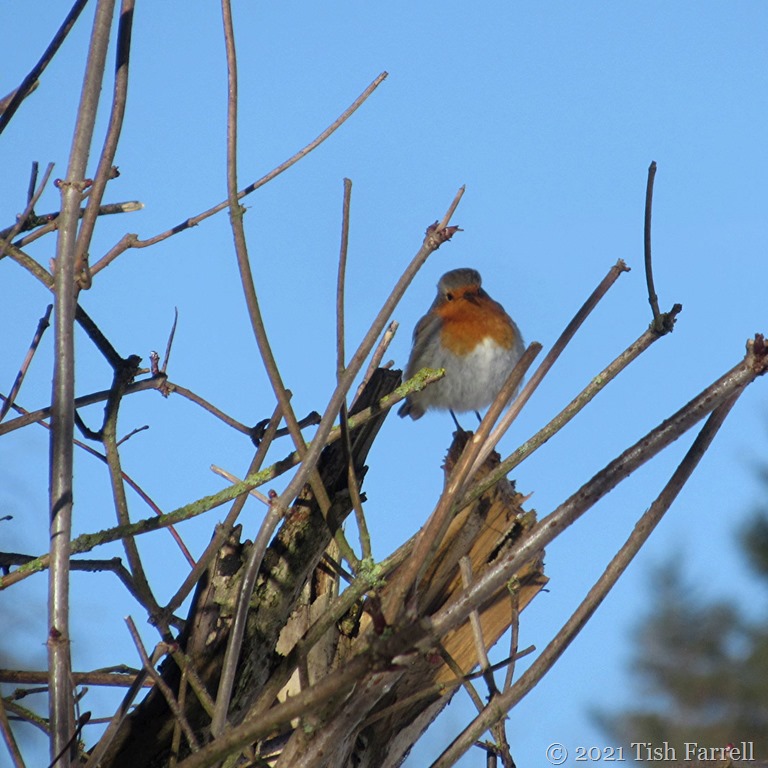
But it’s always cheering to spot one. Even more so if they burst into song and brighten up a wintery twilight. But they can be fractious, being fiercely territorial when it comes to seeing off competitors. They are also very demanding. For much of last year I had one appear as soon as I started work on my allotment plot. If I went near any of my compost heaps, it was there at my feet, demanding that I instantly turn over the heap so it could stuff itself with worms. Obviously I had been labouring under a misapprehension thinking I was the allotment holder. Silly me. As I said: robins rule. I was just there as the field hand.
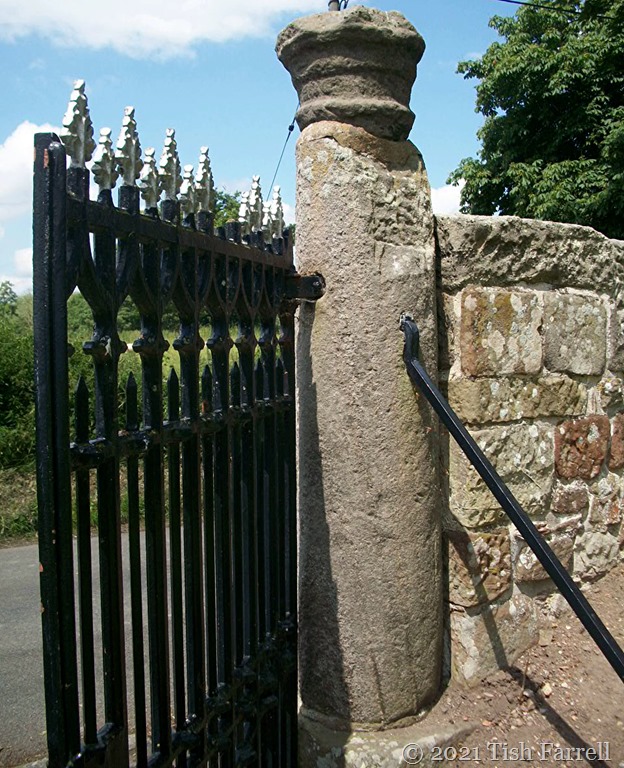
Since my yesterday’s post on Wenlock’s old buildings, I’ve been having a chat with Yvette at Priorhouse Blog about recycled parts. And that reminded me of this – the gates to the little village church of St. Andrew, Wroxeter. It lies on the other side of Wenlock Edge from us, the northerly end, just a few miles away as the crow flies.
Wroxeter is famous for its archaeological remains – Viroconium Roman City no less, now in the midst of farm fields. Even Charles Dickens came there to do his own Time-Team-like investigations: the remains were a huge tourist attraction in the late nineteenth century.
The nearby church is now sadly redundant, but you can still visit it. It had its origins in Saxon times but much of the surviving fabric belongs to 17th and 18th century remodelling. The gateway was added in the late 19th century.
So: have you guessed it?
Roman columns no less, doubtless transported down the lane on the back of a farm cart. The shafts are said to be from the Roman baths, the capitols added from elsewhere among the ruins. But they are very handsome, aren’t they. Well re-purposed. There’s more of the Roman City in the church walls. And inside, the font is made from an upturned column base.
I’m wondering, too, about the little figures mounted high in the tower. They have a Roman shrine look about them. And their recycling here would not be surprising. From earliest prehistoric times humans have adopted, adapted and generally put to their own purposes earlier sacred relics and monuments, well-tended sanctity being a valued resource; the more venerable the better. An interesting thought to ponder upon in increasingly strange times.
The small town of Much Wenlock has been continuously occupied for at least a millennium. It grew up to serve the demands of Wenlock Priory. In Saxon times there would doubtless have been a smallish population of servants and slaves to do the menial tasks around the monastic domain. There were also local providers of goods and services with weekly fairs pre-dating the Norman Conquest.
St. Milburga was the first prioress whose name we know. Her father, the Mercian king, Merewald, sent her to France to be educated for the role. From around 670 CE she returned to preside over a double house of monks and nuns who lived and worshipped in separate quarters. She also commanded large estates – from the Severn Gorge to the Corve valley. This was very much a pattern for Saxon princesses – ruling over human souls and securing physical territory.
The original monastic house was greatly expanded in the years preceding the Norman invasion of 1066. Saxon Earl Leofric and his consort, Lady Godgifu (Godiva) footed the bill. But their considerable improvements were not good enough for the new Norman earl, Roger de Montgomery. From 1091 the place was taken over by incomer French monks from Cluny and it was they who, over succeeding centuries, undertook the work on the buildings whose ruins survive today. (See last week’s post for a tour of some of the ruins).
The town’s big break came in 1101 with the apparent discovery of St. Milburga’s bones in the ruins of Saxon women’s chapel. This convenient fortunate find put Much Wenlock on the pilgrims’ map, kick-starting a thriving service industry to cater for the many visitors. So were sown the seeds of the busy market and manufacturing town, and though still under monastic authority, the early Middle Ages saw the rise of freemen and burgesses and the growth of an urban elite.
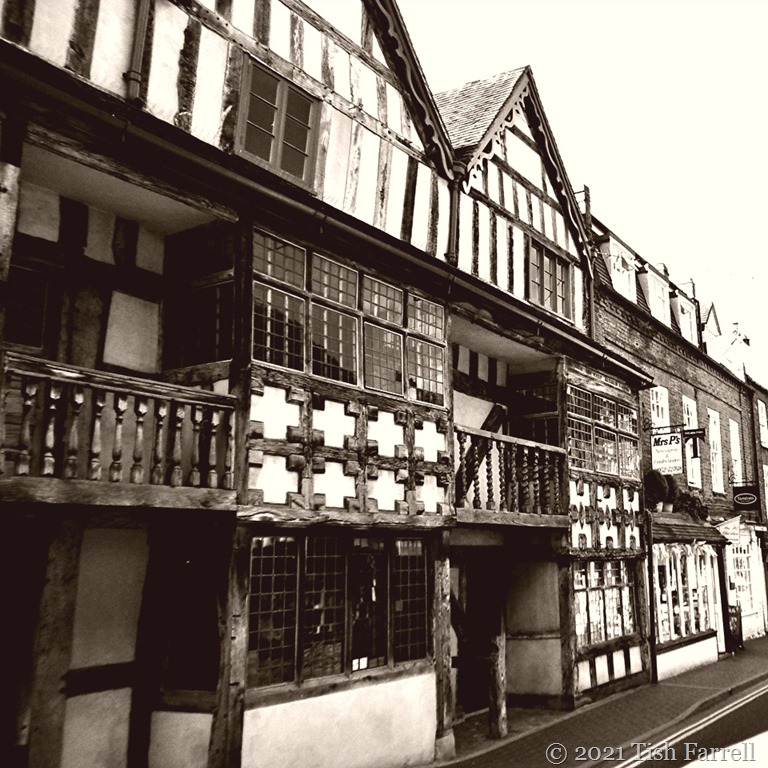
With the Dissolution, the Prior’s dictate and ecclesiastical court rulings were exchanged for secular management by bailiff and burgesses – tanners, weavers, wool merchants, the new owners of monastic lands. In 1540 they built the town’s Guild Hall and later added the debating chamber where the Town Council still holds its meetings. They also set about building grand homes for themselves, enhancing and expanding earlier structures.
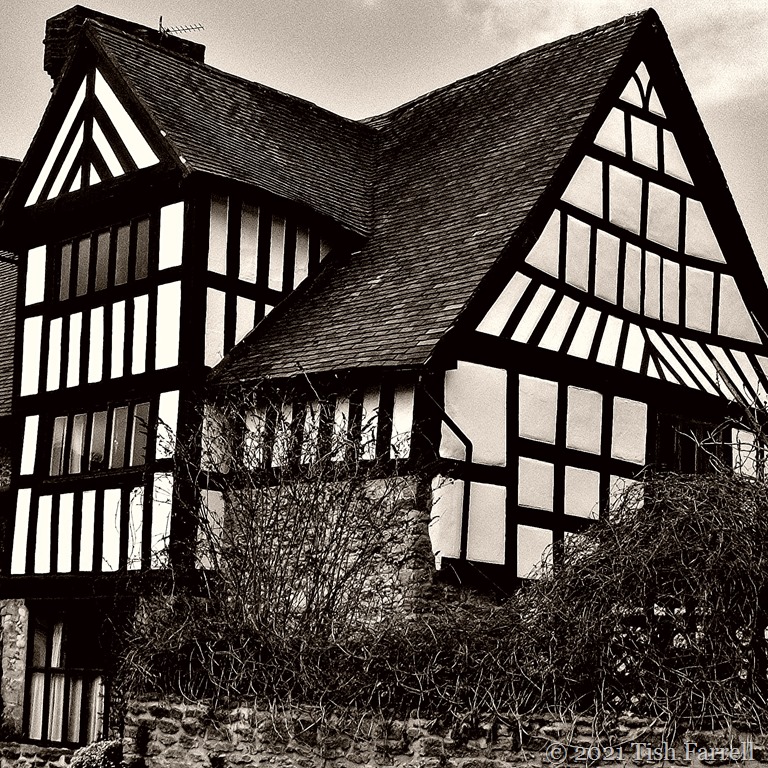
The header photo is Ashfield Hall, rebuilt in the 1550s by local worthy, Thomas Lawley, who extended an earlier stone building with the eye-catching timber-framed wing. In 1642 it was better known as the Blue Bridge Inn, and it was here that Charles I apparently spent the night during Civil War manoeuvres.
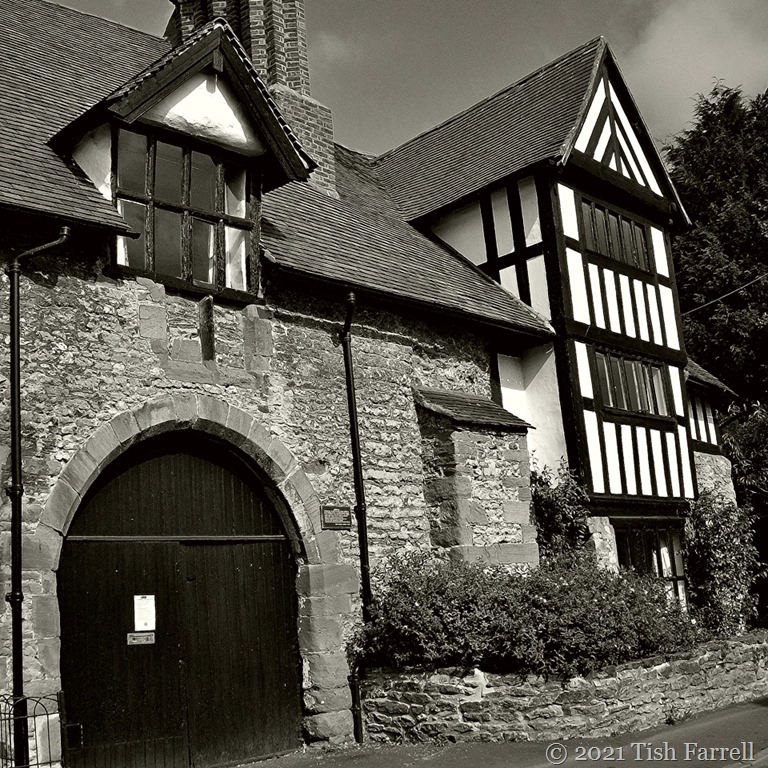
Here’s another view of Ashfield Hall. It is said to have been built on the site of St. John’s Hospital which was run by monks in the 1280s for the benefit of ‘lost and naked beggars.’ It had gone by the 15th century though evidence of its existence lived on in the street name of Spittle (hospital) Street, later renamed the High Street.
*
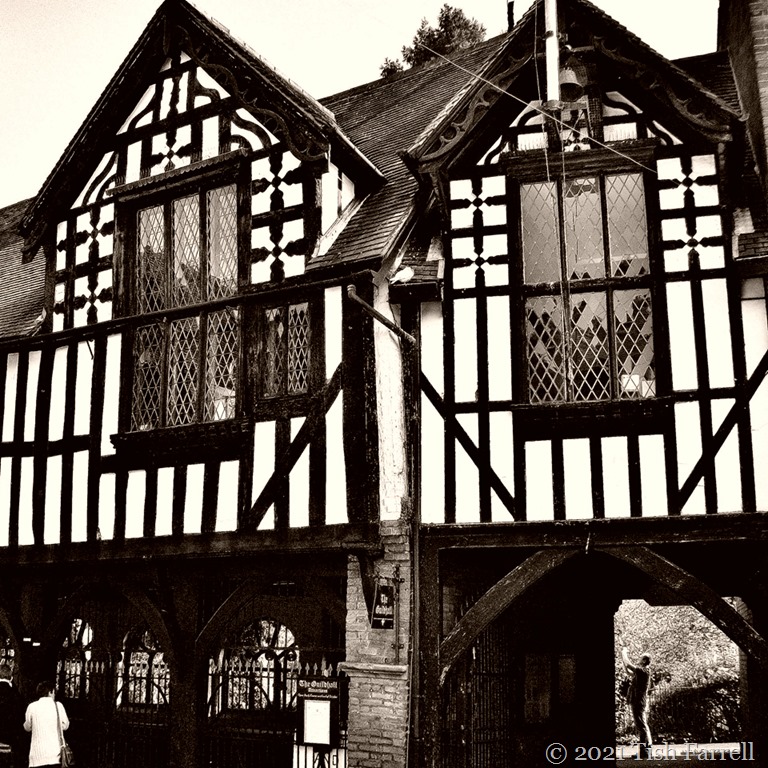
Much Wenlock’s Tudor Guild Hall is still used as a market hall (downstairs) and a museum and council chamber above. Sitting in the heart of the town beside the parish church t is absolutely the town’s ‘signature’ landmark.
*
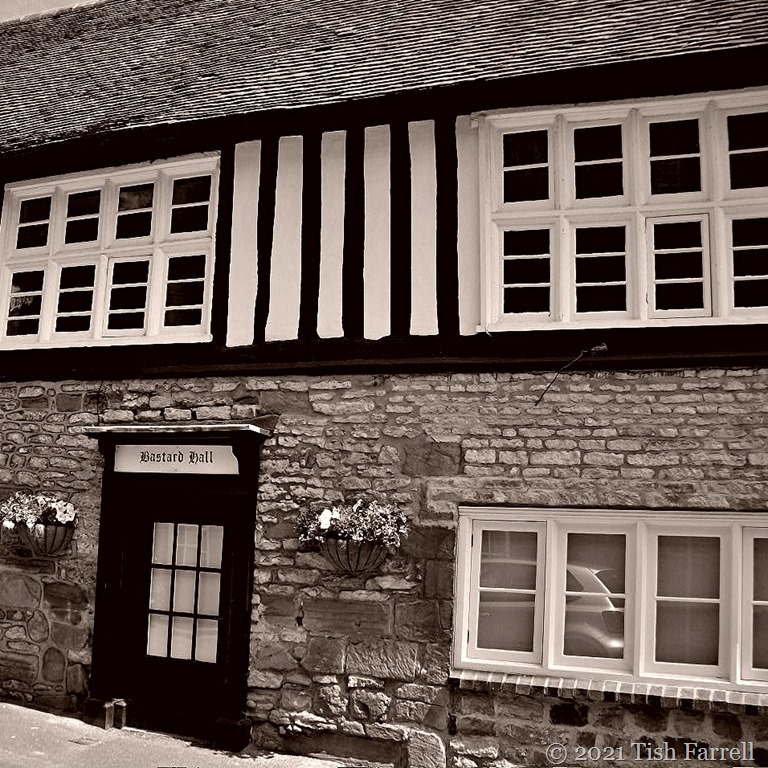
The Bastard Hall up the street from the Guild Hall has seen many phases; its stonework certainly suggests some repurposing of priory ruins. It and its attached neighbour were the subject of an early Time Team television programme, the latter found to be housing the remnants of an early medieval hall. See link at the foot of this post for the full programme and insider views.
*
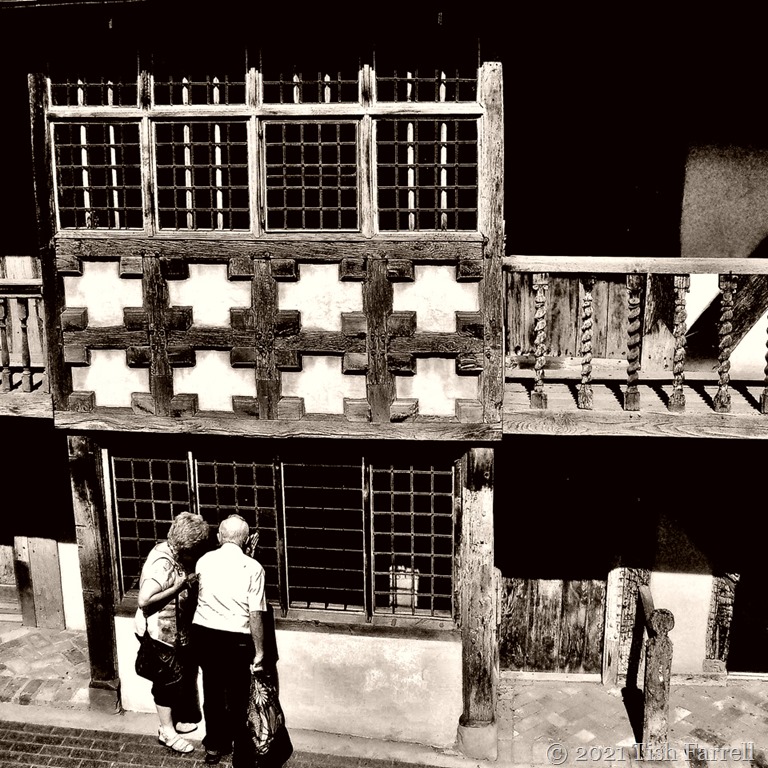
Reynald’s Mansion is perhaps the most singularly impressive building on the town’s High Street. The striking timber facade was built onto an existing medieval house in 1682. For a time it was the town’s butcher’s. The post with cross-bar by the front door was used to make hefting heavy loads easier.
*
This small architectural round-up was inspired by Ann-Christine at Lens-Artists. Striped and checked is her challenge this week.
Today we have blue skies and brilliant sunshine and last night’s snow has been rapidly melting. But the big question is: will enough of it melt before it starts freezing again, turning byways into ice rinks.
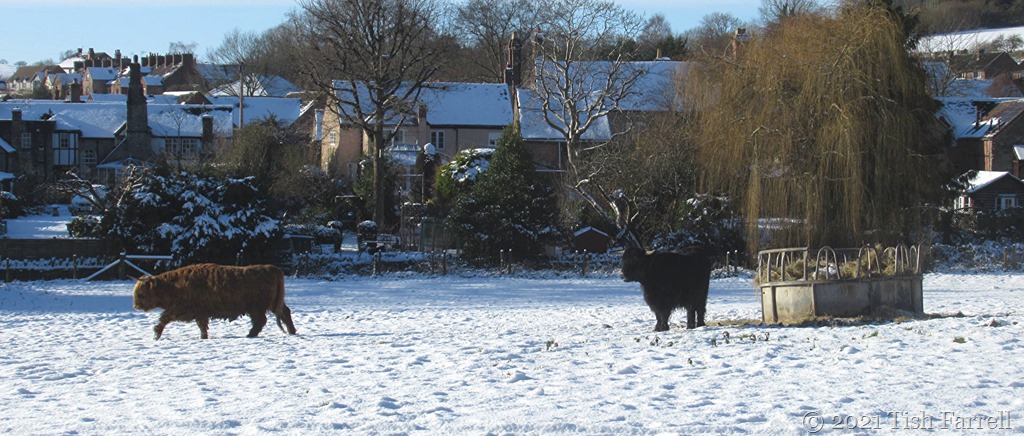
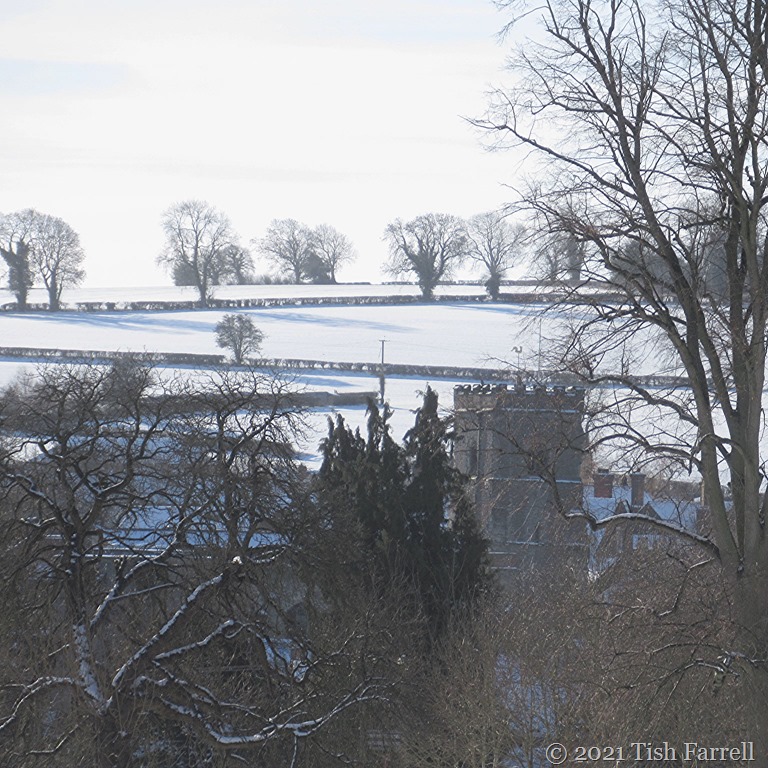
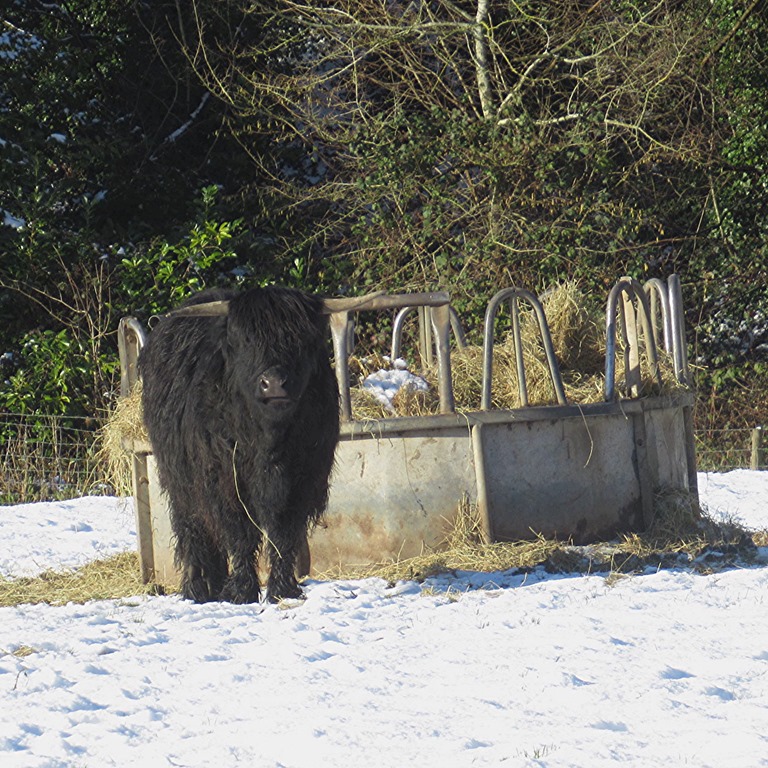
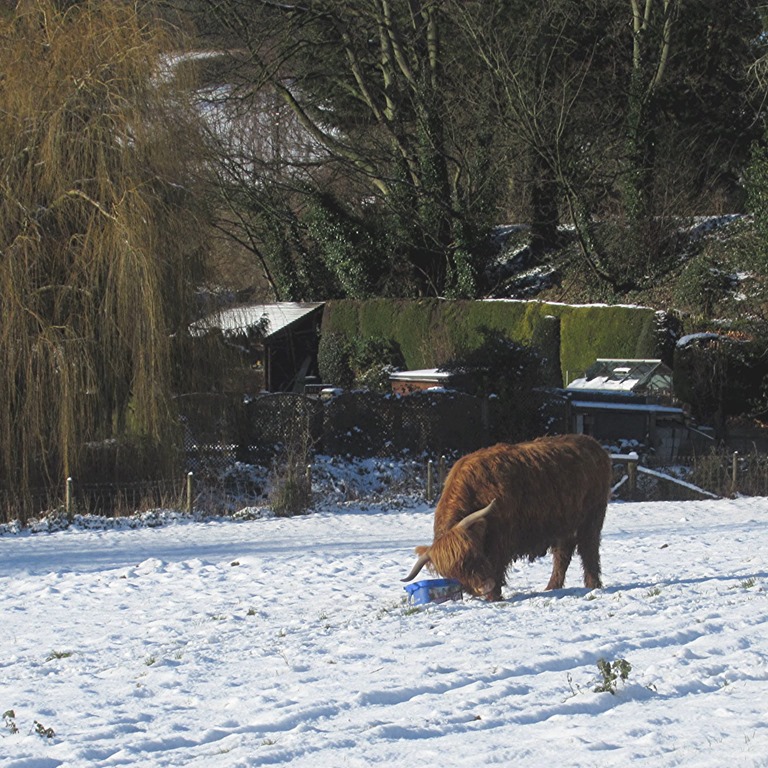
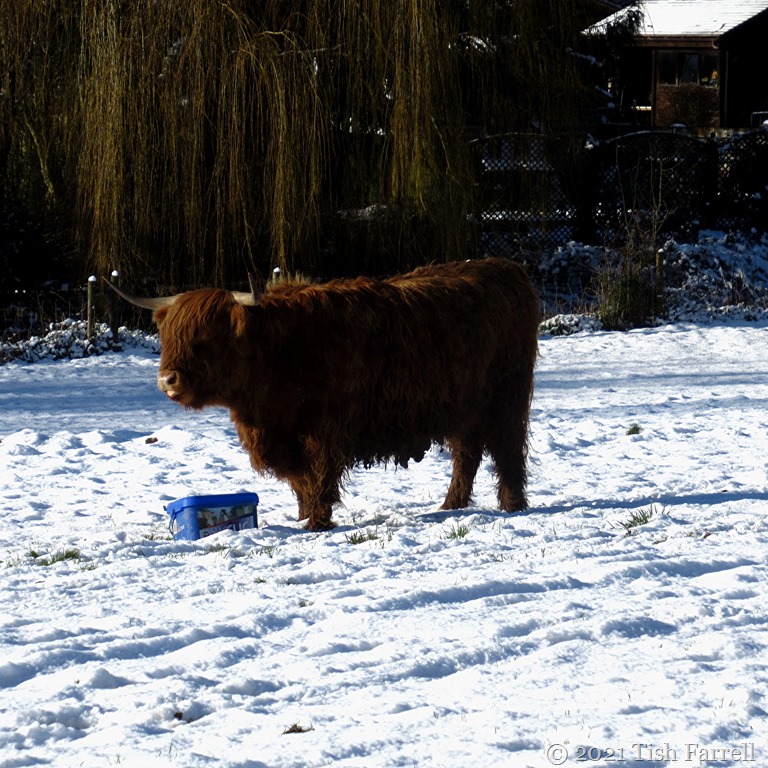
This morning, though, it was all very picturesque over the garden fence and about the town. The MacMoos were my first port of call for a photo-op. There were only two in the Cutlins meadow today. They do come and go. And what imperturbable souls they are, seemingly un-moo-ved by their snowy world so long as there’s plenty of hay.
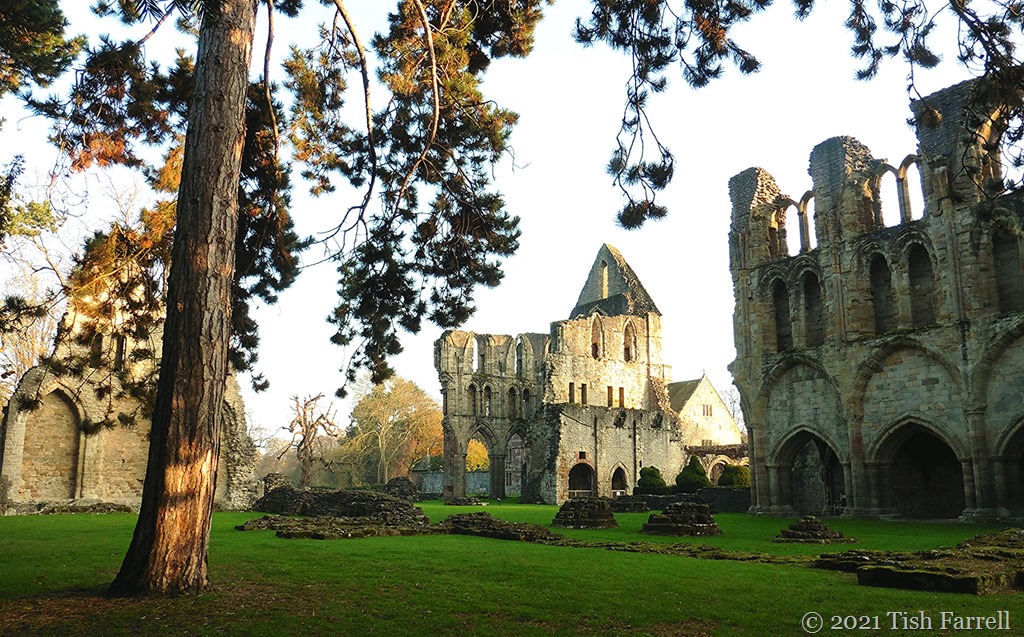
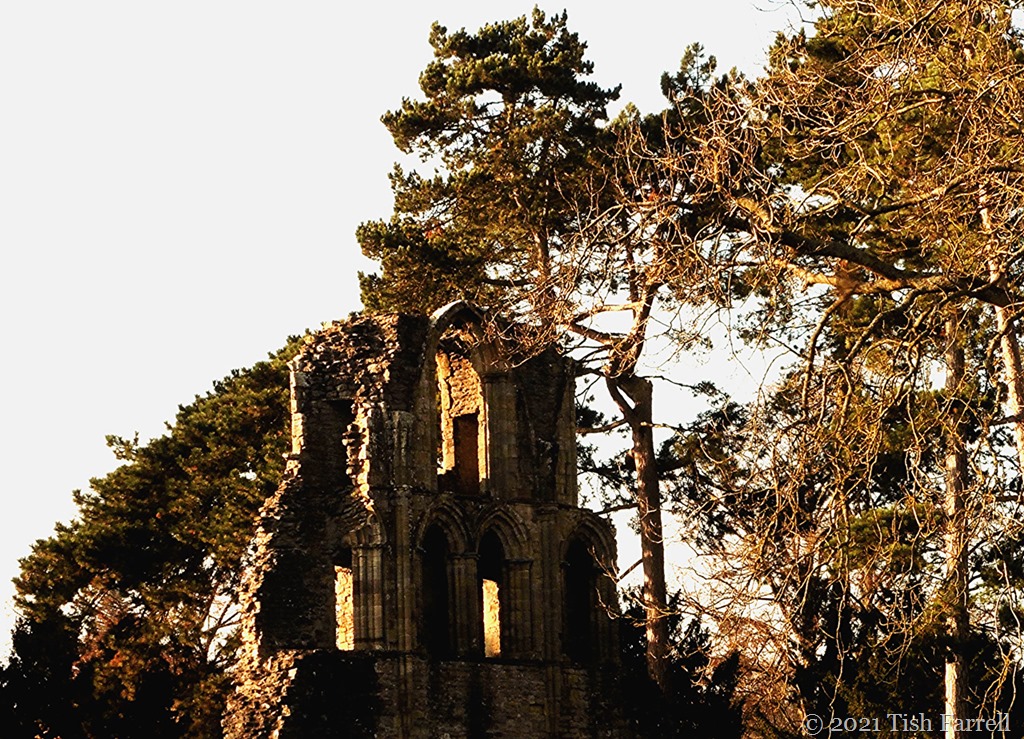
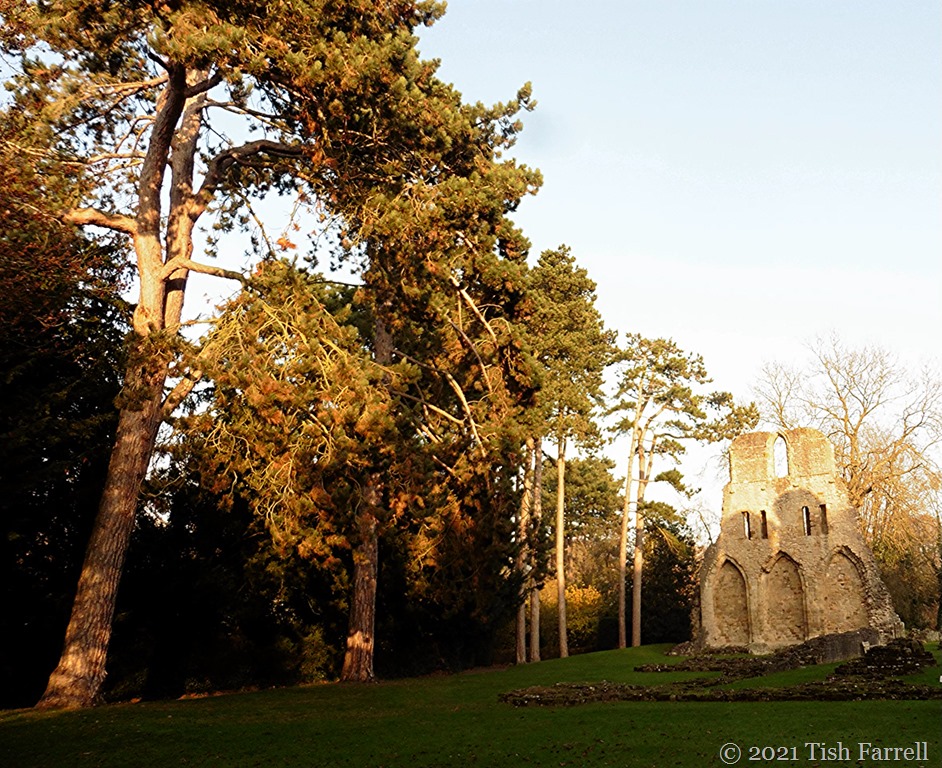
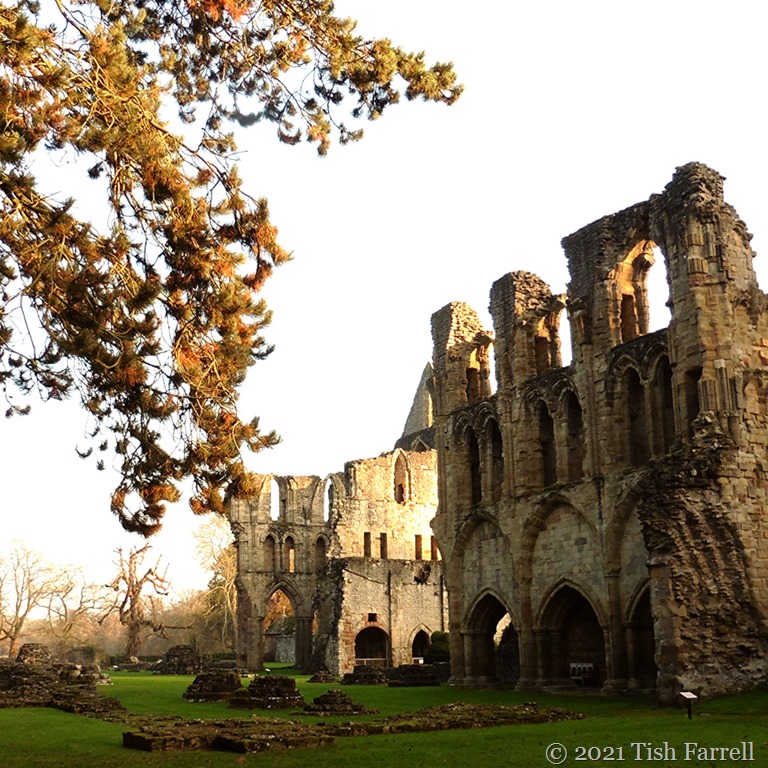
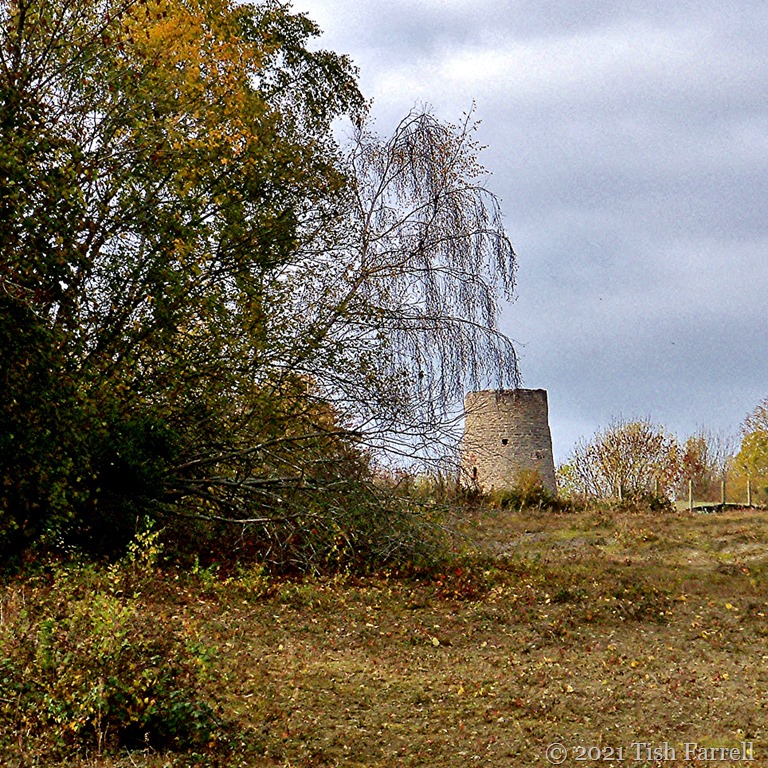
Autumn somehow seems a fitting season for visiting thousand-year old ruins. These particular ones are practically on my doorstep, but I usually only glimpse them over the perimeter wall. They have anyway been out-of-bounds this last year. As a non-believer, I am never quite sure what to make of such places, though it is a wonderfully tranquil spot and I do like the play of light on the stonework and through the archways. I also like the ruinous shapes, and the sense of antiquity, and the glimpses of the priory parkland. And I especially love the Corsican pines that must have been planted by the Milnes-Gaskells who once lived in the Prior’s House (also known as The Abbey) and had these ruins as their personal garden features. (You can see the gable end of the house just right of centre in the first photo.) And finally there is some personal history, for I have been coming here, on and off, for well over half a century. Gracious, how time flies.
Life in Colour This month Jude at Travel Words is asking us to consider shades of brown in our photos. This set is from a couple of years ago, but I came across them again recently and thought they fitted the bill.
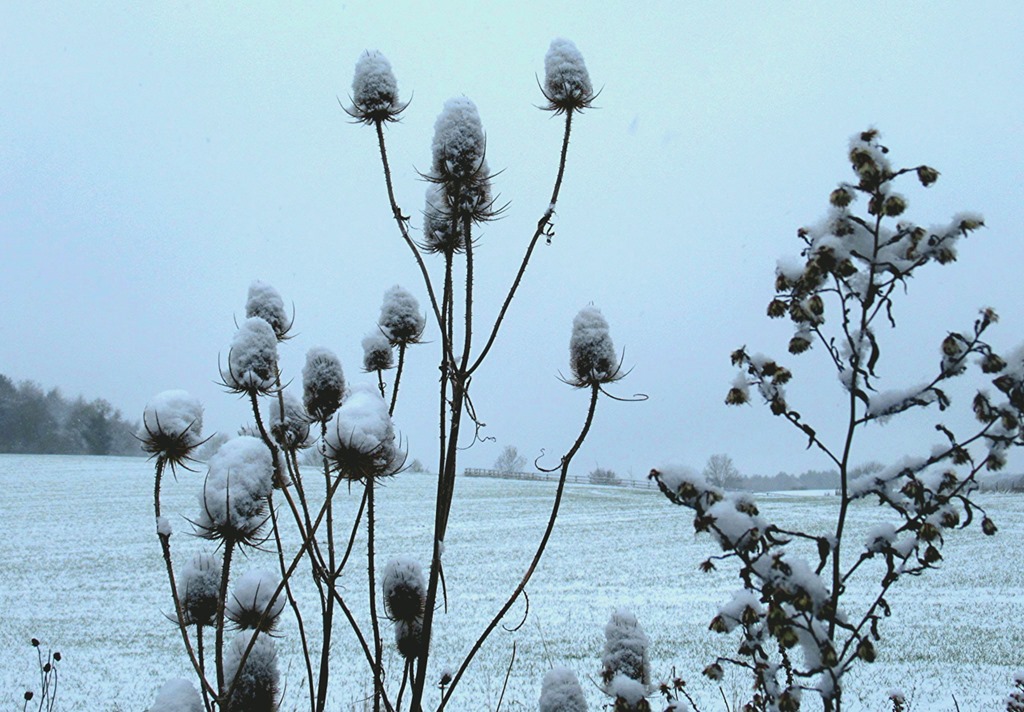
Fresh from the garden an hour ago, and more snow to come. Nor are we alone. Temperatures in the northern hemisphere, and especially parts of North America have been plunging to record lows due to a shift of the polar vortex, the icy wind system that usually spends winter over the Arctic. It’s even been snowing in the Algerian Sahara – the fourth time this has happened in 42 years. My computer tells me it’s zero degrees celsius here in the UK, positively tropical compared to Chicago’s –26C with an added wind-chill factor of –53C. Stay warm, everyone.
It’s a place for all seasons, and only a few minutes walk from our house. There are several approaches but I’ll take you up the Linden Walk that runs beside the old railway line. To the left lies the Linden aka Gaskell Field, now the town’s main recreation ground, and site of the annual Wenlock Olympian Games since the 1850s.
*
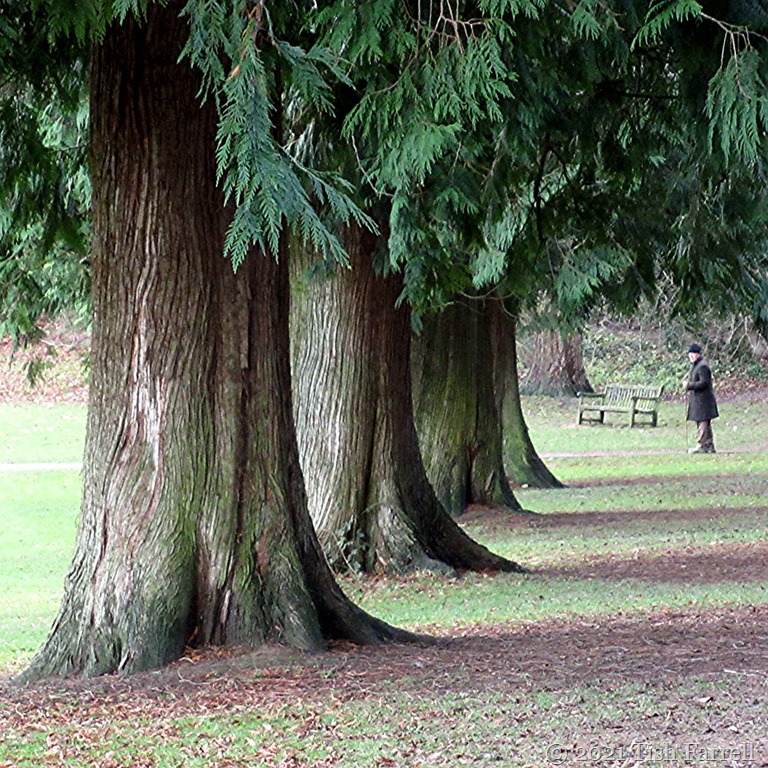
Near the top of the Linden Walk there is a parallel avenue of conifers. At the end turn left by the seat. In fact follow that chap in the brown coat. He knows where he’s going.
*
The path next takes you briefly along the wooded flanks of Shadwell Quarry. On the left as you go, at the top of the Linden Field, is a fine parade of oaks planted in the late nineteenth century to commemorate various Olympian Games doings. Watch out for the squirrels.
*
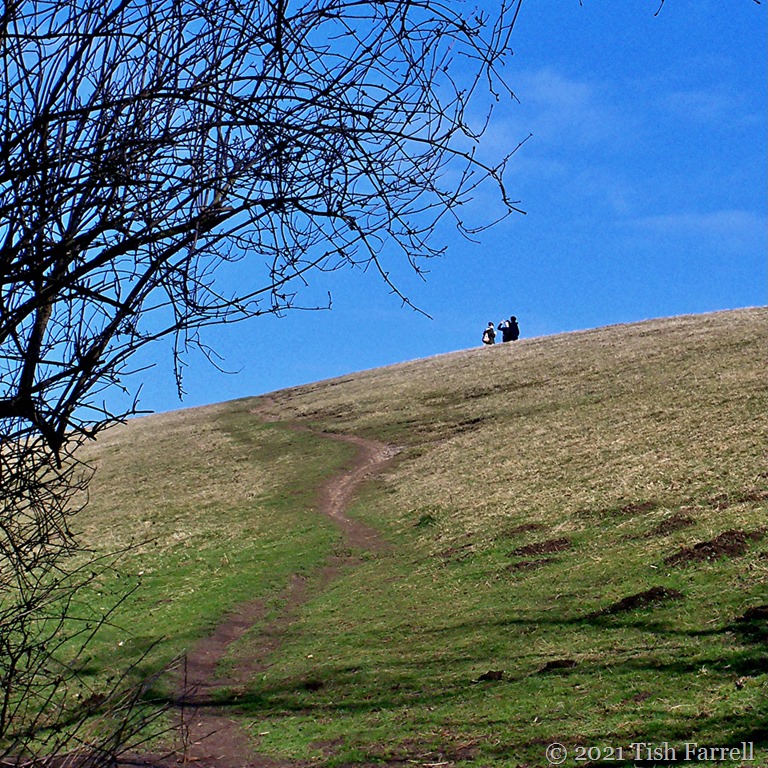
The path up the hill is quite steep. In winter the limestone meadow looks like this:
And like this:
*
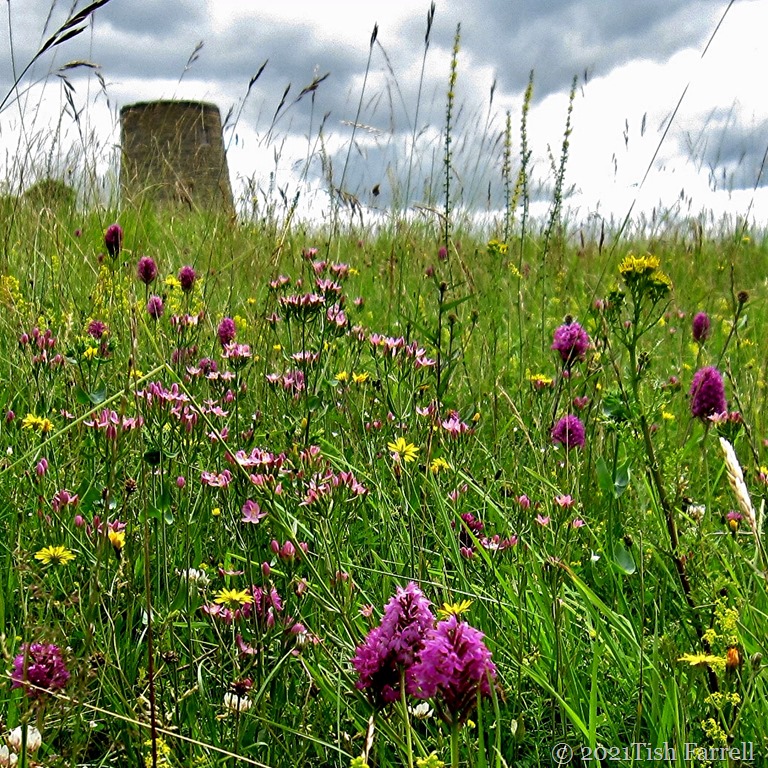
But in early summer it’s a riot of orchids, lady’s bedstraw, clover, wild thyme, vetches, agrimony and St. John’s Wort:
*
And in late summer it’s the grasses’ turn to flower:
*
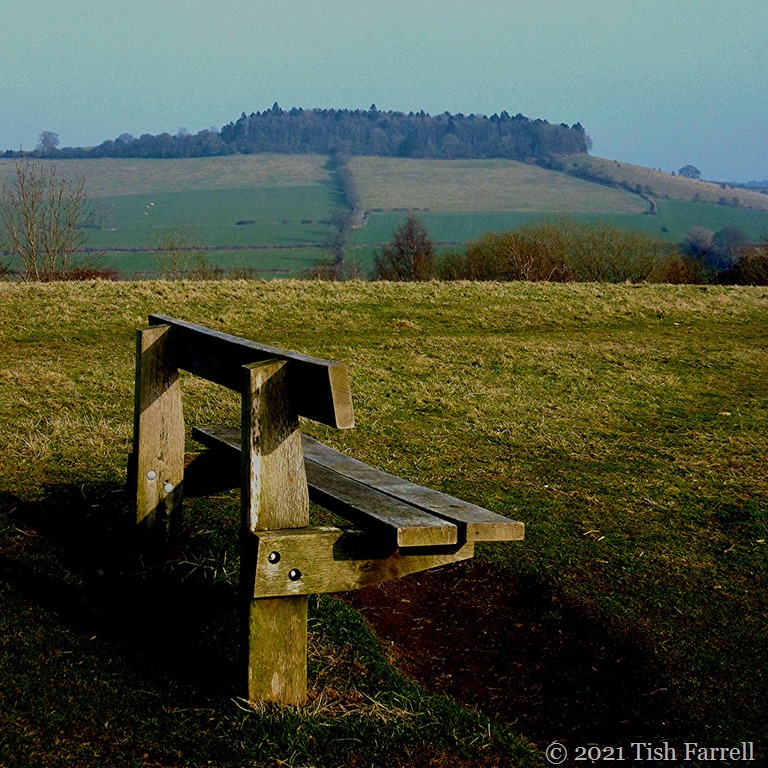
But whatever the season, if it’s not too windy, there’s a good place to sit and admire the view: